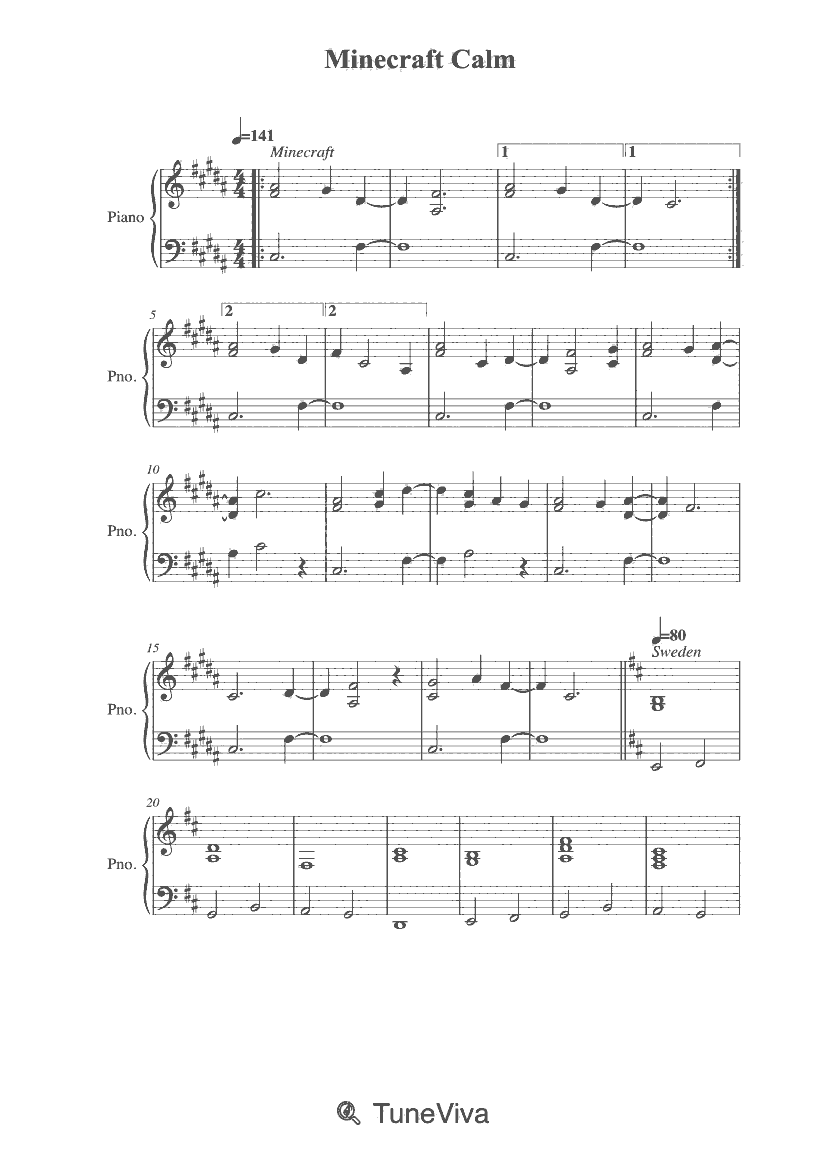
Minecraft Calm
C418
Calm1 (Minecraft) - Calm3 (Sweden) - Calm2 (Clark) Minecraft Volume Alpha
Piano · 5 min 27 sec
Open score20 C418 scores to preview and download, from Sweden, Wet Hands and Haggstrom to Aria Math, Dead Voxel and the documentary track Preliminary Art Form, to play.
The most-viewed file by a wide margin. It is not a single track: the subtitle lists Calm 1 (Minecraft), Calm 3 (Sweden) and Calm 2 (Clark), the three in-game calm cues.
The file names nether2.ogg as its source, which is Dead Voxel, track three of Volume Beta.
The track of that name, known in the game files as Calm 1 and one of the first three pieces Rosenfeld wrote for Minecraft.
A saxophone quartet arrangement of the album track, written on four staves; the catalogue names no arranger.
The Volume Alpha track, 2,309 notes; 'original' here means Rosenfeld's own composition rather than an arrangement.
A five-staff orchestral setting of the short piano piece, marked 'Full Orchestra' in the catalogue's subtitle.
Track five of Volume Alpha, three minutes on the album and under a minute and a half in this reduction.
Calm 2 in the game files, the second of the three cues written at the start of development.
From One (2012), the soundtrack to the documentary Minecraft: The Story of Mojang, and the one entry here that is not game music.
A two-guitar reduction of the Volume Beta track; the same piece appears again in a four-part version, so check the scoring before printing.
Compare the instrument and arrangement details below, then open a score to check the notation. Different entries may be arrangements or editions of the same work; available playback tools are shown on each score page.
C418
Calm1 (Minecraft) - Calm3 (Sweden) - Calm2 (Clark) Minecraft Volume Alpha
Piano · 5 min 27 sec
Open score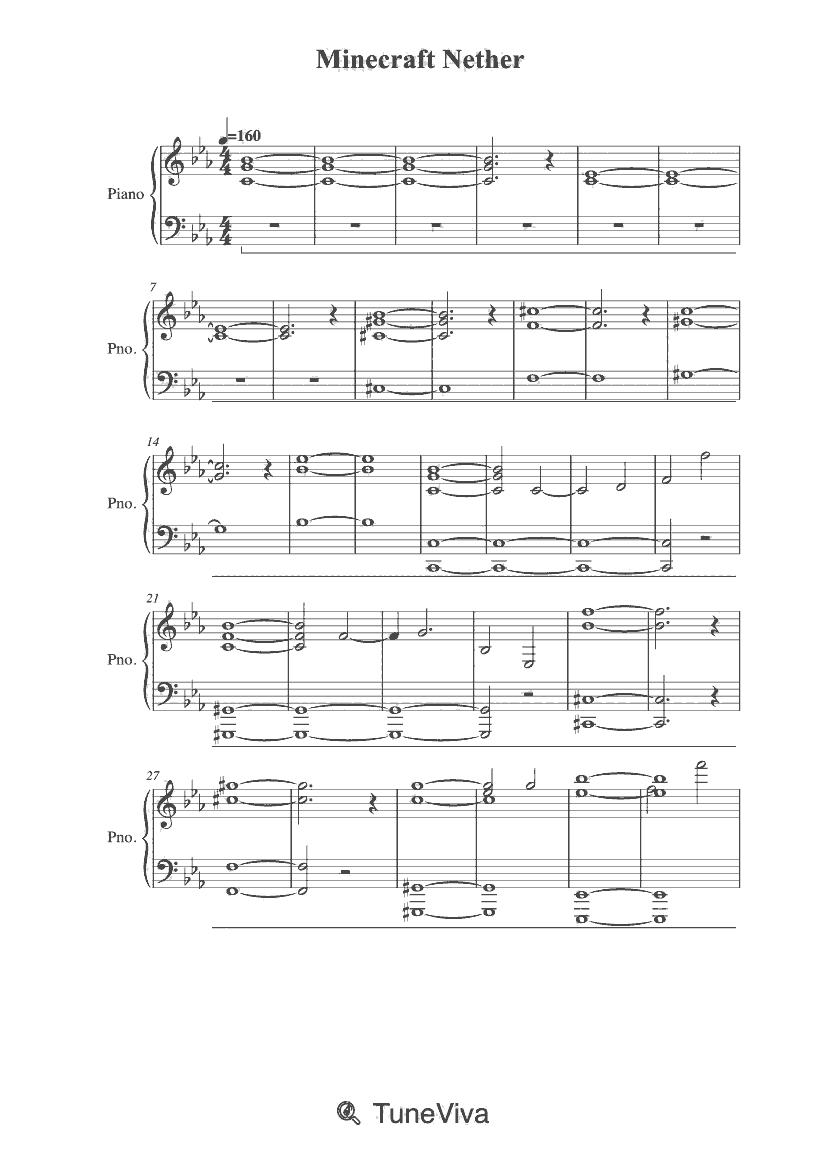
C418
Piano · 3 min 13 sec
Open score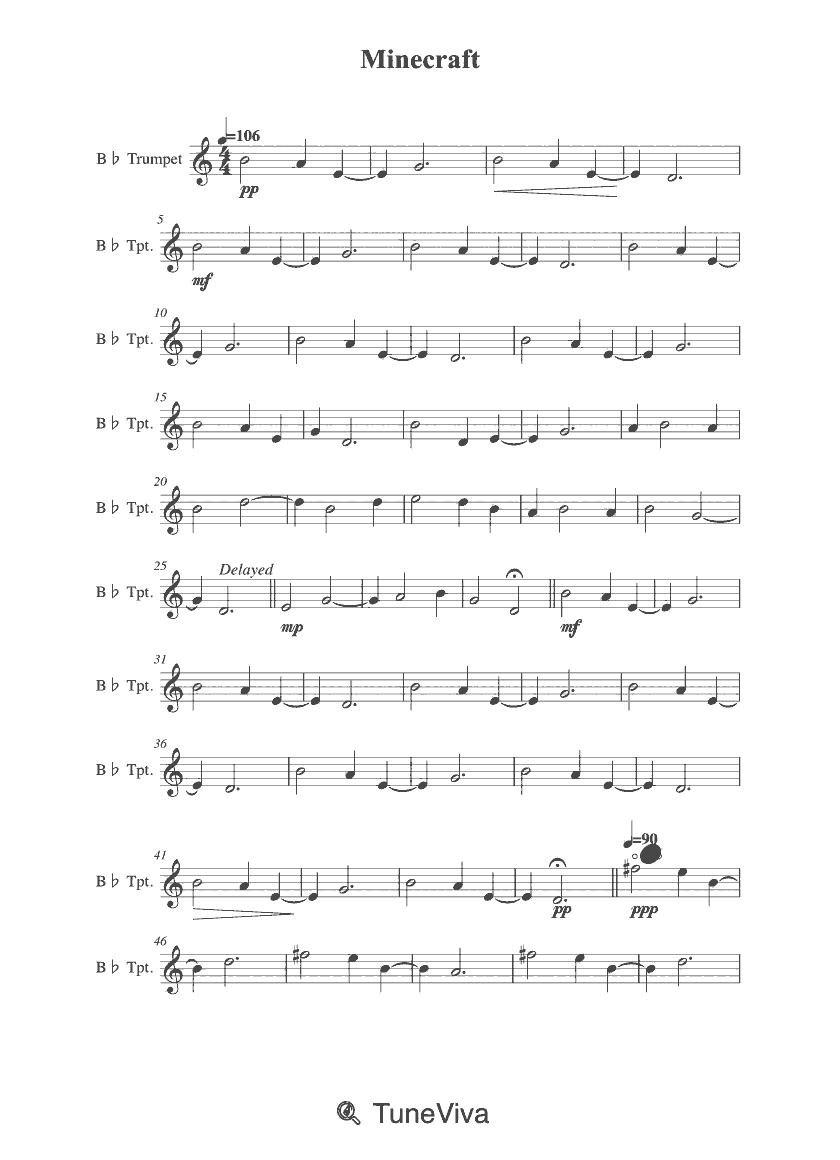
C418
Minecraft
B♭ Trumpet · 2 min 1 sec
Open score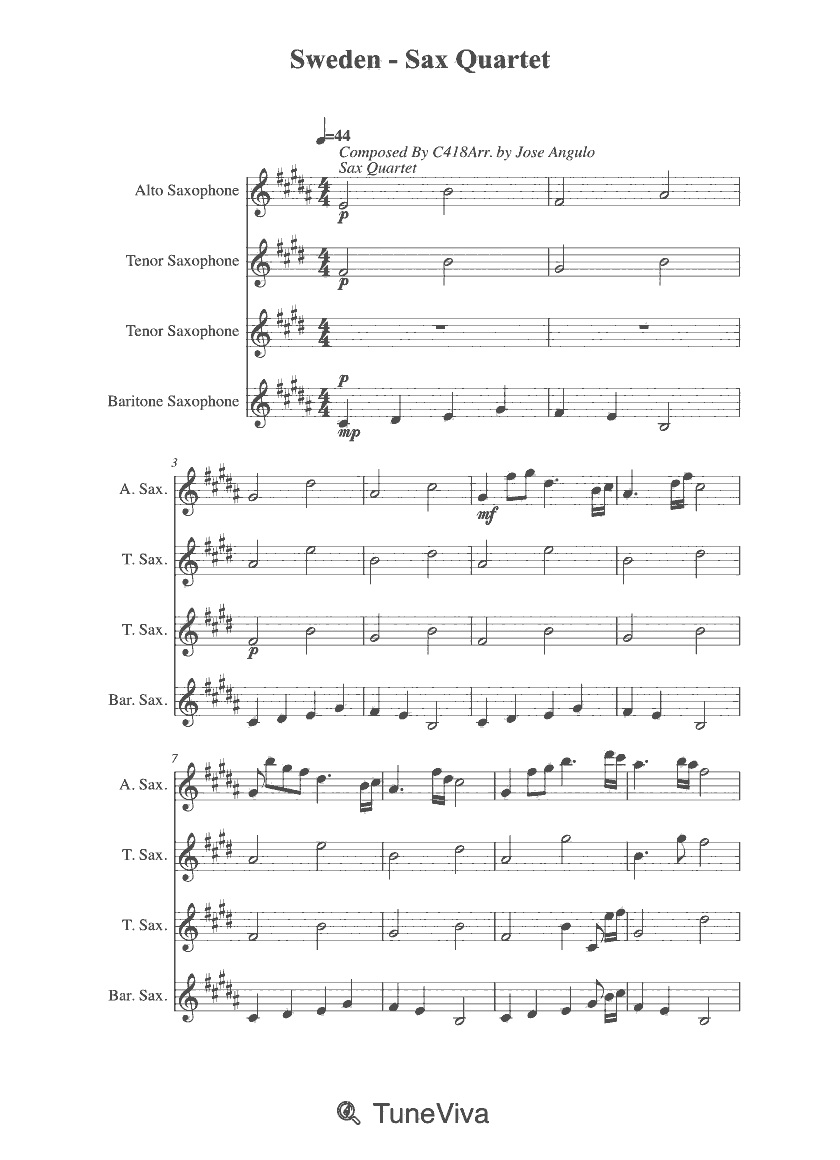
C418
Alto Saxophone; Tenor Saxophone; Baritone Saxophone · 1 min 55 sec
Open score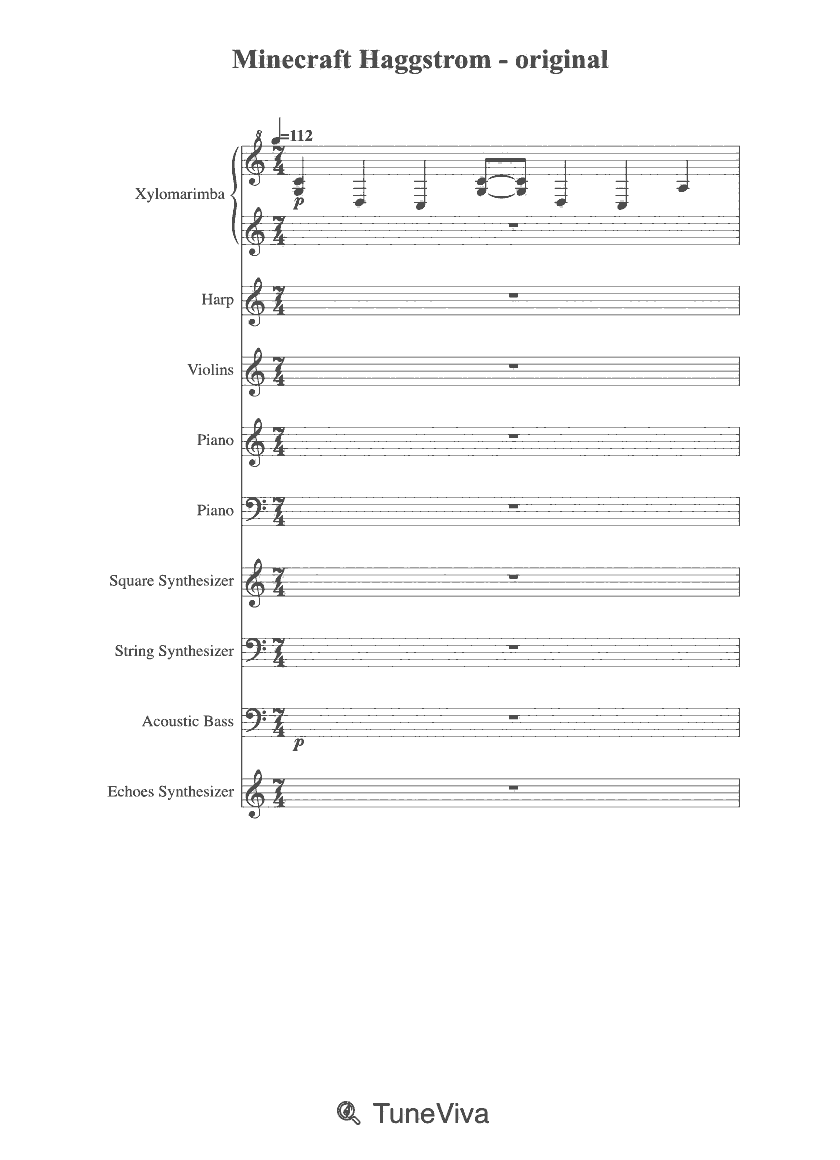
C418
Xylomarimba; Harp; Violins +5 parts · 3 min 15 sec
Open score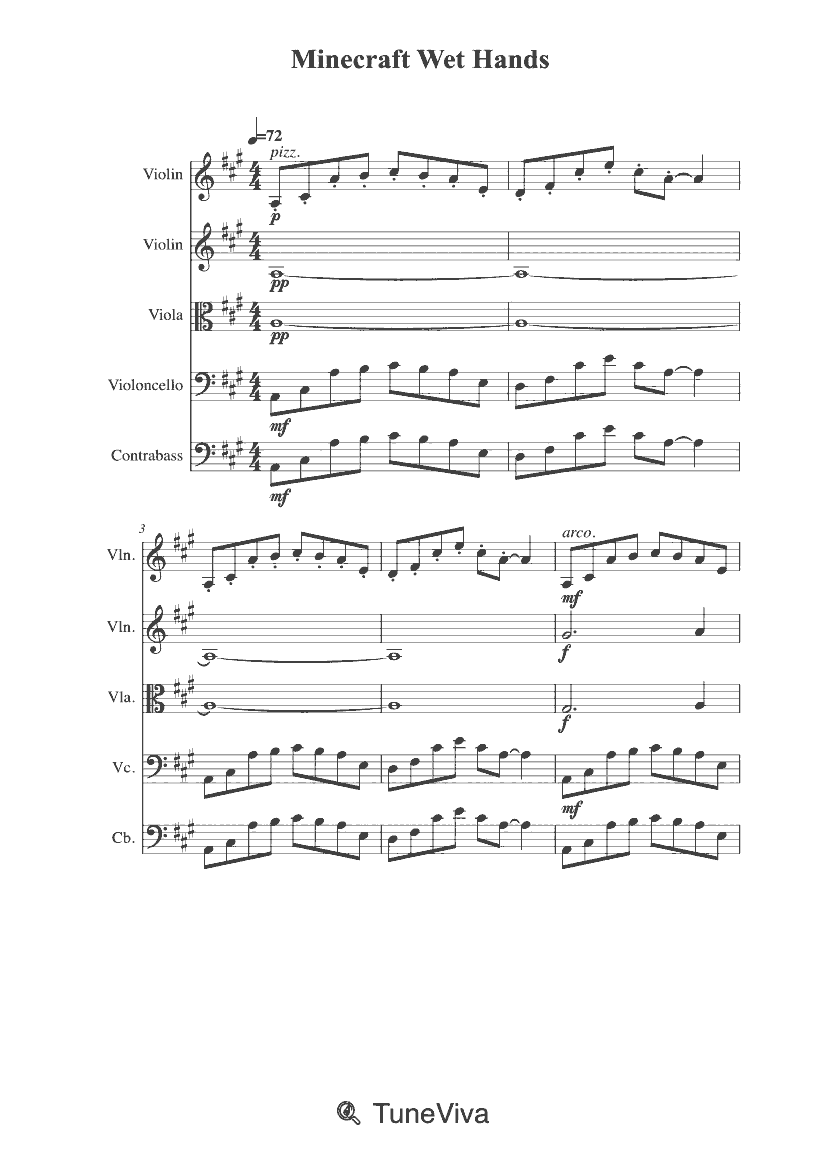
C418
Full Orchestra
Violin; Viola; Violoncello +1 parts · 1 min 27 sec
Open score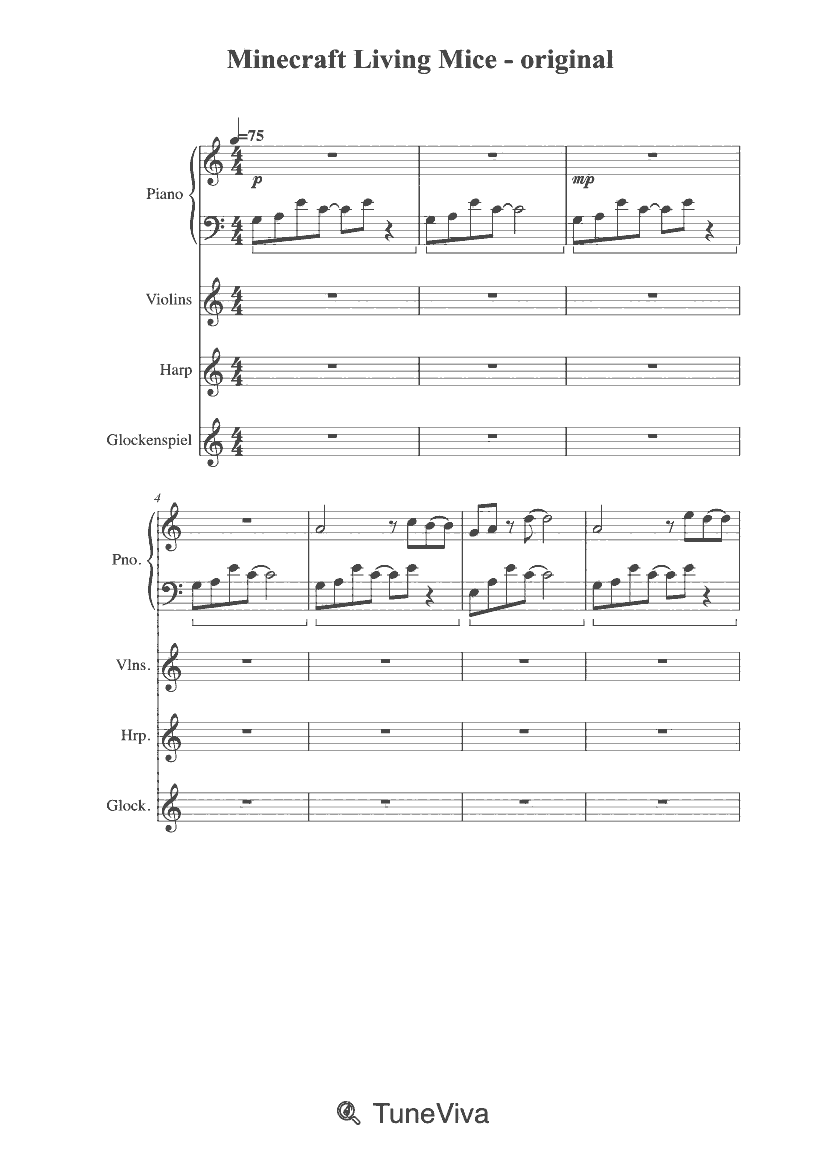
C418
Piano; Violins; Harp +1 parts · 2 min 27 sec
Open score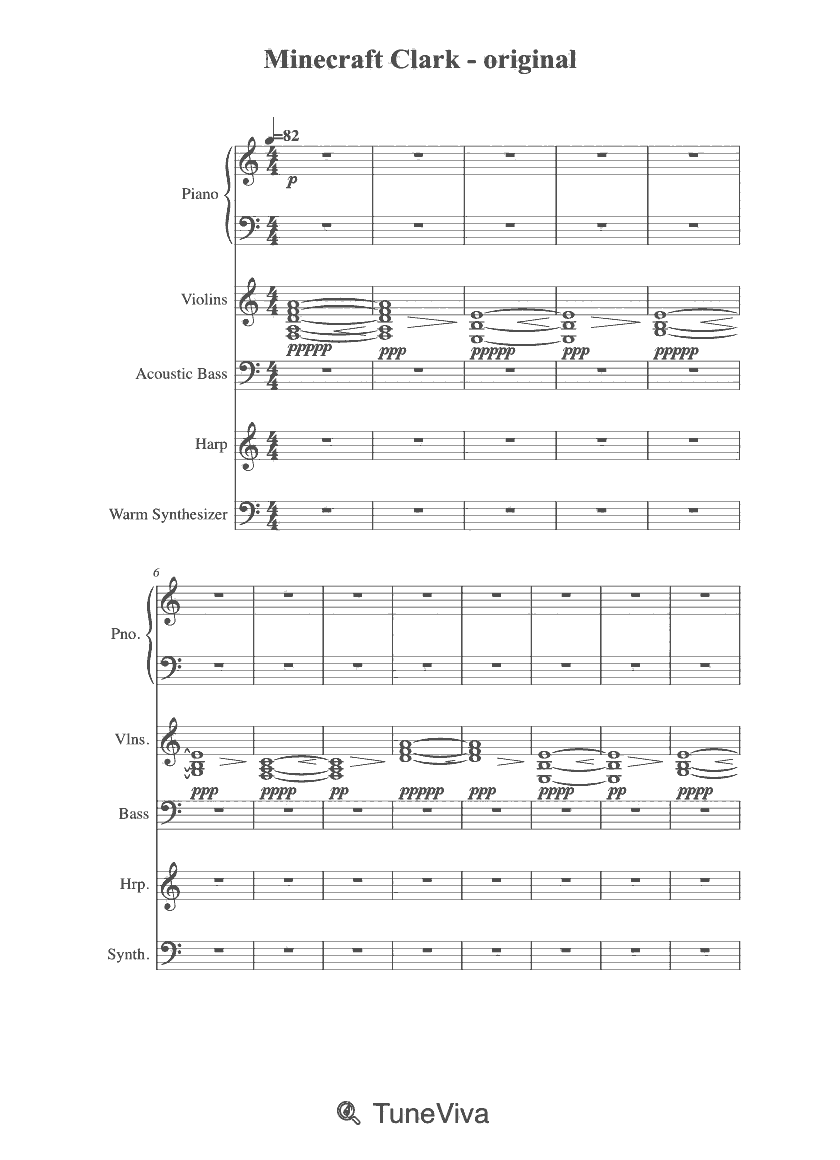
C418
Piano; Violins; Acoustic Bass +2 parts · 3 min 7 sec
Open score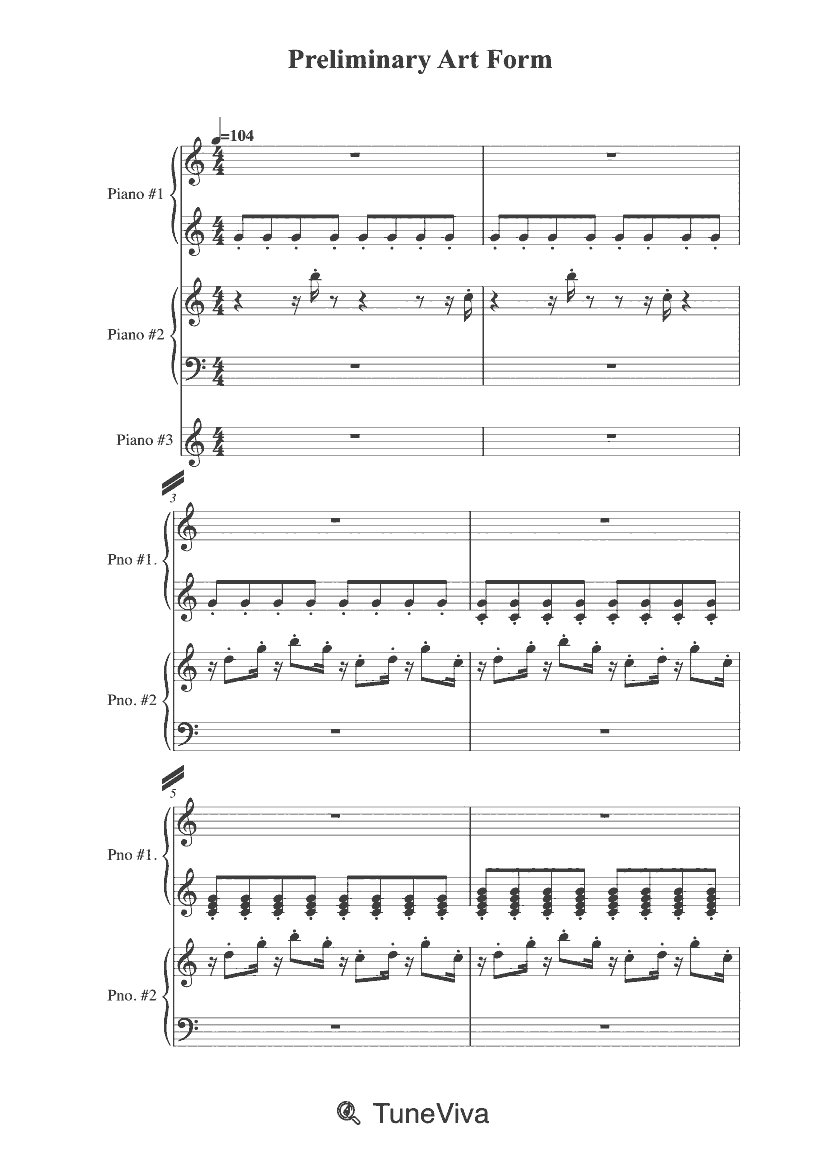
C418
Piano #1; Piano #2; Piano #3 · 3 min 2 sec
Open score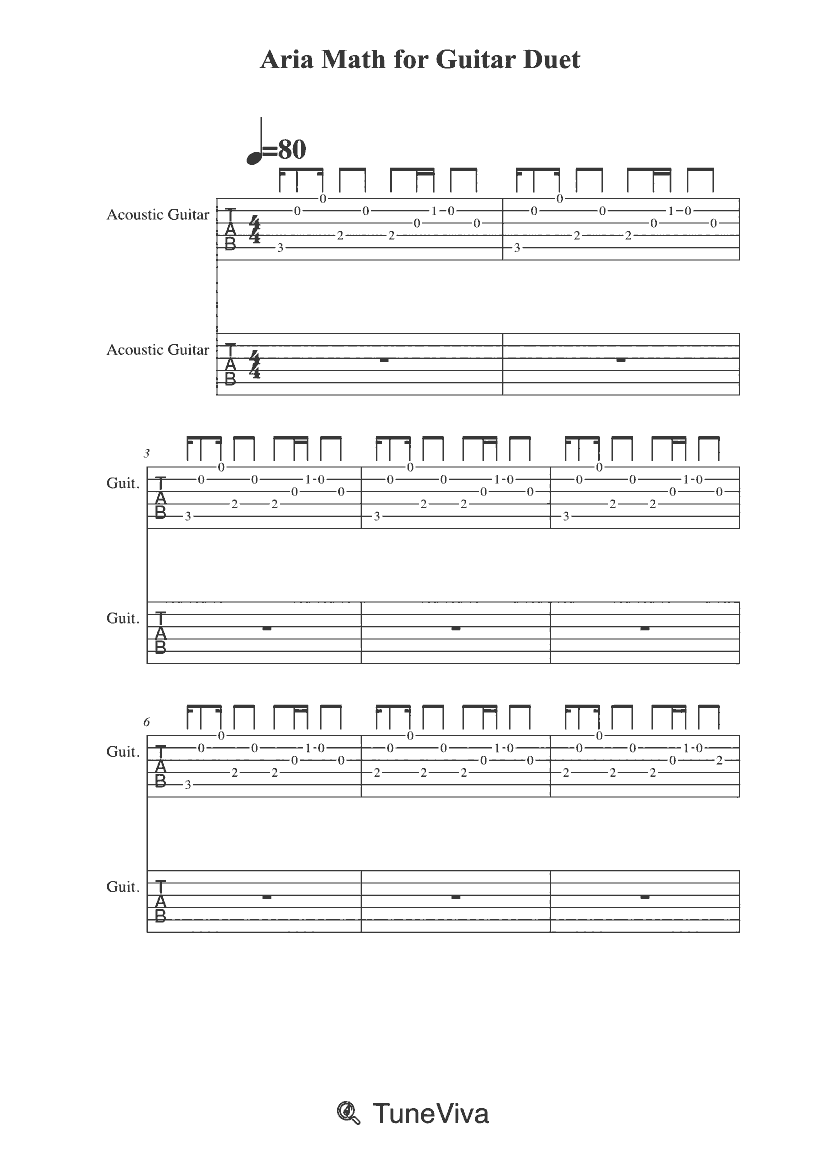
C418
Acoustic Guitar · 1 min 36 sec
Open score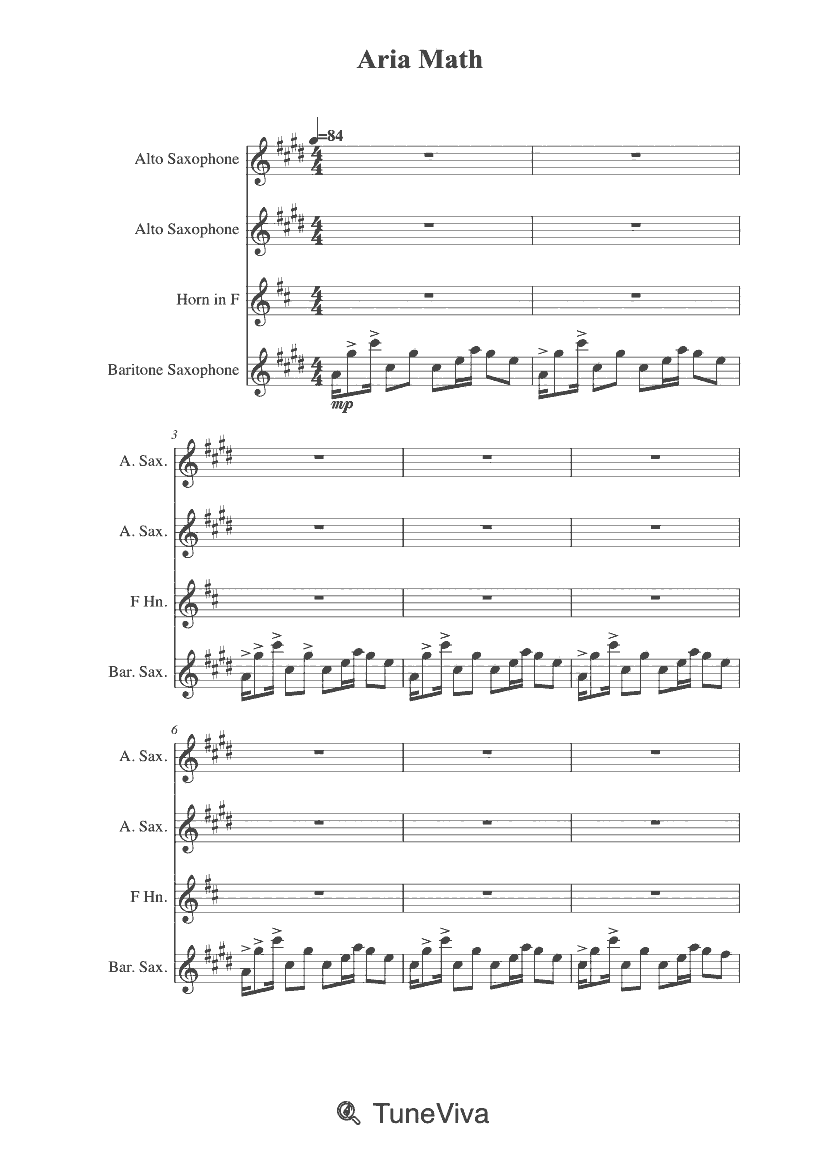
C418
Alto Saxophone; Horn in F; Baritone Saxophone · 4 min 49 sec
Open score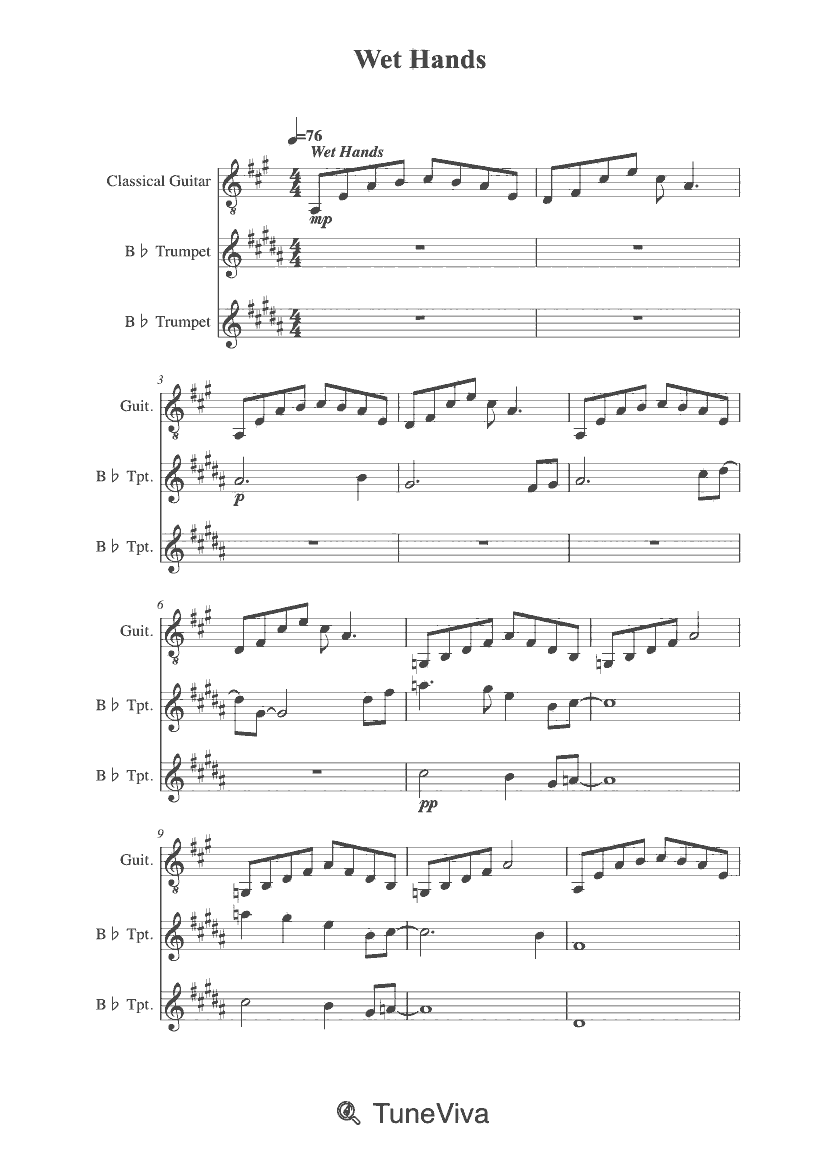
C418
Classical Guitar; B♭ Trumpet · 4 min 12 sec
Open score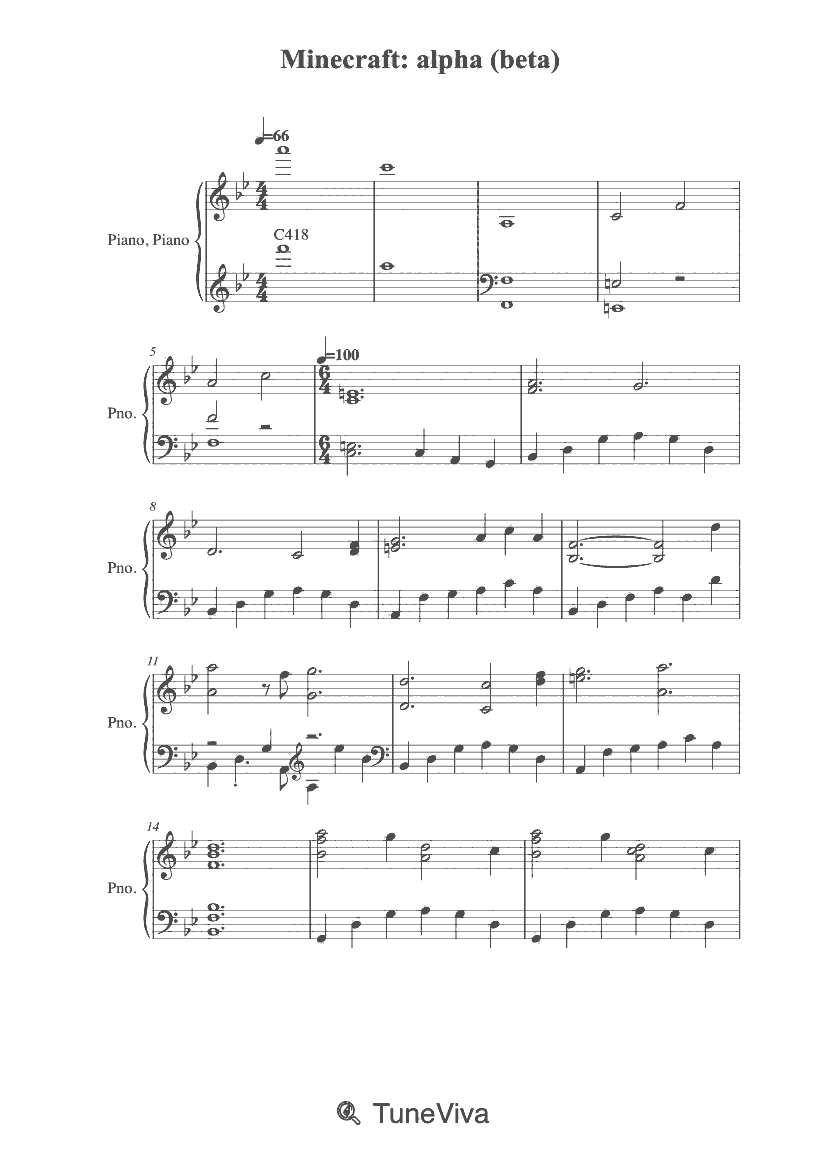
C418
Piano, Piano · 10 min 22 sec
Open score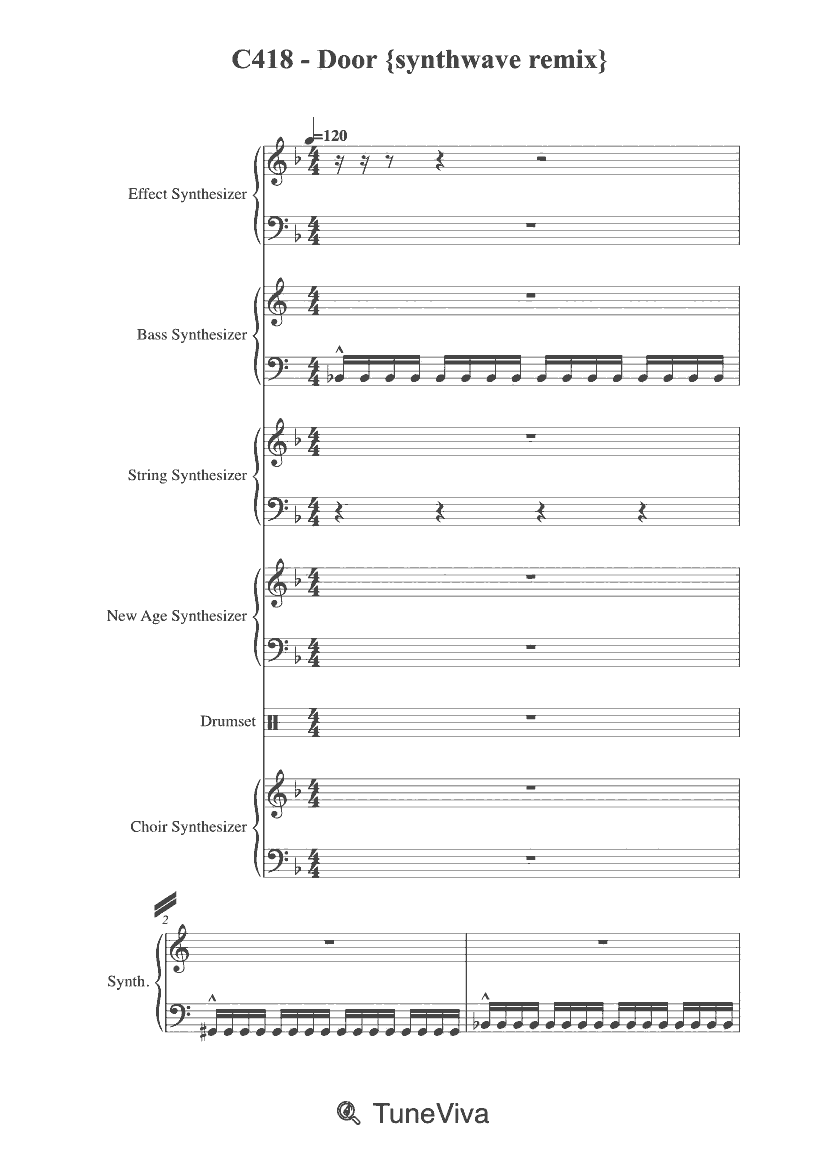
C418
Effect Synthesizer; Bass Synthesizer; String Synthesizer +3 parts · 1 min 3 sec
Open score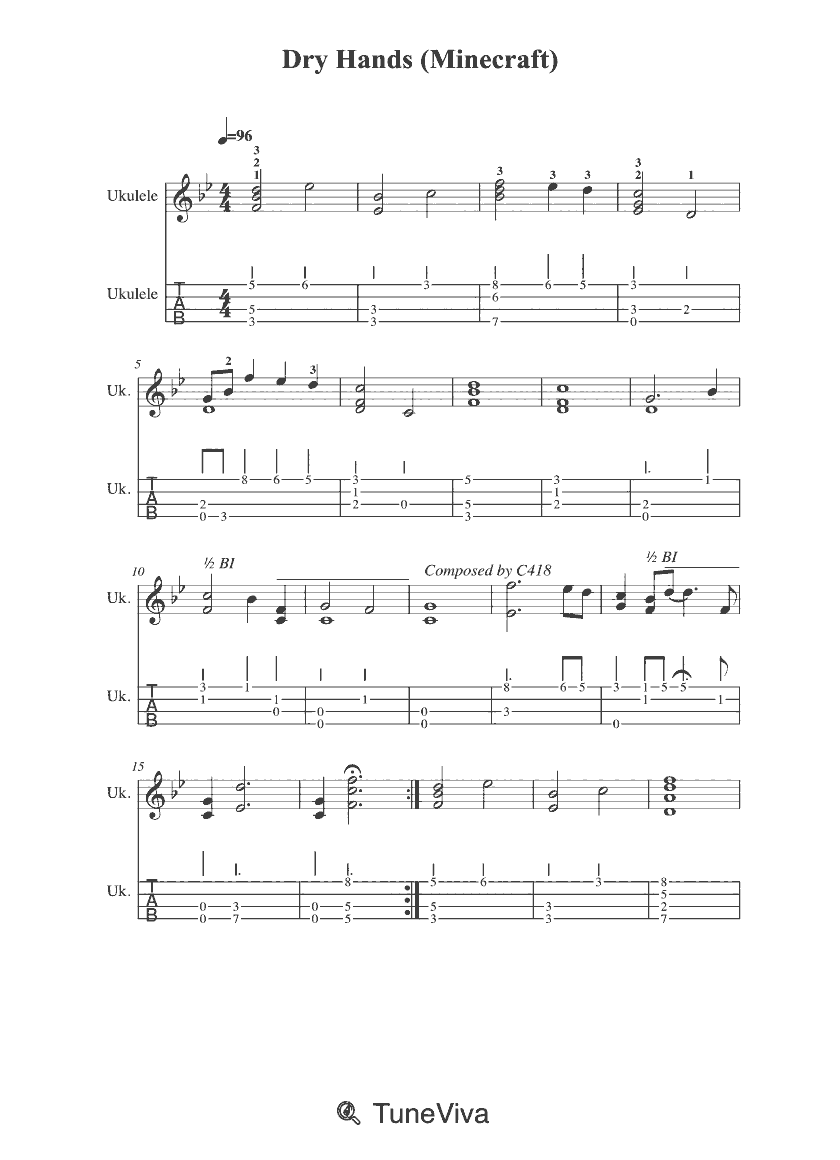
C418
Ukulele · 1 min 30 sec
Open score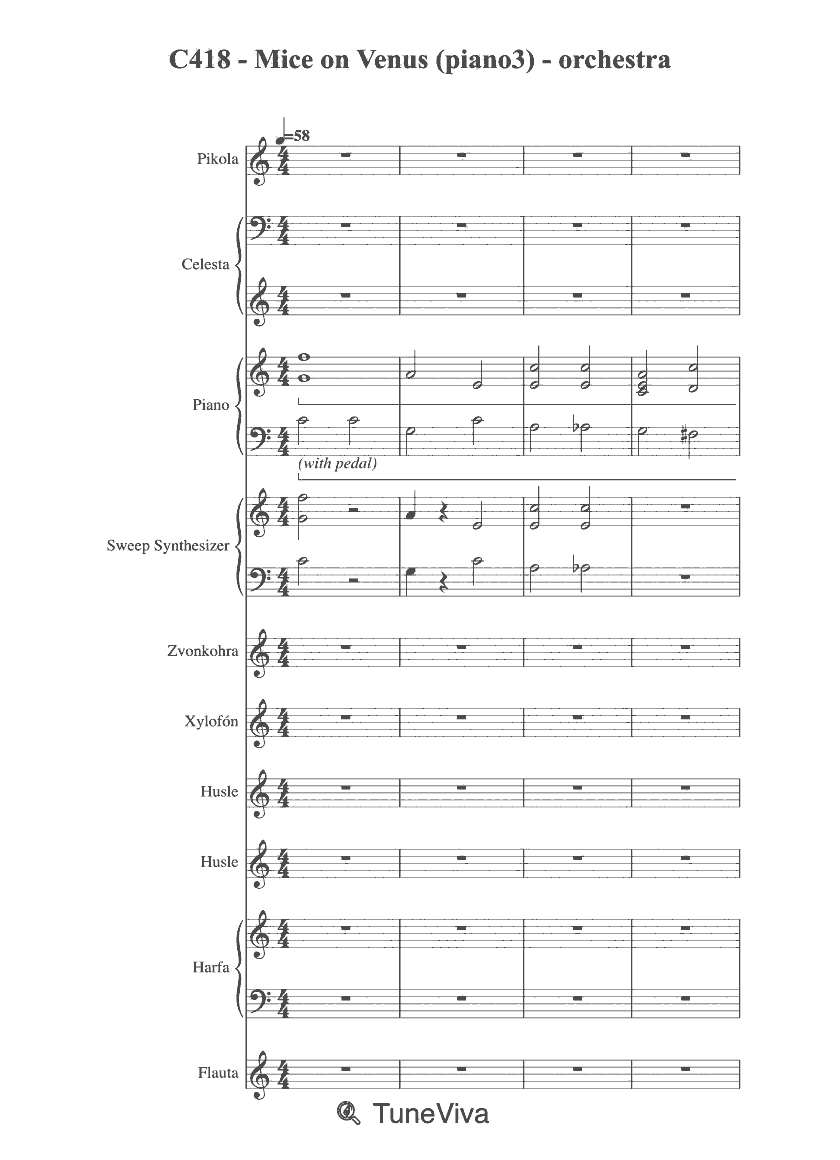
C418
Pikola; Celesta; Piano +6 parts
Open score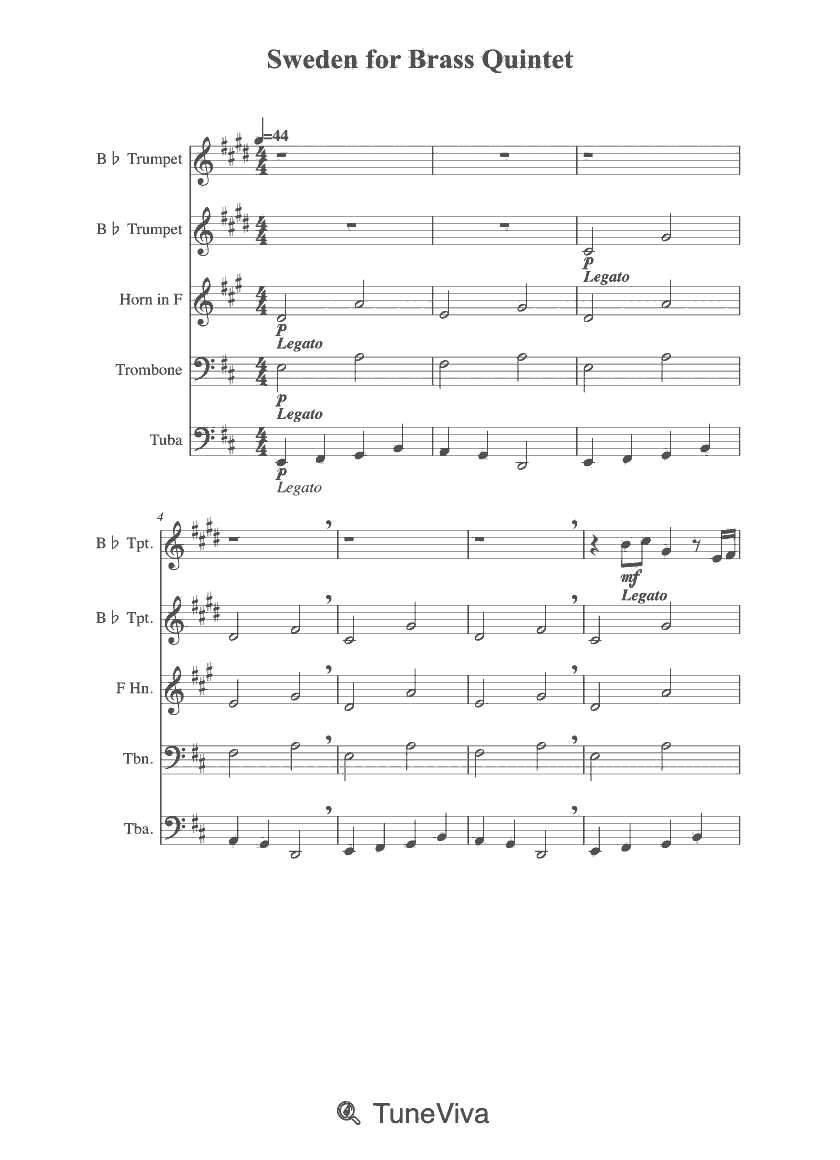
C418
For Brass Quintet
B♭ Trumpet; Horn in F; Trombone +1 parts · Arr. Miles Rochford · 2 min 10 sec
Open score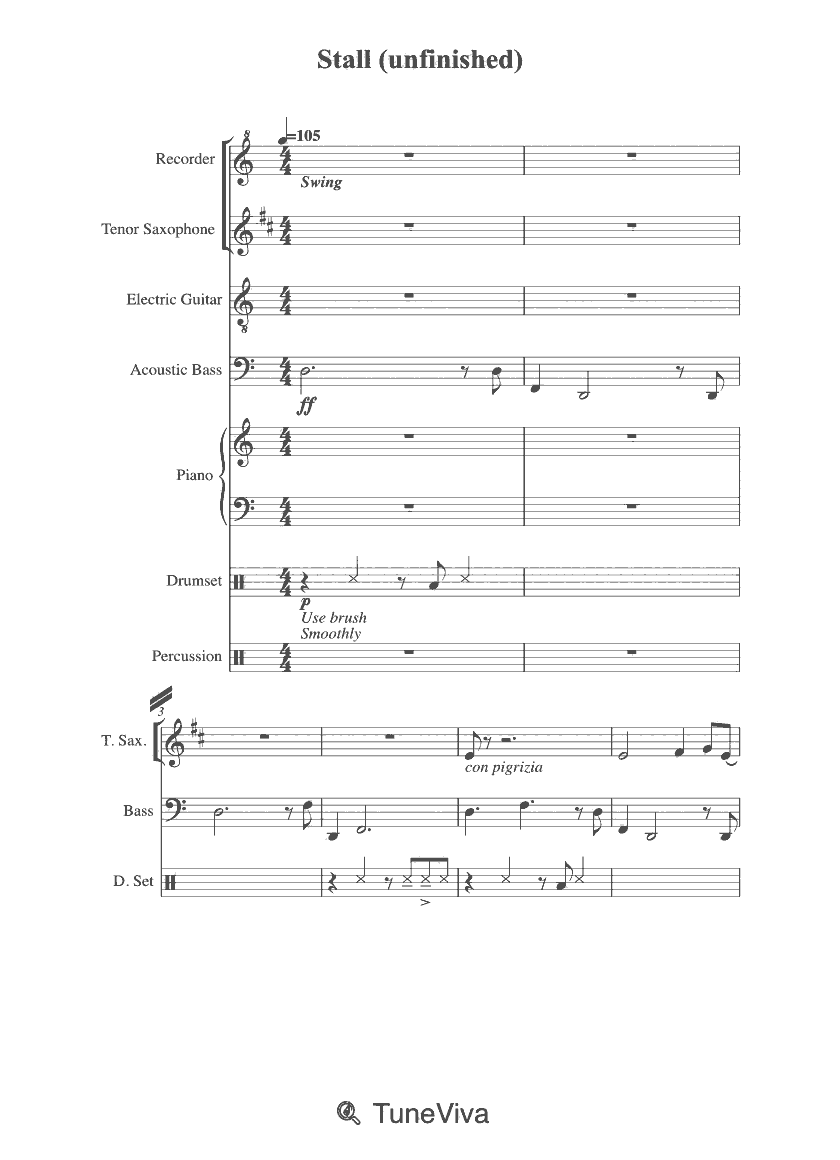
C418
Recorder; Tenor Saxophone; Electric Guitar +4 parts · 2 min 29 sec
Open score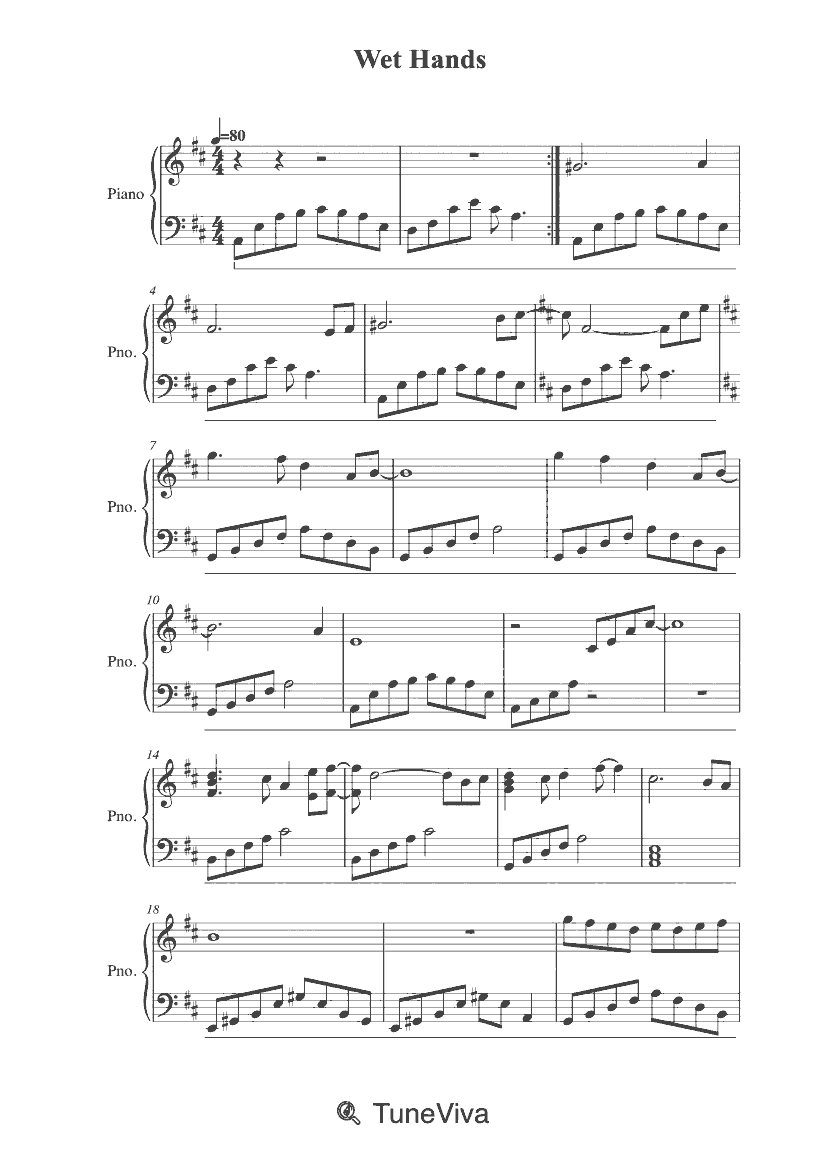
C418
Piano · 1 min 18 sec
Open score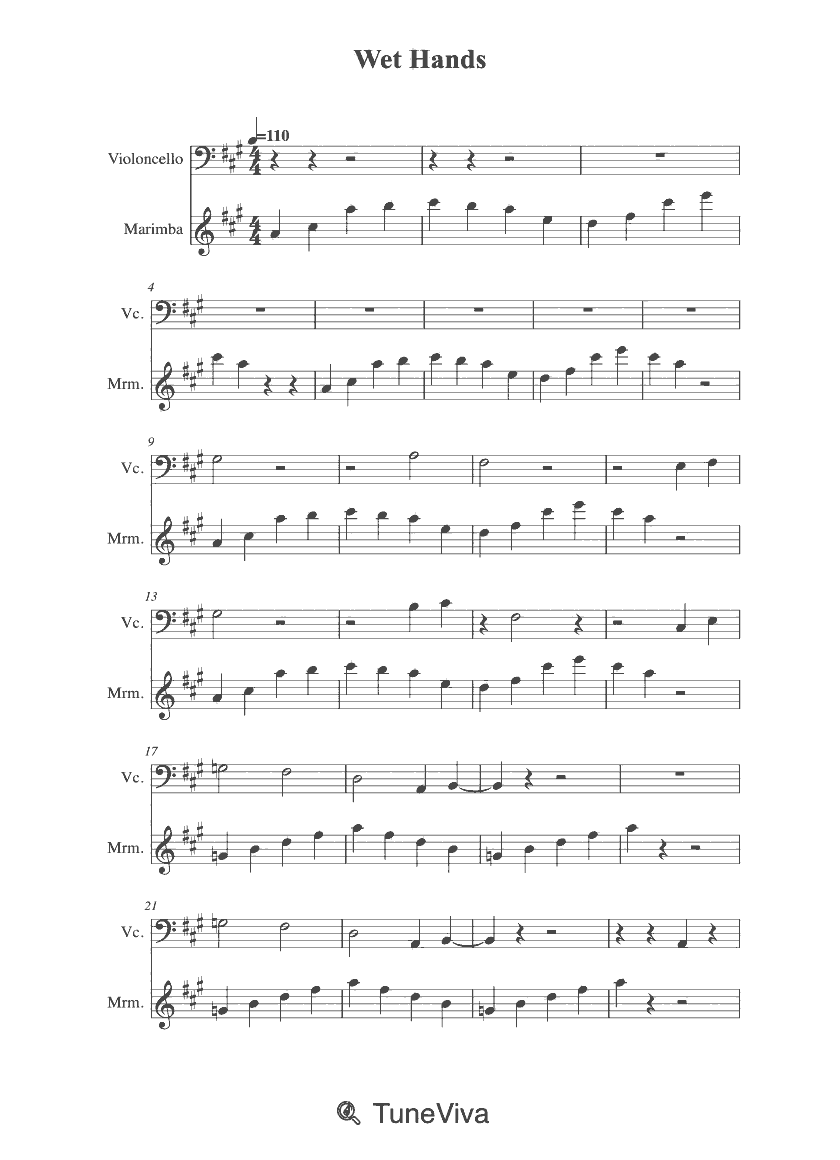
C418
Violoncello; Marimba · 2 min 4 sec
Open scoreDaniel Rosenfeld records as C418, and the catalogue holds 20 scores under that name: about 57 minutes of music and 20,234 notated notes, only one of them with lyrics. Fourteen are filed as classical and four as soundtrack, a classification that says more about the uploads than about the music. Minecraft Calm leads the page by a wide margin, followed by Minecraft Nether and a plain Minecraft. The entries range from a 107-note melody line to a 3,965-note piano piece. C418 sheet music opens a route into Daniel Rosenfeld's ambient writing for Minecraft and beyond. Rosenfeld, who records as C418, became the game's original composer and sound designer after meeting Markus Persson on the TIGSource forum; his Minecraft albums Volume Alpha (2011) and Volume Beta (2013) are built largely from restrained piano-and-string textures, with some more upbeat tracks. The scores gathered here range from solo piano and solo trumpet versions of individual cues to saxophone quartet, guitar duet, string ensemble and multi-piano arrangements. Because the catalogue mixes Rosenfeld's own compositions with arrangements and reductions, checking the listed instrumentation and scoring is more useful than relying on a genre tag alone.
Rosenfeld was born on 9 May 1989 in Karl-Marx-Stadt, now Chemnitz, in East Germany, and began making music as a teenager with Schism Tracker and Ableton Live, encouraged by his brother. He met Markus Persson on the TIGSource forum in early 2009 and became sound designer and composer for Minecraft while the game was still a Java prototype. Minecraft – Volume Alpha followed on 4 March 2011, self-released through Bandcamp, and the double album Volume Beta appeared on 9 November 2013 with music for the Nether and the End.
He was never a Mojang employee and kept the rights to his game music, which is why the soundtracks are his own releases. Between them he scored the documentary Minecraft: The Story of Mojang, released as One in 2012, and Preliminary Art Form is one of its tracks. Later albums include 148 (2015), Excursions (2018) and the Wanderstop soundtrack (2025). He lives in Austin, Texas, and in 2025 the Library of Congress added Volume Alpha to the National Recording Registry.
The catalogue is mostly early Minecraft material. The three in-game calm cues were the first tracks he wrote for the game, and the file names survive in the entry called Minecraft Calm, whose subtitle lists Calm 1, Calm 2 and Calm 3 (that is, Minecraft, Clark and Sweden), three separate tracks rolled into one score. Aria Math comes from Volume Beta and Door from Volume Alpha; Dead Voxel, the Nether cue, appears as Minecraft Nether with its source given as nether2.ogg. The arrangements are few but varied: a saxophone quartet of Sweden, a guitar duet of Aria Math, an orchestral Wet Hands, and a synthwave remix of Door.
Minecraft as the starting point: Daniel Rosenfeld's best-known C418 work is the music for Minecraft. Volume Alpha arrived in 2011 and Volume Beta in 2013; the first is described as primarily simplistic ambient music with piano and strings, shaped in part by the game's sound-engine limitations. In the catalogue, titles such as Minecraft, Sweden, Wet Hands, Haggstrom, Clark and Aria Math give pianists and small ensembles several ways into this material. The music is generally subdued rather than virtuosic, so check each score's own markings and scoring instead of treating all the cues as interchangeable.
Match the scoring to your group: The listings include a B♭ trumpet part for Minecraft, a piano score for Minecraft Nether, a saxophone quartet of Sweden, a string setting of Wet Hands, a guitar duet of Aria Math and a three-piano Preliminary Art Form. Haggstrom is listed with a mixed ensemble including xylomarimba, harp, violins, piano and synthesizers. Confirm the parts, clefs and transpositions before printing or rehearsing, especially where an entry is an arrangement rather than Rosenfeld's original recording.
Playing the calm cues: C418's Minecraft music is often described as minimal, ambient and intentionally unobtrusive, with piano and strings to the fore. That character calls for control of touch and pedal rather than speed: keep accompanying figures even, let repeated harmonies ring without blurring, and shape phrase endings gently. Opening markings in these scores vary widely, from slow saxophone-quartet tempos to much brisker piano cues, so take the tempo and key from the specific score in hand. A metronome can help establish the pulse before rubato is added.
Original tracks and arrangements: Rosenfeld's Minecraft albums are his own releases; coverage notes that Persson commissioned the music and Rosenfeld retained ownership. The catalogue, however, includes both original compositions and arrangements: Sweden appears as a saxophone quartet, Aria Math as a guitar duet, and Wet Hands as a string ensemble piece. Arranger credits are not always present, so do not assume every score is a composer's own transcription. Outside Minecraft, Rosenfeld scored the documentary Minecraft: The Story of Mojang with One (2012) and later released 148 and Excursions, scored Cookie Clicker's Steam release and composed the Wanderstop soundtrack.
No single track carries that name. The entry combines the in-game calm cues Calm 1, Calm 2 and Calm 3, which are the album tracks Minecraft, Clark and Sweden.
The genre field follows the upload rather than a publisher's catalogue: 14 entries are tagged classical, four soundtrack and two left blank, even though the music is ambient electronic.
Mostly Volume Alpha (2011) and Volume Beta (2013). Preliminary Art Form comes from One (2012), and the Door remix names C418 in the artist field only, with no composer credited.
Daniel Rosenfeld's C418 music for Minecraft is primarily simplistic ambient and acoustic music, with piano and strings prominent. Some tracks are more upbeat, but the overall character is restrained and unobtrusive; Rosenfeld has said the game's limited sound engine also pushed the music toward simplicity.
Minecraft – Volume Alpha was released in 2011 and Minecraft – Volume Beta, a double album, followed in 2013. Both are C418 releases rather than Mojang releases, and a third C418 Minecraft album has been completed but remained unreleased as of the 2026 source, reportedly because of licensing issues and legal conflicts with Microsoft.
Daniel Rosenfeld has composed beyond Minecraft: he scored the documentary Minecraft: The Story of Mojang with the album One (2012), released 148 (2015) and Excursions (2018), scored the Steam release of Cookie Clicker (2021), and composed the Wanderstop soundtrack (2025).
The title 'Minecraft Calm' appears in the catalogue as a solo piano score, but the available album information does not identify it as a track on Volume Alpha or Volume Beta. Volume Alpha tracks named in coverage include 'Minecraft', 'Sweden' and 'Subwoofer Lullaby'; treat 'Minecraft Calm' as a score title unless a specific release confirms otherwise.
Instrumentation varies by score. Examples in the catalogue include a B♭ trumpet part for Minecraft, piano for Minecraft Nether, alto, tenor and baritone saxophones for Sweden, a string ensemble for Wet Hands, acoustic guitar for the Aria Math duet, and three pianos for Preliminary Art Form. Check each listing's parts before choosing.
Several catalogue entries are arrangements rather than transcriptions of the original recording. Sweden appears as a saxophone quartet, Aria Math as a guitar duet and Wet Hands as a string ensemble piece, while the original Minecraft music is generally ambient and piano-and-string based. Arranger credits are not always given, so confirm the version if that matters for your performance.
Minecraft – Volume Alpha was selected for the Library of Congress's National Recording Registry in 2025 as culturally, historically and/or aesthetically significant; coverage describes it as the second video game music piece to be chosen after the Super Mario Bros. theme. Tracks from the album, including 'Sweden', 'Minecraft' and 'Subwoofer Lullaby', have also received gold certifications.
Check whether the entry is Rosenfeld's original composition or an arrangement, which instruments and how many parts are listed, and the opening key and tempo. For example, the catalogue's Minecraft is set for B♭ trumpet, while Minecraft Nether is for piano, and the saxophone-quartet Sweden is a different proposition from a solo piano cue. Confirm the arranger credit where one is given, and do not assume a difficulty grade from the title.