classical
5 tracks
Costanzo Porta spent his life in Italian churches and left a catalogue of motets: 21 scores, about 128 minutes of music and 15,257 notated notes. Twenty entries carry lyrics.
The most-viewed piece is Salve Sancte Pater, a Franciscan antiphon, followed by Sub tuum praesidium and a five-voice Pater noster. The rest are Latin motets for four to eight voices, all of them logged at complexity index 0. The page is therefore a sample of a much larger output, not a survey of it: Porta published at least eight books of motets and a cycle of hymns for Vespers.
Porta was born in Cremona in 1528 or 1529 and entered the Conventual Franciscans as a young man, studying at the order's house of Porta San Luca. Around 1550 he went to Venice to study with Adrian Willaert at St Mark's, where he met Claudio Merulo and began a friendship that lasted for decades. In 1552 he became maestro di cappella at Osimo Cathedral; he left in 1556 for the court of Urbino, returned in 1562 and in January 1565 moved to the Basilica del Santo in Padua.
He moved to Padua in 1565, then to Ravenna in 1567 at the invitation of Cardinal Giulio della Rovere, at whose wish he also directed music at Loreto from 1574 to 1580. When Carlo Borromeo offered him the Milan cathedral chapel he declined and sent a pupil instead. His last years were spent in Padua at the Basilica of St Anthony, where he died on 19 May 1601 and was buried.
Porta's sacred music is contrapuntally dense. The Liber quinquaginta duorum motectorum, printed in Venice by Angelo Gardano in 1580, contains fifty-two motets for four to eight voices and includes several pieces on this page: O sacrum convivium, Pater noster, Egredimini et videte and Salve Sancte Pater. The collection is known for its canons, including a seven-voice motet in which four voices are derived canonically and another built as a mensuration canon. Porta wrote madrigals too, but the catalogue's 21 entries are all sacred.
Porta's motets are built from points of imitation, and several share the same contrapuntal habits, so a choir can rehearse them together. Start with the tenor or cantus line and let each voice enter without hurrying; the counterpoint is strict, so a rushed entry is hard to repair. Dissonance is prepared and resolved, and the text is usually syllabic enough to project. In the 1580 collection, watch for canon: one voice may repeat another at a different speed, and the conductor needs to mark both.
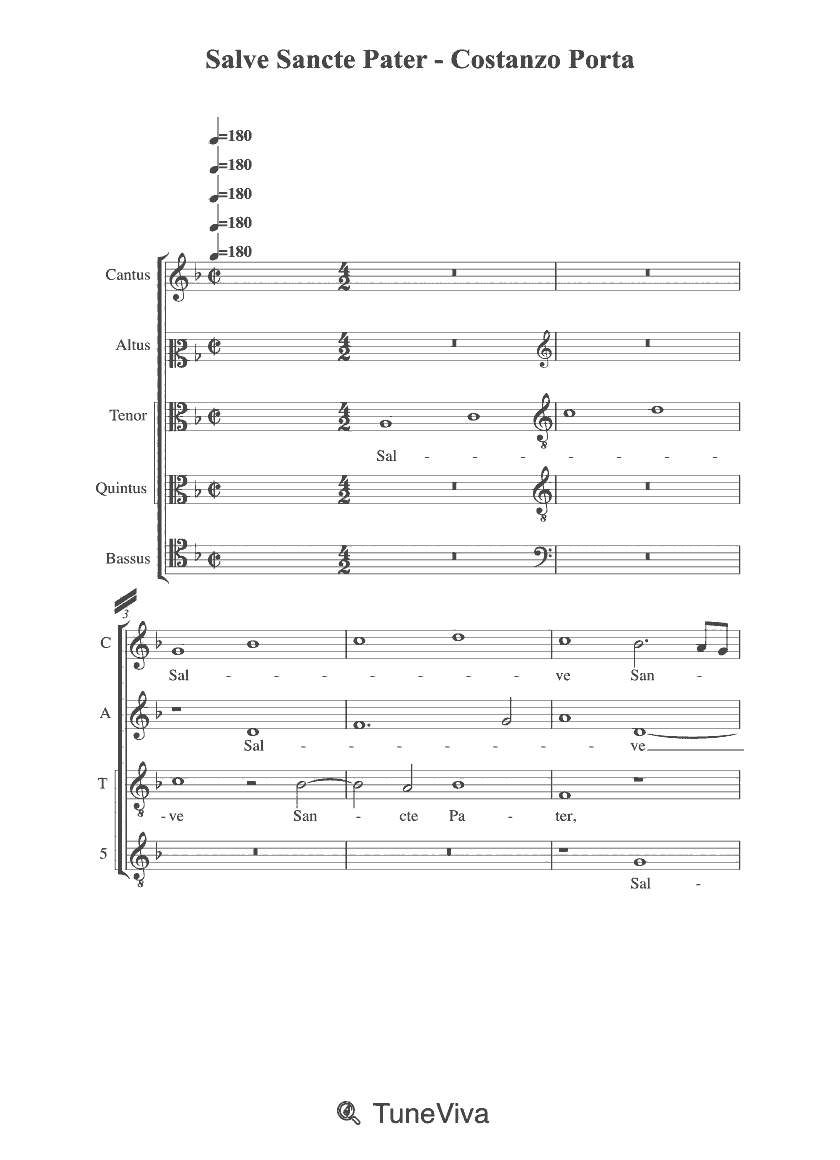
The page's most-viewed score: a Magnificat antiphon for the Transitus of St Francis, from the 1580 book of 52 motets.
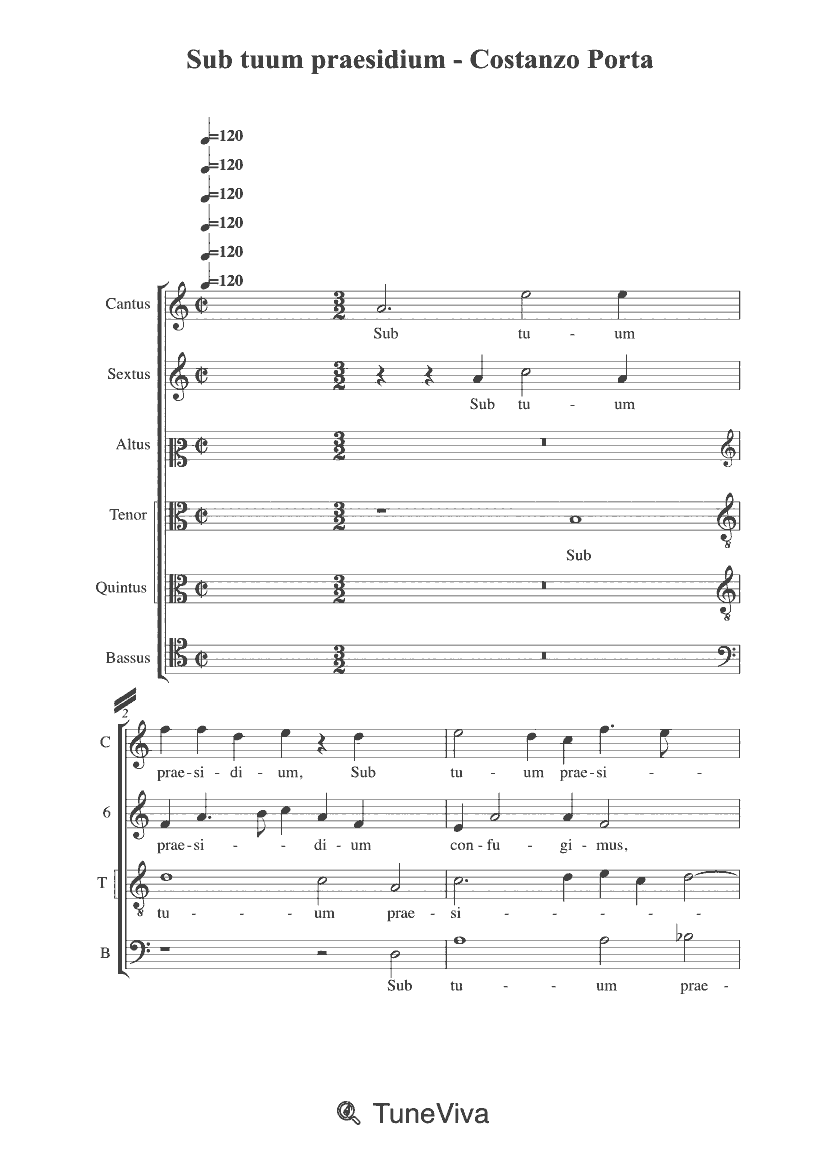
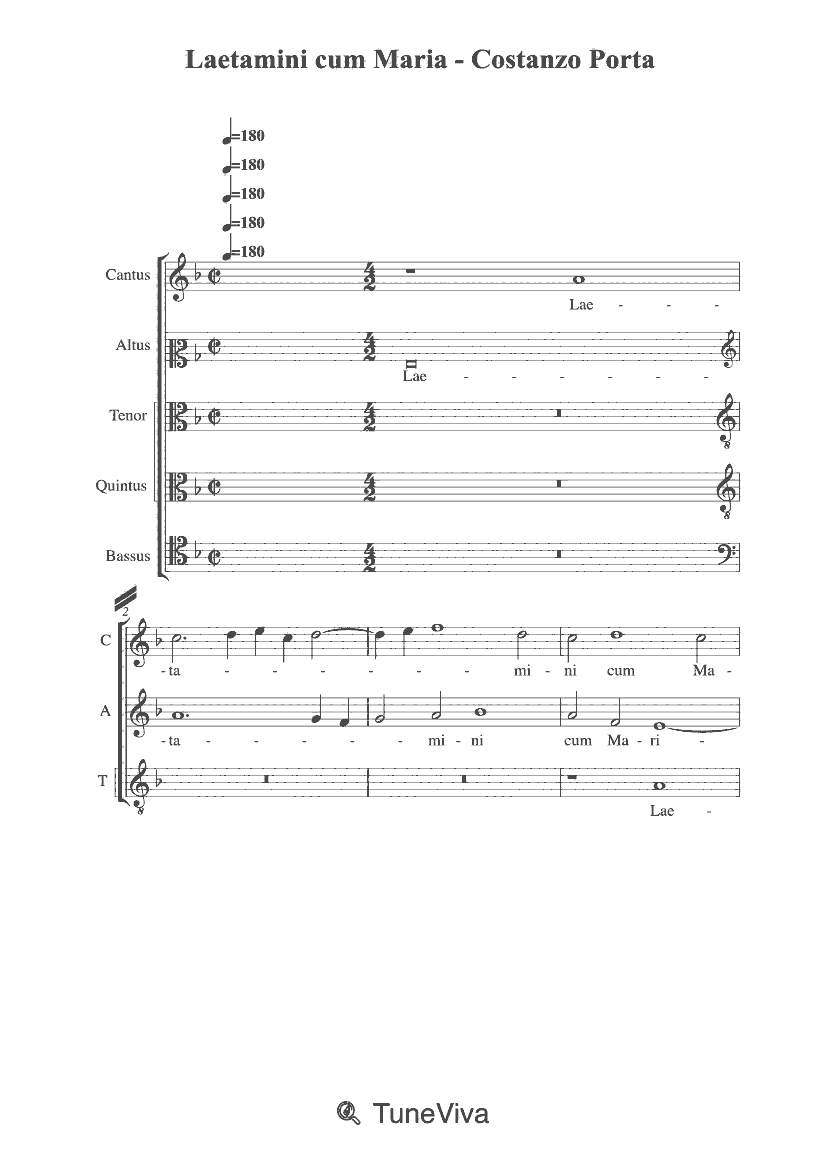
A setting of one of the oldest Marian prayers, for four voices.
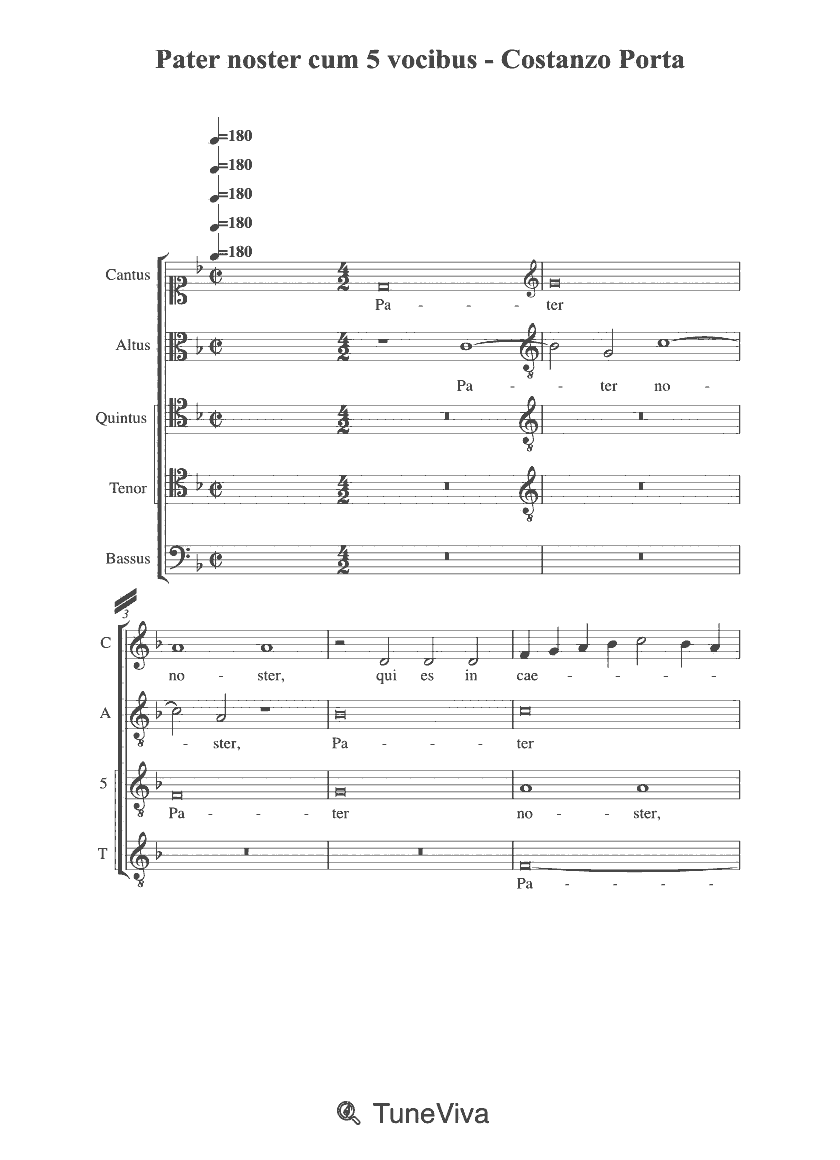
The five-voice Pater noster, no. 13 in the 1580 collection, for SATTB voices.
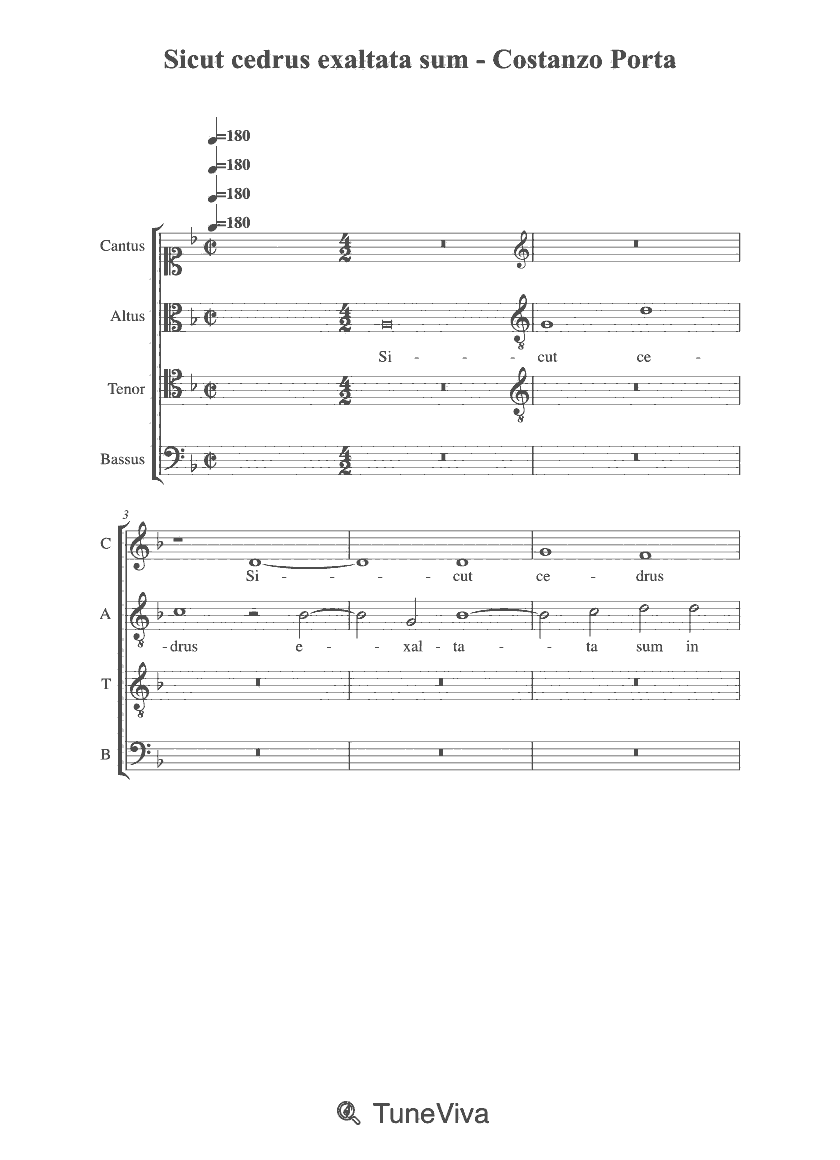
A motet on the Wisdom text 'I was exalted like a cedar in Lebanon'.
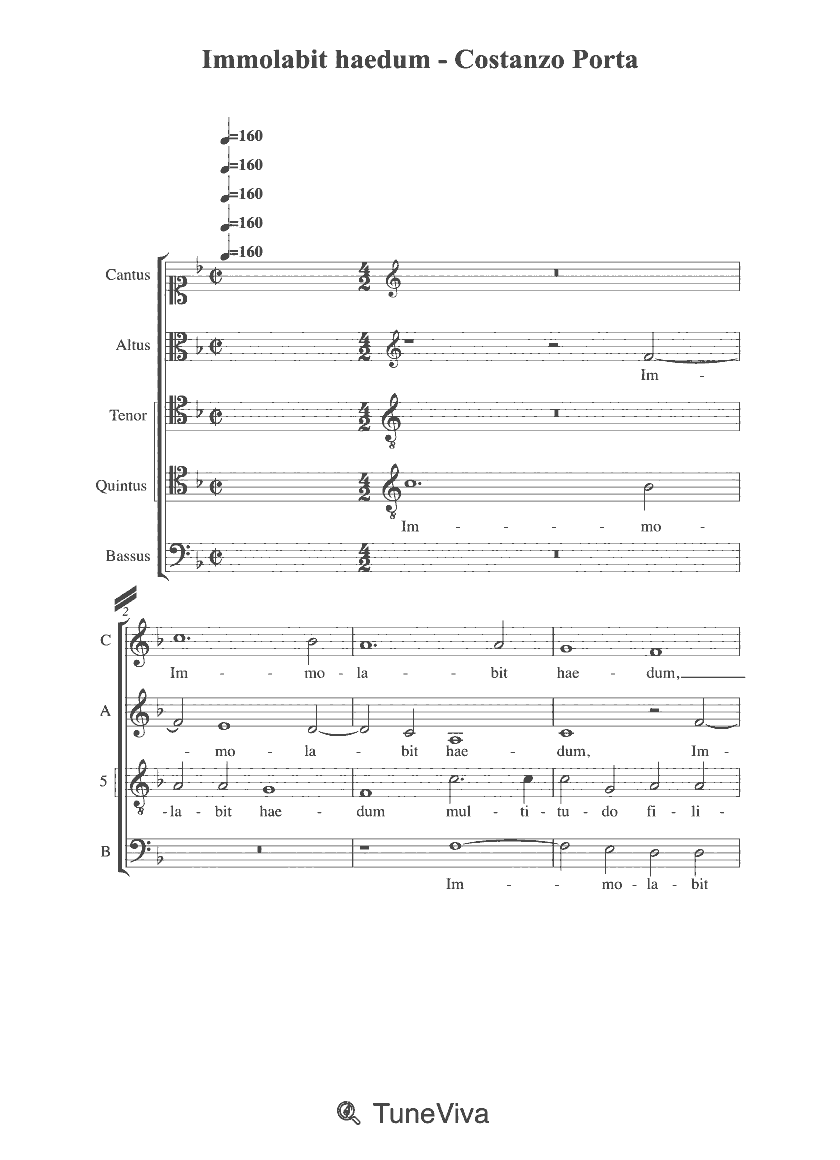
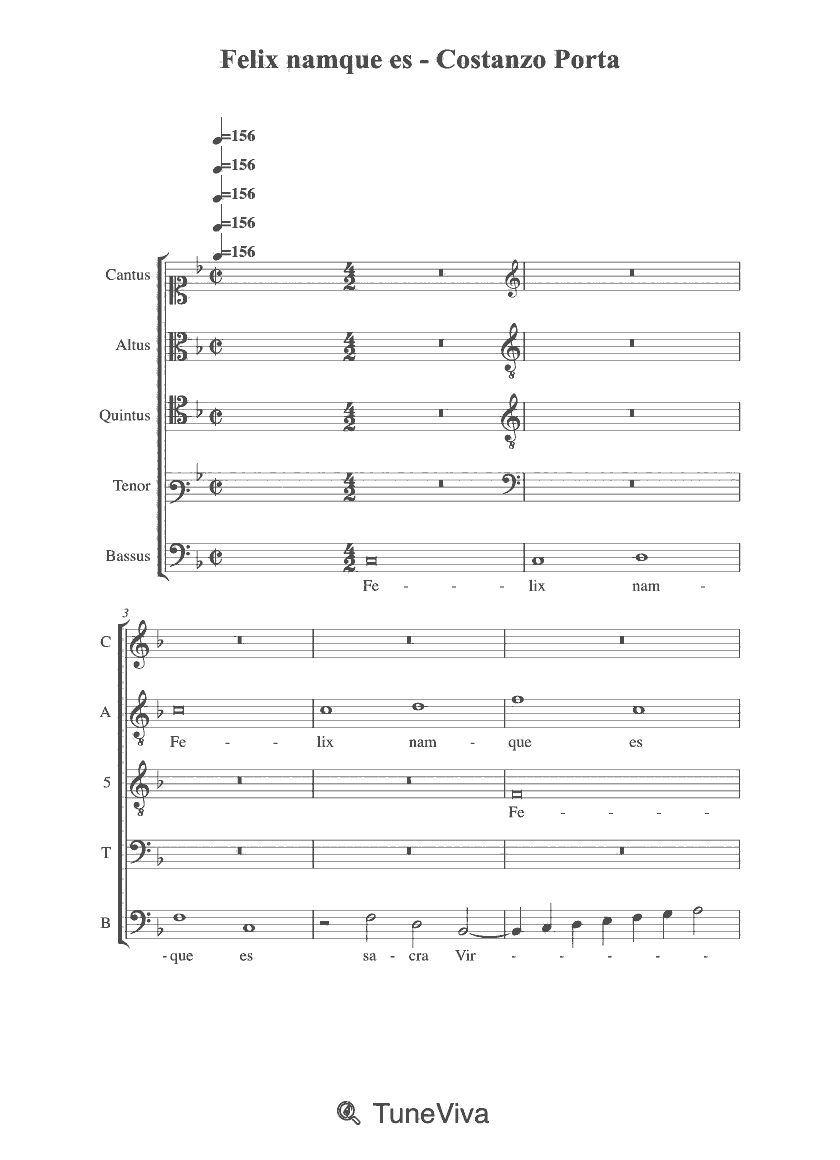
The title is the opening of a scriptural text about the Passover lamb; the catalogue names no source collection.
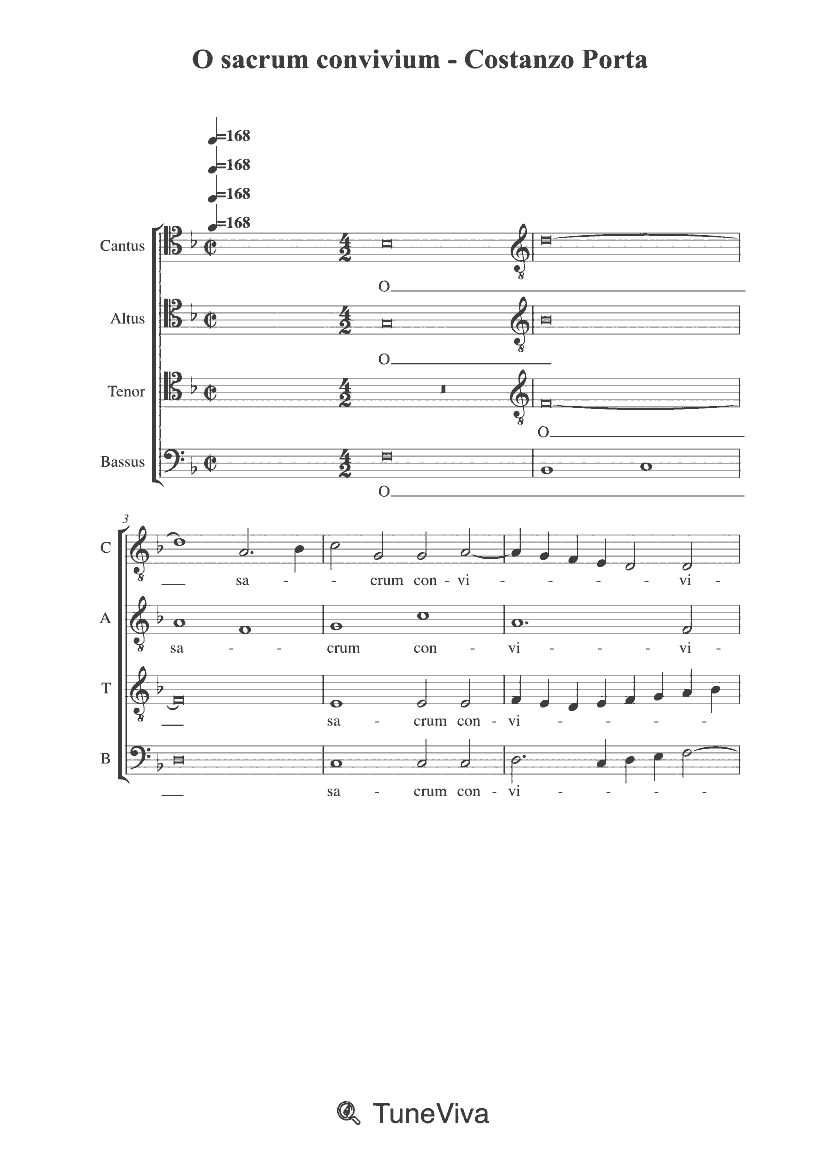
No. 8 in the 1580 book: a eucharistic motet on the 'O sacrum convivium' antiphon.
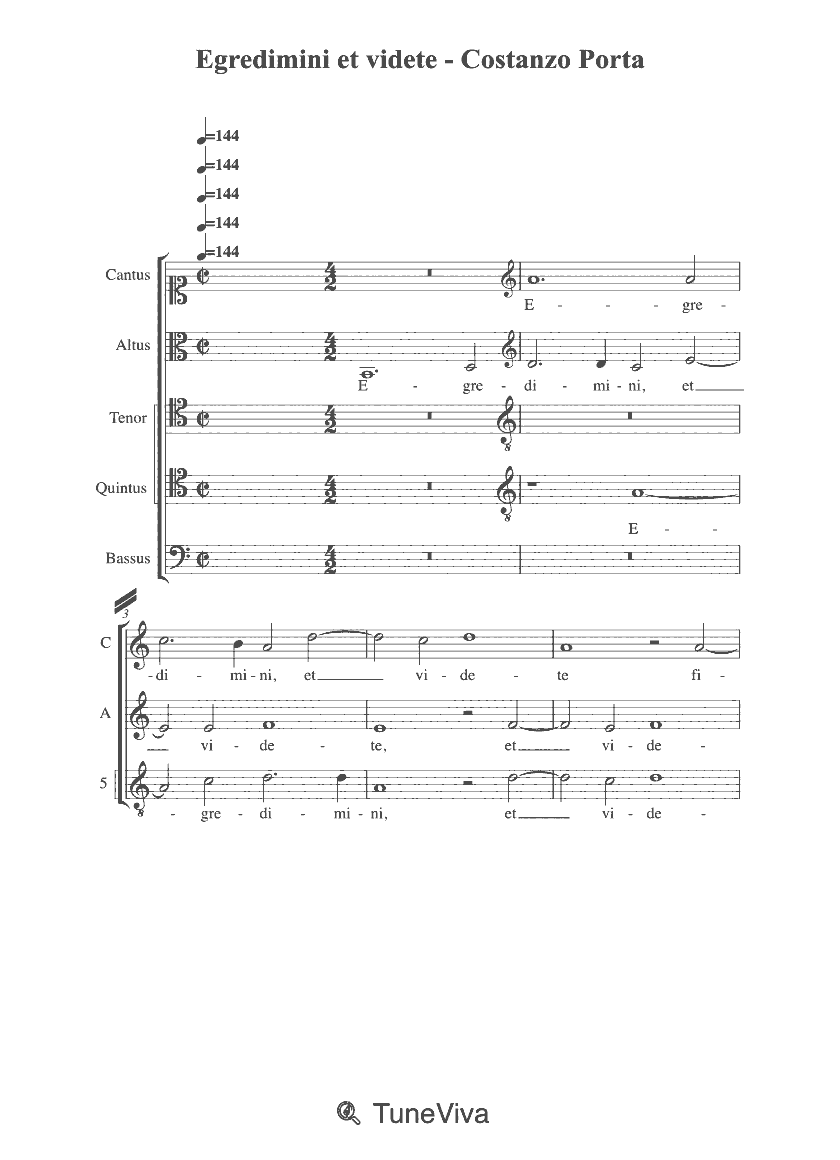
No. 23 in the 1580 collection, a motet on the Song of Songs invitation 'Go forth and see'.
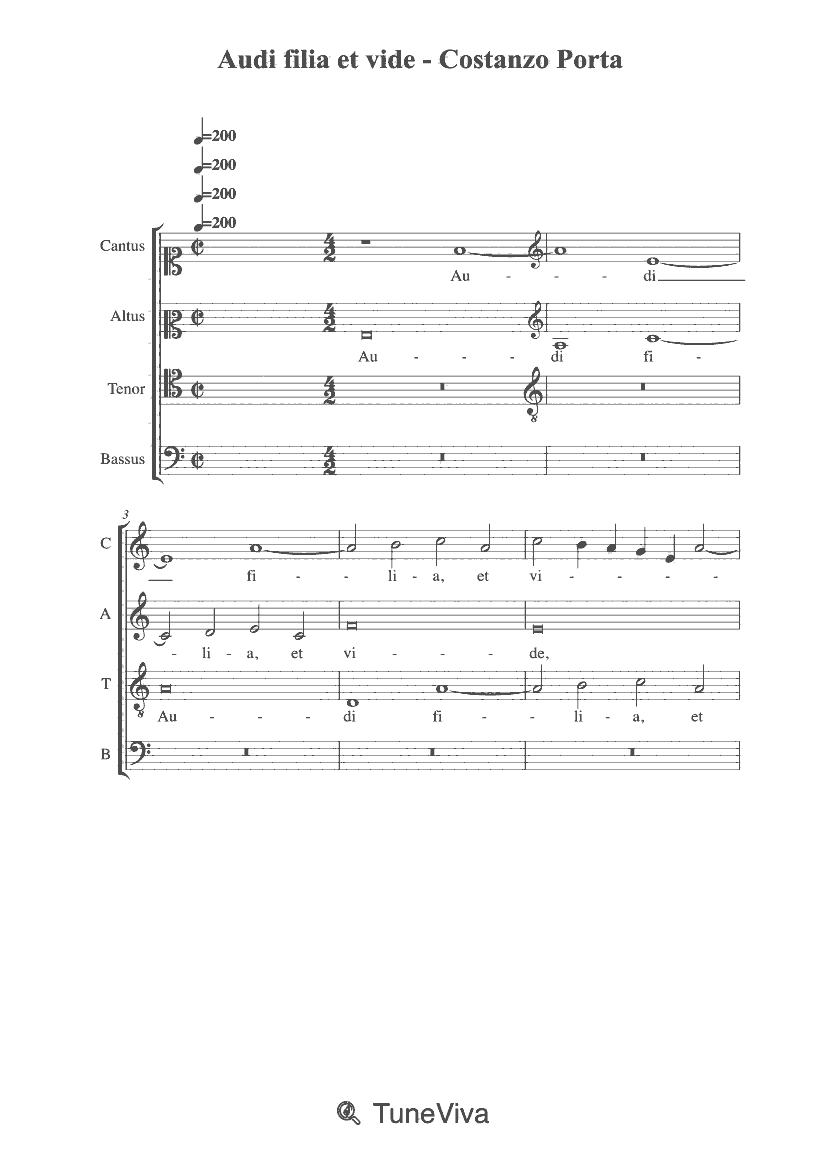
A setting of Psalm 45, 'Audi filia et vide', for four voices.
A motet in praise of St Anthony of Padua, the patron of Porta's last church.
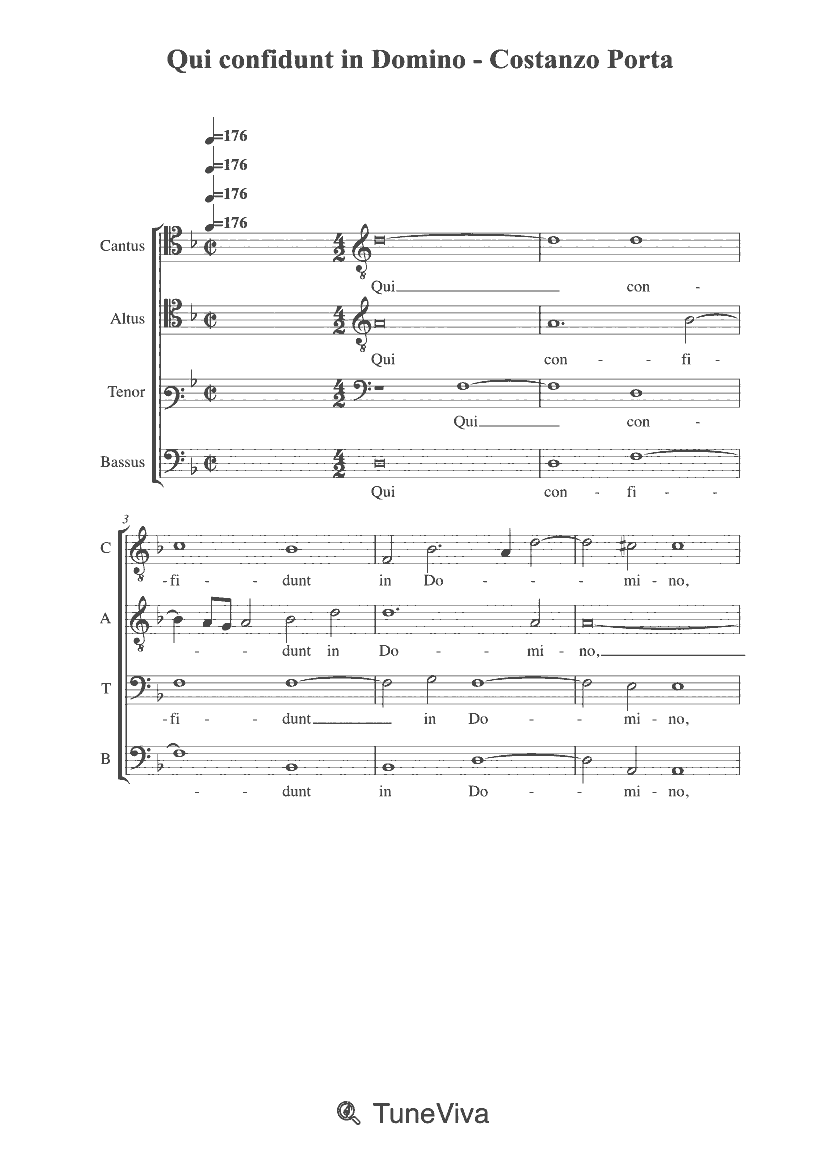
A motet on Psalm 124, 'They that trust in the Lord', in Porta's dense imitative style.
Twenty-one, about 128 minutes of music and 15,257 notated notes; twenty entries include lyrics.
No. It is a Magnificat antiphon for Second Vespers of the Transitus of St Francis, and it comes from the 1580 book of 52 motets.
The index measures notation density, and Porta's vocal lines use comparatively few notes per second. That says nothing about the difficulty of tuning a canon.
A 1580 Gardano print of fifty-two motets for four to eight voices; several of the pieces on this page come from it.
Yes. He belonged to the Conventual Franciscans, which explains his long connection with Loreto and the St Anthony motet on this page.
Catalog editions and arrangements attributed to Costanzo Porta.