
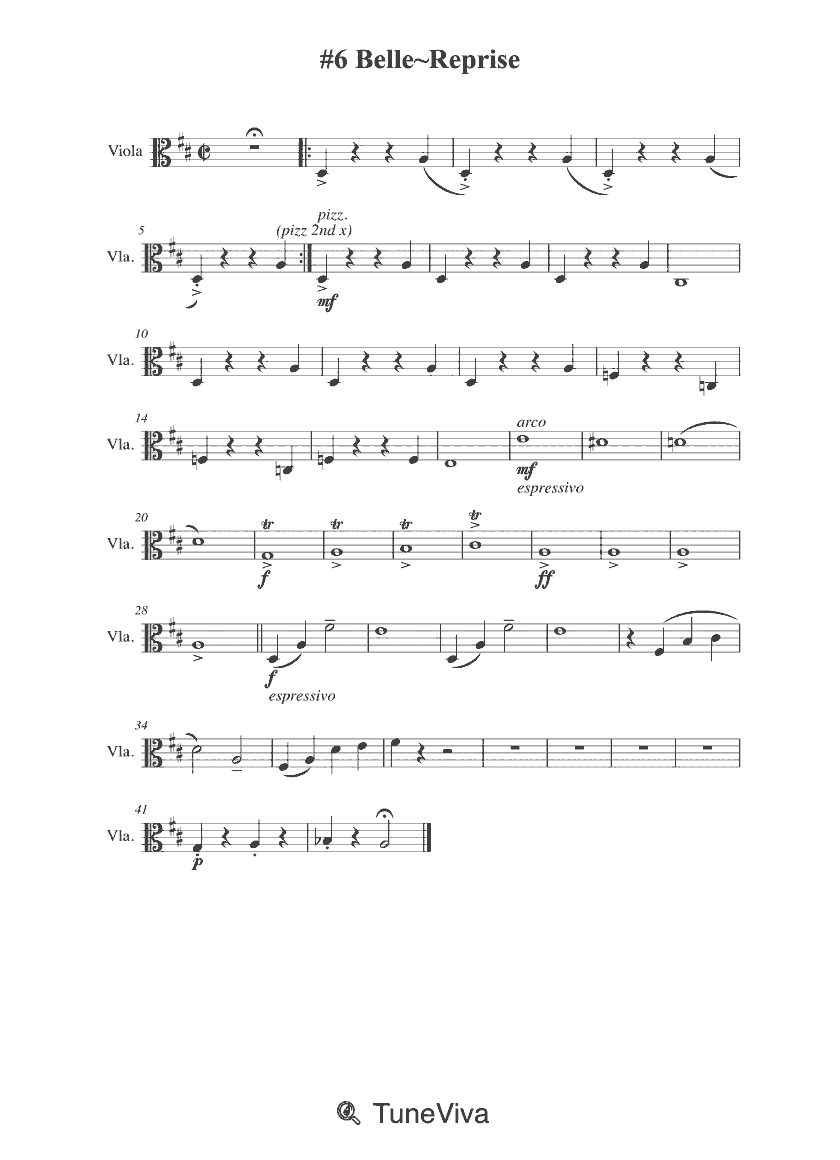
#6 Belle~Reprise
Viola
1 tracks
The catalogue holds 39 scores credited to Danny Troob, about 155 minutes of music and 8,601 notated notes. All of them belong to one show: Disney's Beauty and the Beast, in the stage version that reached Broadway in 1994.
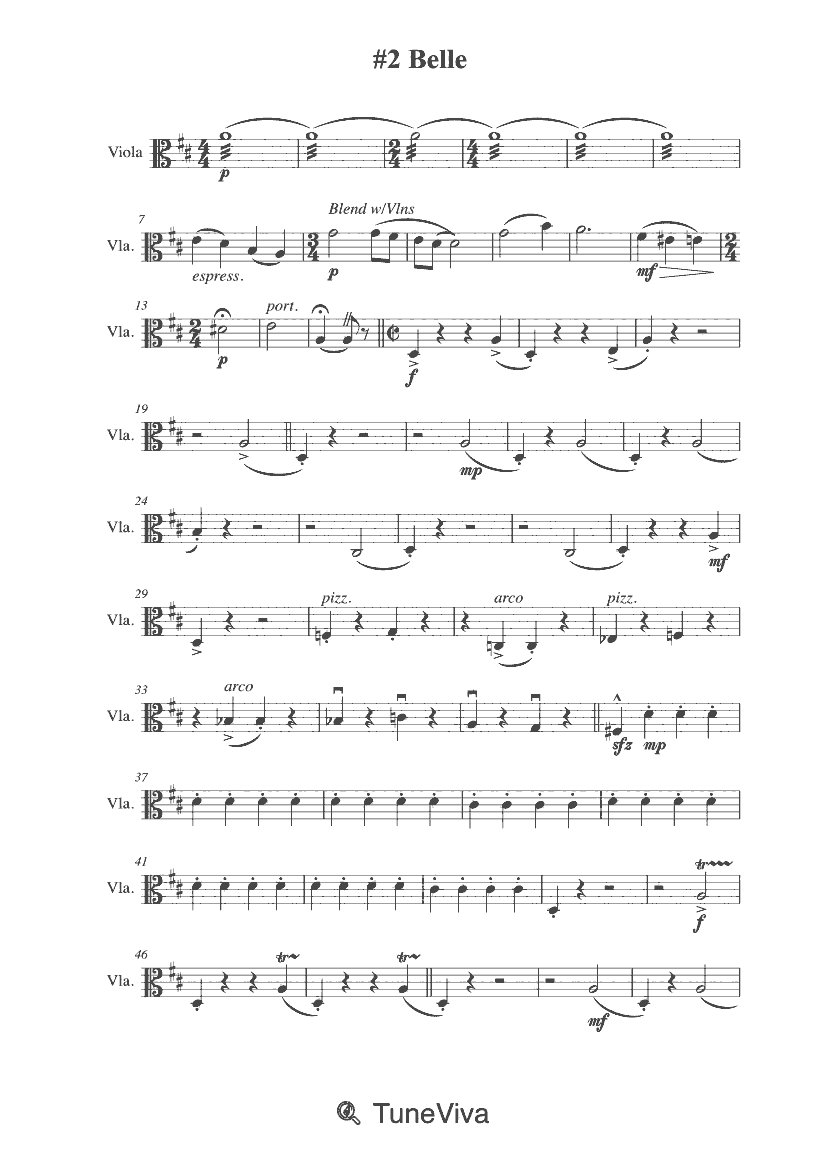
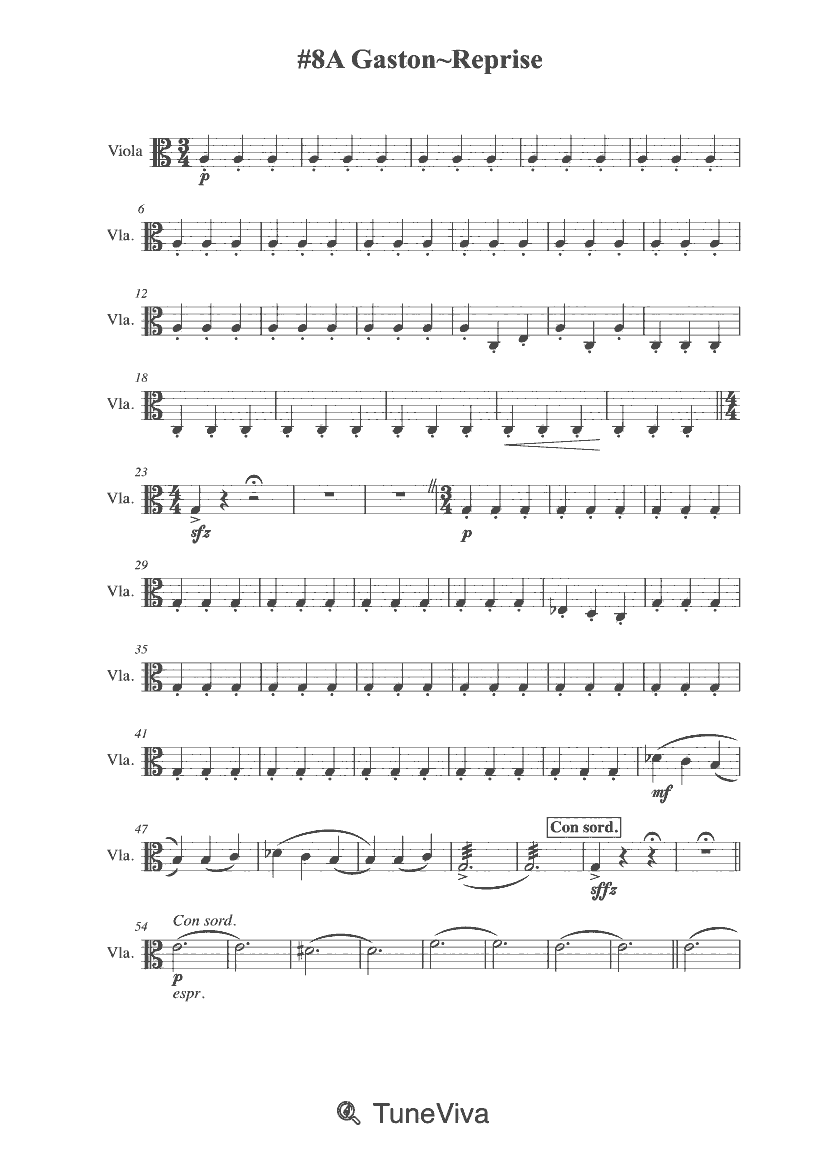
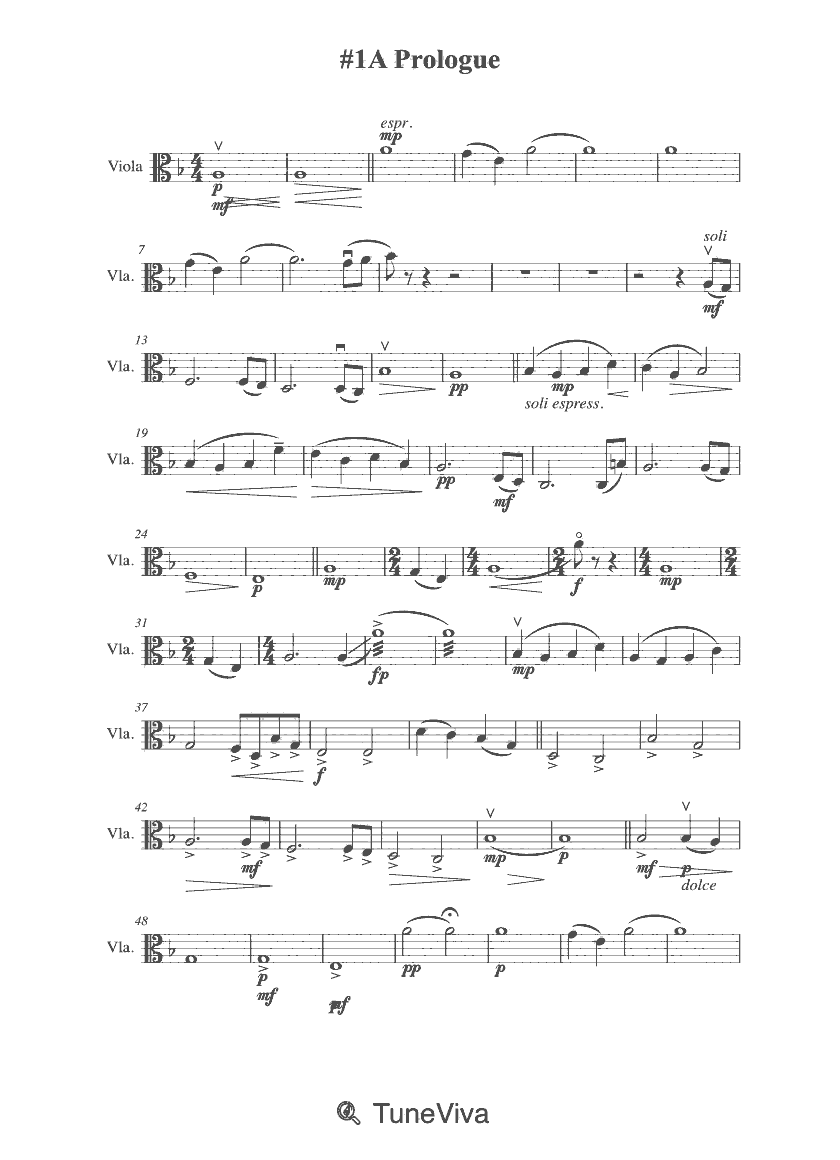
The entries follow the production's numbered cues, from #1 Overture and #1A Prologue to #20 Bows and #21 Exit Music, with reprises for Belle and Gaston and scene changes such as #15A Beast Lets Belle Go. The most-viewed number is #6 Belle Reprise, ahead of #8 Gaston and #9 Be Our Guest.
None of the entries carries lyrics, and none is logged above complexity index 0, even though the orchestral writing behind them is not simple.
Daniel Troob was born on 28 February 1949 in Forest Hills, Queens, and studied composition at Harvard, graduating with honours in 1970. He was writing for orchestra as a child: at twelve he made his Carnegie Hall debut with an orchestral work he had orchestrated himself, conducted by Leopold Stokowski. His Broadway work began in the mid-1970s, with dance music for Pacific Overtures in 1976, and he went on to orchestrate Big River, which brought him a Drama Desk Award in 1985.
Beauty and the Beast is the centre of his film and theatre reputation. He orchestrated Alan Menken's score for the 1991 animated film and arranged its songs, then orchestrated the stage musical, which opened at the Palace Theatre on 18 April 1994 and ran for 5,461 performances. His other Disney credits include Aladdin, Pocahontas, Hercules and Enchanted, and he was nominated for Tony Awards for The Pajama Game and Shrek the Musical; a second Drama Desk Award came for Rodgers and Hammerstein's Cinderella in 2013.
The 39 entries reflect the licensed stage material rather than the film soundtrack. Dance and underscore cues sit beside the songs, which is why titles such as #2A Belle Playoff, #4B Gaston's Crossover and #17B Fight On The Tower appear at all. The whole set runs to about 155 minutes, roughly an evening in the theatre, and the note count is low for that running time; the catalogue does not record the scoring of each file.
Troob's orchestrations are for the theatre orchestra rather than the concert hall: strings carry the melody, brass and reeds answer it, and percussion marks the scene changes. Notice how little the accompaniment does under the voices in Belle and No Matter What, and how much of the drama is left to a single woodwind line. The reprises are shorter and more lightly scored than the numbers they repeat, so they work as transitions rather than set pieces. If you are preparing a part, count the rests, because several cues are mostly accompaniment and the entries are easy to miss.
The most-viewed entry: Belle's short reprise, in which she sings of wanting more than the provincial life around her.
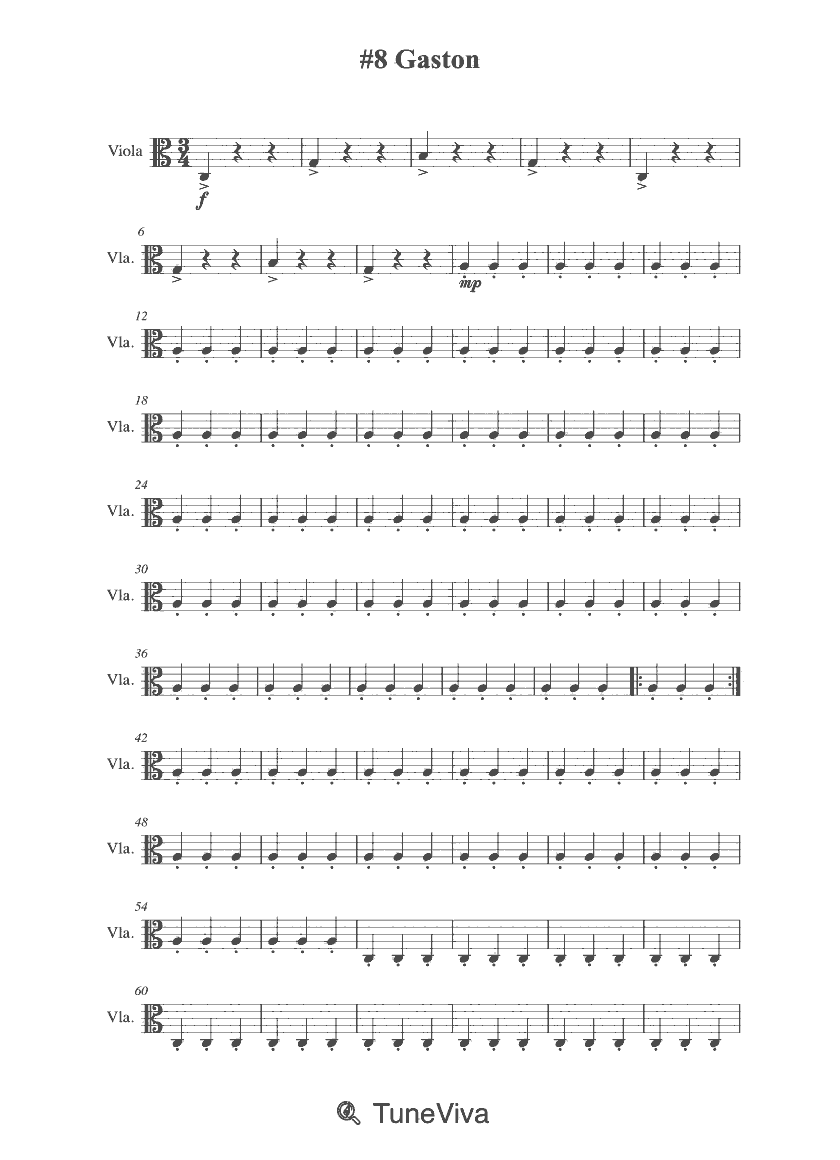
The tavern number for Gaston and Lefou, written by Menken and Ashman for the 1991 film and carried into the stage score.
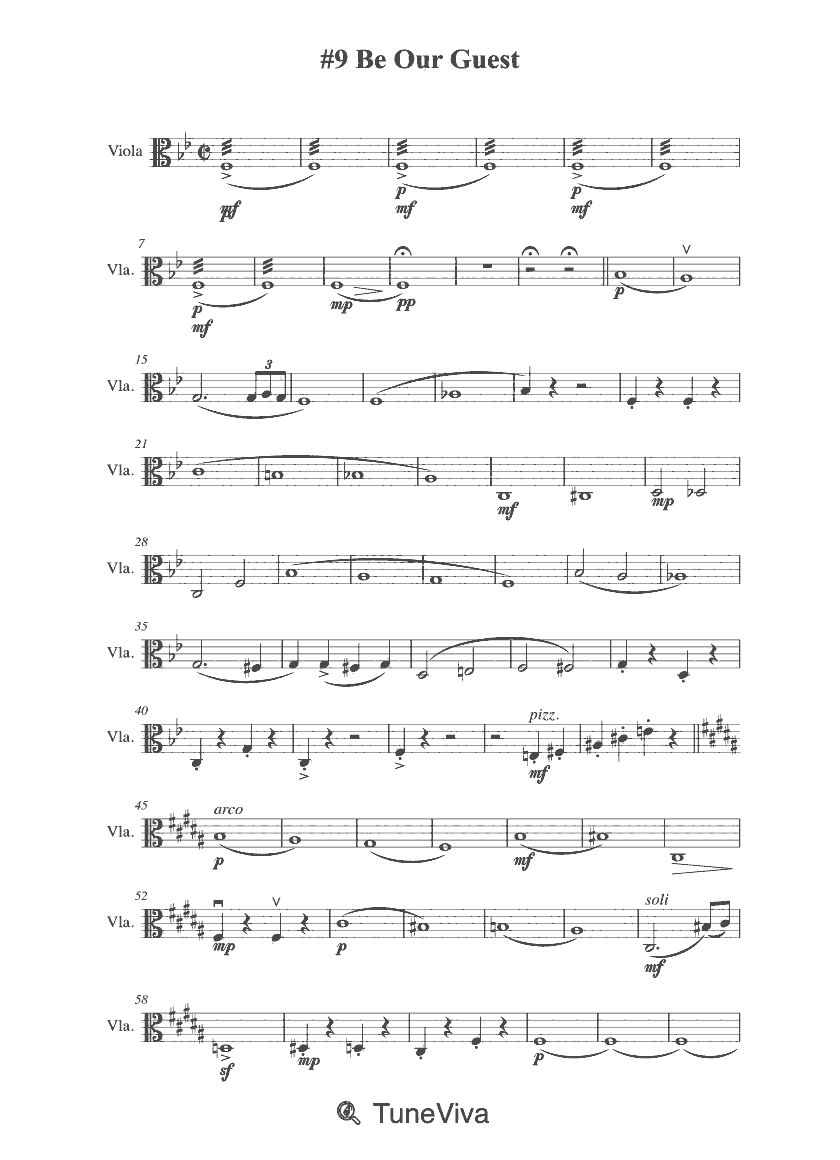
Lumiere's invitation number, re-staged for the theatre with a dance break for Belle and the enchanted objects.
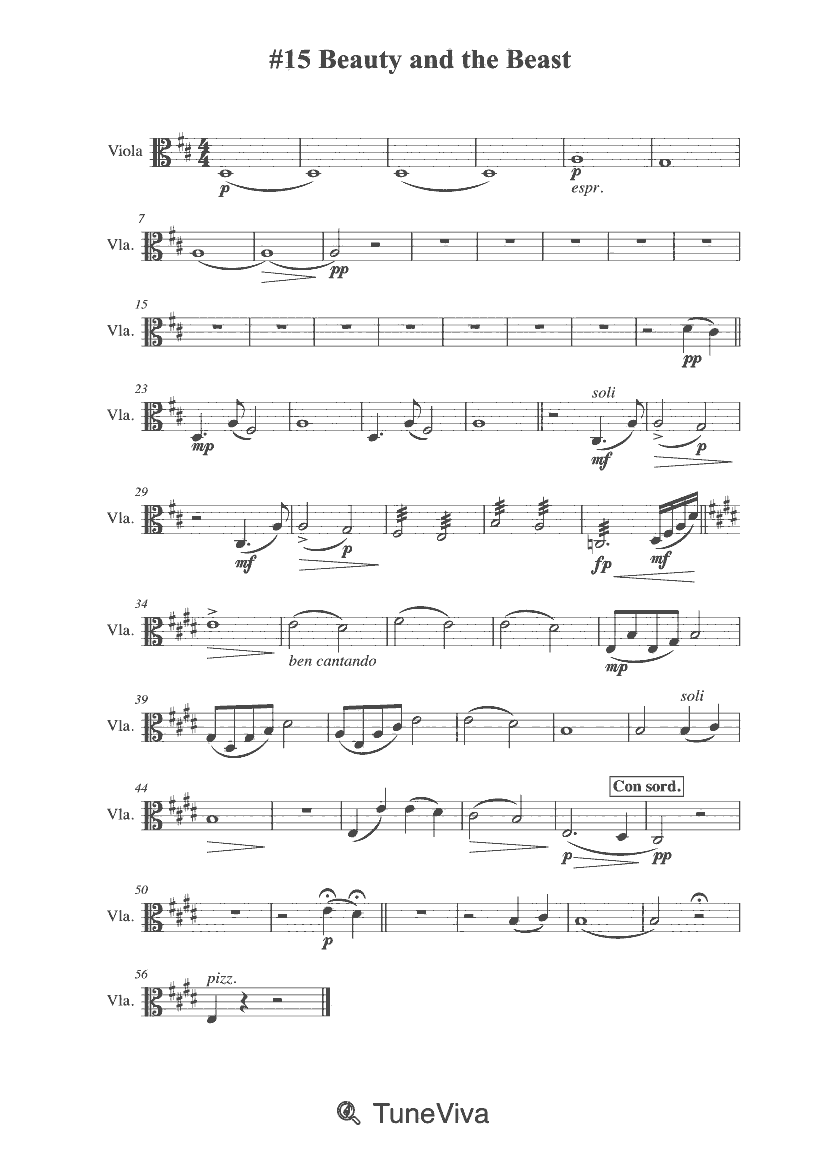
The duet in which Belle and the Beast begin to warm to each other, placed after the library scene.
The closing sequence of the show, ending with the Beast restored and the company reunited for the final number.
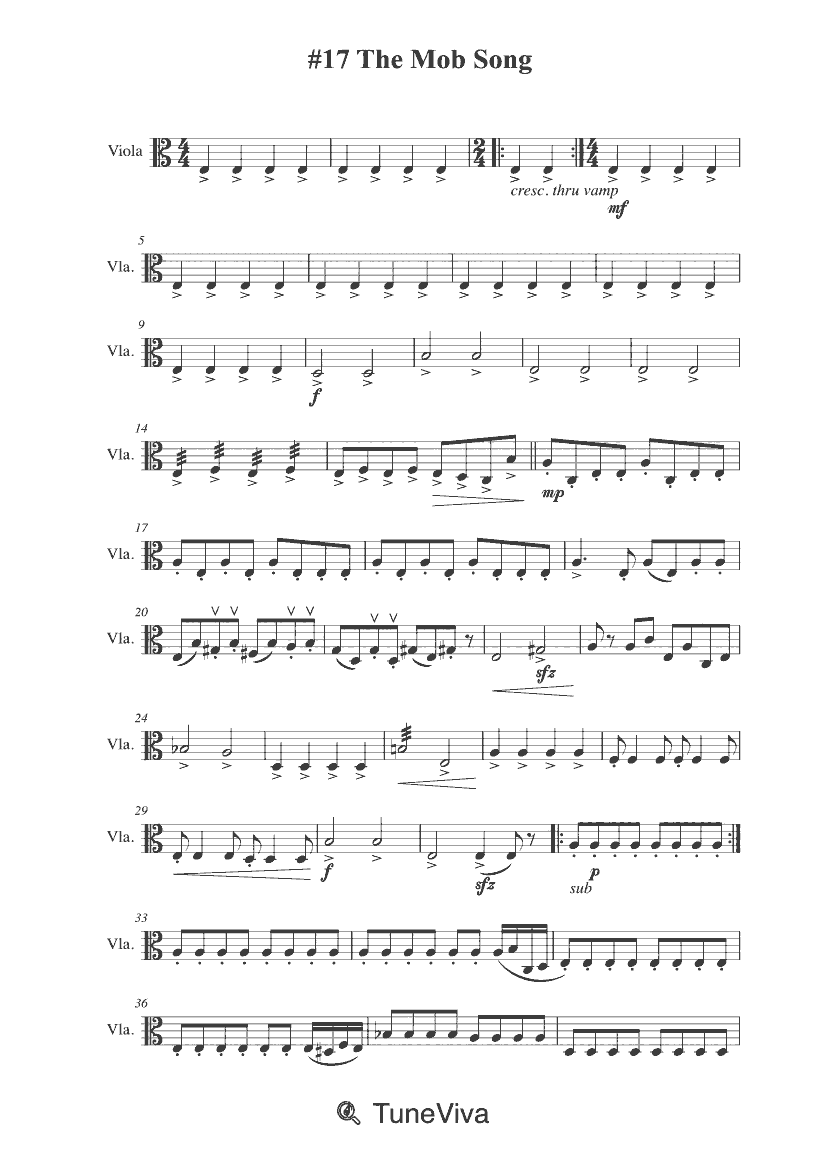
Gaston leads the villagers to the castle; in the stage score the number runs into the fight music at #17B.
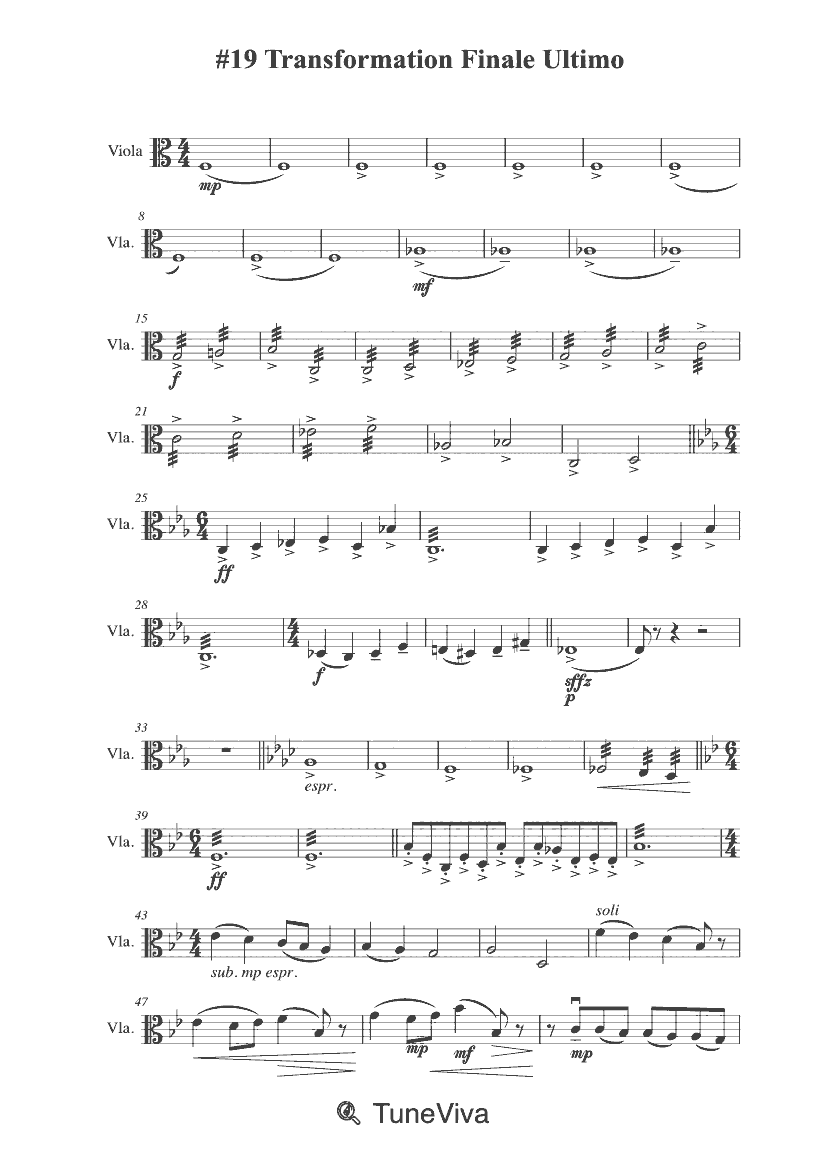
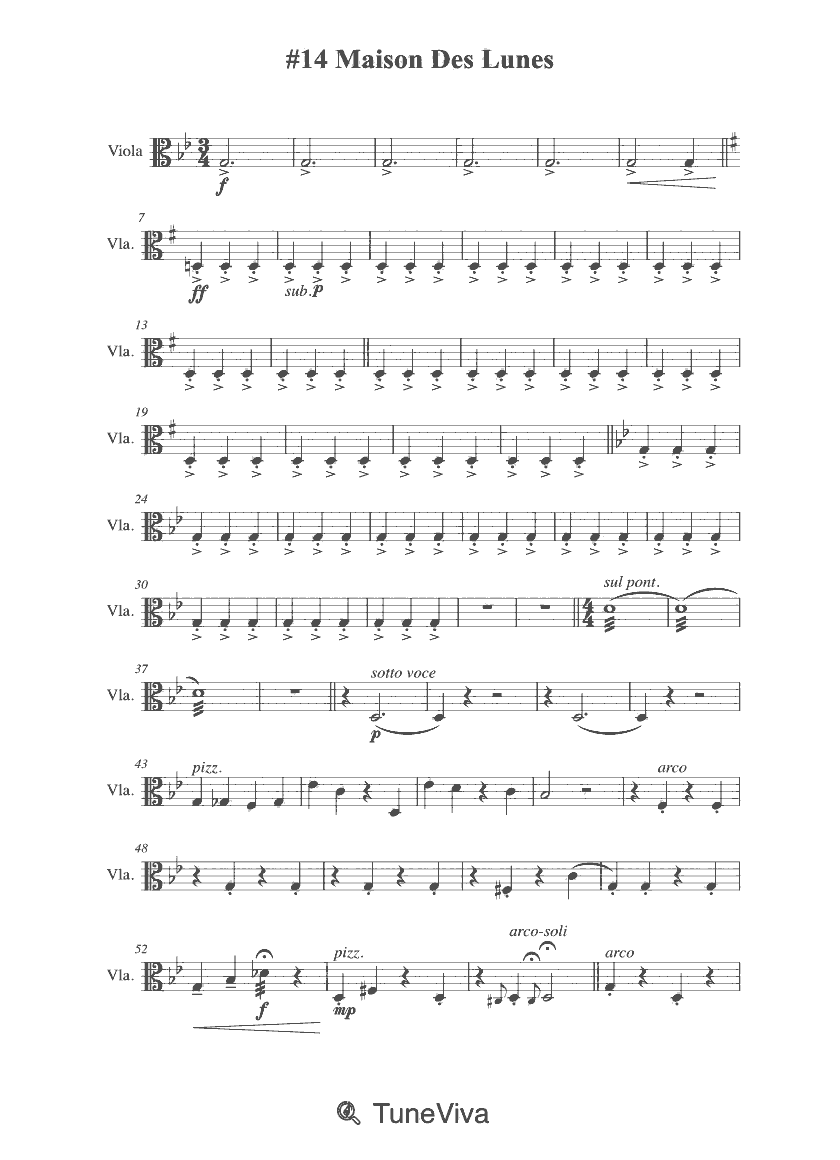
A Menken-Rice addition for Broadway: a father-and-daughter ballad for Maurice and Belle.
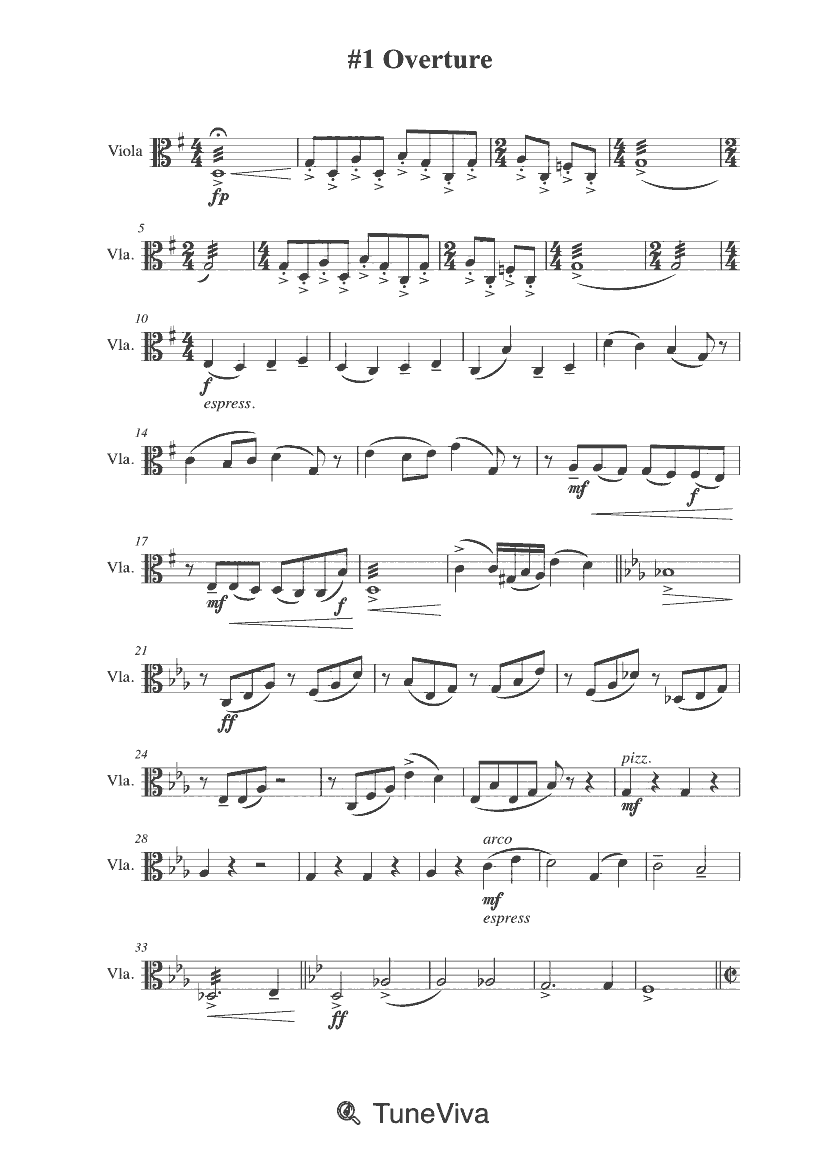
The opening orchestral cue, and the first of the numbered stage entries.
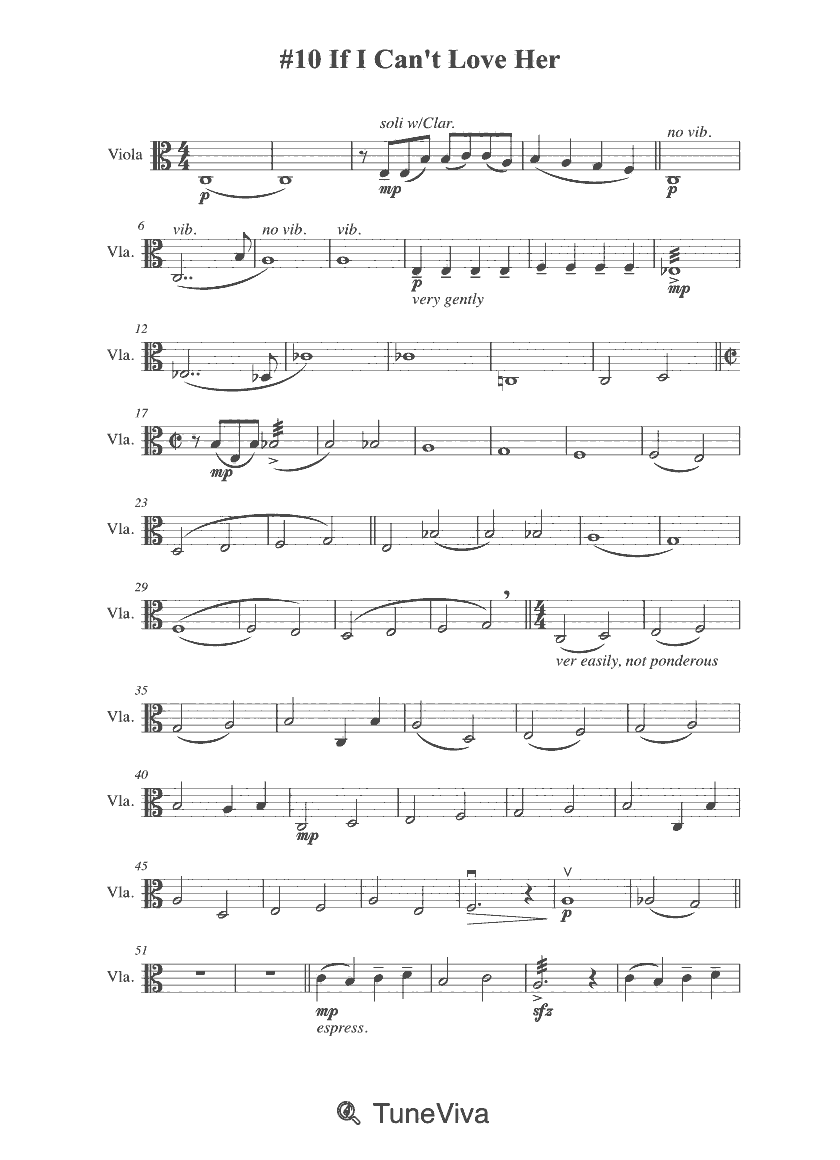
Gaston, Lefou and Monsieur D'Arque plot to have Maurice committed; the number was dropped from the licensed version in 2021.
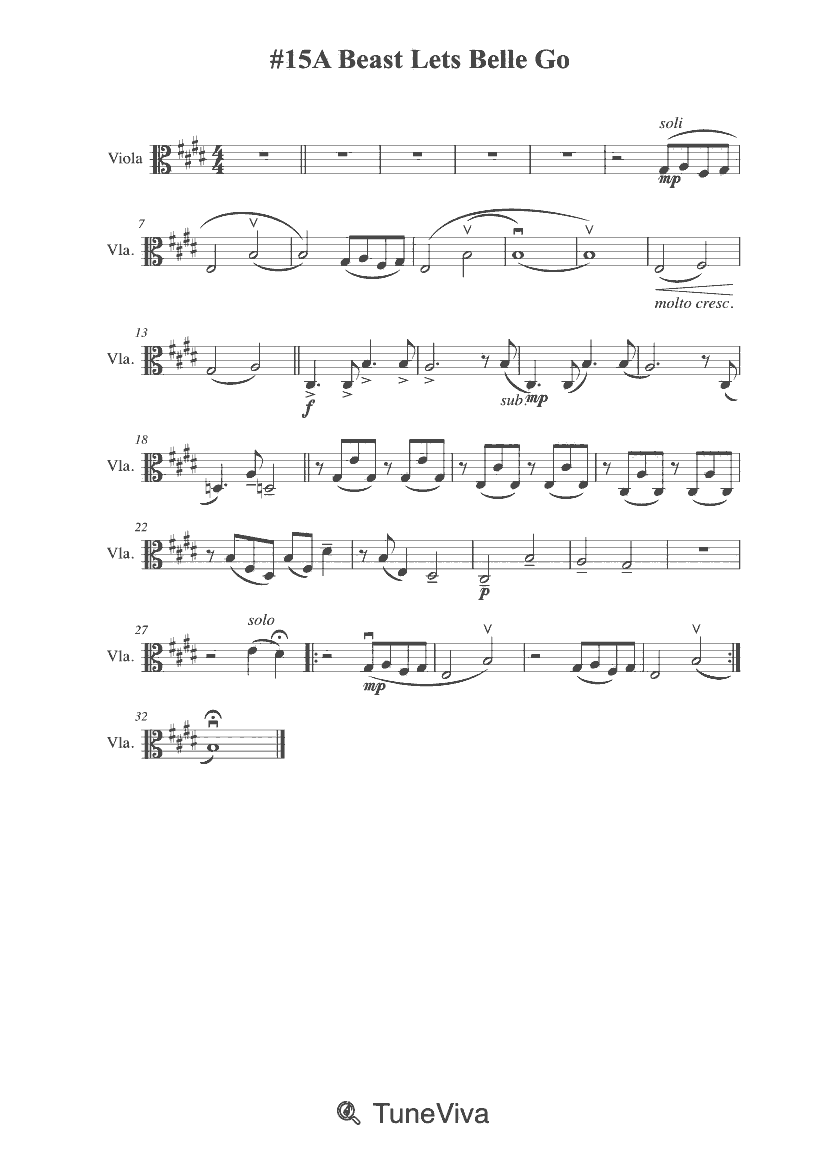
A short scene cue in which the Beast frees Belle to go to her father.
39, running to about 155 minutes and 8,601 notated notes. None has lyrics and all are logged at complexity index 0.
No. Alan Menken wrote the score and the songs, with Howard Ashman and later Tim Rice as lyricists. Troob orchestrated the film and the stage musical, and the catalogue files the cues under his name in that role.
They reproduce the show's cue book rather than a cast recording. Scene changes and play-offs need their own numbers, which is why there are entries such as #2A Belle Playoff and #15A Beast Lets Belle Go.
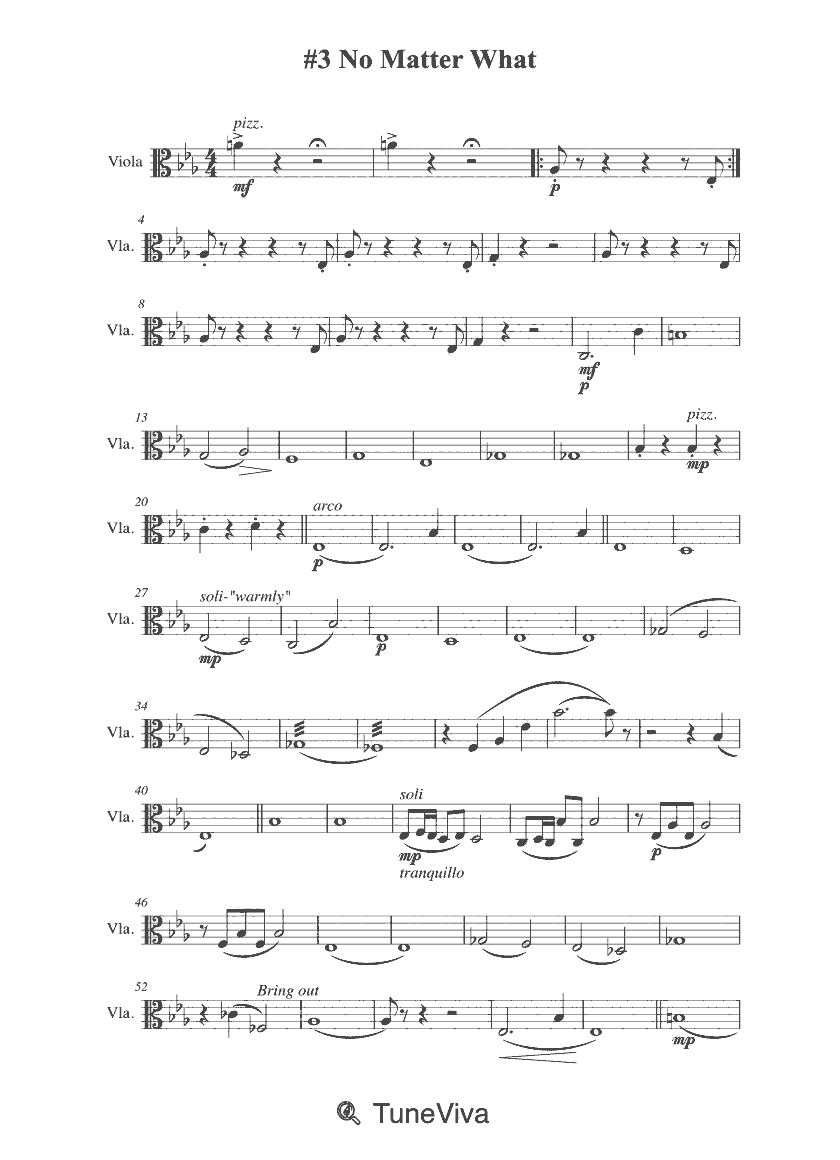
No Matter What, Me, Home and Maison des Lunes were written for Broadway by Menken and Rice, and A Change in Me followed in 1998. Human Again was written for the film, cut before release, and restored for the stage.
Catalog editions and arrangements attributed to Danny Troob.
Viola
Viola
Viola
Viola
Viola
Viola
Viola
Viola
Viola
Viola
Viola
Viola
Viola
Viola
Viola
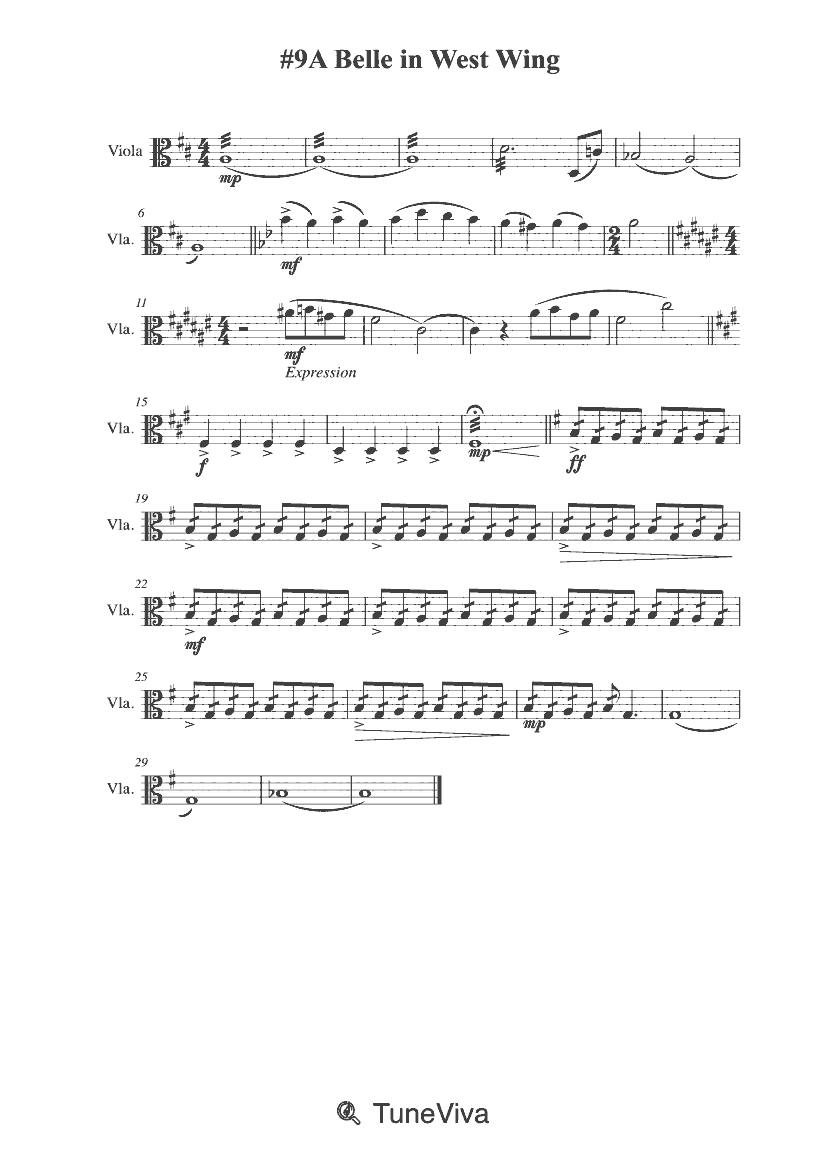
Viola
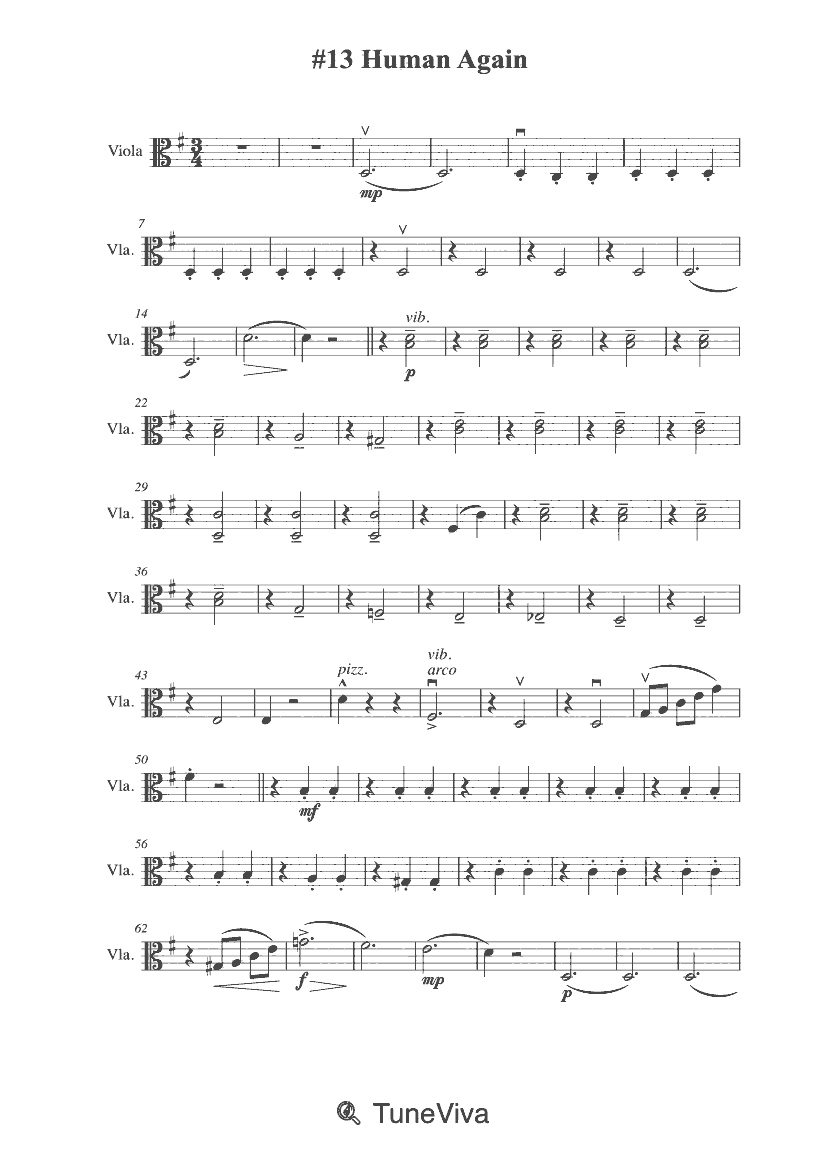
Viola
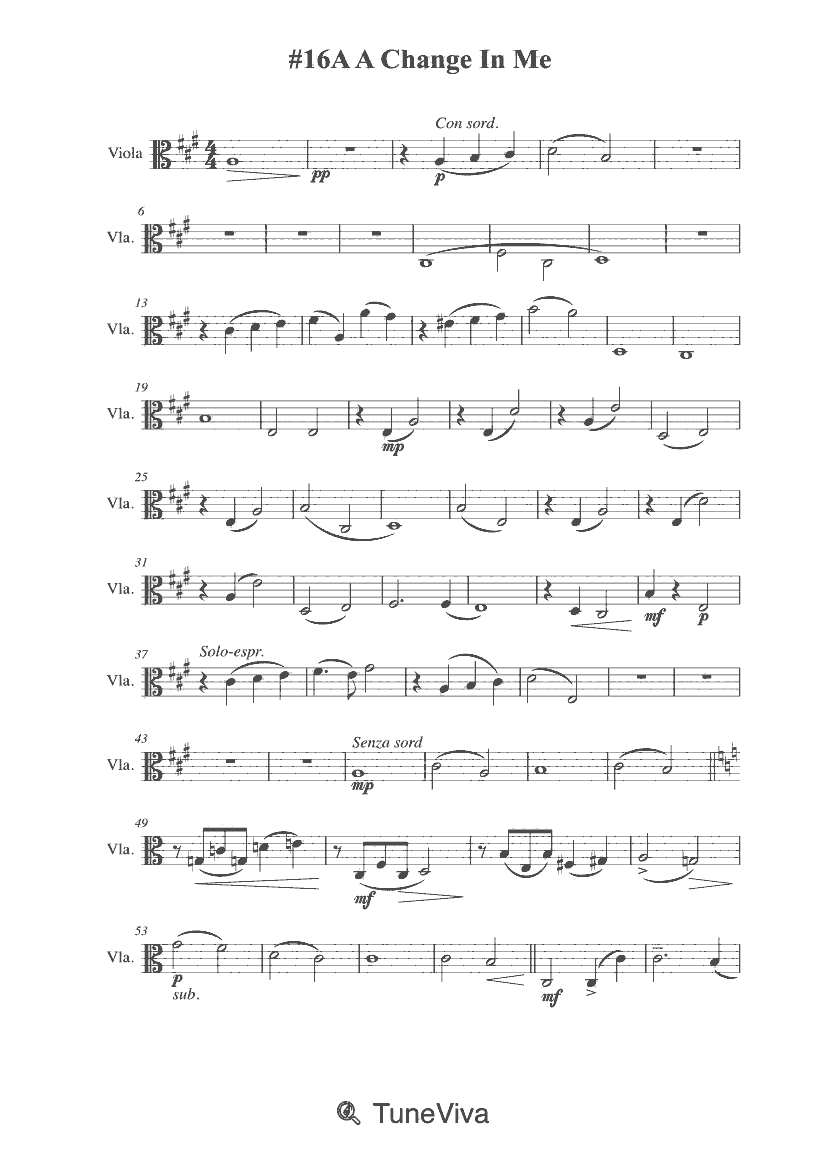
Viola
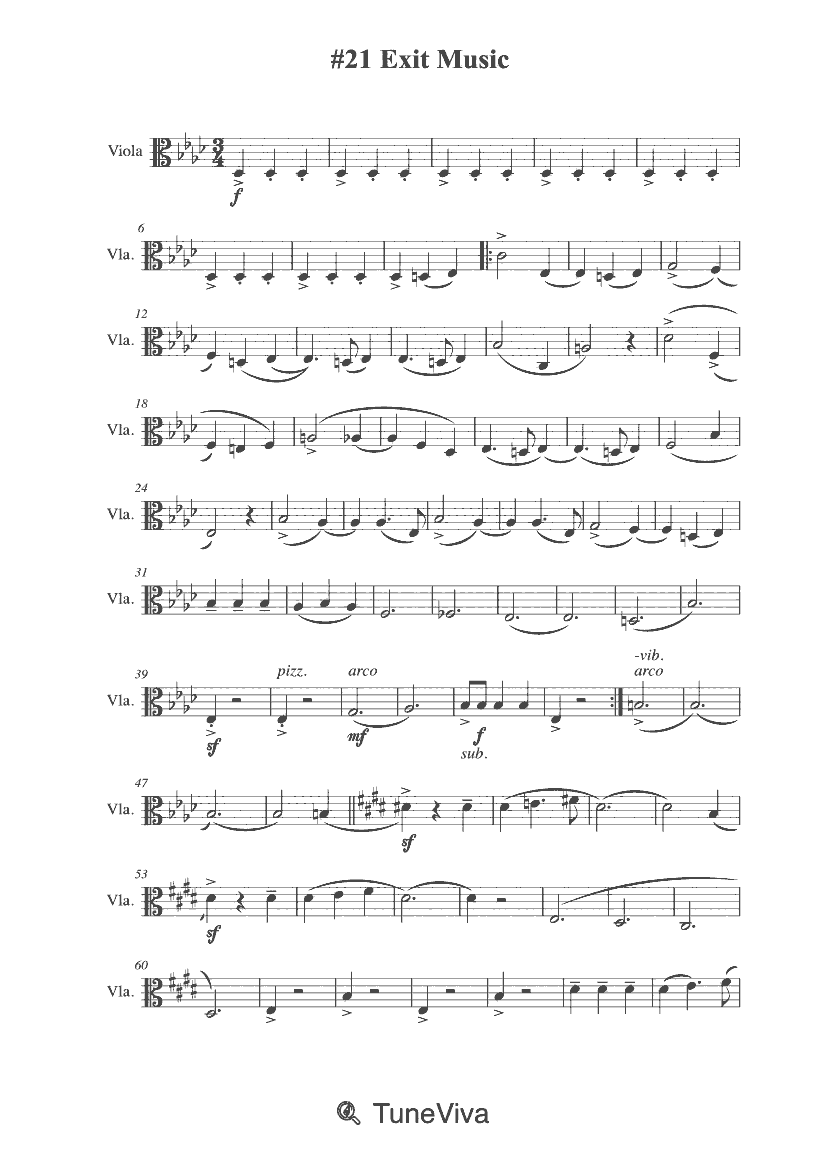
Viola