classical
2 tracks
Hugg was a Philadelphia church musician who wrote for Sunday schools and revival meetings, and the catalogue is built from that repertoire: 87 scores, about 56 minutes of music and 26,427 notated notes. Seventy entries carry lyrics; the other seventeen may be instrumental or simply lack a text field.
The pieces are short. At well under a minute per entry on average, most are hymn stanzas or single anthems rather than extended choral works, and the difficulty spread is modest: 44 at index 0, 30 at index 1 and 13 at index 2.
George Crawford Hugg was born on 23 May 1848 near Haddonfield, New Jersey. He became choirmaster of the Presbyterian church in Berlin, New Jersey, at the age of twelve, and published his first song, Walk in the Light, two years later. He went on to direct music at the Tabernacle Presbyterian Church and the Broad and Arch Street Methodist Episcopal Church in Philadelphia, and was closely associated with the Harper Memorial Presbyterian Church, whose name was later given to his most famous tune. He married Annie E. Ketchum in 1891 and died in Philadelphia on 13 October 1907.
Hugg was prolific even by gospel-era standards: over 2,000 works, eighteen books of revival and Sunday-school music and ninety song services for festivals. The collections include The Crowning Triumph (1879), Exalted Praise (1882), The Helper in Sacred Song (1889), Sunlight in Sacred Song (1892), Rich in Blessing (1894), Heaven's Echo (1895), On Wings of Song (1896), Light in the Valley (1898), Corn in Egypt (1900), Fairer Than Day (1902) and Praise and Rejoicing (1904).
The catalogue's 87 scores run to about 56 minutes and 26,427 notes, an average of less than a minute each. That shape is explained by the sources: gospel hymns, short anthems and songs for special occasions, not cantatas. Two spellings of his name were merged into this page, and some works appear twice under different titles — 'There's not a friend like the lowly Jesus' and 'No, not one!' are the same Oatman hymn with Hugg's tune. The parentheses in titles such as 'Glory to God in the highest (Hugg)' are catalog disambiguators, not part of the works.
These pieces are meant for a congregation or a Sunday-school room, not a concert platform. Keep the stanzas moving, give the refrain a little more weight, and let the keyboard or organ carry the harmony without doubling every voice. The parts are mostly syllabic, so diction matters more than blend. In the anthems, watch the dotted rhythms: they should be crisp rather than heavy. A small choir can manage most of this music at sight, which is precisely what it was written for.
The most-viewed score: a Johnson Oatman Jr. text that Hugg set for Light in the Valley (1898).
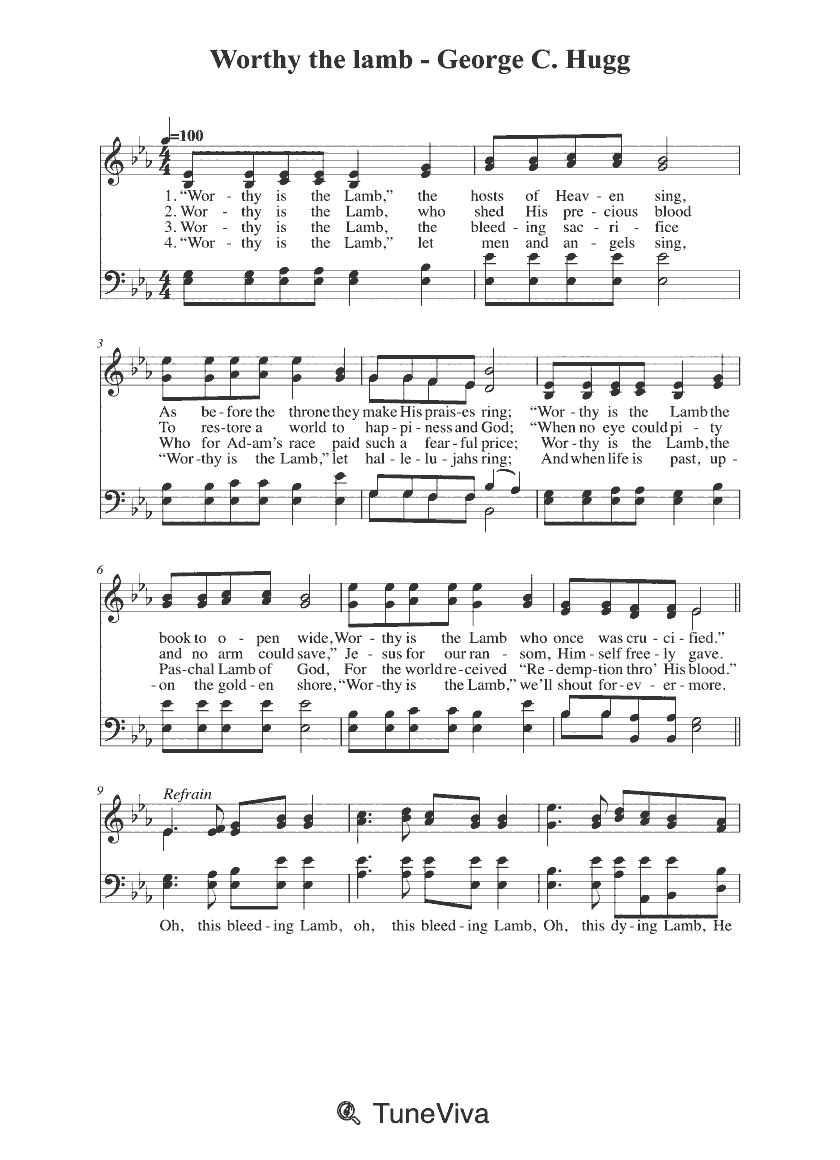
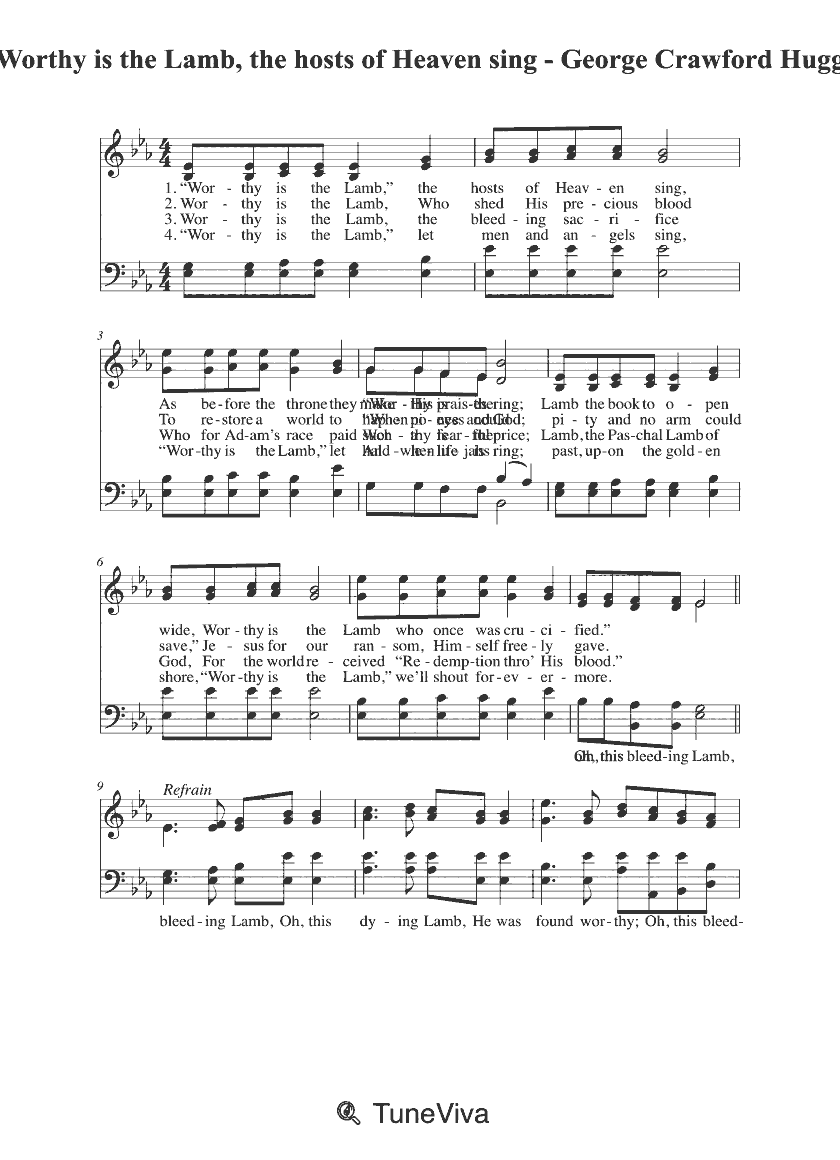
A setting of 'Worthy is the Lamb, the hosts of heaven sing', a Revelation text for choir and congregation.
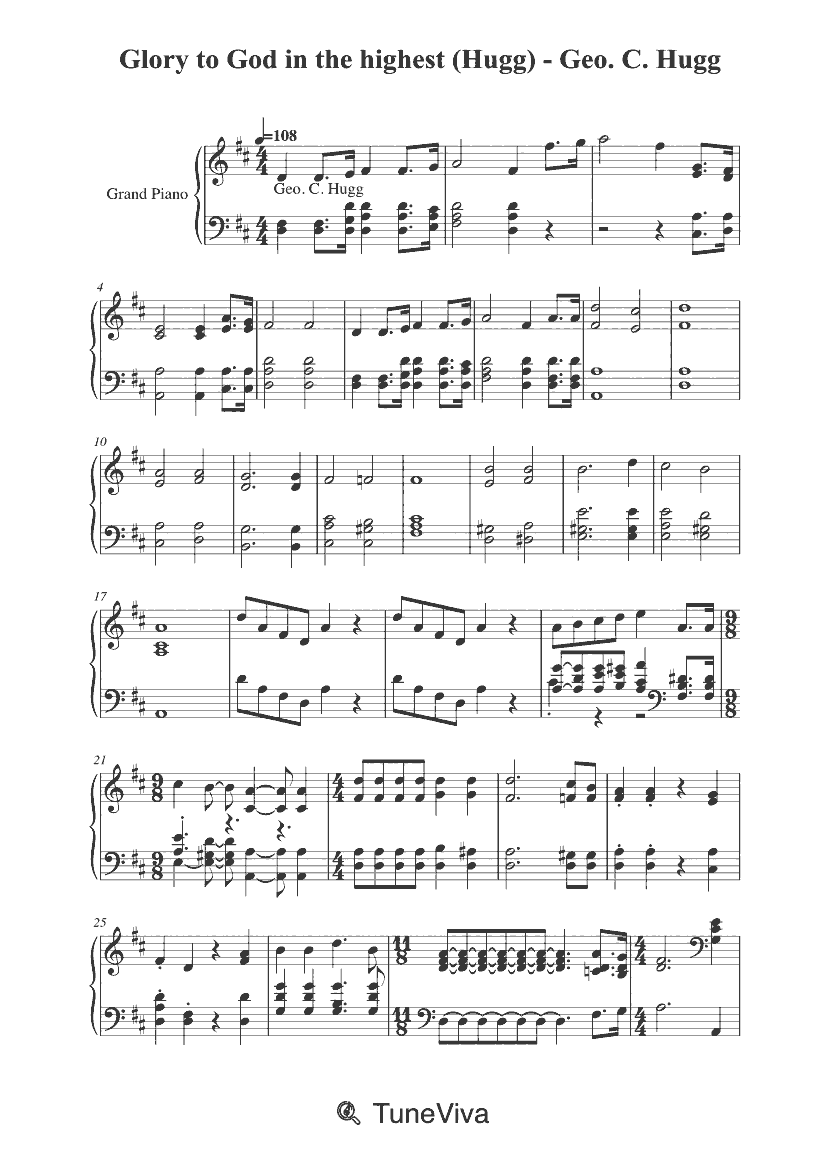
A Christmas anthem on Luke 2:14, 'Glory to God in the highest'.
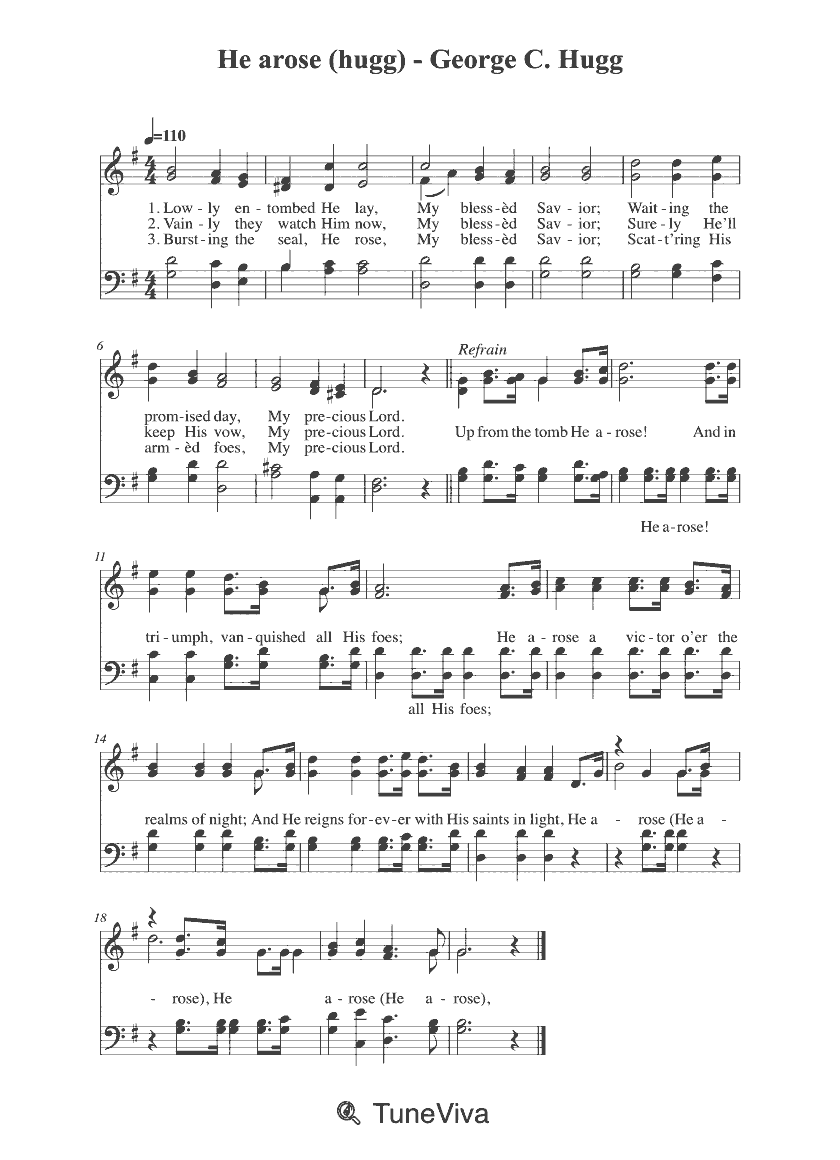
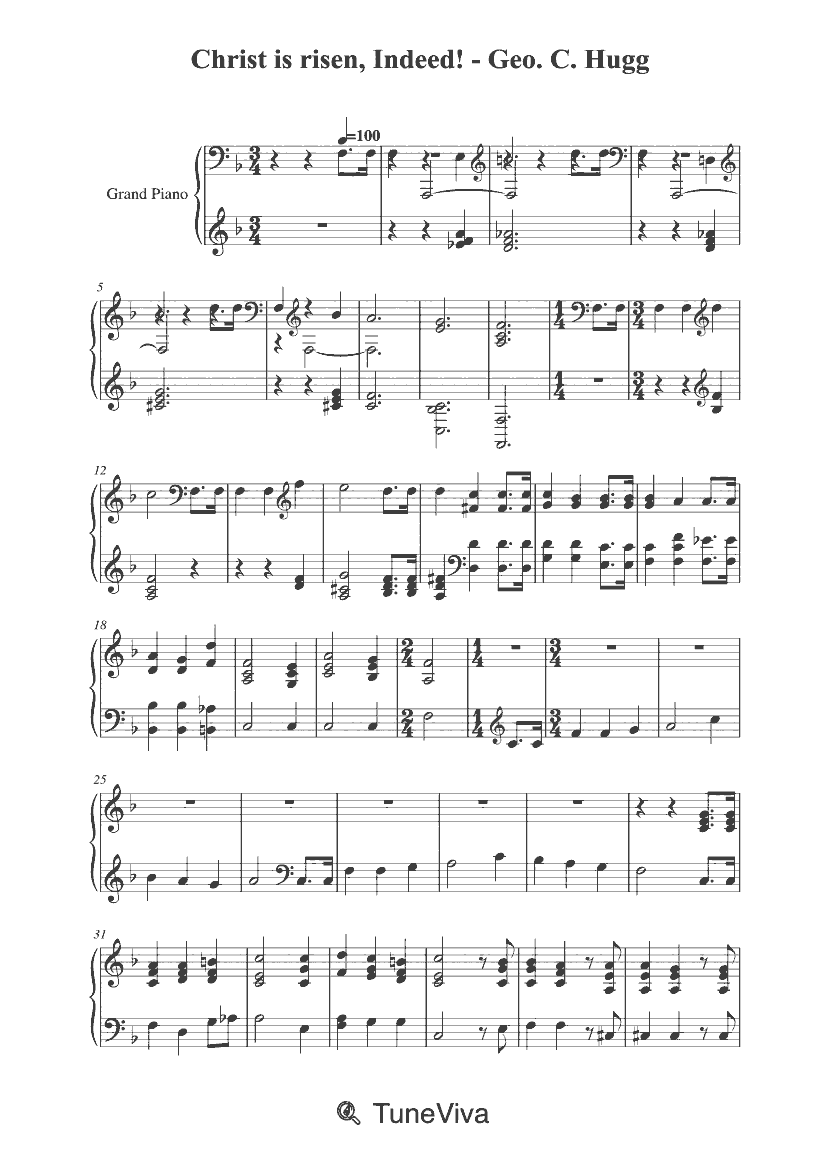
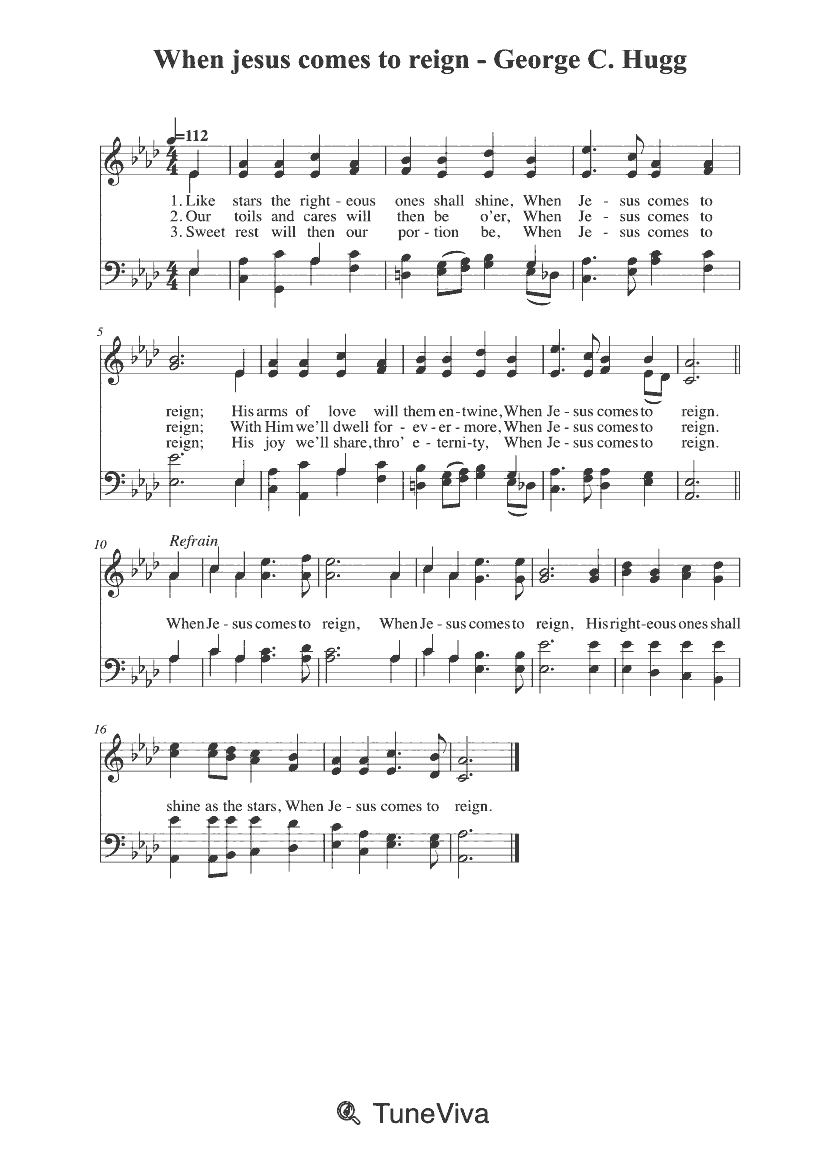
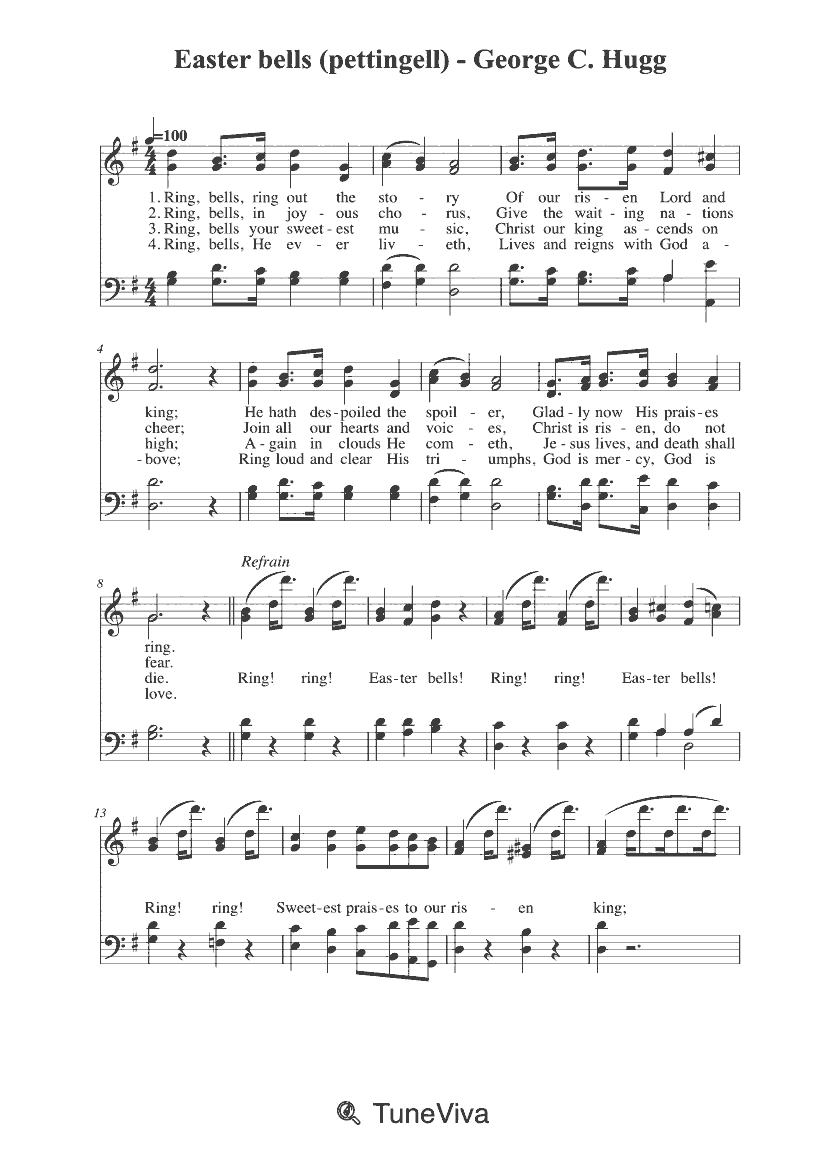
An Easter anthem on the resurrection, filed with a lower-case '(hugg)' disambiguator in the catalog.
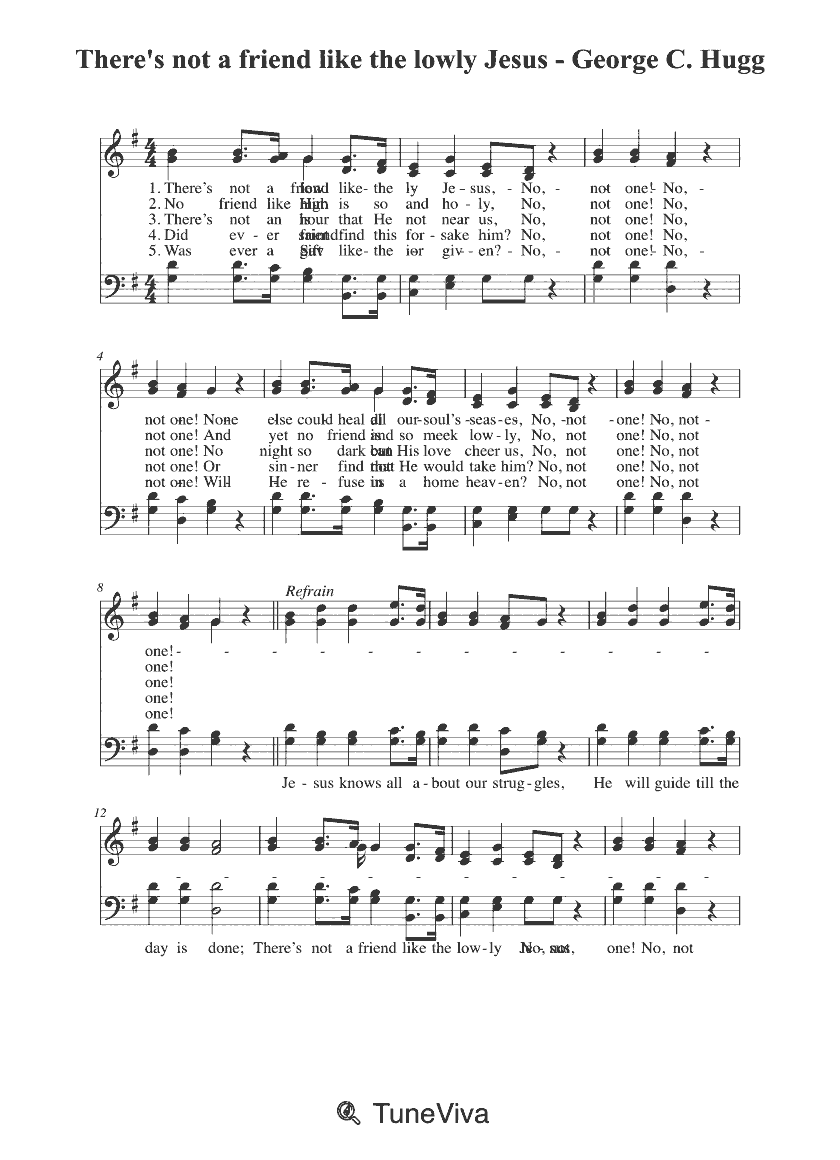
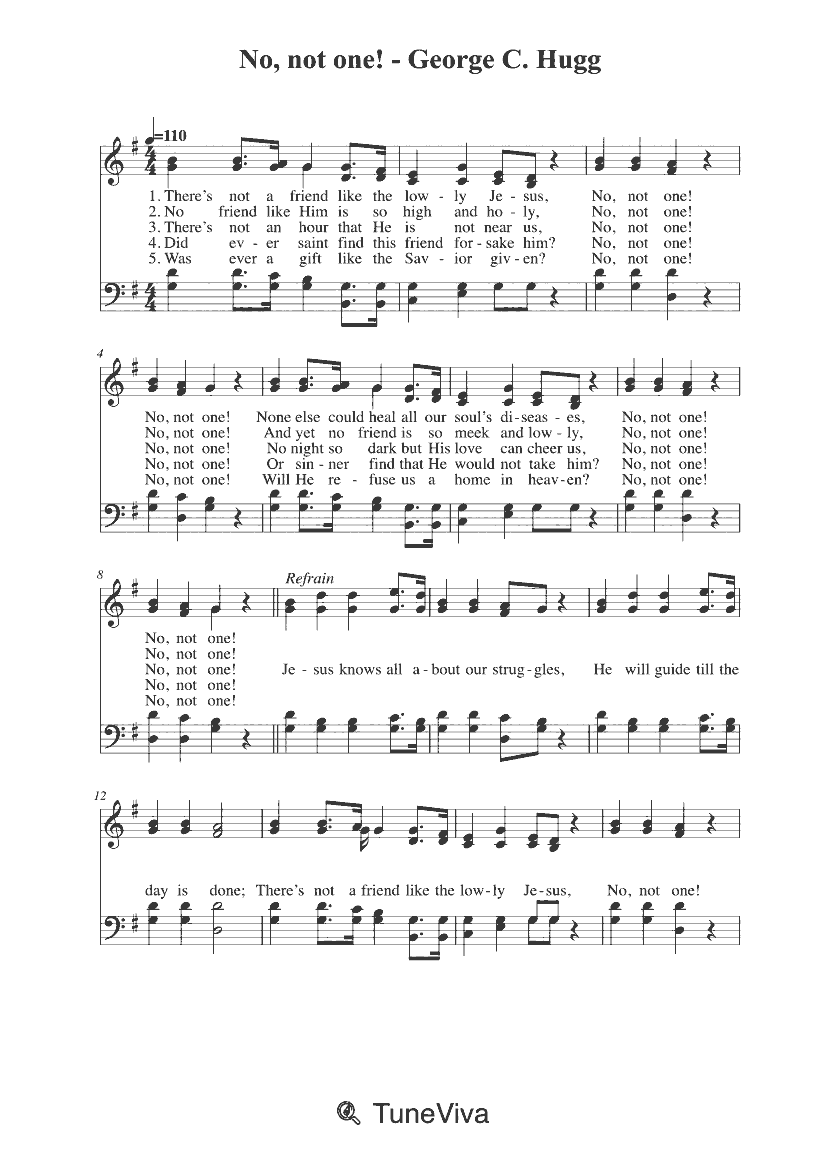
The Oatman hymn 'No, Not One' under its first line; Hugg's tune was later named HARPER MEMORIAL.
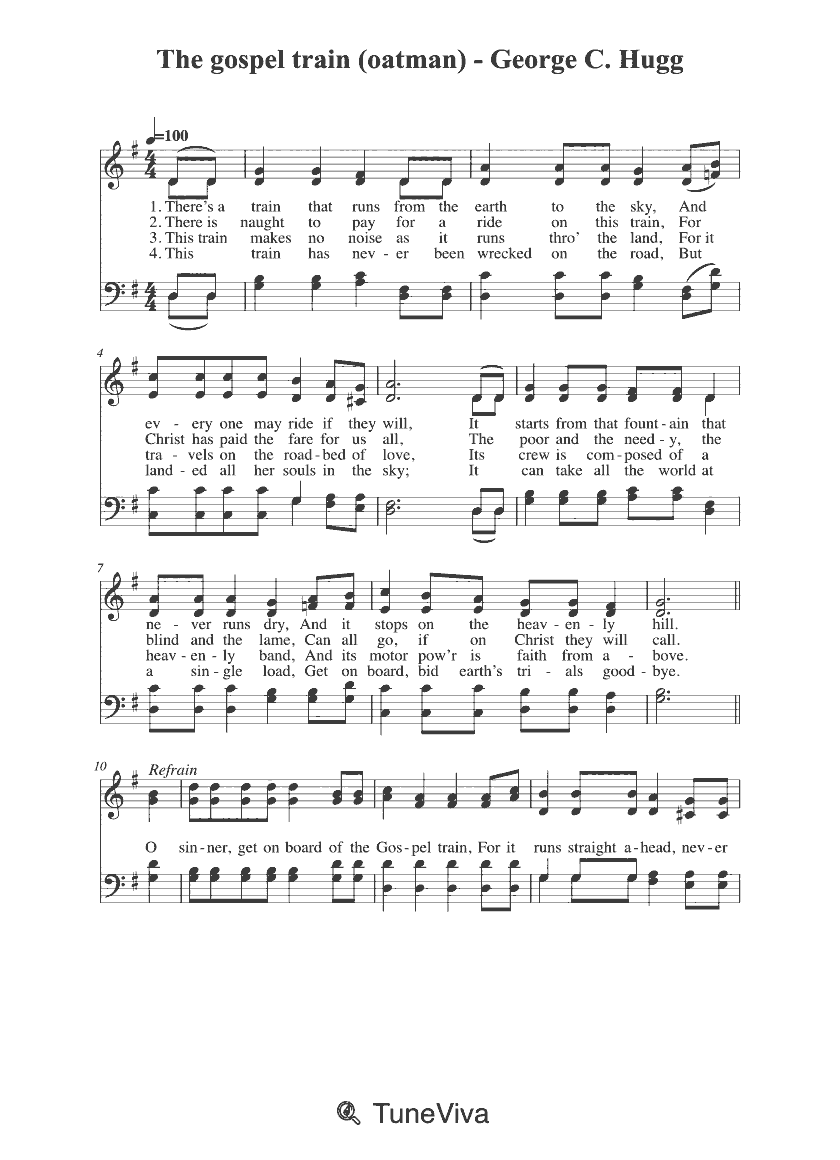
An Oatman text comparing salvation to a gospel train, set as a revival song.
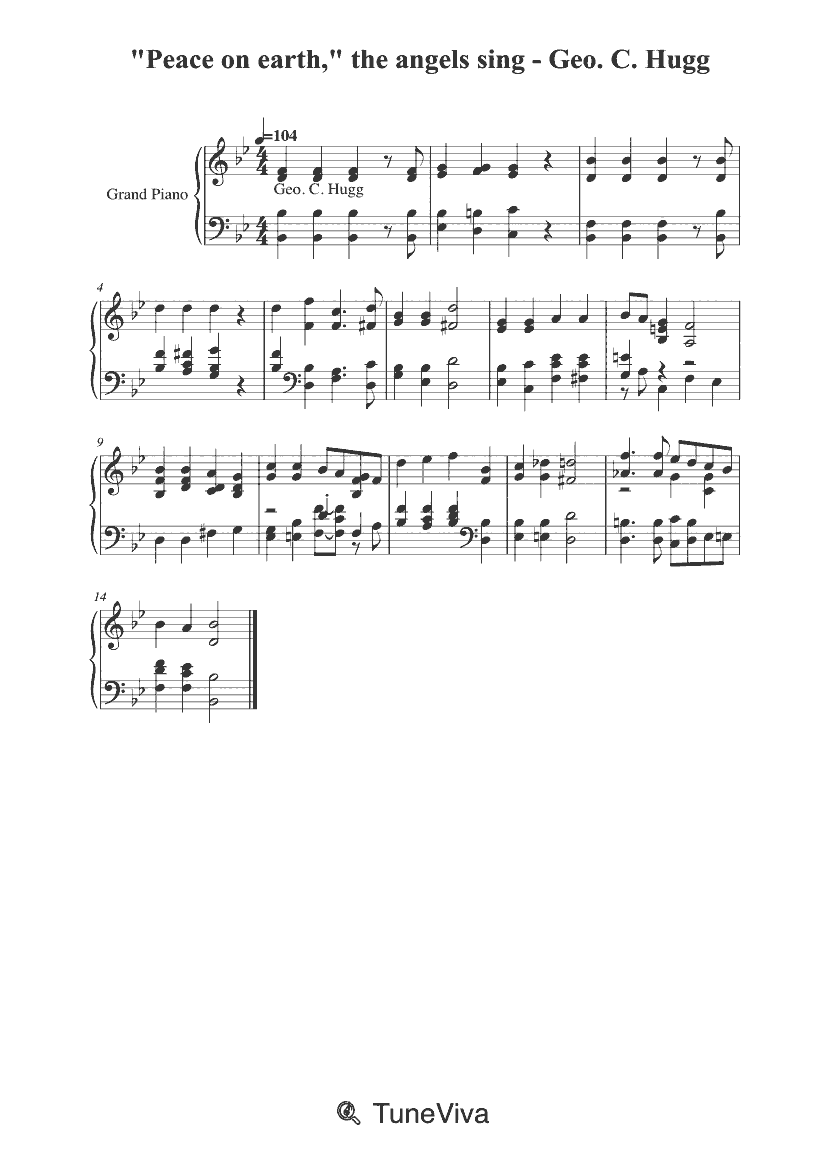
A Christmas piece on the angels' song, with the quotation marks of the original title retained in the catalog.
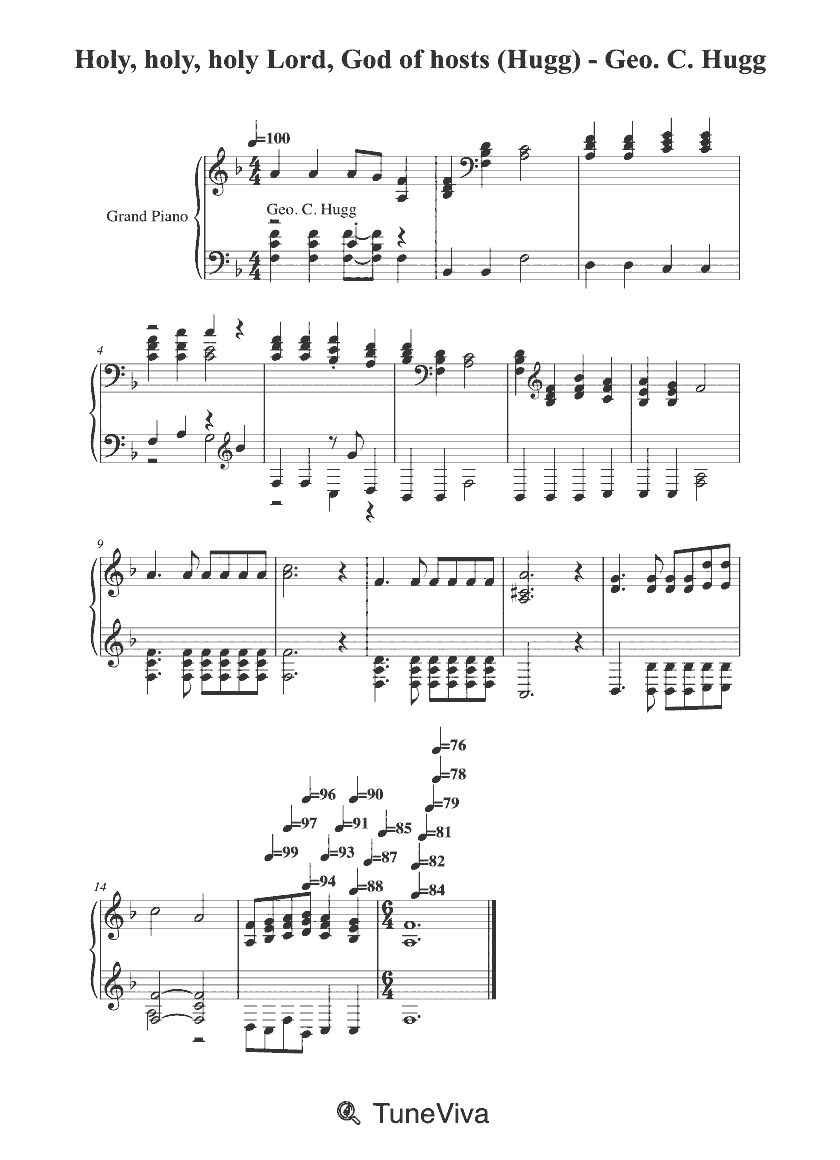
A setting of the Sanctus, 'Holy, holy, holy Lord, God of hosts'.
The same Oatman hymn as the entry above, filed under its refrain; compare the scoring before choosing.
An Easter acclamation, one of several seasonal anthems in the collection.
87, running to about 56 minutes of music and 26,427 notated notes. Seventy of them carry lyrics.
Johnson Oatman Jr. wrote the text. Hugg composed the tune, later named HARPER MEMORIAL, and published the song in Heaven's Echo (1895).
The catalogue holds more than one printing or arrangement, one under the first line 'There's not a friend like the lowly Jesus' and one under the refrain 'No, not one!'.
They are catalog disambiguators: (Hugg) separates his setting from another composer's, and (oatman) marks a text by Johnson Oatman Jr. They are not part of the original titles.
Catalog editions and arrangements attributed to George C. Hugg.