
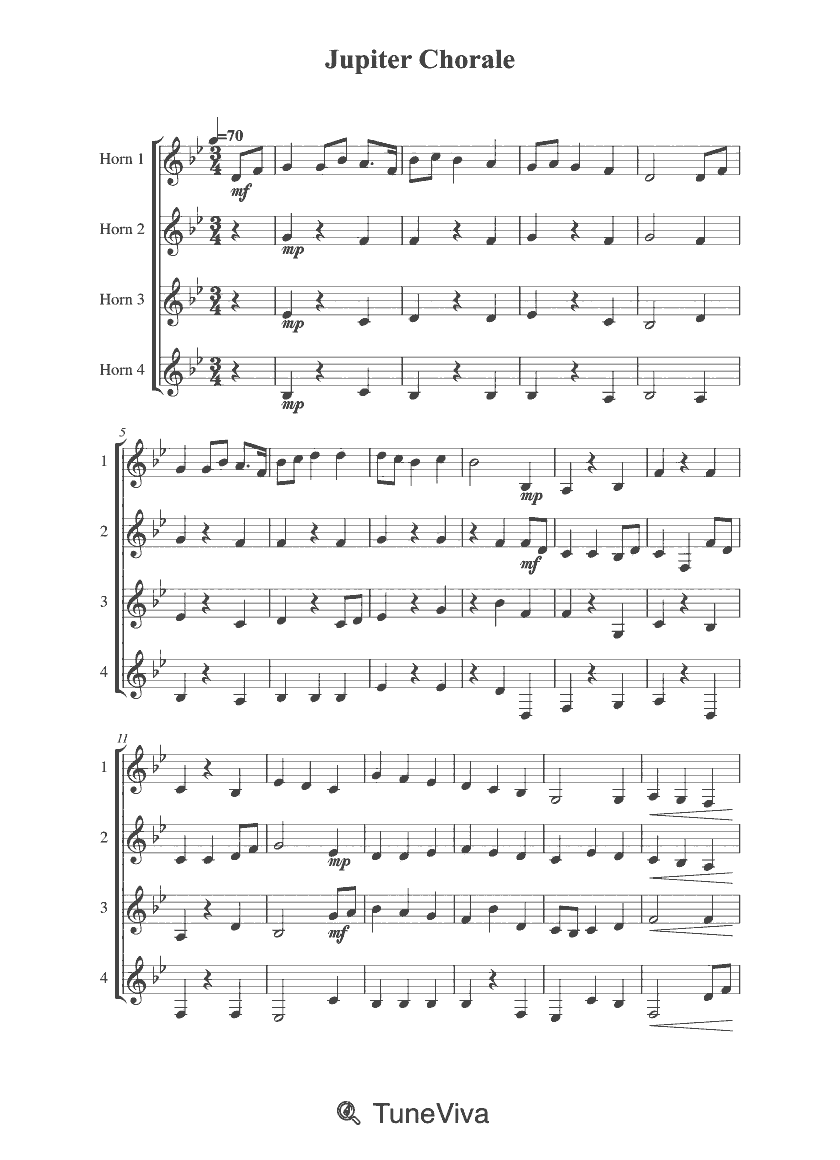
Jupiter Chorale
(I Vow to Thee My Country)
classical
4 tracks
Holst reaches the catalogue mostly through one work. The Planets supplies most of the 44 scores, and the central tune of Jupiter, later named Thaxted, accounts for several arrangements on its own; the total runs to about 165 minutes and 125,345 notated notes.
Away from the suite there is the Second Suite in F for military band, the Intermezzo from the First Suite in a clarinet-quintet arrangement, and a song without words for piano and viola. Sixteen entries carry lyrics, 38 sit at complexity index 0 and only two reach index 2.
Holst was born in Cheltenham on 21 September 1874 into a family with professional musicians in the previous three generations. Neuritis in his right arm ended any hope of a piano career, and he went to the Royal College of Music in 1893, studying composition with Charles Villiers Stanford and meeting Ralph Vaughan Williams two years later. He played the trombone professionally to pay his way and taught for most of his life, at St Paul's Girls' School from 1905 and at Morley College from 1907 to 1924. He died in London on 25 May 1934.
The Planets was written between 1914 and 1917. Adrian Boult conducted a private first performance at the Queen's Hall on 29 September 1918, and the first complete public performance followed on 15 November 1920, with the London Symphony Orchestra under Albert Coates. Holst turned the central tune of Jupiter into the hymn tune Thaxted in 1921 for 'I Vow to Thee, My Country', and Michael Perry's 'O God Beyond All Praising', published in 1982, is sung to the same melody.
The catalogue holds 44 scores, 35 of them filed as classical, eight unclassified and one as rock, which is probably an arrangement rather than an original work. The Second Suite in F, completed in 1911 and published in 1922, supplies the march built on Morris Dance, Swansea Town and Claudy Banks, and its slow movement, on the Hampshire folk song I'll Love My Love, circulates separately as a Song Without Words. The First Suite in E-flat of 1909 is represented by its Intermezzo in a transcription for clarinet quintet.
The Jupiter chorale is deceptive: the harmony is simple, but the tune spans a twelfth and needs a long breath, so pick a tempo that lets the phrase finish without a scramble. In Mars, the 5/4 pattern must stay mechanical while the brass accents cut across it; in Venus, the opposite applies, and the solo lines need room. The band suites reward attention to Holst's folk sources, because the tunes are quoted, not developed, and the joins between them are part of the effect.
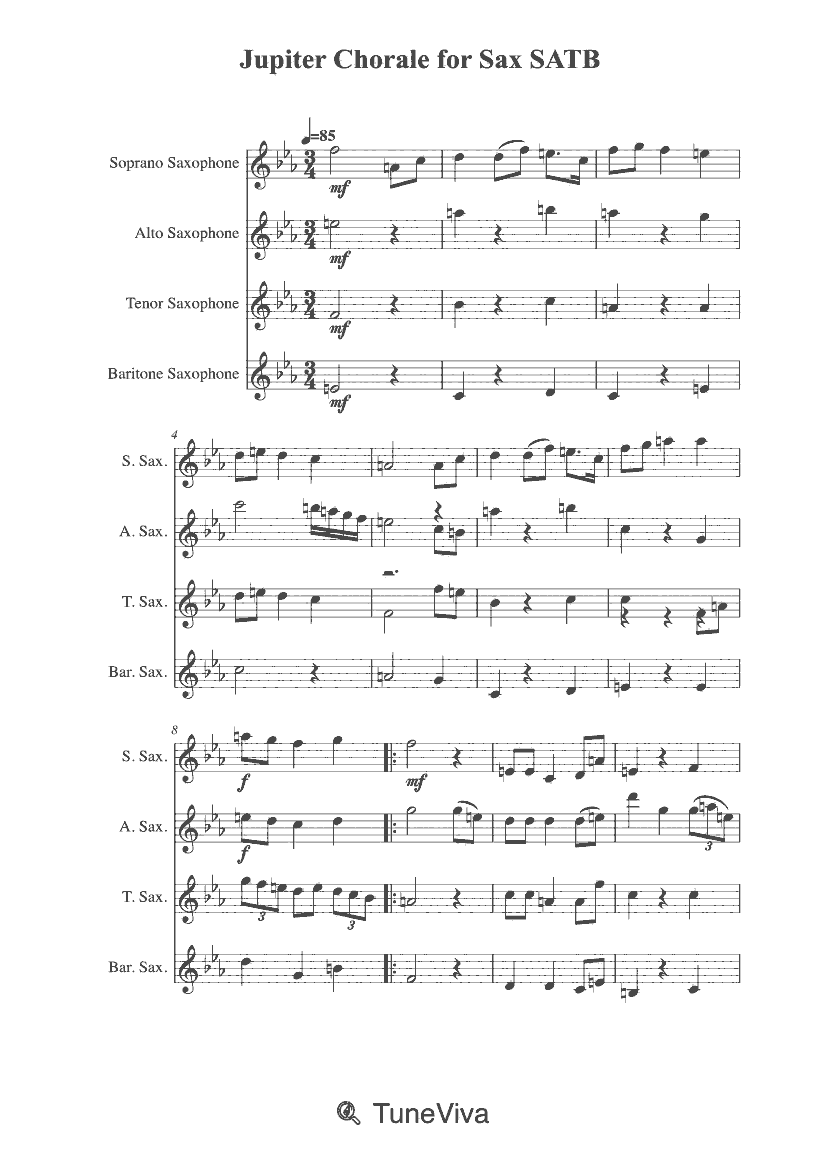
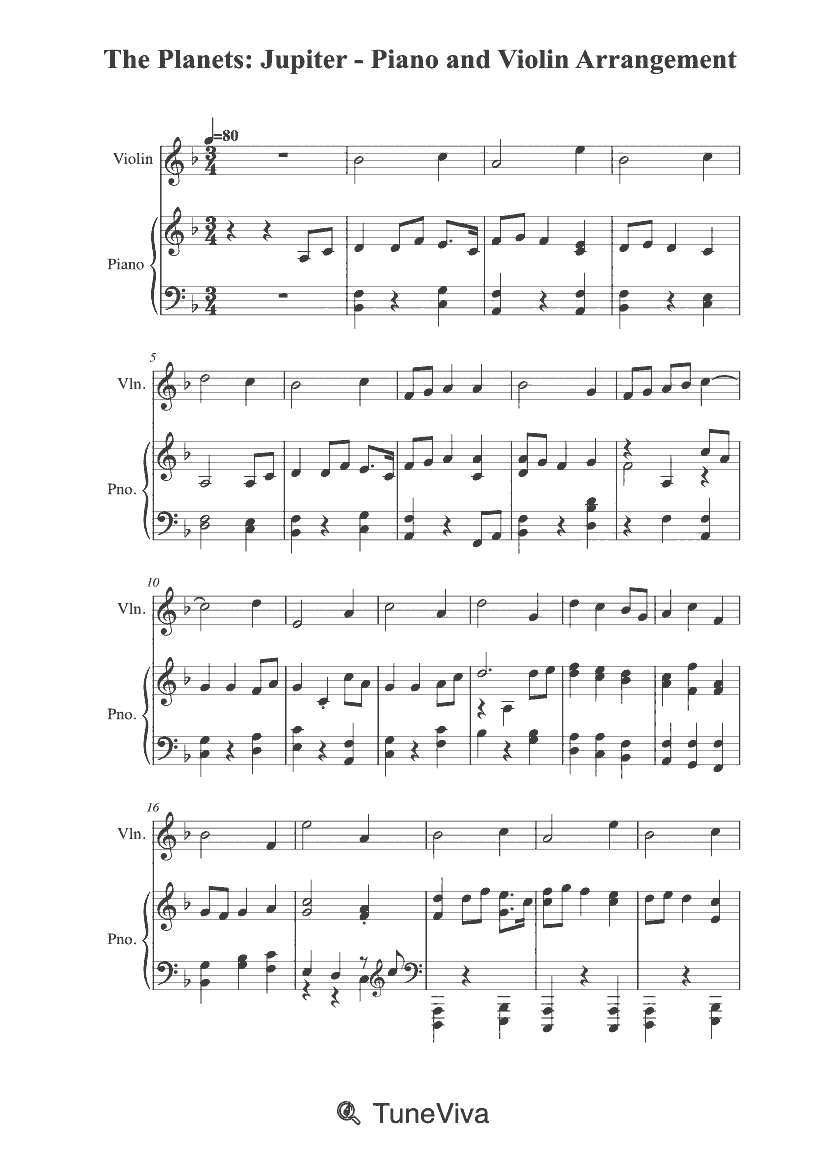
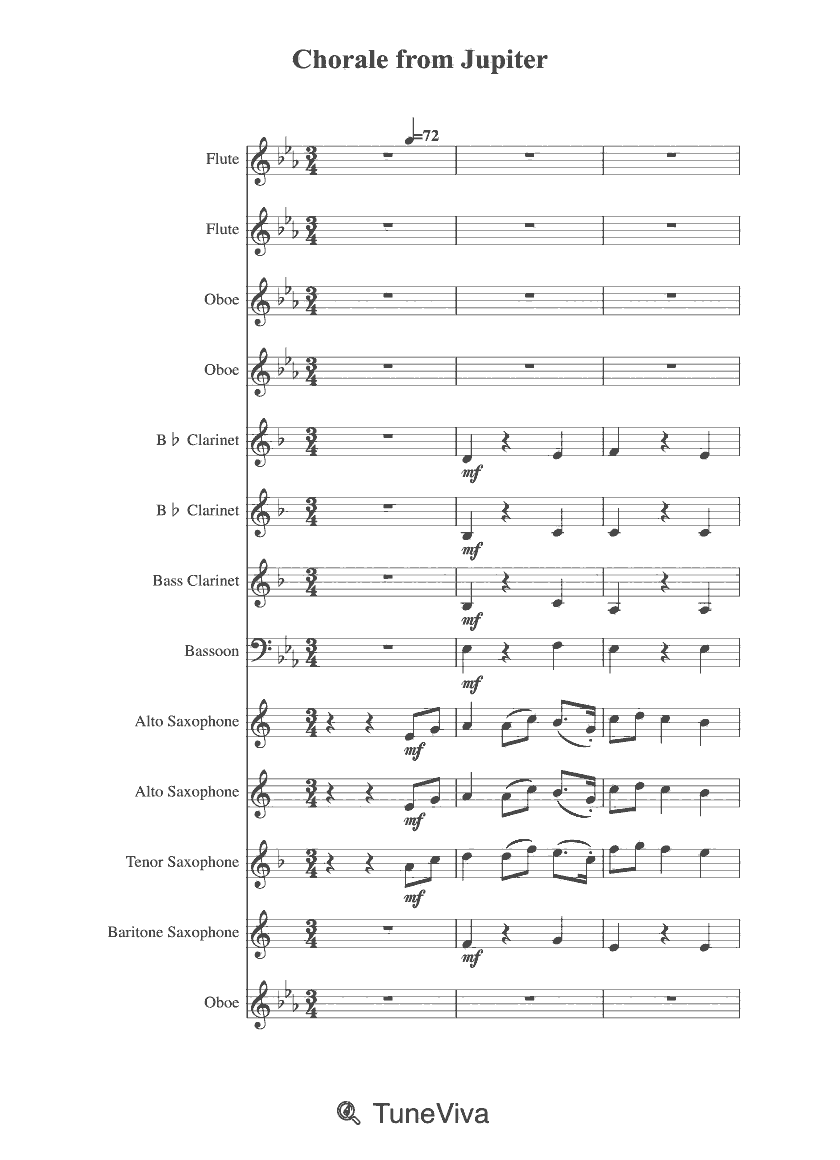
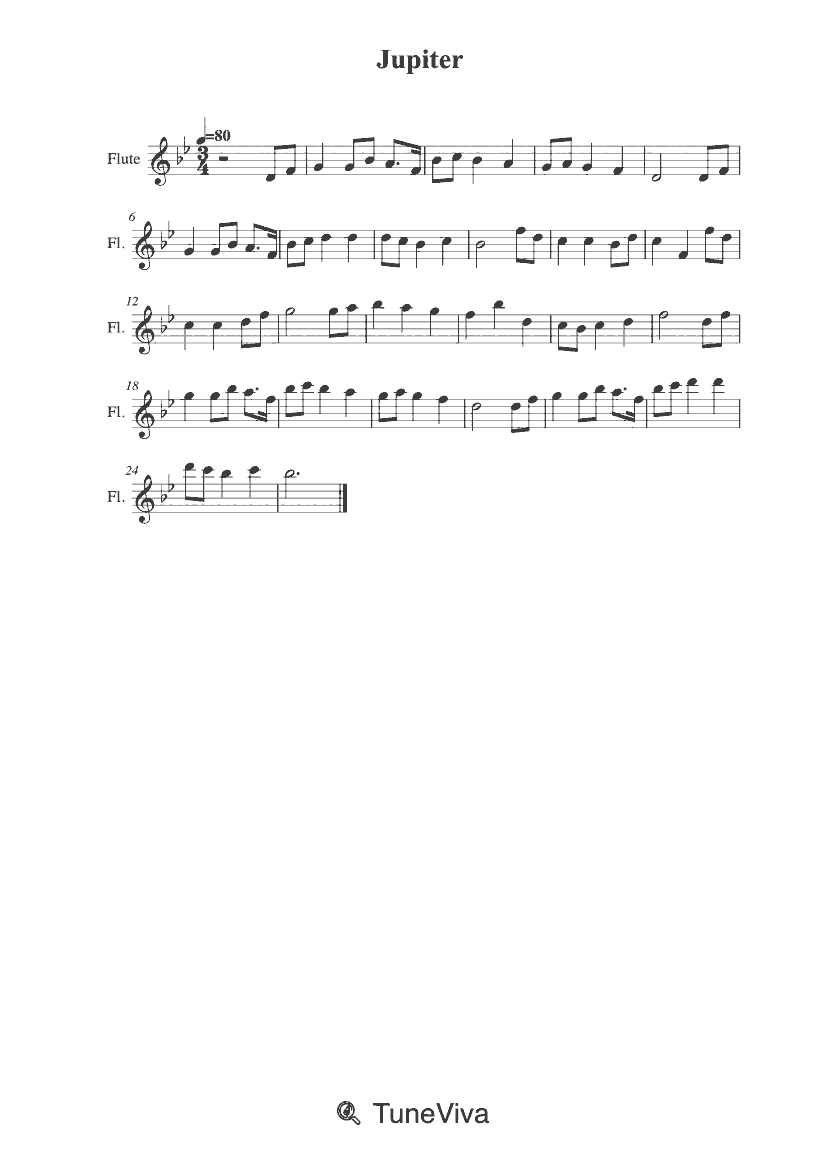
The central hymn tune of Jupiter, the most-viewed Holst score here and the melody later named Thaxted.
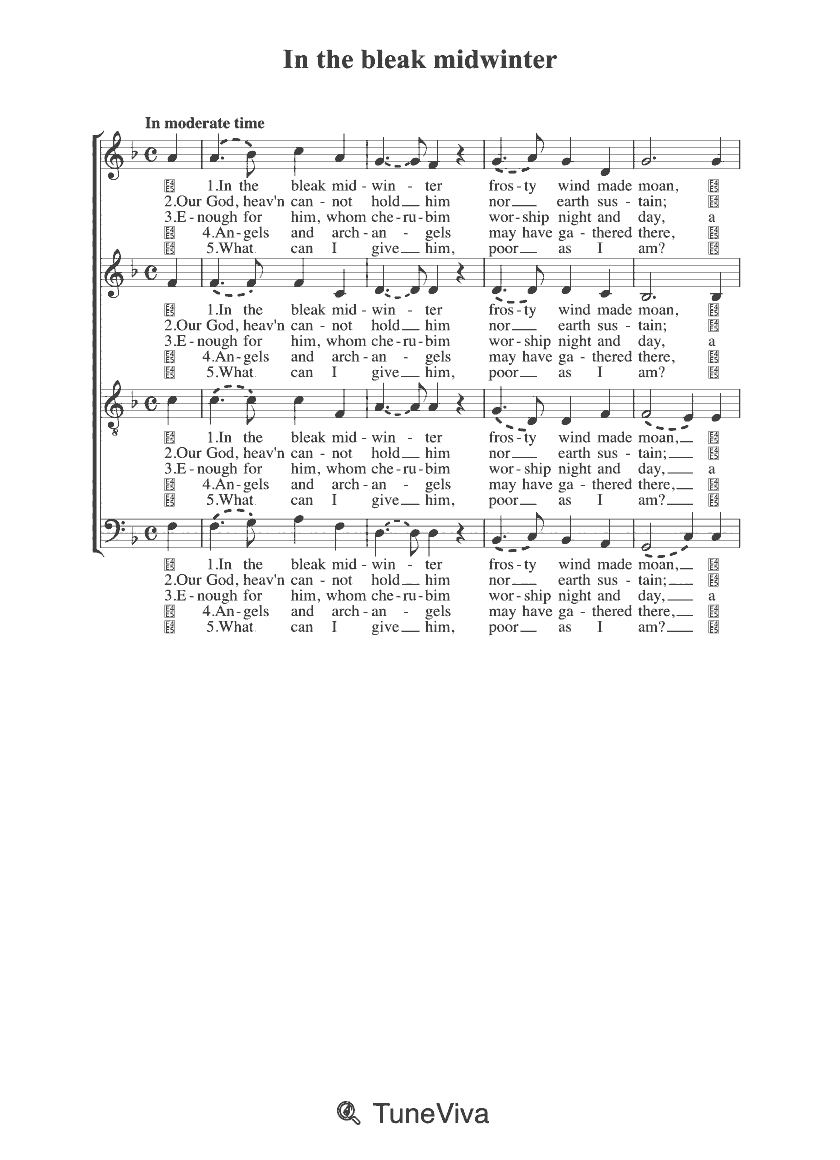
Michael Perry's hymn text of 1982, sung to Thaxted and therefore to Holst's Jupiter tune.
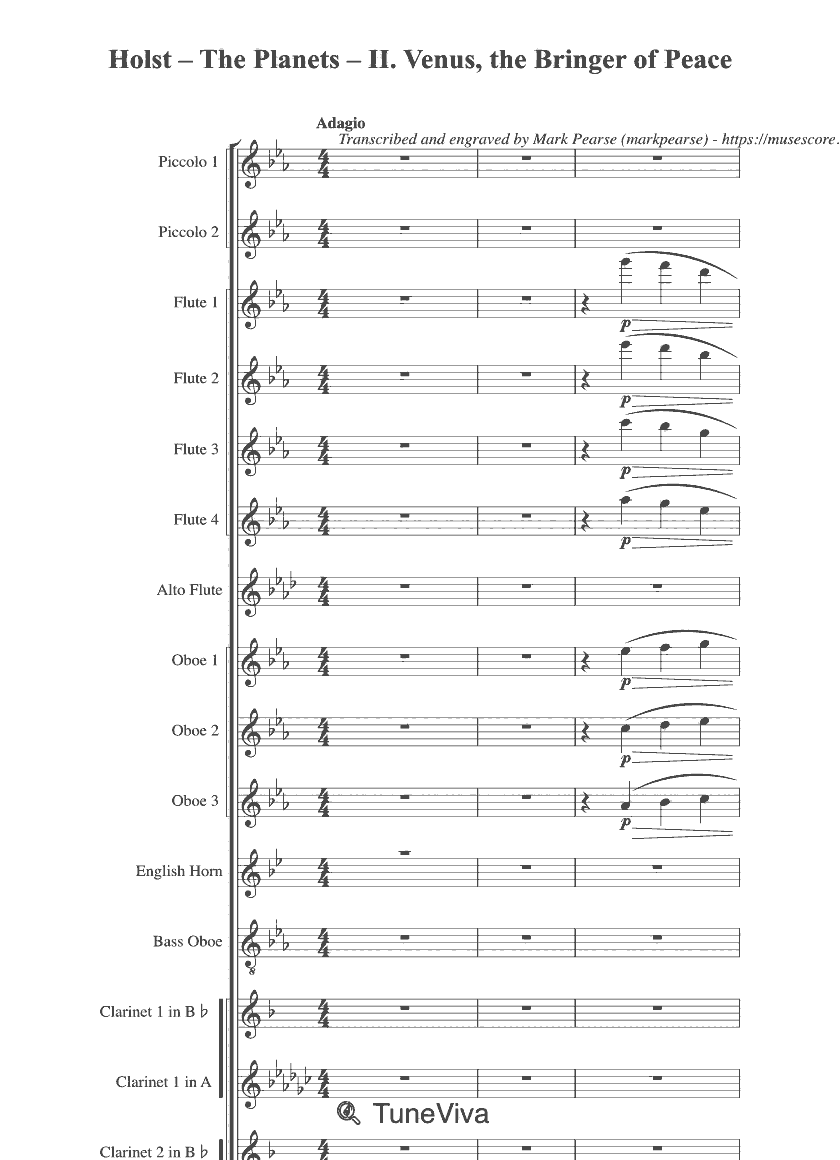
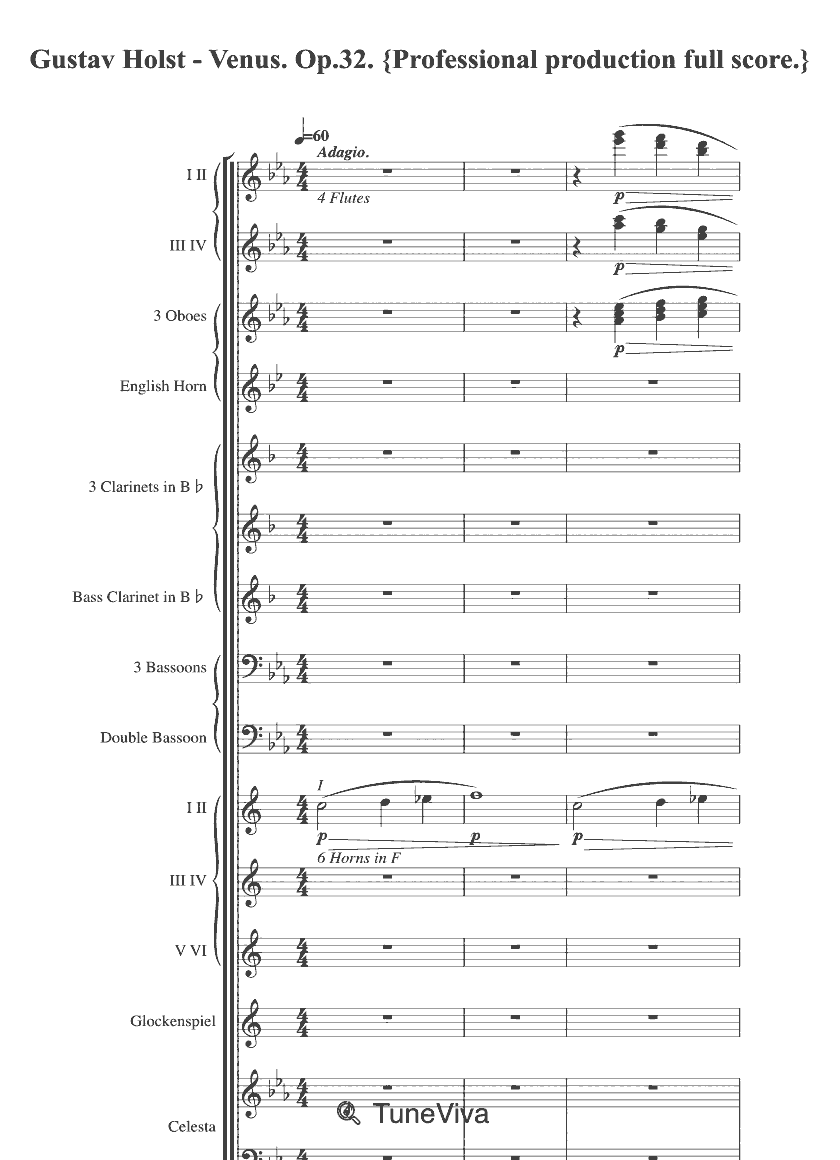
The second movement, slow and thinly scored, with a long solo violin line.
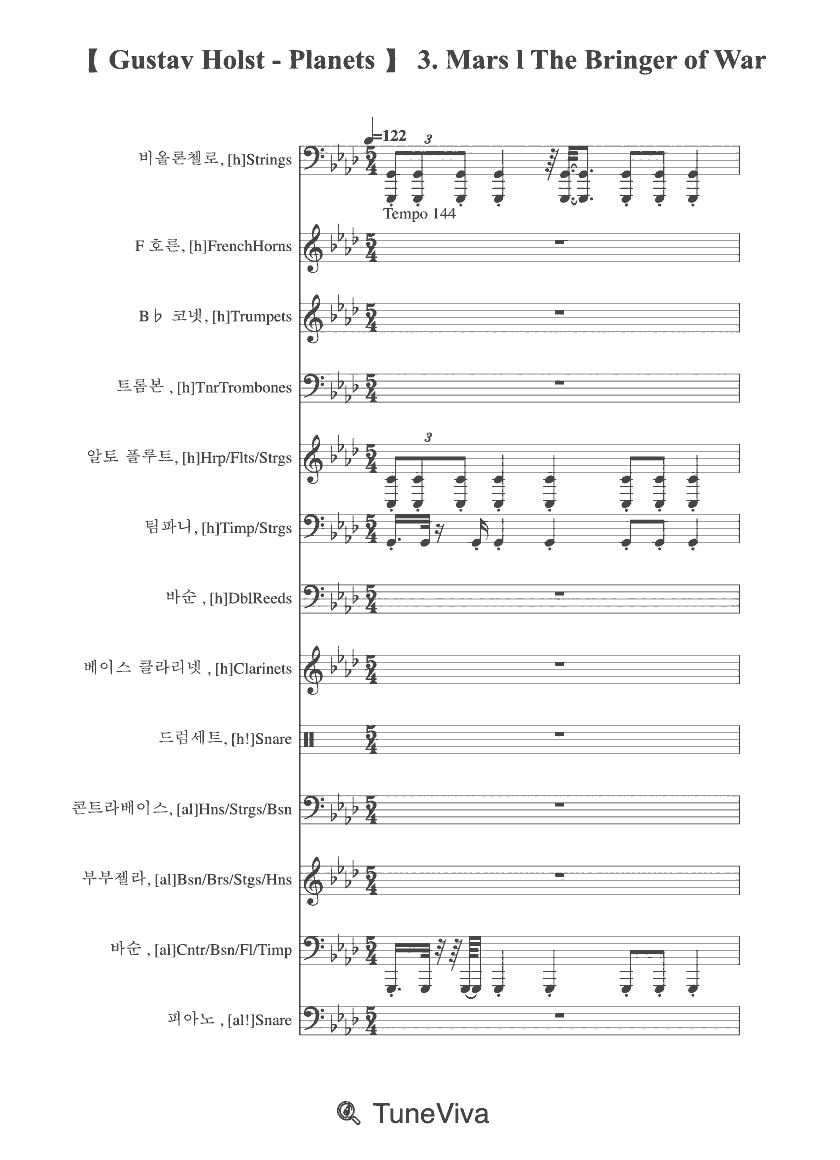
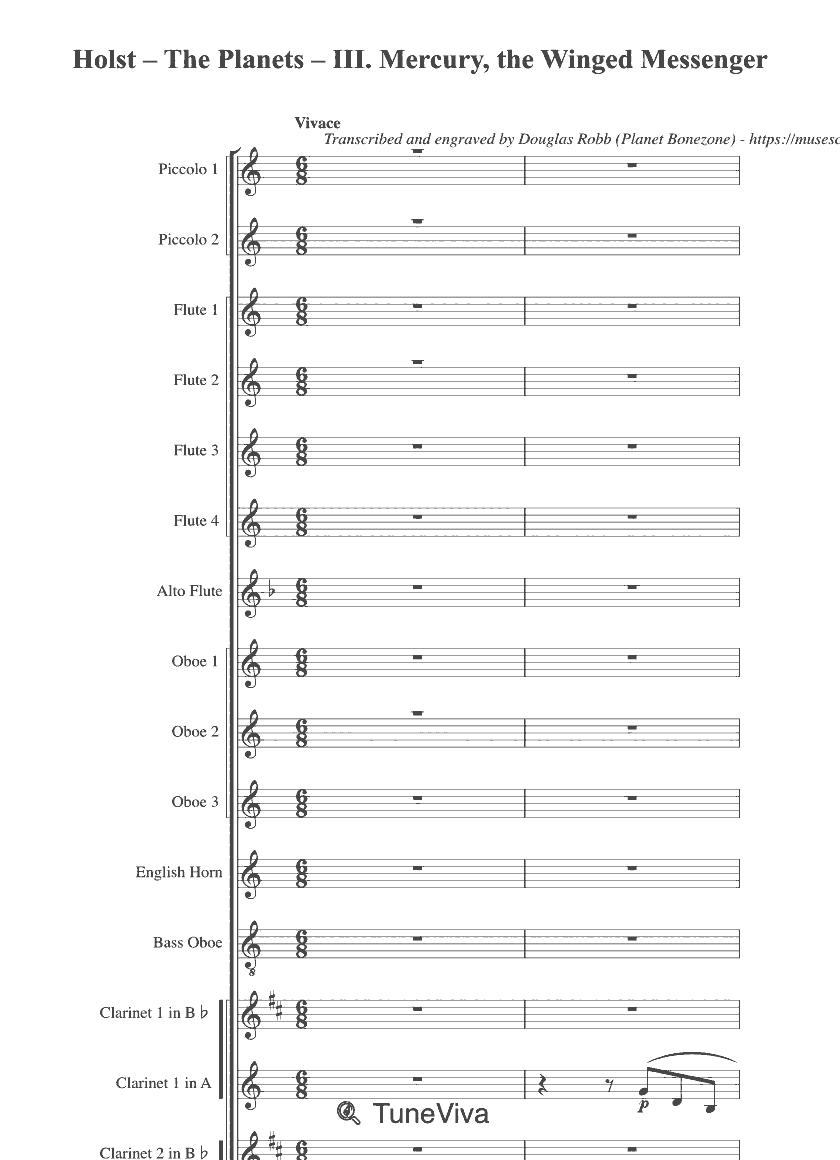
The first movement, built on a relentless 5/4 ostinato; the catalogue's title numbers it third.
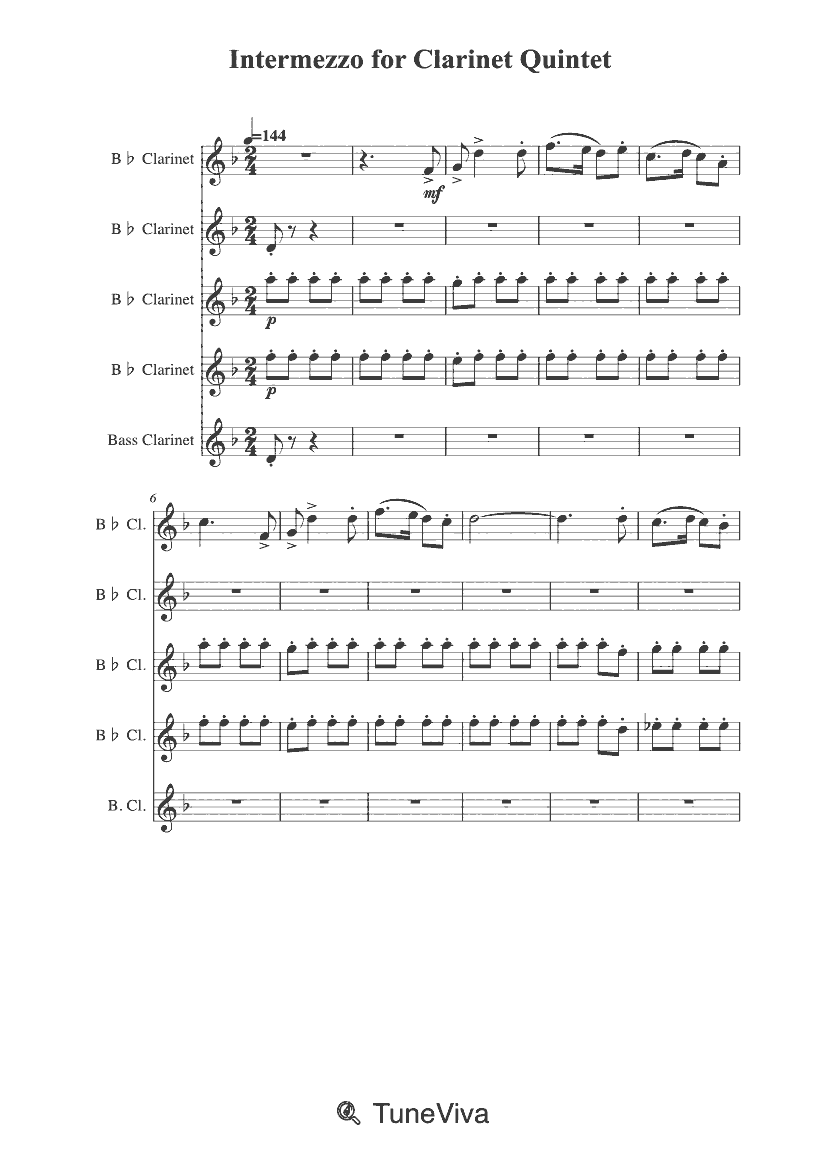
An arrangement of the Intermezzo from the First Suite in E-flat, Op. 28 No. 1, scored for four clarinets and bass clarinet.
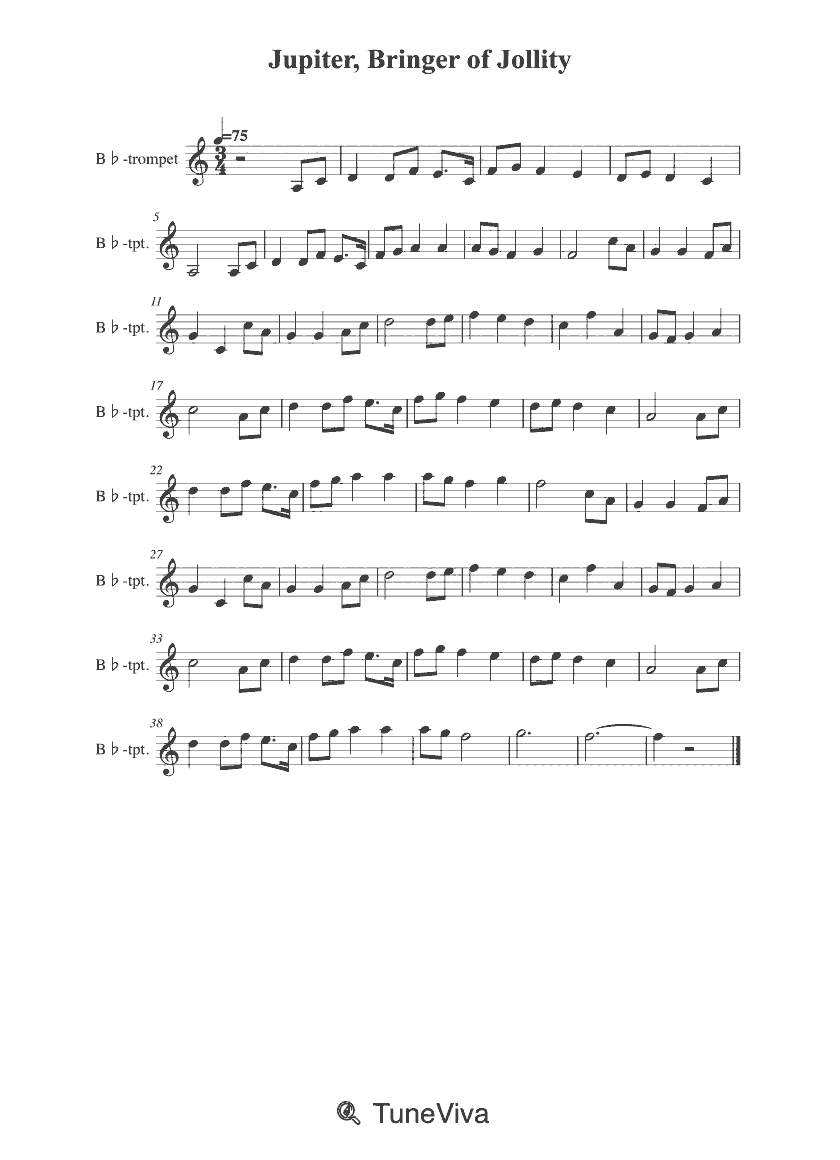
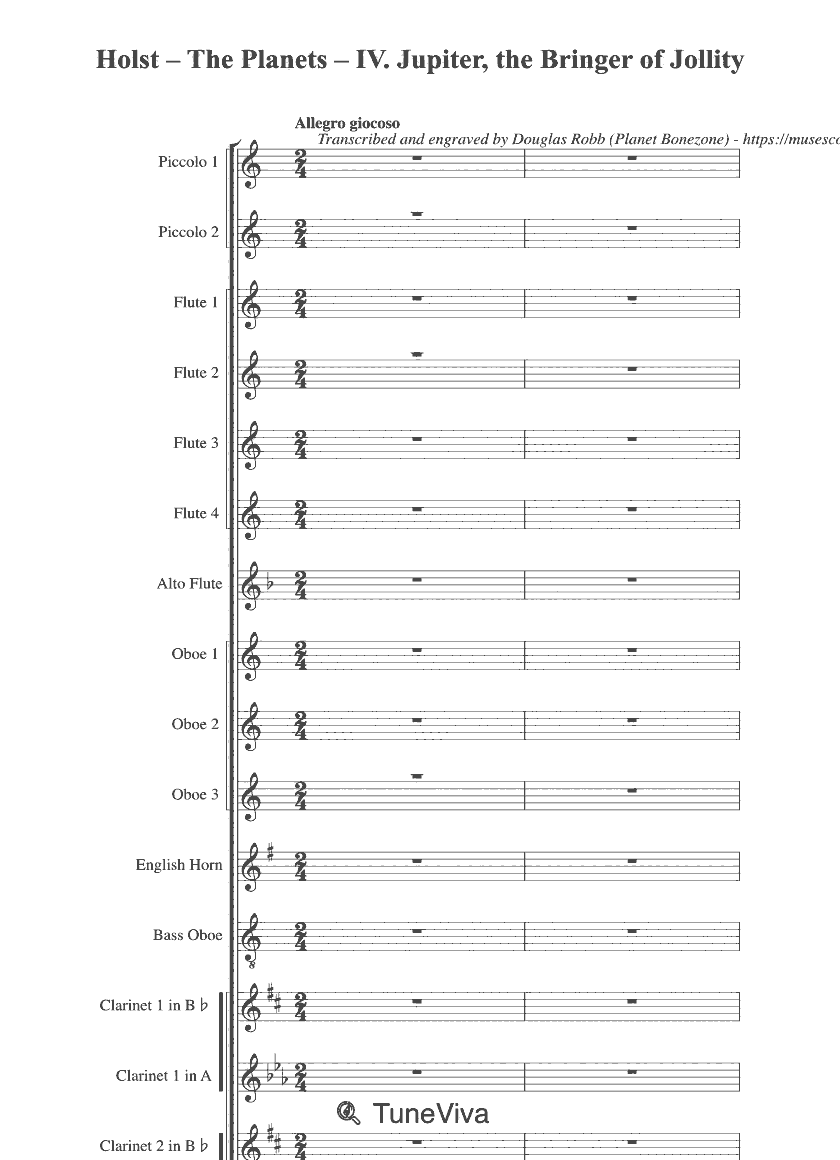
The movement that contains the big tune, stated broadly before the opening music returns.
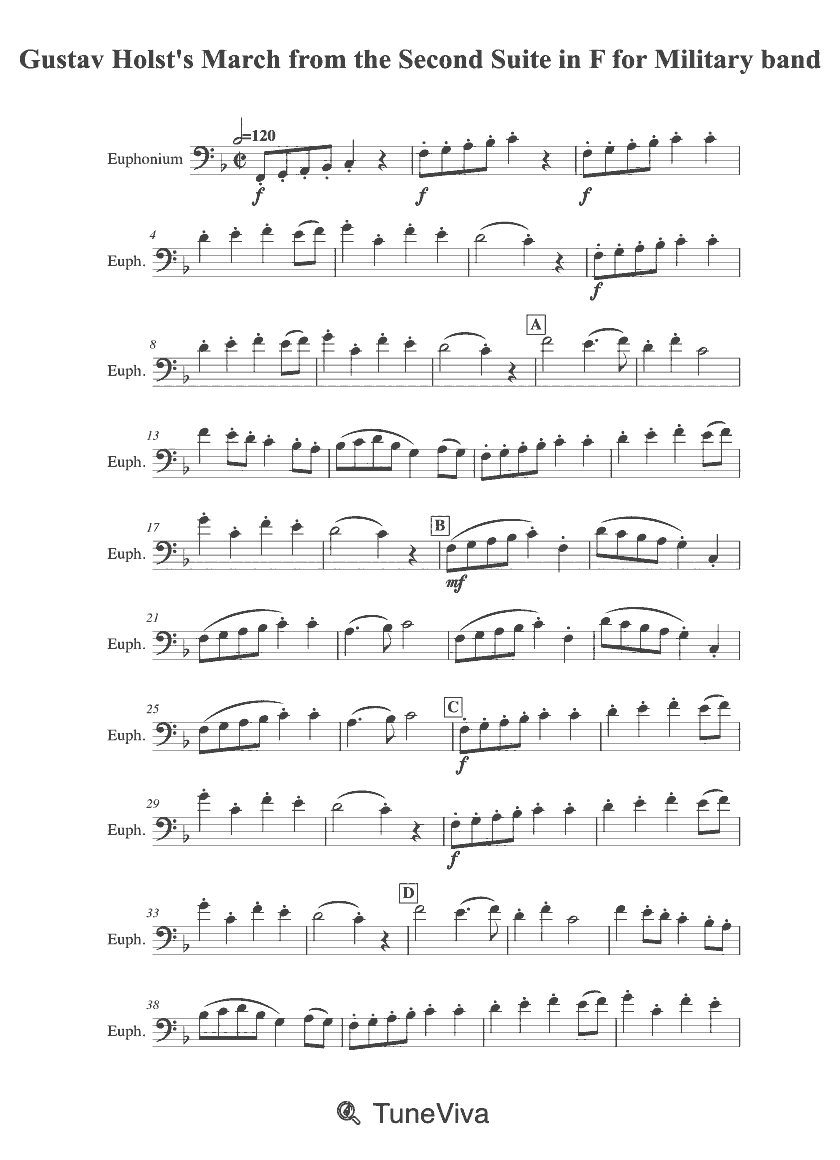
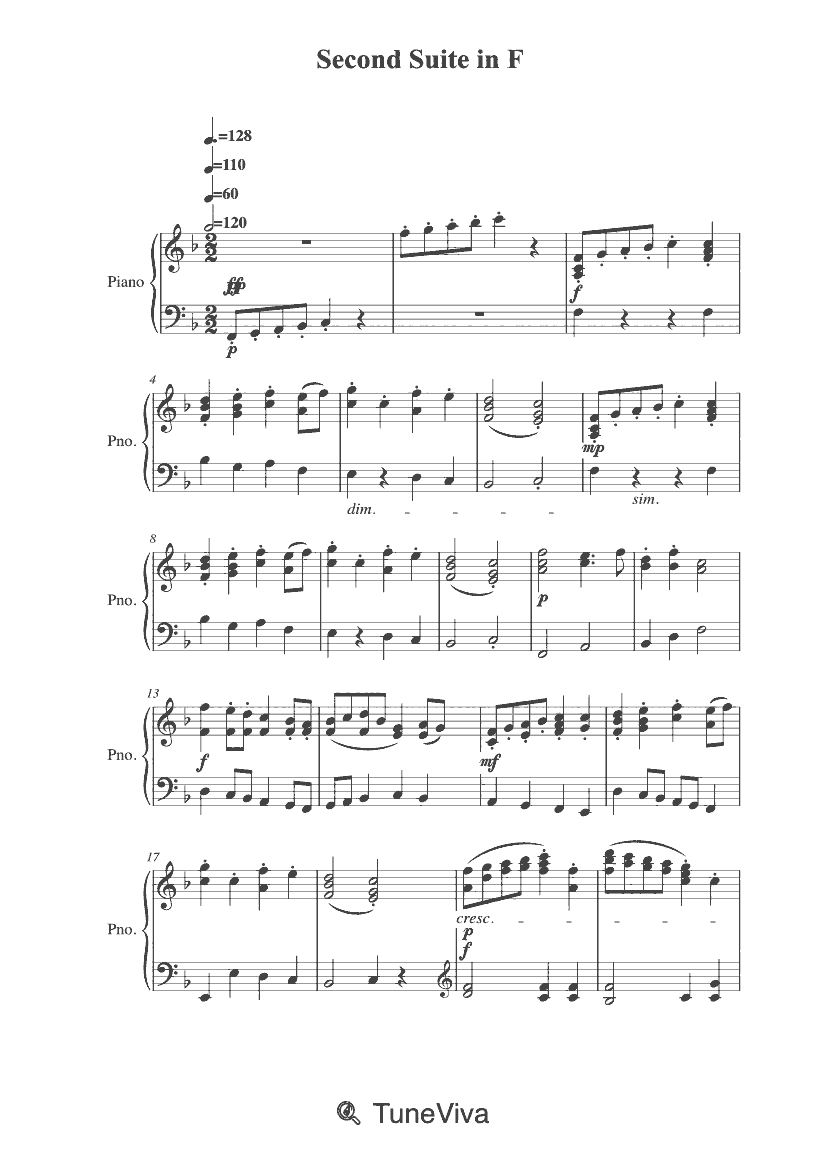
The opening movement of the 1911 band suite, which weaves together Morris Dance, Swansea Town and Claudy Banks.
A short, scurrying scherzo, the lightest movement of the seven.
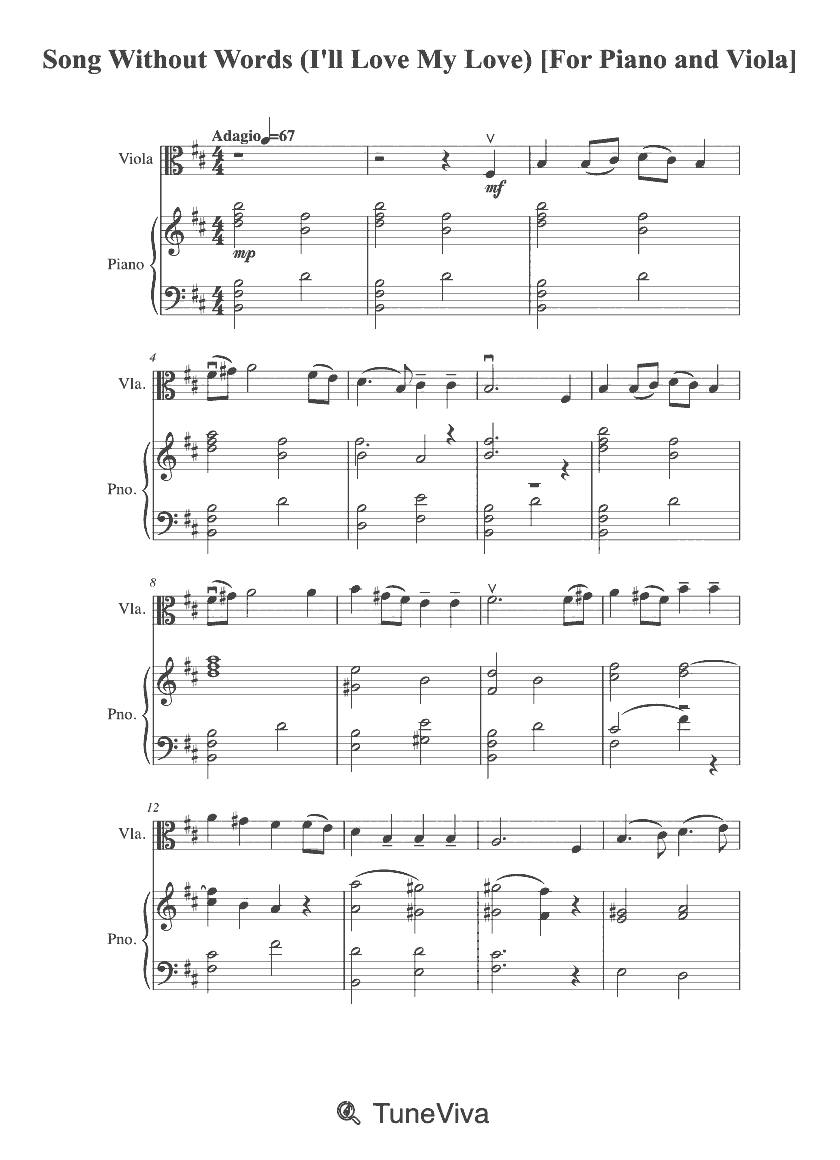
The slow movement of the Second Suite, based on a Hampshire folk song, here set for piano and viola.
A chamber transcription of the fourth movement, one of many arrangements the suite has attracted.
44, running to about 165 minutes of music and 125,345 notated notes. Sixteen entries carry lyrics, and 38 sit at complexity index 0.
It is the central section of Jupiter, the fourth movement of The Planets, Op. 32, where the tune is stated slowly before the movement returns to its opening music.
Yes. Holst adapted the Jupiter melody as a hymn tune in 1921 for 'I Vow to Thee, My Country', and it is now named Thaxted after the Essex village where he lived and worked.
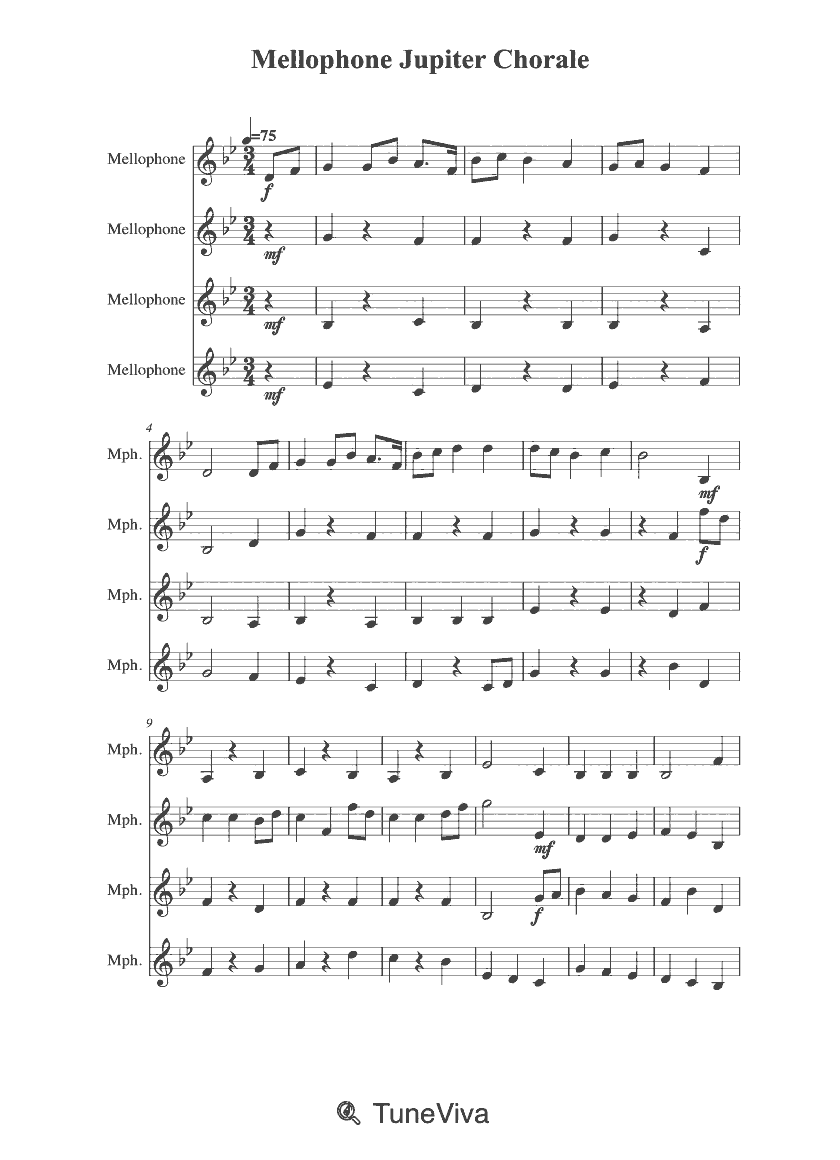
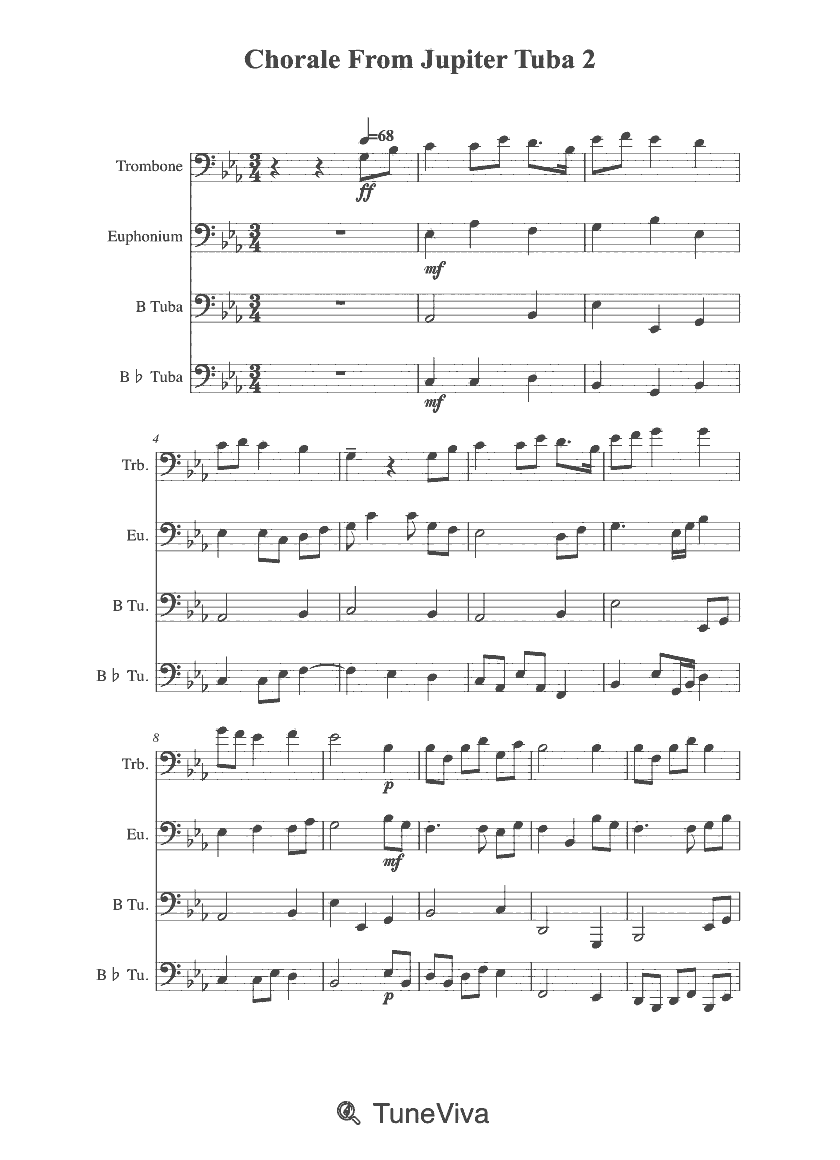
The catalogue holds arrangements uploaded by different users: a chorale for saxes, one for mellophone, and versions for piano with violin or viola. The originals are orchestral.
Catalog editions and arrangements attributed to Gustav Holst.
(I Vow to Thee My Country)
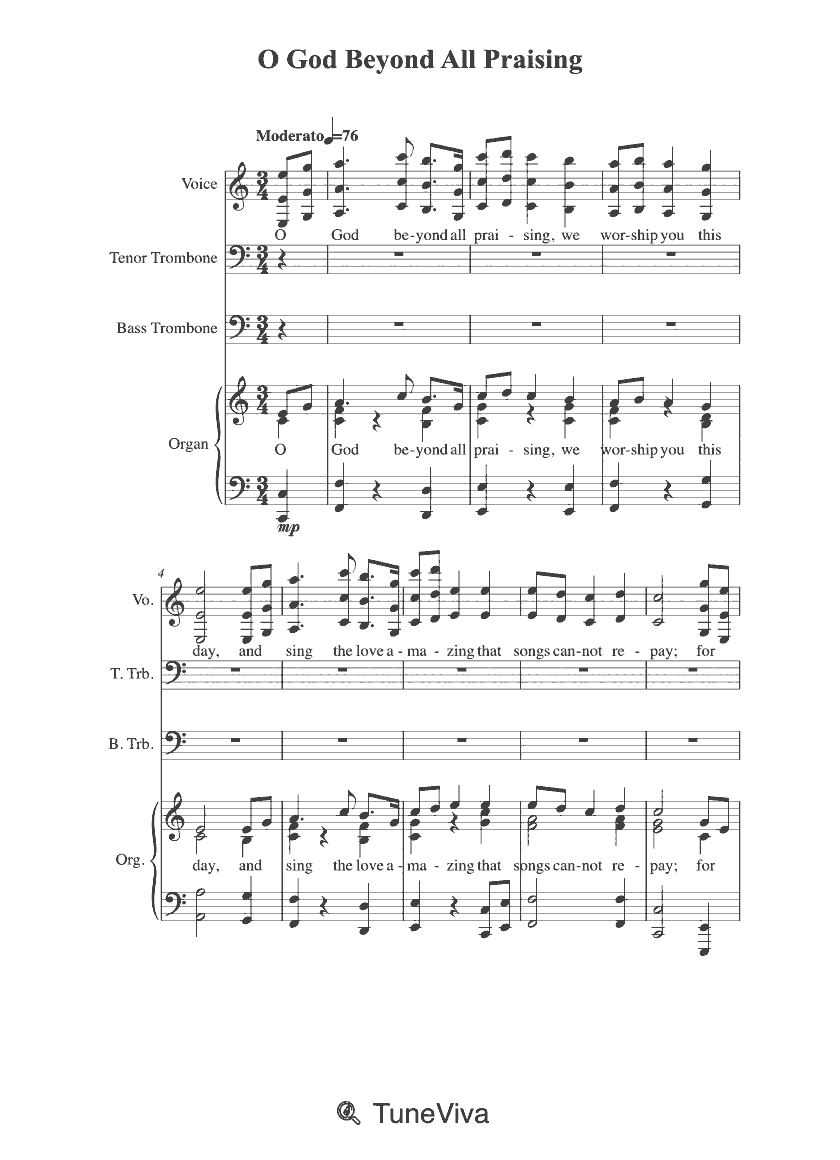
Set to Thaxted from Songs of Praise
Excerpt
From Holst's First Suite in Eb
Kazuki Hihara 4th selection from La Corda d'Oro
I'll Love My Love (For Viola & Piano)
Gustav Holst I. March II. Song Without Words III. Song of the Blacksmith IV. Fantasia on the Dargason
from Jupiter the Bringer of Jollity
Arr. RJ McLaren
from The Planets