classical
1 tracks
McGranahan grew up on a farm in Adamsville, Pennsylvania, the ninth of twelve children, and had to hire a substitute before his father would release him to study music. At nineteen he enrolled at William Bradbury's Normal Academy in Geneseo, New York, where Philip Bliss was a fellow student; sixteen years later, after Bliss died in the Ashtabula train disaster, Daniel Whittle asked McGranahan to take his place.
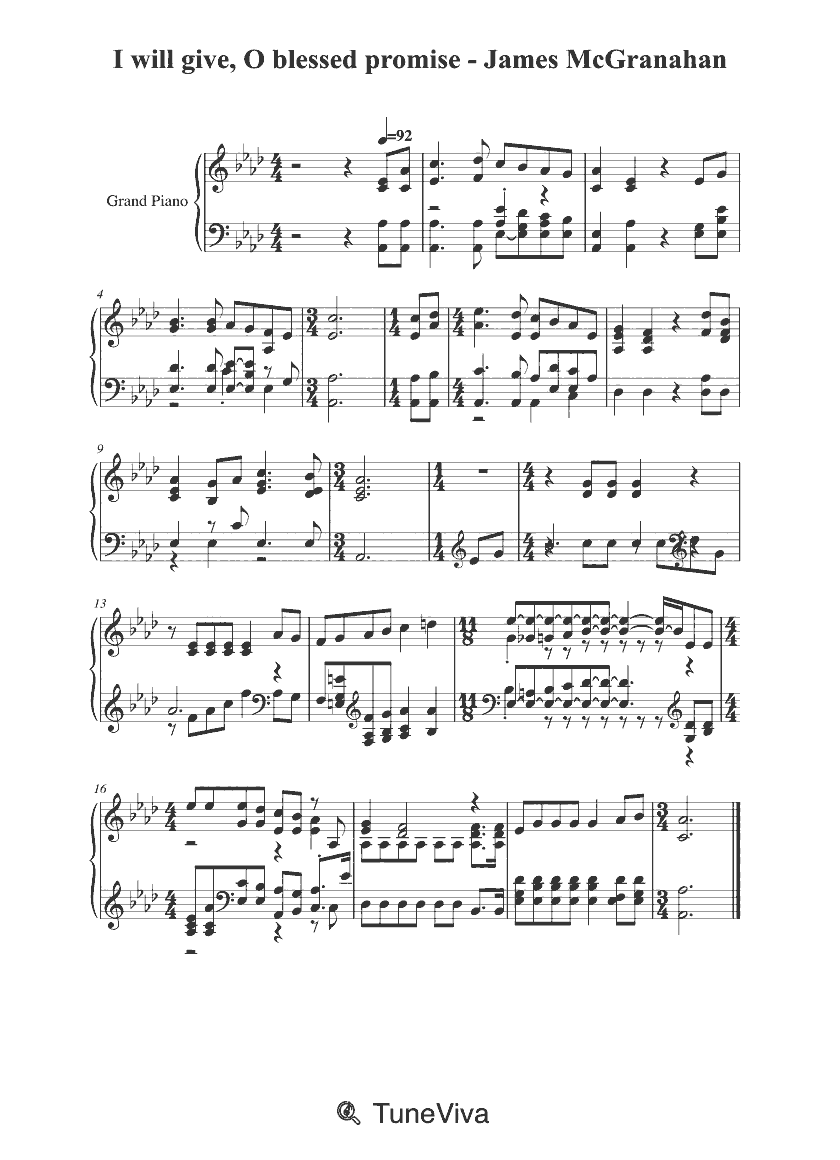
The catalogue holds 223 McGranahan scores, 153 with lyrics, and more of them reach the middle difficulty bands than is usual for gospel song: 38 at index 1 and 38 at index 2, against 147 at the base level. The most-viewed title is "I will give, O blessed promise".
James McGranahan was born on 4 July 1840 in Adamsville, Pennsylvania, of Scotch-Irish descent. His grandfather had come from Belfast before the Revolution and served in the Continental Army. Music was discouraged on the family farm, but at seventeen he found someone to take over his work and began lessons. In 1860 he studied at Bradbury's academy under T. E. Perkins and Carlo Bassini, and met Addie Vickery, whom he married in 1863 and who became his accompanist. For two years he ran music conventions and concerts with J. G. Towner in Pennsylvania and New York.
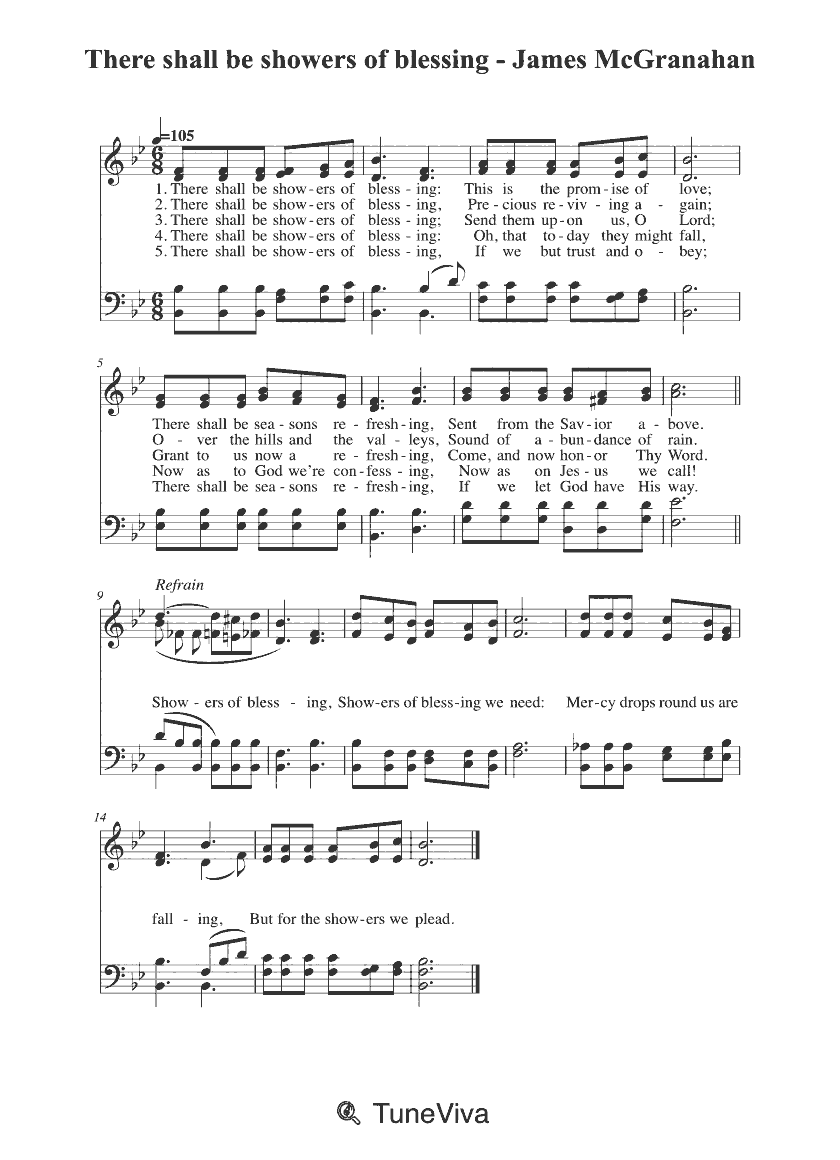
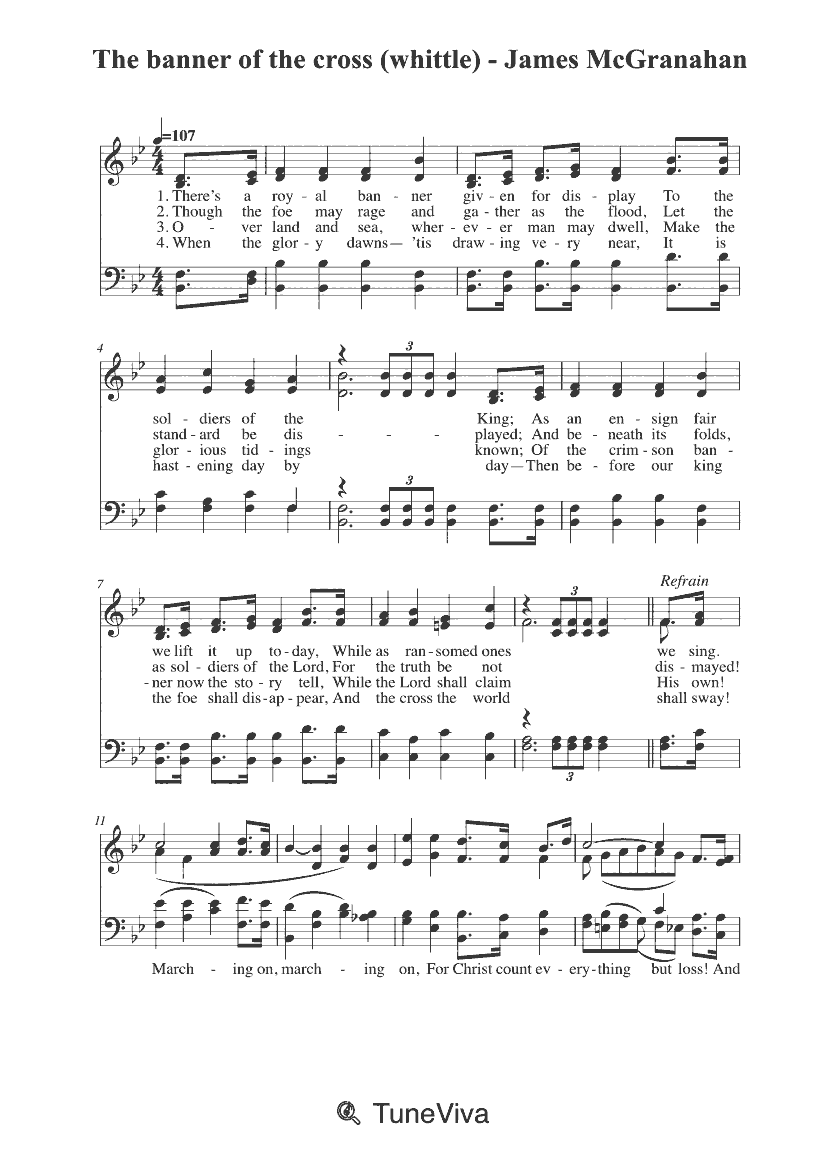
In 1875 George F. Root brought him to Chicago to manage the National Normal Institute, where he taught for three years. After Bliss's death, Whittle recruited him as song leader; they worked together for eleven years across the United States and made two trips to Britain and Ireland, in 1880 and again in 1883 with Moody and Sankey. McGranahan also pioneered gospel singing by male choirs. The Cyber Hymnal credits him with 123 gospel melodies and words for ten songs. Among the Whittle collaborations were "Christ Liveth in Me", "I Know Whom I Have Believed", "The Banner of the Cross" and "There Shall Be Showers of Blessing".
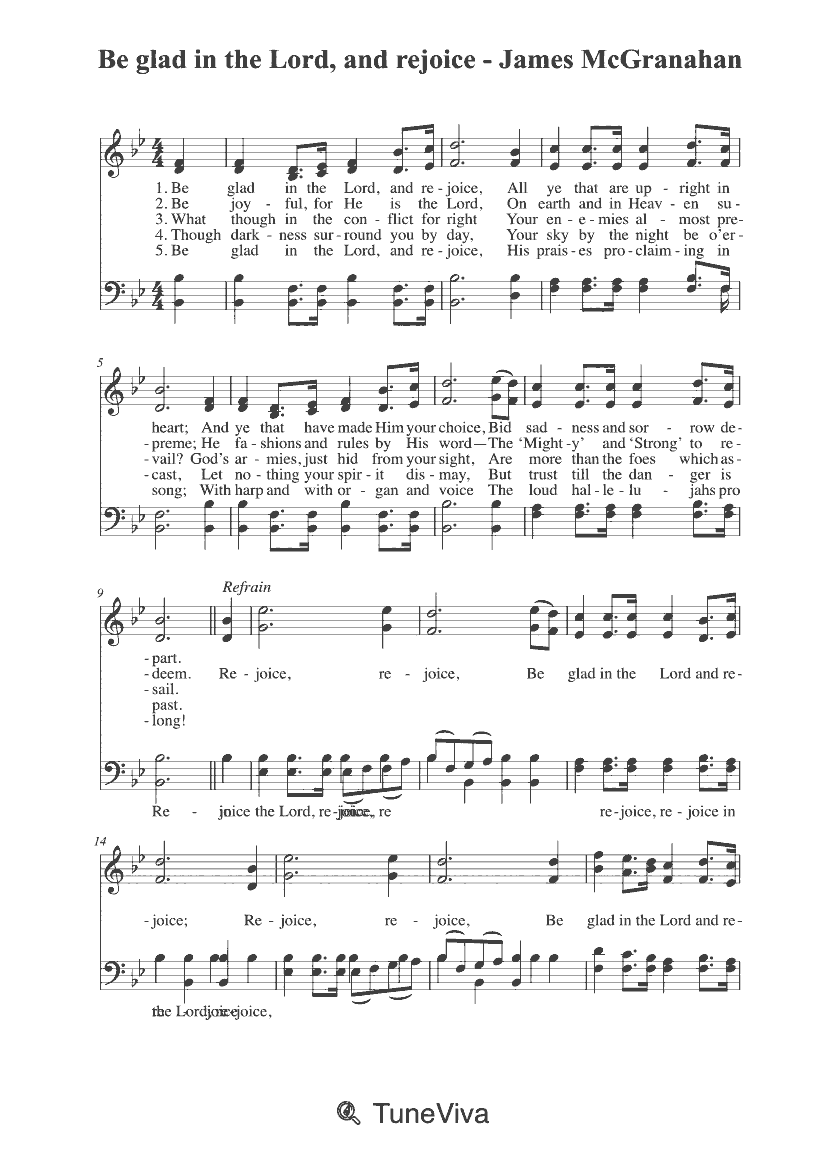
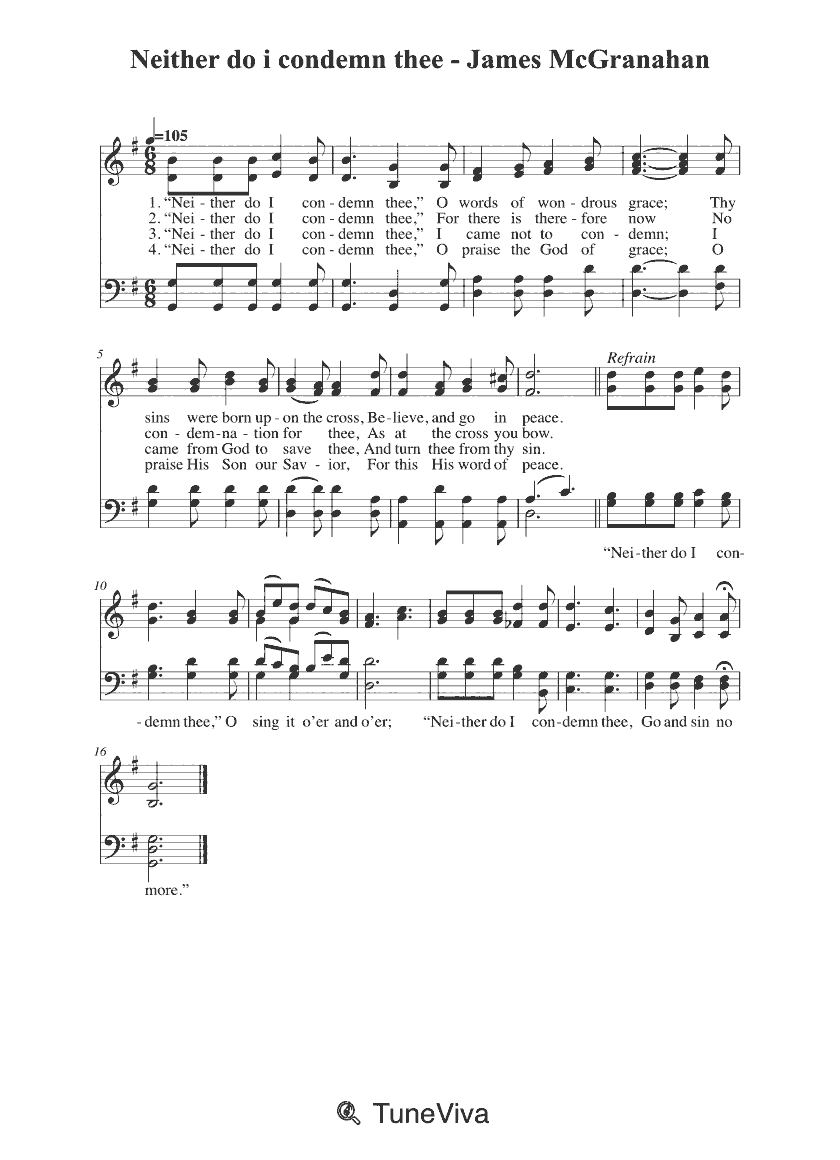
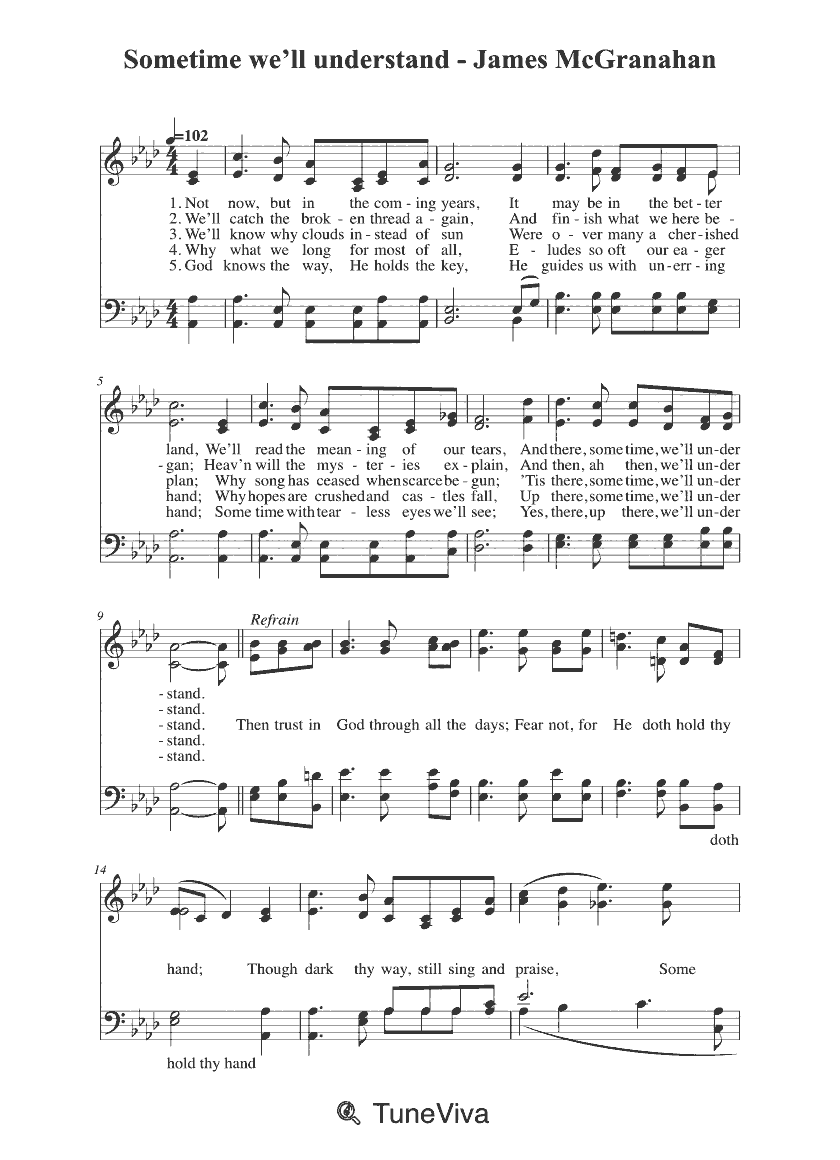
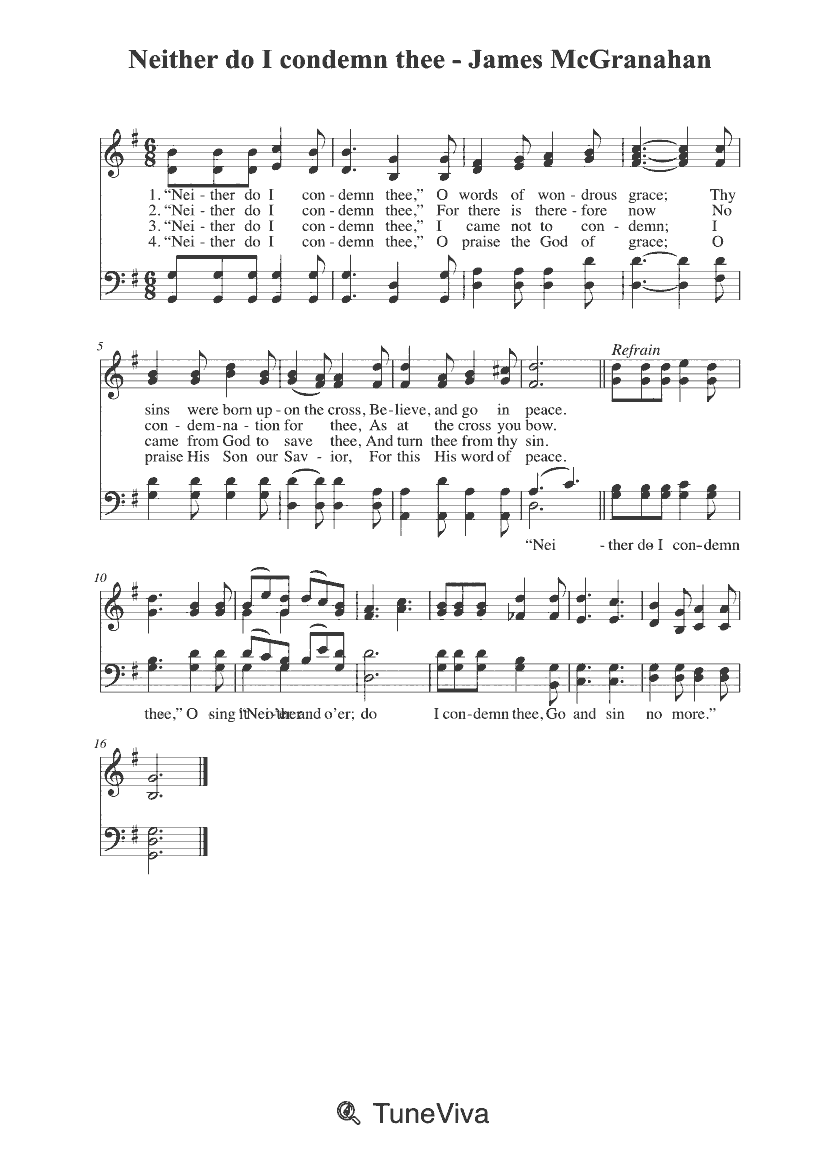
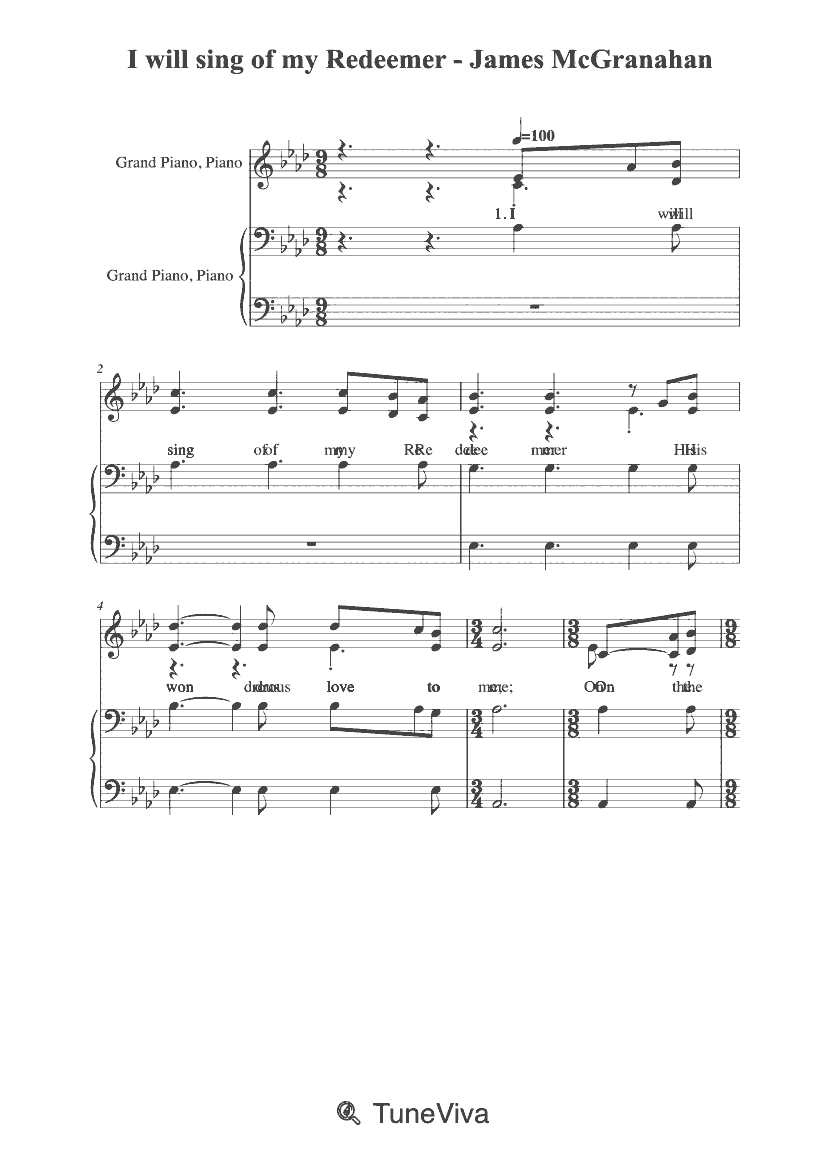
He composed the tune for "I Will Sing of My Redeemer" soon after Bliss's death, setting words found among Bliss's papers. His 1871 setting of "I Left It All with Jesus" later became "Hawaii Aloha" with new words by Lorenzo Lyons. The 223 scores here run to about 125 minutes and 66,417 notated notes. Frequently opened pieces besides the most-viewed title include "Be glad in the Lord, and rejoice", "Neither do i condemn thee" and "Sometime we'll understand".
These are gospel songs with more harmonic interest than many of their neighbours: expect chromatic inner parts, occasional modulations and a real tenor line rather than plain block chords. The melodies are still shaped for untrained voices, and the refrains repeat. A third of the collection reaches complexity index 1 or 2, so an accompanist gets some variety without virtuoso demands. Male-choir writing is a recurring feature, a legacy of McGranahan's work with gospel quartets. The 153 texted settings include the words, which makes the scores usable for singing directly from the page.
The most-viewed McGranahan title, a compact gospel song built on a single divine promise.
A jubilant choral number with a refrain designed for massed singing at campaign meetings.
A narrative setting of the woman taken in adultery, one of the catalogue's two versions of the song.
A consolation hymn about deferred answers, popular at funerals and farewell services.
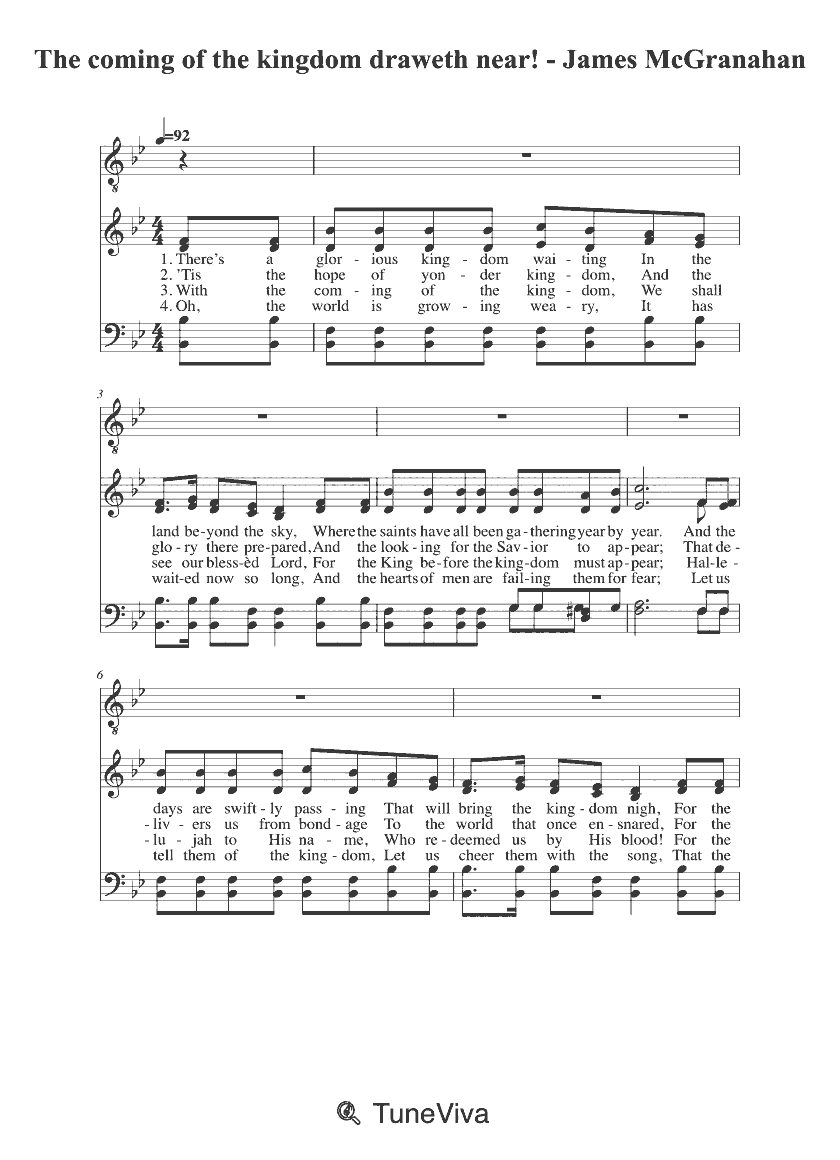
An advent anthem with a declamatory opening and a refrain that repeats the approaching-kingdom warning.
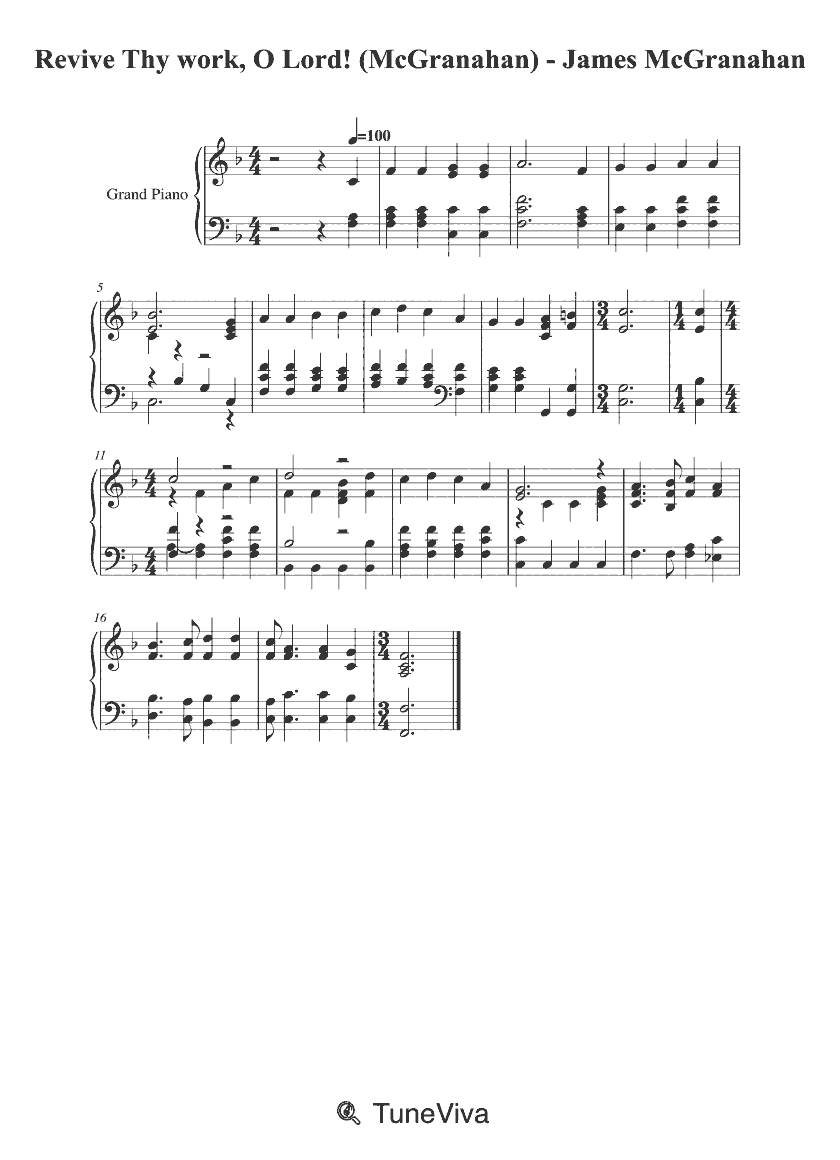
His best-known Whittle collaboration, setting the promise of revival as a repeated refrain.
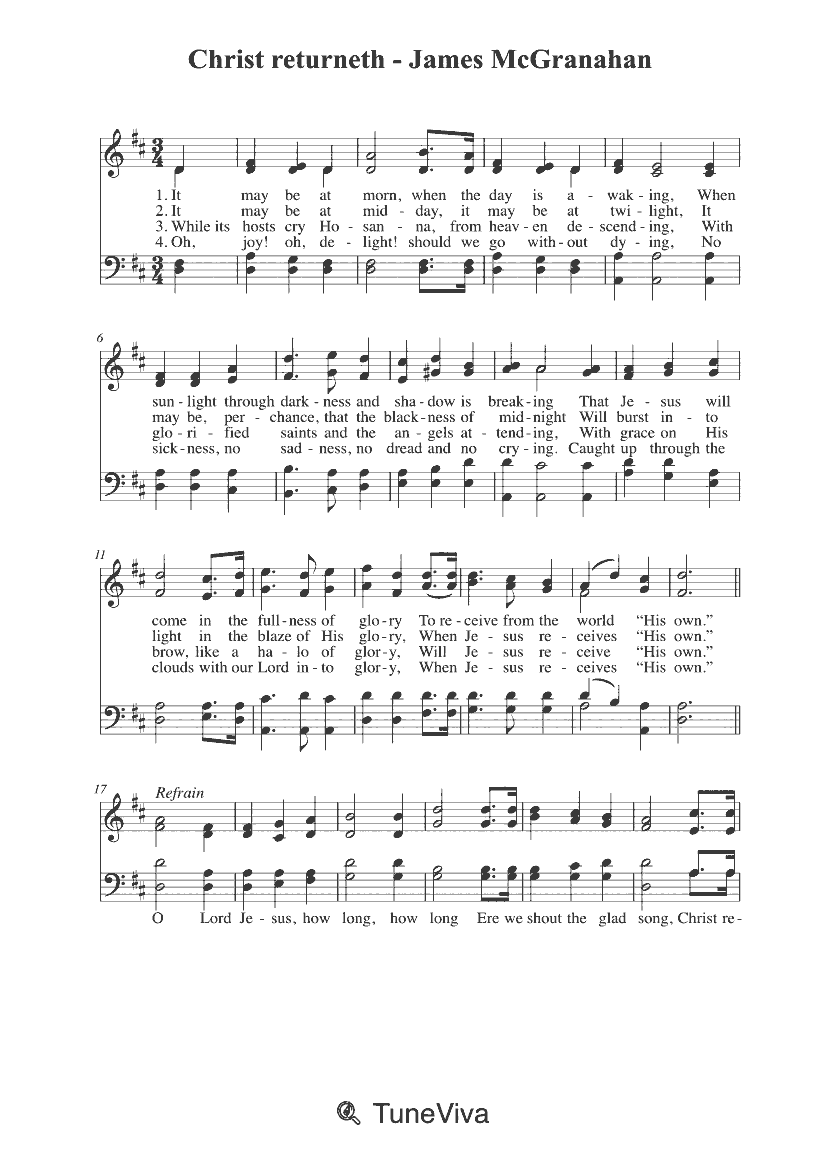
A second-coming hymn from the same partnership, with a refrain that lifts at each repetition.
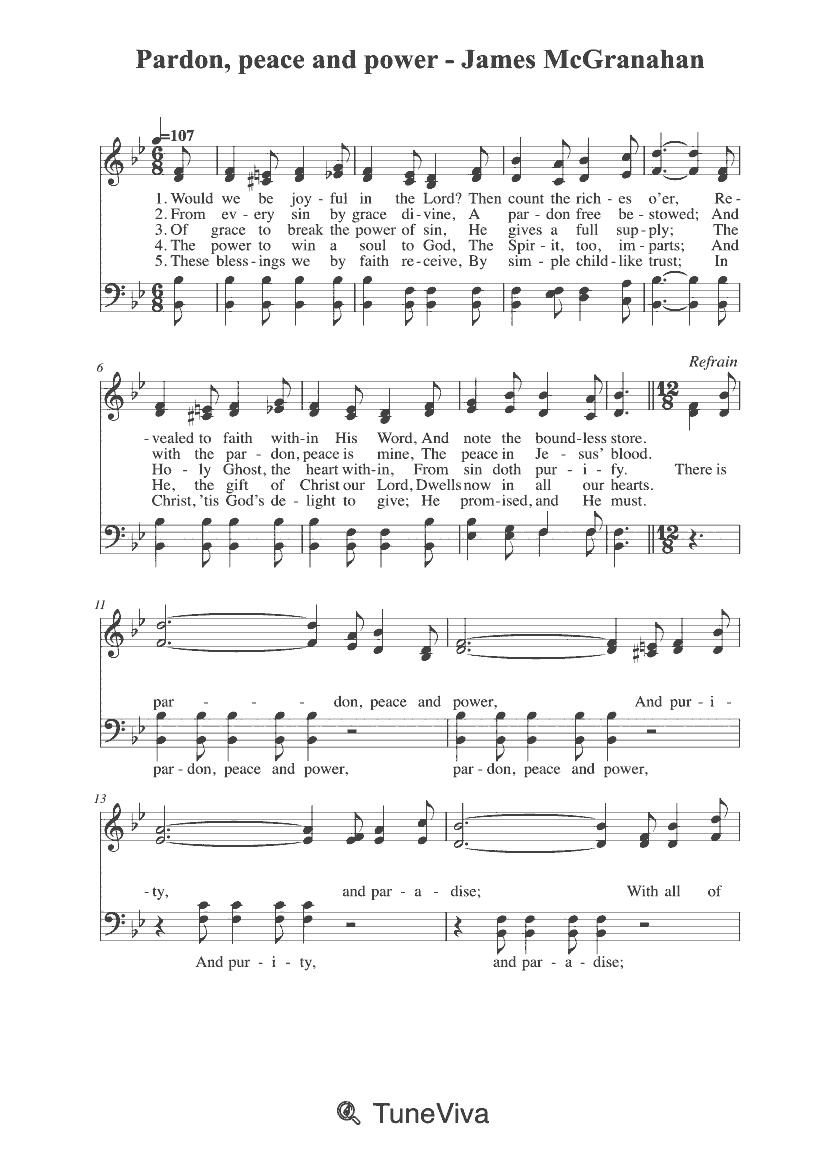
A gospel invitation song, with a refrain that lays out the sequence of pardon, peace and power.
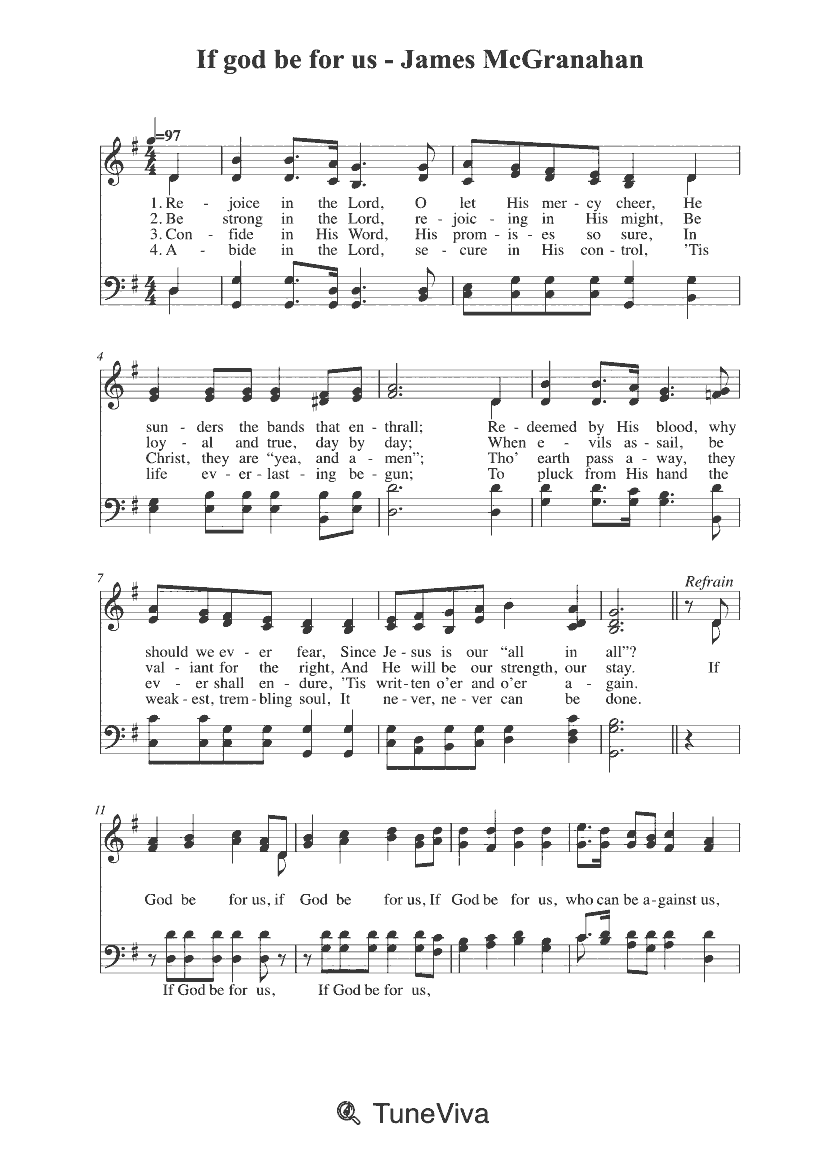
A setting of Romans 8 that moves from unison declaration to four-part harmony.
His tune for words found among Philip Bliss's papers after the Ashtabula disaster.
He spent eleven years as Daniel W. Whittle's song leader, and travelled with Moody and Sankey on the 1883 British campaign.
Yes. He composed the melody for words found among Philip P. Bliss's papers after Bliss died in the Ashtabula train disaster.
His melody was later fitted with new words by Lorenzo Lyons and became Hawaii Aloha.
147 are at complexity index 0, with 38 each at index 1 and 2; the harder ones add chromatic harmony and independent inner parts.
Catalog editions and arrangements attributed to James McGranahan.