
classical
4 tracks
Callcott's page is a body of vocal music: 56 scores, about 207 minutes and 93,086 notated notes, every one of them with lyrics. The most-viewed is The Erl King, his 1798 setting of Goethe in Matthew Lewis's English translation, followed by Rosabelle and the canon Miserere mei Deus. Glee, catch and anthem sit side by side, and the titles range from Walter Scott and Ossian to metrical psalms. All 56 entries are logged at complexity index 0, so the index offers no guide to the contrapuntal demands of a catch.
John Wall Callcott was born in Kensington, London, on 20 November 1766, the son of a builder. He was intended for medicine but turned to music, taking the Oxford MusB in 1785 and the MusD in 1800. He held organ posts at St Paul's, Covent Garden, from 1789 and at the Asylum for Female Orphans from 1793 to 1802, and in 1791, when Haydn came to London, he studied instrumentation with him. The Catch Club prizes made his name: he won several medals in the 1780s and 1790s, and his glees number at least a hundred. His Musical Grammar of 1806 remained in use for decades.
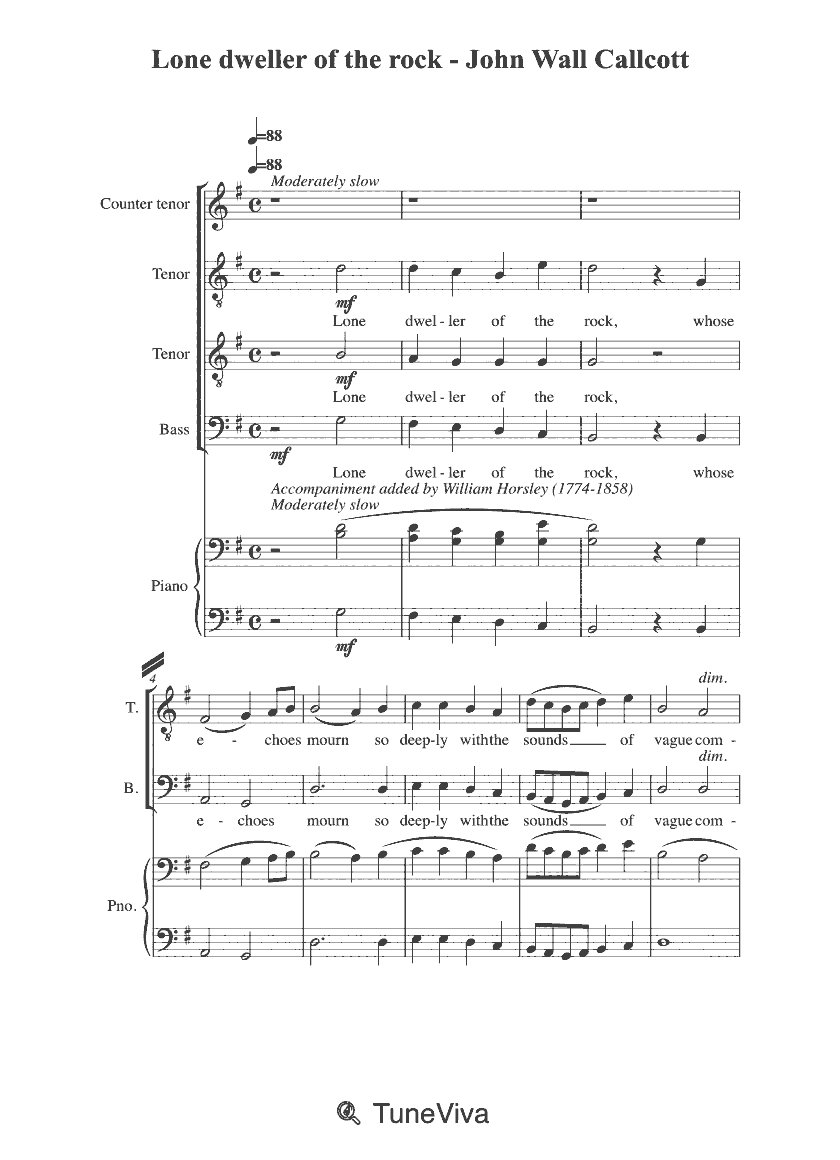
His later years were shadowed by mental illness. He suffered a breakdown in 1807 and spent five years in an asylum; he recovered for a time after 1812 but relapsed, and died near Bristol on 15 May 1821. In 1824 his son-in-law William Horsley published a collected edition of his glees, catches and canons with a memoir, and the catalogue's merged slug still carries Horsley's name and the note that he added accompaniments.
The 56 scores run to some 3 hours 27 minutes, an average of under four minutes each, which is long for a body of part-songs but reflects the anthems and sacred pieces alongside the glees. Every entry carries lyrics and sits at complexity index 0.
Callcott's glees and catches were written for unaccompanied voices, so intonation has to be settled before tempo. In the glees, keep the inner parts quiet and let the top line carry the text; in the catches, the point is the way the same phrase returns in a new voice, and a rigid speed will expose every imperfect entry. The anthems need a fuller tone and clear consonants, since the words carry the structure. With no continuo to lean on, the bass must tune the cadences by ear.
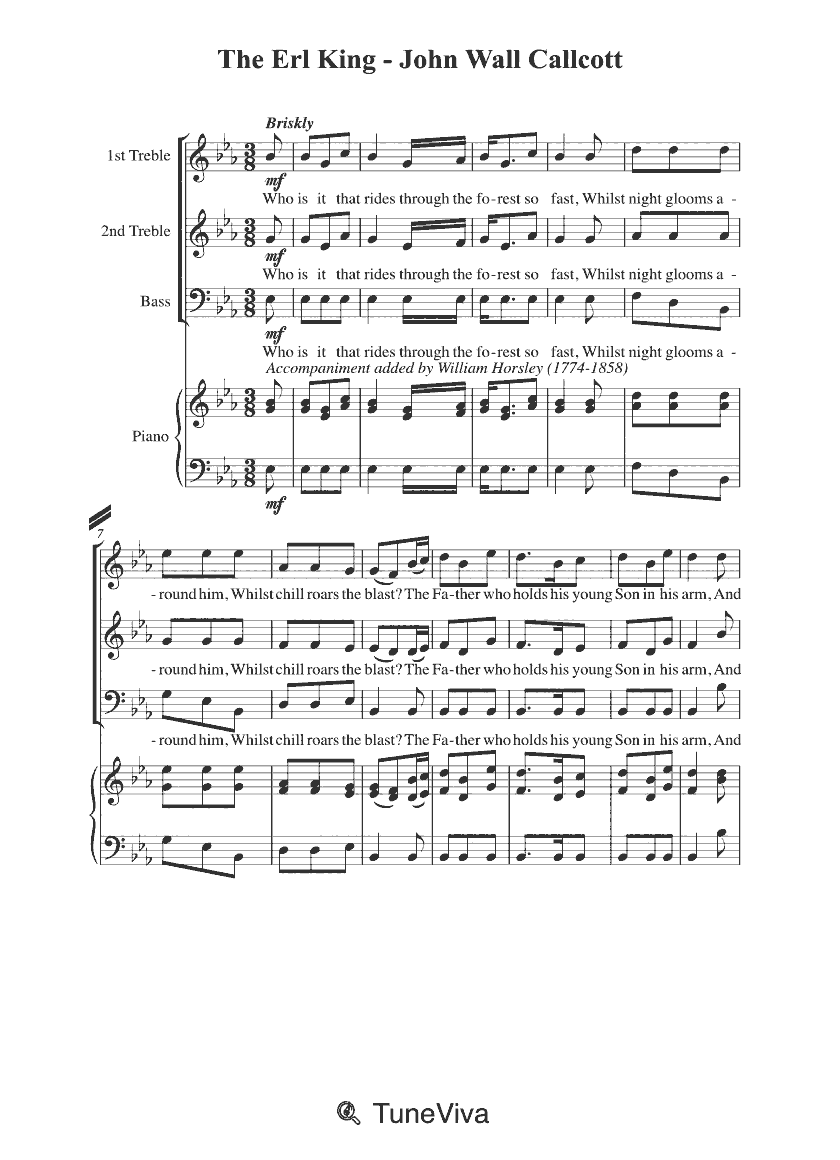
Composed on 28 September 1798 and published the same year: Goethe's Erlkönig in Matthew Lewis's translation, set for three voices (STB).
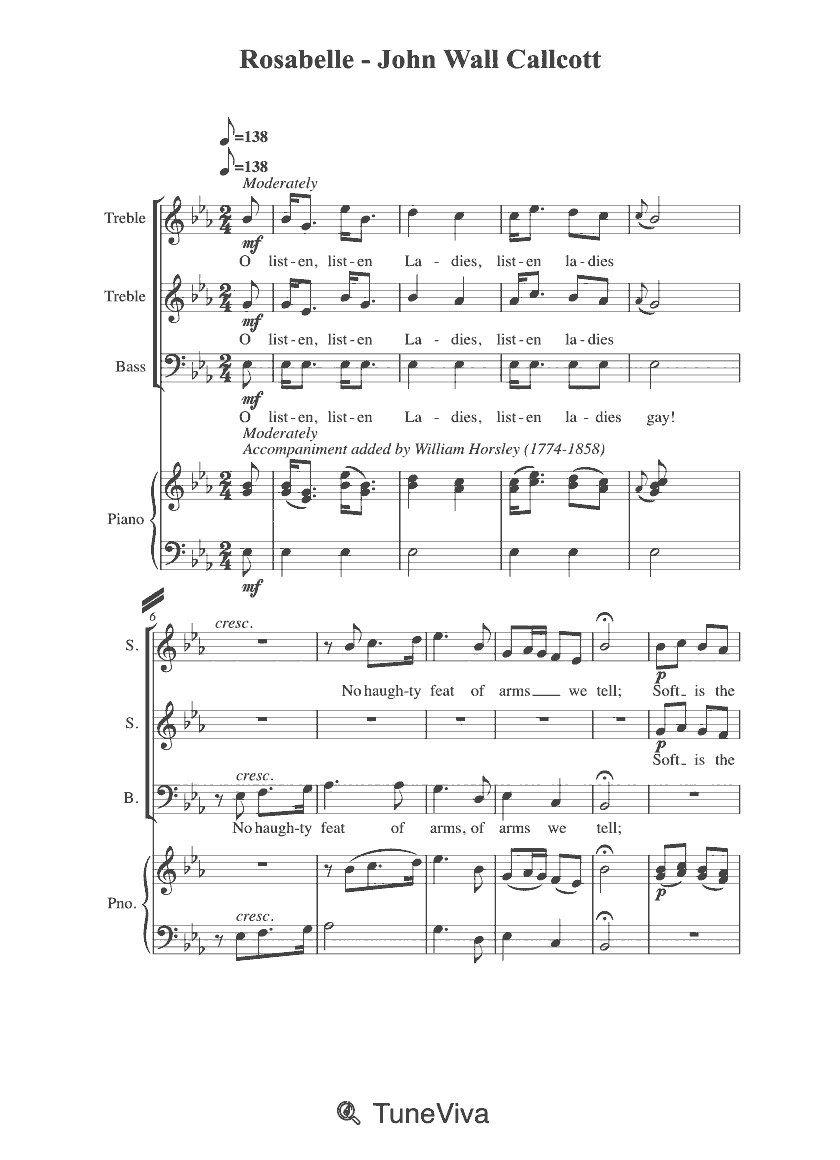
A glee for three voices in E-flat on Walter Scott's 'O listen, ladies gay!', from The Lay of the Last Minstrel.
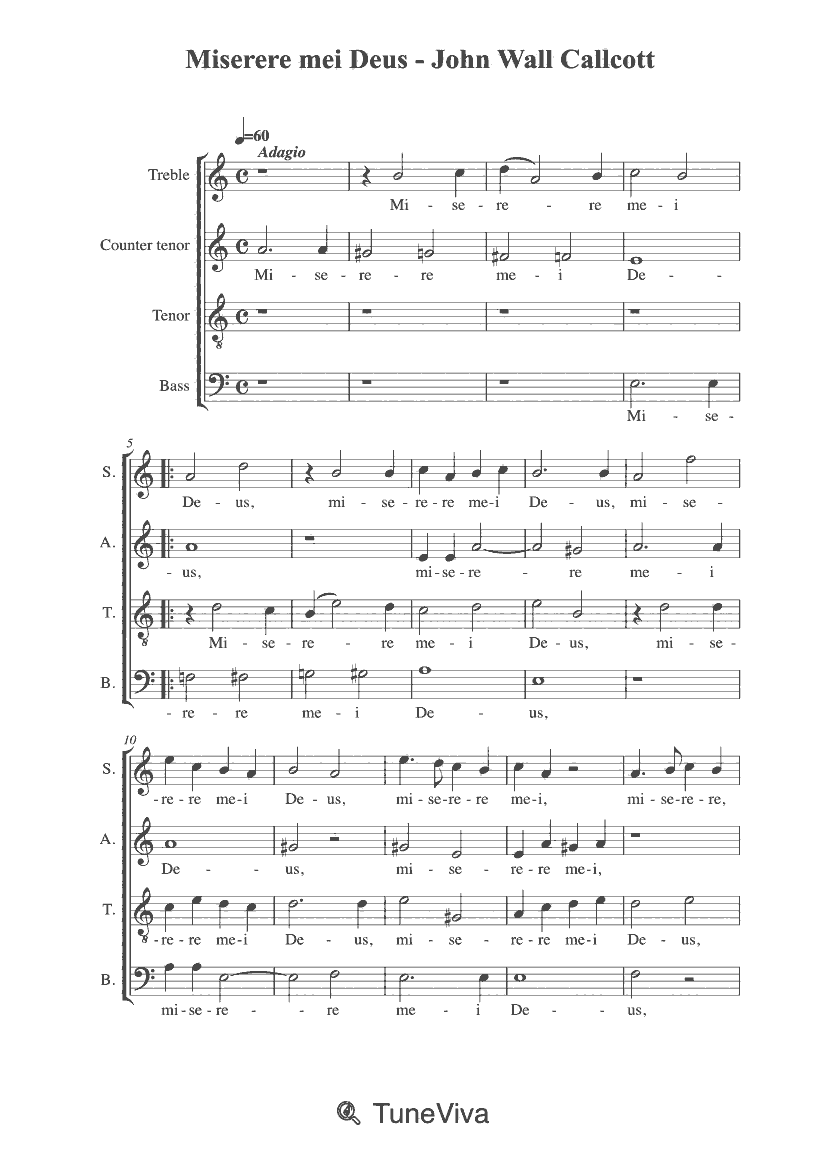
A canon on the penitential psalm, printed in the composer's First Collection of Catches, Glees and Canons.
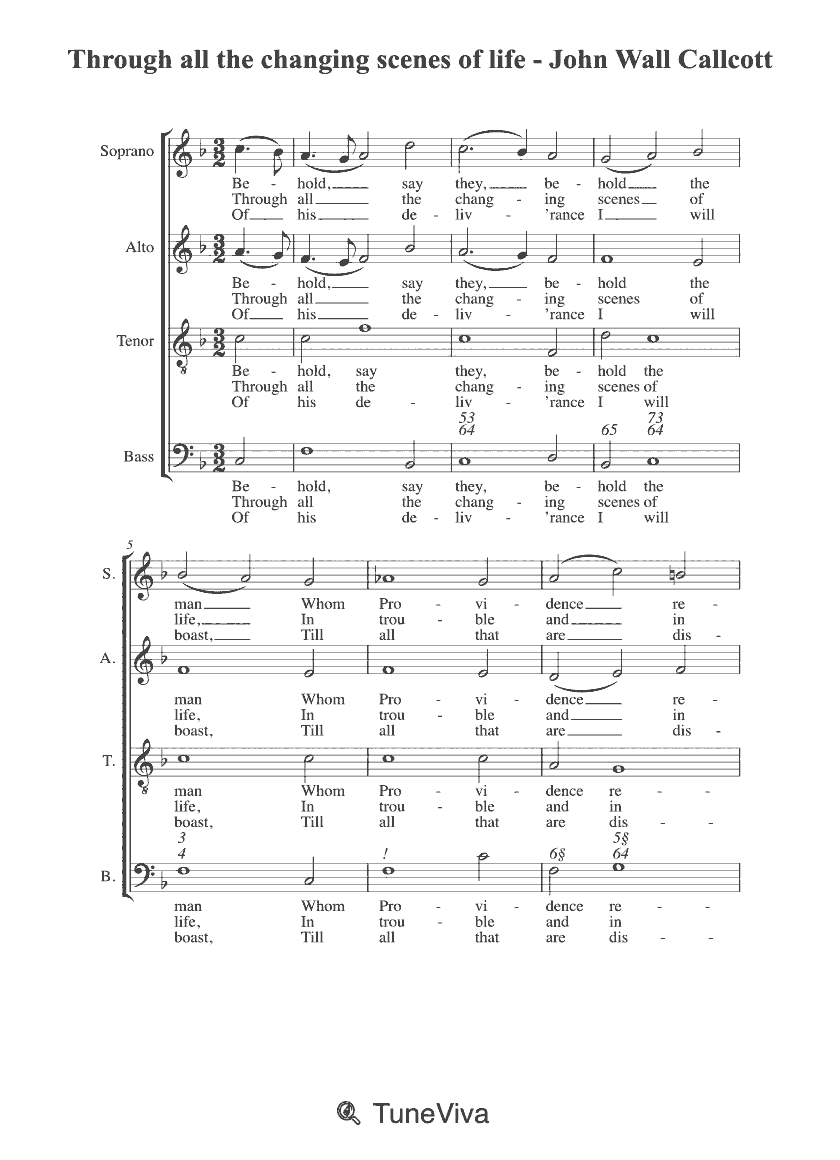
A setting of the metrical psalm on Psalm 34, paraphrased by Nahum Tate and Nicholas Brady.
A three-voice glee, probably TTB, in B-flat, setting Thomas Campbell's poem.
A short unaccompanied piece in catch style, with the text arranged so that the overlapping entries fit together.
A glee from 1789, introduced that year in Samuel Arnold's Battle of Hexham at the Haymarket.
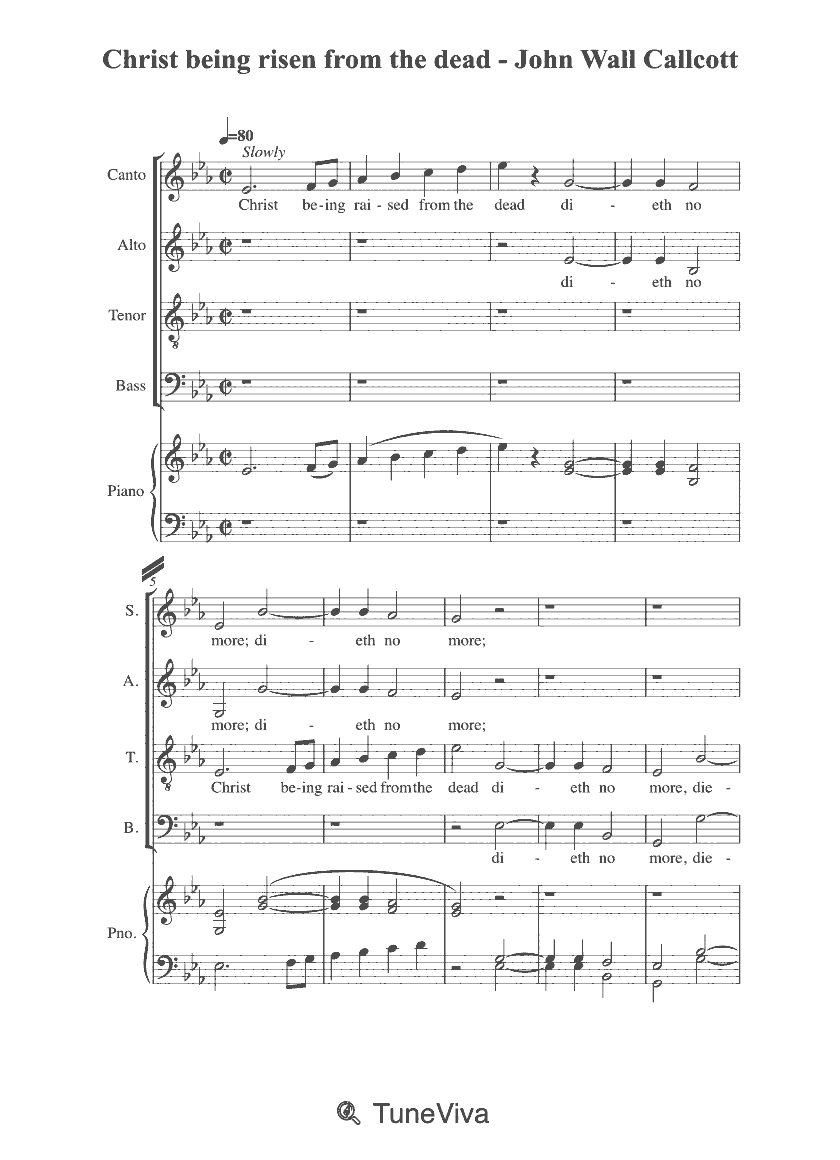
A sacred piece for Easter; the catalogue does not record its source text or date.
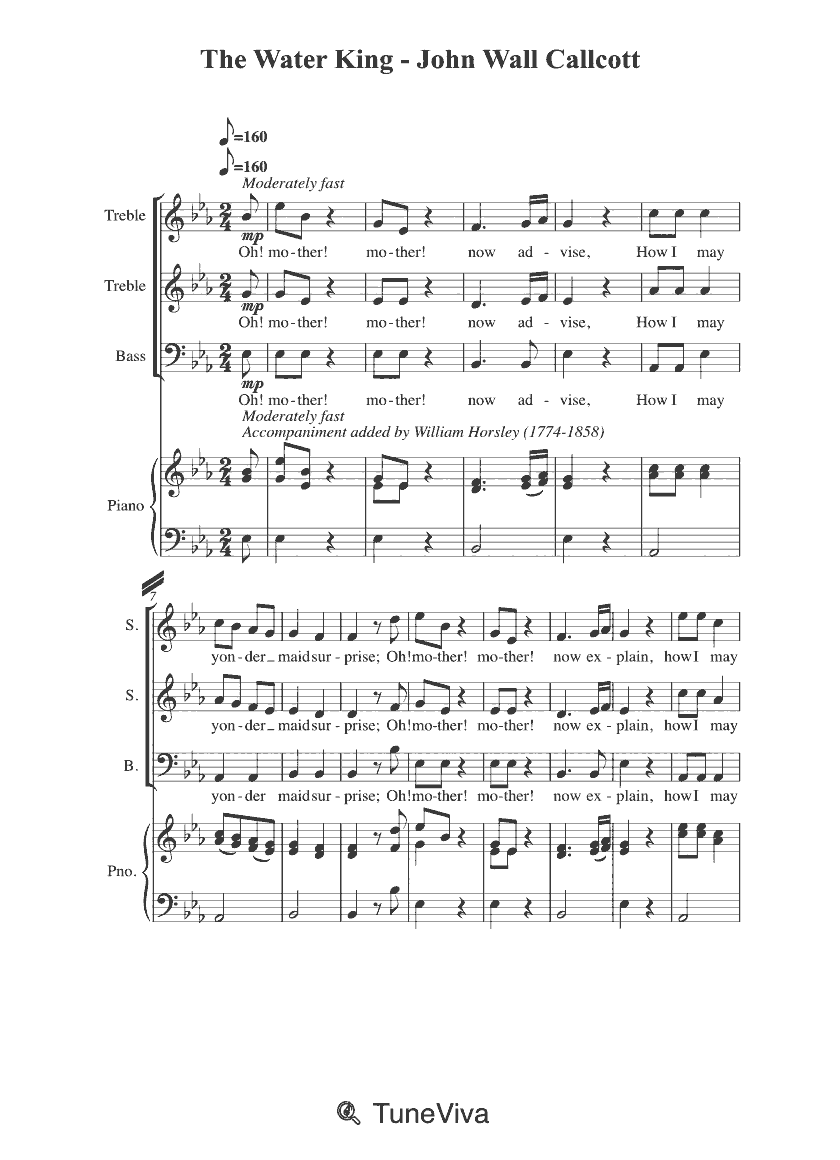
A glee whose text is not identified on the file; the title suggests a narrative or fairy-tale subject.
One of Callcott's Ossian settings, a glee for several voices; the catalogue does not name the source poem.
There are 56, running to about 207 minutes of music and 93,086 notated notes. All 56 carry lyrics.
A glee is an unaccompanied part-song, usually for three or more voices and often through-composed; a catch is a canon in which the words are contrived so that the overlapping entries make a new meaning. Callcott wrote both.
Callcott studied instrumentation with Haydn in London in 1791, after Joseph Salomon introduced them.
Horsley was Callcott's son-in-law. He edited the 1824 collection of his glees, catches and canons and added accompaniments to some of them, which the merged catalogue slug records.
Catalog editions and arrangements attributed to John Wall Callcott.
Psalm XXXIV. C.M.Fifth Sunday in Lent. Evening
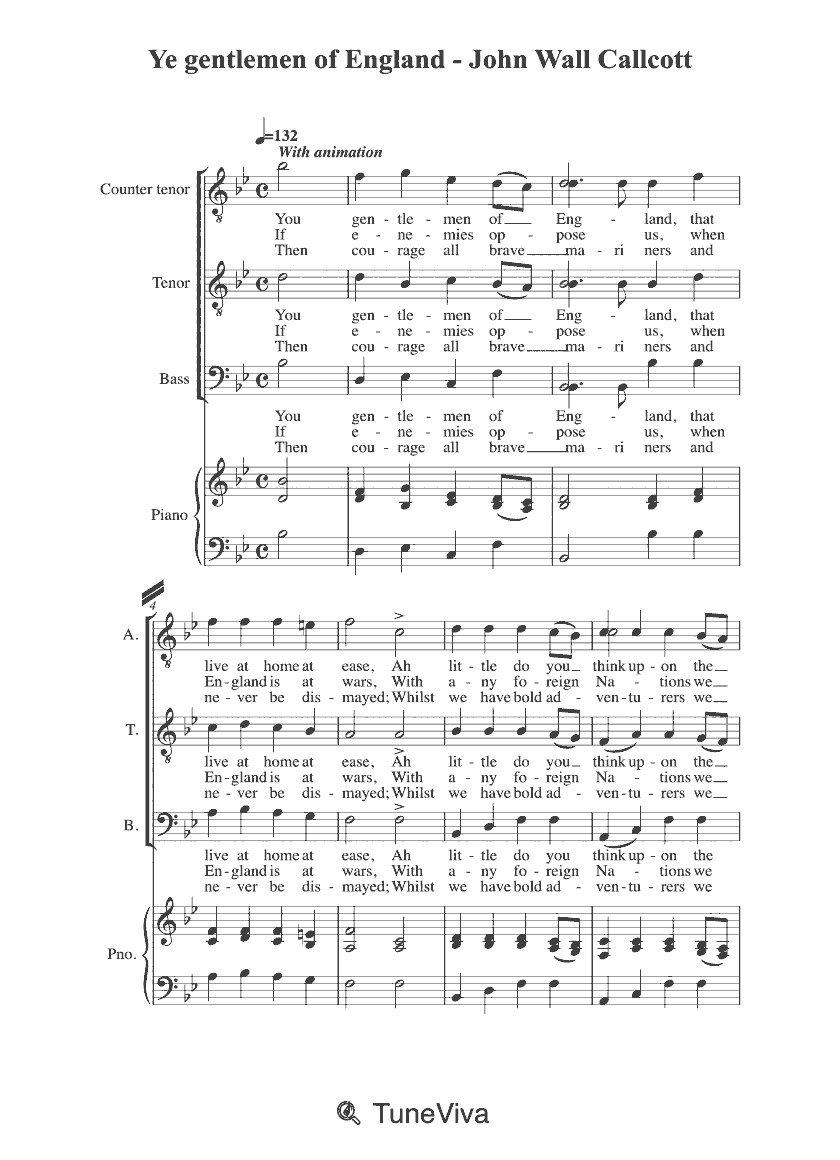
The Mariners
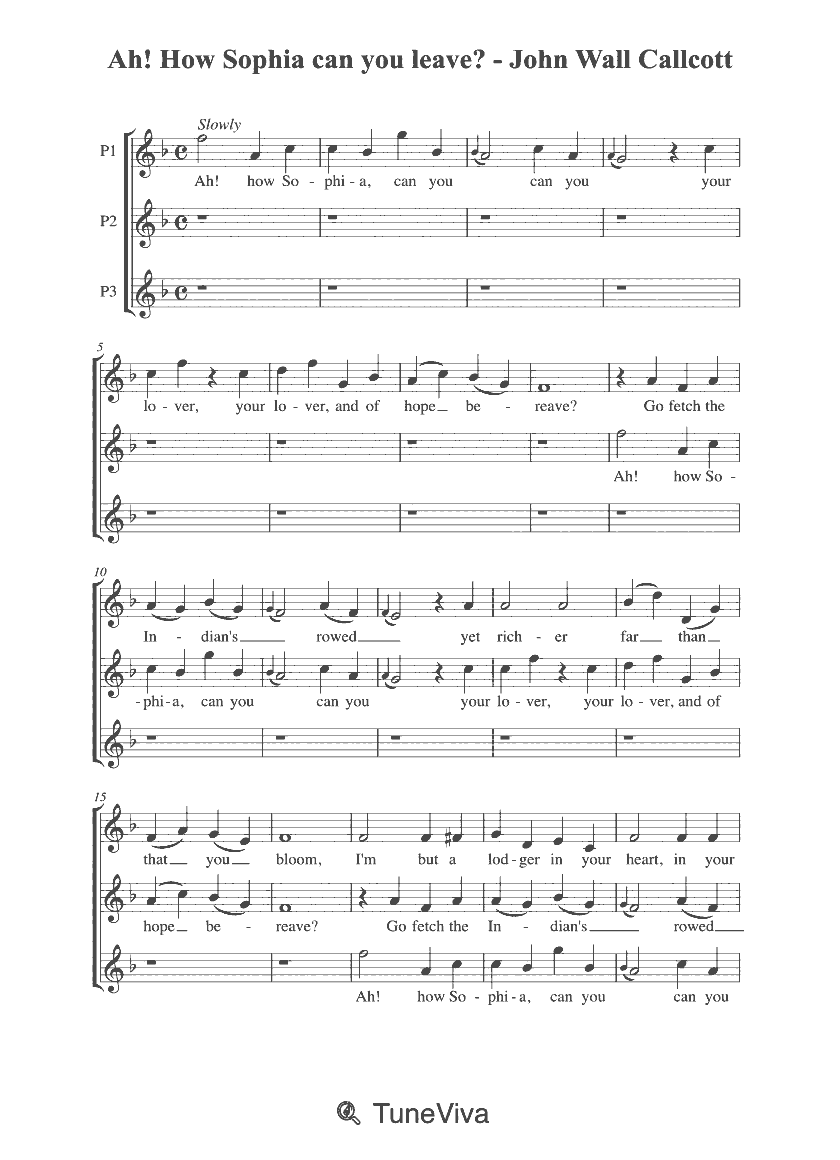
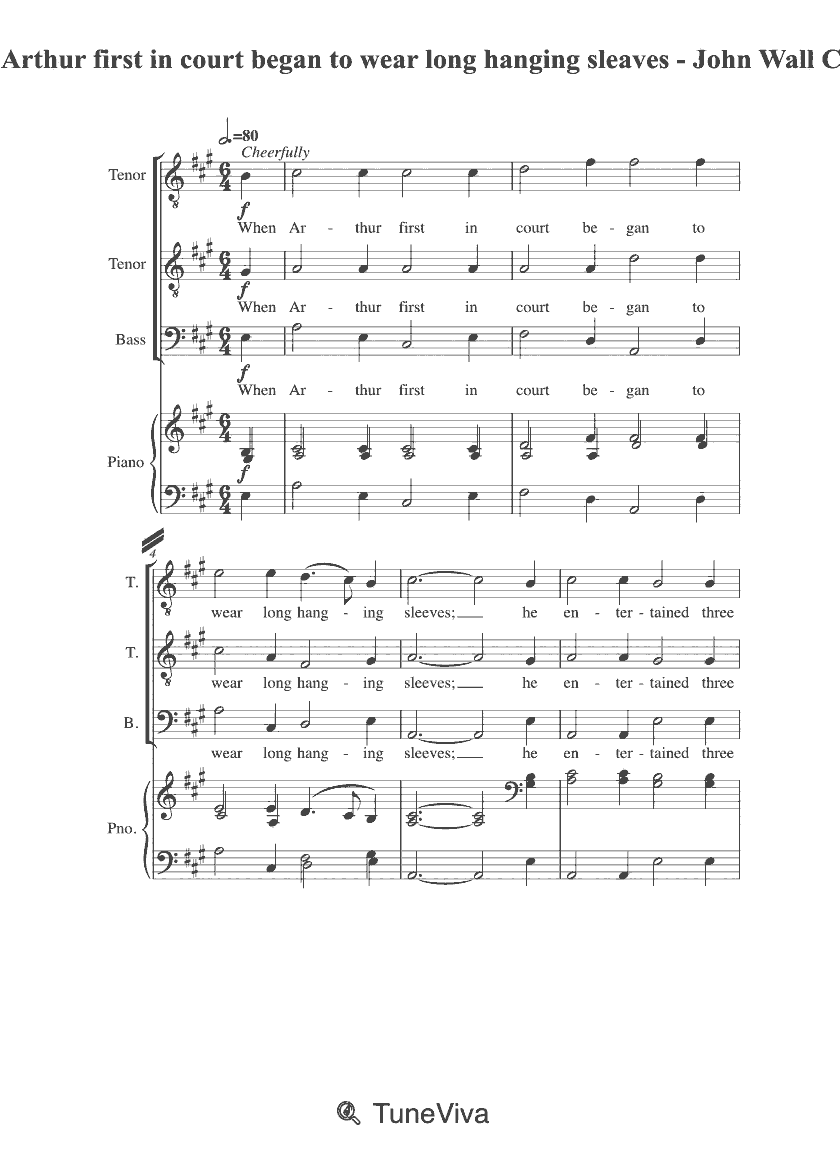
A three part glee
Canon four in two
A three part glee
Canon four in two
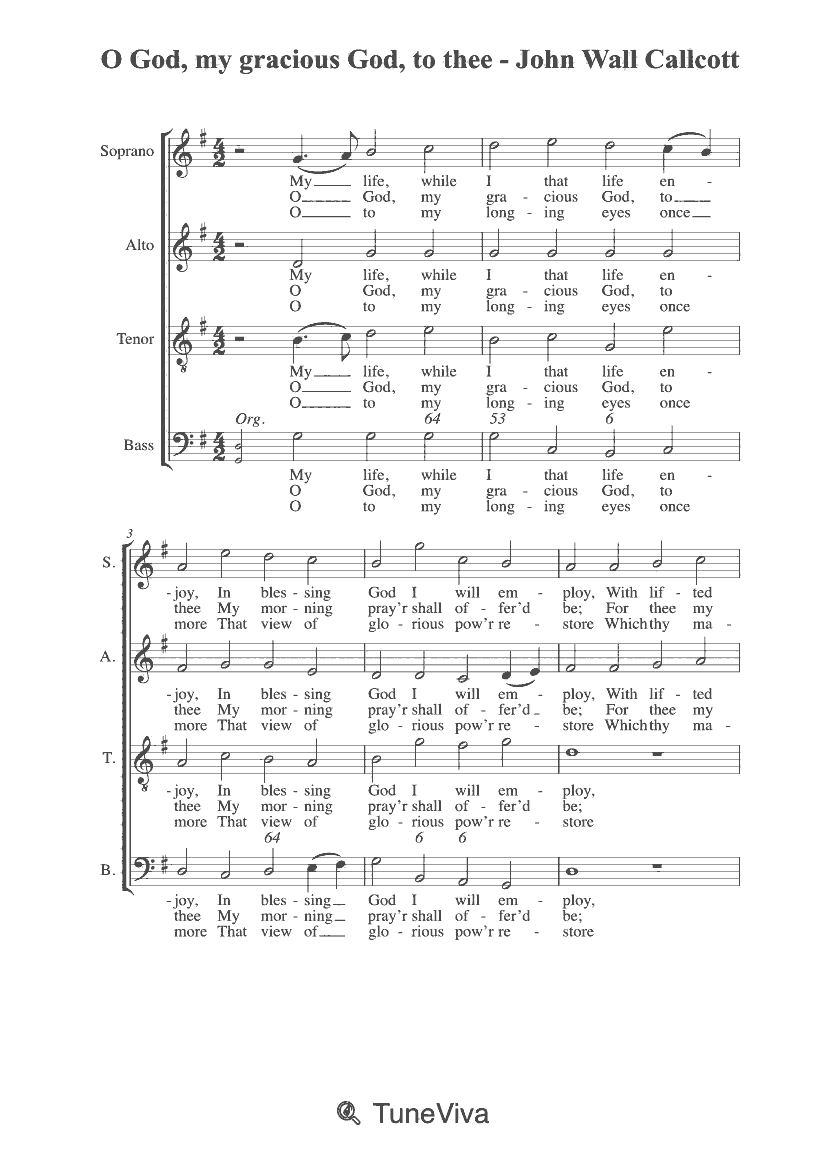
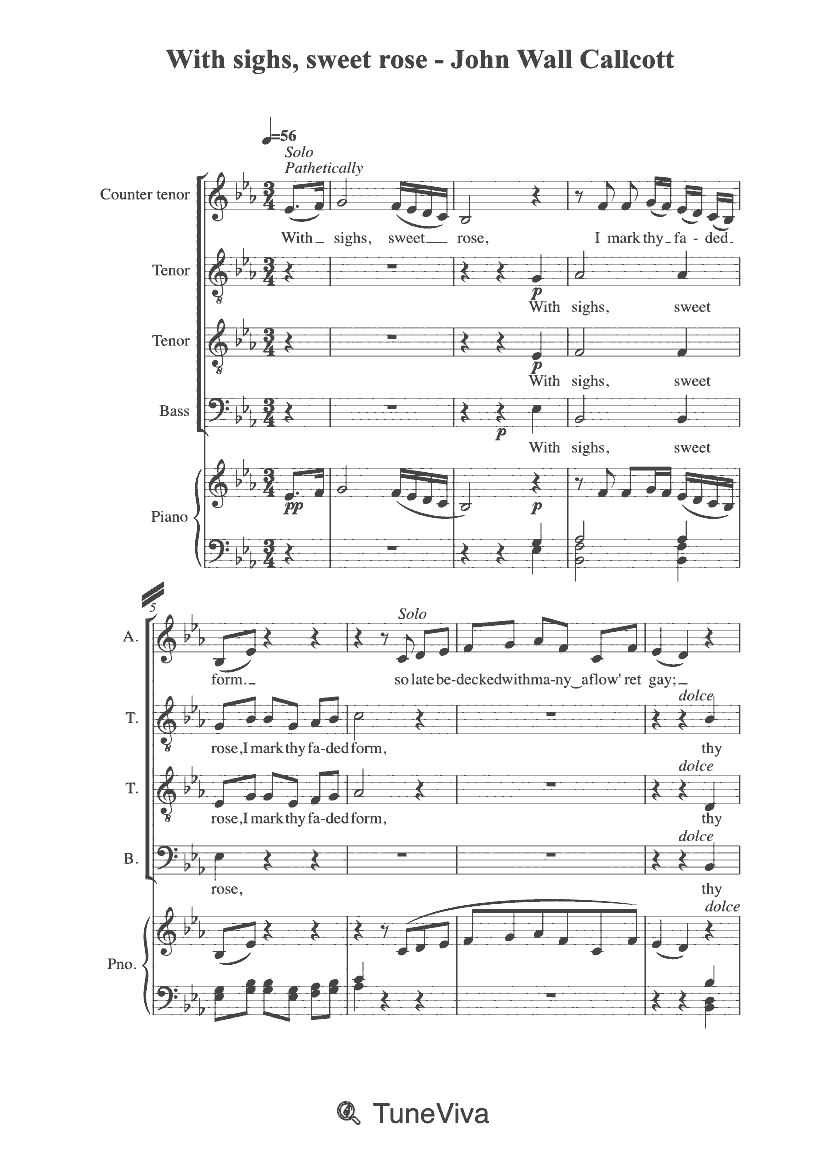
A four part glee
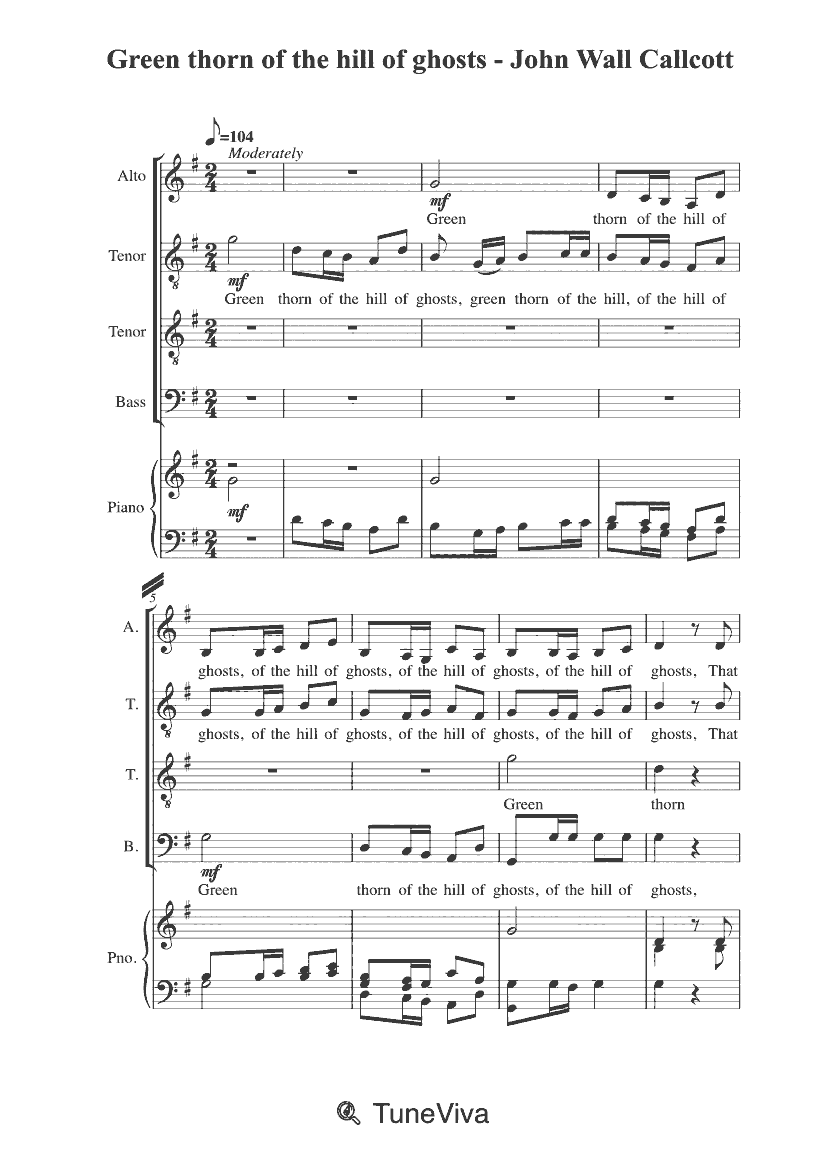
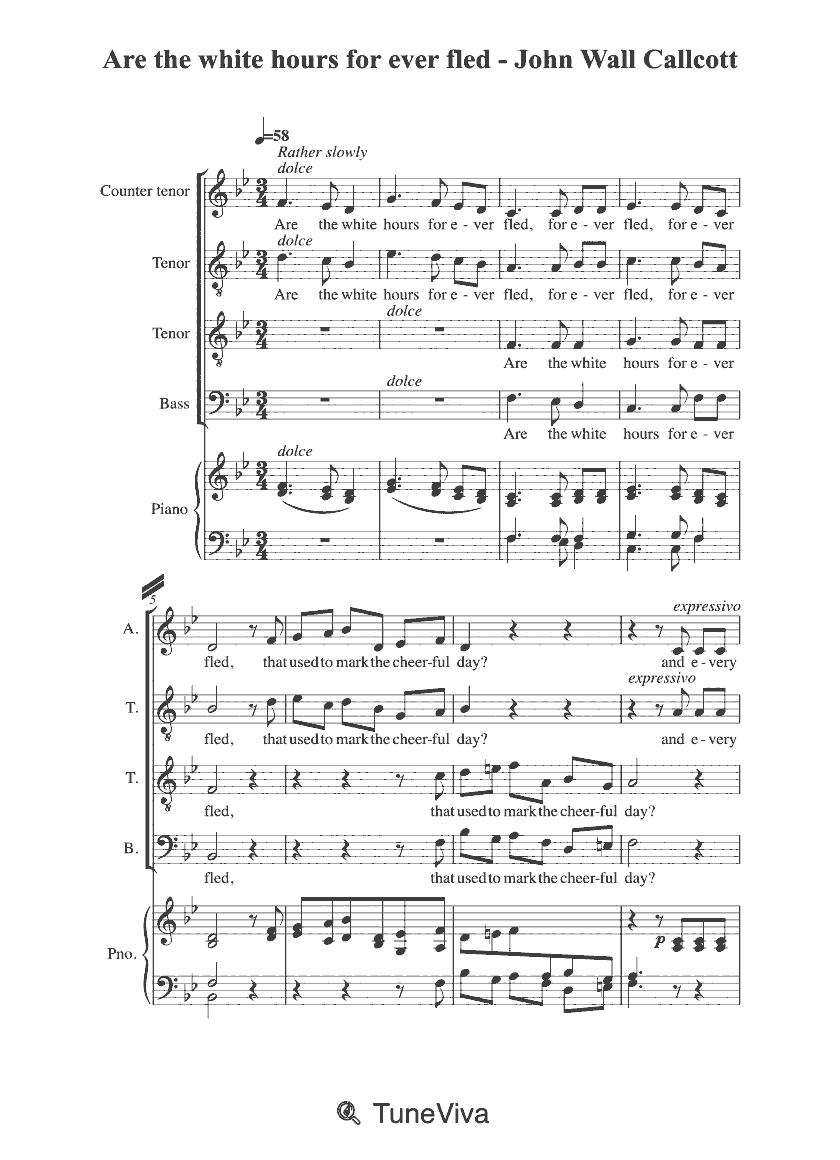
Four part glee
Canon four in two
A five part glee