1 tracks
The 21 scores under Mr. Thomas Dean are all preludes, and they come from one manuscript: Thomas Bennet's violin book of 1718, now in the EFDSS archive. The set is headed "A Set of Preludes in all ye Keys After a New Manner", and it does what the title says, moving through the keys one by one. The catalogue runs to about 7 minutes and 1,701 notated notes, with no lyrics. Several preludes appear more than once, so the 21 entries cover 14 distinct pieces; each one is didactic rather than concert music, demonstrating a key.
Almost nothing is known of the man behind the attribution. The preludes are signed "Mr Thomas Dean", and the Dictionary of National Biography records a musician of that name, born towards the end of the seventeenth century. He wrote music for Oldmixon's tragedy The Governor of Cyprus at Lincoln's Inn Fields in 1703, played a Corelli solo at a Stationers' Hall benefit on 30 November 1709, and was described by Burney as organist at Warwick and Coventry; he took the degree of Mus.Doc. at Oxford on 9 July 1731. Some of his harpsichord music is in British Library Add. MS 31467, but whether this is the Dean of the preludes has not been established.
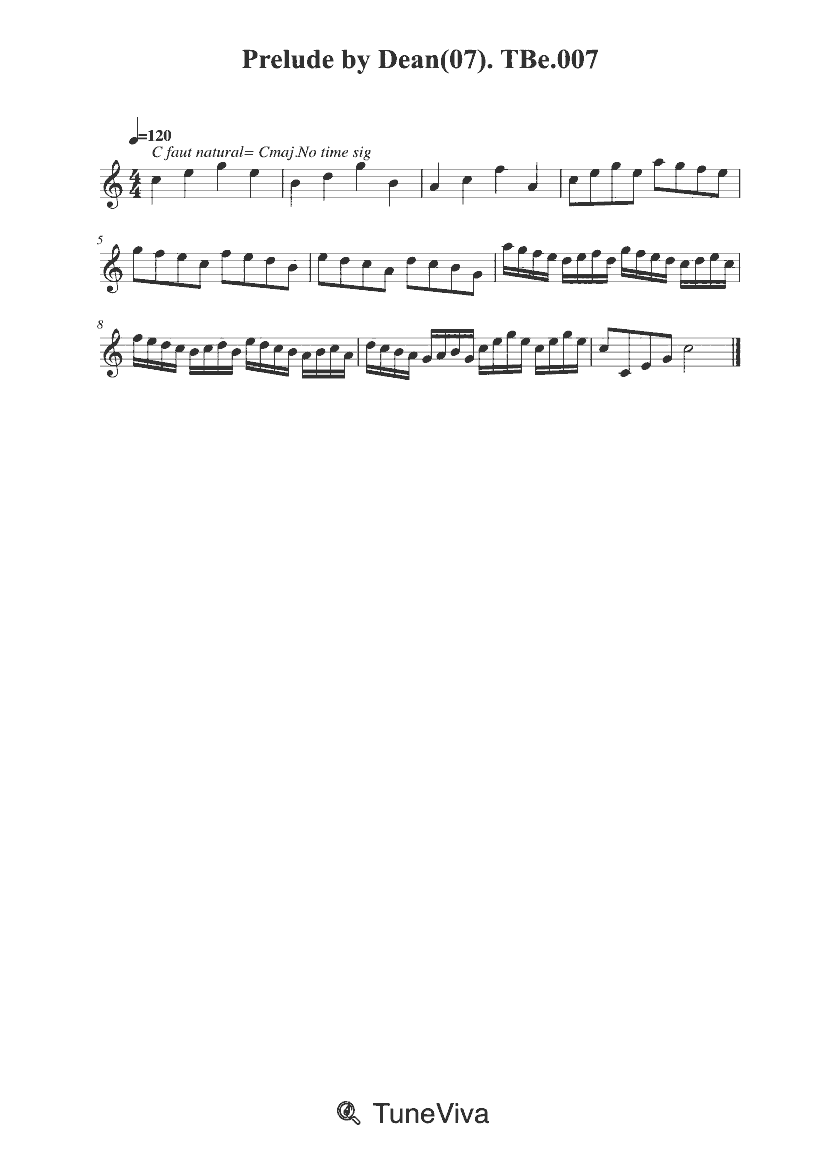
The manuscript is a different kind of witness. Thomas Bennet's book is an oblong quarto of 12 by 23 cm, inscribed "Thomas Bennet's Book. 1718." and later "W. Shield, Cambridge 16 Aug 1810"; it later passed through the hands of T. W. Taphouse and Frank Kidson. The contents are dances, airs and marches for "the Violin or Flute", and the Dean set stands at the front: fourteen preludes, each headed with an old gamut name — Gamut Flat, Gamut Sharp, A re Natural, B mi Flat, C faut natural, D solre Sharp, E lami Natural, F Flat — and each without a time signature.
The catalogue's 21 entries reduce to those fourteen pieces. Prelude (02) appears under two ids, as do (04), (12), (13) and (14); the duplication accounts for the gap between the count and the set. Keys run from G minor and G major through A, B flat, B, C, D, E and F, and each prelude is short — about 81 notes each.
Each prelude is a single line, so the player supplies the harmony implicitly: the figures outline chords, and the ear fills in the rest. Keep the pulse steady even though the manuscript gives no time signature, and shape each one as a short improvisation rather than a study. Because the set moves through the keys in order, playing two or three side by side shows how Dean changes the figuration to suit the hand and the key.
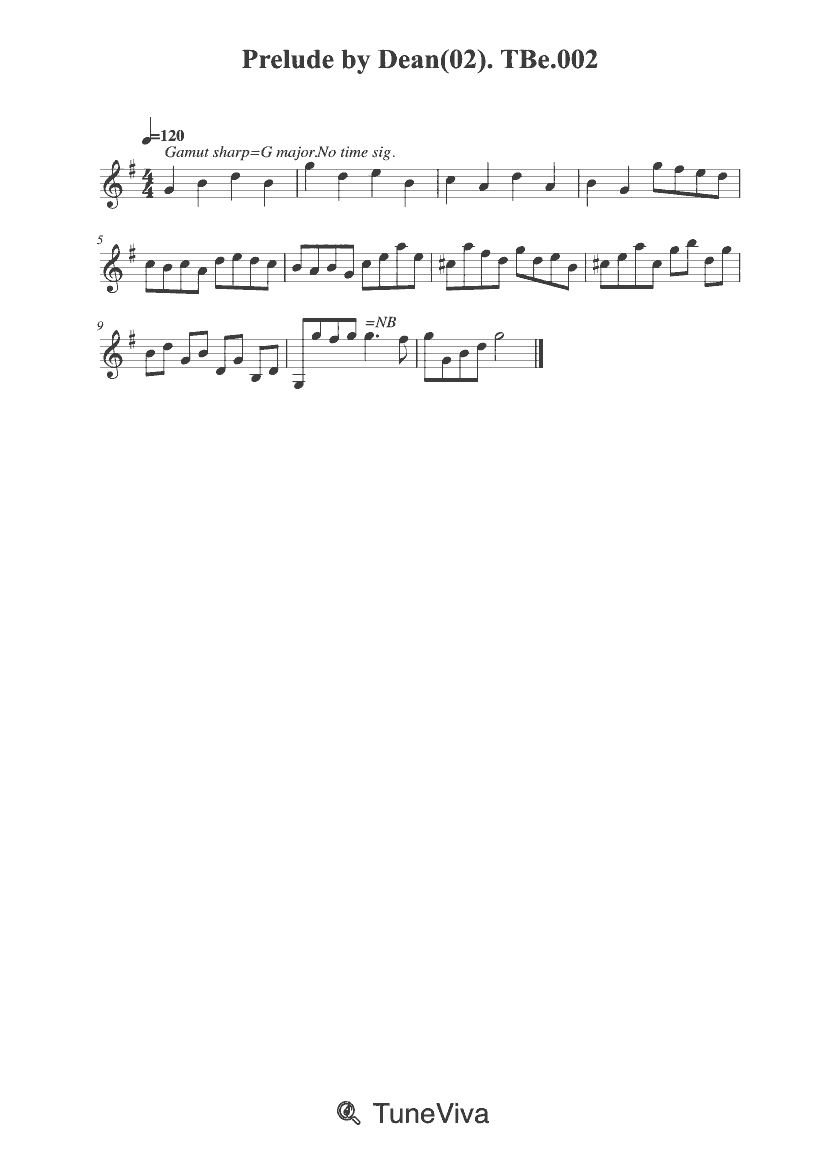
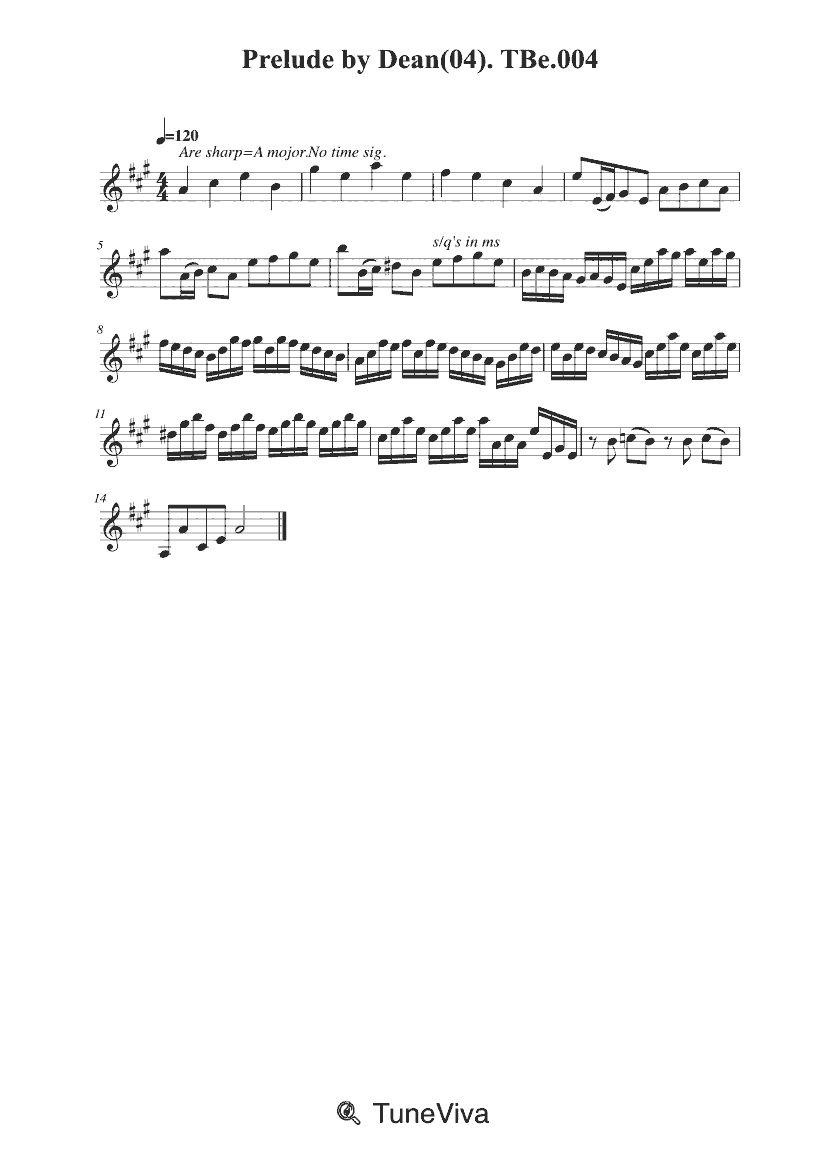
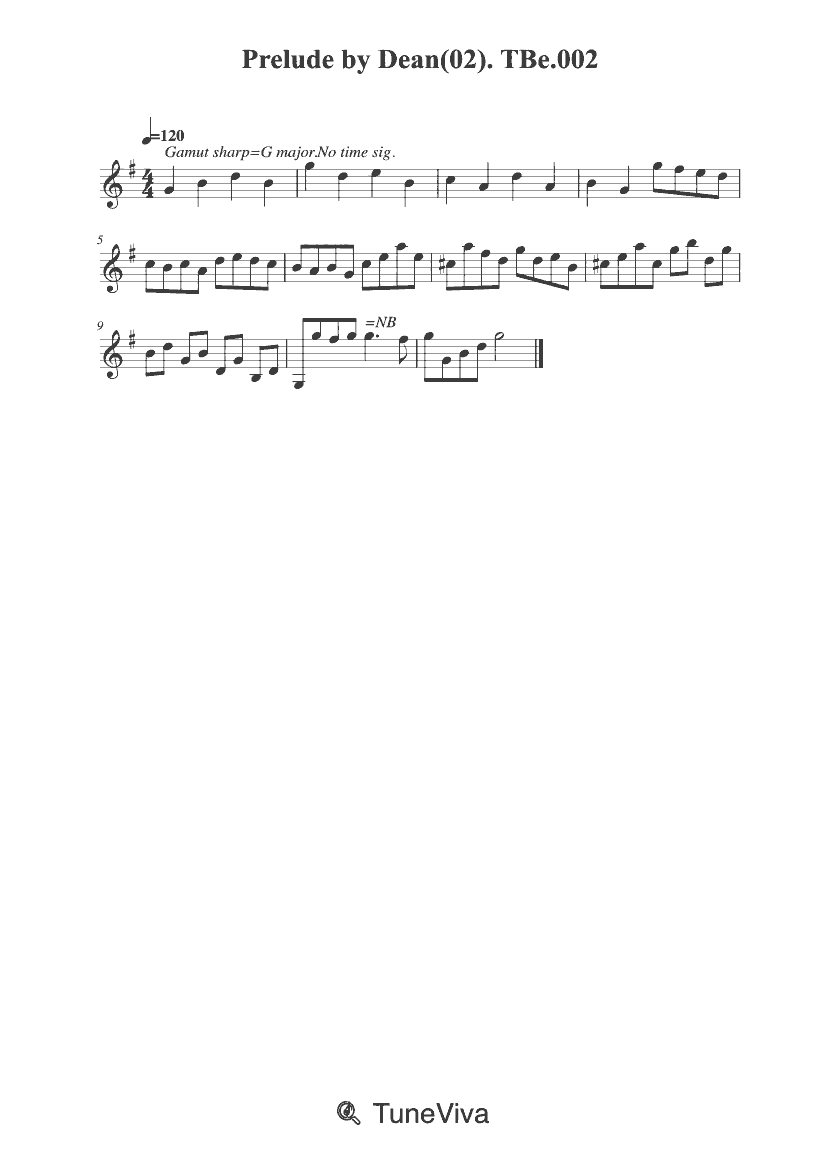
Headed "Gamut sharp" in the manuscript, the second prelude and the most-viewed entry; a second copy is catalogued under id 3231.
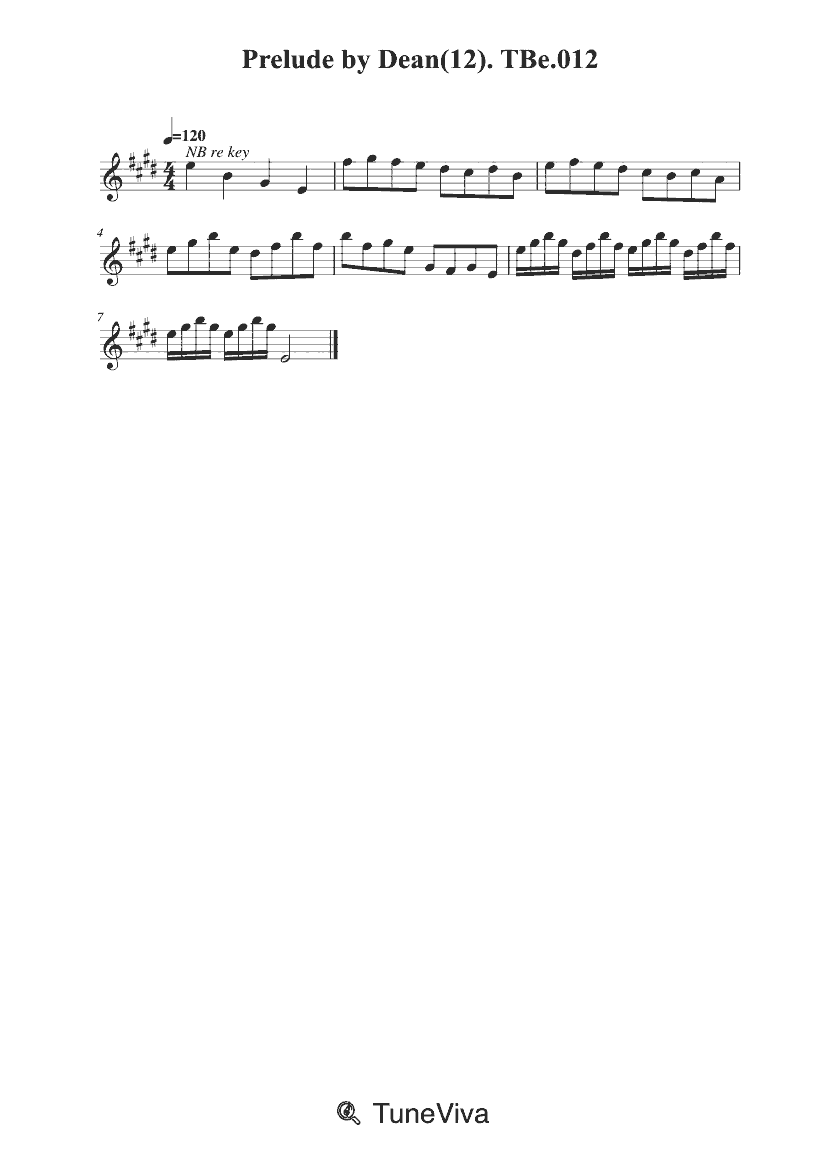
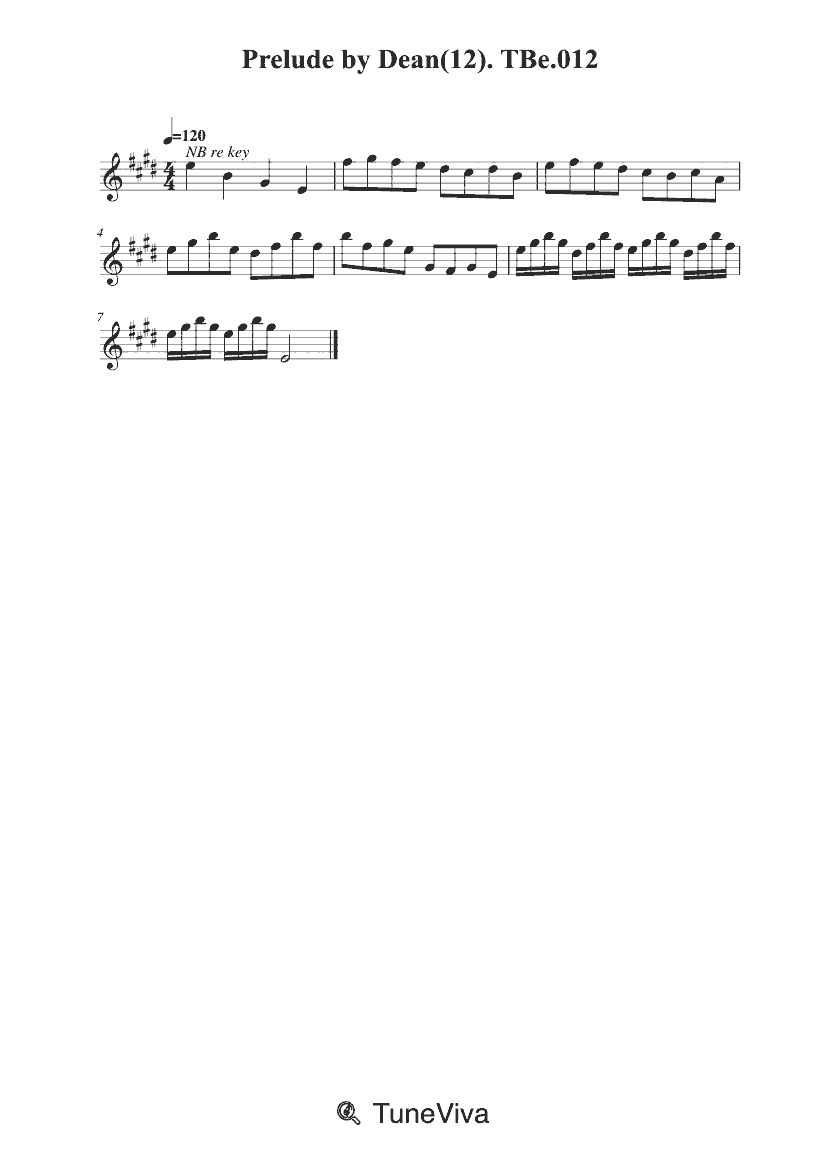
Headed "E Sharp", with three sharps in the signature and D sharps written as accidentals; a second copy is id 135282.
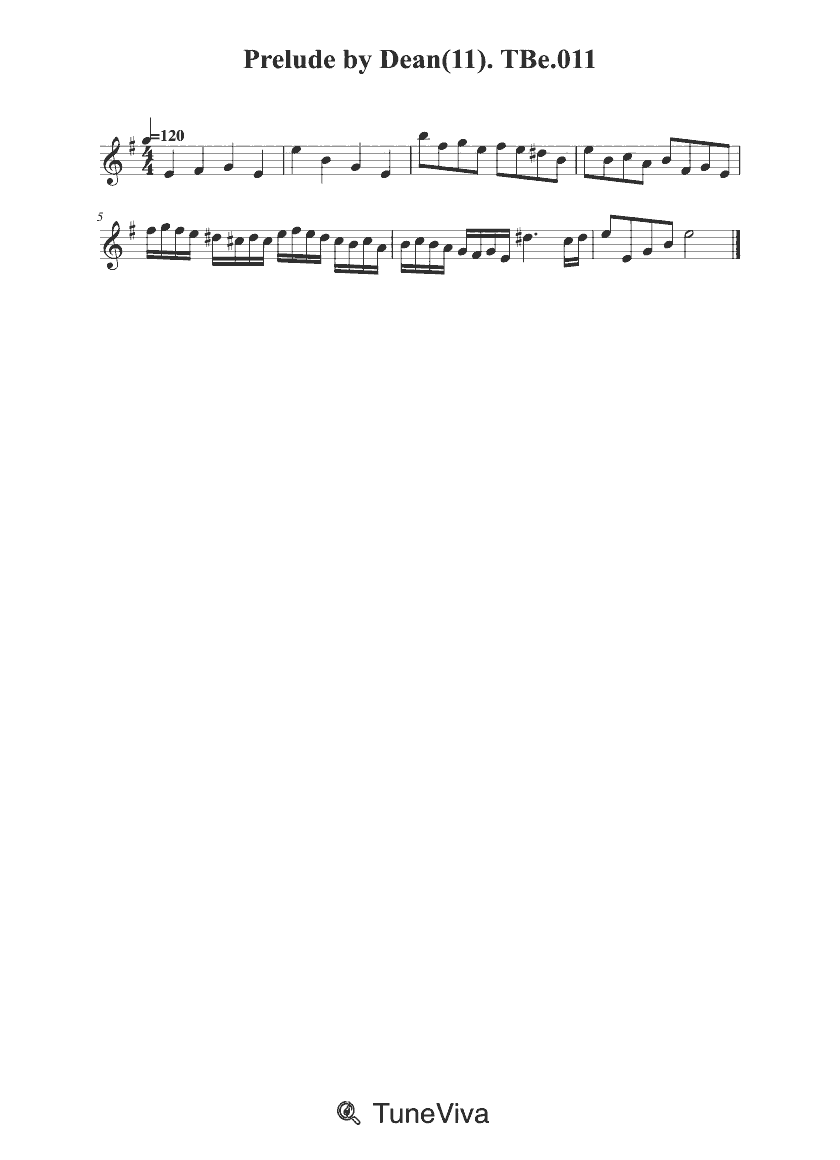
Headed "E lami Natural", a stepwise E minor prelude that turns on the raised leading note.
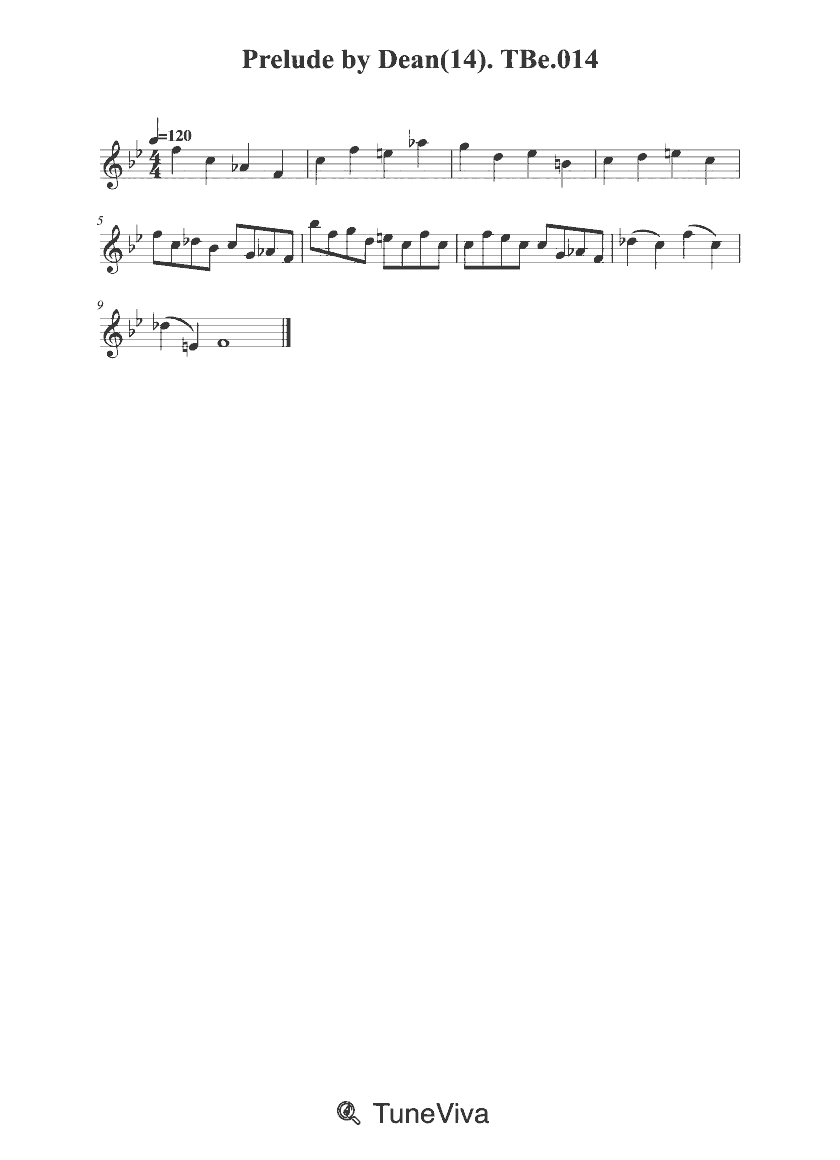
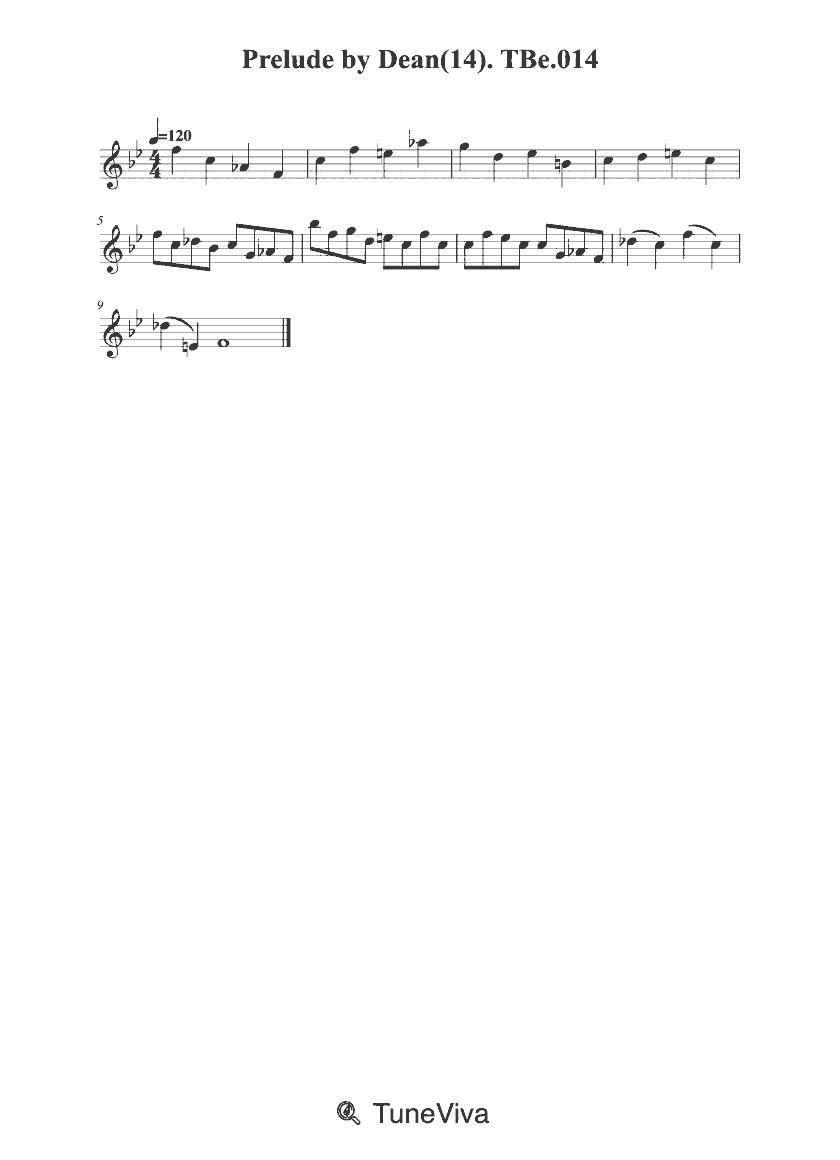
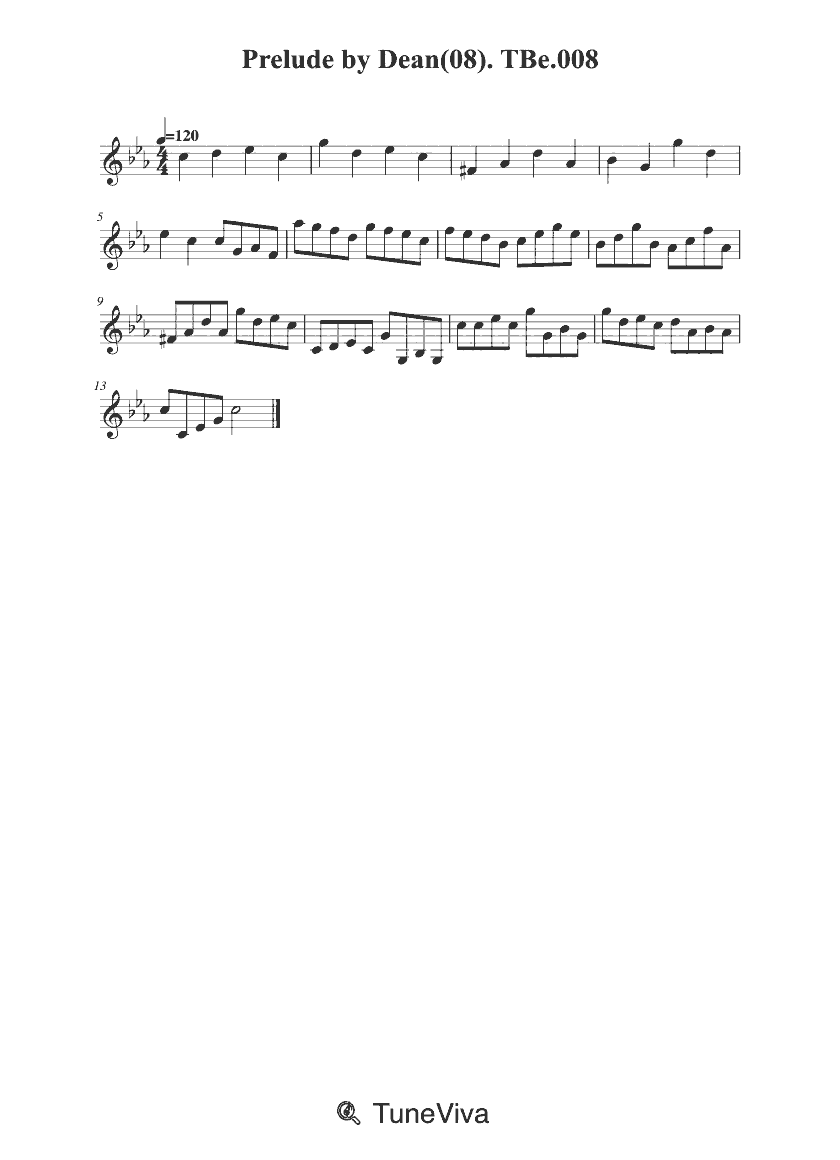
The last of the set, headed "F Flat" and ending with the word "Finis"; its key signature is ambiguous in the manuscript and the transcription prints it with accidentals.
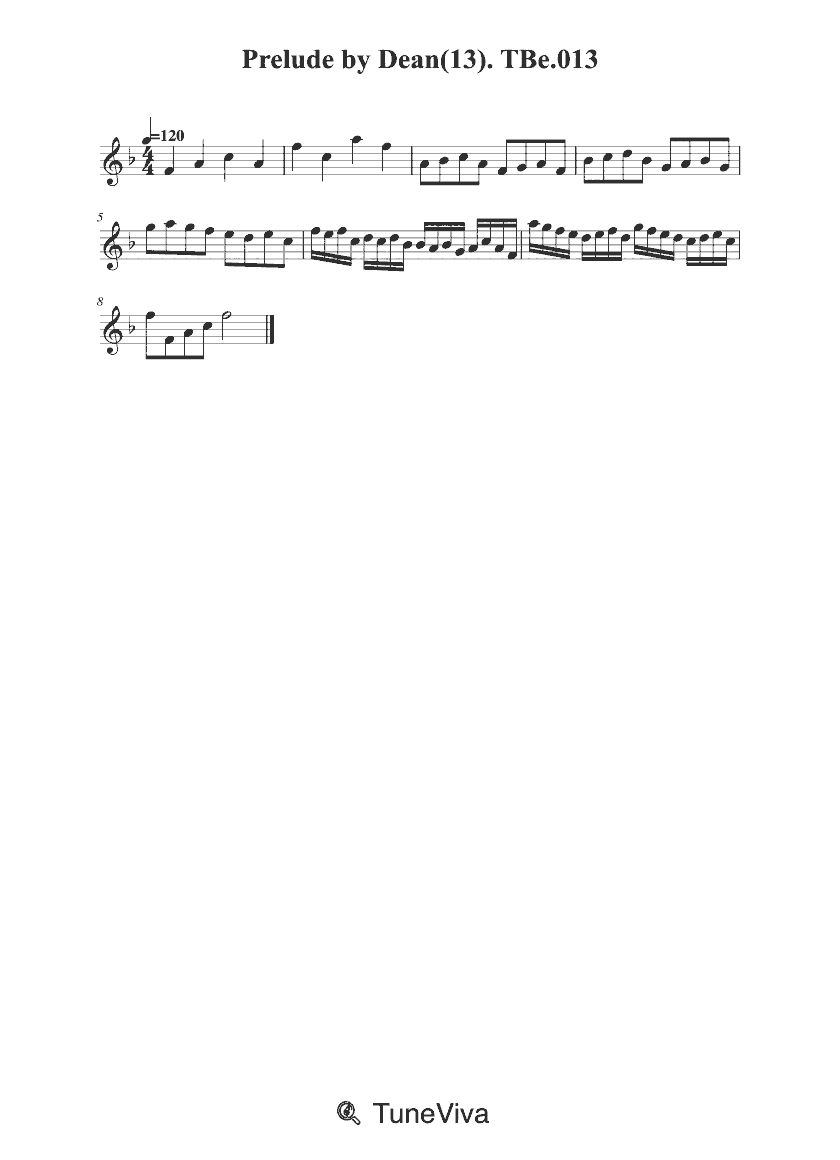
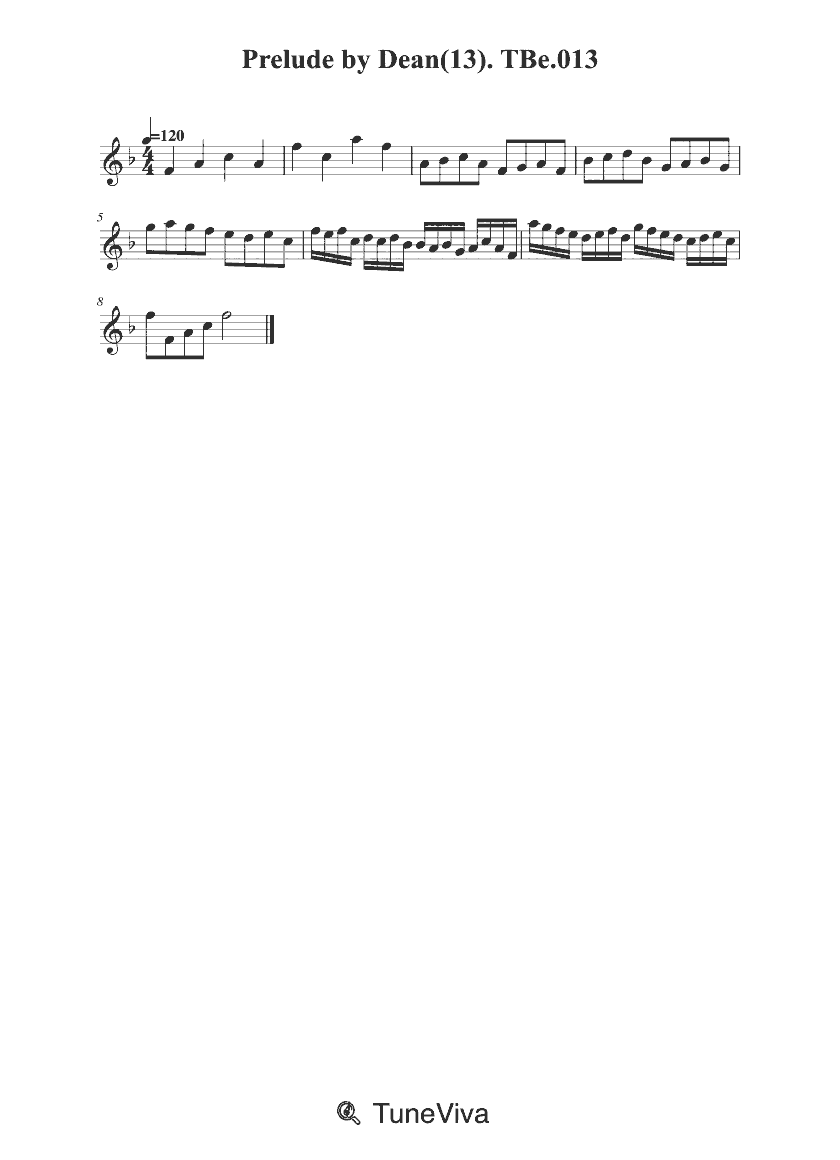
Headed "F Natural", an F major piece in running semiquavers; a second copy is id 105198.
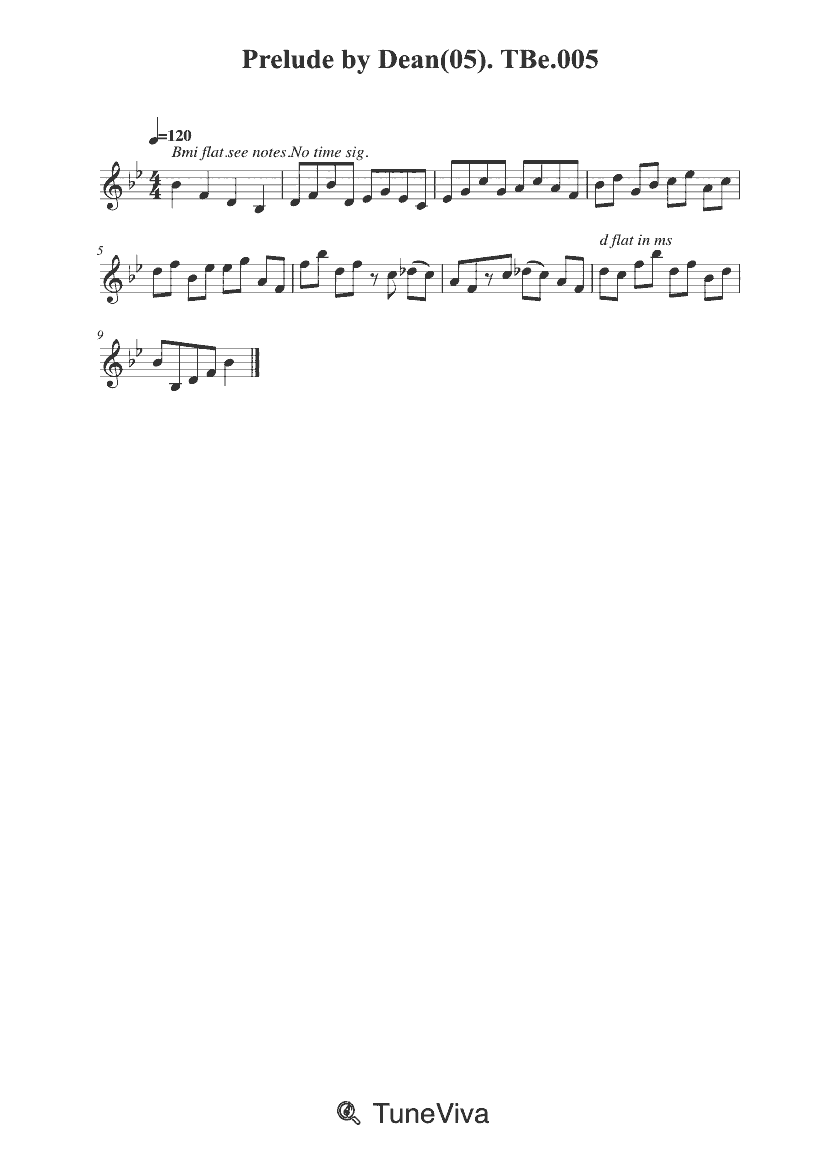
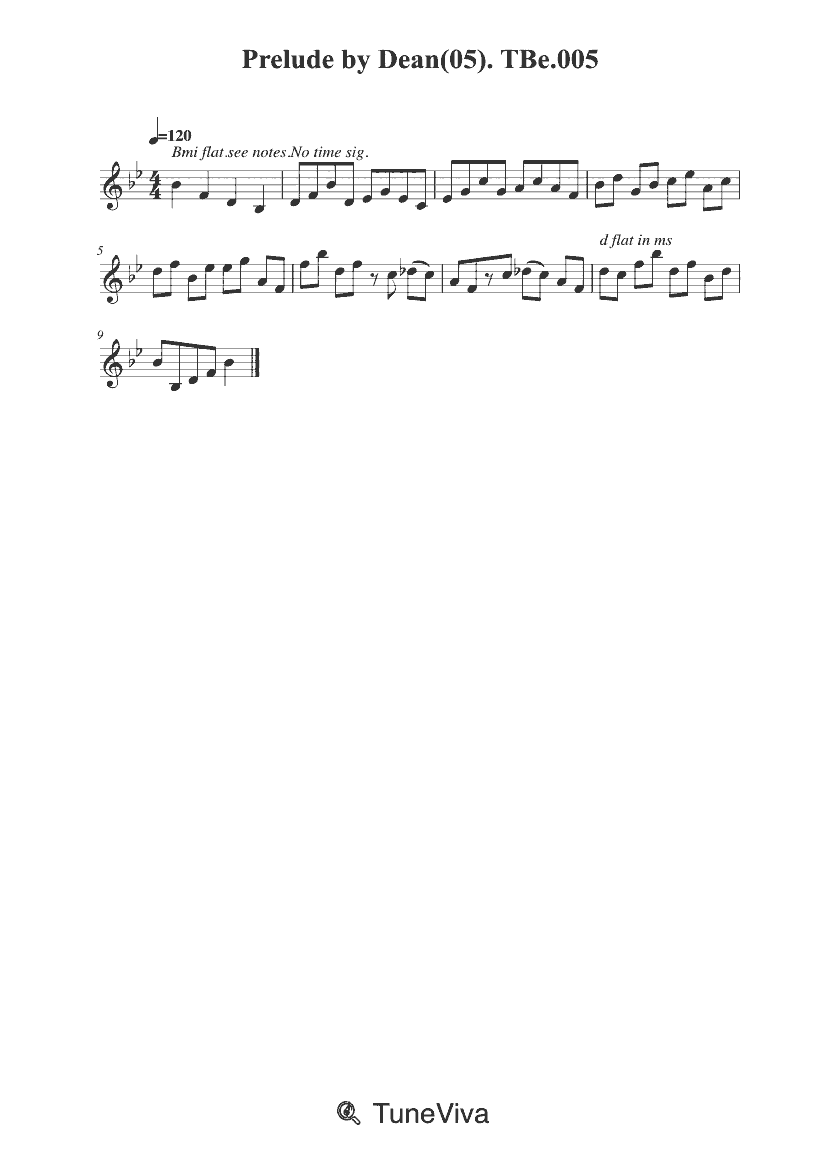
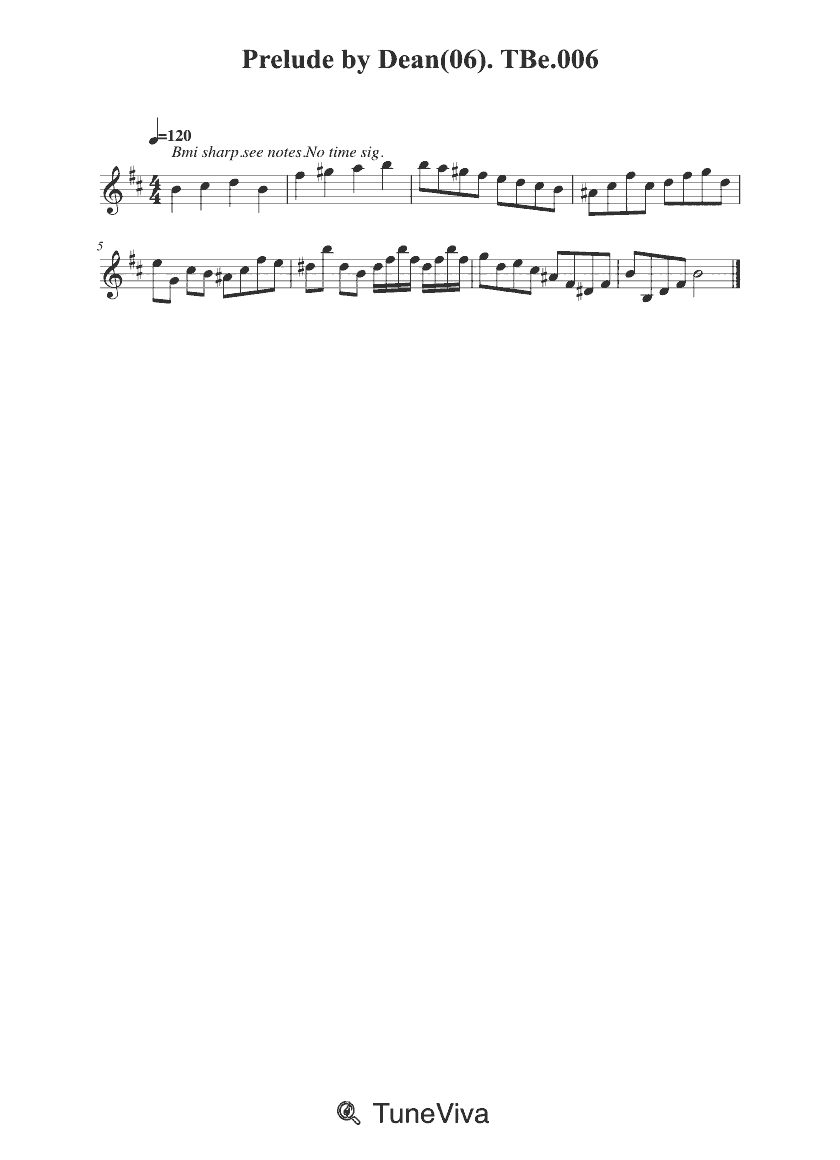
Headed "B mi Flat" and paired on its manuscript page with the B major prelude, TBe.006.
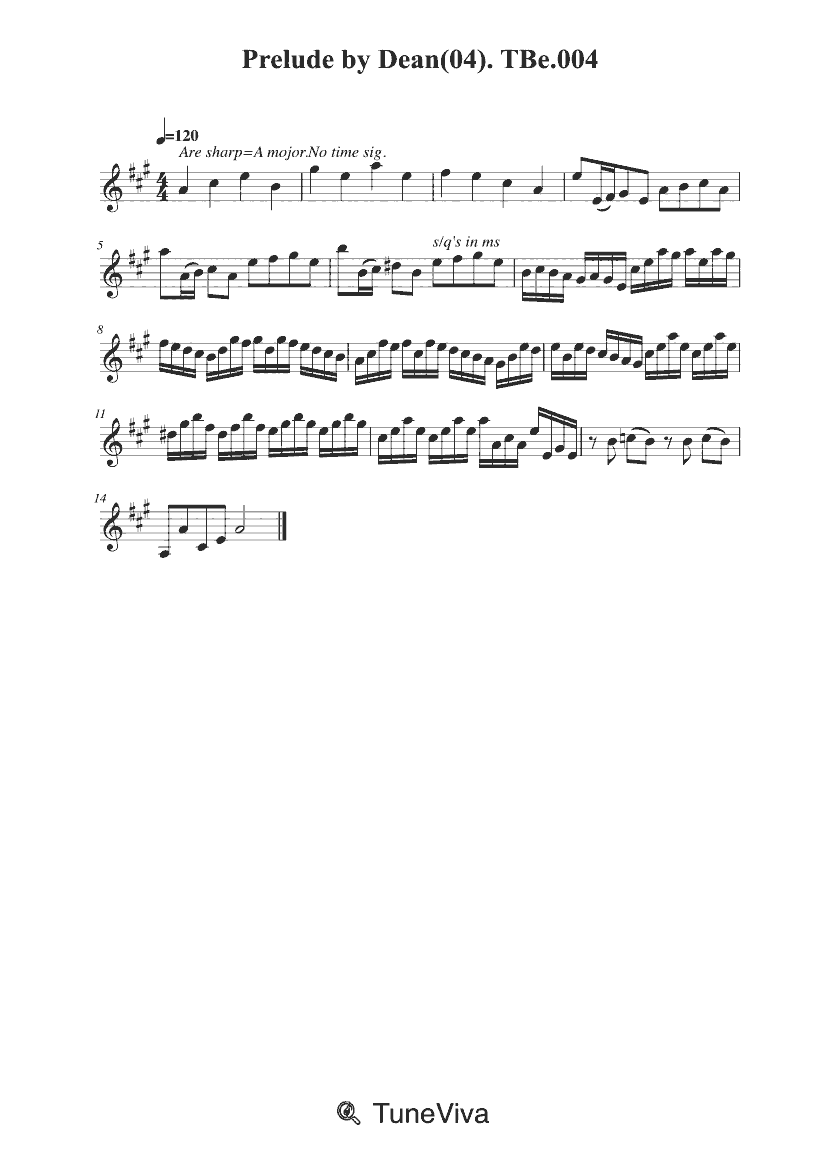
Headed "A re Sharp"; the manuscript writes F and G sharps in both octaves, a signature the transcriber keeps as shown. A second copy is id 42191.
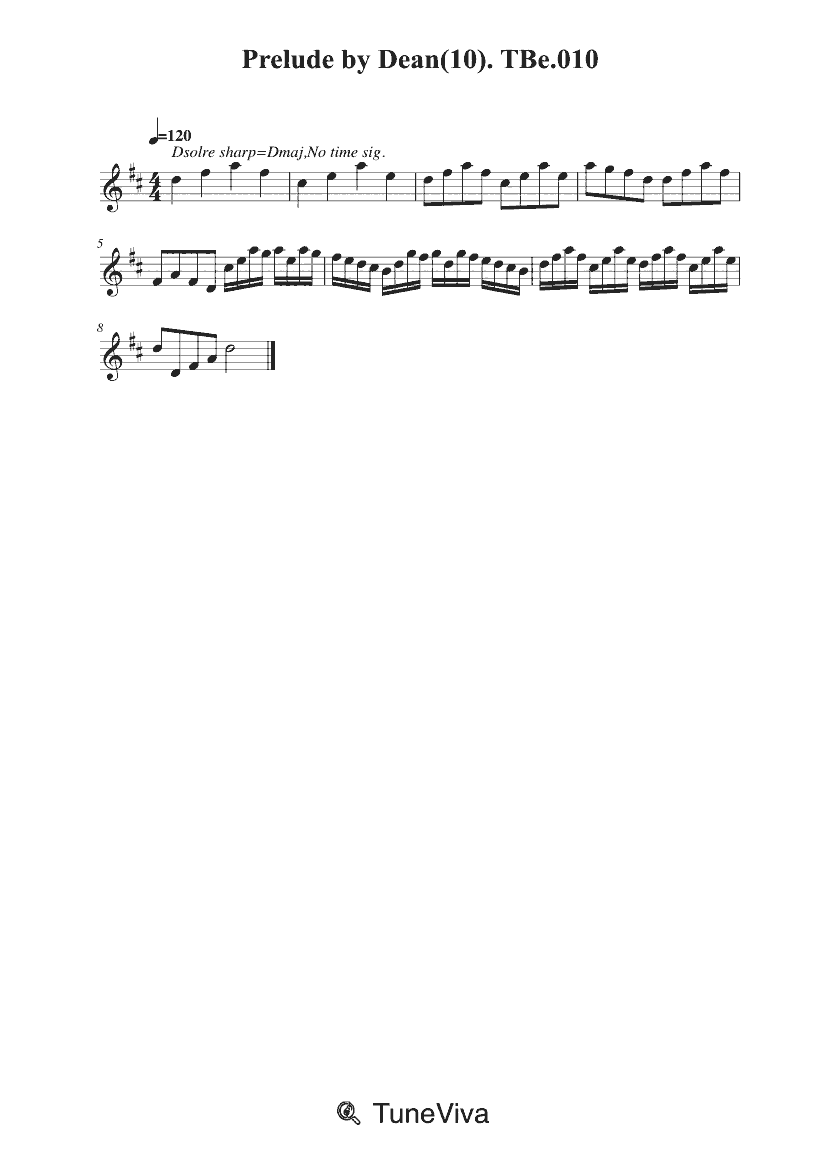
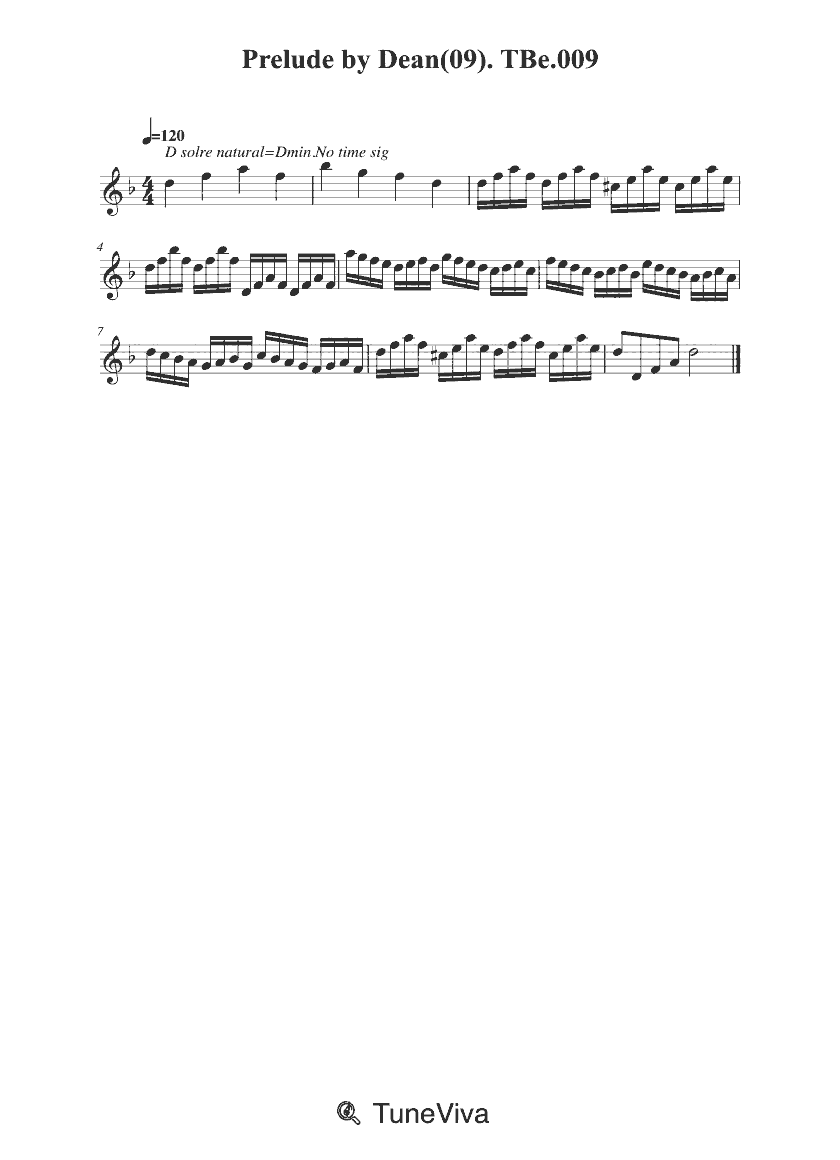
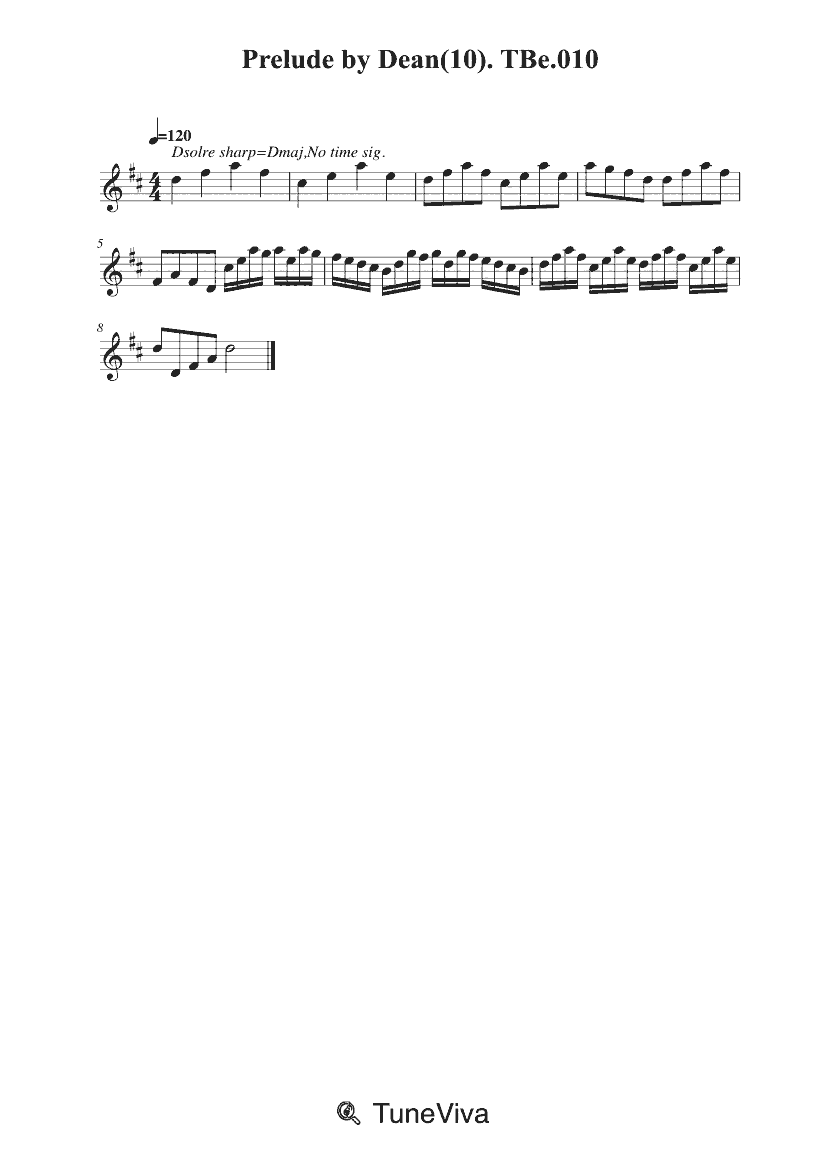
Headed "D solre Sharp", with F sharp in both octaves and a closing cadence on the tonic.
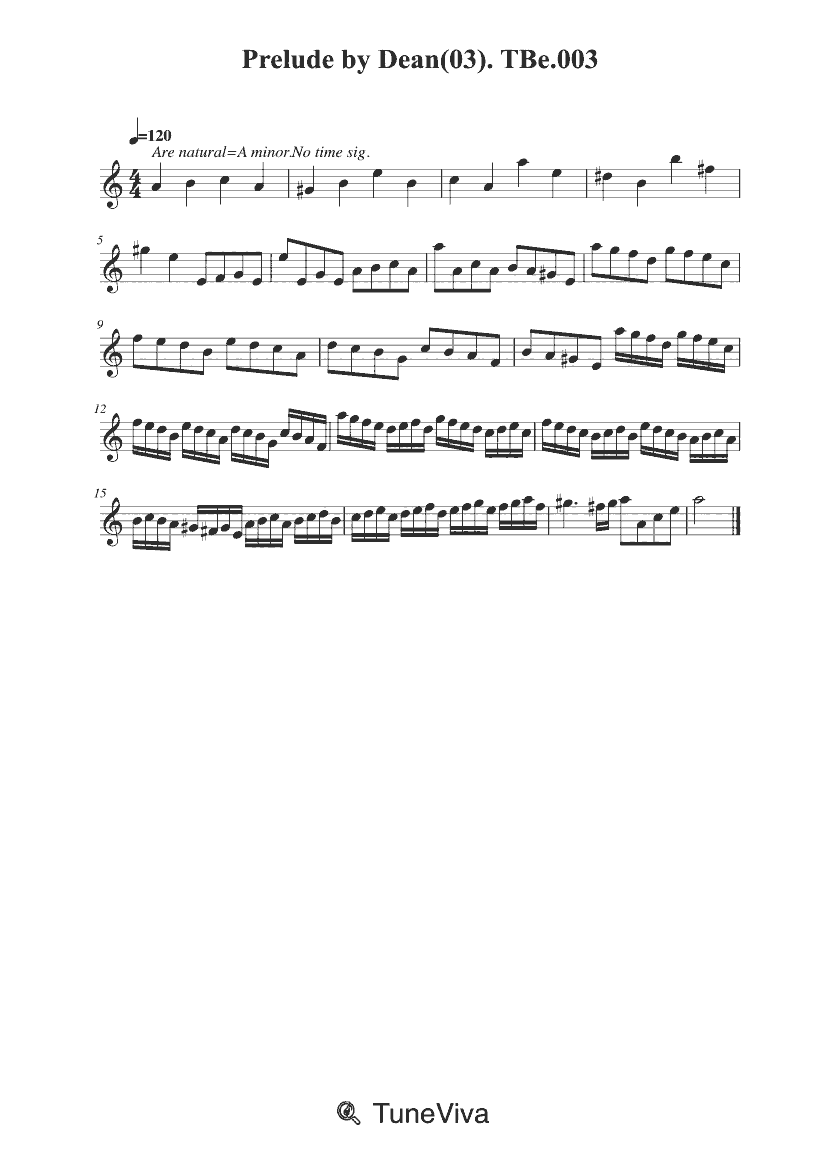
Headed "A re Natural", a study in the A minor scale and broken-chord figures; the longest of the first three preludes.
21 entries, about 7 minutes and 1,701 notated notes, none with lyrics. They cover 14 distinct preludes; the rest are duplicate copies.
A musician of that name was active in London around 1700: he wrote theatre music for The Governor of Cyprus in 1703, played a Corelli solo at Stationers' Hall in 1709 and later took an Oxford Mus.Doc. The identification with the preludes is plausible but not proven.
It is the numbering used by the Village Music Project's transcription of Thomas Bennet's book, so TBe.002 is the second item in the manuscript.
No. The book is described as music for the violin or flute, and the preludes are single lines without a bass.
The manuscript gives none; the transcriber notes "No time sig." at the head of each piece, leaving the pulse to the player.
Catalog editions and arrangements attributed to Mr. Thomas Dean.