classical
2 tracks
Sherwin spent his working life teaching congregations to sing, and the catalogue is what that life left behind: 85 scores, about 50 minutes of music and 20,266 notated notes. Forty-five entries carry lyrics, and the genre field is almost unanimous, with 84 scores marked classical and one left empty.
The most-viewed title is Sound the Battle Cry, followed by the tune Heavenly Fold and Break Thou the Bread of Life. Complexity is stacked at the easy end, with 62 entries at index 0, 19 at index 1 and only four at index 2, which suits music written for amateur choirs and Sunday schools rather than recital platforms.
Sherwin was born at Buckland, Massachusetts, on 14 March 1826, the son of William Sherwin and Marcia Carter, and died in Boston on 14 April 1888. He was a Baptist, and his own schooling was short; what he knew of music came largely from the singing-school circuit and from the tune books he later edited. He worked as musical editor for the publishers Biglow and Main and became the first music director of the Chautauqua movement in western New York, where the hymns of Mary Ann Lathbury were written and sung.
His compilations include Bright Jewels for the Sunday School of 1869, which carries Sound the Battle Cry, and Songs of Grace and Glory, edited with Silas Vail. The catalogue reflects that work rather than a concert output: hymn tunes, gospel songs, anthems and a handful of Christmas and missionary pieces, almost all of them short. The 85 entries are gathered from five name forms, including Wm. F. Sherwin, W. F. Sherwin and two variants carrying the dates 1877 and 1881.
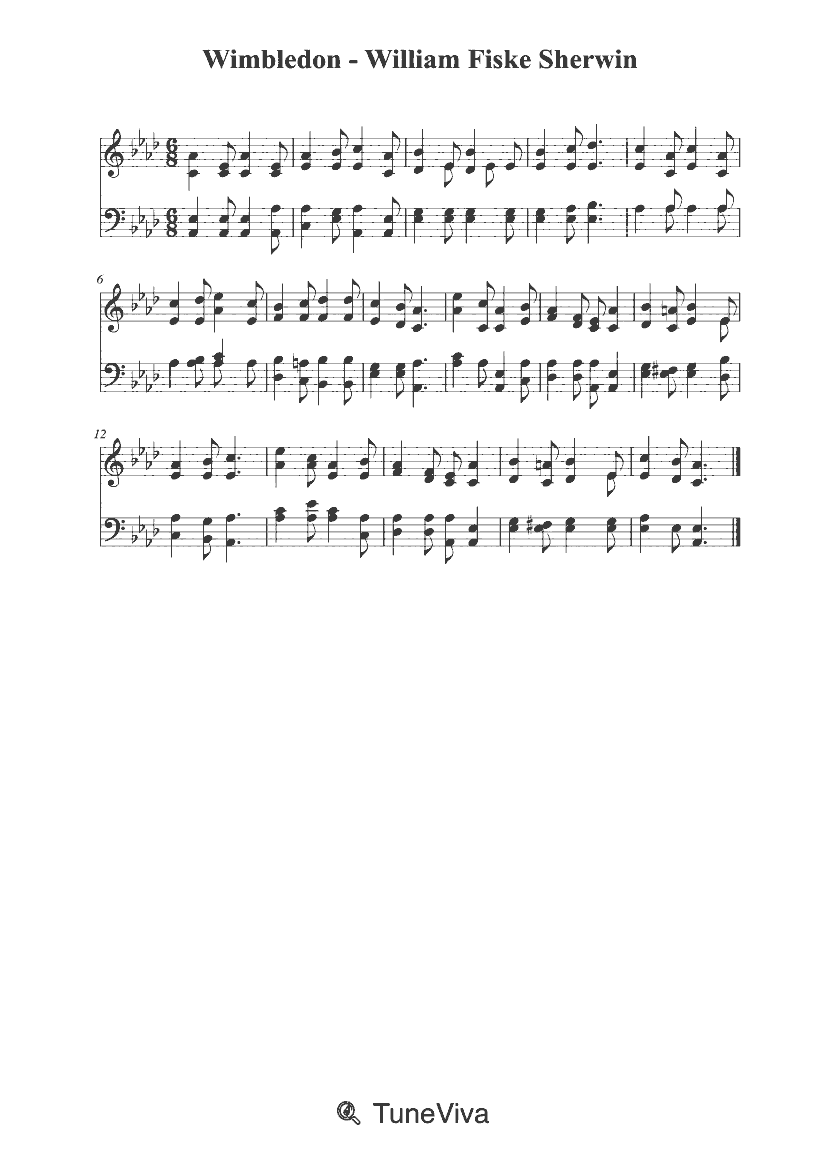
Bread of Life and Chautauqua, both from 1877, were written for Lathbury's communion and evening hymns, and they remain the two tunes by which Sherwin is best known. The collection also holds more modest material: a setting of the Lord's Prayer, a jubilee refrain, a Christmas carol and a tune named Wimbledon. Nothing here is long, and the 50 minutes are spread across dozens of separate pieces rather than a few extended works.
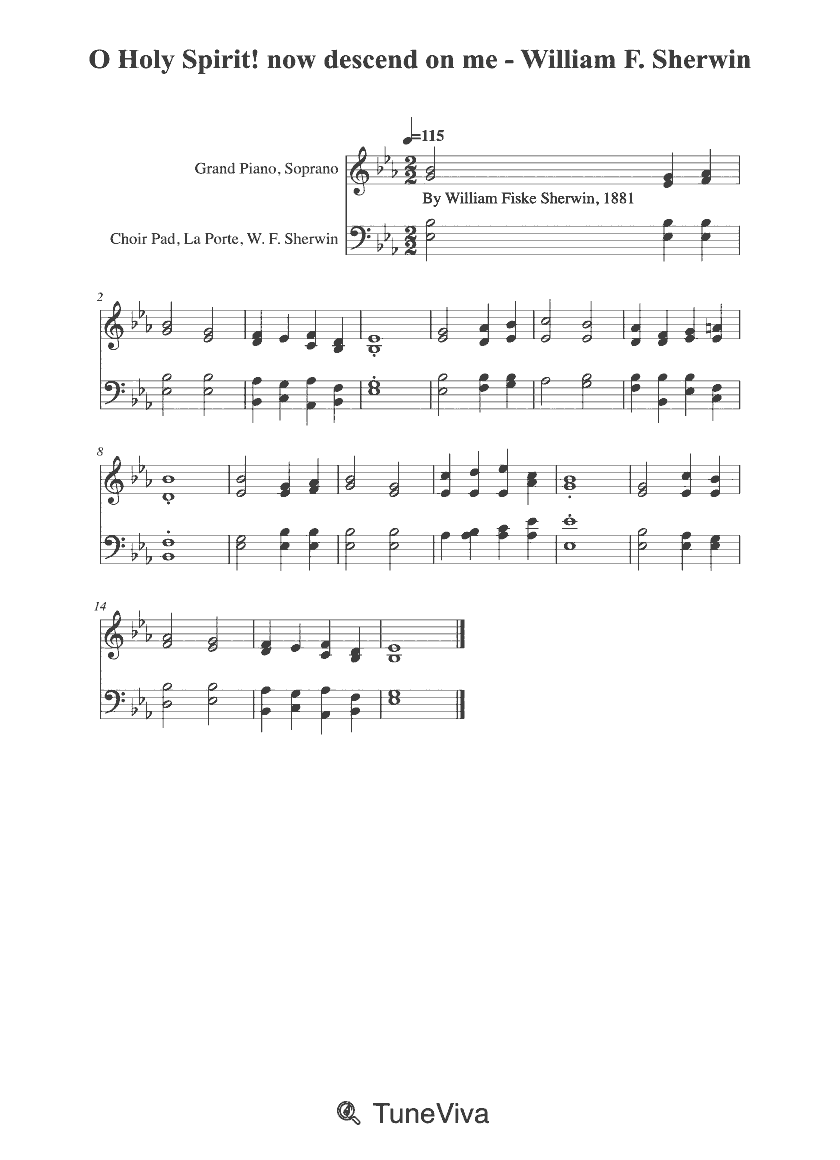
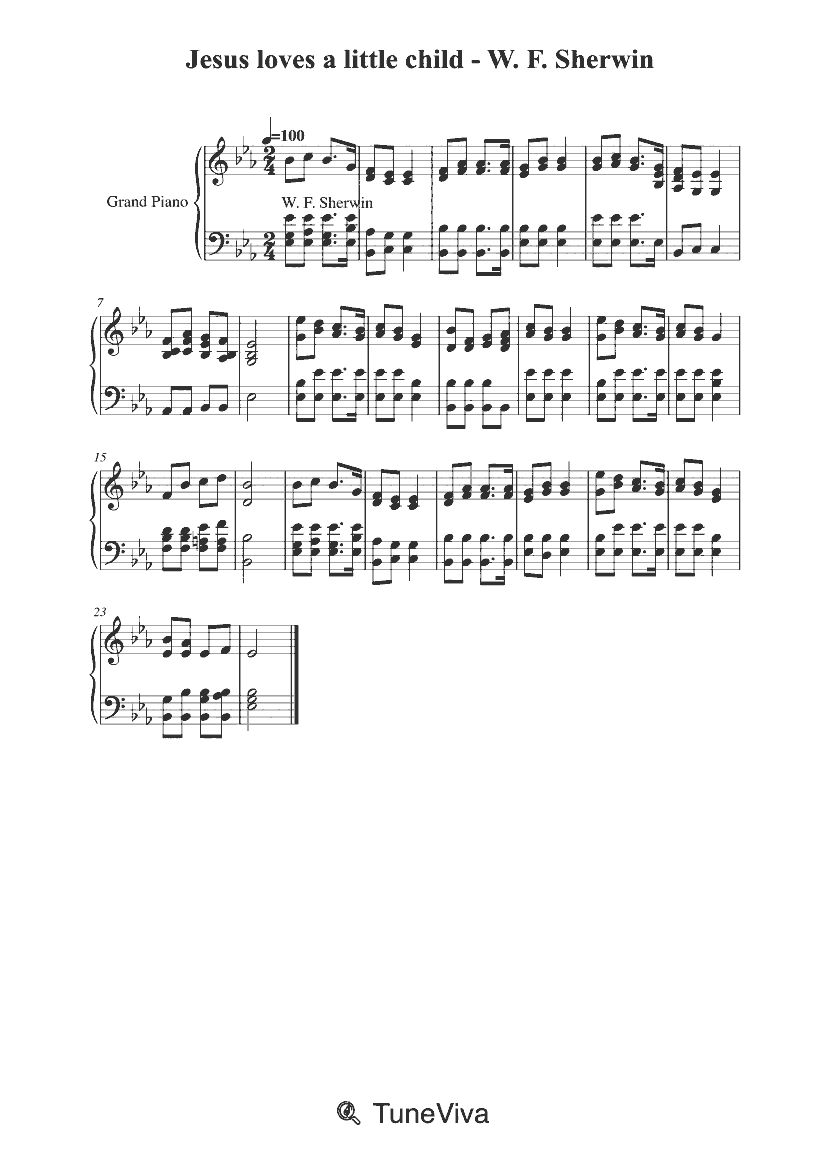
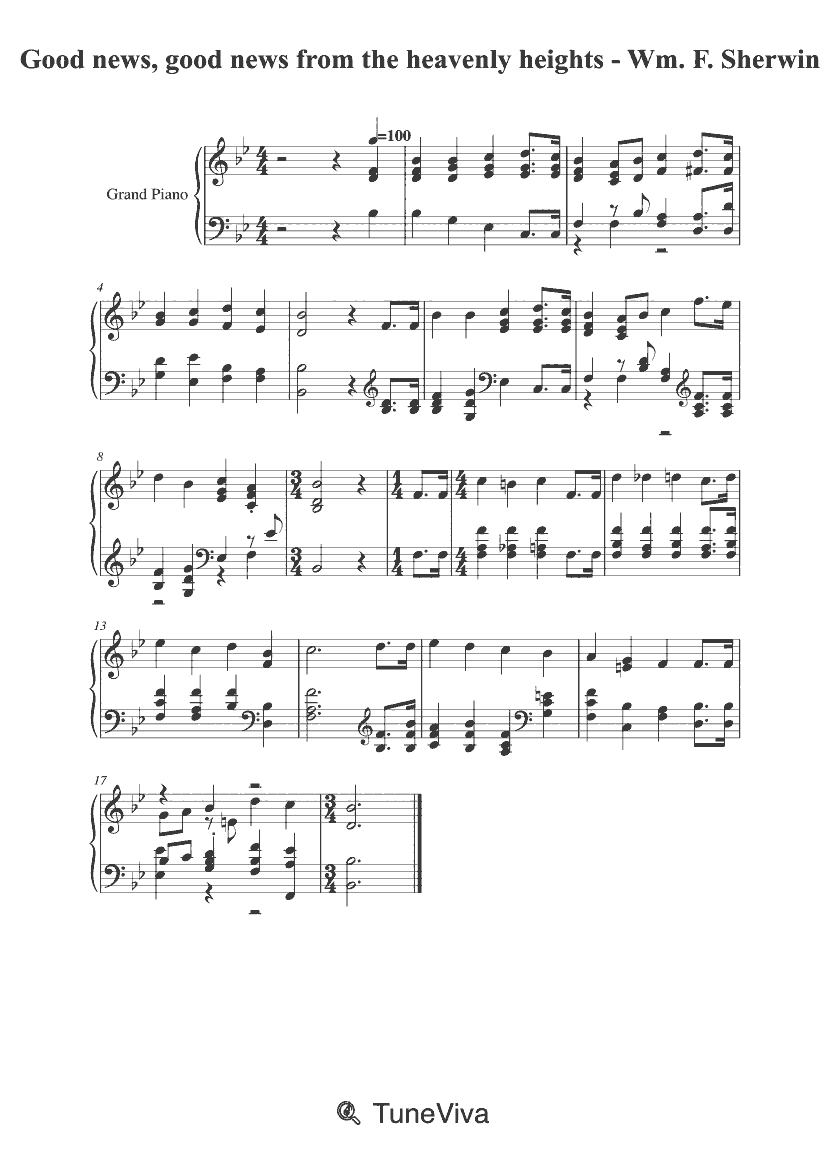
These are congregational pieces, so the first decision is tempo rather than touch: a hymn tune that drags sounds pious and one that hurries sounds flippant. Keep the four parts balanced and let the soprano line carry the text without swelling above the others. In Break Thou the Bread of Life the harmony is mostly diatonic and the effect depends on smooth voice-leading, so practise the inner parts alone. Sound the Battle Cry needs a firm, detached refrain, and the Christmas and jubilee pieces benefit from light articulation rather than weight.
The most-viewed Sherwin score, a marching Sunday-school hymn printed in Bright Jewels for the Sunday School in 1869.
The tune Bread of Life, composed in 1877 for Mary Ann Lathbury's communion text while Sherwin directed the music at Chautauqua.
Lathbury's evening hymn sung to Sherwin's tune Chautauqua, also of 1877; the catalogue files it under her name rather than his.
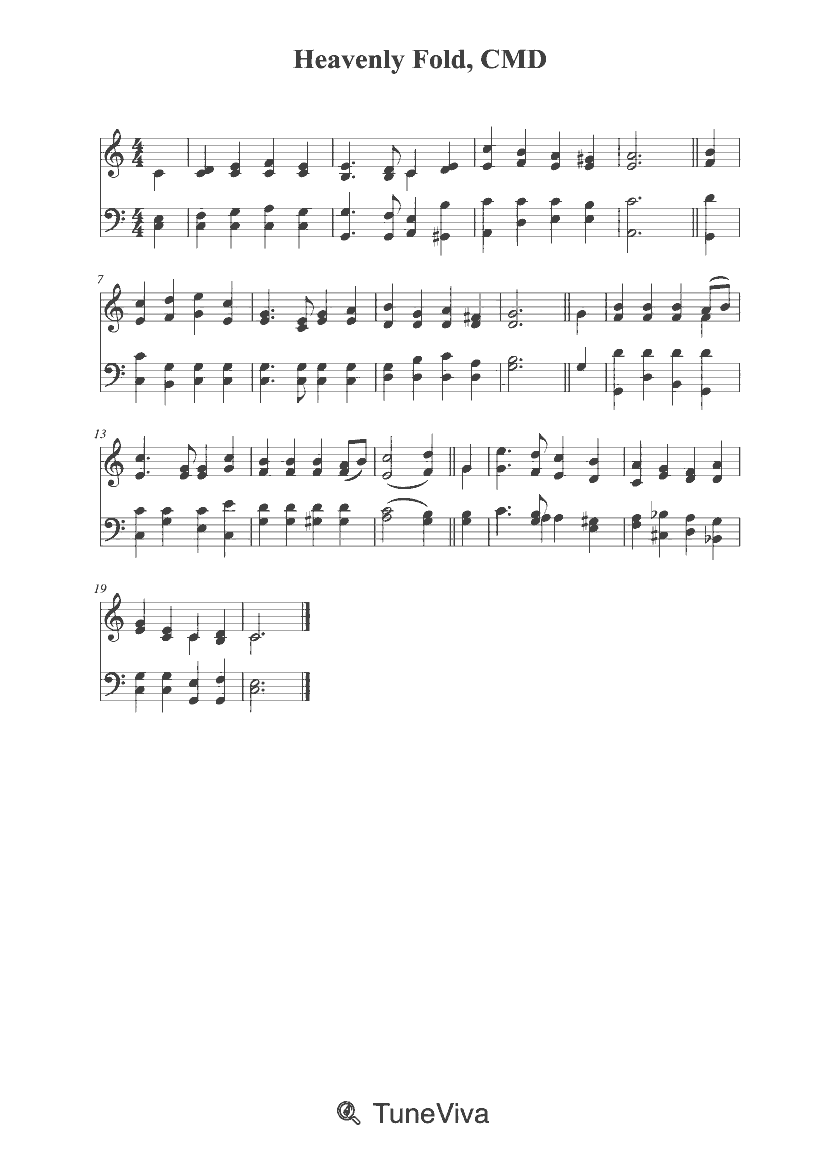
A tune in common metre doubled, catalogued by its metre instead of a text; it is sung to 'O praise the Lord, for He is good'.
A gospel hymn setting of William O. Cushing's 1875 text; the catalogue keeps the lower-case spelling of the original import.
A hymn tune of 1877 in 8.7.8.7 D, associated with Fanny Crosby's 'Only trusting in my Saviour'.
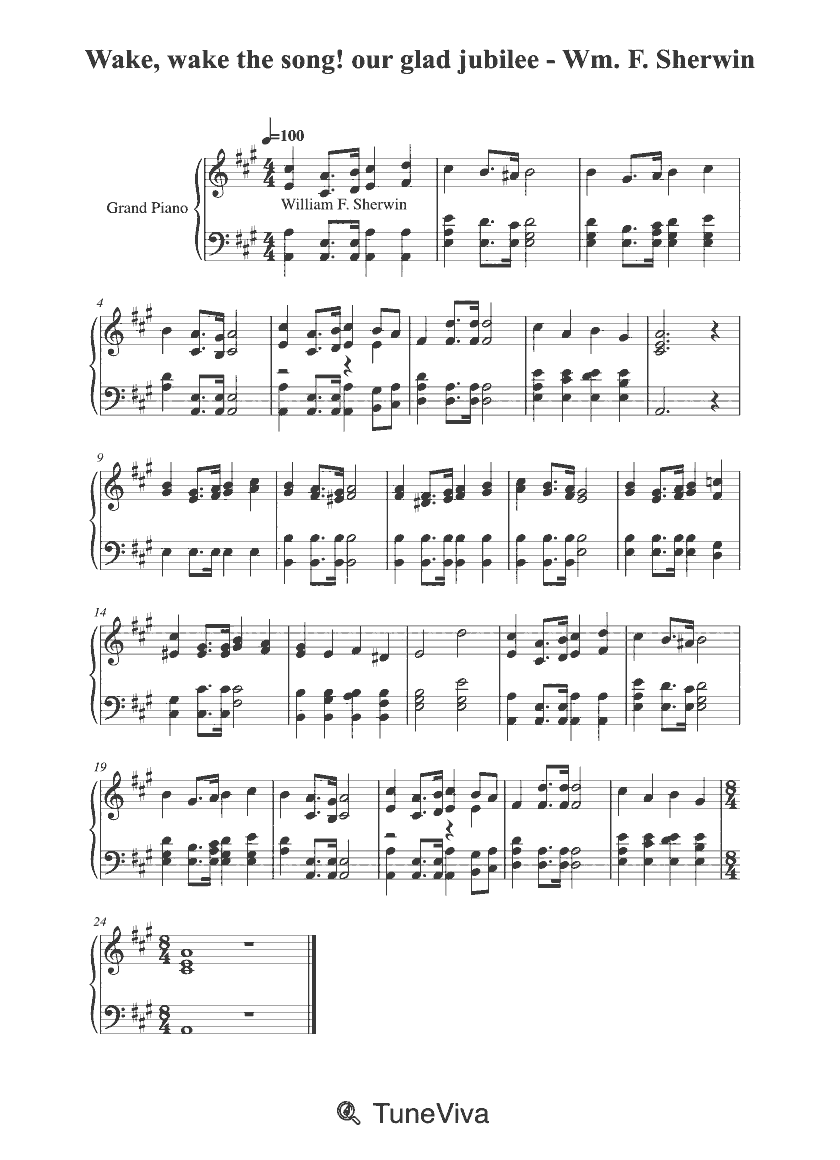
A revival-style jubilee hymn with the refrain 'We sing our song of jubilee', among the shorter pieces in the collection.
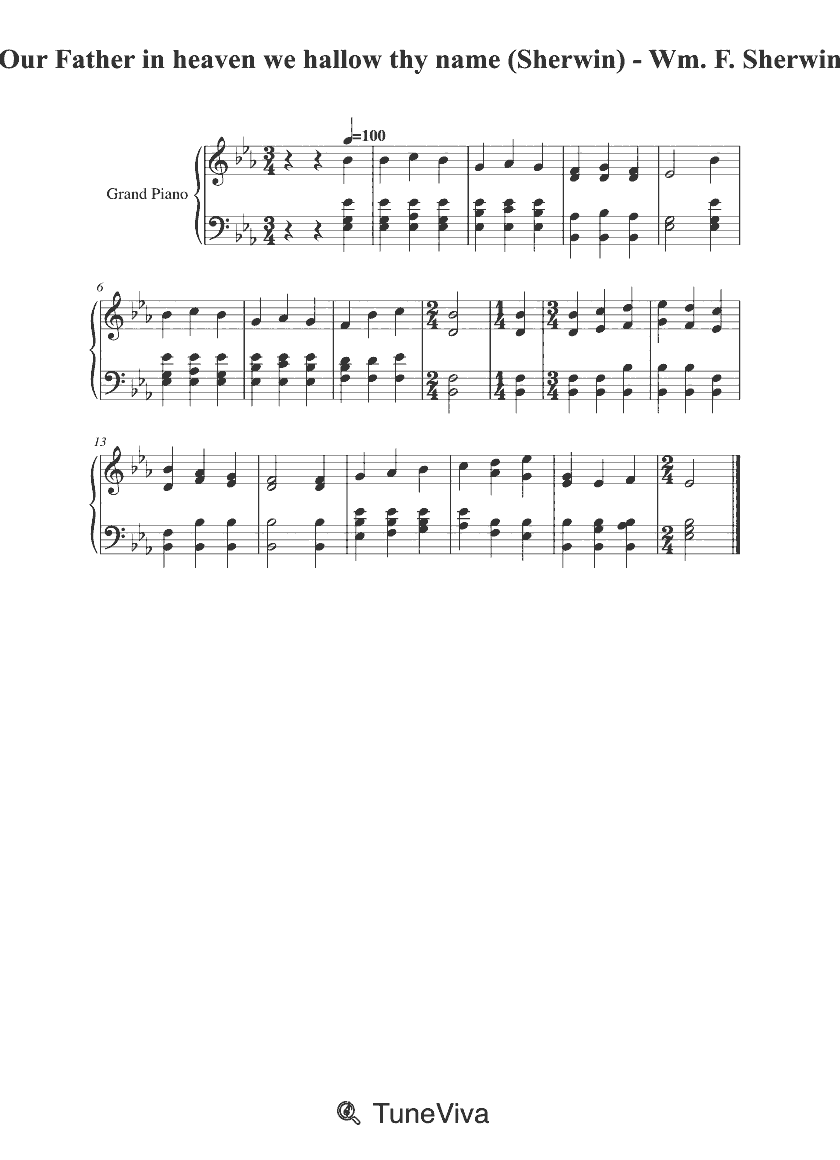
A metrical setting of the Lord's Prayer, signed in the catalogue with the abbreviated form Wm. F. Sherwin.
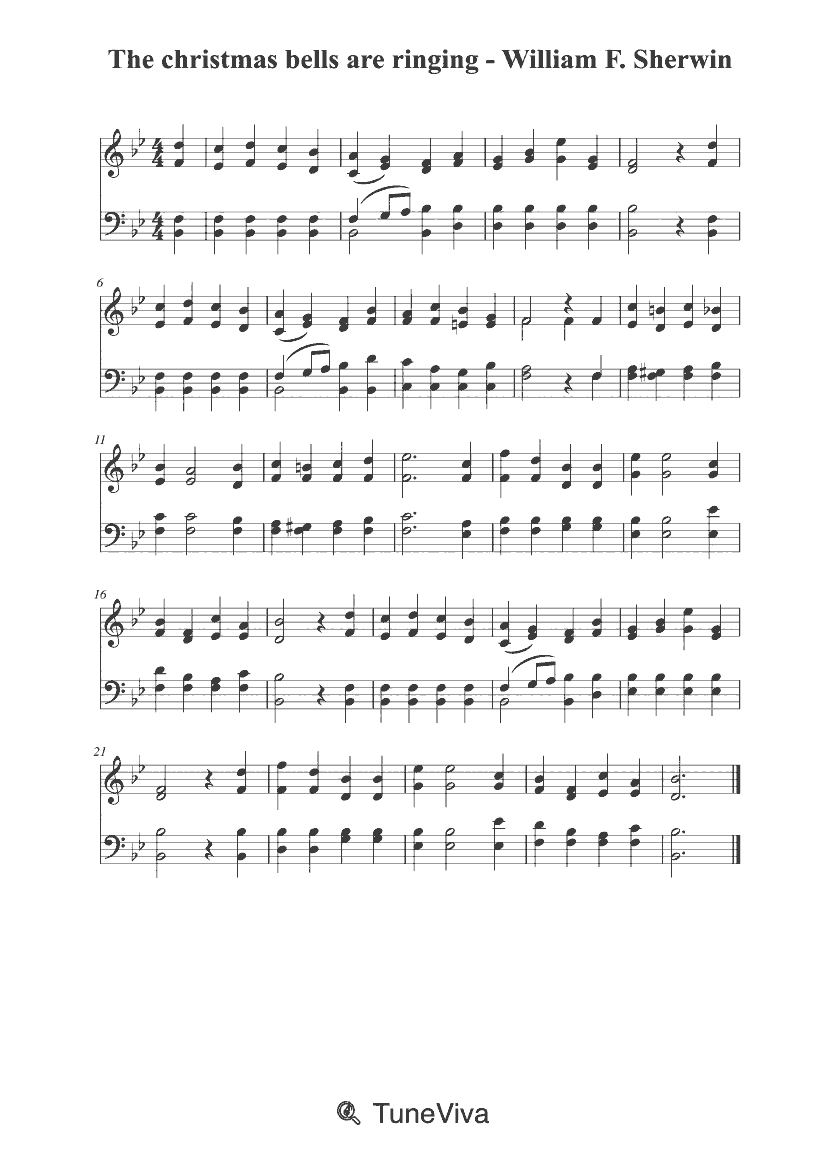
A Christmas piece from a Sherwin collection of 1881, to judge by the composer field, which carries that date.
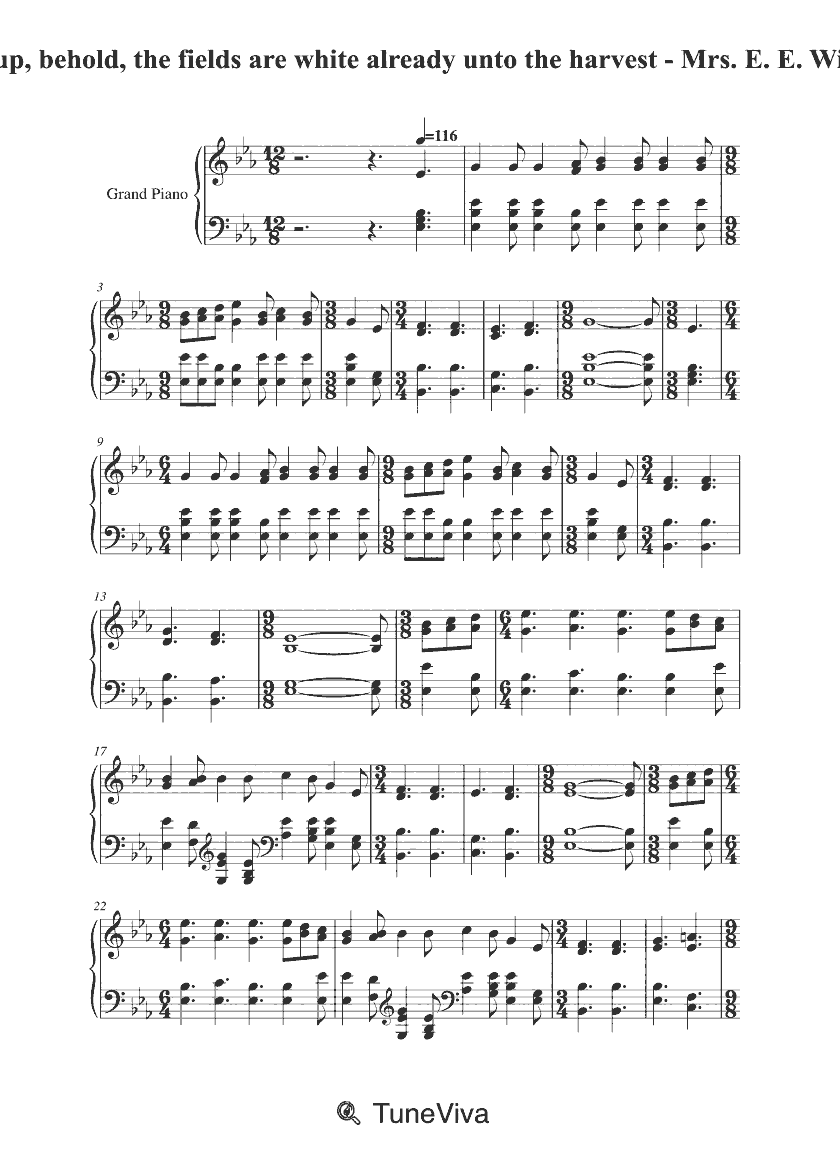
A missionary hymn; the catalogue credits the words to Mrs. E. E. Williams and lists Sherwin only in the artist field.
There are 85, running to about 50 minutes of music and 20,266 notated notes; 45 entries include lyrics and 84 are filed as classical.
The catalogue merges several nineteenth-century name forms, Wm. F. Sherwin and W. F. Sherwin among them, and the titles were imported with the credit attached. Where a text author is named instead, as with Mary A. Lathbury, the entry is a hymn rather than an anthem.
Break Thou the Bread of Life and Day Is Dying in the West, both set to Lathbury texts in 1877. Sherwin was the first music director of the Chautauqua assembly, and the tune for the evening hymn is named after the place.
Common metre doubled: eight lines alternating four and three stresses, the shape of a psalm paraphrase. The catalogue records the metre because the entry has no first line attached to it.
Catalog editions and arrangements attributed to William Fiske Sherwin.