
Dainty Davy (Old Scotch)
Misc tunes
1 min 9 sec
Open scoreDainty Davy sheet music appears here under several score titles, including “Dainty Davy (Old Scotch)”, “Dainty Davy. THO2.185”, and “Dainty Davy was a Lad”. The listings show openings in G major and D minor, all in 4/4, with different tempo indications where given.
Scores 1–20 of 20
Misc tunes
1 min 9 sec
Open score
Misc tunes
48 sec
Open score
Misc tunes
18 sec · Score #138592
Open score
Misc tunes
32 sec · Score #134606
Open score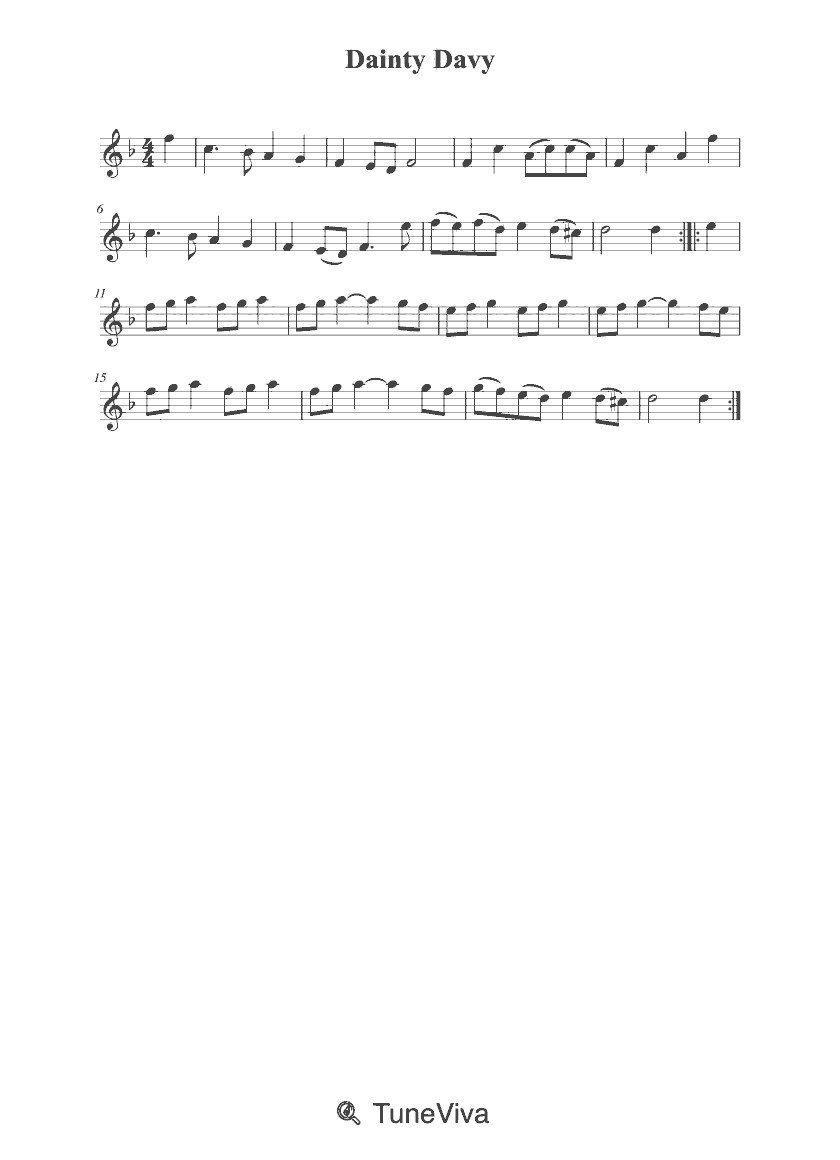
Misc tunes
1 min 4 sec · Score #22588
Open score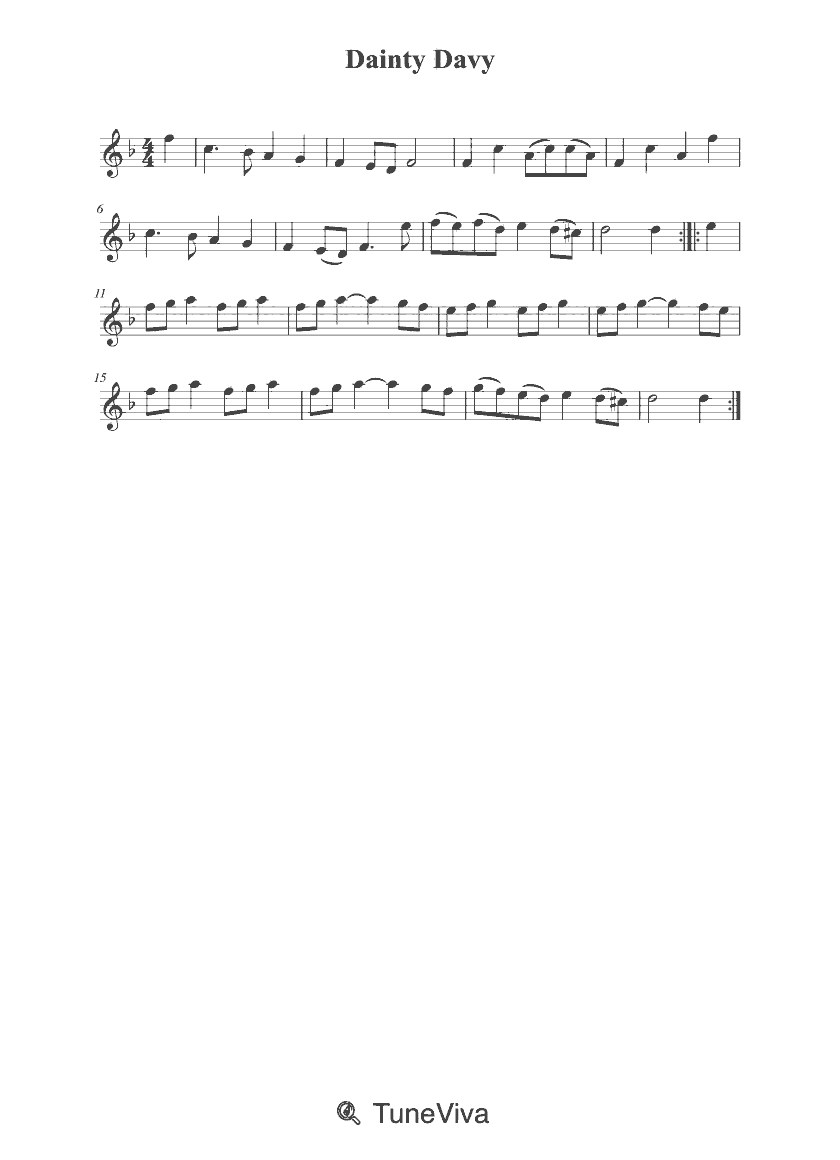
Misc tunes
1 min 4 sec · Score #184452
Open score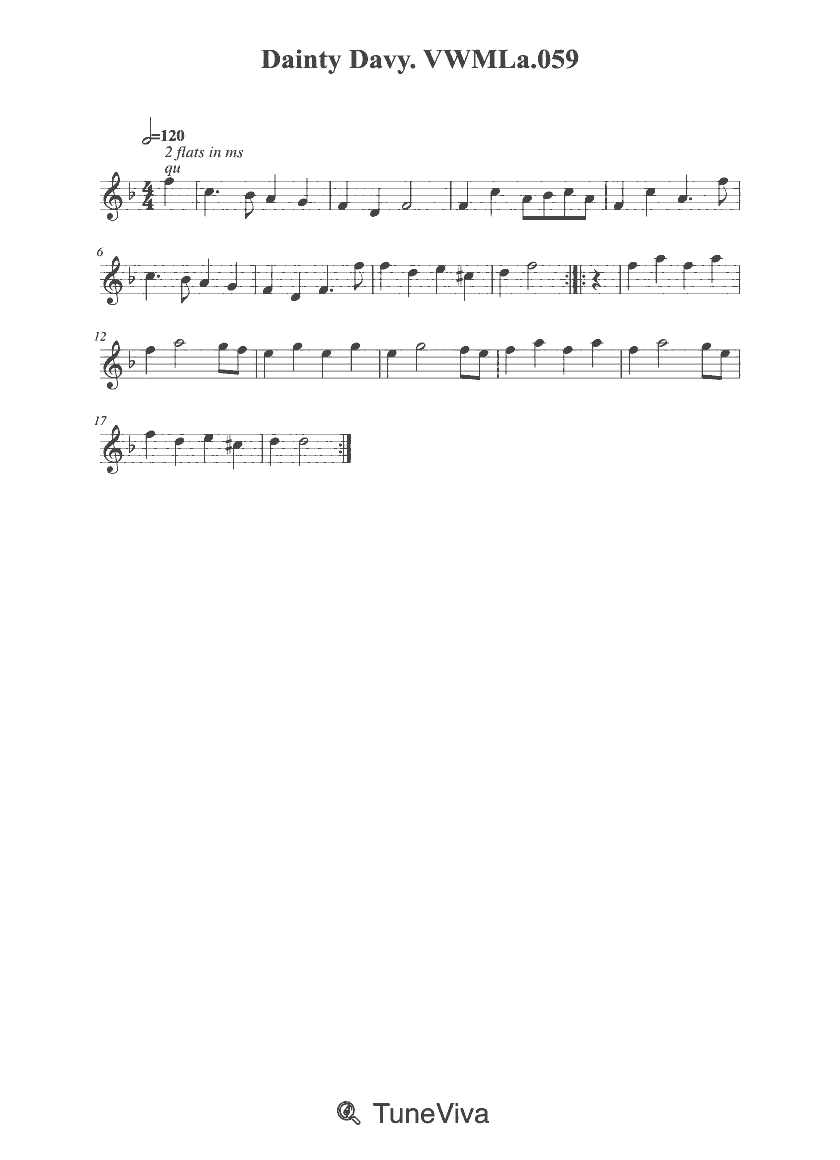
Misc tunes
32 sec · Score #64609
Open score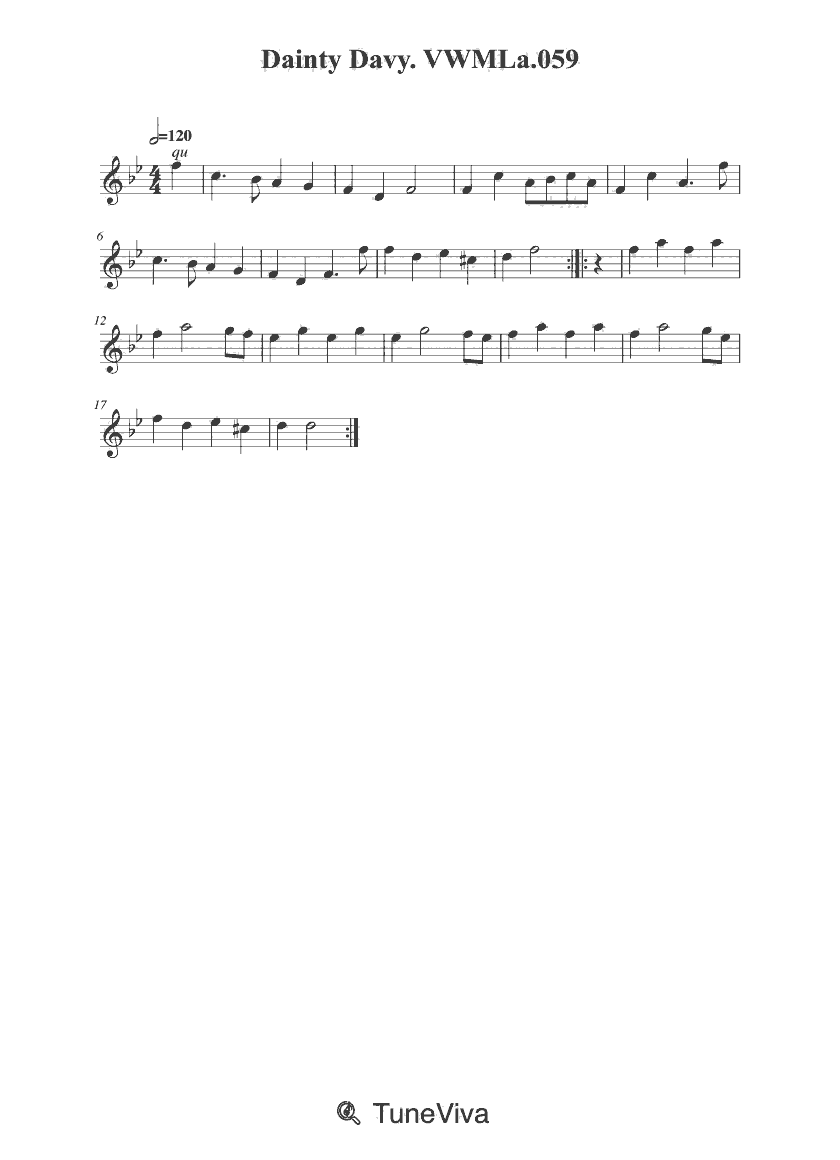
Misc tunes
32 sec · Score #143923
Open score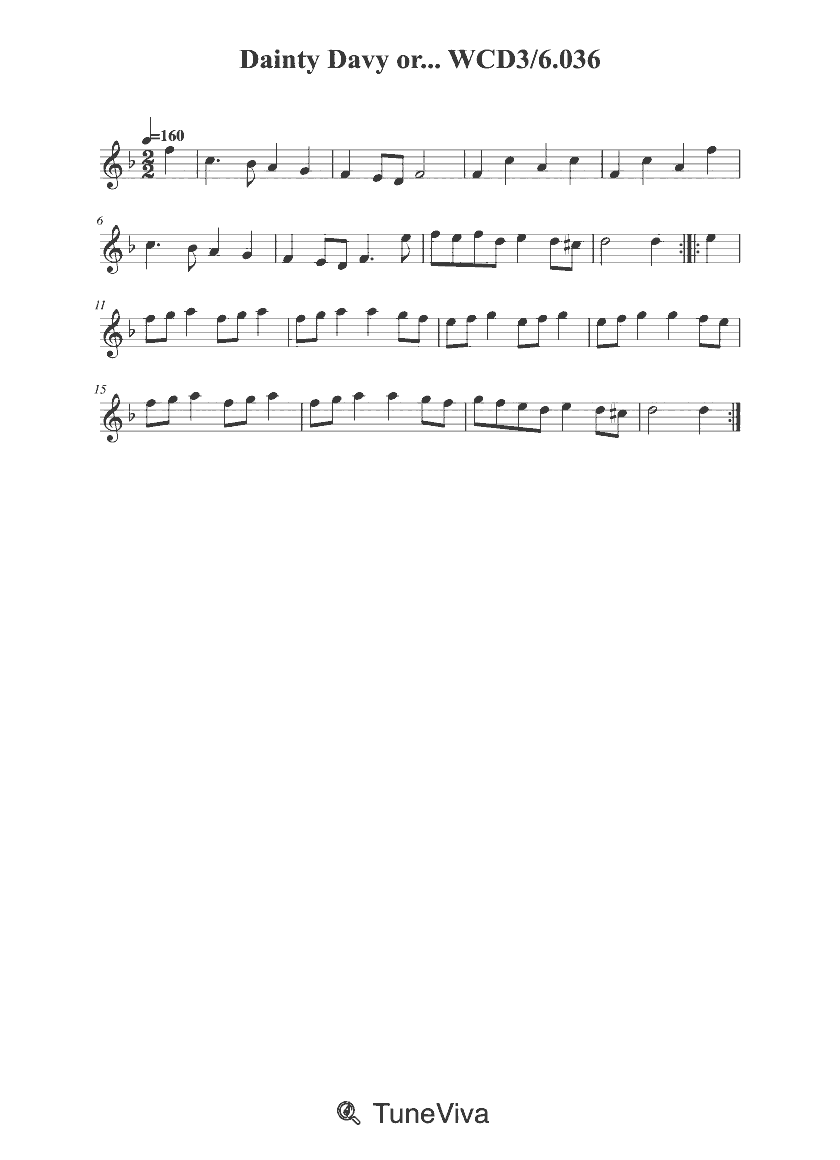
Misc tunes
Curacle. WCD3/6.036 The
1 min 36 sec
Open score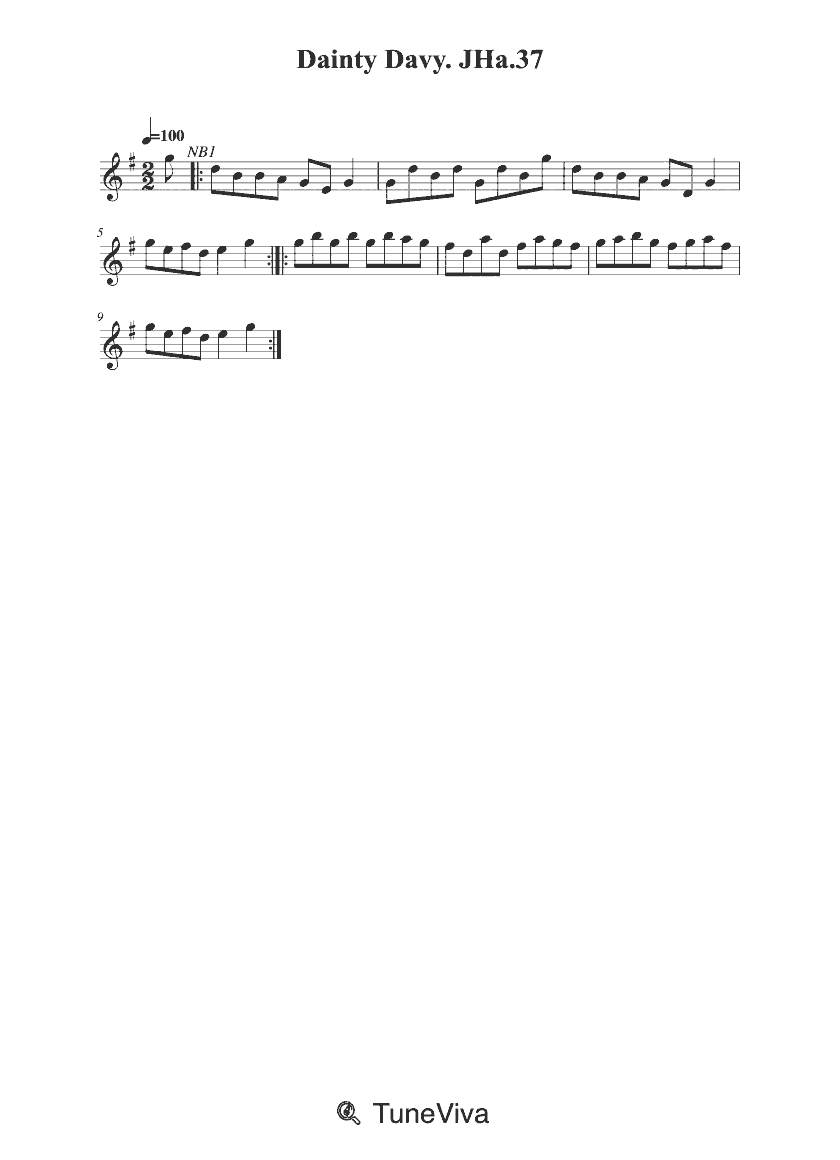
Misc tunes
1 min 17 sec
Open score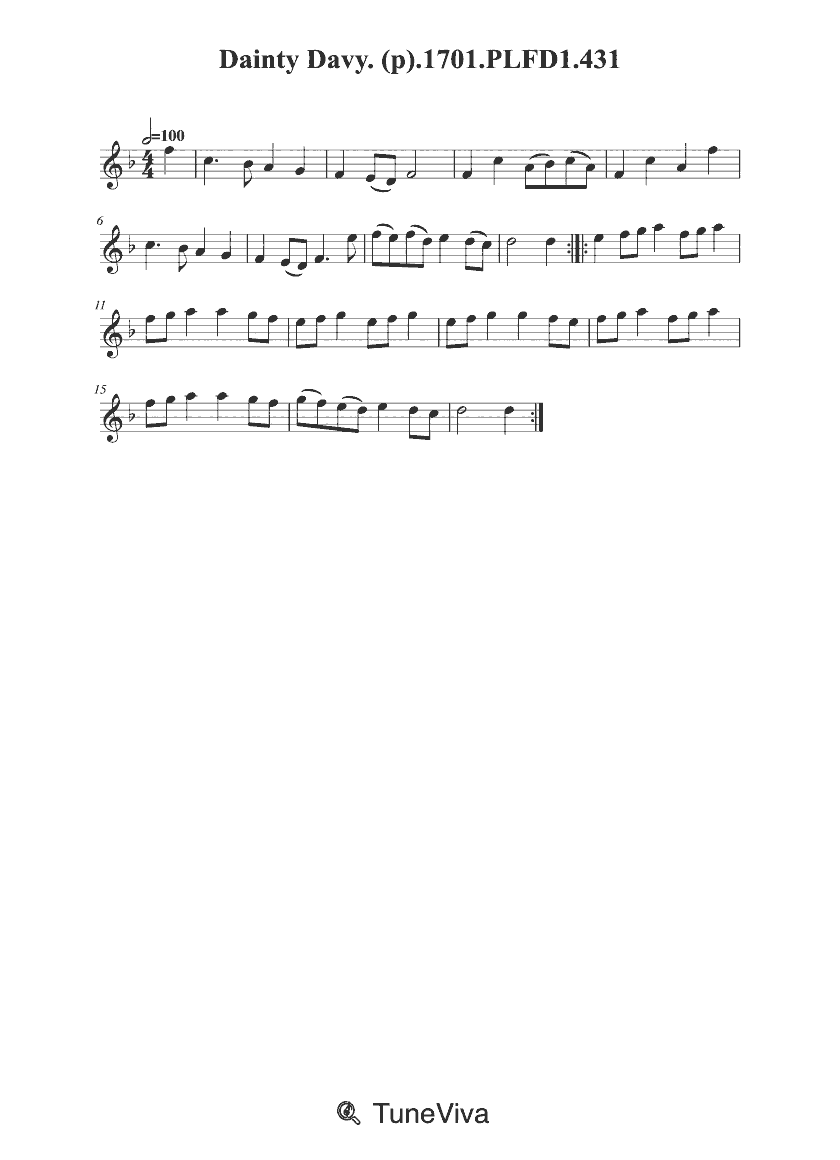
Misc tunes
38 sec · Score #186390
Open score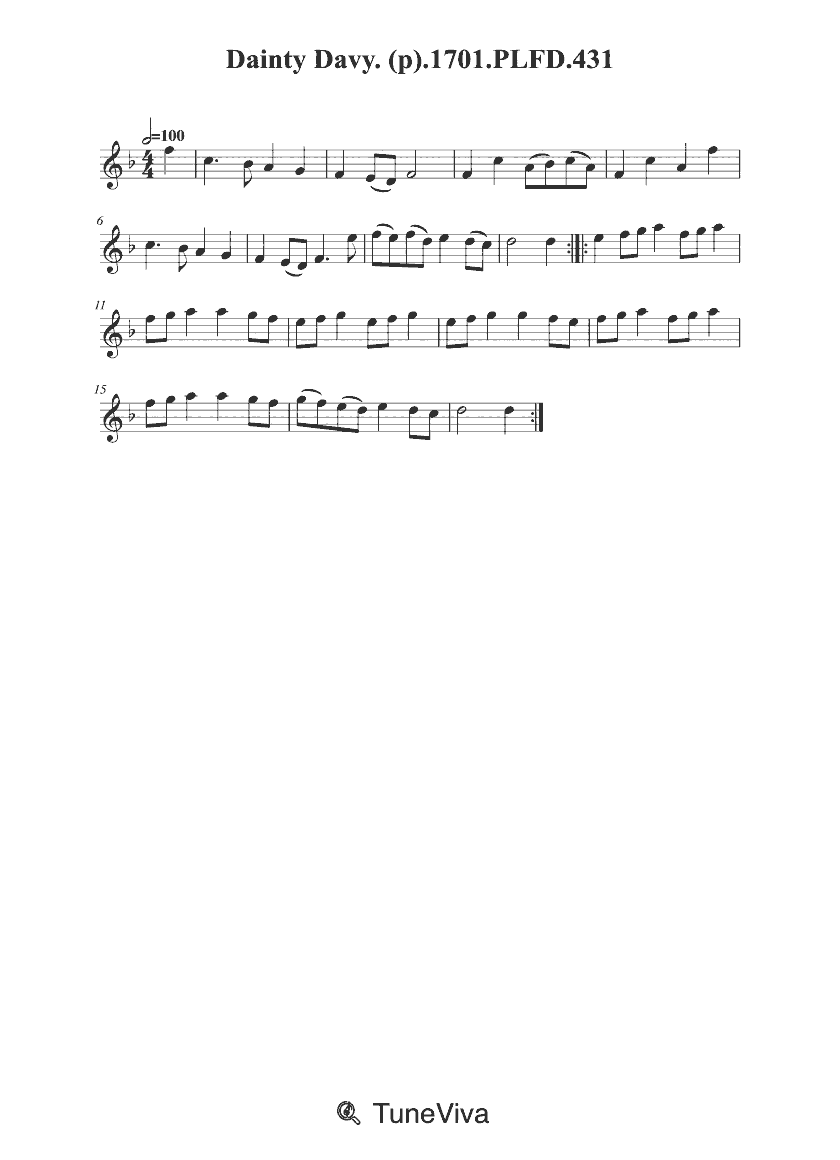
Misc tunes
38 sec
Open score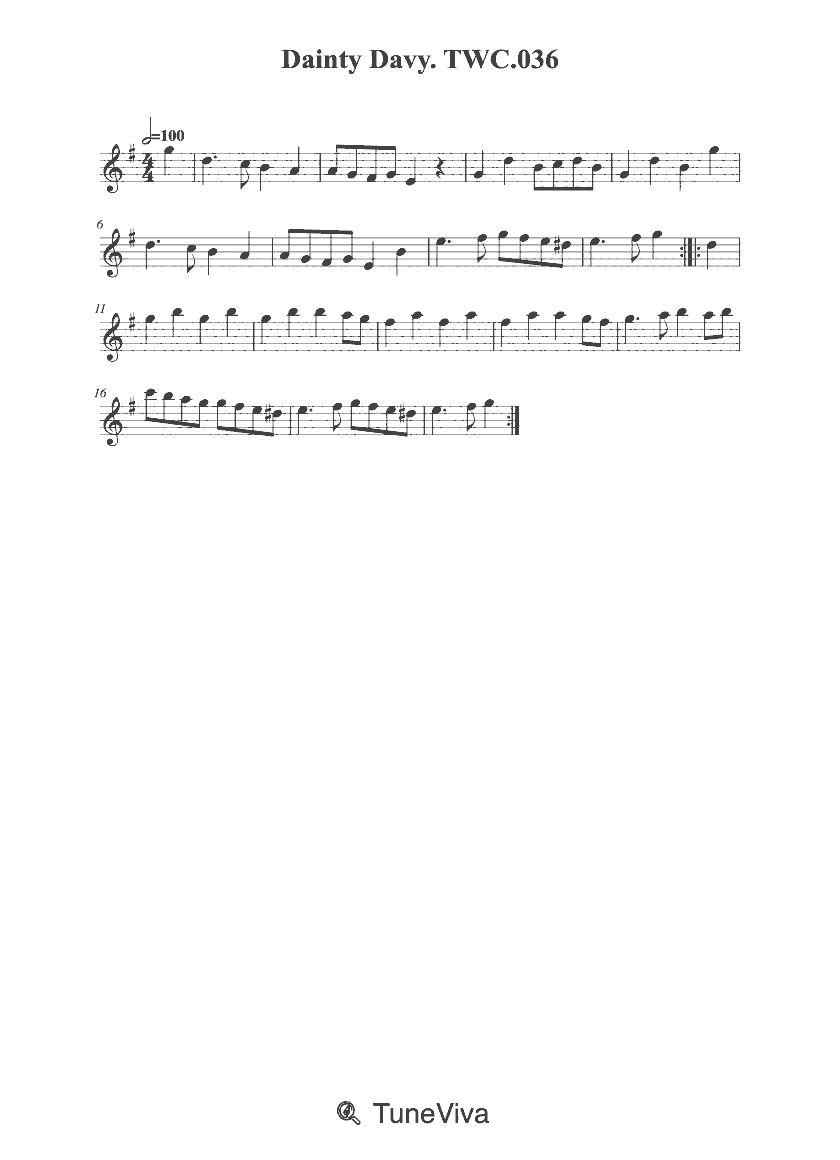
'Old Scotch'
38 sec
Open score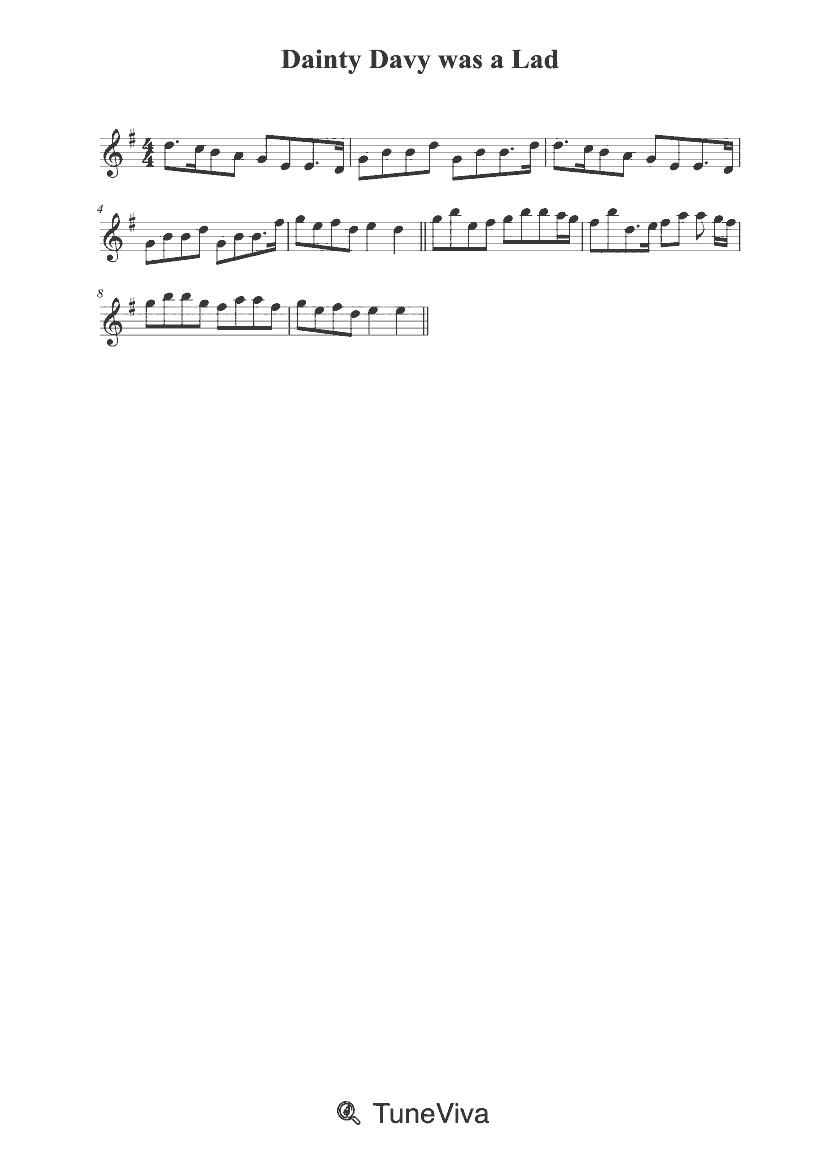
Misc tunes
18 sec · Score #237365
Open score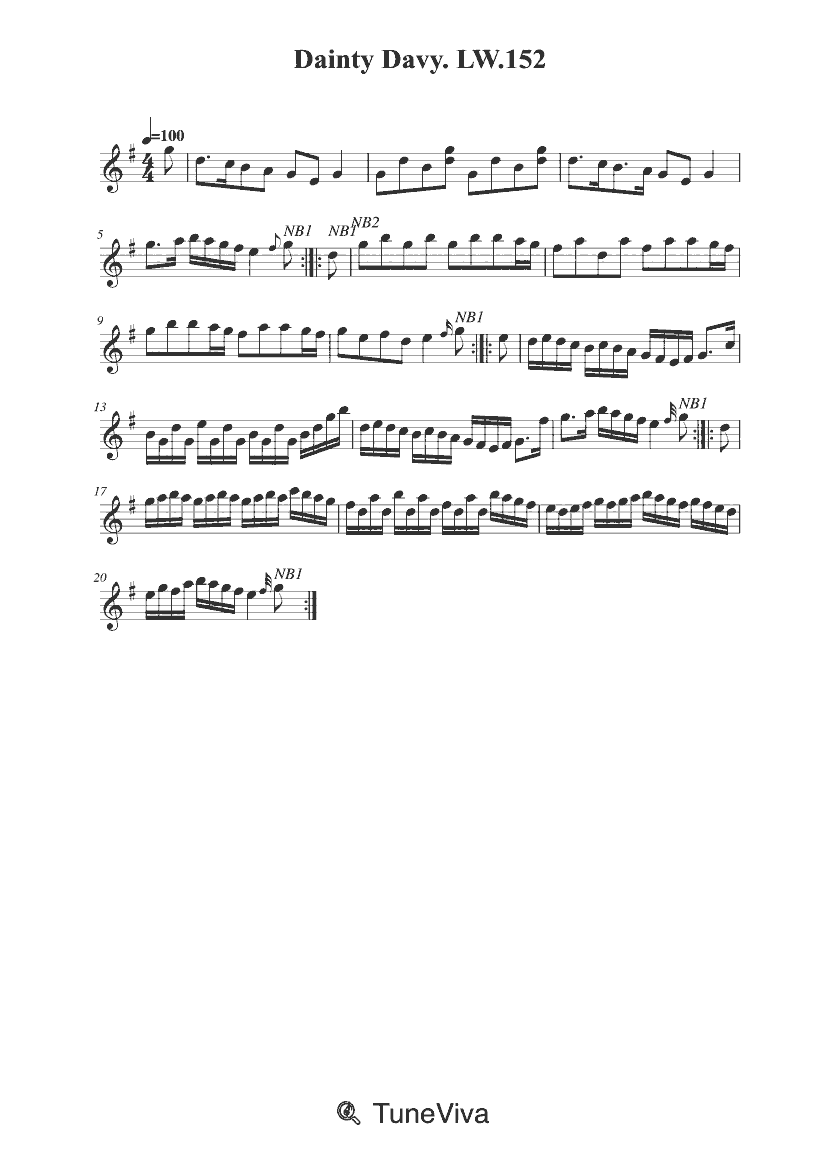
Misc tunes
1 min 17 sec
Open score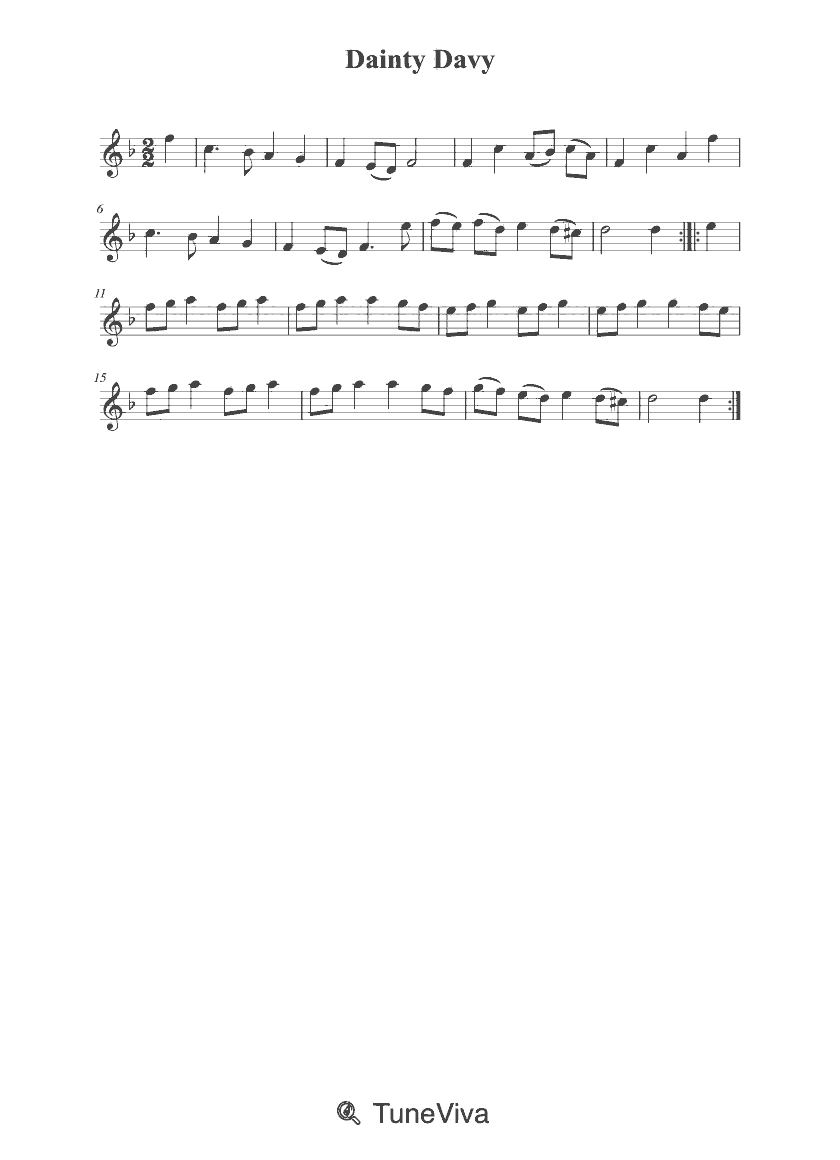
Misc tunes
2 min 8 sec
Open score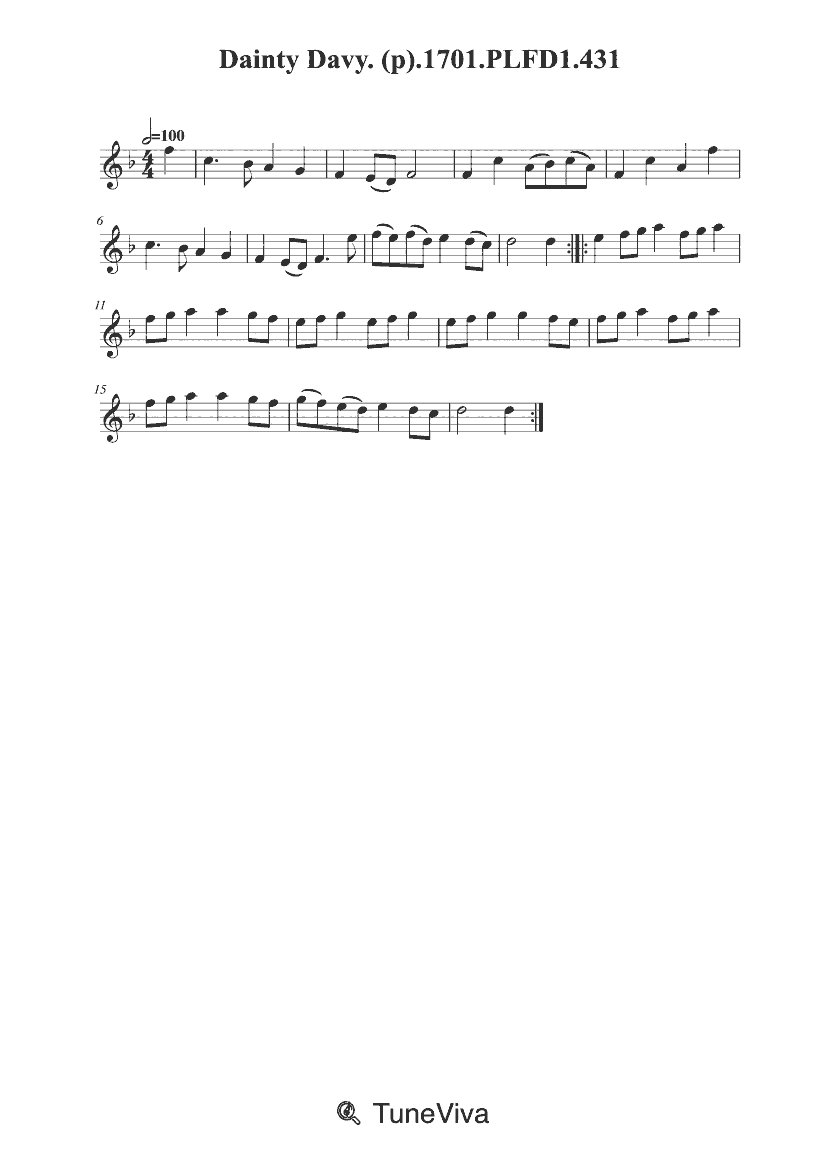
Misc tunes
38 sec · Score #50108
Open score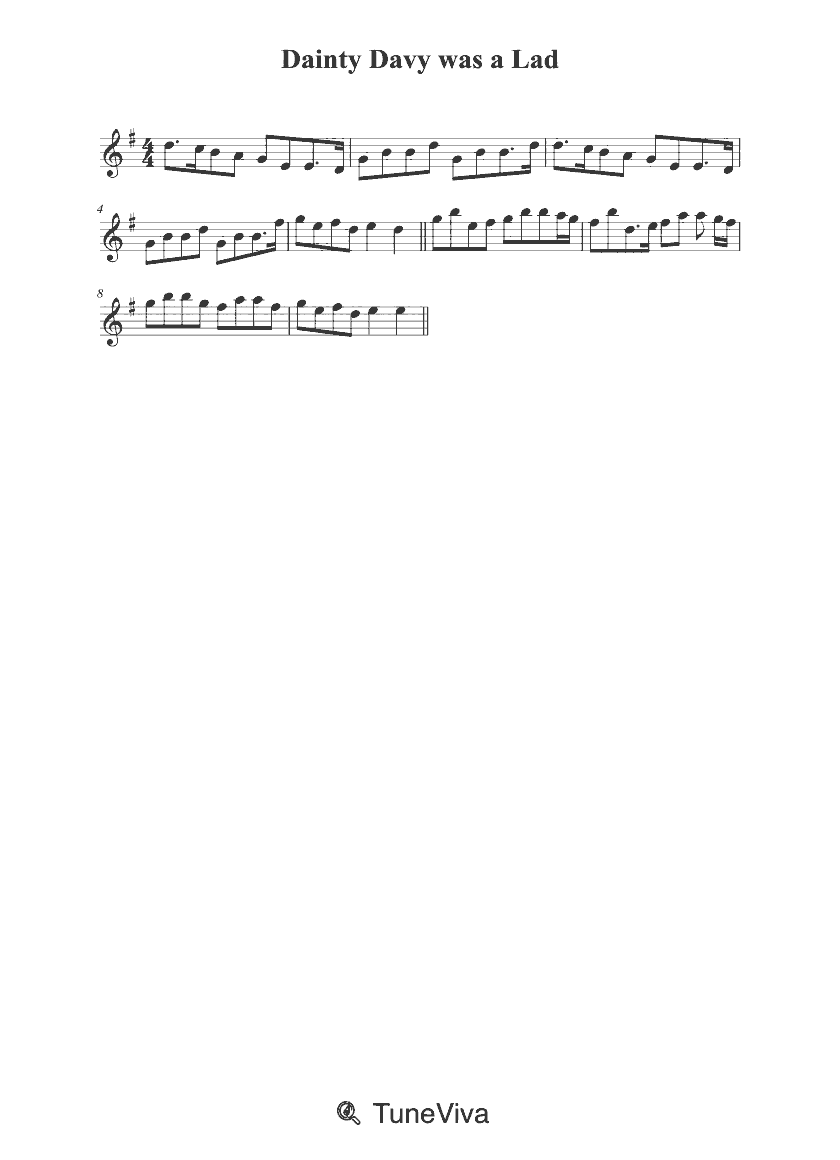
Misc tunes
18 sec · Score #100617
Open score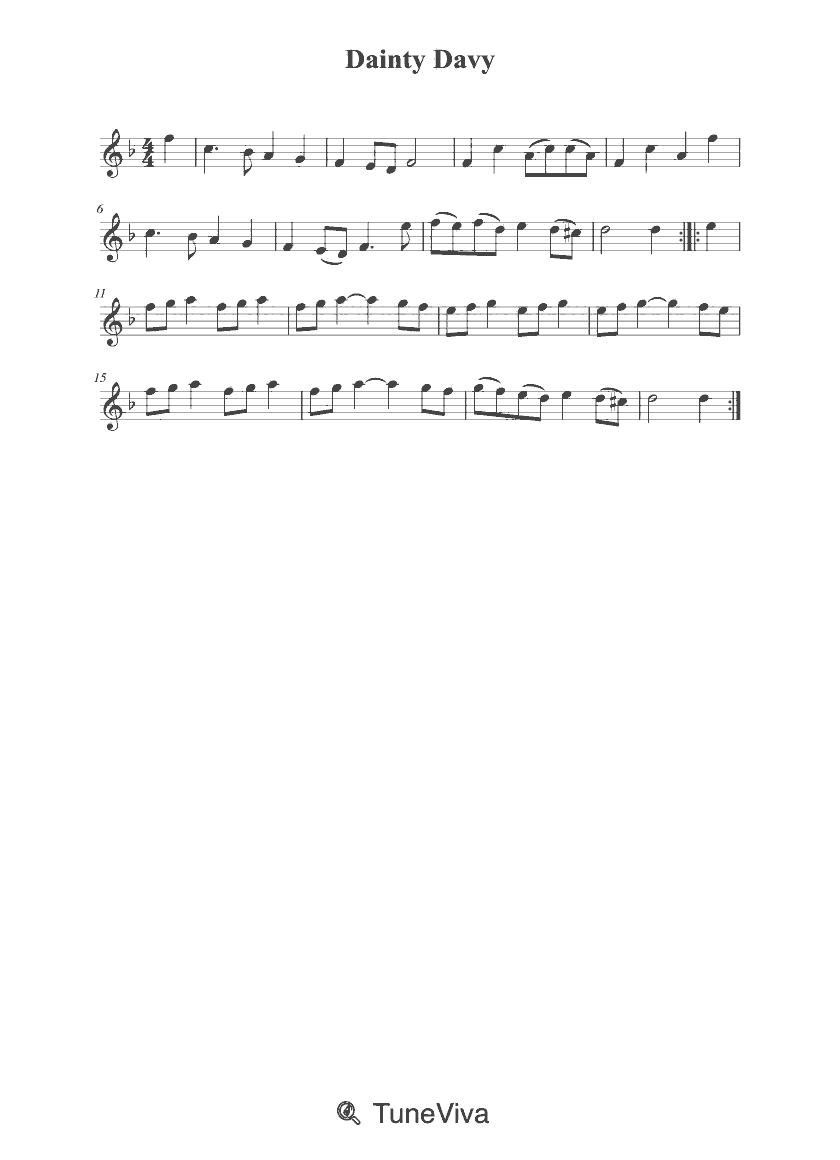
Misc tunes
1 min 4 sec · Score #56785
Open score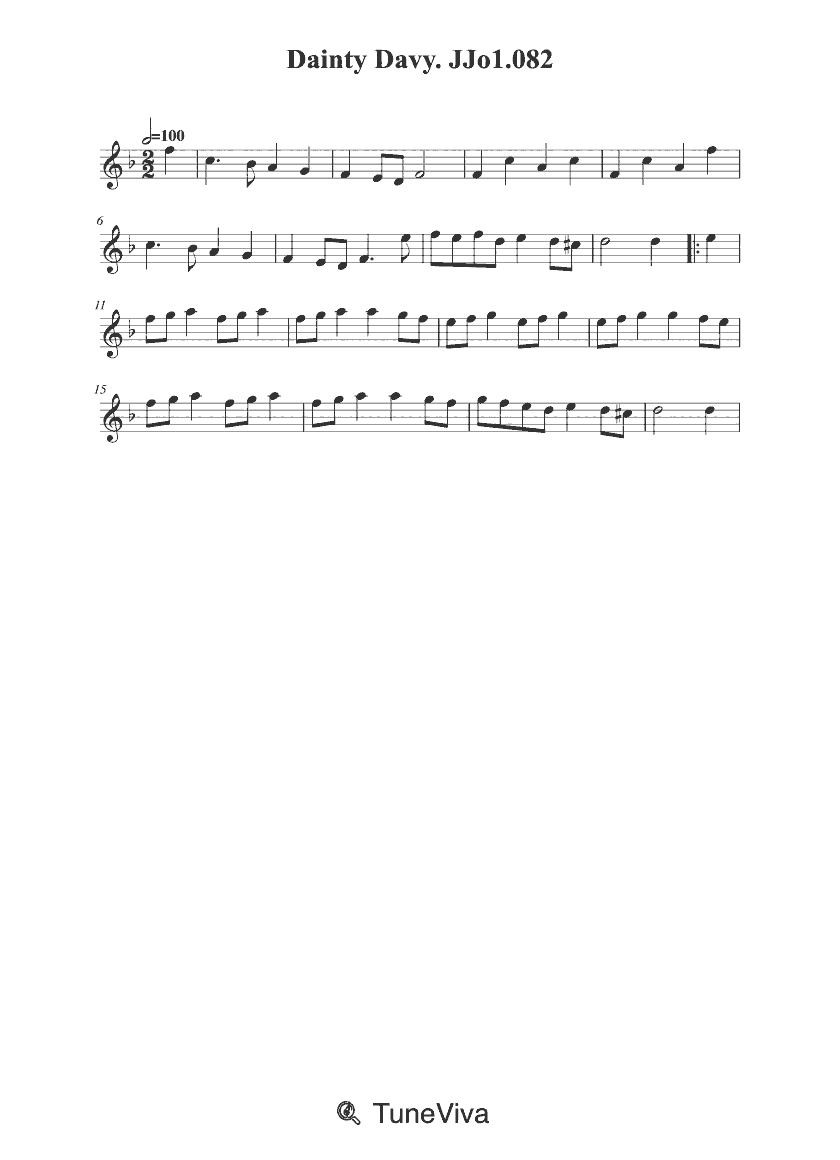
Misc tunes
58 sec
Open score“Dainty Davy (Old Scotch)” and “Dainty Davy was a Lad” open in G major, while “Dainty Davy. THO2.185” opens in D minor. Opening key affects register and reading, so check which score suits your instrument or voice before choosing. These key labels describe individual scores, not a definitive key for every version of the tune.
Where tempo is shown, the scores differ: “Dainty Davy. THO2.185” is listed at 160 BPM and “Dainty Davy (Old Scotch)” at 112 BPM, while “Dainty Davy was a Lad” has no opening tempo listed. Treat these as starting indications for each score rather than a fixed speed for the tune.
The three titles share the name Dainty Davy but add different wording: “Old Scotch”, a numeric identifier, and “was a Lad”.
The listings do not name a composer, date, instrumentation, or historical background for Dainty Davy. They also do not supply lyrics or confirm whether the versions are related. Use the individual score details to choose a version, and treat broader claims about the tune as unverified.
Catalogue duration 1 min 9 sec. Opening key signature: 1 sharp (G major). Opening time signature: 4/4. Opening tempo: 112 BPM.
Catalogue duration 48 sec. Opening key signature: 1 flat (D minor). Opening time signature: 4/4. Opening tempo: 160 BPM.
Catalogue duration 18 sec. Opening key signature: 1 sharp (G major). Opening time signature: 4/4.
Three scores are listed under the name Dainty Davy: “Dainty Davy (Old Scotch)”, “Dainty Davy. THO2.185”, and “Dainty Davy was a Lad”. They show different titles and opening keys or tempos, so each should be checked individually rather than assumed to be identical.
Dainty Davy does not have a single confirmed key in the available scores. “Dainty Davy (Old Scotch)” and “Dainty Davy was a Lad” open in G major, while “Dainty Davy. THO2.185” opens in D minor. These opening-key details describe individual scores and may not reflect every version of the tune.
The listed Dainty Davy scores are all in 4/4 at the opening. That shared time signature does not prove that every version or performance uses the same metre.
“Dainty Davy. THO2.185” has a listed opening tempo of 160 BPM, while “Dainty Davy (Old Scotch)” is listed at 112 BPM; “Dainty Davy was a Lad” has no opening tempo shown. The tempo markings describe the opening of each score rather than a definitive speed for the tune.
Composer attribution for Dainty Davy is not established by the available scores: none of the three listings names a composer. The tune should not be attributed to a particular composer on the basis of these listings alone.
THO2.185”, and “Dainty Davy was a Lad” are the same setting. They share the name Dainty Davy, but the differing titles and opening keys mean each score should be checked on its own.
Instrumentation for Dainty Davy is not stated in the available score listings. Because the scoring is not verified, musicians should inspect an individual score before assuming it is for a particular instrument or ensemble.