
Gloomy Winter Noo Awa
Misc tunes
34 sec
Open scoreGloomy Winter sheet music is listed under titles including Gloomy Winter Noo Awa and a version credited to Trad. The scores shown open in different keys—one in C minor and two with no sharps or flats—while all use 4/4. Composer credit is inconsistent, so check the score you choose rather than assuming a single definitive version.
Scores 1–20 of 20
Misc tunes
34 sec
Open score
Misc tunes
32 sec · Score #214812
Open score
Trad.
32 sec · Score #173798
Open score
Misc tunes
1 min 36 sec · Score #64237
Open score
Misc tunes
32 sec
Open score
Misc tunes
1 min 36 sec · Score #197487
Open score
Trad.
34 sec · Score #167225
Open score
Misc tunes
32 sec · Score #188621
Open score
Misc tunes
Theme from The Piano! RH.482
58 sec
Open score
Misc tunes
2 min 0 sec · Score #96229
Open score
Misc tunes
24 sec · Score #129904
Open score
Trad.
34 sec · Score #178040
Open score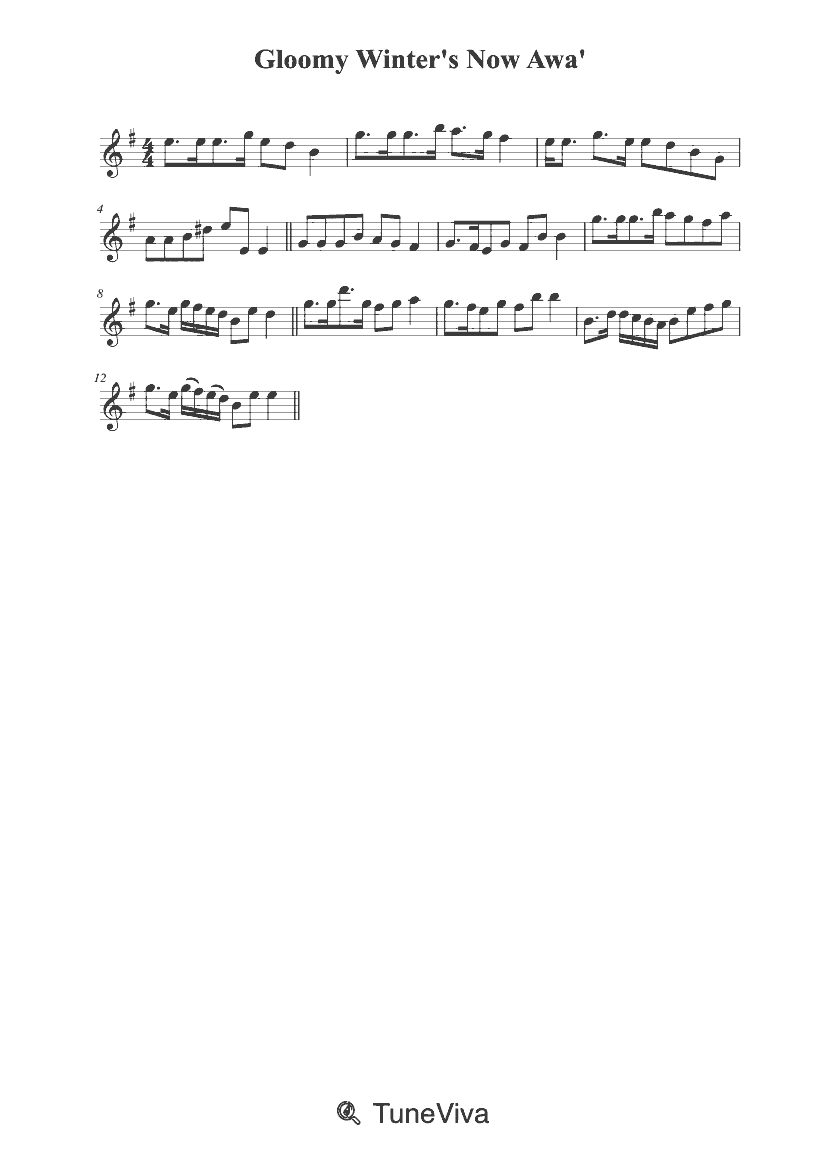
Misc tunes
24 sec
Open score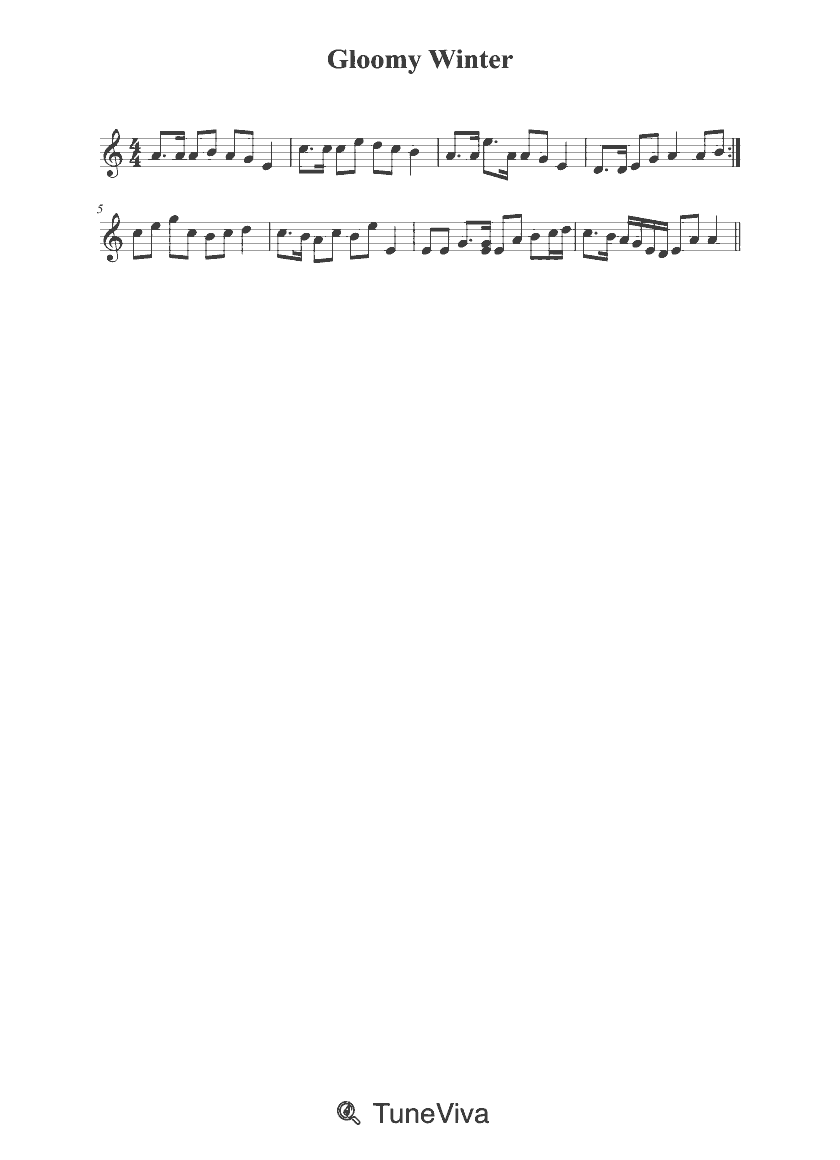
Misc tunes
24 sec · Score #57011
Open score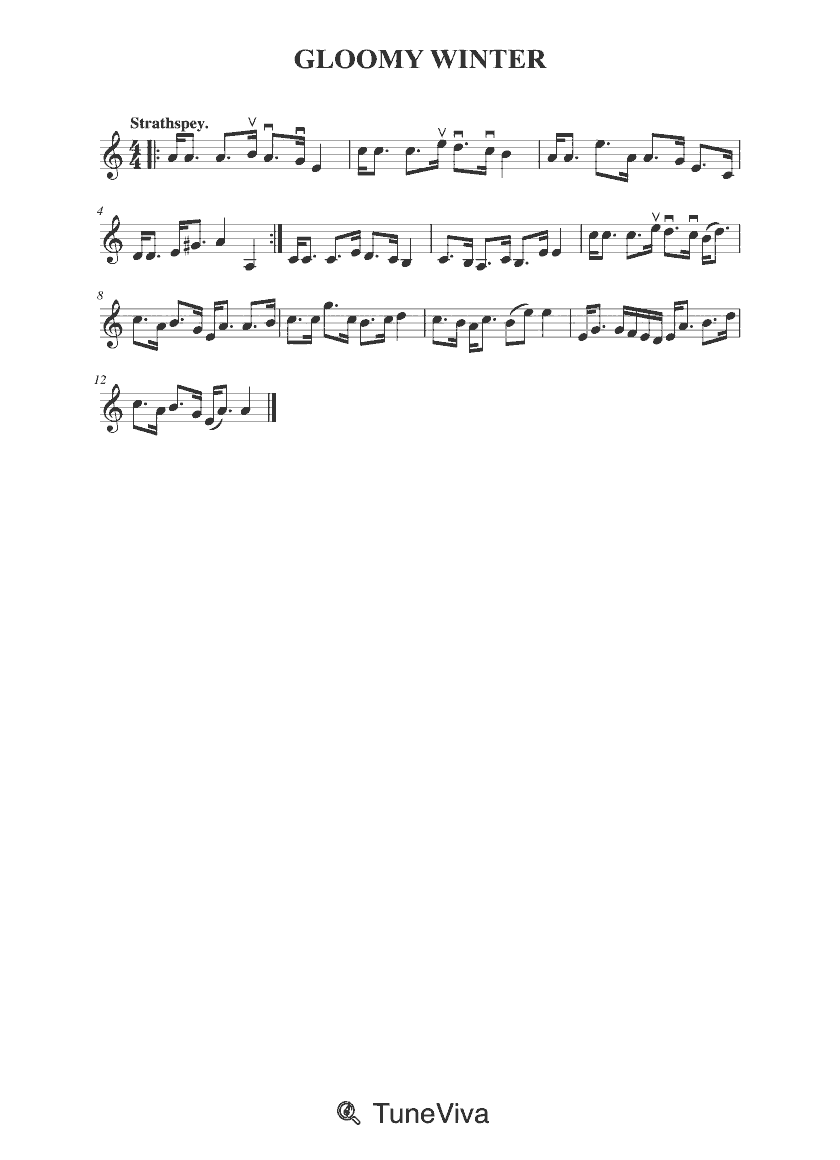
Misc tunes
32 sec · Score #187179
Open score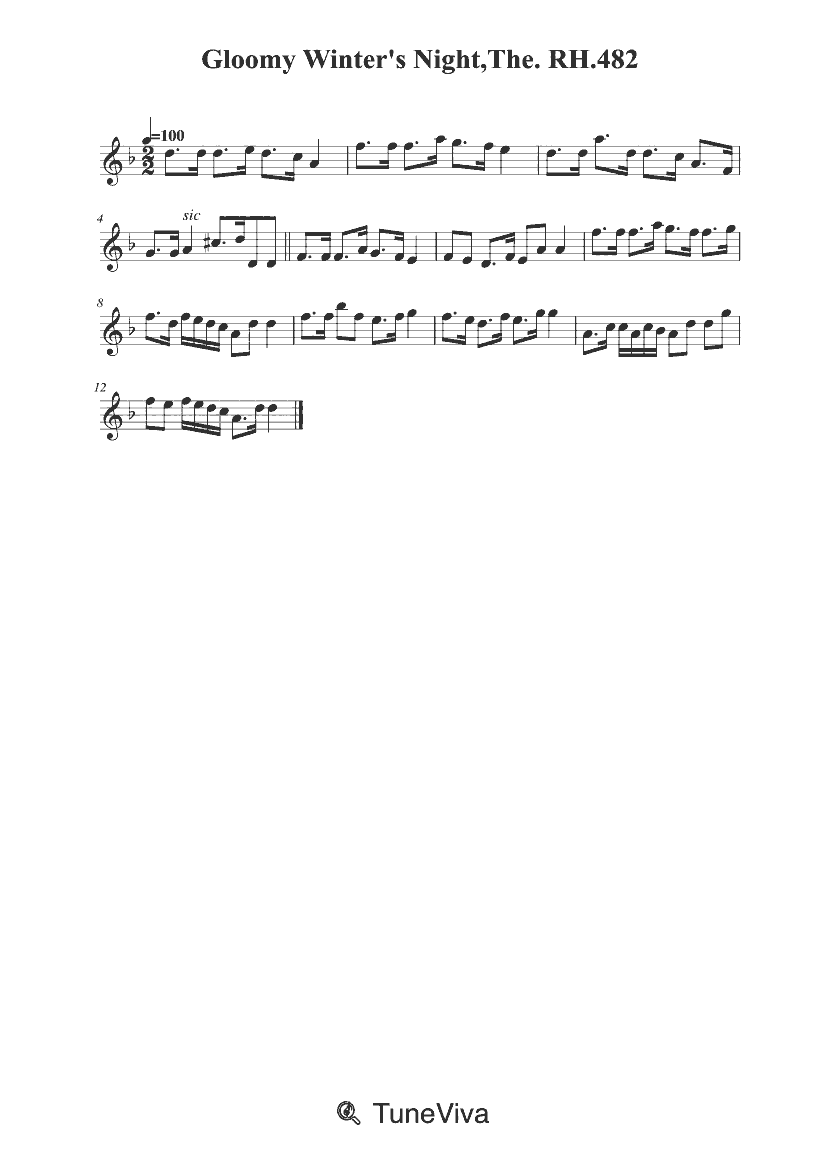
Misc tunes
Theme from The Piano! RH.482
58 sec
Open score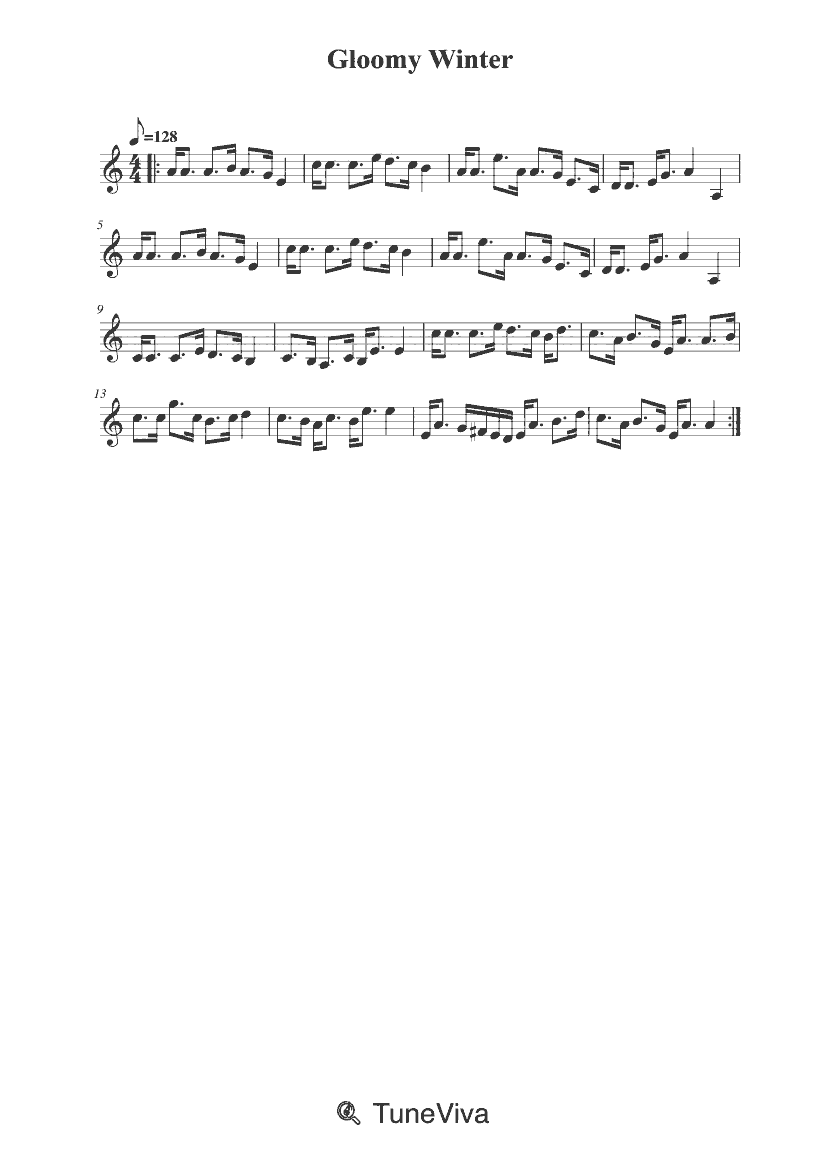
Misc tunes
2 min 0 sec · Score #89294
Open score
Trad.
32 sec · Score #76276
Open score
Trad.
1 min 0 sec
Open score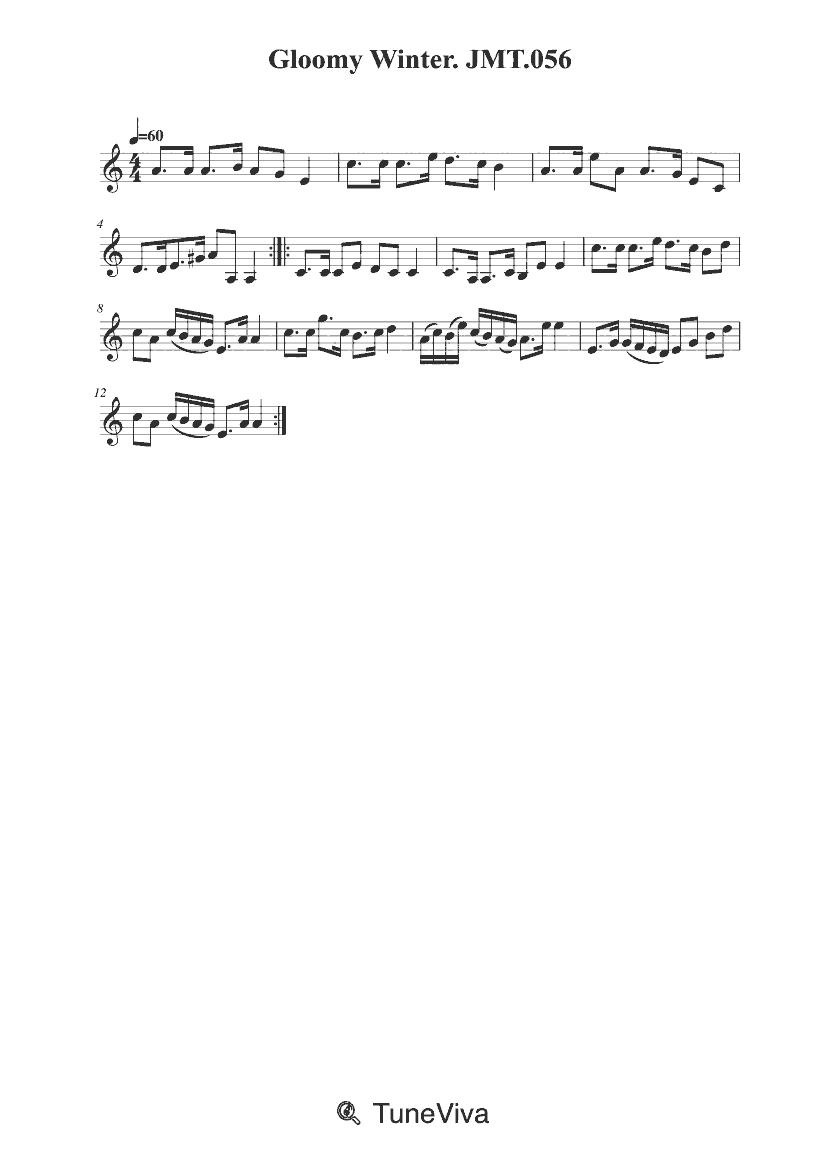
Misc tunes
1 min 36 sec · Score #238173
Open scoreThe listings include Gloomy Winter, Gloomy Winter Noo Awa, and Traditional music - Gloomy Winter. The longer title may be the form a musician recognises, but the listings do not confirm that every score is the same work; compare the notation, key and any text before treating them as interchangeable.
All listed scores use a 4/4 opening time signature. Their opening keys differ: one is given as C minor with three flats, while two have no sharps or flats. Use the opening key to match a singer's range or an instrument's comfortable key, and check whether the score is transposed.
One listing credits 'Trad.' and the others leave the composer field blank. That inconsistency means the listings do not establish a named composer or a definitive attribution; a traditional label is a starting point, not proof of origin.
Instrumentation, clef, lyrics and tempo are not consistent across the listings; only one score gives an opening tempo of 120 BPM. Check the actual score for the part you need, and do not assume that one version's key, tempo or title applies to another.
Catalogue duration 34 sec. Opening key signature: 3 flats (C minor). Opening time signature: 4/4.
Catalogue duration 32 sec. Opening key signature: No sharps or flats. Opening time signature: 4/4. Opening tempo: 120 BPM.
Catalogue duration 32 sec. Opening key signature: No sharps or flats. Opening time signature: 4/4.
The scores listed under Gloomy Winter do not give a consistent composer. One listing credits 'Trad.' while the others leave the composer field blank, so the available information does not establish a named composer for the piece.
The listed Gloomy Winter scores do not agree on a single key. One score opens in C minor with three flats, while two others open with no sharps or flats; players should check the opening key of the specific score they intend to use.
All three scores listed under Gloomy Winter use a 4/4 opening time signature. That common metre is the clearest point of agreement among the listed versions, but it does not by itself confirm a definitive version of the piece.
The listed Gloomy Winter scores show different opening key signatures: C minor in one and no sharps or flats in two. The available information does not explain whether these differences come from transposition, variant tunes, or score encoding, so compare the actual notation rather than assuming one key is authoritative.
Choose the Gloomy Winter score whose opening key and title match the version you need. One listing uses the longer title Gloomy Winter Noo Awa, and the keys differ, so a singer or instrumentalist should check the key against their range and ensemble before selecting a score.
Only one of the listed Gloomy Winter scores gives an opening tempo: 120 BPM. The other two listings do not include a tempo, so 120 BPM should be treated as a detail of that particular score, not a required speed for the piece.