
Paddy in London
anon.
42 sec · Score #165183
Open scorePaddy In London sheet music appears here in several short scores whose notation does not entirely agree. Two versions open in 6/8 with two sharps (D major), and one of those is titled as a jig; a third opens in 4/4 with no sharps or flats. Attribution also varies—one score is marked anonymous and another 'after Chief F. O'Neill'—so compare the actual score details before treating any one version as definitive.
Scores 1–20 of 20
anon.
42 sec · Score #165183
Open score
after Chief F. O'Neill
38 sec
Open score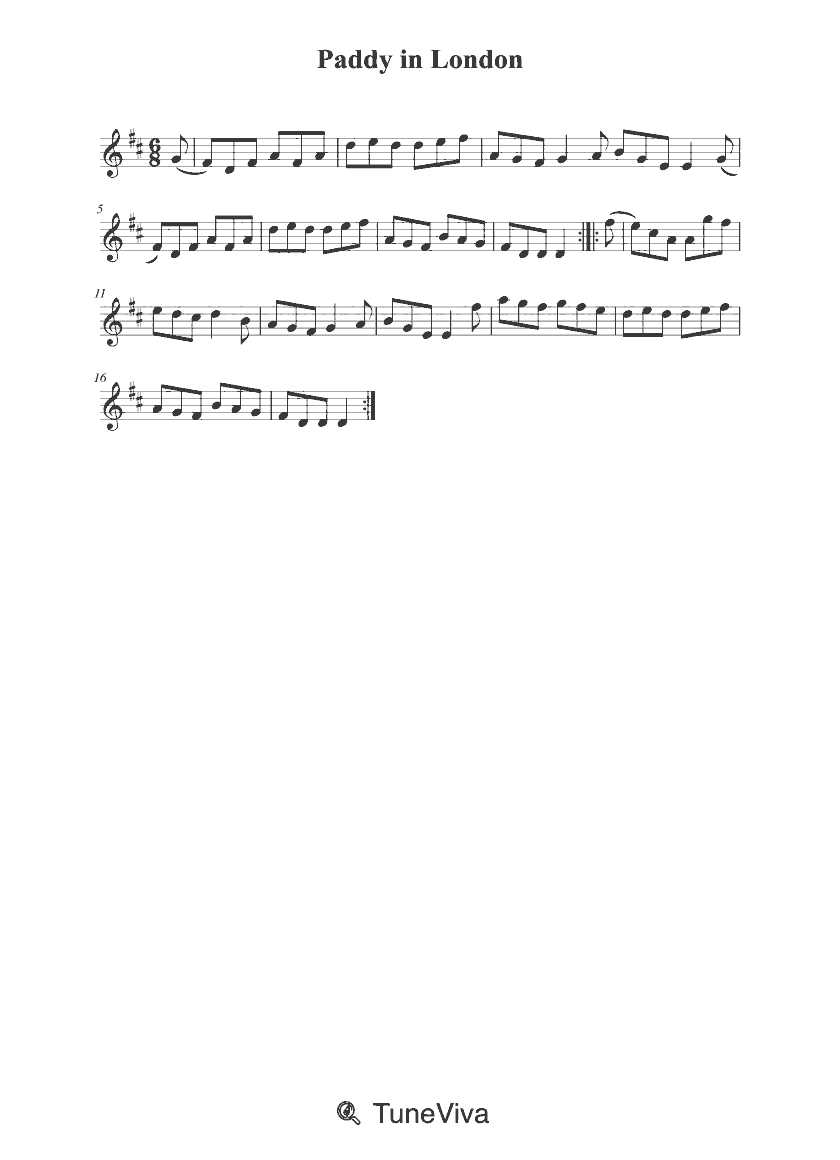
Misc tunes
24 sec · Score #84768
Open score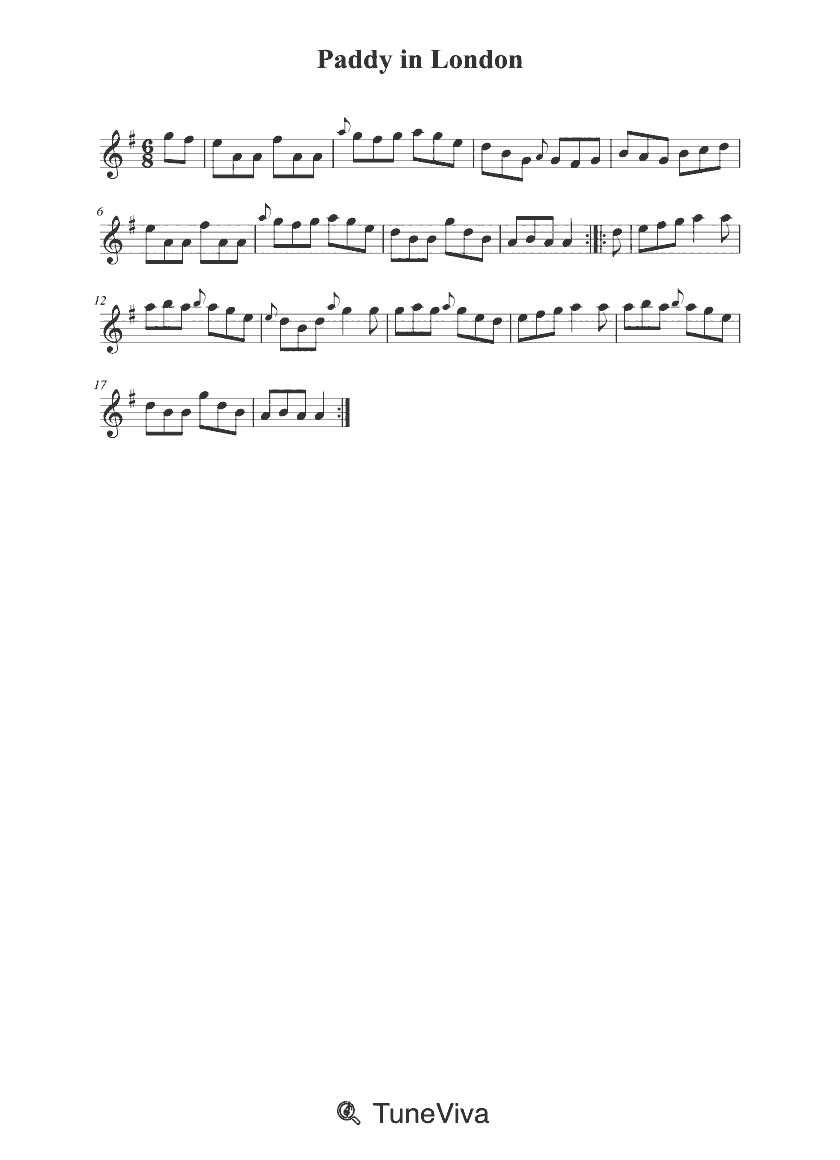
Misc tunes
24 sec · Score #54021
Open score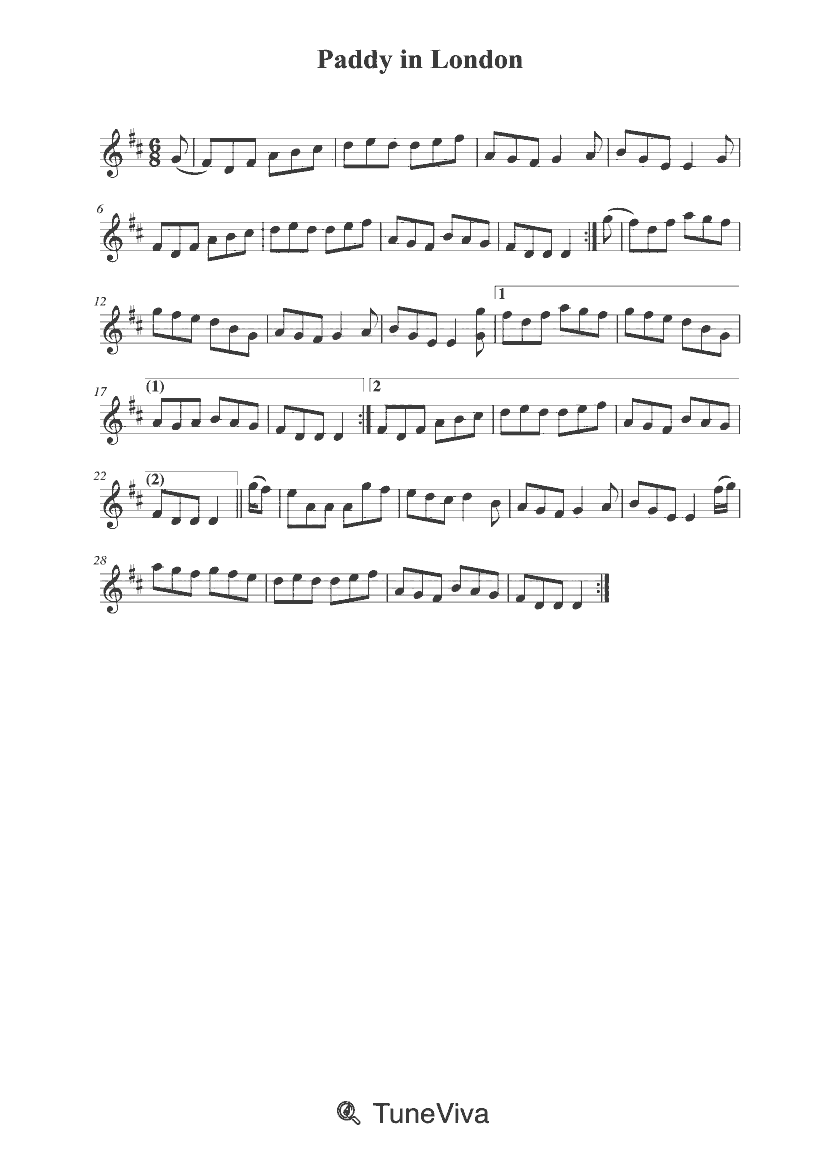
Misc tunes
51 sec · Score #119453
Open score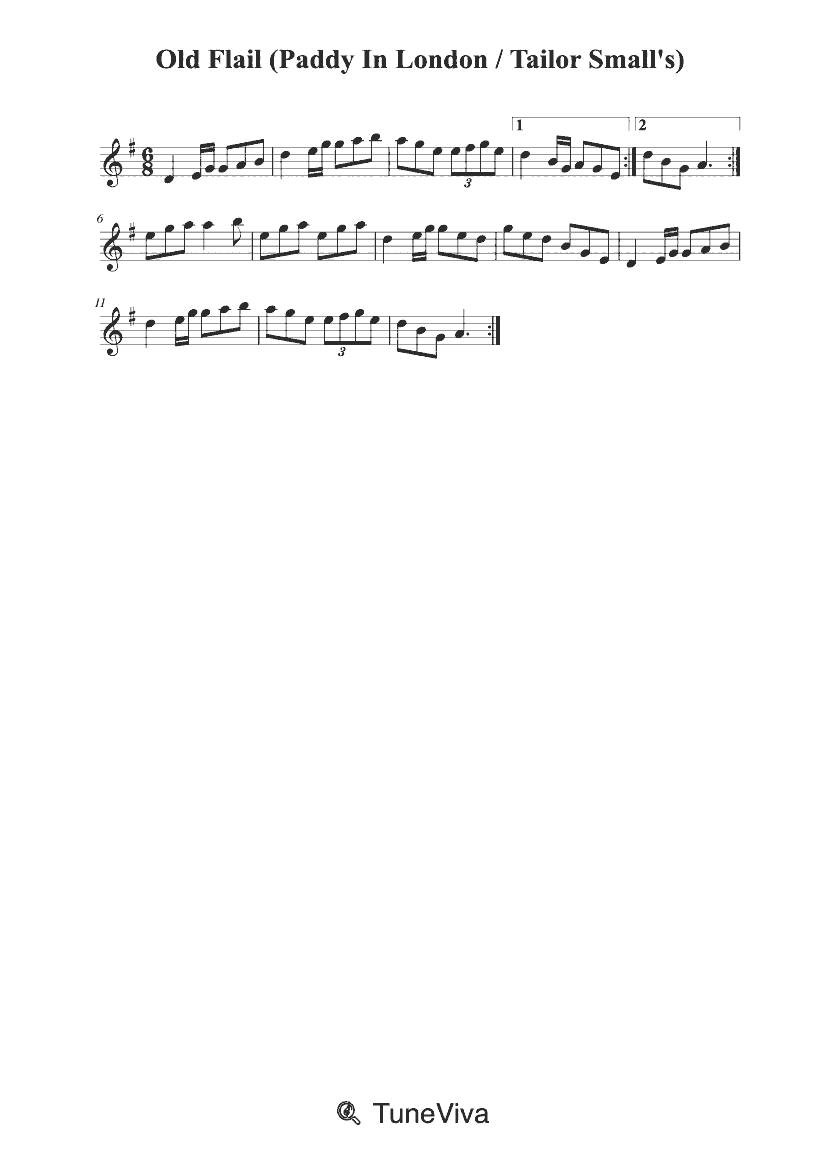
Misc tunes
22 sec
Open score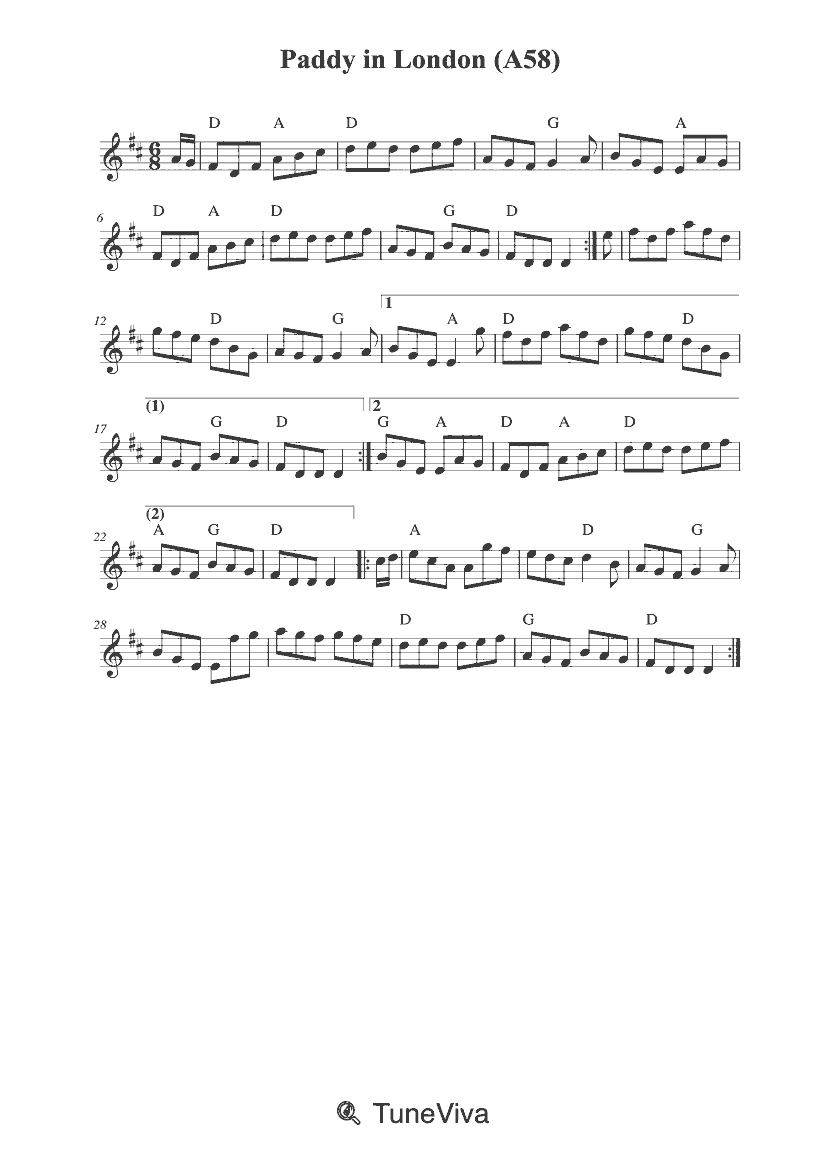
Misc tunes
42 sec
Open score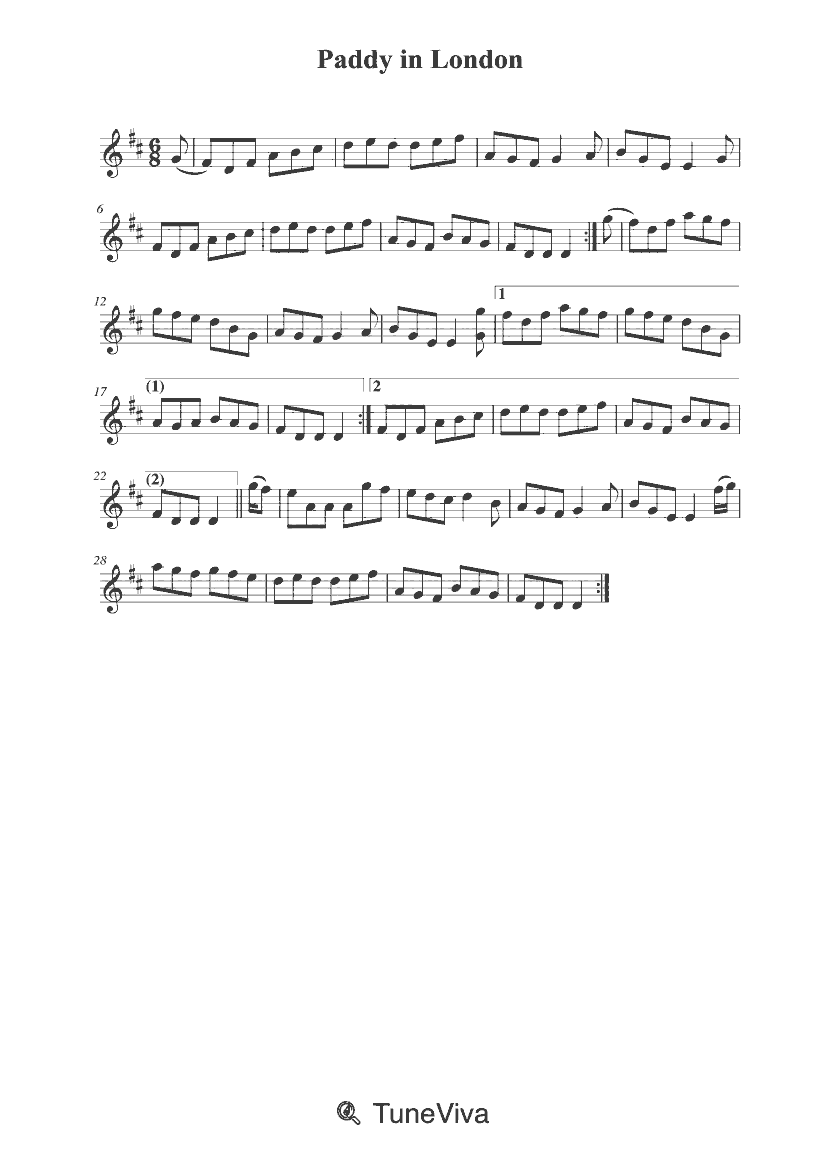
Misc tunes
51 sec · Score #59057
Open score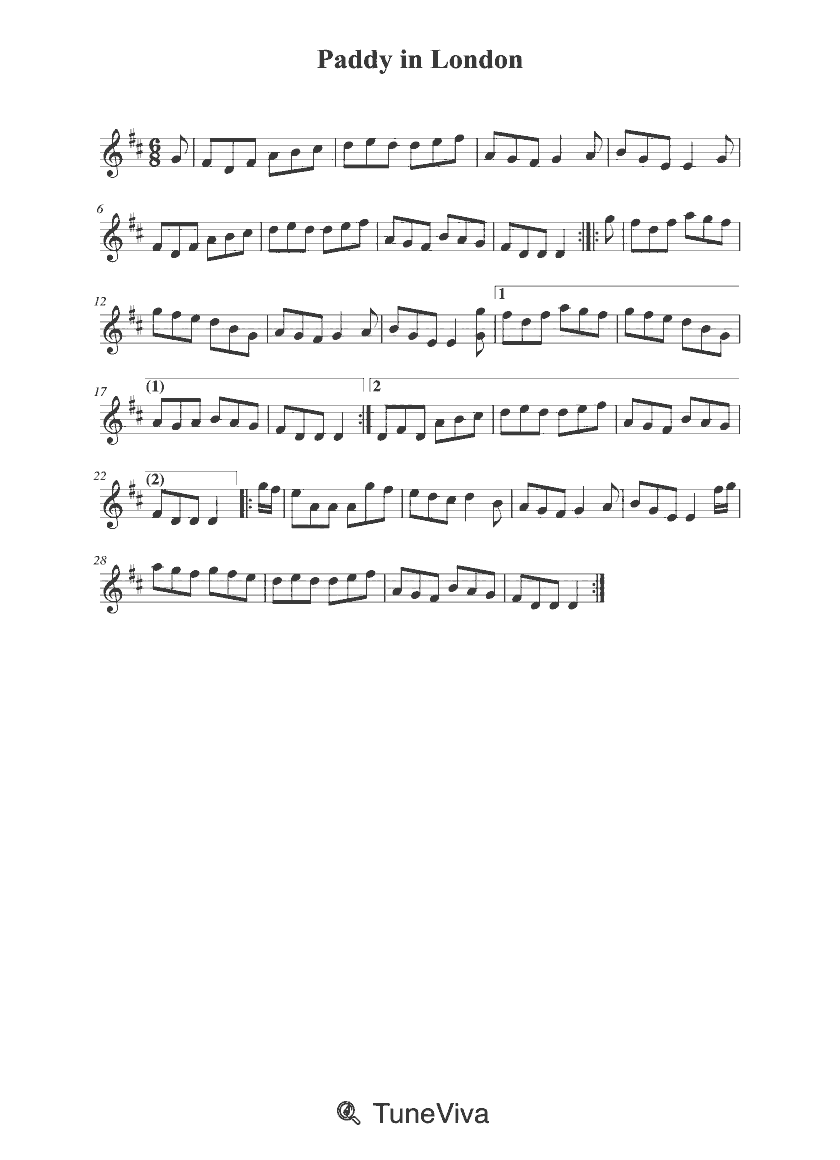
Misc tunes
36 sec · Score #85781
Open score
anon.
44 sec · Score #153849
Open score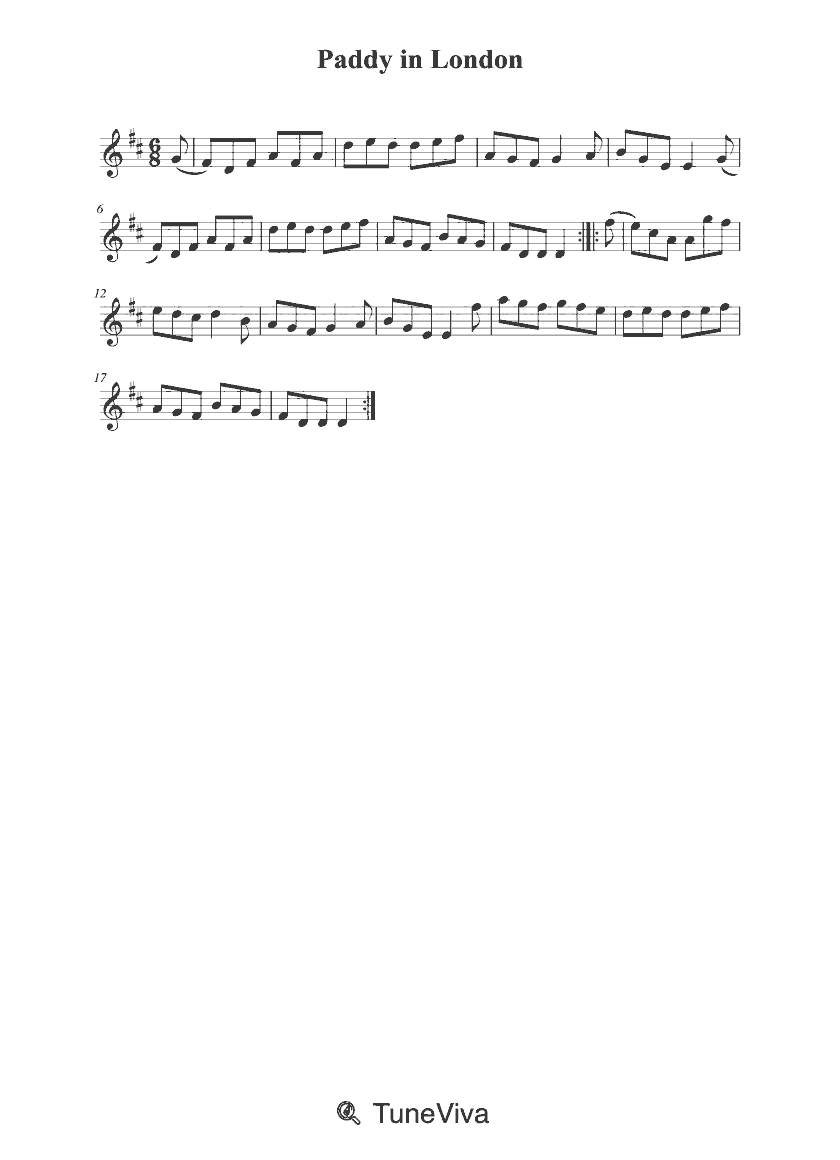
Misc tunes
24 sec · Score #176784
Open score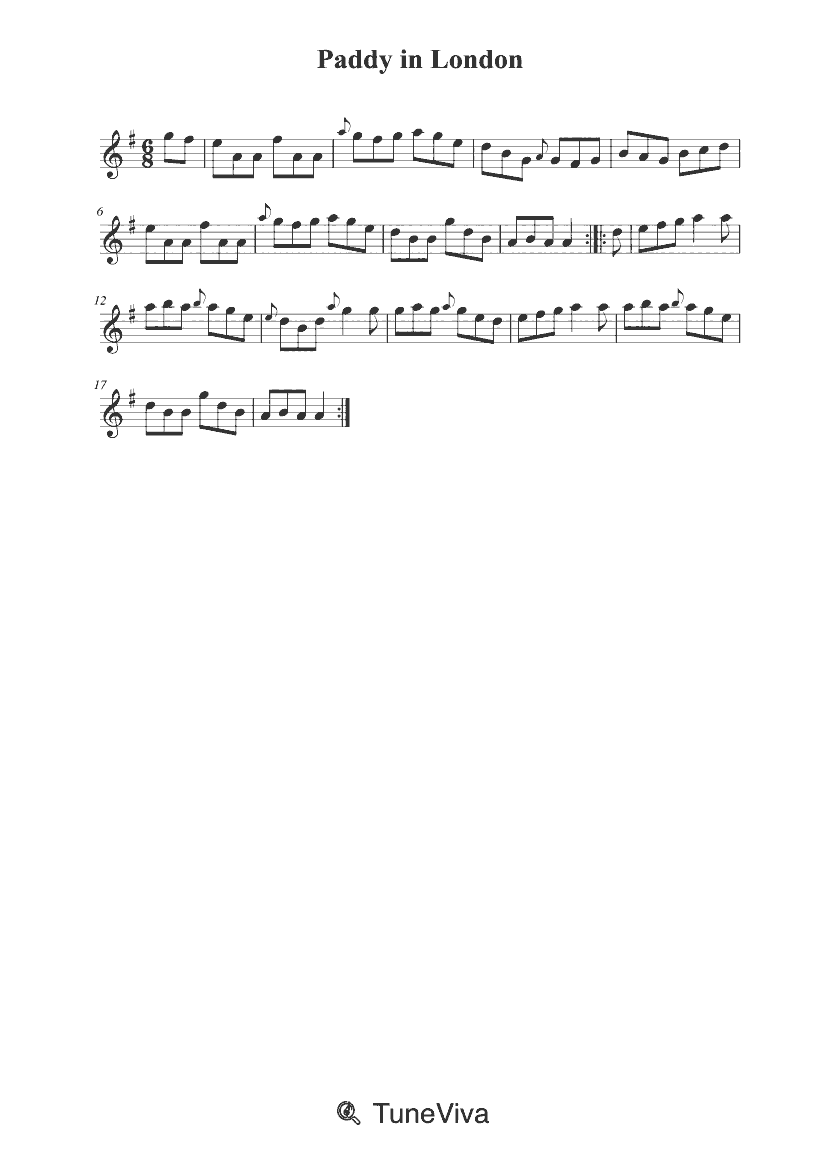
Misc tunes
24 sec · Score #61448
Open score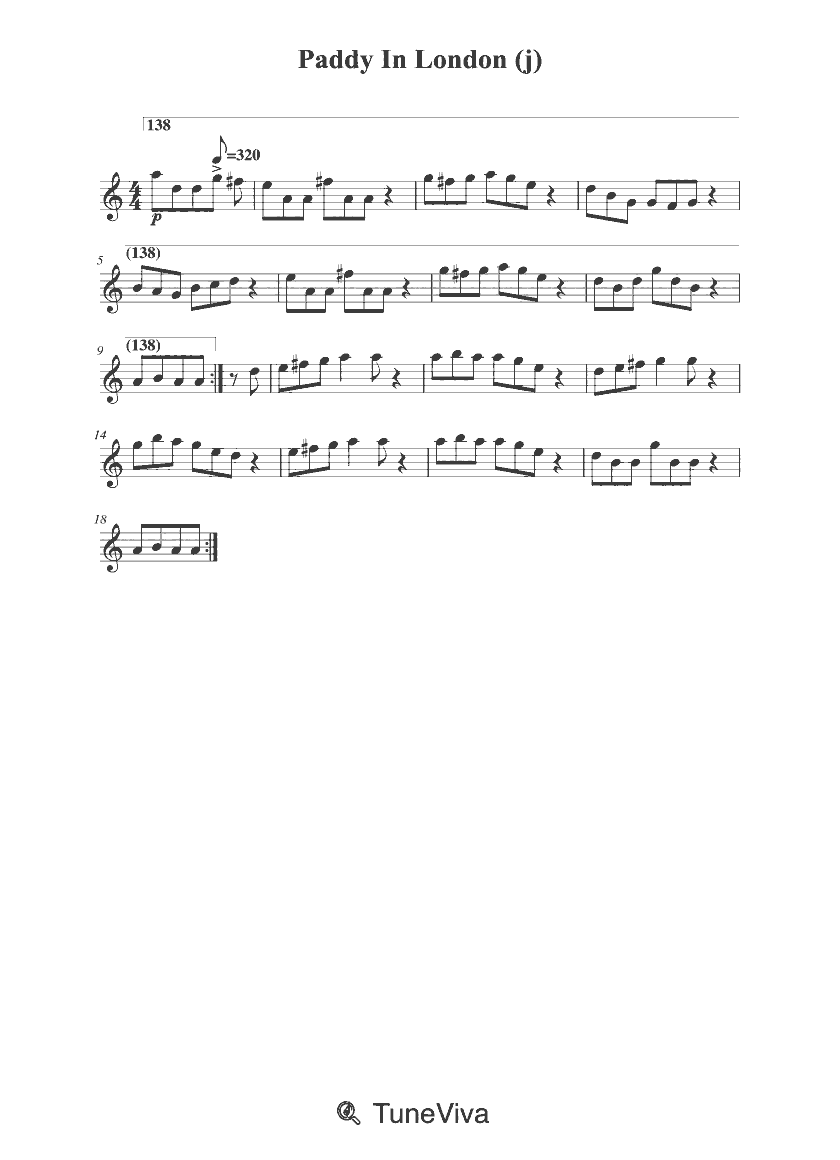
Misc tunes
14 sec
Open score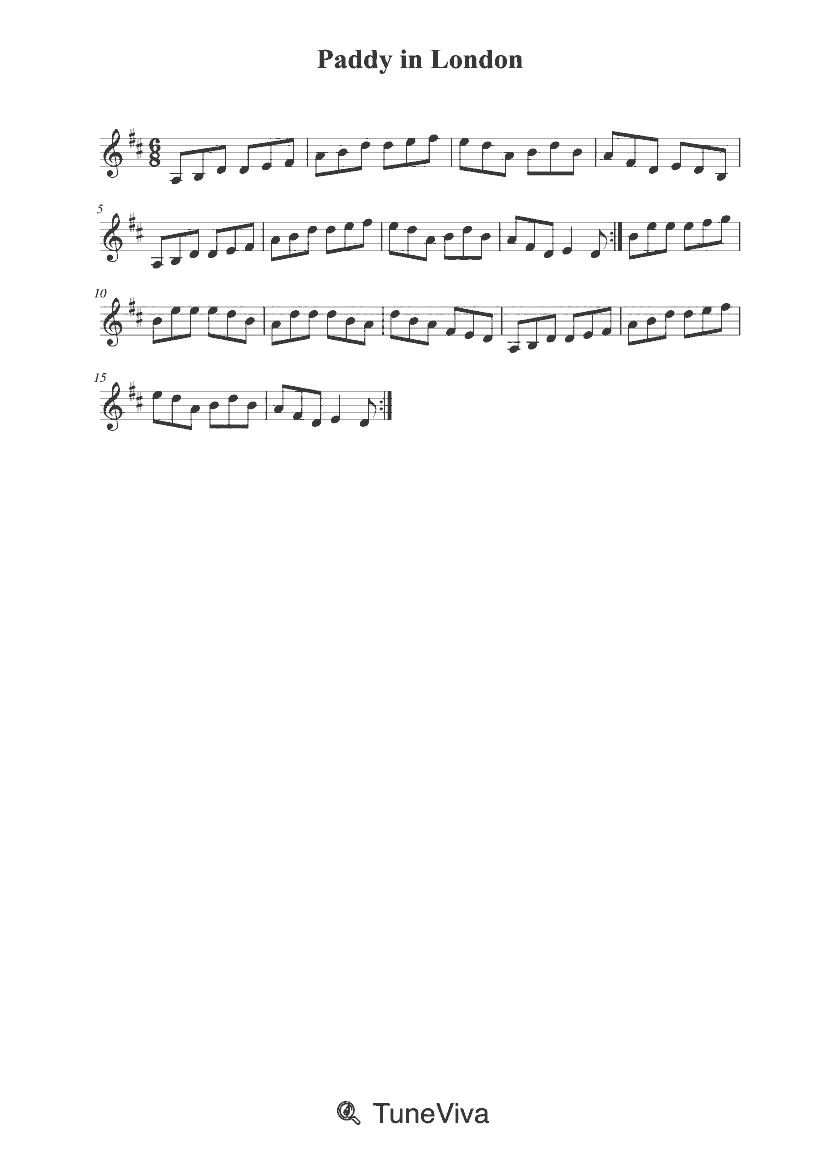
Misc tunes
30 sec
Open score
anon.
42 sec · Score #181609
Open score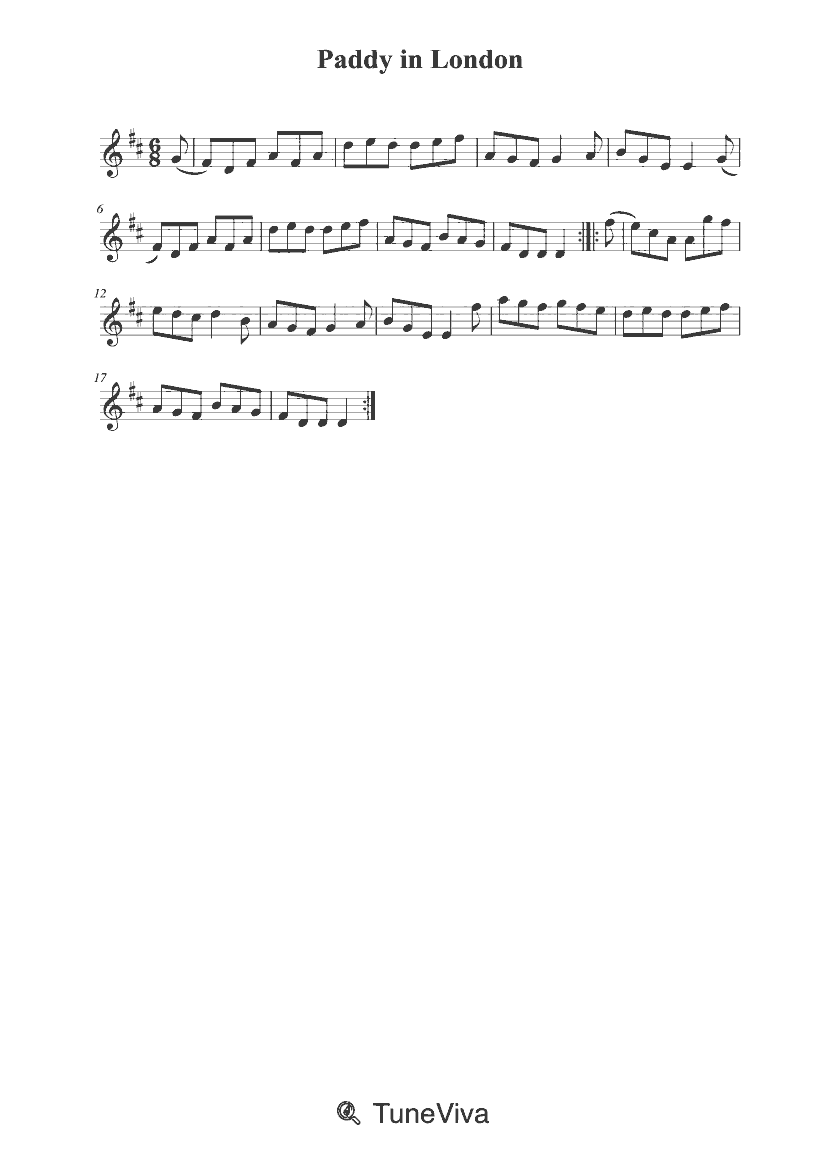
Misc tunes
24 sec · Score #181985
Open score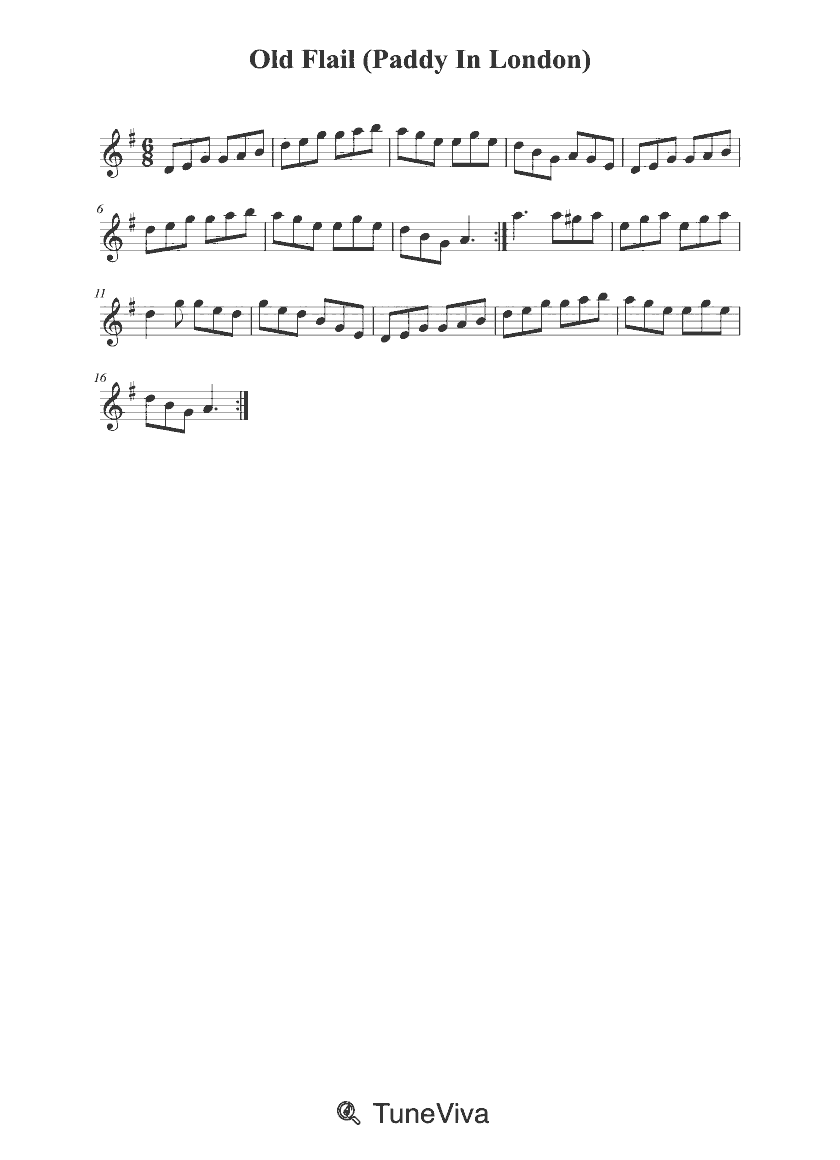
Misc tunes
30 sec
Open score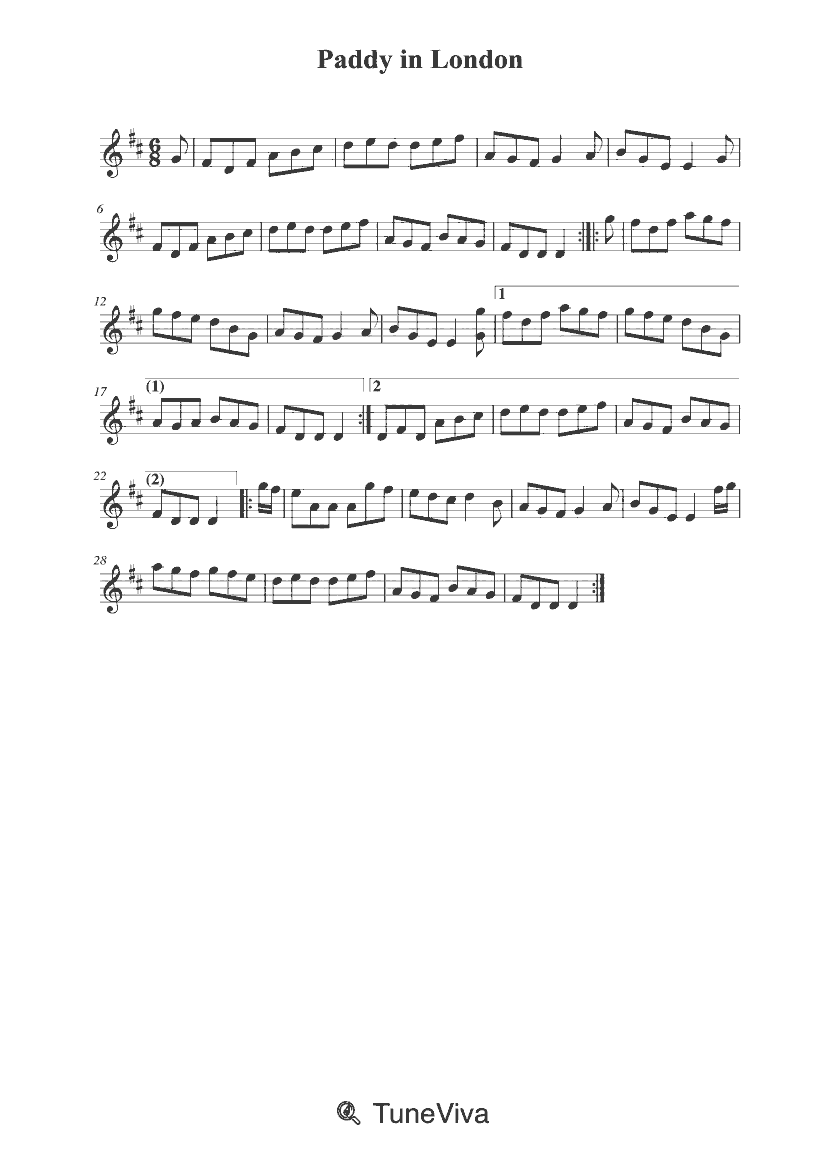
Misc tunes
36 sec · Score #195926
Open score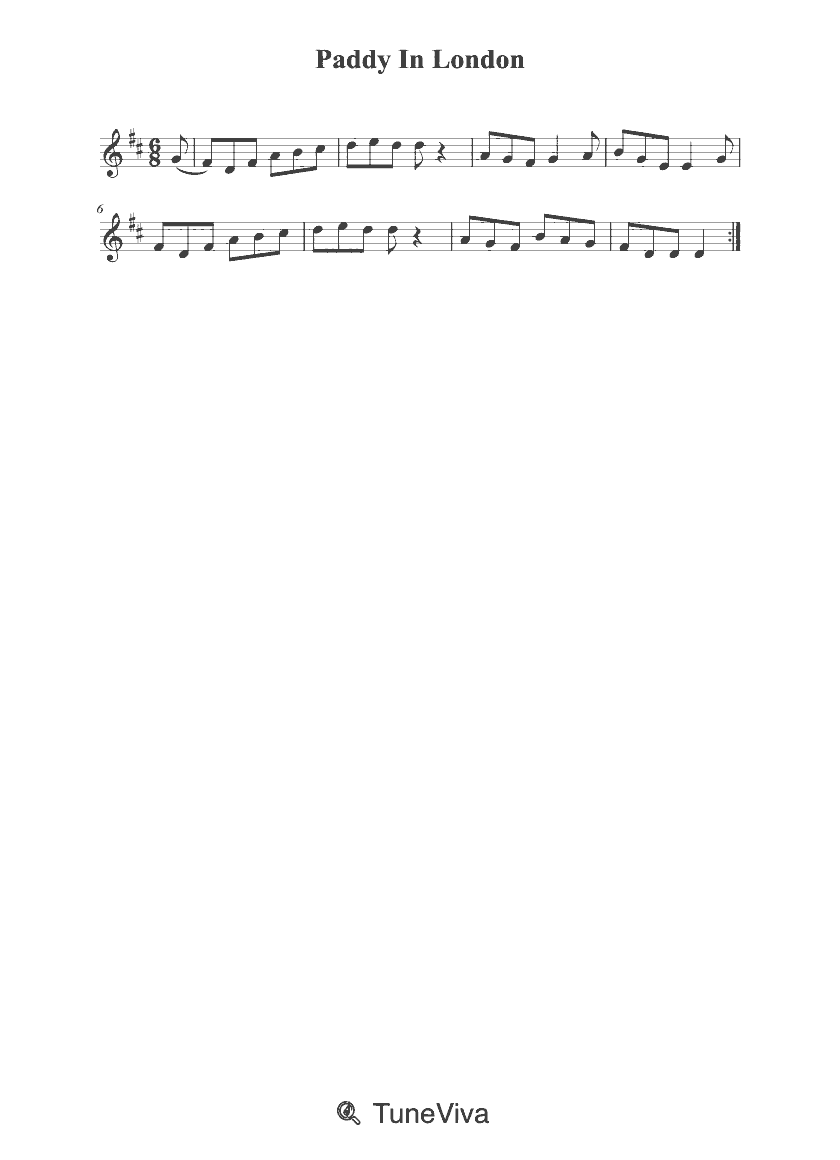
Misc tunes
12 sec
Open score
anon.
44 sec · Score #230518
Open scoreThe Paddy In London scores shown here do not share one notation. Two open in 6/8 with two sharps (D major), while one opens in 4/4 with no sharps or flats. Use the opening metre and key to decide which presentation matches the reading context you need, and check the full score rather than relying on the title alone.
One score is marked 'anon.' and another is described as 'after Chief F. O'Neill.' The available information does not explain whether that phrase indicates a source, a transcription, or an arrangement, so avoid treating it as a confirmed composer credit.
A 6/8 score labelled 'jig' is the clearest jig-labelled version in the records; another 6/8 score is not titled as a jig, and the 4/4 score presents a different metre. Choose according to the notation you can use, not an assumption that all versions are identical.
The records describe opening metre and key but do not establish instrumentation, full-piece structure, difficulty, historical origin, or a definitive text. If those details matter, compare against an authoritative edition or manuscript rather than inferring them from the title.
Catalogue duration 42 sec. Opening key signature: 2 sharps (D major). Opening time signature: 6/8.
Catalogue duration 38 sec. Opening key signature: No sharps or flats. Opening time signature: 4/4.
Catalogue duration 24 sec. Opening key signature: 2 sharps (D major). Opening time signature: 6/8.
Paddy In London is a tune title represented by several short scores shown here. The records give no single verified composer: one score is marked anonymous and another carries the attribution 'after Chief F. O'Neill.' The historical origin of the tune is not established by the available information.
One Paddy In London score is explicitly labelled a jig and opens in 6/8; a second score also opens in 6/8 but is not labelled a jig in its title. A third score opens in 4/4 with no sharps or flats. The scores therefore present different rhythmic notations rather than one uniform jig setting.
Two Paddy In London scores open with two sharps, shown as D major, while a third opens with no sharps or flats. Those key signatures describe the opening of each score; the records do not show whether the key changes later.
Two Paddy In London scores open in 6/8, and one of those titles includes the word 'jig.' A third score opens in 4/4. Because the scores disagree, check the metre of the particular version being used.
The records do not identify a verified composer for Paddy In London. One score is credited to 'anon.' and another is described as 'after Chief F. O'Neill'; that wording does not by itself establish O'Neill as the composer. Composer information remains unresolved without a fuller source.
The Paddy In London scores differ in opening metre and key: two begin in 6/8 with two sharps, and one begins in 4/4 with no sharps or flats. Their attributions also differ, with one marked anonymous and another 'after Chief F. O'Neill.' These differences matter when choosing between a 6/8 notation and a 4/4 one.