
the Earl's Chair
Misc tunes
1 min 4 sec · Score #232875
Open scoreThe Earl's Chair is listed here in three sheet-music versions. All three begin in D major with a two-sharp key signature; two open in 4/4 and one in 2/2. The settings therefore differ in barring even though their opening key matches. One score carries the credit 'Trad. O'Neill's 1850'; the others name no composer.
Scores 1–20 of 20
Misc tunes
1 min 4 sec · Score #232875
Open score
Misc tunes
2 min 8 sec · Score #87866
Open score
Trad. O'Neill's 1850
59 sec · Score #90570
Open score
Trad. O'Neill's 1850
59 sec · Score #193110
Open score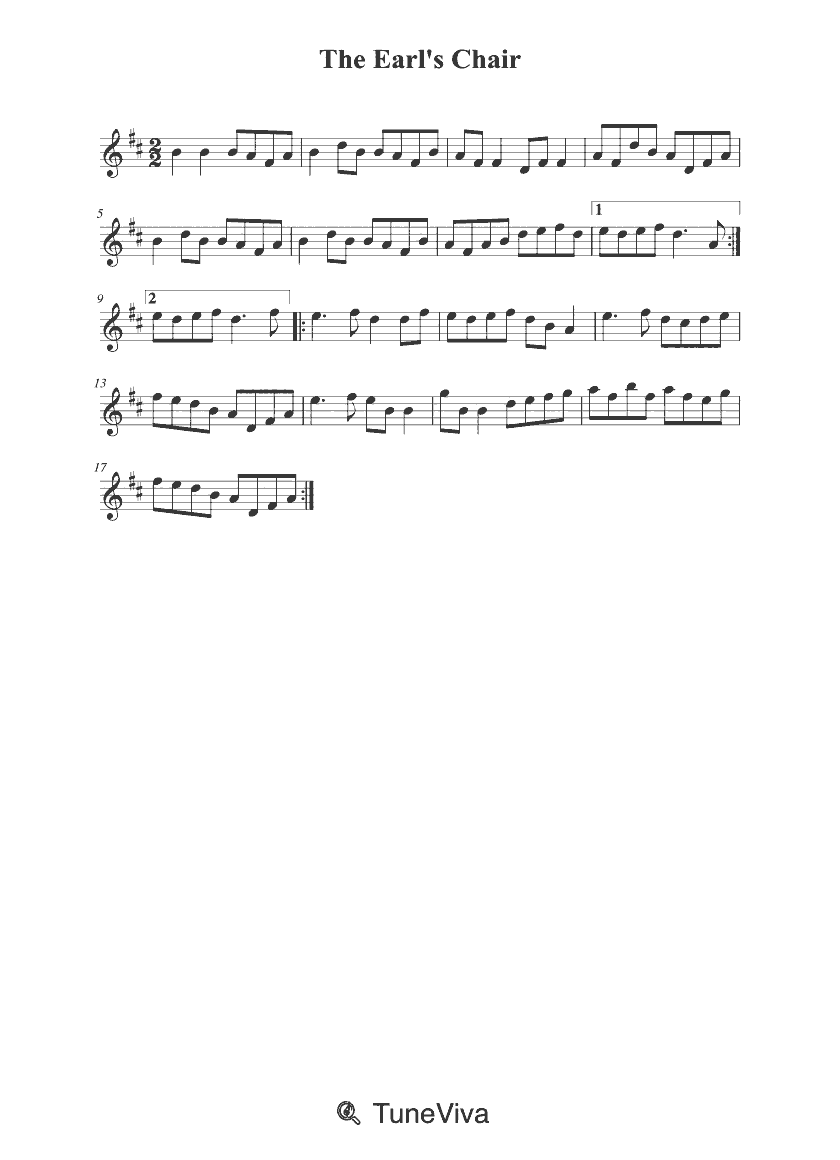
Misc tunes
2 min 8 sec · Score #91239
Open score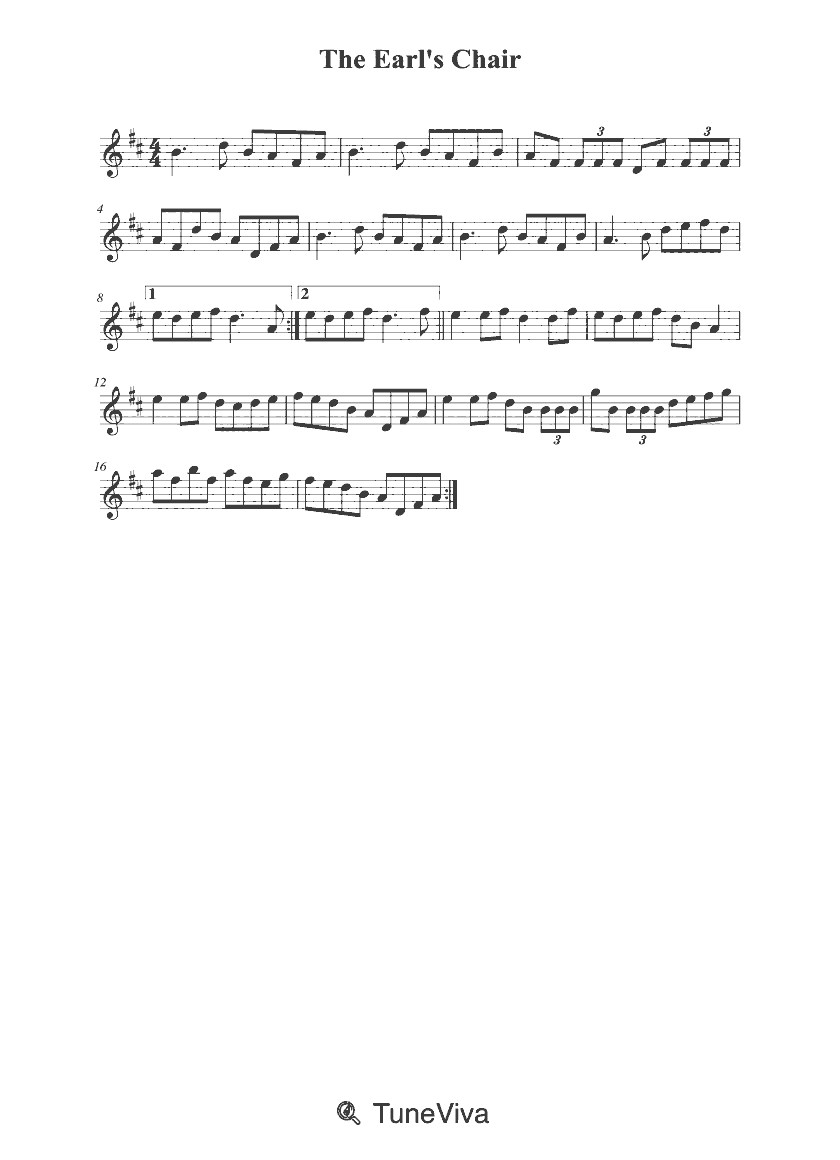
Misc tunes
1 min 18 sec · Score #214240
Open score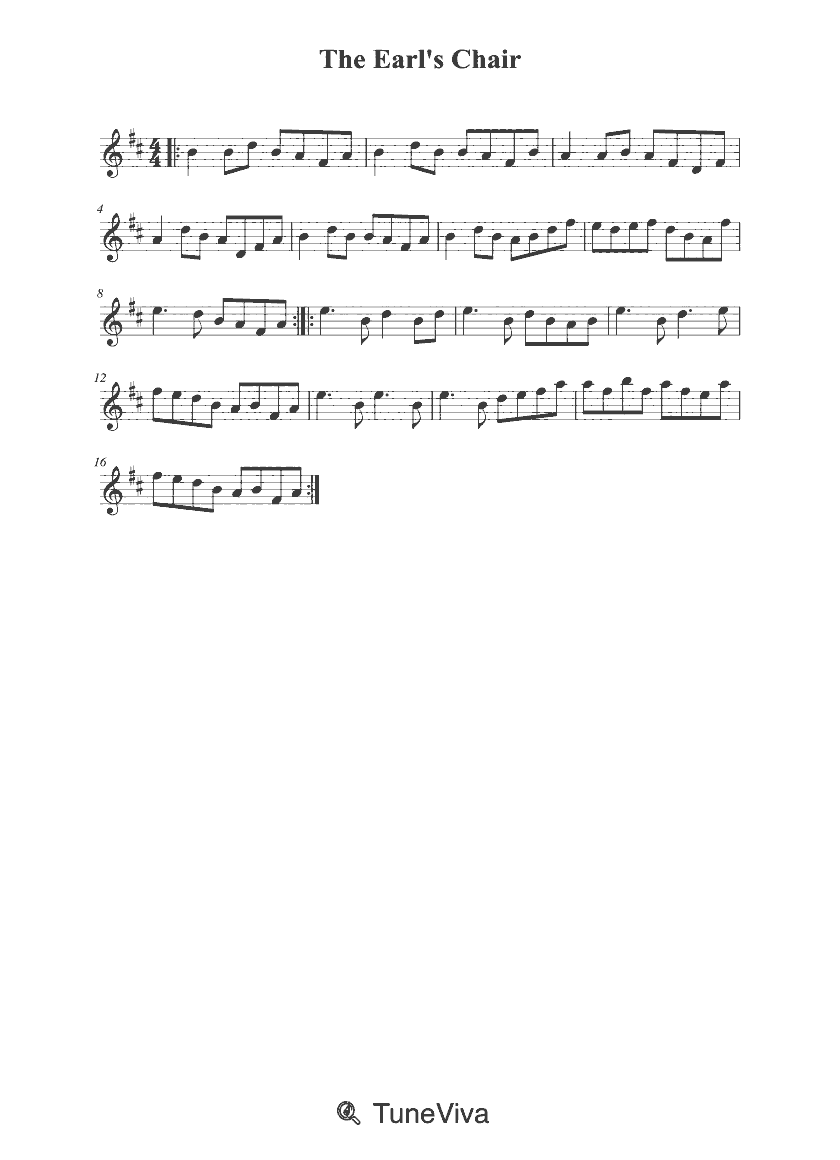
Misc tunes
1 min 4 sec · Score #4531
Open score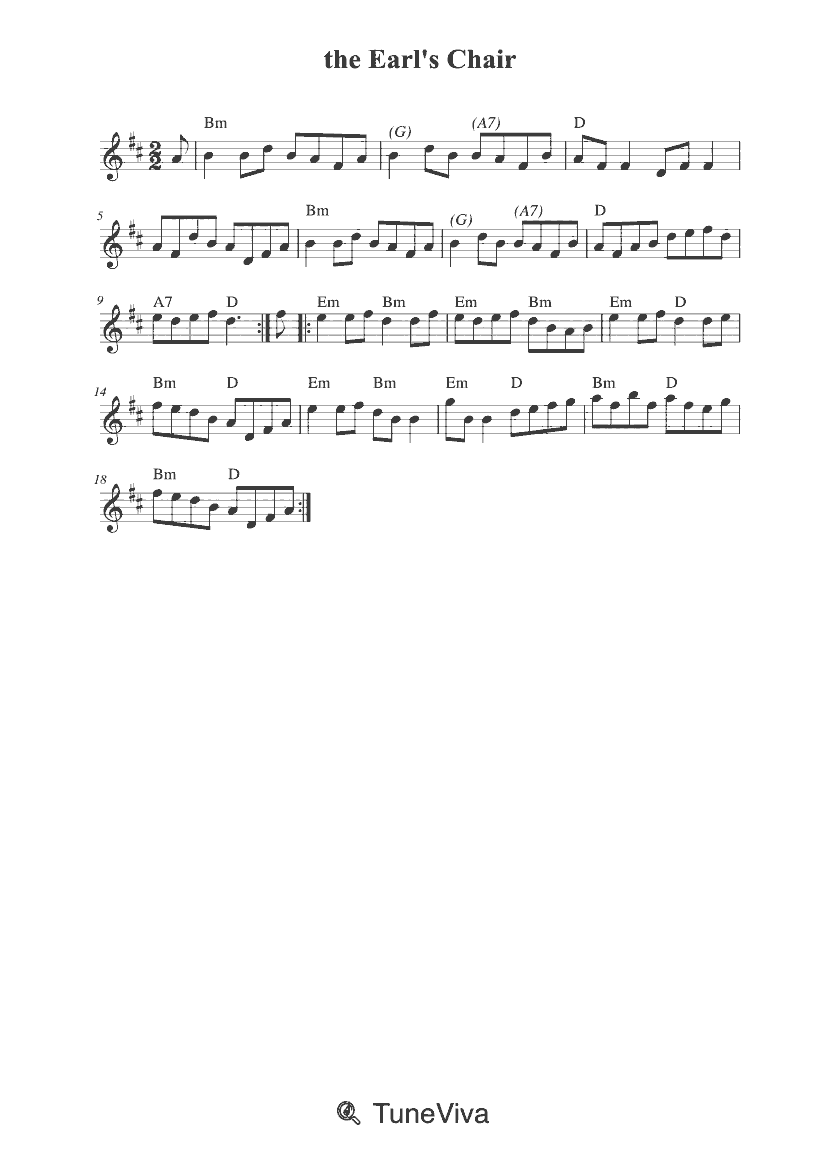
Misc tunes
2 min 8 sec · Score #18068
Open score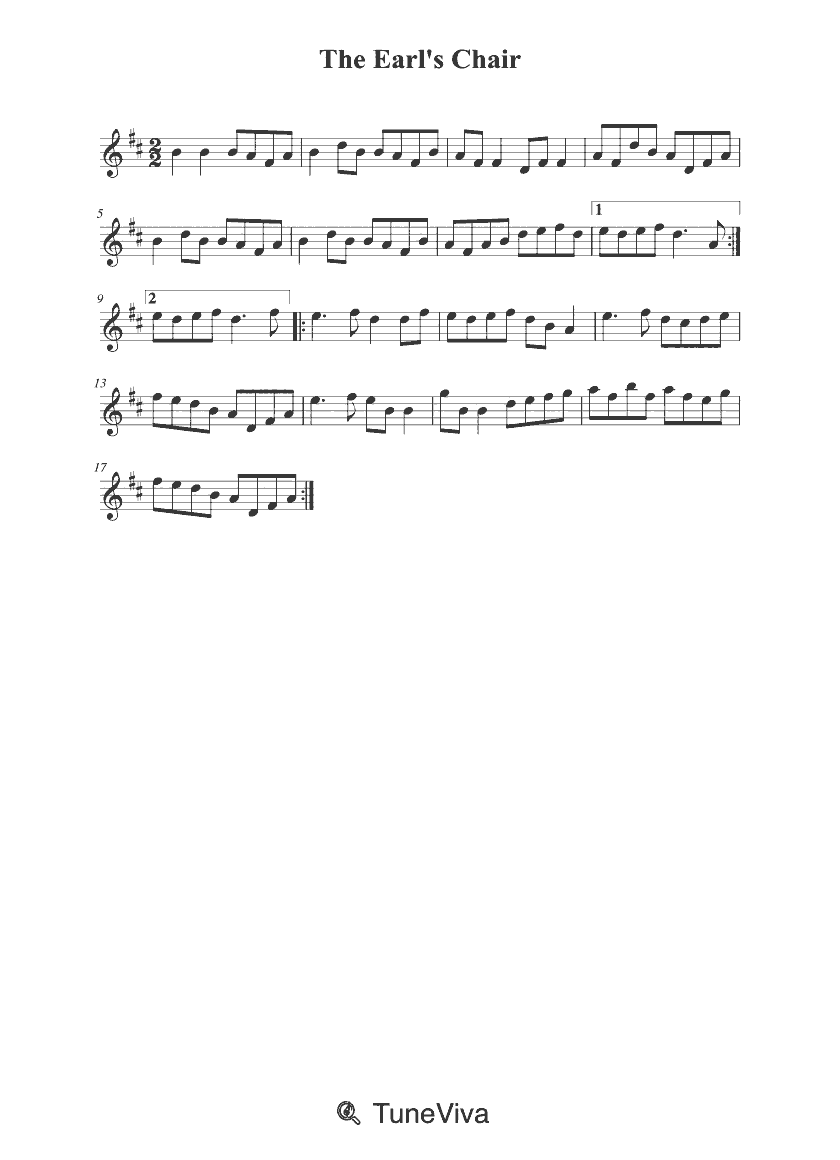
Misc tunes
2 min 8 sec · Score #23015
Open score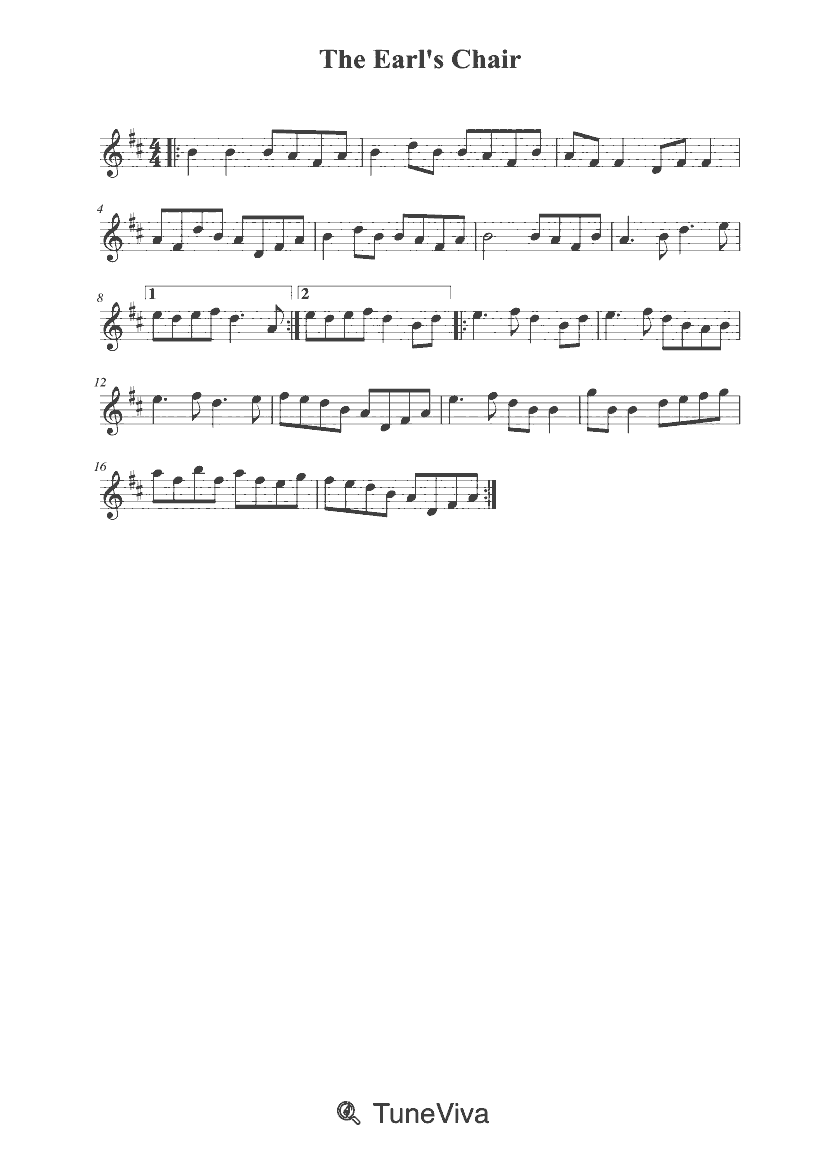
Misc tunes
1 min 4 sec · Score #167760
Open score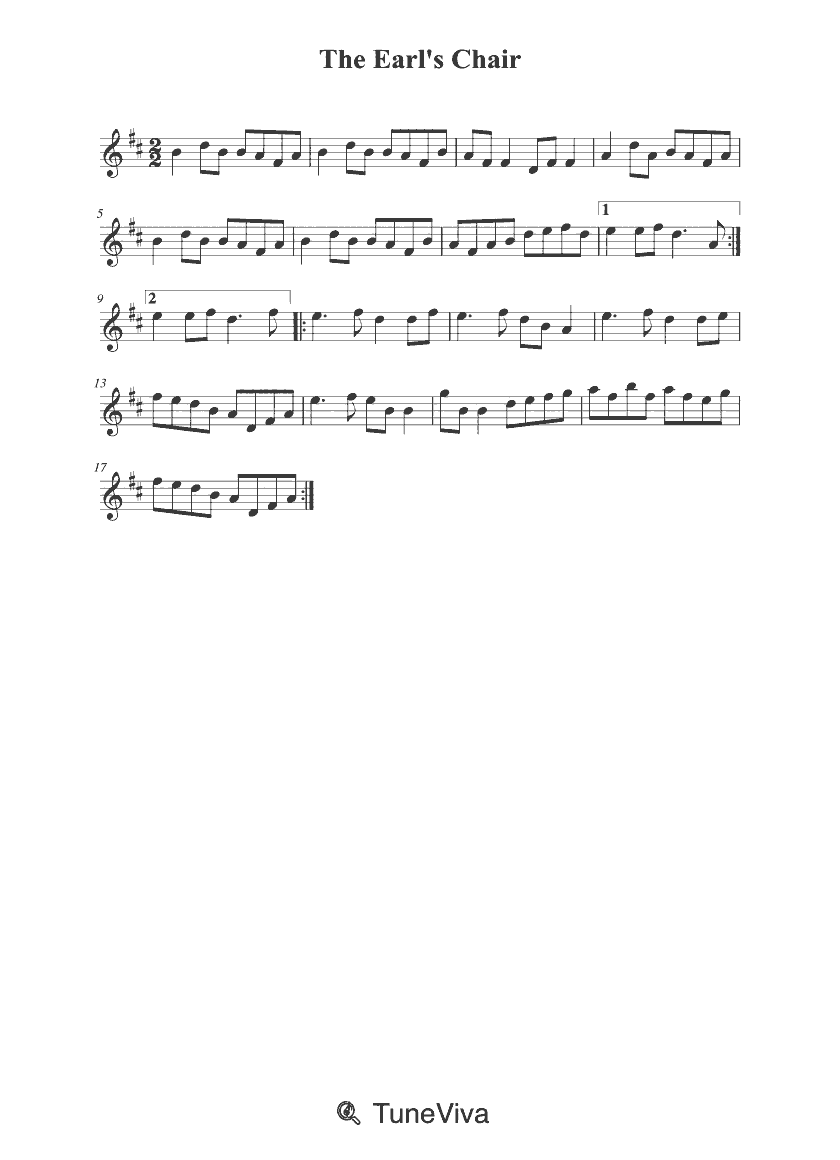
Misc tunes
2 min 8 sec · Score #220739
Open score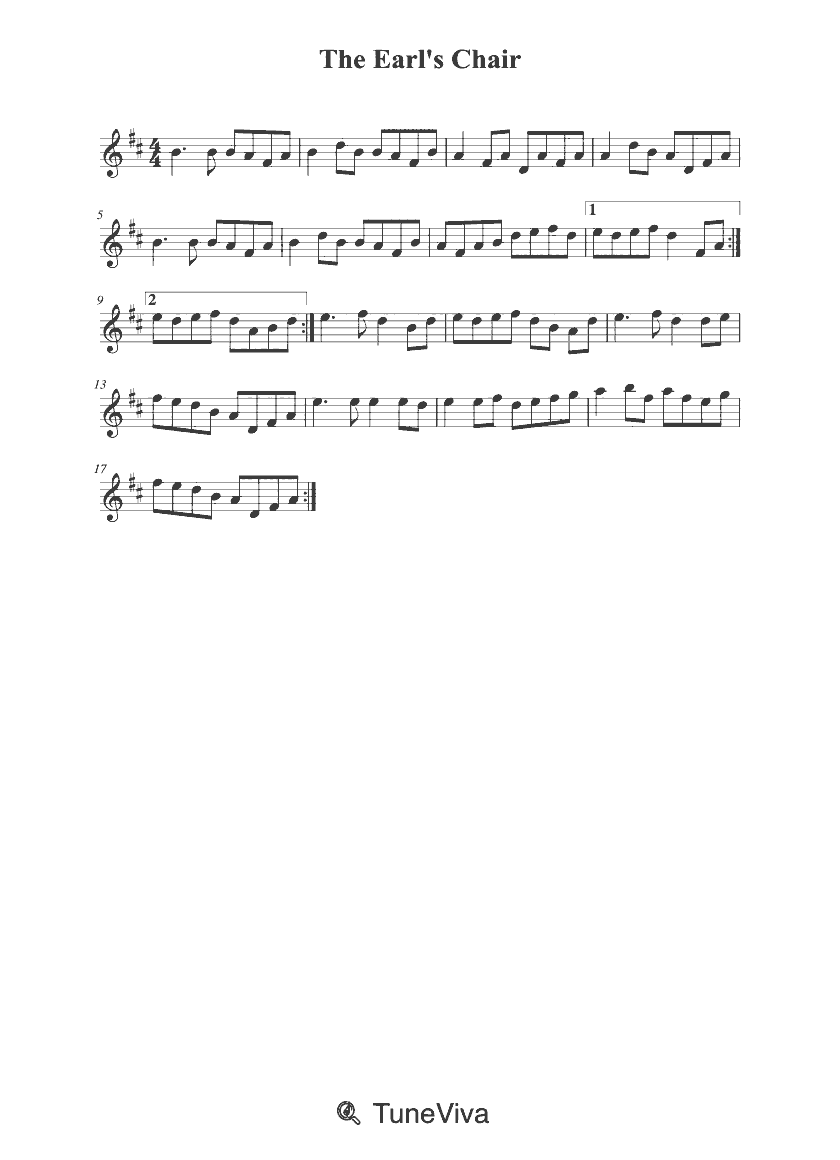
Misc tunes
1 min 32 sec
Open score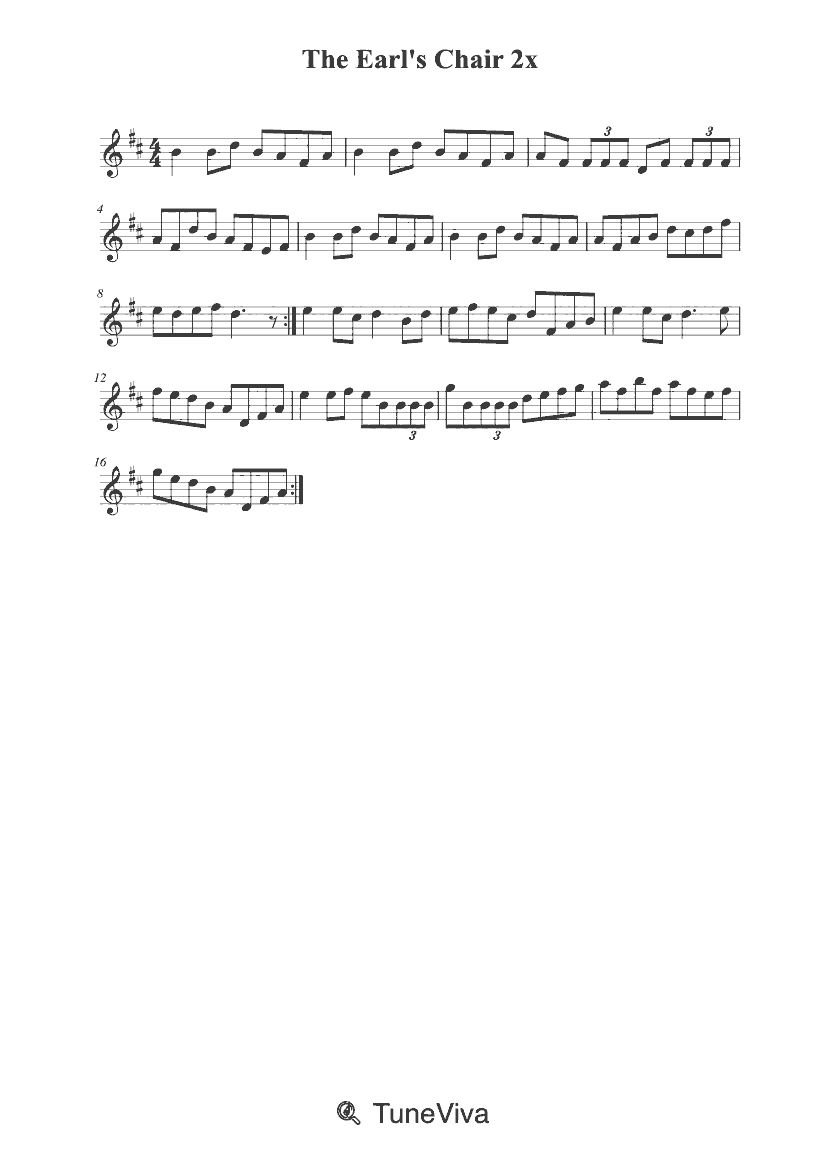
Misc tunes
1 min 20 sec
Open score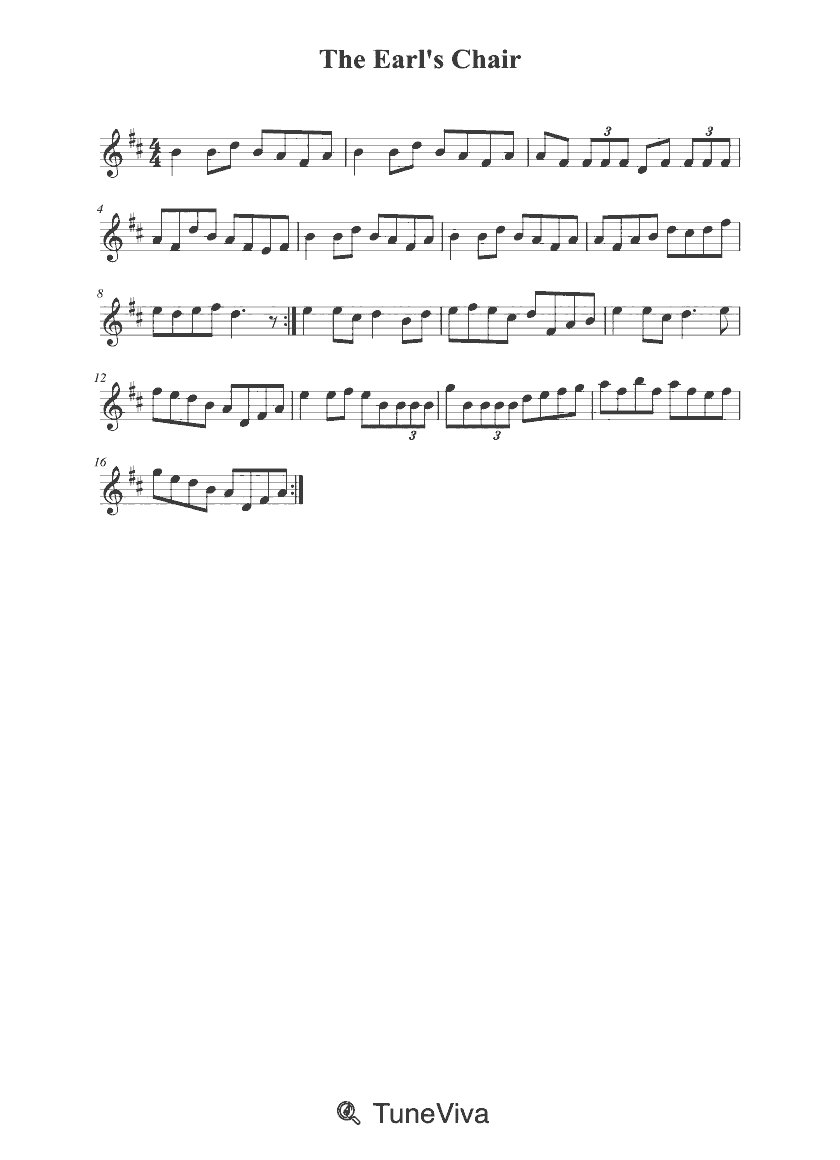
Misc tunes
1 min 20 sec · Score #148536
Open score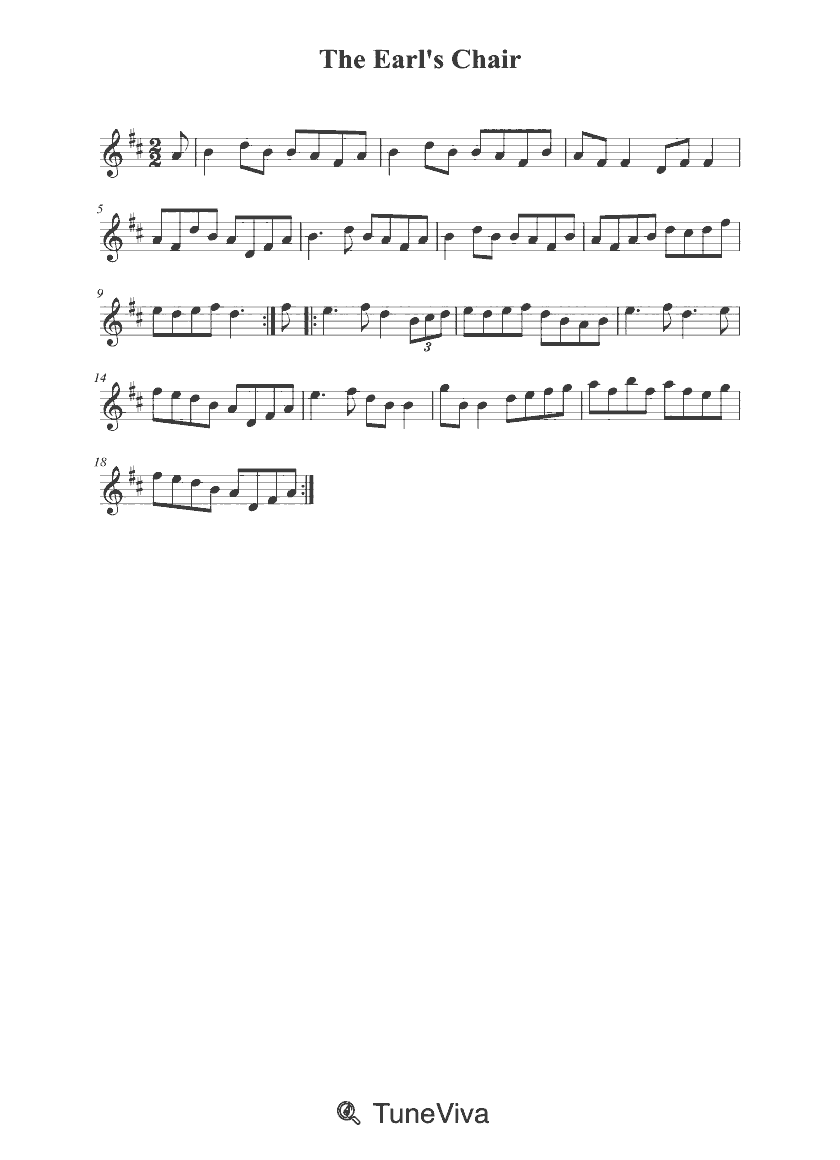
Misc tunes
2 min 8 sec · Score #148872
Open score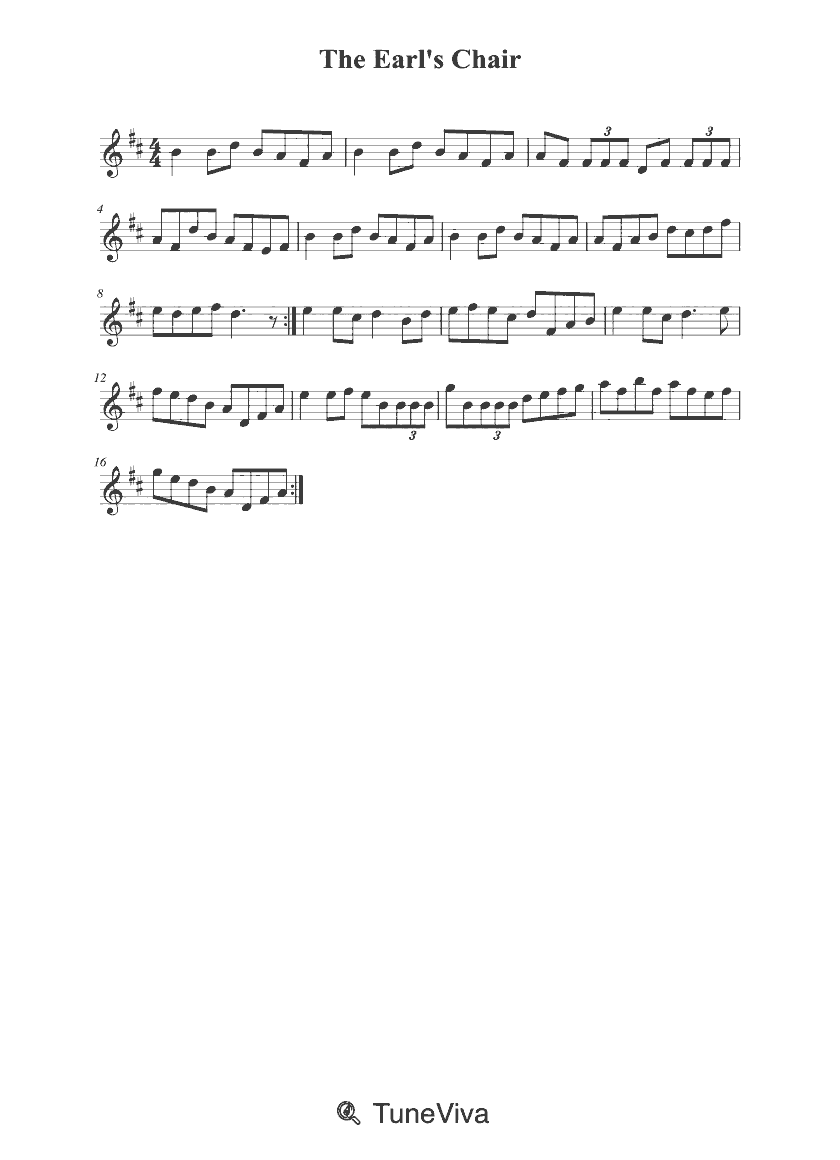
Misc tunes
1 min 20 sec · Score #160335
Open score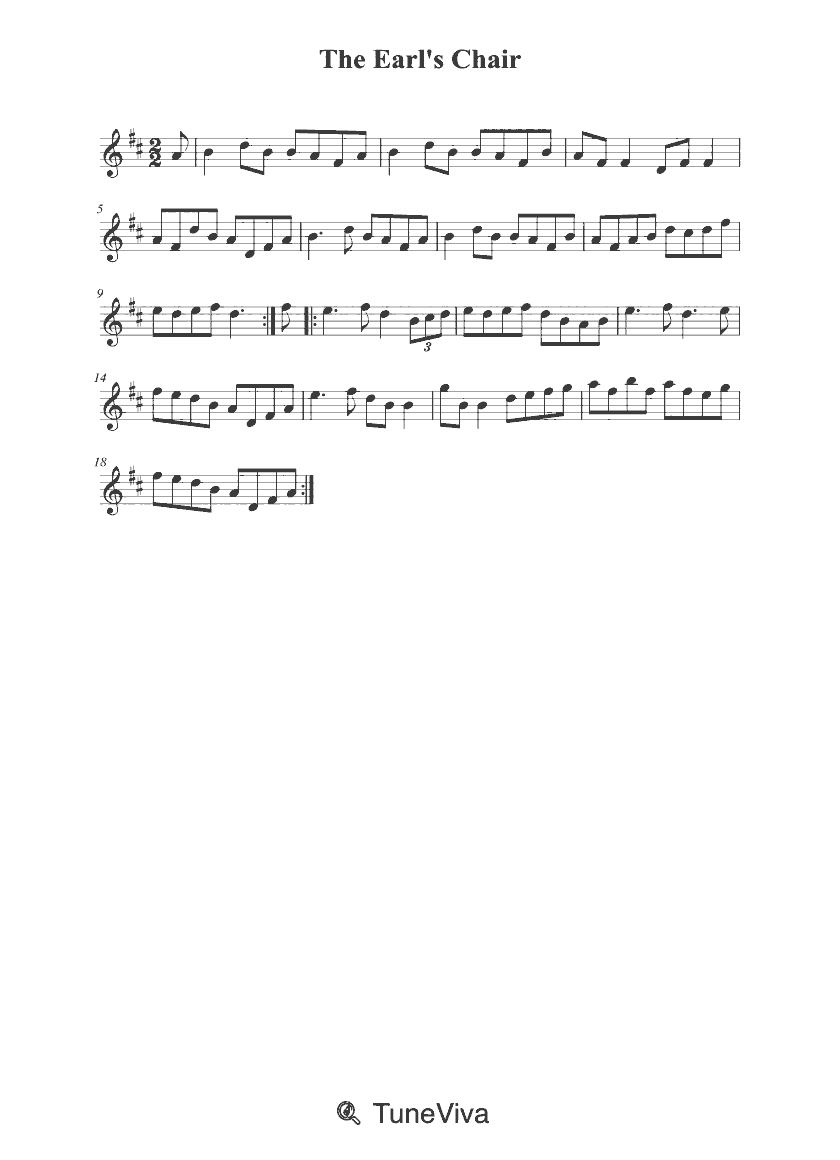
Misc tunes
2 min 8 sec · Score #206843
Open score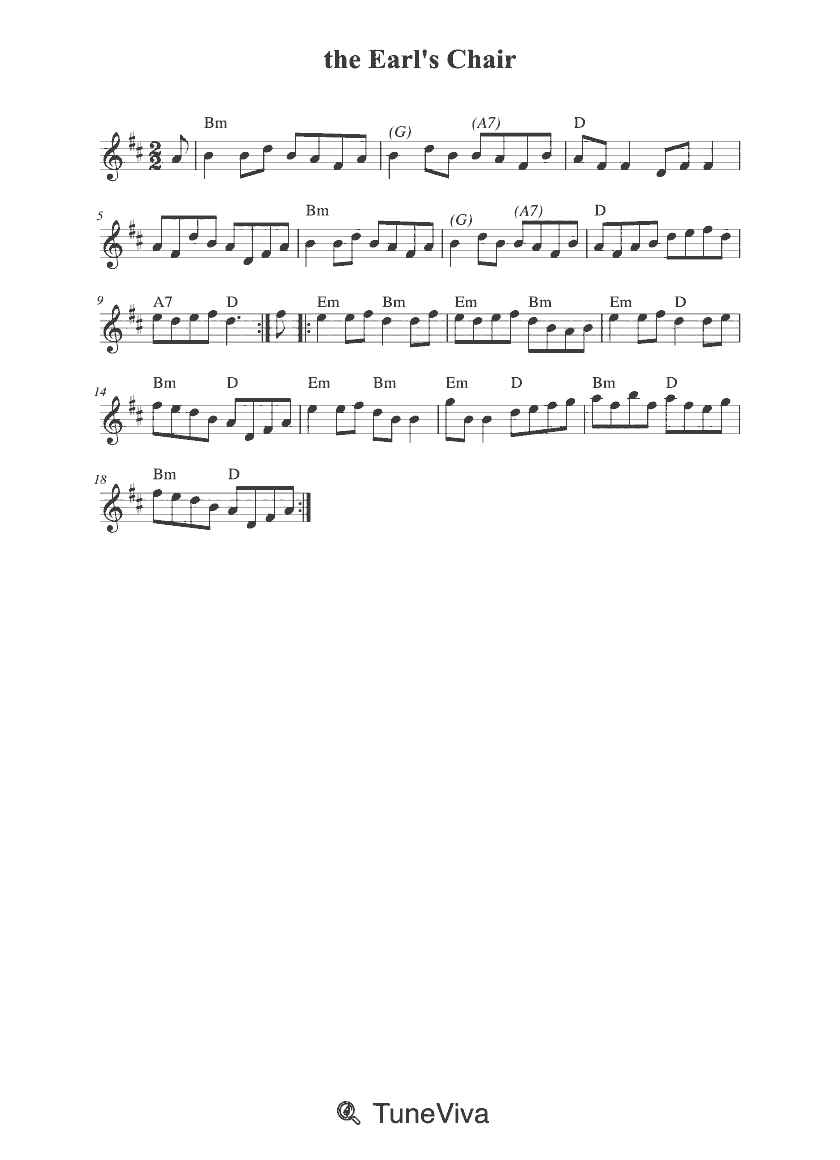
Misc tunes
2 min 8 sec · Score #249787
Open score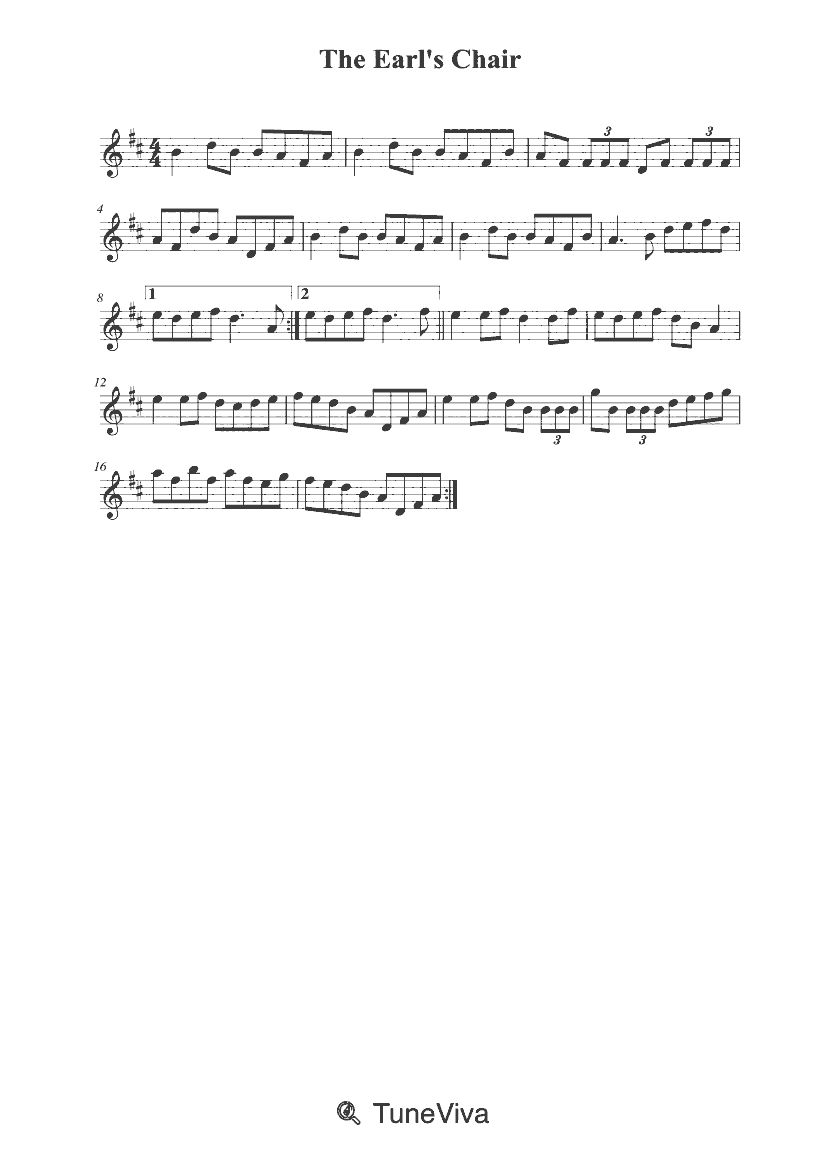
Misc tunes
1 min 18 sec · Score #102785
Open score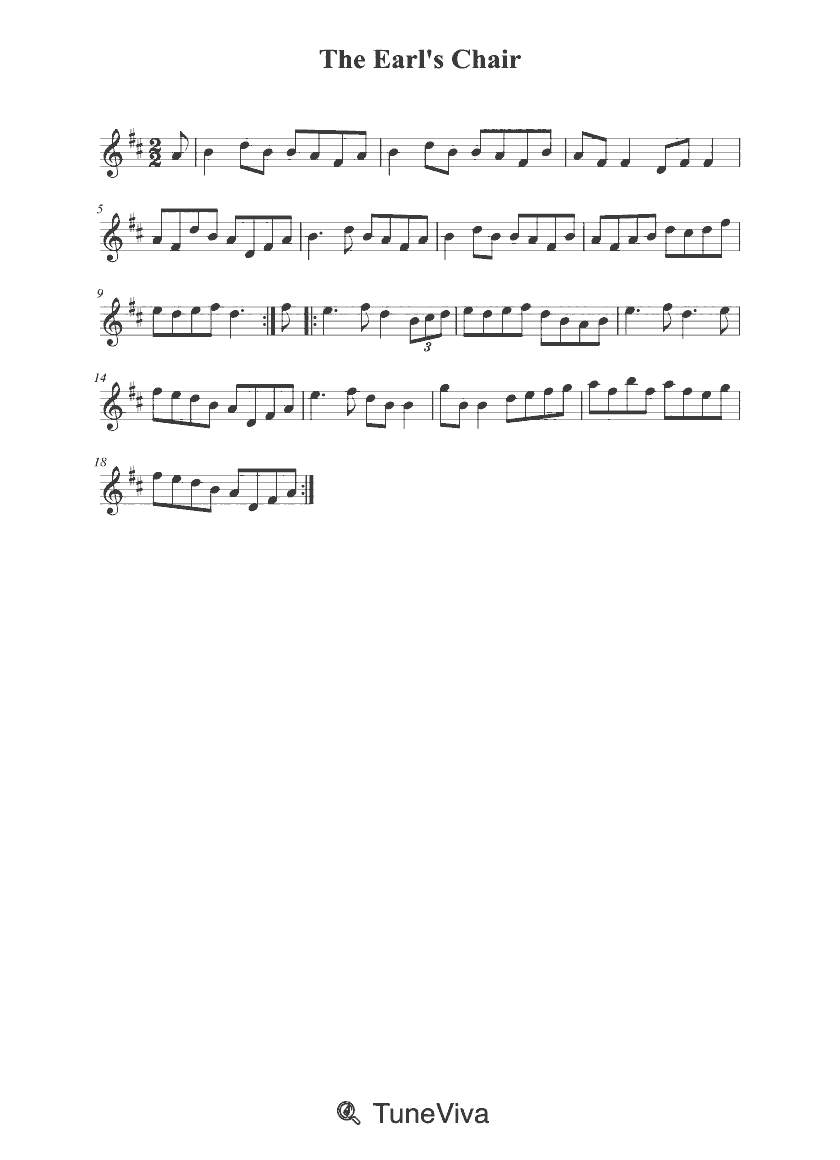
Misc tunes
2 min 8 sec · Score #190372
Open scoreThe Earl's Chair appears here in three sheet-music versions. All three begin in D major with a two-sharp key signature. Two open in 4/4 and one in 2/2, so the clearest documented difference is the time signature and the barring that follows from it. One score carries the credit 'Trad. O'Neill's 1850'; the others name no composer.
A 2/2 setting of The Earl's Chair groups the music in two half-note beats per bar, while a 4/4 setting uses four quarter-note beats per bar. Check which barring matches the version or pulse you are learning from. The available details do not establish instrumentation or difficulty for these scores.
The credit 'Trad. O'Neill's 1850' on one score is an attribution attached to that version, not proof of the piece's origin. The available details do not explain the abbreviation, verify the attribution, or identify a composer for the other scores. They also do not establish genre, dance type, or original instrumentation.
Compare the opening key, time signature, and notation of each score rather than relying on the title alone. Since instrumentation and difficulty are not specified, choose a score whose clef, range, and notation suit your instrument and reading level.
Catalogue duration 1 min 4 sec. Opening key signature: 2 sharps (D major). Opening time signature: 4/4.
Catalogue duration 2 min 8 sec. Opening key signature: 2 sharps (D major). Opening time signature: 2/2.
Catalogue duration 59 sec. Opening key signature: 2 sharps (D major). Opening time signature: 4/4. Opening tempo: 130 BPM.
All three scores listed for The Earl's Chair begin in D major, indicated by a two-sharp key signature. The available details describe only the opening key, so later key changes are not established.
Two listed scores of The Earl's Chair open in 4/4 and one opens in 2/2. The 4/4 scores group four quarter-note beats per bar, while the 2/2 score groups two half-note beats per bar; choose the barring that matches the notation or pulse you intend to read.
One listed score of The Earl's Chair carries the credit 'Trad. O'Neill's 1850'; the other two scores name no composer. The available details do not confirm a composer or verify that credit as historical provenance.
The credit 'Trad. O'Neill's 1850' appears on one score of The Earl's Chair, but the available information does not explain the abbreviation or verify the attribution. Treat it as a credit attached to that score rather than proof of the piece's origin.
The three scores share an opening key of D major but differ in time signature, with two in 4/4 and one in 2/2. The available details do not establish whether their melodic content, instrumentation, or full structure are identical.
The documented choice is one of notation and barring: the 2/2 score uses two half-note beats per bar, while the 4/4 scores use four quarter-note beats per bar. Compare the clef, range, and notation with your instrument and reading needs; the available details do not assign difficulty or instrumentation to any version.
The available details do not establish a genre or dance type for The Earl's Chair. The scores carry no genre value, and the credit 'Trad. O'Neill's 1850' does not by itself define the piece's genre or origin.
The available details for the three scores of The Earl's Chair do not specify instrumentation. A player should check the clef, range, and notation on each score rather than assuming a particular instrument.