
The Gander in the Pratie Hole
Misc tunes
48 sec
Open scoreThree scores of The Gander in the Pratie Hole are listed here, all opening in 6/8. Two begin with a one-sharp key signature, while one opens with two sharps and is marked D major, so the available versions differ in key as well as in length. Compare the opening bars, range and key before choosing a score for your instrument or group.
Scores 1–20 of 20
Misc tunes
48 sec
Open score
Misc tunes
1 min 16 sec · Score #82042
Open score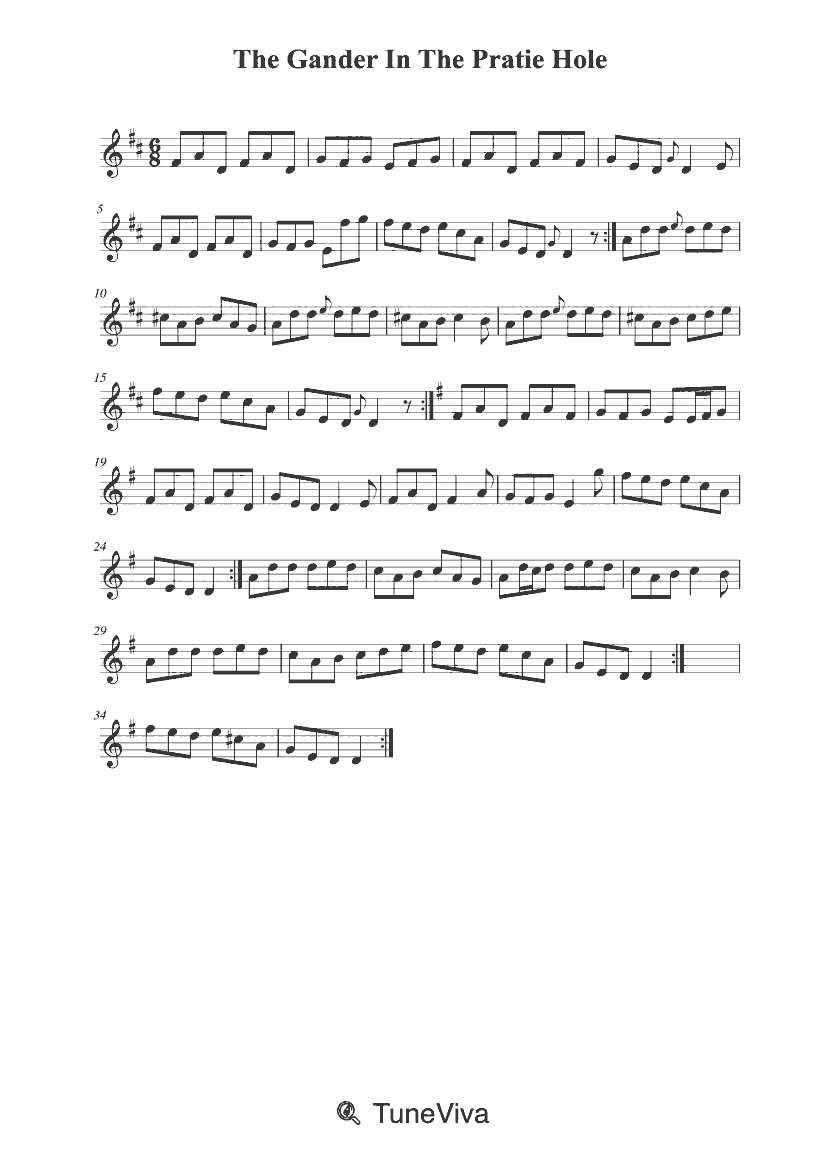
Misc tunes
Friar'sFriar's TheGander At The Pratie HoleGander At The Pratie Hole TheGander In The Pratie HoleHe Gandor
1 min 51 sec
Open score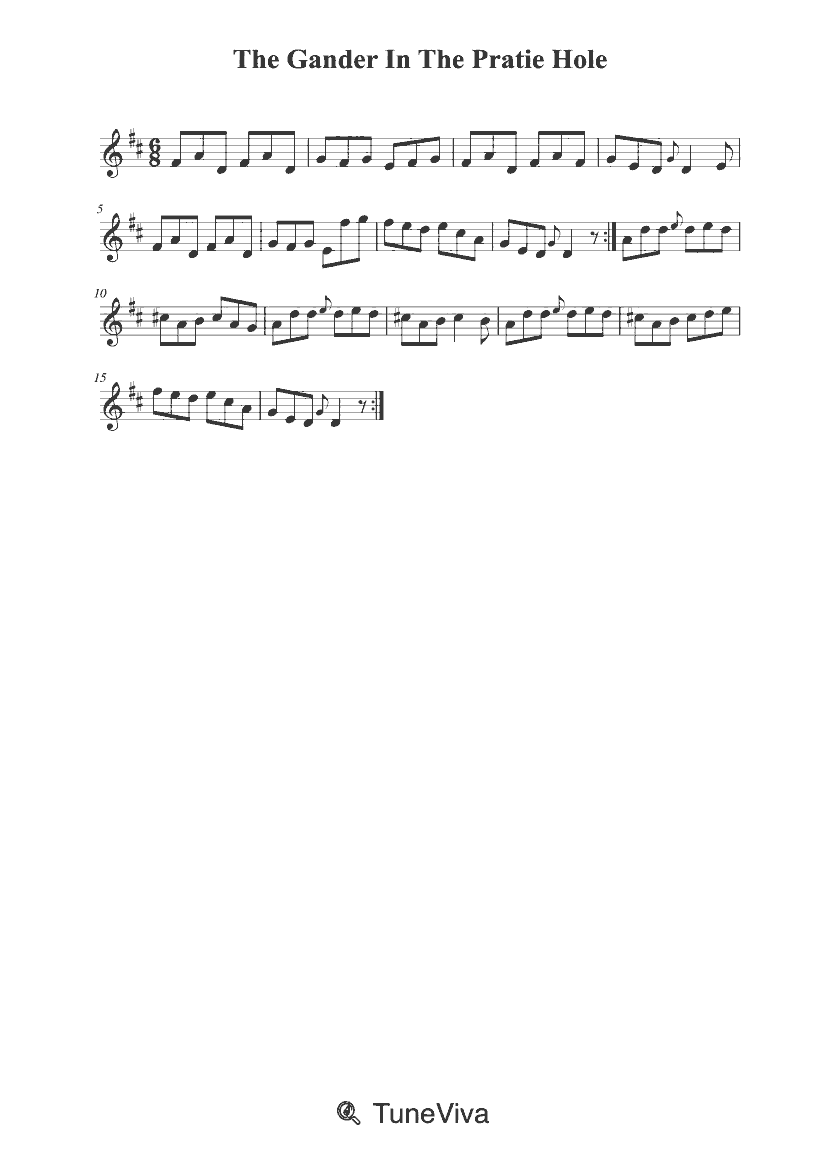
Misc tunes
30 sec · Score #223451
Open score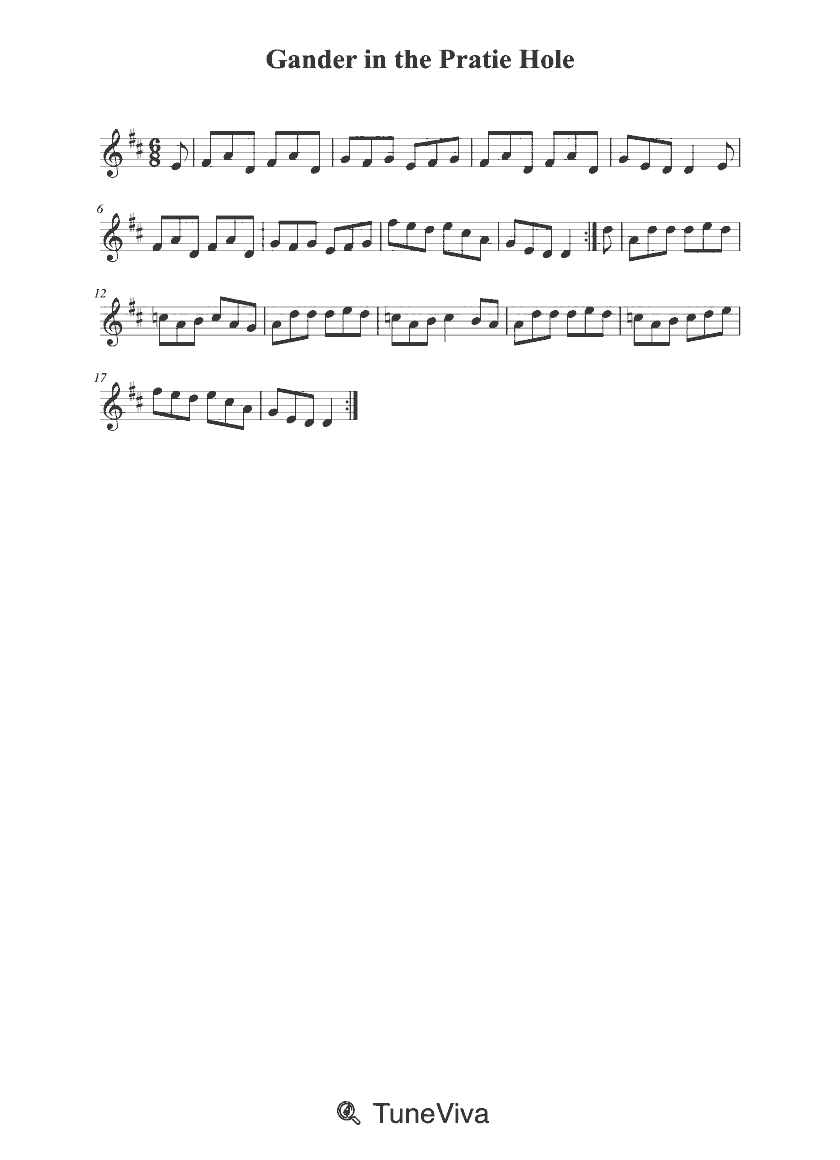
Misc tunes
30 sec · Score #232044
Open score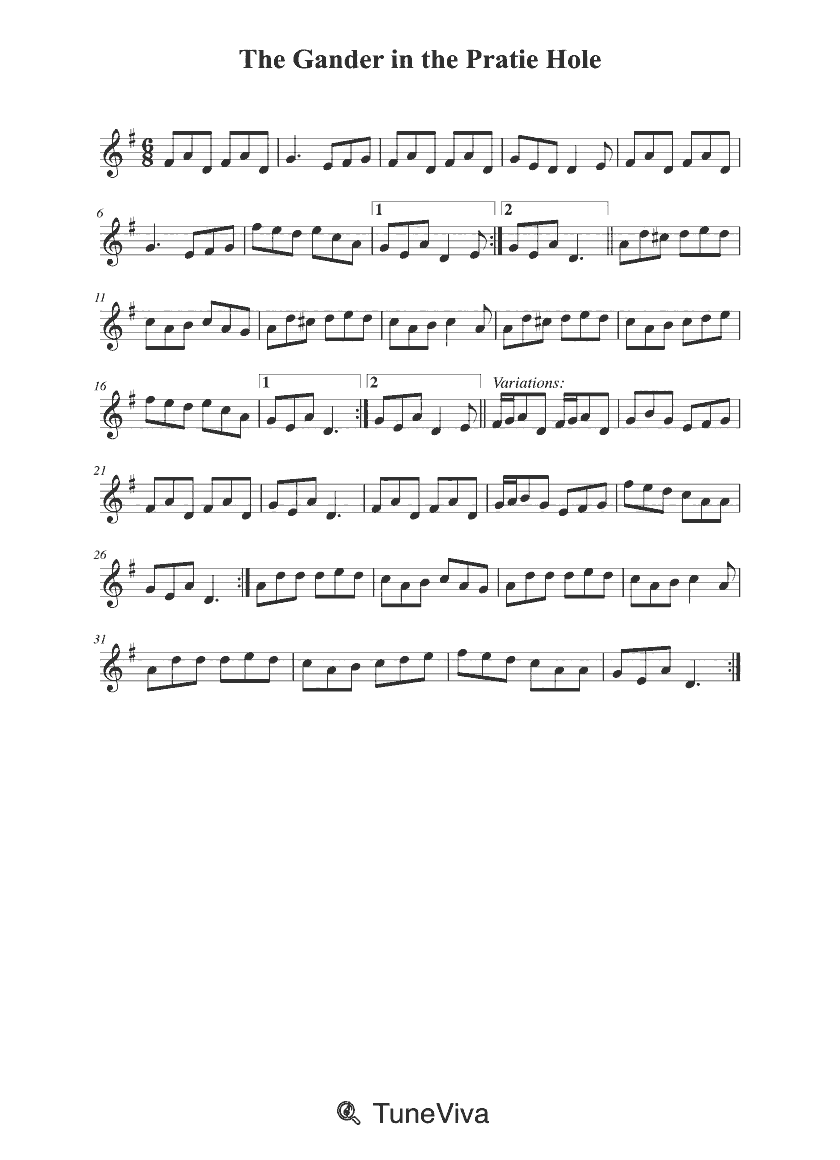
Misc tunes
1 min 16 sec · Score #3485
Open score
traditional
24 sec
Open score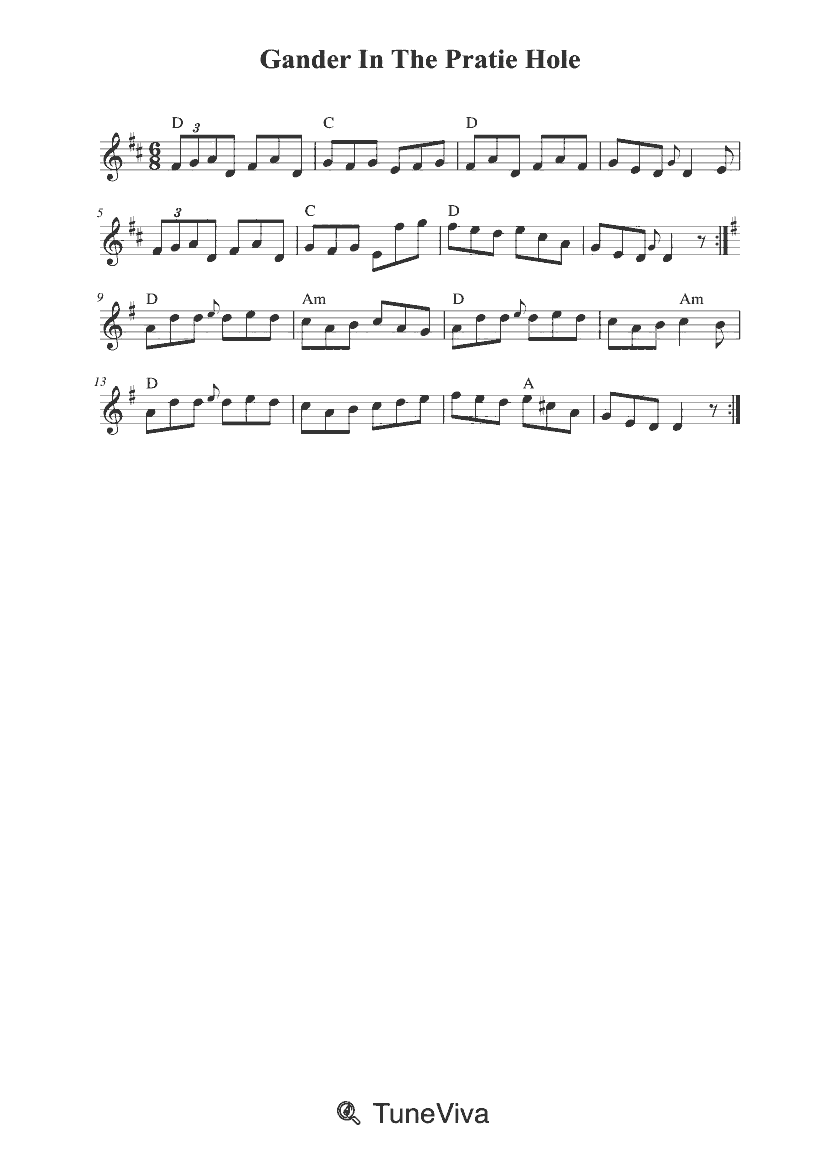
Misc tunes
30 sec · Score #18423
Open score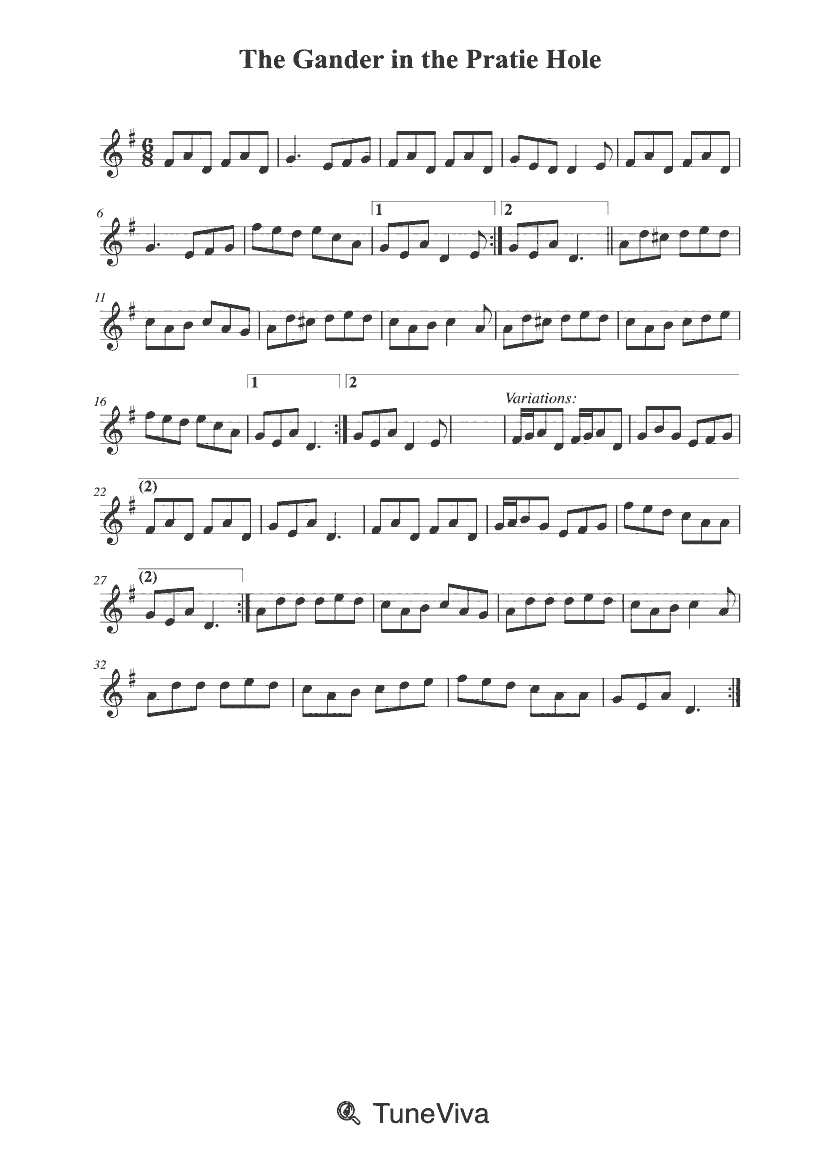
Misc tunes
1 min 8 sec
Open score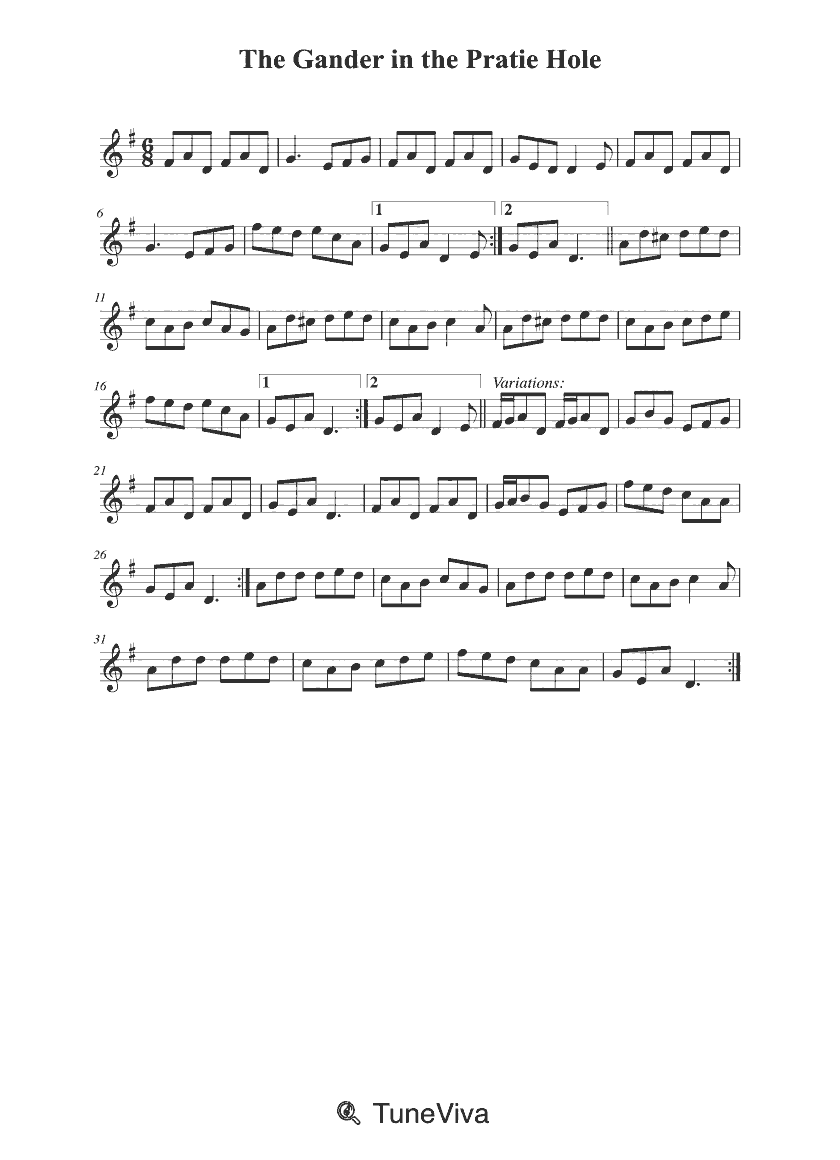
Misc tunes
1 min 16 sec · Score #157607
Open score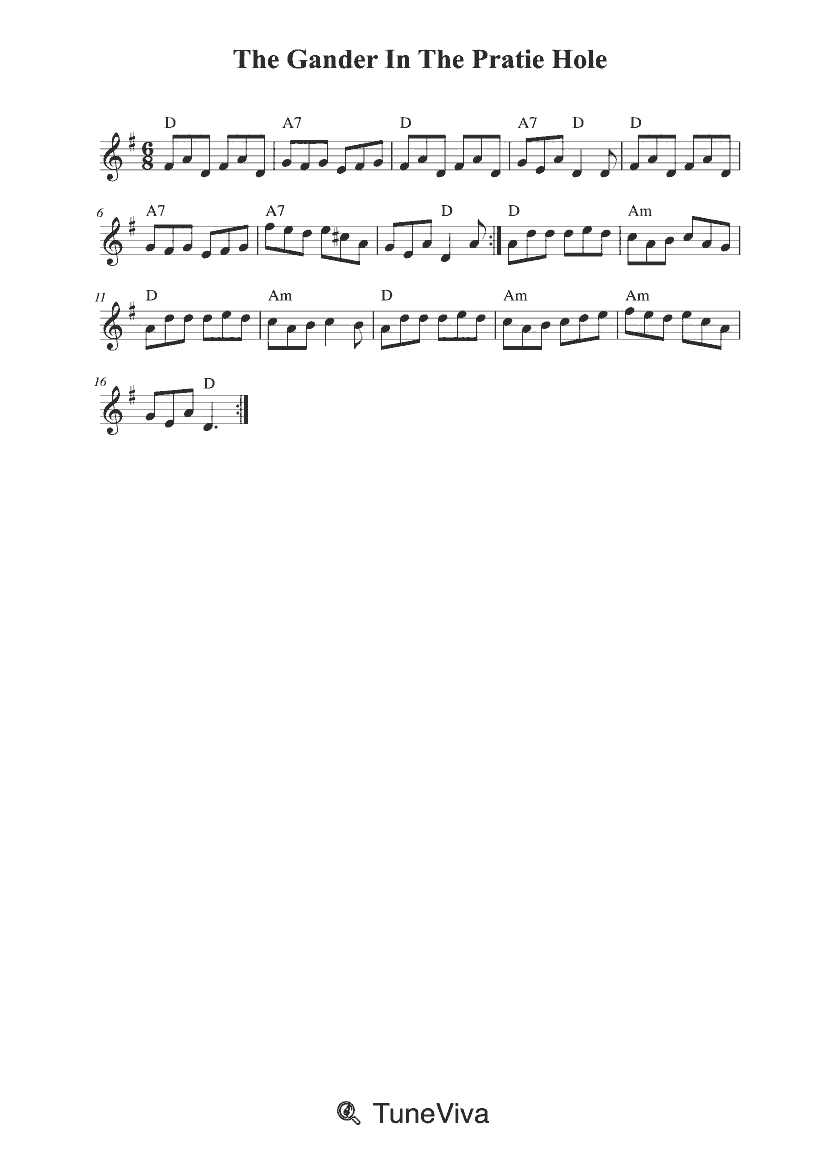
Misc tunes
30 sec · Score #160767
Open score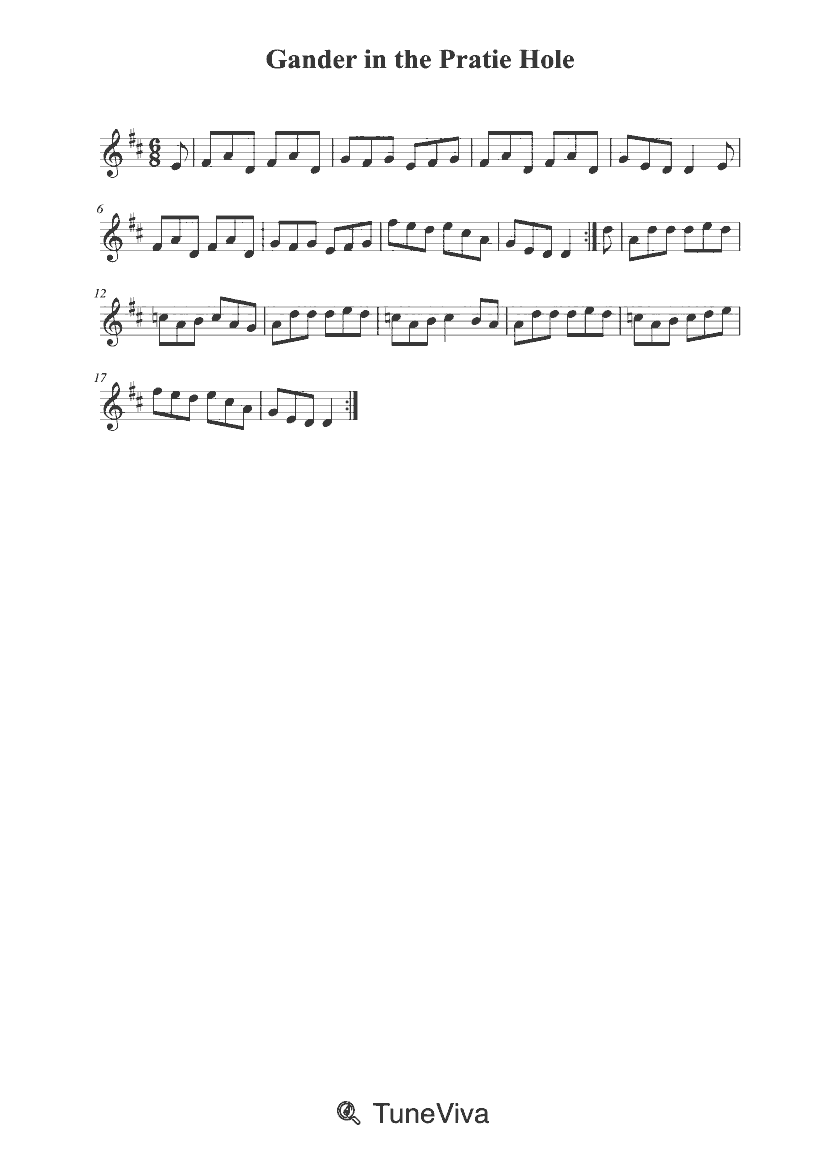
Misc tunes
30 sec · Score #7077
Open score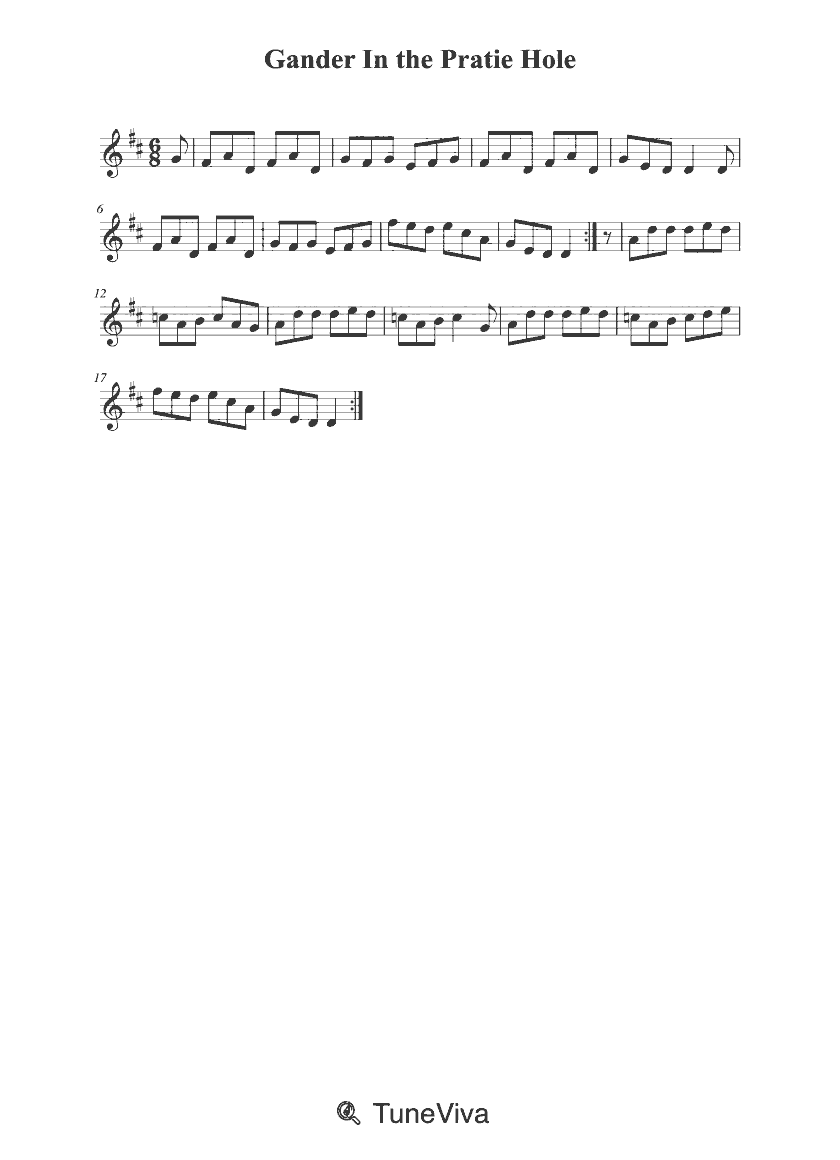
Misc tunes
30 sec · Score #57156
Open score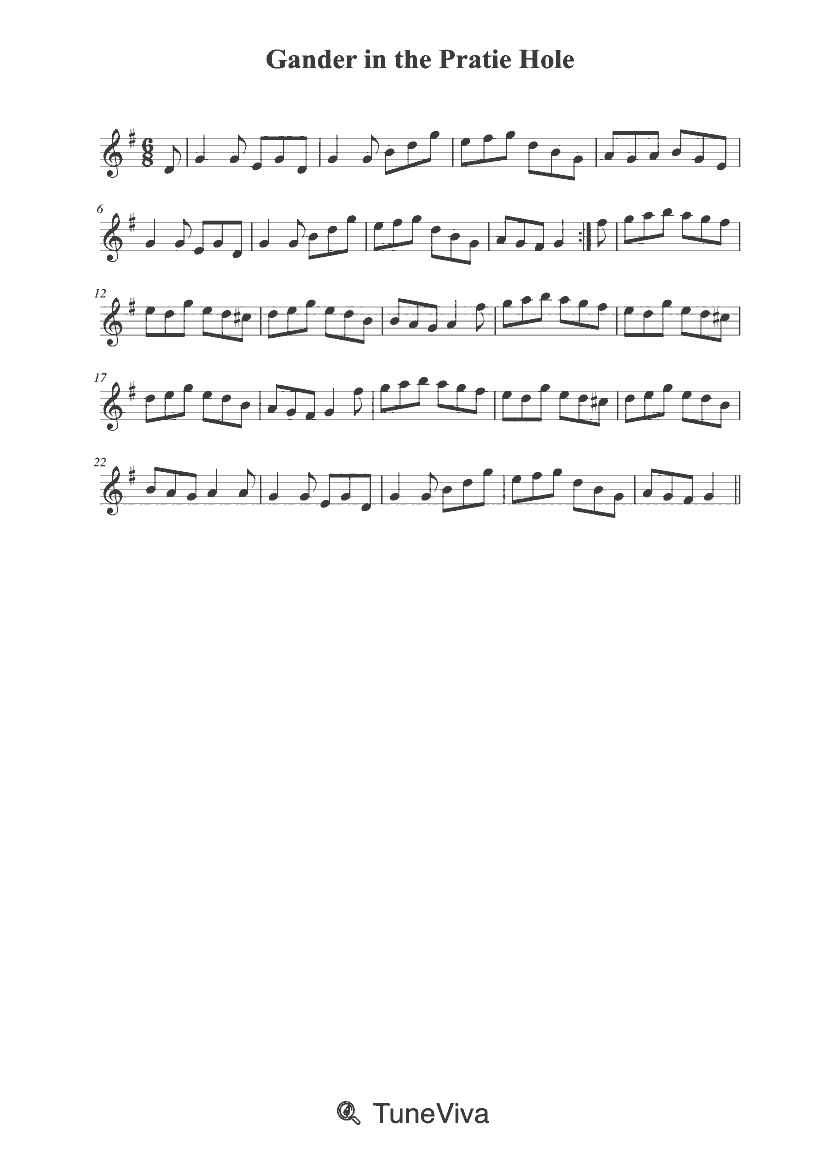
Misc tunes
24 sec · Score #9642
Open score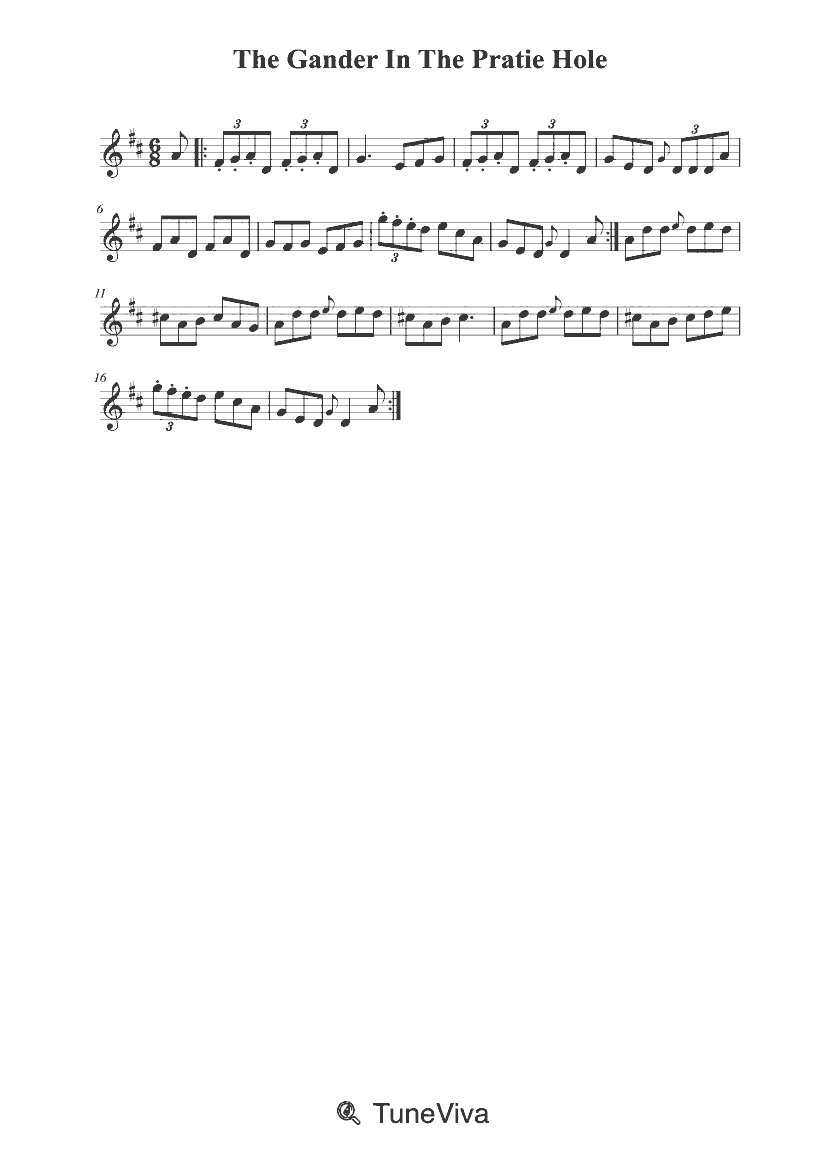
Misc tunes
30 sec · Score #16124
Open score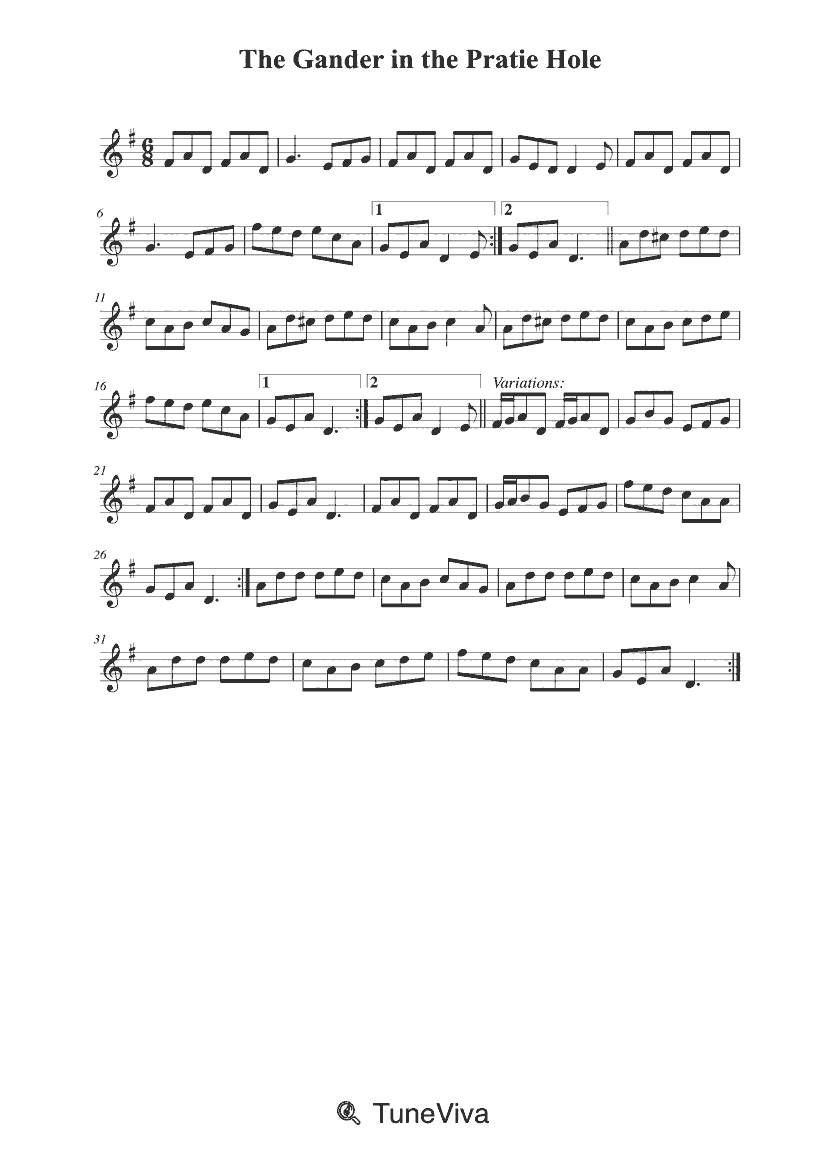
Misc tunes
1 min 16 sec · Score #71189
Open score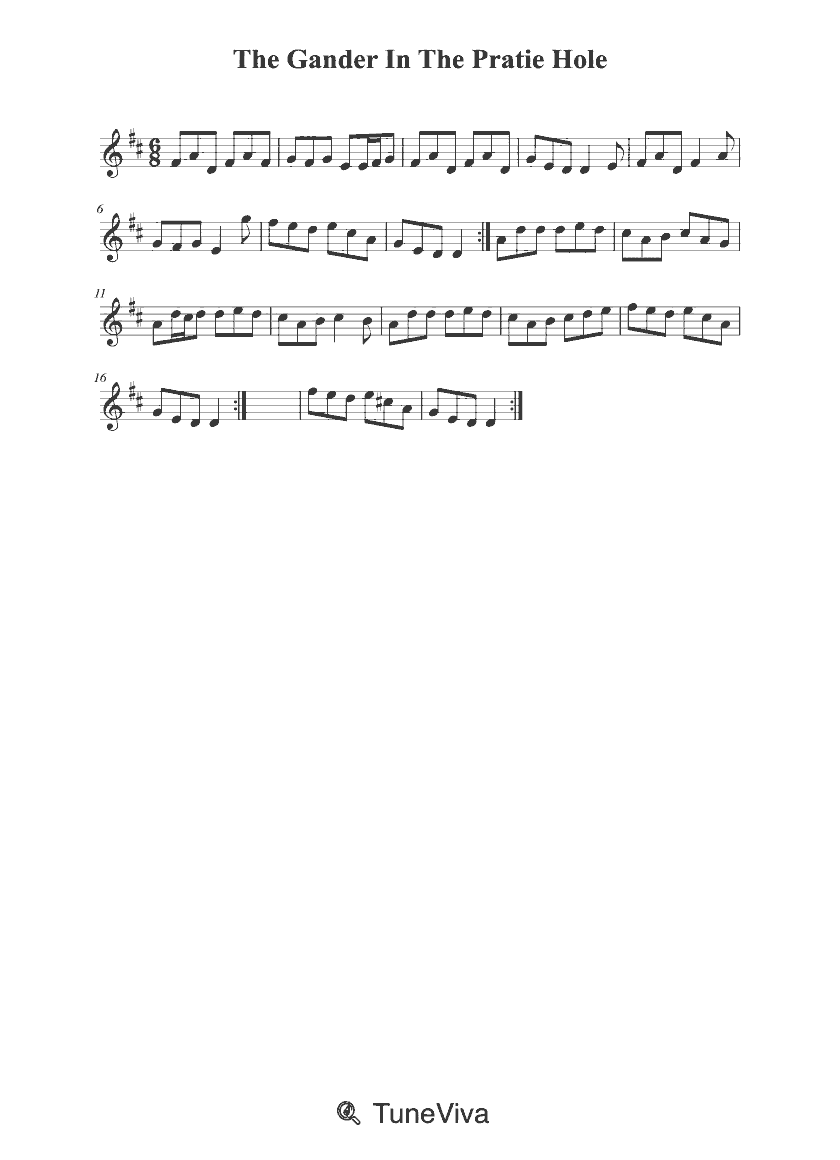
Misc tunes
45 sec
Open score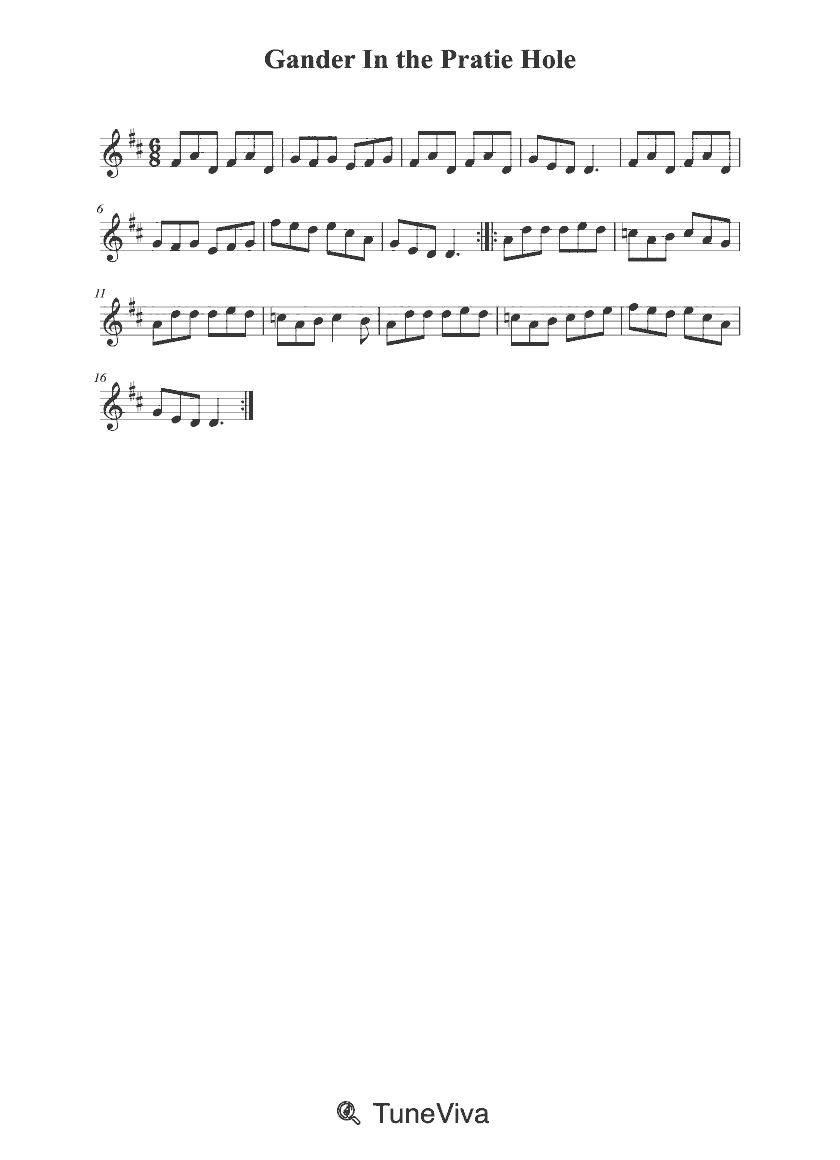
Misc tunes
24 sec · Score #164270
Open score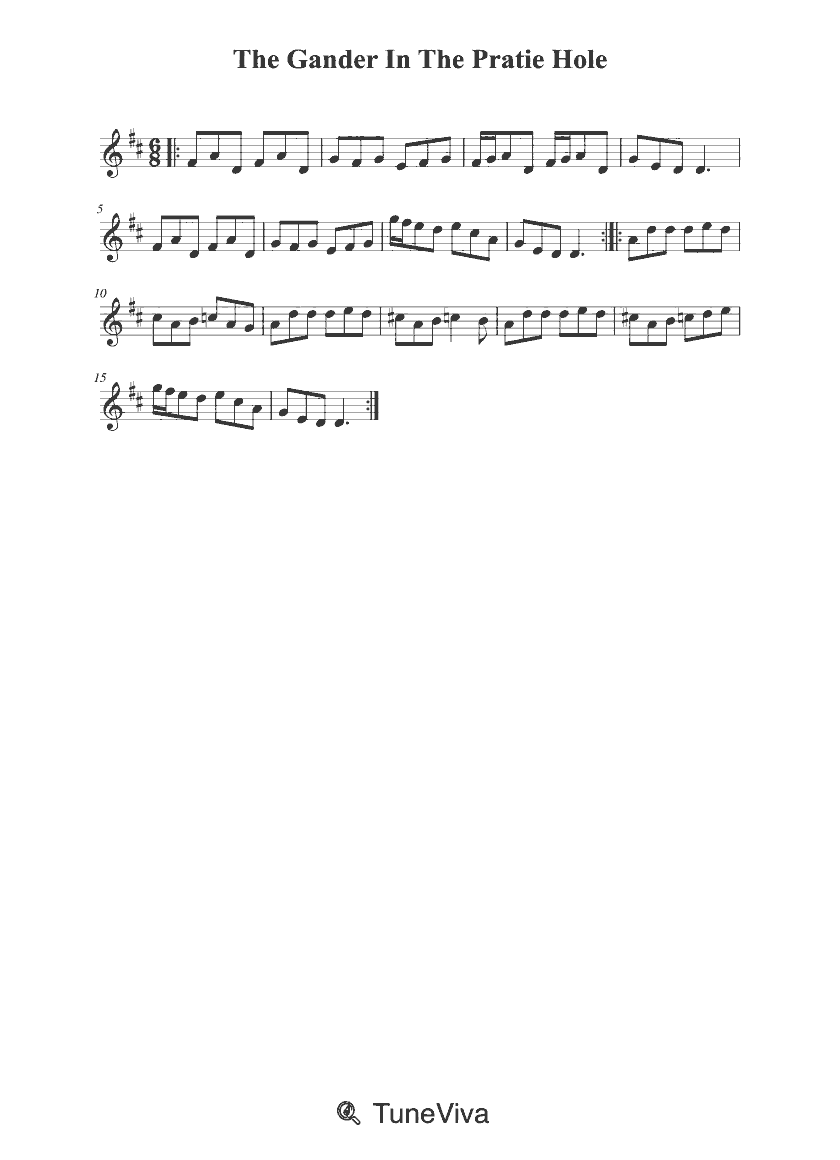
Misc tunes
24 sec
Open score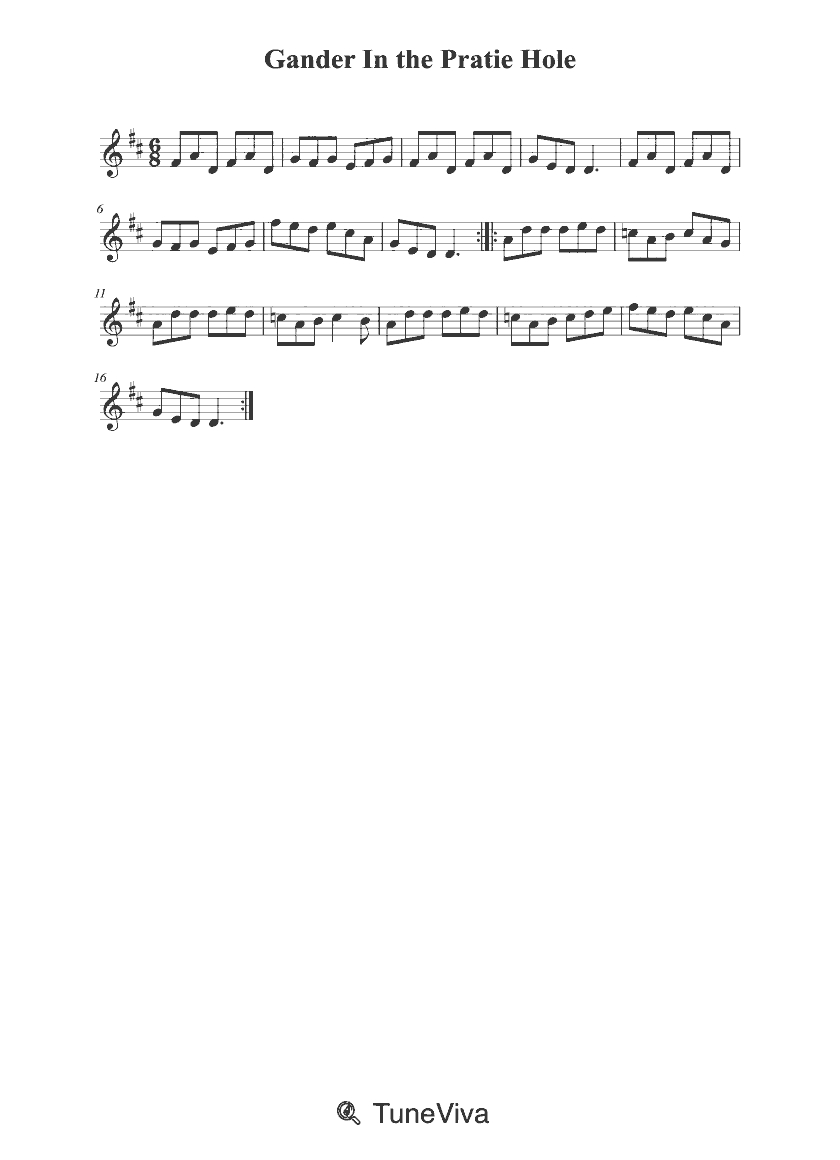
Misc tunes
24 sec · Score #217661
Open scoreThe versions of The Gander in the Pratie Hole do not share a single opening key. Two scores begin with one sharp, and one begins with two sharps in D major. A one-sharp signature can serve either G major or E minor, so read the notes and the final rather than assuming the key from the signature alone.
All three scores open in 6/8, a compound duple metre normally felt as two groups of three eighth notes. That is different from 3/4, which is felt as three groups of two. Checking the beaming and the recurring pulse will help you read the tune at a steady pace.
If you are playing with other musicians, match the version’s key to the group’s tuning or tunebook. The D-major score will not fit the same fingering or open strings as a one-sharp version. Also compare the range and the opening bars; a longer score is not automatically more difficult or more complete.
The scores do not name a composer or specify instrumentation. They also do not establish whether the tune is traditional, anonymous, or composed. Treat claims about its origin, region, or customary instrument as unverified unless you can consult a documented source.
Catalogue duration 48 sec. Opening key signature: 1 sharp. Opening time signature: 6/8.
Catalogue duration 1 min 16 sec. Opening key signature: 1 sharp. Opening time signature: 6/8.
Catalogue duration 1 min 51 sec. Opening key signature: 2 sharps (D major). Opening time signature: 6/8.
All three scores listed for The Gander in the Pratie Hole open in 6/8. In 6/8 the beat is usually felt in two groups of three eighth notes, which is different from three groups of two in 3/4.
The versions of The Gander in the Pratie Hole differ at the outset: two scores open with one sharp, while one opens with two sharps and is marked D major. A one-sharp signature can correspond to G major or E minor, so check the actual notes and final rather than assuming the key from the signature alone.
The available scores do not name a composer for The Gander in the Pratie Hole. That absence does not by itself prove the tune is traditional or anonymous; it only means the scores supplied here do not identify an author.
The three scores for The Gander in the Pratie Hole differ in notated length and note count, and one is in a different opening key from the other two. Longer duration does not establish greater difficulty or completeness, so compare the opening bars and range before choosing.
Choose the version of The Gander in the Pratie Hole whose key matches the group’s other instruments or tunebook. Two scores open with one sharp and one with two sharps in D major; confirming the key by the notes, rather than the signature alone, avoids mismatches.
The available scores do not specify instrumentation for The Gander in the Pratie Hole. They therefore cannot confirm whether a particular score is intended for fiddle, flute, whistle, or another instrument; check the clef and range in the score itself.