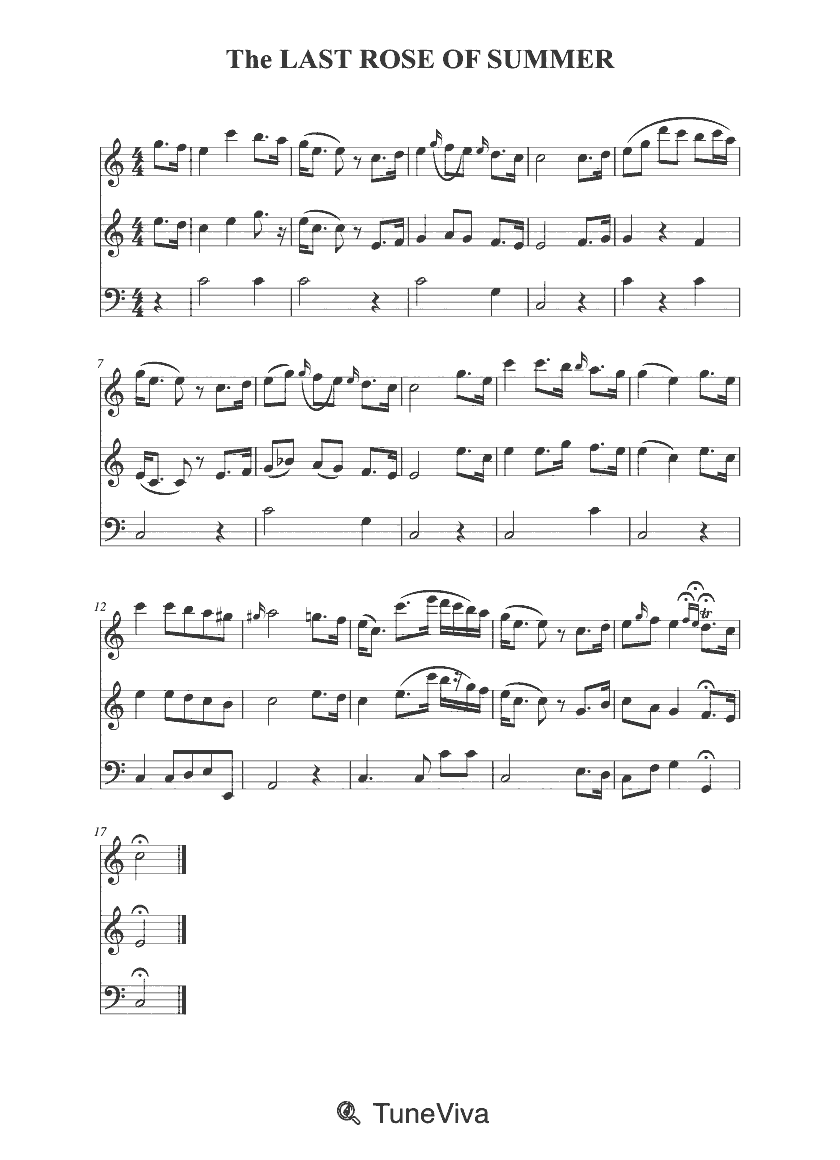
The LAST ROSE OF SUMMER
words: Thomas Moore 1805tune: trad. Ireland
24 sec · Score #47075
Open scoreSheet-music versions of The Last Rose of Summer carry credits that separate Thomas Moore’s 1805 words from a tune described as traditional Irish. The available scores do not present one standard setting: one opens in G major in 3/4 at 88 BPM, while others open with no sharps or flats in 4/4. Comparing key, metre and tempo is the quickest way to choose a version for singing or instrumental work.
Scores 1–20 of 20
words: Thomas Moore 1805tune: trad. Ireland
24 sec · Score #47075
Open score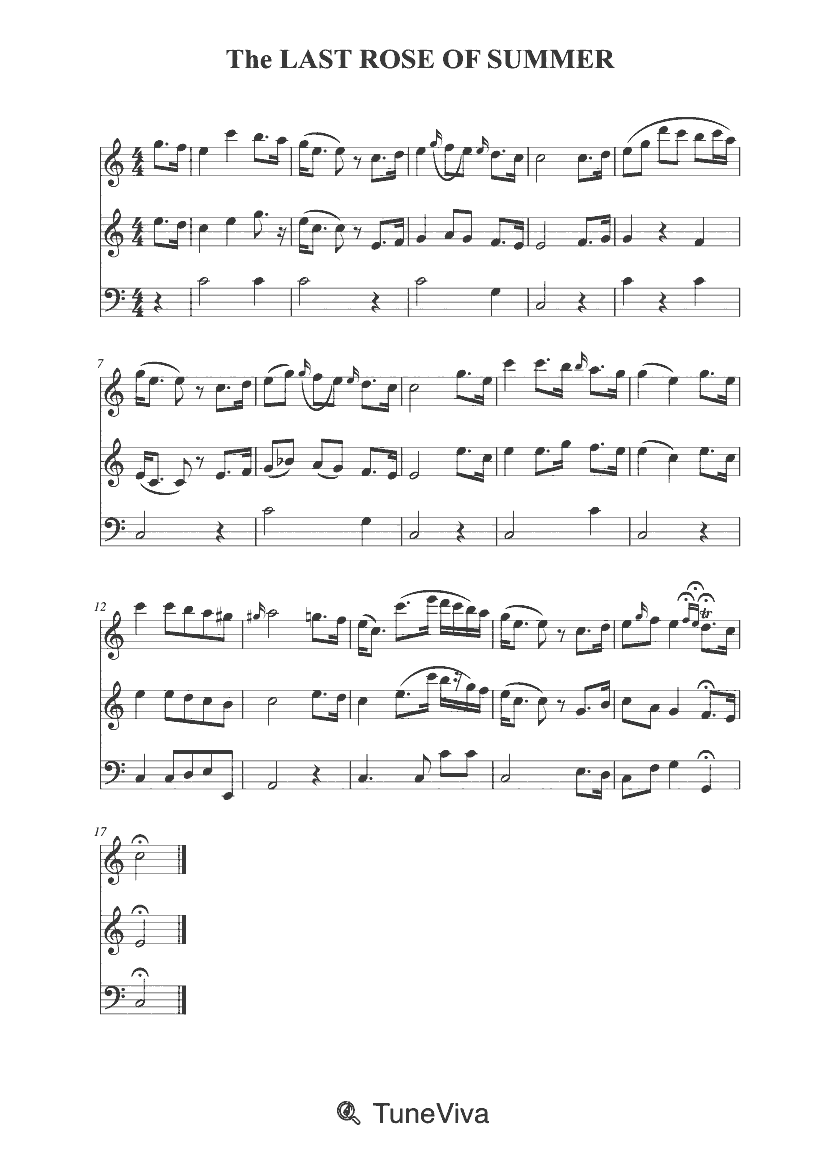
words: Thomas Moore 1805tune: trad. Ireland
24 sec · Score #189481
Open score
Misc tunes
33 sec · Score #62555
Open score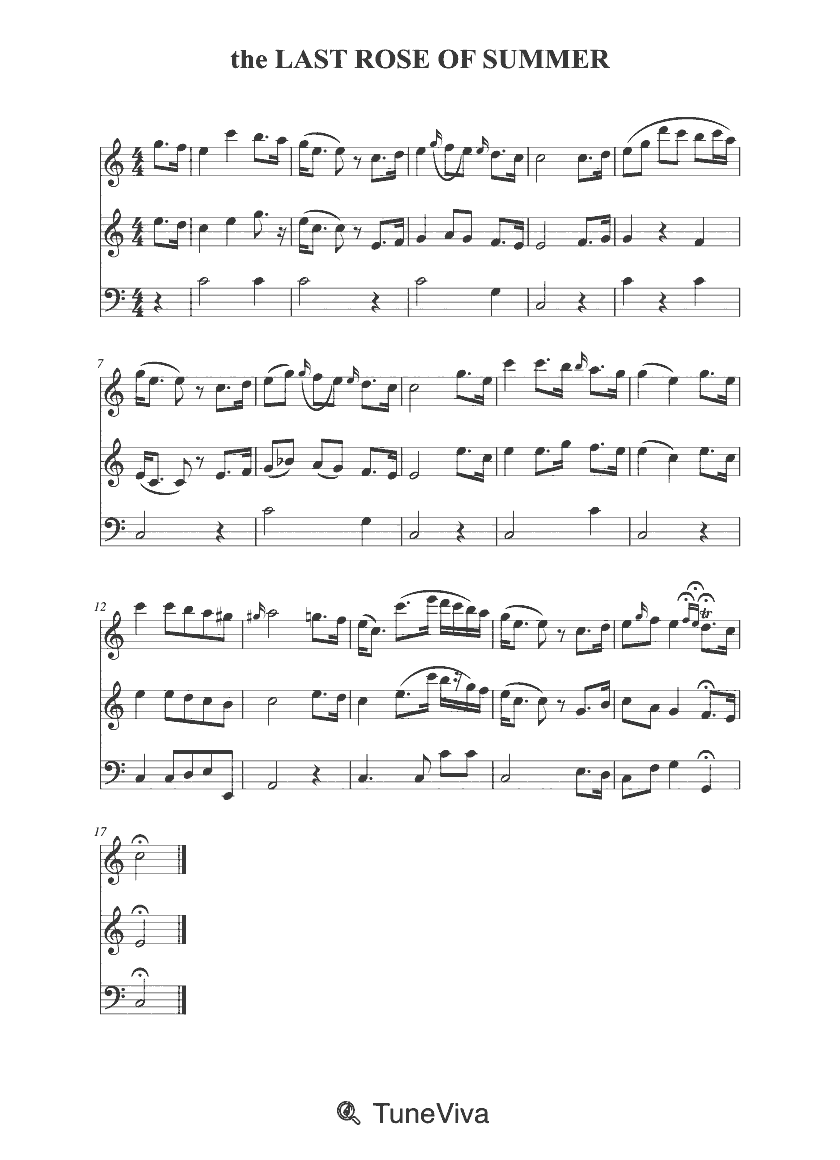
words: Thomas Moore 1805tune: trad. Ireland
24 sec · Score #136893
Open score
Misc tunes
24 sec · Score #1891
Open score
Misc tunes
47 sec · Score #248047
Open score
Misc tunes
33 sec · Score #60230
Open score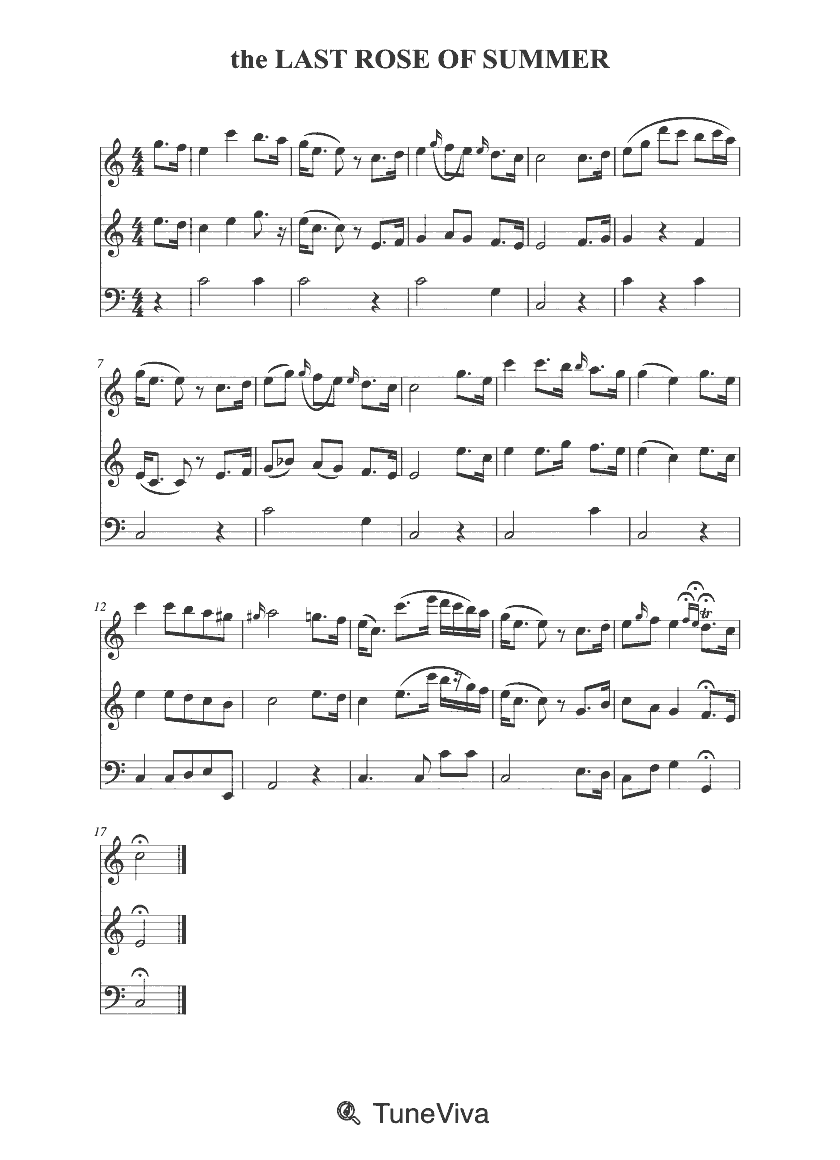
words: Thomas Moore 1805tune: trad. Ireland
24 sec · Score #72201
Open score
Misc tunes
24 sec · Score #109313
Open score
Misc tunes
24 sec · Score #173062
Open score
Misc tunes
19 sec
Open score
Misc tunes
24 sec · Score #232910
Open score
Misc tunes
33 sec · Score #220409
Open score
Misc tunes
23 sec · Score #3022
Open score
Misc tunes
23 sec · Score #209421
Open score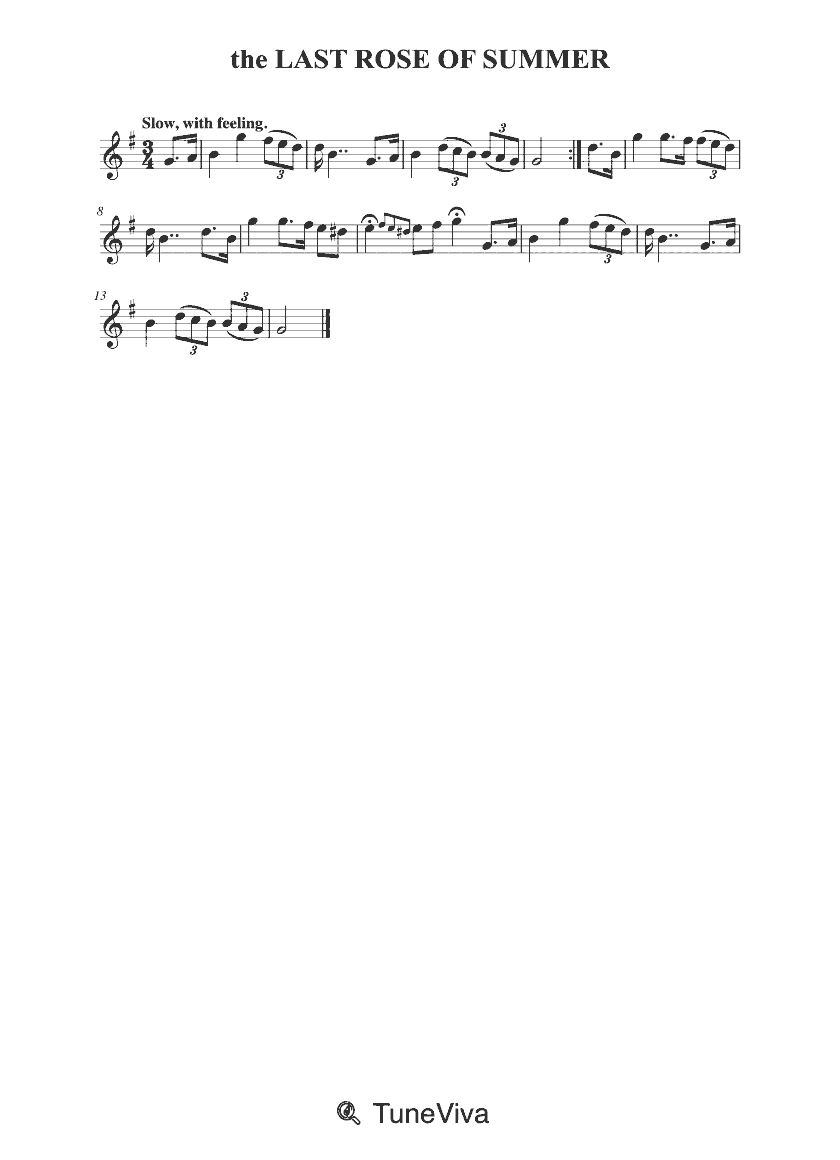
Misc tunes
24 sec · Score #42787
Open score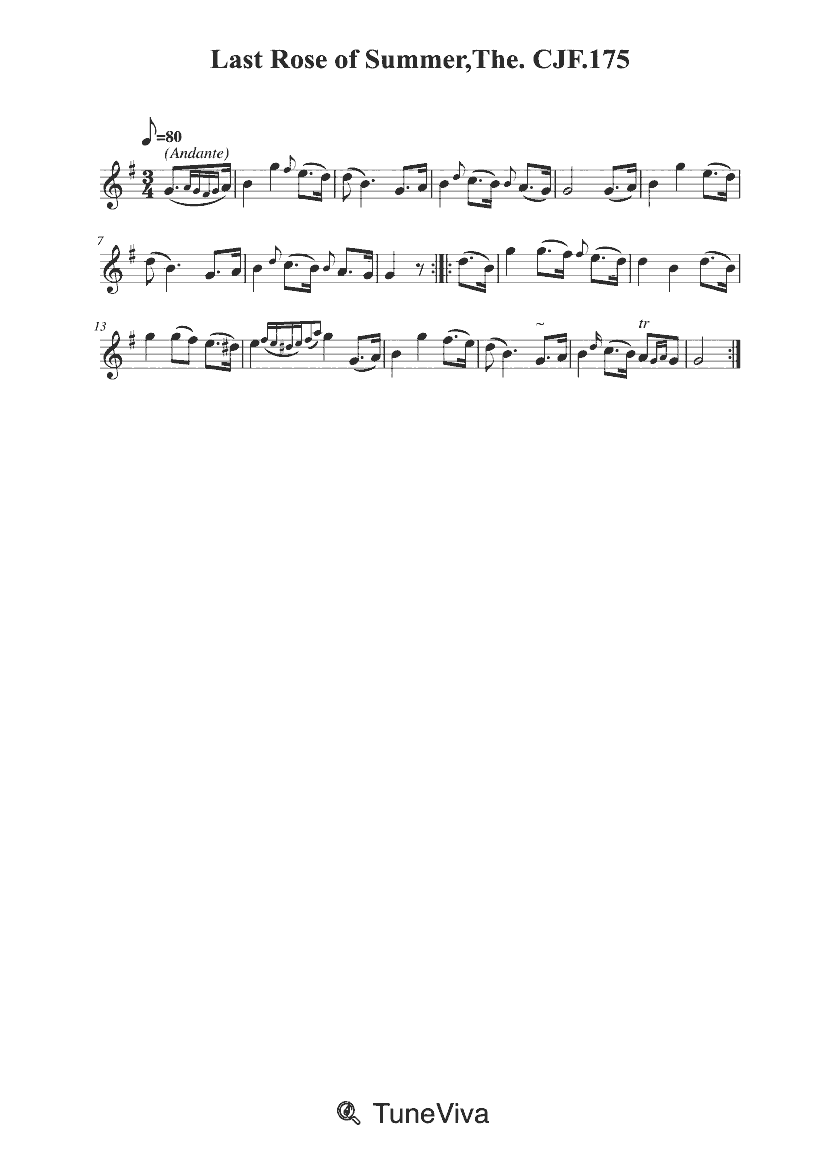
Misc tunes
2 min 22 sec
Open score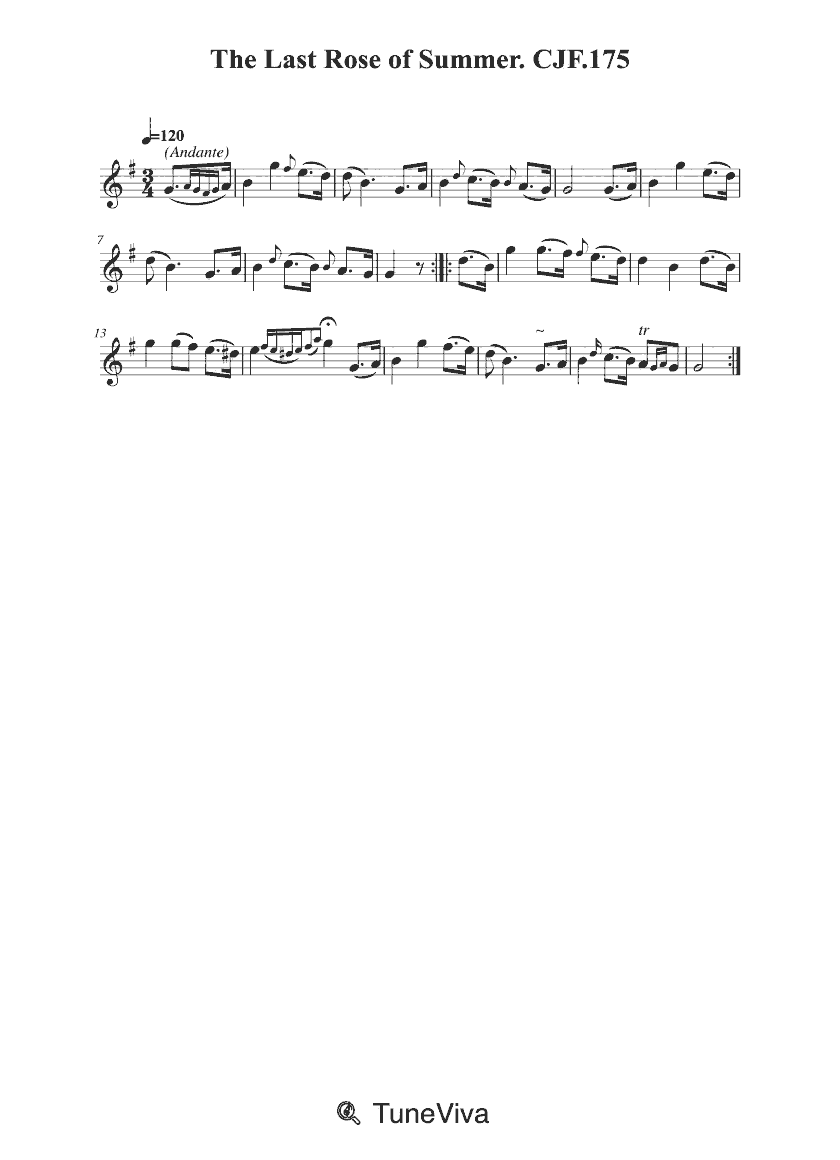
Misc tunes
47 sec · Score #75922
Open score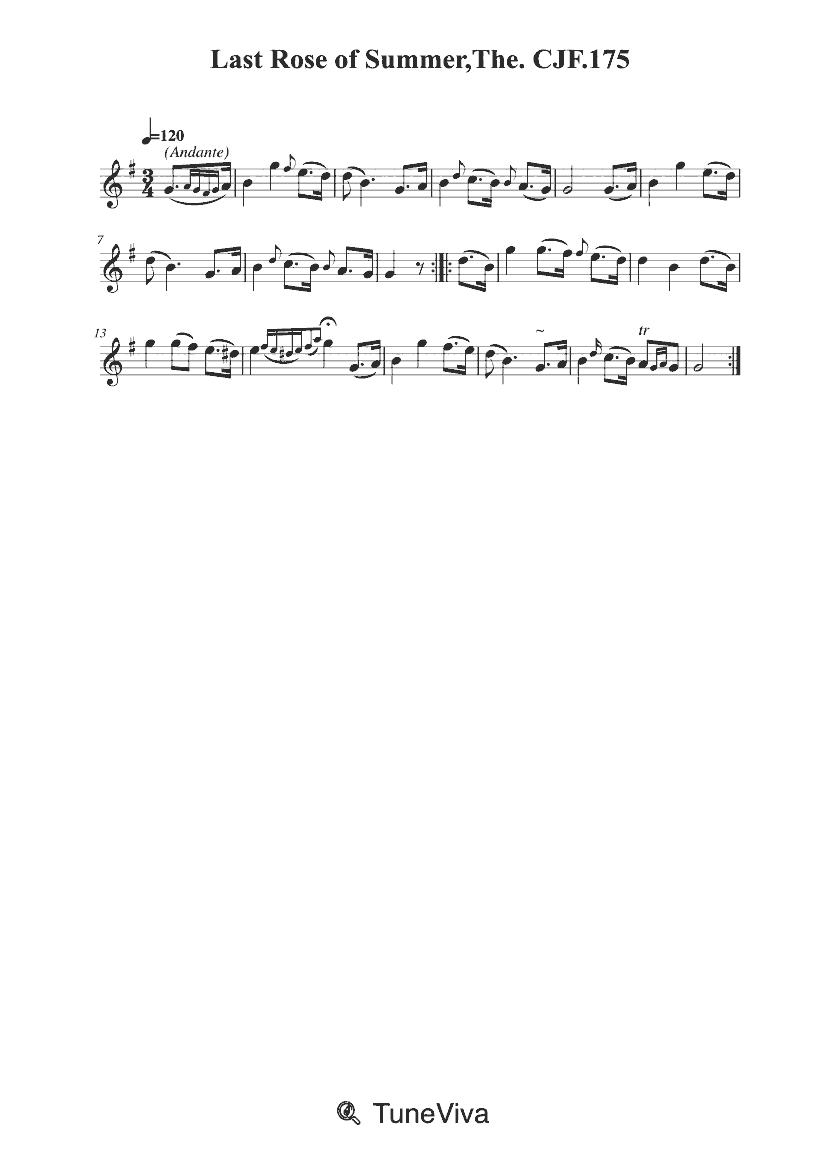
Misc tunes
47 sec
Open score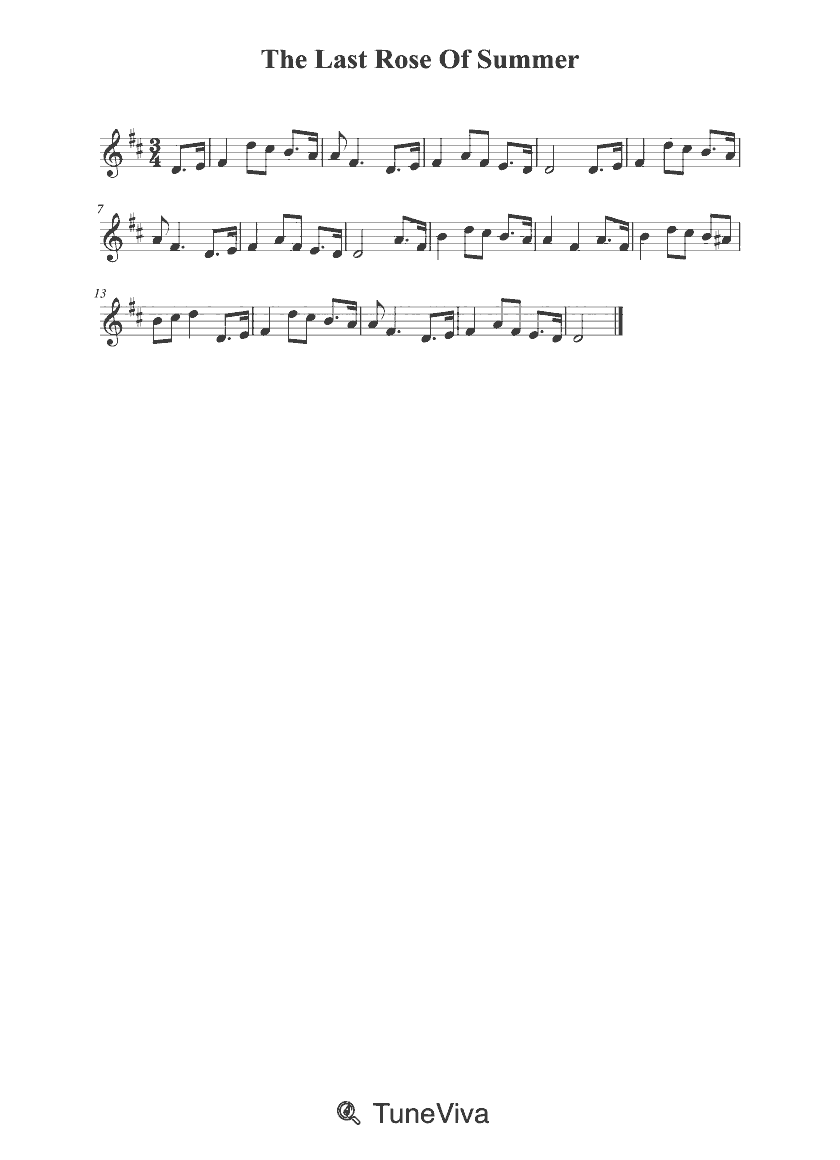
Misc tunes
24 sec · Score #168672
Open scoreThe available versions of The Last Rose of Summer differ in their opening key and time signature. One score opens in G major with a 3/4 metre and an opening tempo of 88 BPM; others open with no sharps or flats and a 4/4 metre. Use those details together with the vocal or instrumental range you need when deciding which score to open first.
Score credits for The Last Rose of Summer assign the words to Thomas Moore in 1805 and describe the tune as traditional Irish.
The clearest differences among the available scores are musical setting details: opening key, time signature and tempo vary. A 3/4 opening and a 4/4 opening imply different bar structures, so check the metre before counting or rehearsing. Differences in length alone do not show whether a version is more complete or more suitable for a particular performer.
Check the clef, range, key, time signature and tempo on the specific score you intend to use. Not every available version identifies voice type or instrumentation, so verify those points on the score itself rather than assuming all settings are interchangeable.
Catalogue duration 24 sec. Opening key signature: No sharps or flats. Opening time signature: 4/4.
Catalogue duration 24 sec. Opening key signature: No sharps or flats. Opening time signature: 4/4.
Catalogue duration 33 sec. Opening key signature: 1 sharp (G major). Opening time signature: 3/4. Opening tempo: 88 BPM.
Score credits for The Last Rose of Summer assign the words to Thomas Moore in 1805 and describe the tune as traditional Irish.
Available versions of The Last Rose of Summer differ: one opens in G major with a 3/4 time signature, while others open with no sharps or flats and a 4/4 time signature. A performer should check the opening key and metre on the specific score rather than assuming a standard setting.
One available version of The Last Rose of Summer gives an opening tempo of 88 BPM; the other versions do not include a tempo in their score details. Tempo can vary between arrangements, so check the score you intend to use.
Score credits describe the tune of The Last Rose of Summer as traditional Irish and the words as Thomas Moore’s from 1805, which supports treating it as an Irish song in those attributions.
A singer can compare the opening key of each version of The Last Rose of Summer with their comfortable vocal range. Available versions include a G-major opening and openings with no sharps or flats; the score itself should confirm the vocal range and clef before rehearsal.
Before rehearsing The Last Rose of Summer, check the specific score’s clef, range, key, time signature and tempo. The available versions vary in key, metre and tempo, and not every version identifies voice type or instrumentation.
The words of The Last Rose of Summer are credited to Thomas Moore in 1805 in score attributions, while the tune is described as traditional Irish.