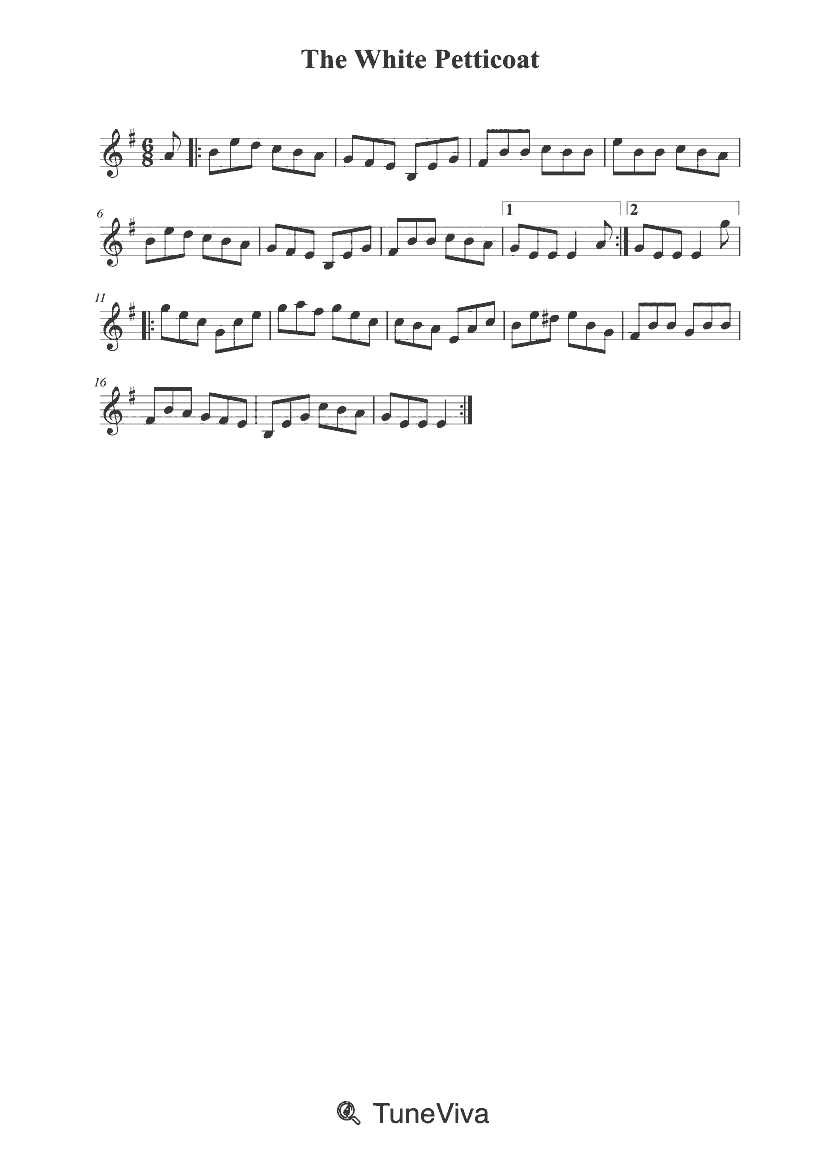
The White Petticoat
Misc Traditional
24 sec · Score #168759
Open scoreThe White Petticoat is presented in the available scores as a traditional folk tune rather than a work by a named composer. The scores open in 6/8 with a one-sharp key signature identified as E minor.
Scores 1–20 of 20
Misc Traditional
24 sec · Score #168759
Open score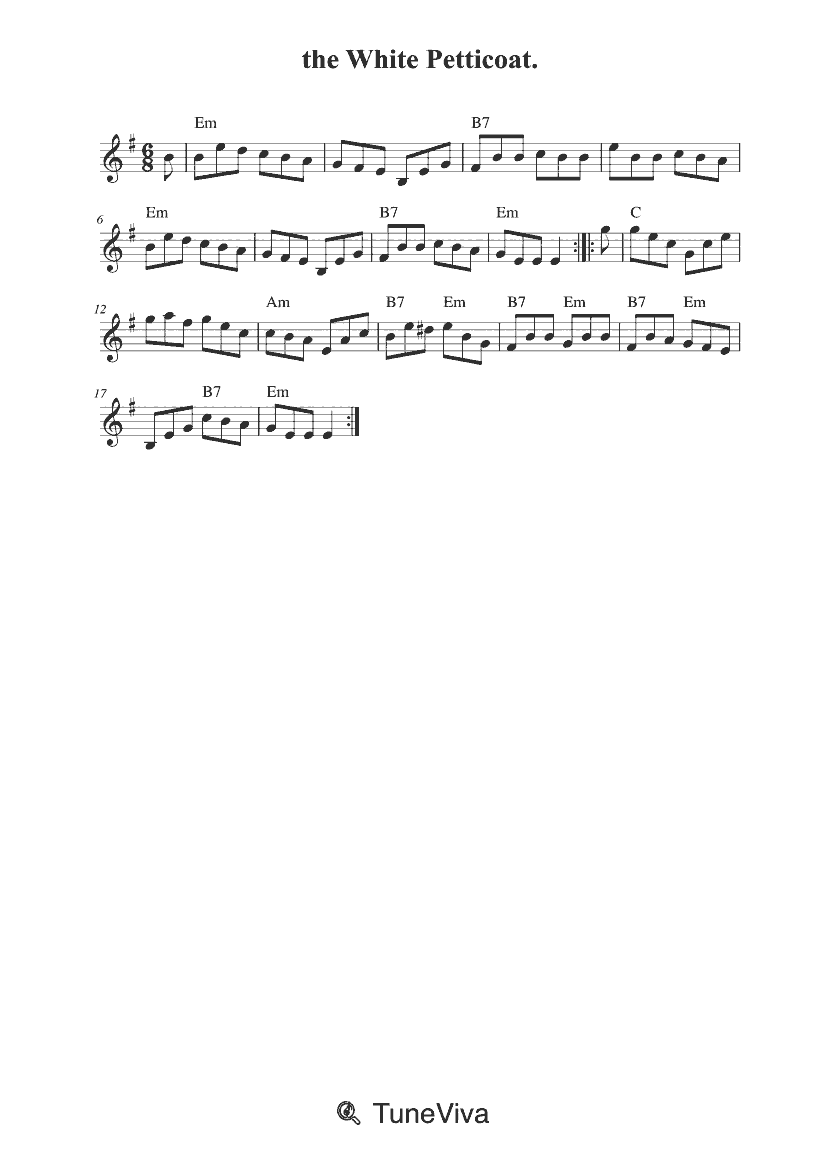
Misc Traditional
24 sec
Open score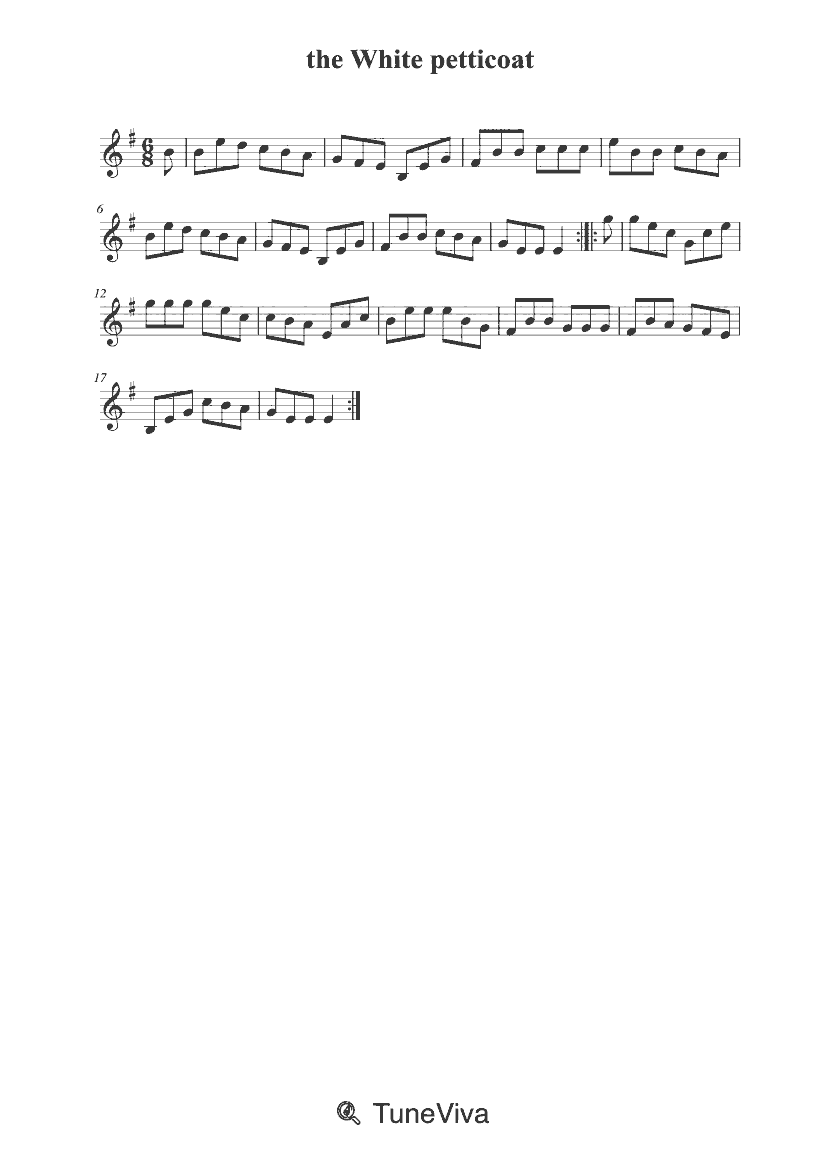
Misc Traditional
24 sec · Score #48030
Open score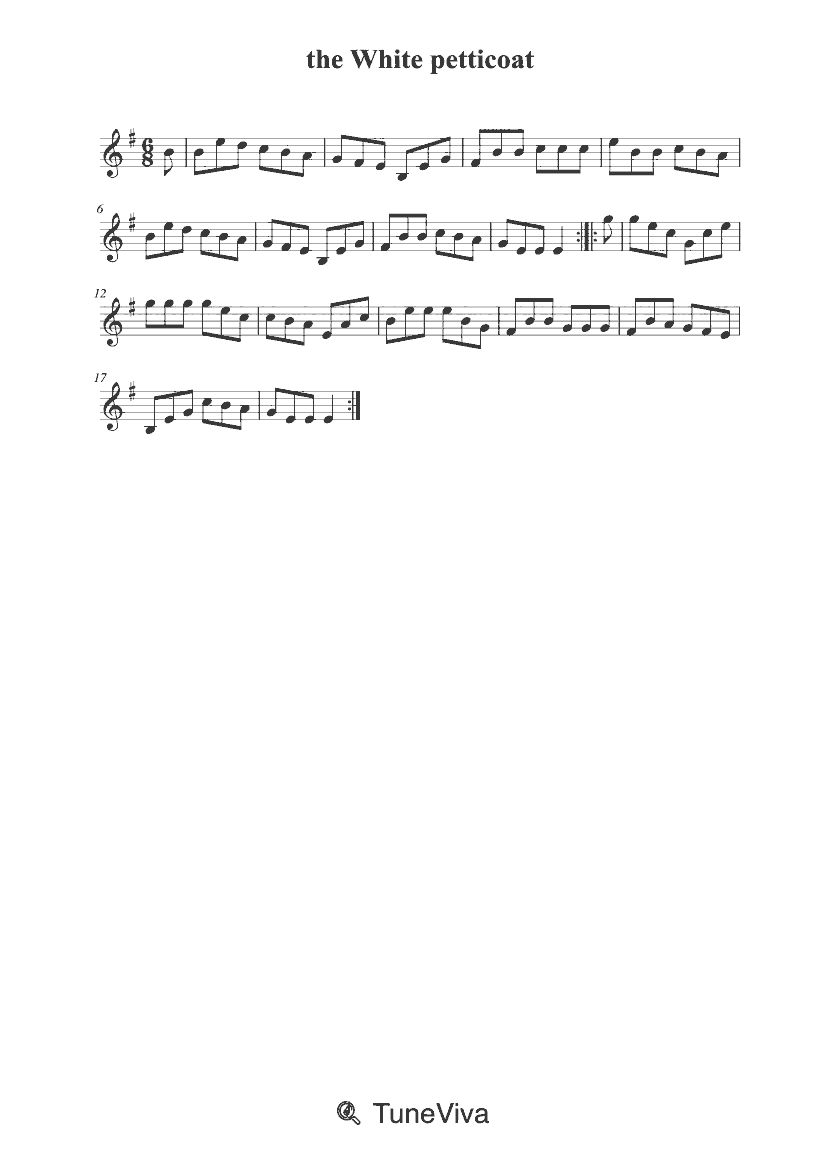
Misc Traditional
24 sec · Score #79835
Open score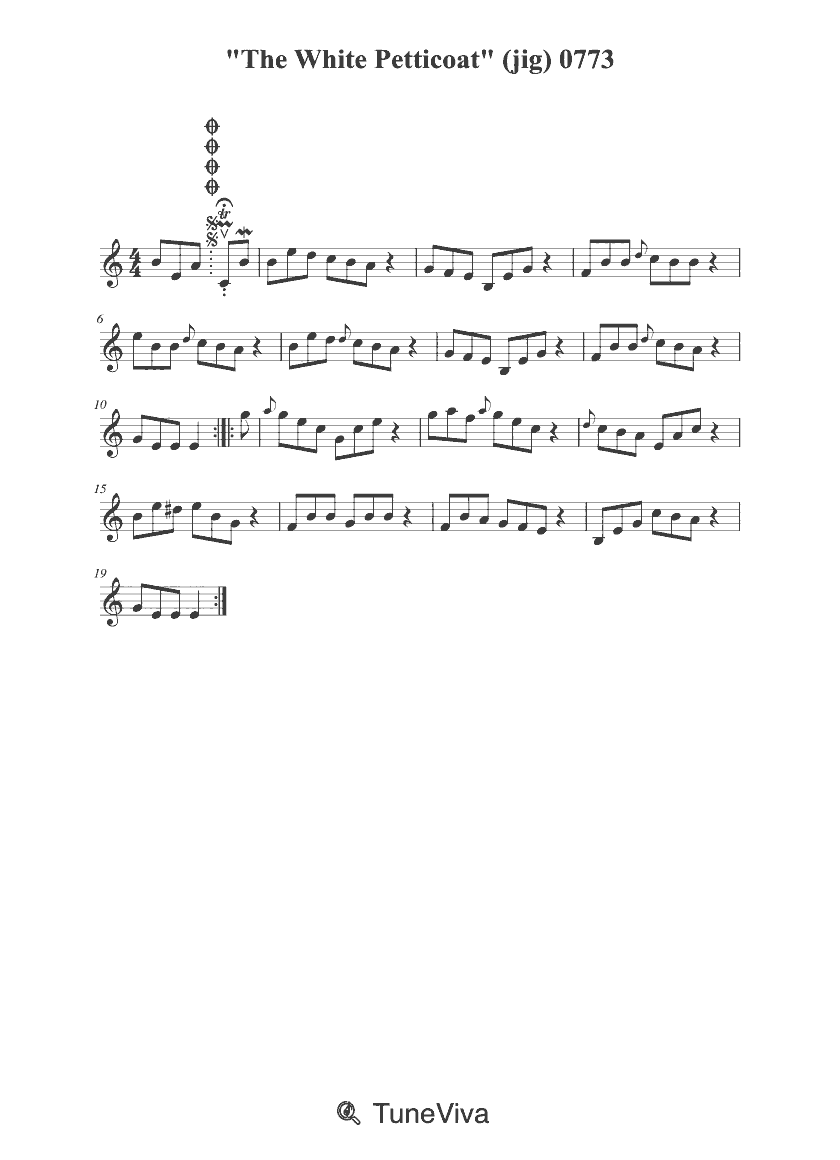
Unattributed
26 sec
Open score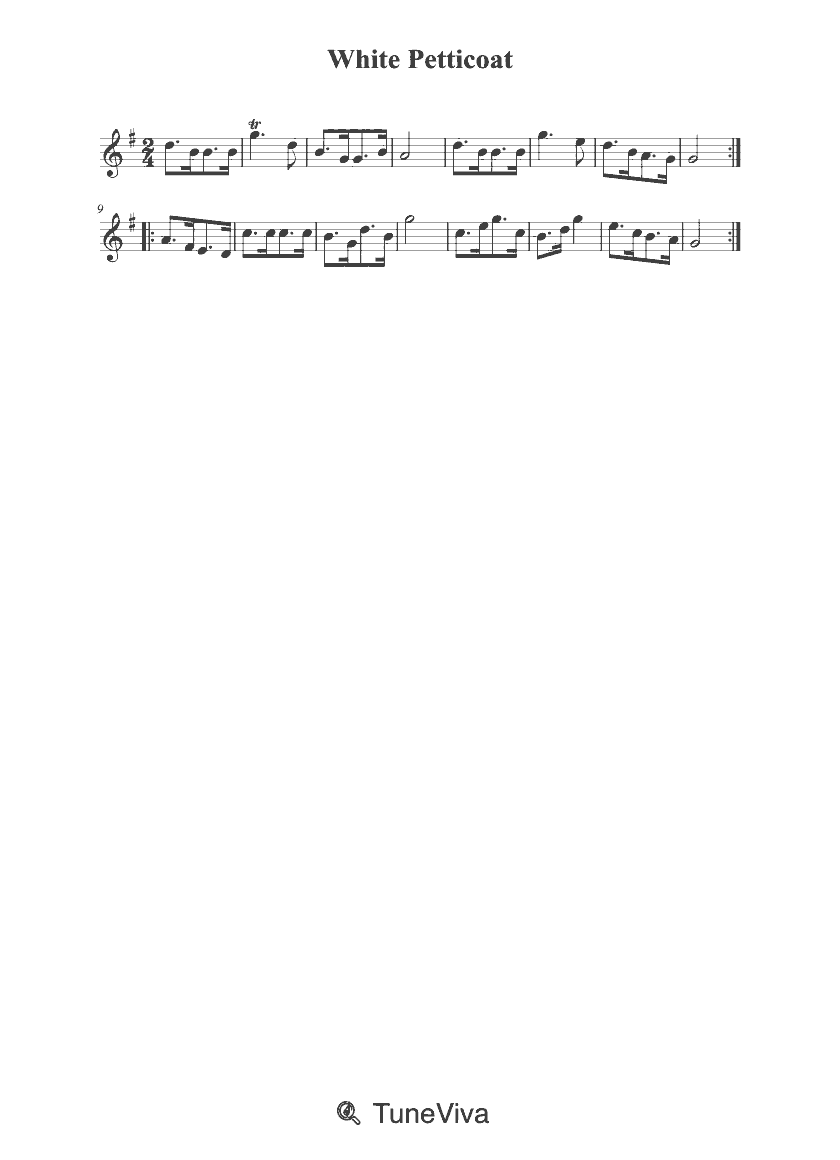
Misc Traditional
32 sec · Score #4221
Open score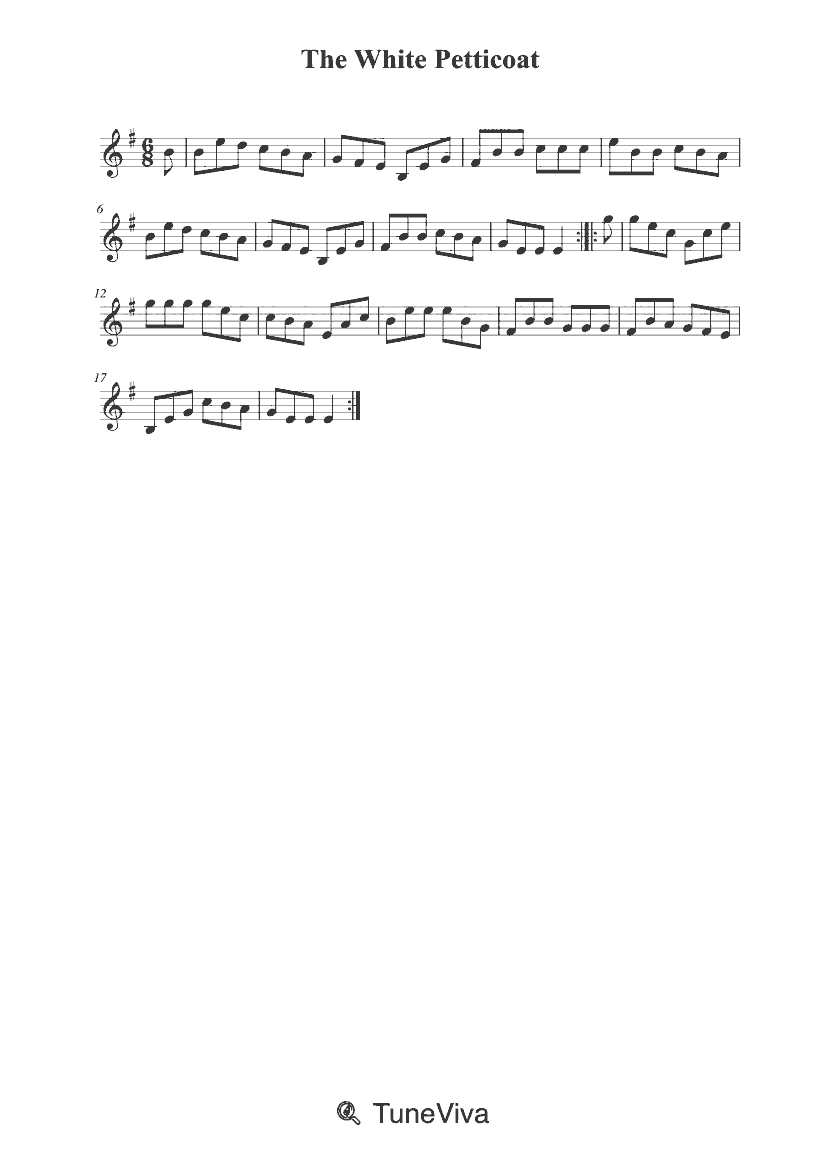
Misc Traditional
24 sec · Score #141843
Open score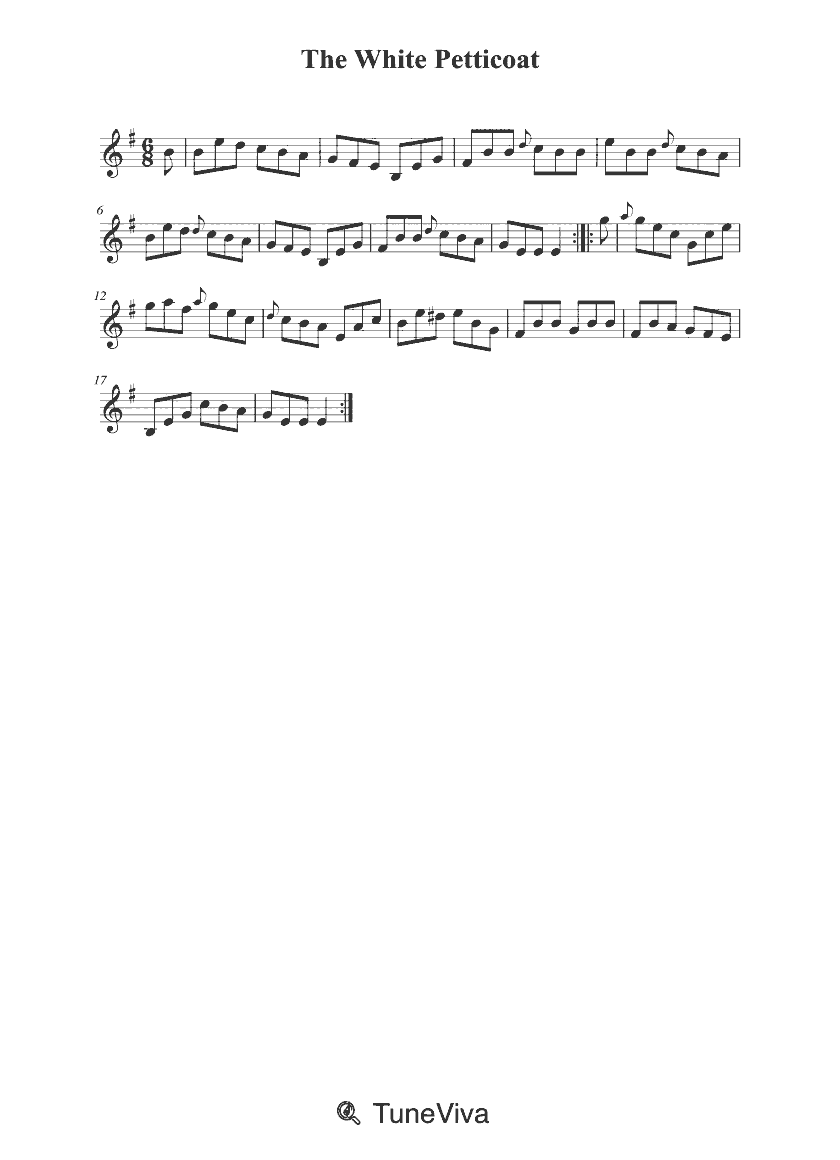
Misc Traditional
24 sec · Score #22045
Open score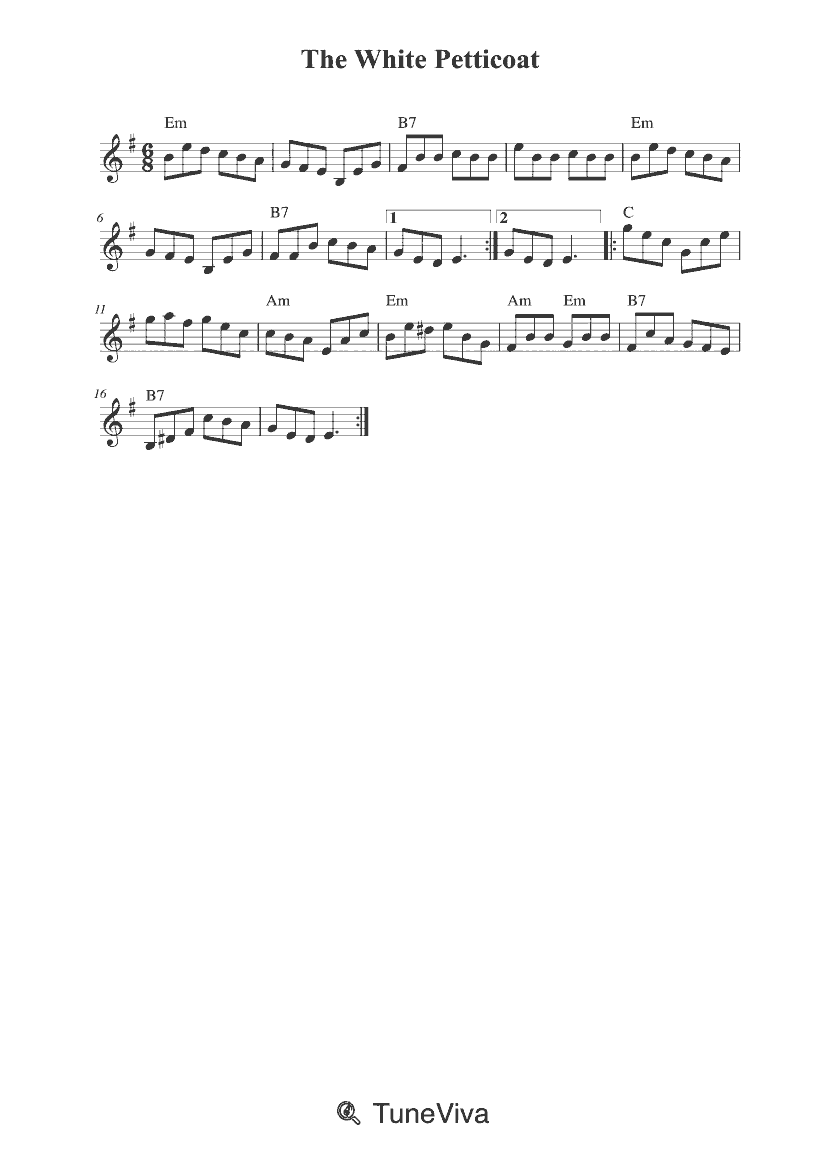
Misc Traditional
24 sec · Score #132250
Open score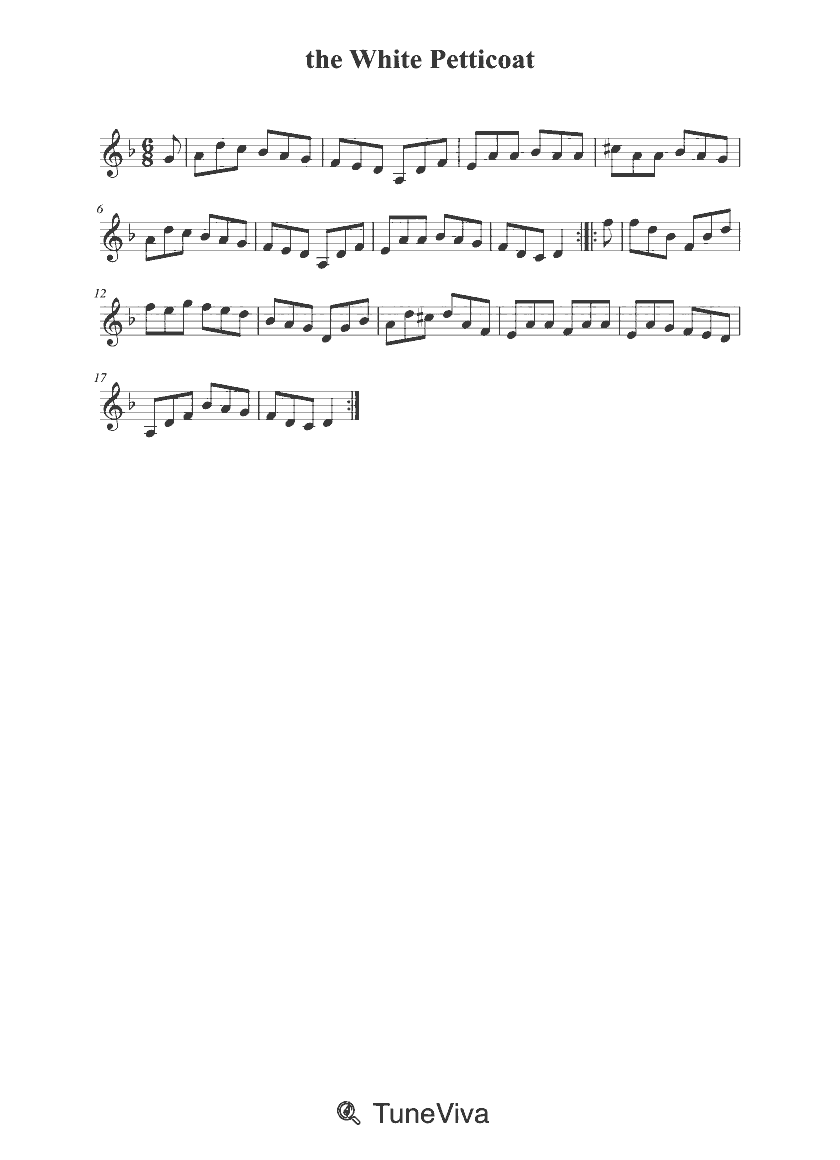
Misc Traditional
Handy With the Stick
24 sec
Open score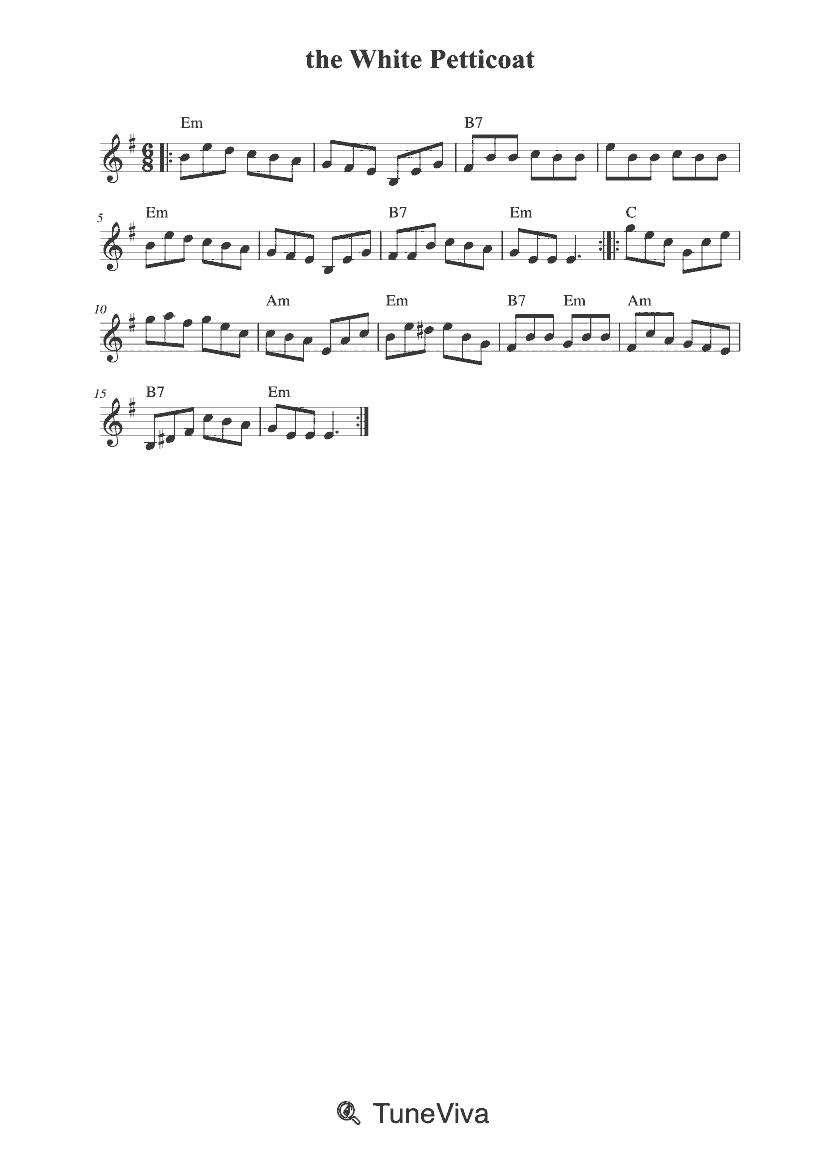
Misc Traditional
24 sec · Score #171494
Open score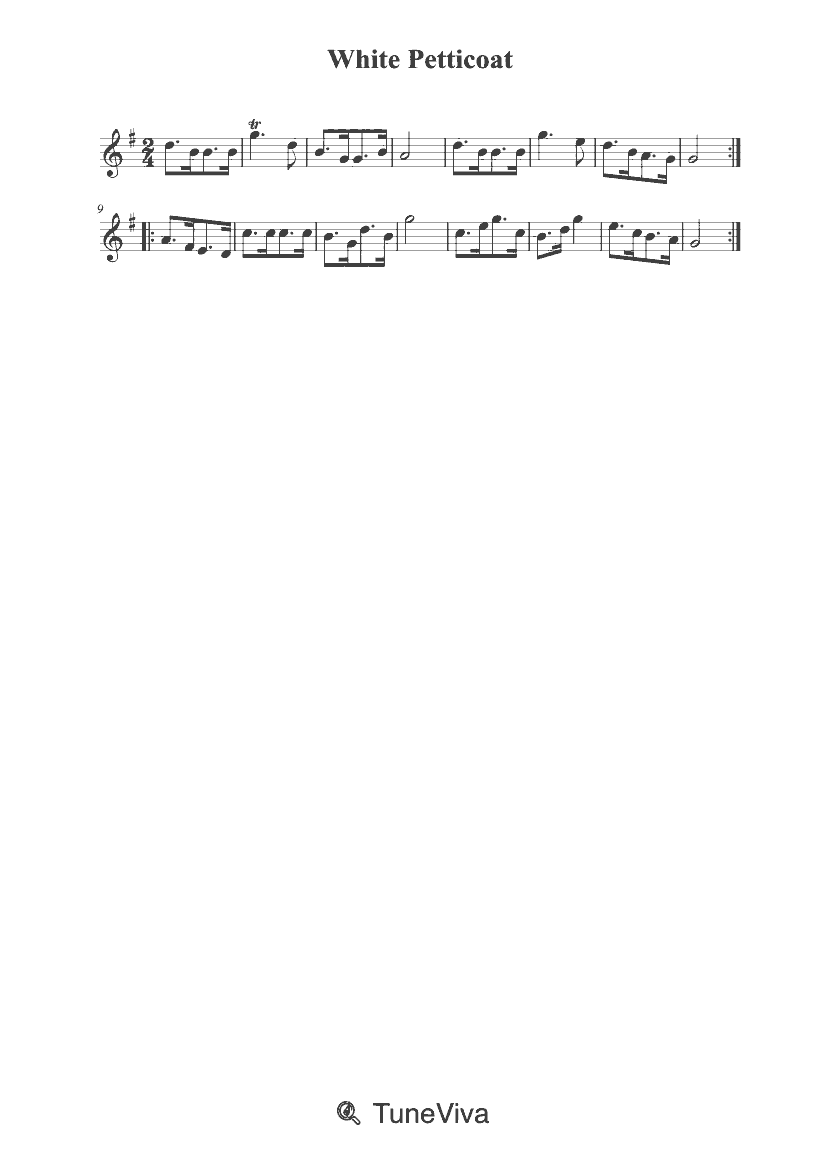
Misc Traditional
32 sec · Score #243448
Open score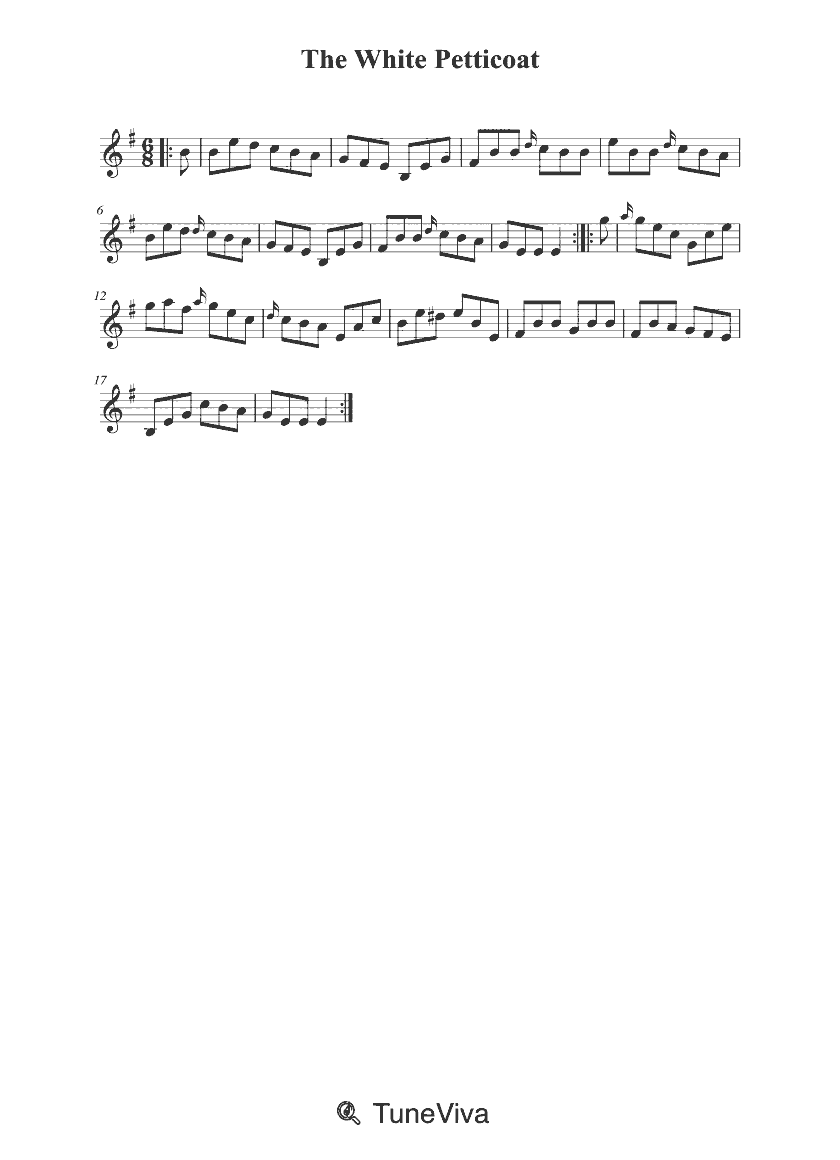
Misc Traditional
24 sec · Score #22593
Open score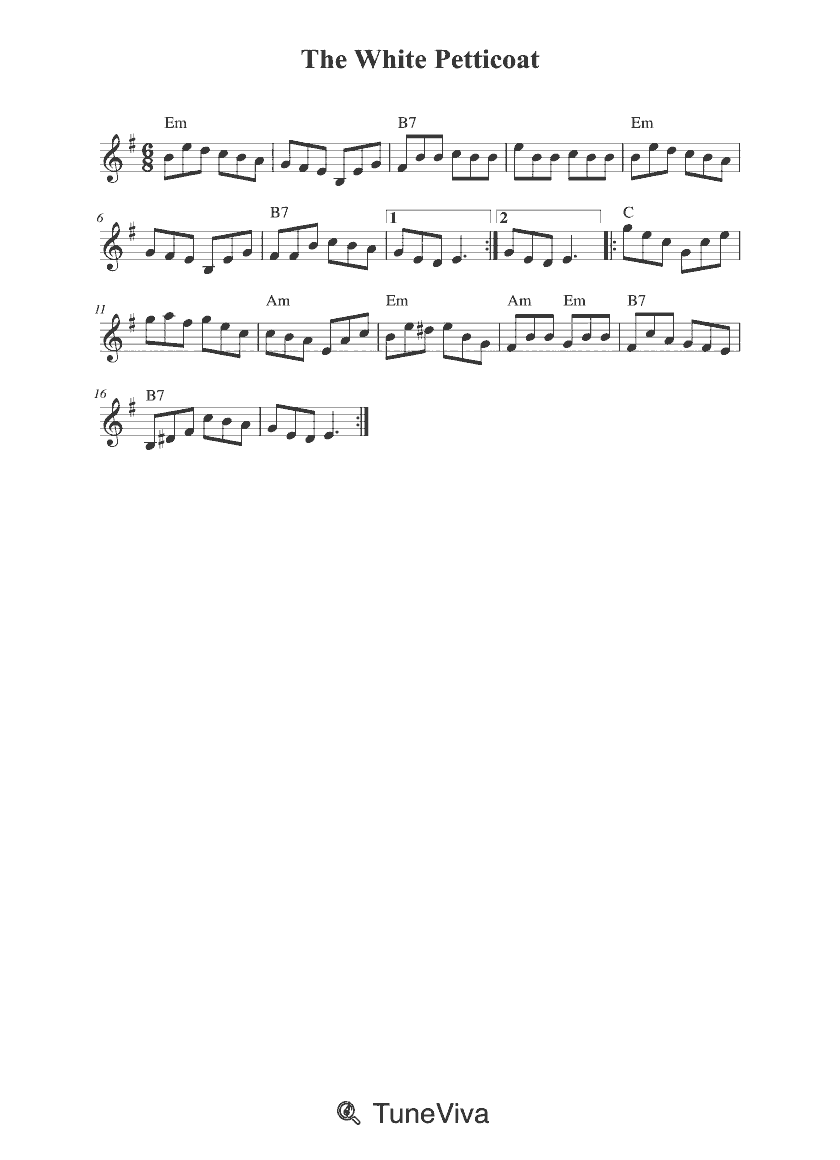
Misc Traditional
24 sec · Score #32623
Open score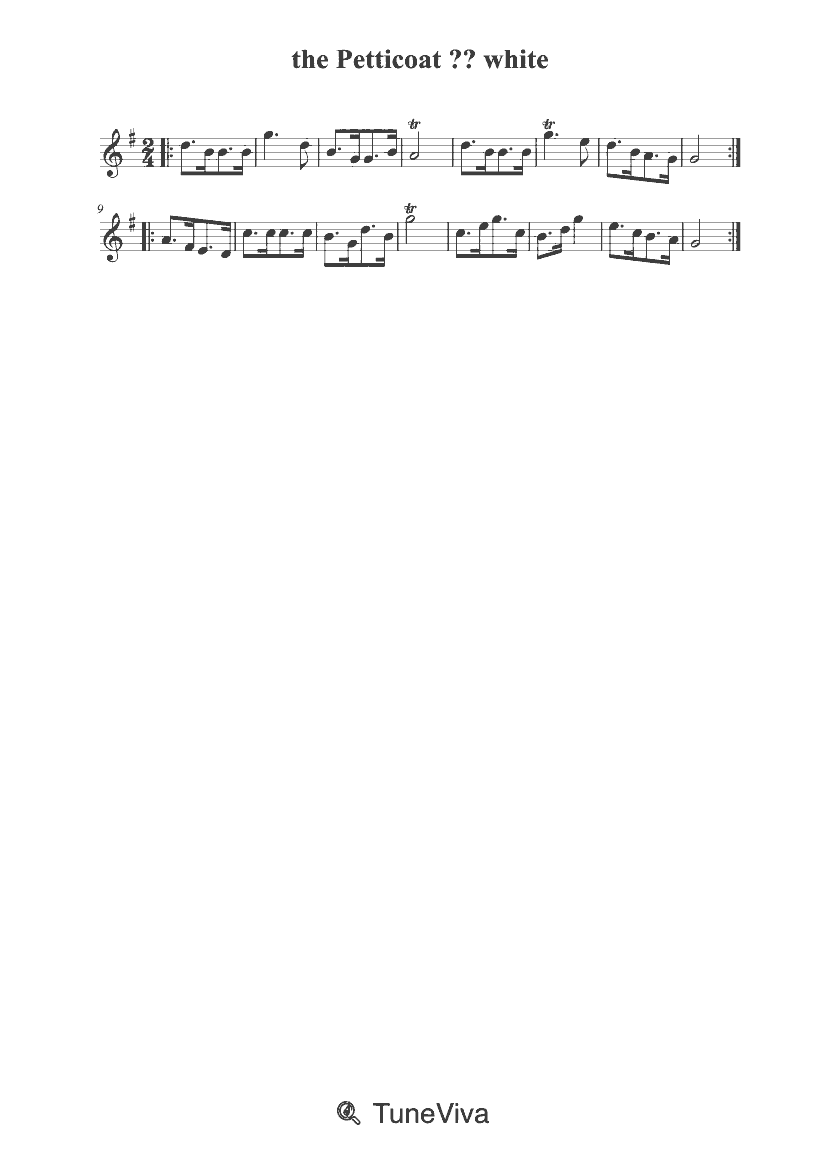
Misc Traditional
32 sec
Open score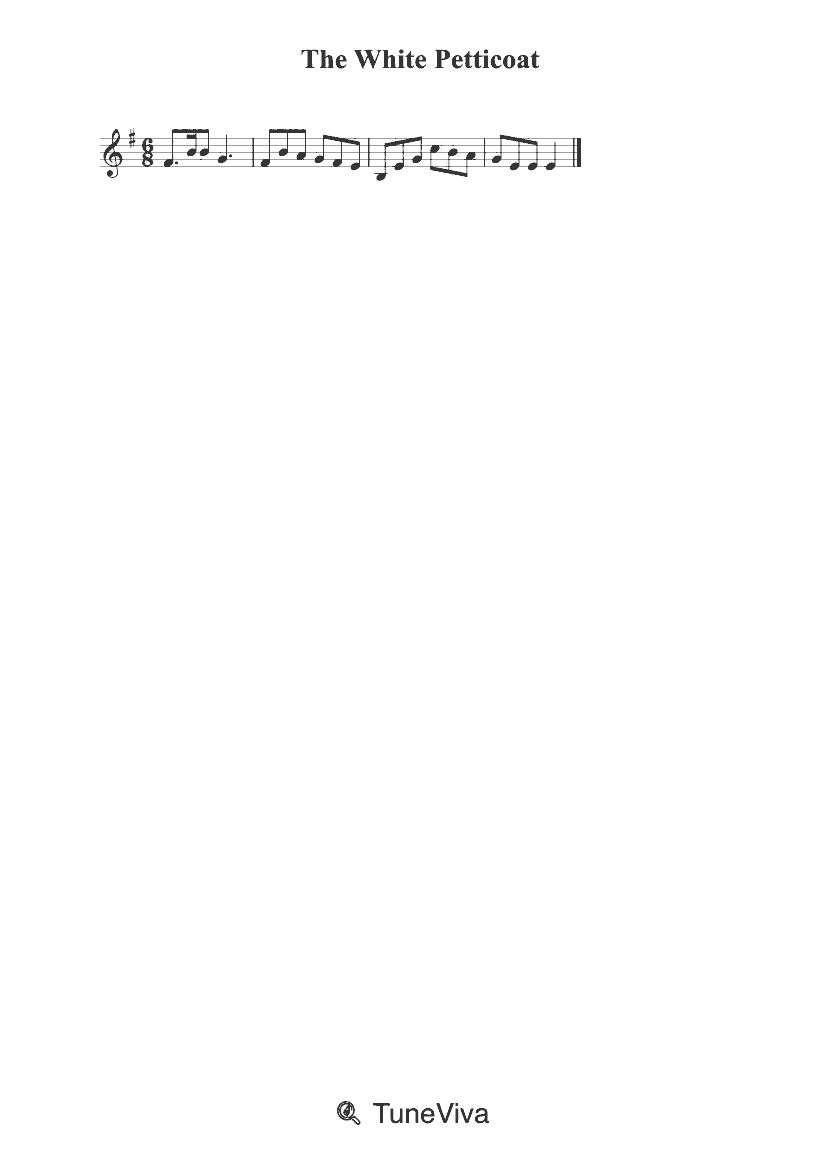
Misc Traditional
3 sec
Open score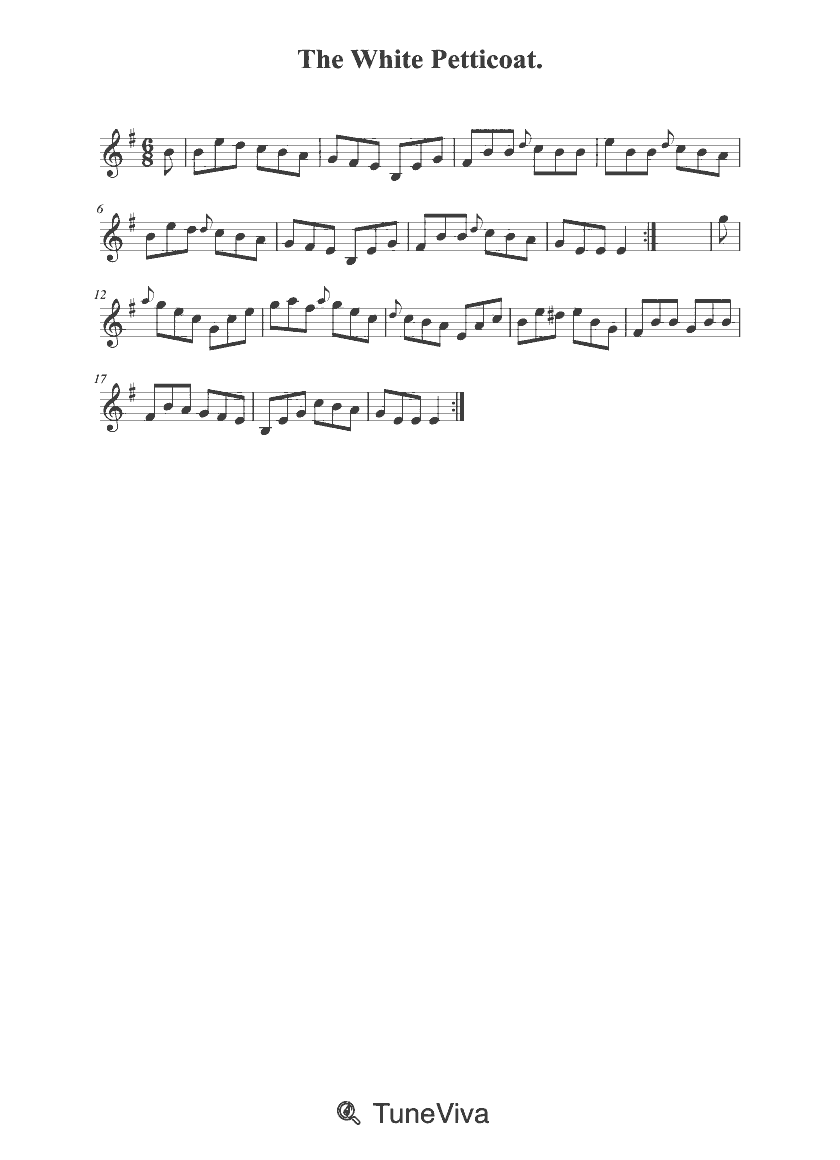
Misc Traditional
31 sec · Score #79730
Open score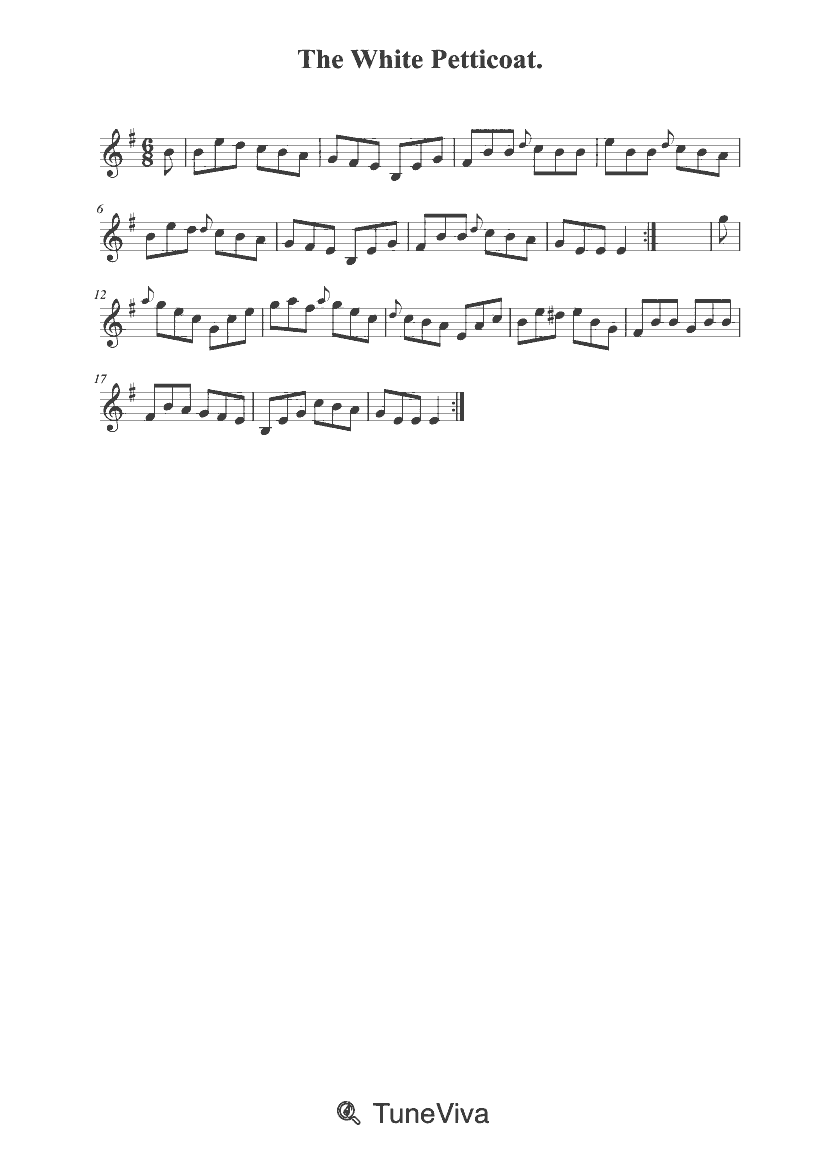
Misc Traditional
31 sec · Score #86050
Open score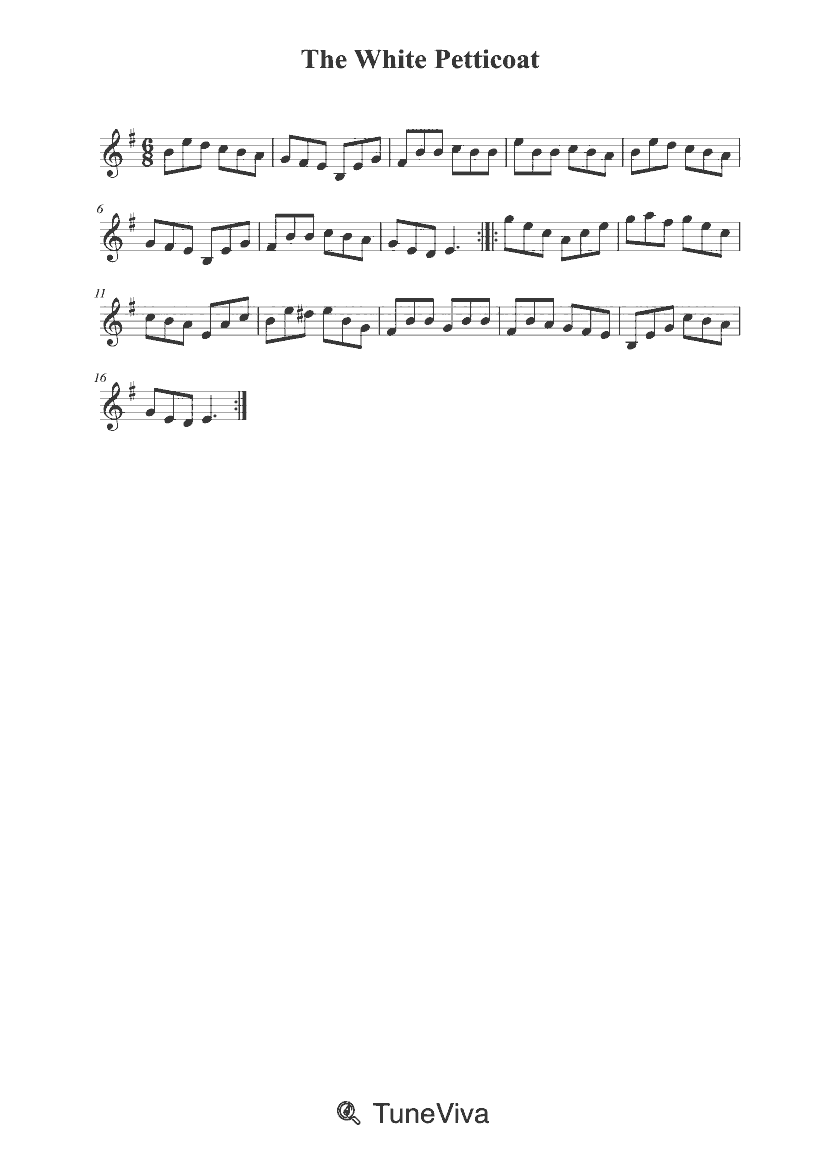
Misc Traditional
24 sec · Score #97619
Open score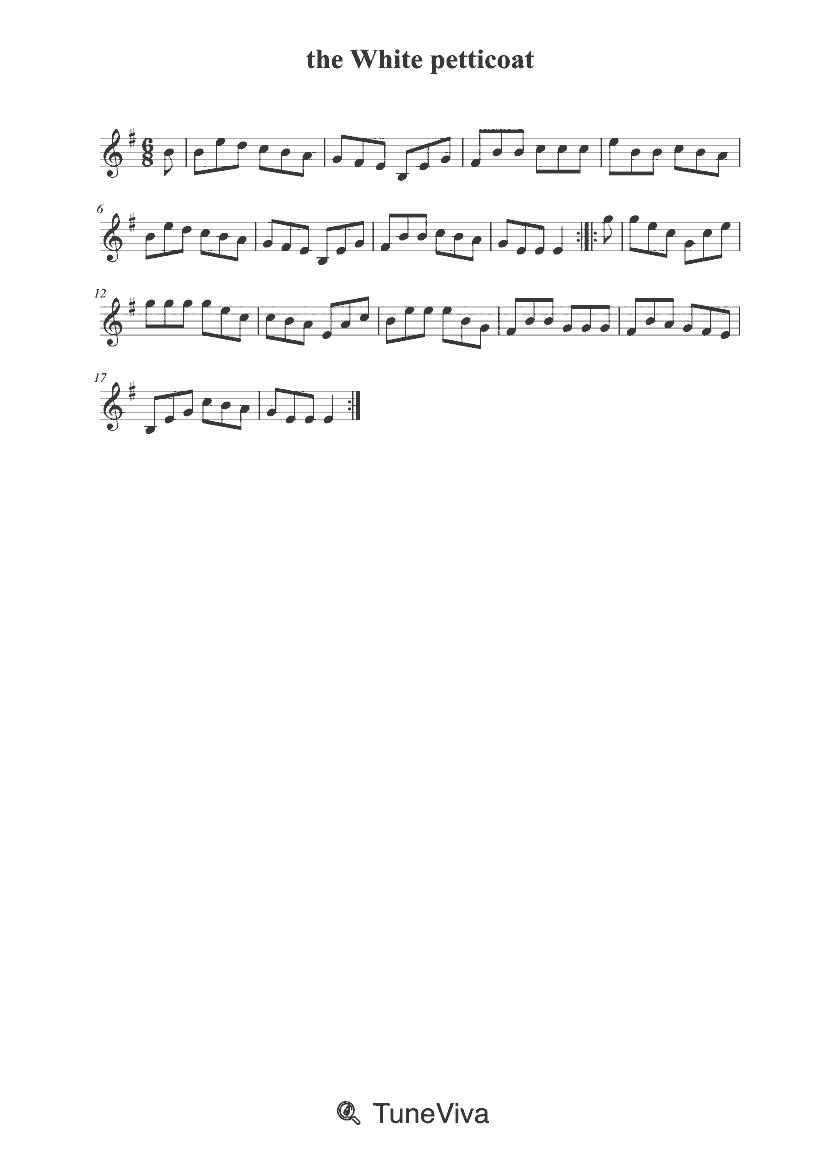
Misc Traditional
24 sec · Score #167713
Open scoreThe available scores for The White Petticoat agree on two basic musical facts: the opening time signature is 6/8 and the opening key signature is one sharp, labelled E minor. The credit reads 'Misc Traditional' and no composer is named. Those details describe the notation and attribution in the available scores; they do not establish the tune's date, region of origin, or earliest printed source.
A 6/8 signature is a compound duple metre: two main beats per bar, with each beat normally divided into three eighth notes. For a player, that usually means thinking in two broad pulses per bar while keeping the eighth-note groupings even. The metre gives the music a lilting or dance-like swing, but the signature by itself does not identify which dance form, if any, the tune belongs to.
The available versions share the same opening key signature and time signature, so the meaningful comparison is the notation itself: the melodic line, ornamentation, phrase endings, and any variation in the setting. The available descriptions do not rank the versions or identify one as a verified edition, so players should compare the scores directly rather than assume that one is more authoritative.
No supplied source identifies a composer, date, region, or specific dance type for The White Petticoat, and the available scores do not specify instrumentation. Those gaps matter: a 6/8 folk tune may be played as a jig, air, or other dance form, but the time signature alone cannot settle that question. Treat the traditional credit as the starting point, not as a complete account of the tune's history.
Catalogue duration 24 sec. Opening key signature: 1 sharp (E minor). Opening time signature: 6/8.
Catalogue duration 24 sec. Opening key signature: 1 sharp (E minor). Opening time signature: 6/8.
Catalogue duration 24 sec. Opening key signature: 1 sharp (E minor). Opening time signature: 6/8.
The White Petticoat is presented in the available scores as a traditional tune: no composer is named and the credit reads 'Misc Traditional.' The piece should therefore be treated as traditional rather than as a composition attributed to a known composer.
The available scores for The White Petticoat give the opening key signature as one sharp and label the key as E minor. One sharp is also the key signature of G major, so the E minor identification comes from the score labelling rather than from the signature alone.
The White Petticoat is notated in 6/8 in the available scores. 6/8 is a compound duple metre with two main beats per bar, each normally divided into three eighth notes, which gives the music a grouped, lilting pulse rather than a straight sequence of equal beats.
The available scores are in 6/8, a metre widely used for jigs and other dance tunes, but no supplied source identifies The White Petticoat's specific dance type. The time signature alone is not enough to confirm that the tune is a jig.
The available versions share the same opening key and metre, so the useful comparison is the notation itself: check the melodic line, ornamentation, and any variation in the setting. The available descriptions do not identify one version as a verified or preferred edition.