
Merry-Go-Round of Life
Joe Hisaishi
Flute · 2 min 59 sec
Open scoreFlute sheet music here gathers scores whose listed parts include flute, ranging from a single flute line to a mixed ensemble set. The selected titles include Bach’s Badinerie, Merry-Go-Round of Life, and We Are Number One. Read each score’s part list and opening details before choosing: a flute part name describes that score, not proof of the forces a work was first written for.
Scores 1–20 of 4,162
Joe Hisaishi
Flute · 2 min 59 sec
Open score
Johann Sebastian Bach
Orchestral Suite No.2 in B minorBWV 1067
Flute · 1 min 20 sec
Open score
LazyTown
arr. Matthew Neal
Flute; B♭ Clarinet; Bass Clarinet +8 parts · 18 sec
Open score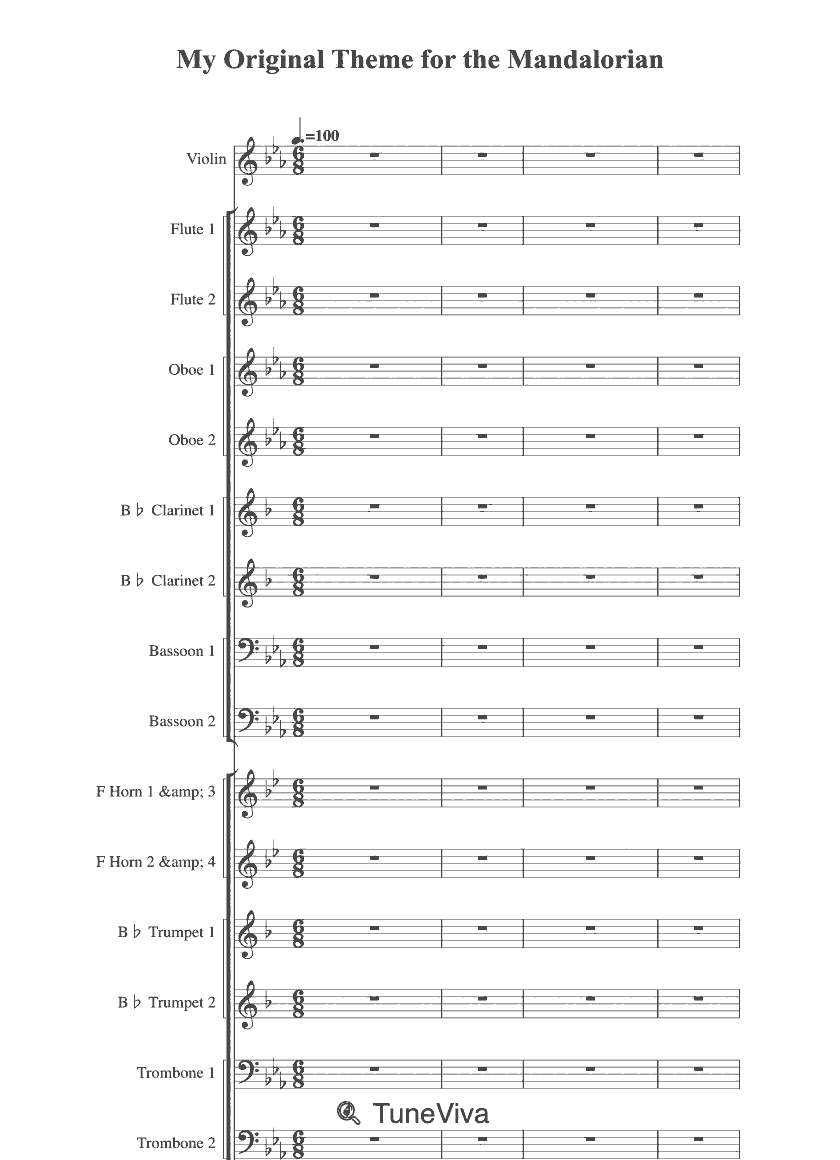
garrettn2001
Violin; Flute 1; Flute 2 +23 parts · 57 sec
Open score
Misc Cartoons
Flute; Oboe; B♭ Clarinet +2 parts · 56 sec
Open score
Hajime Hirasawa Junichi Masuda Kojo Kondo
Star Fox Assult Pokemon Super Mario Sunshine The Legend of Zelda
Flute; Oboe; Bassoon +15 parts · 4 min 13 sec
Open score
Michael Giacchino
Flute; Piano · 3 min 48 sec
Open score
Wolfgang Amadeus Mozart
for Flute and Piano
Flute; Piano · Arr. Robert Kile · 2 min 31 sec
Open score
Composed by Joe Hisaishi Transcribed and Arranged by Andrea Tam
Merry Go Round of Life for Orchestra
Piccolo; Flute; Oboe +16 parts · 4 min 54 sec
Open score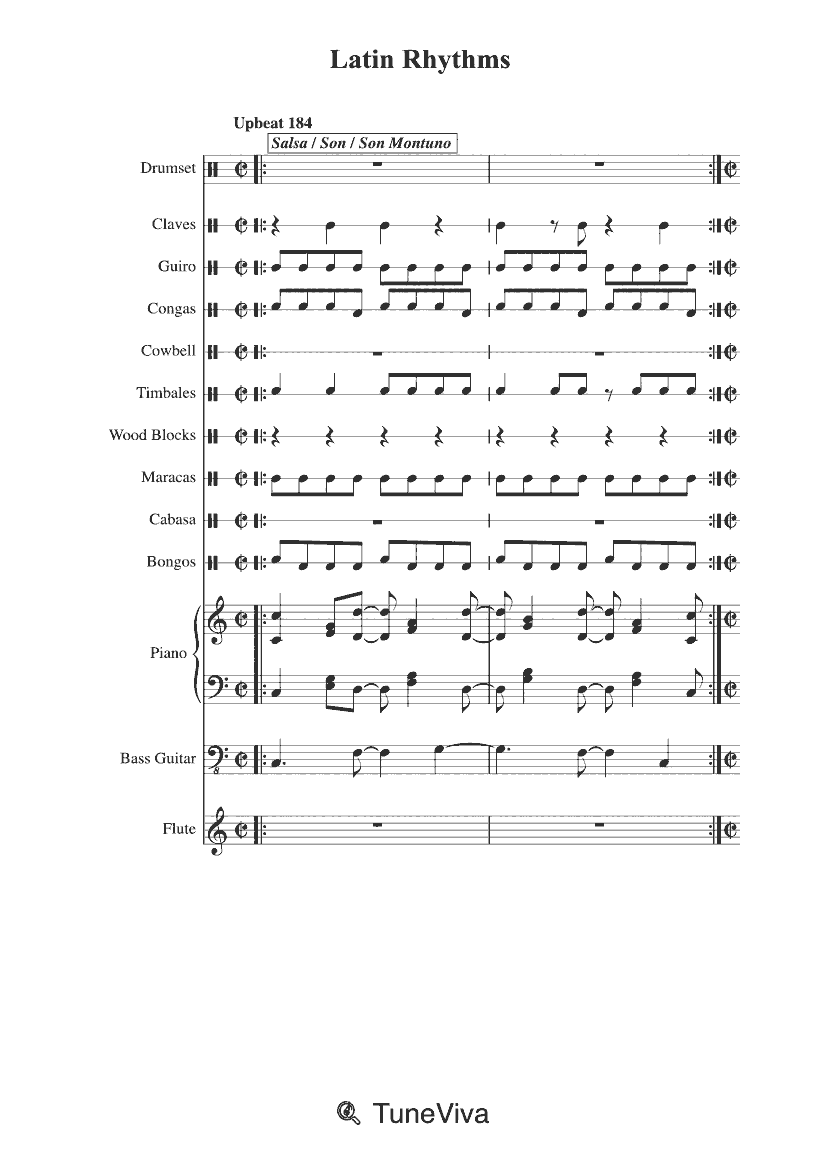
Victor Lpez
Drumset; Claves; Guiro +10 parts · 2 min 58 sec
Open score
Sid
(Black Butler Opening)
Piccolo; Flute; B♭ Clarinet +11 parts · 5 min 47 sec
Open score
Johann Sebastian Bach
from Suite No.1 for Unaccompanied Cello BWV 1007
Flute · 2 min 25 sec
Open score
Pachelbel arr. Reichwein
Flute; Guitar; Guitar Capo 2 · 2 min 40 sec
Open score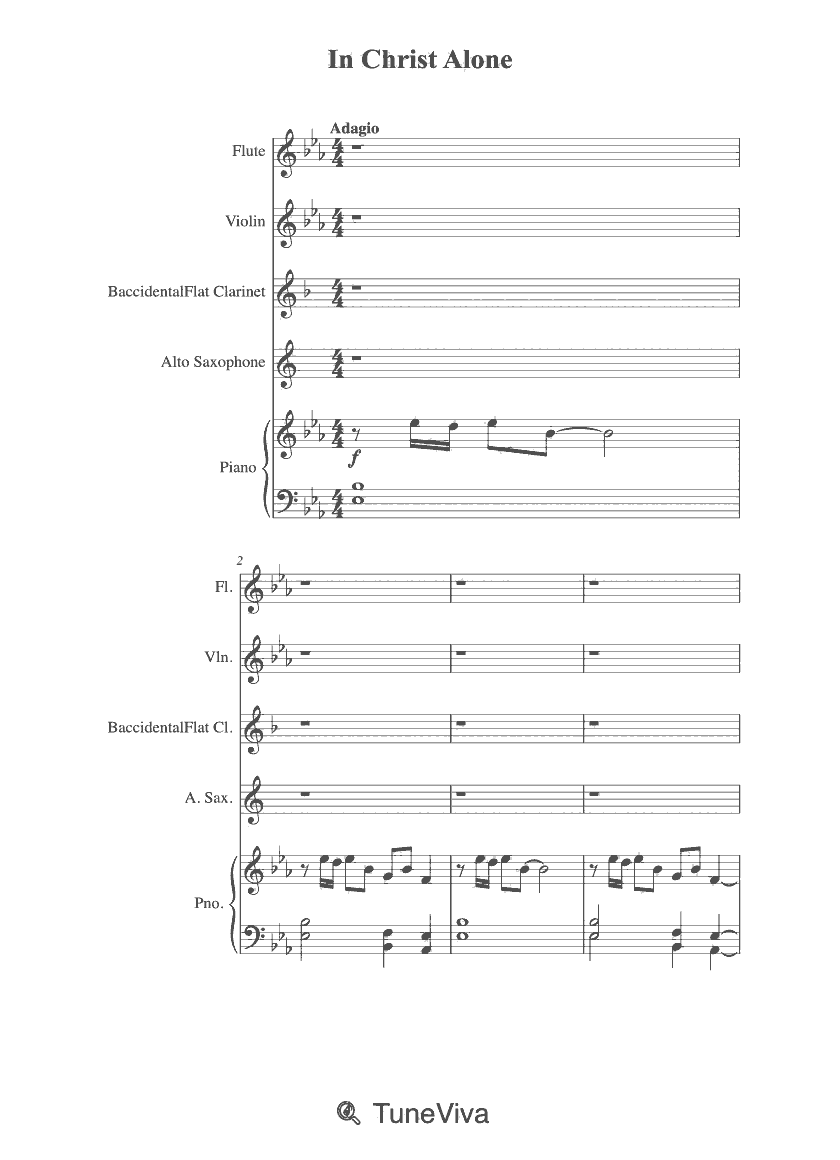
Keith and Kristyn Getty
Flute; Violin; B♭ Clarinet +2 parts · 3 min 9 sec
Open score
composed by John Williams adapted by Kyle Erickson
From the Paramount and DreamWorks film Saving Private Ryan
B♭ Trumpet; Horn in F; Flute +14 parts · Arr. Kyle Erickson · 6 min 11 sec
Open score
Harold Arlen
from the Wizard of Oz
Flute · 1 min 18 sec
Open score
Kiwi_Jones
Woodwind Ensemble
Piccolo; Flute; Oboe +6 parts · 3 min 3 sec
Open score
Frédéric Chopin
for Flute and Piano
Flute; Piano · 1 min 49 sec
Open score
Pyotr Ilyich Tchaikovsky
Flute I; Flute II; Flute III +23 parts · 2 min 27 sec
Open score
Tommy Thomson
Piccolo; Flute; Oboe +12 parts · 1 min 44 sec
Open scorePage 1 of 209
The Score parts entry is the most direct guide to what a particular score contains. Badinerie and Merry-Go-Round of Life each list Flute alone, while We Are Number One lists flute alongside B♭ clarinet, bass clarinet, alto, tenor and baritone saxophones, horn in F, B♭ cornet, trombone, euphonium and tuba. A single Flute entry is the strongest signal here that the score is for flute alone, but it does not prove the work’s original instrumentation.
Opening key signature, time signature and tempo describe how a score begins, not its whole character. Badinerie opens with two sharps and 2/4 time; Merry-Go-Round of Life with two flats, 3/4 and 110 BPM; We Are Number One with 4/4 and 160 BPM, with several key signatures across its parts. These details help compare the openings, but note counts and durations do not supply a difficulty grade.
If you need a solo line, begin with scores that list only Flute, such as the Badinerie and Merry-Go-Round of Life entries here. If you need a flute part within a larger group, inspect multi-part entries such as We Are Number One and check that the flute writing suits your setting. Verify the full score before committing to a performance or rehearsal.
Titles can name an instrument without being original flute works. The Badinerie listing names a movement from Orchestral Suite No. 2 in B minor BWV 1067; the Merry-Go-Round of Life listing names Joe Hisaishi as artist with the composer field marked NA; We Are Number One names LazyTown as artist. Check composer and arranger credits on the score page before treating any score as the original version.
Score parts: Flute. Catalogue duration 2 min 59 sec. Opening key signature: 2 flats. Opening time signature: 3/4. Opening tempo: 110 BPM.
Score parts: Flute. Catalogue duration 1 min 20 sec. Opening key signature: 2 sharps. Opening time signature: 2/4.
Score parts: Flute, B♭ Clarinet, Bass Clarinet, Alto Saxophone, Tenor Saxophone, Baritone Saxophone, …. Catalogue duration 18 sec. Opening key signature: 3 flats; 1 flat; No sharps or flats; 2 flats. Opening time signature: 4/4. Opening tempo: 160 BPM.
TuneViva has 4,162 flute sheet music files whose imported part name includes flute. Open a score to preview the notation, play it, and download the files that score offers.
A file is included only when an imported part name contains flute. A title that mentions flute, or a playback sound, is not enough. Files whose import did not record a part name are not on this page. The part name describes that file. It is not proof the work was first written for flute.
Yes. Open a flute score to preview the notation and play it in the browser. Download the files that score offers after you have compared them.
Open the flute score first. The score page shows the files that score offers. TuneViva does not promise one file type for every score.
388 of the files on this page include lyric text. Lyric text does not by itself show a vocal part. The score page shows that text when the file has it.
Open a flute score and choose practise. Listen with Play, then play the matching keys on screen. Left and Right select the lower and upper staff, and you can change the playback tempo. Connect MIDI works in a compatible browser.
Use the work page for that catalogue name. This flute page lists every file whose part name matches, so one piece can appear more than once. A genre page uses the single genre label stored on the file.
Yes. It is not an examination result, and it is not every file on this page.
The score titled “Badinerie for flute by JS Bach” is credited to Johann Sebastian Bach and names Orchestral Suite No. 2 in B minor BWV 1067 No. 7 Badinerie as the work. Its listed part is Flute, opening with two sharps and 2/4 time. Confirm the notation and any credits on the score page.
“We Are Number One” lists flute with B♭ clarinet, bass clarinet, alto, tenor and baritone saxophones, horn in F, B♭ cornet, trombone, euphonium and tuba. That part list describes a mixed ensemble score rather than a solo flute piece. Check the score page for the complete layout.
The Score parts entry for each score is the place to start. Badinerie and Merry-Go-Round of Life each list Flute alone in the part list shown here, while We Are Number One lists flute among eleven instruments. A part list describes that score, not necessarily the work’s original instrumentation.
Opening signatures show how each score begins, not its full harmonic plan. Badinerie opens with two sharps and 2/4; Merry-Go-Round of Life with two flats, 3/4 and 110 BPM; We Are Number One with 4/4 and 160 BPM, with several key signatures across its parts. Use these details for comparison, then read the score.
The listings do not settle that question. A title such as “Badinerie for flute” or a single Flute part can describe a score made for flute, while a soundtrack or television title may appear in an arrangement. Check the score page for composer and arranger credits before calling a score the original version.
The Merry-Go-Round of Life listing names Joe Hisaishi as artist and marks the composer field NA. That means the listing does not provide a verified composer credit, even though Hisaishi appears in the artist field. Confirm authorship and any arranger credit on the score page.
Note counts and durations describe a score’s length and note activity, not a difficulty grade. The selected records do not provide a formal level for these scores. Compare the part writing, opening key, time signature and tempo on the score page, and treat any easy flute listing as a separate selection rather than an examination result.