
J. S. Bach - Bourrée in E minor, BWV 996
Johann Sebastian Bach
BWV 996
Guitar · 3 min 20 sec
Open scoreGuitar sheet music here is grouped by the instrument names on each score rather than by a single genre. Highlighted scores include a Classical Guitar arrangement of Cavatina, a Guitar score of the Bourrée in E minor, BWV 996, and a multi-part arrangement of Stevie Wonder's Superstition that includes Bass Guitar. Because the collection depends on part names, read the part list, opening key, metre and tempo before choosing: those details describe the version in front of you, not necessarily a work's original instrumentation.
Scores 1–20 of 3,264
Johann Sebastian Bach
BWV 996
Guitar · 3 min 20 sec
Open score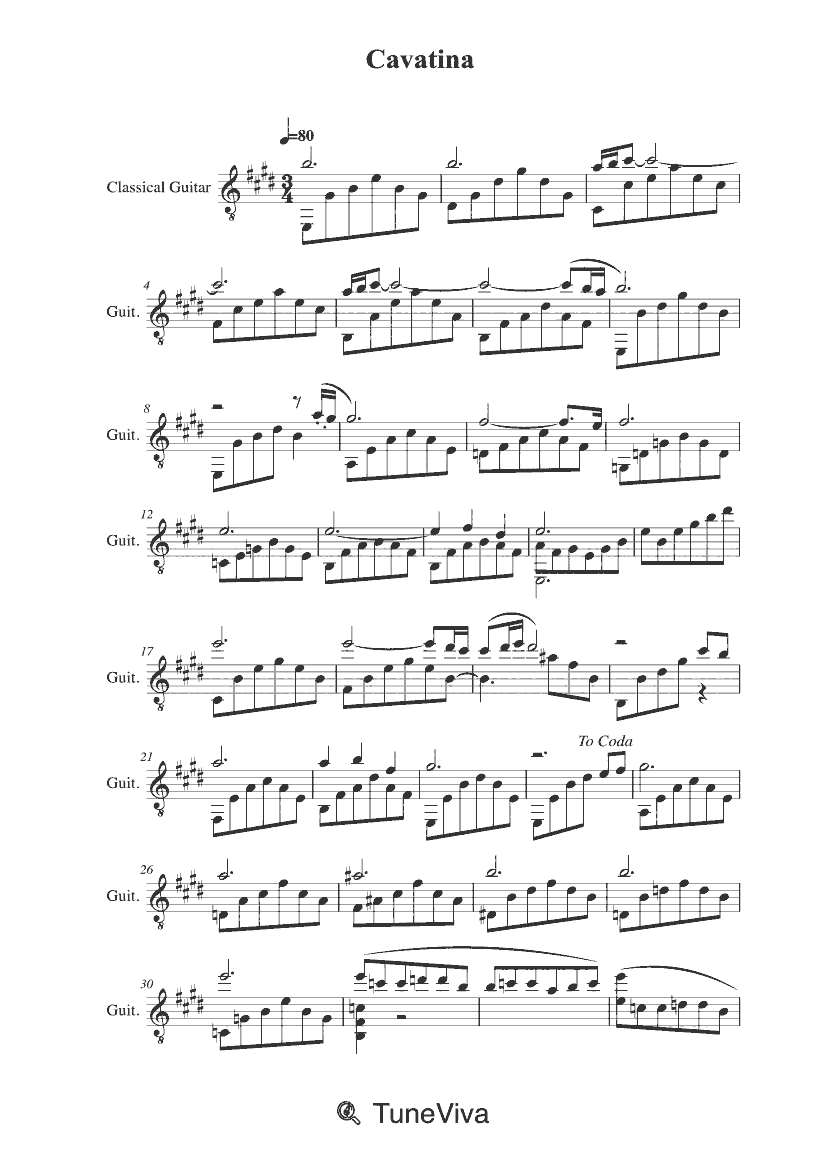
Stanley Myersarrangement by John Williams
Theme Music fromTHE DEER HUNTER
Classical Guitar · 4 min 36 sec
Open score
Stevie Wonder
Trumpet 1; Trumpet 2; Alto Sax +2 parts · 46 sec
Open score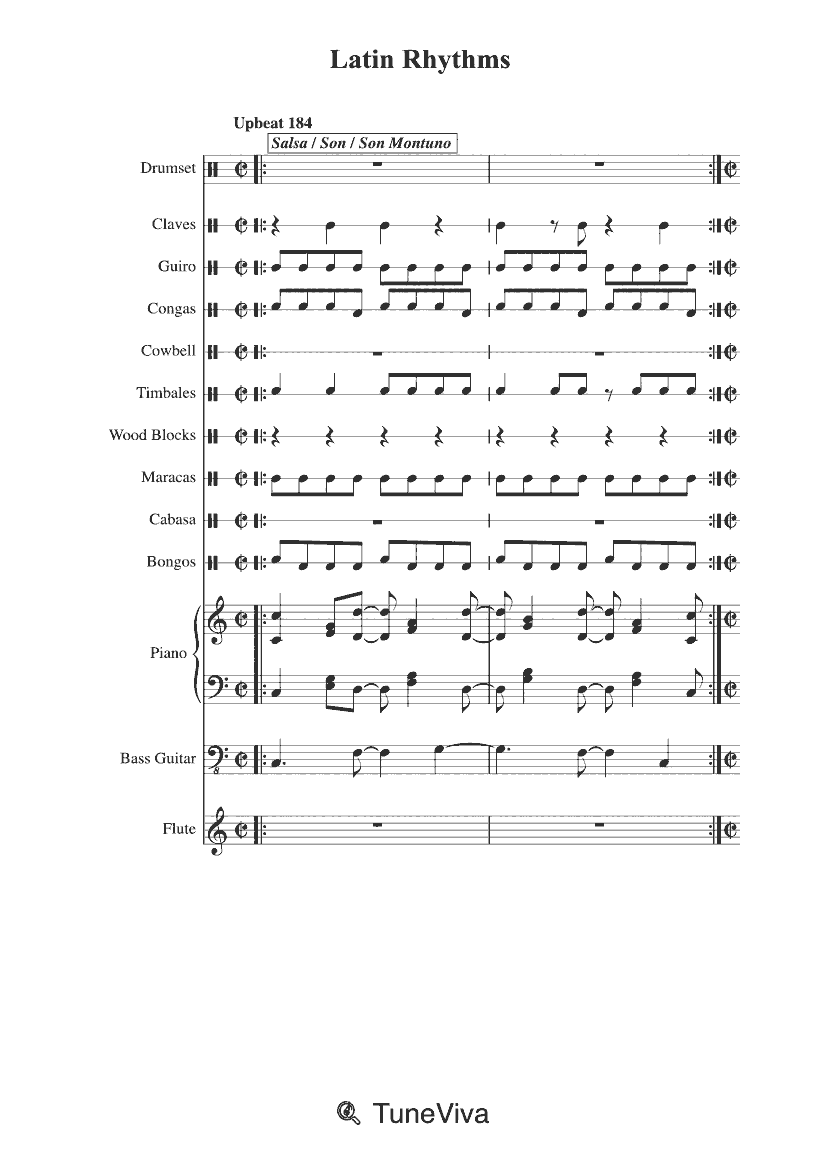
Victor Lpez
Drumset; Claves; Guiro +10 parts · 2 min 58 sec
Open score
Pachelbel arr. Reichwein
Flute; Guitar; Guitar Capo 2 · 2 min 40 sec
Open score
Koji Kondo
Legend of Zelda: Ocarina of Time
Guitar; C Trumpet; Bass Guitar +2 parts · 2 min 40 sec
Open score
Artist: LiSA
Kimetsu no Yaiba OP
Violin; Viola; Guitar +2 parts · 1 min 36 sec
Open score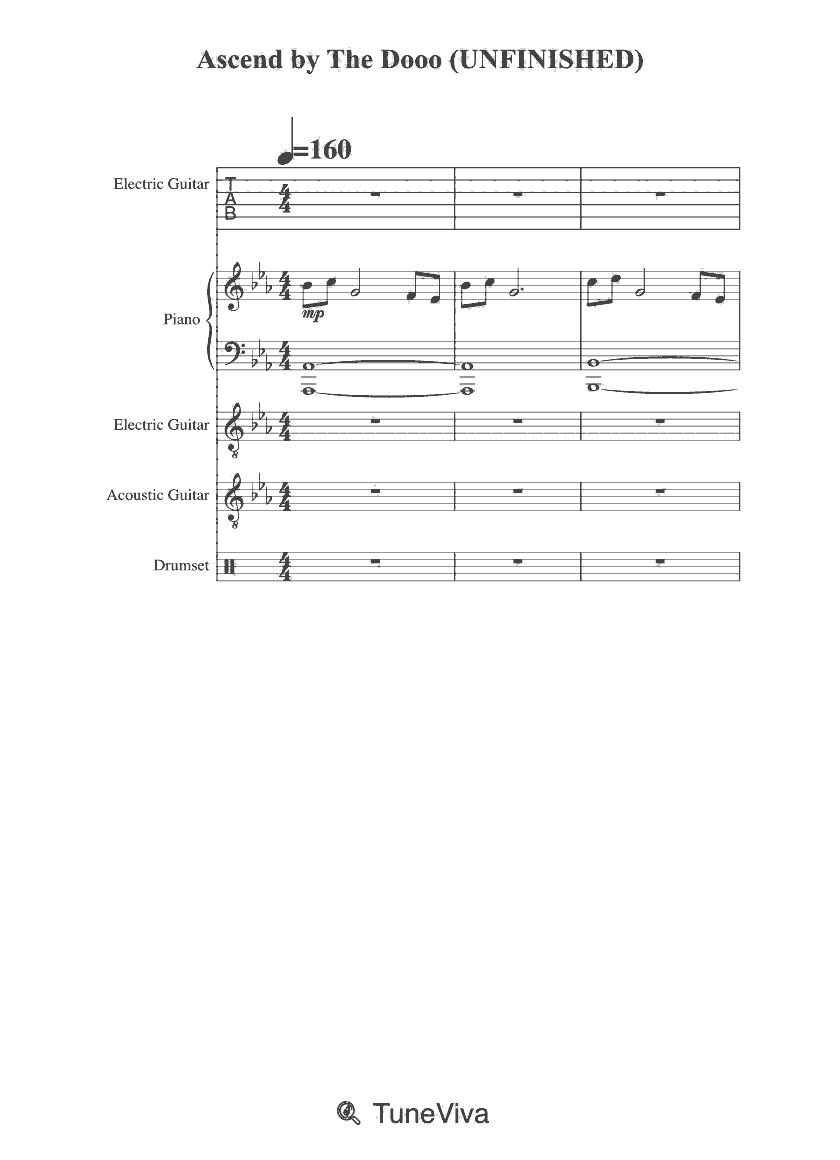
Jaden Lothes
Electric Guitar; Piano; Acoustic Guitar +1 parts · 2 min 43 sec
Open score
Muse
Piano; Violoncello; Acoustic Guitar · 4 min 29 sec
Open score
Foster the People
Ukulele; Electric Piano; Bass Guitar +1 parts · 1 min 39 sec
Open score
Genesis
Vocal; Distortion Guit; Organ 1 +9 parts · 6 min 53 sec
Open score
Ramin Djawadi
Based on the scores from HBO's hit series Game of Thrones
Violin; Viola; Violoncello +12 parts · 11 min 46 sec
Open score
Bart Howard
Evangelion Ending
Voice; Violin; Piano +2 parts · 1 min 21 sec
Open score
Misc Unsigned Bands
Selçuk Balcı
Classical Guitar · 1 min 8 sec
Open score
Arr. by Matt Nash
Tenor Saxophone; B♭ Trumpet; Trombone +4 parts · 11 min 14 sec
Open score
Misc Computer Games
Soprano Recorder; Acoustic Guitar; Viola da gamba +1 parts · 52 sec
Open score
Yeni Trk
Yeni Türkü
Classical Guitar; Classical Guitar [Tablature] · 4 min 4 sec
Open score
Henry Mancini
Classical Guitar · 48 sec
Open score
By: Toby Fox Arr. by: Daniel Alcaide Nombela -based on Sebastien Skaf arrangements
Piano; Guitarra · 3 min 34 sec
Open score
Johann Sebastian BachTranscribed by Jonathan Rodriguez
From the Well-Tempered Clavier: Book 1
Classical Guitar · 2 min 2 sec
Open scorePage 1 of 164
A score is grouped here when at least one named part contains guitar, regardless of letter case. That means a score may qualify through a Guitar part, a Classical Guitar part or a Bass Guitar part. A mention of guitar in the title alone does not qualify a score, and a score may list several other instruments alongside the guitar part.
The part list is the quickest way to tell what kind of guitar writing a score contains. Cavatina names one Classical Guitar part; the Bourrée in E minor, BWV 996 score names one Guitar part; Superstition names five parts including Bass Guitar. The first two are solo guitar scores in this collection, while the Stevie Wonder score is an ensemble arrangement with a bass guitar part.
An arranger credit belongs to the particular score. Cavatina carries a credit for Stanley Myers with an arrangement by John Williams, so the score identifies an arrangement rather than only a composer. The Bach Bourrée score names Johann Sebastian Bach but supplies no separate arranger credit in the selected details; that does not prove the score matches Bach's original instrumentation.
Opening key, time signature and tempo help distinguish versions that share a title. Cavatina begins with four sharps in 3/4 at 80 BPM. The Bourrée in E minor, BWV 996 score begins with one sharp in 4/4 at 120 BPM. Superstition lists three flats, two flats and five flats across its parts, all in 4/4. Use these details to check that a score matches the version you have in mind.
Score parts: Guitar. Catalogue duration 3 min 20 sec. Opening key signature: 1 sharp. Opening time signature: 4/4. Opening tempo: 120 BPM.
Score parts: Classical Guitar. Catalogue duration 4 min 36 sec. Opening key signature: 4 sharps. Opening time signature: 3/4. Opening tempo: 80 BPM.
Score parts: Trumpet 1, Trumpet 2, Alto Sax, Trombone, Bass Guitar. Catalogue duration 46 sec. Opening key signature: 3 flats; 2 flats; 5 flats. Opening time signature: 4/4.
TuneViva has 3,264 guitar sheet music files whose imported part name includes guitar. Open a score to preview the notation, play it, and download the files that score offers.
A file is included only when an imported part name contains guitar. A title that mentions guitar, or a playback sound, is not enough. Files whose import did not record a part name are not on this page. The part name describes that file. It is not proof the work was first written for guitar.
Yes. Open a guitar score to preview the notation and play it in the browser. Download the files that score offers after you have compared them.
Open the guitar score first. The score page shows the files that score offers. TuneViva does not promise one file type for every score.
506 of the files on this page include lyric text. Lyric text does not by itself show a vocal part. The score page shows that text when the file has it.
Open a guitar score and choose practise. Listen with Play, then play the matching keys on screen. Left and Right select the lower and upper staff, and you can change the playback tempo. Connect MIDI works in a compatible browser.
Use the work page for that catalogue name. This guitar page lists every file whose part name matches, so one piece can appear more than once. A genre page uses the single genre label stored on the file.
Yes. It is not an examination result, and it is not every file on this page.
The collection includes any score whose named parts contain the word guitar. Examples among the highlighted scores are a single Classical Guitar part for Cavatina, a single Guitar part for the Bourrée in E minor, BWV 996, and a Bass Guitar part in the five-part score of Stevie Wonder's Superstition. The common thread is the part name, not one style or one type of guitar.
The score titled J. S. Bach - Bourrée in E minor, BWV 996 lists one Guitar part, opens with one sharp and 4/4 time, and gives a tempo of 120 BPM. Those details describe this score and do not establish what instrument Bach originally intended. The score title and catalogue name connect it with the Suite in E minor, BWV 996.
The Cavatina score lists a single Classical Guitar part in 3/4 time, with an opening key signature of four sharps and a tempo of 80 BPM. Its credit names Stanley Myers with an arrangement by John Williams. The available score details do not identify a larger source work beyond that title and credit.
The Superstition score lists five parts: Trumpet 1, Trumpet 2, Alto Sax, Trombone and Bass Guitar. It appears in this collection because one named part is Bass Guitar. The score is a multi-part arrangement rather than a solo guitar transcription.
The named score parts are the guide. Cavatina names Classical Guitar; the Bach Bourrée score names Guitar; Superstition names Bass Guitar. A part name describes that particular score and may not match the work's original instrumentation or the instrument you would use in another arrangement.
Cavatina opens with four sharps in 3/4 at 80 BPM. The Bourrée in E minor, BWV 996 score opens with one sharp in 4/4 at 120 BPM. Superstition lists key signatures of three flats, two flats and five flats across its parts, all in 4/4.
Compare the named parts first: one Guitar or Classical Guitar part indicates a solo guitar score, while Bass Guitar within a larger part list indicates an ensemble score. Then compare the opening key, time signature and tempo. Cavatina and the Bach Bourrée differ in key, metre and tempo, and those details help you match a score to the version you need.