
Treulich Geführt (Bridal Chorus from "Lohengrin")
Richard Wagner
(Bridal Chorus from Lohengrin)
Soprano; Alto; Tenor +2 parts · 4 min 5 sec
Open scoreWedding march sheet music for ceremony planning, gathered here from titles that name a bridal chorus or a wedding march. The selection includes Felix Mendelssohn's Wedding March from A Midsummer Night's Dream Op.61 in a piano version, Richard Wagner's 'Treulich Geführt' (Bridal Chorus from Lohengrin) with soprano, alto, tenor, bass and piano parts, and a quartet listed as Wedding March Quartet. The titles do not say whether a piece is intended as a processional or recessional, so compare the score, key, time signature and instrumentation before choosing.
Scores 1–20 of 27
Richard Wagner
(Bridal Chorus from Lohengrin)
Soprano; Alto; Tenor +2 parts · 4 min 5 sec
Open score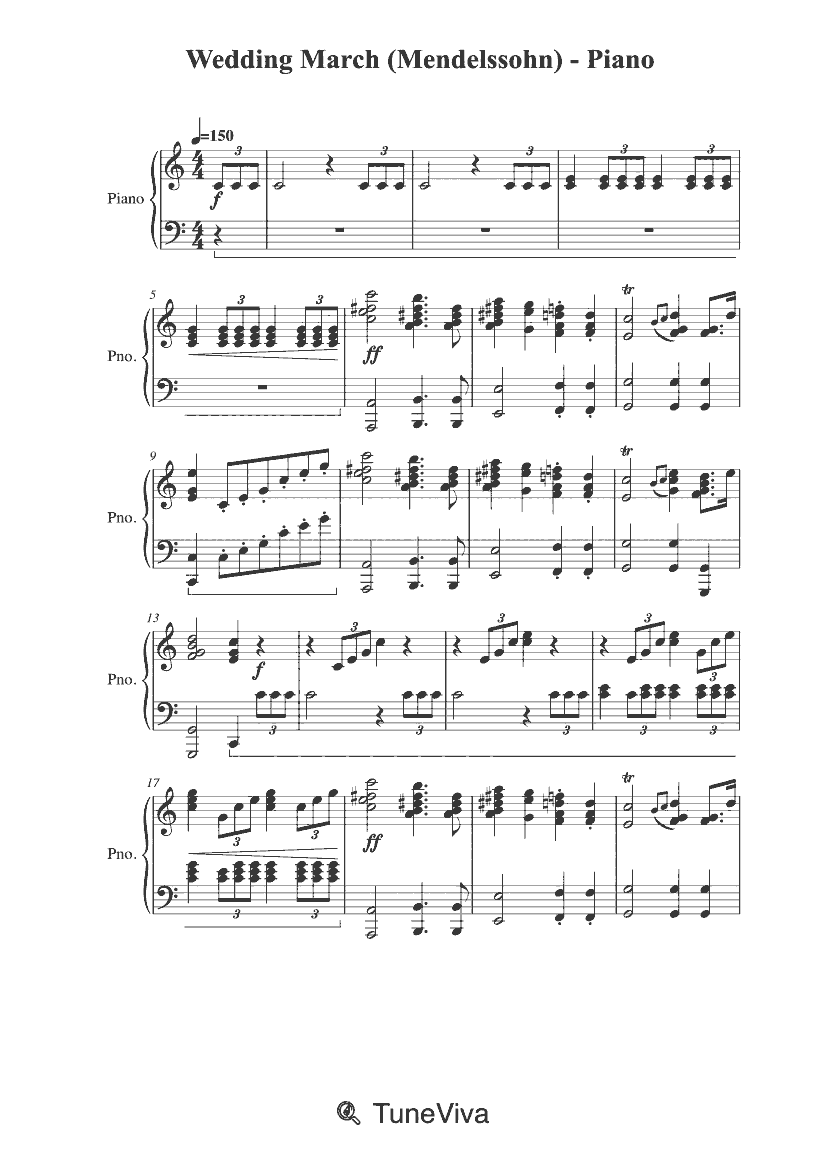
FelixMendelssohn-Bartholdy
from A Midsummer Night's Dream
Piano · 4 min 39 sec
Open score
Felix Mendelssohn
Saxofone Tenor B; Saxofone Tenor A; Trompete Bb +1 parts · 57 sec
Open score
Felix Mendelssohn
Violins 1; Violins 2; Violas +2 parts · 57 sec
Open score
Felix Mendelssohn
1e B♭; 2e B♭; Org. · 1 min 54 sec
Open score
Felix Mendelssohn
Dwarsfluit; Klarinet in B♭ · 38 sec
Open score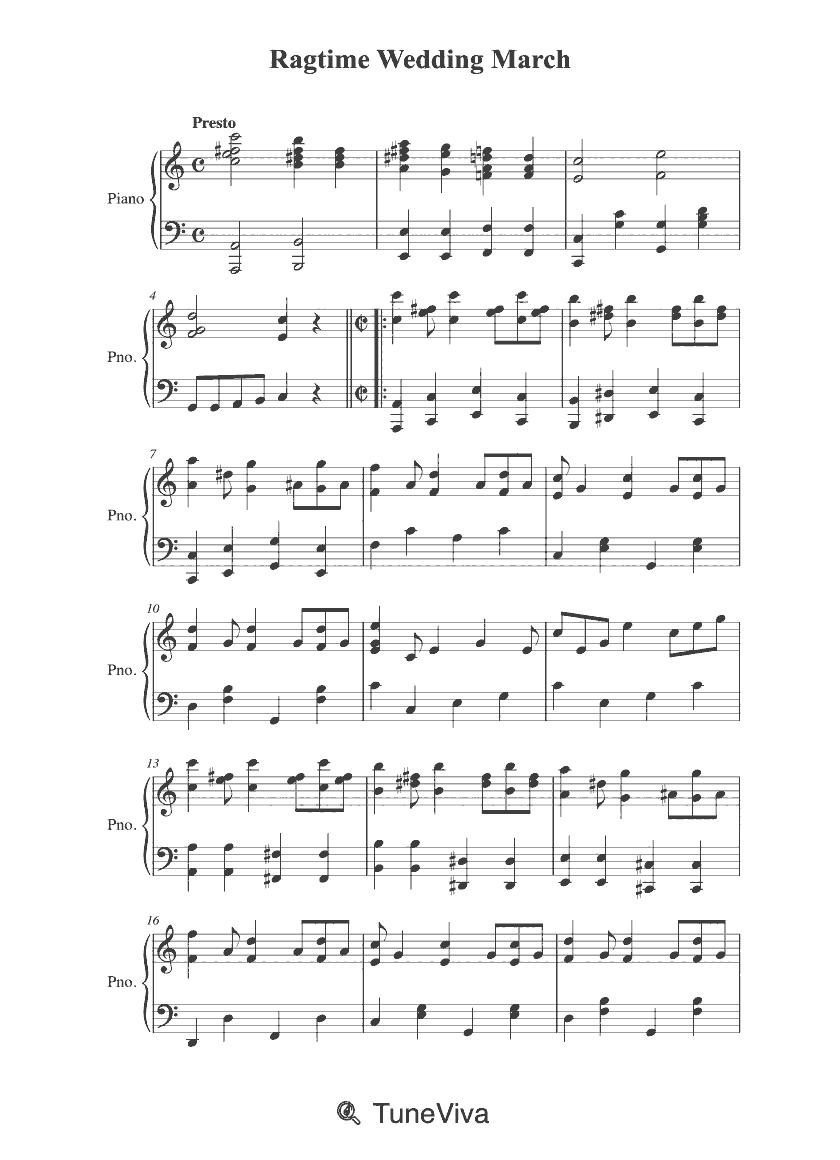
Axel W. Christensen
(Apologies to Mendelssohn)
Piano · 2 min 27 sec
Open score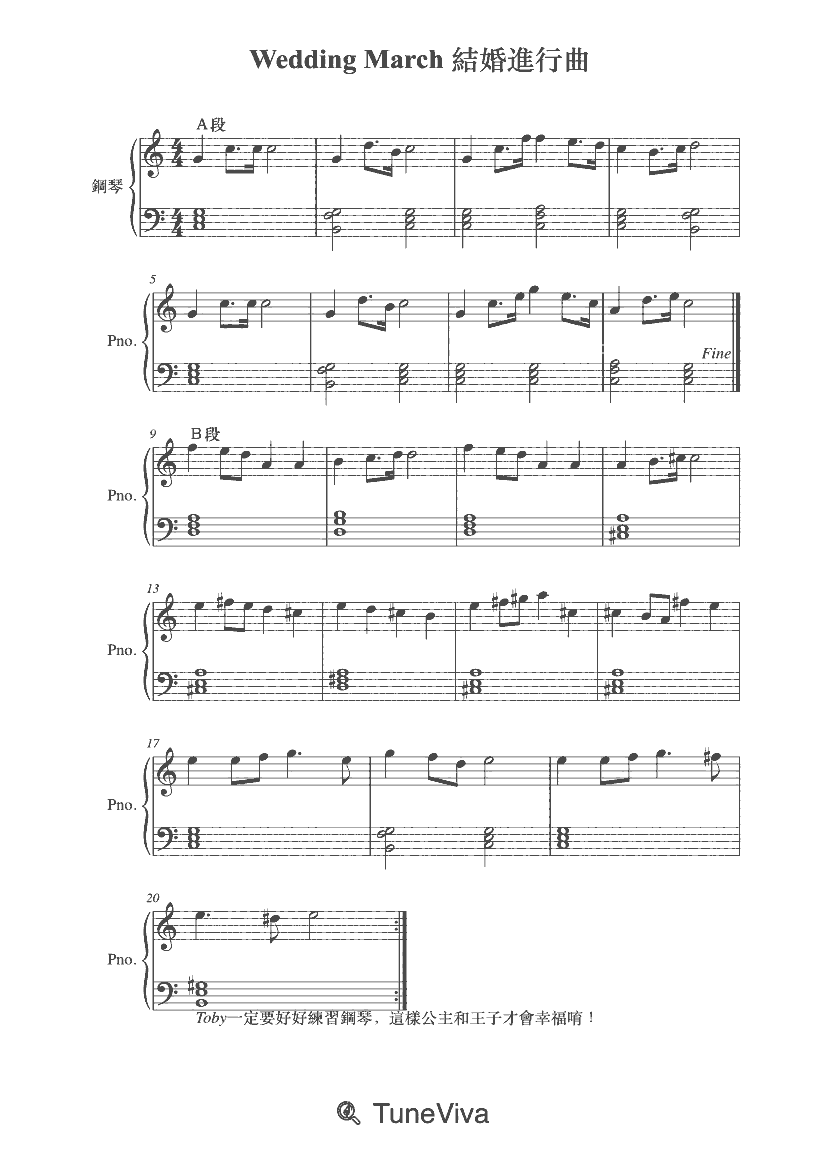
èæ¼çååååæè
鋼琴 · 1 min 20 sec
Open score
Toivo Kuula Op. 3 No. 2
Wedding march
Piano · 4 min 9 sec
Open score
Felix Mendelssohn
from A Midsummer Night's Dream
Organo a canne · 4 min 53 sec
Open score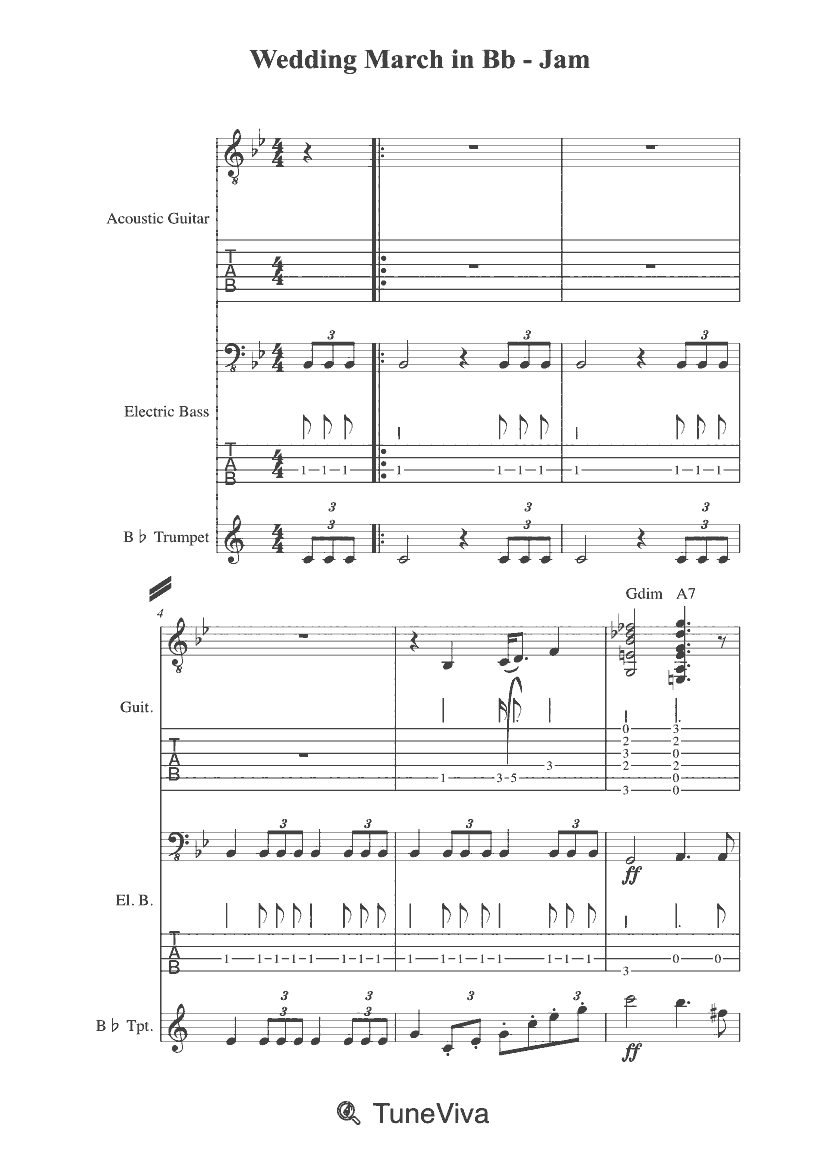
Acoustic Guitar; Electric Bass; B♭ Trumpet · 1 min 25 sec
Open score
Richard Wagner
Grand Piano · 43 sec
Open score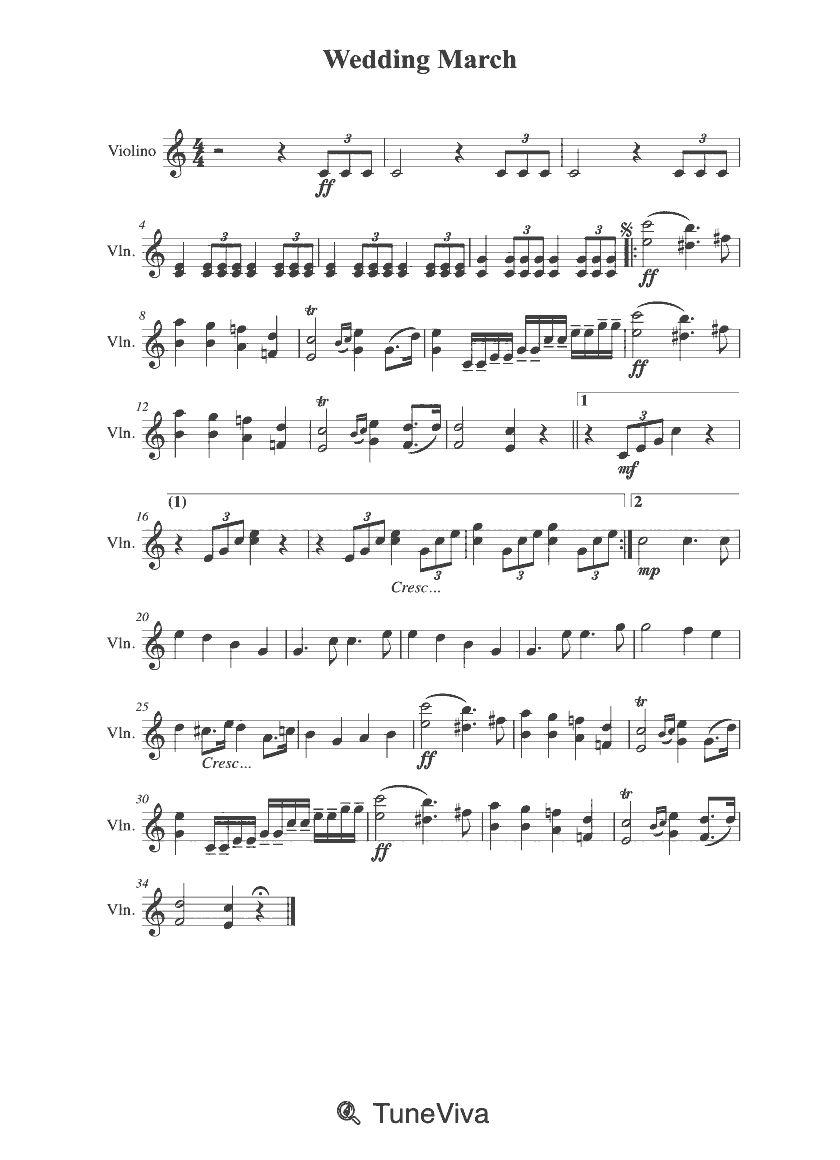
Felix Mendelssohn
Violino · 1 min 23 sec
Open score
trad.
2 min 20 sec
Open score
Misc tunes
38 min 30 sec
Open score
Misc tunes
54 sec · Score #1574
Open score
Misc tunes
1 min 4 sec
Open score
Misc tunes
54 sec · Score #75878
Open score
Misc tunes
54 sec · Score #192187
Open score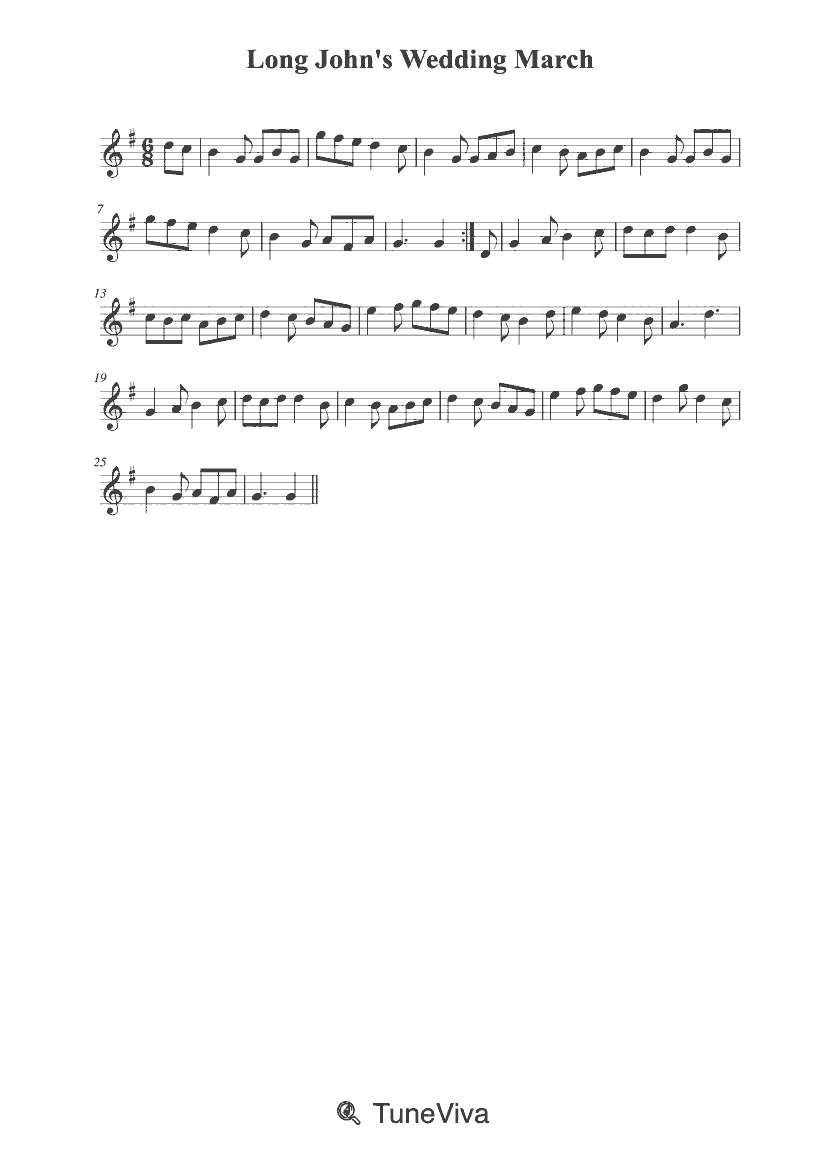
Misc tunes
24 sec
Open scorePage 1 of 2
Felix Mendelssohn's Wedding March is identified in one listing as coming from A Midsummer Night's Dream Op.61, and that score is for piano. Richard Wagner's 'Treulich Geführt' is titled as the Bridal Chorus from Lohengrin; its listed parts are soprano, alto, tenor, bass and piano. The two titles represent different repertoire, so compare the work name and instrumentation rather than treating every 'wedding march' title as the same piece.
The Mendelssohn piano entry lists a single piano part. The Wagner entry lists four voice parts plus piano. The Wedding March Quartet entry lists two tenor saxophones, B-flat trumpet and trombone. These part lists describe individual scores and should be checked against the notation; they are not proof of a work's original instrumentation.
Titles in this collection name a bridal chorus or a wedding march, but they do not label a piece as processional or recessional. The opening key, time signature, tempo and part layout can help you compare versions, but the score itself is the place to judge whether a setting suits the moment. This collection is not a complete wedding music plan; pieces whose titles do not use those terms may be absent.
The entry titled Wedding March Quartet gives March in D major Op.108 as its work title, so it should not be assumed to be Mendelssohn's Midsummer Night's Dream march without checking. One listing also uses the composer spelling 'FelixMendelssohn-Bartholdy'. Verify the work, key and parts on the score before selecting a version.
Score parts: Soprano, Alto, Tenor, Bass, Piano. Catalogue duration 4 min 5 sec. Opening key signature: 2 flats. Opening time signature: 2/4. Opening tempo: 112 BPM.
Score parts: Piano. Catalogue duration 4 min 39 sec. Opening key signature: No sharps or flats. Opening time signature: 4/4. Opening tempo: 150 BPM.
Score parts: Saxofone Tenor B, Saxofone Tenor A, Trompete Bb, Trombone. Catalogue duration 57 sec. Opening key signature: 2 sharps; No sharps or flats. Opening time signature: 4/4.
TuneViva has 27 files whose titles name a bridal chorus or a wedding march. People looking for a wedding processional will find those titles here. The catalogue does not label which file is a processional.
Bridal-chorus and wedding-march titles are on this page. The catalogue does not say which file is a recessional. This is not a complete set of music for a wedding.
No catalogue title contains the phrase Here comes the bride. Files whose titles name a bridal chorus or a wedding march are the ones on this page.
Haste to the Wedding is a tune name, not a wedding march. The bare word wedding is not a pattern on this page.
No. This is not a complete set of music for a wedding. It is the files whose titles name a bridal chorus or a wedding march.
Yes. Open the score to preview the notation and play it. Download the files that score offers after you have compared them.
Open the score and choose practise. Listen with Play, then play the matching keys on screen. Left and Right select the lower and upper staff, and you can change the playback tempo.
Each file stays on its own score page and on the one genre page named in its catalogue genre field. This collection does not replace that filing.
Felix Mendelssohn's Wedding March is listed as coming from A Midsummer Night's Dream Op.61. The score shown for it here is a piano version, with no sharps or flats and 4/4 time at the opening.
Richard Wagner's 'Treulich Geführt' is titled as the Bridal Chorus from Lohengrin. The listed score has soprano, alto, tenor, bass and piano parts, with an opening key signature of two flats, 2/4 time and a listed tempo of 112 BPM.
The Mendelssohn piano entry lists piano alone. Wagner's Bridal Chorus entry lists soprano, alto, tenor, bass and piano. The Wedding March Quartet entry lists two tenor saxophones, B-flat trumpet and trombone. Check each score's parts before choosing, because a listing can be incomplete.
Titles in this collection name a bridal chorus or a wedding march, but they do not state processional or recessional. Compare the opening key, time signature, tempo and instrumentation on the score to decide which setting suits the ceremony.
The score titled Wedding March Quartet gives March in D major Op.108 as its work title. The separate piano entry is identified as the Wedding March from A Midsummer Night's Dream Op.61. Check the quartet's score before treating it as the Midsummer Night's Dream march.