religiousmusic
2 tracks
Anthony Johnson Showalter taught singing schools, ran a music publisher in Dalton, Georgia, and wrote the tune of one of the most durable American gospel hymns. The catalogue reflects all three activities: 51 scores, about 29 minutes of music and 15,356 notated notes. Thirty-six entries carry lyrics.
The most-viewed title is 'Leaning on the everlasting arms', far ahead of the rest, followed by 'Peace, be still' and a setting of 'Savior, again to Thy dear name we raise'. Gospel songs from his own songbooks make up most of the list, with a handful of shape-note pieces among them. Difficulty is low to moderate: 30 entries at index 0, 15 at index 1 and six at index 2.
Showalter was born on 1 May 1858 at Cherry Grove, West Virginia, and trained at the Ruebush-Kieffer School of Music; he was teaching in shape-note singing schools by the age of fourteen. In 1880 he became principal of the Southern Normal Musical Institute, and in 1884 he founded the Showalter Music Company at Dalton, Georgia. He edited The Glad Evangel for Revival, Camp and Evangelistic Meetings in 1887 and later compiled The Best Gospel Songs and Their Composers (1904). He was an elder of the First Presbyterian Church in Dalton and died at Chattanooga, Tennessee, on 14 September 1924; he is buried at West Hill Cemetery in Dalton.
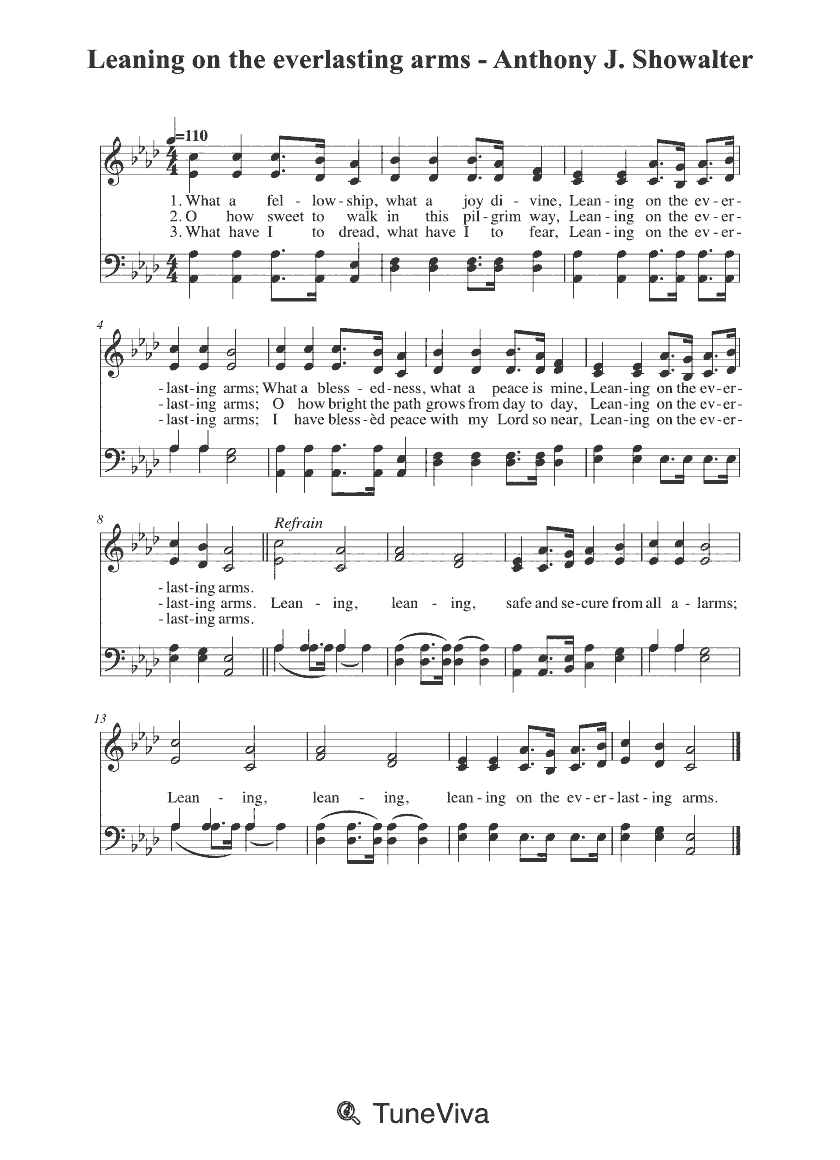
'Leaning on the everlasting arms' appeared in The Glad Evangel in 1887. Showalter wrote the tune and the refrain, taking Deuteronomy 33:27 as his text after two former pupils wrote to him of their wives' deaths, and asked Elisha A. Hoffman to supply the verses; his nephew Samuel Duncan is sometimes credited with part of the music. The hymn became a standard, and its use in the 1955 film The Night of the Hunter and in True Grit (2010) kept it in circulation.
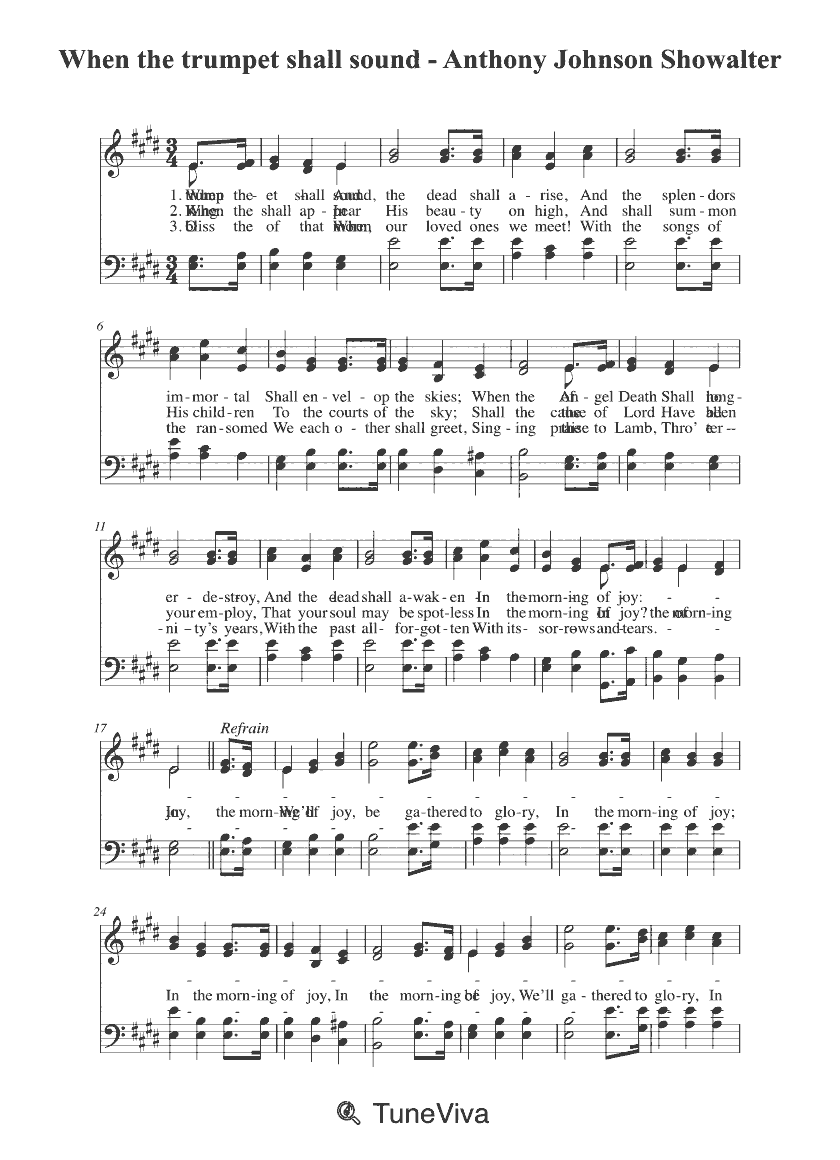
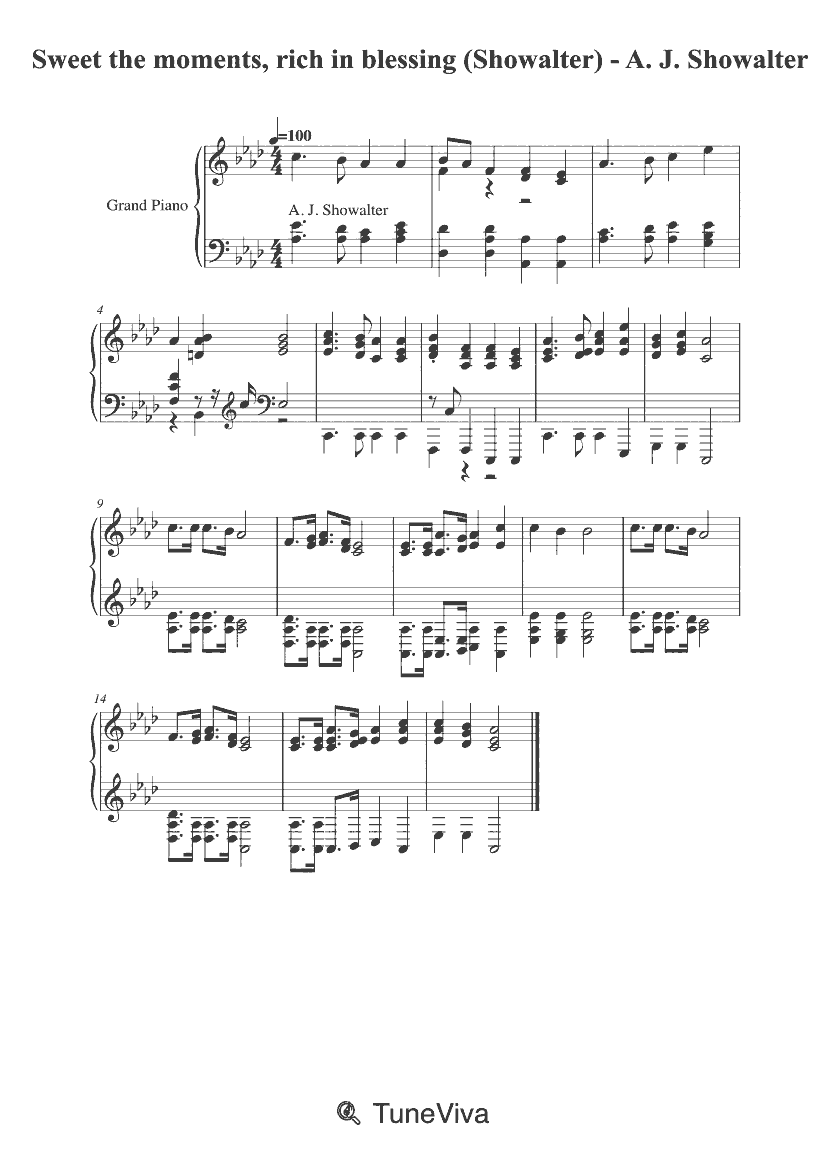
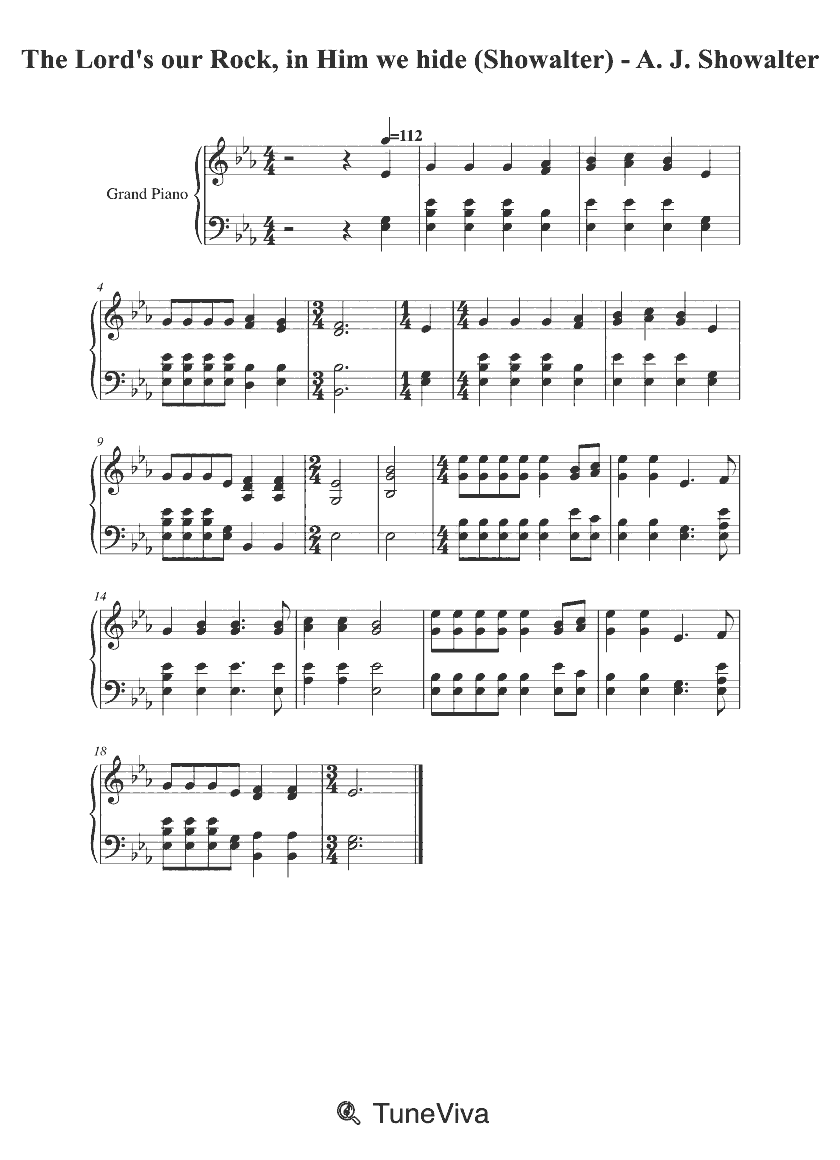
The rest of the catalogue is the working repertory of a southern singing-school publisher: 'Walking in the king's highway', 'When the trumpet shall sound' (1895), 'The Lord's our Rock', 'Be a blessing' and settings of older hymns such as 'Sweet the moments, rich in blessing' and 'Savior, again to Thy dear name we raise'. Almost all are strophic with a refrain.
Showalter's tunes were written for unaccompanied or lightly accompanied congregational singing in singing schools, so a steady beat and clear text matter more than nuance. 'Leaning on the everlasting arms' should move in two, with the refrain firmer than the verse and no rallentando before it. The part-writing is mostly homophonic, and the bass often walks stepwise under the refrain; keep that line audible. Where a title is a setting of an older hymn text, the tune rather than the words is Showalter's contribution.
Published in The Glad Evangel (Dalton, Georgia, 1887). Showalter wrote the tune and the refrain on Deuteronomy 33:27; Hoffman supplied the verses.
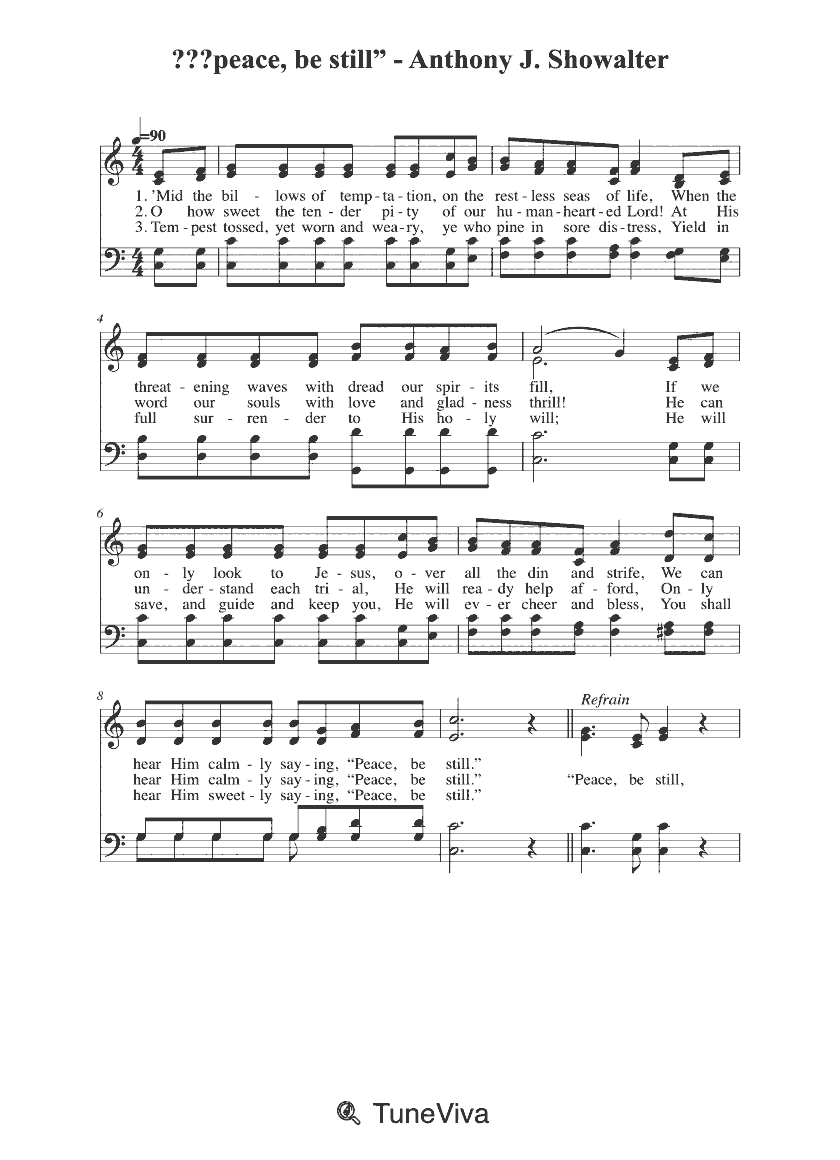
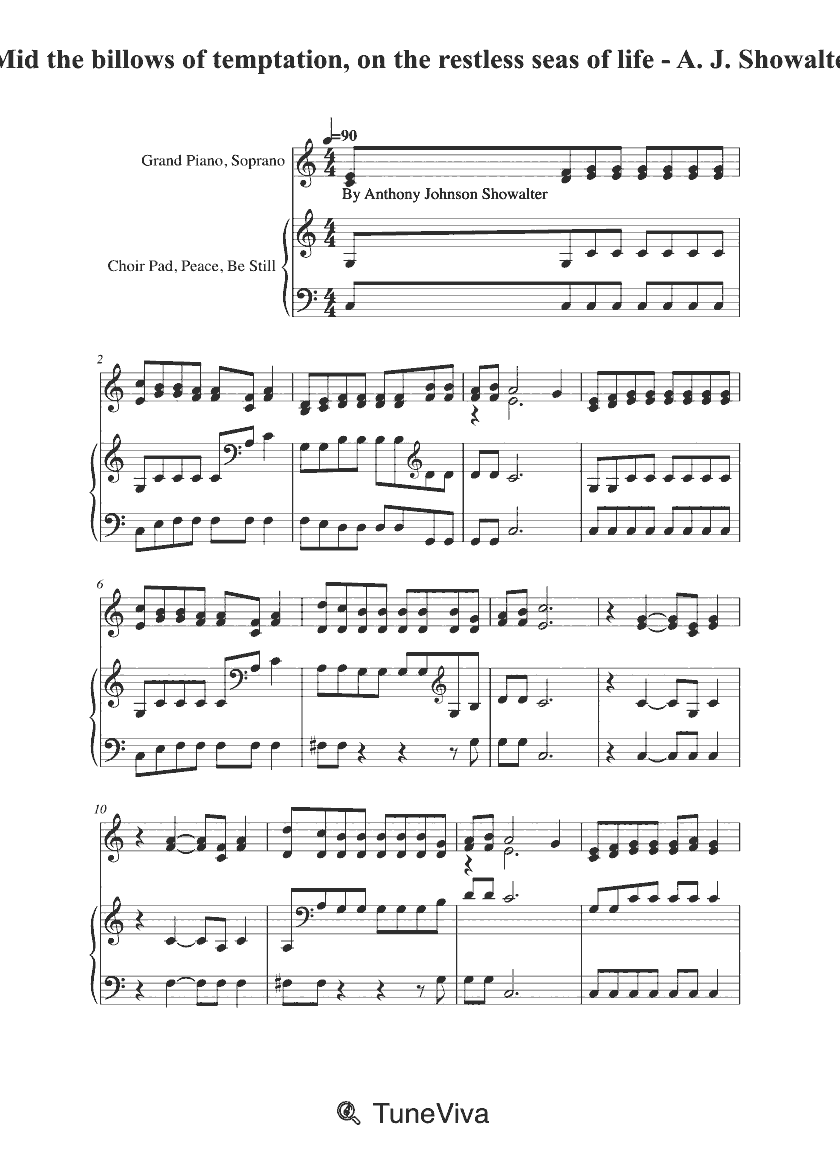
The catalogue's title is damaged at the front, but the piece is the Showalter setting of 'Peace, be still', sung to Mrs J. M. Hunter's 'Mid the billows of temptation'.
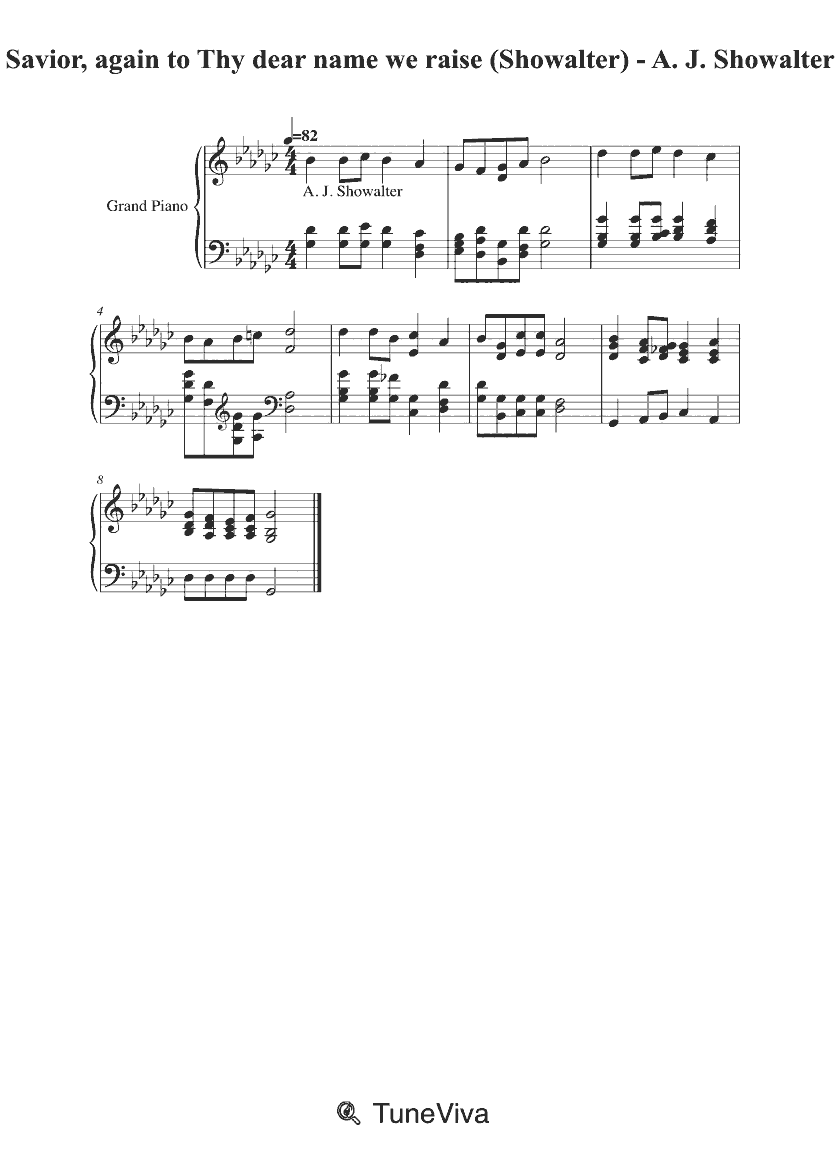
John Ellerton's 1866 evening hymn in a Showalter tune; the bracketed name marks the setting, not the poet.
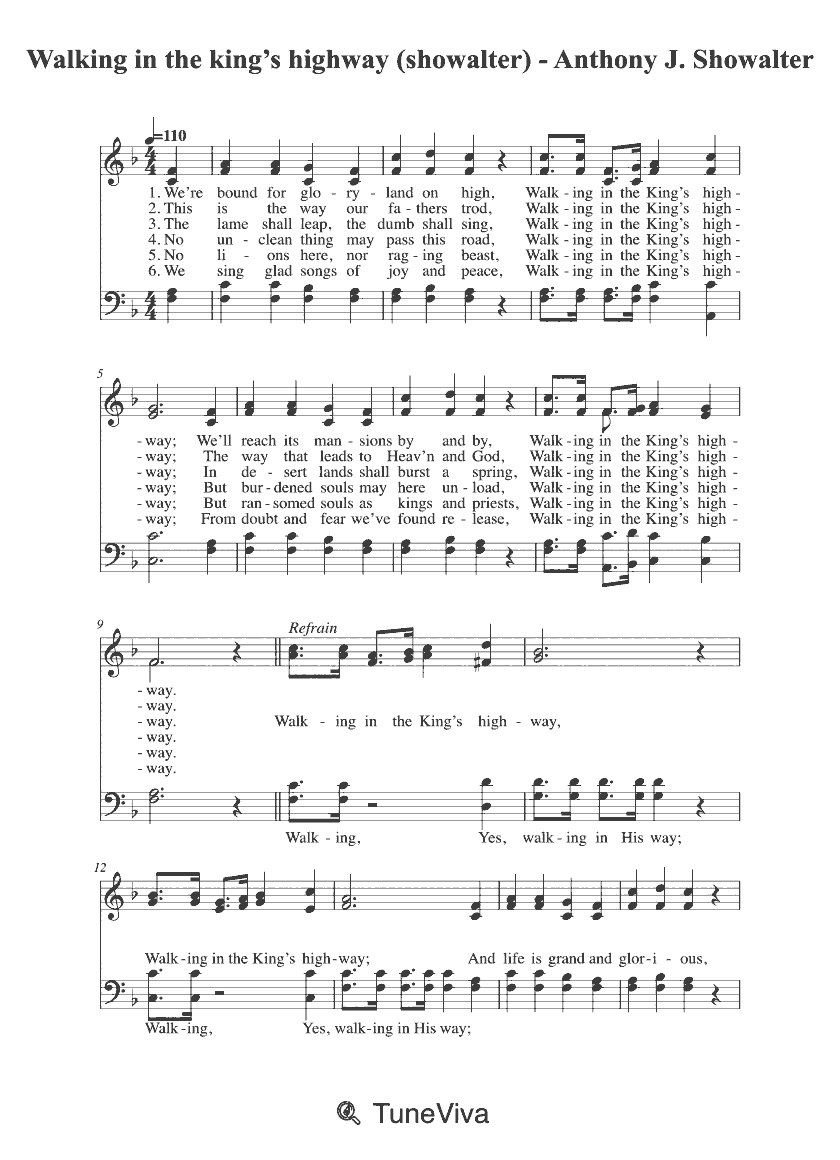
A marching hymn whose refrain gives the title, printed in Showalter's Gospel Songs No. 2 at Dalton.
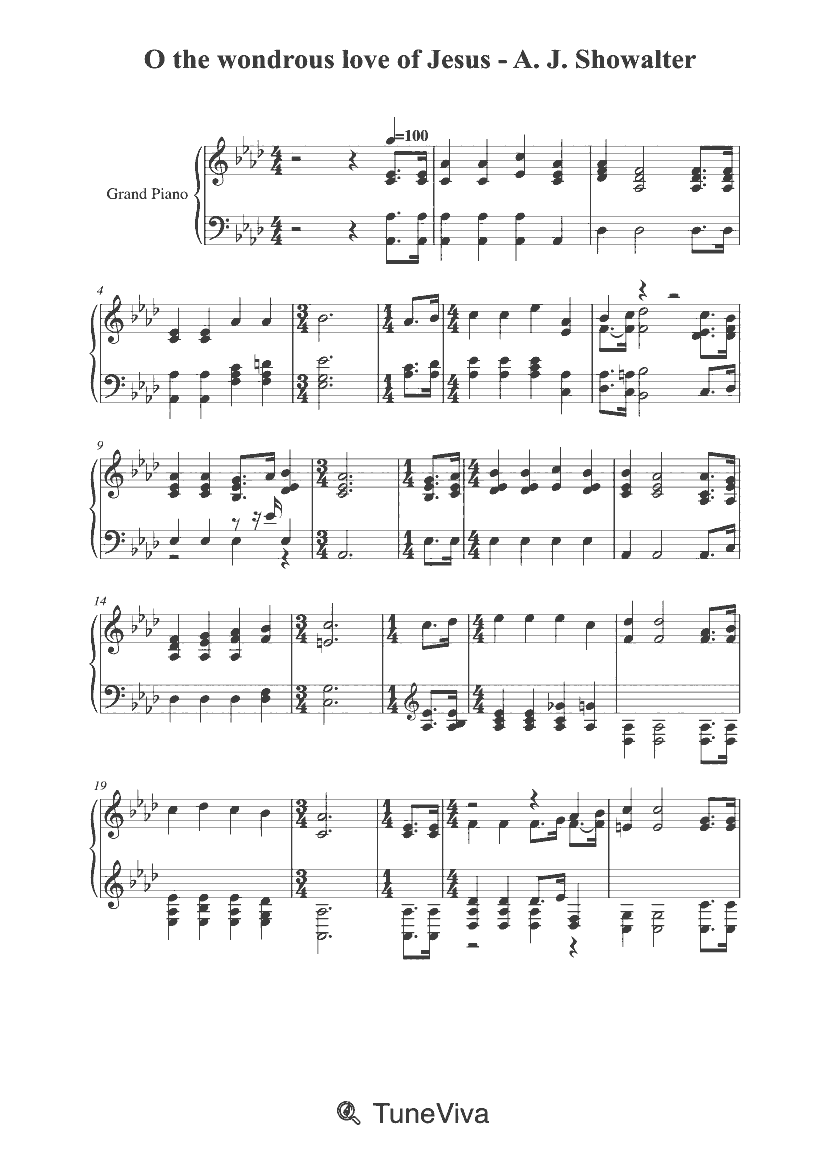
A meditation on the love of Christ in the short, repeating phrases that singing-school classes could pick up by ear.
Dated 1895 and set to a text by Mrs R. A. Evilsizer, on the last trumpet of 1 Corinthians 15.
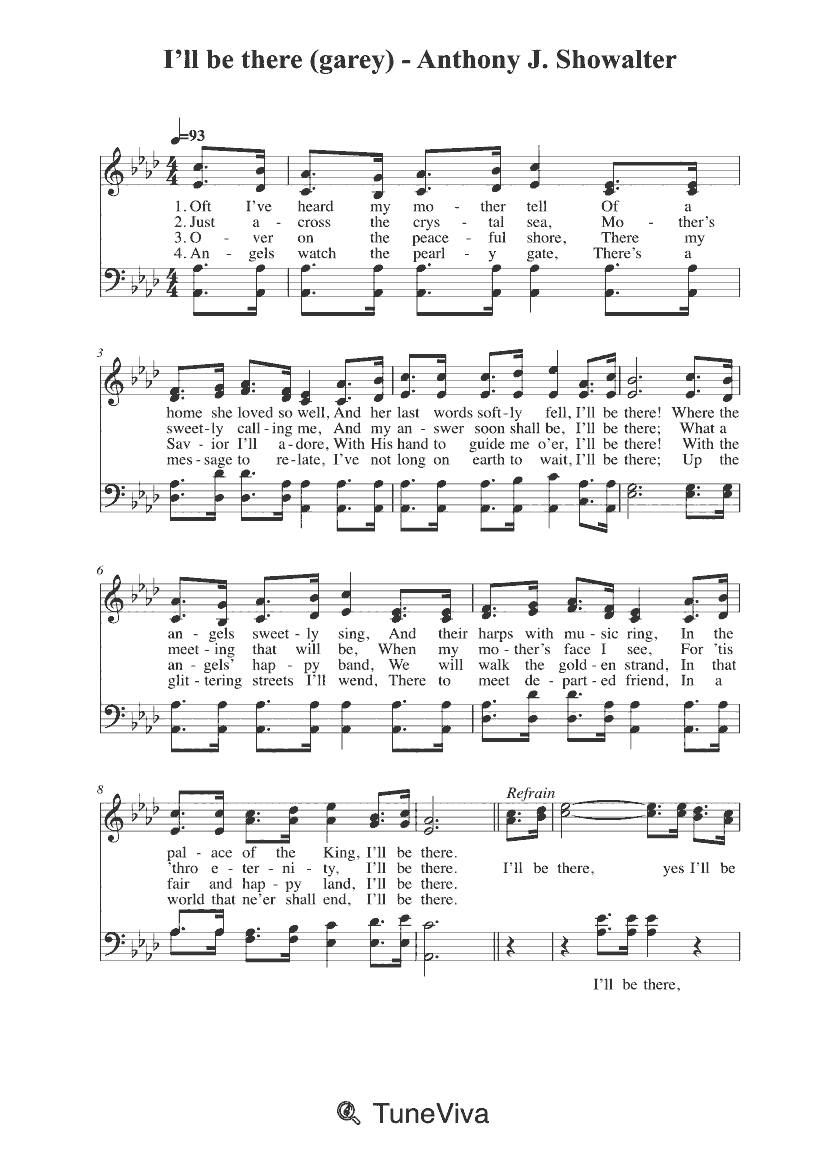
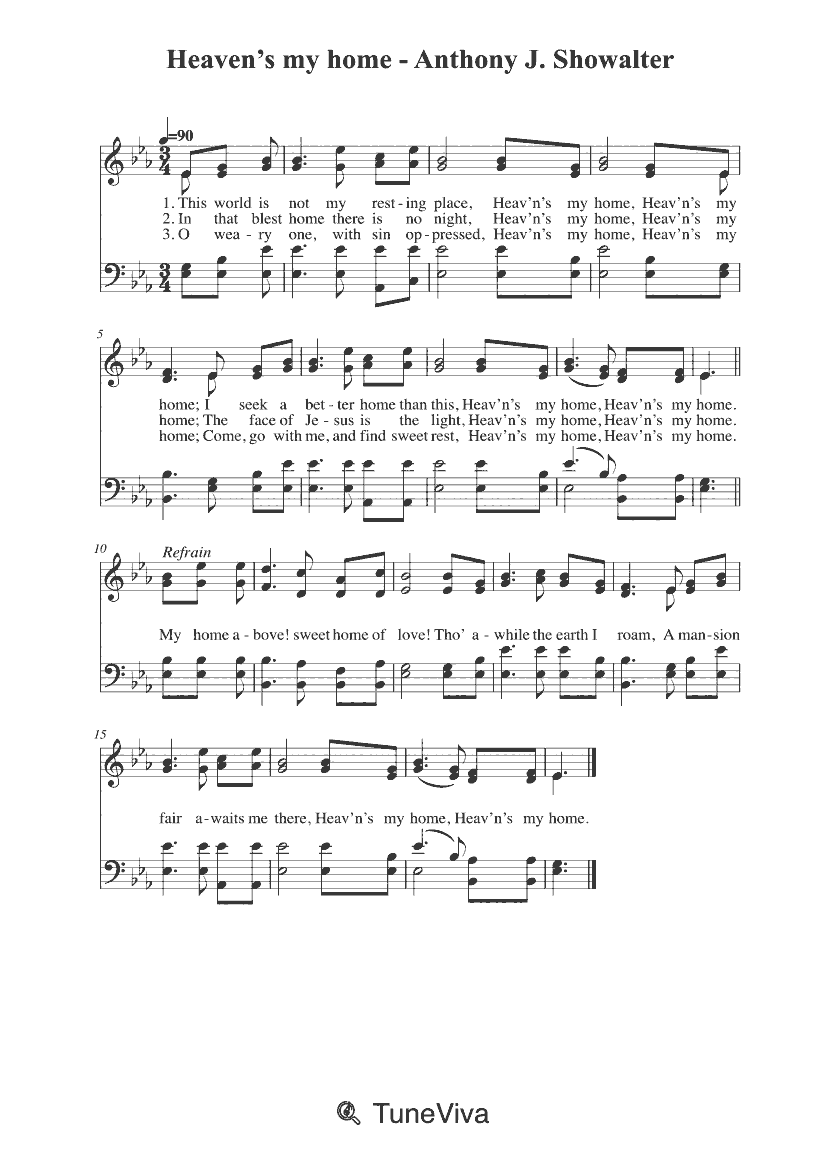
A heaven-meeting song; the name in brackets appears to be the text author, though the catalogue does not label it.
Walter Shirley's 1770 hymn on the atonement, sung to a Showalter tune rather than to the older English melody usually paired with it.
Vernon J. Charlesworth's refuge hymn, set by Showalter; the bracketed name distinguishes it from other settings of the same text.
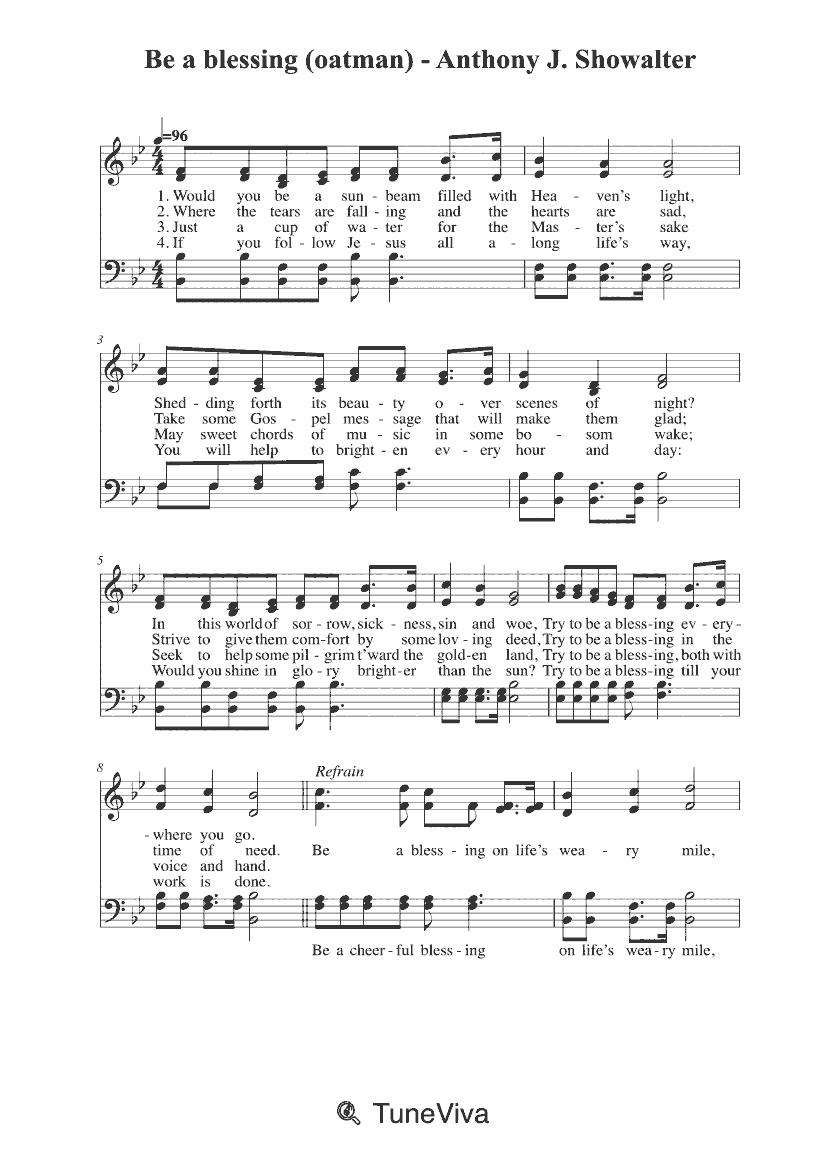
Johnson Oatman Jr's exhortation to usefulness, given a refrain tune by Showalter for revival meetings.
Fifty-one, about 29 minutes of music and 15,356 notated notes. Thirty-six entries include lyrics.
Showalter wrote the tune and the refrain, Elisha Hoffman the verses, and the hymn was printed in The Glad Evangel in 1887.
A short course, often in a church or schoolhouse, teaching note-reading and part-singing; Showalter ran them and wrote the books used in them.
The catalogue entry for 'Peace, be still' has damaged opening characters. The music is the Showalter setting of that text, and the display title here restores the words that survive.
Catalog editions and arrangements attributed to A. J. Showalter.