classical
1 tracks
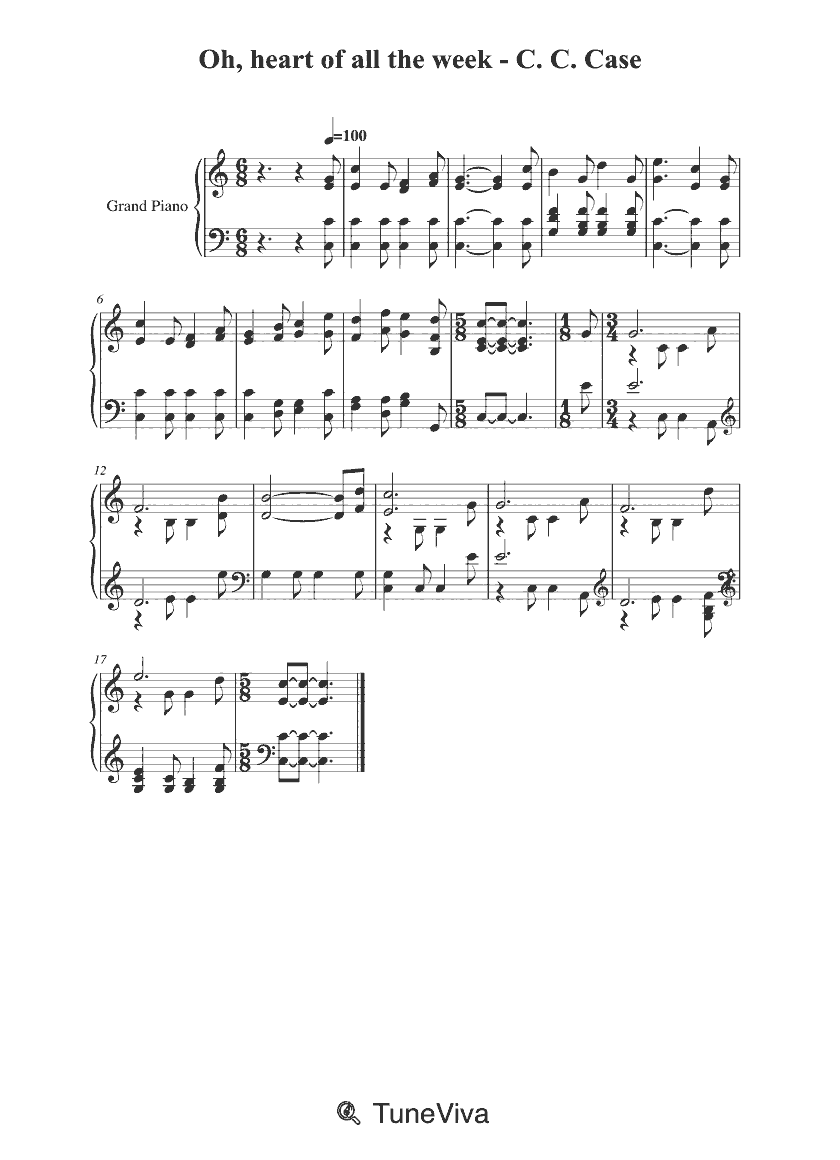
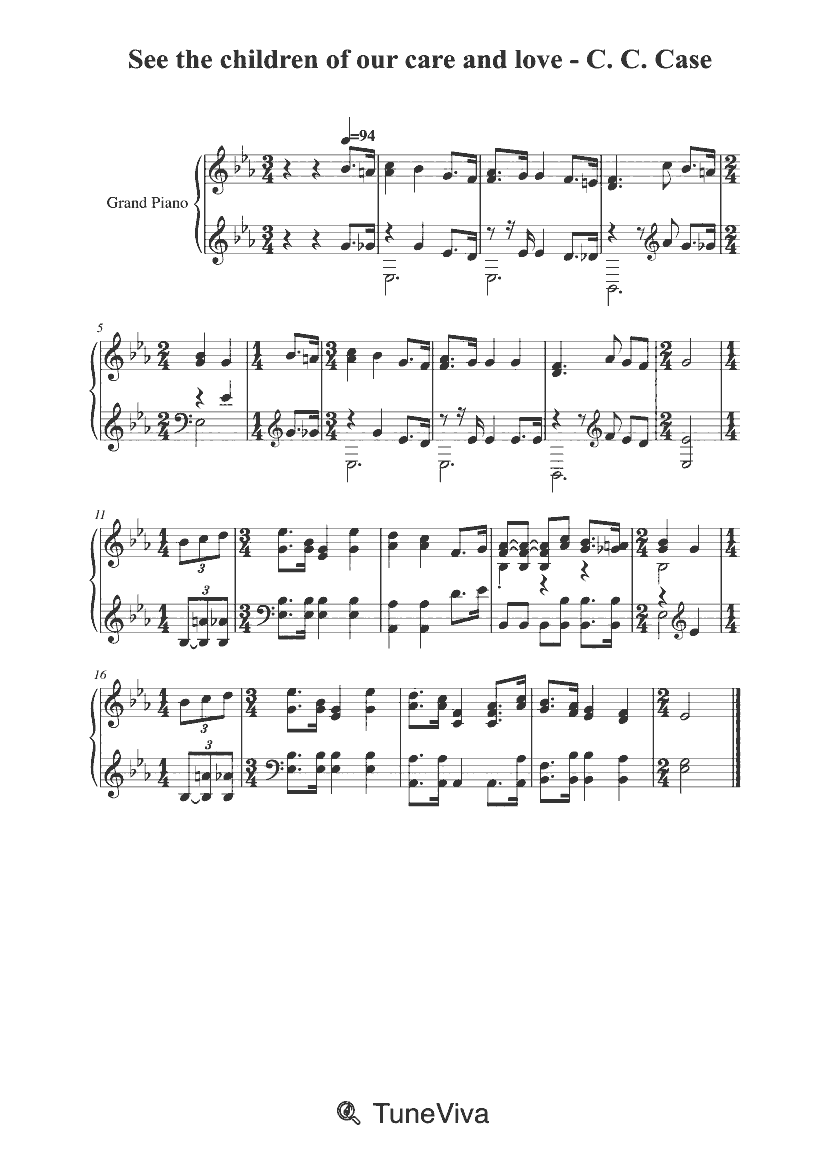
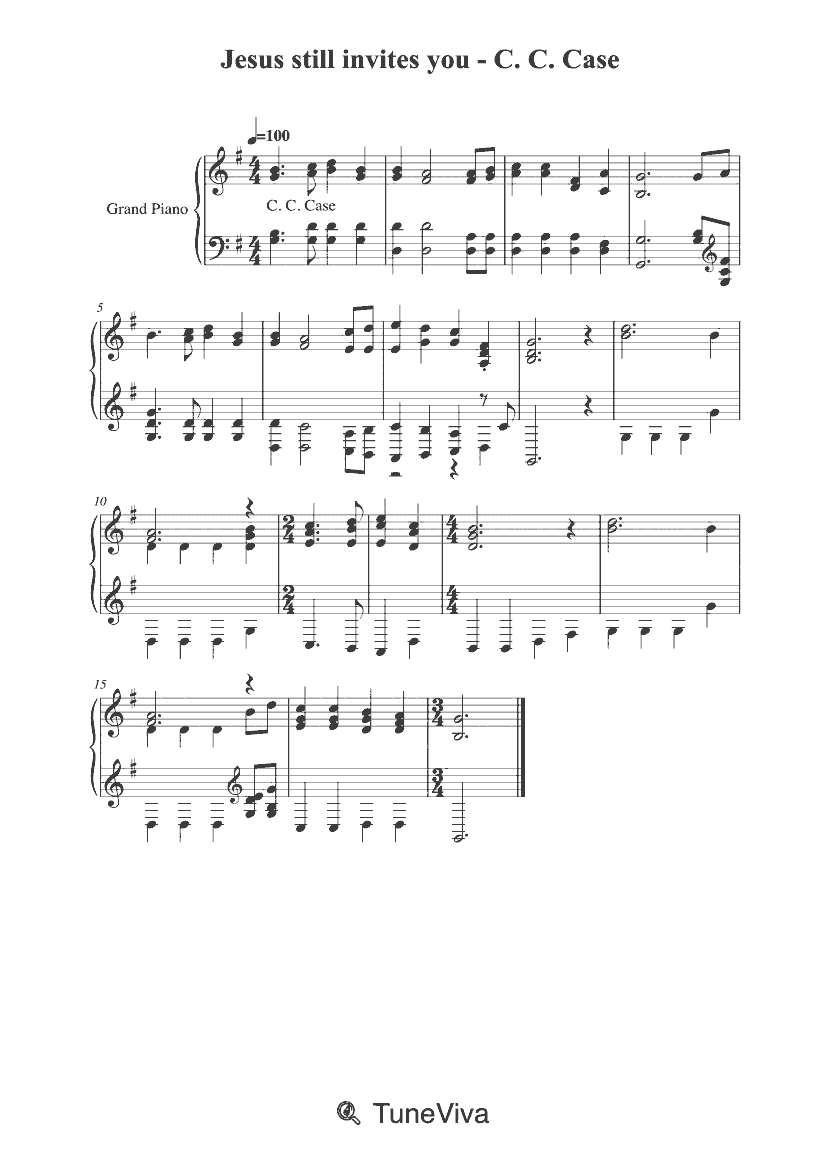
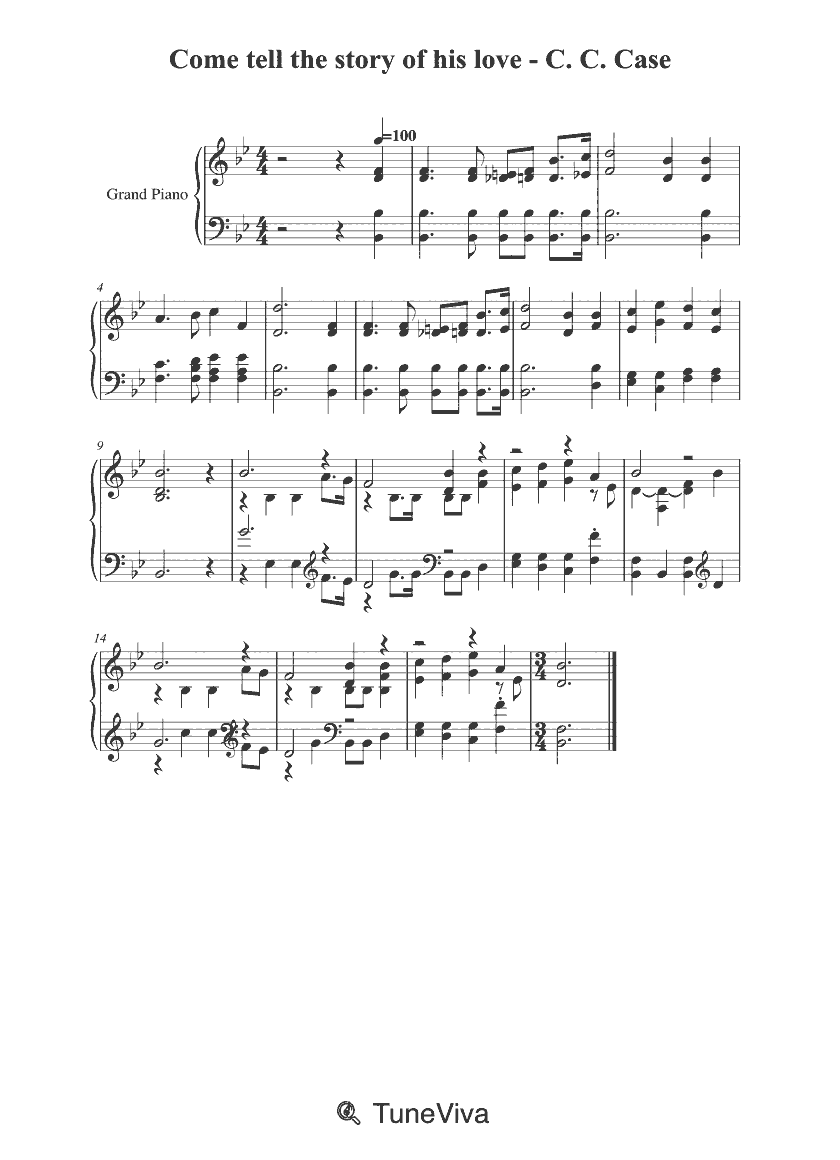
The catalogue holds 35 scores under C. C. Case, about 20 minutes of music and 9,398 notated notes. Fourteen entries carry lyrics and the difficulty spread runs across all three indexes: five at 0, twenty-one at 1 and nine at 2. Every entry is tagged classical, though the material is gospel hymnody rather than concert repertoire.
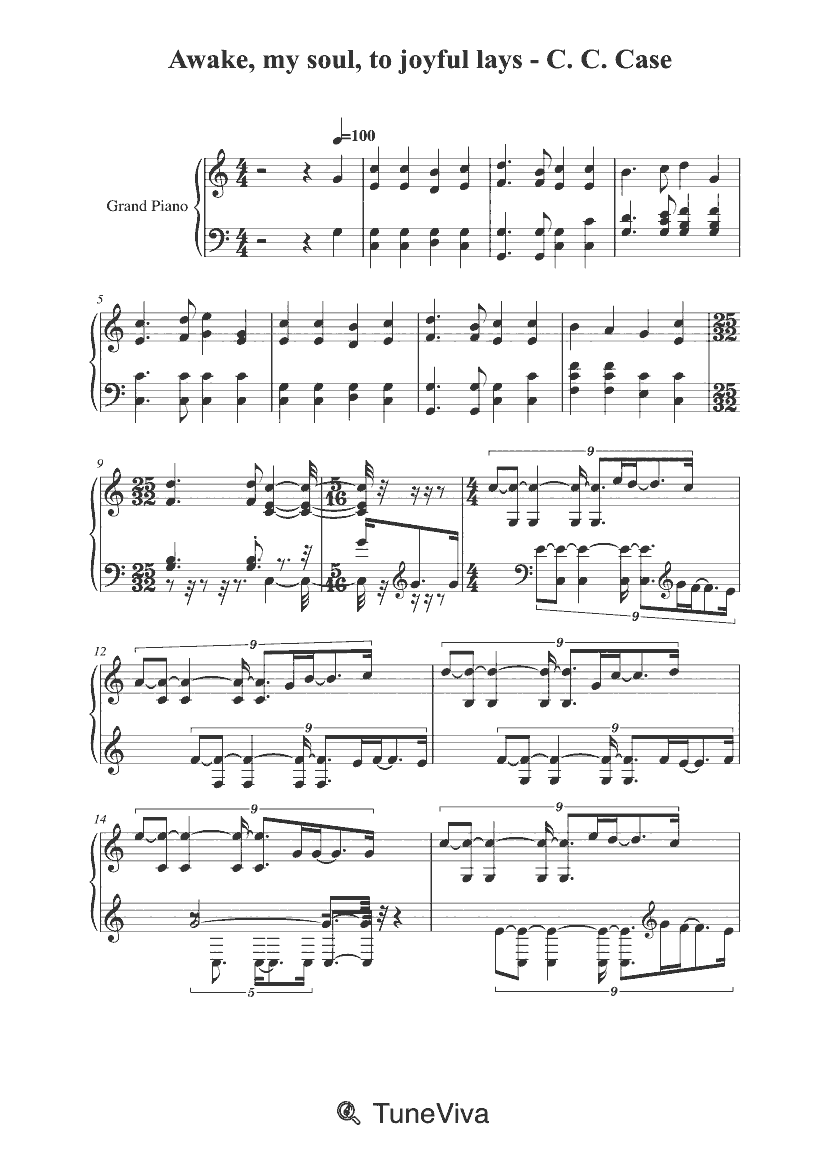
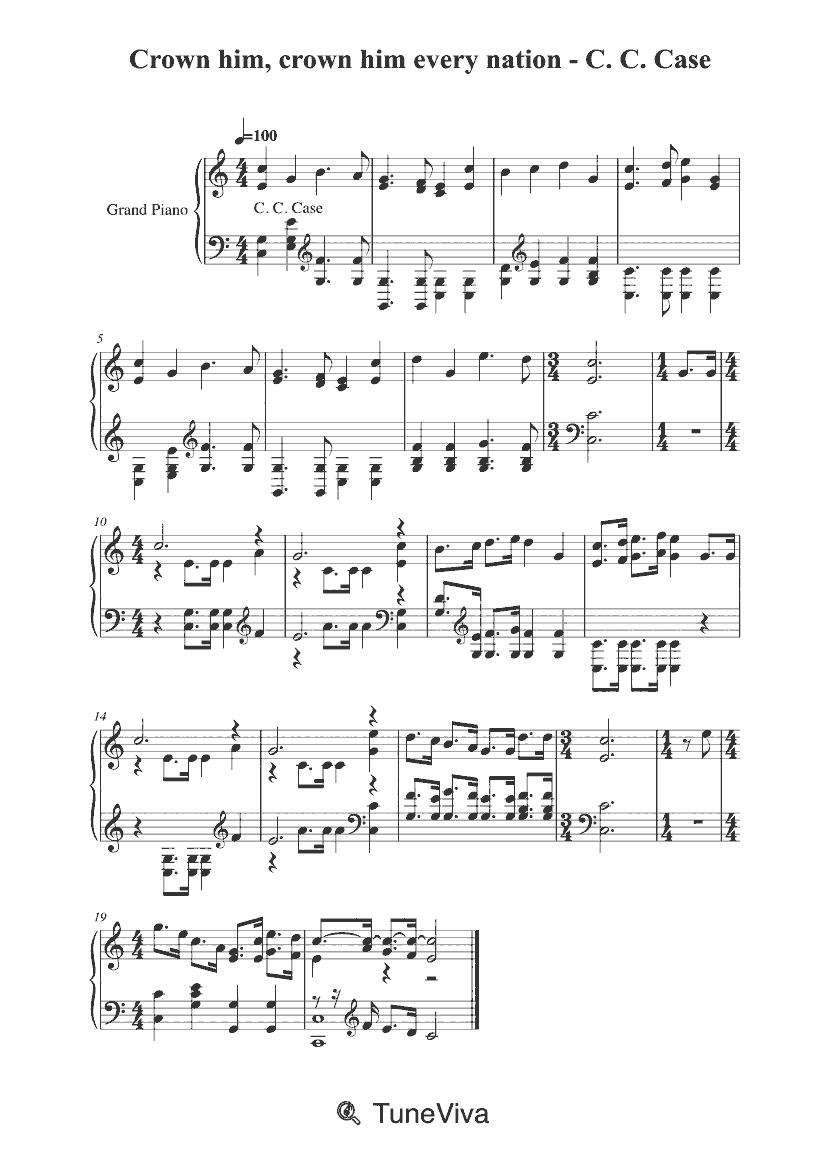
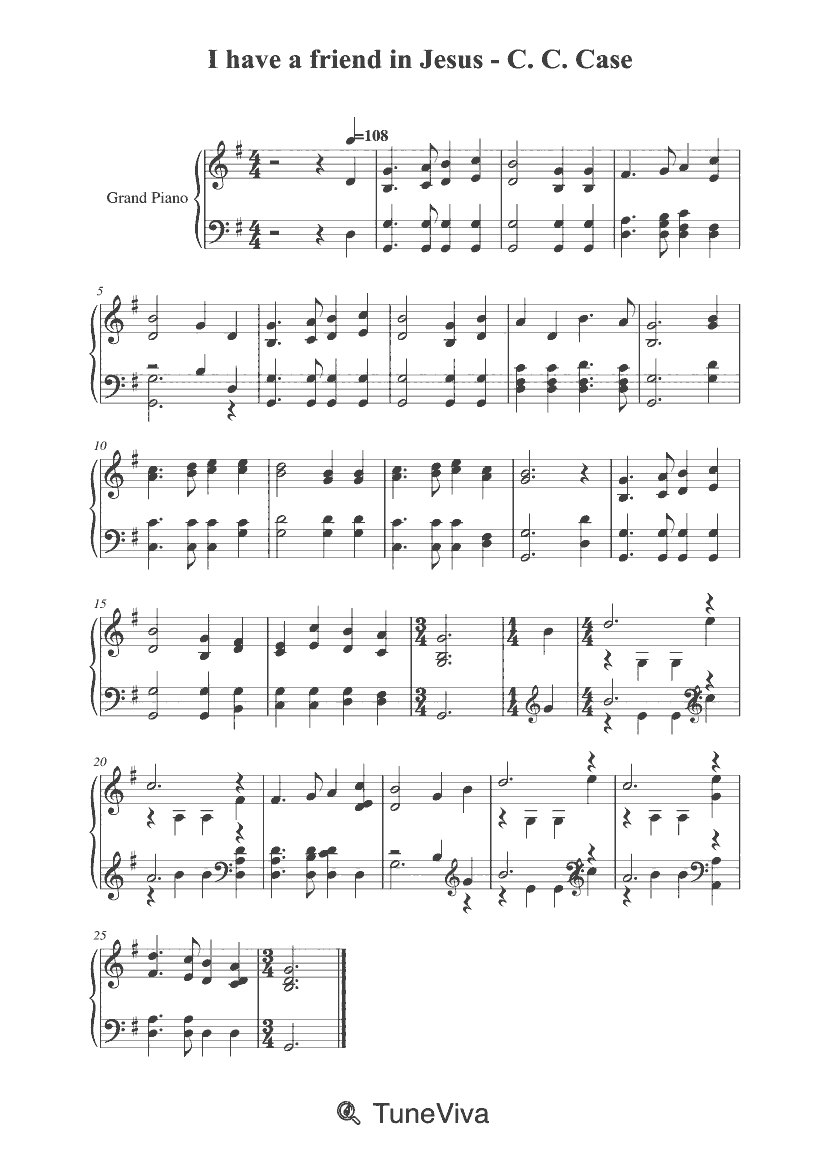
Rejoice, the Lord is King is the most-viewed title with 15 views, followed by Awake, my soul, to joyful lays and Crown him, crown him every nation. The titles are hymn texts and tune names, and at roughly 34 seconds per score they are short settings built for congregational use.
Charles Clinton Case was born on 6 June 1843 at Linesville, Pennsylvania, and moved with his family to Gustavus, Ohio, at about four. His father was a violinist, and Case learned the instrument before he could read music. At sixteen he began attending singing school without his parents' consent, and in 1866 he studied in Boston with Benjamin Baker; his teachers later included George Root, Carl Zerrahn, William Mason, Horatio Palmer and Philip Bliss. He taught music, became a friend of James McGranahan, and compiled gospel songbooks for the rest of his life.
Those books are the record of his working method: Pure Delight (1883) and Wondrous Love (1885) with George Root, The Portfolio of Sunday School Songs (1887) with William Sherwin, Uplifting Songs (1896), Choice Songs (1902) and Spirit of Praise (1911). He died on 1 December 1918 at Oberlin, Ohio, and is buried at Gustavus.
The catalogue draws on that hymn repertoire. Millford is a tune name, not a text, and several entries set well-known hymn verses. Twenty-one of the 35 scores sit at complexity index 1, and the average length is under a minute, so the page is a set of short four-part settings rather than a collection of extended anthems.
These are four-part hymn settings: the tune normally sits in the soprano, with the other voices moving underneath in block chords. Keep the tempo steady and let the text govern the phrasing; a hymn does not need rubato to sound expressive. On the organ, register the inner voices lightly so the melody stays clear. Where a score has no lyrics, check whether the tune is meant for a repeated stanza before deciding on repeats.
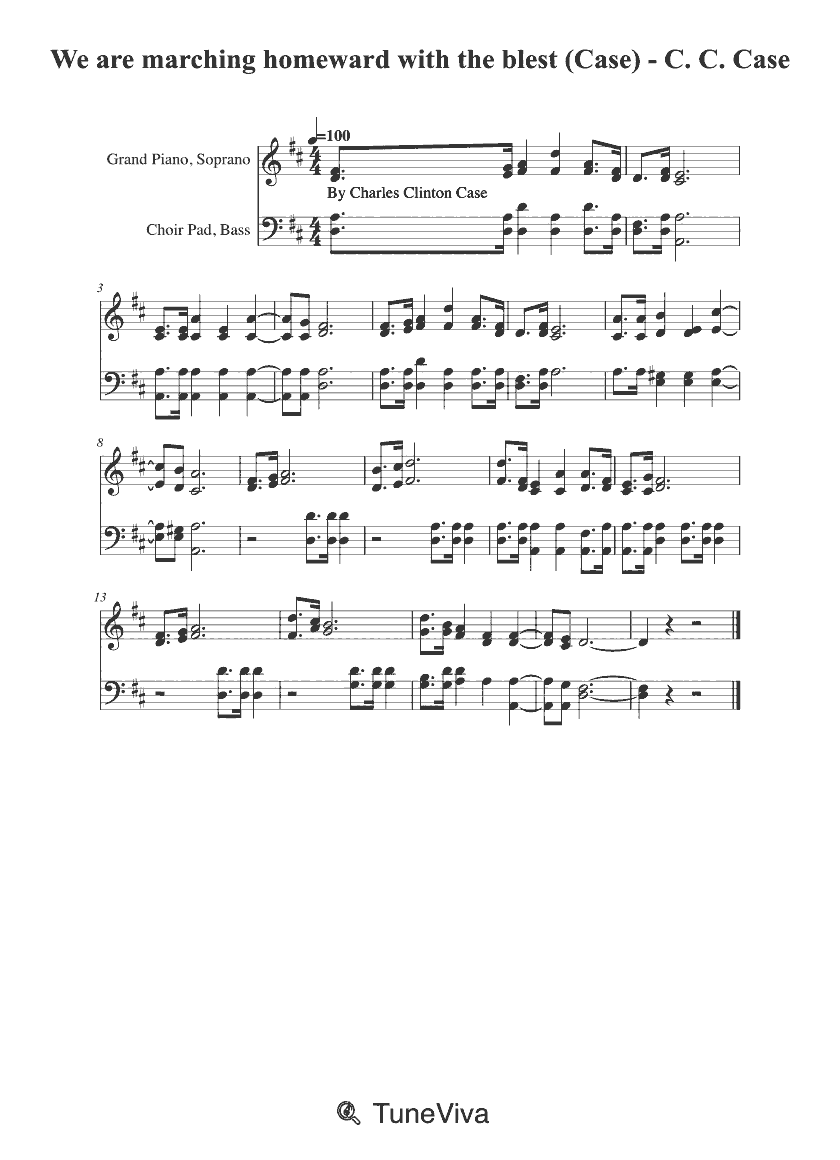
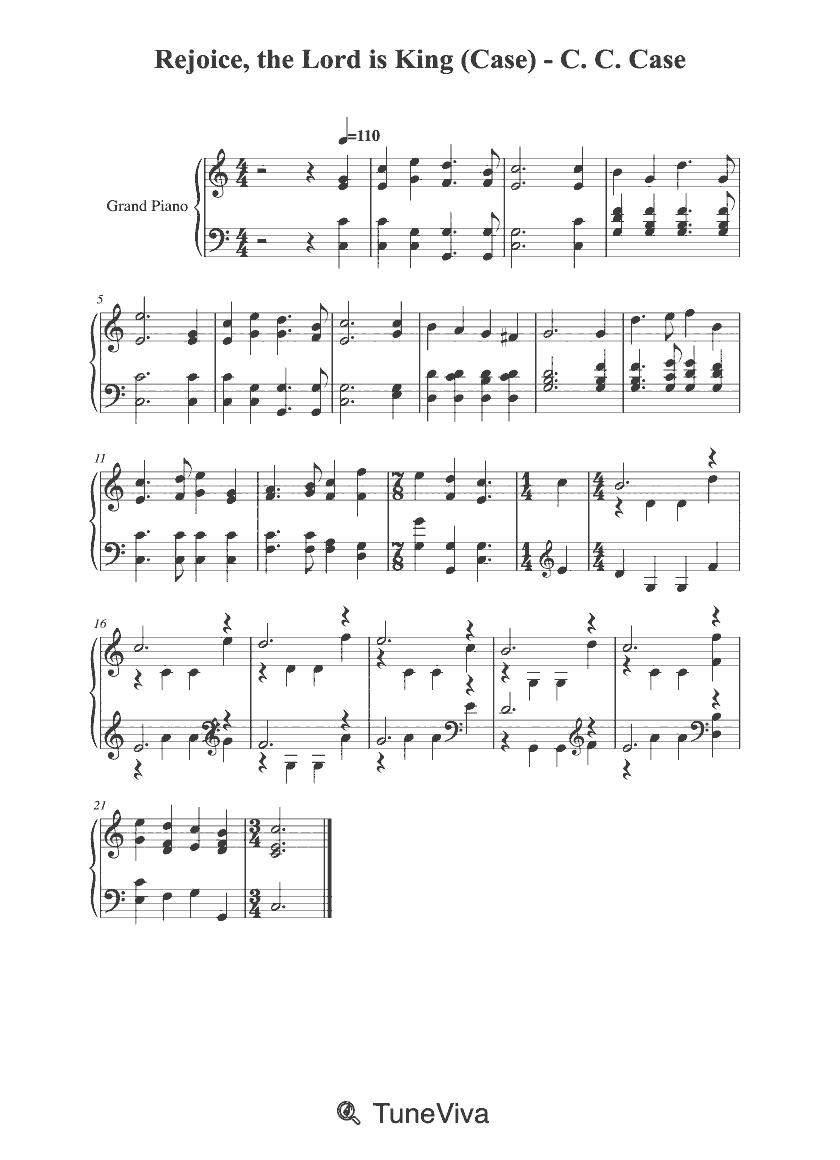
The most-viewed score: Case's tune for the hymn, with the parenthetical '(Case)' distinguishing it from other settings.
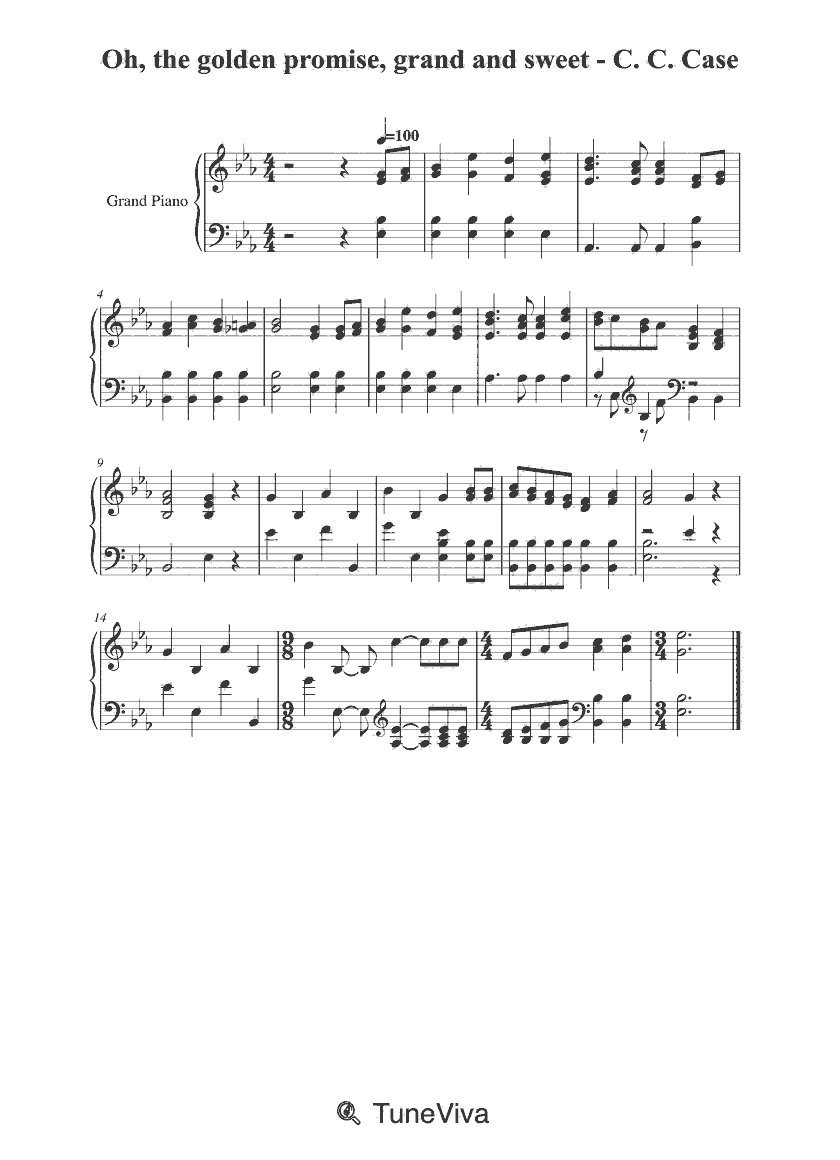
A hymn setting in the gospel-song idiom, second in view count.
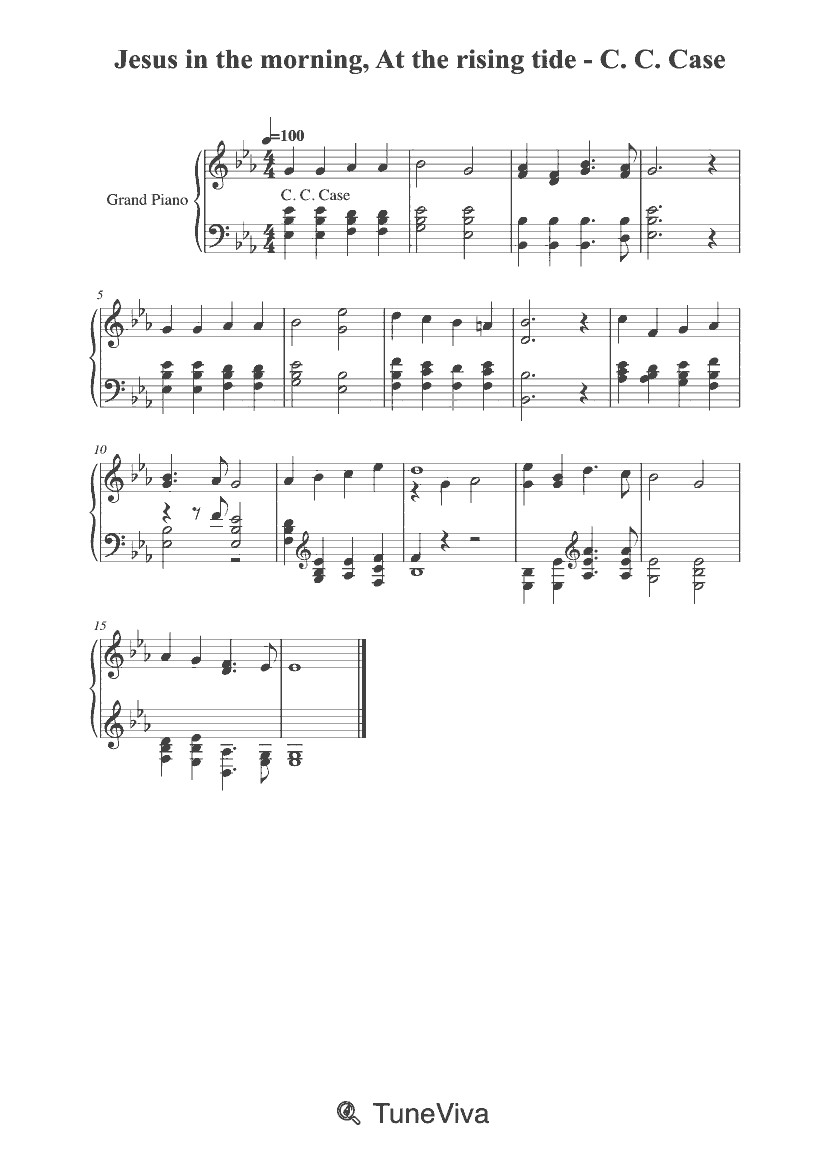
A short four-part setting; the catalogue does not say whether it is a complete hymn or an excerpt.
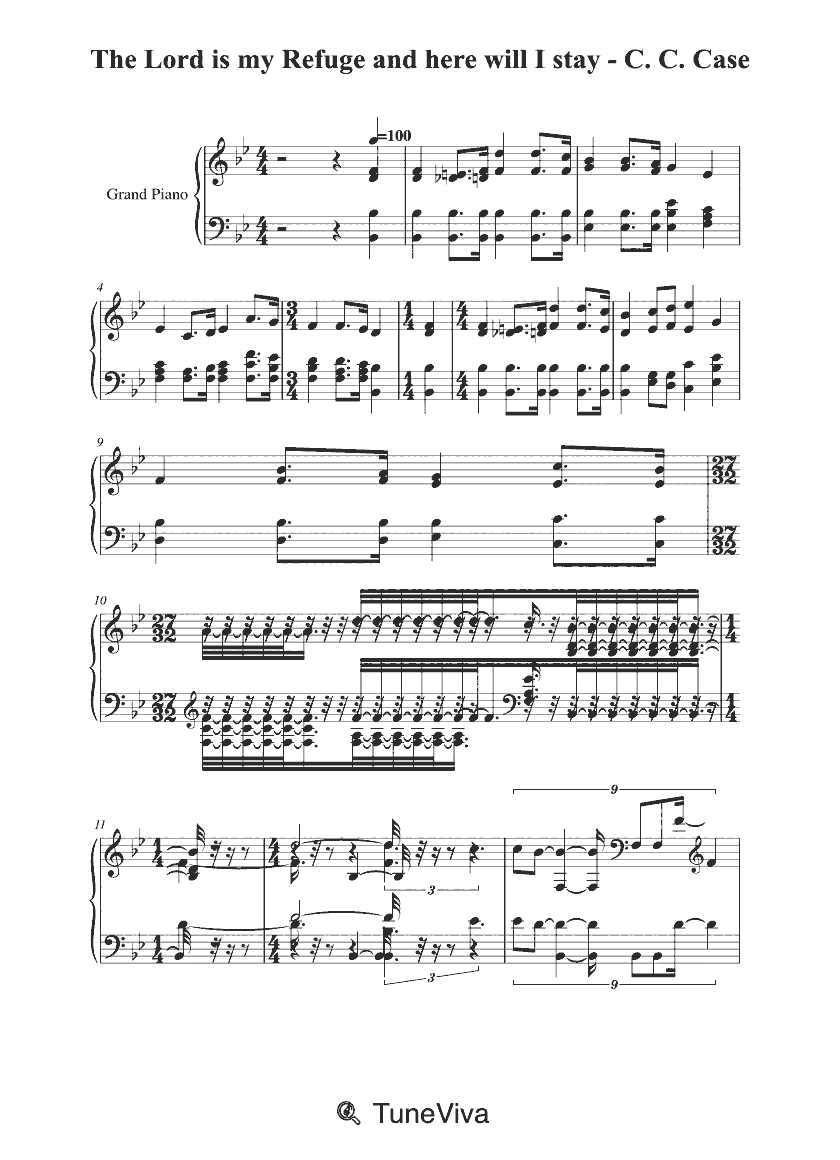
A setting of a psalm-derived text, filed at complexity index 1.
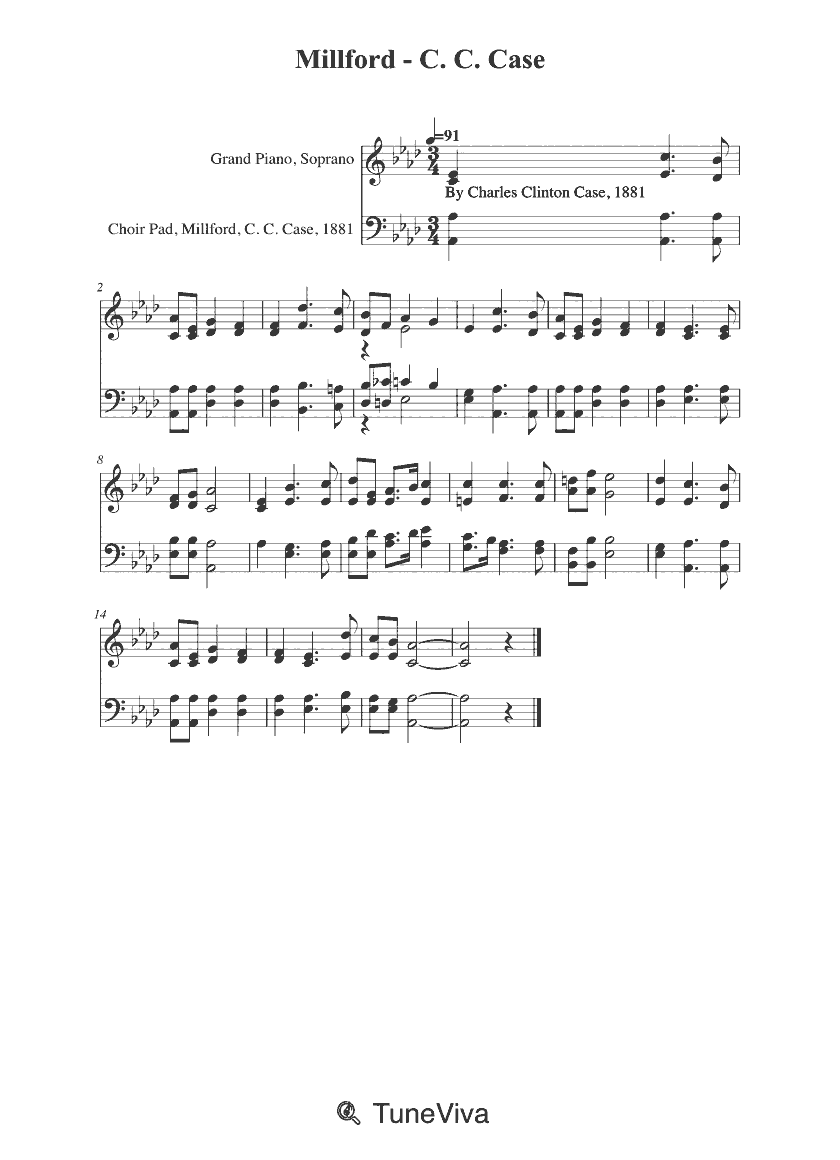
A tune name rather than a text incipit; hymnals use such names to pair a melody with different words.
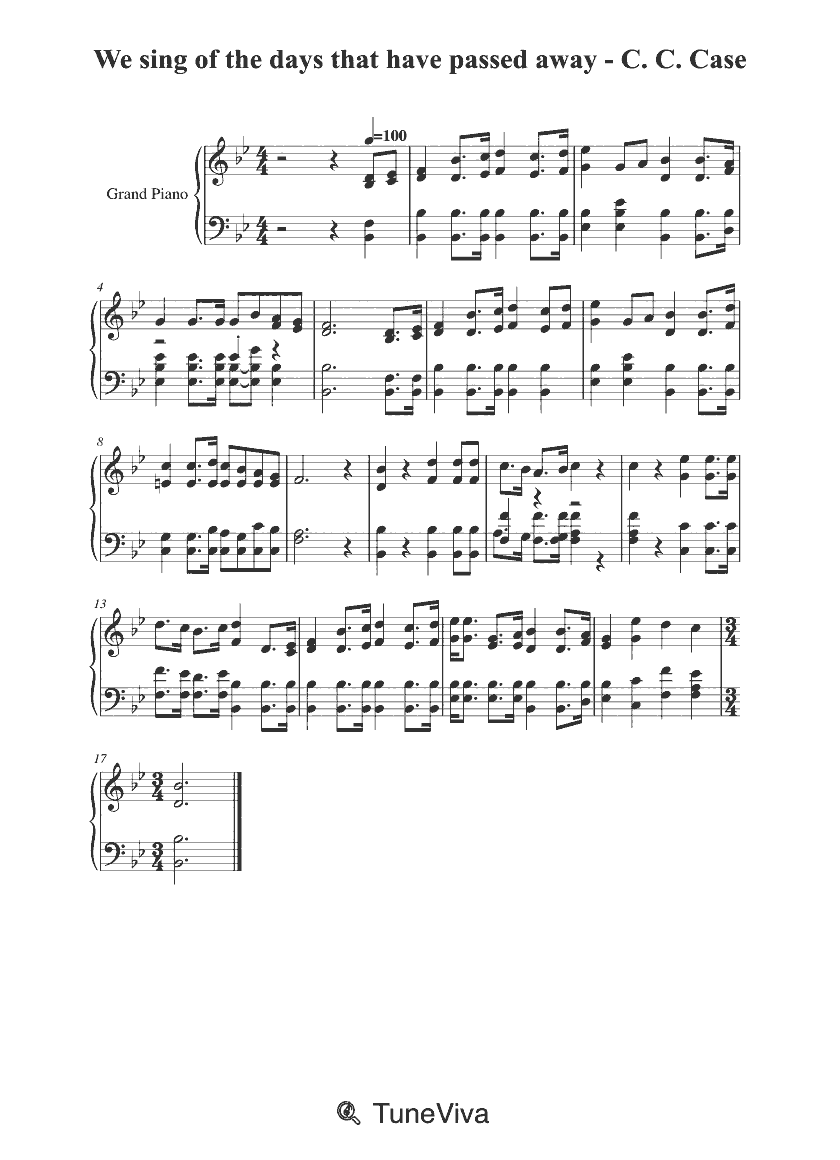
A reflective hymn text set in four parts, one of the shorter entries on the page.
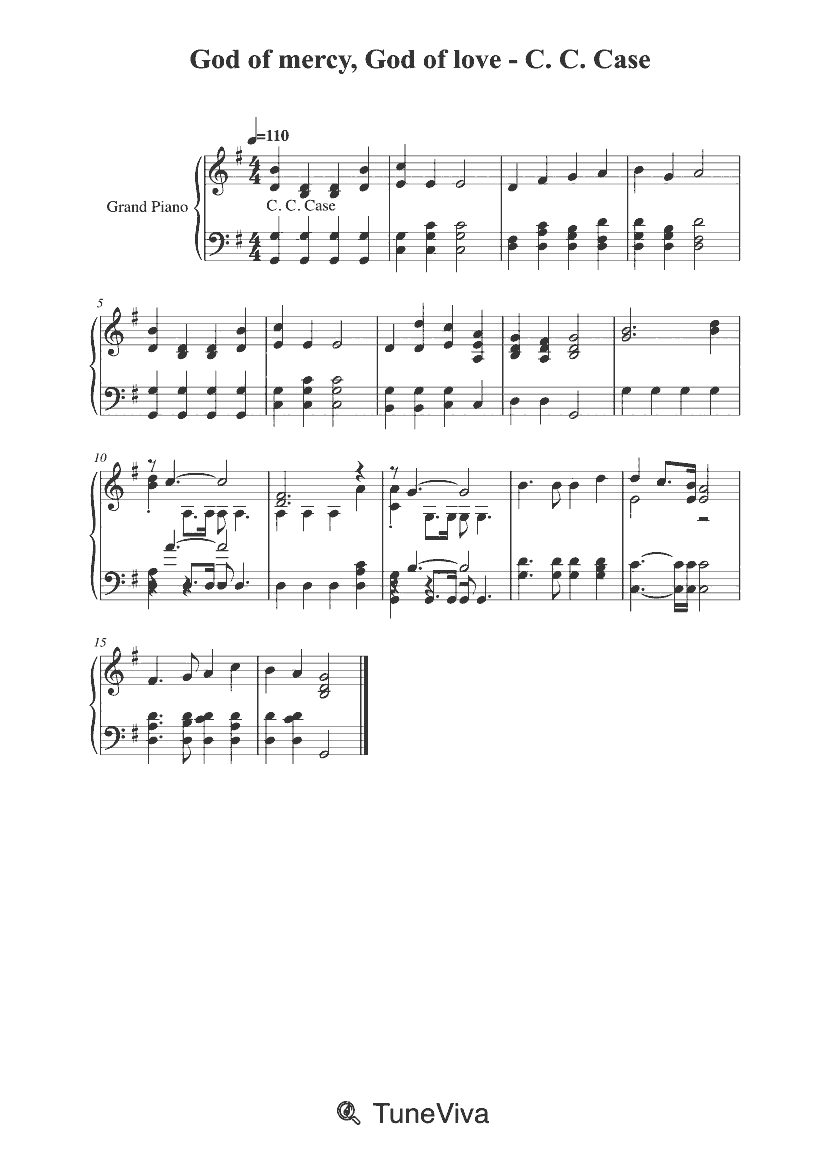
A hymn setting whose text addresses mercy and love; the catalogue gives no hymnal source.
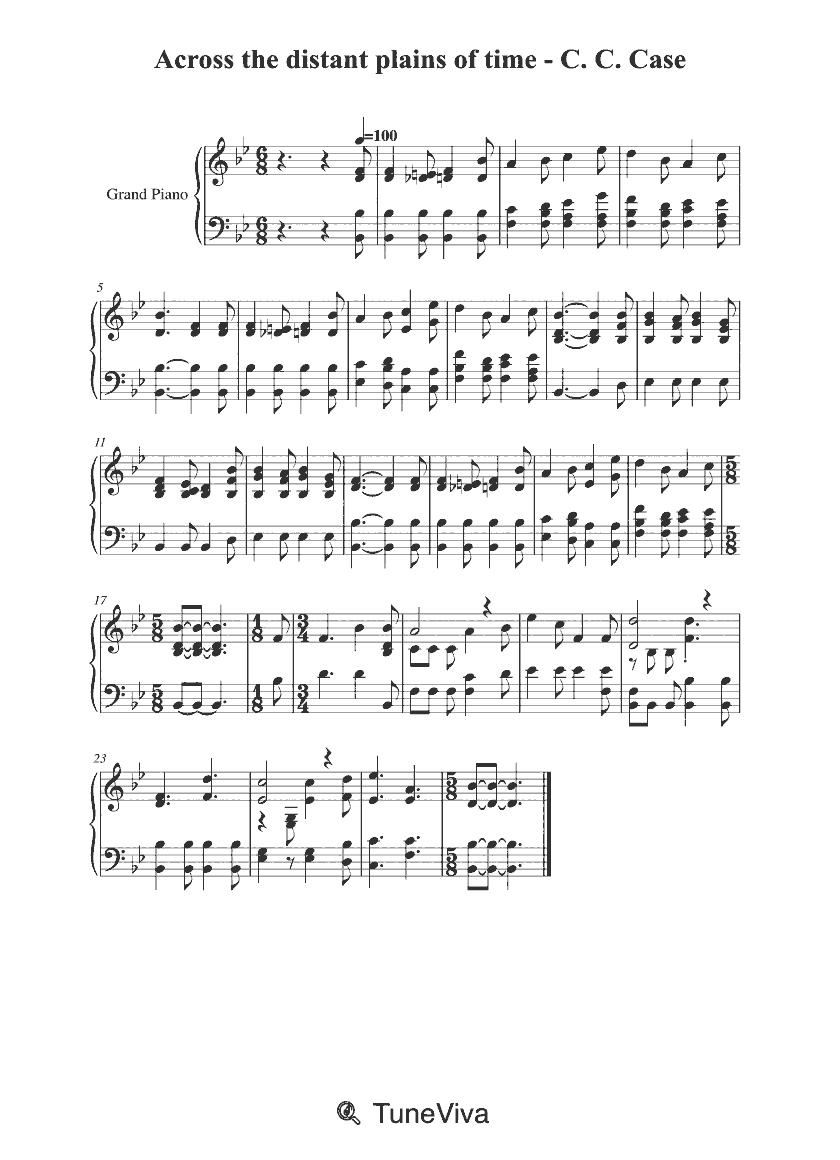
A hymn on the passage of time, with the tune in the soprano and block harmony beneath.
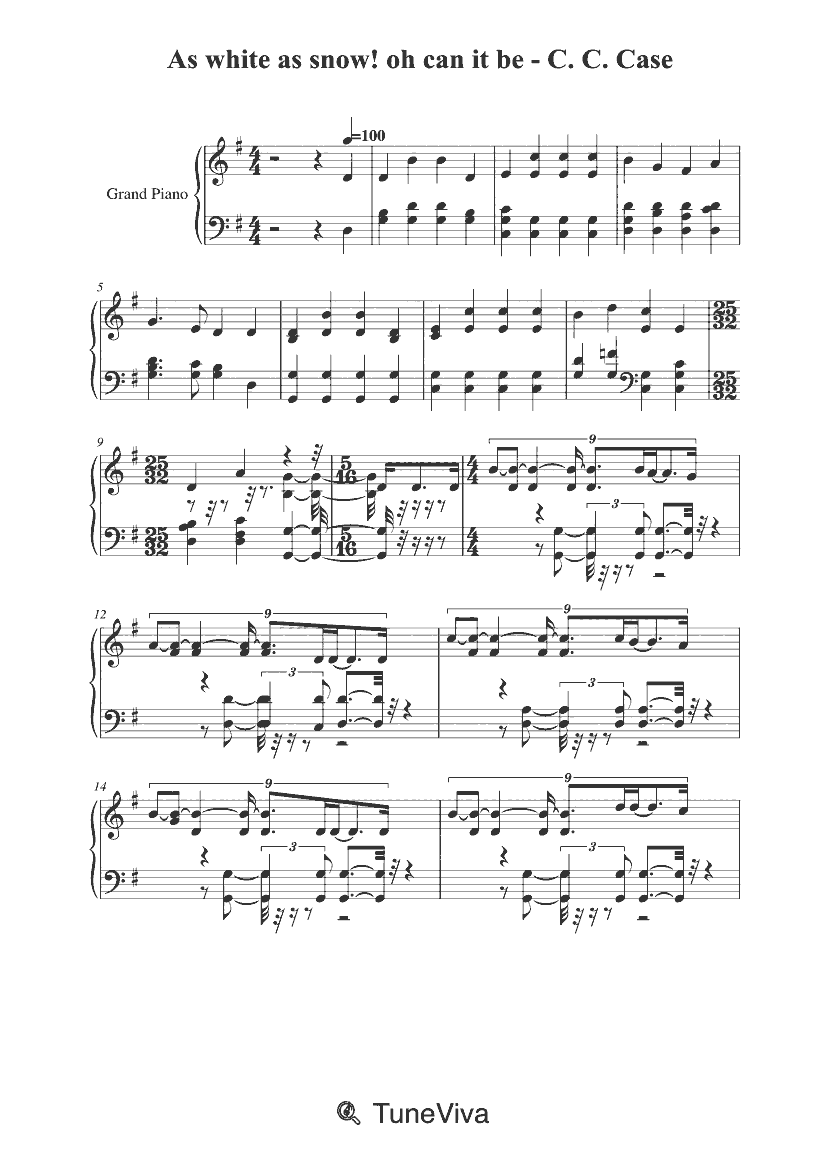
A gospel-song text with an exclamation in the incipit; the catalogue keeps the punctuation of the original title.
35, about 20 minutes and 9,398 notated notes. Fourteen include lyrics; the rest are tune-only or textless files.
Charles Clinton Case (1843-1918), an Ohio gospel-song composer, teacher and compiler of hymnals such as Pure Delight and Spirit of Praise.
Millford is a tune name, the label hymnals use to pair a melody with different texts. It is not a place or a person.
The catalogue credits Case for all 35, but it does not distinguish original melodies from arrangements, and some titles are standard hymn texts.
Catalog editions and arrangements attributed to C. C. Case.