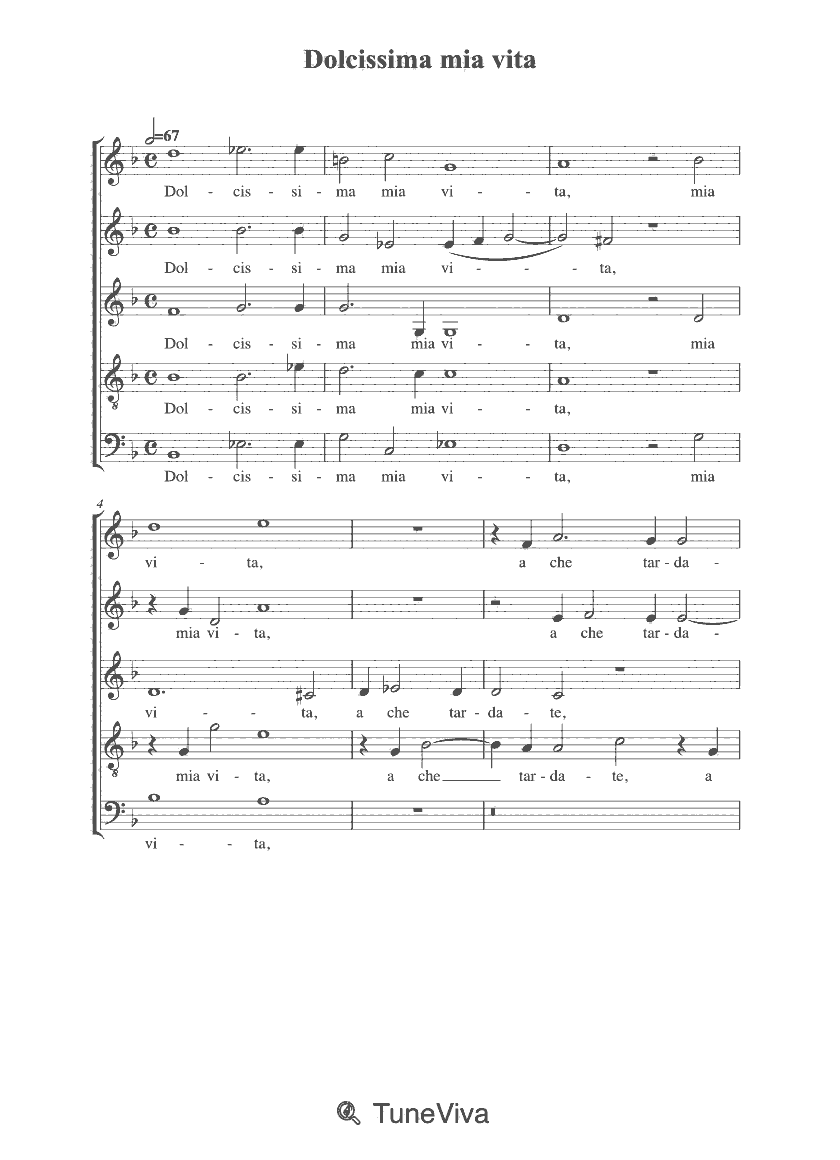
Dolcissima mia vita
before 1596
classical
5 tracks
Gesualdo wrote mainly for five voices, with six- and seven-voice sacred music as well, which shapes the catalogue: 30 scores, about 133 minutes of music and 21,002 notated notes. Twenty-nine entries carry lyrics. Every one sits at complexity index 0, because the index measures note density and Gesualdo's counterpoint is slow-moving even when the harmony is extreme.
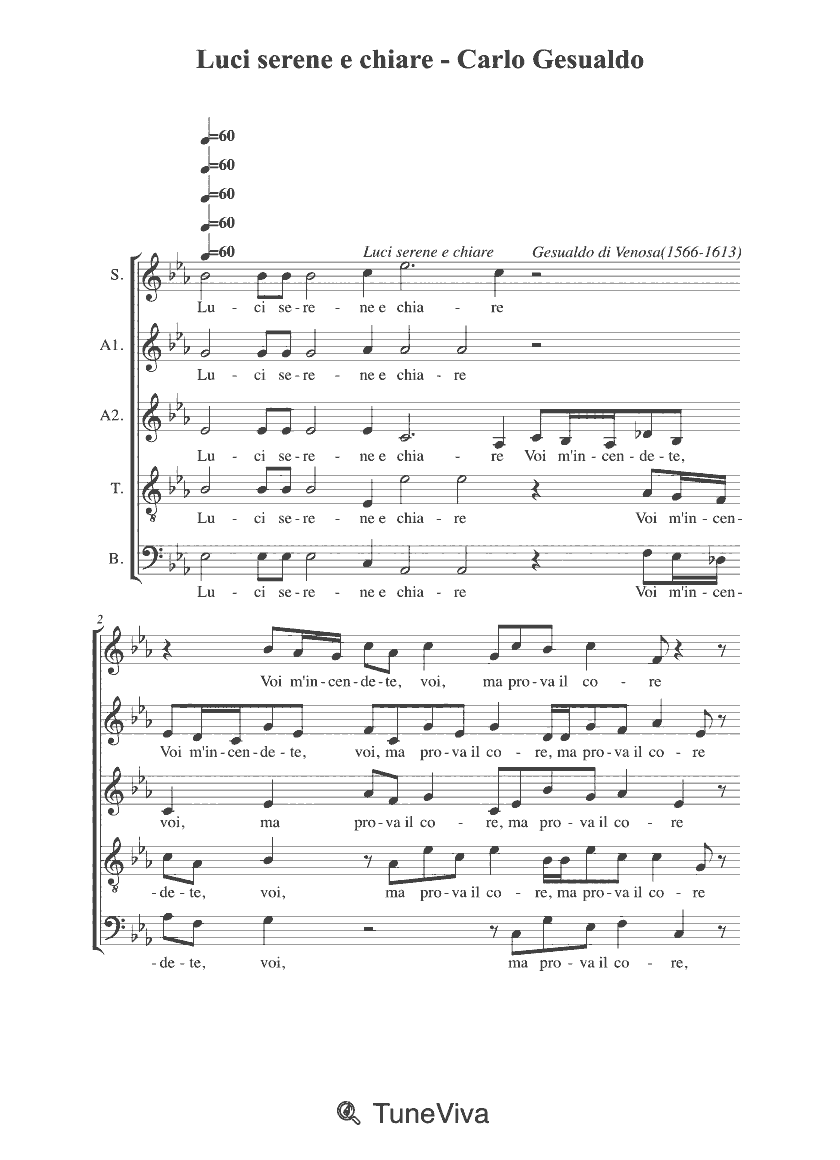
The page opens with 'Dolcissima mia vita' from the Fifth Book of madrigals, then turns to the 1603 motets: 'O Crux benedicta', 'Maria, mater gratiae', 'Peccantem me quotidie'. 'Luci serene e chiare' and 'Ahi, disperata vita' represent the middle madrigal books, and 'Laboravi in gemitu meo' is one of the penitential settings.
Gesualdo was born at Venosa, in the Kingdom of Naples, probably on 30 March 1566. The year was long given as about 1560, which is why some catalogue entries still print a birth date of c.1560. His mother, Geronima Borromeo, was a sister of Carlo Borromeo, and the boy was named for his uncle. He became Prince of Venosa and Count of Conza in 1591, after the deaths of his elder brother Luigi and then his father.
In 1586 he married his cousin Maria d'Avalos. On the night of 16 October 1590 he found her with Fabrizio Carafa, Duke of Andria, at the Palazzo San Severo in Naples and killed them both; the Gran Corte della Vicaria found that he had committed no crime. He remarried in 1594, to Leonora d'Este, and spent time at Ferrara, where he met Luzzasco Luzzaschi and wrote for the concerto delle donne. After returning to his castle at Gesualdo he published the last two madrigal books in 1611 and died there on 8 September 1613.
His published music falls into three groups: six books of five-voice madrigals (1594-1611), the two volumes of Sacrae Cantiones printed in Naples in 1603, and the Tenebrae Responsoria of 1611. The 30 scores here run to about 133 minutes and 21,002 notes, and 29 carry lyrics; a single entry is left unclassified. The title most often chosen is 'Dolcissima mia vita', followed by the motet 'O Crux benedicta', and the catalogue's order says as much about modern choirs as about Gesualdo's own reputation.
The difficulty in Gesualdo is intonation, not speed. Chords change by thirds and semitones rather than by conventional progressions, so each voice needs to hear the note it is moving to before the chord arrives. Keep the tempo steady through the chromatic passages; slowing down makes the tuning worse. In the motets the imitation is clearer and the dissonance more controlled, which makes them a good way into the style. Let the text drive the sectional changes, and do not smooth over the abrupt contrasts the madrigals depend on.
The most-viewed score on the page, a five-voice madrigal from the Fifth Book (1611); the catalogue tags it 'before 1596', a date that conflicts with the printed book.
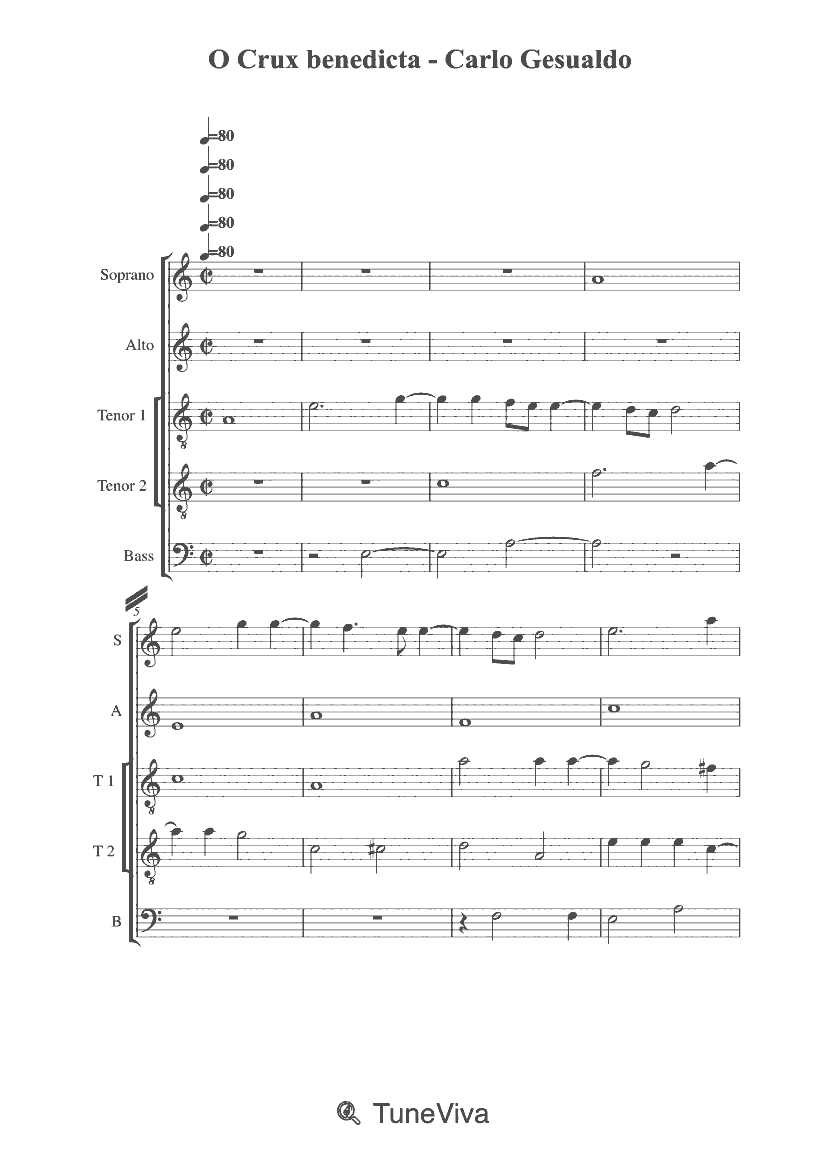
A motet for five voices from the Sacrae Cantiones of 1603, a Holy Cross text set with unusually direct harmonic colour.
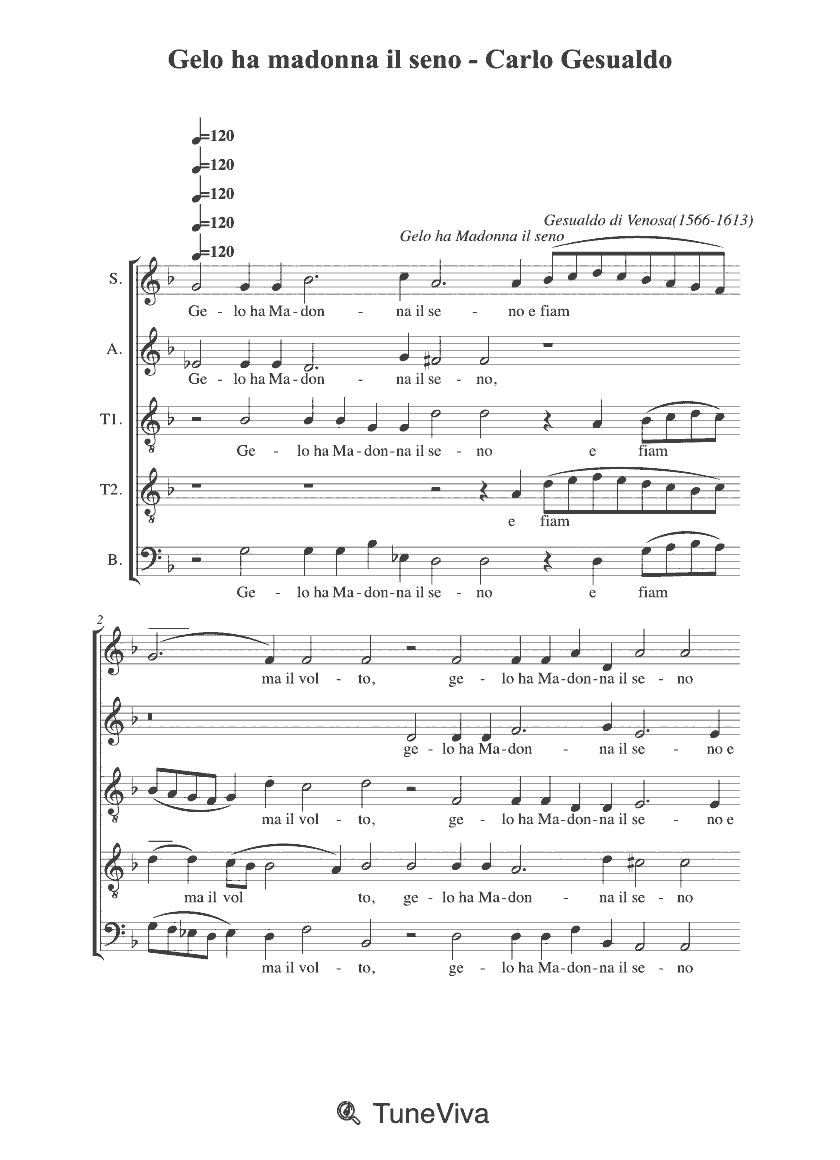
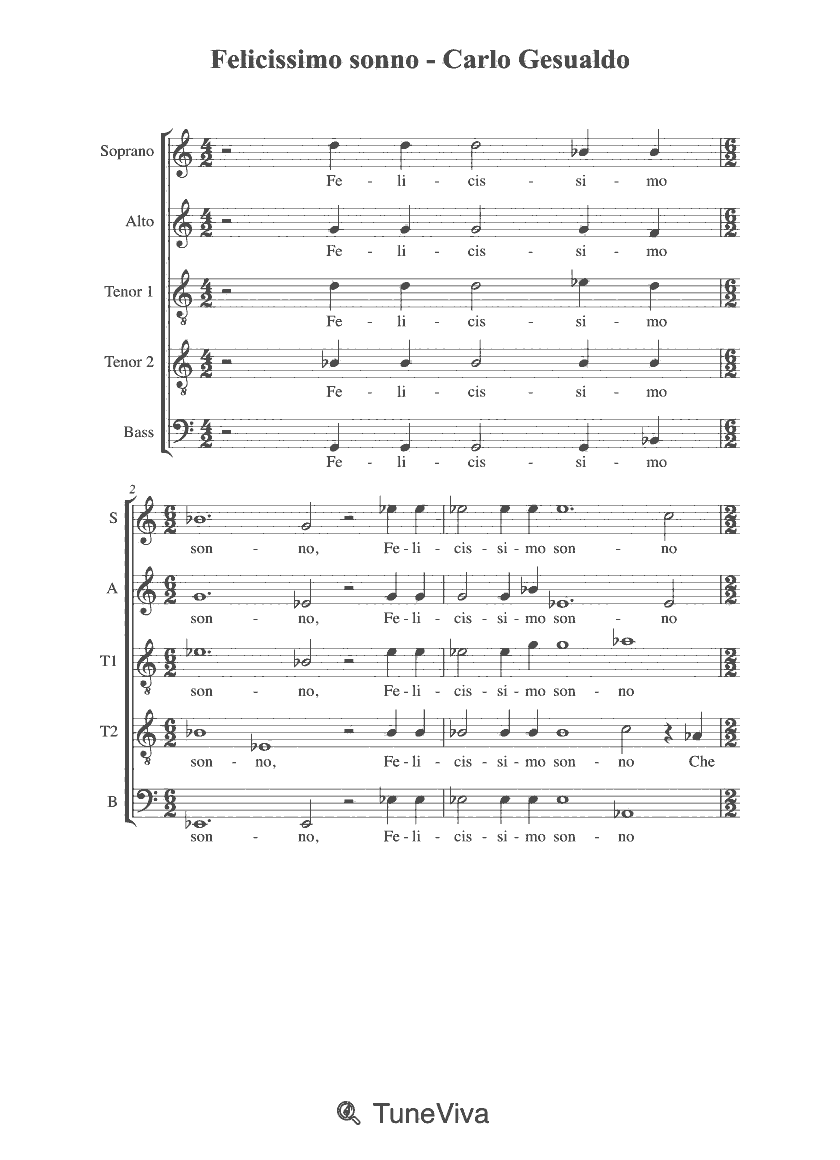
No. 7 of the Fifth Book, a sleep madrigal whose opening is among the most chromatic passages Gesualdo wrote.
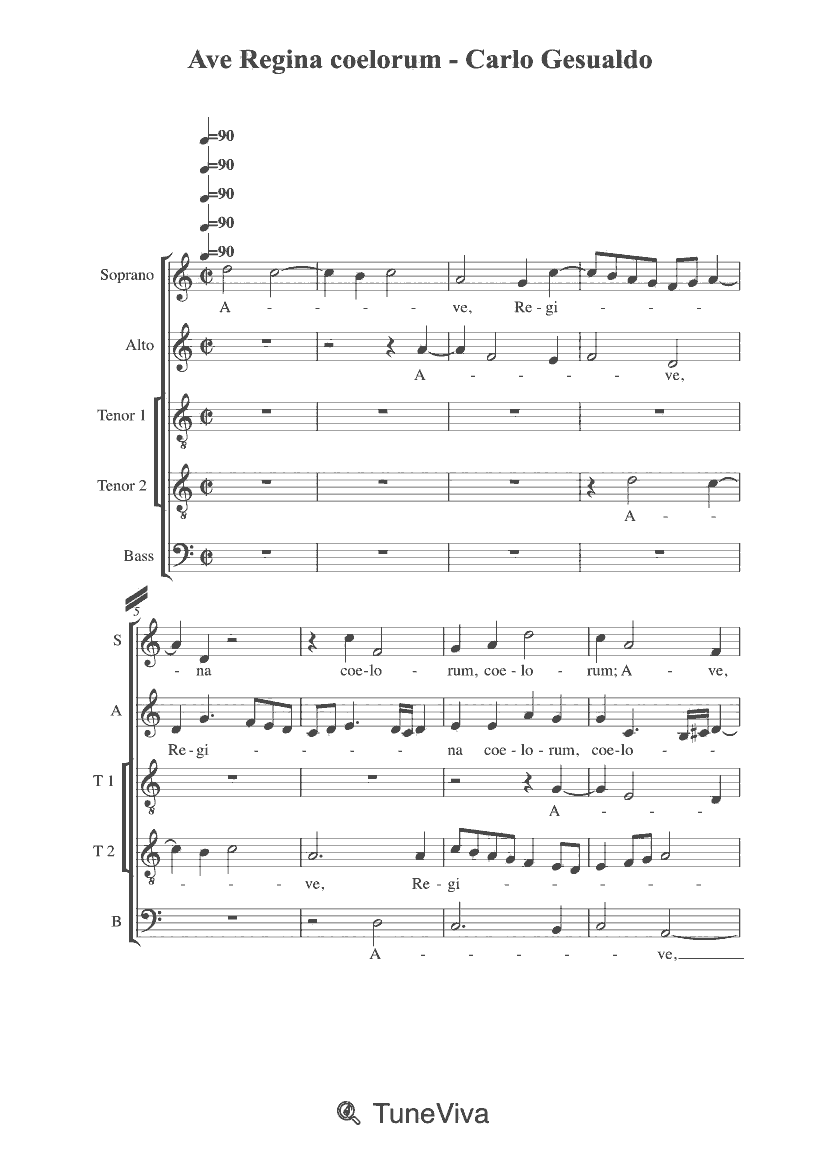
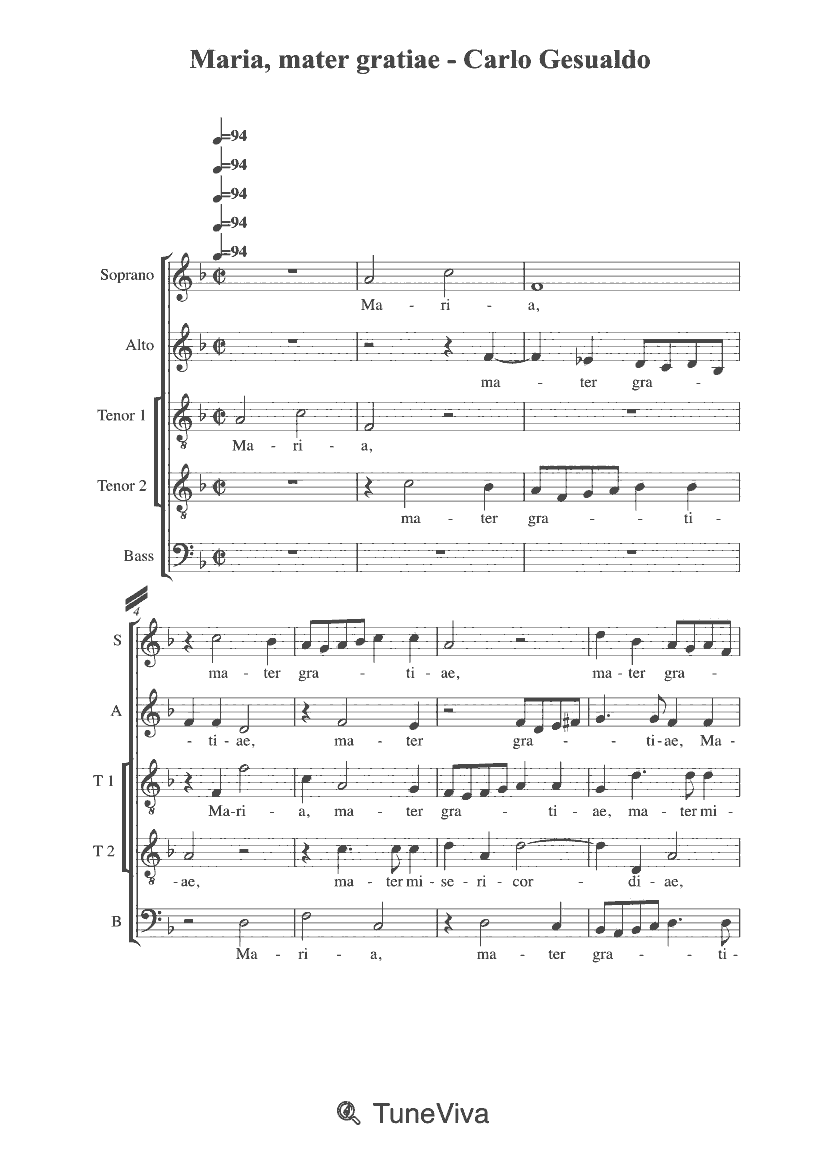
A Marian motet from the 1603 collection, short and largely consonant by comparison with the late madrigals.
No. 3 of the Fifth Book, a farewell to sighs built on a descending opening figure.
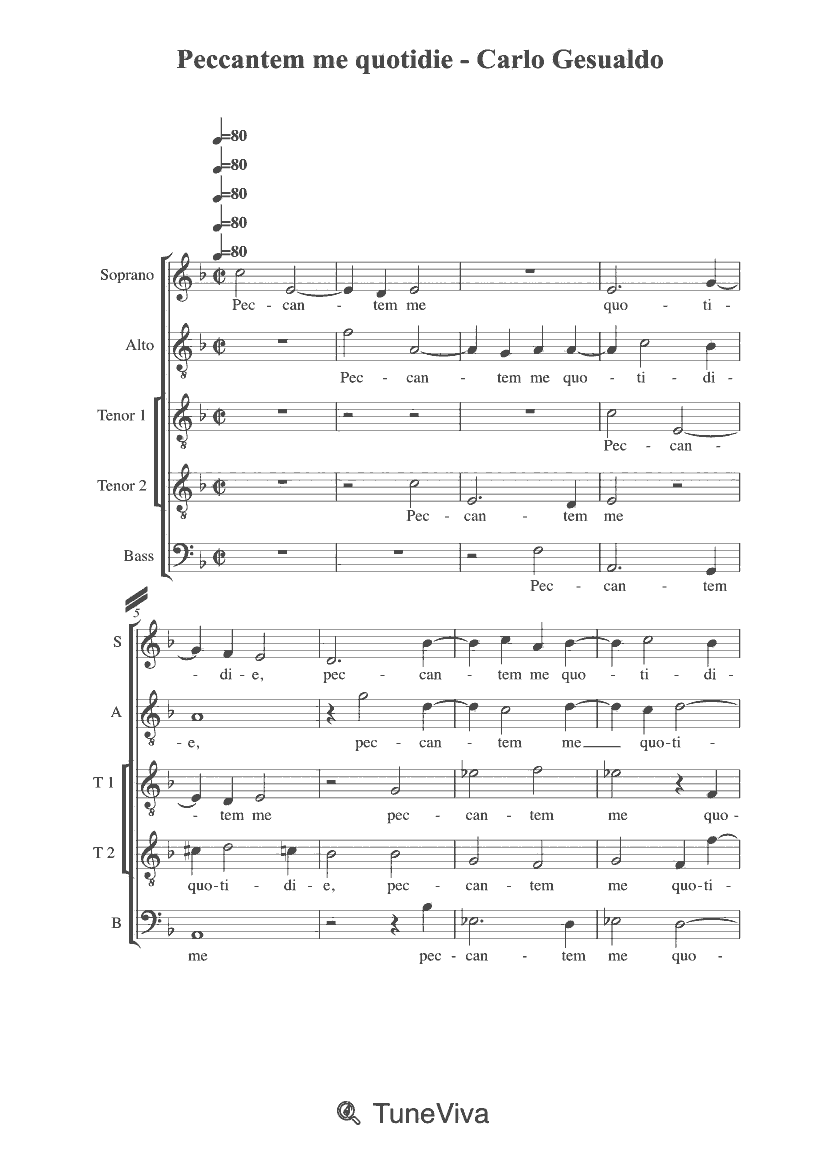
A penitential motet from the 1603 book, on the text 'I sin daily and do not repent'.
The opening madrigal of the Fourth Book (1596), a setting of verses attributed to Ridolfo Arlotti.
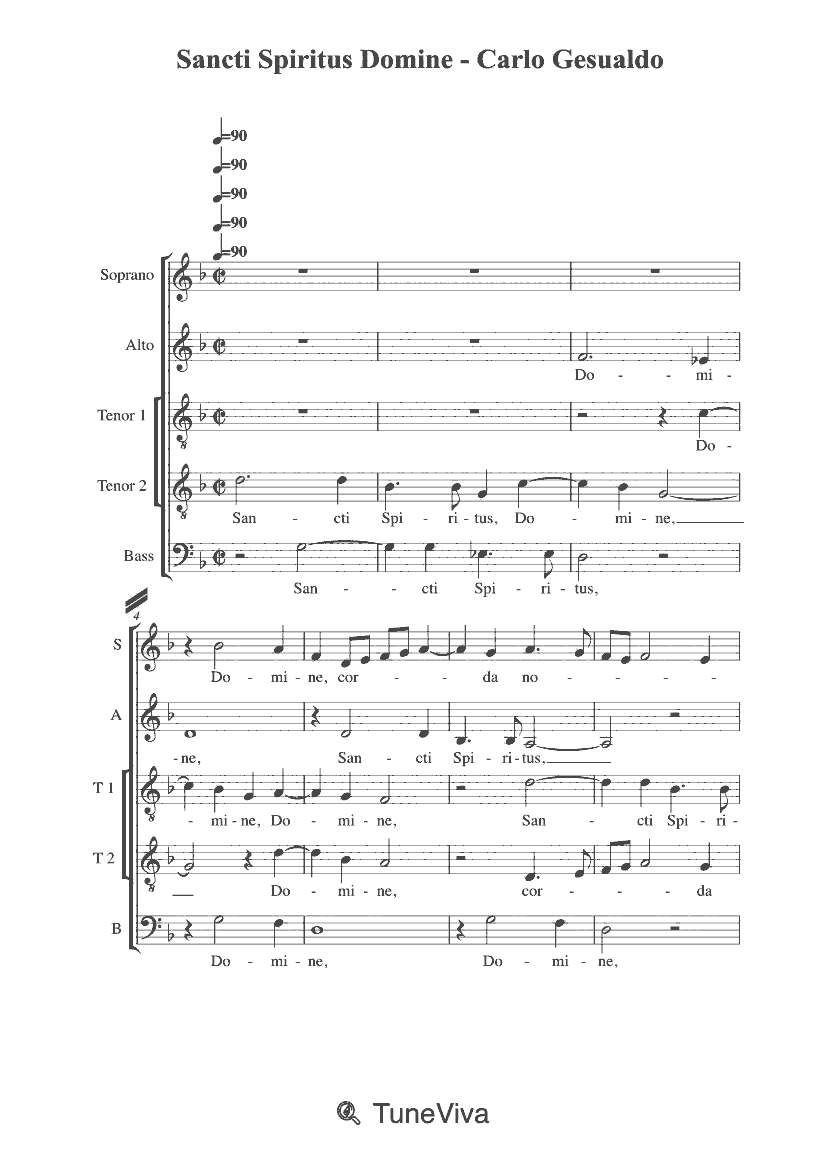
A Pentecost motet for five voices from the first volume of the 1603 Sacrae Cantiones; the lost parts reconstructed in modern times belong to the second volume, not to this piece.
No. 10 of the Fifth Book, a deathbed text that turns on a repeated falling figure.
A penitential motet on Psalm 6, 'I am weary with my groaning', from the 1603 collection.
30, amounting to about 133 minutes of music and 21,002 notated notes. Twenty-nine of the entries have lyrics.
No. Several of the most-viewed entries are motets from the Sacrae Cantiones of 1603, including O Crux benedicta, Peccantem me quotidie and Laboravi in gemitu meo.
The Fifth Book of five-voice madrigals, published in 1611. The catalogue's subtitle gives a book date of 1613, which may reflect a later issue of the print.
Older reference works used c.1560 or c.1561. A letter from Gesualdo's mother points to 1566, and that is now the accepted year.
Catalog editions and arrangements attributed to Carlo Gesualdo.
before 1596
Delli madrigali a cinque voci (1613) - Libro quinto (Numero 7)
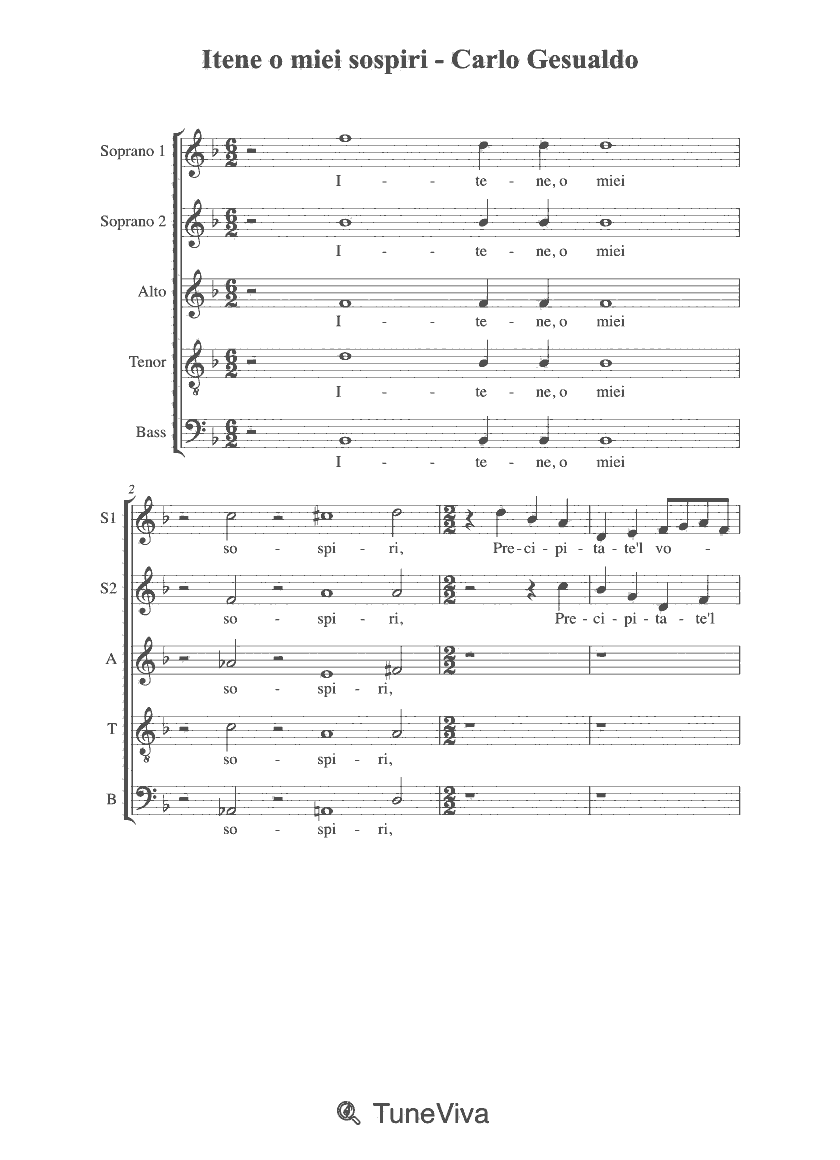
Delli Madrigali A Cinque Voci (1613) - Libro Quinto (Numero 3)
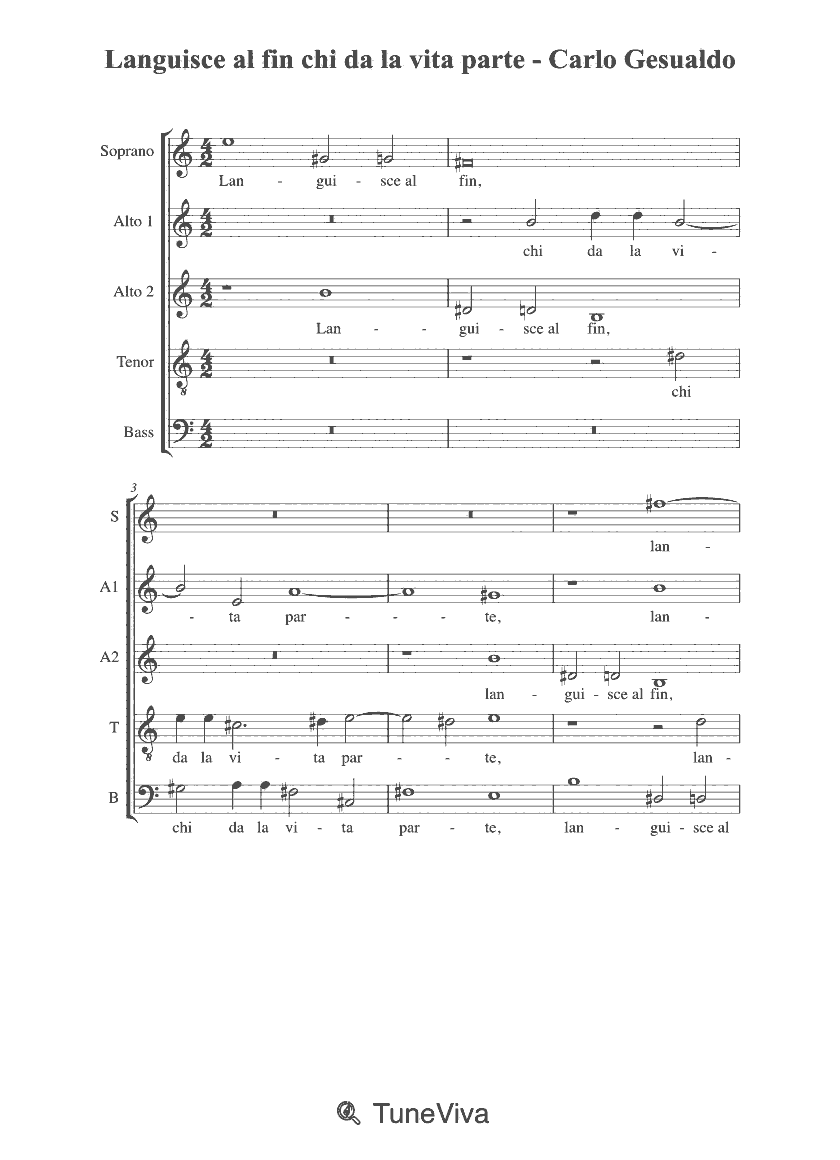
Delli madrigali a cinque voci (1613) - Libro quinto (Numero 10)
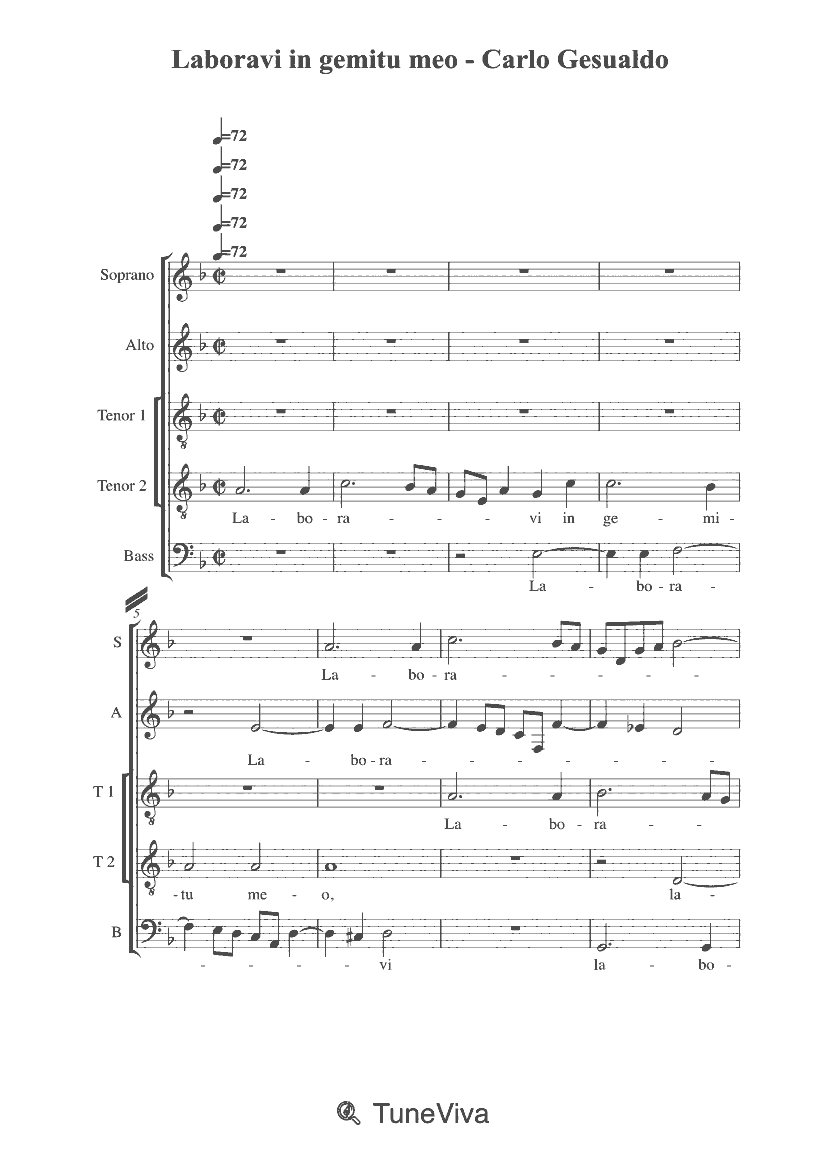
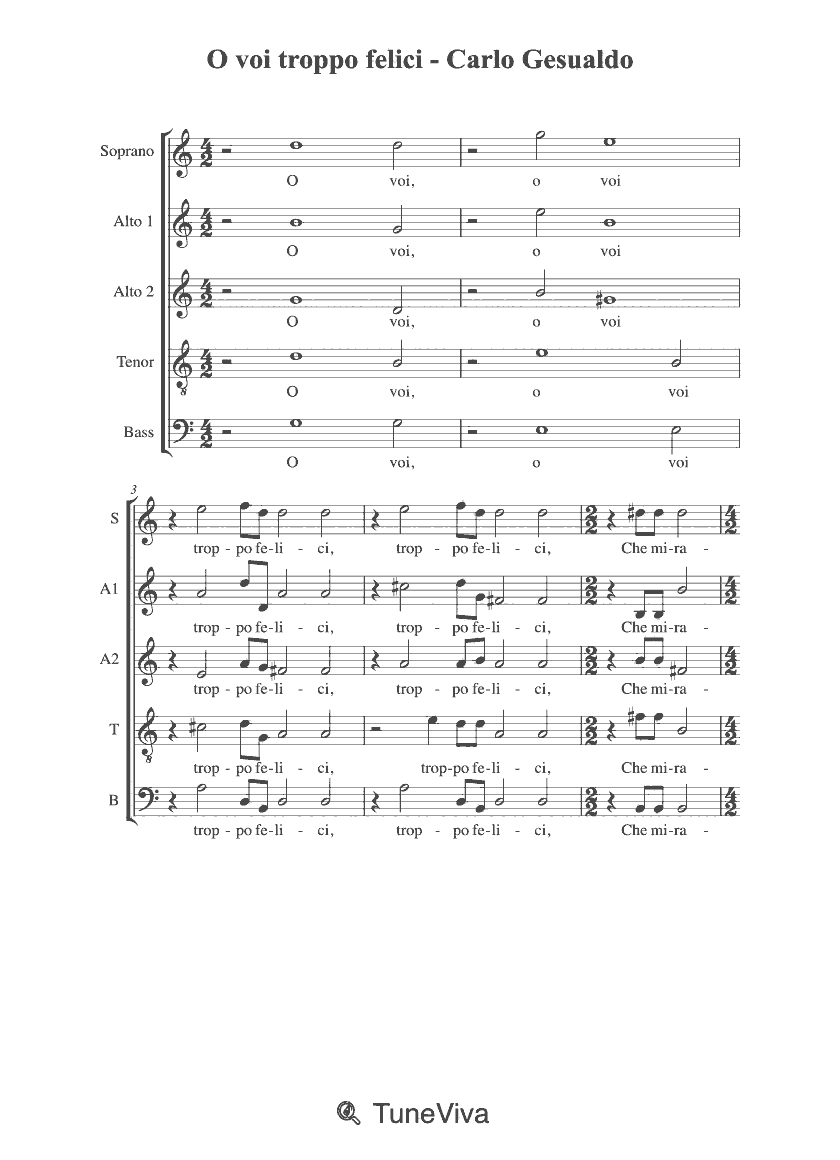
Delli madrigali a cinque voci (1613) - Libro quinto (Numero 12)
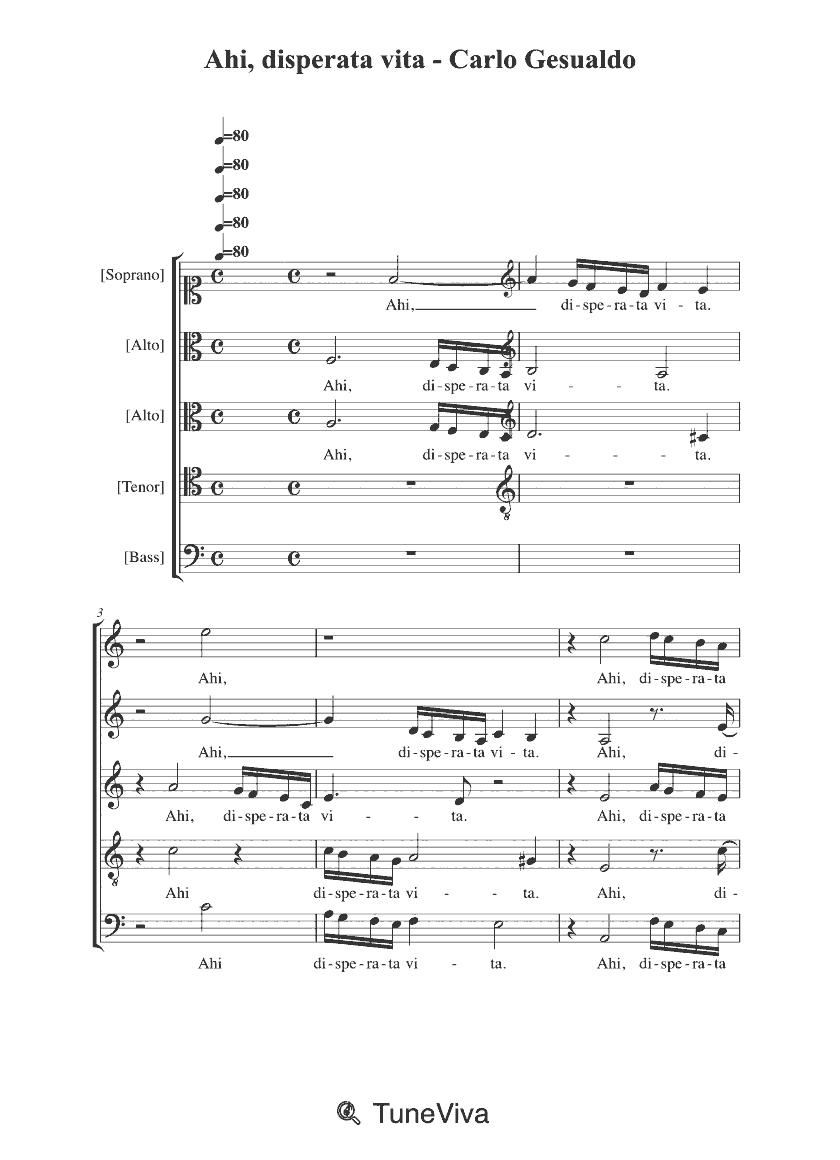
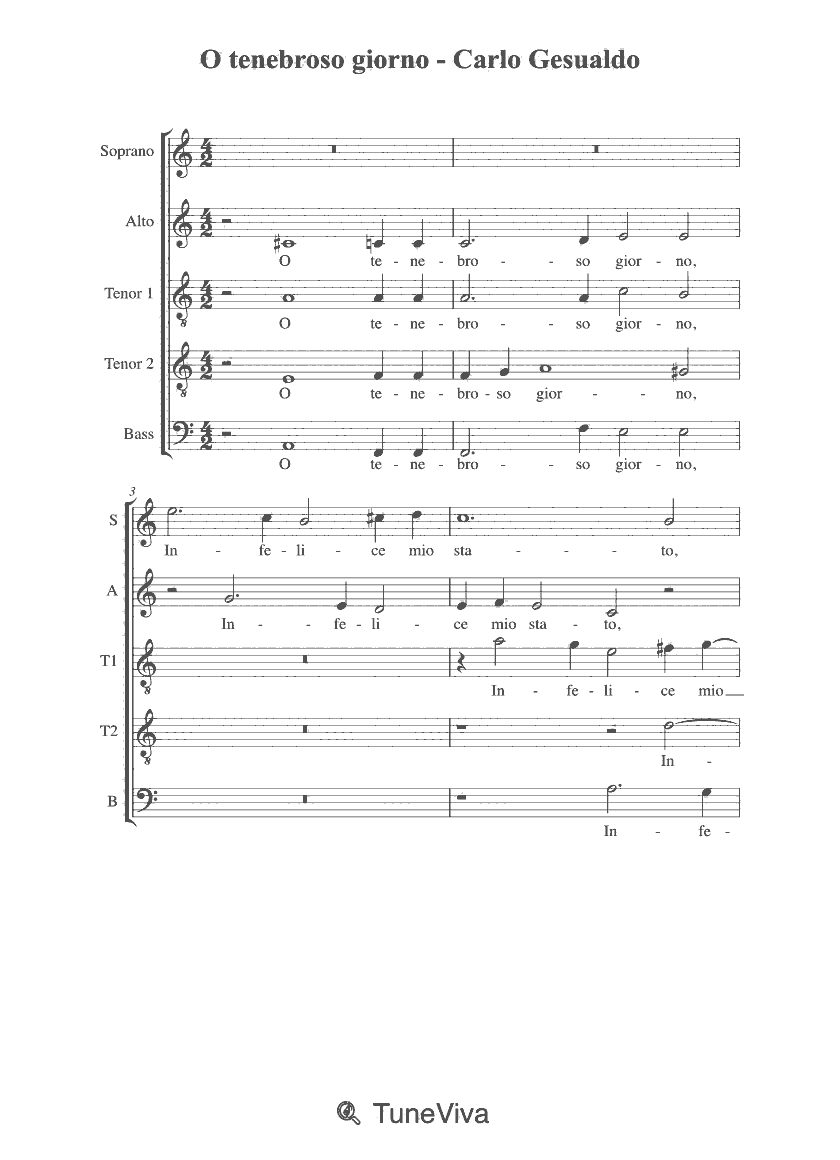
Delli madrigali a cinque voci (1613) - Libro quinto (Numero 19)
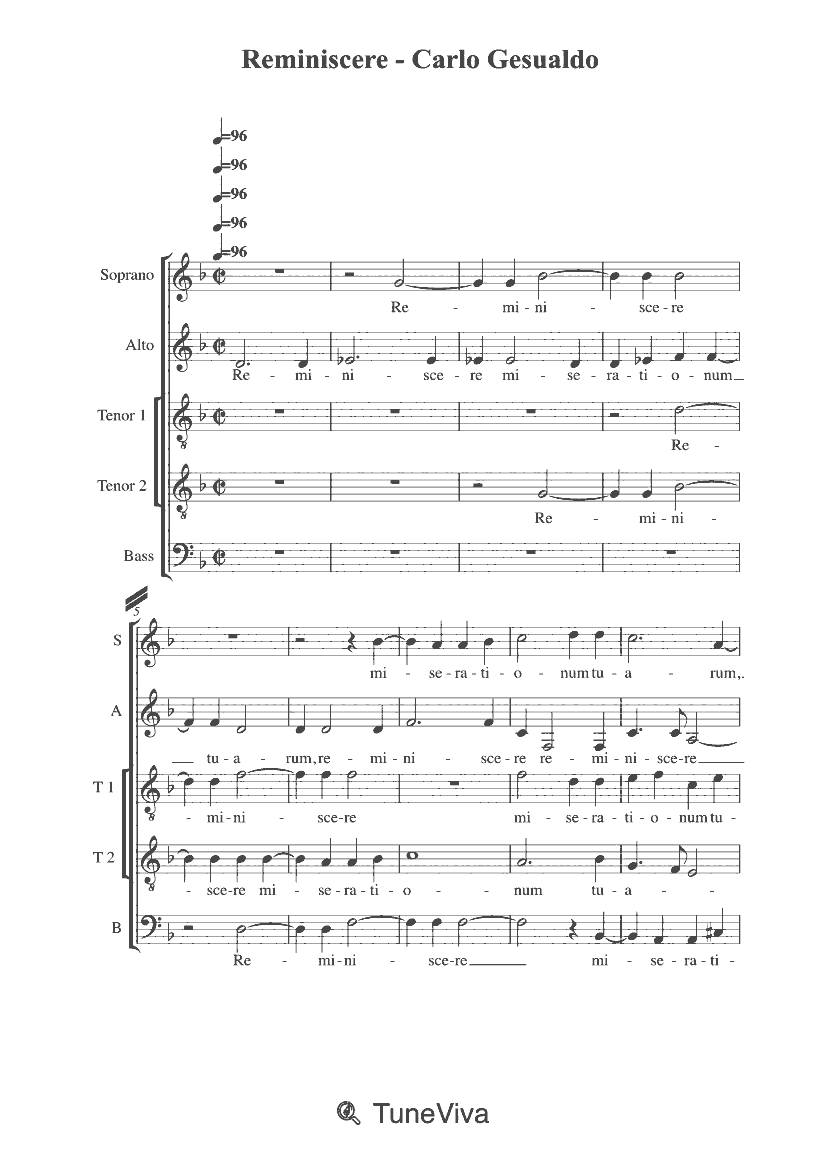
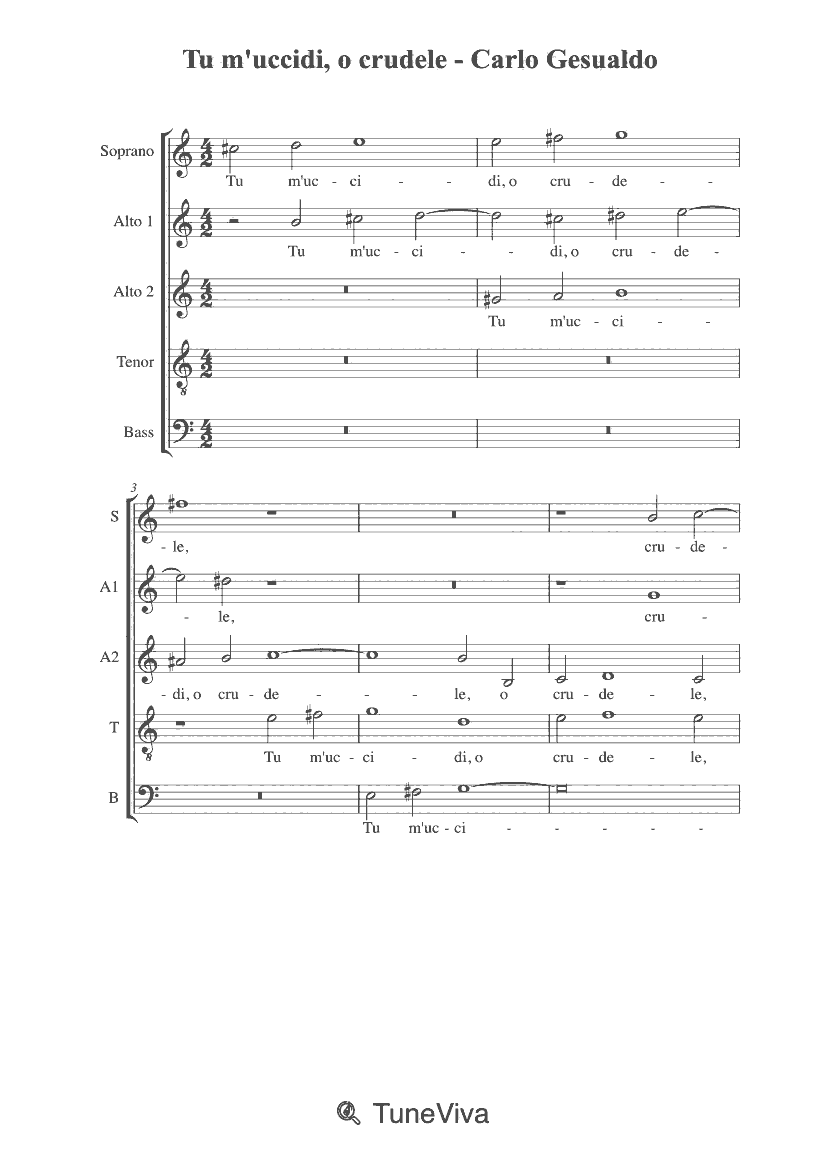
Delli madrigali a cinque voci (1613) - Libro quinto (Numero 15)
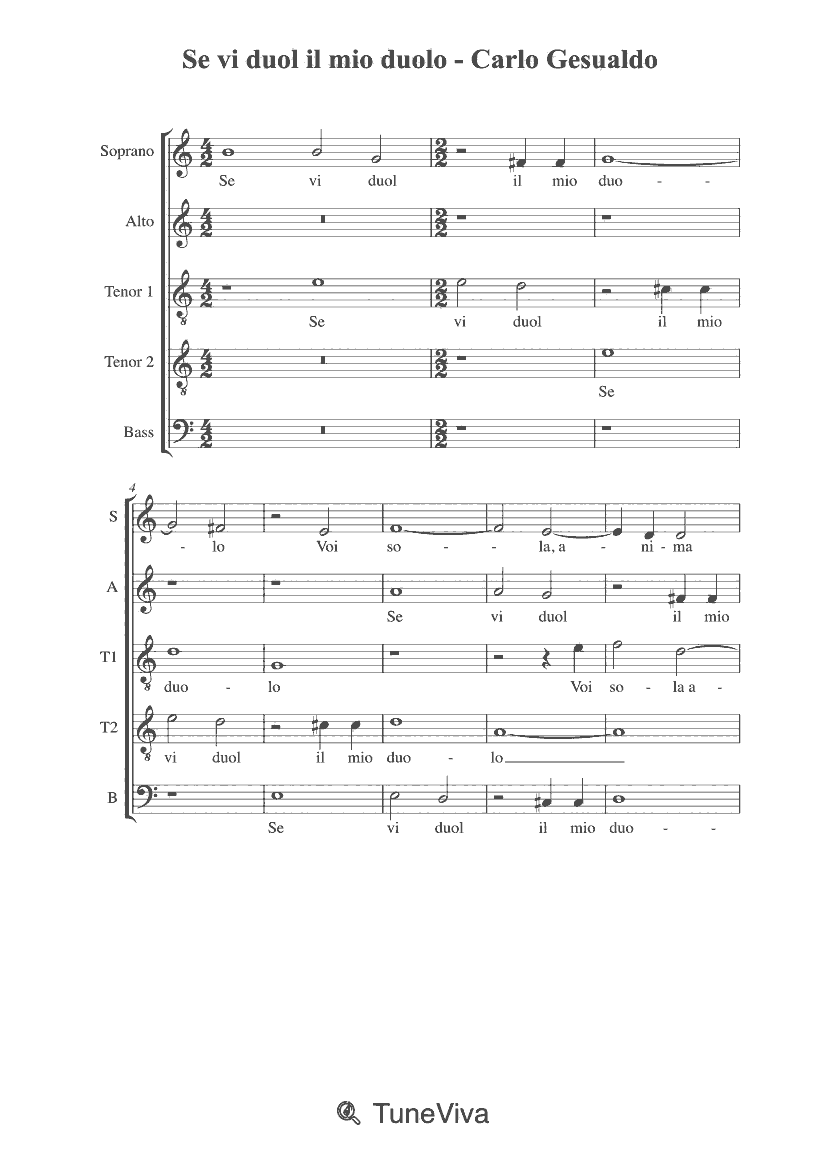
Delli madrigali a cinque voci (1613) - Libro quinto (Numero 8)