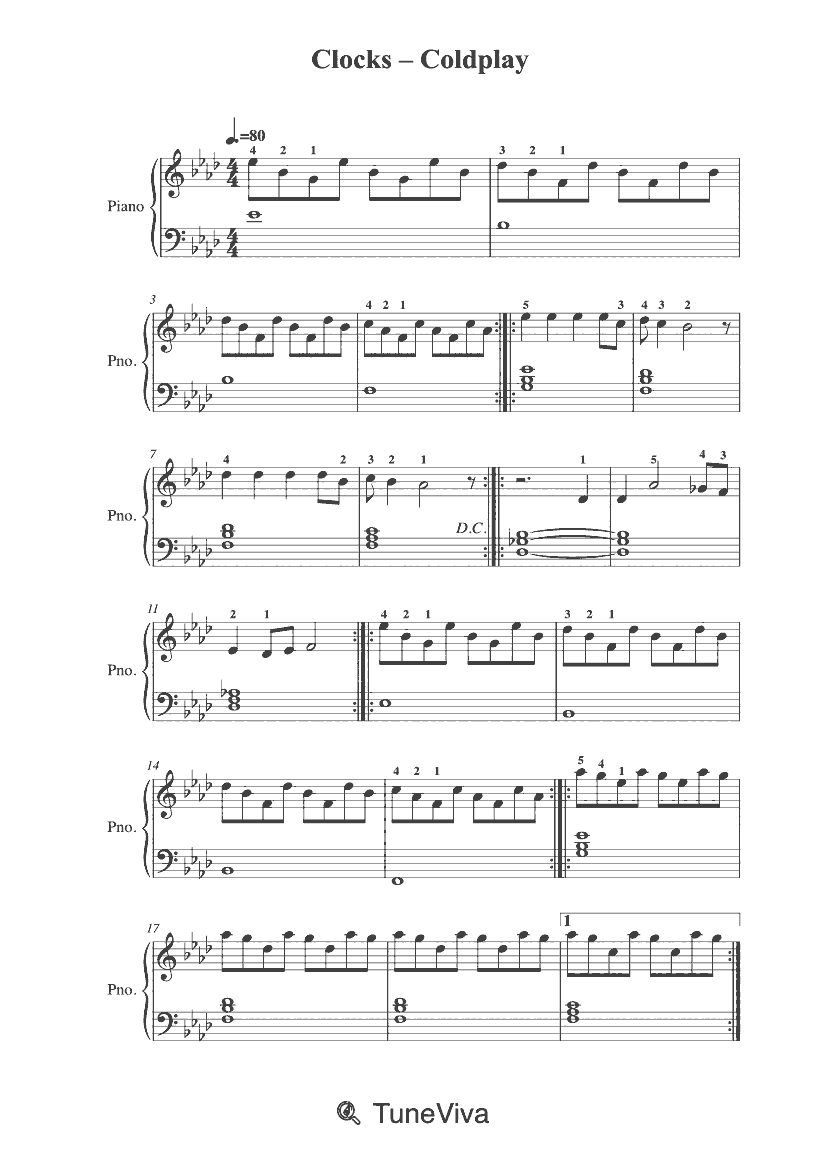
Clocks – Coldplay
Coldplay
Piano · 1 min 24 sec
Open score25 Coldplay scores to preview: Clocks, Fix You, Trouble, Amsterdam, Speed of Sound, The Scientist, Viva la Vida and a trio version of Yellow, from London.
The most-viewed score on the page: the piano riff from A Rush of Blood to the Head (2002), built on an E-flat Mixolydian progression and awarded Record of the Year at the 2004 Grammys.
From X&Y (2005), released as a single that September and reaching number four in the United Kingdom; the arrangement starts with organ and piano and expands in the second half.
The third single from Parachutes, issued in October 2000; a piano-led song that reached number ten in the United Kingdom.
The closing track of A Rush of Blood to the Head, a slow piano ballad that ends the album after the title track.
The lead single from X&Y, premiered in April 2005; it reached number two in the United Kingdom and won Best British Single at the 2006 Brit Awards.
A piano ballad from A Rush of Blood to the Head, released as a single in November 2002 and reaching number ten in the United Kingdom.
A 48-second solo piano piece from the Prospekt's March EP (2008); the catalogue title is a garbled version of the track name, and the file is an instrumental.
The third track on X&Y, one of the guitar-driven songs from the 2004-05 sessions; the catalogue does not indicate an arrangement credit.
A chamber arrangement of the 2000 single from Parachutes, scored for piano, violin and cello rather than band.
The 2008 single from Viva la Vida or Death and All His Friends; it won Song of the Year at the 2009 Grammys and was the band's first number one in both the United Kingdom and the United States.
Compare the instrument and arrangement details below, then open a score to check the notation. Different entries may be arrangements or editions of the same work; available playback tools are shown on each score page.
Coldplay
Piano · 1 min 24 sec
Open score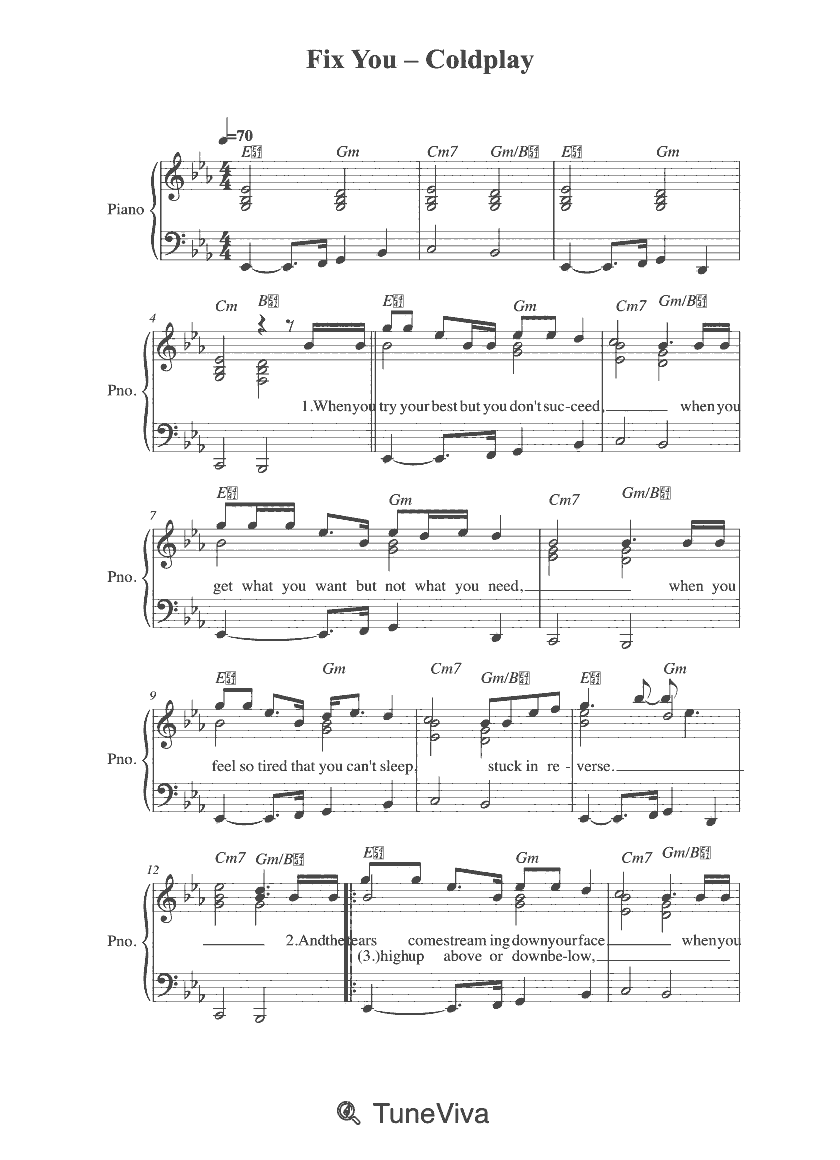
Coldplay
Coldplay
Piano · 9 min 12 sec
Open score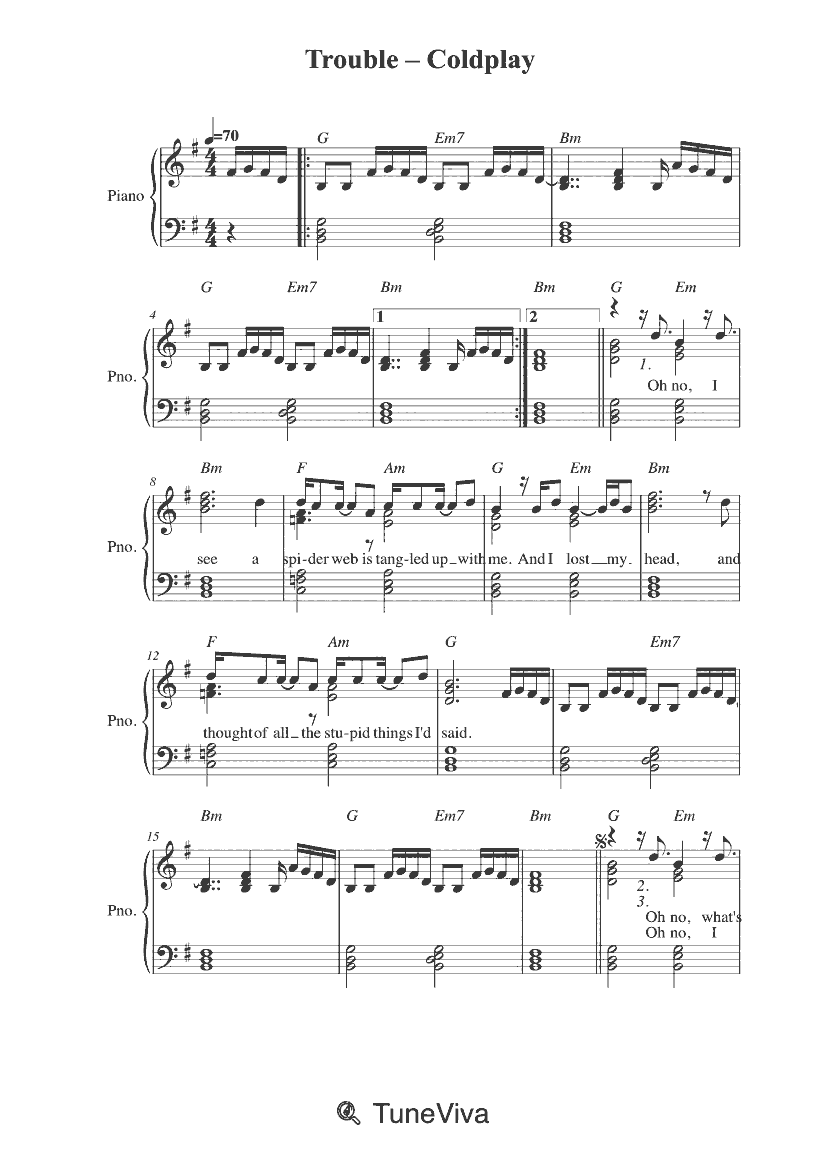
Coldplay
Piano · 5 min 40 sec
Open score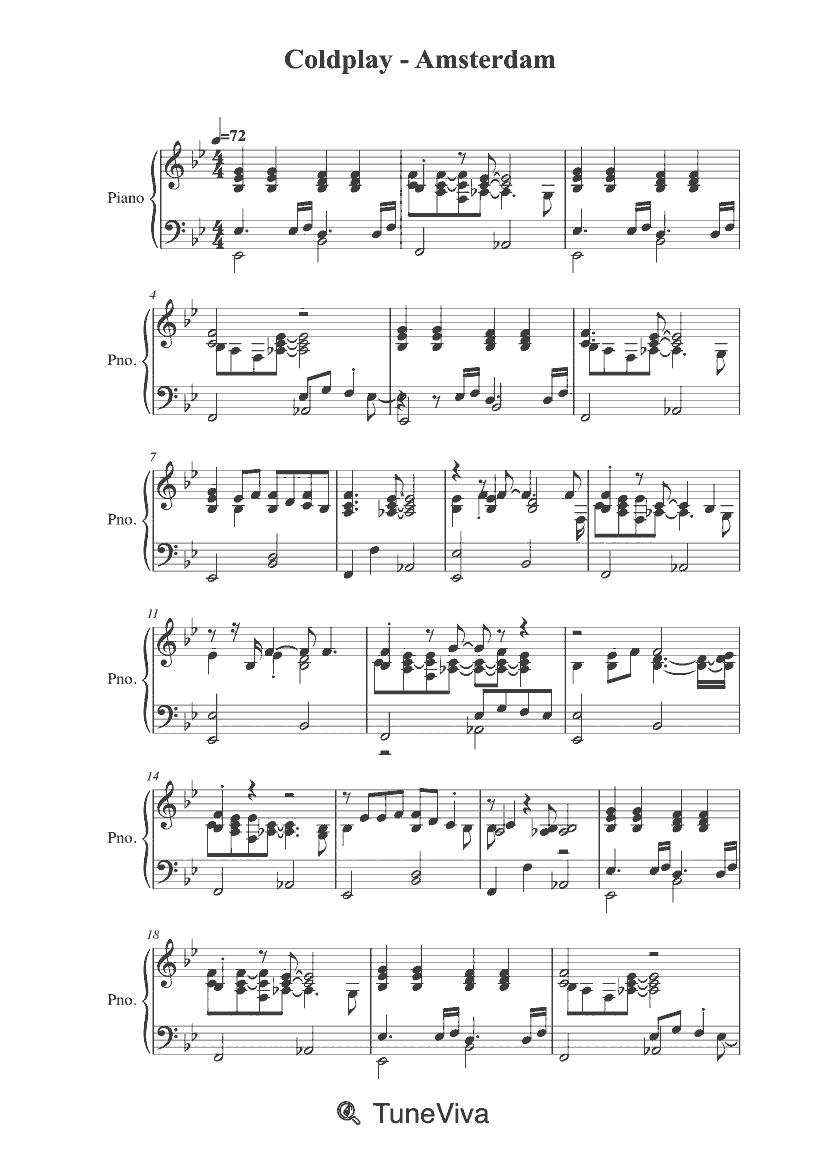
Coldplay
Piano · 9 min 26 sec
Open score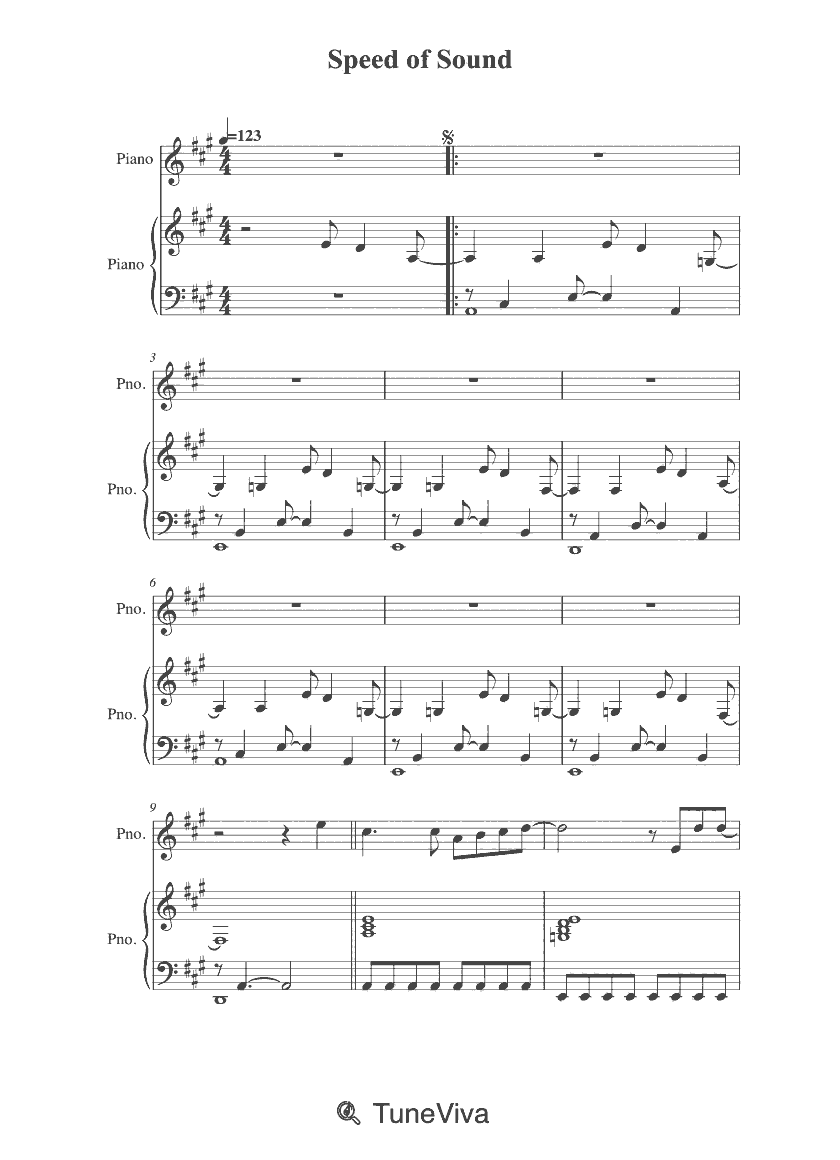
Coldplay
Piano · 5 min 38 sec
Open score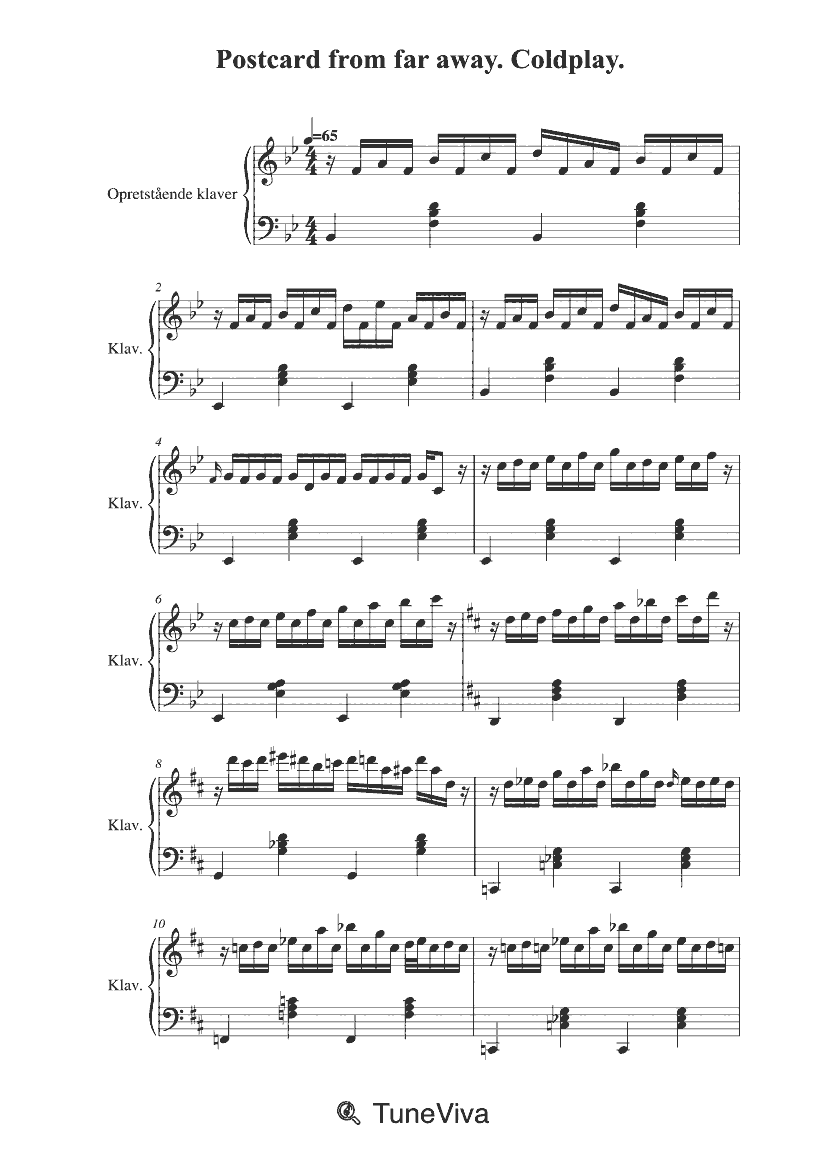
Coldplay
Opretstående klaver · 1 min 50 sec
Open score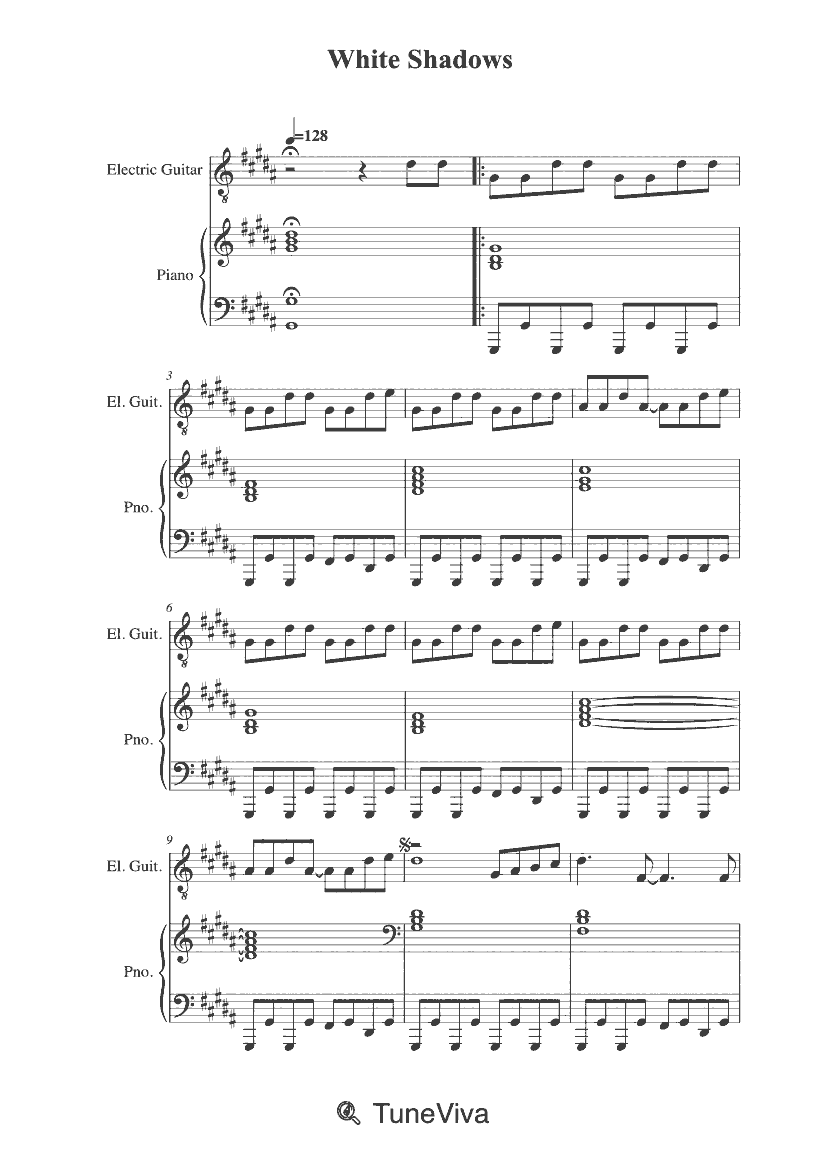
Coldplay
Electric Guitar; Piano · 6 min 19 sec
Open score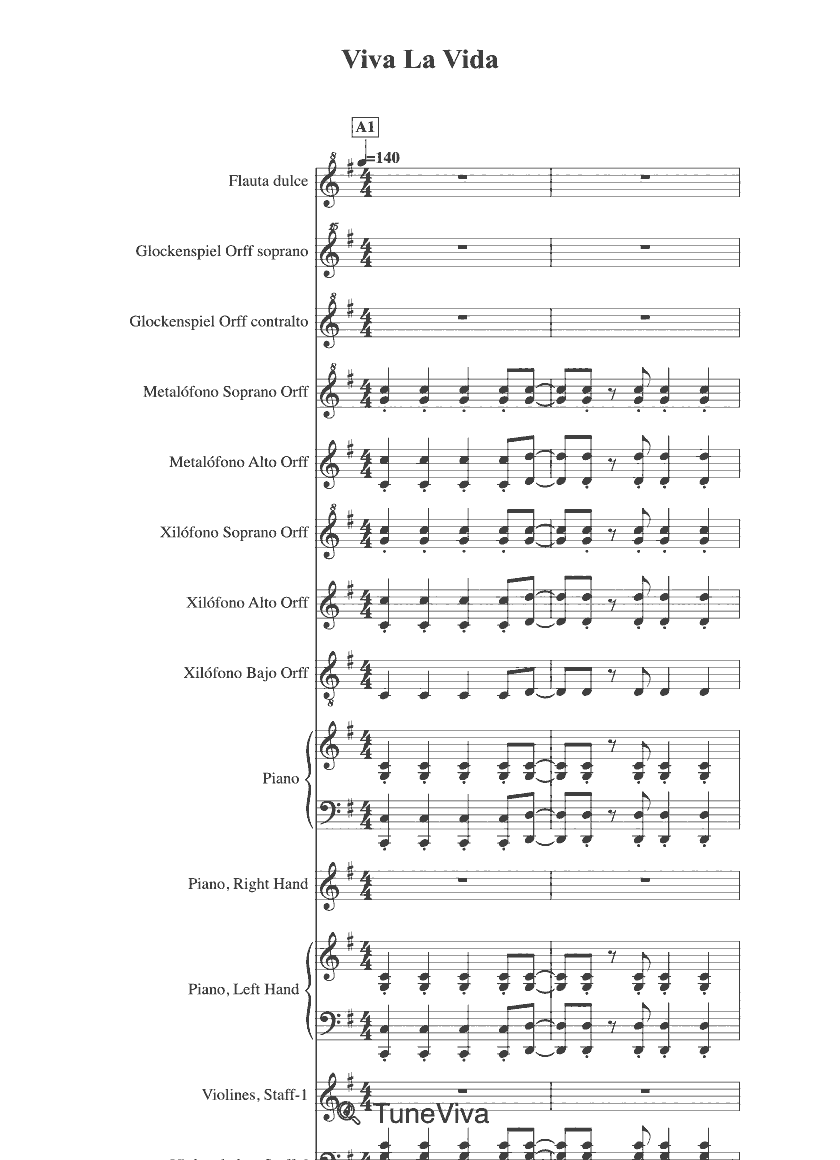
Coldplay
Flauta dulce; Glockenspiel Orff soprano; Glockenspiel Orff contralto +14 parts · 5 min 9 sec
Open score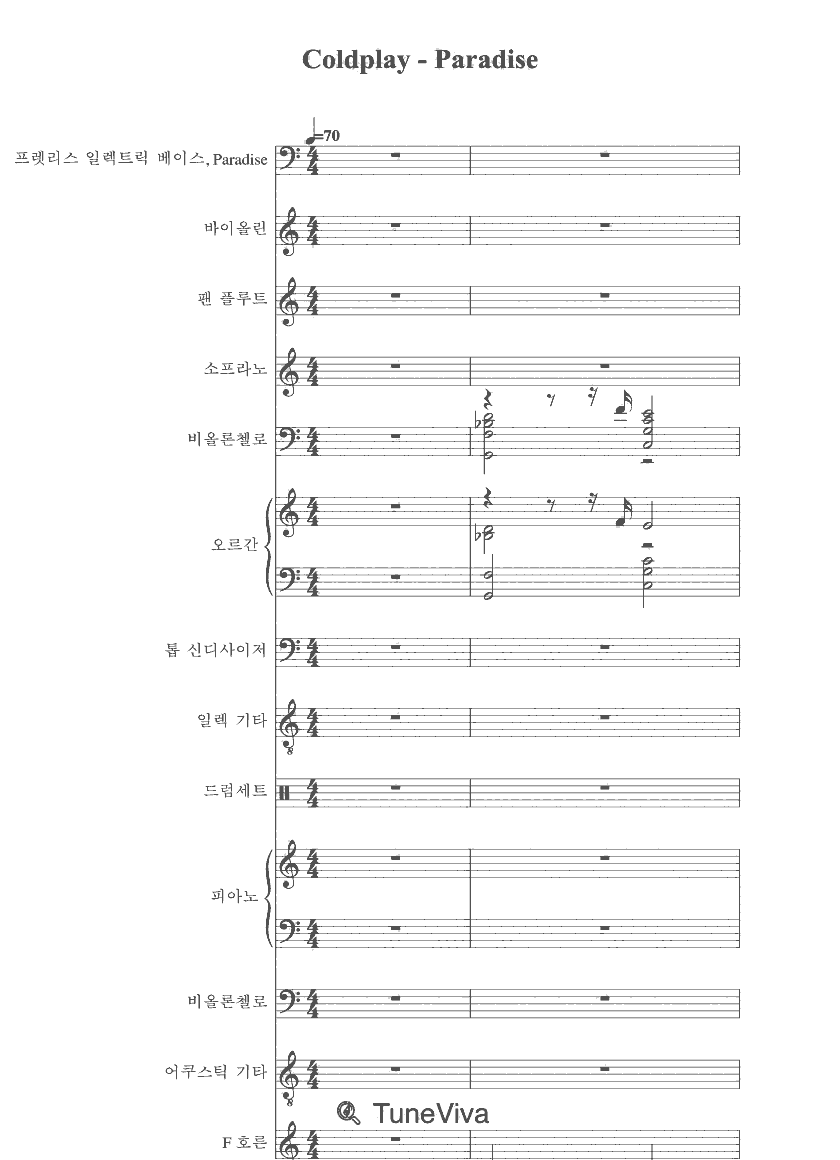
Coldplay
프렛리스 일렉트릭 베이스, Paradise; 바이올린; 팬 플루트 +9 parts · 8 min 10 sec
Open score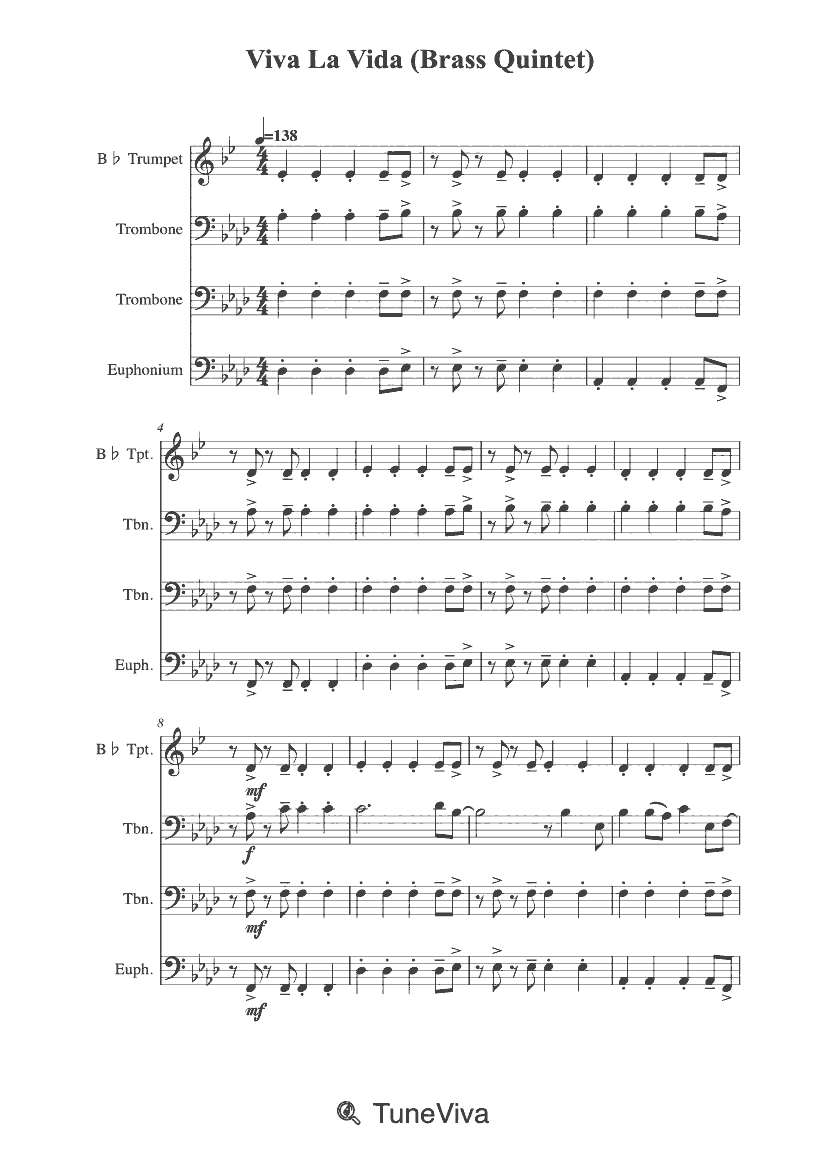
Coldplay
B♭ Trumpet; Trombone; Euphonium · 2 min 47 sec
Open score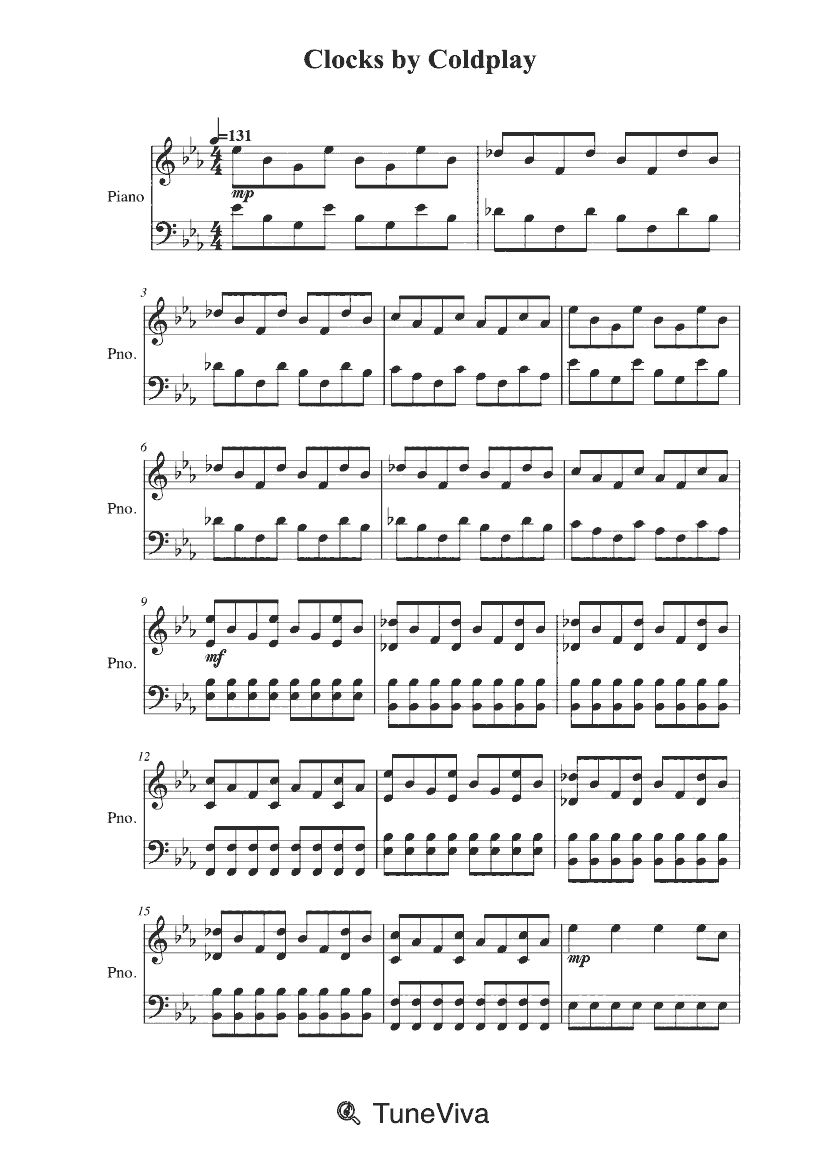
Coldplay
Piano · 5 min 41 sec
Open score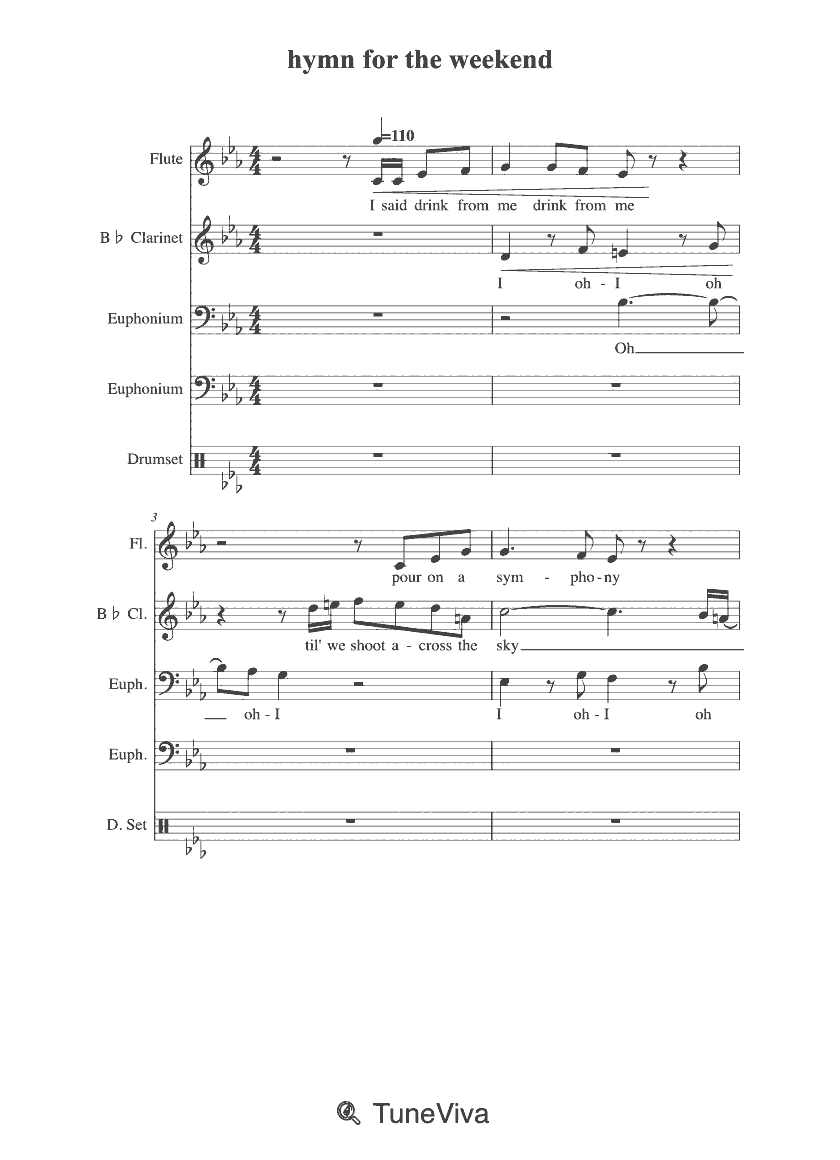
Coldplay
Flute; B♭ Clarinet; Euphonium +1 parts · 3 min 18 sec
Open score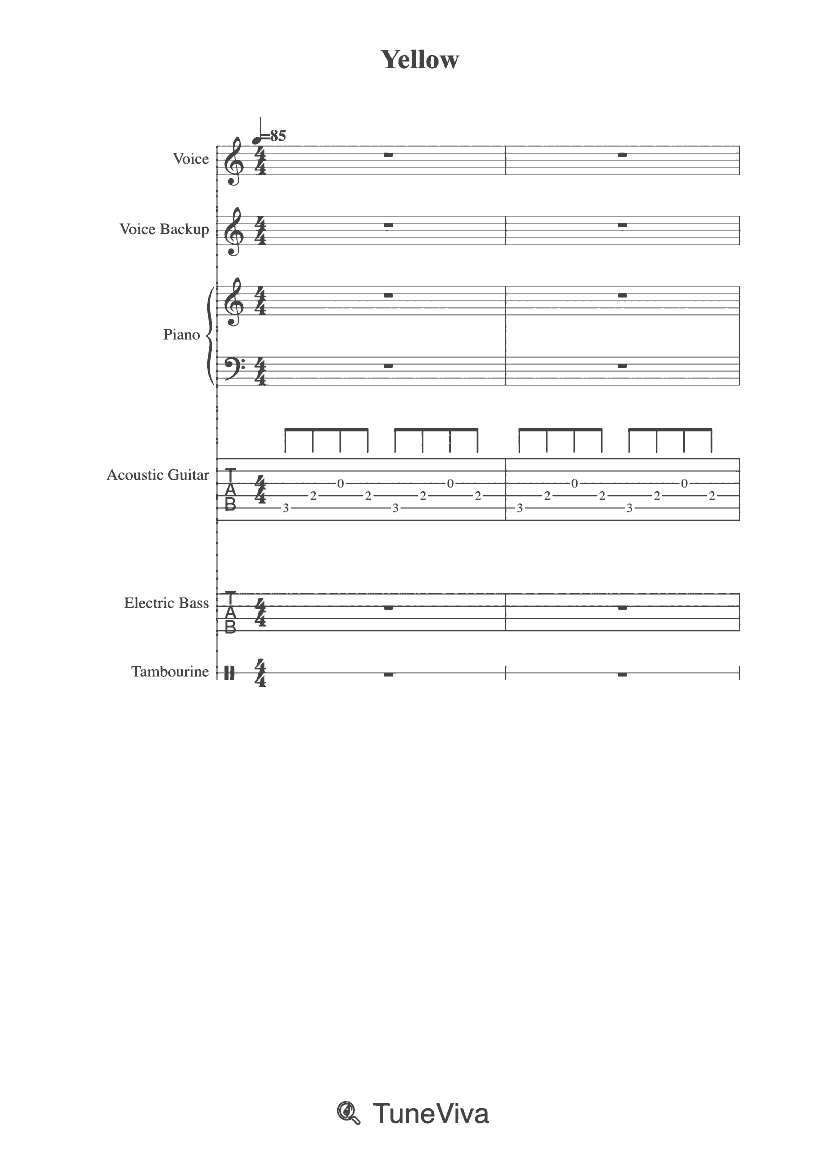
Coldplay
Cover by Katherine Ho from Crazy Rich Asians
Voice; Voice Backup; Piano +3 parts · Arr. C.L. · 3 min 35 sec
Open score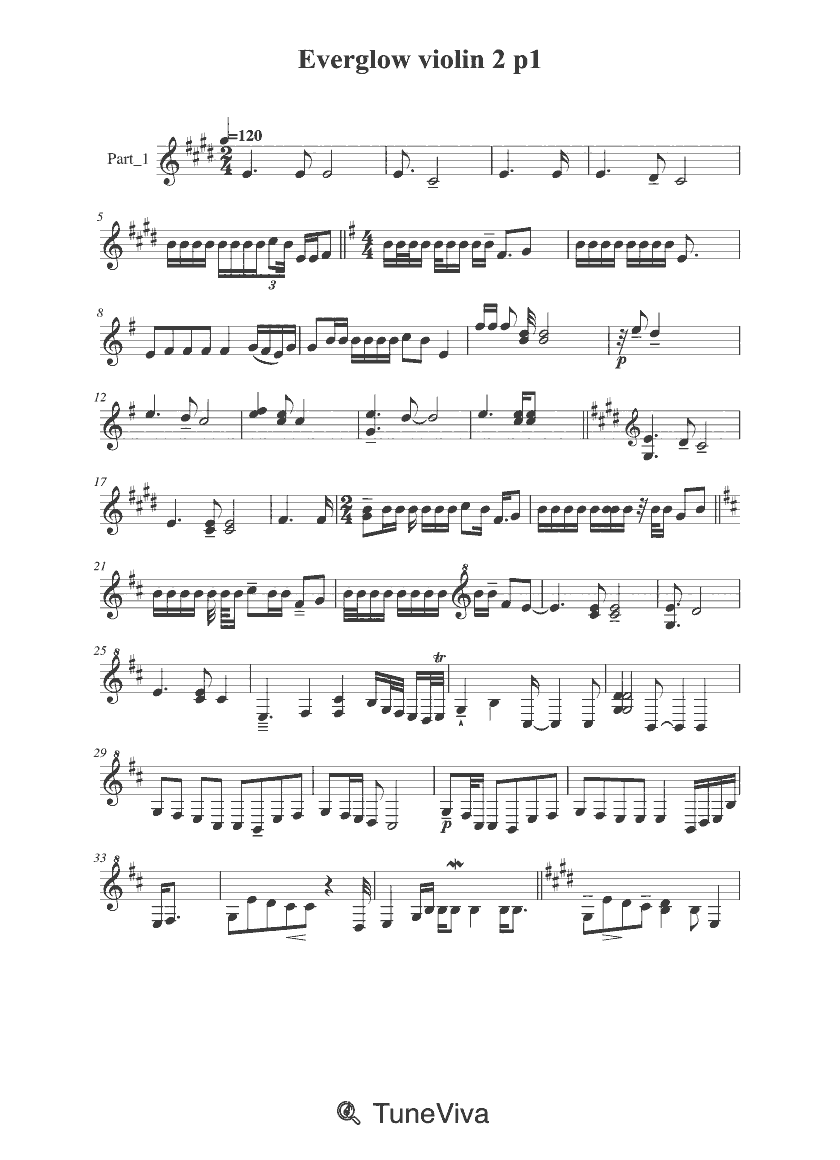
Coldplay
Part_1 · 1 min 17 sec
Open score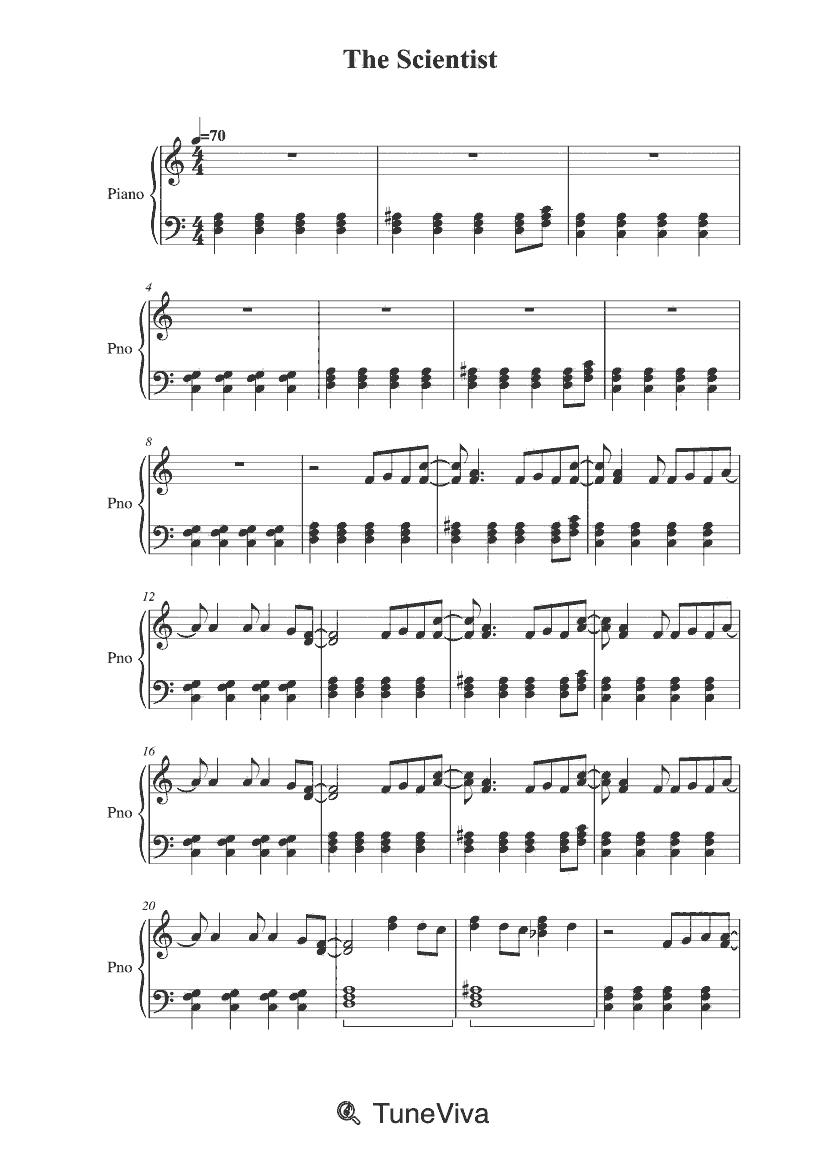
Coldplay
Piano · 2 min 2 sec
Open score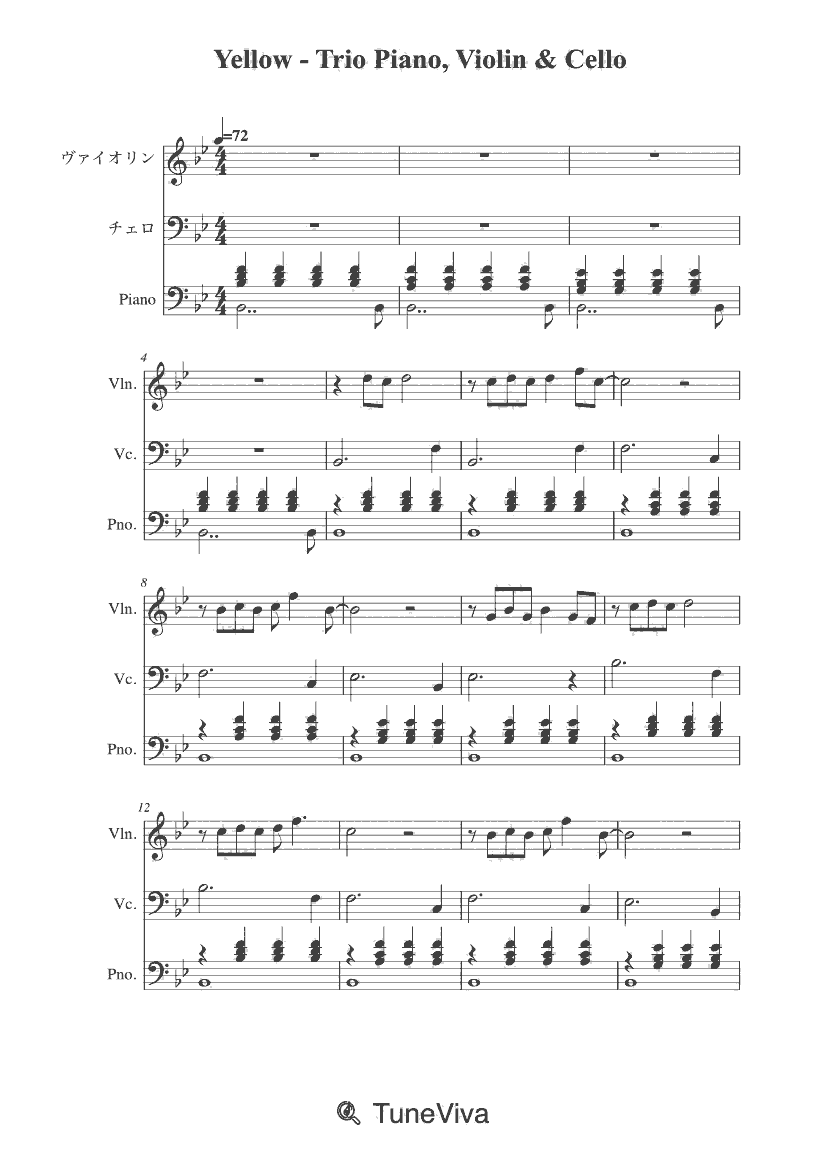
Coldplay
ヴァイオリン; チェロ; Piano · 4 min 30 sec
Open score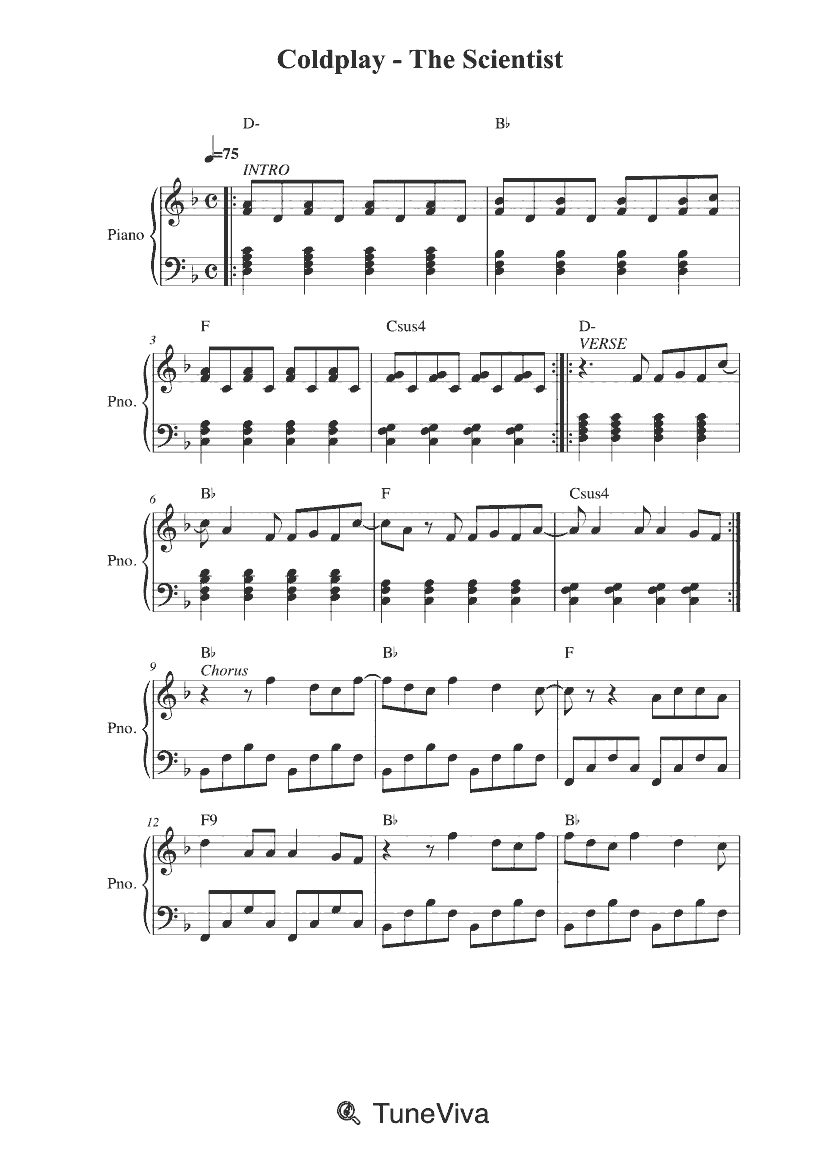
Coldplay
Piano · 2 min 34 sec
Open score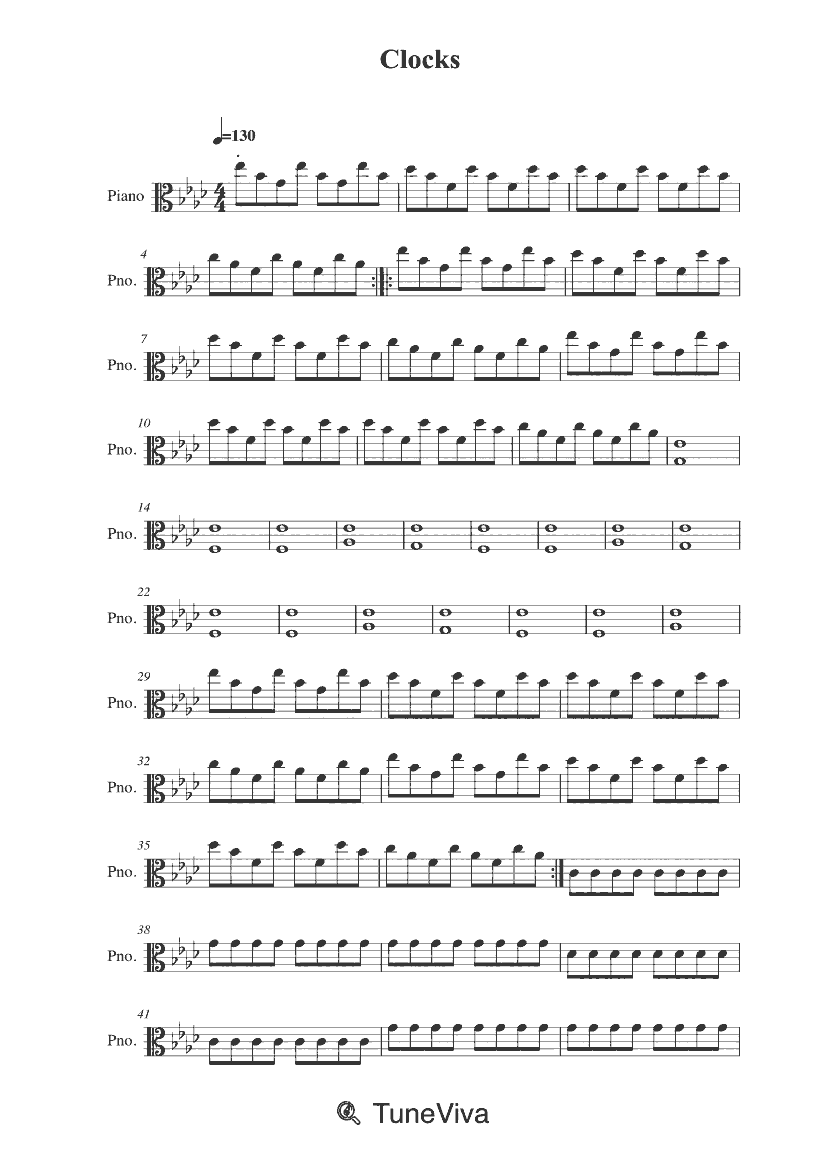
Coldplay
Viola
Piano · 4 min 44 sec
Open score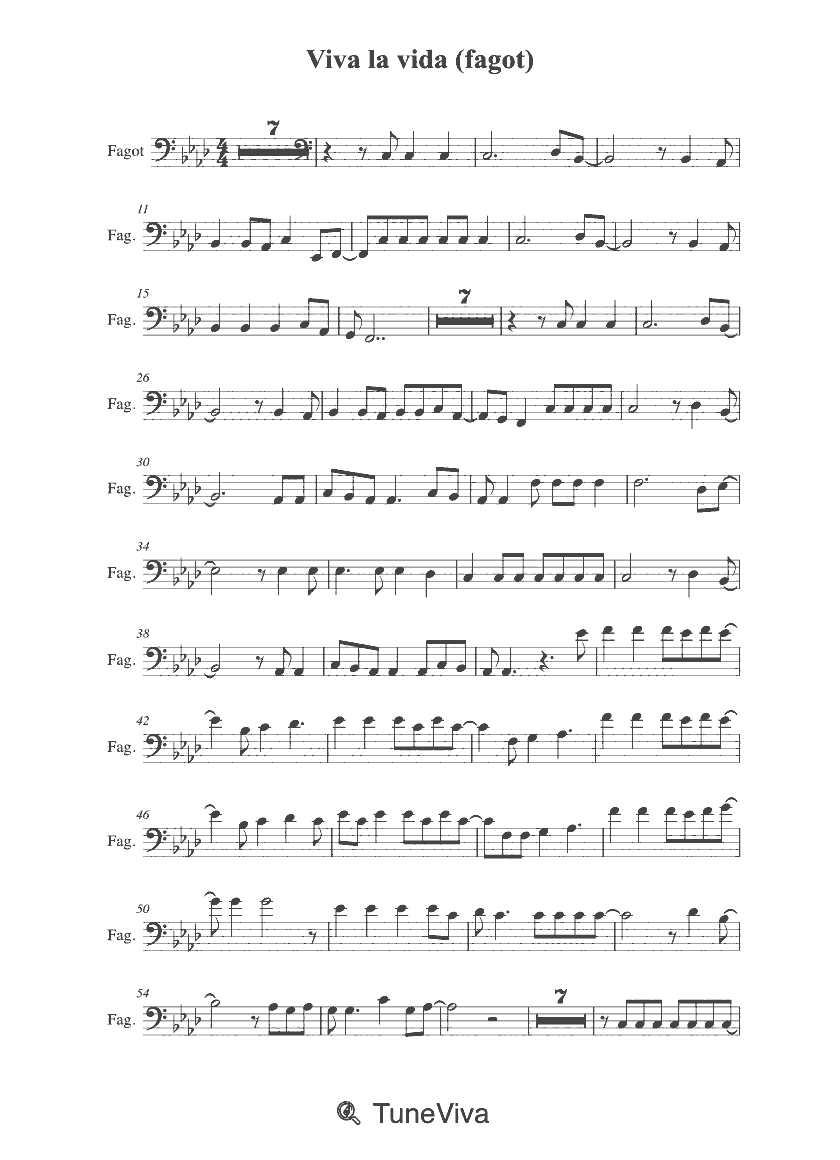
Coldplay
Fagot · 5 min 3 sec
Open score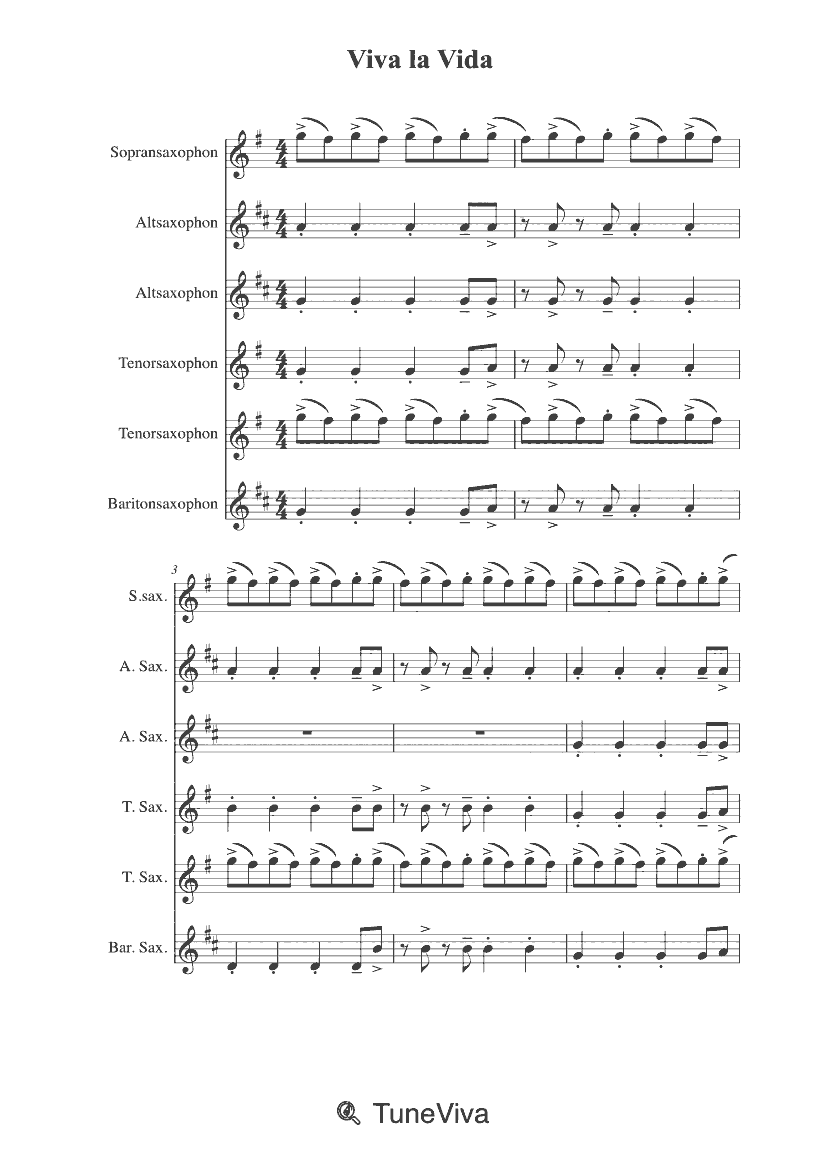
Coldplay
Sopransaxophon; Altsaxophon; Tenorsaxophon +1 parts · 3 min 16 sec
Open scorePage 1 of 2
Coldplay are a band rather than a composer, and the catalogue reflects it: 25 scores, about 104 minutes of music and 51,353 notated notes, mostly piano reductions and ensemble arrangements. Only seven entries carry lyrics. Rock accounts for 18 entries and rock-pop for six, with one unclassified. The most-viewed titles are Clocks and Fix You, followed by Trouble and Amsterdam. Several songs appear twice, so the 25 entries cover fewer distinct works than the count suggests. Coldplay are a British rock band formed in London in 1997, with Chris Martin, Jonny Buckland, Guy Berryman and Will Champion; manager Phil Harvey is credited as a full member. Their songs are built on memorable piano riffs, slow-building ballads and layered arrangements, which makes them natural material for sheet music. This page gathers arrangements of Clocks, Fix You, The Scientist, Trouble, Speed of Sound, Amsterdam, Yellow and Viva la Vida, among others. Most are solo piano reductions, with a piano-trio Yellow and a large ensemble version of Viva la Vida; because these are arrangements rather than the band’s own editions, check the scoring and preview before choosing.
Coldplay formed in London in 1997 around Chris Martin, Jonny Buckland, Guy Berryman and Will Champion, with Phil Harvey as manager and later creative director. Their debut, Parachutes, appeared in July 2000 and gave them "Yellow", their first top-five single in the United Kingdom. A Rush of Blood to the Head followed in August 2002 and won the Grammy for Best Alternative Music Album; X&Y arrived in June 2005 and was the best-selling album of that year; Viva la Vida or Death and All His Friends, produced with Brian Eno, came out in 2008 and took its title track to number one in both the United Kingdom and the United States.
The songs behind the scores are well documented. "Clocks" grew from a piano riff Martin brought in late in the sessions for the second album and won Record of the Year at the 2004 Grammys. "Fix You" was written for Gwyneth Paltrow after her father's death and builds from organ and piano into a full-band second half. "The Scientist" is a piano ballad issued as a single in November 2002, and "Amsterdam" closes the same album. "Speed of Sound" led X&Y and reached number two in the United Kingdom, while "Postcards from Far Away" is a 48-second piano instrumental from the Prospekt's March EP of 2008.
The catalogue is a set of arrangements, not the band's own publications. A piano-trio "Yellow" and a brass-quintet "Viva la Vida" sit alongside solo piano reductions, and few entries name an arranger.
Start with the piano-led songs: Clocks, Fix You, The Scientist, Amsterdam, Trouble and Speed of Sound all have piano-only versions here. Clocks is built around a piano riff, while Fix You grows from organ and piano into a full-band second half. These versions suit players who want the song’s core harmony and melody without assembling an ensemble.
Match the arrangement to your ensemble: A piano-trio Yellow is listed for piano, violin and cello, and a Viva la Vida version lists a large ensemble including recorders, glockenspiels, xylophones, piano, violins, cellos and synthesizers. Check the parts list before choosing: a solo reduction keeps the harmonic outline, while an ensemble version distributes the texture across instruments.
Shape the build in Fix You: Source descriptions place Fix You in E-flat major at about 69 bpm, with an organ-and-piano opening that expands into group vocals, drums and strings. On piano, keep the early verses restrained so the second half has room to open up; the song’s two-part shape is central to its effect.
Hear the layers in Viva la Vida: Viva la Vida is built around a looping string section and a digitally processed piano, with other layers added gradually. In a reduction, decide which line carries the pulse and which supplies colour; the song’s historical lyrics and bell-like textures depend on clarity rather than density.
No. They are arrangements and reductions uploaded to the catalogue, not editions issued by the band or its publisher, and most files do not name an arranger.
There are two: one titled "Clocks – Coldplay" and one titled "Clocks by Coldplay". The catalogue gives no scoring difference, so compare the first page before printing.
Only seven of the 25 entries are marked as having lyrics. The rest are instrumental reductions, so the vocal line may be present as a melody without text.
Solo piano versions of Clocks, Fix You, The Scientist, Amsterdam, Trouble, Speed of Sound and Postcards from Far Away are listed, alongside a piano-trio arrangement of Yellow and a large ensemble version of Viva la Vida. White Shadows is listed for electric guitar and piano rather than solo piano.
Clocks is built around a piano riff that Chris Martin developed late in the sessions for A Rush of Blood to the Head; Jonny Buckland added guitar chords to the basic track. The song won Record of the Year at the 2004 Grammy Awards, and a piano score naturally puts that repeating figure at the centre.
Fix You is an organ-and-piano ballad in E-flat major at about 69 bpm. It opens in a hushed way and grows into a second half with group vocals, drums and strings, so a pianist should keep the early verses restrained and let the crescendo unfold.
Viva la Vida is built around a looping string section and a digitally processed piano, with other layers added gradually. Its lyrics refer to King Louis XVI and the French Revolution, Roman cavalry choirs and Saint Peter; the title comes from Frida Kahlo’s final painting.
A piano-trio arrangement of Yellow is listed for piano, violin and cello; the score opens in two flats at 72 bpm. Yellow was Coldplay’s breakthrough single from Parachutes (2000).