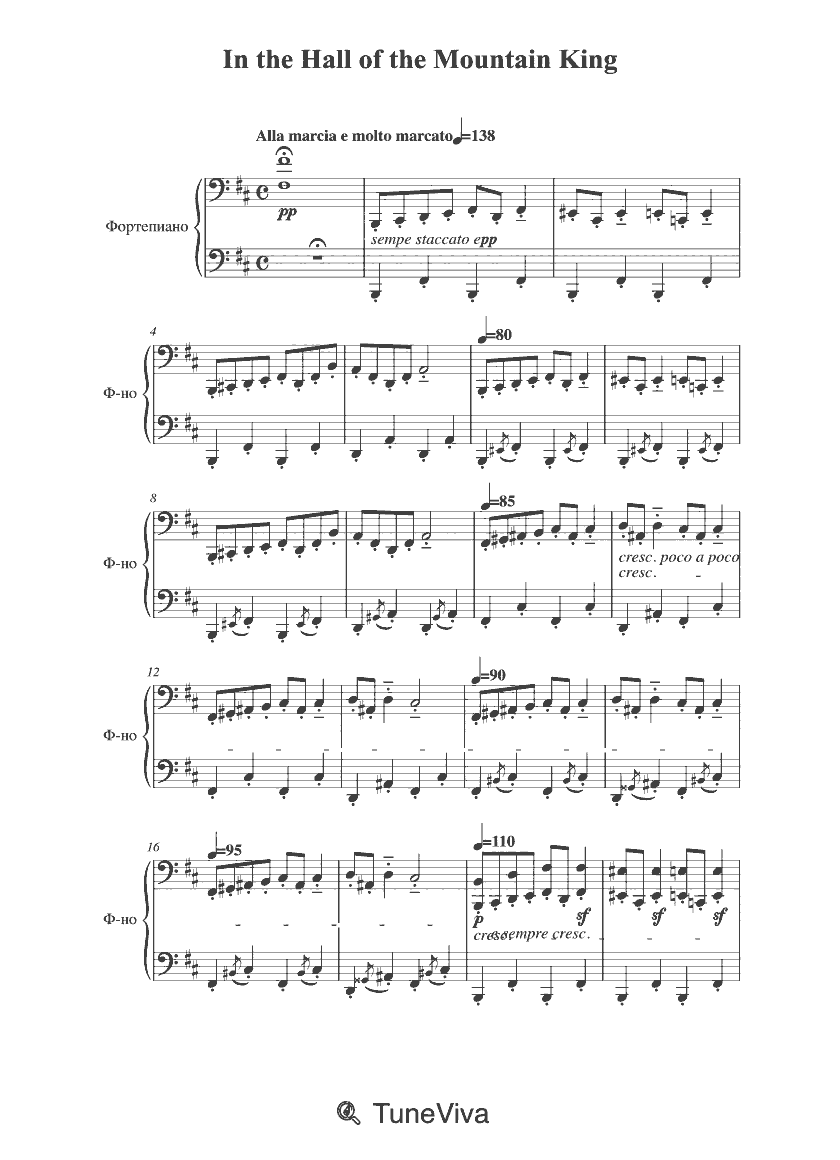
In the Hall of the Mountain King
Edvard Grieg
Фортепиано · 2 min 34 sec
Open score63 Grieg scores to preview: In the Hall of the Mountain King, Morning Mood, Anitra's Dance, Lyric Pieces, Ave maris stella and the Op. 74 hymns, for piano.
The last movement of Peer Gynt Suite No. 1, Op. 46, a march that gathers speed as the trolls close in.
The dance from Act IV of Peer Gynt, in a piano solo arrangement.
From the first book of Lyric Pieces, published in 1867 and still one of the gentlest entries in the set.
A fast, light scherzo from the last book of Lyric Pieces, published in 1901.
A whirling E minor dance from the 1867 book, long a favourite teaching piece.
A motet for mixed choir, published in 1899 and dedicated to the Copenhagen Cæciliaforening.
The prelude to Act I of Peer Gynt and the opening movement of Suite No. 1.
The unaccompanied cadenza from the first movement of the Piano Concerto, Op. 16, extracted as a separate file.
The fourth of the Four Psalms of 1906, a setting of Laurentius Laurentii's hymn.
For solo piano, begin with a Lyric Piece if you want to study a short, self-contained texture. If you came for Peer Gynt, compare Morning Mood with In the Hall of the Mountain King. The first calls for a sustained, gently rising melody, while the second builds from a repeating figure. Check the scoring before choosing. An ensemble version distributes the lines that a piano arrangement asks one player to cover.
Compare the instrument and arrangement details below, then open a score to check the notation. Different entries may be arrangements or editions of the same work; available playback tools are shown on each score page.
Edvard Grieg
Фортепиано · 2 min 34 sec
Open score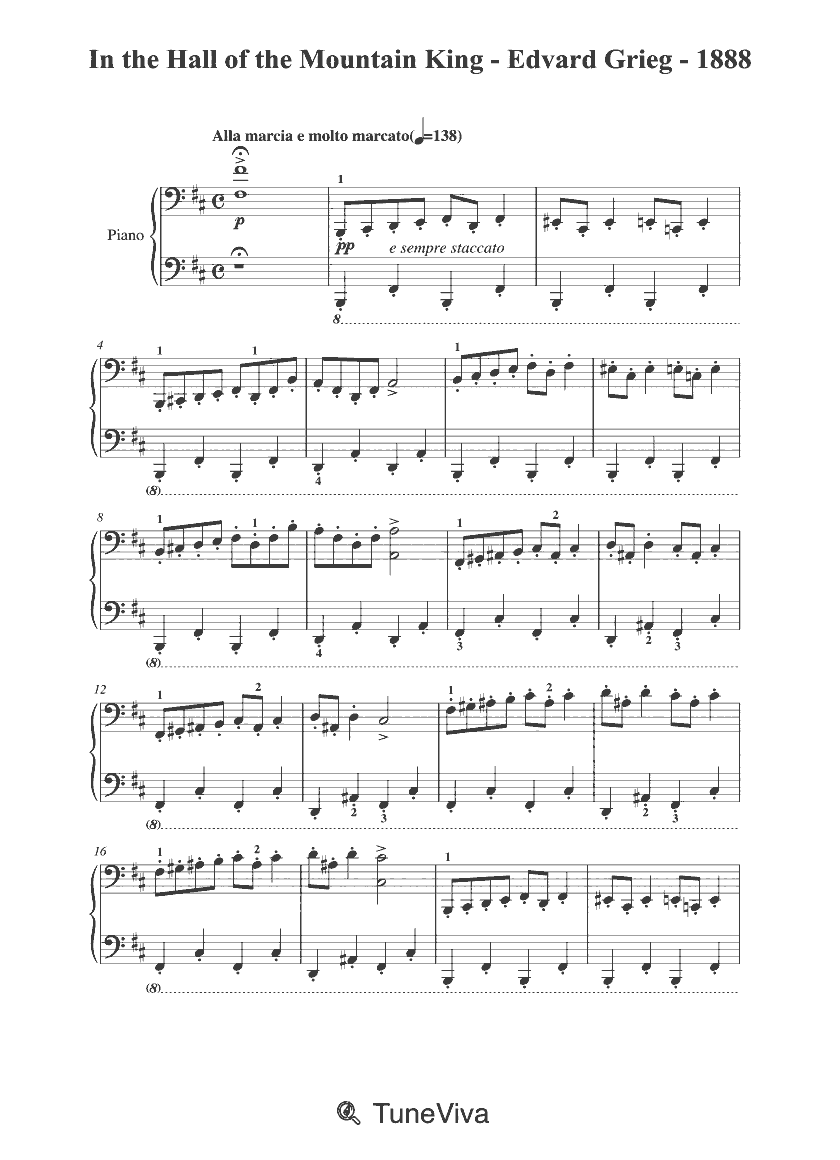
Edvard Grieg
Peer Gynt Suite No.1 Op.46
Piano · 3 min 20 sec
Open score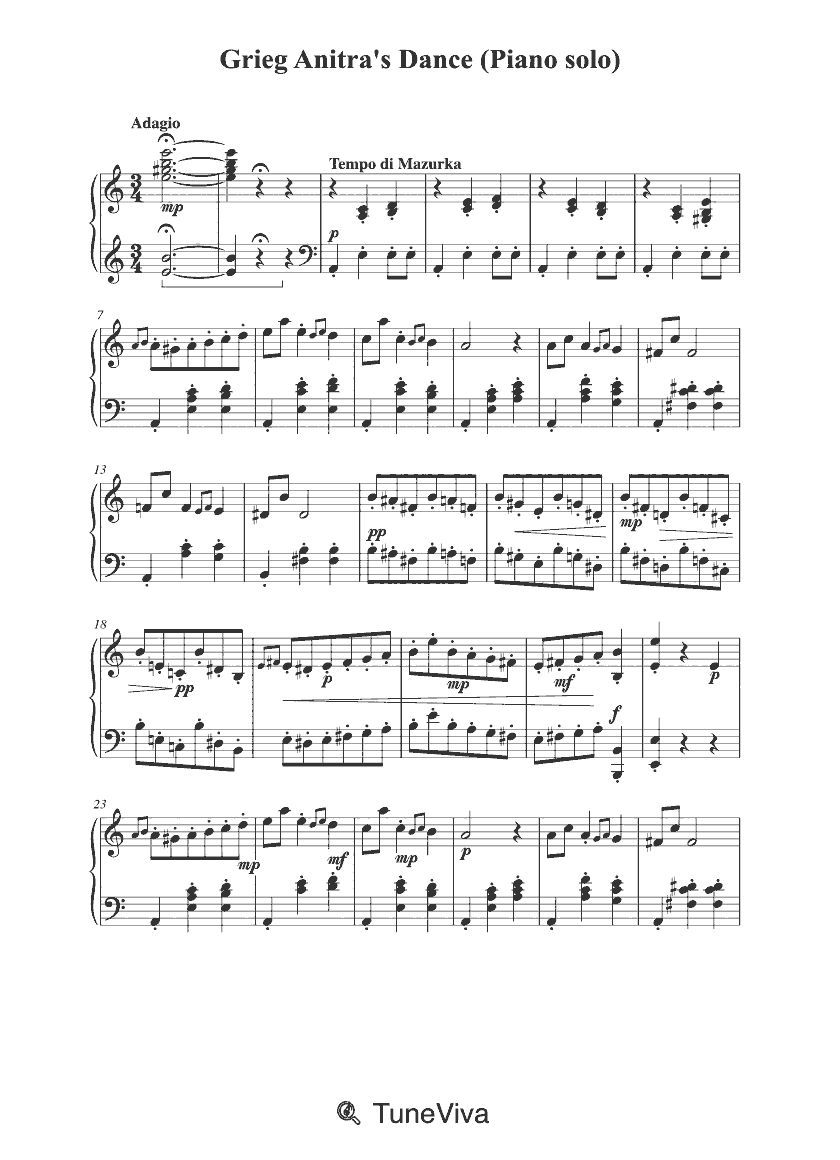
Edvard Grieg
Piano · 4 min 12 sec
Open score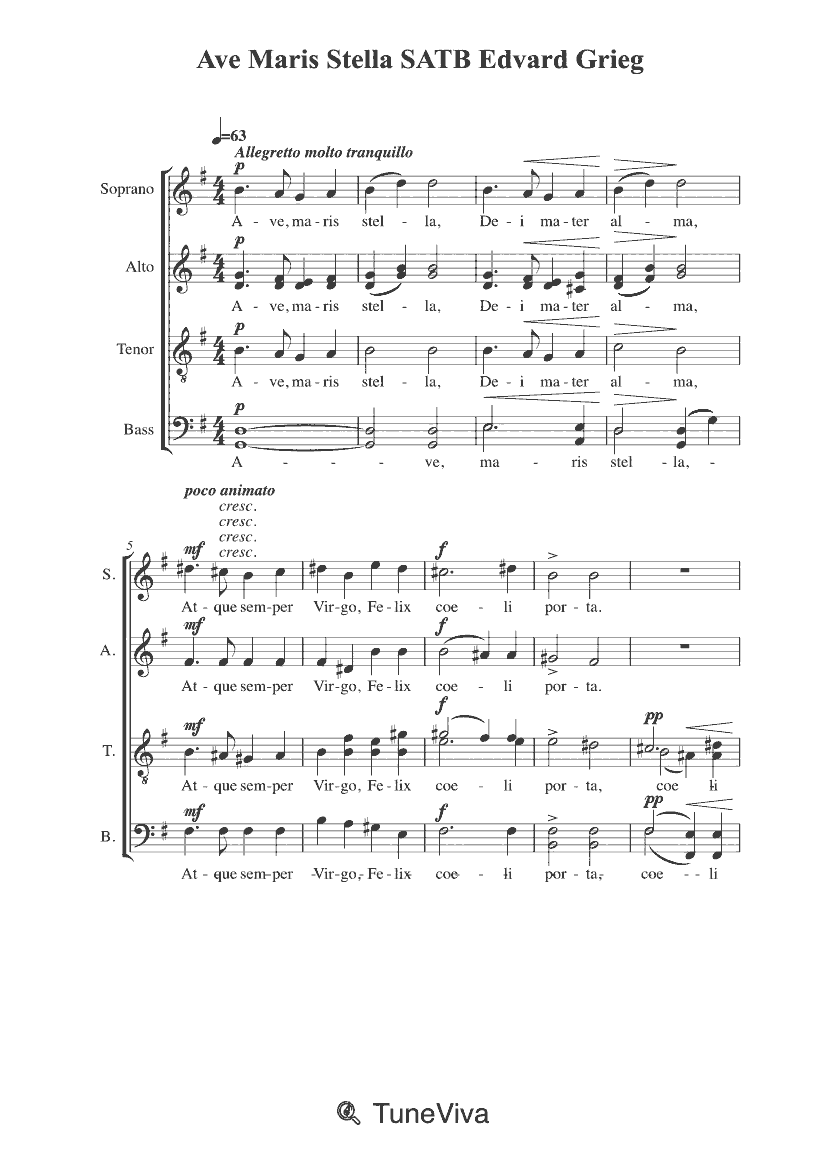
Edvard Grieg
Satb
Soprano; Alto; Tenor +1 parts · 3 min 16 sec
Open score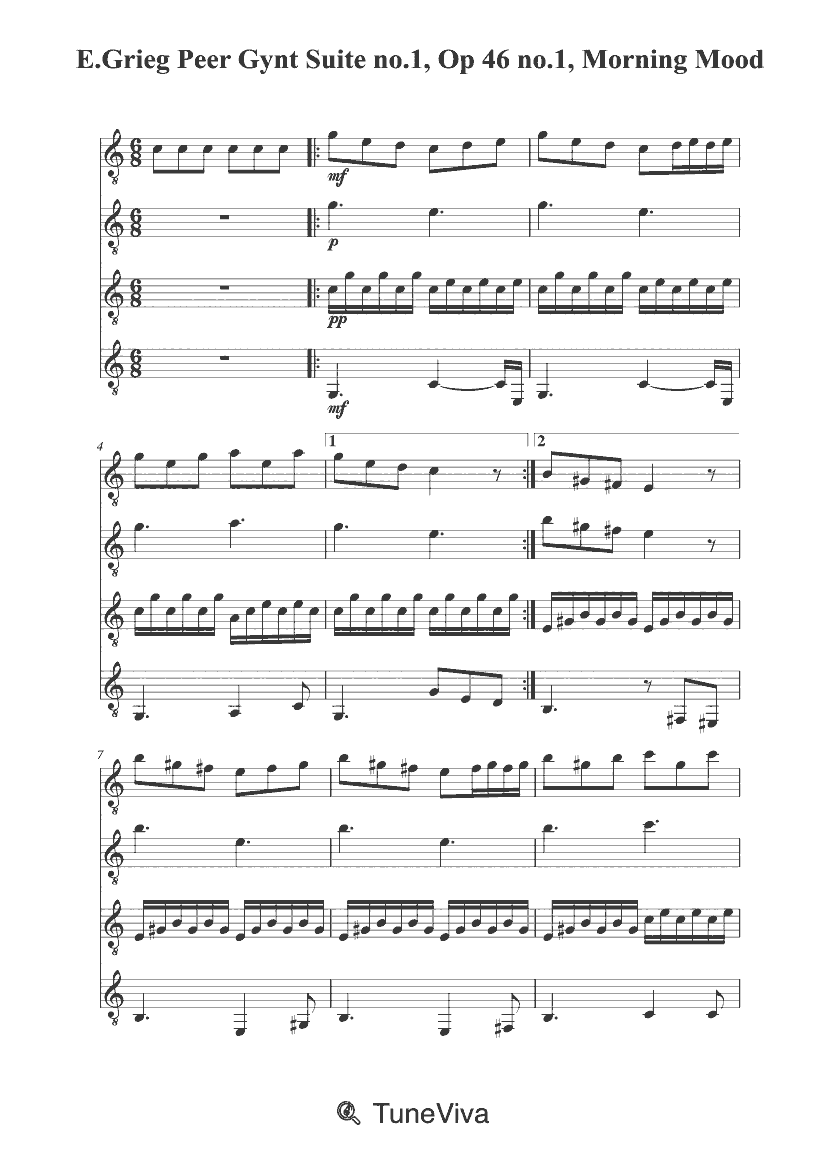
Edvard Grieg
Guitar · 33 sec
Open score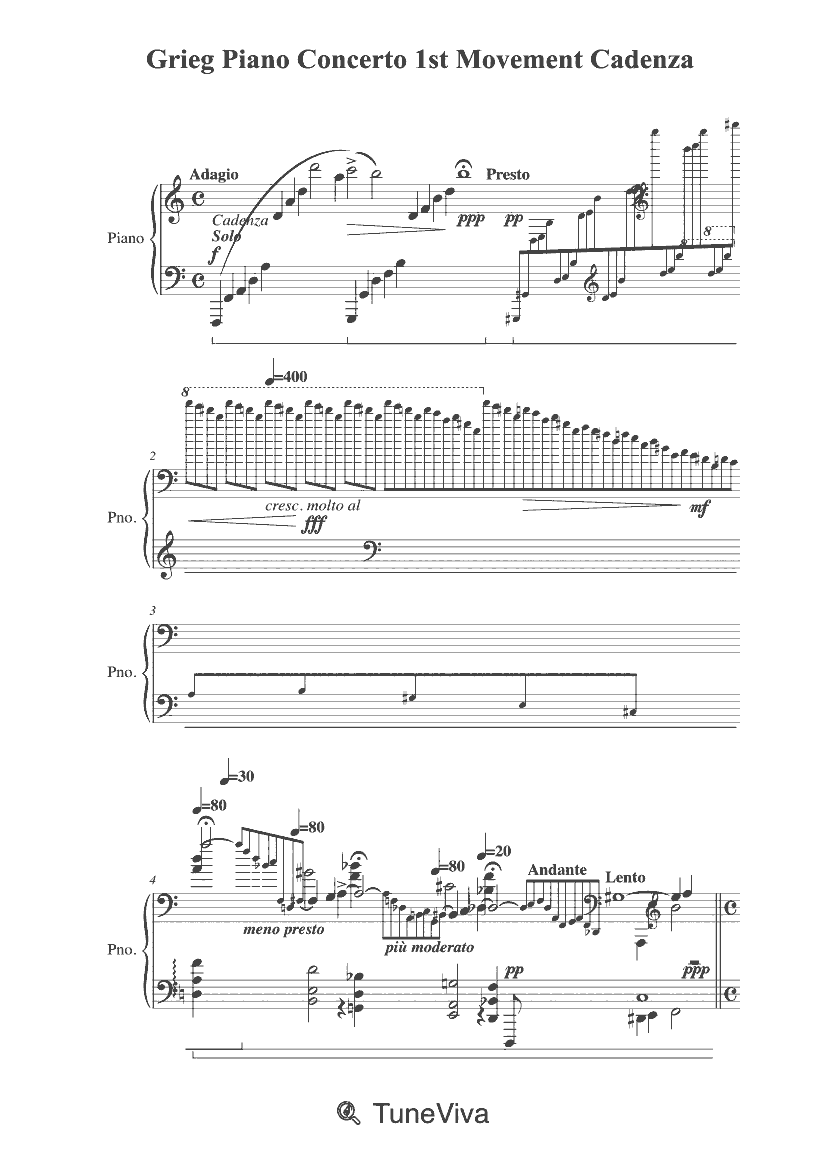
Edvard Grieg
Piano · 3 min 53 sec
Open score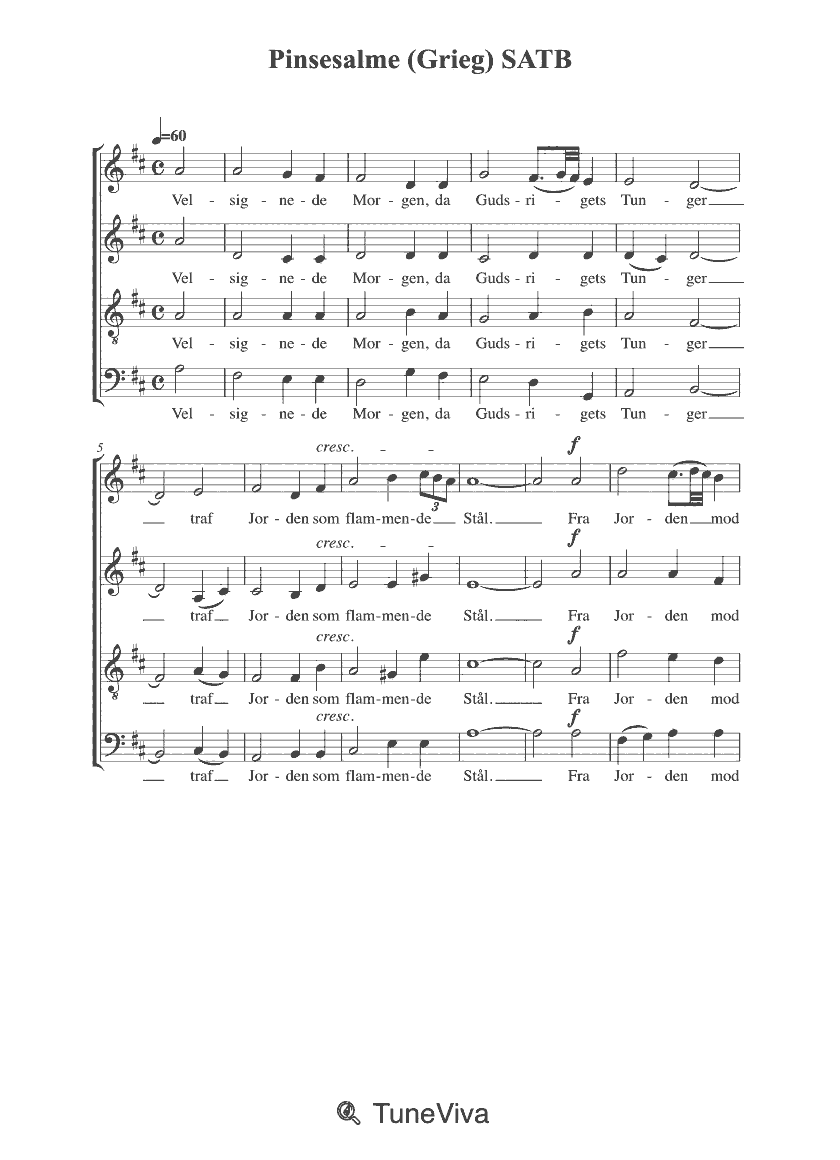
Edvard Grieg
Peer Gynt scene 10
Soprano; Alto; Tenor +1 parts · 1 min 8 sec
Open score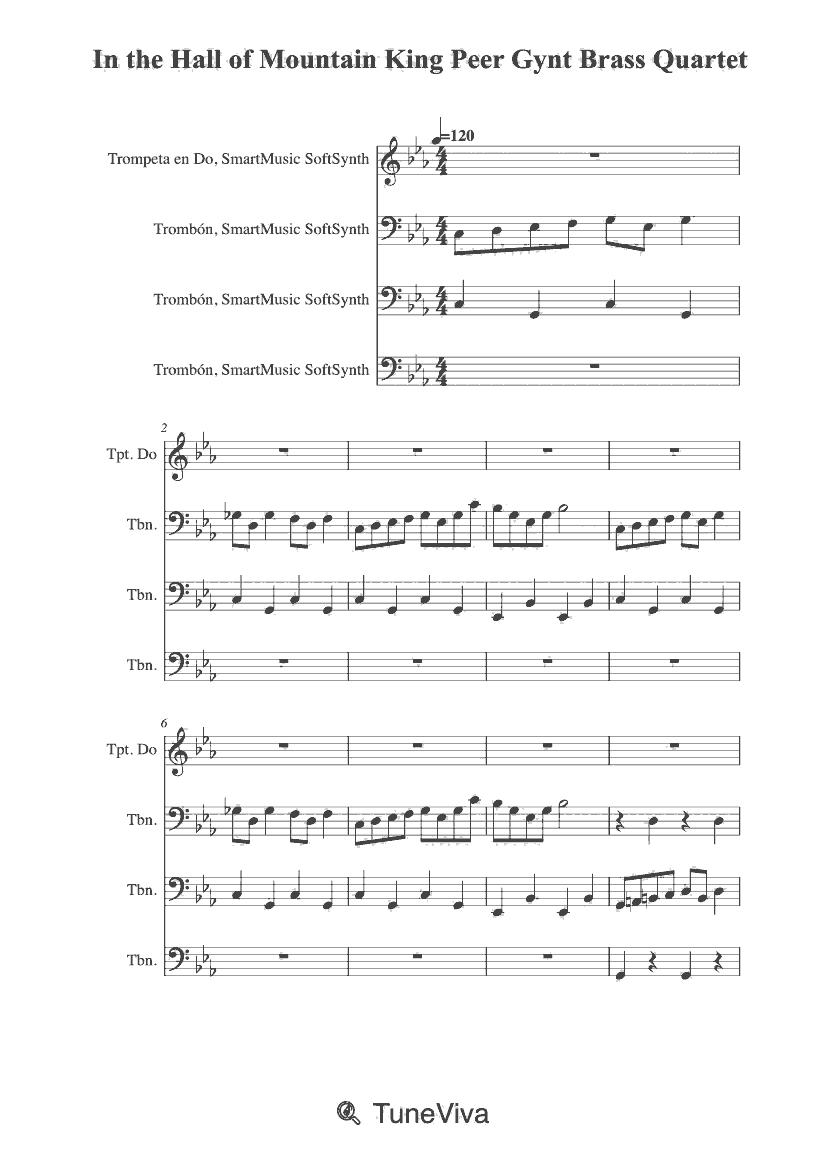
Edvard Grieg
Trompeta en Do, SmartMusic SoftSynth; Trombón, SmartMusic SoftSynth · 2 min 45 sec
Open score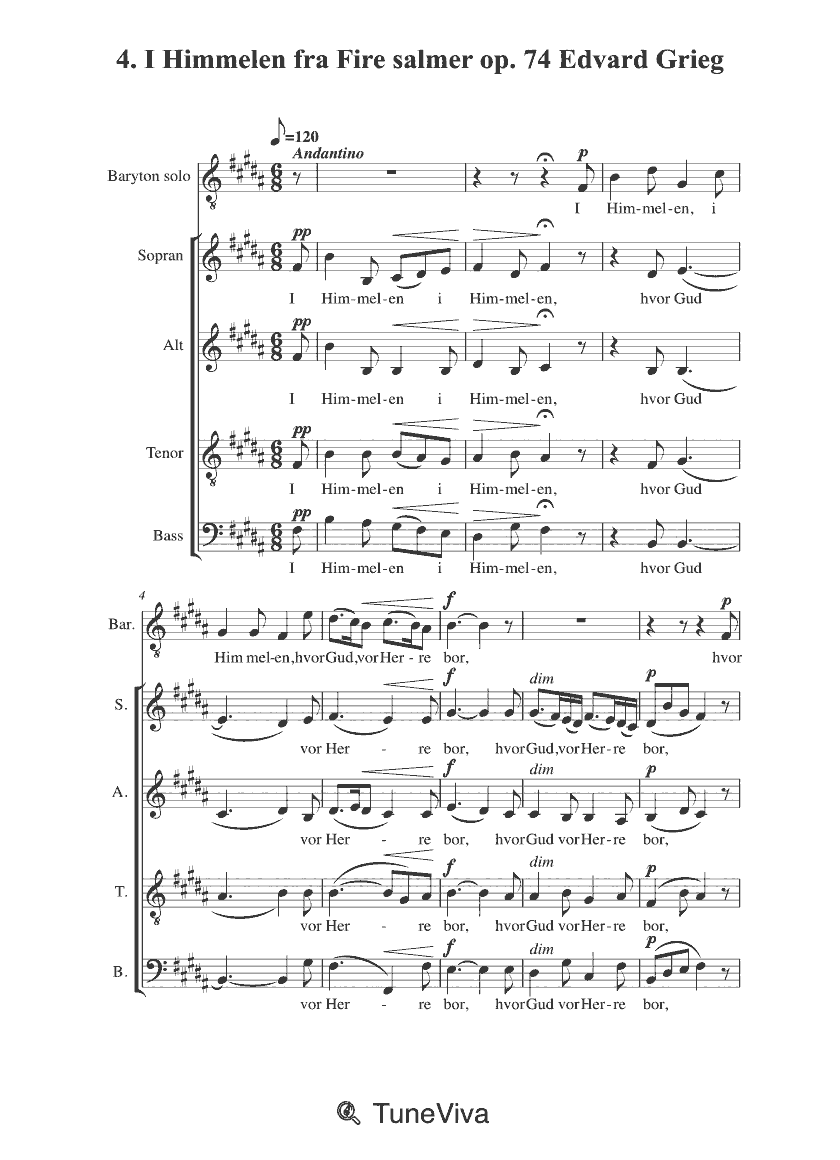
Edvard Grieg
fra Fire salmer op. 74
Baryton solo; Sopran; Alt +2 parts · 1 min 56 sec
Open score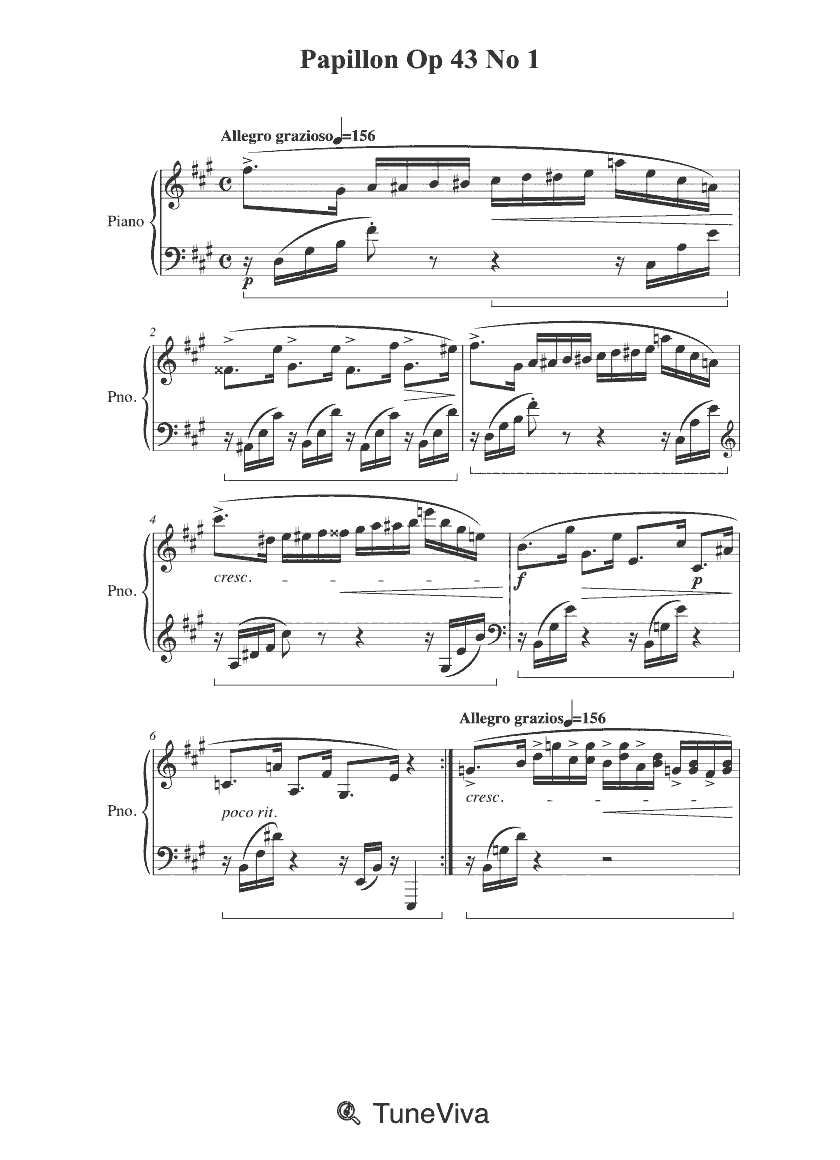
Edvard Grieg
Butterfly from Lyric Pieces
Piano · 1 min 20 sec
Open score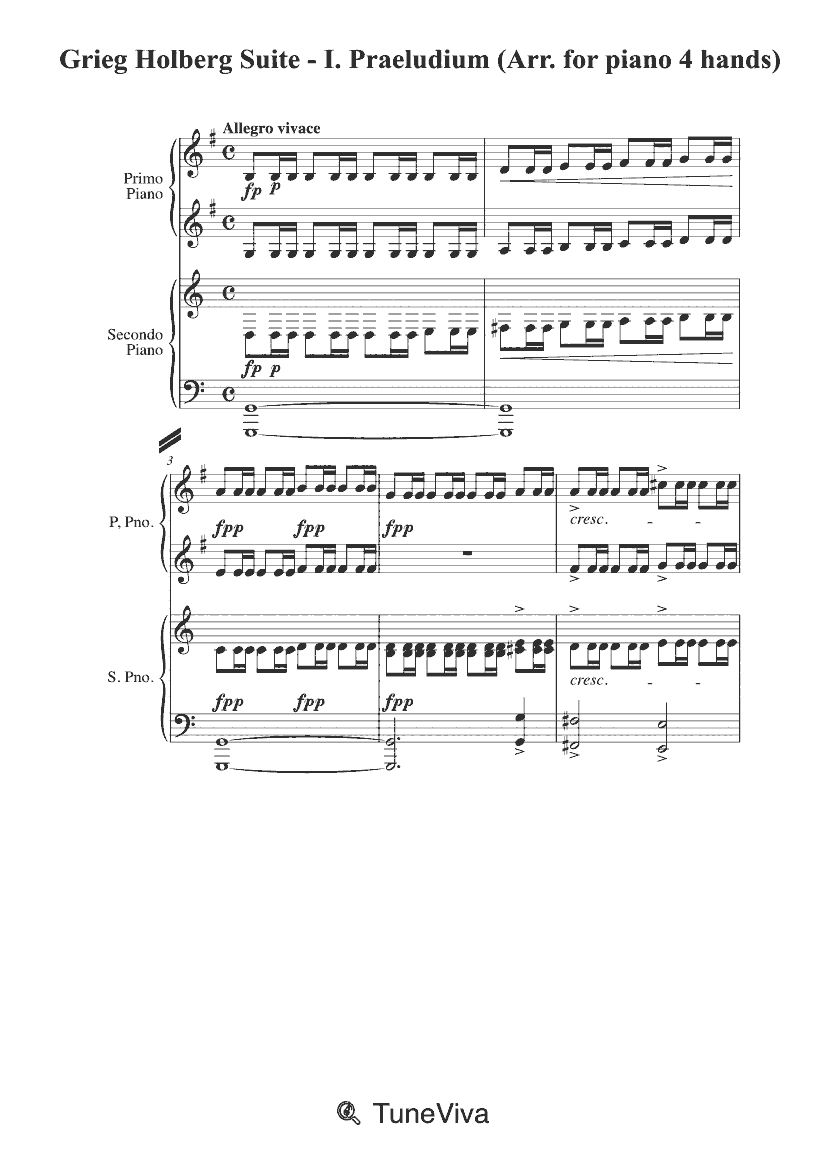
Edvard Grieg
I. Praeludium
Primo Piano; Secondo Piano · 2 min 25 sec
Open score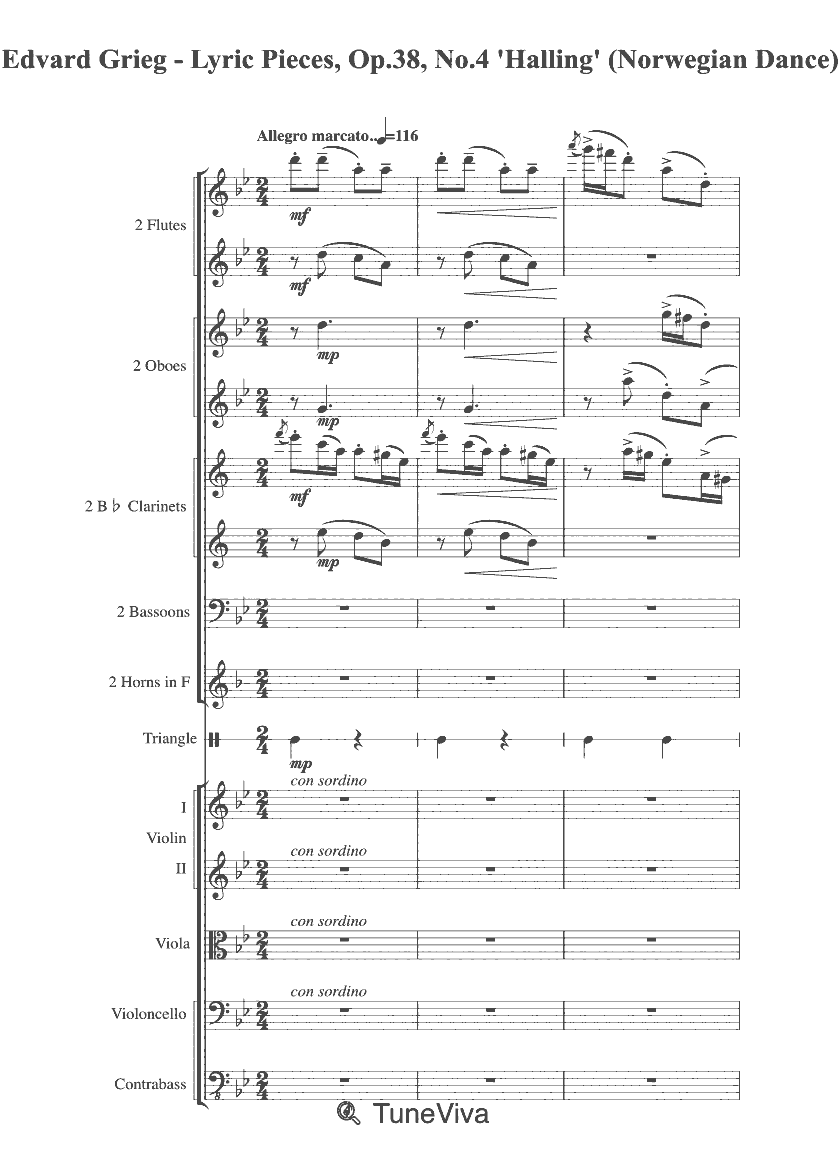
Edvard Grieg
Halling
2 Flutes; 2 Oboes; 2 B♭ Clarinets +7 parts · 1 min 26 sec
Open score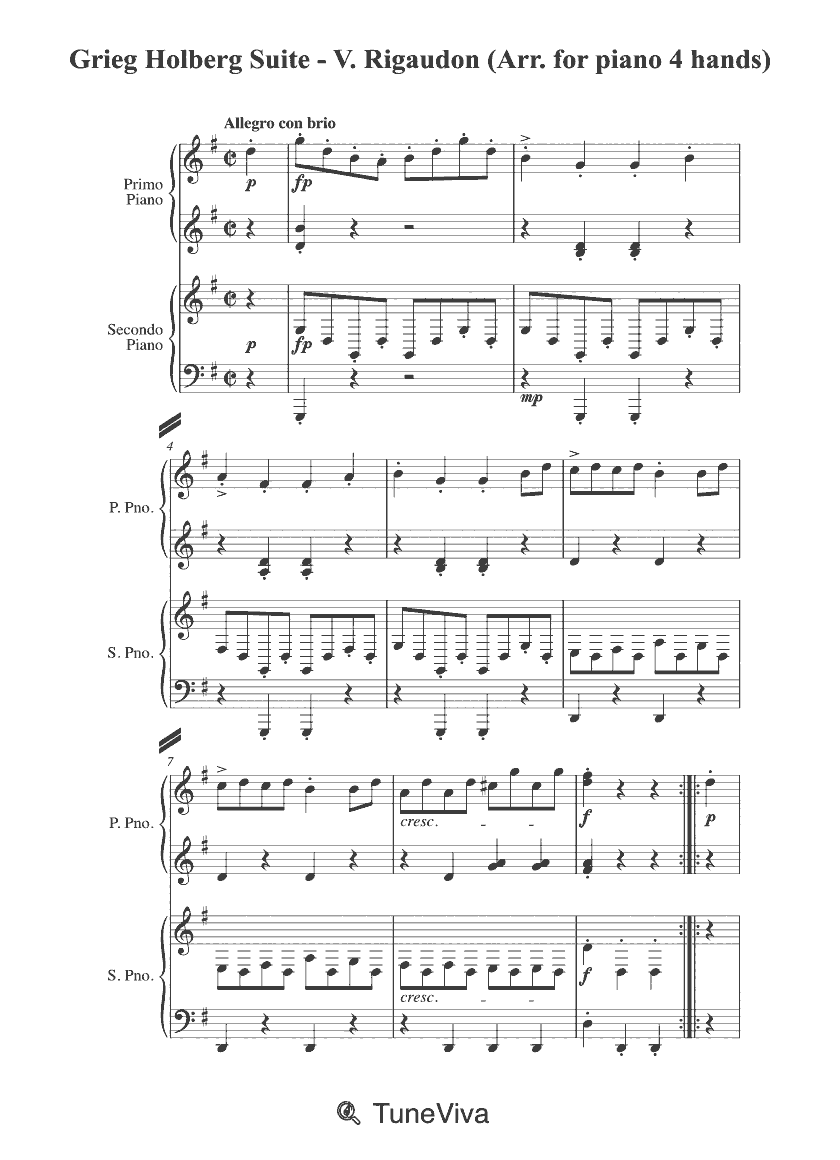
Edvard Grieg
V. Rigaudon
Primo Piano; Secondo Piano · 8 min 41 sec
Open score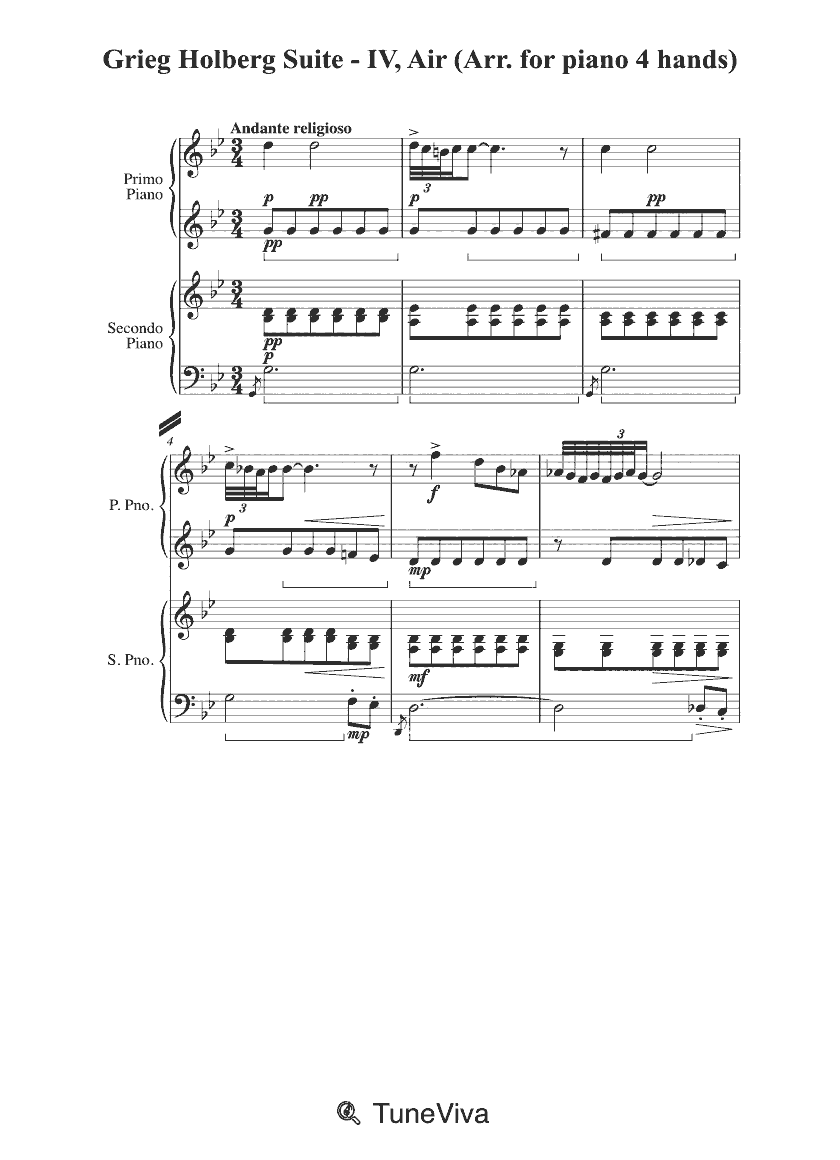
Edvard Grieg
IV. Air
Primo Piano; Secondo Piano · 4 min 26 sec
Open score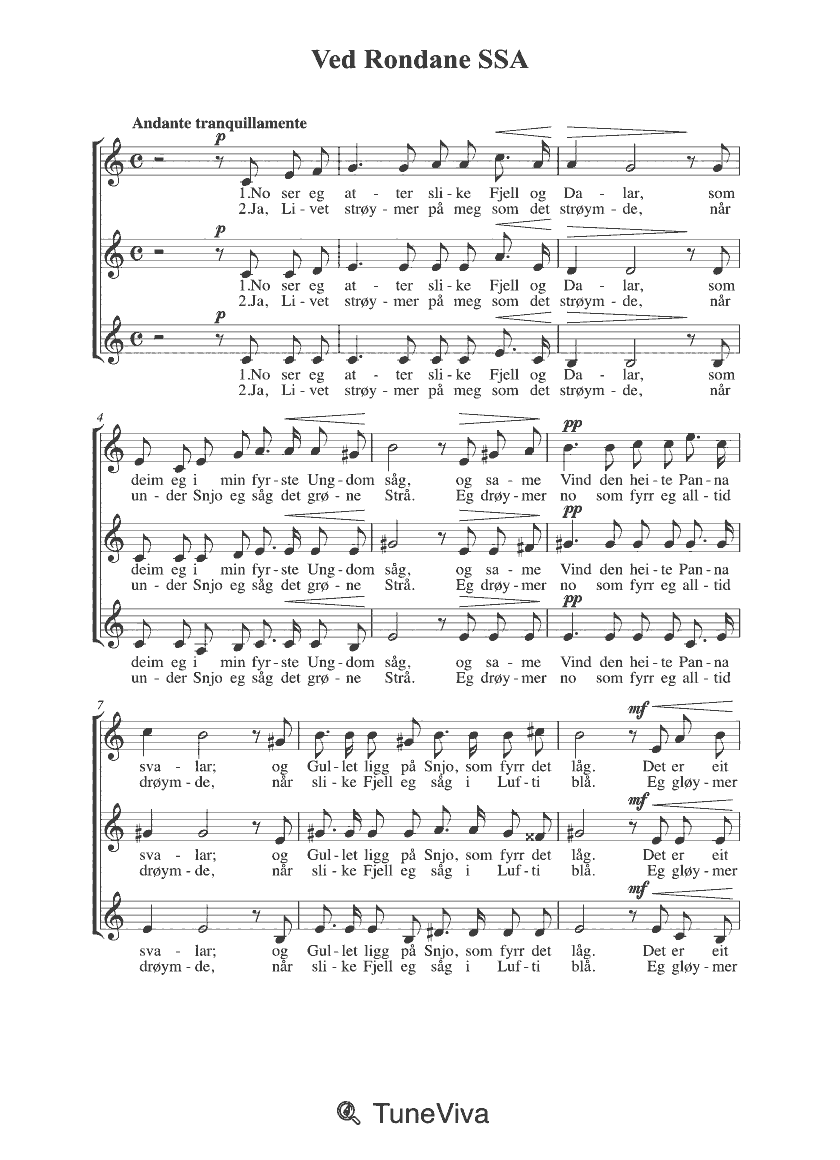
Edvard Grieg
Op. 33 Nr. 9
Sopran; Alt · 1 min 7 sec
Open score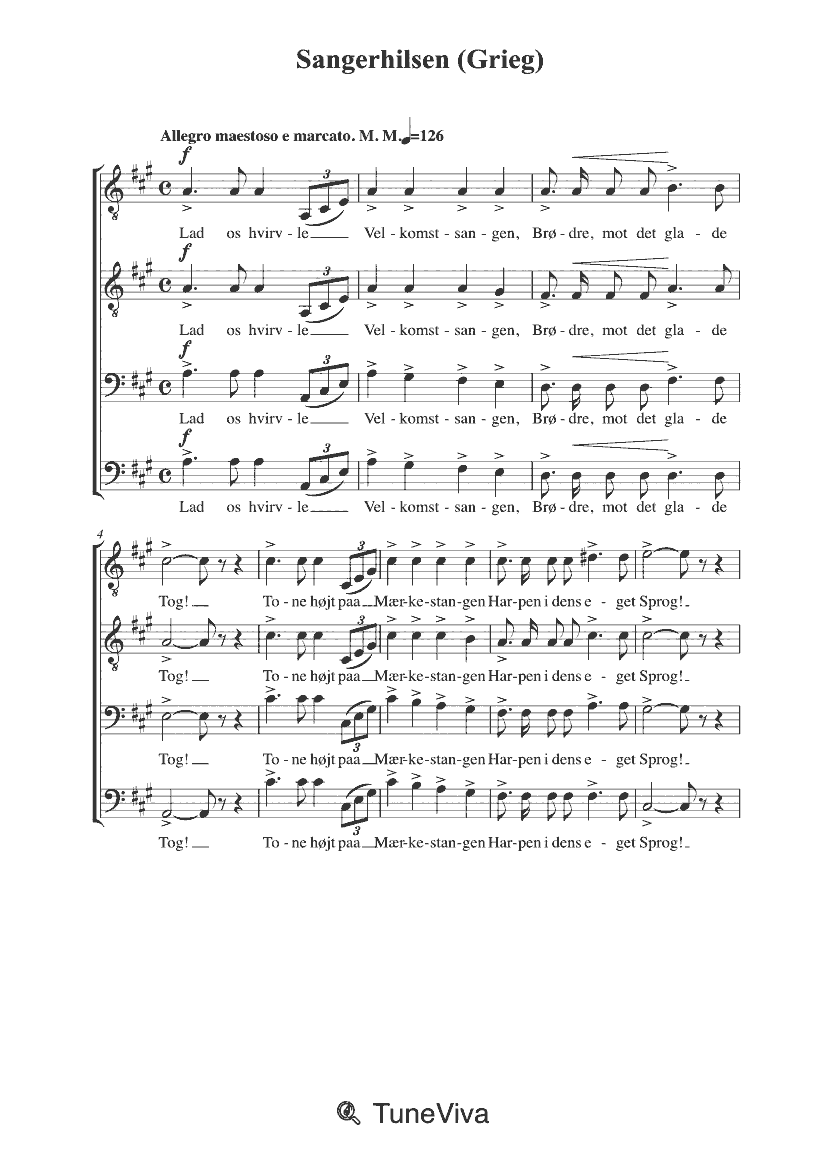
Edvard Grieg
Tenor; Bass · 1 min 6 sec
Open score
Edvard Grieg
Anna; Accordion; Alto Saxophone +1 parts · 3 min 43 sec
Open score
Edvard Grieg
II. Sarabande
Primo Piano; Secondo Piano · 2 min 12 sec
Open score
Edvard Grieg
Opus 16
Flutes; Oboes; B♭ Clarinets +9 parts · 3 min 4 sec
Open score
Edvard Grieg
Book I Op. 12 No. 5
Piano · 1 min 19 sec
Open scorePage 1 of 4
Grieg wrote for the concert hall and for the piano at home, and the catalogue holds both. There are 63 Grieg scores, about 184 minutes of music and 72,973 notated notes, ranging from the Peer Gynt suites to the ten books of Lyric Pieces and the late choral hymns. Twenty-eight entries carry lyrics, which reflects how much of this repertoire is choral: Ave maris stella, the Four Psalms of Op. 74 and several songs for male choir. The most-viewed file by a wide margin is In the Hall of the Mountain King. Difficulty is friendly, with 45 scores at index 0 and only three at index 3. Edvard Grieg (1843–1907) was a Norwegian composer and pianist whose music is part of the standard classical repertoire, and whose use of Norwegian folk material helped bring the music of Norway to international attention. The scores gathered here follow the two sides of his output players ask for most: the theatre music for Ibsen's Peer Gynt, including Morning Mood, Anitra's Dance and In the Hall of the Mountain King, and the short piano pieces of the Lyric Pieces, such as the Waltz Op. 12 No. 2, Elfin Dance and Puck. Alongside these sit the first-movement cadenza from the Piano Concerto and choral scores including Ave maris stella and I himmelen from the Four Psalms, Op. 74. Several entries are piano, guitar or choral arrangements of orchestral numbers, so check the scoring listed for each score before you choose.
Edvard Grieg was born in Bergen on 15 June 1843 and died there on 4 September 1907. He studied at the Leipzig Conservatory from 1858 to 1862, then worked in Copenhagen, where Rikard Nordraak turned his attention to Norwegian folk music. He married the singer Nina Hagerup in 1867, spent the years to 1874 in Christiania, and from 1885 lived at Troldhaugen, the villa he built outside Bergen.
Ibsen commissioned the incidental music for Peer Gynt in 1874, and it was premiered in Christiania in February 1876; Grieg later drew two suites from it, Op. 46 in 1888 and Op. 55 in 1891. The Piano Concerto in A minor, Op. 16, dates from 1868 and was revised more than once, most thoroughly in the year of his death. The Lyric Pieces appeared in ten books between 1867 and 1901, and the Four Psalms, Op. 74, were his last major choral work, finished in 1906.
The catalogue follows that spread. Anitra's Dance and Morning Mood come from Peer Gynt, Puck and the Elfin Dance from the Lyric Pieces, and the cadenza is the solo passage from the first movement of the concerto rather than a separate piece. Choral entries include Ave maris stella and I himmelen from Op. 74. Several files are piano reductions of orchestral numbers, so check the scoring before you print.
Where to start with Grieg: Two groups make the best entry points. The Peer Gynt numbers are the most direct: Morning Mood opens Suite No. 1, Anitra's Dance comes from the music for Act IV of Ibsen's play, and In the Hall of the Mountain King closes the first suite. The Lyric Pieces offer short, self-contained piano movements spanning Grieg's whole career as a published composer, from the Waltz and Elfin Dance in the Op. 12 book to Puck in Op. 71. If you are choosing for a choir, the Ave maris stella setting and the Op. 74 psalm I himmelen are the substantial choral items listed. Pianists wanting a single showpiece should note that the concerto cadenza is an extract, not a work in its own right.
Peer Gynt: from incidental music to two suites: Grieg wrote the Peer Gynt music, Op. 23, for Henrik Ibsen's play in 1875, and it was premiered with the play on 24 February 1876 in Christiania, now Oslo. The original score runs to 26 movements, and the complete material was not published until 1908, the year after Grieg's death, when Johan Halvorsen prepared it; it was believed lost until the 1980s. Grieg himself extracted eight movements into two four-movement suites: Suite No. 1, Op. 46, published in 1888, and Suite No. 2, Op. 55, published in 1893. The suites, rather than the full incidental score, are what most listeners and most arrangements derive from, and a typical performance of both together lasts around 20 to 35 minutes.
Check the scoring before you print: The listed scores describe different forces, and the difference matters when you are choosing. The version of Morning Mood on this page names guitar as its score part, while the Anitra's Dance entry is a piano solo and the In the Hall of the Mountain King entry is for piano. The Ave maris stella setting is laid out for soprano, alto, tenor and bass, and the I himmelen score from Op. 74 adds a baritone soloist to the four choral parts. Opening details also differ between entries: the choral scores begin in 4/4 and 6/8 respectively, while Anitra's Dance is notated in 3/4. Read the part list for each score rather than assuming an orchestral original.
Playing and rehearsal notes: Grieg's piano writing rewards colour and control more than weight. In the Lyric Pieces, a light, carefully changed pedal keeps the textures clear, and the faster movements such as Puck and the Elfin Dance depend on even, quiet fingerwork rather than speed alone. In the Peer Gynt numbers, keep the dance rhythms crisp, and in the Mountain King hold the pulse steady so the accumulating march builds without dragging. Choirs tackling Ave maris stella should expect modest harmonic means but exposed tuning, since the parts move largely by step and small slips are audible. Piano transcriptions of orchestral numbers are best approached by thinking about the instruments being imitated.
It is the last movement of Peer Gynt Suite No. 1, Op. 46, drawn from the incidental music Grieg wrote for Ibsen's play in 1875. The catalogue also lists shorter extracts and arrangements under similar titles.
Ten books of short piano pieces published between 1867 and 1901, from Op. 12 to Op. 71. Puck and the Elfin Dance on this page come from opposite ends of the series.
Ave maris stella and the Four Psalms, Op. 74, are original choral works. Some other choral entries are arrangements of Grieg's songs or theatre music, and the catalogue does not always say which.
Peer Gynt, Op. 23, is Edvard Grieg's incidental music to Henrik Ibsen's 1867 play Peer Gynt, composed in 1875 and premiered with the play on 24 February 1876 in Christiania, now Oslo. Grieg later drew two concert suites from the score, and those suites, rather than the theatre music as a whole, became among his best-known works.
Grieg extracted eight movements from his Peer Gynt theatre music to form two four-movement suites: Suite No. 1, Op. 46, published in 1888, and Suite No. 2, Op. 55, published in 1893. The complete incidental score, which contains 26 movements, remained unpublished until 1908, when Johan Halvorsen prepared it a year after the composer's death.
Grieg's Peer Gynt score calls for one piccolo, two flutes, two oboes, two clarinets in A, two bassoons, four horns in E, two trumpets in E, three trombones, tuba, timpani, cymbals, bass drum, snare drum, triangle, xylophone, tambourine, tam-tam, bell, piano, organ, harp and strings. A piano solo or guitar version of a number such as Morning Mood is therefore a reduction of a much larger orchestral texture, not the original scoring.
Edvard Grieg's use of Norwegian folk music in his own compositions brought the music of Norway to international fame and contributed to a sense of national identity, in a way comparable to Jean Sibelius in Finland and Bedřich Smetana in Bohemia. Grieg is widely regarded as one of the leading Romantic-era composers, and his works belong to the standard classical repertoire worldwide.
Two choral works stand out among the scores listed: the Ave maris stella setting, laid out for soprano, alto, tenor and bass, and I himmelen, the fourth of the Four Psalms, Op. 74, which adds a baritone soloist to the four choral parts and is notated in 6/8. Both are listed separately from the piano and orchestral arrangements, so a choir director can see the required voices before committing to a piece.
The cadenza listed here is the unaccompanied solo passage from the first movement of Grieg's Piano Concerto in A minor, Op. 16, extracted as a separate score for practice or performance rather than a work Grieg composed on its own. The concerto dates from 1868 and was revised more than once, so players should treat an extracted cadenza as one section of a larger movement.