classical
2 tracks
Edward John Hopkins spent fifty-five years at the Temple Church in London, and the catalogue reflects the job: 40 scores, about 21 minutes of music and 6,723 notated notes. Every entry sits at complexity index 0, and only two have lyrics attached, because most of the files are chants or tune-only hymn settings.
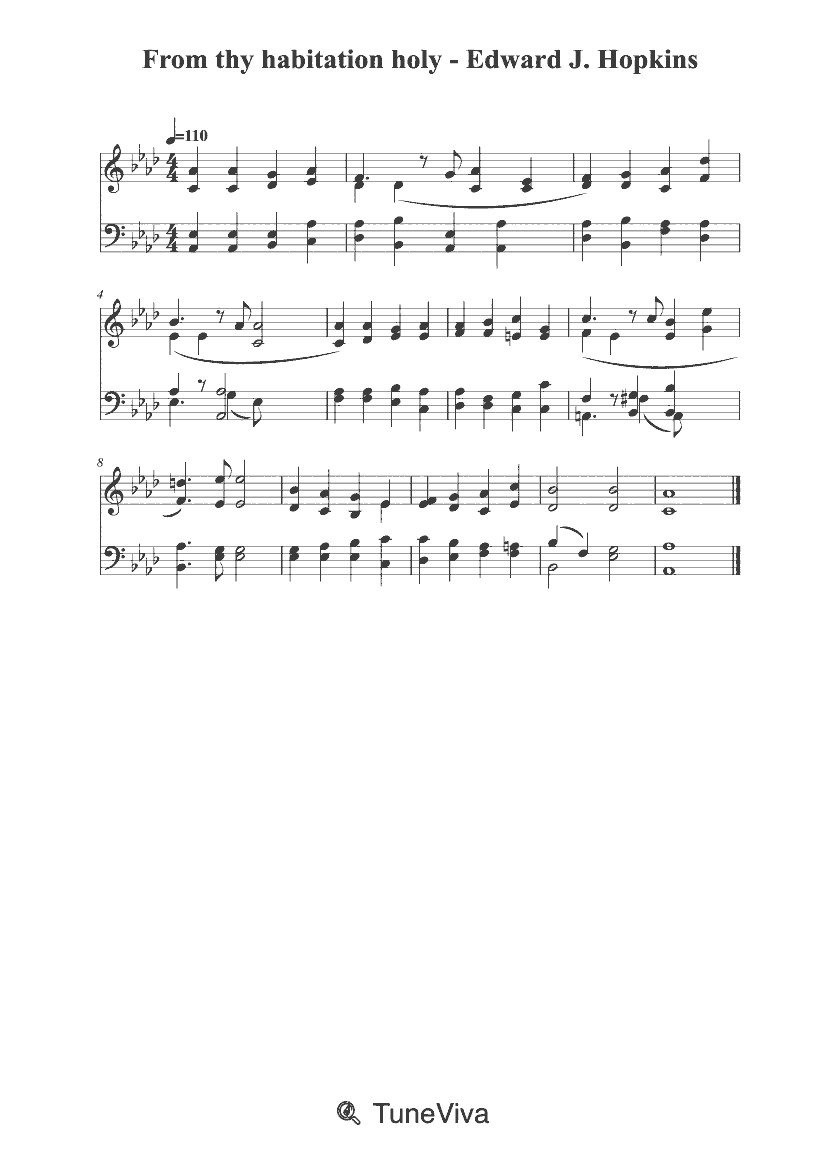
The page is led by hymns rather than anthems: 'The wise may bring their learning', 'Brightest and best', 'Take my life, and let it be' and 'Above the clear blue sky', followed by a pair of double chants in G and F. Three of the titles carry a year in the catalogue's composer field, marking the collection each tune was written for.
Hopkins was born in Westminster on 30 June 1818, the eldest son of George Hopkins, a clarinettist in the Royal Opera House orchestra. He became a chorister of the Chapel Royal in 1826 under William Hawes and sang at the coronation of William IV in 1831. After leaving the choir he studied with Thomas Forbes Walmisley, and by the age of sixteen he was organist at Mitcham. He moved to St Peter's, Islington, in 1838 and to St Luke's, Berwick Street, in 1841.
In 1843 he was appointed organist of the Temple Church, and the appointment made his reputation. He trained the choir, edited The Temple Church Choral Service Book (1867) and turned the church's music into a model for the Victorian choral revival. With Edward Rimbault he wrote The Organ: Its History and Construction (1855), and in 1864 he helped found the College of Organists. He received the Lambeth Mus.D. in 1882, retired in 1898 and died in London on 4 February 1901.
His output was liturgical and practical: services, anthems, chants and hymn tunes, of which reference works count more than thirty. ELLERS, written in 1869, carries 'Saviour, again to thy dear name'; EPIPHANY carries 'Brightest and best'; CHRISTMAS MORN carries 'The wise may bring their learning'; GOD OF HOSTS carries 'For the beauty of the earth'; and CULFORD, from the 1867 Temple book, is sung to 'Take my life, and let it be' in some hymnals. The catalogue's 40 scores run to 21 minutes and 6,723 notes, all at complexity index 0, and the folk tag on two entries reflects the hymn texts rather than the musical style.
Anglican chant is recitation plus cadence, and the rhythm should follow the words rather than the bar lines: keep the reciting note moving, then let the cadence settle. In the double chants, mark where the second half begins so the choir does not lose a verse. The hymn tunes are strophic and square, so any expressive point has to come from the text. Organists should register the chant quietly enough that the decani and cantoris sides can hear each other across the aisle.
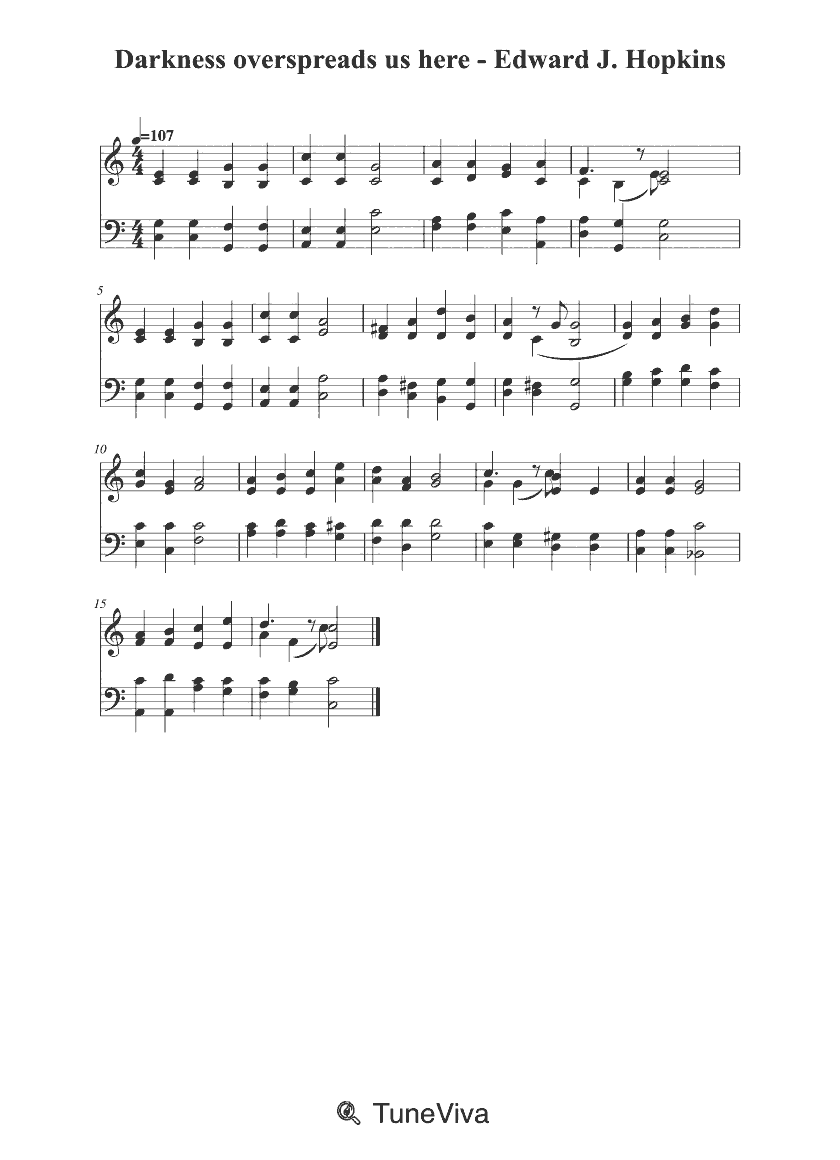
The most-viewed score here: a children's hymn set to Hopkins's tune CHRISTMAS MORN, in 7.6.7.6 D.
Reginald Heber's Epiphany hymn set to Hopkins's tune EPIPHANY, in 11.10.11.10.
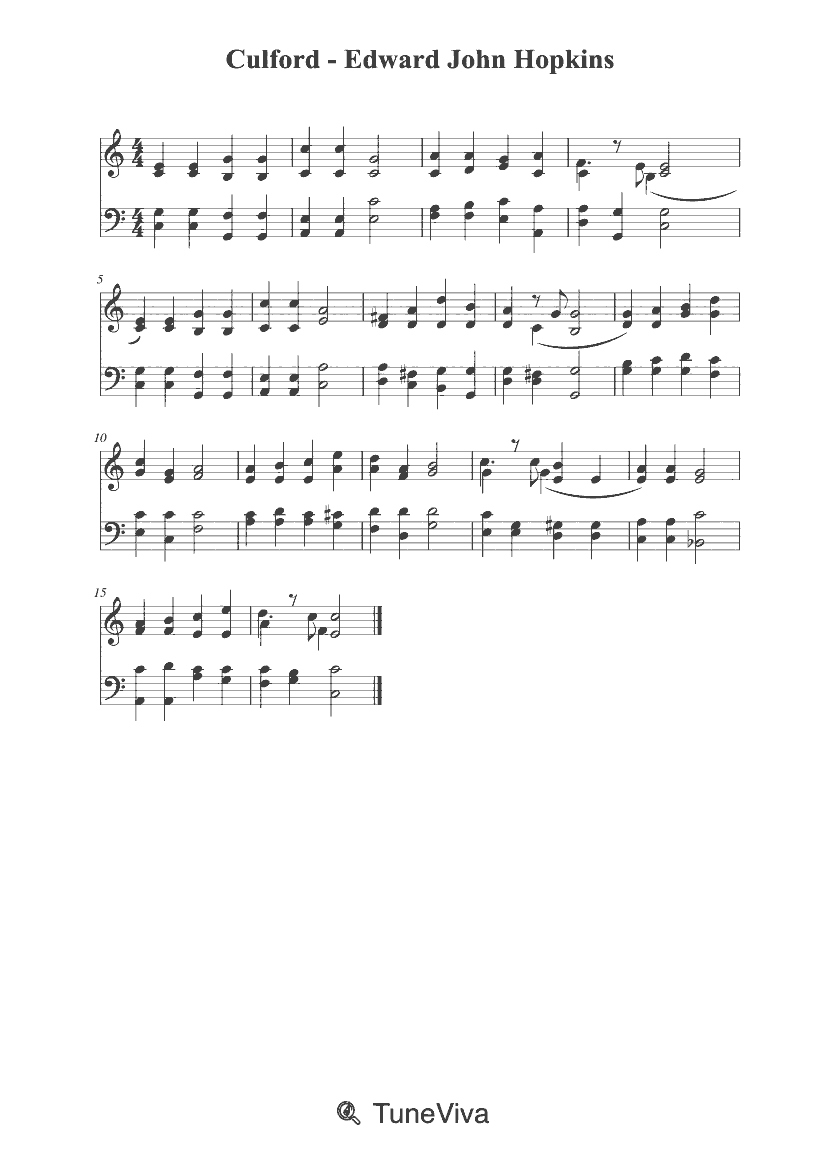
Frances Havergal's consecration hymn, sung here to CULFORD, the tune Hopkins published in the Temple Church collection of 1867.
A children's hymn on the angels, set to Hopkins's tune CHILDREN'S VOICES.
F. S. Pierpoint's harvest and thanksgiving hymn, set here to Hopkins's tune GOD OF HOSTS rather than to the usual DIX.
A double Anglican chant, covering two verses of a psalm per repetition, with the tenor reciting note at the start of each half.
The companion chant in F, from the same liturgical repertoire as the G major setting.
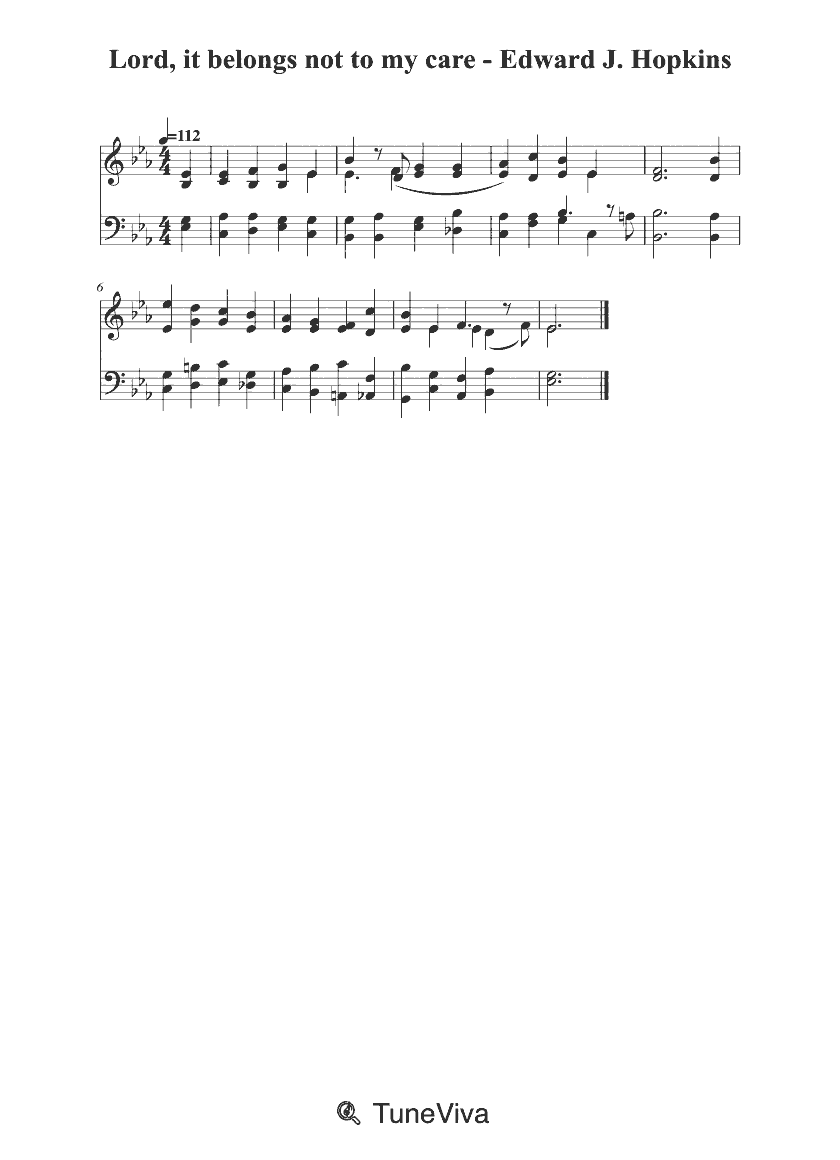
A Passiontide hymn by Harriet Auber, set to a Hopkins tune and preserved here as a texted entry.
John Ellerton's evening hymn, the text most closely associated with ELLERS (1869).
The tune entered under its own name rather than under a hymn text, from the 1867 Temple Church collection.
40, running to about 21 minutes of music and 6,723 notated notes. Only two entries include lyrics.
An Anglican chant in two halves, each with a reciting note and a short cadence. A single chant covers one psalm verse per repetition, a double chant two, which is why the double chants here are longer than the hymn tunes.
The setting Hopkins wrote in 1869 for John Ellerton's evening hymn 'Saviour, again to thy dear name we raise'. It is still one of the most familiar Victorian hymn tunes.
The catalogue adds the year of the collection the tune was written for, such as 1867 for the Temple Church book or 1869 for ELLERS. It is a dating aid, not part of the title.
Catalog editions and arrangements attributed to Edward John Hopkins.