2 tracks
John Goss spent thirty-four years at the organ of St Paul's Cathedral, and the catalogue is weighted towards what he wrote for church use: 37 scores, about 35 minutes of music and 8,846 notated notes. Four entries carry lyrics, which tells you how much of this is hymnody rather than anthem text.
The most-viewed titles are the two hymn tunes that outlived everything else, "Praise, My Soul" and "See amid the winter's snow". With them sit "Who is on the Lord's side?", a handful of Anglican chants, and separate entries for Lauda Anima under its tune name. Every score is logged at complexity index 0.
Goss was born in Fareham, Hampshire, on 27 December 1800, the son of a parish organist, and went to London as a boy to sing in the Chapel Royal under John Stafford Smith. When his voice broke in 1816 he studied composition with Thomas Attwood, organist of St Paul's. After a spell at Stockwell Chapel he won the post at St Luke's, Chelsea, in 1824, and in 1838 succeeded his teacher at St Paul's, where he remained until 1872.
His teaching ran in parallel: he was professor of harmony at the Royal Academy of Music from 1827 to 1874, and his pupils included Arthur Sullivan, Frederic Cowen, Frederick Bridge and John Stainer, who took over from him at St Paul's. The state funeral of the Duke of Wellington in 1852 brought two anthems, "If we believe that Jesus died" and "And the King said". Goss was knighted on his retirement and died at Brixton on 10 May 1880.
The catalogue is built almost entirely from hymn tunes, chants and short choral pieces. "Praise, my soul, the King of heaven" is sung to Lauda Anima, which Goss wrote in 1868 for Henry Francis Lyte's paraphrase of Psalm 103; it was printed in 1869 in Robert Brown-Borthwick's Supplemental Hymn and Tune Book, with the first stanza in unison and the second in four parts. "See amid the winter's snow" received its tune Humility in 1871. The double chants in A-flat and D minor belong to the same cathedral trade.
Anglican chant is a machine for fitting prose to music, so start with the pointing: the reciting note carries most of the verse and the cadence does the work at the end. Keep the reciting note moving and resist accenting it, or the words will sound hammered. In the hymn tunes, Lauda Anima wants a steady crotchet pulse and a clear break between the unison and harmonised stanzas; Humility needs a lighter touch, with the refrain kept brisk. On the organ, hold back the full swell until the last verse.
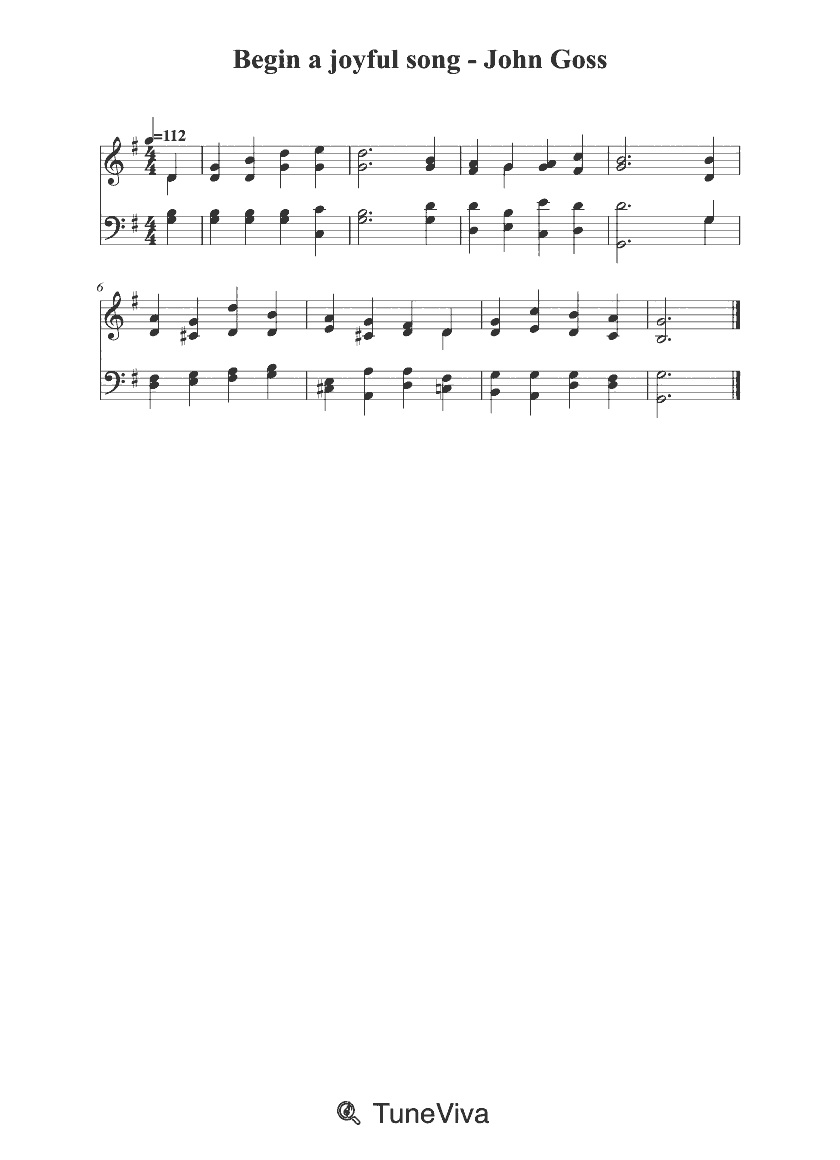
The most-viewed entry: the tune Lauda Anima filed under its opening words, with the full first line indexed separately.
Edward Caswall's carol text with Goss's tune Humility, written for it in 1871 and printed the same year in Bramley and Stainer's Christmas Carols New and Old.
Henry Francis Lyte's 1834 paraphrase of Psalm 103; Goss's setting is in D major, the first stanza marked for unison voices.
The tune on its own, without its text. Composed in 1868 and first printed in 1869 in Robert Brown-Borthwick's Supplemental Hymn and Tune Book.
Frances Ridley Havergal's text, sung in most hymnals to Goss's tune Armageddon and usually dated 1871.
A double chant carries two verses of a psalm; this is one of several Goss wrote for cathedral use at St Paul's.
The shortest Anglican form here: one reciting note and cadence for each verse of the psalm.
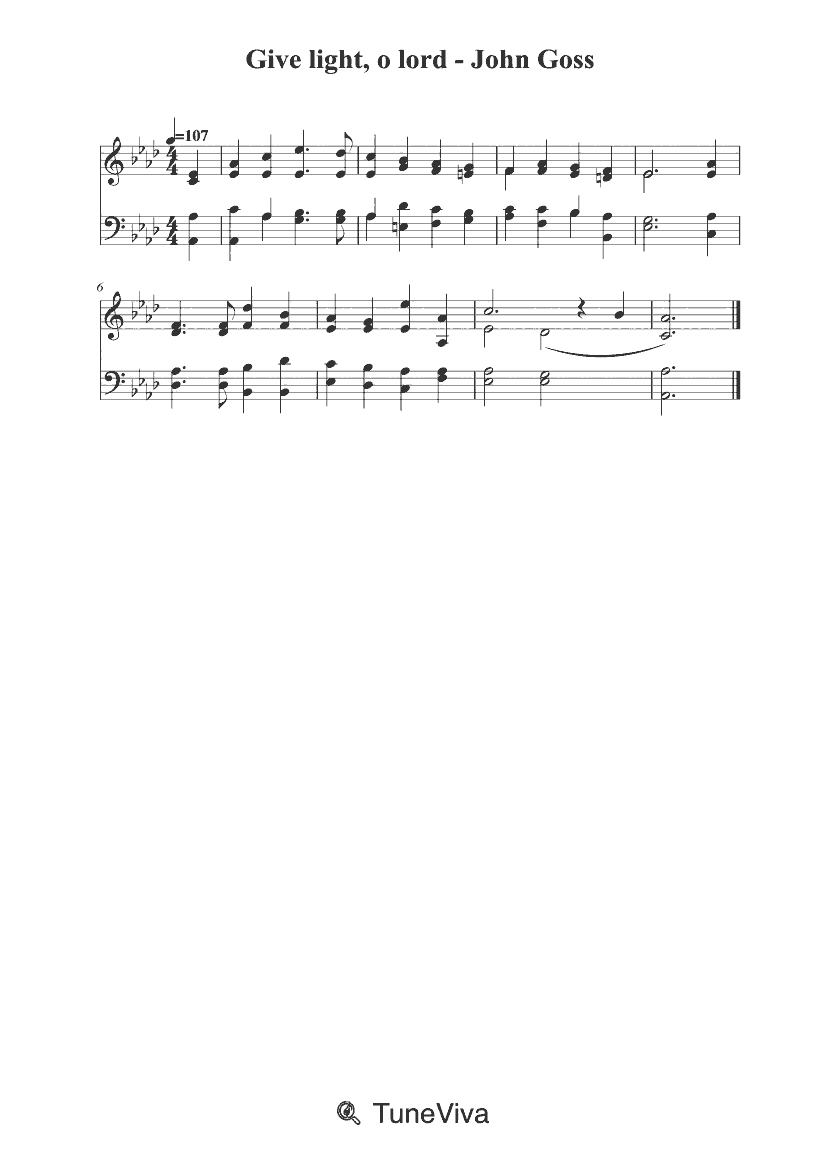
The companion to the A-flat setting, in the same two-verse form but the minor mode.
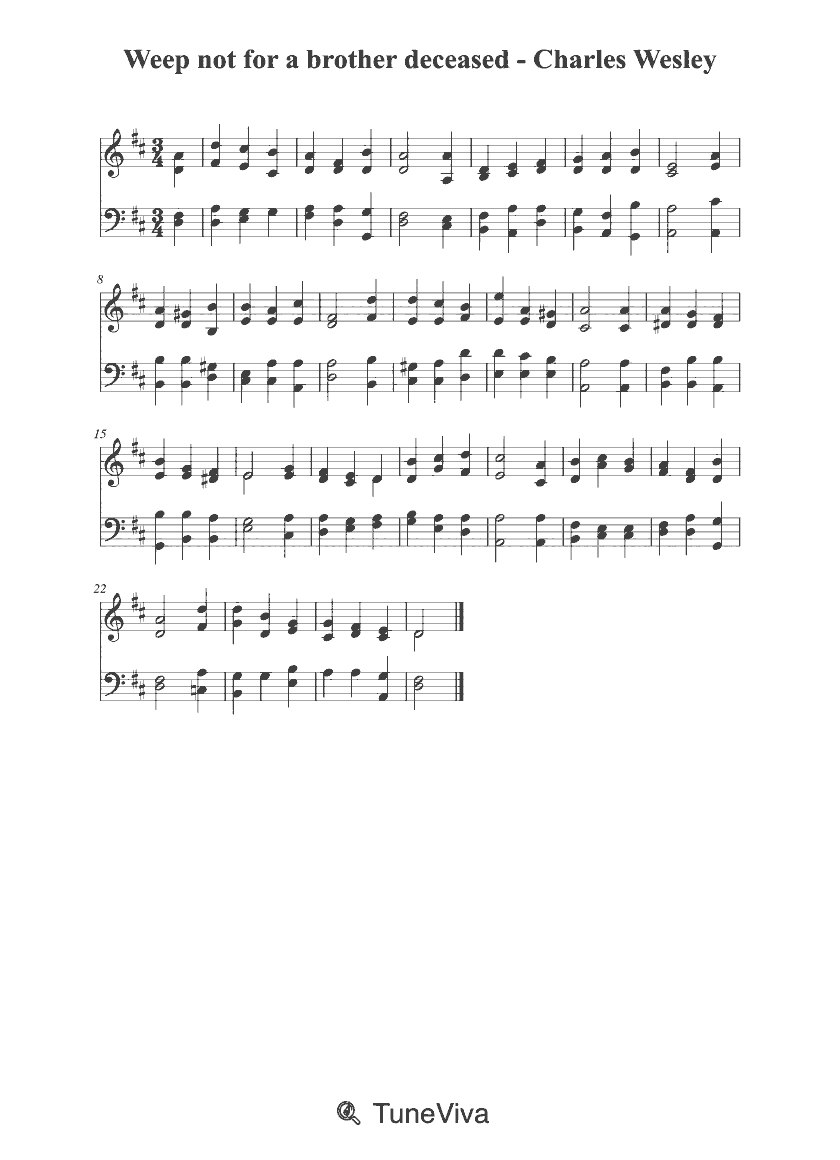
Charles Wesley's hymn text, filed under a "John Goss 1874" heading; the catalogue does not name the tune or the source of the setting.
George T. Coster's hymn, normally sung to Goss's tune ARTHUR'S SEAT (1874), which is very likely why the catalogue files it under "John Goss 1874"; the text is later.
37, running to about 35 minutes of music and 8,846 notated notes. Four of the entries include lyrics.
Lauda Anima is the tune's name, and the catalogue indexes the hymn both by its first line and by the tune. The three most-viewed entries are settings of the same hymn, so compare the scoring before you print.
A single chant sets one verse of a psalm to a reciting note and a cadence; a double chant covers two verses before the music repeats. The D minor and A-flat entries here are the longer form.
Probably not. Those headings carry years rather than a second name and are folded into this page. The year is more likely a publication or source date than a birth date, though the records do not say which.
Catalog editions and arrangements attributed to John Goss.