classical
2 tracks
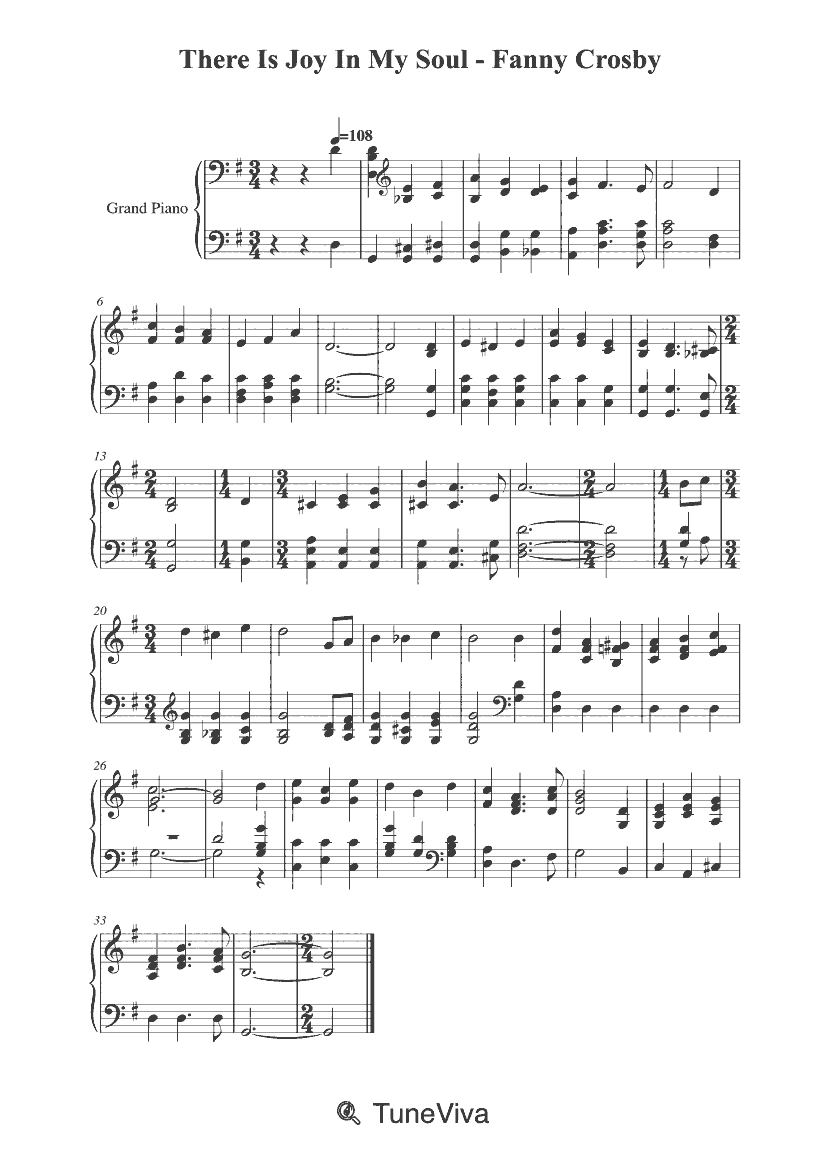
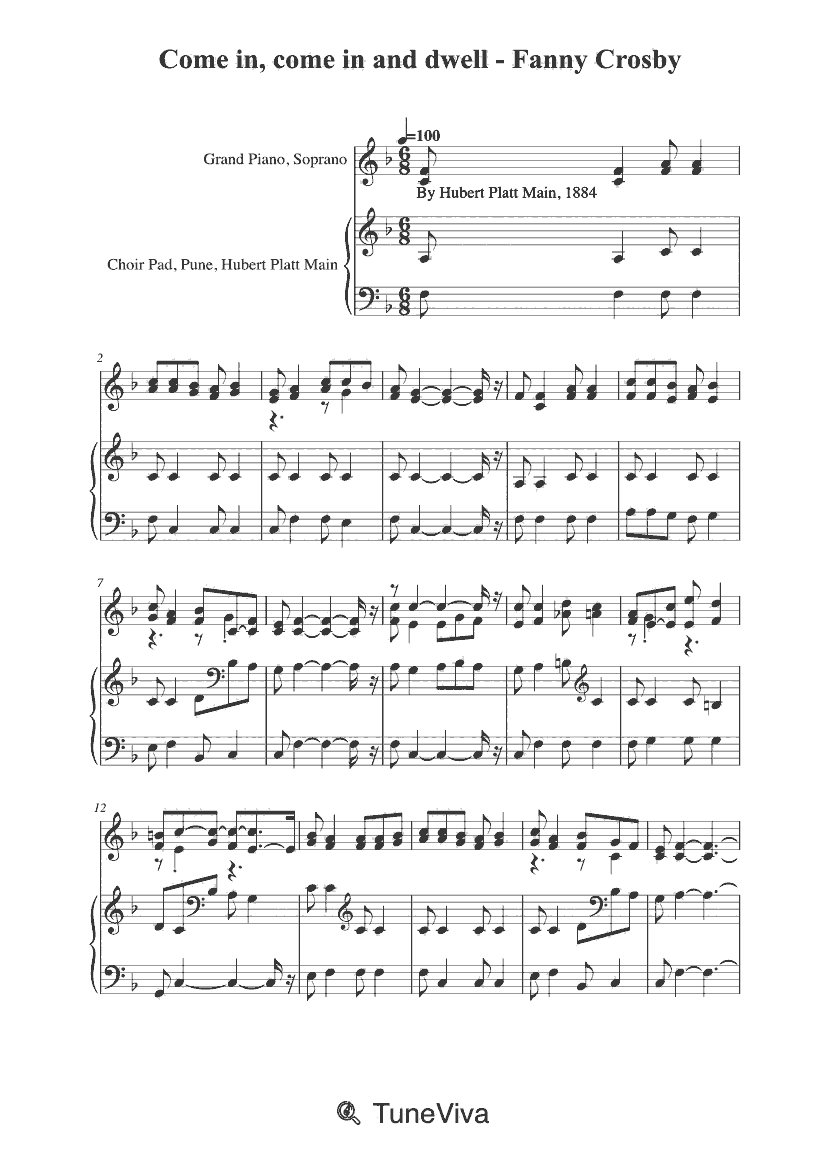
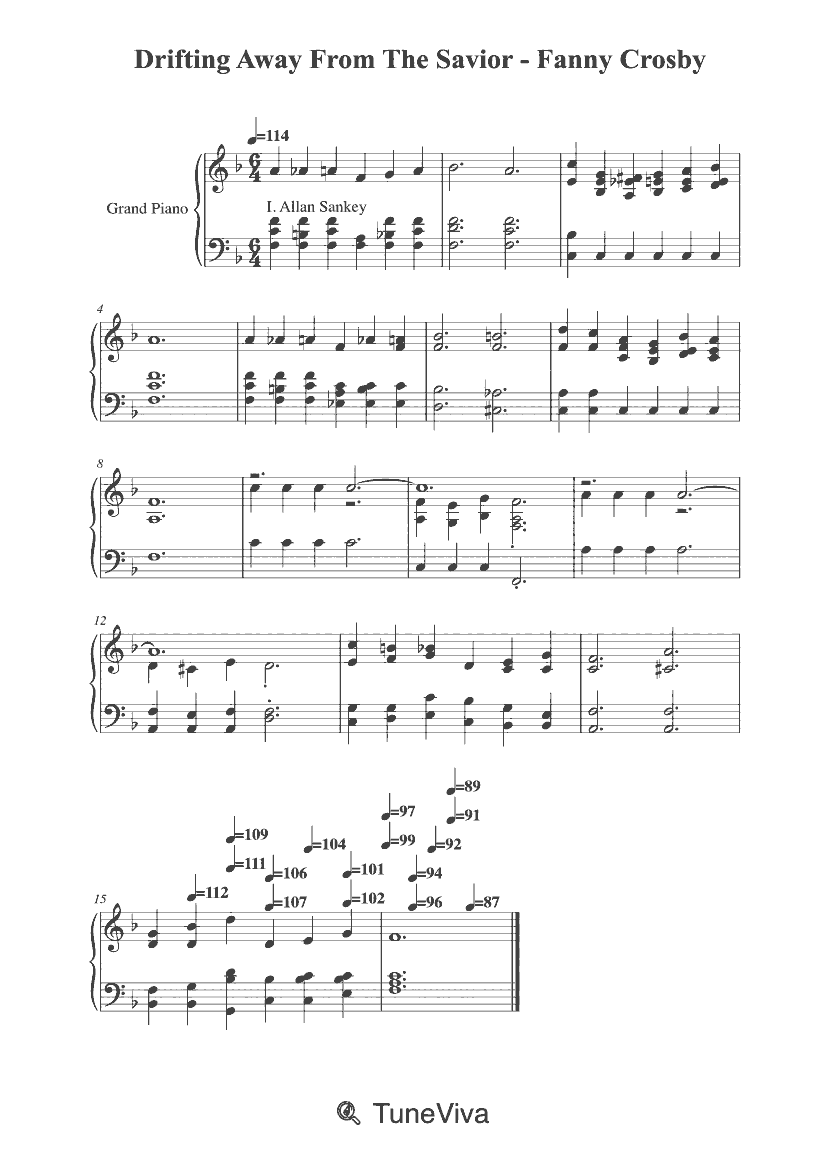
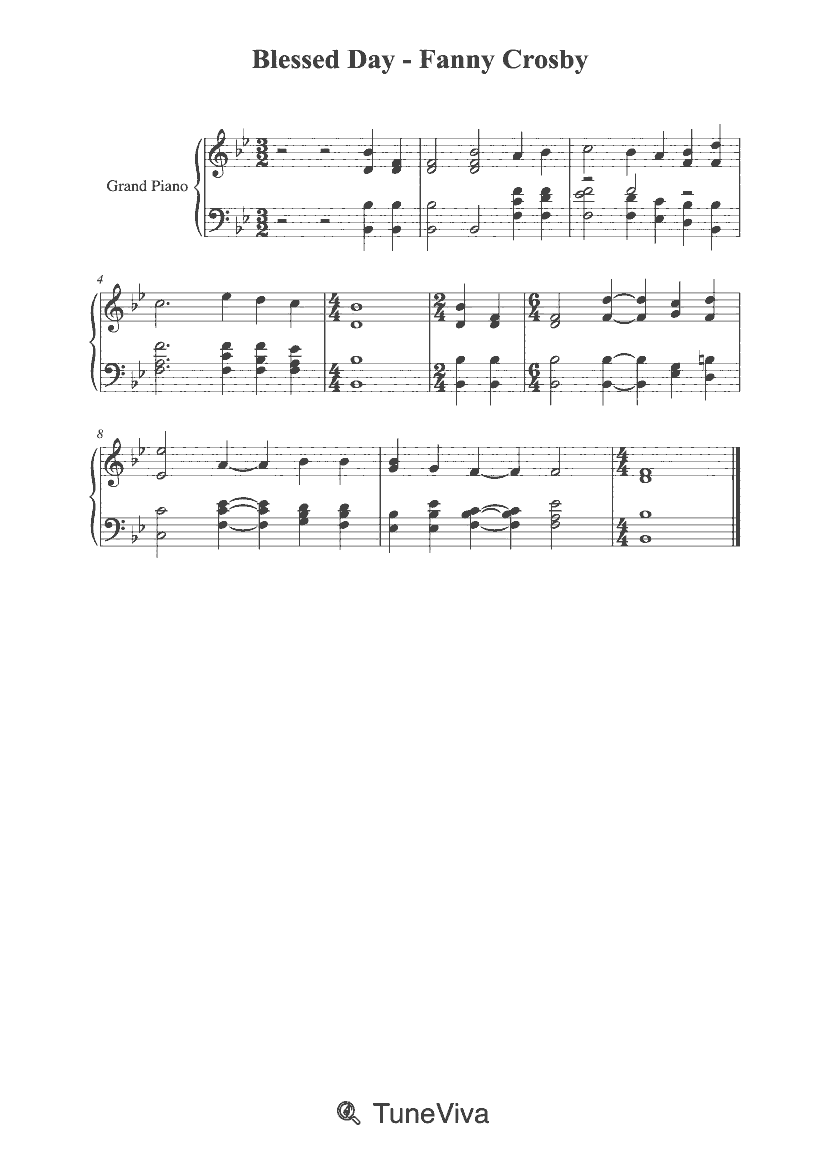
Fanny Crosby was one of the most prolific hymn writers of the nineteenth-century American church, and the catalogue holds 33 settings associated with her: about 20 minutes of music and 7,957 notated notes, with lyrics in 27. Twenty-two entries sit at the lowest complexity index, which suits the short, strophic shape of gospel song.
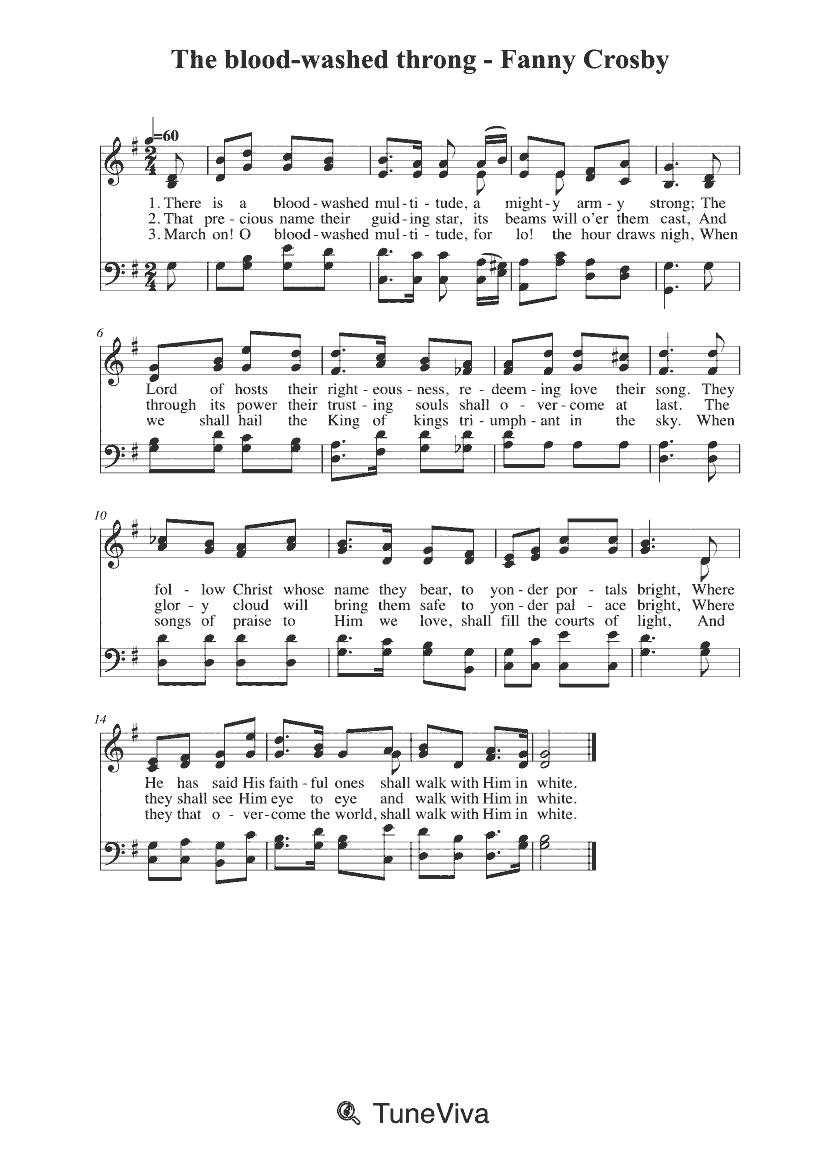
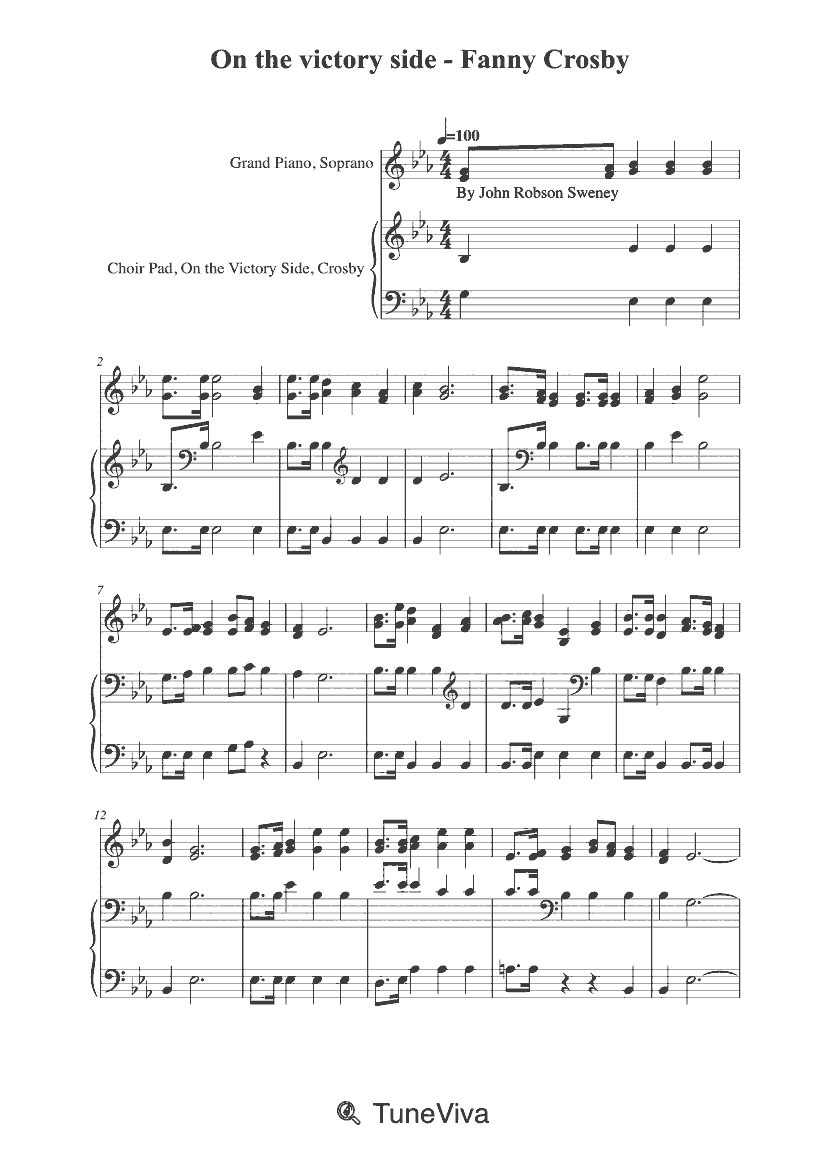
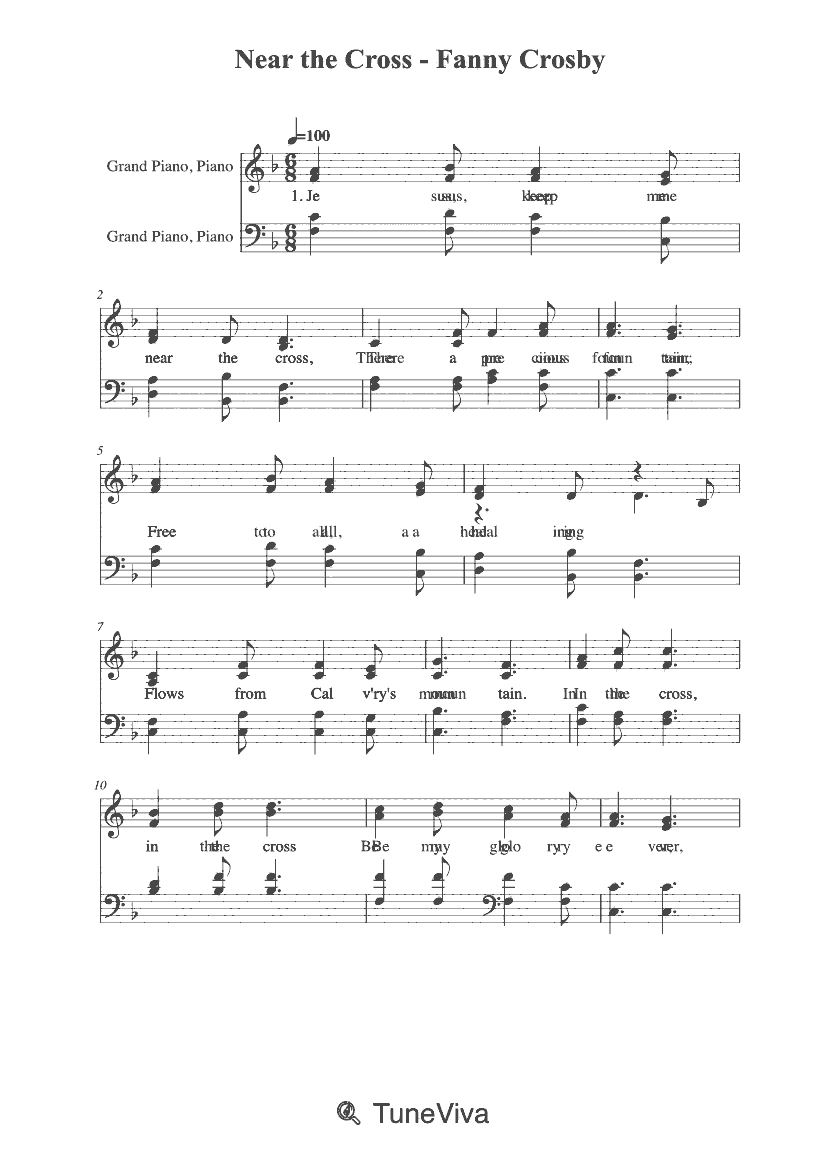
Near the Cross is the best-known title here, followed by Ku Berbahagia, On the Victory Side and The Blood-Washed Throng. The list mixes English hymns with translated texts, including an Esperanto title, Grandaĵojn li faris!, and an Indonesian one, Ku Berbahagia. The catalogue files all of them under Crosby's name even where the tune was written by a collaborator.
Frances Jane Crosby was born in Brewster, New York, on 24 March 1820. An eye inflammation in infancy, and the mustard poultices used to treat it, left her blind; modern accounts suggest the blindness may have been congenital. She spent much of her childhood memorising scripture and verse. She entered the New York Institution for the Blind in 1835, later taught there, and in 1858 married Alexander van Alstyne, a musician she had met at the school. She worked with rescue missions in New York, spoke publicly, and wrote more than 8,000 hymns and gospel songs, often under one of nearly 200 pseudonyms because publishers worried about putting too many pieces by one author in a single book.
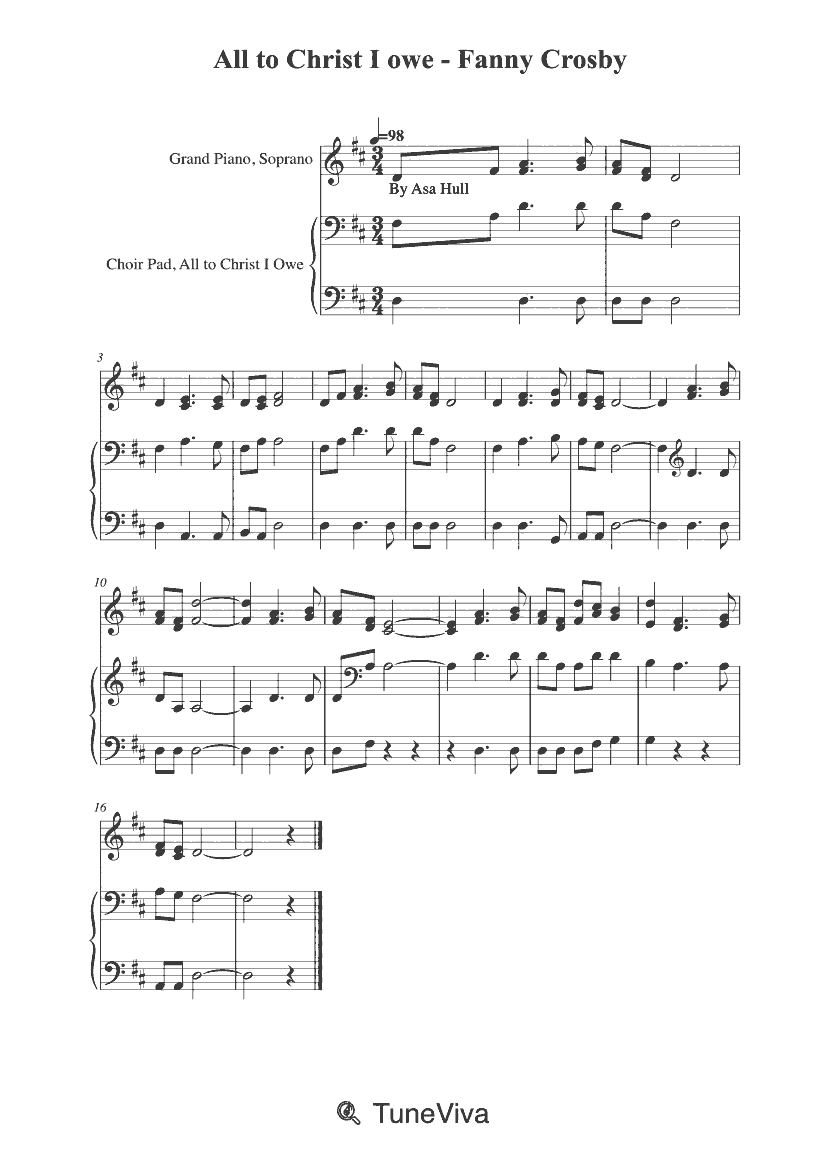
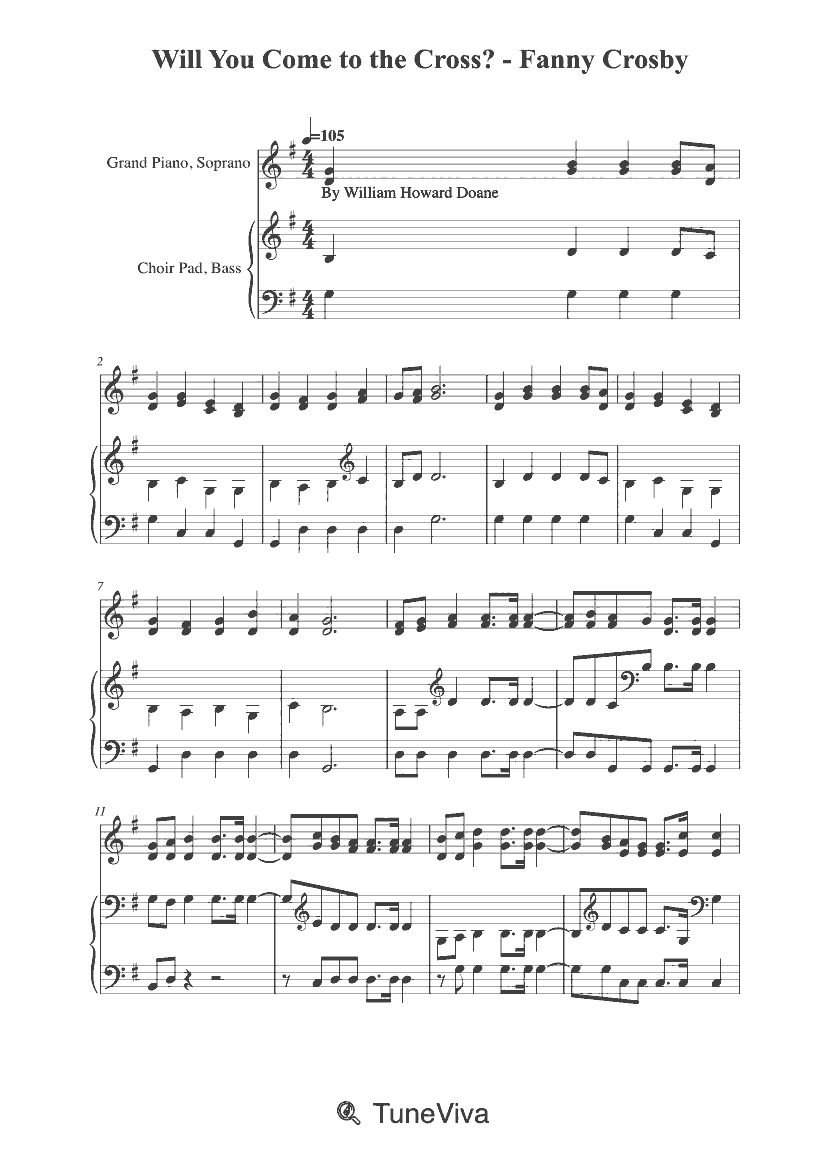
Her best-known texts include Pass Me Not, O Gentle Saviour, Blessed Assurance, Rescue the Perishing and To God Be the Glory. The tunes usually came from collaborators: William Howard Doane, Ira D. Sankey, Robert Lowry and Phoebe Knapp among them. Near the Cross, written in 1869, is one of the Doane settings. Crosby died in Bridgeport, Connecticut, on 12 February 1915.
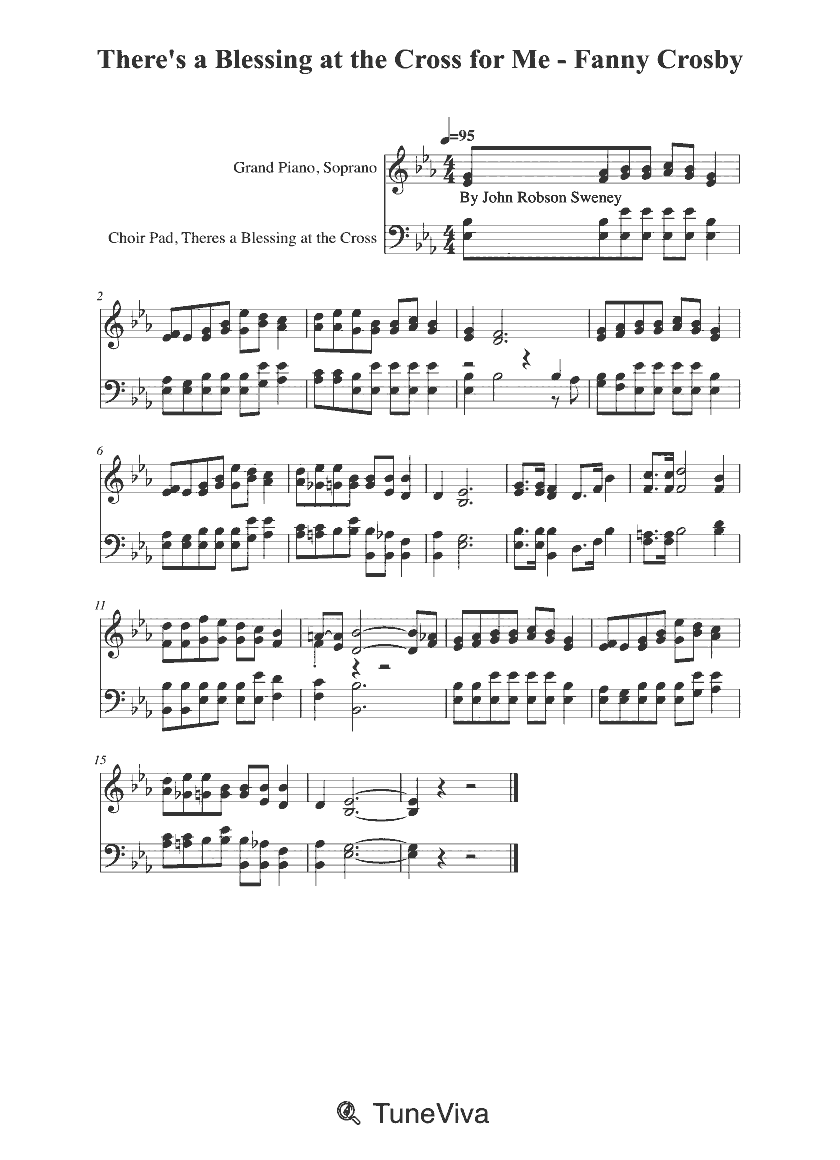
The catalogue's 33 entries reflect her career as a hymn writer; most of the music was supplied by collaborators, though the files are grouped under her name. Twenty-seven carry lyrics, twenty-two sit at complexity index 0, and the total runs to about 20 minutes and 7,957 notated notes. Two titles are translations, one Indonesian and one Esperanto, and the files preserve those titles rather than the English first lines.
Crosby's hymns are built for congregational singing: short lines, repeated refrains and a tune that stays within reach. Keep the text intelligible and let the refrain lift rather than accelerate. In Near the Cross the harmony is mostly diatonic, so the expressive work falls to the words and to a restrained accompaniment. The translated texts need a pronunciation decision before rehearsal; sing them in the language printed on the file rather than substituting an English text, because the underlay may not match.
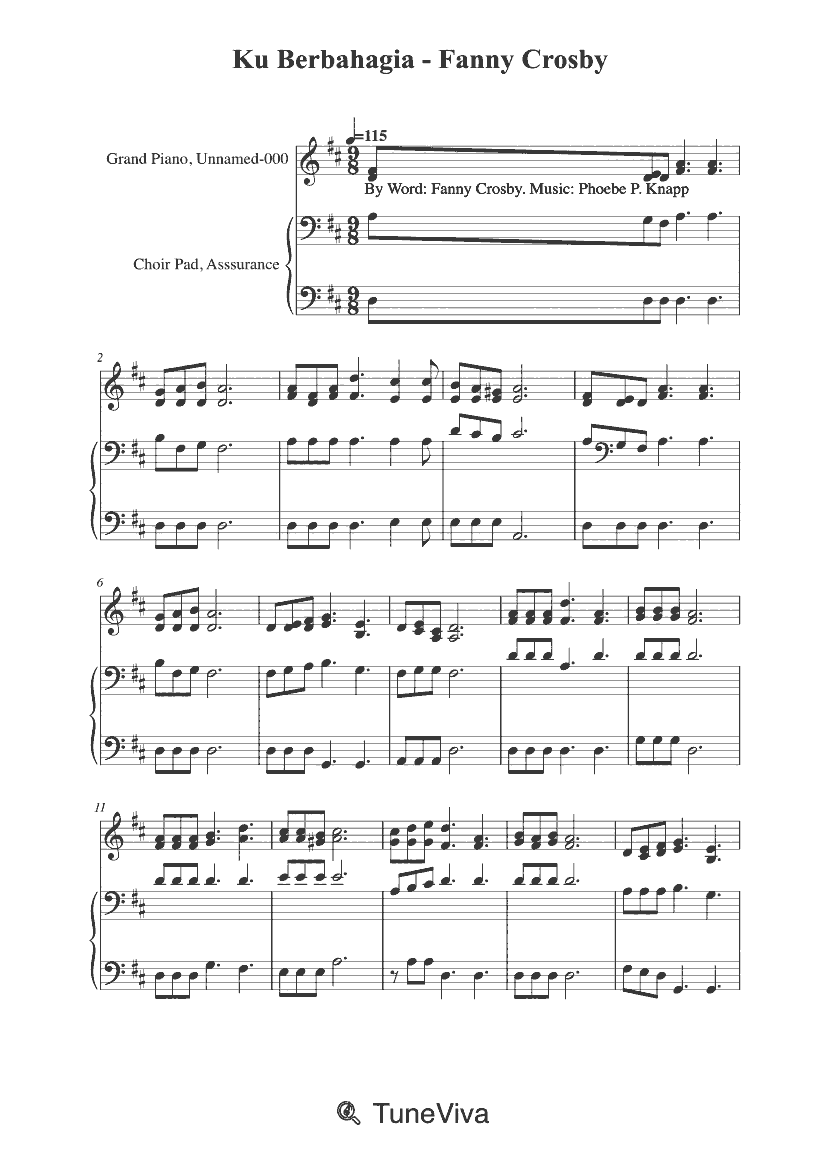
The most-viewed entry at 25 views; an Indonesian title meaning roughly 'how blessed I am', usually attached to Blessed Assurance, though the file does not print the English first line.
A hymn on the redeemed multitude of Revelation; the title is the image rather than a first line.
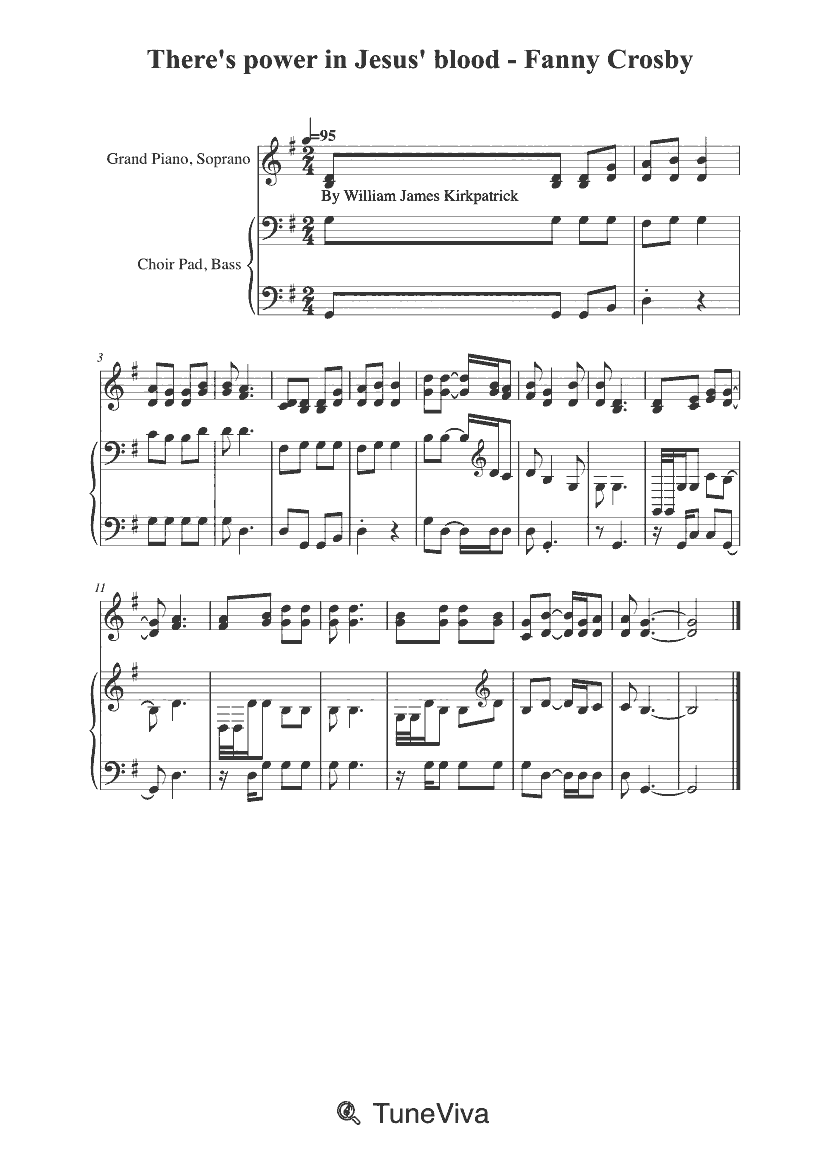
A short gospel song on the atonement, one of the plainest texts in the collection.
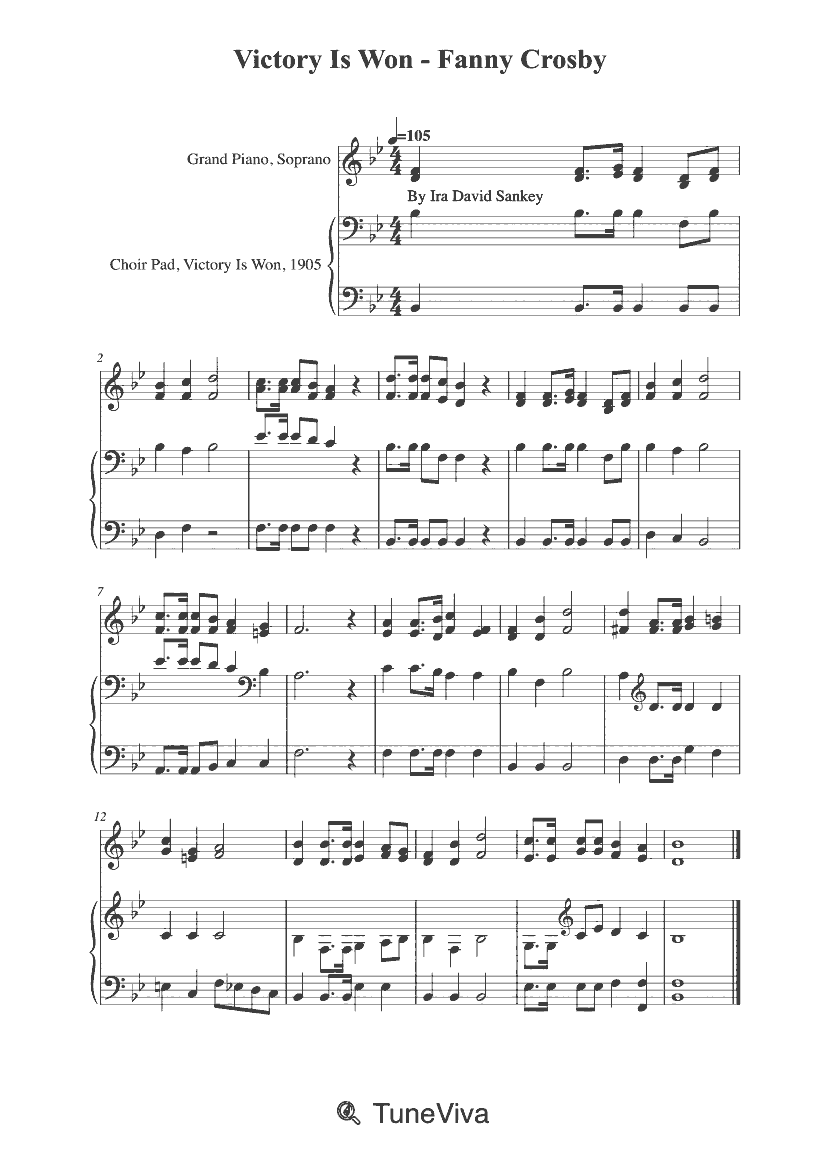
A refrain hymn built around the image of victory, with a confident, march-like tone.
Crosby's 1869 text, sung to William Howard Doane's tune NEAR THE CROSS; the best-known title in the catalogue.
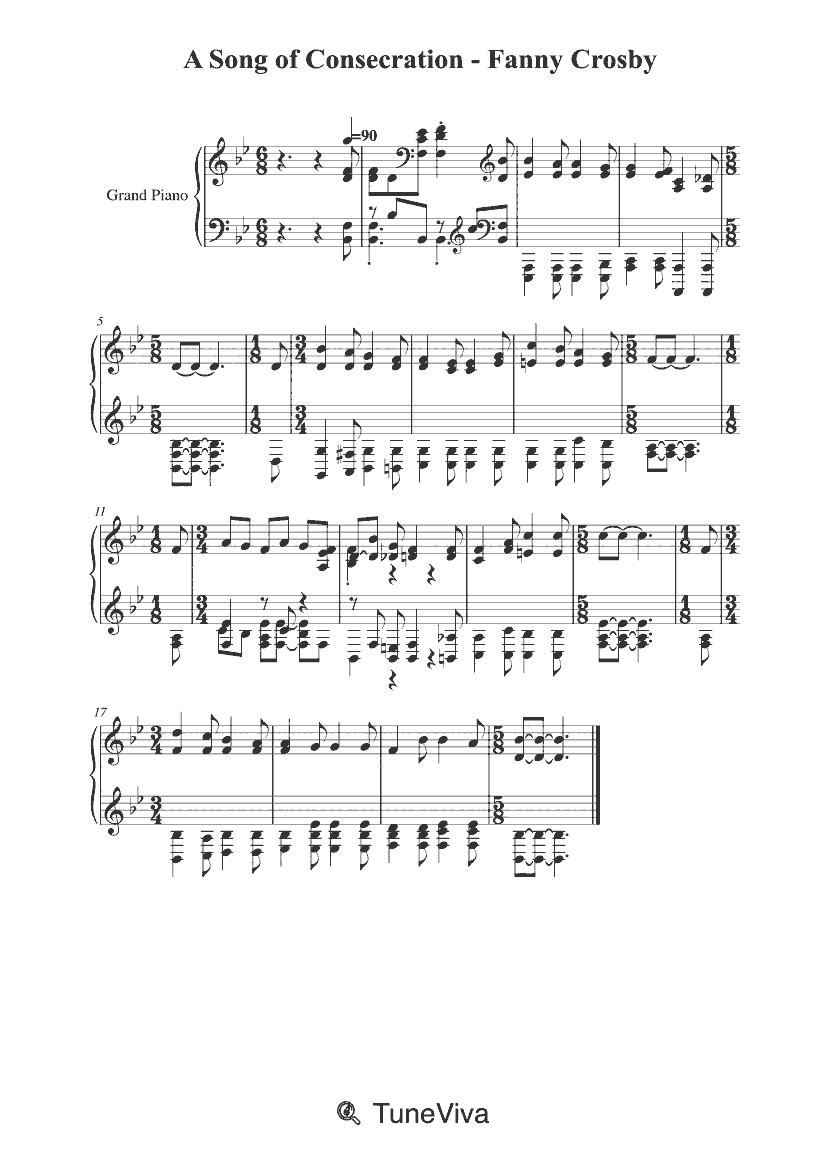
A consecration hymn whose catalogue title is generic, so the underlying Crosby text is not identified by the title alone.
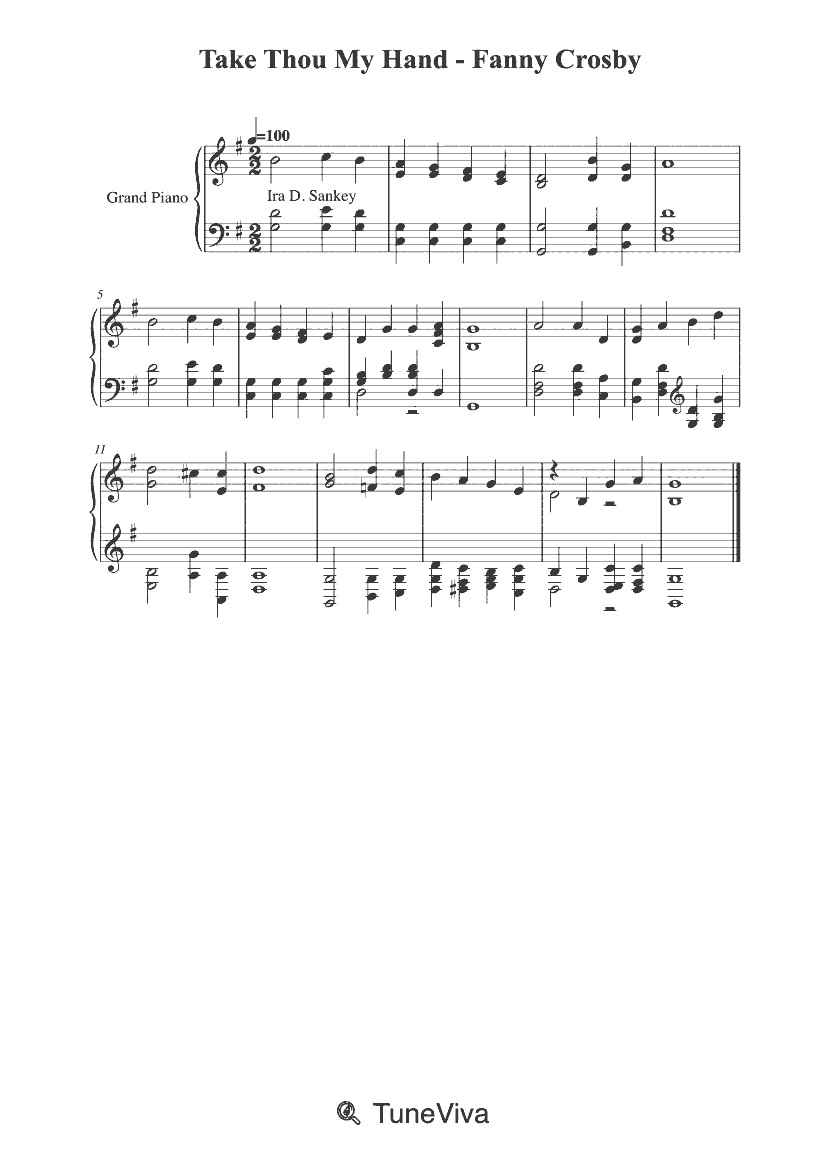
A short devotional prayer for guidance, in the plain style of Crosby's hymn verse.
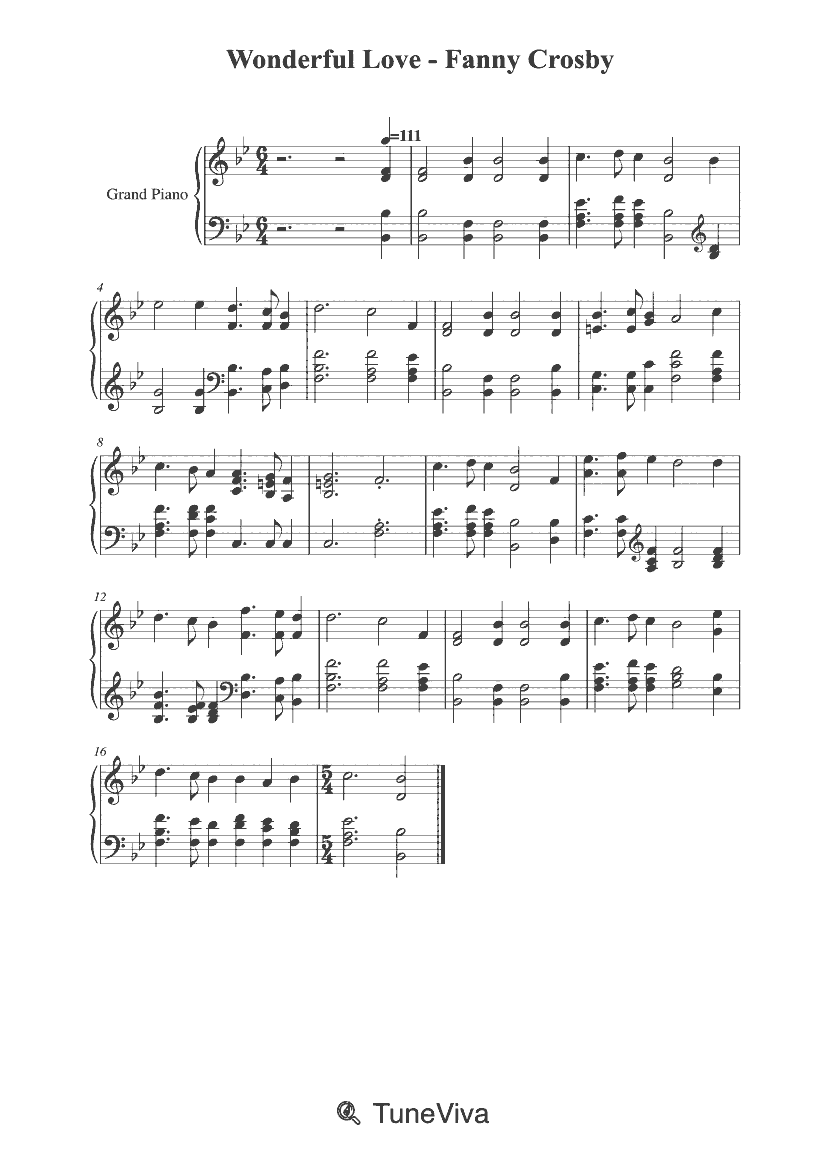
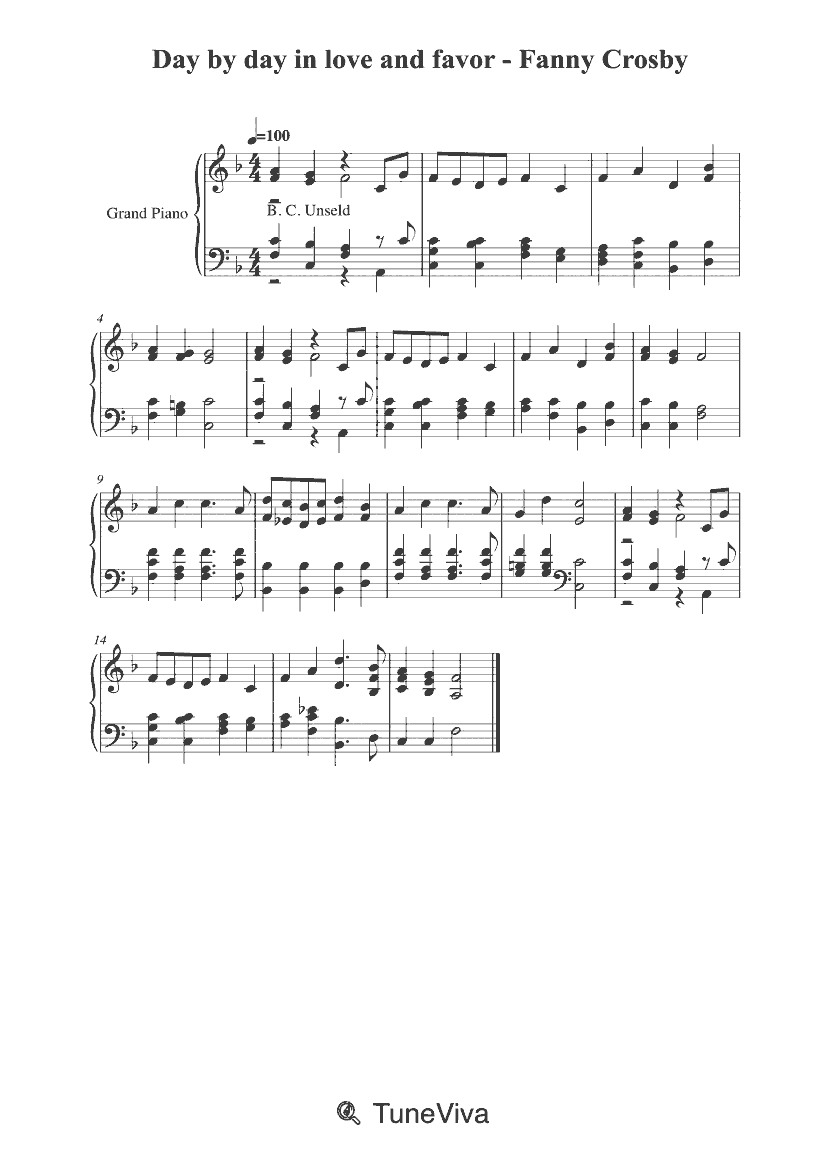
A hymn on the love of Christ; the title is a refrain phrase rather than a narrative opener.
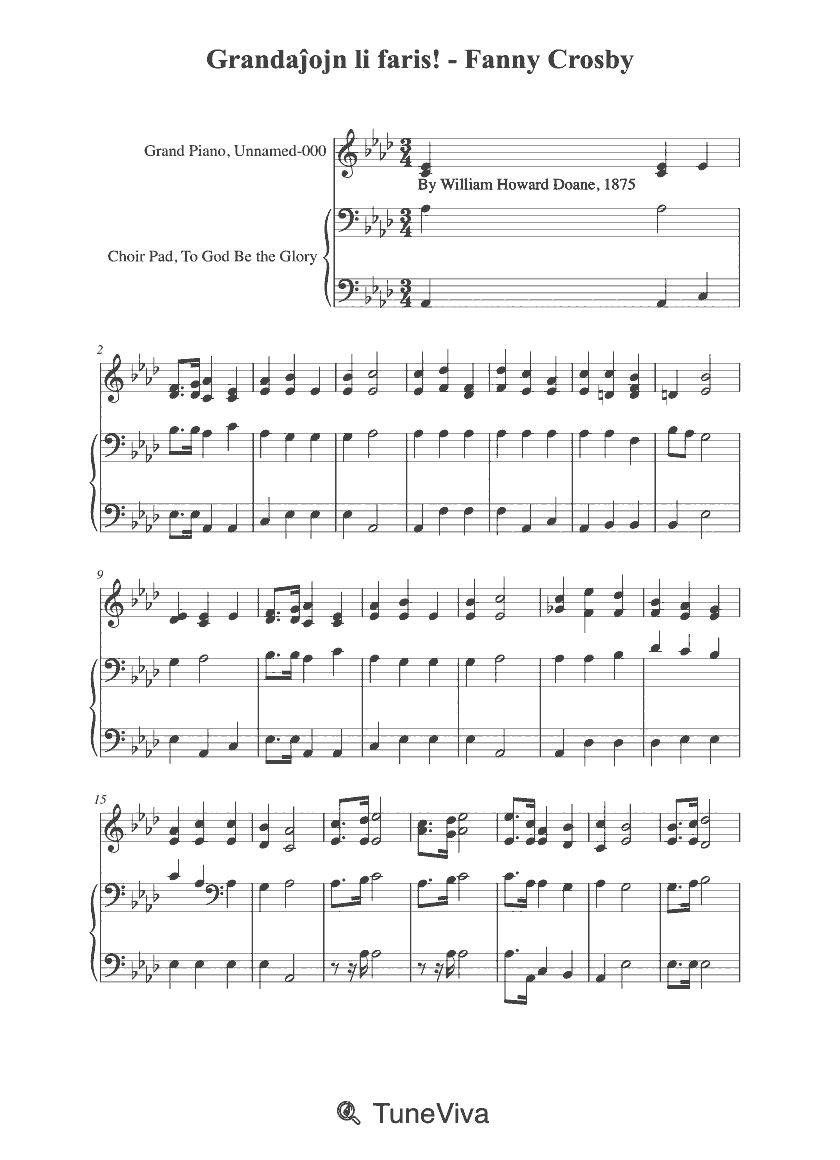
An Esperanto text meaning 'Great things he has done', the refrain of To God Be the Glory; the file preserves the translation only.
There are 33, running to about 20 minutes of music and 7,957 notated notes. Twenty-seven of them include lyrics.
Usually she wrote the words only. The tunes came from William Howard Doane, Ira Sankey, Robert Lowry, Phoebe Knapp and others, though the catalogue files the settings under her name.
An Indonesian title meaning roughly 'how blessed I am'. It is commonly used for Blessed Assurance, but the score prints only the translated text, so the identification is not certain.
Esperanto for 'Great things he has done', the refrain of To God Be the Glory. The file preserves the Esperanto title and text without the English first line.
Catalog editions and arrangements attributed to Fanny Crosby.