
classical
2 tracks
Francisco Valls spent his working life in Barcelona's churches, and the catalogue is weighted towards the music he left there: 71 scores, about 173 minutes of music and 66,693 notated notes. Every entry carries lyrics and every entry sits at complexity index 0, so the difficulty scale offers no help in choosing between them.
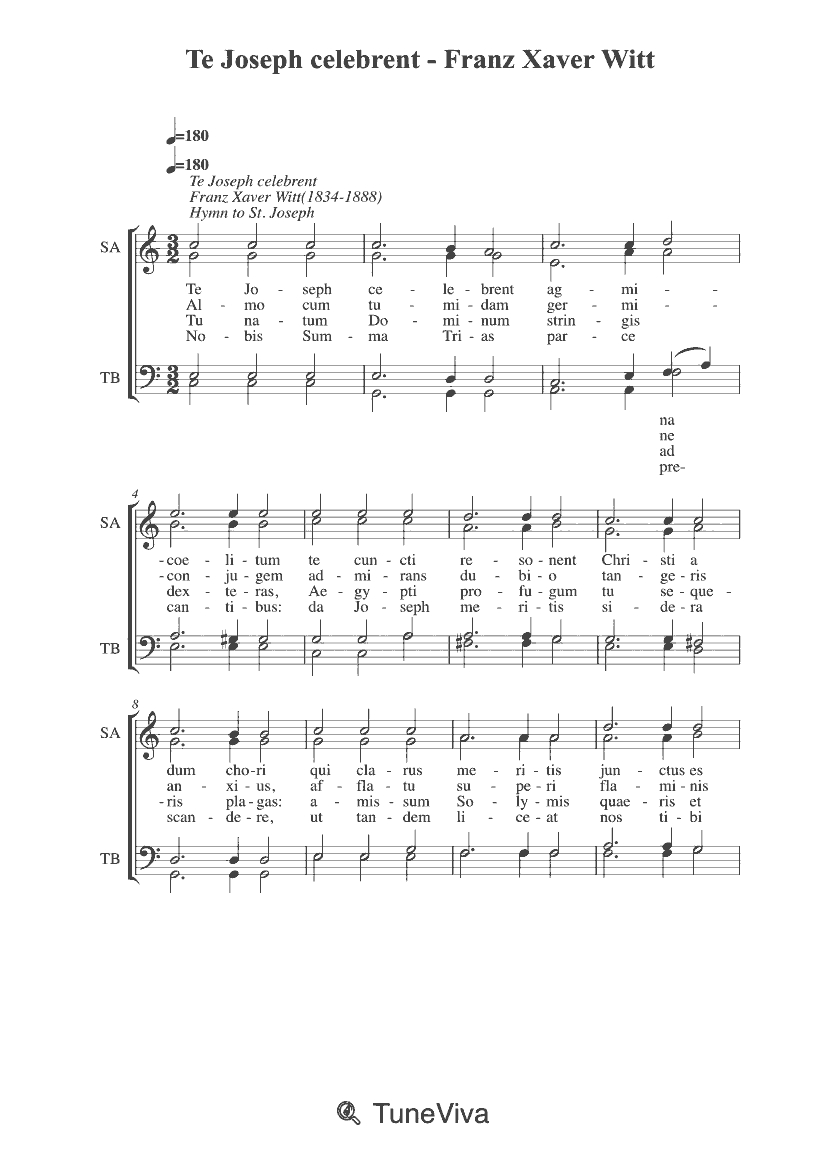
The most-viewed title is not by Valls at all: Te Joseph celebrent is credited in the catalogue to Franz Xaver Witt. Below it come the Spanish villancico Quien ser decid, the Missa a 5 in hypodorian mode and the Christe eleison from the Missa Scala Aretina, the movement at the centre of a five-year pamphlet war.
Valls was born in Barcelona, probably in 1665 and possibly in 1671, and died there on 2 February 1747. In 1696 he left the church of Santa Maria del Mar to become mestre de capella of Barcelona Cathedral, a post he held for the rest of his working life. He wrote ten masses, seventeen psalm settings, thirty motets and a large body of secular music, much of it surviving in manuscript in the Biblioteca de Catalunya.
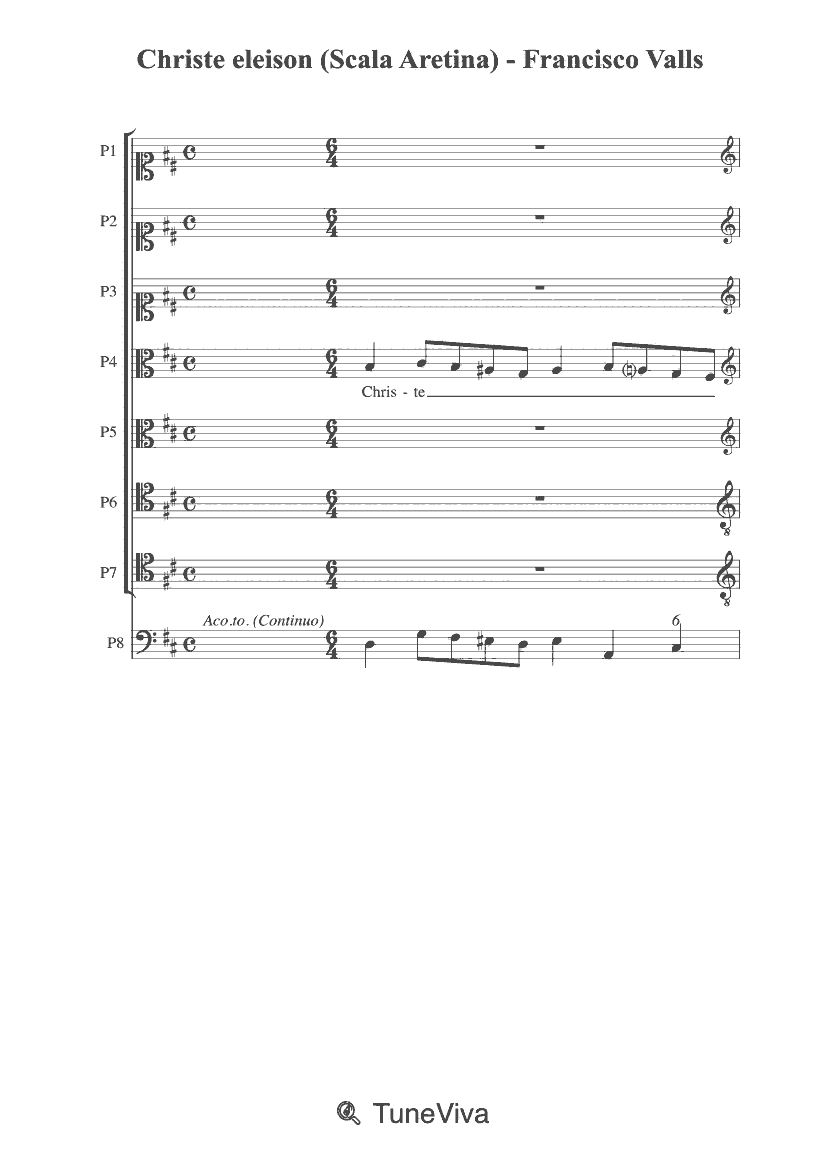
His name is inseparable from the Missa Scala Aretina, which takes its cantus firmus from Guido of Arezzo's scale. In 1715 the Valencia organist Joaquín Martínez de la Roca attacked the work's unprepared dissonances and its handling of the modes, and the argument ran for five years in some seventy-eight pamphlets; Alessandro Scarlatti was asked for an opinion and gave one mildly against Valls. The Christe eleison from that Mass survives in the Mapa Armónico Práctico, the treatise Valls wrote in retirement, of which a facsimile appeared in 2002.
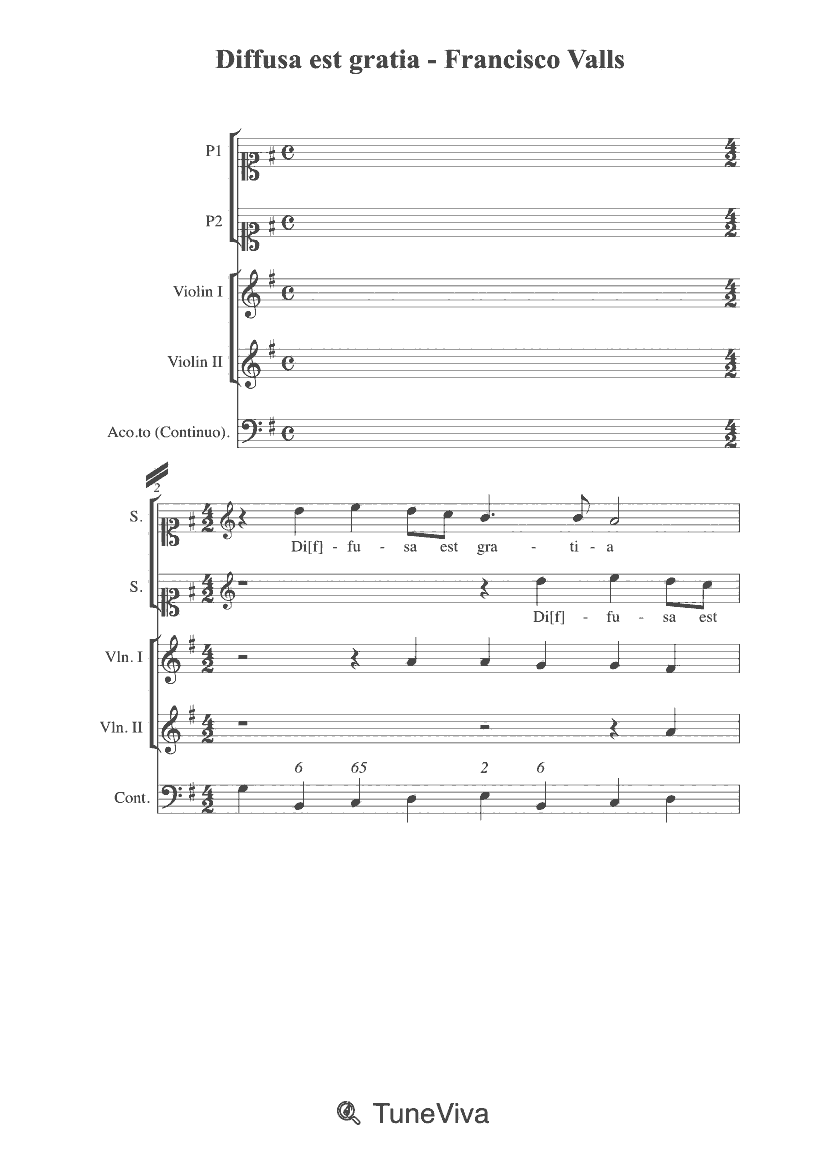
The catalogue reflects that mixture. Alongside Mass movements sit Latin motets such as Fulcite me floribus and Diffusa est gratia, Spanish villancicos including Quien ser decid, and pieces for the Virgin Mary, to whom much of his sacred output is addressed.
Valls writes for choirs that can hold a line without much help. The Latin works often divide into cori with separate continuo groups, so the first decision is spatial: who stands where, and which organ or harp doubles which choir. His dissonances are prepared by voice-leading rather than by chord colour, which means they only tell if the tuning is clean. In the Spanish villancicos the rhythm should stay dance-like even when the harmony darkens. Let the text govern tempo; the examples in the Mapa repeatedly change metre and dynamics to follow the words.
The most-viewed entry in the Valls bucket is credited to Franz Xaver Witt, a nineteenth-century German church-music reformer, not to Valls. The hymn text belongs to the feast of St Joseph; check the attribution on the file before using it as a Valls piece.
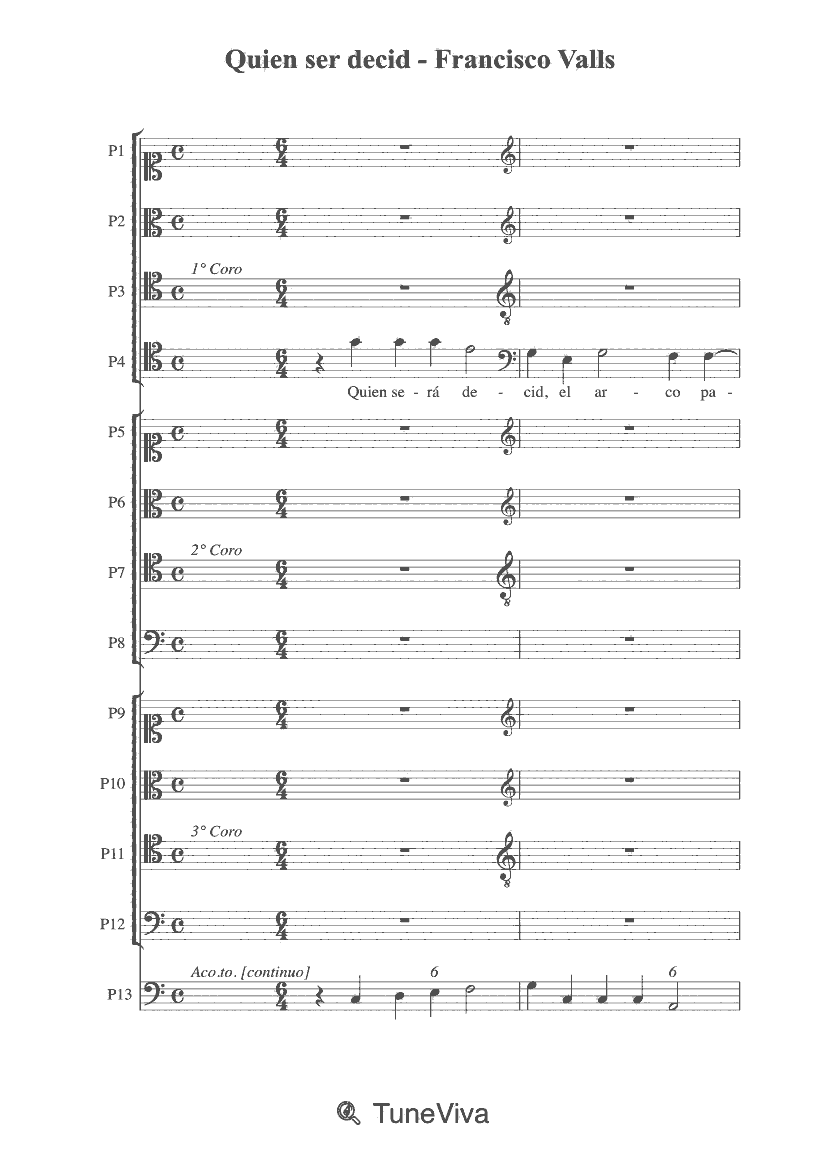
A Spanish villancico, one of the large-scale settings that survive in the Mapa Armónico Práctico. The catalogue gives the title without accents, and the source literature also prints it as 'Quien será decid'.
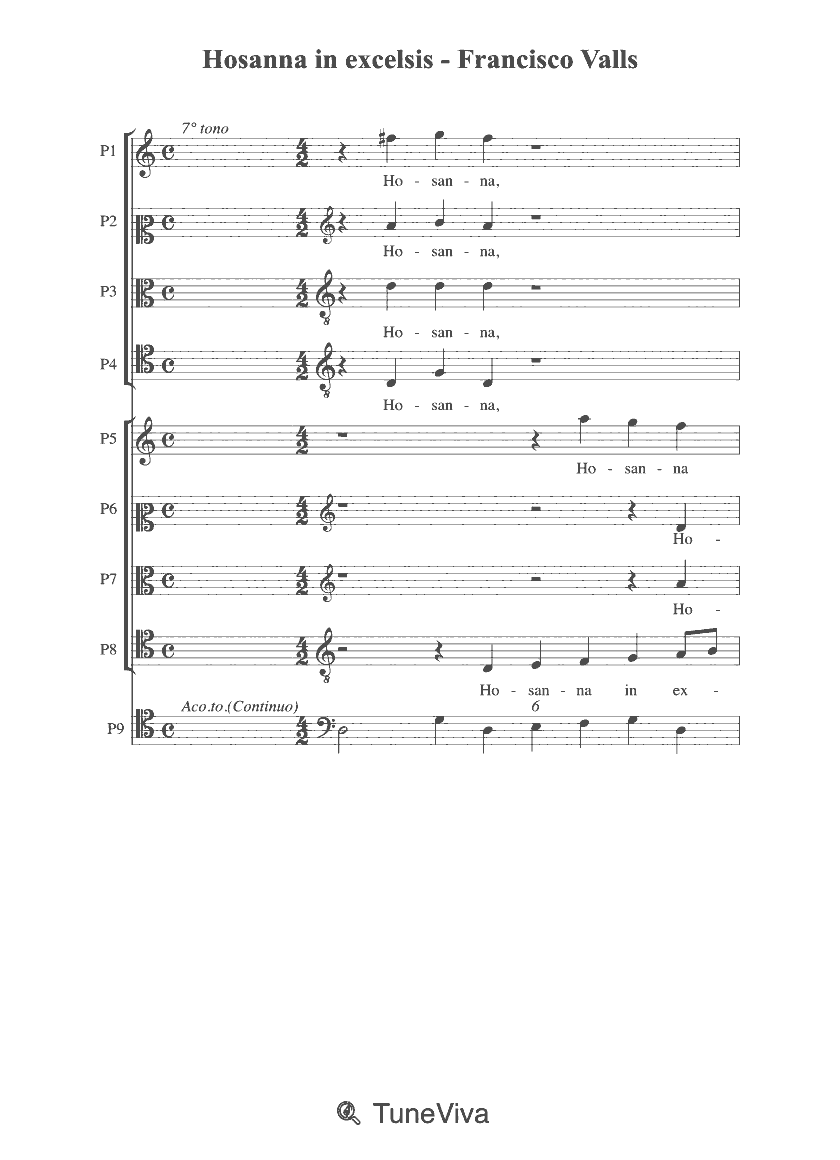
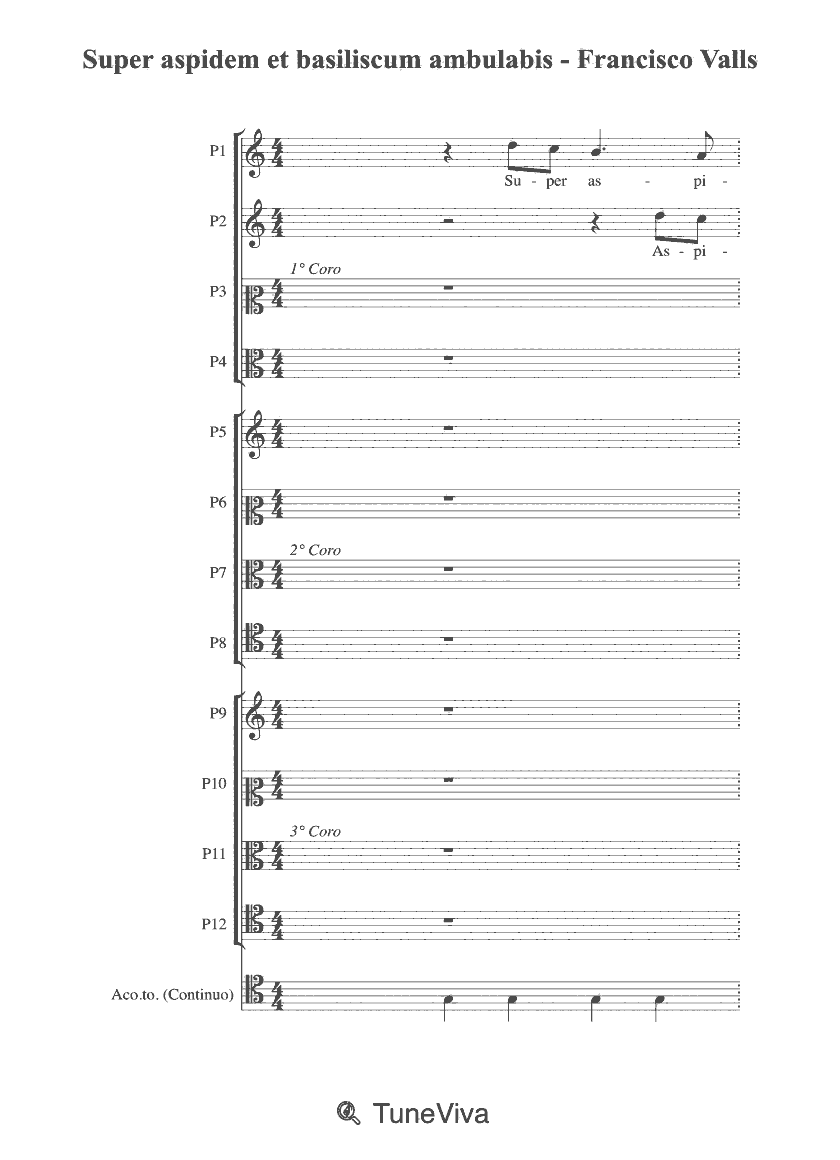
The Sanctus acclamation, filed under Valls without a named source. It may be a movement from one of the masses rather than a separate motet, and the catalogue does not say which.
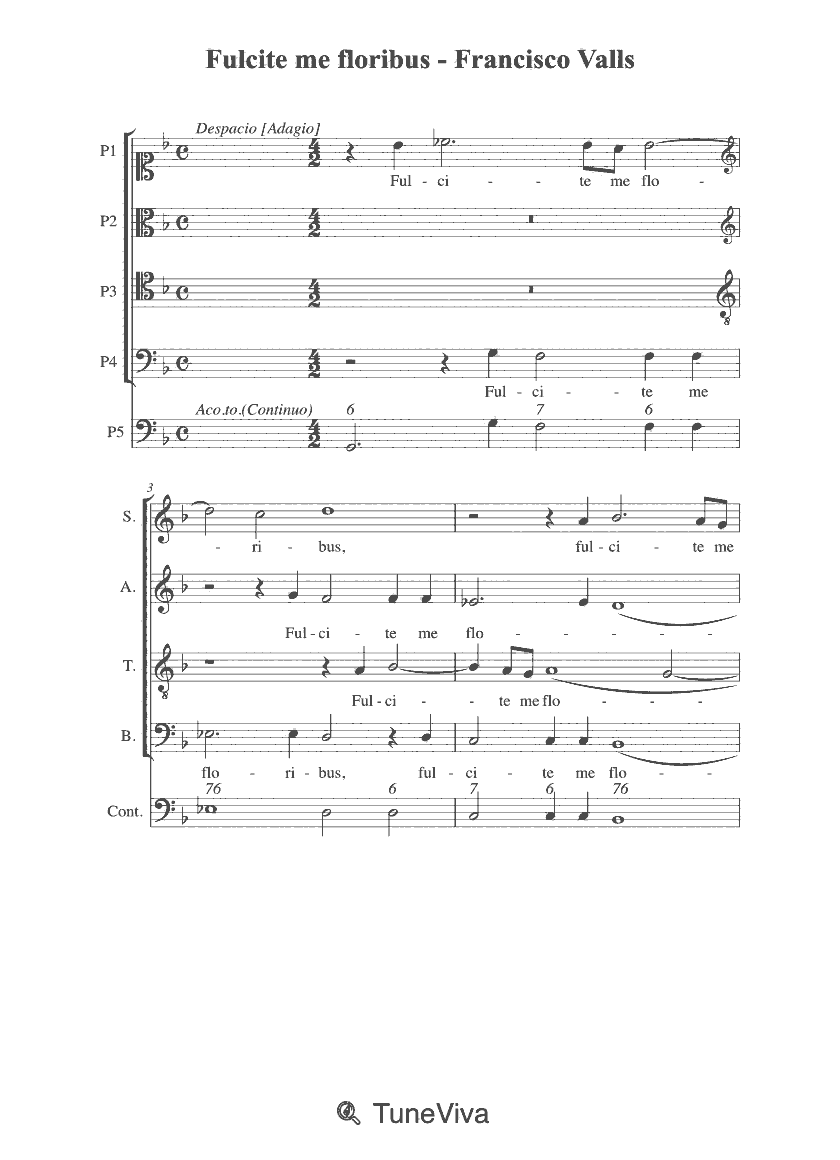
A motet on the Song of Songs, 'stay me with flagons'; the text is used for feasts of the Virgin, a constant theme in Valls's sacred music.
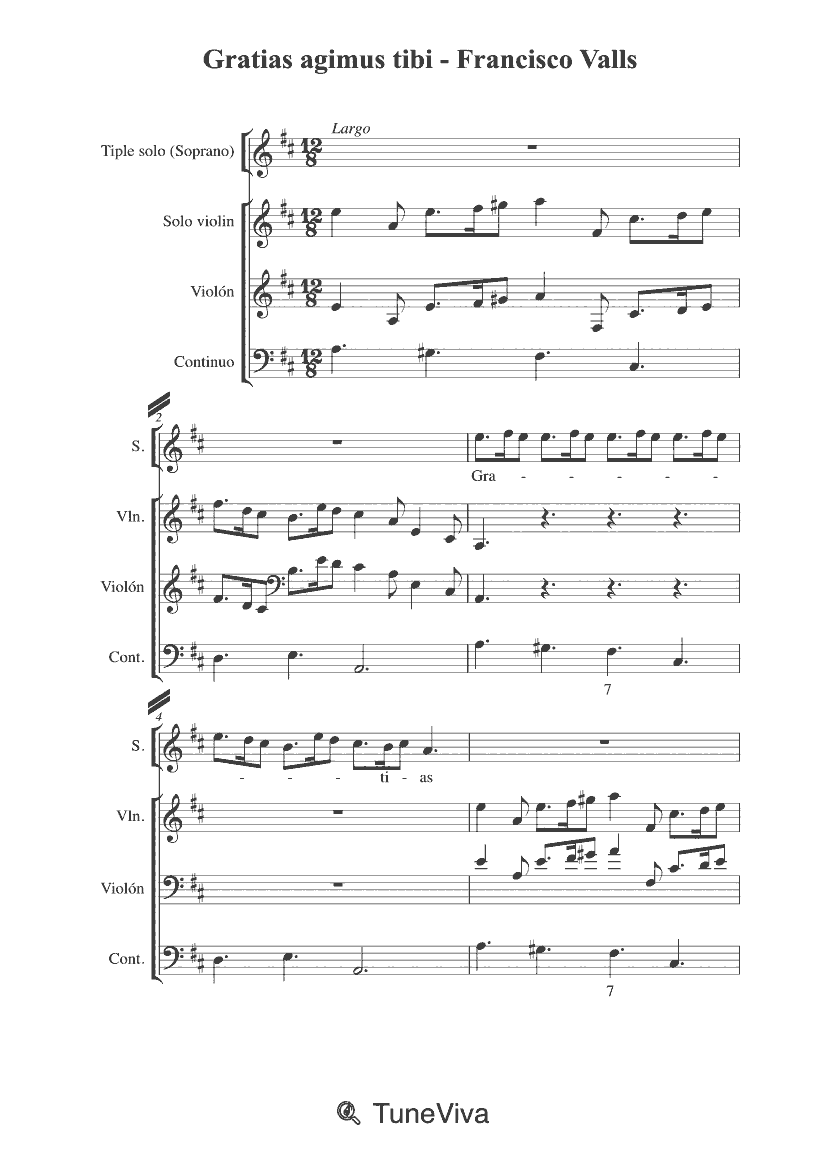
The offertory for feasts of virgins, set here as a Latin motet. The text opens 'Grace is poured abroad in thy lips'.
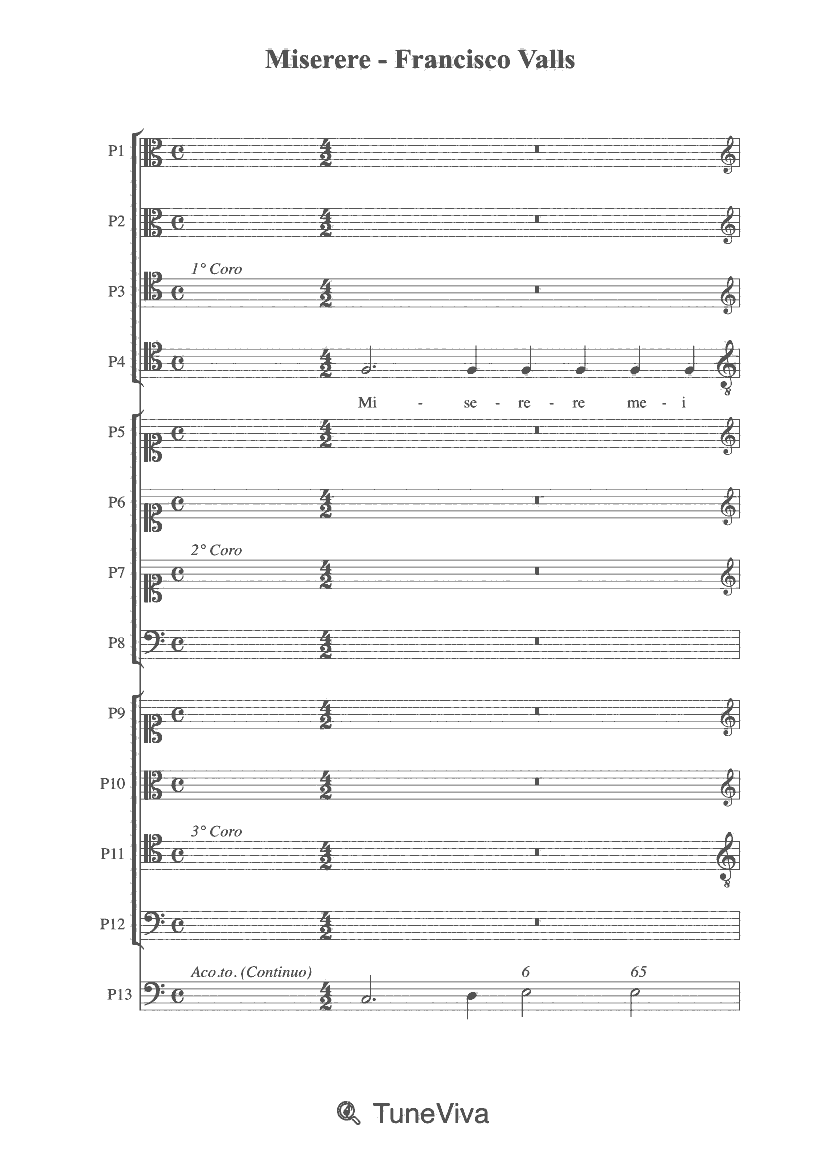
A setting of Psalm 51, the penitential psalm sung during Holy Week. The catalogue gives no scoring or date.
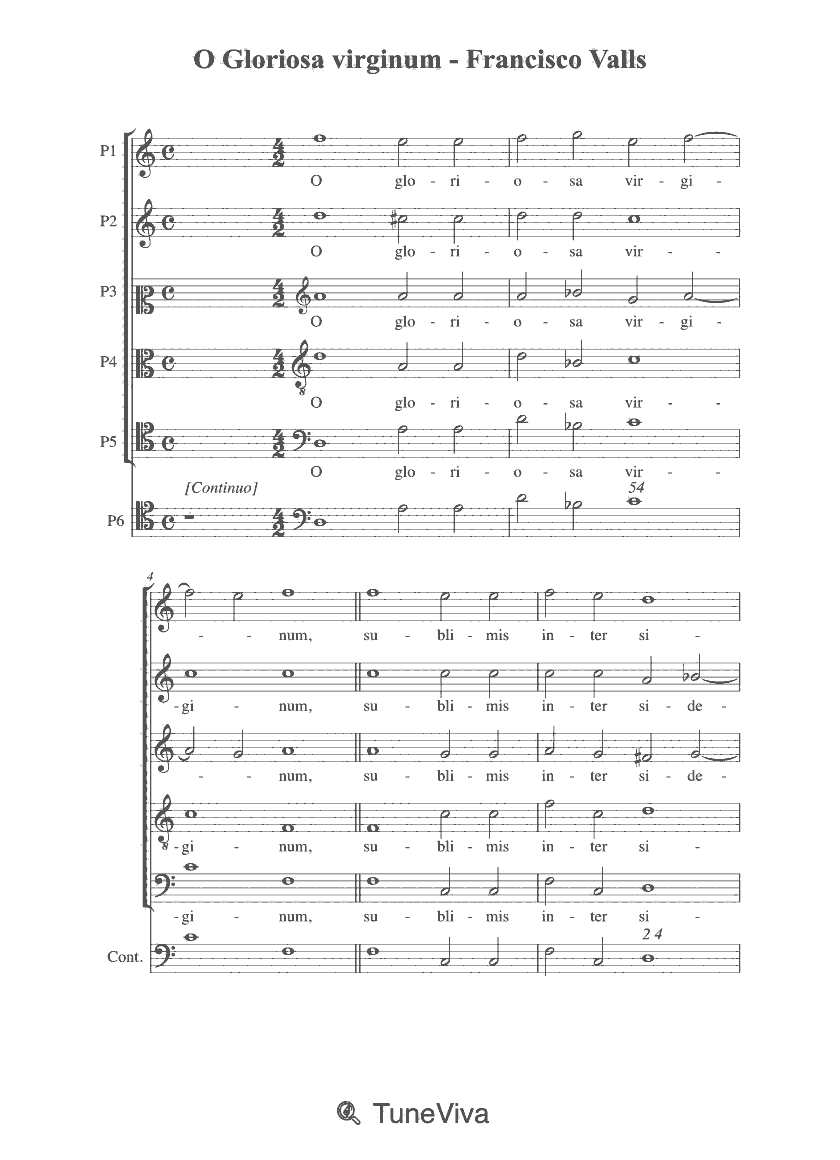
A Marian hymn, one of several pieces in the collection addressed to the Virgin Mary.
One of Valls's ten masses, for five voices and built on the second church mode. The catalogue gives no name or publication for it.
The Christe from the Missa Scala Aretina, preserved in the Mapa Armónico Práctico and the passage at the heart of the 1715-1720 dispute over dissonance.
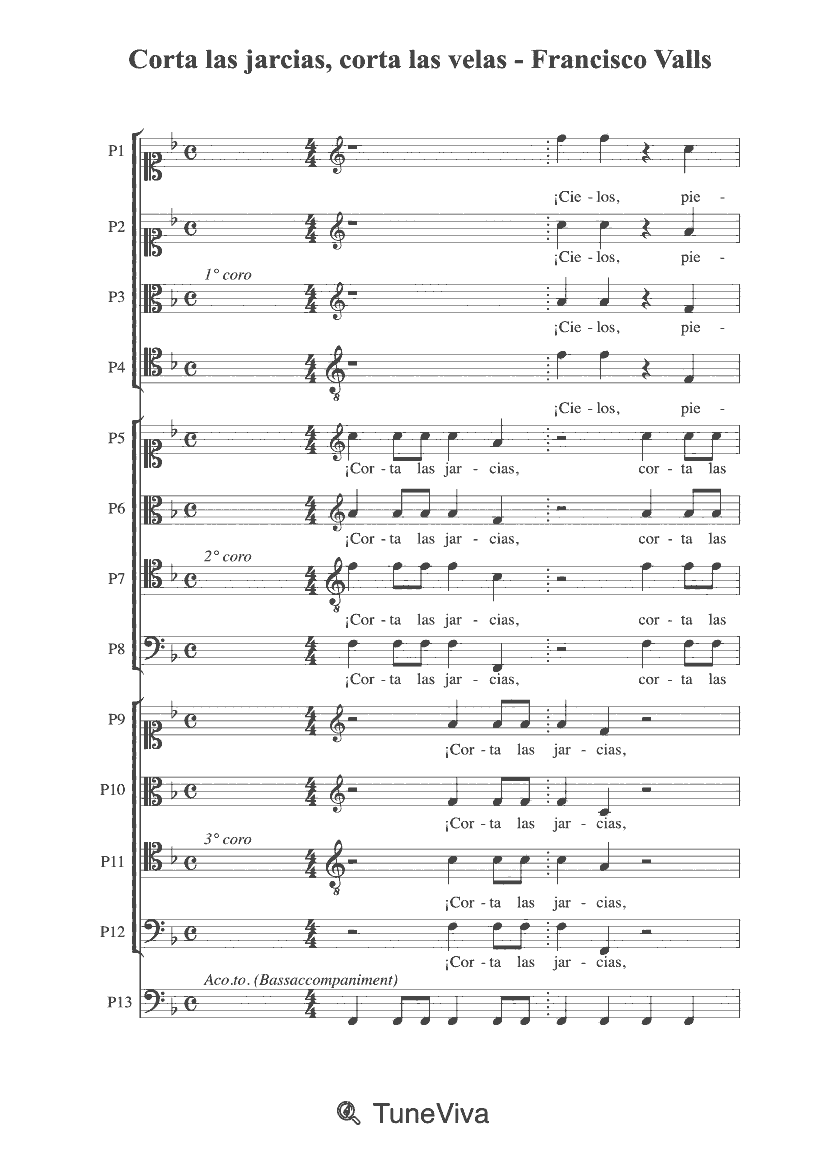
A Spanish-text piece whose title means 'cut the rigging, cut the sails'. The catalogue gives neither genre nor source, and it may be a villancico or a tono.
There are 71, running to about 173 minutes of music and 66,693 notated notes. All 71 include lyrics, and all are logged at complexity index 0.
Because the composer field on that entry names Witt, not Valls. Witt was a German (Bavarian) priest, organist and editor, and the hymn is a St Joseph text; the catalogue offers no explanation of how the piece entered the Valls bucket.
Joaquín Martínez de la Roca of Valencia published a censure of the Mass in 1715, objecting to unprepared dissonances and to Valls's modal writing. Some seventy-eight pamphlets followed before the argument subsided in 1720, and Alessandro Scarlatti was among those asked to judge.
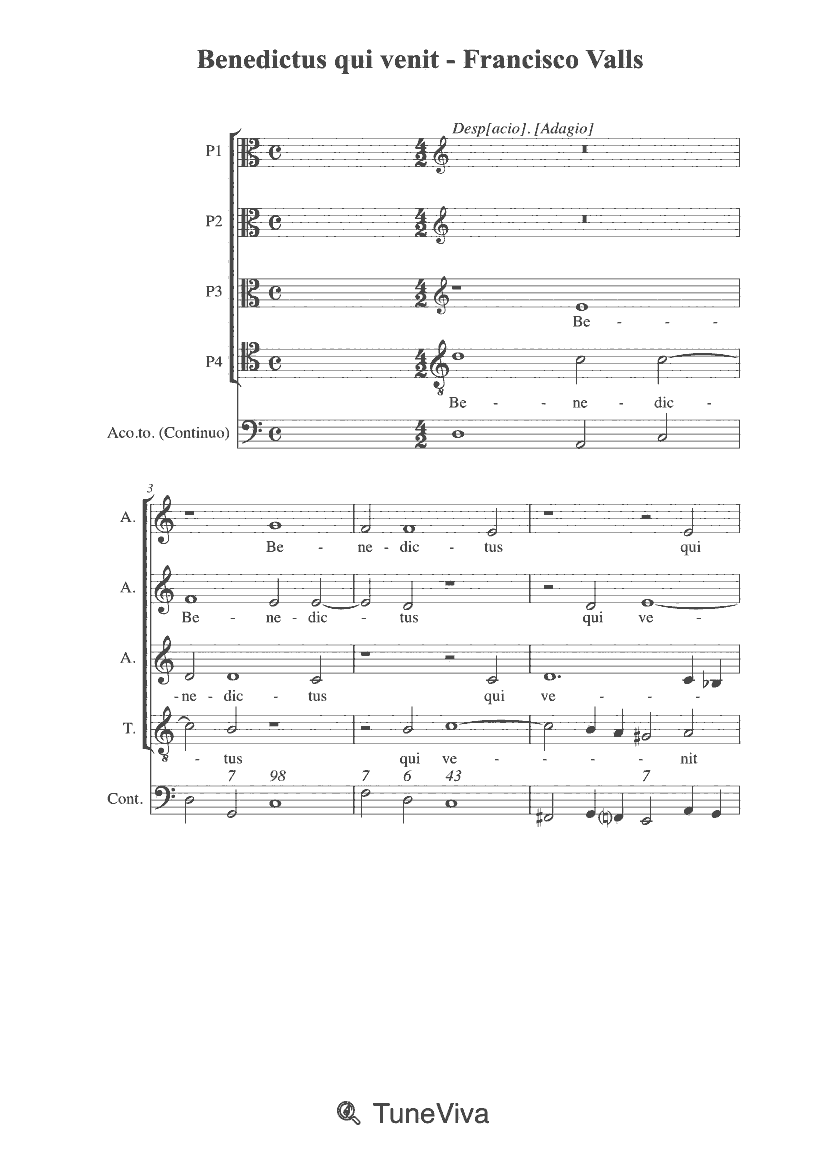
No. Only the Christe eleison is explicitly labelled with the Mass's name, although other Mass movements such as the Benedictus and Hosanna may come from it.
Catalog editions and arrangements attributed to Francisco Valls.
Villancico a 12 a la concepción de N[uest]ra S[eño]ra
Amor composición a 4
Fuga en unísonus 12 tono
Composición a 12
Composición cancrizante 2 tono
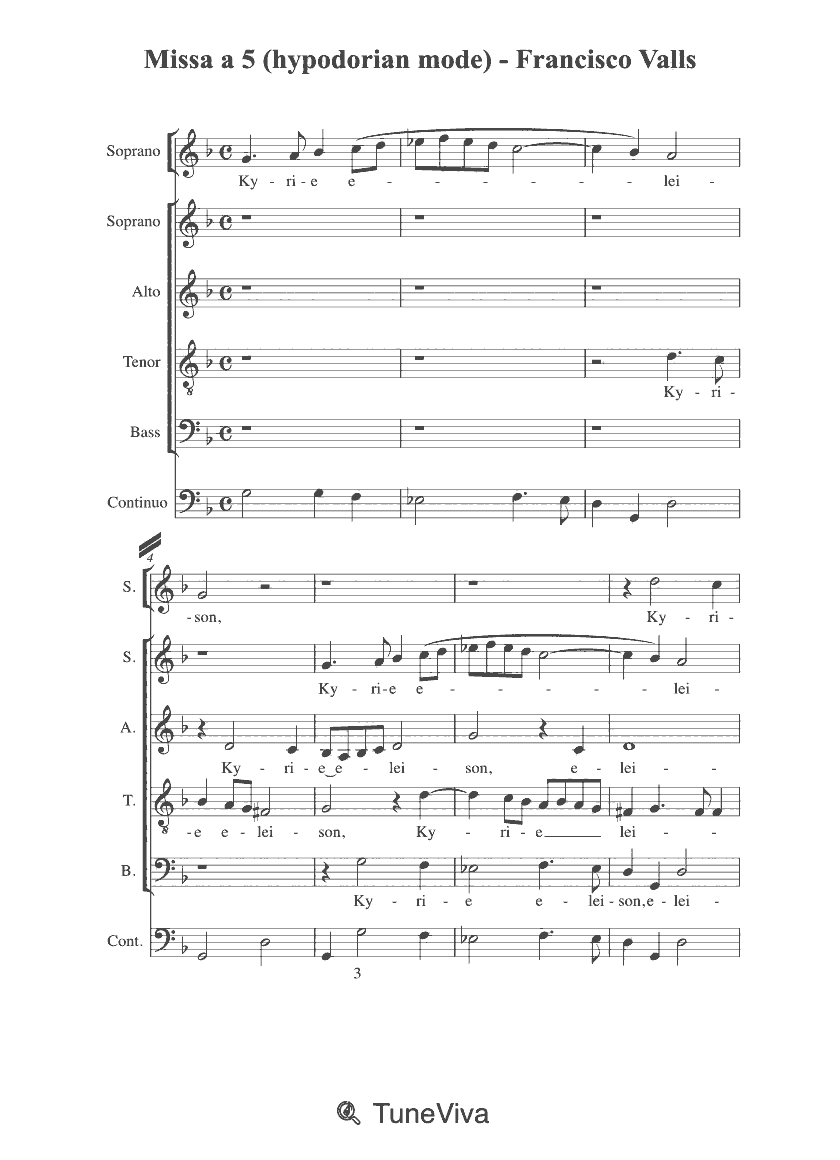
(Hypodorian mode)1. Kyrie
Composición a 12 fragmento de un villancico
Composición a 12
Canon a 4
Composición a 7 con un solo Baxo 11 tono punto alto
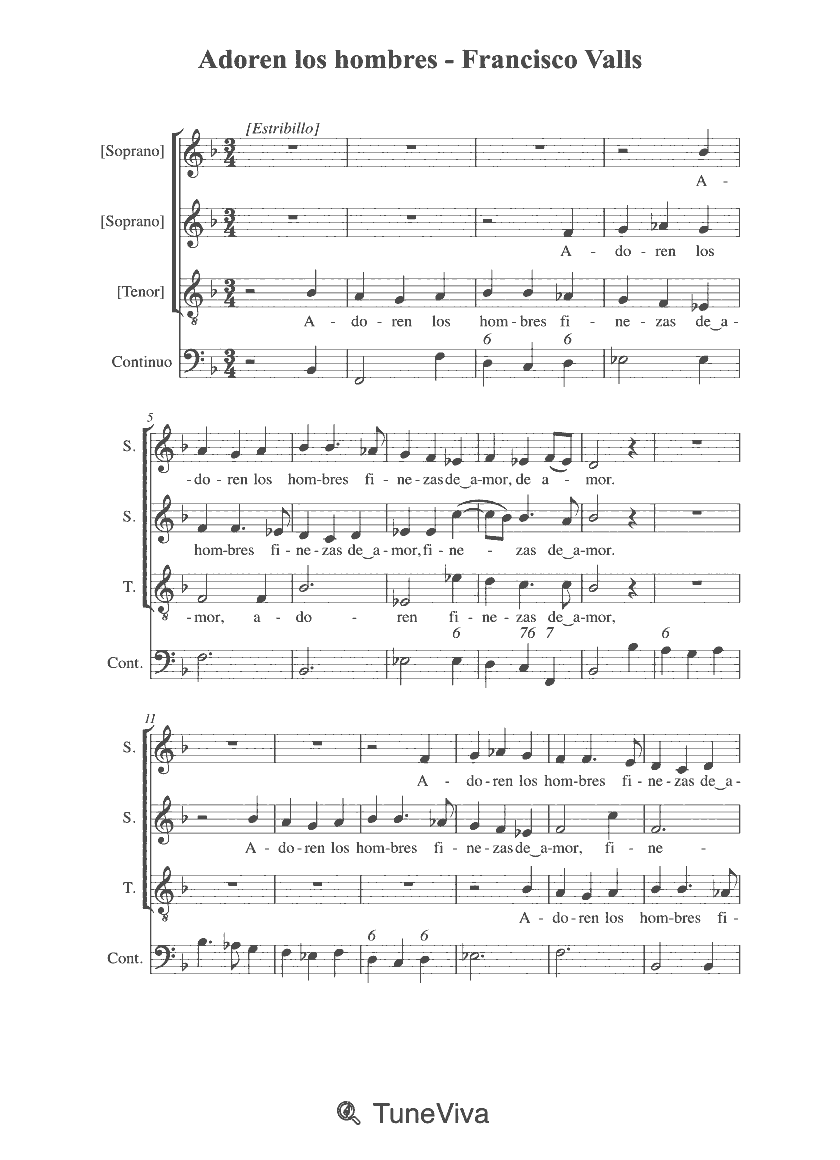
Villancico a 3 al nacimiento de Nuestro Señor Jesu Cristo.Trocados a 3
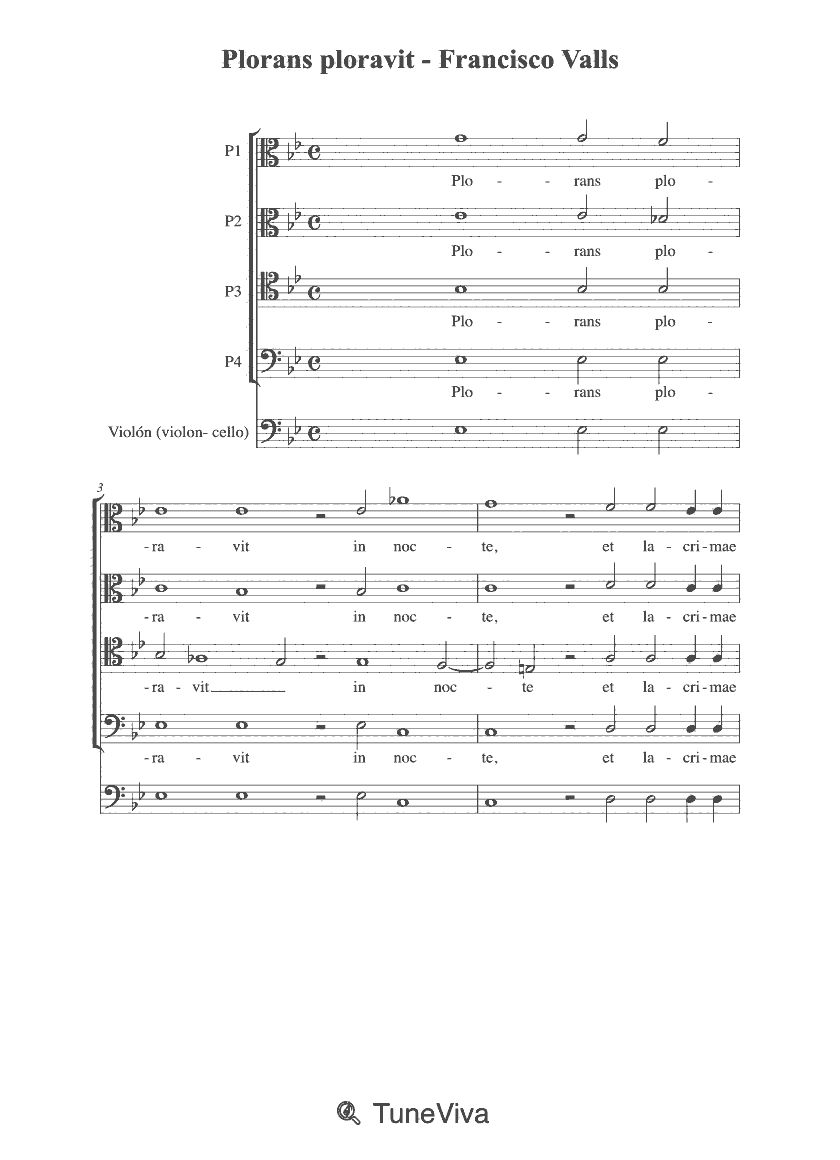
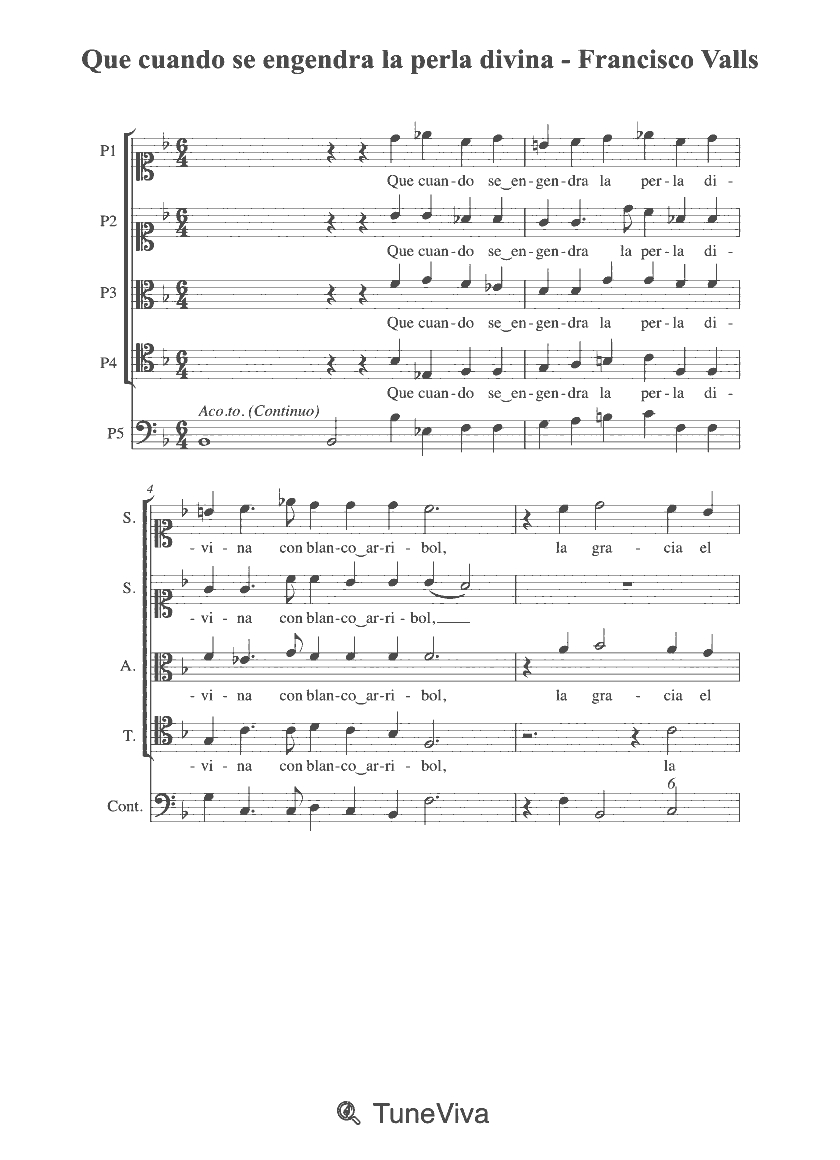
Fragmento de un villancico a Nuestra Señora5 tono trocado a 4
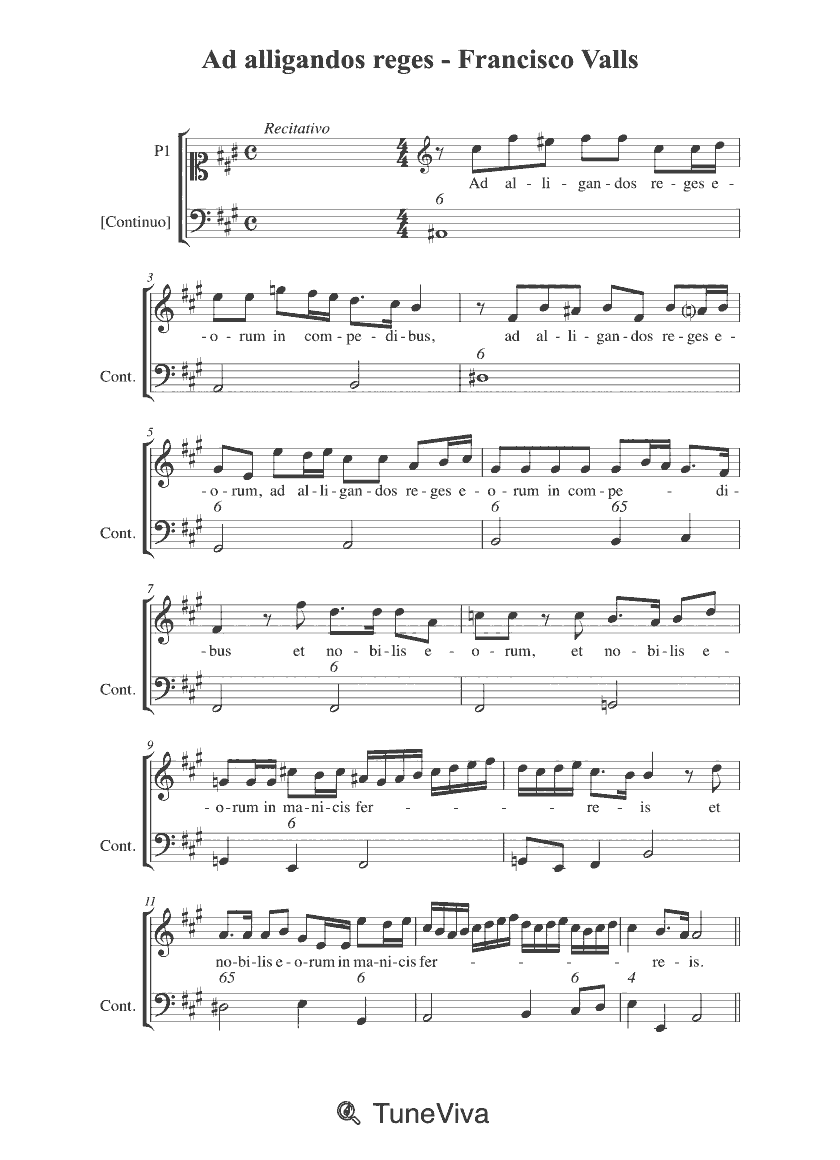
Fragmento de un motete
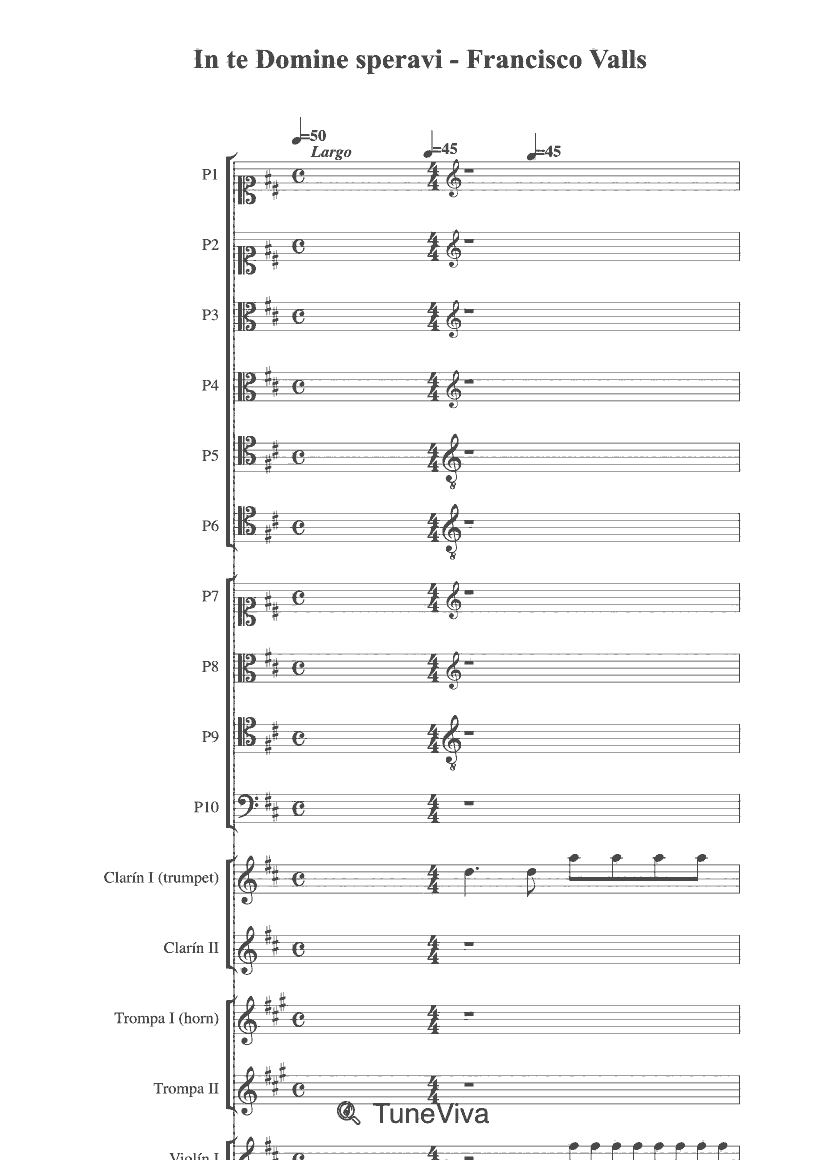
Composición a 10 con violines oboesses clarines y trompas
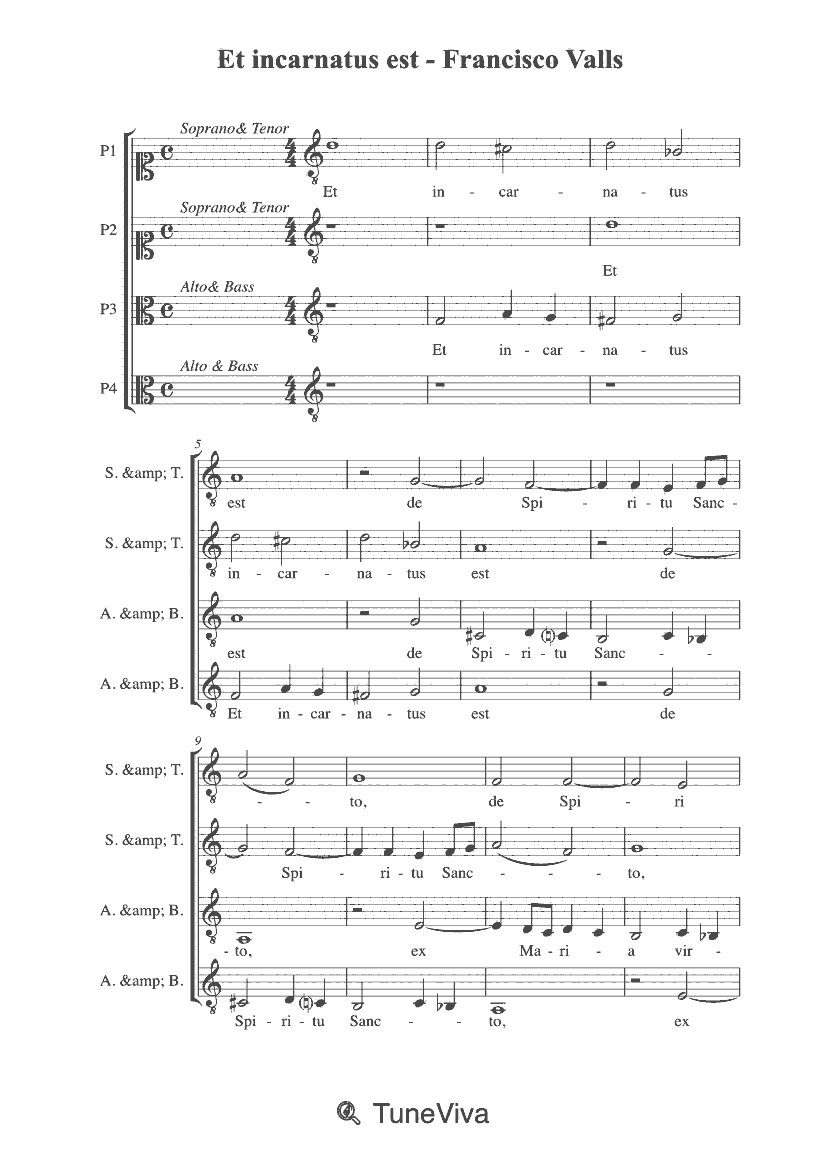
Canon trocado