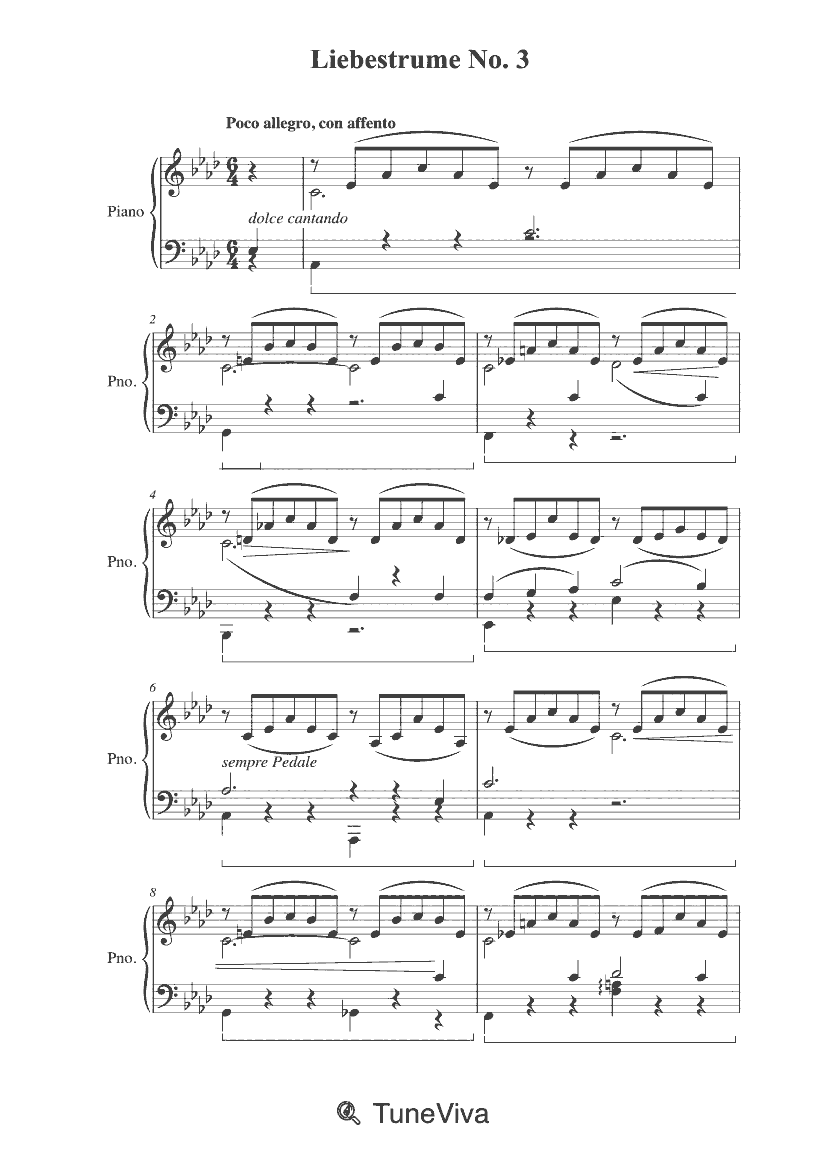
Liebestrume No. 3
Franz Liszt
S. 541
Piano · 5 min 47 sec
Open score
55 Liszt scores to preview and download: Consolation No. 3, Liebesträume, Hungarian Rhapsody No. 2, La Campanella and the Tannhäuser paraphrase, for piano.
The best known of the six Consolations, published in 1850 and marked Lento placido, with an ornamented melody over a rocking accompaniment.
The third of the three nocturnes of 1850, an A-flat setting of Liszt's own song 'O lieb, so lang du lieben kannst'.
The C-sharp minor rhapsody, published in 1851, whose slow Lassan and fast Friska became the model for the whole set.
The fourth Transcendental Étude in D minor, revised from an 1837 study and published in its final form in 1851.
Liszt's 1848 paraphrase of the Tannhäuser overture, part of his campaign to put Wagner's music before the public.
The third of the Apparitions of 1834, a fantasy on a waltz by Schubert (D. 365 No. 33).
The first Consolation, in E major, published with the set in 1850 and plainer in texture than No. 3.
The third of the Grandes études de Paganini (1851), built on the bell-like rondo of Paganini's Second Violin Concerto.
Piano · 1 min 25 sec
One of the two Concert Études of about 1862-63, a scherzo-like study in rapid alternating hands.
Other editions:
The companion Concert Étude, a forest-murmur study in interlocking figuration.
Trumpet; Trombone; Tuba +9 parts · 2 min 40 sec
Other editions:
Choose a Liszt work by its texture and musical aim. In Consolation No. 3, look for the sustained tune over the flowing accompaniment and practise their balance. In La Campanella, check the distance of the repeated right-hand jumps before judging the tempo. For Liebesträume, confirm the number and read into the cadenzas before choosing an edition based on the familiar opening.
Compare the instrument and arrangement details below, then open a score to check the notation. Different entries may be arrangements or editions of the same work; available playback tools are shown on each score page.
Franz Liszt
S. 541
Piano · 5 min 47 sec
Open score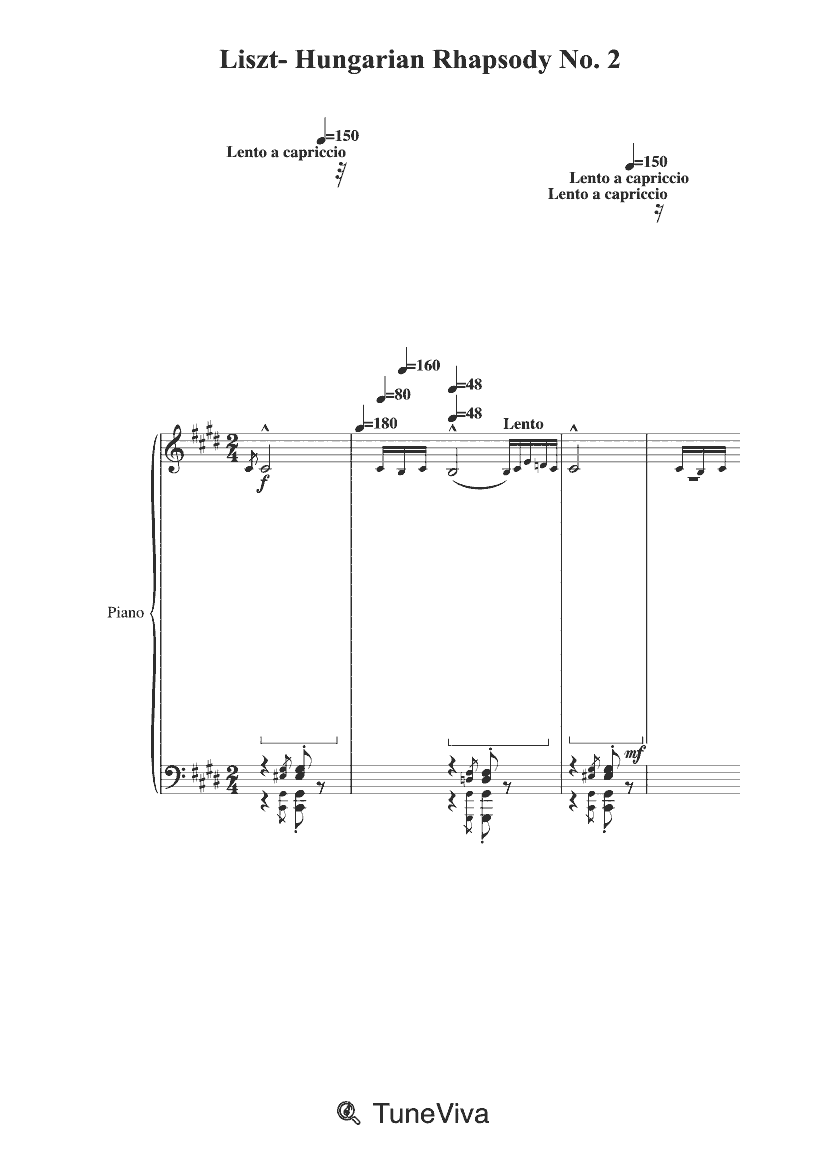
Franz Liszt
Piano · 6 min 48 sec
Open score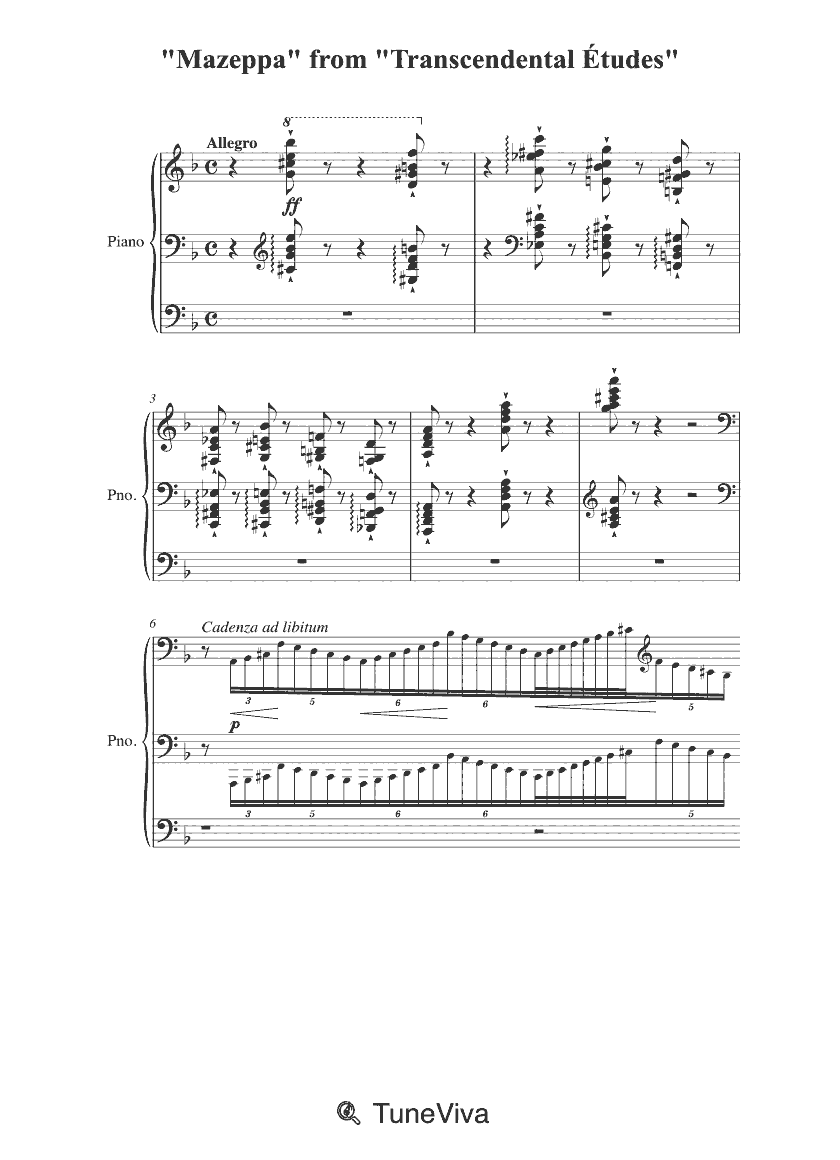
Franz Liszt
S. 139/4 Mazeppa
Piano · 7 min 39 sec
Open score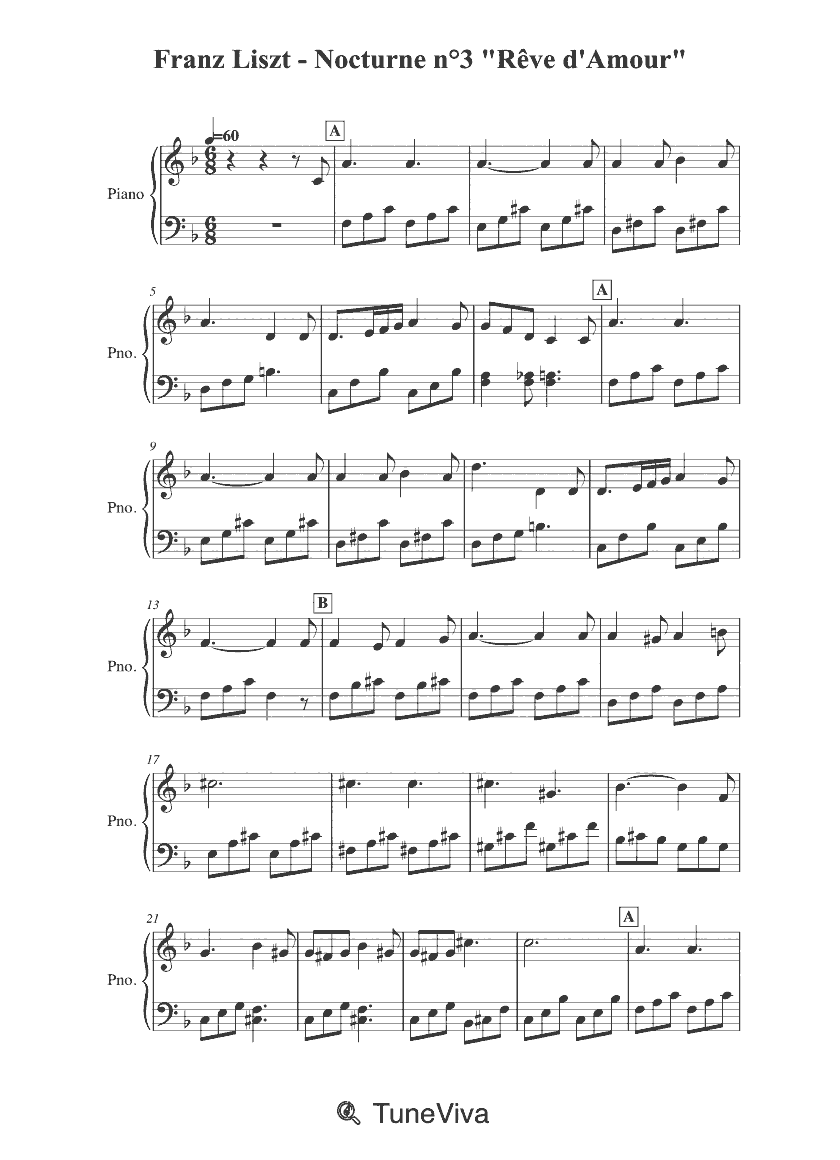
Franz Liszt
Adaptation pour piano d?butant
Piano · 54 sec
Open score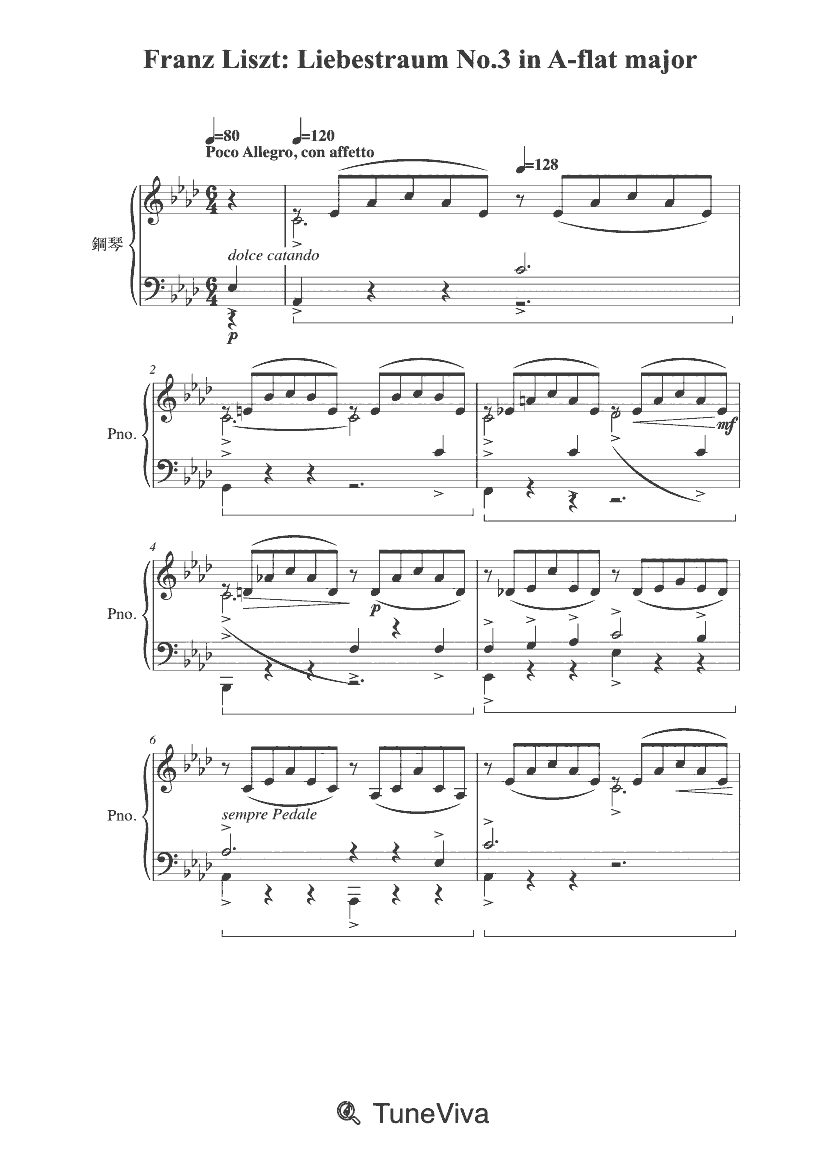
Franz Liszt
No. 3
鋼琴 · 3 min 39 sec
Open score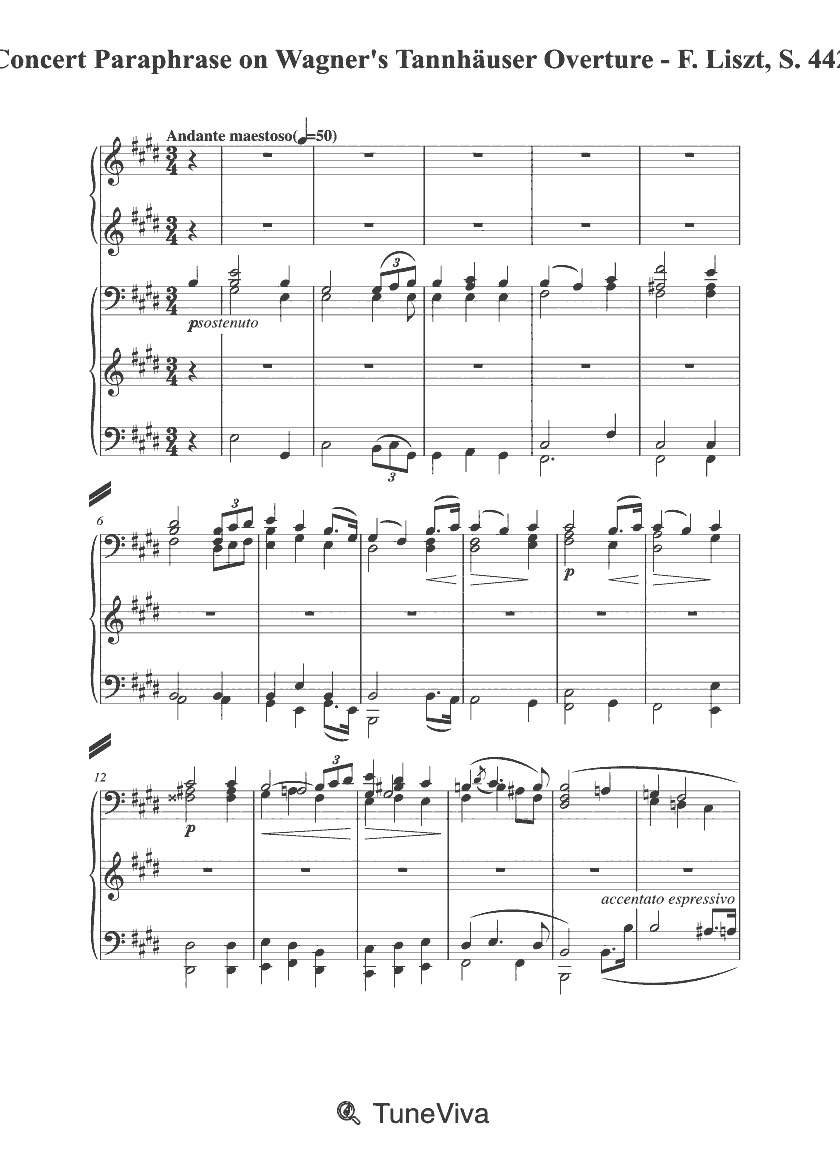
Franz Liszt
S. 442
Ossia; Piano · 15 min 21 sec
Open score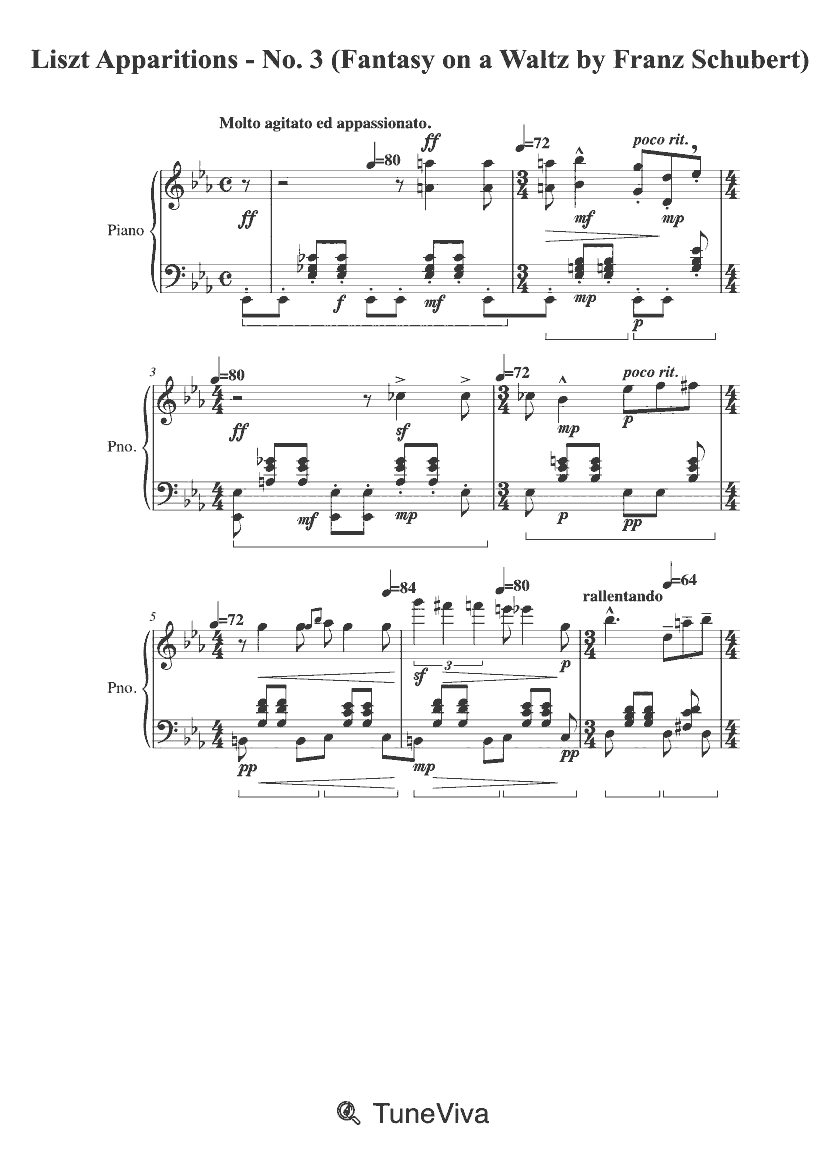
Franz Liszt
No. 3 - Fantasy on a Waltz by Franz Schubert
Piano · 7 min 1 sec
Open score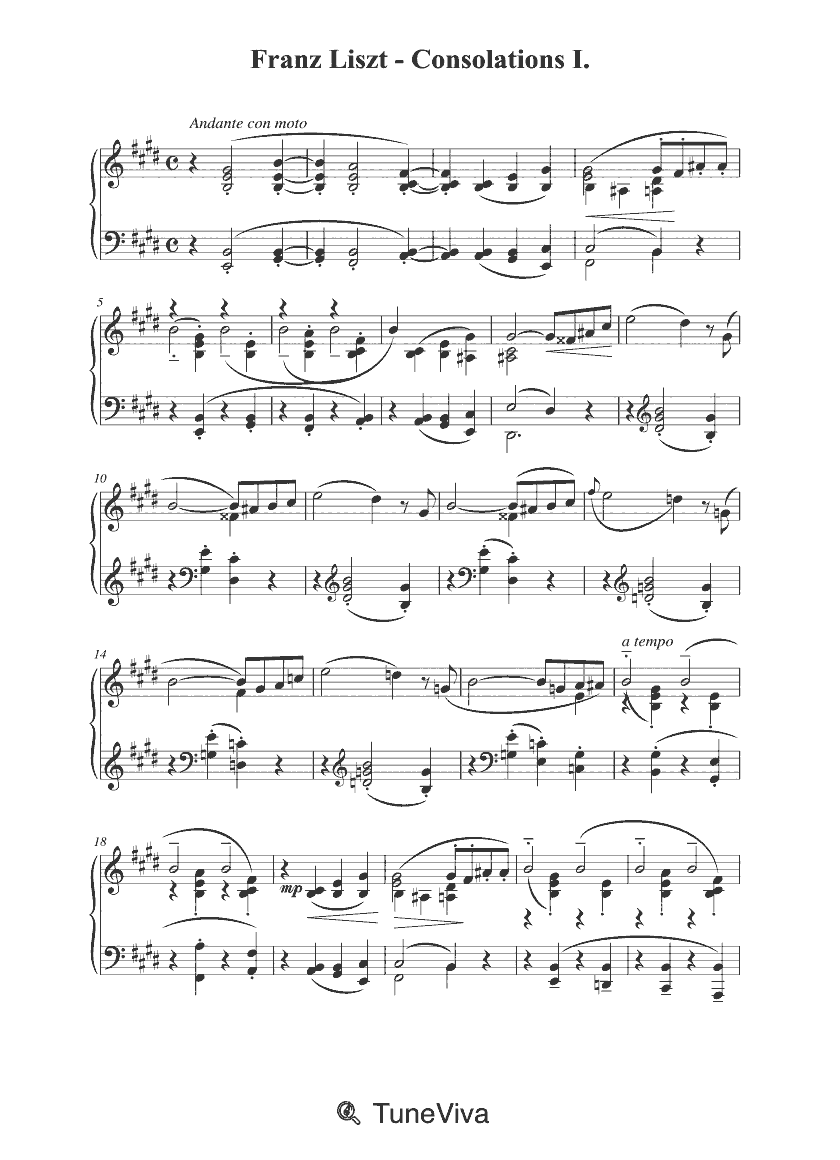
Franz Liszt
Piano · 1 min 9 sec
Open score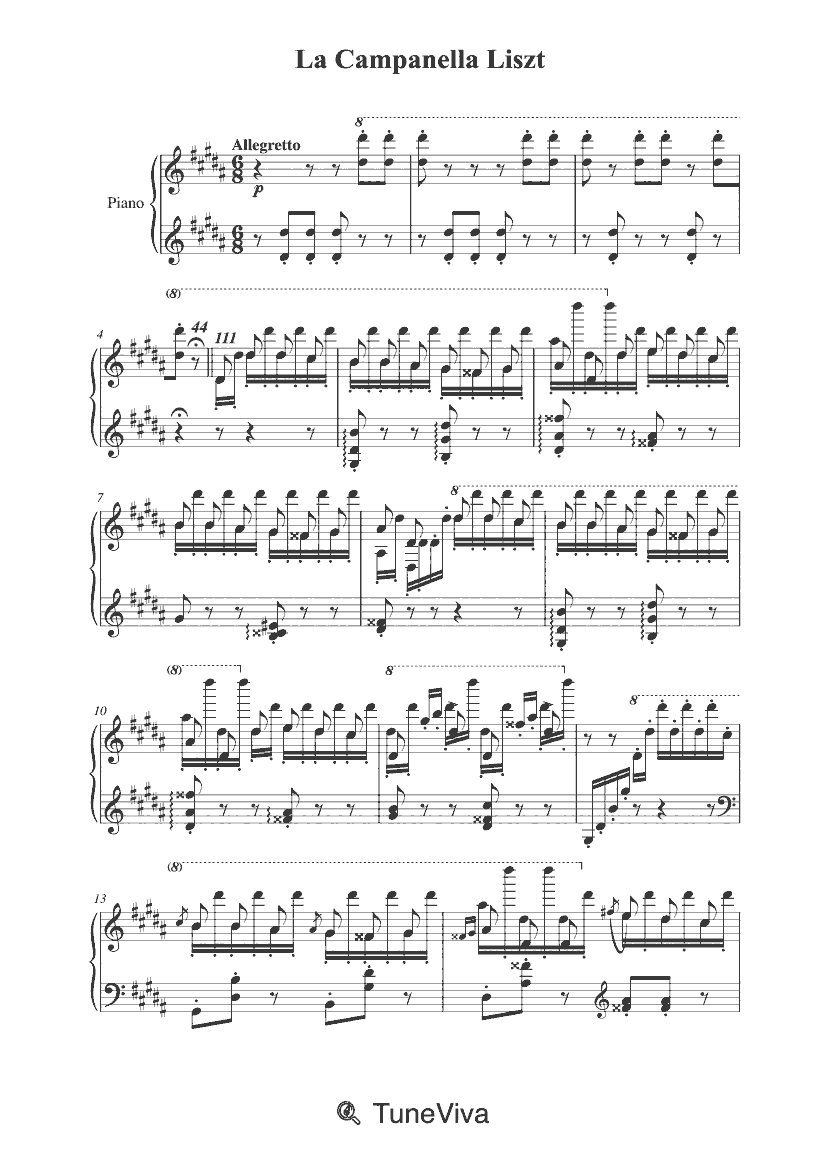
Franz Liszt
Piano · 1 min 46 sec
Open score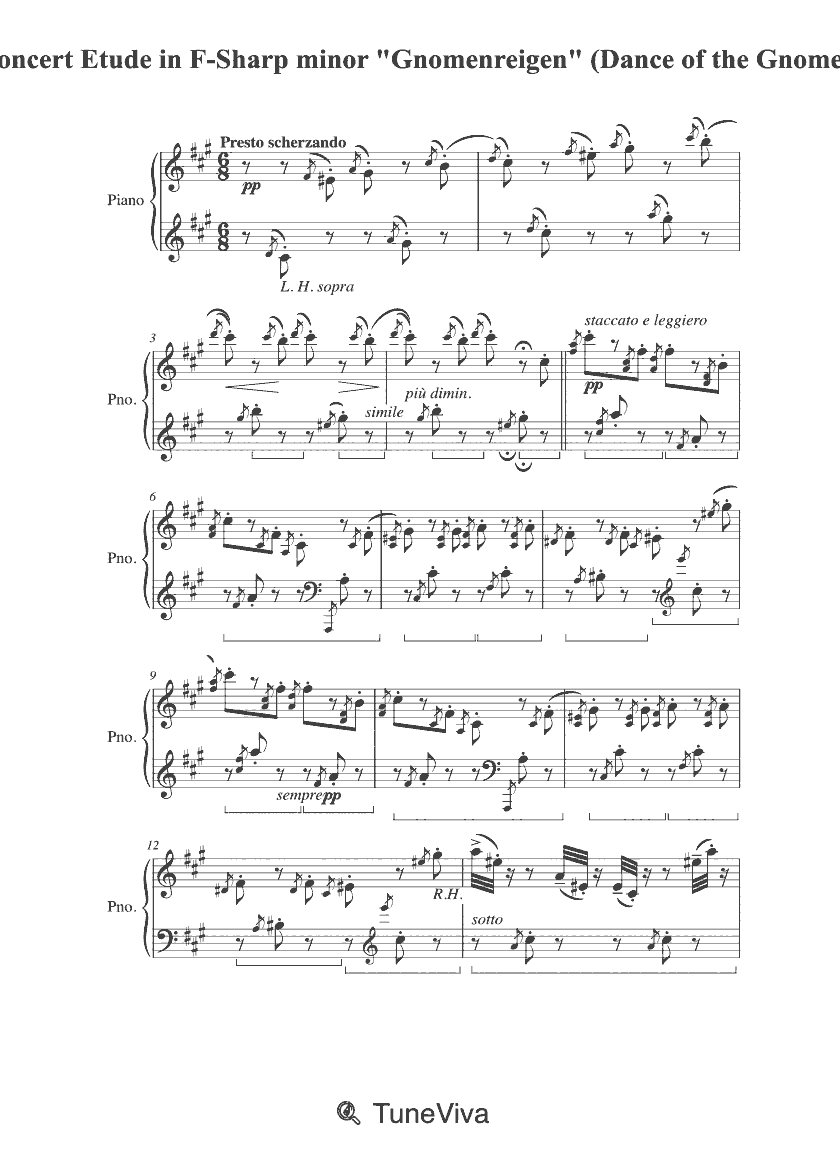
Franz Liszt
S. 145/2 Gnomenreigen
Piano · 1 min 25 sec
Open score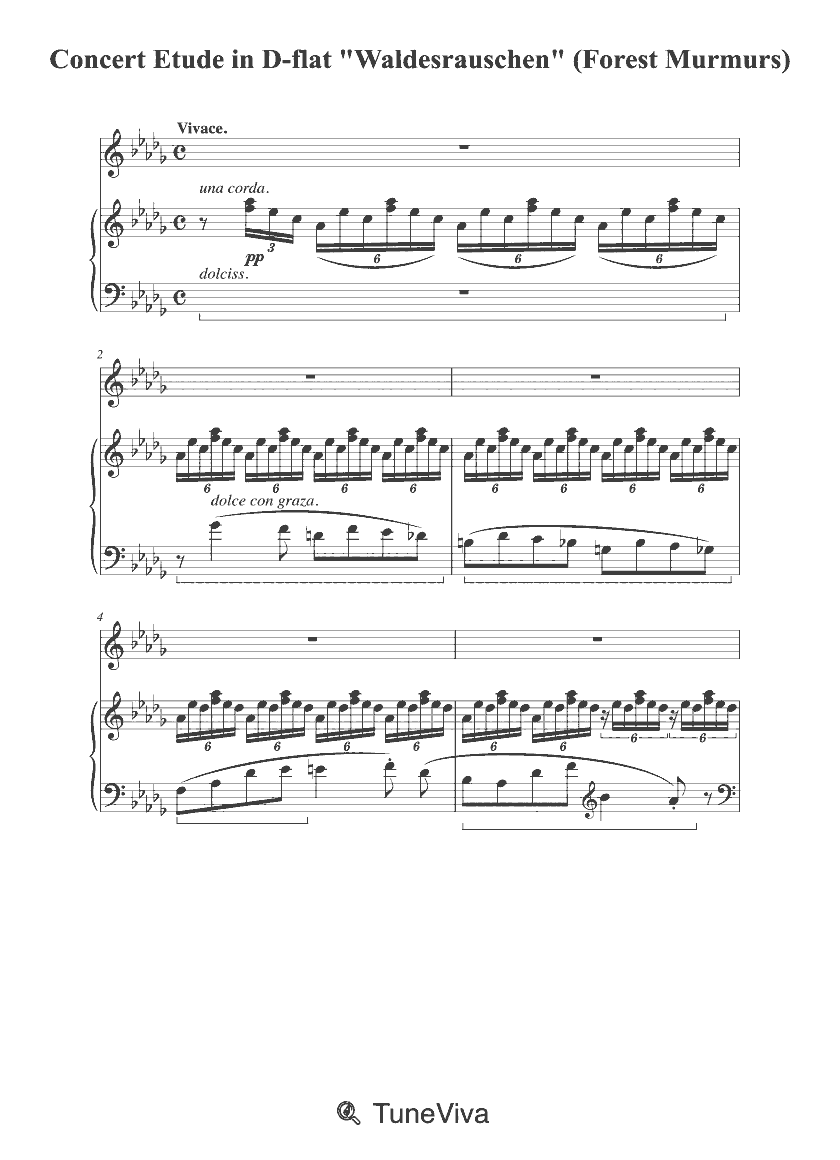
Franz Liszt
S. 145/1 Waldesrauschen
Piano · 3 min 5 sec
Open score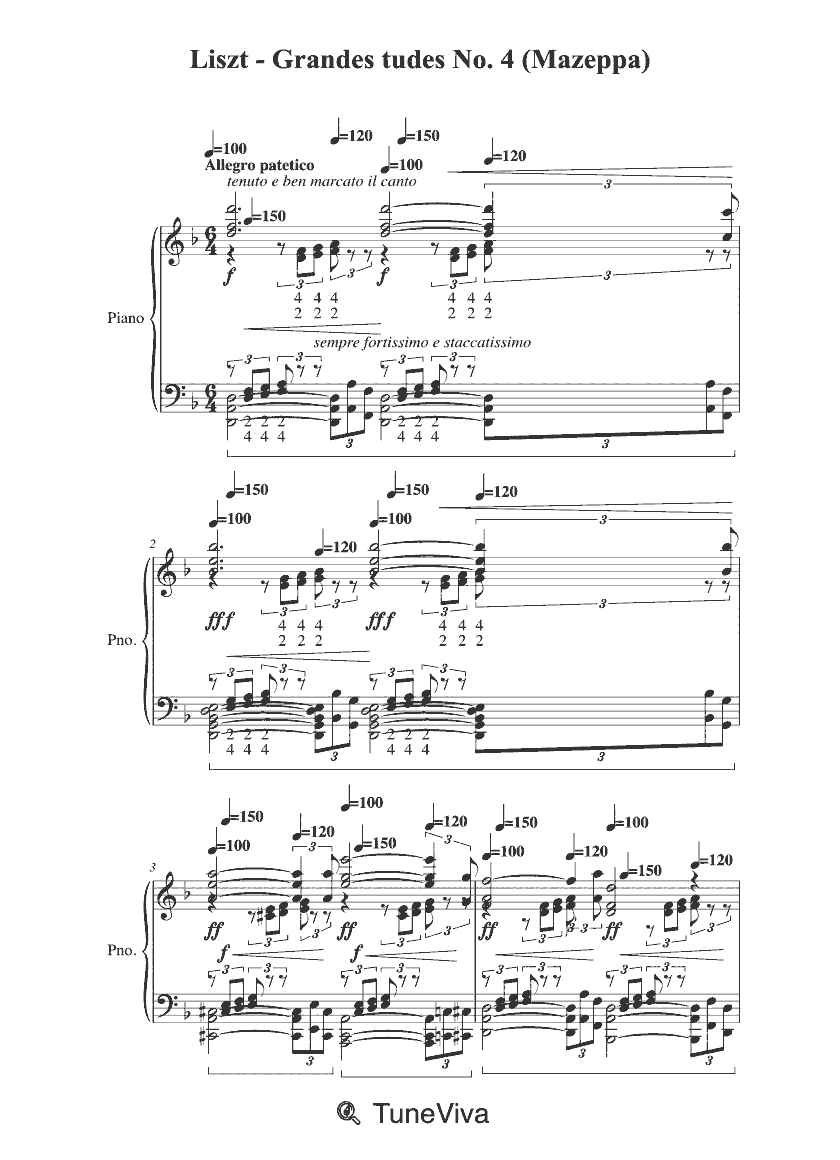
Franz Liszt
für Pianoforte.
Piano · 8 min 5 sec
Open score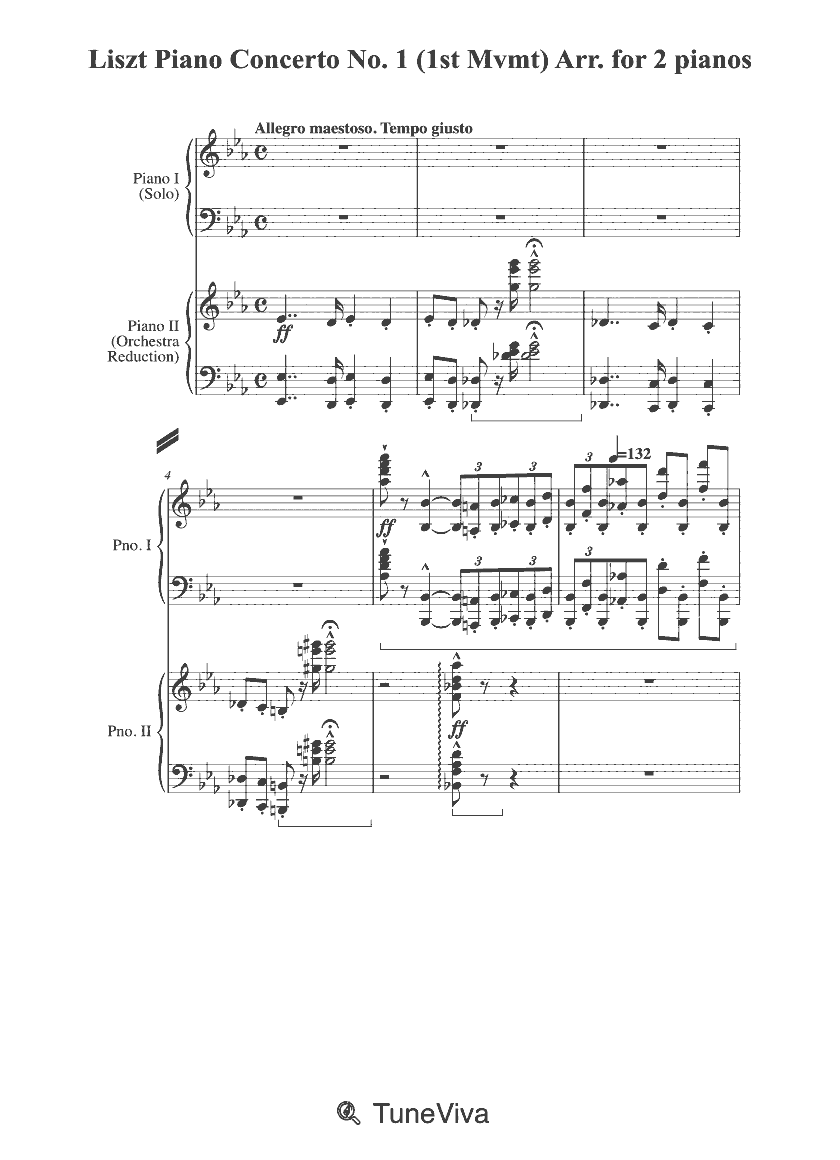
Franz Liszt
1st Movement
Piano I (Solo); Piano II (Orchestra Reduction) · 8 min 31 sec
Open score
Franz Liszt
S. 215/1
Piano · 2 min 29 sec
Open score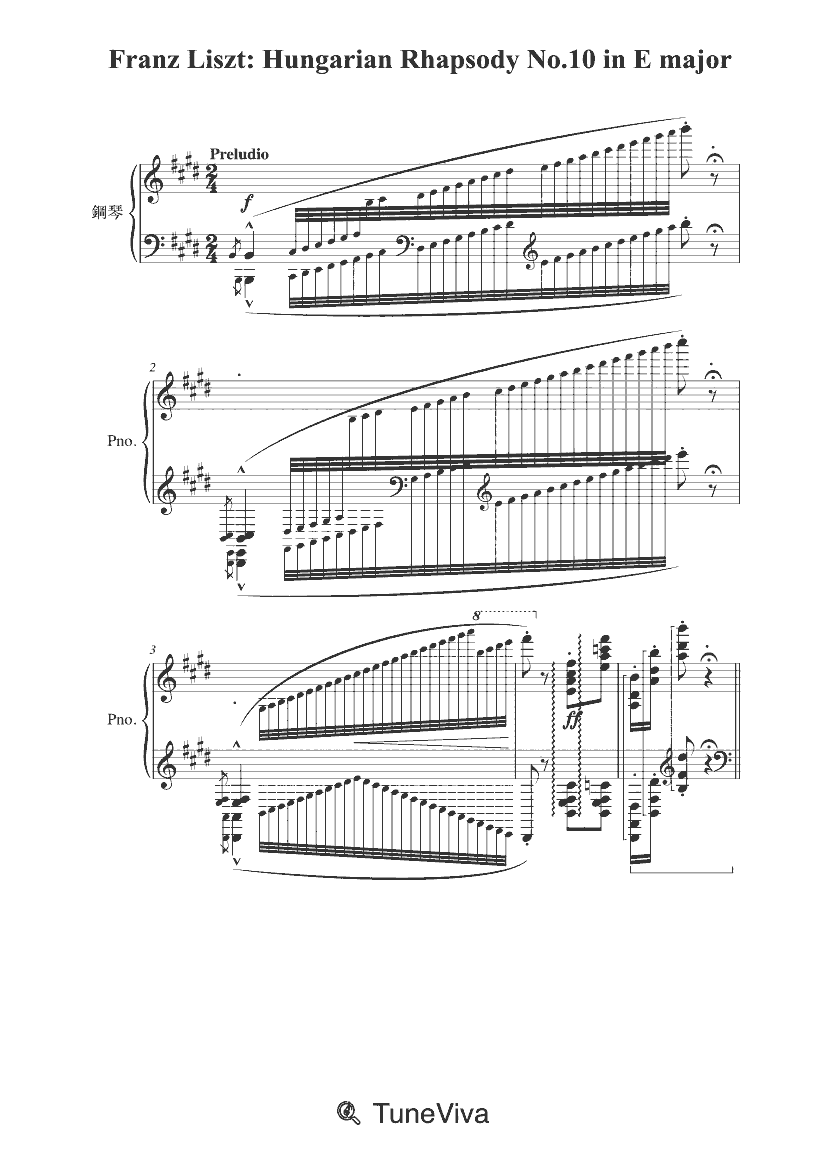
Franz Liszt
No. 10
鋼琴 · 3 min 37 sec
Open score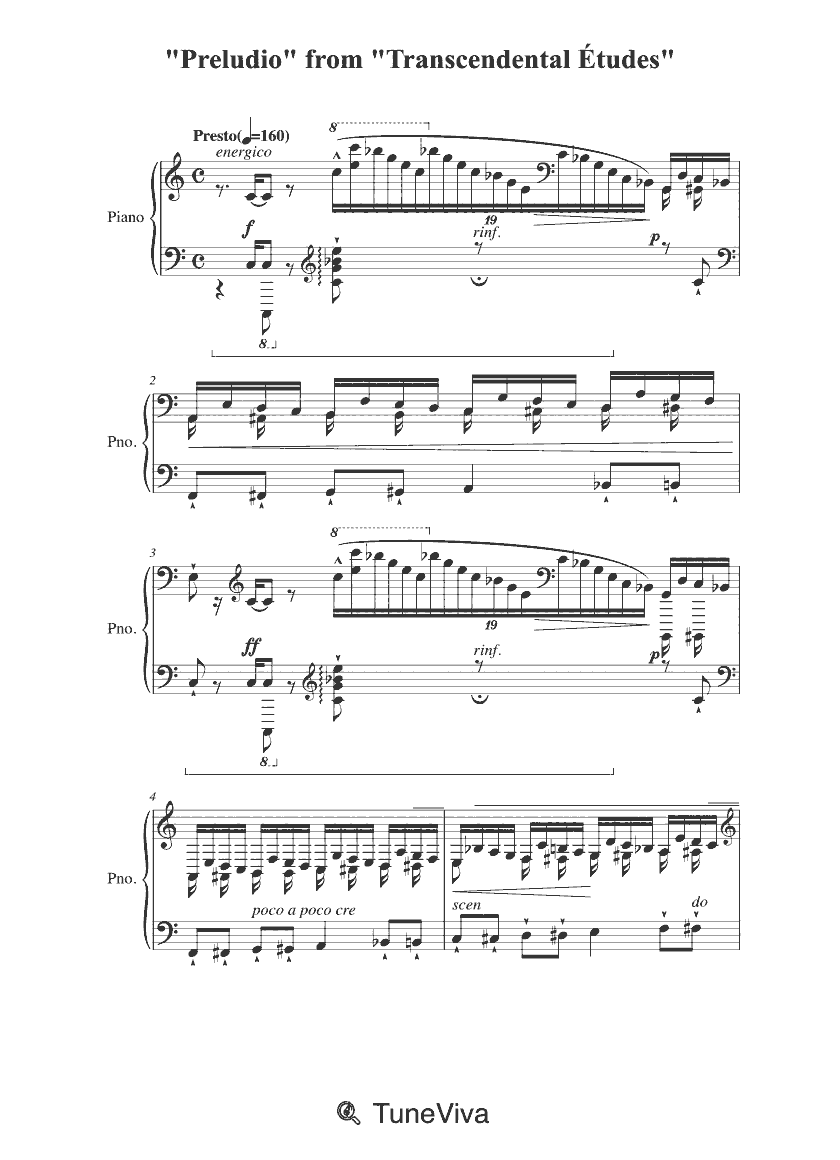
Franz Liszt
S. 139/1 Preludio
Piano · 42 sec
Open score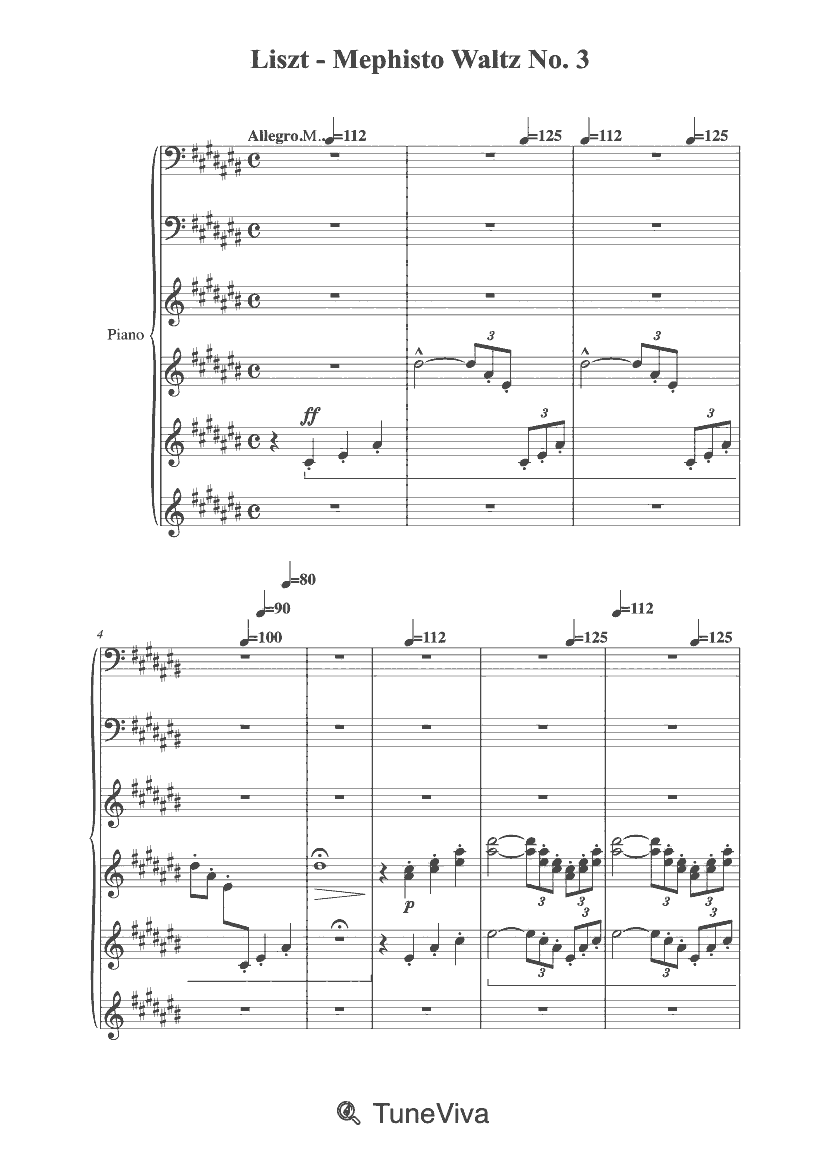
Franz Liszt
Frau Marie Jaell verehrungvoll gewidmet.
Piano · 5 min 14 sec
Open score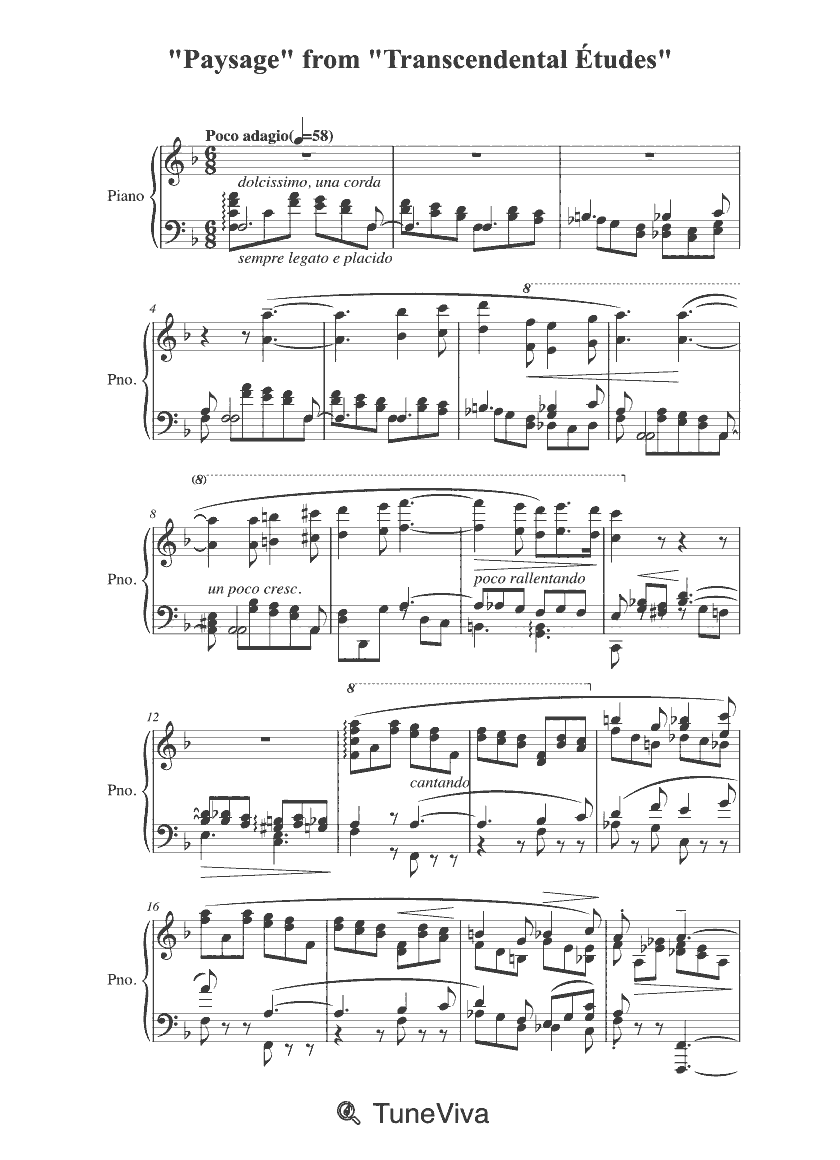
Franz Liszt
S. 139/3 Paysage
Piano · 4 min 7 sec
Open score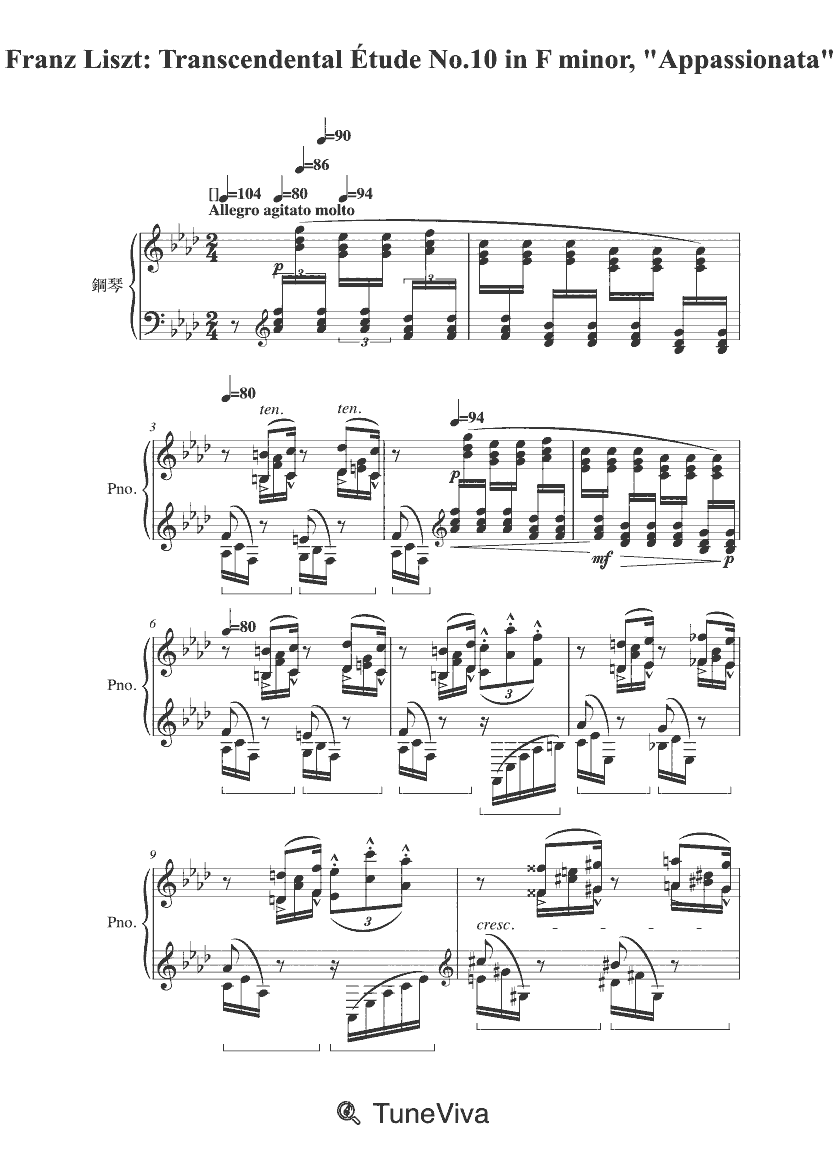
Franz Liszt
No. 10 Appassionata
鋼琴 · 3 min 55 sec
Open score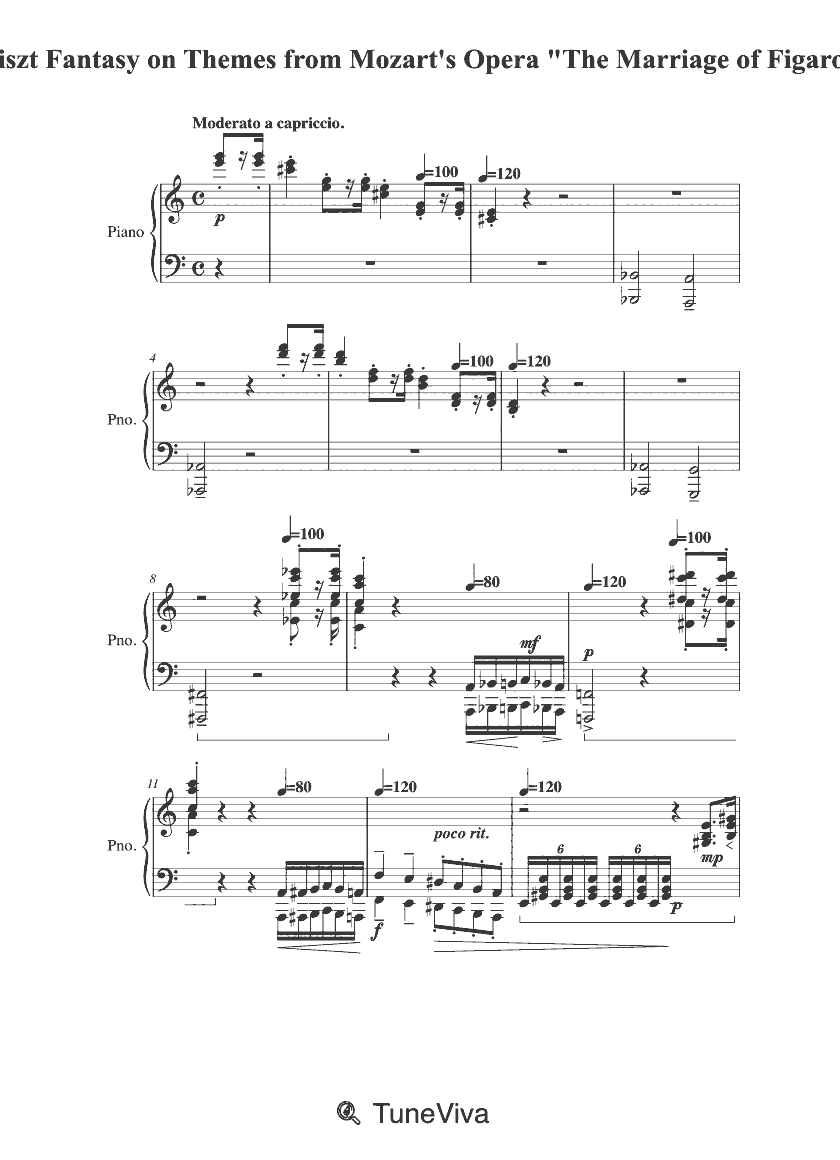
Franz Liszt
The Marriage of Figaro
Piano · 15 min 2 sec
Open scorePage 1 of 3
Liszt spent his twenties as a touring virtuoso and his later years as a conductor, teacher and abbé, and the catalogue leans on the piano music that made his name. The most-viewed file is Consolation No. 3, followed by no fewer than three entries for Liebestraum No. 3, the same A-flat nocturne filed under its German and French titles. Franz Liszt (1811–1886) was a Hungarian composer, virtuoso pianist, conductor and teacher of the Romantic period, and his piano music remains widely performed and recorded. This page brings together sheet music for works associated with him, from original piano compositions such as the Transcendental Études, Hungarian Rhapsodies and La Campanella to keyboard arrangements, including a concert paraphrase on Wagner's Tannhäuser overture. The selection is weighted toward piano music, but it mixes original works, extracts and arrangements, so check the title and scoring of each score before choosing.
Liszt was born on 22 October 1811 at Doborján in Sopron county, then part of the Kingdom of Hungary and now Raiding in Austria. He studied in Vienna with Czerny and Salieri, moved to Paris in 1823 and made his living as a pianist and teacher. From 1835 to 1839 he lived with Marie d'Agoult and had three children with her, including Cosima, later Wagner's wife. After a decade of touring he became Kapellmeister at Weimar in 1848, took minor orders in Rome in 1865 and died in Bayreuth on 31 July 1886.
The works on this page span most of that career. The Transcendental Études reached their final form in 1851, with Mazeppa fourth in the set; the Grandes études de Paganini of the same year contain La Campanella. The Consolations were published in 1850, the Hungarian Rhapsodies from 1851, and the Tannhäuser overture paraphrase in 1848, the year Liszt settled in Weimar. The two Concert Études, Waldesrauschen and Gnomenreigen, come from about 1862-63 and are dedicated to Dionys Pruckner.
The catalogue reflects a pianist-composer rather than a conductor. Apart from a handful of sacred choral pieces, everything is keyboard music, and several files are arrangements: the Hungarian Fantasy and the First Piano Concerto appear here for two pianos. The high difficulty count is not an accident of tagging, because the octave passages, cadenzas and repeated-note textures in the rhapsodies and études are genuinely demanding.
Start with the original piano works: Liszt is best known today for original piano works such as the Hungarian Rhapsodies, Années de pèlerinage, Transcendental Études, La Campanella and the Piano Sonata in B minor. In this selection, titles such as Hungarian Rhapsody No. 2 and La Campanella point to that core repertoire. These are useful starting points if you want Liszt as composer rather than as arranger, though the selection also contains extracts and versions that may not represent a complete work.
Separate originals from transcriptions and paraphrases: Liszt was the first to apply the terms “transcription” and “paraphrase” to music, and he performed arrangements of his contemporaries' works to popularise them. A title that names another composer or work, such as the Concert Paraphrase on Wagner's Tannhäuser Overture, signals an arrangement rather than an original Liszt piano piece. Read the title and scoring carefully before treating any score as an original composition.
Choose the version of the Transcendental Études: The Transcendental Études, S.139, are twelve piano compositions published in 1852 as a revision of an 1837 set, which itself grew from studies written in 1826. The fourth étude was altered and published alone as Mazeppa in late 1846 before the complete S.139 collection appeared. If you need a particular version, look for the S.139 final set or the earlier S.137 Douze Grandes Études; a score titled simply “Mazeppa” may be the separately published extract rather than the whole cycle.
Difficulty and keyboard: Liszt's études were studies, and their technical demands differ across versions. In revising the final Transcendental Études, Liszt made textual changes that adapted the technical demands to pianos with heavier keyboard action; the 1826 exercises behind the set were not particularly demanding compared with their later counterparts. Rather than assuming one fixed difficulty level, compare the version, the edition and the passages in the score itself.
The catalogue holds the same A-flat nocturne under three titles, including 'Liebestrume No. 3' and 'Nocturne n°3 Rêve d'Amour'. Only one of them is listed in the notable works above.
It refers to the catalogue of Liszt's works compiled by Humphrey Searle, which is organised by genre rather than by date. Consolation No. 3, for example, is S. 172.
Most are, but the First Piano Concerto and the Hungarian Fantasy appear here as two-piano arrangements, and some études are presented in revised or simplified editions.
Franz Liszt is best known today for original piano works such as the Hungarian Rhapsodies, Années de pèlerinage, Transcendental Études, La Campanella and the Piano Sonata in B minor. These works sit alongside his transcriptions and paraphrases of other composers' music, which he used to promote their music.
Liszt was the first to apply the terms “transcription” and “paraphrase” to music and performed arrangements of his contemporaries' works to popularise them. He was also a friend, promoter and benefactor to composers including Berlioz, Chopin, Schumann, Clara Schumann and Wagner.
The Transcendental Études, S.139, were published in 1852 as a revision of an 1837 set, which in turn grew from studies written in 1826. The earlier Douze Grandes Études, S.137, were published in 1840, and the fourth piece of the final set was also published separately as Mazeppa in late 1846.
Mazeppa is the fourth of the Transcendental Études, and Liszt altered it and published it alone in late 1846 before the complete S.139 collection appeared in 1852. A score titled “Mazeppa” may therefore be the separate extract rather than the full twelve-étude cycle.
In revising the set for publication in 1852, Liszt made textual changes that adapted the technical demands to pianos with heavier keyboard action. He also added programmatic titles in French and German to all but two of the études, Nos. 2 and 10, and dedicated the collection to Carl Czerny.
Liszt originally planned 24 études, one in each major and minor key, but completed twelve that use neutral and flat key signatures. Sergei Lyapunov later wrote a set of Douze études d'exécution transcendante, Op. 11, to continue the cycle through the sharp keys Liszt had not used.
Liszt was a friend, musical promoter and benefactor to Richard Wagner, and both were prominent representatives of the New German School. Liszt's concert paraphrase of Wagner's Tannhäuser overture is one example in this selection of his keyboard arrangements of a contemporary's music.