classical
1 tracks
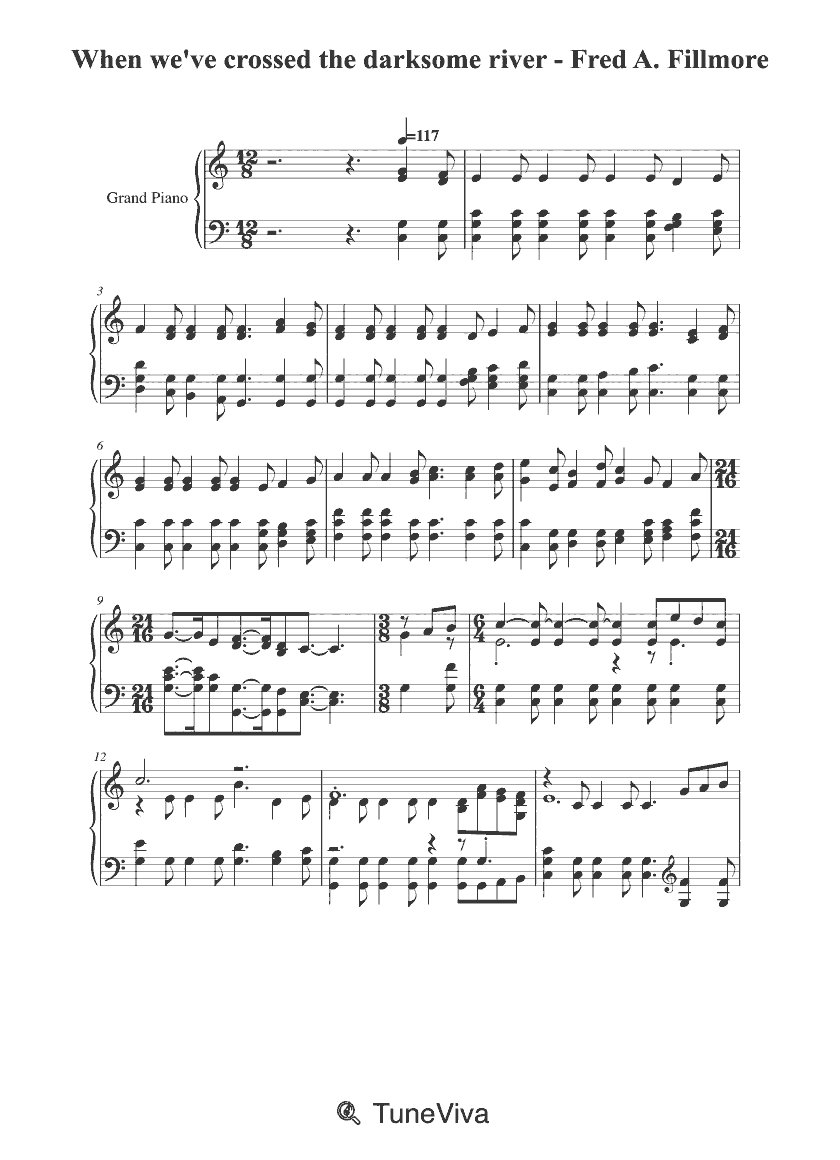
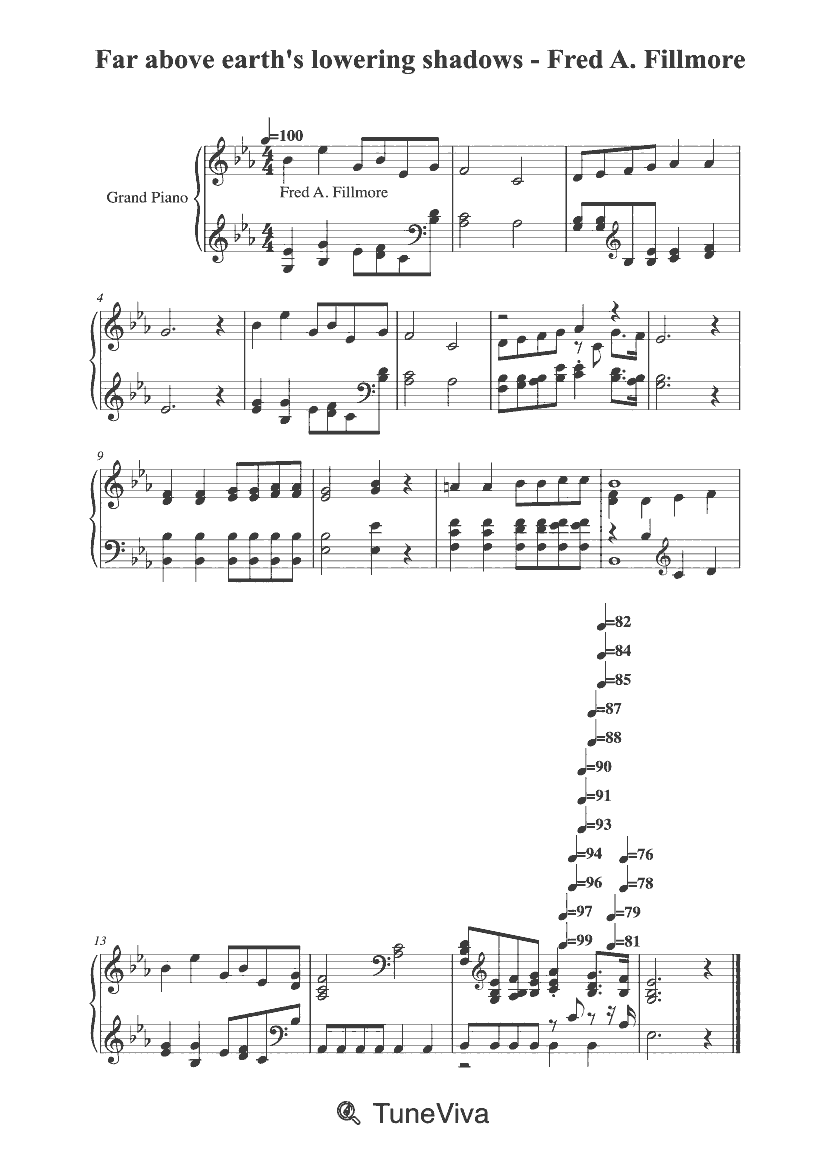
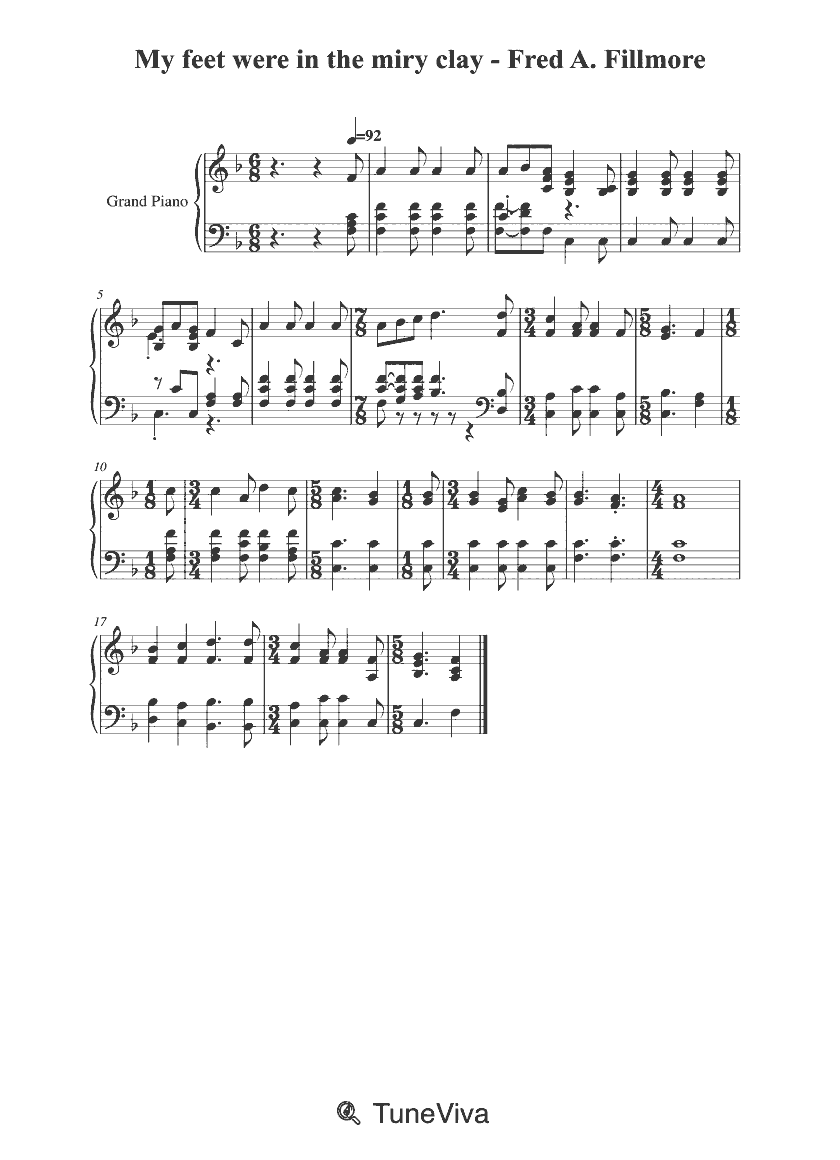
Fred A. Fillmore spent his working life inside a Cincinnati publishing house, and the catalogue reflects it: 21 scores, about 12 minutes of music and 5,827 notated notes. Eight entries carry lyrics, which is what a gospel-song composer would lead you to expect.
The most-viewed title is O Scatter Seeds of Loving Deeds, the hymn better known as Seeds of Promise, followed by What the Lord Has Done for Me. Around them sit Sunday-school pieces and invitation hymns, nearly all of them indexed by first line rather than by tune name.
Fillmore was born in Paris, Illinois, on 15 May 1856, and grew up in Cincinnati, a son of Augustus Damon Fillmore and Hannah Maria Lockwood. His father ran a music business in the city, and after Augustus died in 1870 the firm passed to his sons. Fred and his elder brother James Henry Fillmore built it into the Fillmore Music House, issuing church hymnals and Sunday-school books and later band and orchestral music. Fred served as vice-president and house composer, credited with more than 200 hymns and the editing of two hymnals in the firm's catalogue.
He was a temperance man as well as a hymn writer. He contributed to Fillmore's Prohibition Songs, a 224-page collection issued for prohibitionist meetings, and stood unsuccessfully for the Ohio state legislature on the Prohibition ticket in 1910. He died on 16 November 1925 at Terrace Park, Ohio, after an operation, survived by his wife Laura and four children.
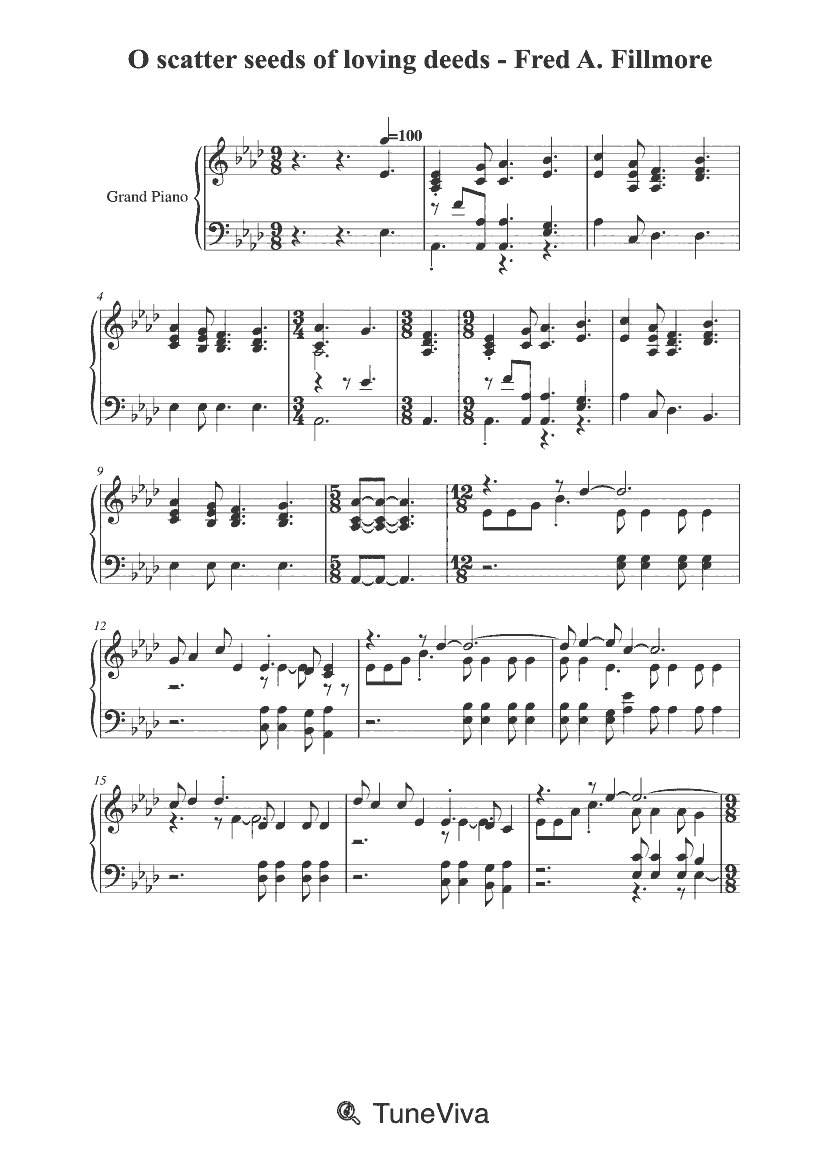
His best-known piece is Seeds of Promise, written with the lyricist Jessie H. Brown and published in 1923, two years before his death; it appeared under its opening line, O Scatter Seeds of Loving Deeds. Most other titles here are first lines too, which is how gospel-song books indexed their contents. The 21 entries run from complexity index 0 to 2, with nine at the busiest level: short pieces, but not all of them plain.
These are strophic gospel songs, built for a congregation rather than a recital platform: a square four-part harmonisation under a verse, then a refrain that repeats word for word. Keep the tempo brisker than the notation suggests, because the words carry the momentum and a slow account of a four-line chorus soon sags. The tenor line is usually the most interesting inner part, so bring it out in the refrain. Check the repeat signs before you start, since some files write the chorus out in full and others rely on a dal segno.
The most-viewed score on the page and the piece Fillmore was known for: published in 1923 as Seeds of Promise, with words by Jessie H. Brown.
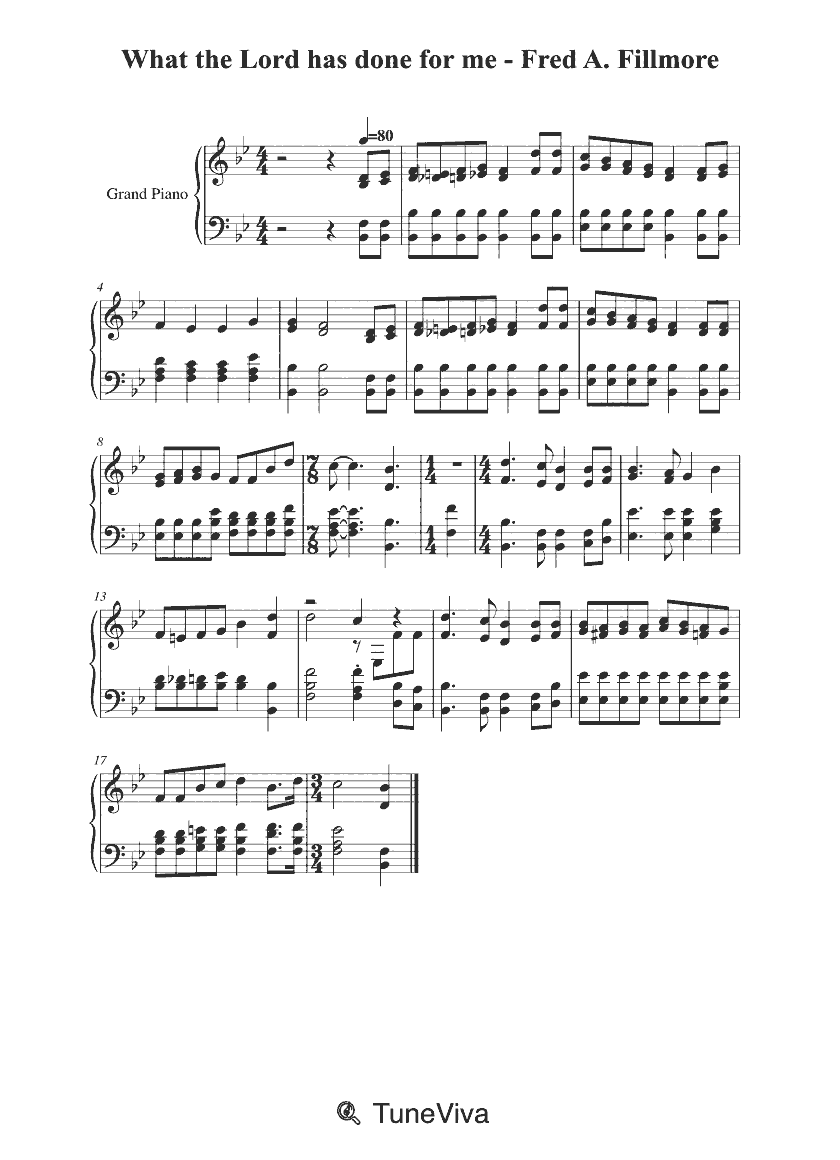
A testimony hymn built on a repeated personal refrain, the second most-viewed entry in the collection.
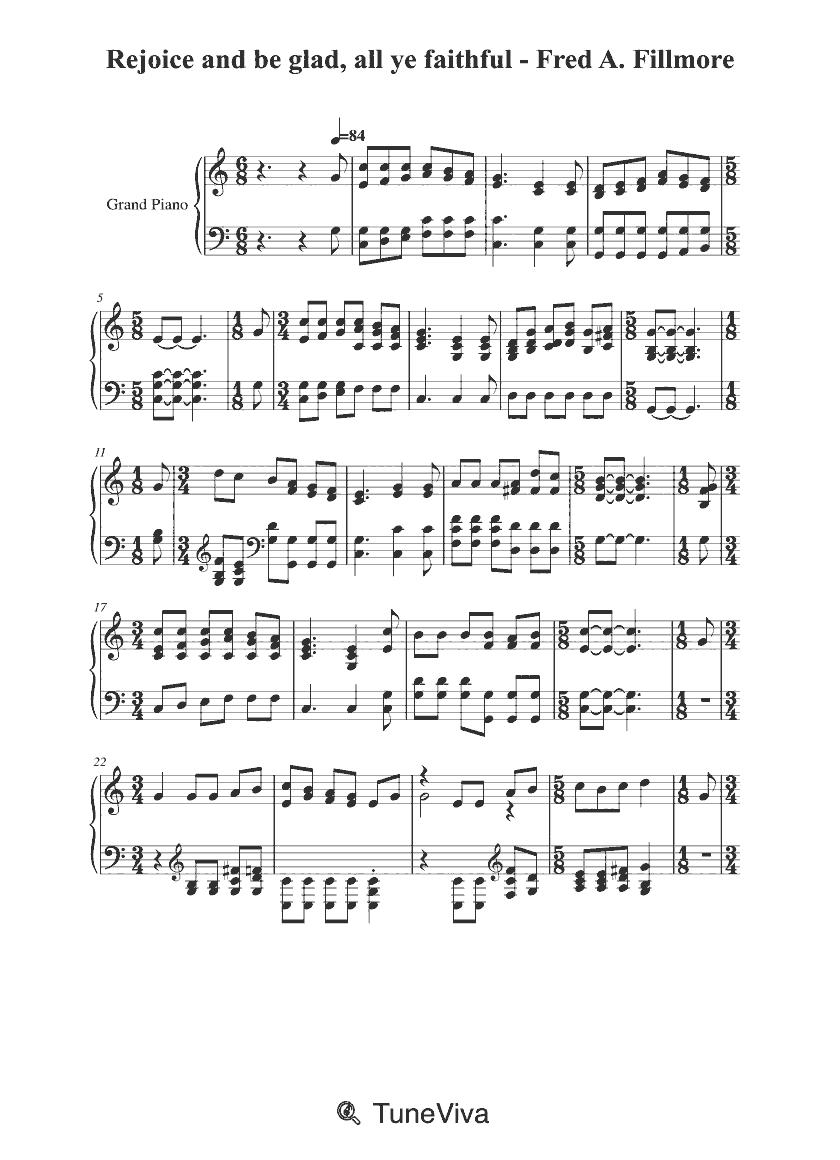
An opening hymn of praise, and one of the few titles here that begins with an invitation rather than a personal pronoun.
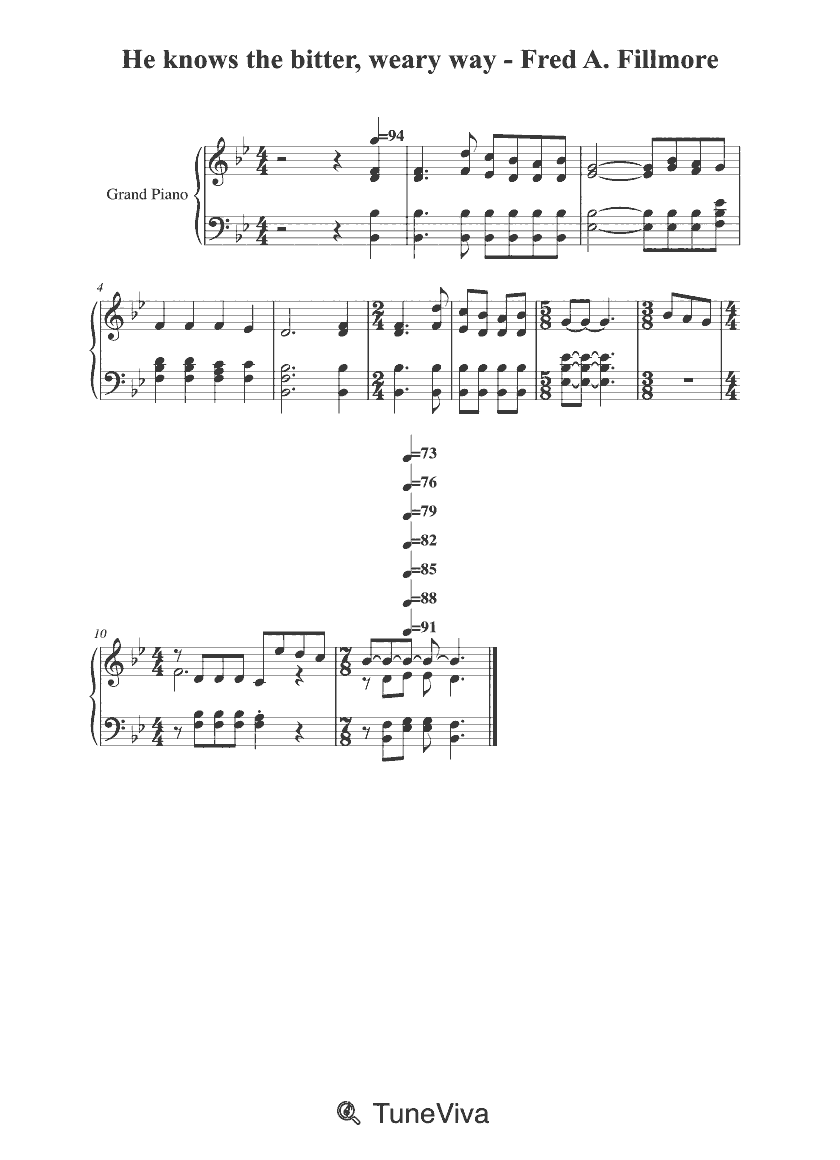
A consolation hymn whose first line carries the whole argument of the text; the file gives no author for the words.
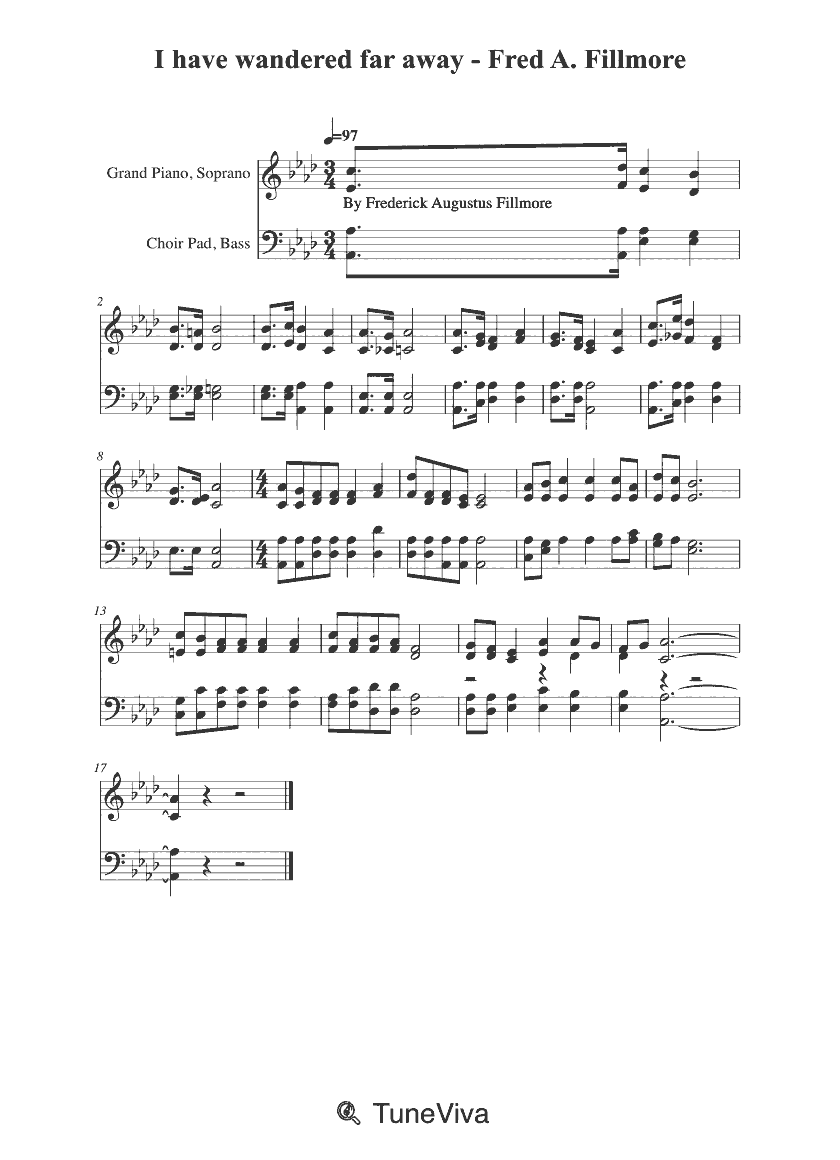
One of several prodigal-and-return texts in the collection, titled by its opening line alone.
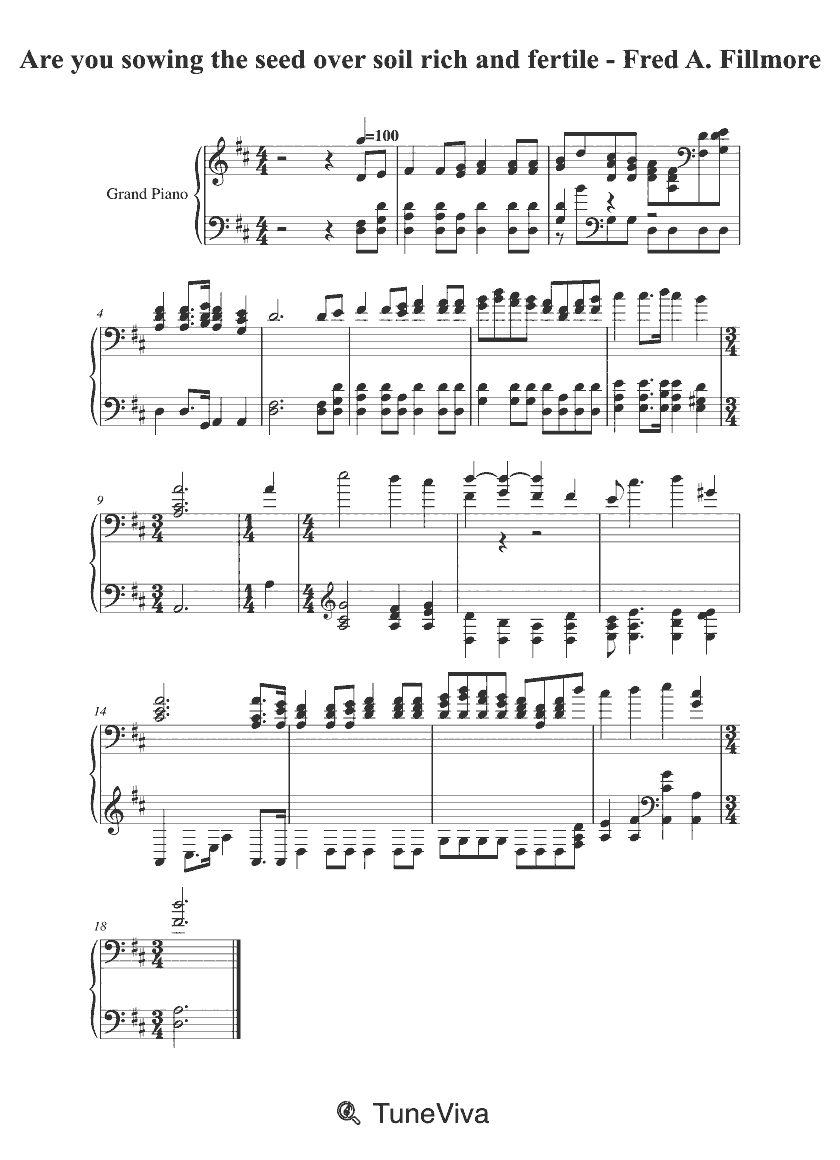
A Sunday-school sowing hymn, titled here by its full opening line rather than by a tune name.
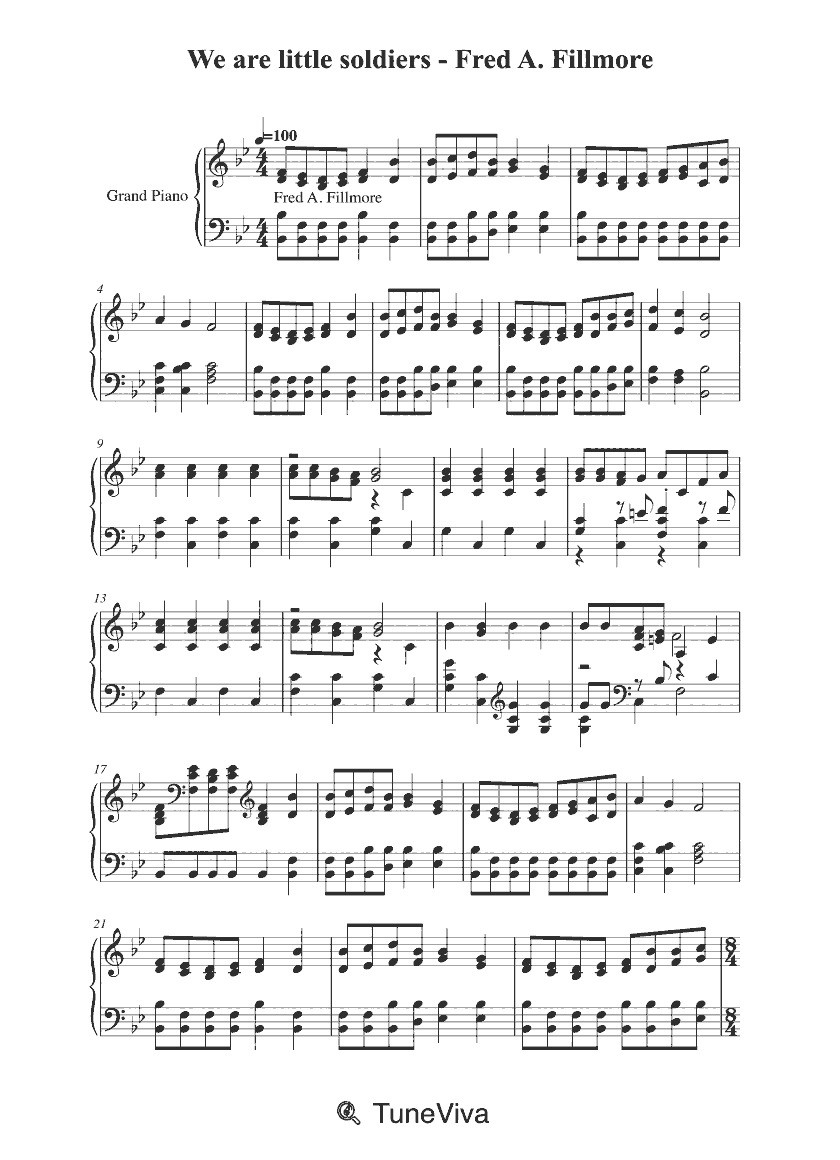
A children's march, the kind of number the Fillmore firm placed in its young people's collections.
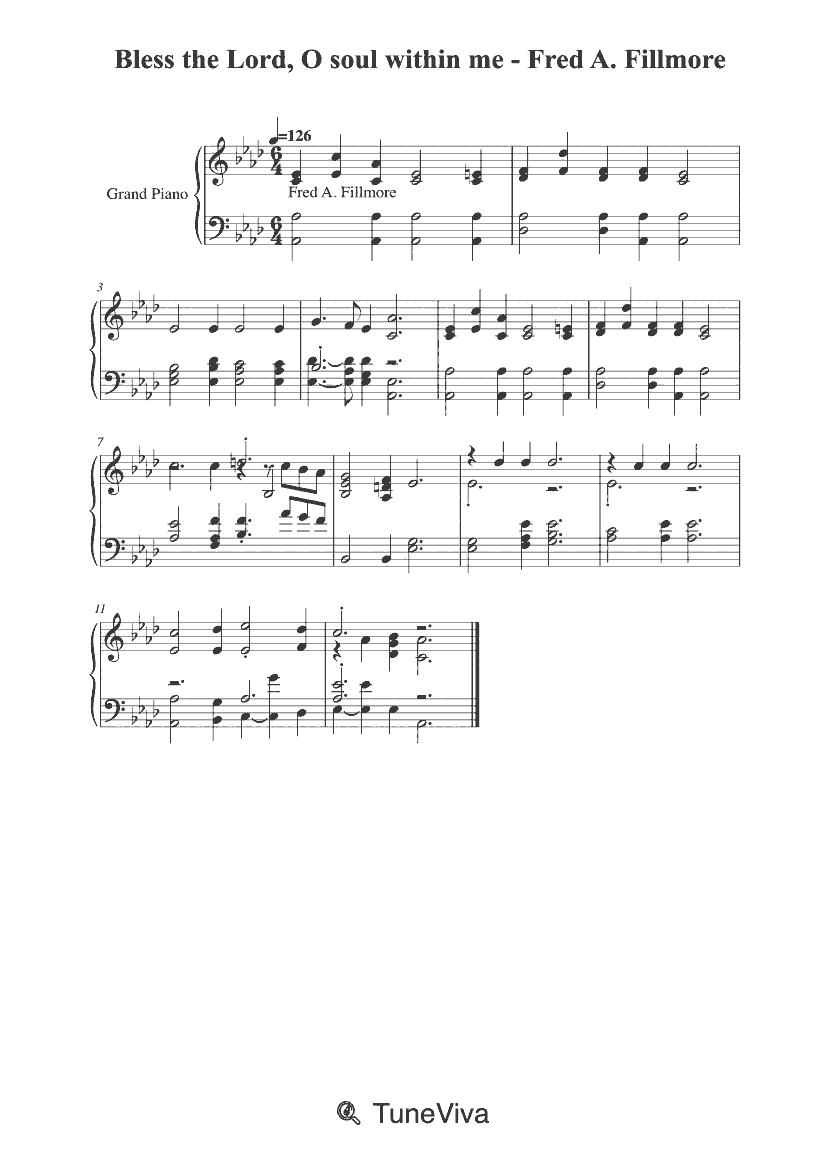
A paraphrase of Psalm 103's self-address, one of the few psalm texts in the collection.
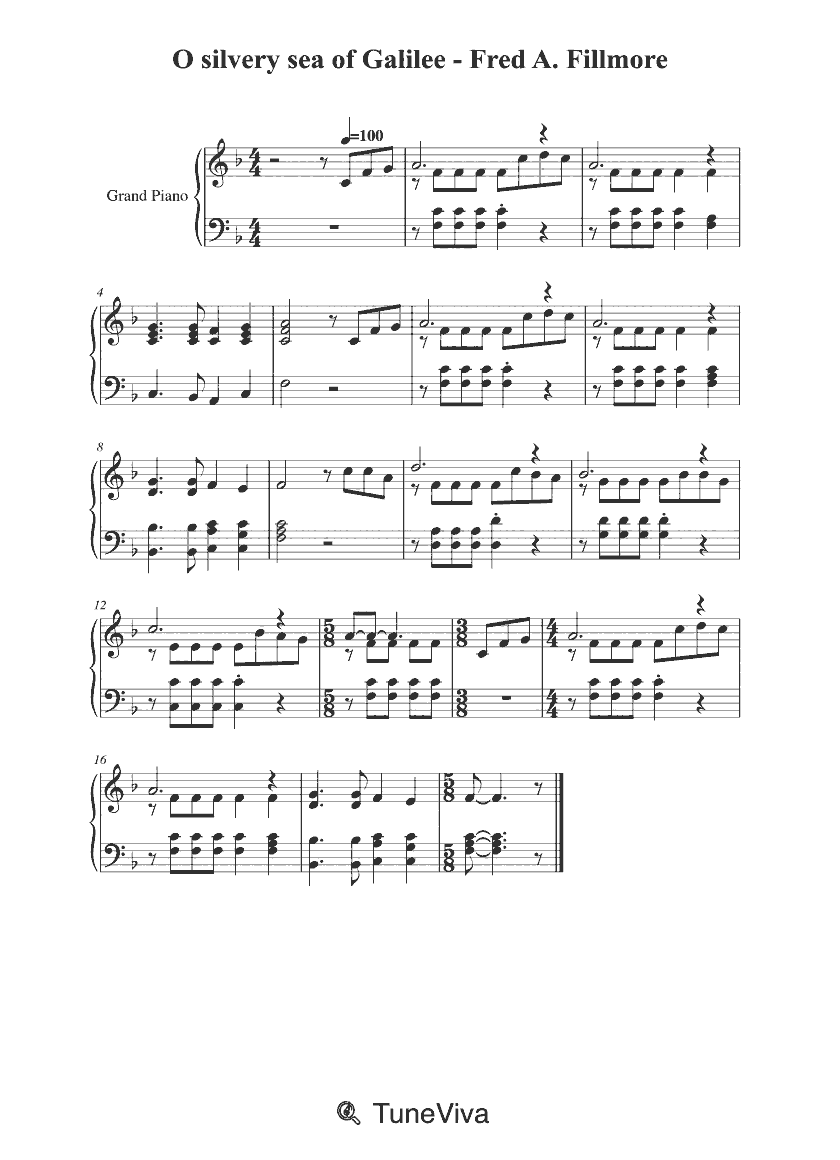
A Gospel narrative piece on the Sea of Galilee, among the calmer entries in the collection.
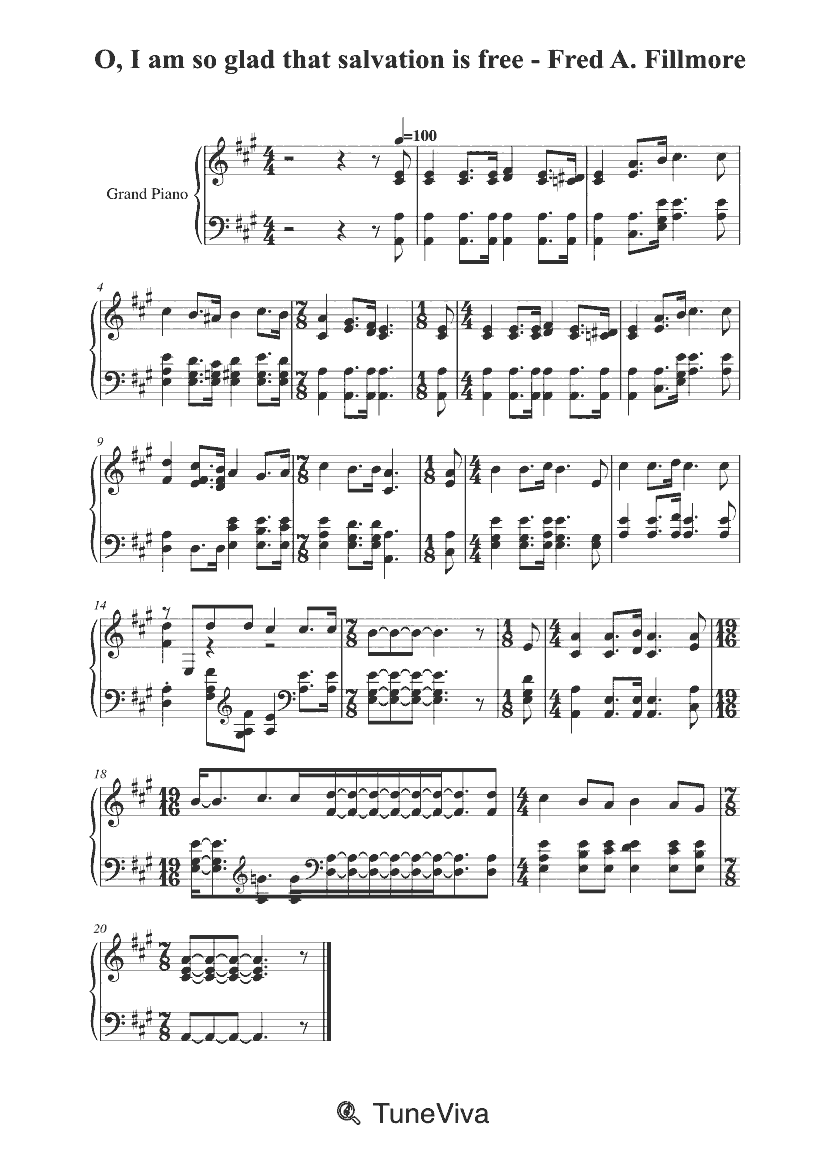
A brisk assurance chorus with a repeated refrain; one of eight files carrying lyrics.
There are 21, running to about 12 minutes of music and 5,827 notated notes. Eight of them include lyrics.
Yes. The hymnals use the shortened form, and the catalogue also holds a separate entry under the full name; the two pages describe one Cincinnati composer and publisher.
The 1923 hymn whose first line is O Scatter Seeds of Loving Deeds, written with Jessie H. Brown. Hymnary records it in 59 hymnals, which made it the best-known piece of Fillmore's last years.
Mostly not. The complexity index measures notation density rather than difficulty, and with two entries at 0, ten at 1 and nine at 2 the page is largely simple part-writing, with a handful of busier accompaniments.
Catalog editions and arrangements attributed to Fred A. Fillmore.