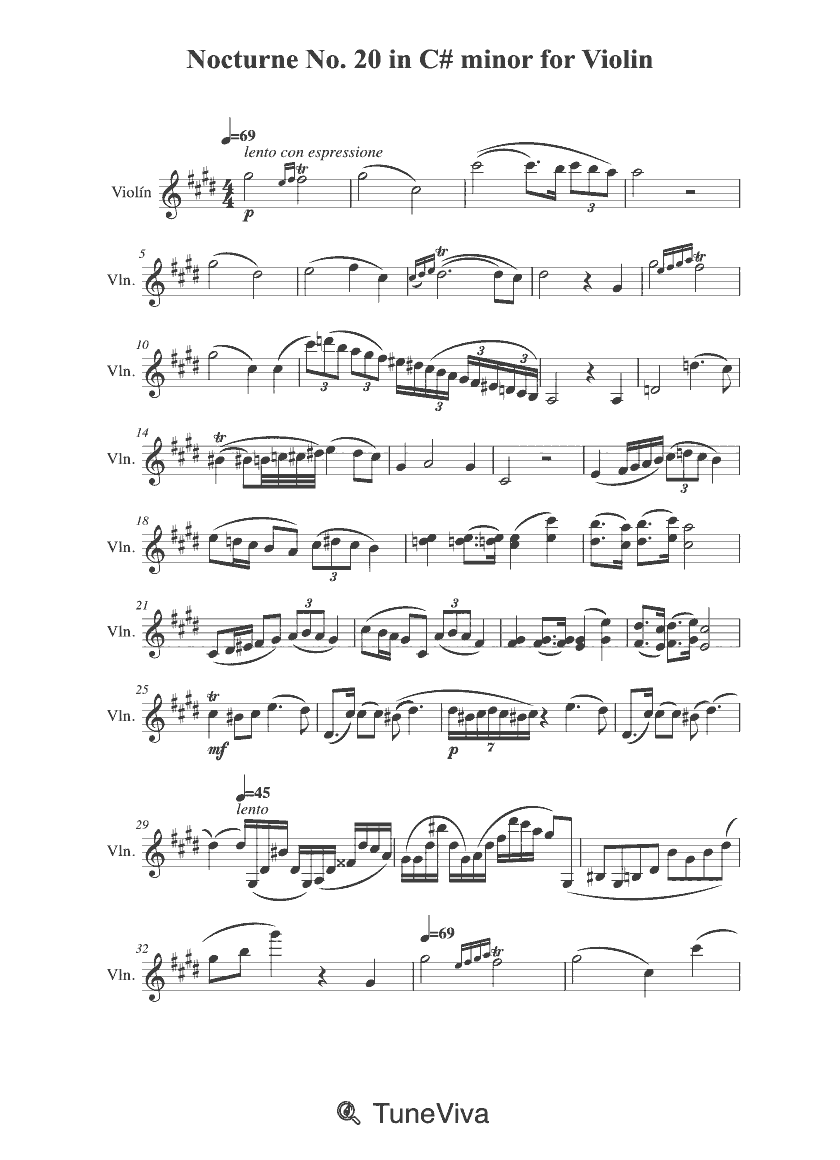
Nocturne No. 20 in C# minor for Violin
Frédéric Chopin
in C-sharp minor
Violín · 2 min 11 sec
Open score
170 Chopin scores to preview and download: the C-sharp minor Nocturne, the G minor and F minor Ballades, the E minor Prelude and the famous Minute Waltz.
The most-viewed score on the page: the posthumous C-sharp minor Nocturne, B.49, set here for violin and piano rather than solo keyboard.
Completed in Paris in 1835, the first of the four ballades and the one that established the genre as an instrumental form.
A slow melody over chromatically descending block chords, played on the organ at Chopin's funeral in 1849.
Published in 1837 and, with Op. 9 No. 2, one of the two nocturnes that stayed in the recital repertoire.
A simplified keyboard setting of the E-flat nocturne from the 1832 set, for players not yet ready for the original.
The B minor waltz, written in 1829 and published in Kraków in 1852, three years after the composer's death.
The F minor ballade of 1842, the most contrapuntal of the set and the hardest to bring off in performance.
A late manuscript headed Sostenuto rather than Tempo di valse, not printed until 1955.
The D-flat waltz of 1847, published as the first of Op. 64; the little dog of the French title is traditionally George Sand's Marquis.
From the second book of études, published in 1837 and dedicated to Marie d'Agoult, built on deliberate semitone clashes.
For a nocturne, check the key and opus or work number, then read the accompanying hand through an ornament or change of register. For a shorter contrast, choose the E-minor Prelude and listen to the changes underneath its slowly moving line. In an arrangement for violin or another solo instrument, check whether the original piano accompaniment is included before preparing it with another player.
Compare the instrument and arrangement details below, then open a score to check the notation. Different entries may be arrangements or editions of the same work; available playback tools are shown on each score page.
Frédéric Chopin
in C-sharp minor
Violín · 2 min 11 sec
Open score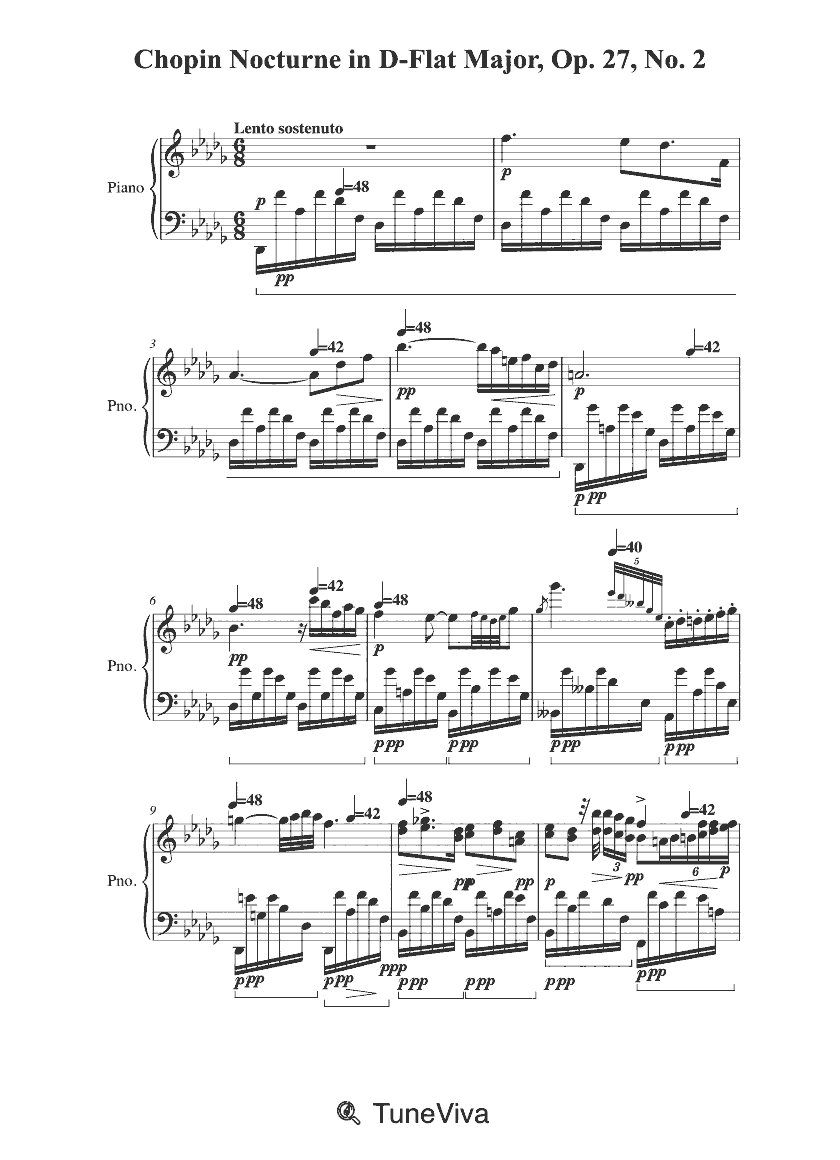
Frédéric Chopin
Op. 27 No. 2
Piano · 3 min 55 sec
Open score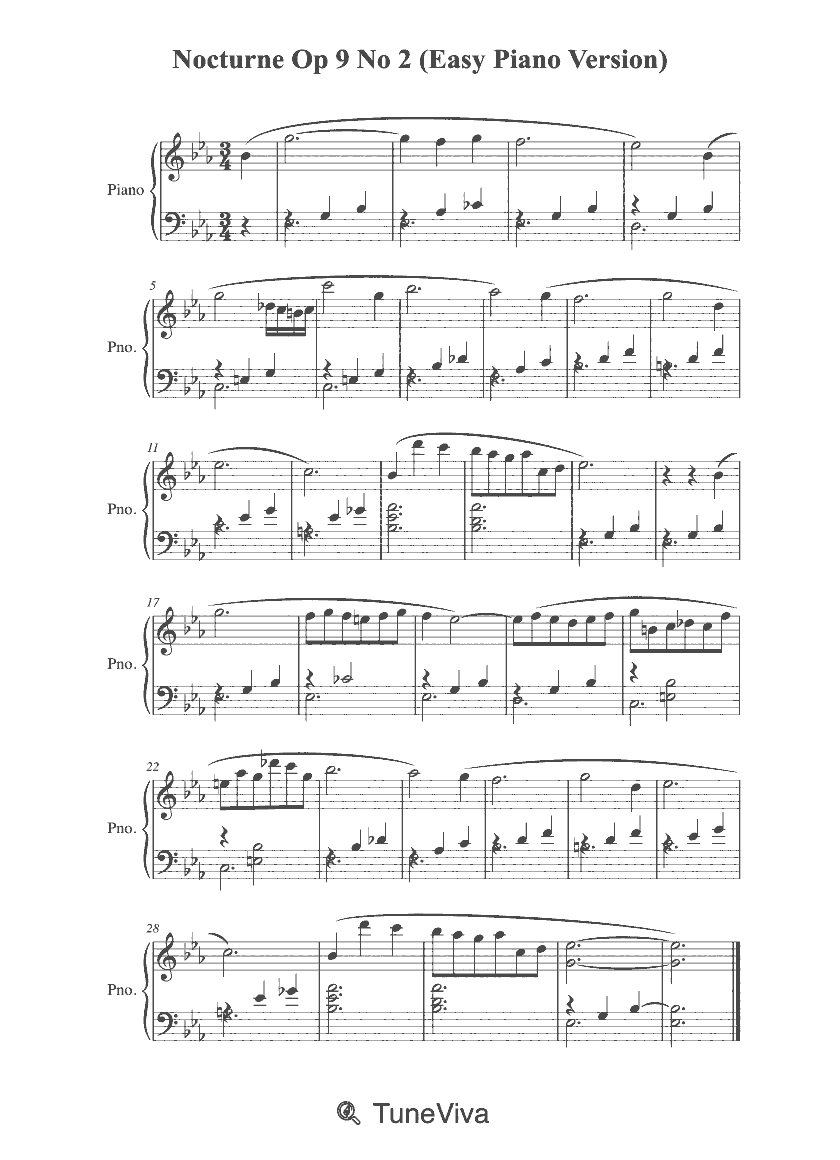
Frédéric Chopin
Easy Piano Version
Piano · 1 min 29 sec
Open score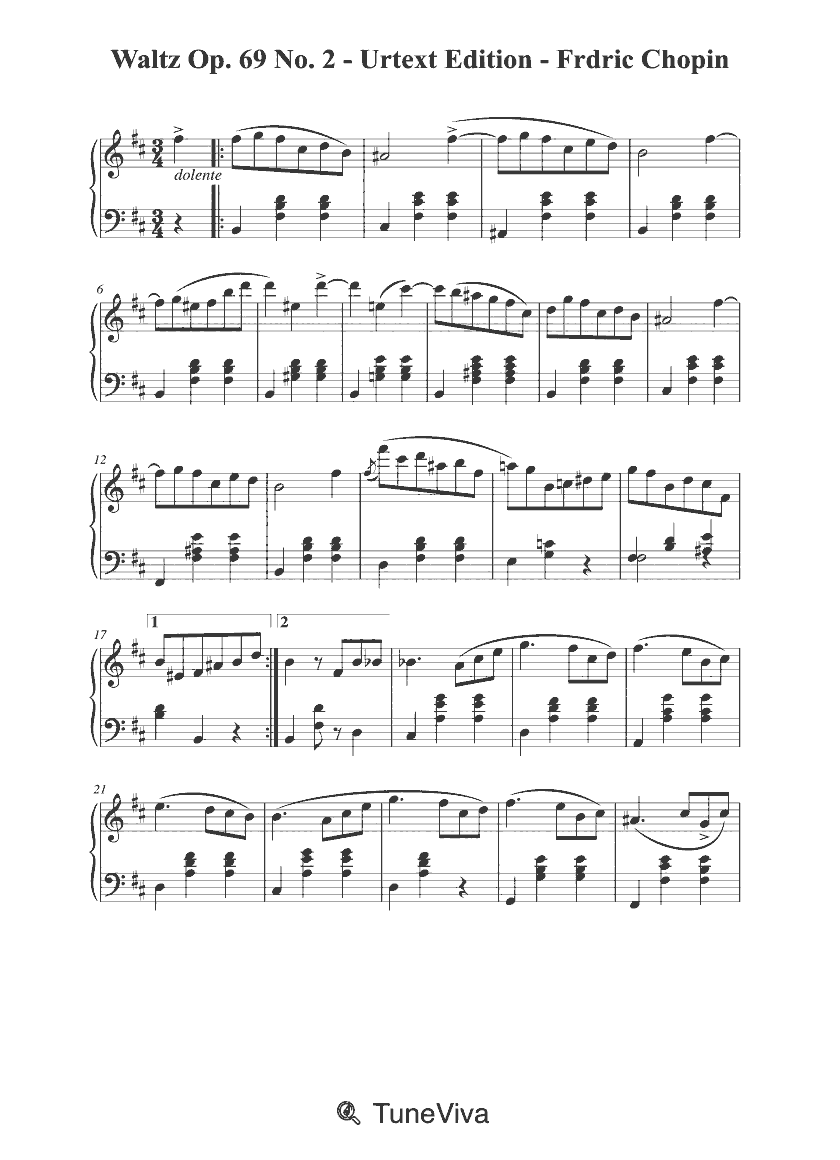
Frédéric Chopin
Piano · 4 min 34 sec
Open score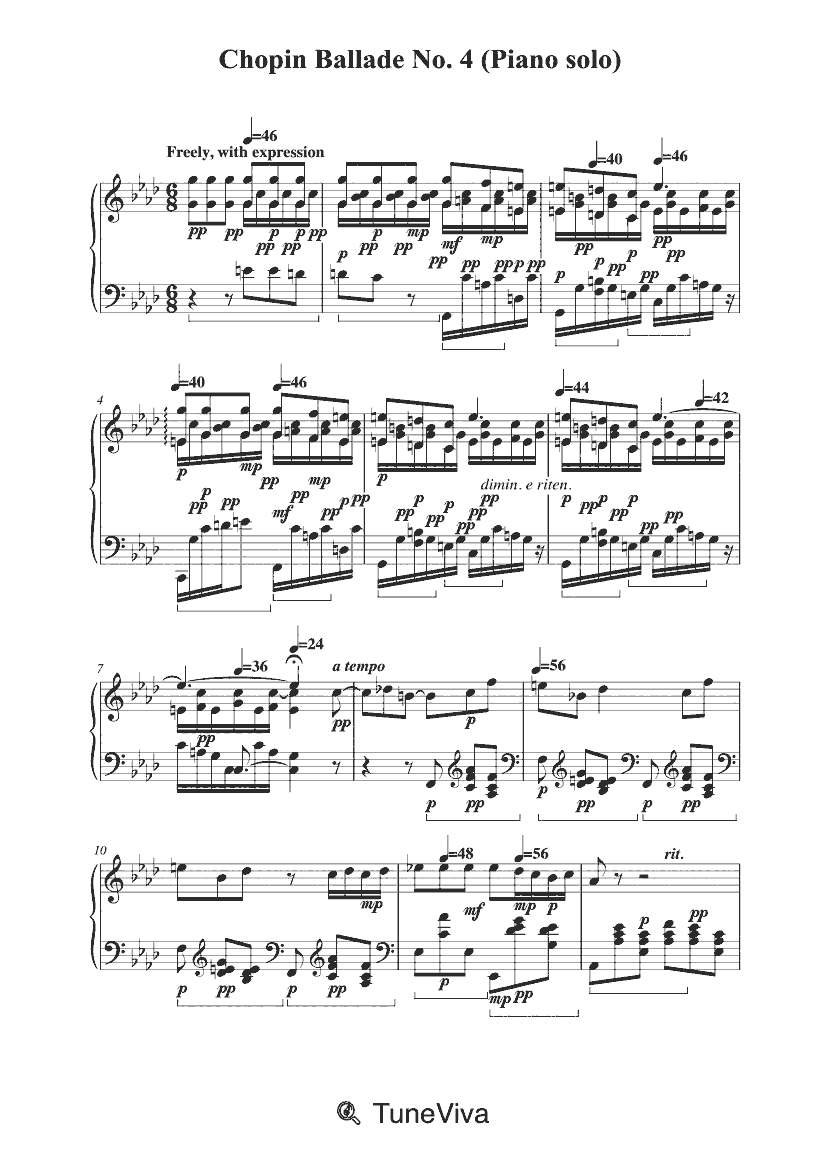
Frédéric Chopin
Op. 52
Piano · 6 min 53 sec
Open score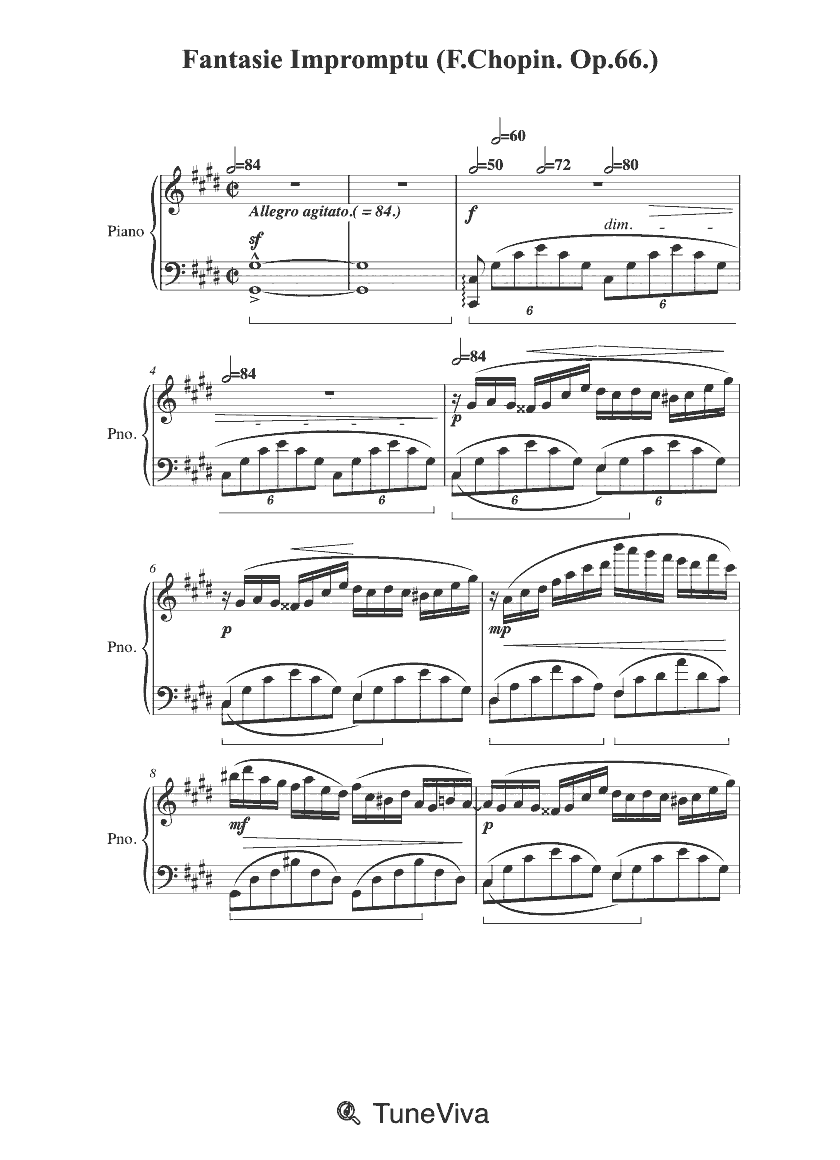
Frédéric Chopin
(Ouvre posthume.Vers 1834.)(Op.66.)(Pubulé par J . Fontana)
Piano · 15 min 28 sec
Open score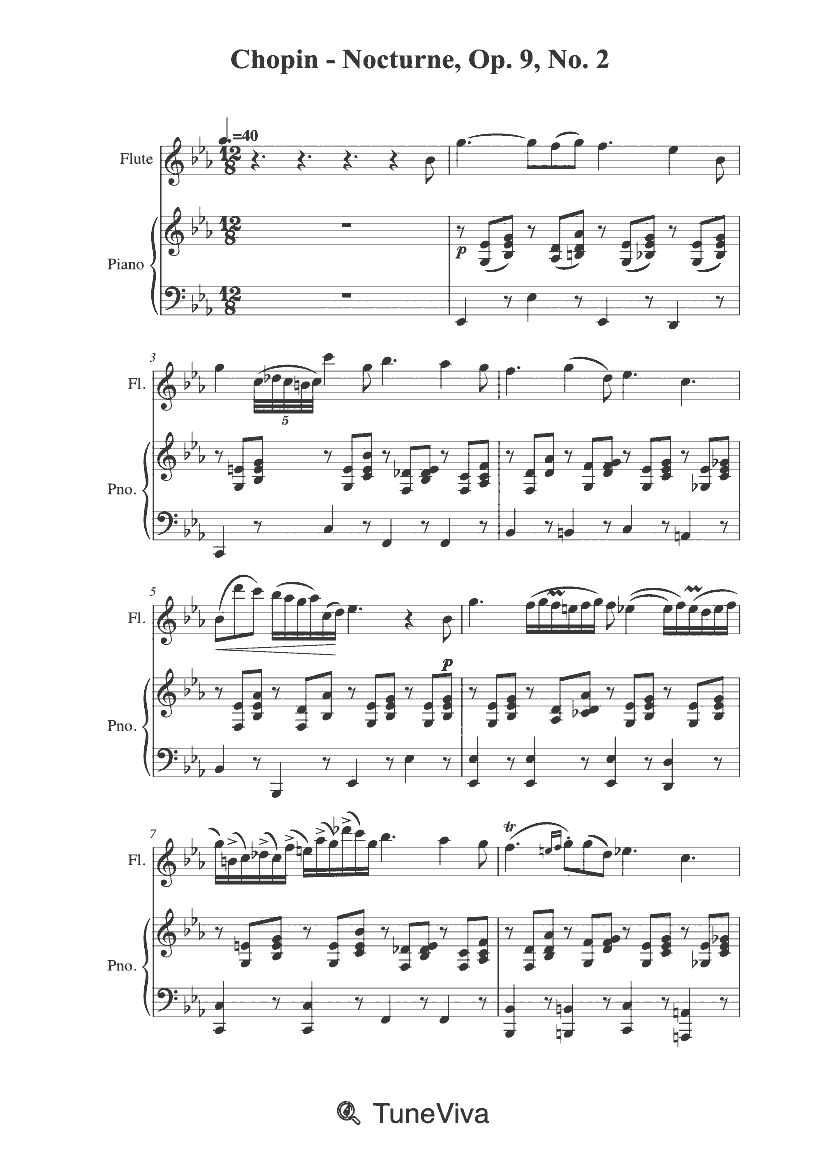
Frédéric Chopin
for Flute and Piano
Flute; Piano · 1 min 49 sec
Open score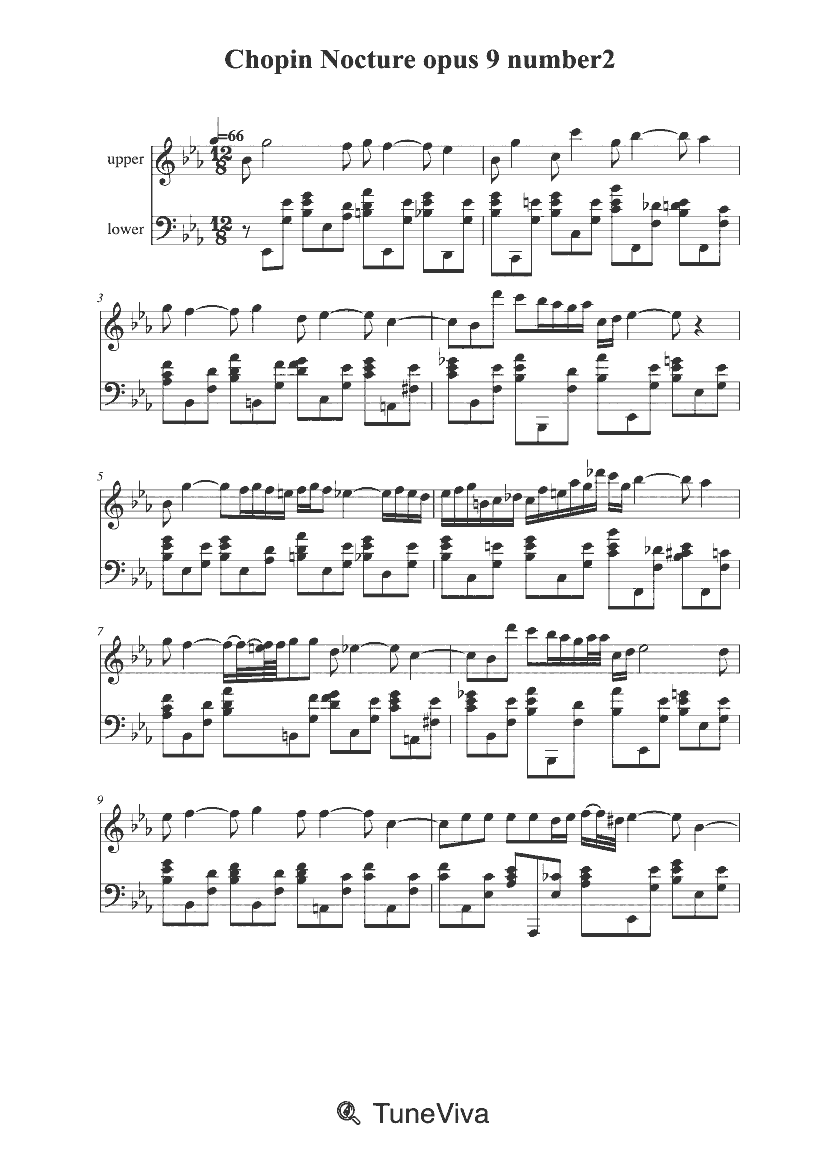
Frédéric Chopin
upper; lower · 57 sec
Open score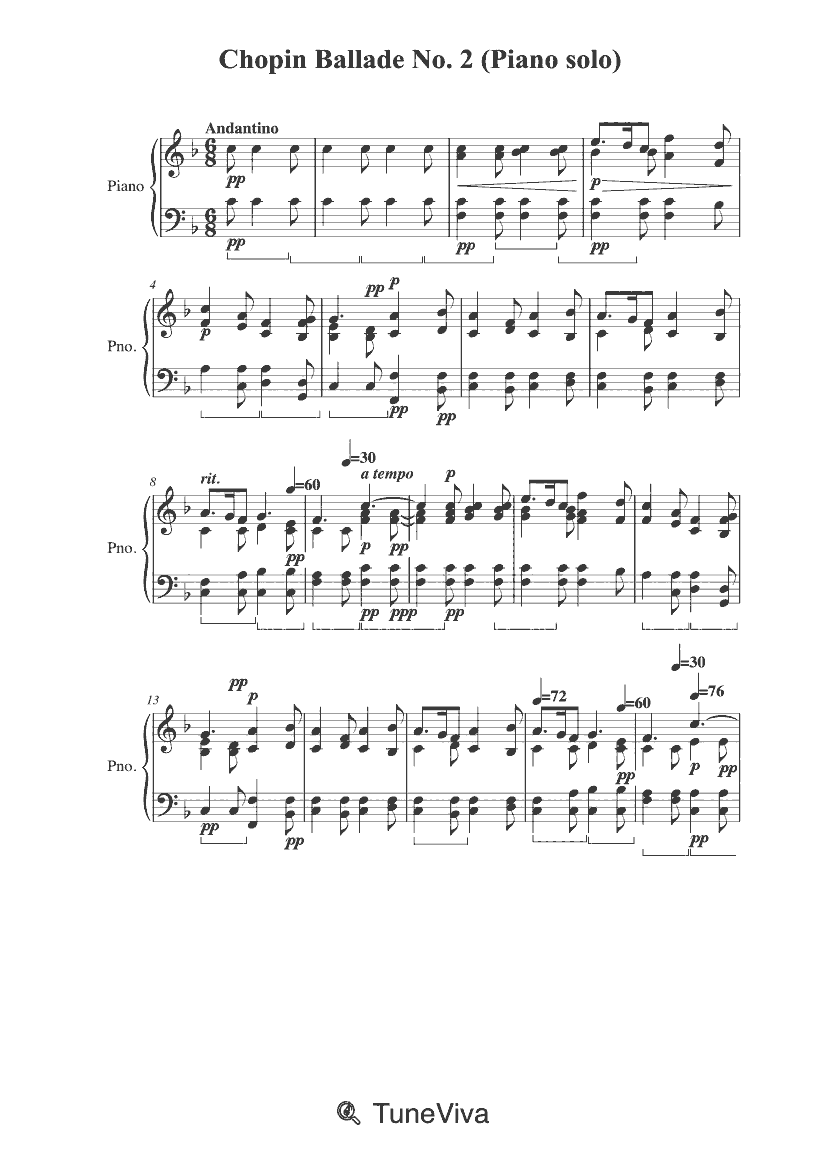
Frédéric Chopin
Op. 38
Piano · 4 min 38 sec
Open score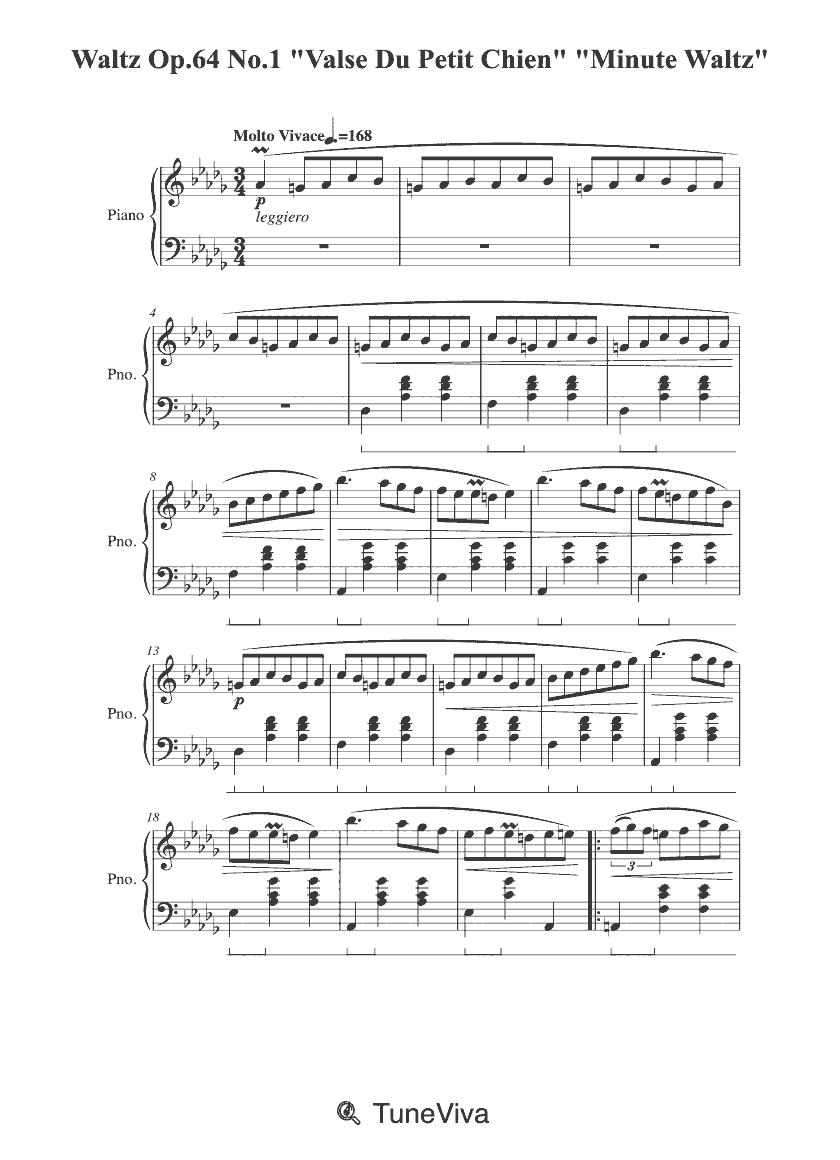
Frédéric Chopin
ååèæ²åçï¼ä½å64ä¹1)
Piano · 3 min 28 sec
Open score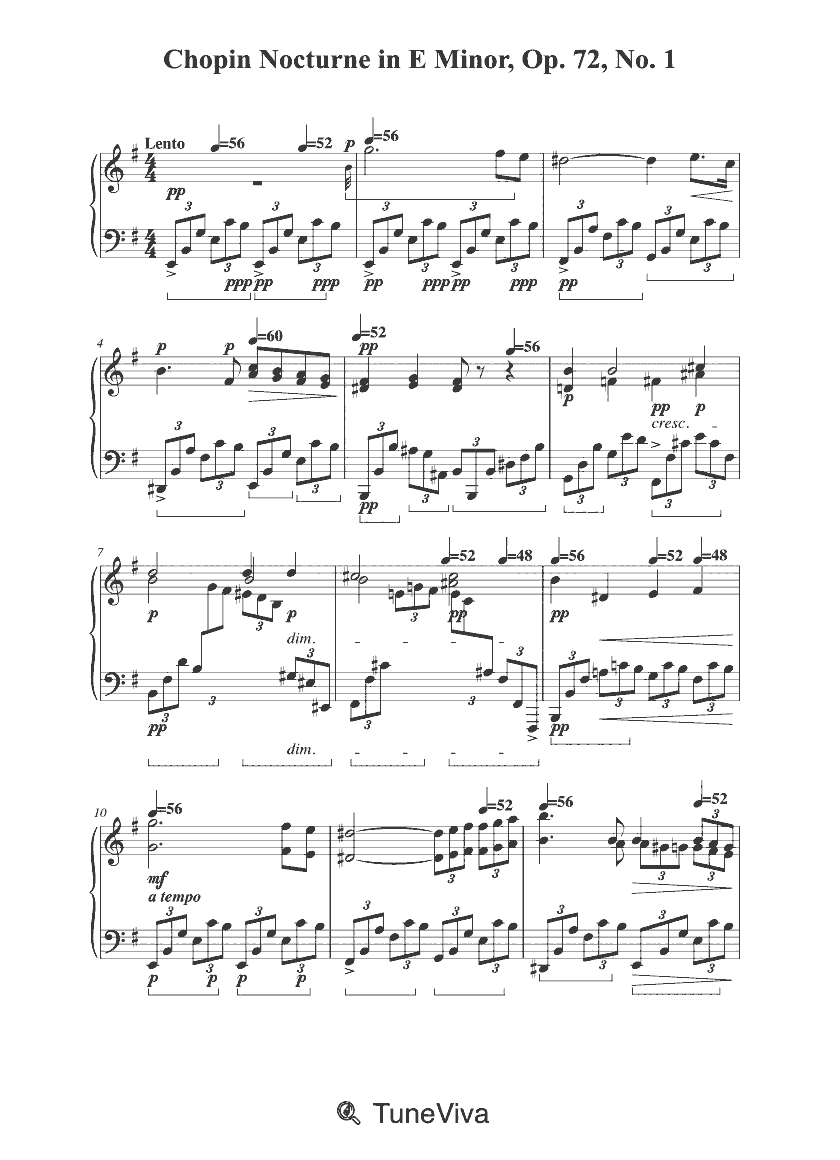
Frédéric Chopin
Op. 72 No. 1
Piano · 5 min 8 sec
Open score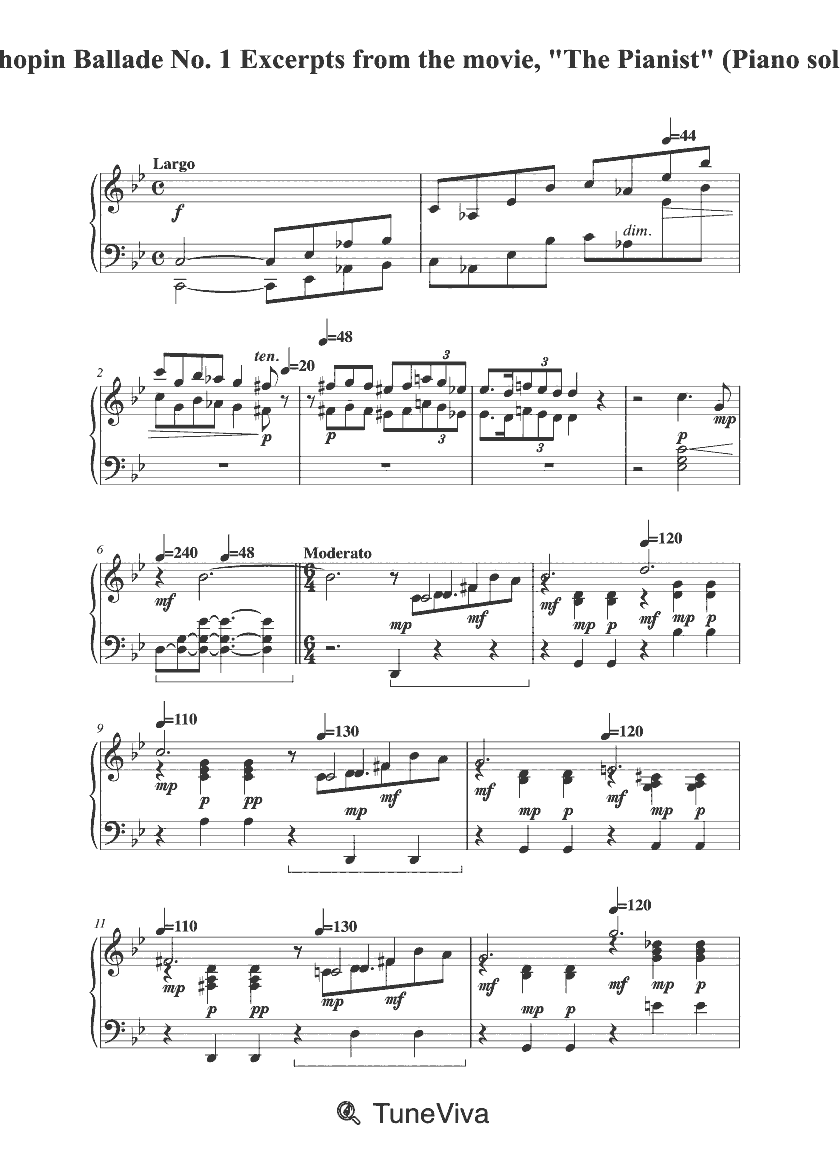
Frédéric Chopin
Op. 23
Piano · 4 min 48 sec
Open score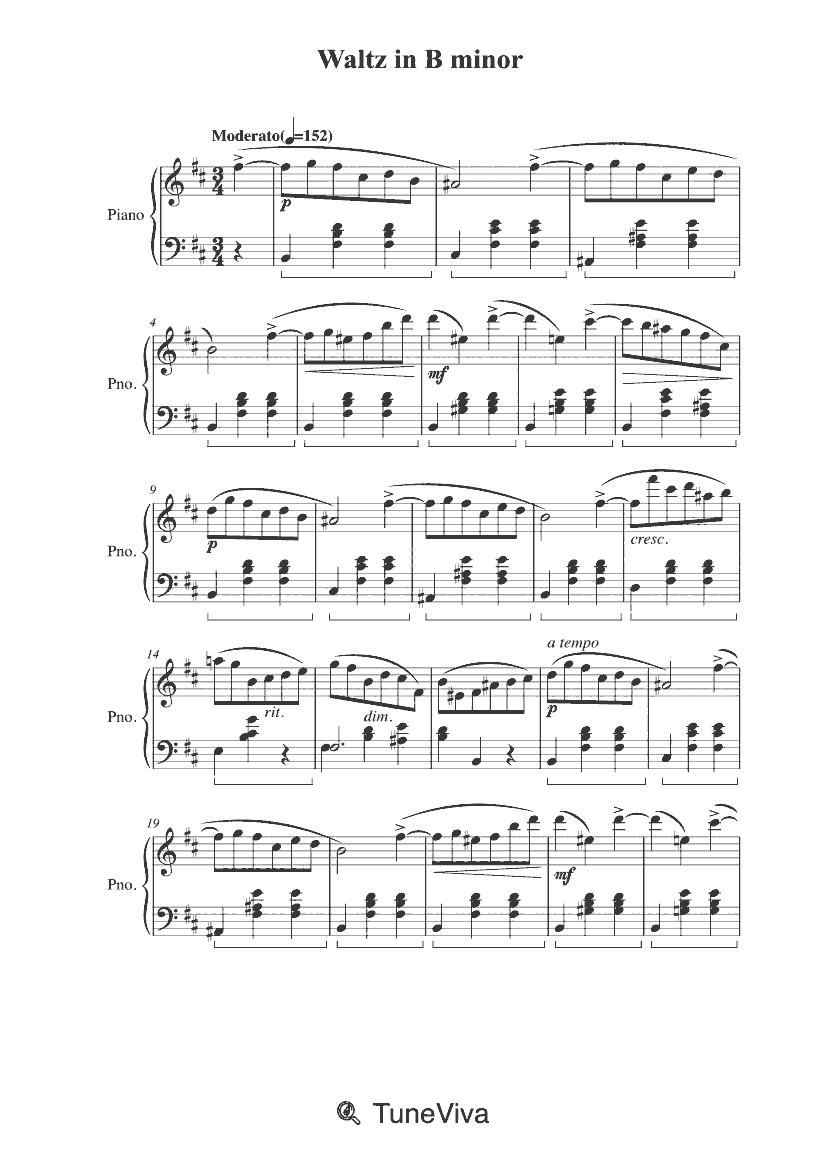
Frédéric Chopin
Op. 69 No. 2
Piano · 3 min 37 sec
Open score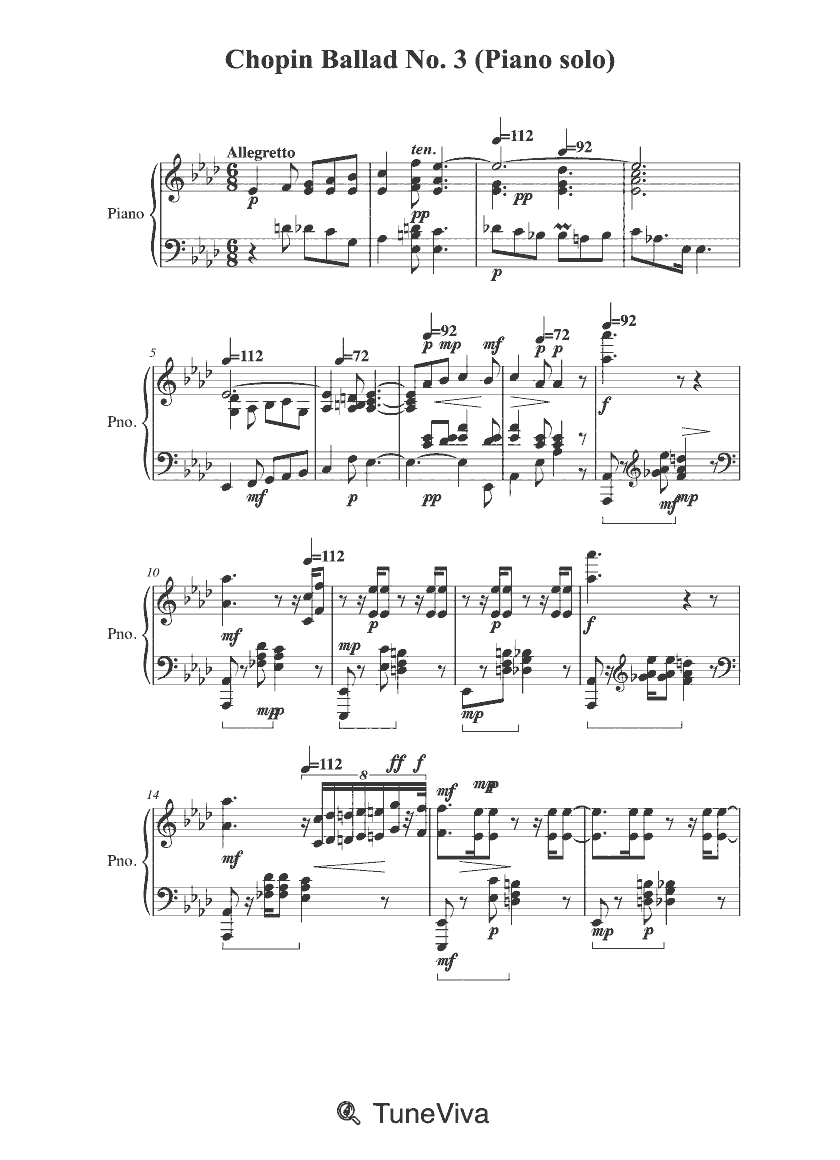
Frédéric Chopin
Piano · 3 min 58 sec
Open score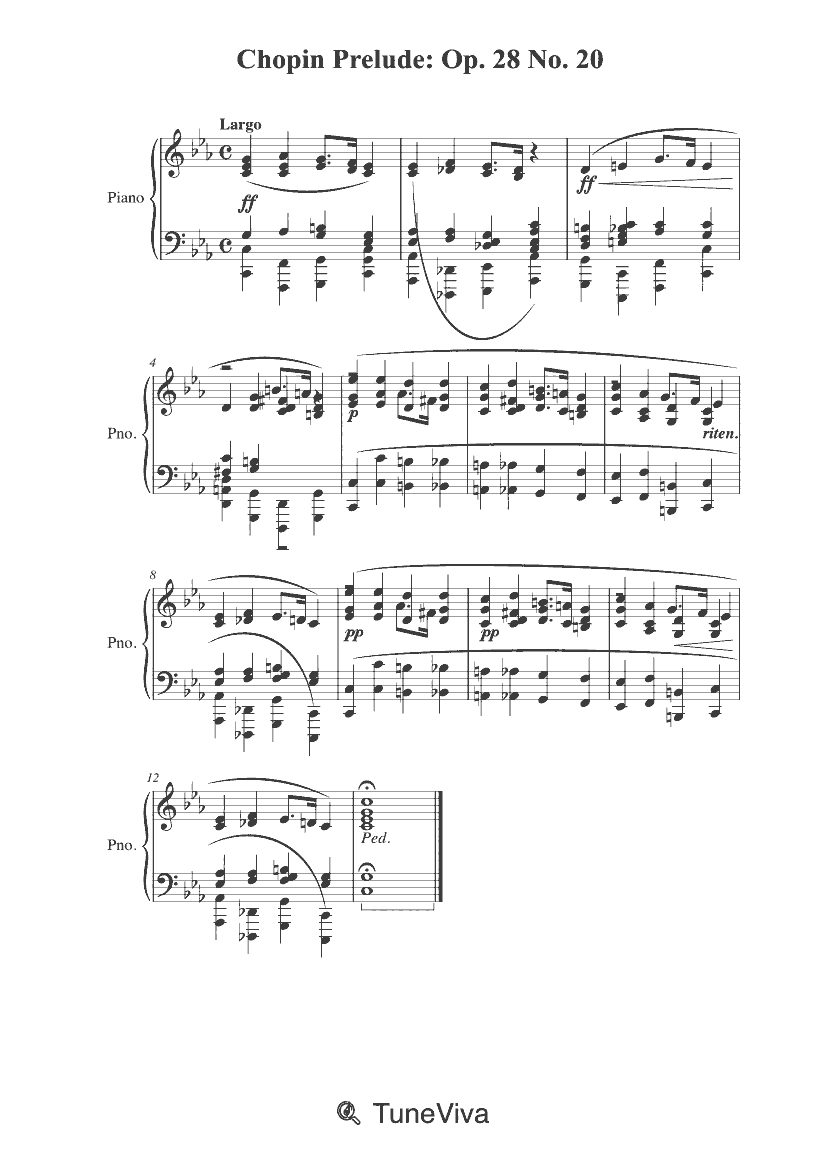
Frédéric Chopin
Piano · 1 min 54 sec
Open score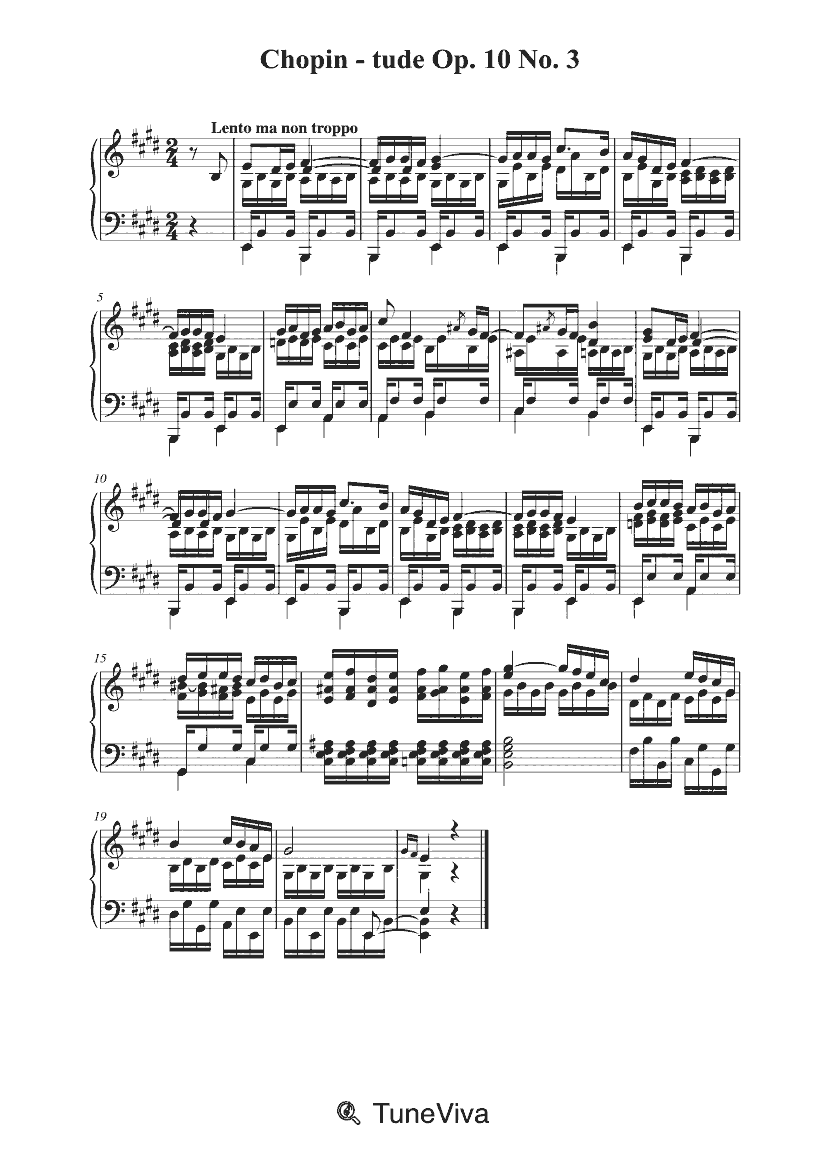
Frédéric Chopin
Op. 10 No. 3
1 min 43 sec
Open score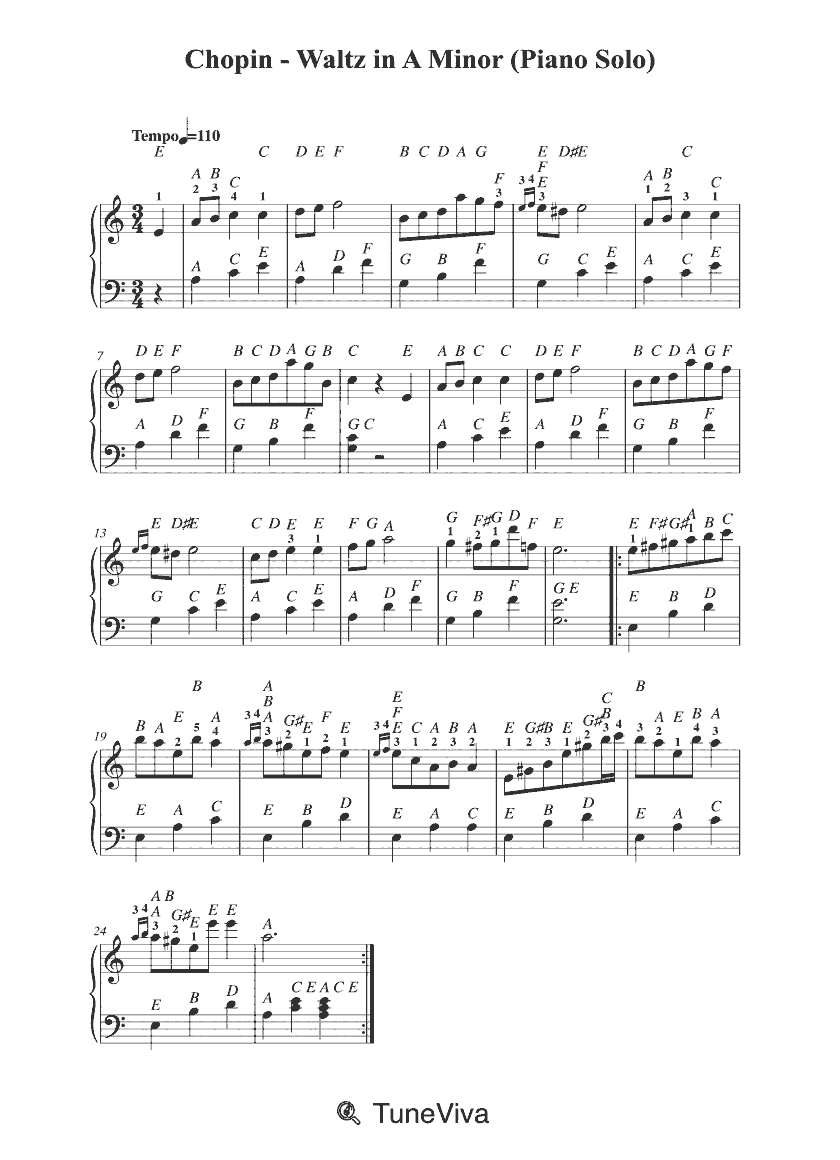
Frédéric Chopin
Piano · 58 sec
Open score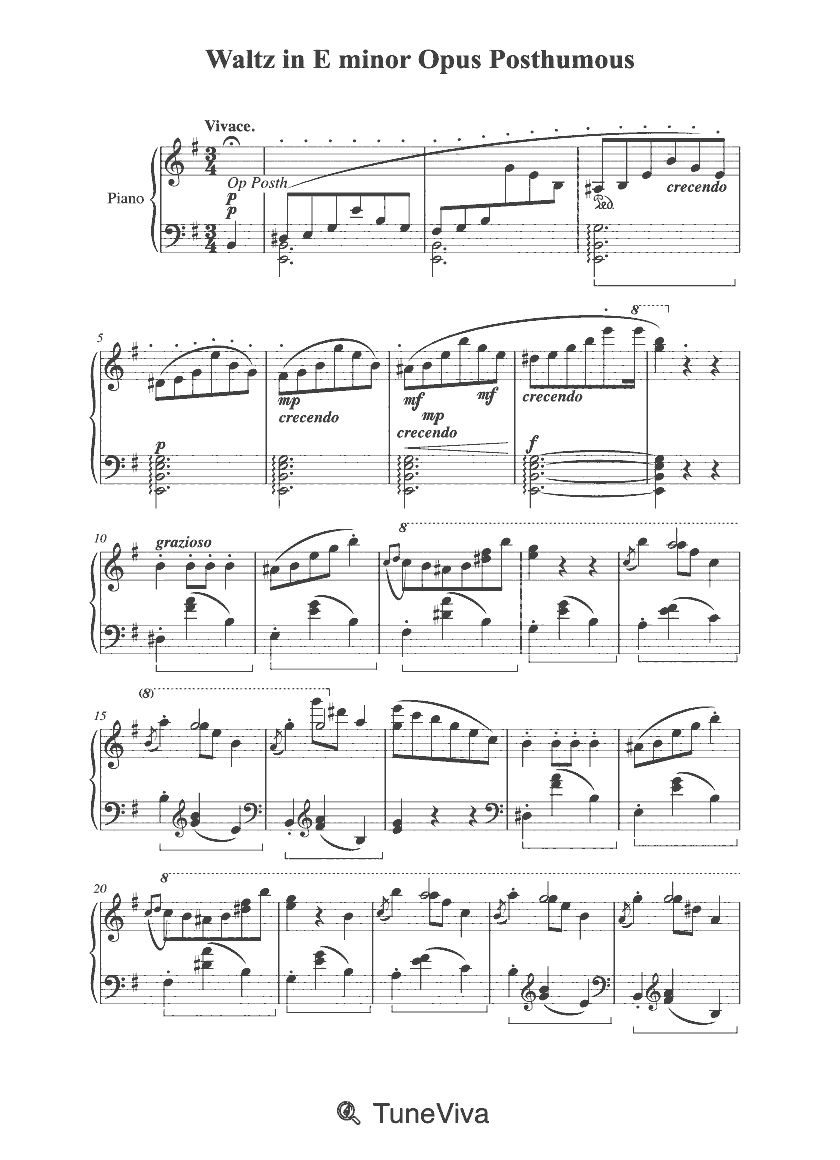
Frédéric Chopin
B56
Piano · 3 min 15 sec
Open score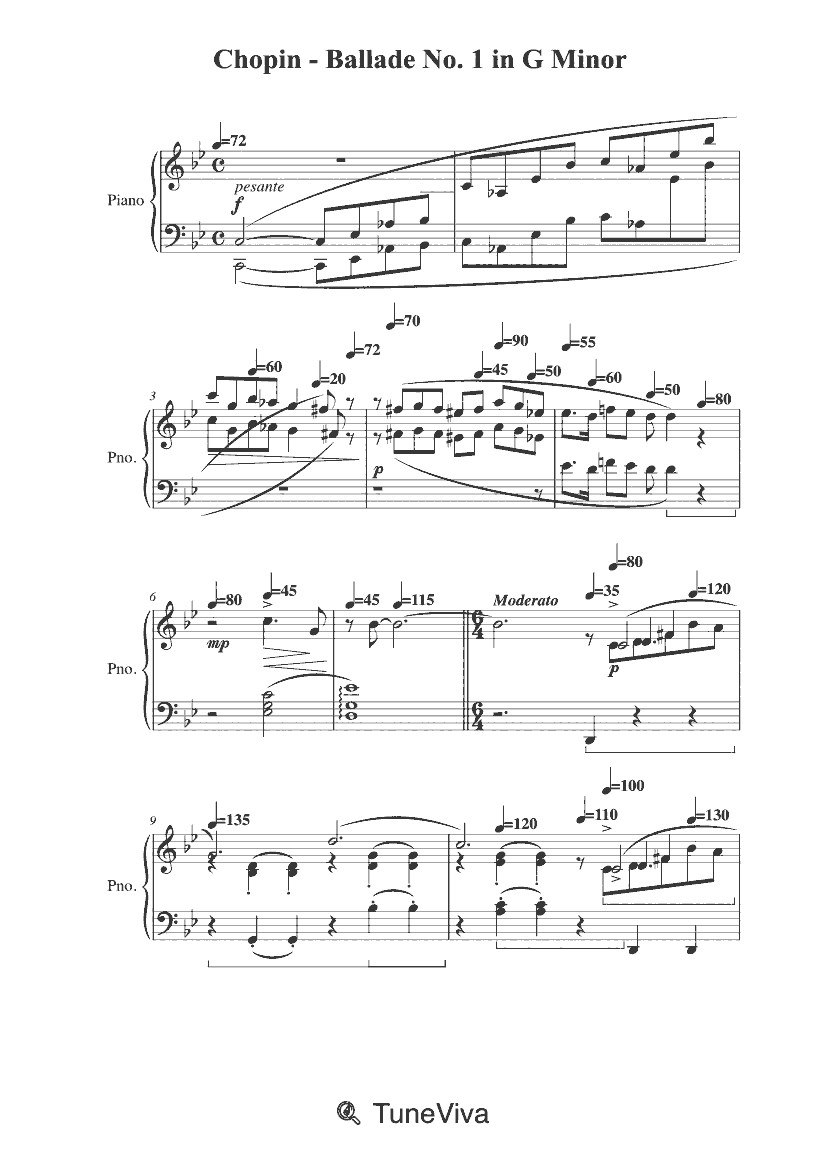
Frédéric Chopin
Piano · 14 min 34 sec
Open score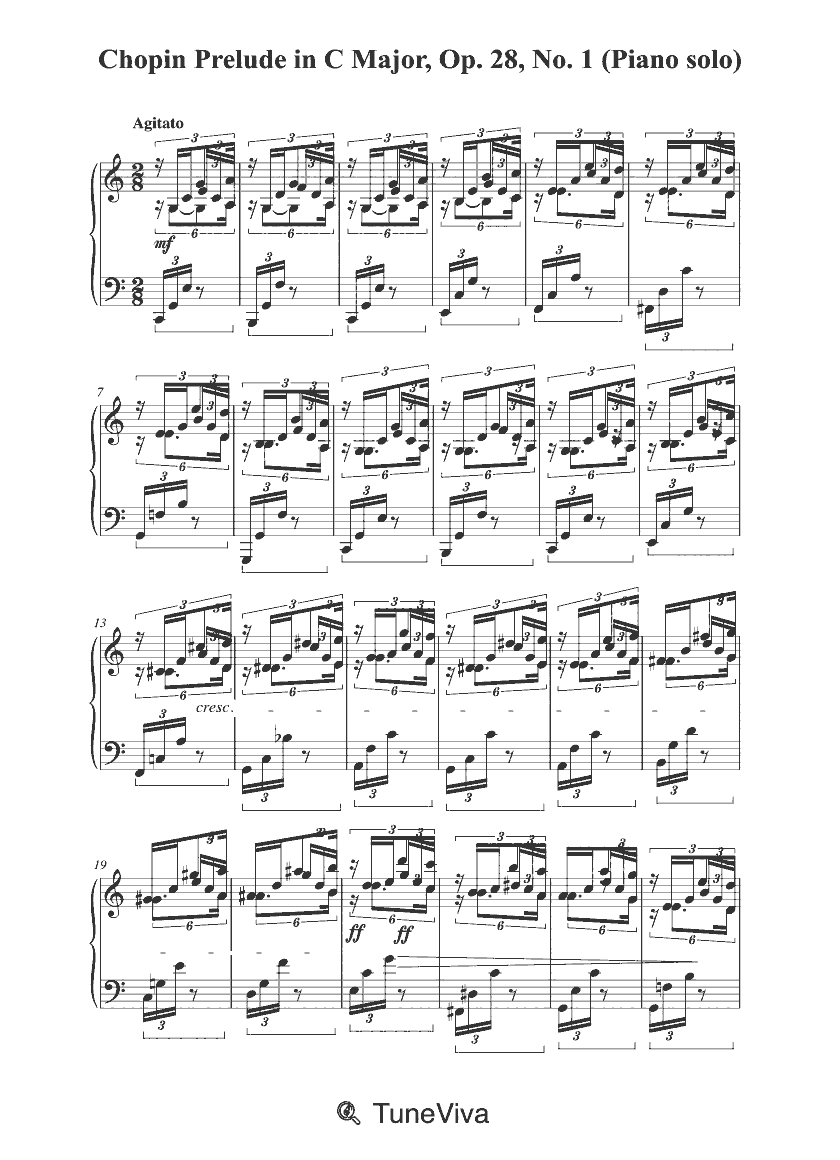
Frédéric Chopin
Op. 28 No. 1
Piano · 42 sec
Open scorePage 1 of 9
Chopin wrote almost nothing but piano music, and the catalogue reflects it: 170 scores, about 684 minutes of music and 338,345 notated notes. Just one entry carries lyrics, a reminder that he set almost no words after his Warsaw songs. The most-viewed titles are the familiar ones: the C-sharp minor Nocturne in a violin arrangement, the G minor Ballade, the E minor Prelude. Beside them sit urtext editions of the waltzes and simplified versions of the Op. 9 Nocturnes. Difficulty is spread rather than concentrated, with 70 entries at index 2 and 30 at index 3. Frédéric Chopin (1810–1849) was a Polish composer and virtuoso pianist of the early Romantic period who wrote primarily for solo piano. His music ranges across nocturnes, waltzes, mazurkas, polonaises, études, preludes, scherzos, impromptus, ballades and sonatas, and he is credited with creating the instrumental ballade. This page gathers Chopin sheet music for piano, alongside a few arrangements such as the C-sharp minor Nocturne set for violin. Check the scoring and version named on each score—original, simplified or arrangement—before choosing.
Chopin was born on 1 March 1810 at Żelazowa Wola, west of Warsaw, and grew up in the city during the last years of the Congress Kingdom. He left Poland in November 1830, weeks before the November Uprising, and reached Paris in October 1831; he never went back. There he taught, sold his manuscripts and played in salons rather than concert halls, giving only about thirty public performances in his lifetime. He died in Paris on 17 October 1849, aged 39.
The catalogue is built from the piano works. The 24 Preludes, Op. 28, were finished in 1839, several of them on Mallorca during the winter of 1838-39; No. 4 in E minor, with its descending block chords, was played on the organ at his funeral. The four Ballades span 1831 to 1842, from the G minor of 1835 to the F minor of 1842. It is also not uniform in kind: a violin arrangement of the C-sharp minor Nocturne, a simplified Op. 9 No. 2 and urtext waltzes all share the same composer field. Check the scoring named on the file before you print, because not every arrangement is labelled as one.
Choosing a score by genre: Chopin's nocturnes suit players looking for lyrical melody, while the waltzes and mazurkas offer rhythmic character and the ballades demand large-scale dramatic planning. The études and preludes are useful when a player wants a focused study or a shorter complete piece. Among the selected scores, the E minor Prelude, Op. 28 No. 4, is a single piano work, and the Op. 9 No. 2 is present as a simplified piano version. Compare the version name with the original before deciding which suits your purpose.
Original, arrangement or simplified version: The C-sharp minor Nocturne, No. 20, is originally a solo piano piece, but the selected setting is for violin and piano, so it should be treated as an arrangement. A simplified Op. 9 No. 2 is also not the same text as the original nocturne. Labels such as 'Urtext Edition' describe an editorial approach, so it is still worth checking the scoring, publisher information and contents before relying on a particular score for study or performance.
What makes Chopin's piano writing distinctive: Chopin's piano music is technically demanding and expanded the limits of the instrument, while contemporary descriptions of his own playing emphasise nuance and sensitivity. The four Ballades are single-movement solo piano works composed between 1831 and 1842 and are counted among the most challenging standard repertoire. They share features such as the 6/4 or 6/8 ballade metre and a mirror reprise, but each has its own character; prepare them with long-range planning rather than treating the returns as literal repeats.
Historical context and the piano-only catalogue: Chopin was born at Żelazowa Wola and grew up in Warsaw. He left Poland at age 20, less than a month before the November 1830 Uprising, and settled in Paris at 21. There he gave only about 30 public performances, preferring the salon, and supported himself by selling compositions and teaching piano. All of his compositions feature the piano; most are for solo piano, though he also wrote six works for piano and orchestra, including two piano concertos, some chamber music and 19 songs with Polish lyrics.
The catalogue includes transcriptions alongside original scores. The C-sharp minor Nocturne, B.49, is a piano piece, and the violin entry is an arrangement whose transcriber is not named on the file.
The Lento con gran espressione in C-sharp minor, written in 1830 soon after Chopin reached Vienna and sent to his sister Ludwika to practise before she tackled his Second Piano Concerto. It was published posthumously in 1875.
The E minor Prelude, Op. 28 No. 4, and the simplified Op. 9 No. 2 are both short and both near the top of the page; neither asks for the octave technique the ballades assume.
Frédéric Chopin was a Polish composer and virtuoso pianist of the early Romantic period who wrote primarily for solo piano. His major works include mazurkas, waltzes, nocturnes, polonaises, études, impromptus, scherzos, preludes, sonatas and ballades, and he is credited with creating the instrumental ballade. His music is technically demanding and remains central to the solo piano repertoire.
Chopin's four Ballades are single-movement works for solo piano composed between 1831 and 1842. They are considered among the most important and challenging pieces in the standard piano repertoire. The works share features such as a 6/4 or 6/8 metre and a mirror reprise, but they are distinct pieces rather than variations of one model; Chopin's ballade form is a variant of sonata form.
The C-sharp minor Nocturne, No. 20, is originally a solo piano piece composed in 1830 and published posthumously in 1875. The violin setting in the catalogue is an arrangement of that piano work, not Chopin's original scoring. The original belongs with the nocturnes Chopin wrote for piano, while the violin version adapts the melodic line for another instrument.
Chopin's waltzes are moderate-length piano pieces written between 1824 and 1849, mostly in 3/4 time. They differ from earlier Viennese waltzes in not being intended for dancing, although several have been used in ballets. Some are accessible to pianists of modest capability and others require advanced technique. Only eight were published during Chopin's lifetime, in Opp. 18, 34, 42 and 64; further waltzes were published posthumously as Opp. 69 and 70.
All of Chopin's compositions feature the piano, and most are for solo piano. He also wrote six works for piano and orchestra, including two piano concertos, some chamber music and 19 songs set to Polish lyrics. A violin setting of the C-sharp minor Nocturne is an arrangement of a piano original rather than a separate Chopin work for violin.
The C-sharp minor Nocturne was composed in 1830 shortly after Chopin arrived in Vienna, and he sent it to his sister Ludwika to practise before she took on his Second Piano Concerto. Its middle section quotes material from that concerto, including the main theme of the third movement and the second subject of the first movement, and it also recalls Chopin's song 'Życzenie'. These references help explain why the piece is sometimes associated with reminiscence and homesickness.