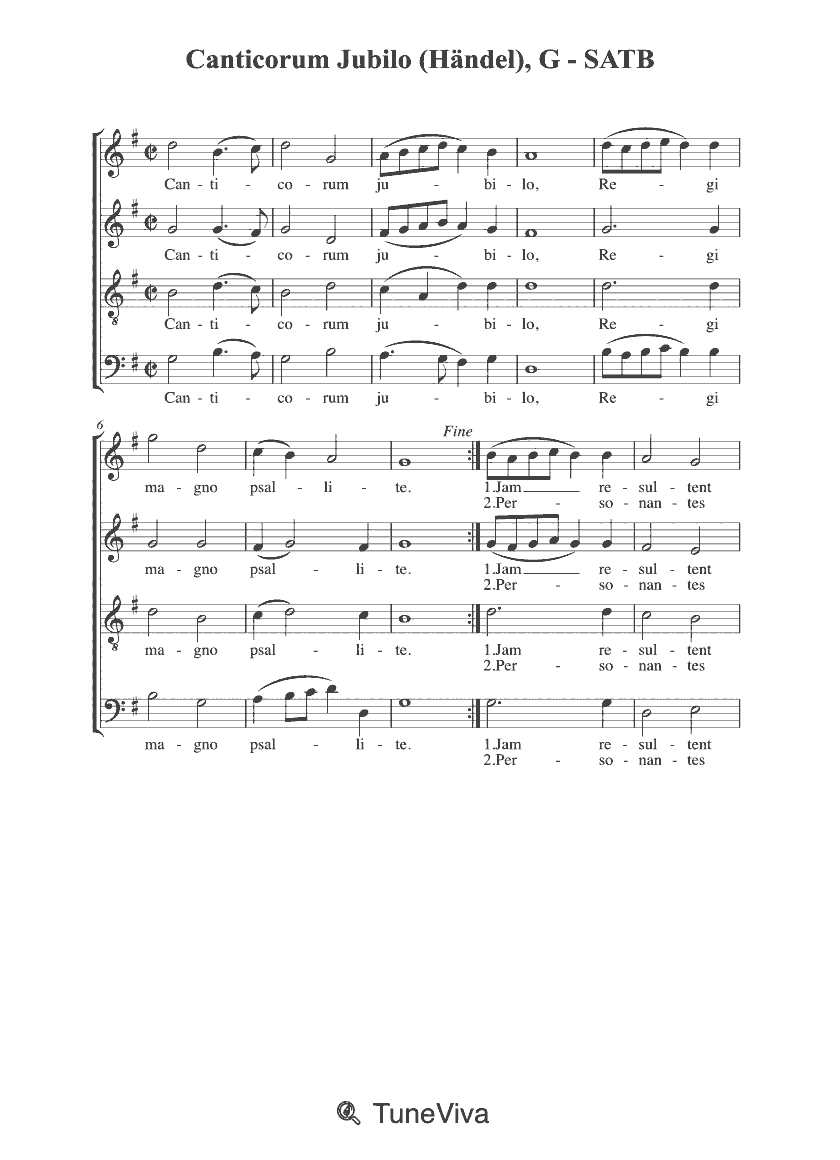
Canticorum Jubilo (Händel), G - SATB
George Frideric Handel
Joshua 1748
Soprano; Alto; Tenor +1 parts · 2 min 8 sec
Open score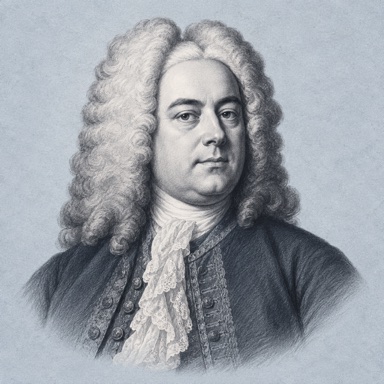
399 Handel scores to preview and download: the Hallelujah Chorus, Ombra mai fu, the Sarabande and opera arias, by the Halle-born composer of Messiah and more.
A choral setting in G major for four voices and the most-viewed Handel item in this catalogue.
The passacaglia from Handel's Harpsichord Suite in G minor, HWV 432, in Johan Halvorsen's celebrated arrangement, here set for piano.
The sarabande from the Keyboard Suite in D minor, HWV 437, a stately movement familiar from film and television.
One of Handel's finest opera arias, sung by Alcina herself in Act II and often performed as a standalone recital piece.
Soprano; Alto; Tenor +1 parts · 3 min 31 sec
The closing chorus of Part II of Messiah and the single most recognisable piece of English choral music.
Other editions:
The opening aria of Serse, a long-breathed melody that became known in the nineteenth century as Handel's Largo.
A suite drawn from the three Water Music sets written for a royal river party in 1717.
The first violin part of the last of the twelve Op. 6 concerti grossi, published in 1740.
S; A; T +1 parts · 46 sec
Other editions:
Piano · 1 min 36 sec
Other editions:
If you want to sing Hallelujah from Messiah, look for the choral parts and whatever keyboard or instrumental support the rehearsal needs. A keyboard transcription includes the tune in a different layout. For Ombra mai fu, inspect the key and voice part before comparing editions, and practise the breath across the long phrase with the accompanist.
Compare the instrument and arrangement details below, then open a score to check the notation. Different entries may be arrangements or editions of the same work; available playback tools are shown on each score page.
George Frideric Handel
Joshua 1748
Soprano; Alto; Tenor +1 parts · 2 min 8 sec
Open score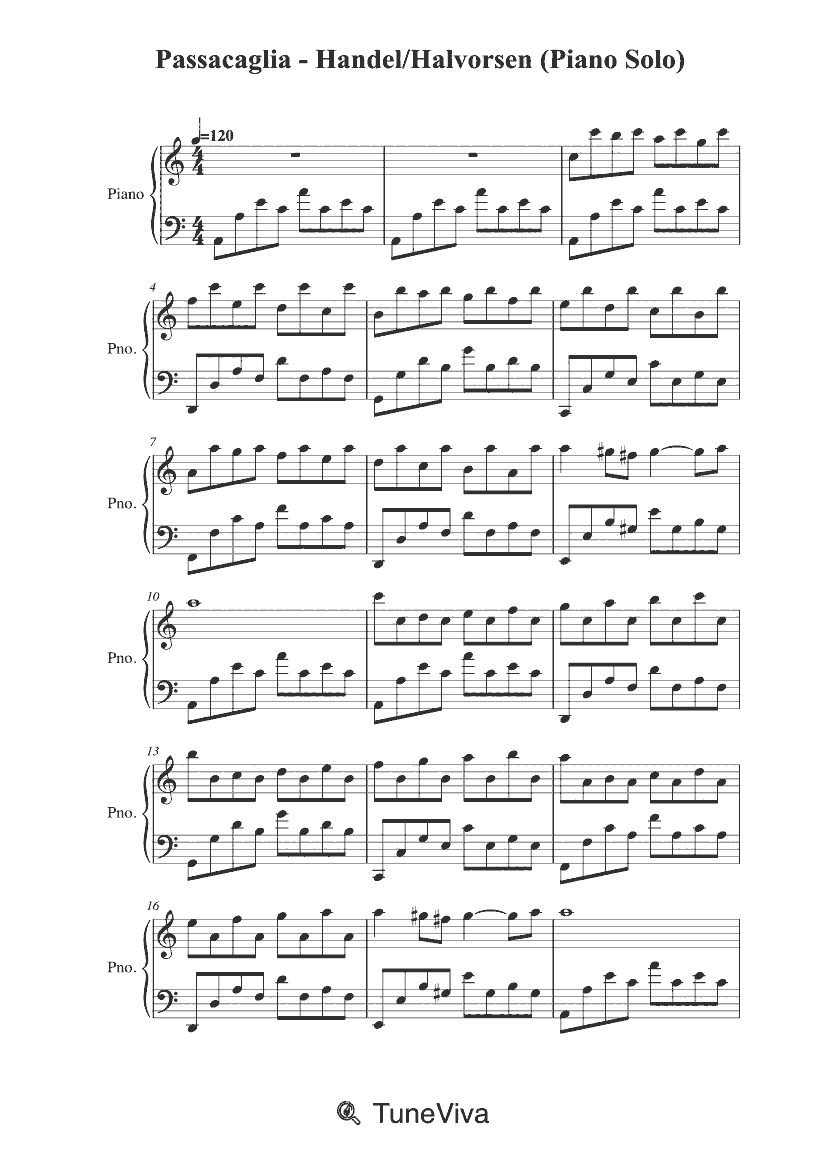
George Frideric Handel
Piano · 2 min 28 sec
Open score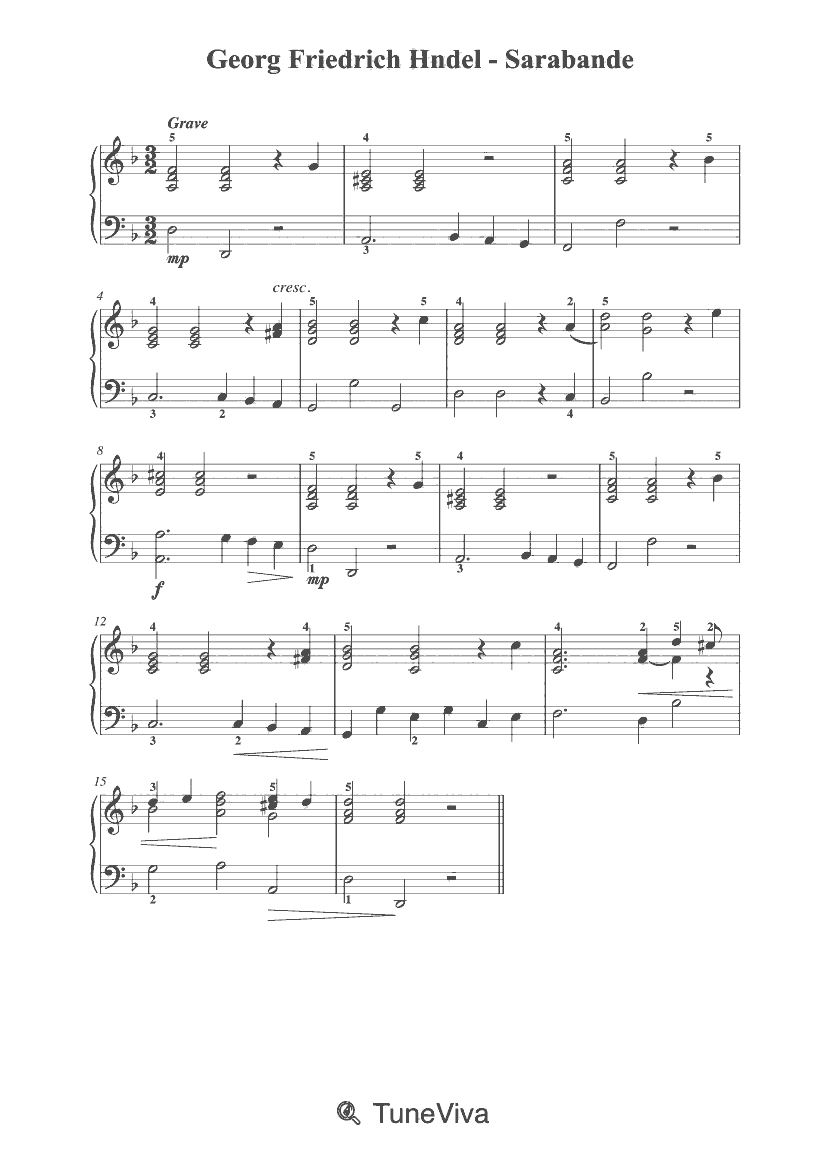
George Frideric Handel
(alte spanische Tanzform)
Piano · 1 min 41 sec
Open score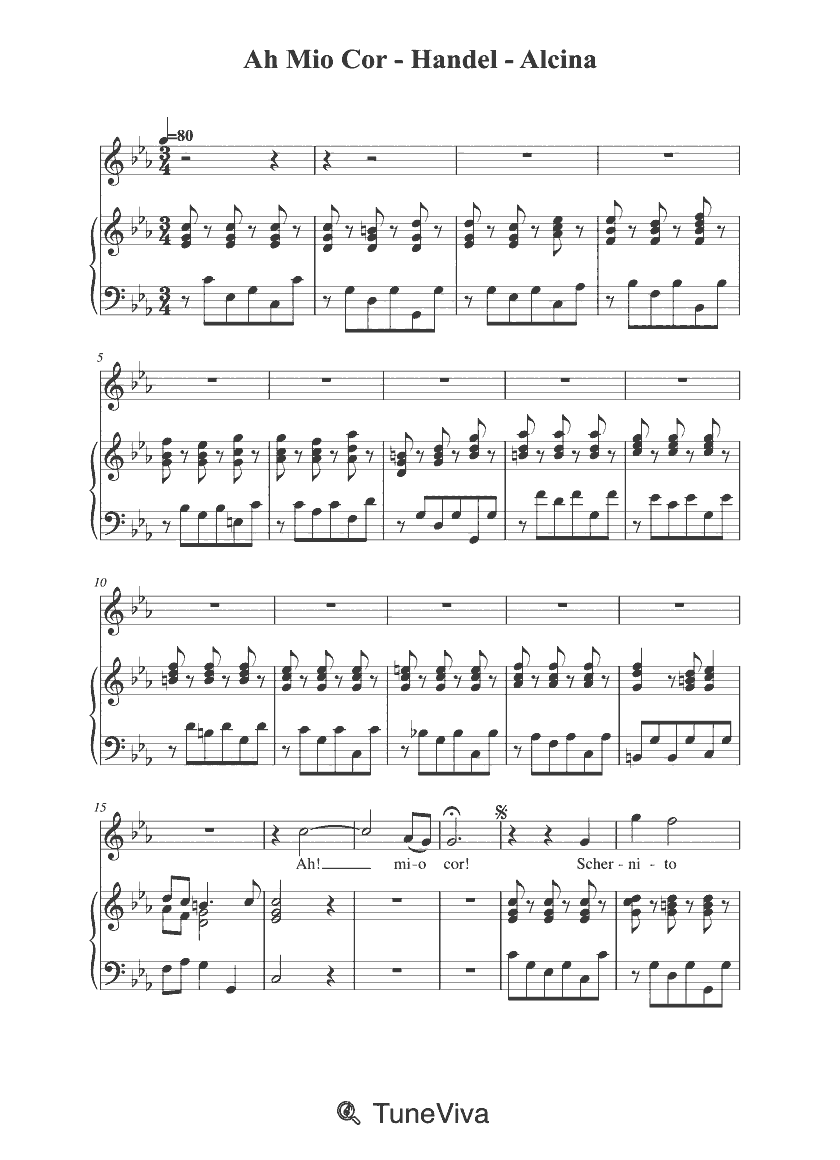
George Frideric Handel
Alcina - original key
Voice; Piano · 8 min 54 sec
Open score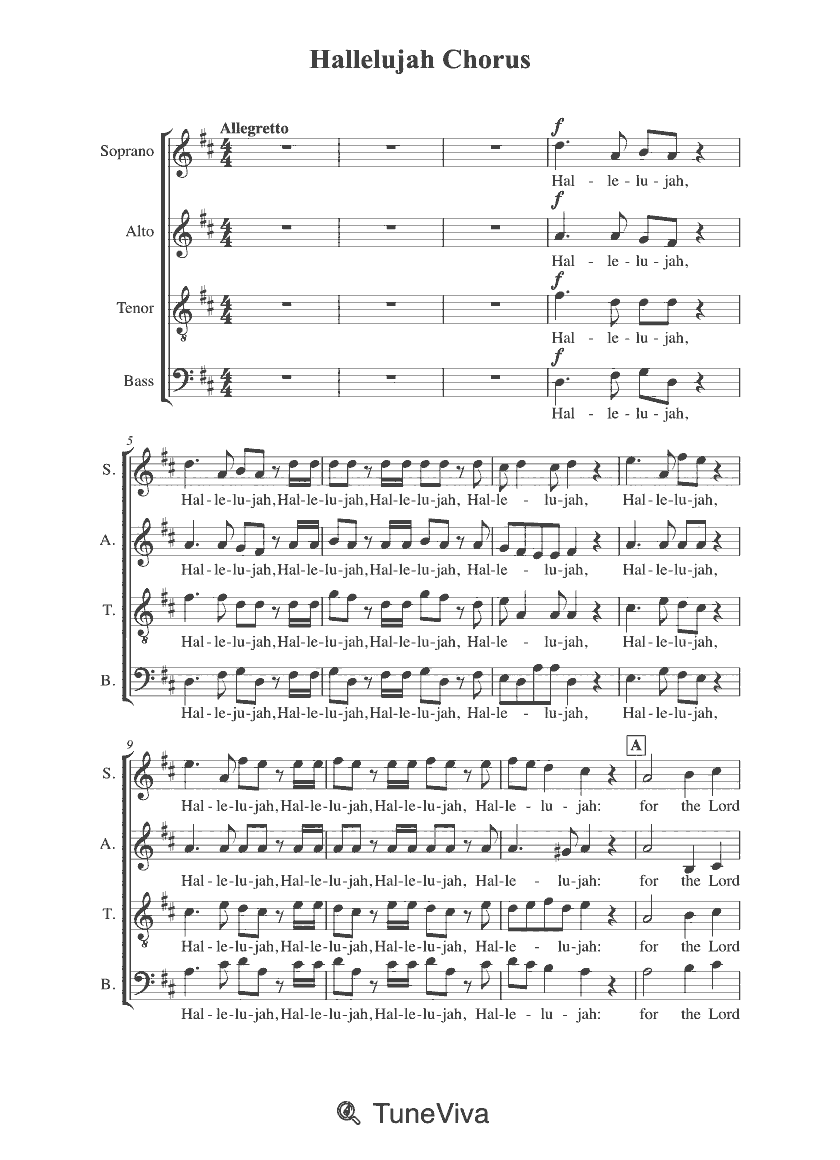
George Frideric Handel
Soprano; Alto; Tenor +1 parts · 3 min 31 sec
Open score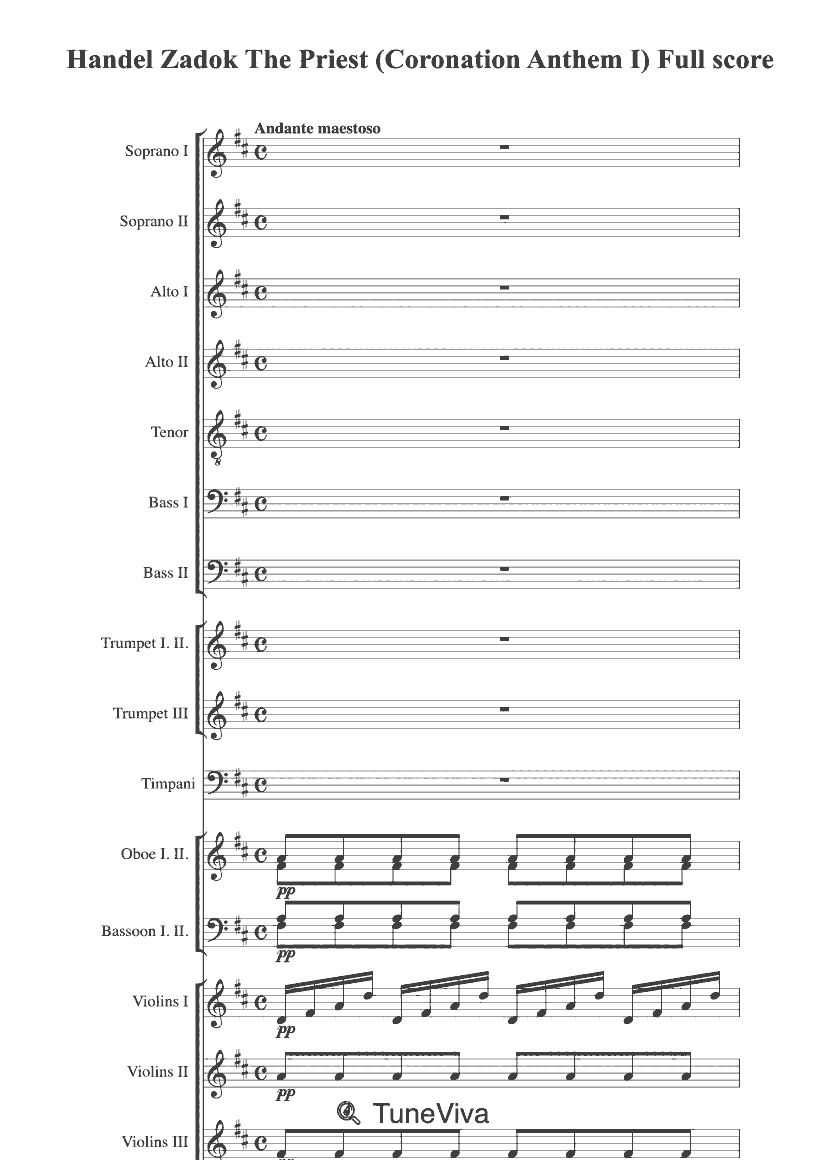
George Frideric Handel
Coronation Anthem I
Soprano I; Soprano II; Alto I +16 parts · 14 min 13 sec
Open score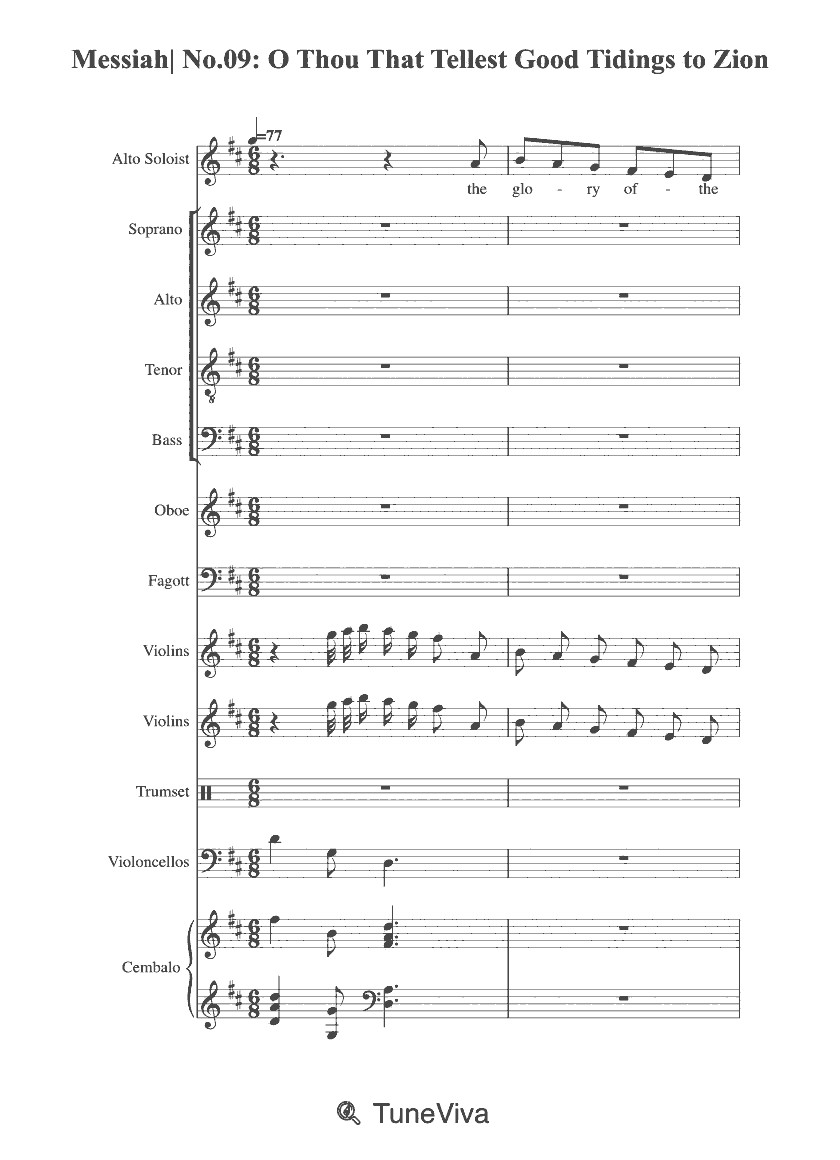
George Frideric Handel
Messiah
Alto Soloist; Soprano; Alto +8 parts · 1 min 16 sec
Open score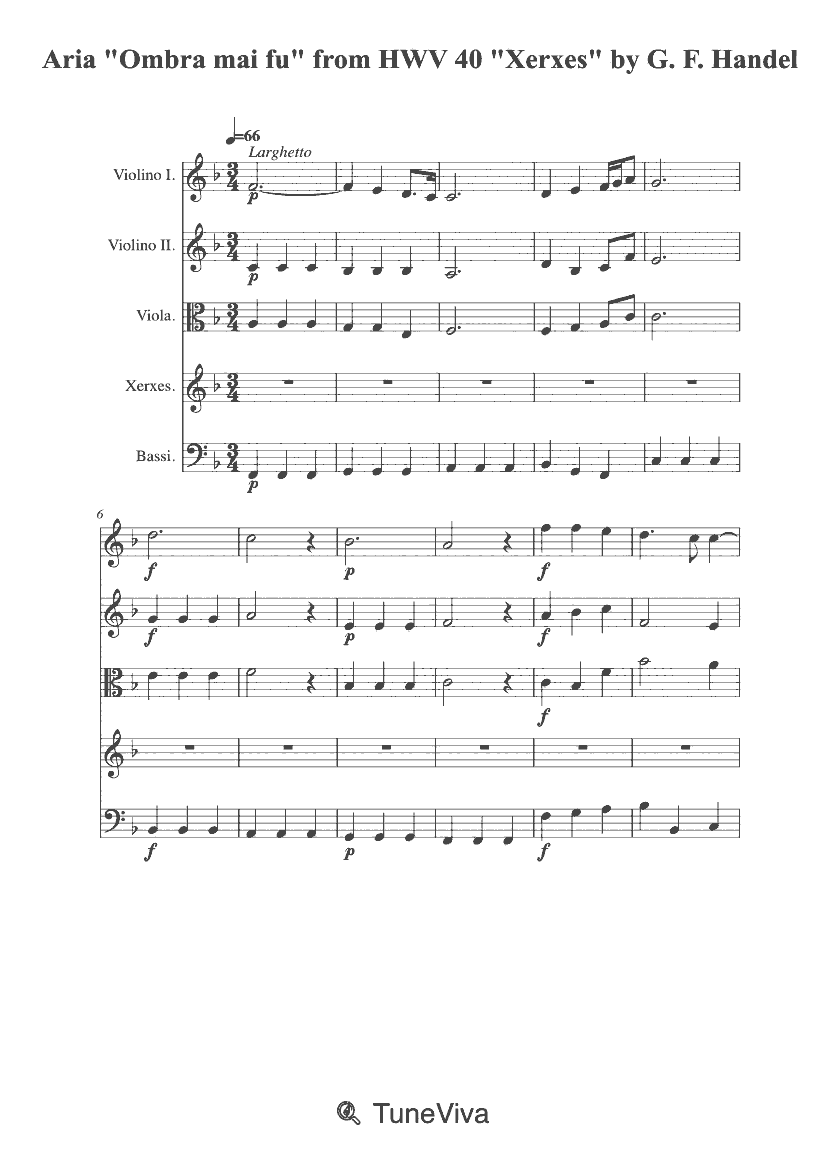
George Frideric Handel
Aria from HWV 40 Xerxes
Violino I.; Violino II.; Viola. +2 parts · 2 min 24 sec
Open score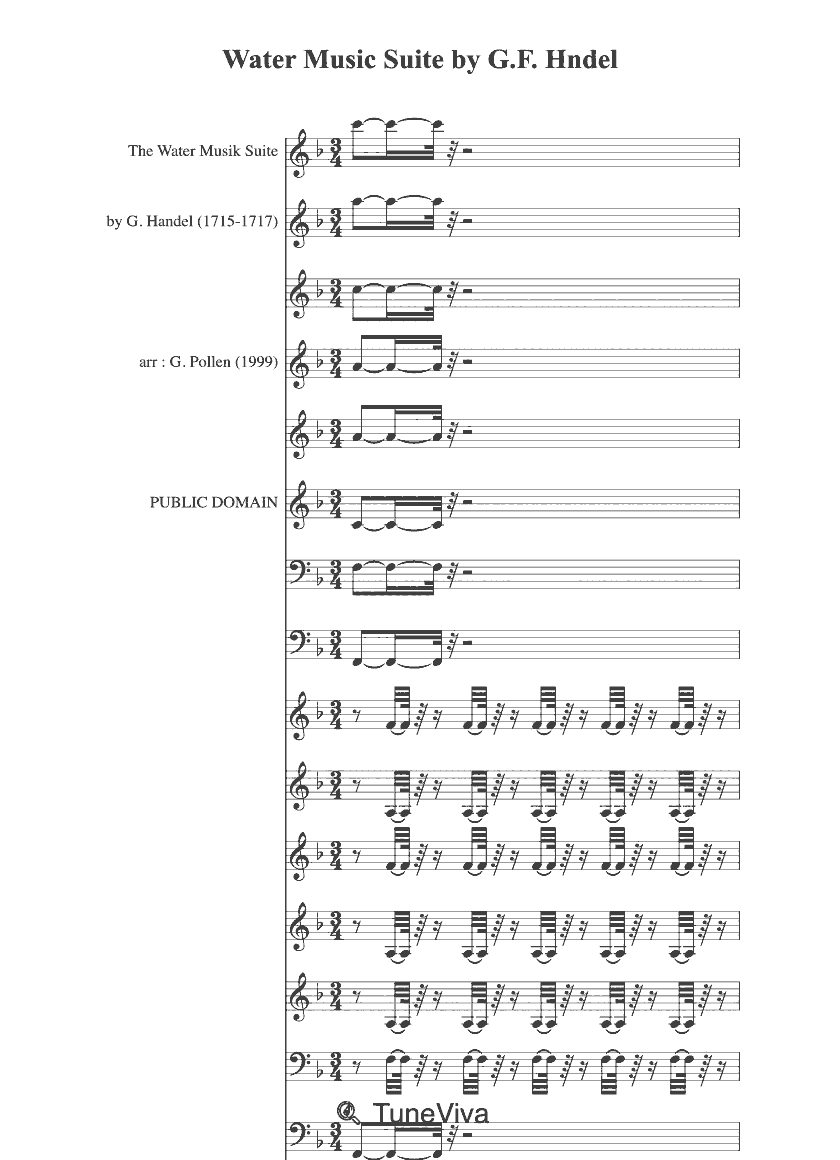
George Frideric Handel
The Water Musik Suite; by G. Handel (1715-1717); arr : G. Pollen (1999) +1 parts · 22 min 33 sec
Open score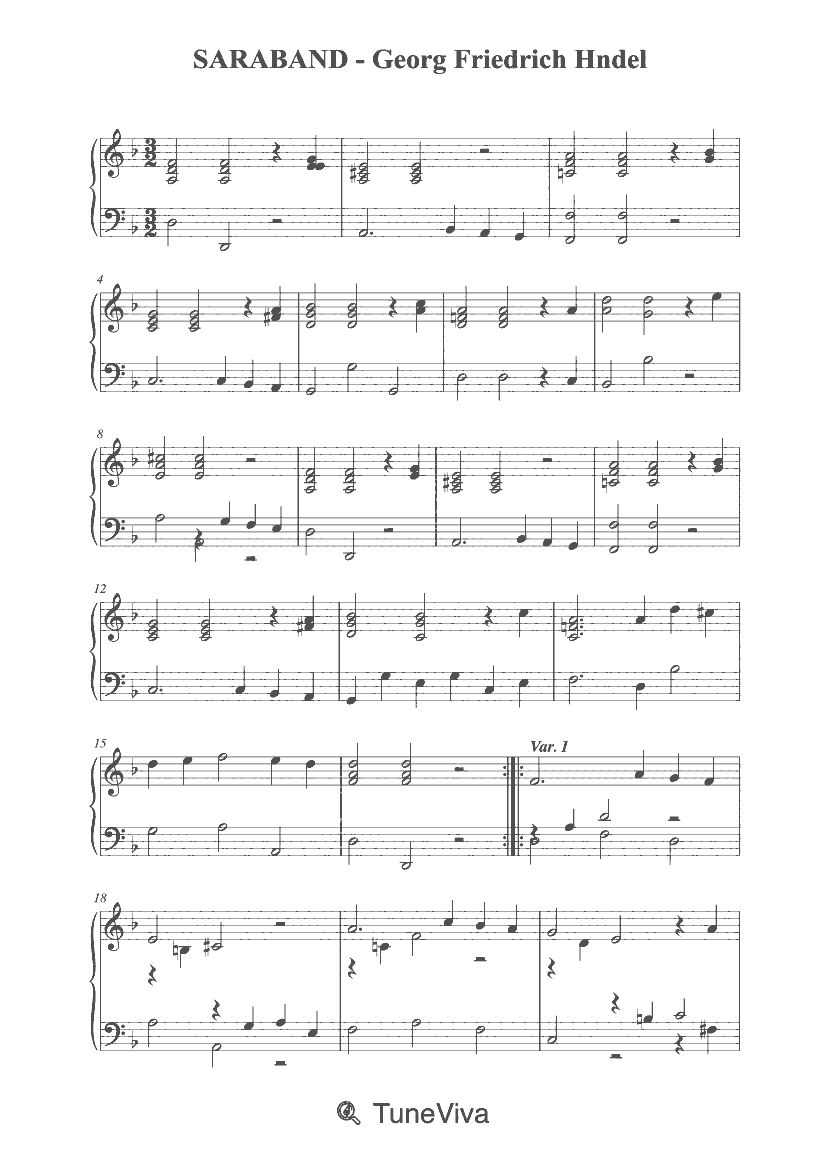
George Frideric Handel
Harpsichord · 12 min 52 sec
Open score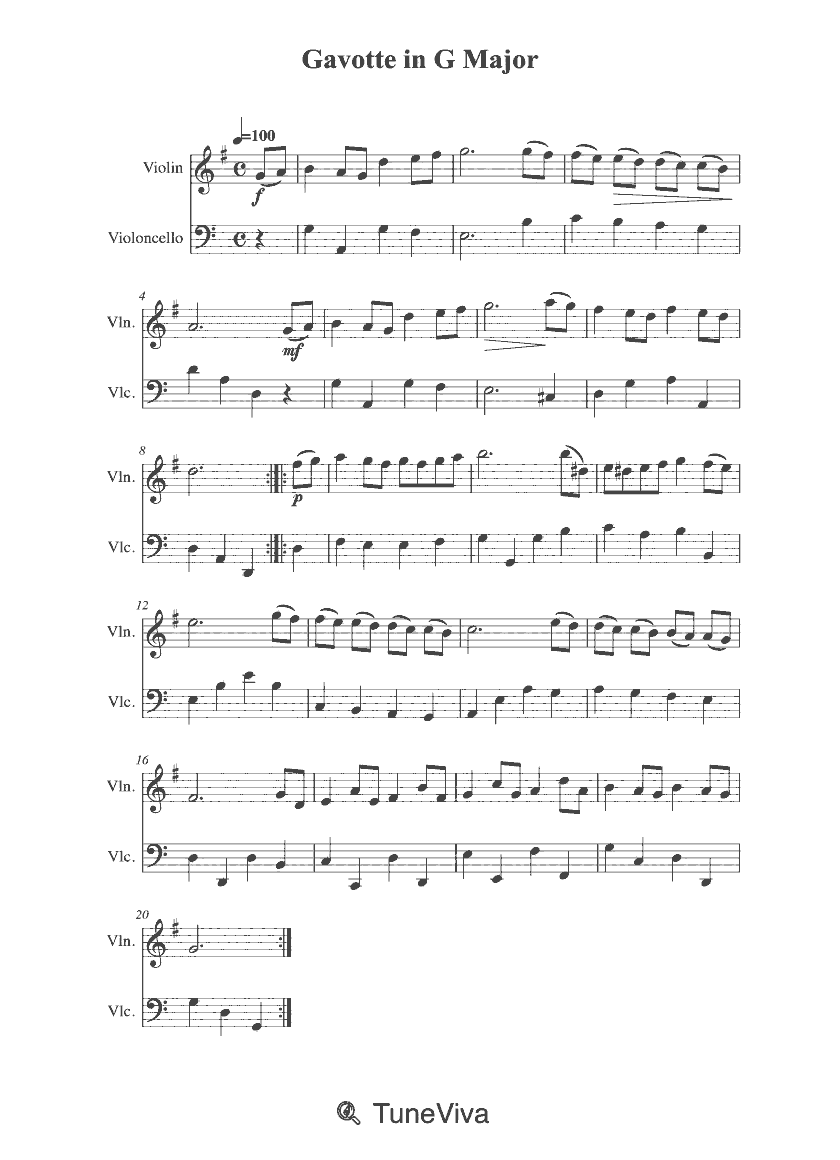
George Frideric Handel
in G major
Violin; Violoncello · 1 min 36 sec
Open score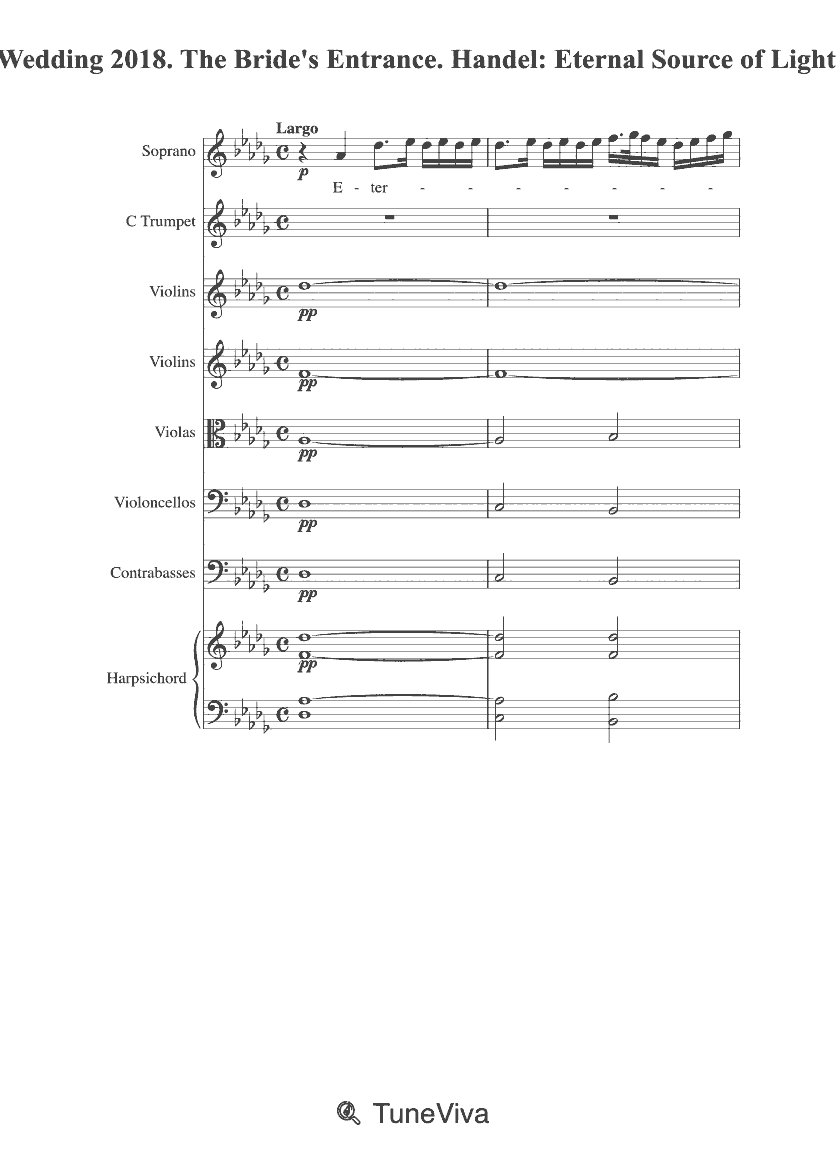
George Frideric Handel
From the Cantata Ode for the Birthday of Queen Anne
Soprano; C Trumpet; Violins +4 parts · 4 min 15 sec
Open score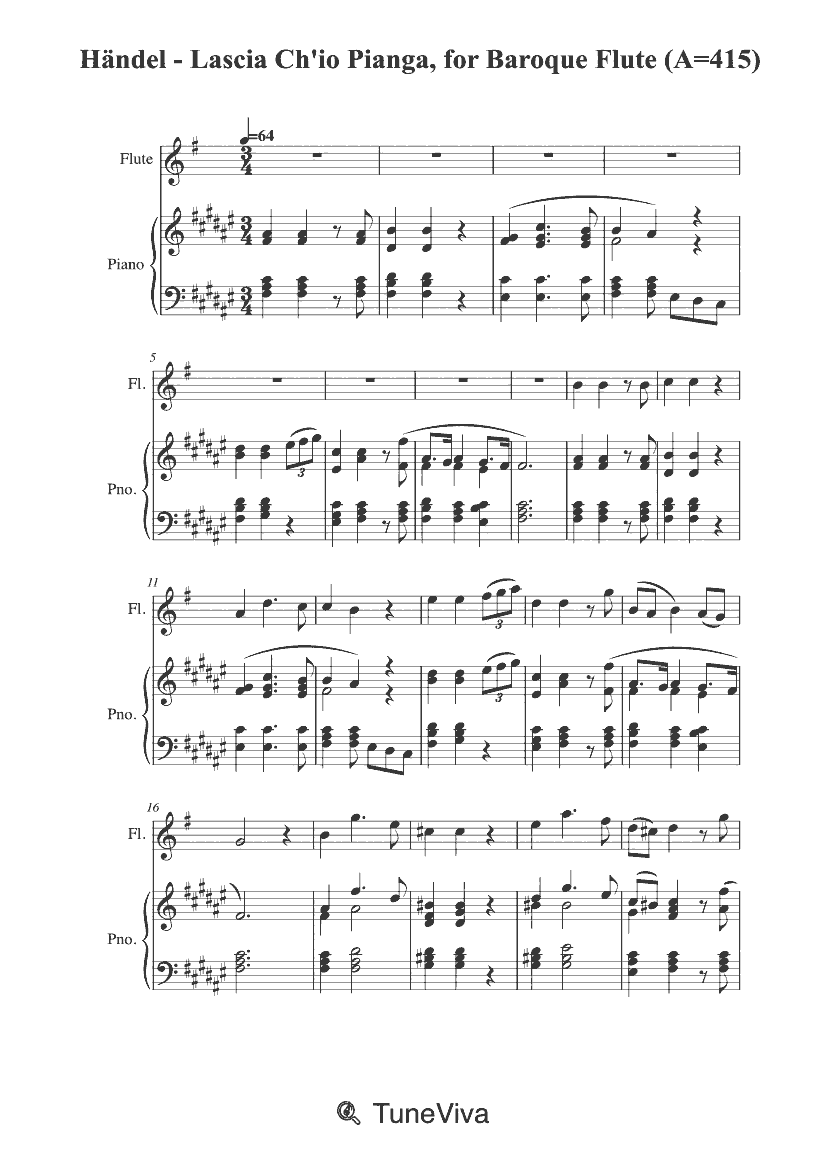
George Frideric Handel
for Baroque Flute (A=415) and Piano
Flute; Piano · 3 min 51 sec
Open score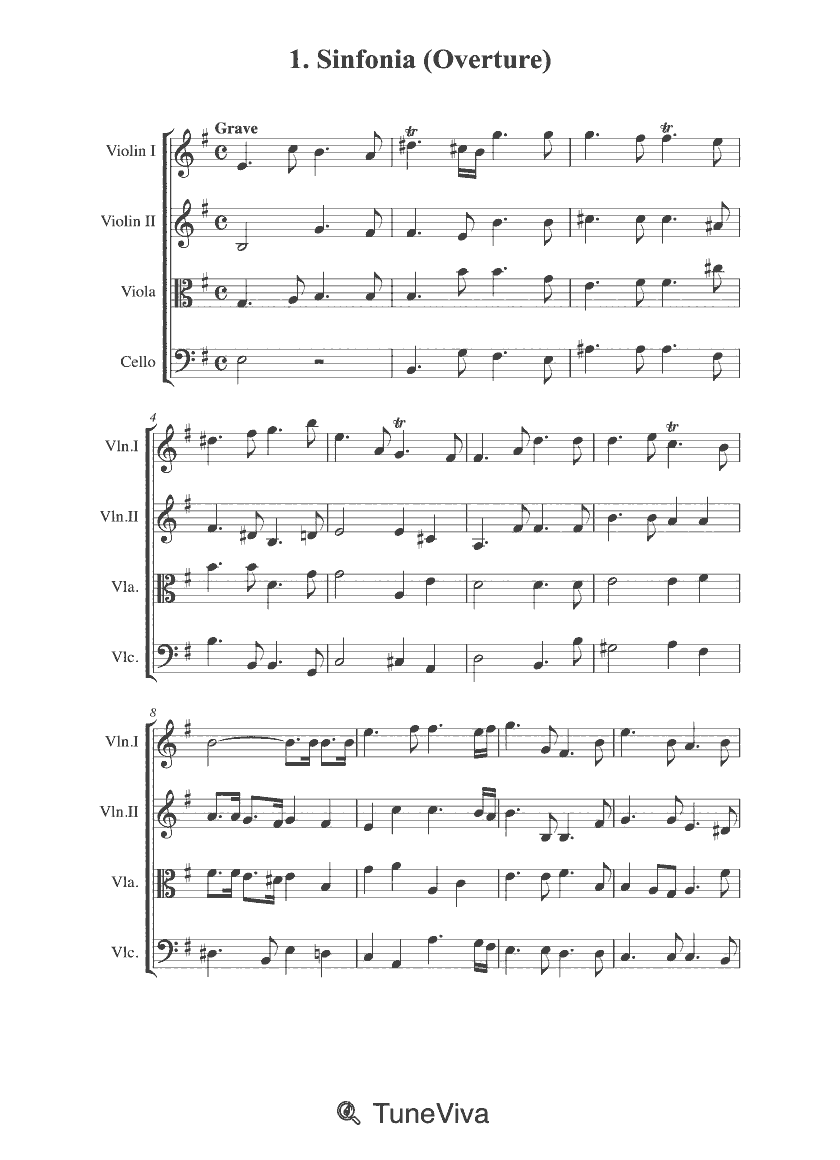
George Frideric Handel
From Messiah
Violin I; Violin II; Viola +1 parts · 2 min 40 sec
Open score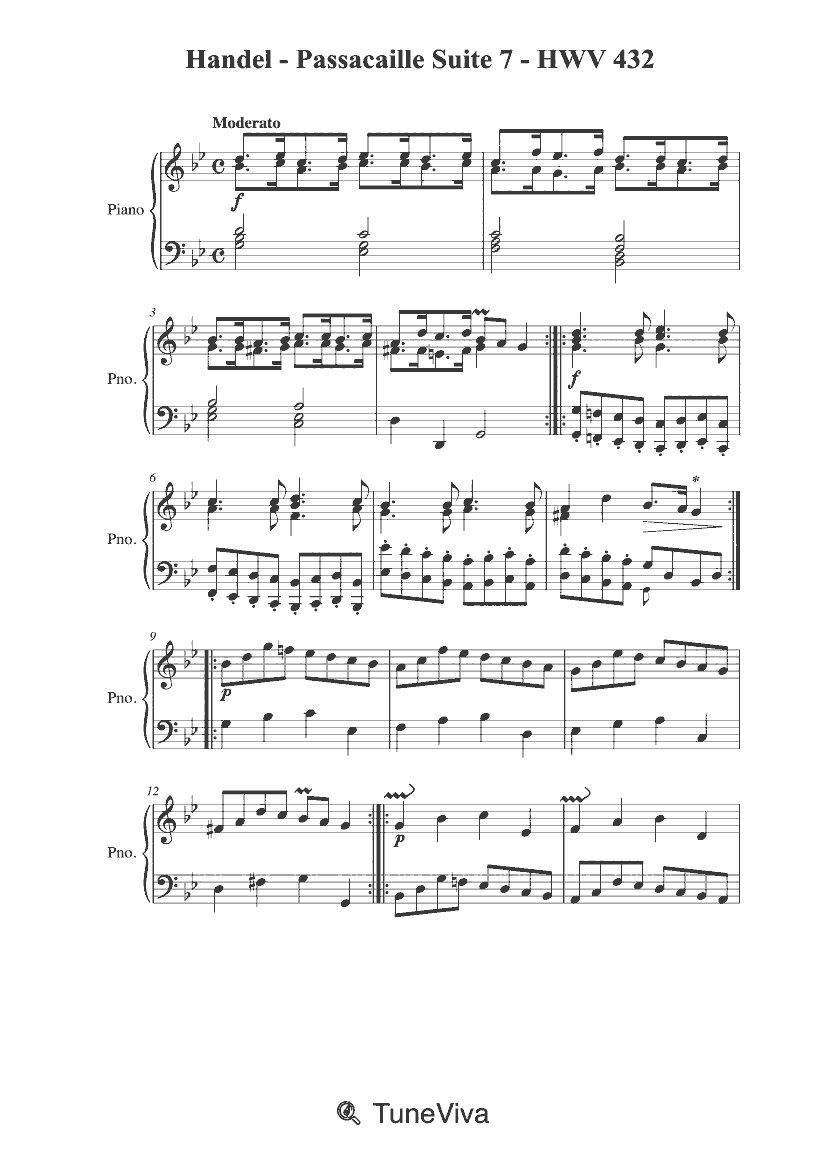
George Frideric Handel
Suite 7 - HWV 432
Piano · 5 min 4 sec
Open score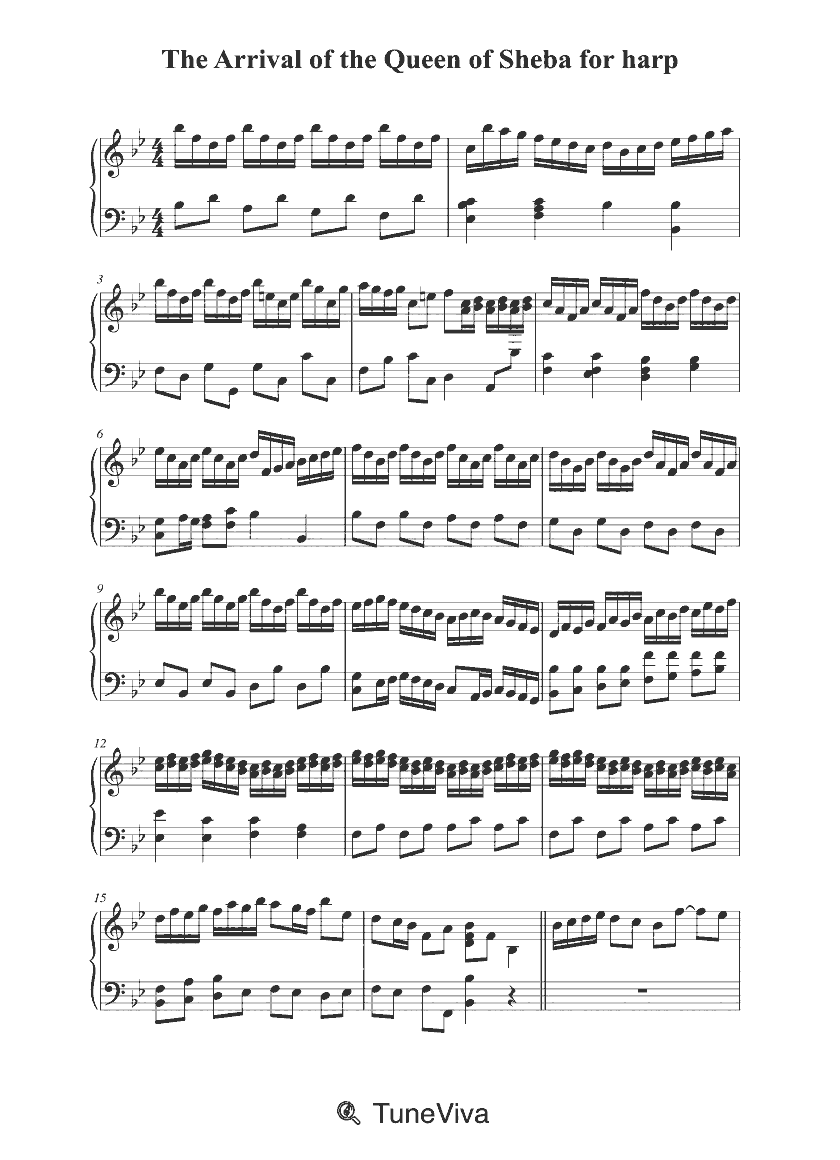
George Frideric Handel
Harp · 2 min 58 sec
Open score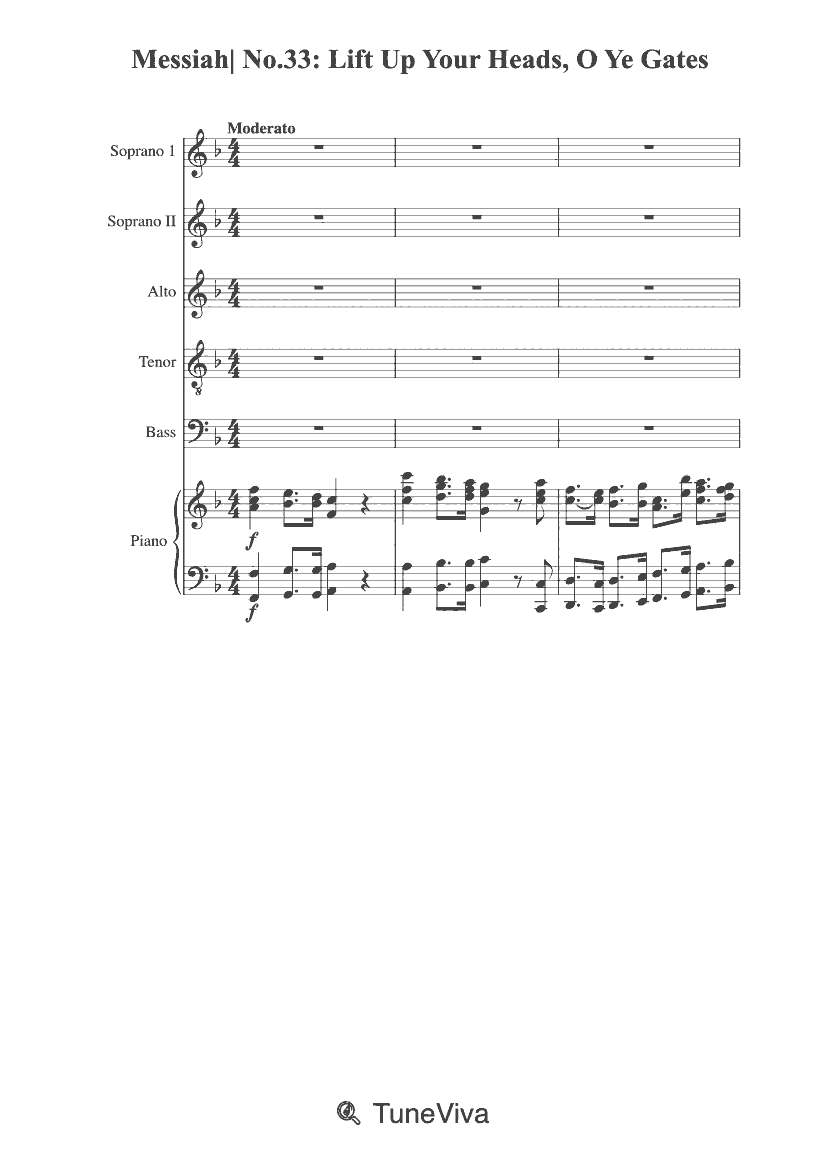
George Frideric Handel
Messiah
Soprano 1; Soprano II; Alto +3 parts · 4 min 6 sec
Open score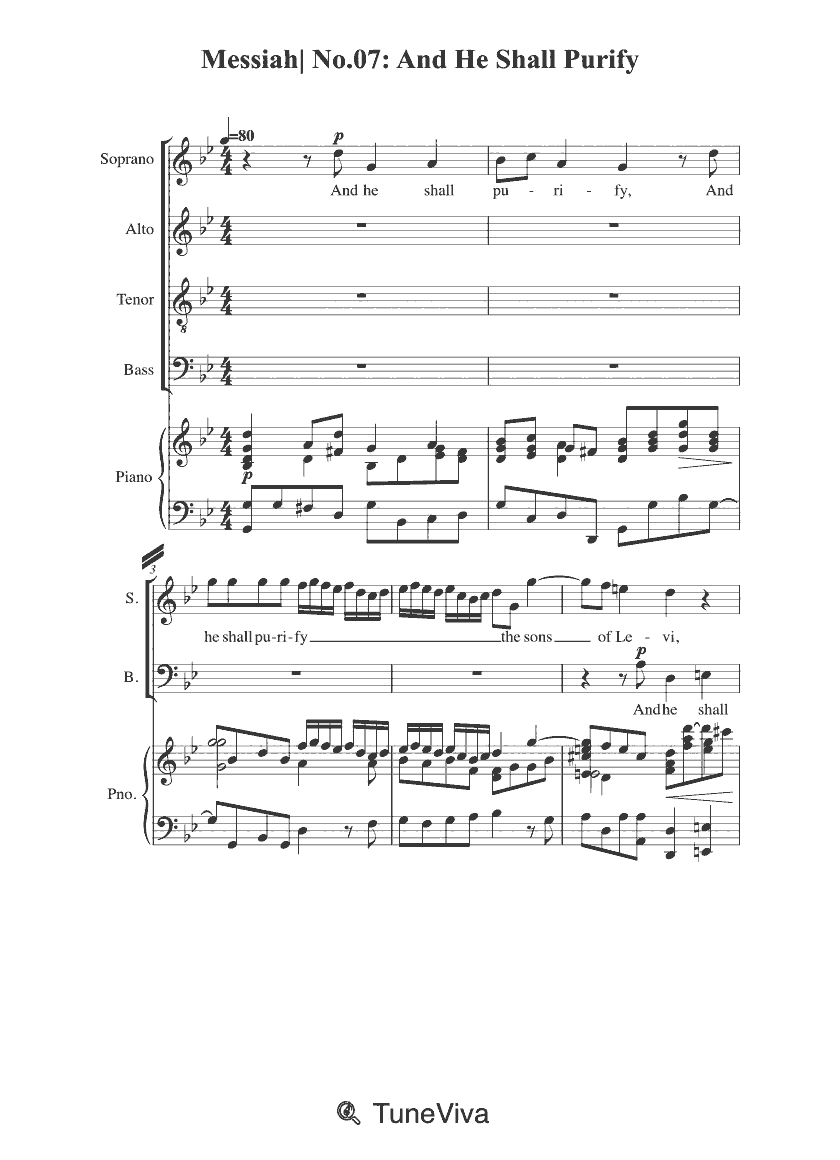
George Frideric Handel
Messiah
Soprano; Alto; Tenor +2 parts · 4 min 33 sec
Open score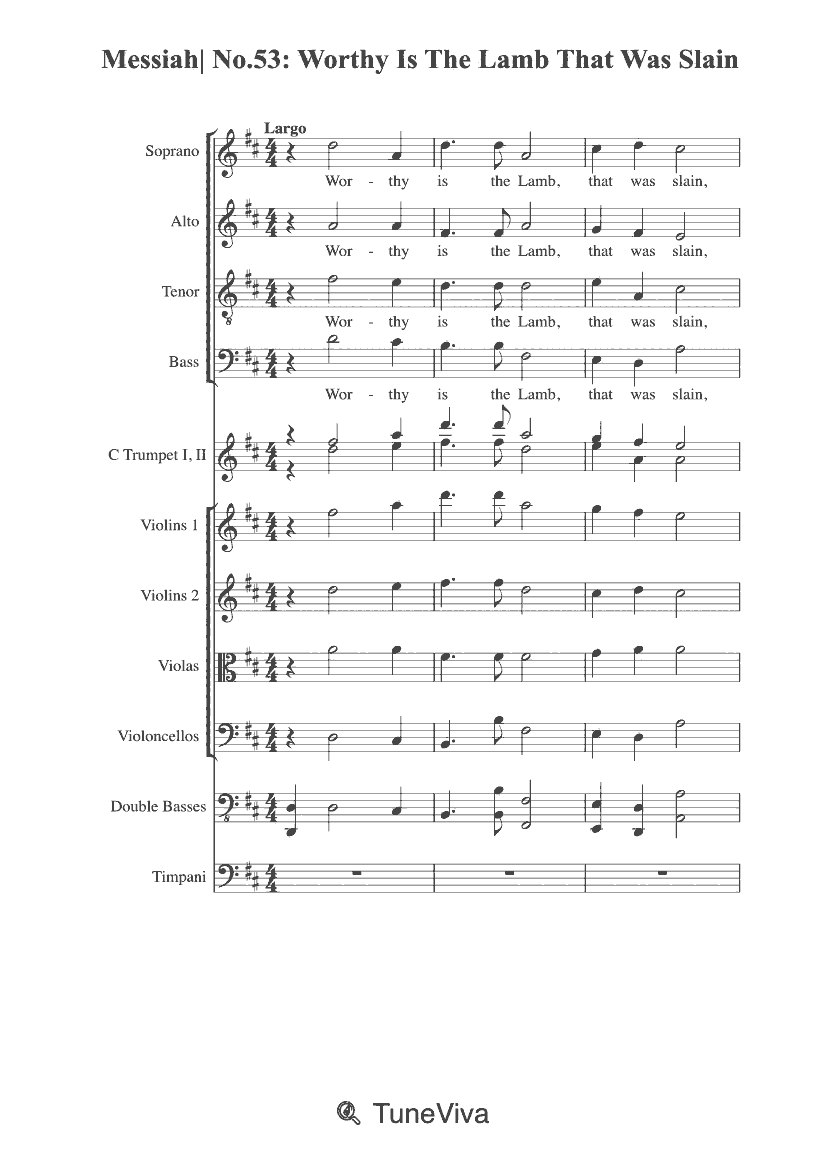
George Frideric Handel
Messiah
Soprano; Alto; Tenor +8 parts · 10 min 19 sec
Open score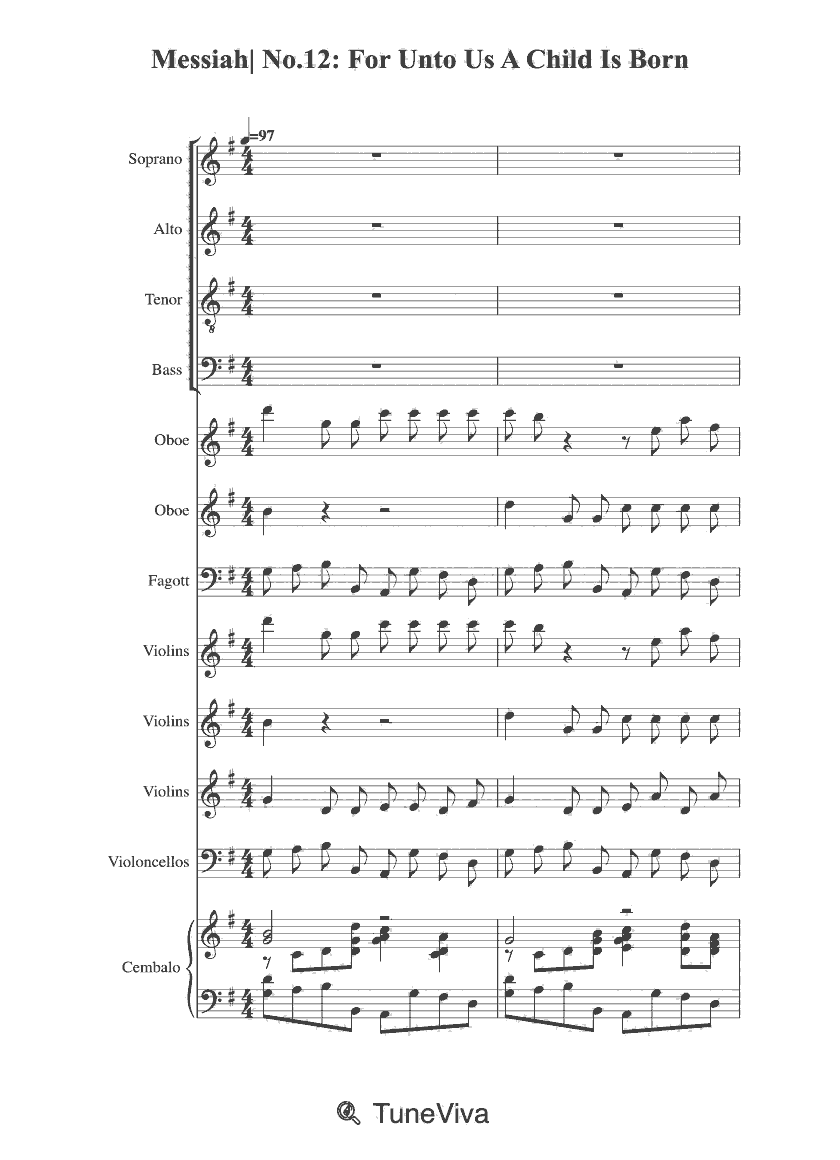
George Frideric Handel
Messiah
Soprano; Alto; Tenor +6 parts · 5 min 50 sec
Open scorePage 1 of 20
Handel's Water Music was played on a barge on the Thames in 1717; his Messiah was first heard in Dublin in 1742. Both facts belong to a career that began in Halle, Germany, and ended in London, where he was naturalised British in 1727. Seventy-seven carry lyrics, and the whole collection runs to about 1,696 minutes of music. The range is wider than the Hallelujah chorus. There are opera arias, coronation and oratorio numbers, keyboard suite movements, and instrumental arrangements, including Halvorsen's arrangement of the Passacaglia from Handel's Harpsichord Suite in G minor. George Frideric Handel (1685–1759) was a German-British Baroque composer whose music spans Italian opera, English oratorio, anthems, concerti grossi and organ concerti. Born in Halle, he settled in London in 1712 and became a naturalised British subject in 1727. The Wikipedia biography notes that his Water Music and Music for the Royal Fireworks remain popular, that he started three commercial opera companies, and that Zadok the Priest has been performed at every British coronation since 1727. This Handel sheet music page covers both vocal and instrumental scores: opera arias, choral numbers, keyboard movements, ceremonial suites and concerto parts. Listings in this selection include a Water Music suite, the Sarabande from the Keyboard Suite in D minor HWV 437, a piano solo Passacaglia labelled Handel/Halvorsen, the aria Ombra mai fu from Serse, and a first-violin concertino part for the Concerto Grosso Op. 6 No. 12. Because the titles describe different kinds of score, check the stated scoring before choosing.
He was born Georg Friedrich Händel in Halle on 5 March 1685, the son of a barber-surgeon, and studied with the organist Friedrich Wilhelm Zachow. After university in Halle he joined the Hamburg opera in 1703 and wrote Almira there, then spent several years in Italy, where Rodrigo and Agrippina were staged. He became Kapellmeister to the Elector of Hanover in 1710 but was in London by 1712 and stayed. He was naturalised in 1727, the year he wrote the coronation anthems for George II, and he died in London on 14 April 1759, buried in Westminster Abbey.
London shaped the music in this catalogue. Handel ran three commercial opera companies and wrote 42 operas, then turned to English oratorio after a breakdown in 1737. Messiah was composed in 1741 and premiered in Dublin on 13 April 1742. Earlier came the Water Music for George I in 1717; later came the Music for the Royal Fireworks in 1749. The keyboard suites, the concerti grossi Op. 6 and the coronation anthems belong to the same working life, and they are the source of many of the shorter pieces catalogued here.
The TuneViva holdings reflect that breadth. The catalogue presents all 399 scores, and 77 include lyrics, and the total playing time is roughly 1,696 minutes across 1,075,104 notated notes. Expect duplicate titles under different spellings — Händel, Hndel, Handel — because the underlying catalogue has never merged name variants.
Handel's London career: Handel was born in Halle in 1685 and settled in London in 1712, becoming a naturalised British subject in 1727. He started three commercial opera companies to supply Italian opera to the English nobility. A physical breakdown in 1737 prompted a change of direction toward English choral works, and after the success of Messiah in 1742 he did not compose another Italian opera. That shift helps explain why a Handel collection can include both Italian opera arias and English choral and ceremonial music.
Vocal scores: opera, oratorio and anthem: Handel's reputation rests in large part on his operas, oratorios, anthems, concerti grossi and organ concerti. In this selection, vocal items range from the aria Ah Mio Cor from Alcina, listed for voice and piano, to a Hallelujah Chorus listing with soprano, alto, tenor and bass parts. Check whether a title is a solo vocal score with piano, a choral score or a set of parts, since each serves a different rehearsal or performance need.
Instrumental and ceremonial music: The Water Music and Music for the Royal Fireworks remain among Handel's popular orchestral works, and his output also includes concerti grossi and organ concerti. The selection reflects this range with a Water Music suite and a first-violin concertino part for the Concerto Grosso Op. 6 No. 12. A single part is not a full score, so players should confirm what the score contains before planning an ensemble performance.
Dance forms in the keyboard music: The Sarabande from Handel's Keyboard Suite in D minor, HWV 437, is a triple-metre dance movement. The sarabande spread from Spain to Italy and France, where it became a slow court dance, and Baroque suites often placed one as the third of four movements. Handel is also cited among composers of passacaglias, usually serious variations built over a bass ostinato in triple metre. Recognising these forms helps a player choose a steady pulse and an appropriate character rather than treating every movement in the same way.
Both. He was born in Halle in 1685 and trained in Germany and Italy, but settled in London in 1712 and became a naturalised British subject in 1727.
Johan Halvorsen arranged the passacaglia from Handel's Harpsichord Suite HWV 432 as a violin-and-viola duo. The catalogue entry is a piano solo version of that arrangement.
Yes. It holds the Hallelujah Chorus and the aria O Thou That Tellest Good Tidings to Zion, among other choral and instrumental items.
The raw catalogue preserves name variants exactly as they were entered. They all point to the same composer, George Frideric Handel.
George Frideric Handel was a German-British Baroque composer, baptised Georg Friederich Händel in Halle in 1685. He settled in London in 1712, became a naturalised British subject in 1727, and died in 1759. His music includes operas, oratorios, anthems, concerti grossi and organ concerti.
Handel is well known for his operas, oratorios, anthems, concerti grossi and organ concerti. His orchestral Water Music and Music for the Royal Fireworks remain popular, and the coronation anthem Zadok the Priest has been performed at every British coronation since 1727.
A physical breakdown in 1737 led Handel to change creative direction, address the middle class and move toward English choral works. After the success of Messiah in 1742, he never composed another Italian opera.
A sarabande is a dance in triple metre. It spread from Spain to Italy and France, where it became a slow court dance, and Baroque suites often placed one as the third of four movements. Handel's Sarabande is the fourth movement of his Keyboard Suite in D minor, HWV 437, and its theme appears prominently in the film Barry Lyndon.
A passacaglia is a musical form that originated in early seventeenth-century Spain and is usually serious in character, typically built on a bass ostinato and written in triple metre. Handel is among the composers cited as writing passacaglias, and this selection includes a piano solo titled Passacaglia – Handel/Halvorsen.
Sources give the composer as George Frideric, or Frederick, Handel, while his baptismal name was Georg Friederich Händel. Catalogue titles therefore show both Handel and Händel, and these variants refer to the same composer.
Zadok the Priest is one of Handel's four coronation anthems. The Wikipedia biography states that it has been performed at every British coronation since 1727.