Habanera - Piano Solo - Georges Bizet
Georges Bizet
Piano · Arr. James Brigham · 1 min 40 sec
Open score40 Georges Bizet scores: Habanera and the Toreador Song from Carmen, the Carmen overture, the L'Arlésienne Minuet and Ouvre ton coeur, by the Paris-born master.
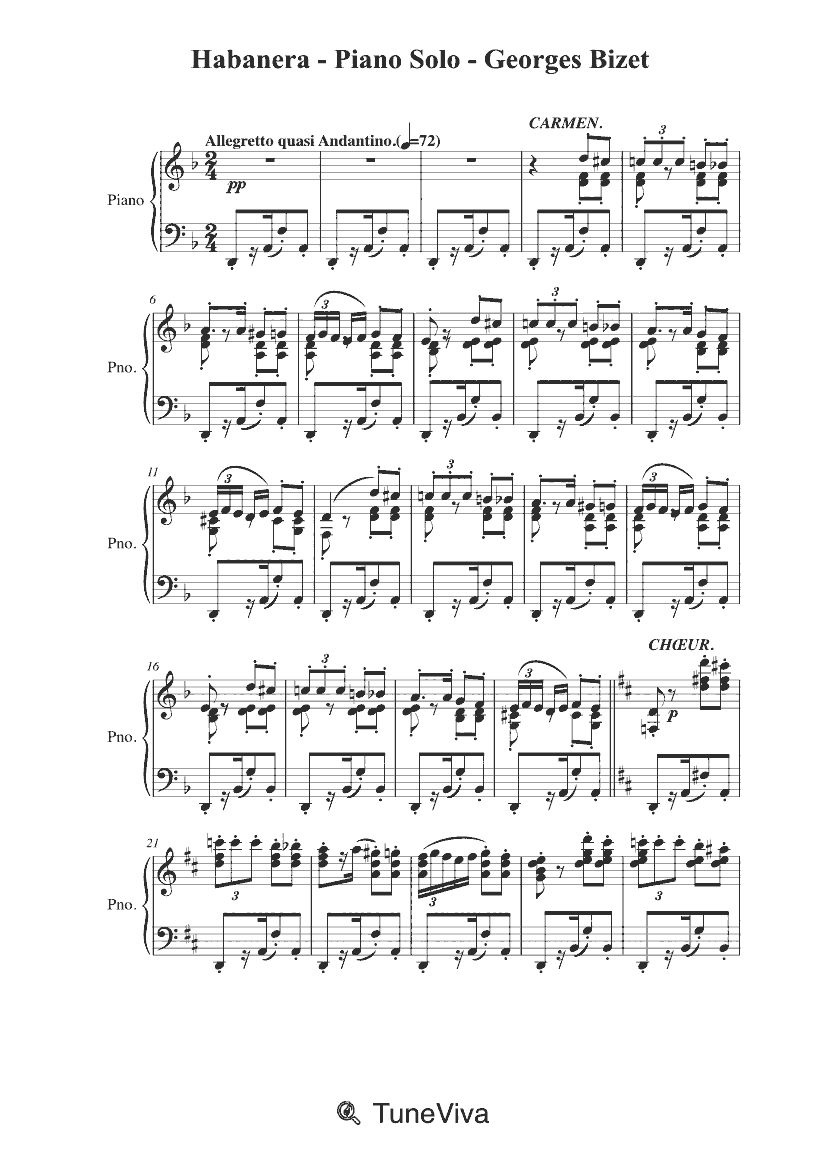
Carmen's entrance aria in a piano solo, and the most-viewed file on the page at 41,069 views.
The prelude to Act I, which is what the opera's 'overture' normally means; the entry gives no arranger and no scoring beyond the title.
A second piano setting of the same prelude, with the dropped 'é' of the catalogue title restored.
The Habanera under its first line, with Bizet's own French text set to Iradier's melody.
Arranged for flute at Baroque pitch. The movement is not from L'Arlésienne: Guiraud took it from Scènes bohémiennes, drawn from La jolie fille de Perth.
Escamillo's couplets in Act II; at 10,067 notes the longest single number on the page.
A short setting of the Toreador tune under a Spanish title, 340 notes against the 10,067 of the Act II scene.
A Spanish serenade-bolero; one library catalogue describes it as an arrangement from the symphonic ode Vasco da Gama.
A solo from the 1867 opera on Walter Scott's novel, first performed at the Théâtre-Lyrique on 26 December 1867.
Compare the instrument and arrangement details below, then open a score to check the notation. Different entries may be arrangements or editions of the same work; available playback tools are shown on each score page.
Georges Bizet
Piano · Arr. James Brigham · 1 min 40 sec
Open score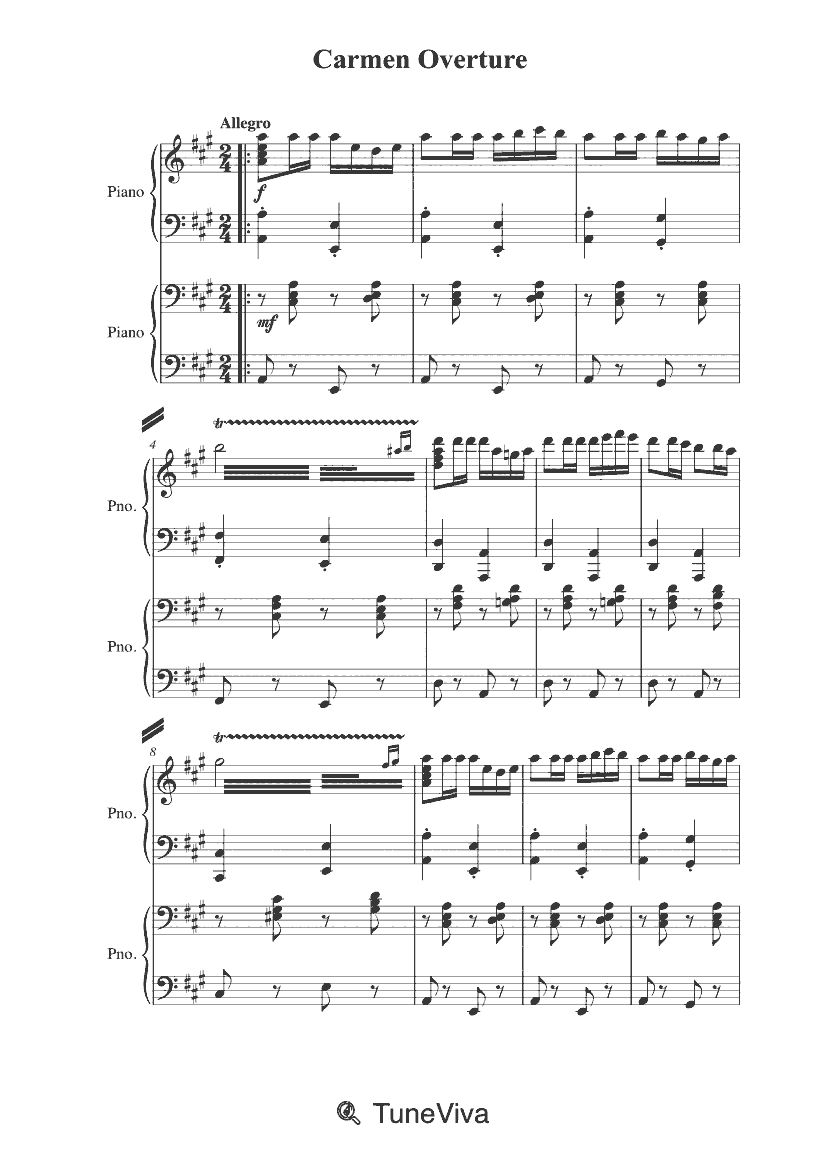
Georges Bizet
Prelude
Piano · 2 min 33 sec
Open score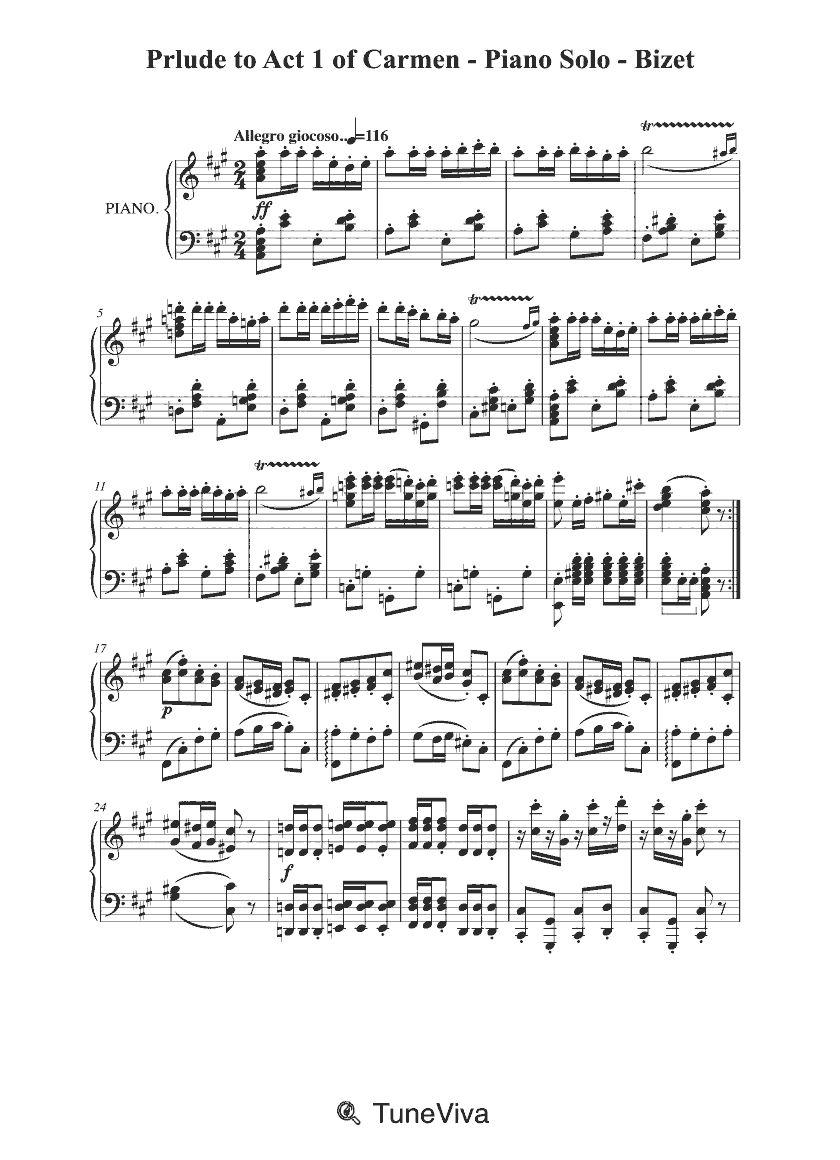
Georges Bizet
Act 1 of Carmen
PIANO. · Arr. Georges Bizet · 4 min 23 sec
Open score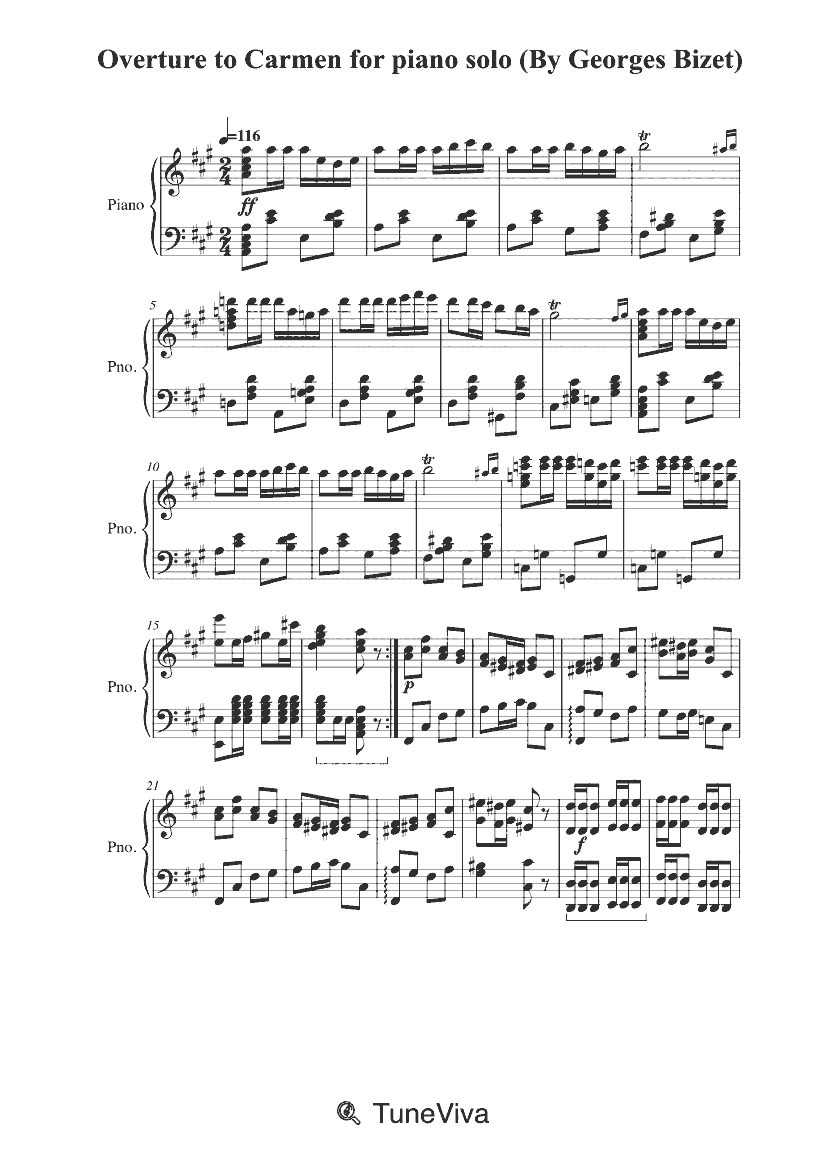
Georges Bizet
De l'opéra Carmen
Piano · 2 min 12 sec
Open score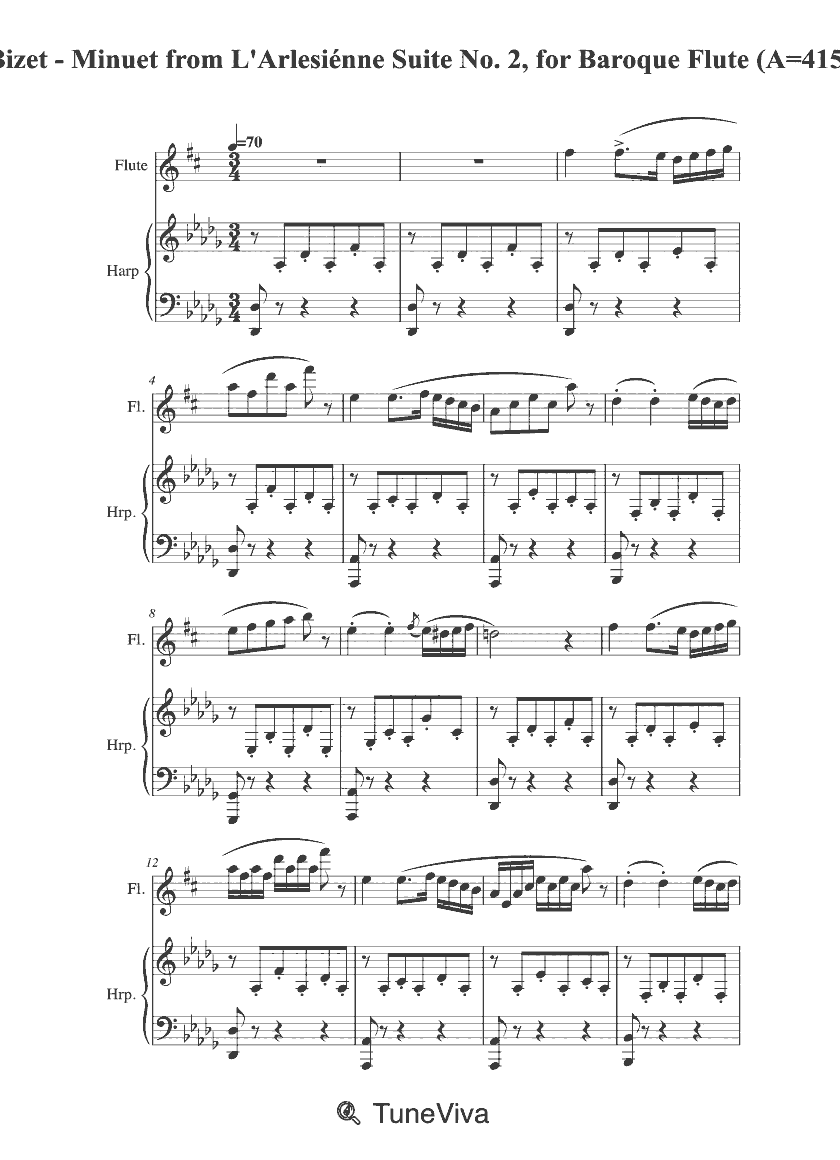
Georges Bizet
for Baroque Flute (A=415)
Flute; Harp · 4 min 12 sec
Open score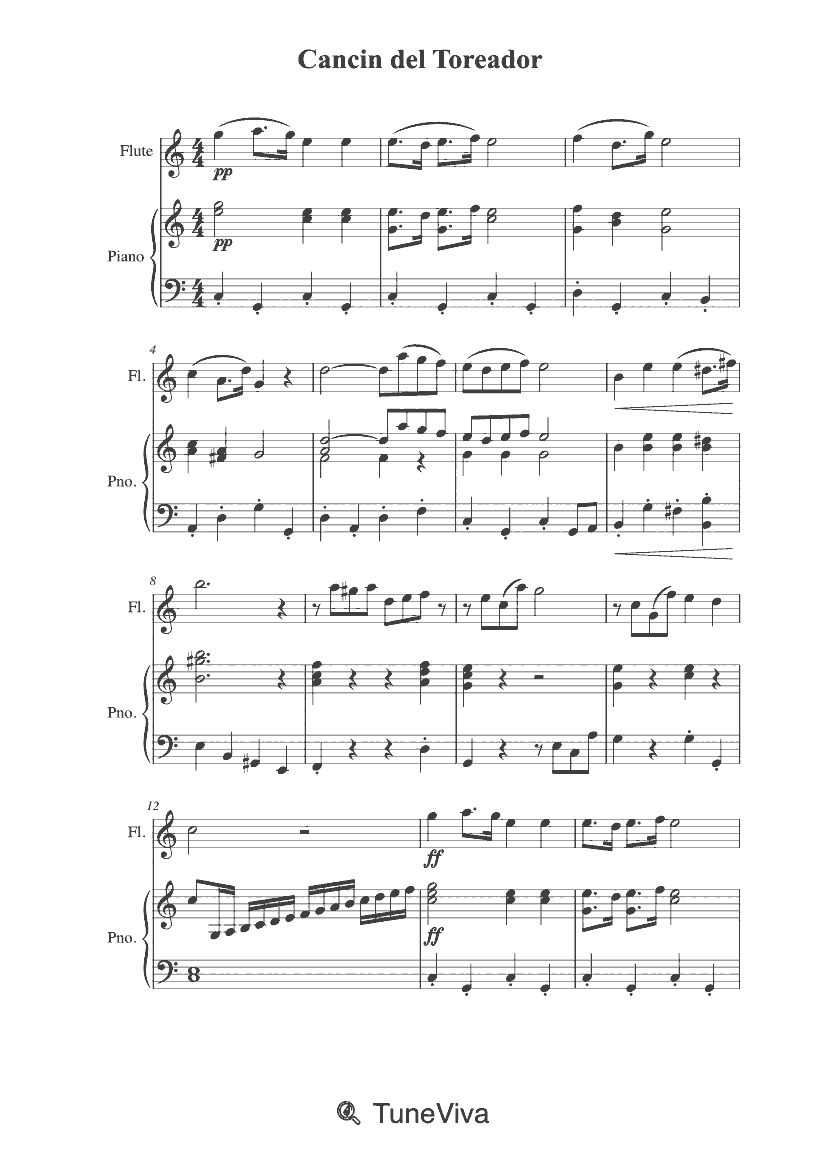
Georges Bizet
de Carmen
Flute; Piano · 58 sec
Open score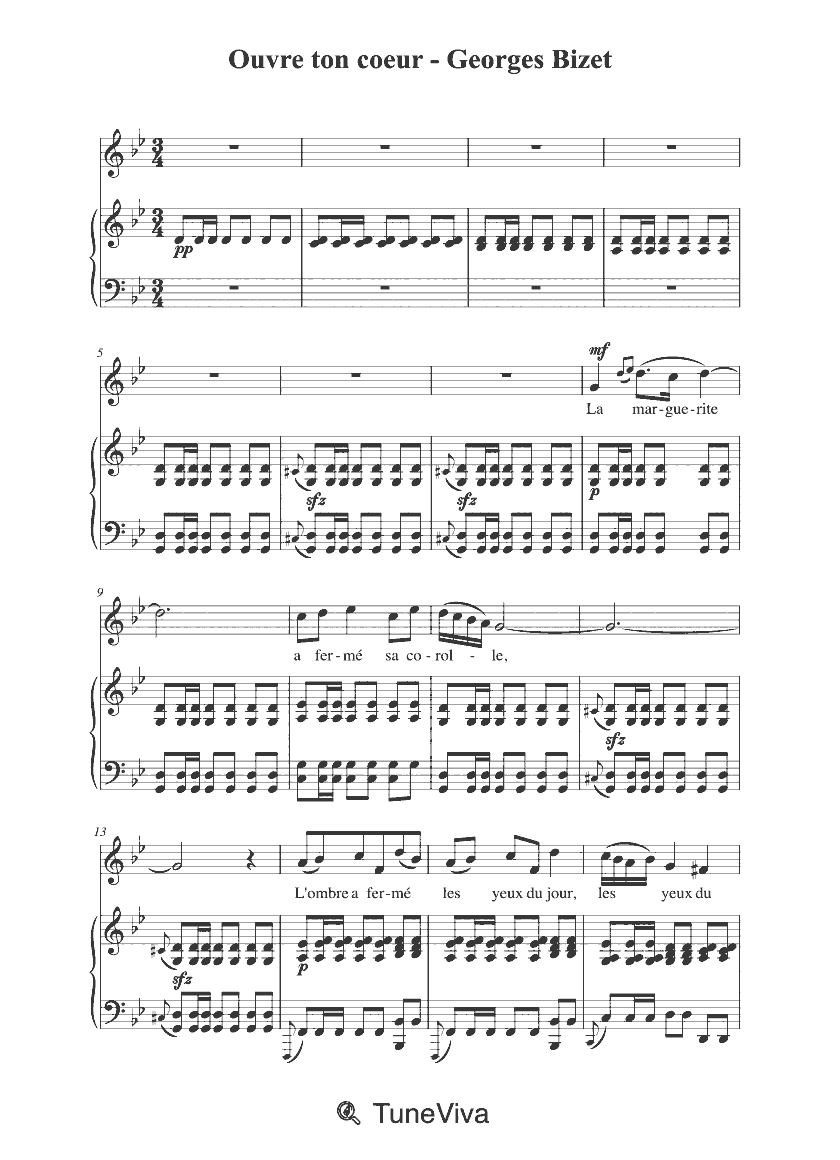
Georges Bizet
Voix; Piano · 2 min 25 sec
Open score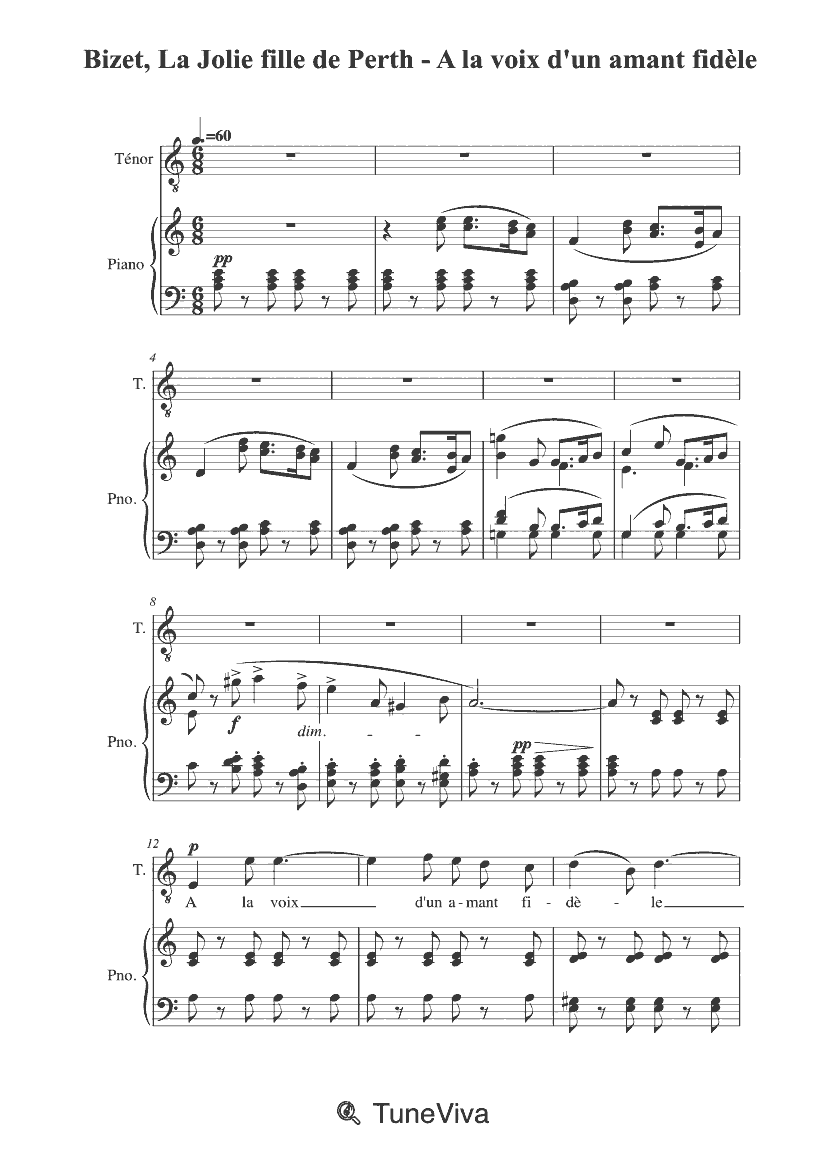
Georges Bizet
La jolie fille de Perth
Ténor; Piano · 2 min 55 sec
Open score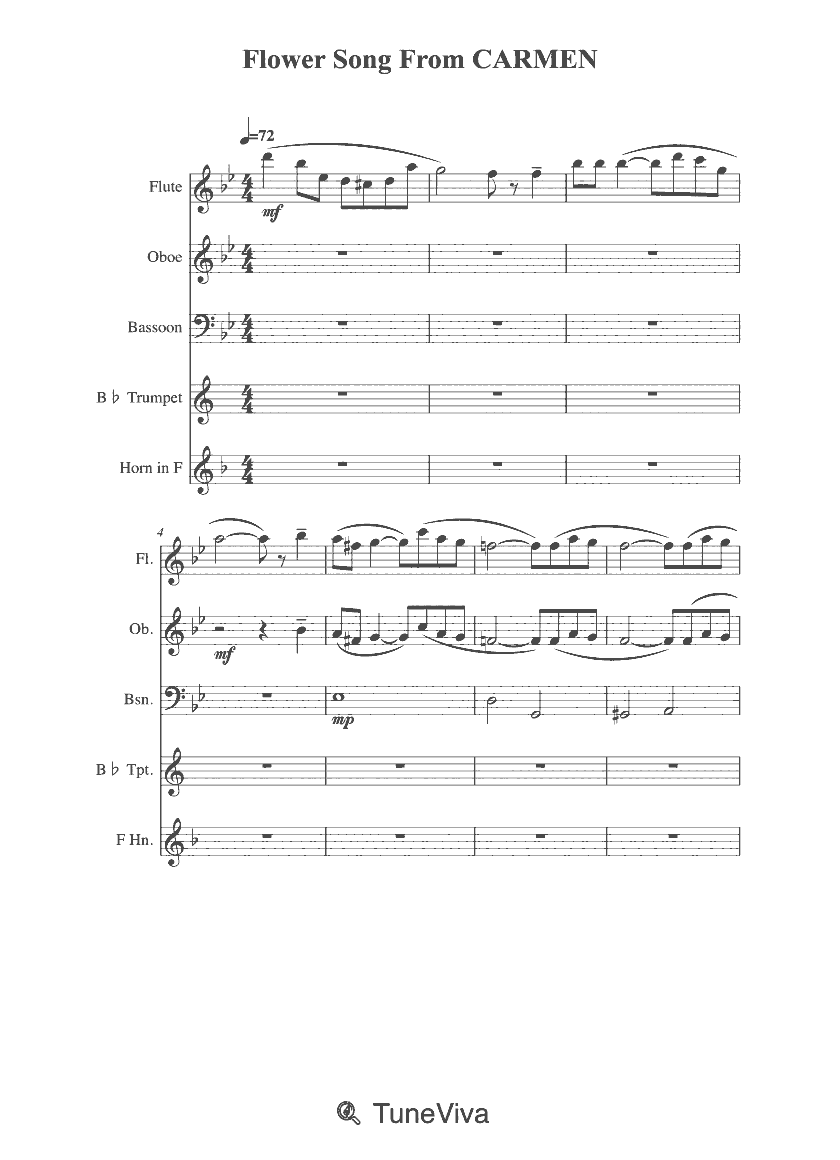
Georges Bizet
Flute; Oboe; Bassoon +2 parts · 1 min 23 sec
Open score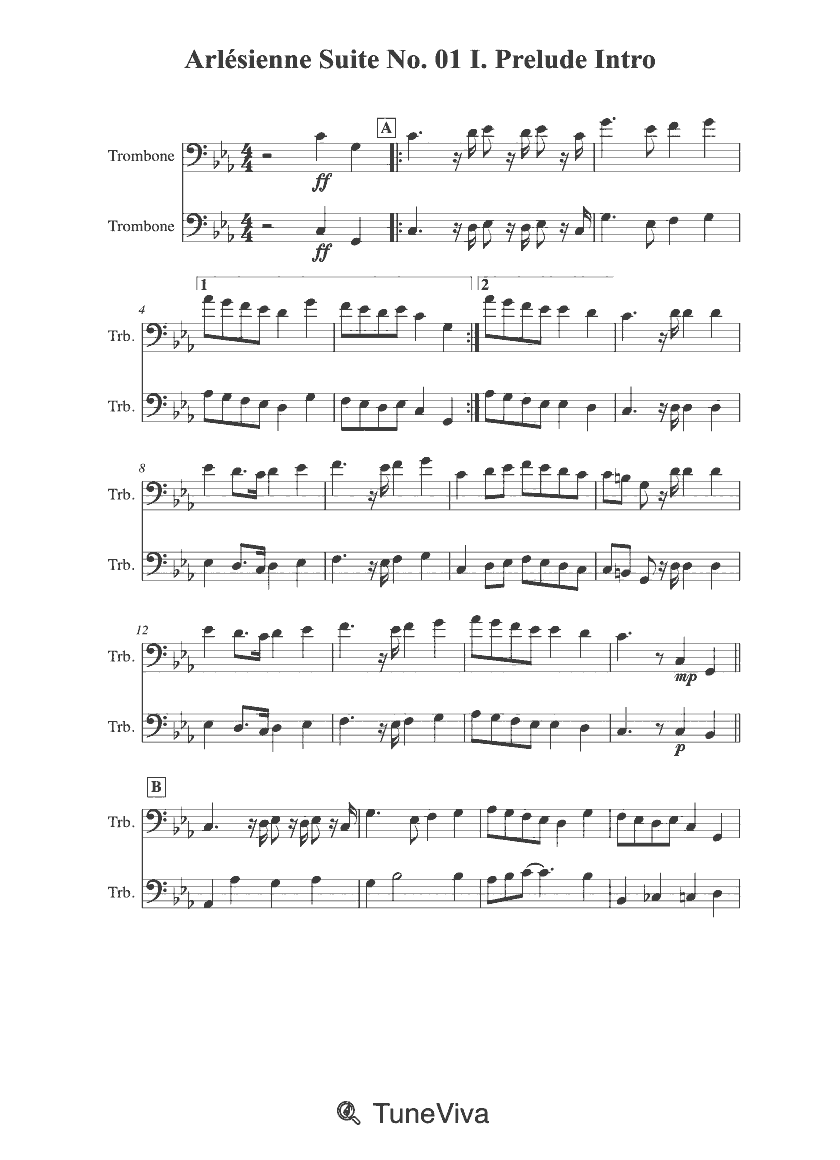
Georges Bizet
1. Prelude - Intro
Trombone · 3 min 7 sec
Open score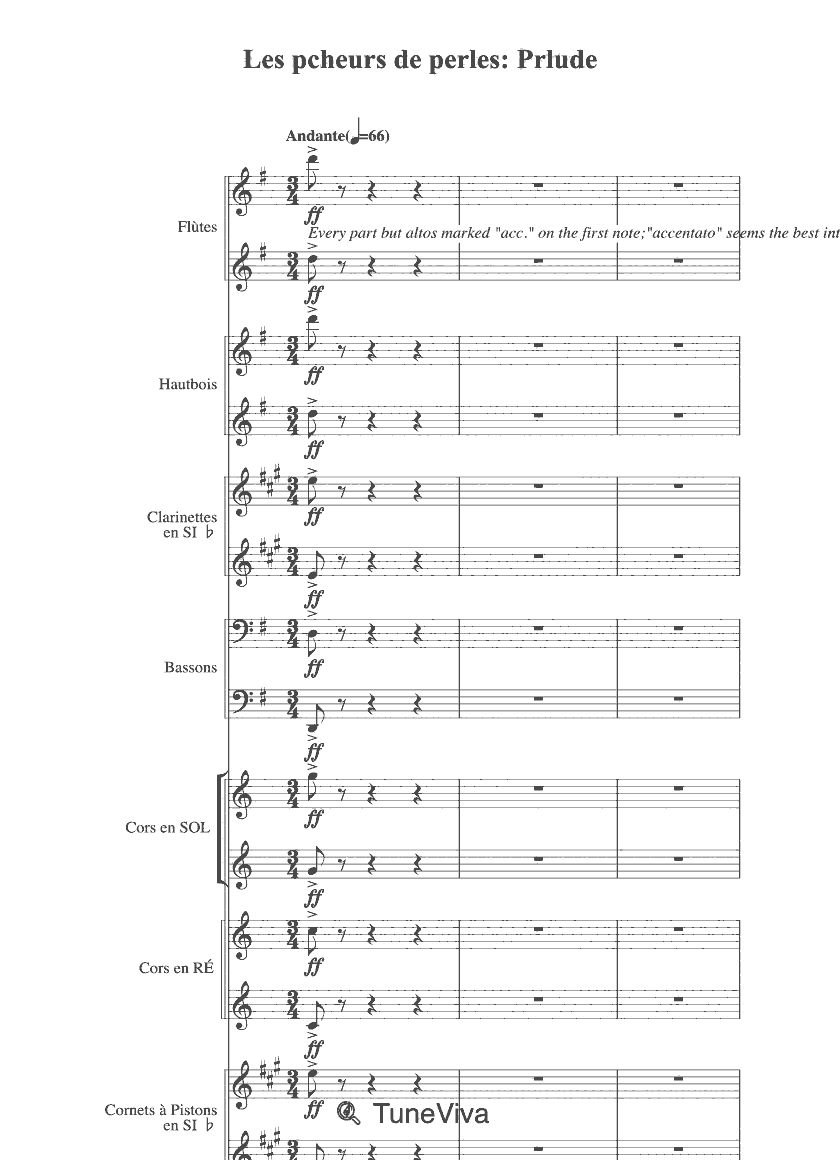
Georges Bizet
Pr?lude
Flùtes; Hautbois; Clarinettes en SI ♭ +11 parts · 2 min 27 sec
Open score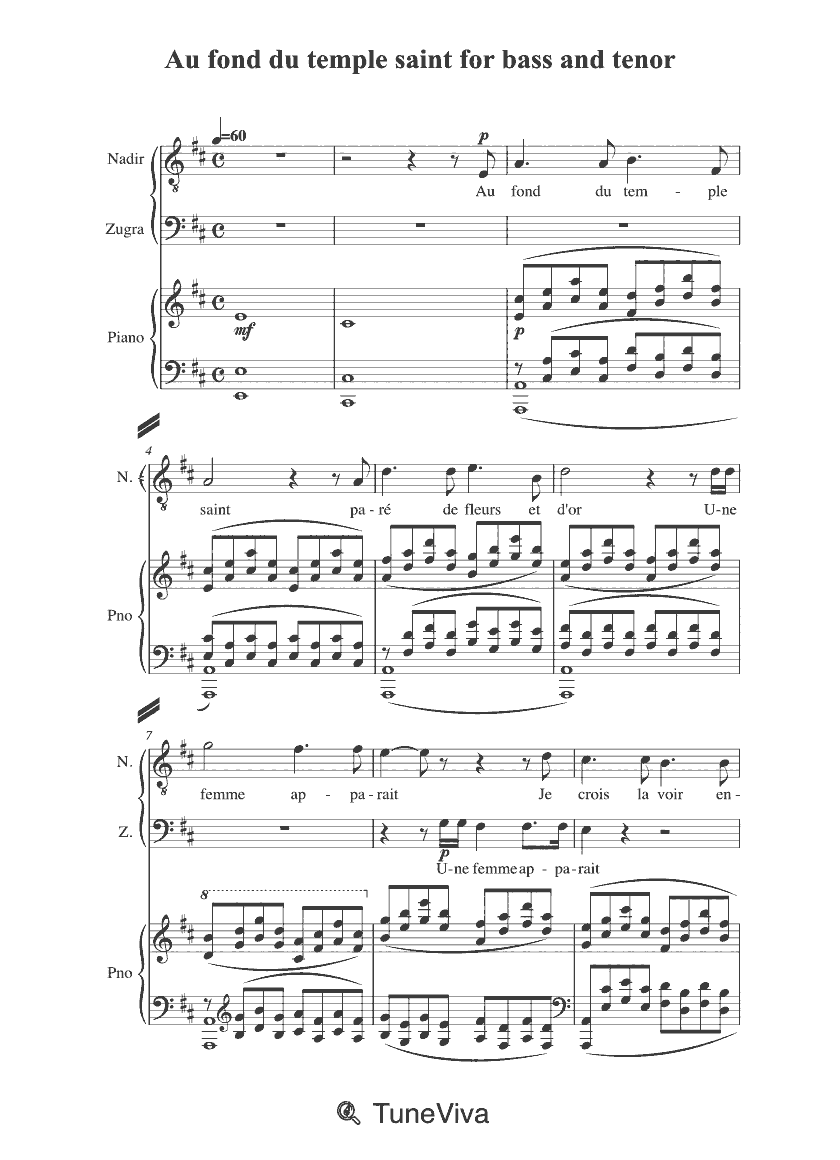
Georges Bizet
from the opera: Les pêcheurs de perles (Act I)
Nadir; Zugra; Piano · Arr. Wouter van Burik · 5 min 39 sec
Open score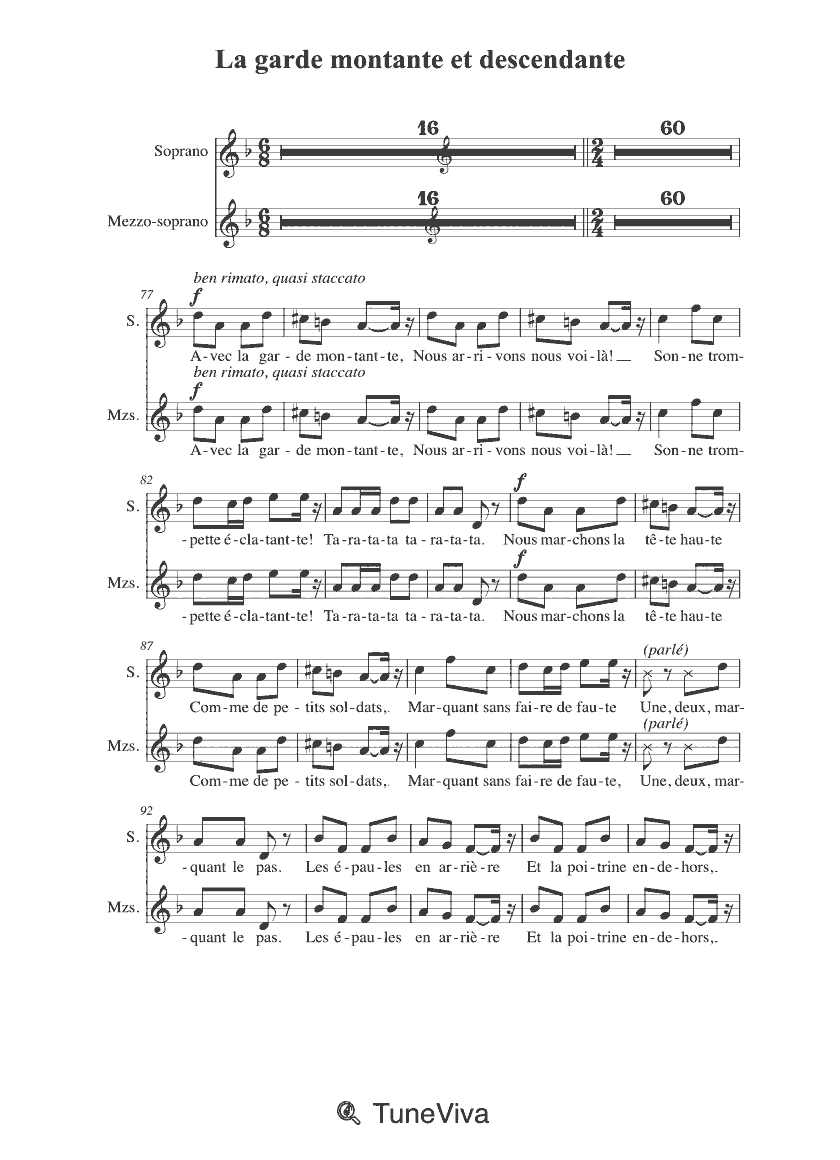
Georges Bizet
Carmen
Soprano; Mezzo-soprano · 1 hr 20 min 47 sec
Open score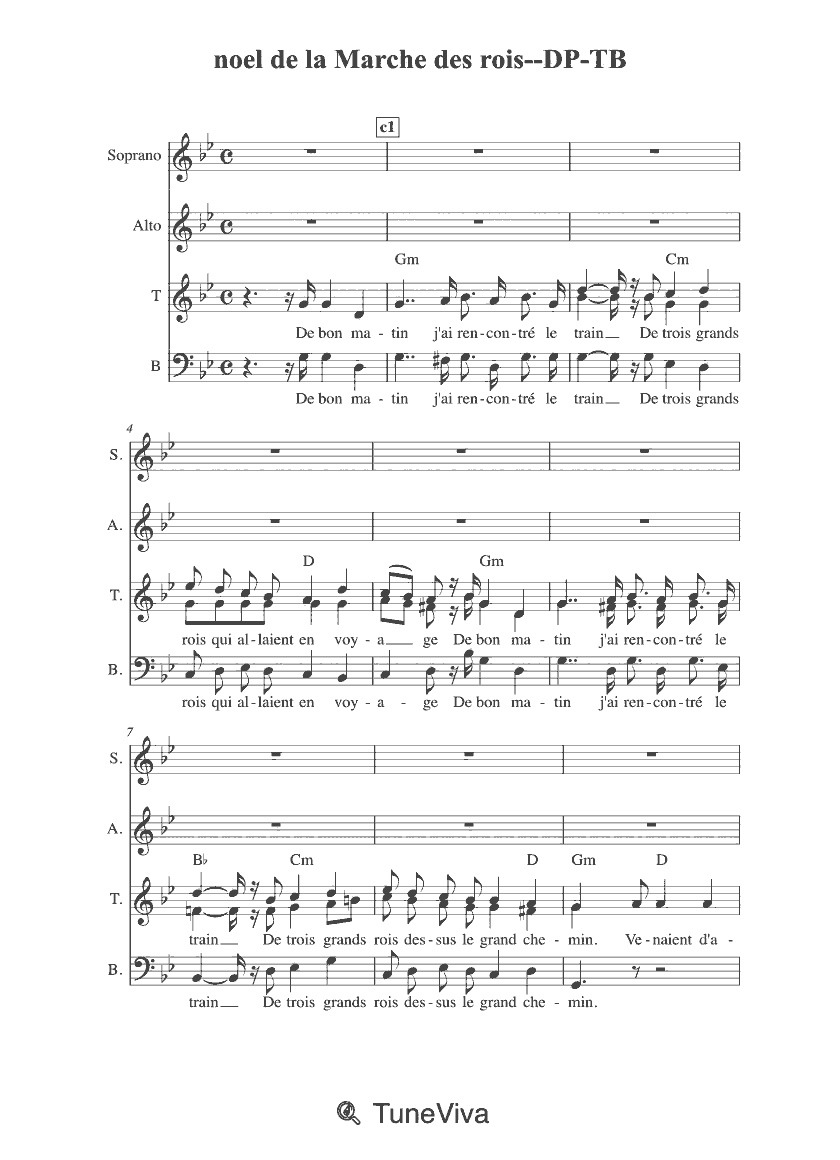
Georges Bizet
Soprano; Alto; T +1 parts · 1 min 46 sec
Open score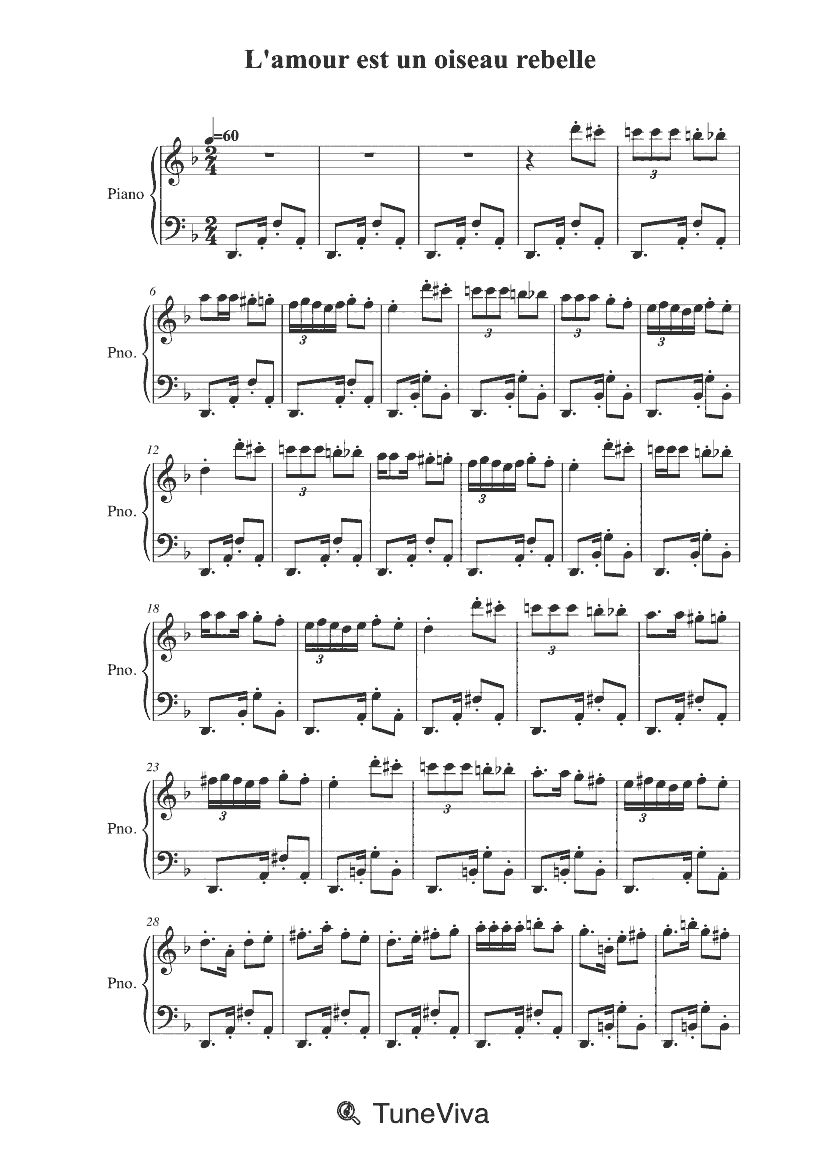
Georges Bizet
Piano · 3 min 0 sec
Open score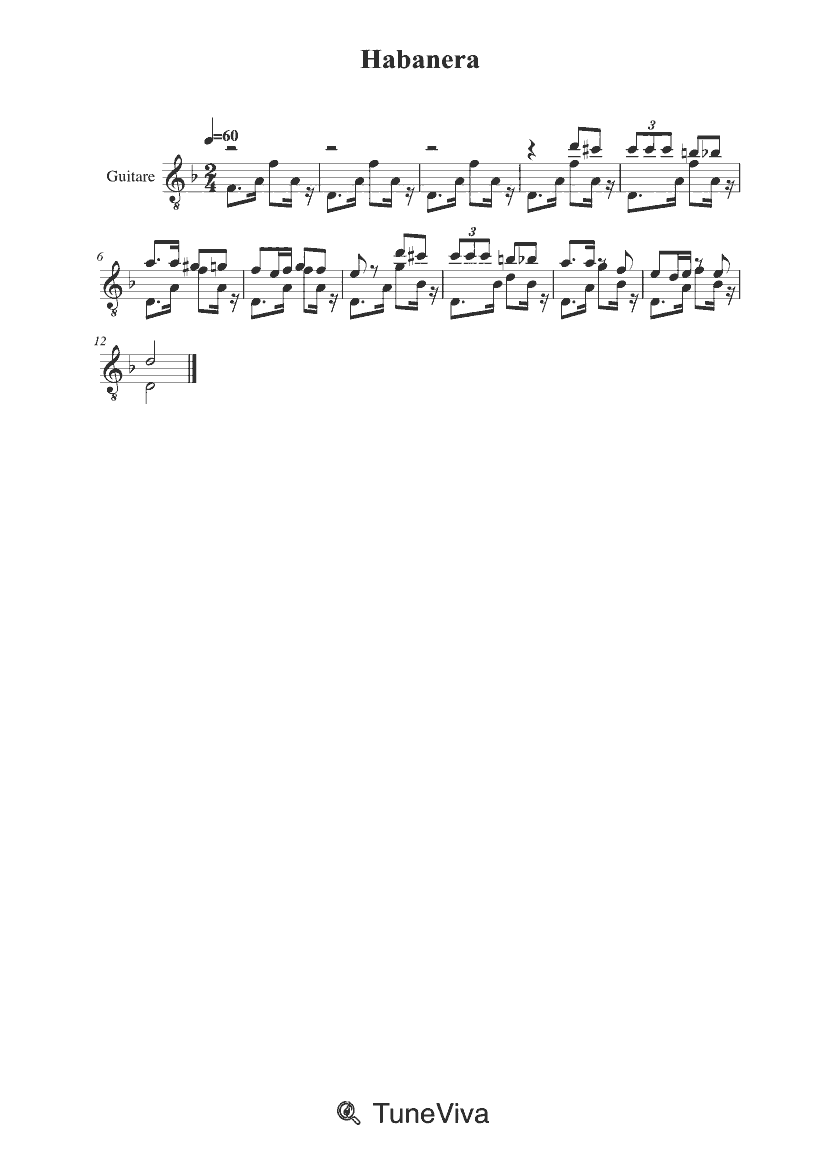
Georges Bizet
Guitare · 39 sec
Open score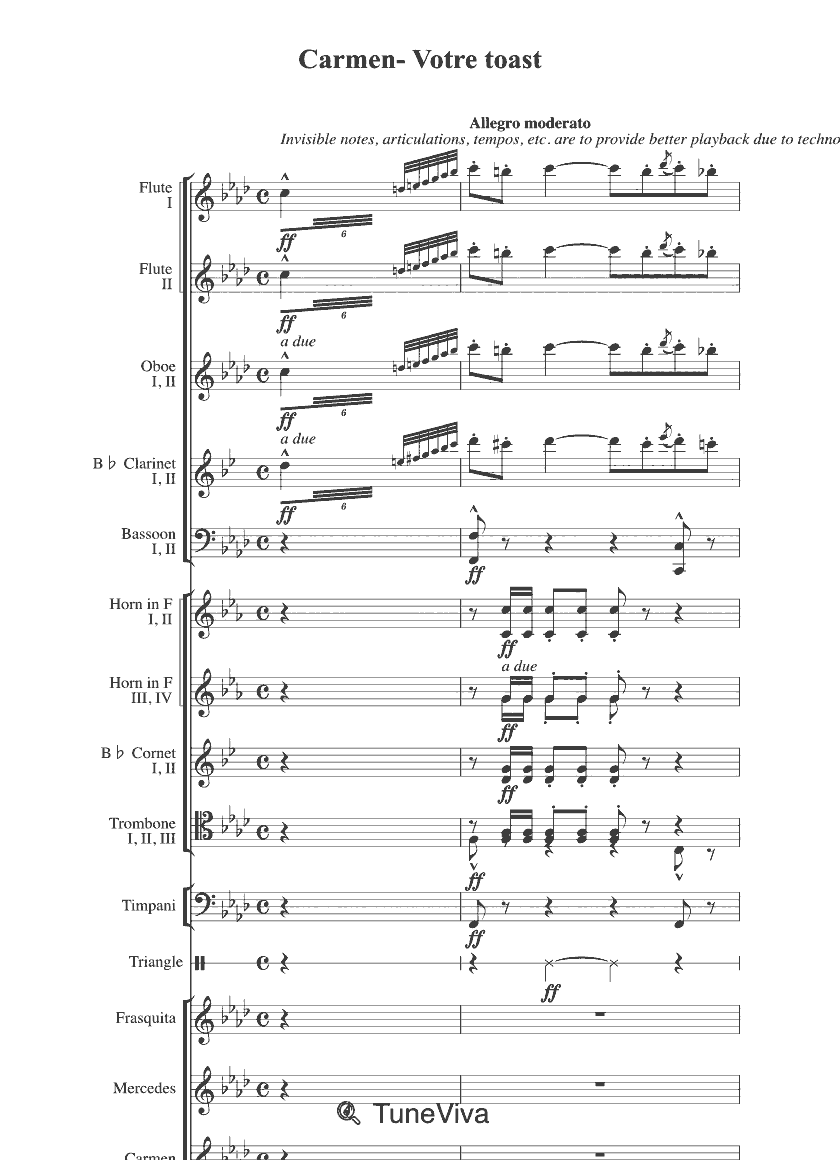
Georges Bizet
Toreador Song from Carmen Act II
Flute I; Flute II; Oboe I, II +19 parts · 4 min 16 sec
Open score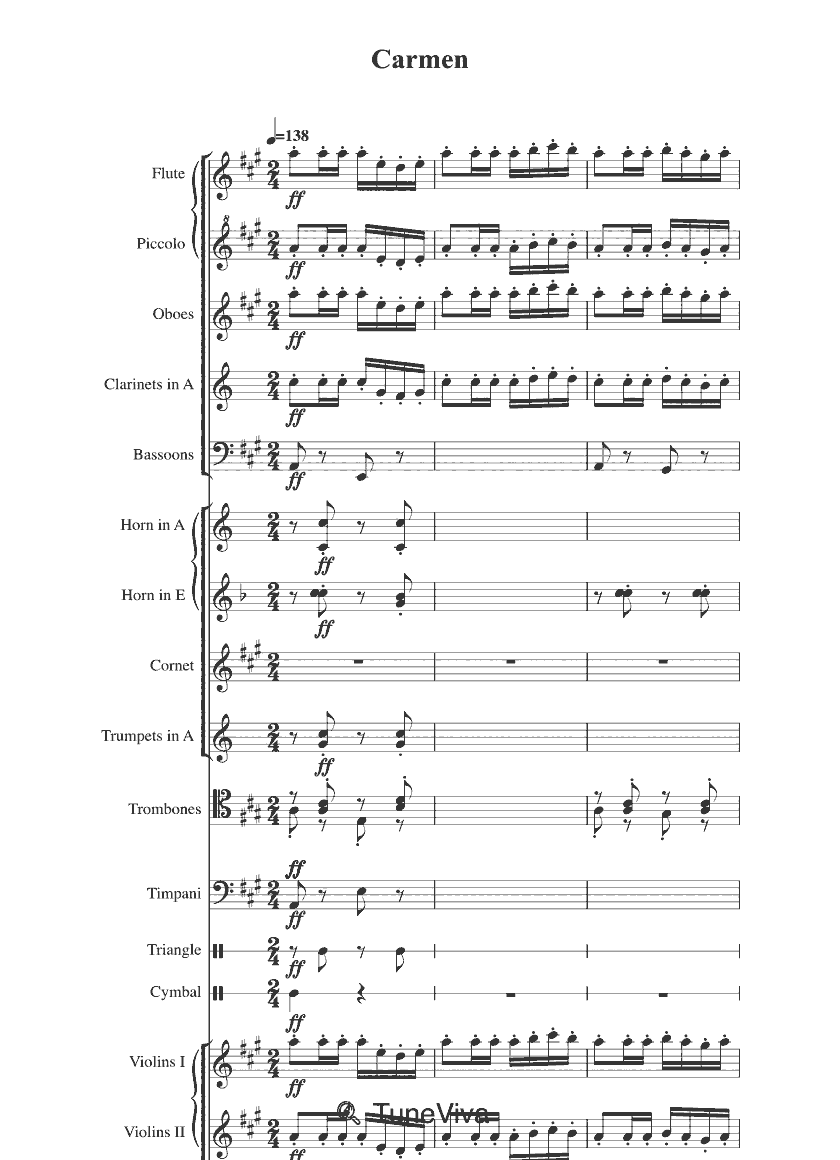
Georges Bizet
Prélude
Flute; Piccolo; Oboes +15 parts · 3 min 17 sec
Open score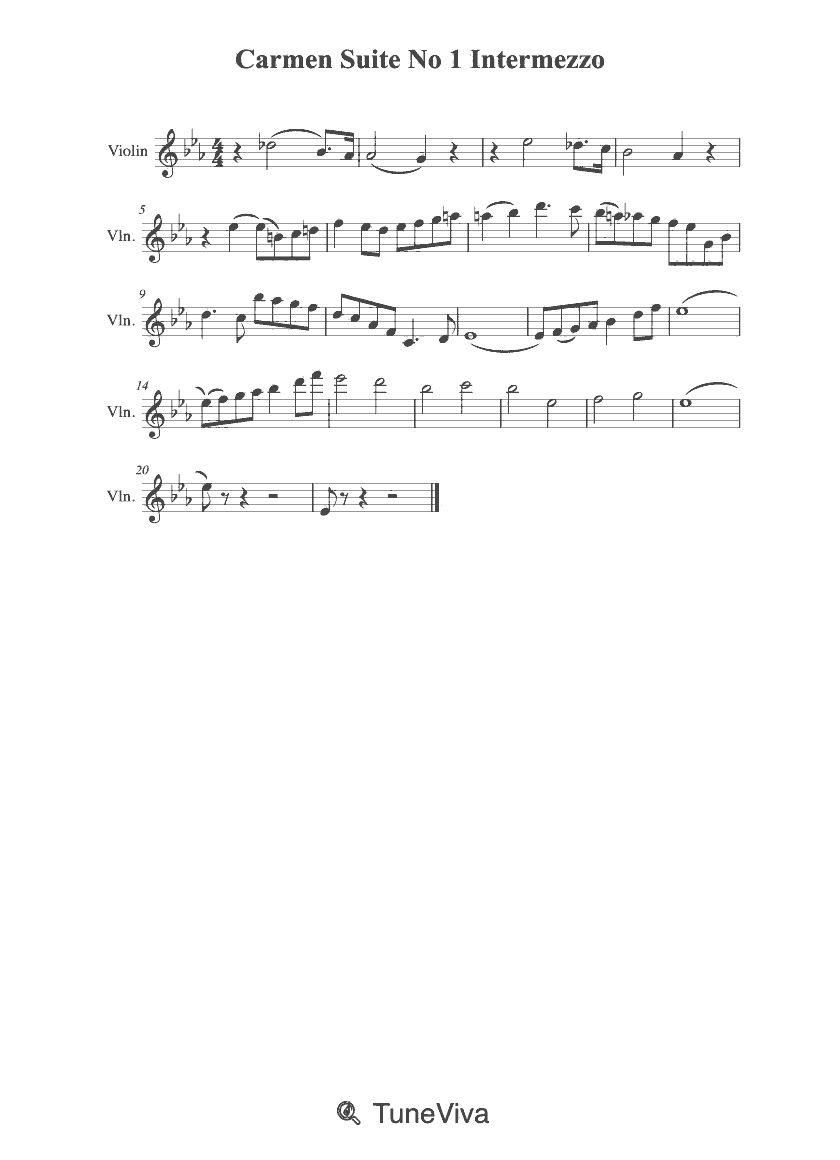
Georges Bizet
Andantino quasi Allegretto
Violin · 41 sec
Open score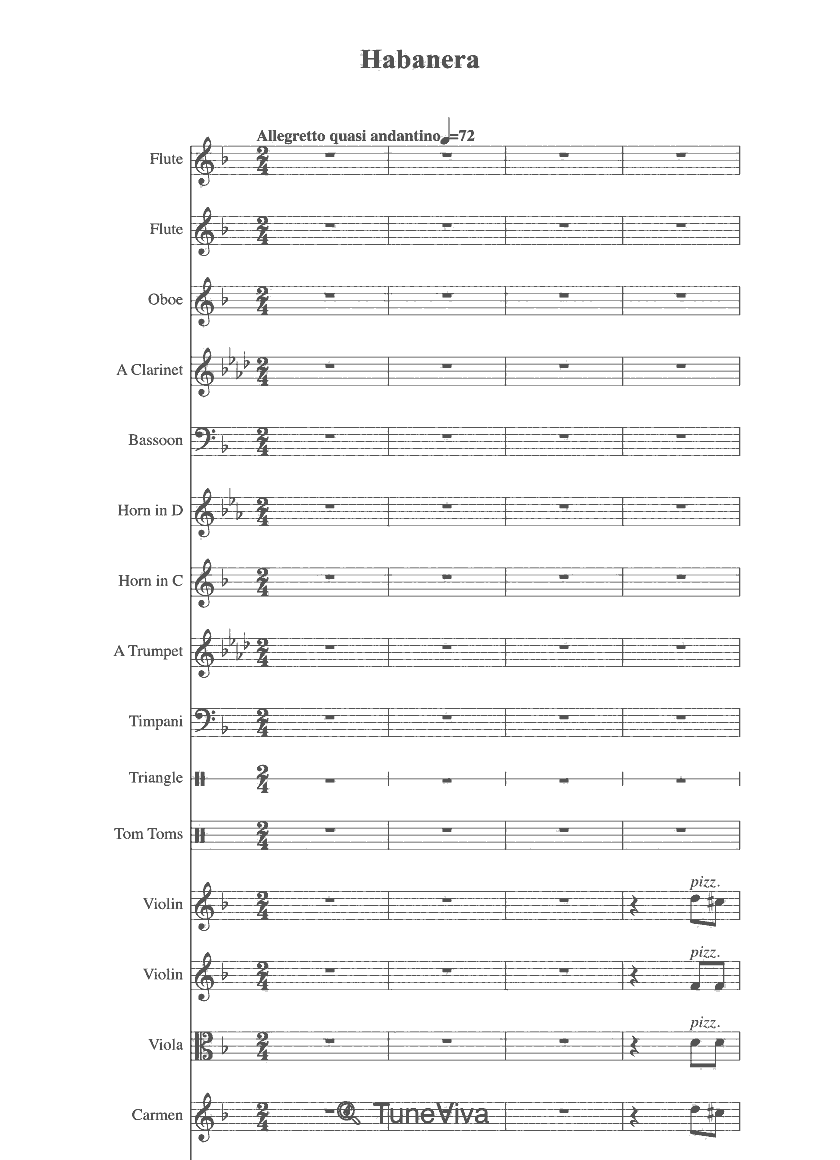
Georges Bizet
L'amour est un oiseau rebelle
Flute; Oboe; A Clarinet +15 parts · 6 min 38 sec
Open scorePage 1 of 2
The catalogue holds 40 Bizet scores, about 490 minutes of music and 63,602 notated notes, with 18 entries carrying lyrics. The minutes are out of proportion to the count because several files are complete numbers or whole scenes rather than short excerpts from them. Carmen dominates the page: the Habanera in a piano solo has 41,069 views, four times the next entry, and the overture, the Toreador Song and the Habanera text follow. Georges Bizet sheet music is centred on Carmen, the opera that became one of the most frequently performed works in the repertoire, and on music from L'Arlésienne. The scores here include the Habanera as a piano solo and under its first line, L'amour est un oiseau rebelle, a piano setting of the Act I prelude, the song Ouvre ton coeur for voice and piano, and a flute-and-harp version titled Minuet from L'Arlésienne Suite No. 2. Bizet earned part of his living arranging other composers' music, and his own works were later revised and adapted, so arranger, scoring and text are worth checking on each score.
Bizet was born in Paris on 25 October 1838 and entered the Conservatoire at nine, weeks before his tenth birthday. He won the Prix de Rome in 1857 and spent most of the next three years at the Villa Medici. Back in Paris he earned a living largely by arranging other composers' music, and his own stage works fared badly: Les pêcheurs de perles ran for 18 performances in 1863 and La jolie fille de Perth for about the same in 1867. He died at Bougival on 3 June 1875, three months after the premiere of Carmen, believing it a failure.
L'Arlésienne, written for Daudet's play in 1872, survives in the catalogue mainly through its suites. Bizet assembled the first in 1872; Ernest Guiraud compiled the second in 1879, after Bizet's death, and its Minuet is not from the play at all but from Scènes bohémiennes, drawn from La jolie fille de Perth. Carmen reached the Opéra-Comique on 3 March 1875. Its Habanera adapts a song by Sebastián Iradier, 'El Arreglito', which Bizet took for a folk tune and acknowledged once he learned otherwise; the Toreador Song is Escamillo's couplets in Act II.
Most of the 34 files are keyboard arrangements rather than material for an opera house: the Habanera and the Act I prelude are both here as piano solos, and the catalogue's two 'Carmen Overture' entries name no arranger. Eighteen entries have lyrics, so vocal numbers and piano reductions sit side by side under one composer. Thirty-two are filed as classical and two left unclassified.
Carmen: the Habanera and the Act I prelude: Carmen reached the Opéra-Comique on 3 March 1875. The Habanera, 'L'amour est un oiseau rebelle', is Carmen's entrance aria in scene 5 of Act I and was first sung by Célestine Galli-Marié. Bizet adapted its melody from Sebastián Iradier's habanera 'El Arreglito', published in 1863, which he mistook for a folk song; he added an acknowledgement in the first vocal score. The aria keeps a D pedal and moves between D minor verses and a tonic-major refrain without a true modulation. Piano versions cannot reproduce the original low flute and percussion, so listen for the habanera rhythm and the triplet figuration rather than expecting orchestral colour.
L'Arlésienne: incidental music, not just a suite: L'Arlésienne began as incidental music for Alphonse Daudet's play and was first performed at the Théâtre du Vaudeville on 30 September 1872. Bizet wrote 27 numbers for chorus and small orchestra, ranging from brief mélodrames to entr'actes such as the Prélude, Pastorale, Intermezzo, Minuetto and Carillon. The original production was not a success, but the suites for full orchestra became popular. A score labelled 'Minuet from L'Arlésienne Suite No. 2' may therefore be a concert-suite movement rather than a number from the play; check the arrangement's source if that distinction matters.
Choosing between piano, vocal and instrumental versions: Piano reductions are useful for learning the shape of a number, but they often omit orchestral lines and words. A vocal score with piano accompaniment is the better choice when the text and vocal line matter; Ouvre ton coeur, for example, is set for voice and piano in the available score. Instrumental arrangements solve different problems: a flute-and-harp version of the L'Arlésienne Minuet is designed for those instruments, while the Habanera piano solo is a standalone reduction. Check the listed key, time signature and parts before practising, because arrangements of the same number can differ substantially.
Bizet's career and the shadow of Carmen: Bizet was born in Paris on 25 October 1838 and won the Prix de Rome in 1857. After returning from Italy he found Parisian opera houses reluctant to stage new works, and he earned much of his living by arranging and transcribing other composers' music. Les pêcheurs de perles and La jolie fille de Perth reached the stage but were not immediate successes. Carmen premiered on 3 March 1875; Bizet believed it had failed and died on 3 June 1875, three months later, before its enduring success was clear. Later neglect and posthumous revision mean that modern versions of his works sometimes reflect other hands.
Not the melody. He adapted it from Sebastián Iradier's habanera 'El Arreglito', published in 1863, which he had taken for a folk song. When he learned it was by a named composer who had died in 1865, he added a note of acknowledgement to the first vocal score.
Guiraud assembled that suite in 1879, four years after Bizet died, and needed a fourth movement. He took the Minuet from Scènes bohémiennes, a suite drawn from La jolie fille de Perth, where it accompanies the Duke's wooing in Act III.
The catalogue lists it only as a song, and its title page in modern editions calls it a Spanish serenade-bolero. One library catalogue describes it as an arrangement from the symphonic ode Vasco da Gama, but that identification is not certain.
Georges Bizet is best known for his operas, above all Carmen, which became one of the most popular and frequently performed works in the opera repertoire. Music from his incidental music to L'Arlésienne, especially in suite form, is also among his most popular compositions.
L'Arlésienne is incidental music that Bizet composed for Alphonse Daudet's play of the same name. It was first performed at the Théâtre du Vaudeville in Paris on 30 September 1872 and consists of 27 numbers for chorus and small orchestra; the suites drawn from it became far more familiar than the complete play score.
Carmen was first performed at the Opéra-Comique on 3 March 1875. Bizet was convinced the work was a failure and died three months later, on 3 June 1875, unaware that it would become a spectacular and enduring success.
La jolie fille de Perth is an opera in four acts with a libretto after Sir Walter Scott's 1828 novel The Fair Maid of Perth. It was first performed at the Théâtre-Lyrique in Paris on 26 December 1867.
The Habanera is the entrance aria of Carmen, a mezzo-soprano role, in scene 5 of Act I. Its vocal range runs from D4 to F-sharp5, with a tessitura from D4 to D5.
The Habanera keeps a D pedal and does not make a true modulation. Each verse is in D minor and each refrain in the tonic major, so the change of mode is colour rather than a change of key.
The Habanera is scored for two flutes, two oboes, two clarinets, two bassoons, four horns, timpani, triangle, tambourine, strings, and two pistons that appear only in the final chord. The orchestral complement at the premiere was about 57 to 62 players, depending on whether pit players doubled offstage.