classical
5 tracks
De Wert spent most of his working life at the Gonzaga court in Mantua while writing for the Este court in Ferrara, and the catalogue reflects both: 42 scores, about 303 minutes of music and 45,626 notated notes. Forty-one entries carry lyrics.
The most-viewed piece is the madrigal 'Giunto alla tomba', followed by 'Chi salir per me' and the motet 'Gaudete in Domino'. Around them sit two Masses, settings of Petrarch, Ariosto and Guarini, and motets for Christmas and Epiphany. Every entry is logged at complexity index 0, and the average length is long because Masses and canzoni are counted whole.
He was born in 1535, probably at Weert near Antwerp or in the region of Ghent, and as a boy sang in the chapel of Maria di Cardona at Avellino in southern Italy. By about 1550 he was at Novellara in the service of a branch of the Gonzagas, and he married Lucrezia Gonzaga there. In 1565 he became maestro di cappella at Santa Barbara in Mantua, a post he held, at least nominally, until 1592. His wife's affair with a rival composer was exposed in 1570; she left Mantua and died in prison in 1584. Wert himself was ill with malaria from 1582 and died in Mantua on 6 May 1596.
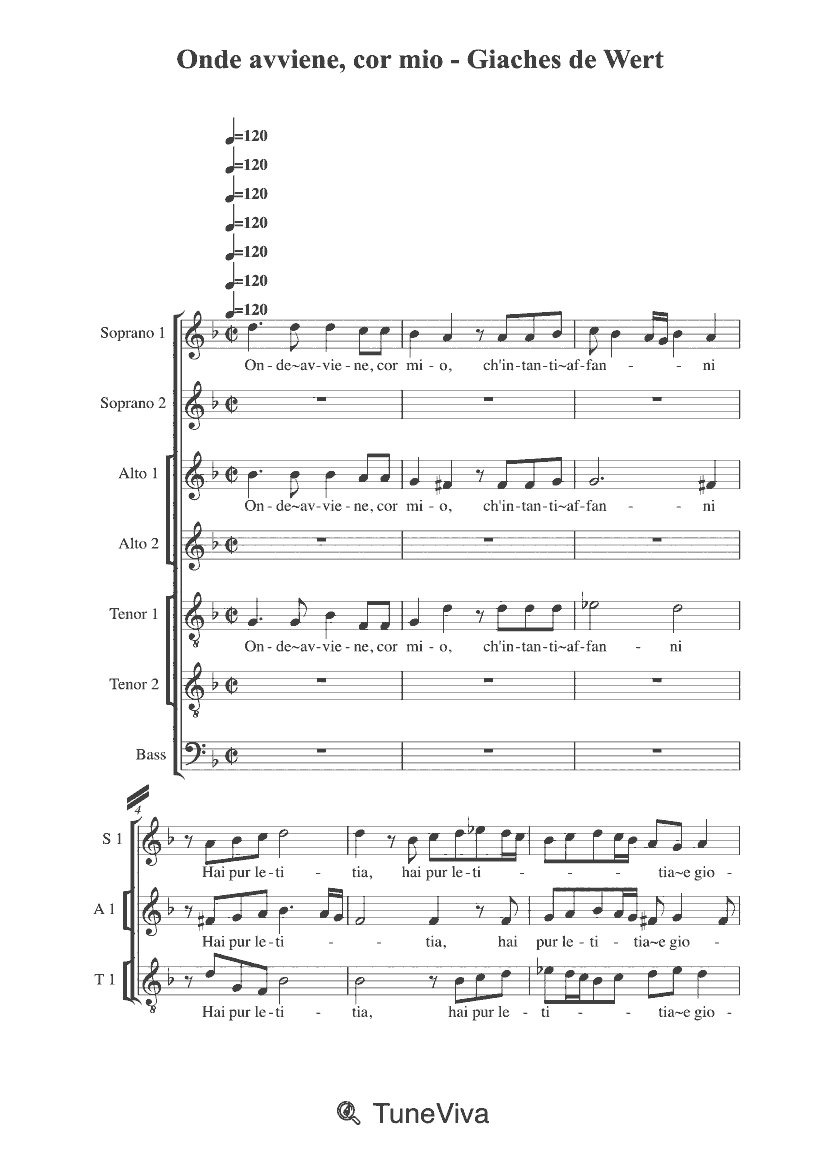
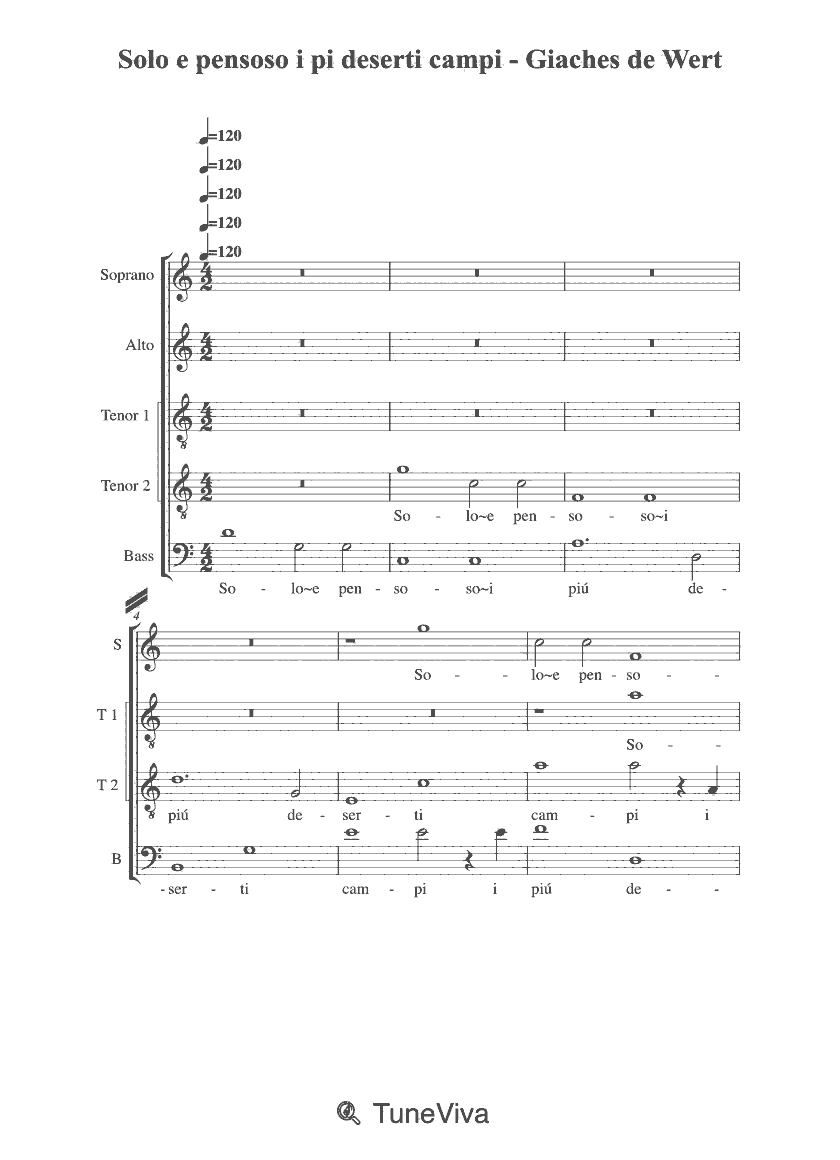
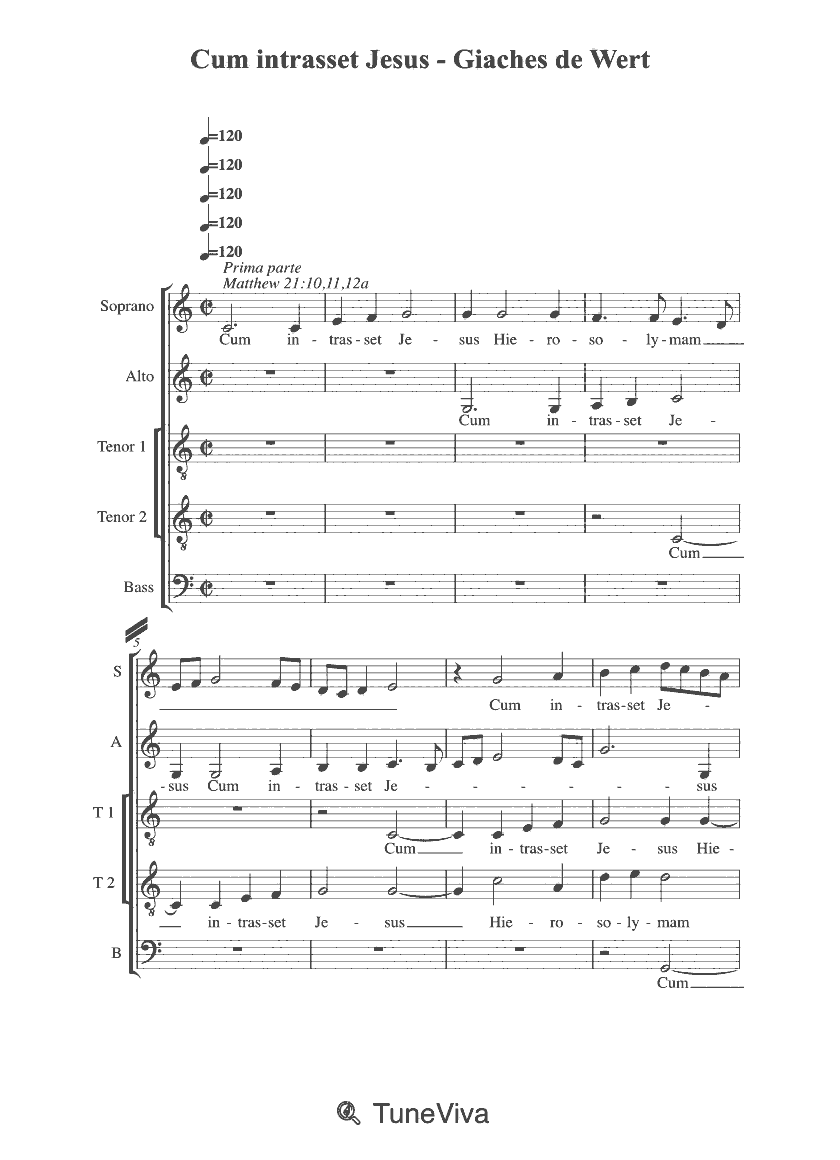
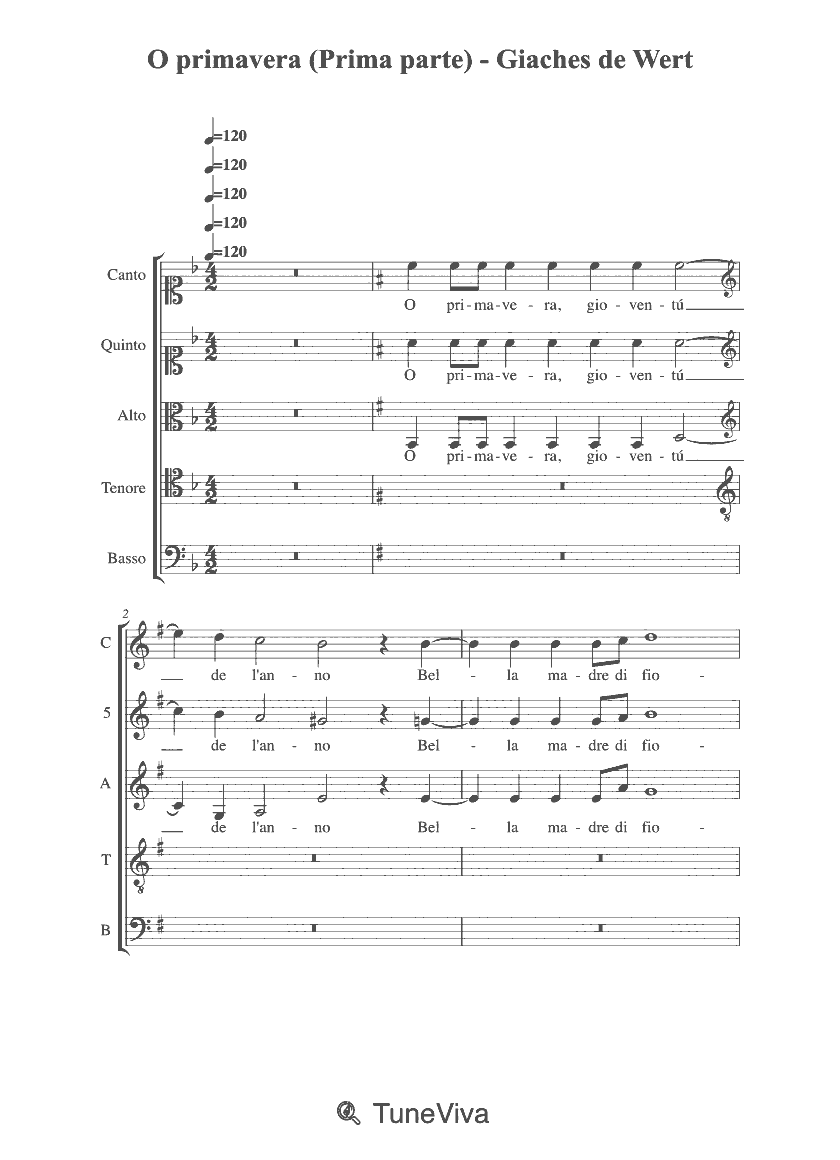
His madrigals were the famous part of his output: roughly 230 of them in sixteen books between 1558 and a posthumous collection of 1608. He began under the spell of Cipriano de Rore, moved towards a declamatory style, and in the 1580s wrote virtuoso parts for the concerto delle donne at Ferrara; the late books set Tasso and Guarini and look forward to Monteverdi. His sacred music was mostly unpublished in his lifetime, with three books of motets in 1566 and 1581 and a handful of Masses that circulated in manuscript or in anthologies.
The catalogue samples that range unevenly. Complete Masses and long canzoni account for much of the 303 minutes, while the motets run to a few minutes each. The secular side is represented by Petrarch, Ariosto and Guarini settings, the sacred by motets and two Masses. Everything sits at complexity index 0, which measures notation density rather than the difficulty of sustaining an independent line, and none of his instrumental fantasias appears here.
Wert's madrigals reward reading the text before the notes. The lines often begin imitatively and then settle into chords at a keyword, so decide early where the homophonic passages fall and let them land. The late books assume high voices with real agility; the Masses move more slowly and need a firm tuning reference, because the chains of suspensions are long. In the motets, keep the Latin clear and resist adding weight at cadences, since the expressive point is usually the dissonance before them.
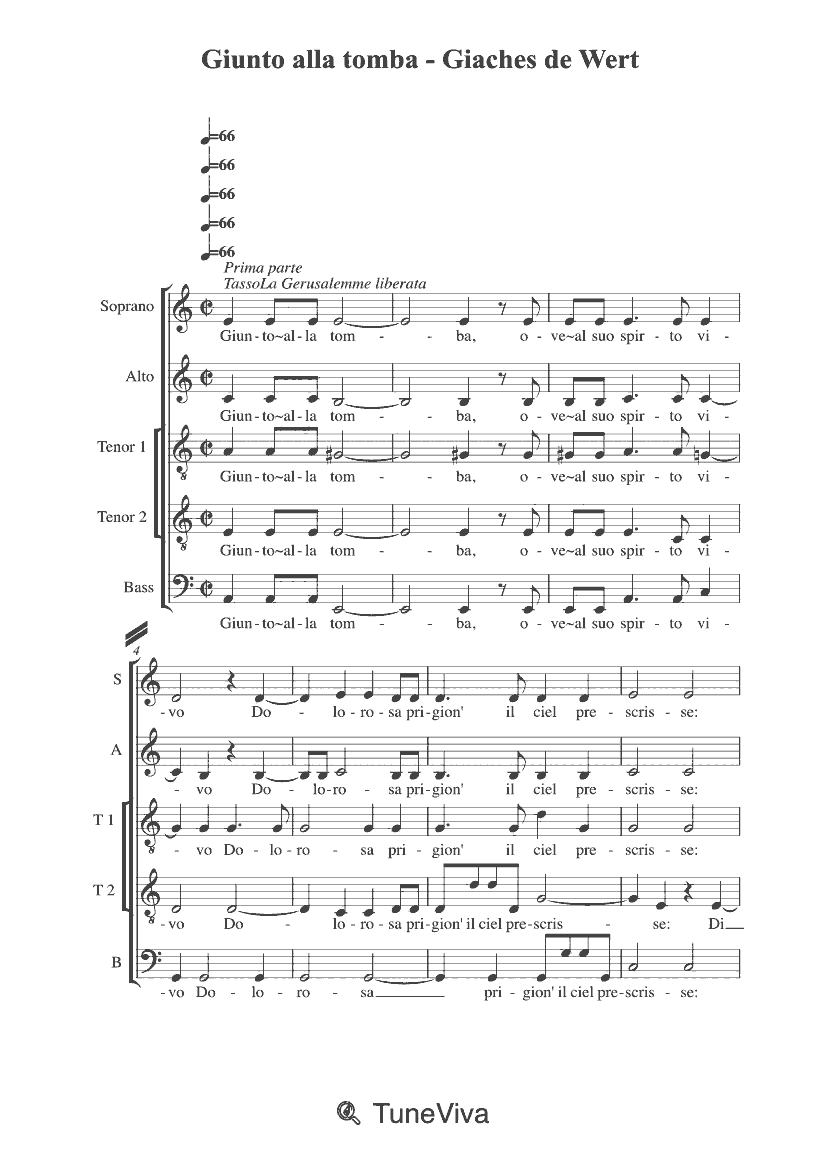
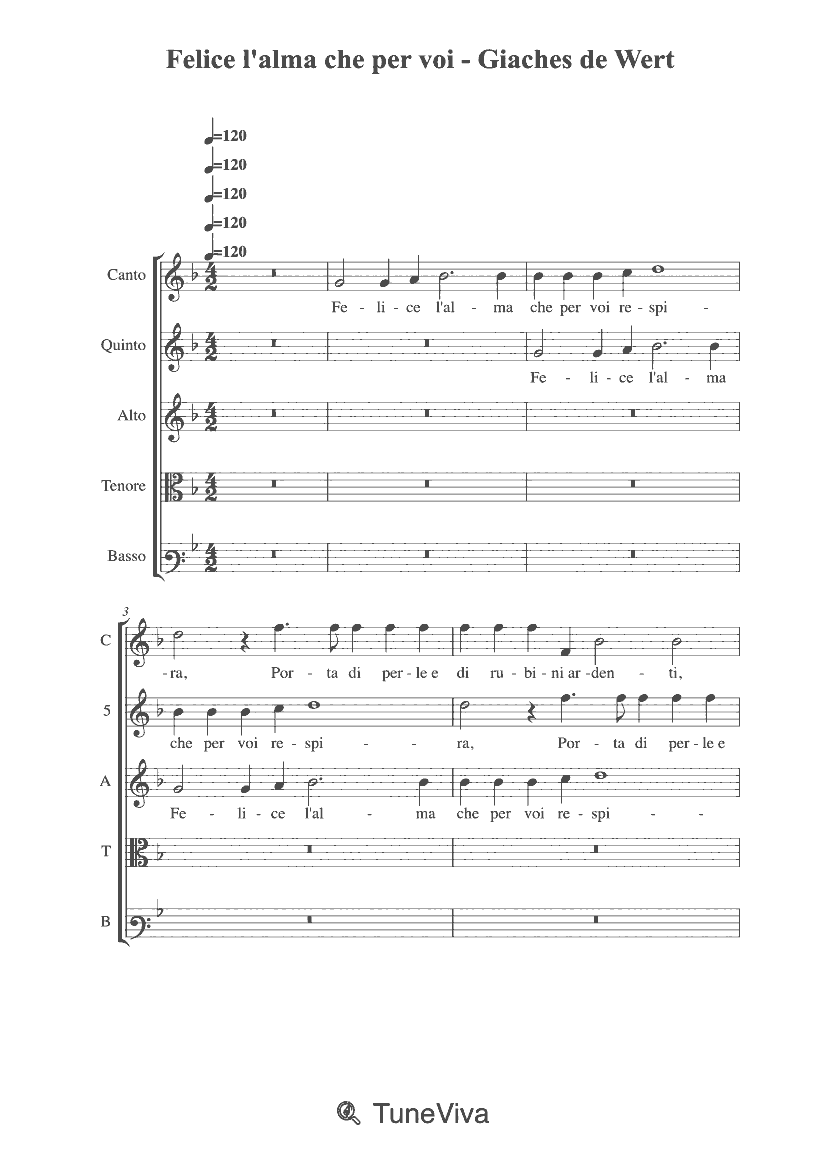
The most-viewed score here, a five-voice madrigal from the seventh book, printed in Venice in 1581.
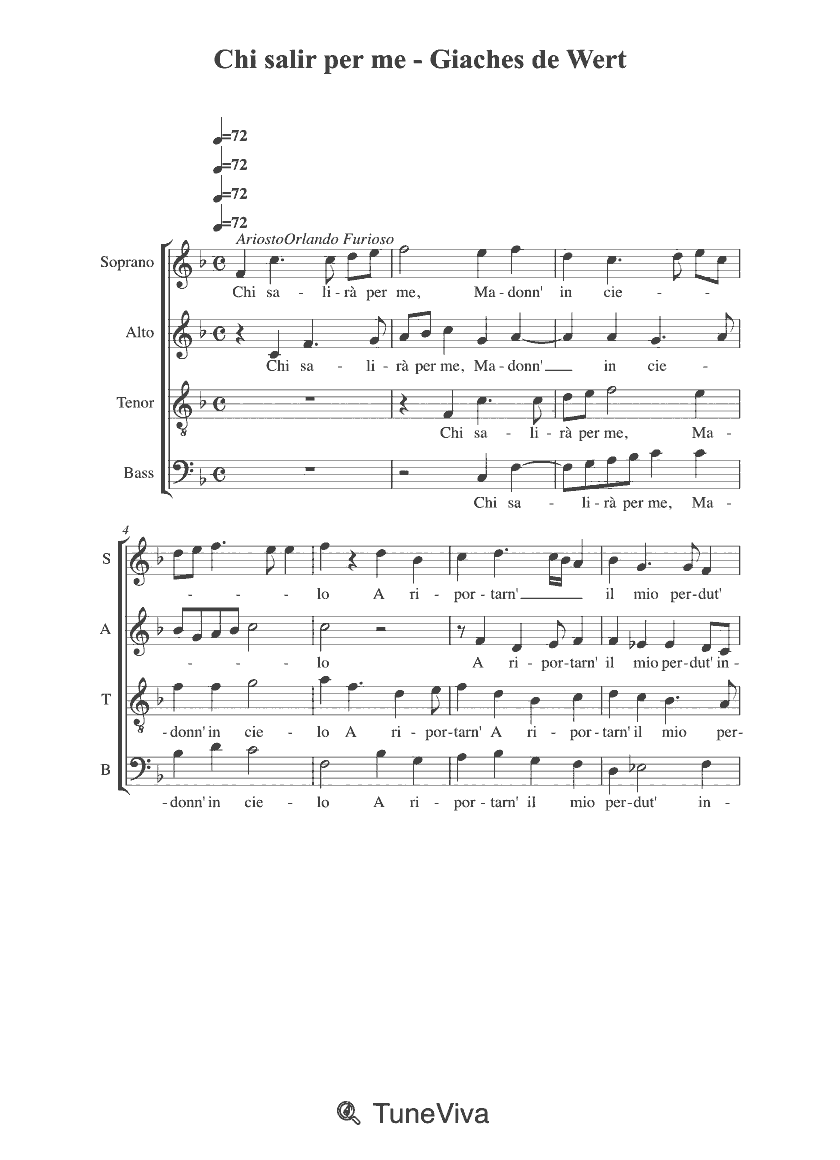
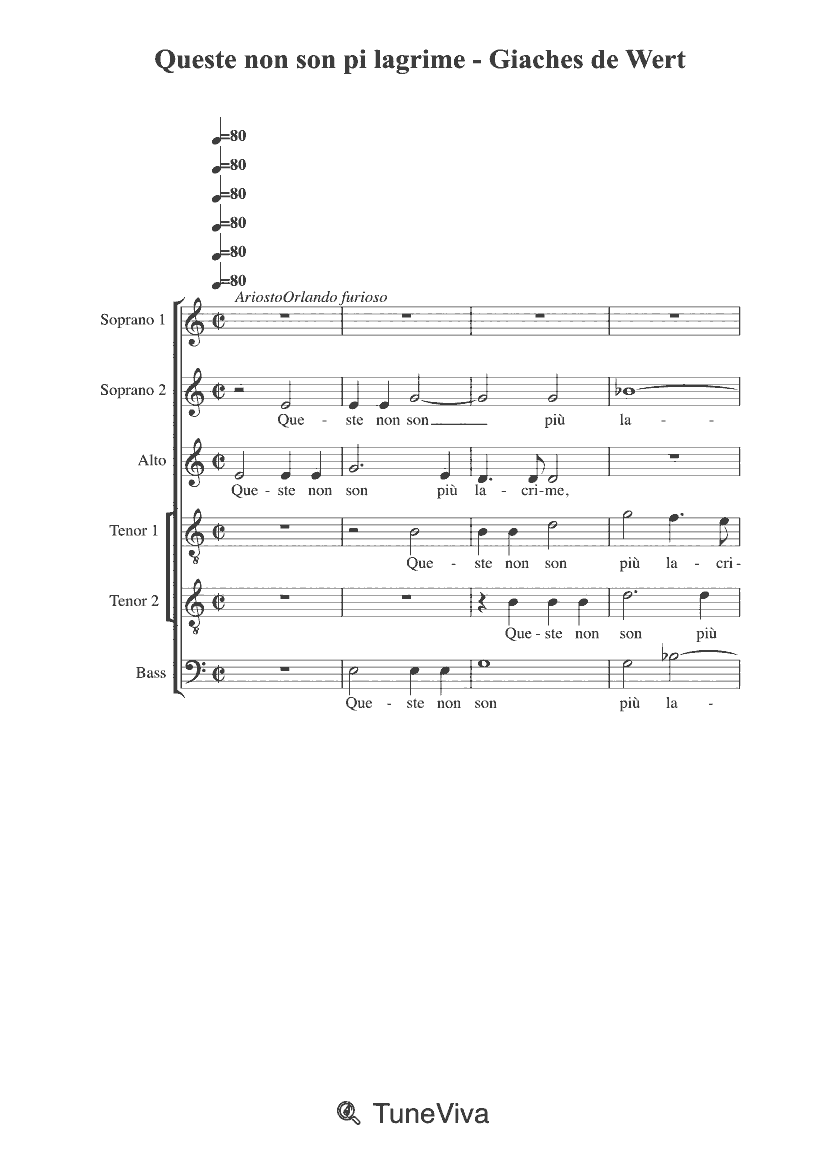
First published in Rome in 1558 in his first book of madrigals, on a stanza from Ariosto's Orlando furioso.
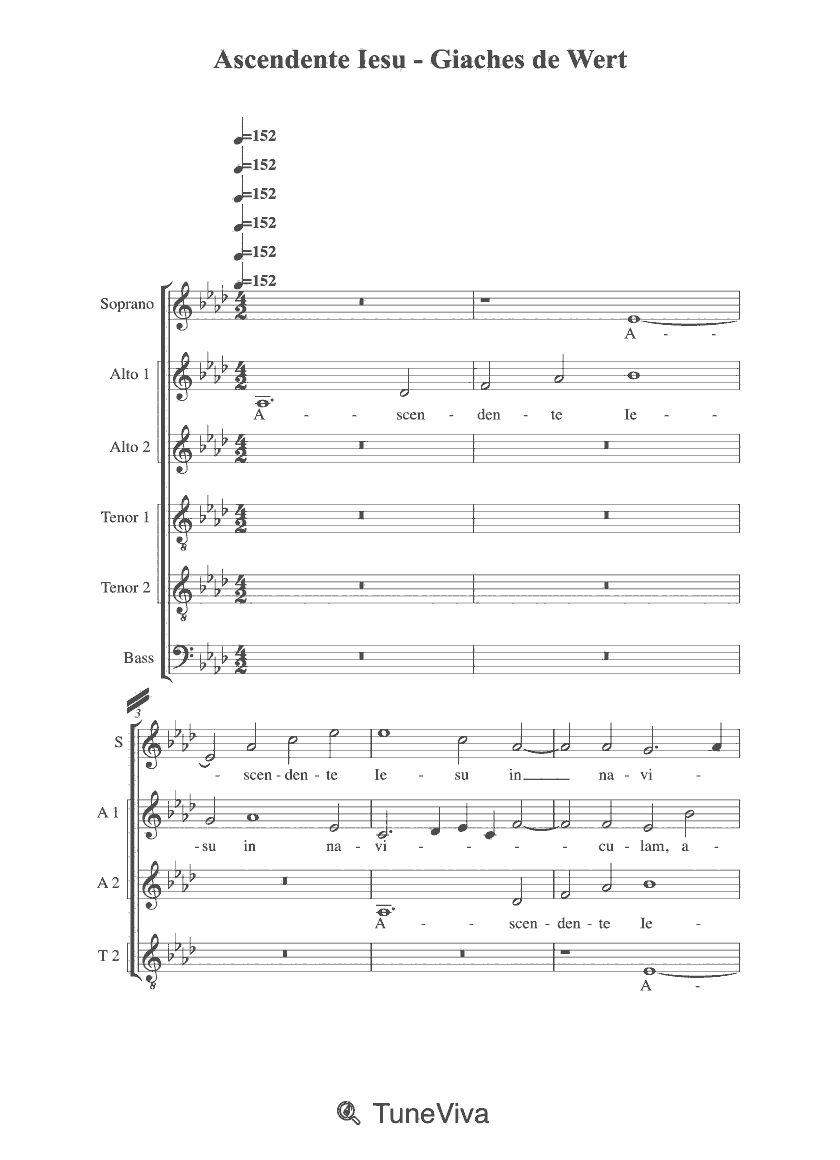
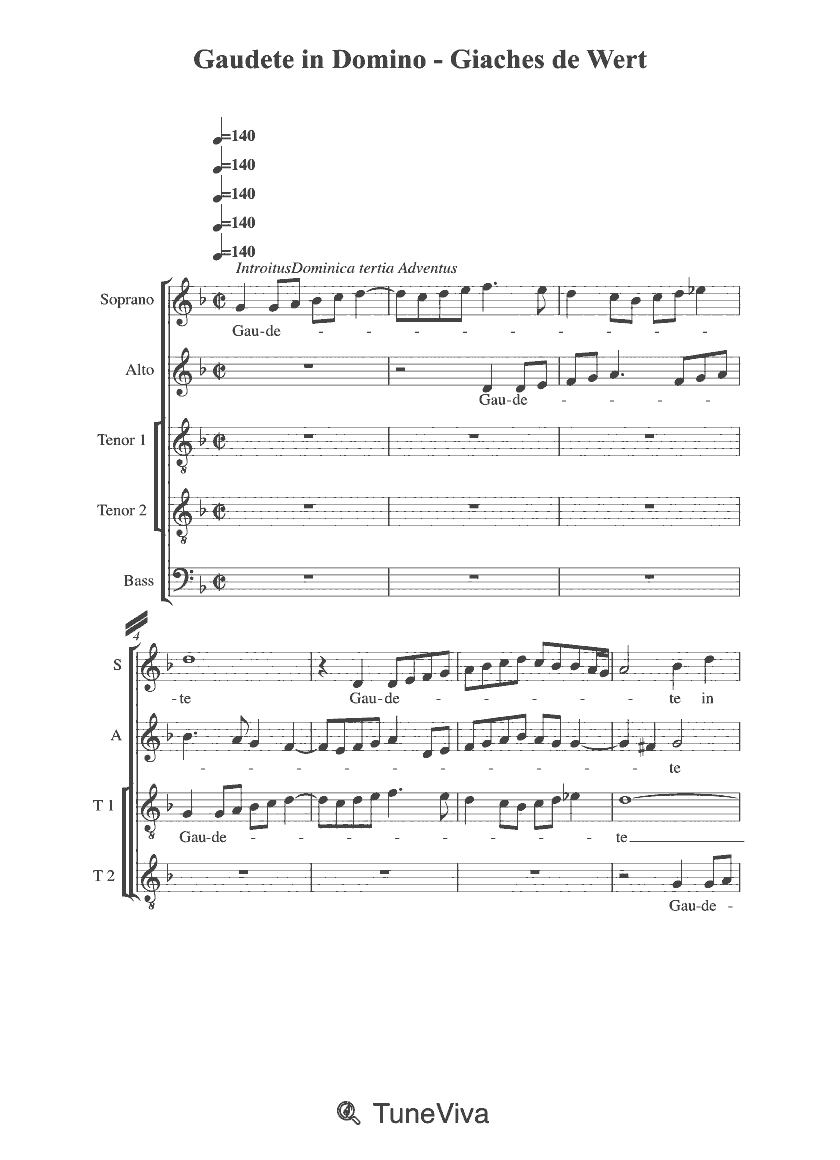
No. 12 in the second book of five-voice motets of 1581, on the 'Rejoice in the Lord' text sung in Advent.
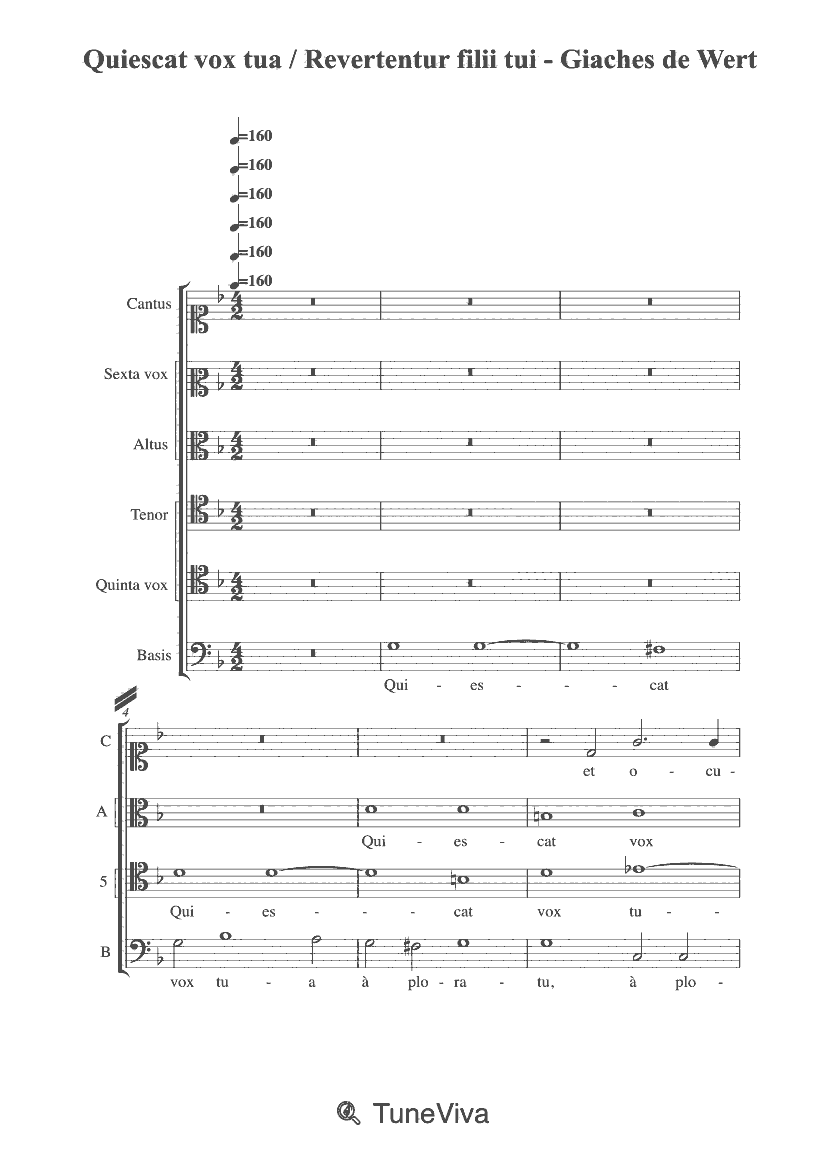
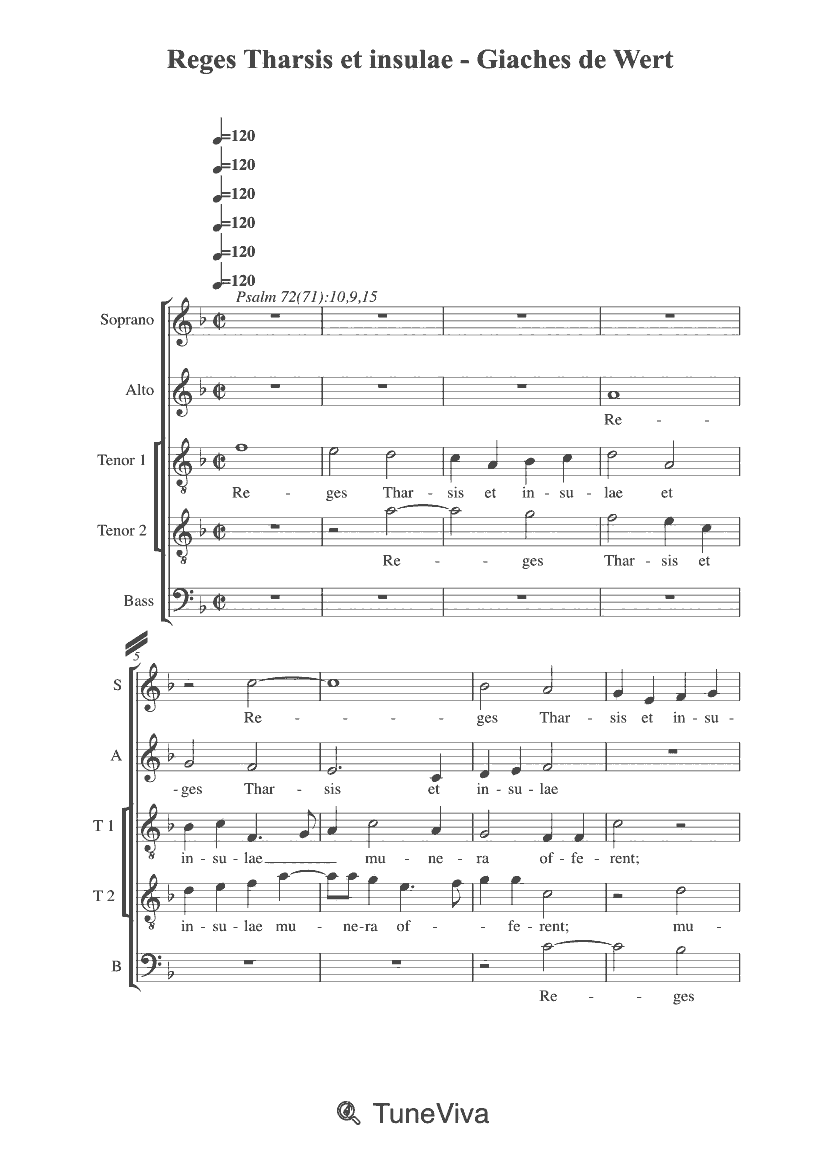
An Epiphany motet on Psalm 72, 'The kings of Tarshish shall bring gifts', copied in Regensburg in the 1560s.
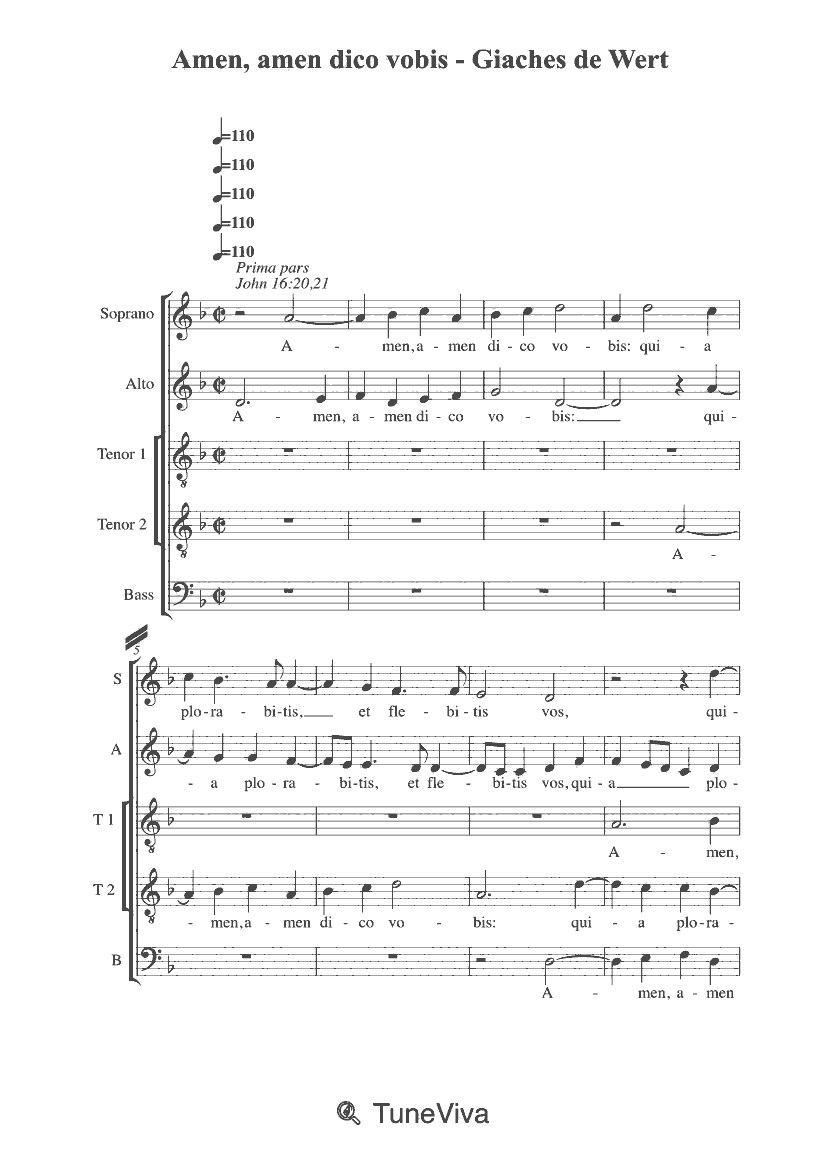
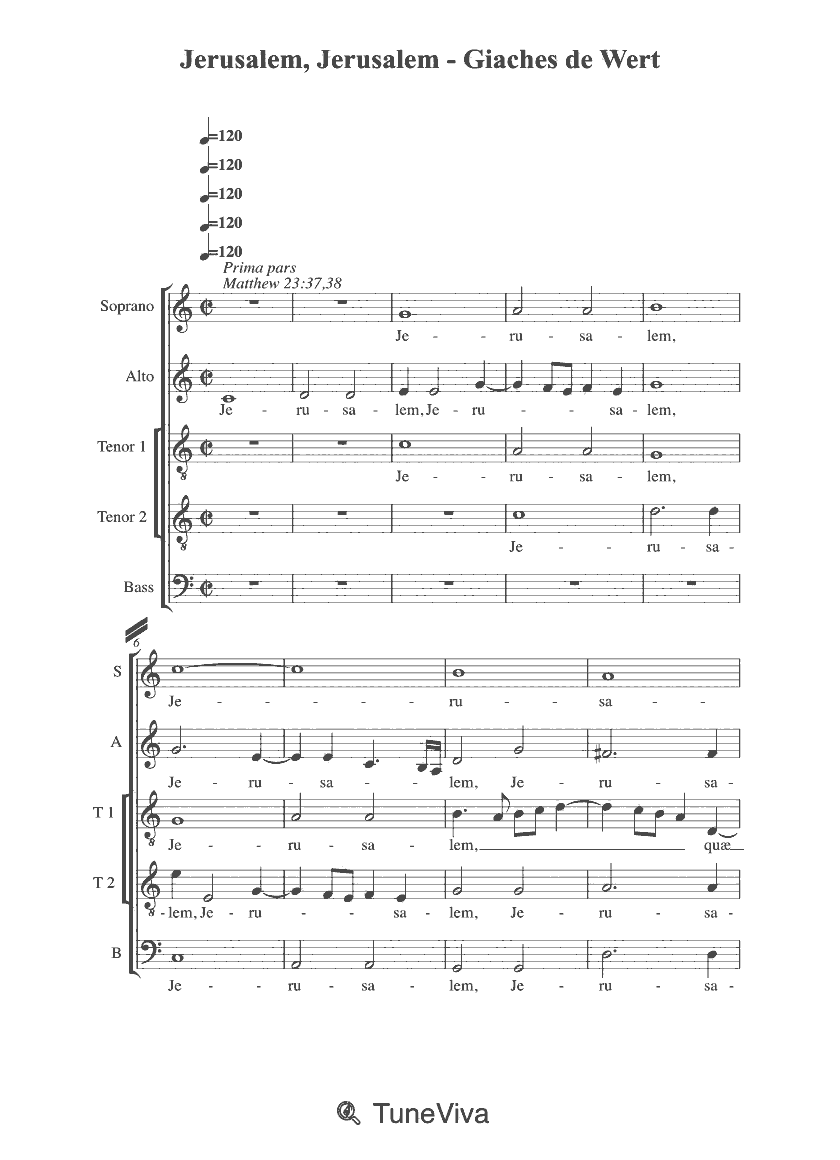
A motet on Christ's words in John 16, 'Amen, amen I say to you, that you shall weep'.
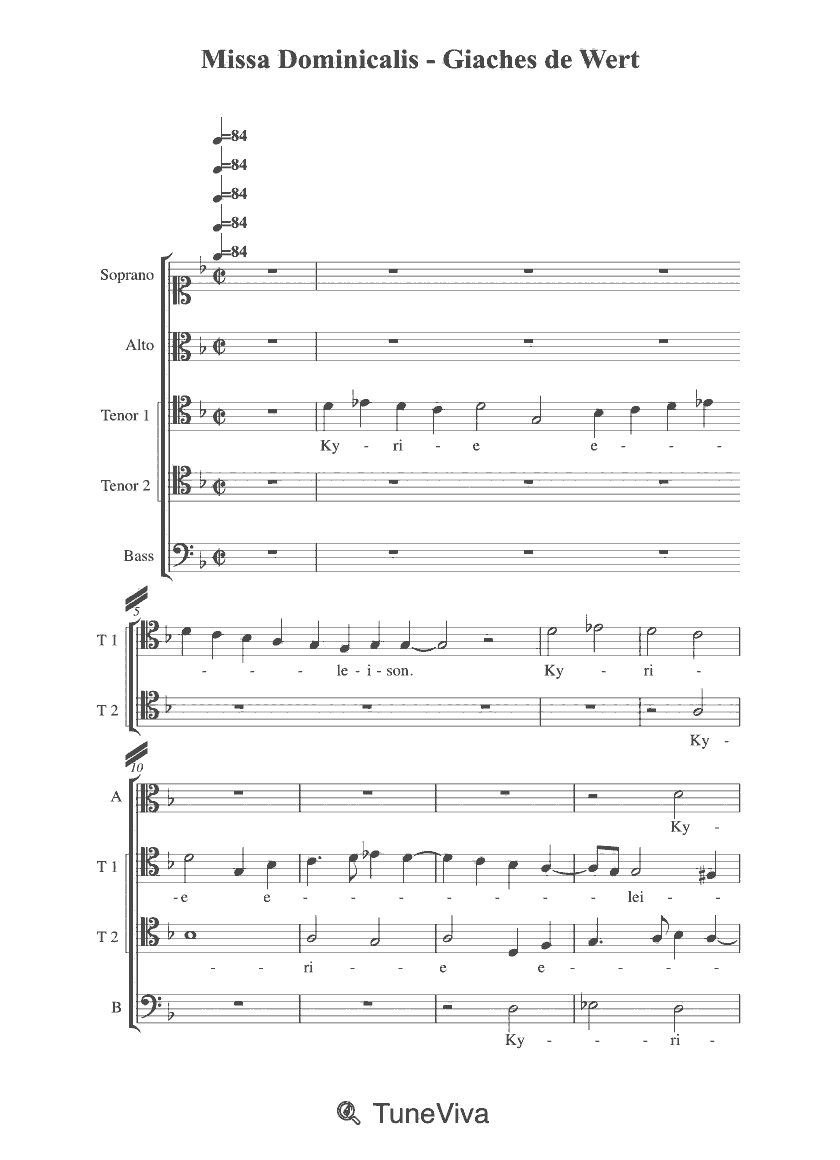
A Mass for Sundays, one of the few by Wert to appear in print, and then in an anthology with other composers' music.
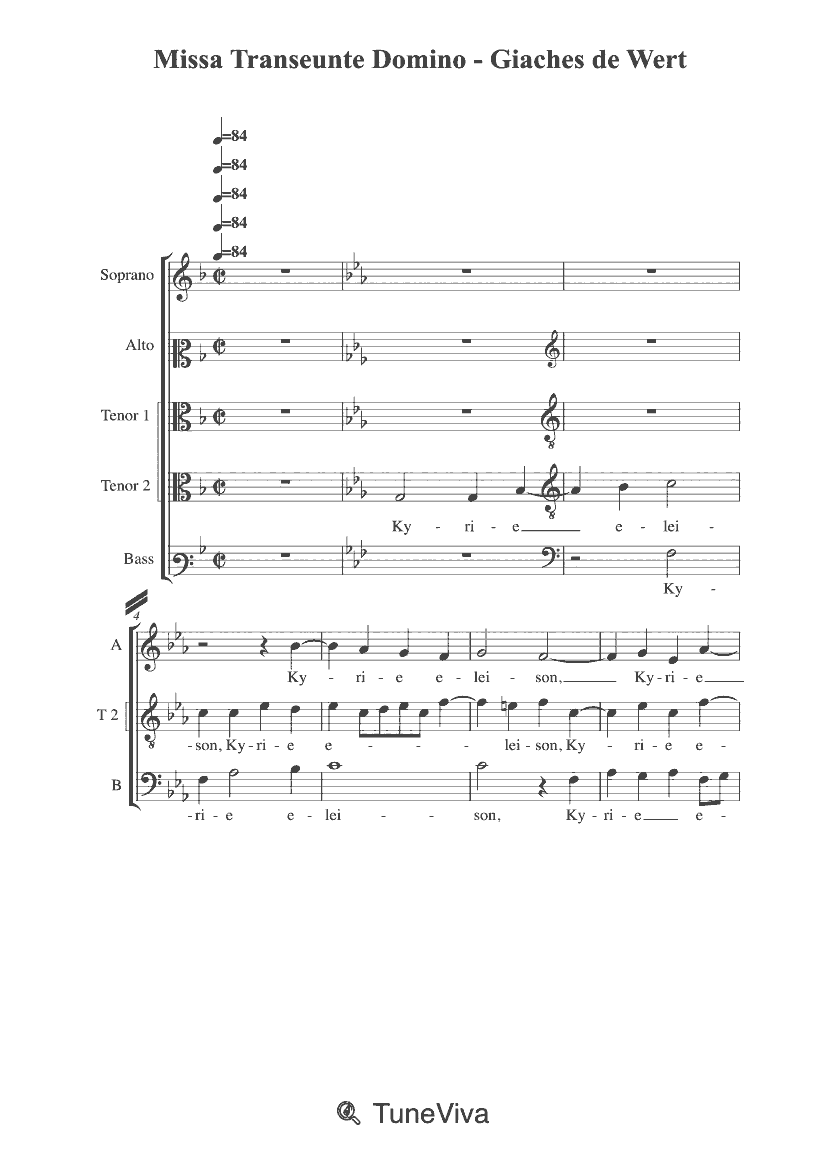
A five-voice Mass built on his own motet 'Transeunte Domino', surviving in manuscript rather than in print.
A six-voice madrigal on Ariosto, Orlando furioso XXIII.126, published in the fifth book in 1571.
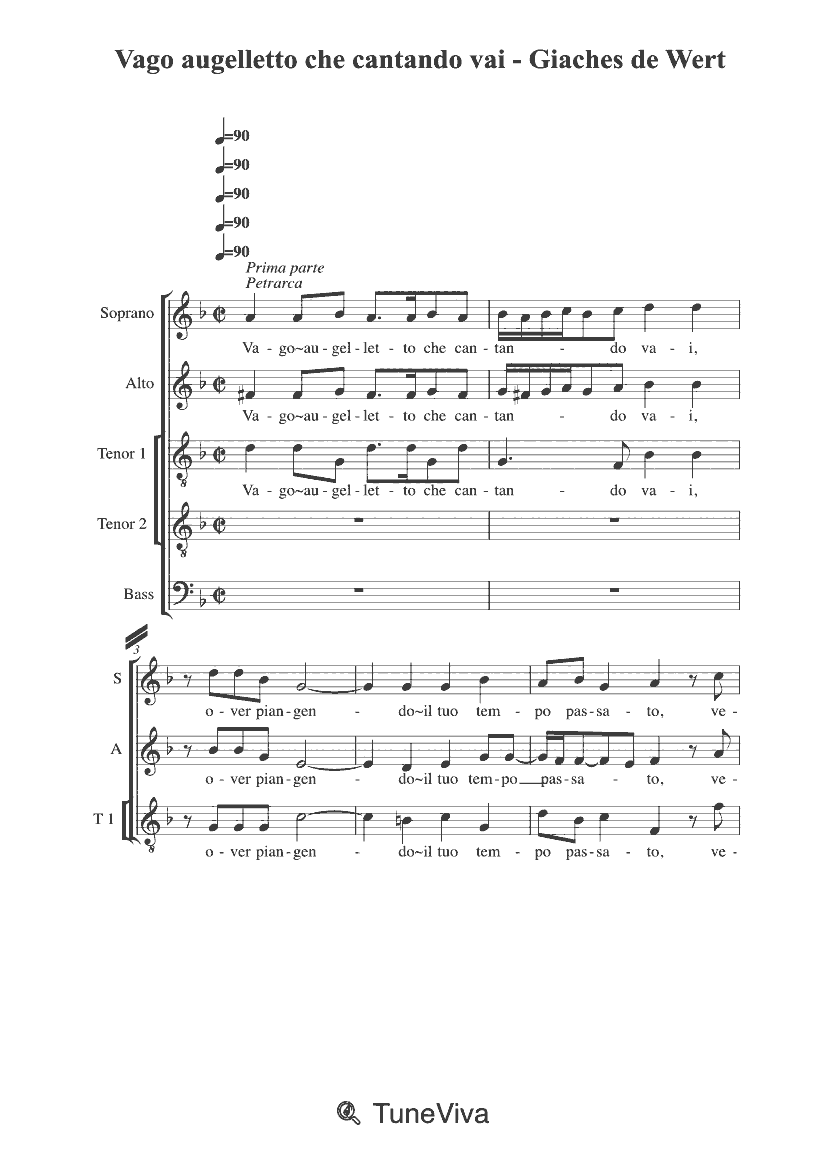
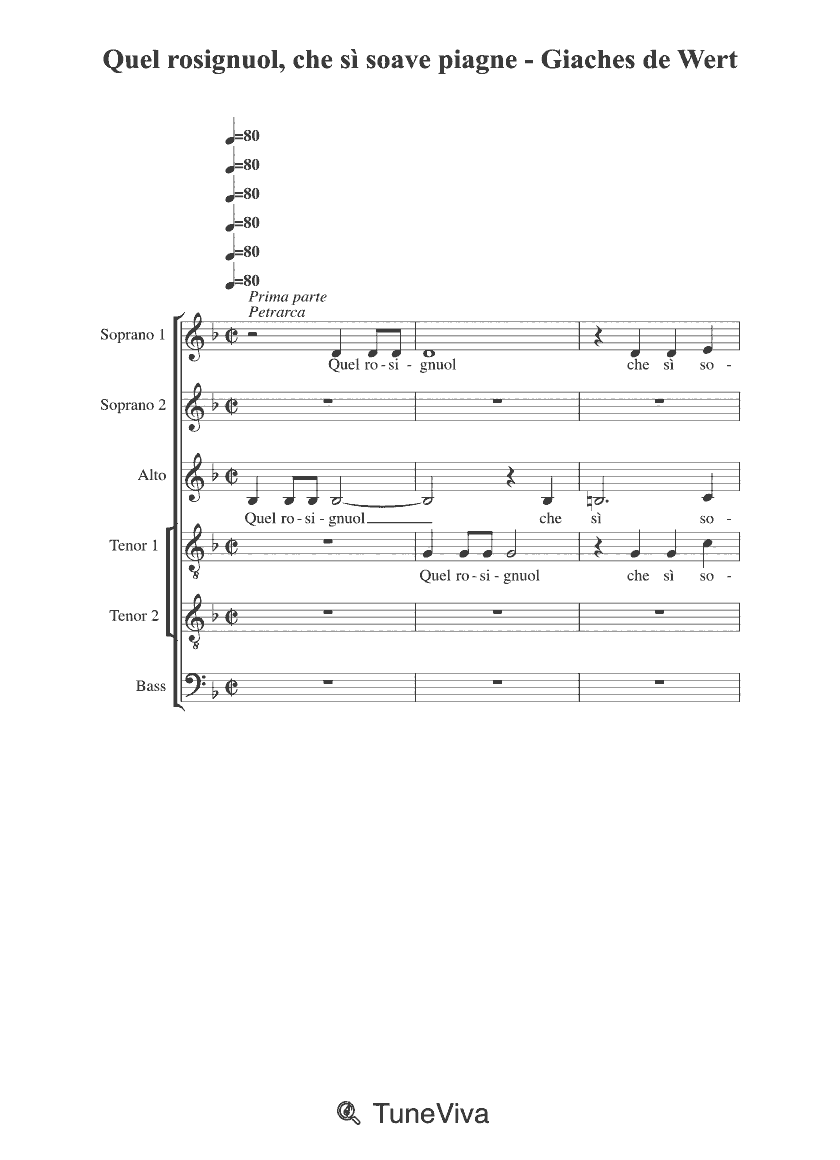
A setting of Petrarch's nightingale canzone, printed in 1588.
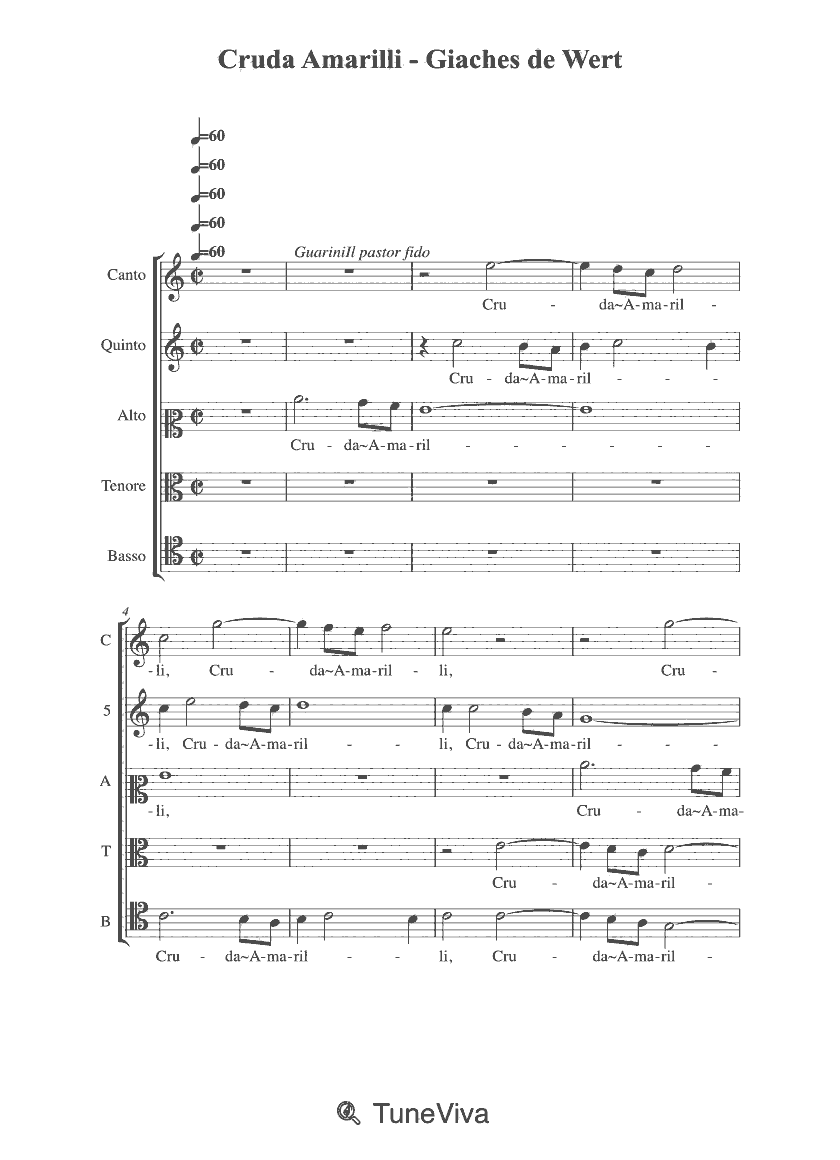
A setting of the opening of Guarini's Il pastor fido, the passage Monteverdi also set in his fifth book.
There are 42, running to about 303 minutes of music and 45,626 notated notes. Forty-one of the 42 carry lyrics.
The catalogue lists 'Missa Dominicalis' and 'Missa Transeunte Domino' as whole Masses, but it does not record which manuscript or edition each is taken from. Check the file before planning a performance.
Mass settings and the multi-section madrigal cycles are each counted as one entry, so a handful of items carry a large share of the 303 minutes.
Petrarch, Ariosto and Guarini are all present, which matches the printed madrigal books, but the catalogue does not name the poet on the individual entries.
Catalog editions and arrangements attributed to Giaches de Wert.
Prima parte