classical
3 tracks
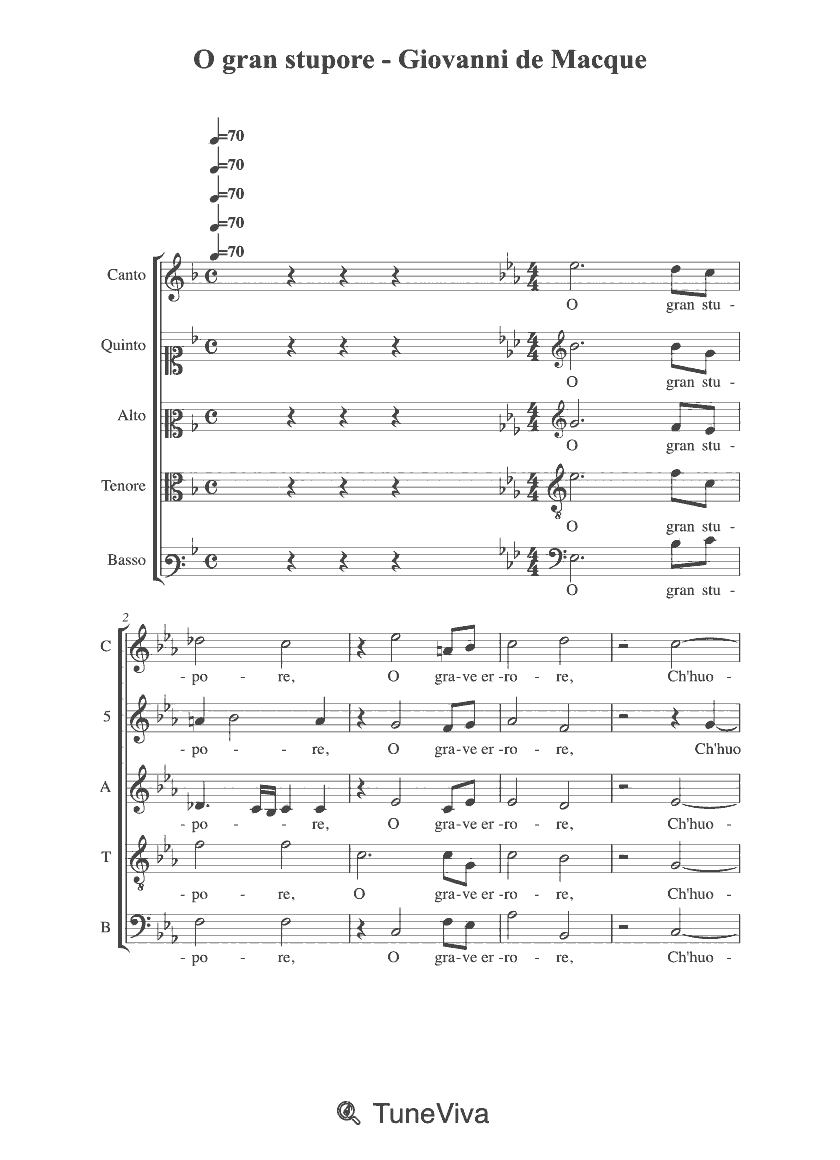
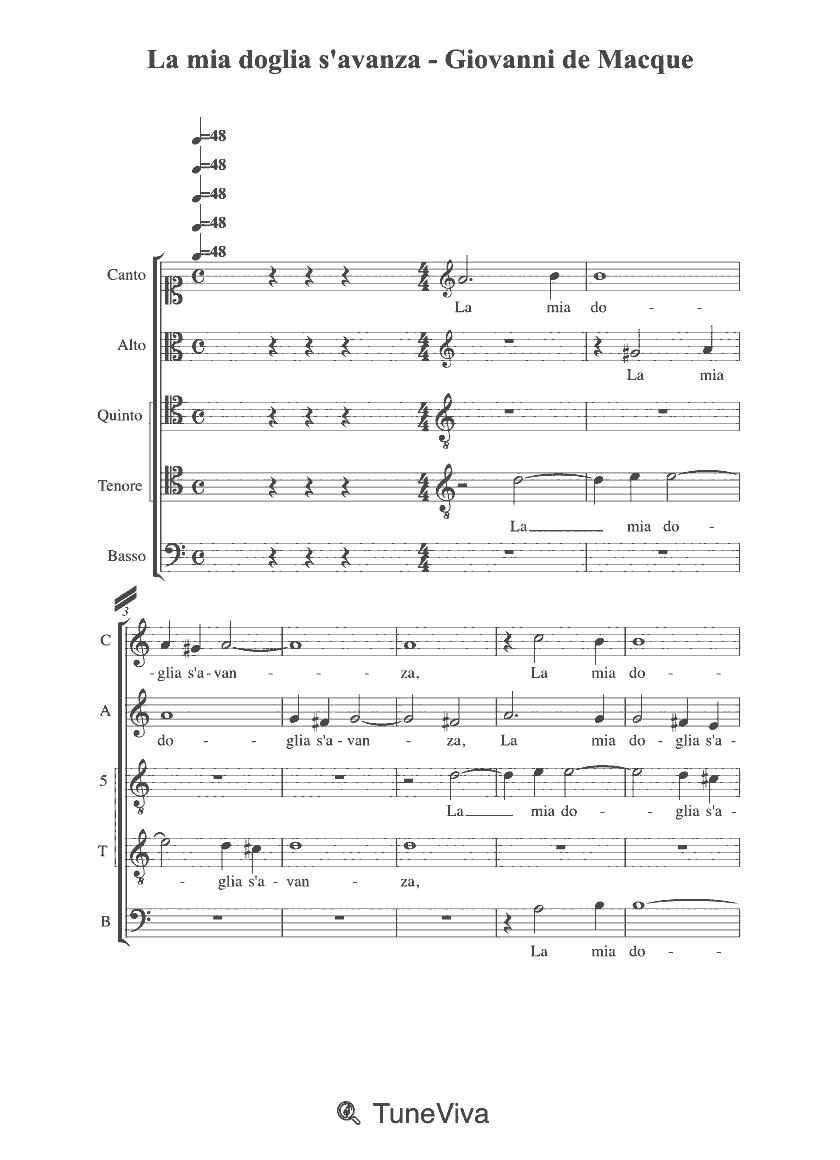
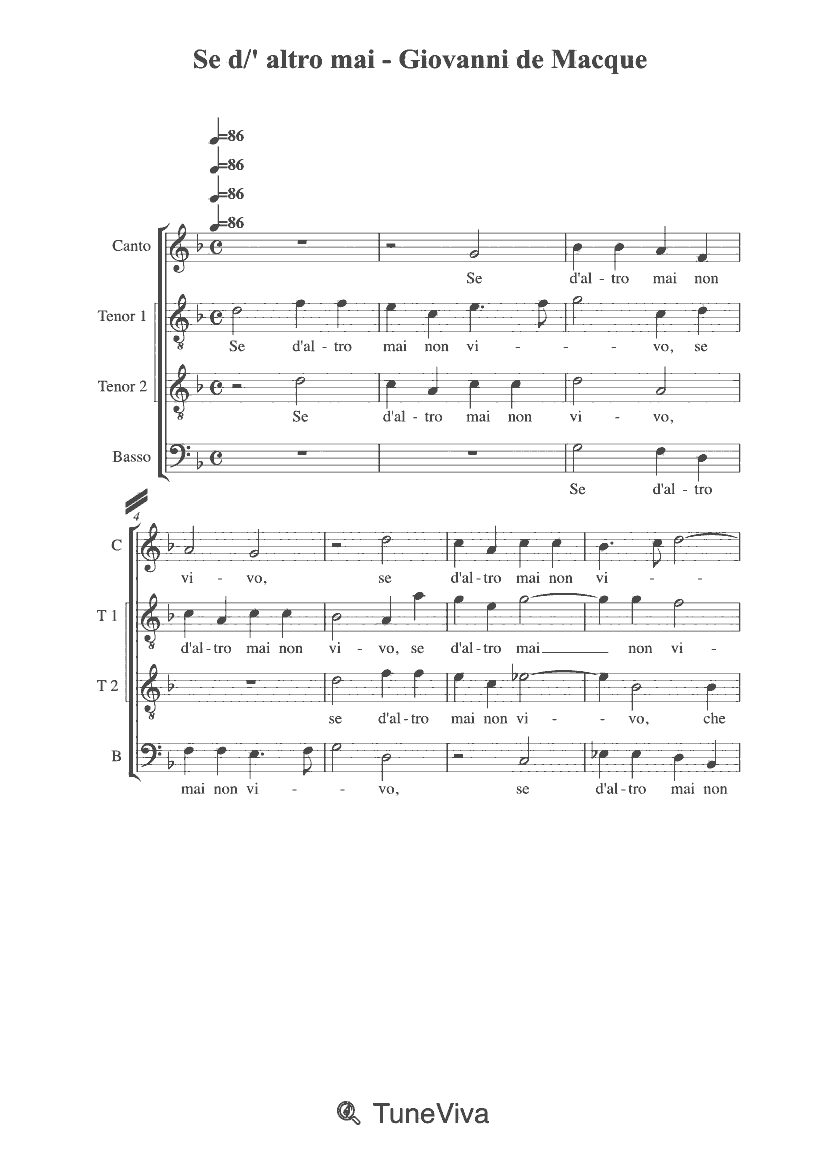
Giovanni de Macque spent his working life in Rome and Naples, and the catalogue is almost entirely secular: 35 scores, about 138 minutes of music and 24,653 notated notes. Thirty-three entries carry lyrics, and every one is filed as classical at complexity index 0.
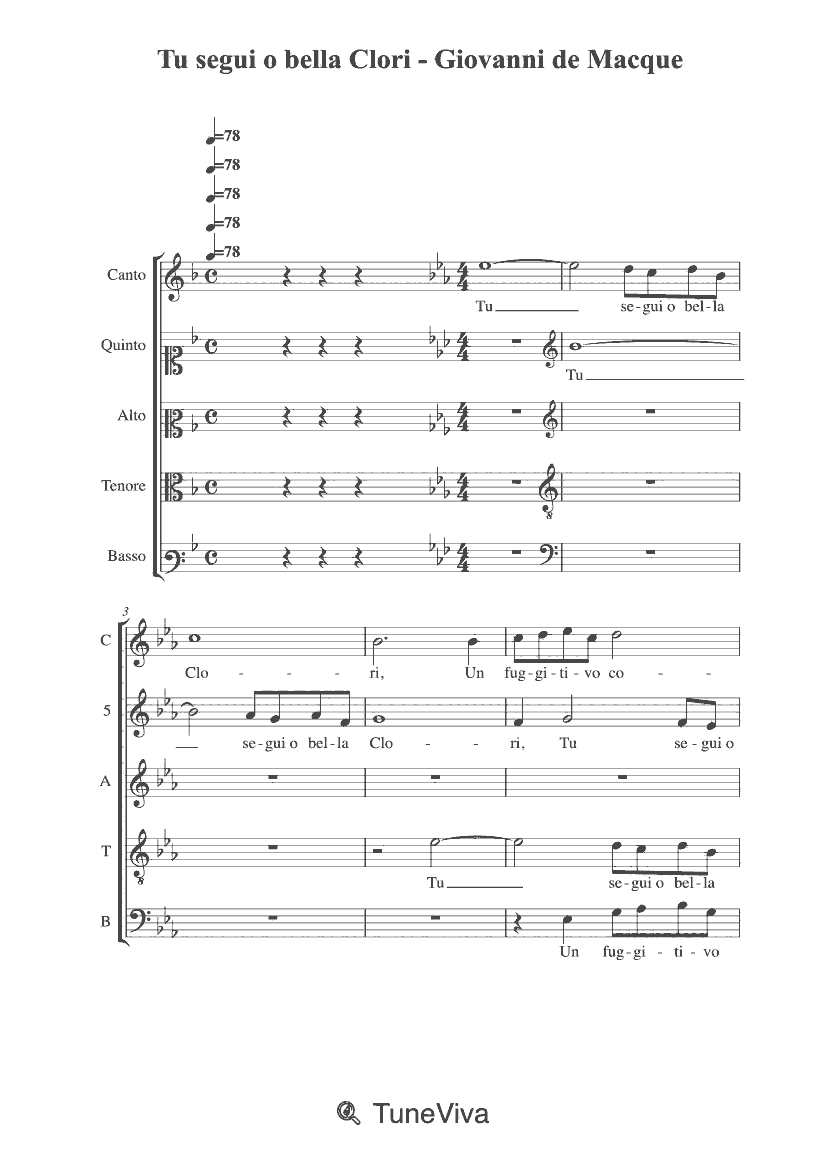
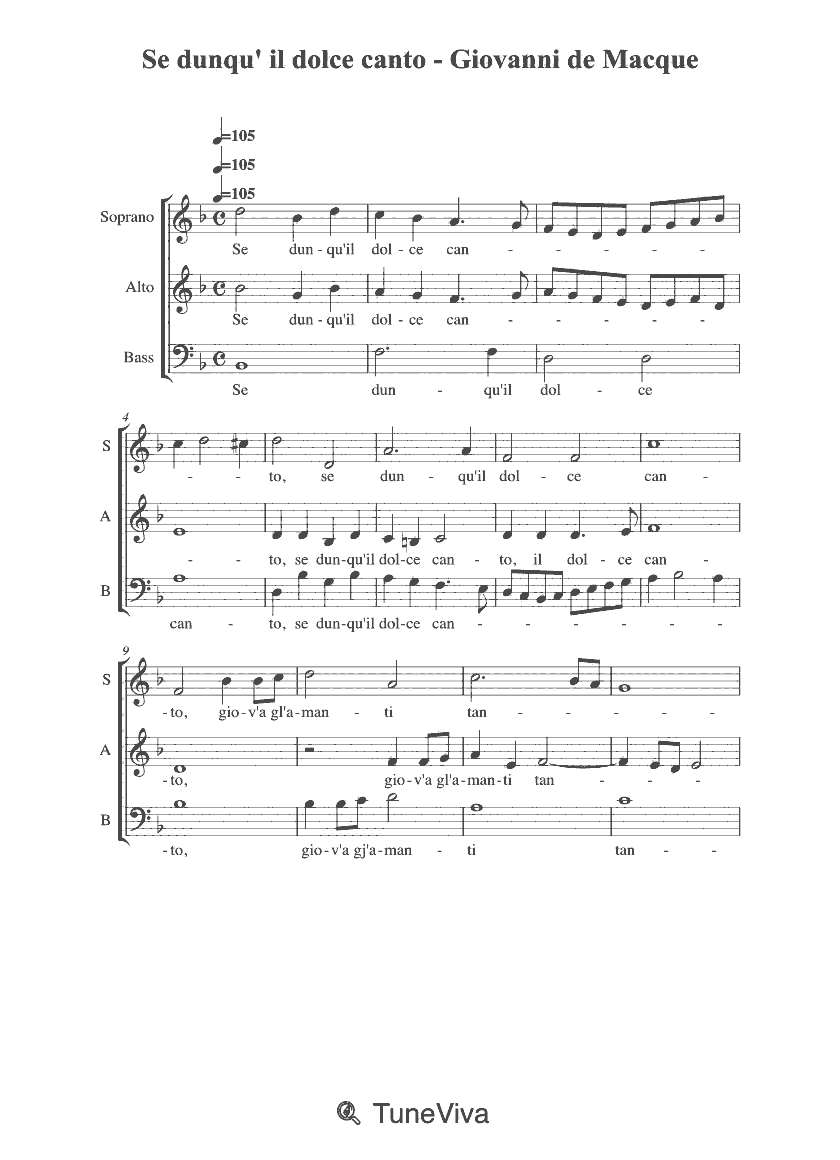
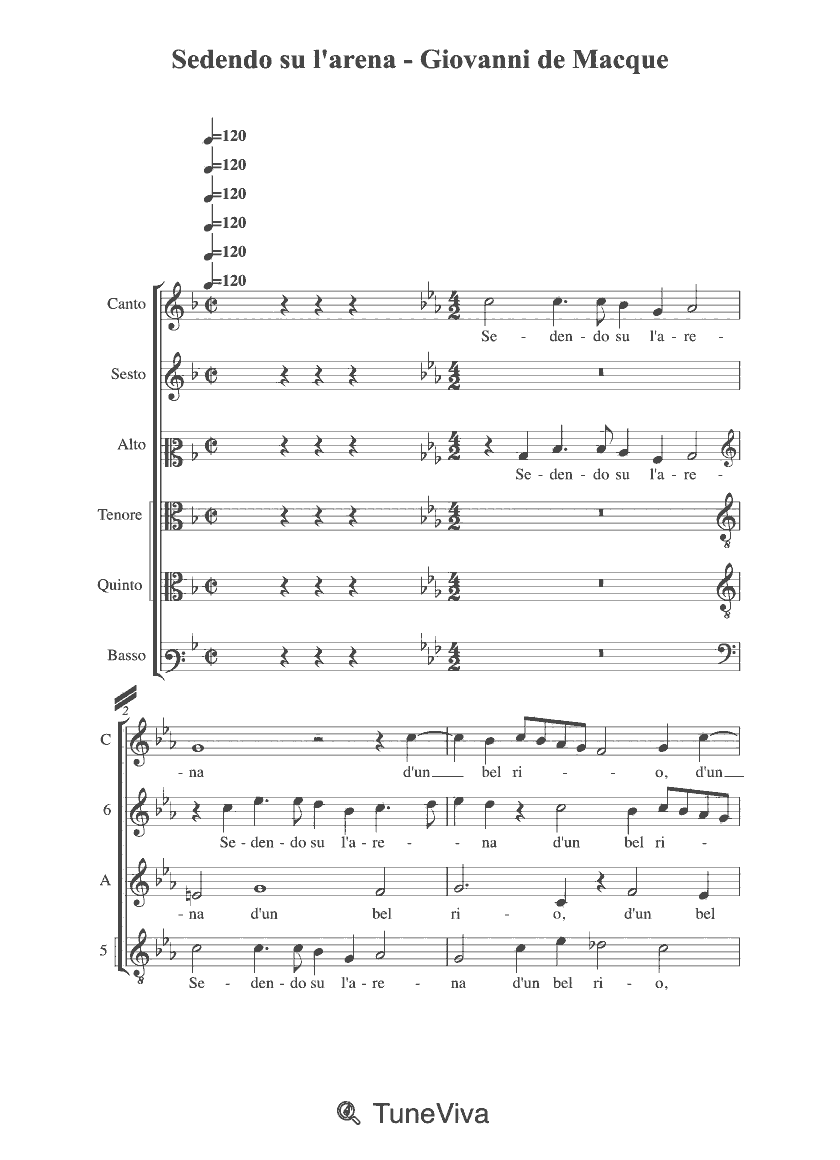
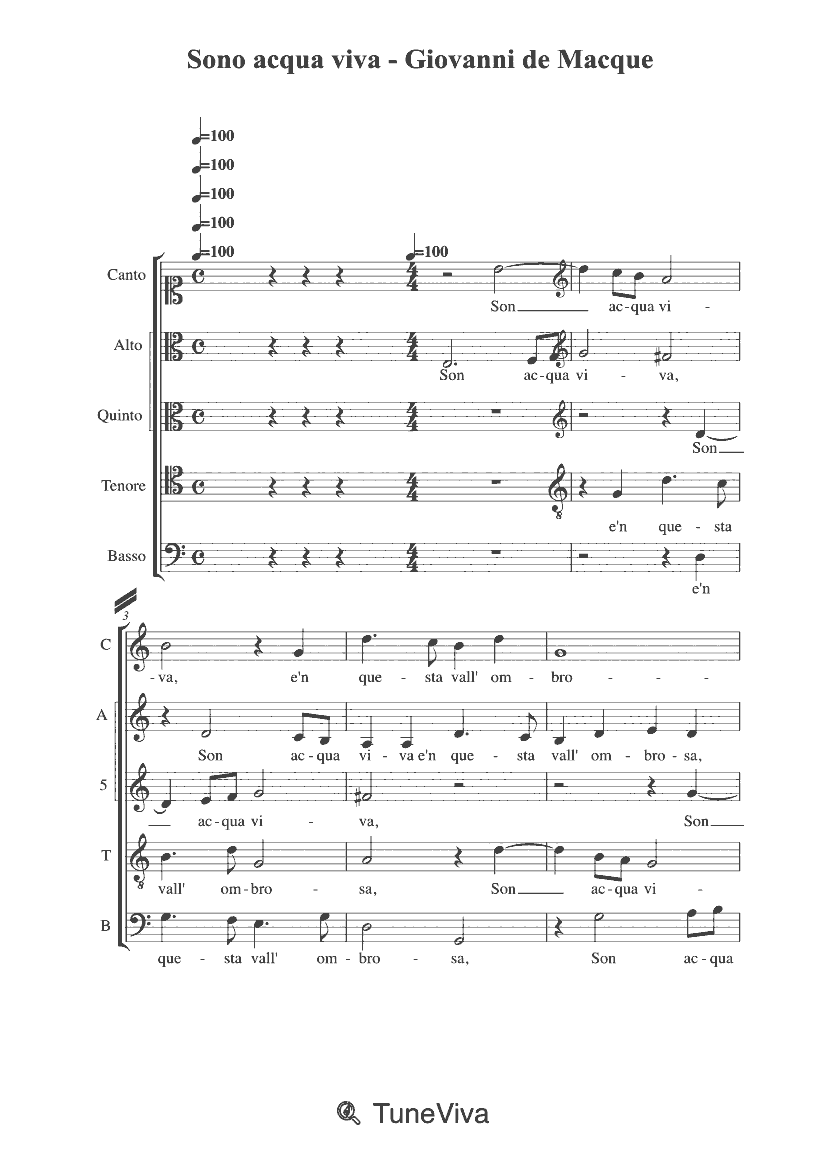
Views cluster around a handful of madrigals. Se dunqu' il dolce canto leads with 39, followed by Sedendo su l'arena on 32 and Sono acqua viva on 18. The rest are four- to six-voice settings of pastoral and amorous verse, with a single three-voice canzonetta from the 1590s among them.
Macque was born in Valenciennes, in the Habsburg Netherlands, around 1548 or 1550. He was a choirboy in Vienna and studied with Philippe de Monte; the date his voice broke, late 1563, is the only firm evidence for his birth. By 1574 he was in Rome, working as a composer and organist, and he published his first book of madrigals at Venice in 1576.
He moved to Naples around 1585 and entered the household of the Gesualdo family, where he remained until 1590. In that year he became organist at the Santissima Annunziata; in 1594 he was appointed organist to the Spanish viceroy, and in 1599 maestro di cappella of the royal chapel. He died in Naples in September 1614. His pupils included Luigi Rossi, and his keyboard music—canzonas, ricercars, capriccios—carries some of the boldest chromatic writing of the period.
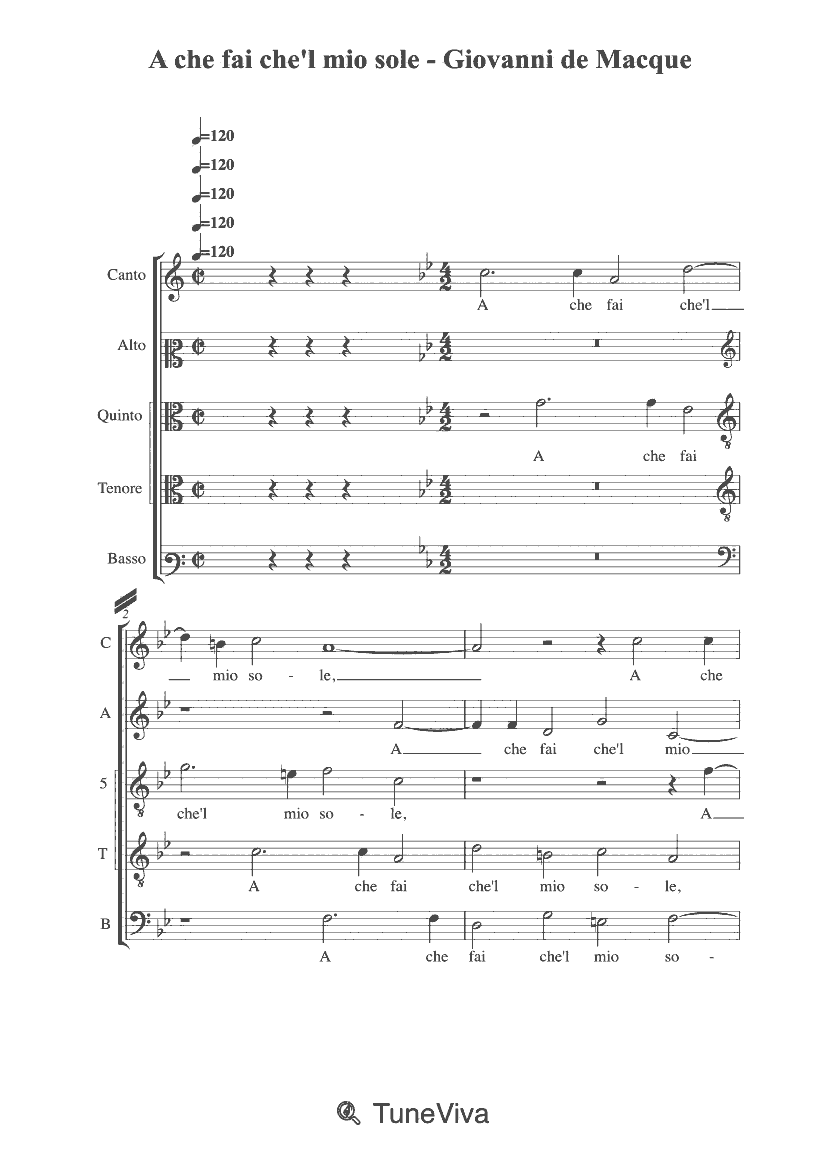
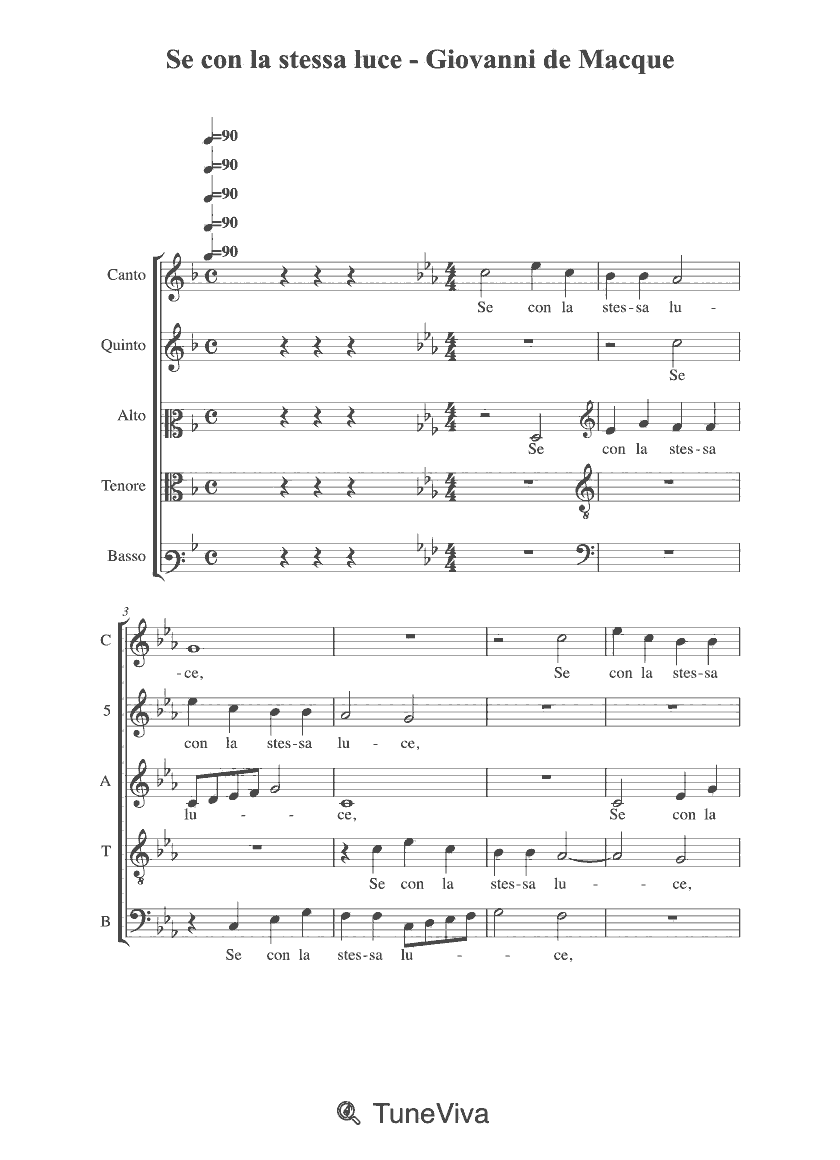
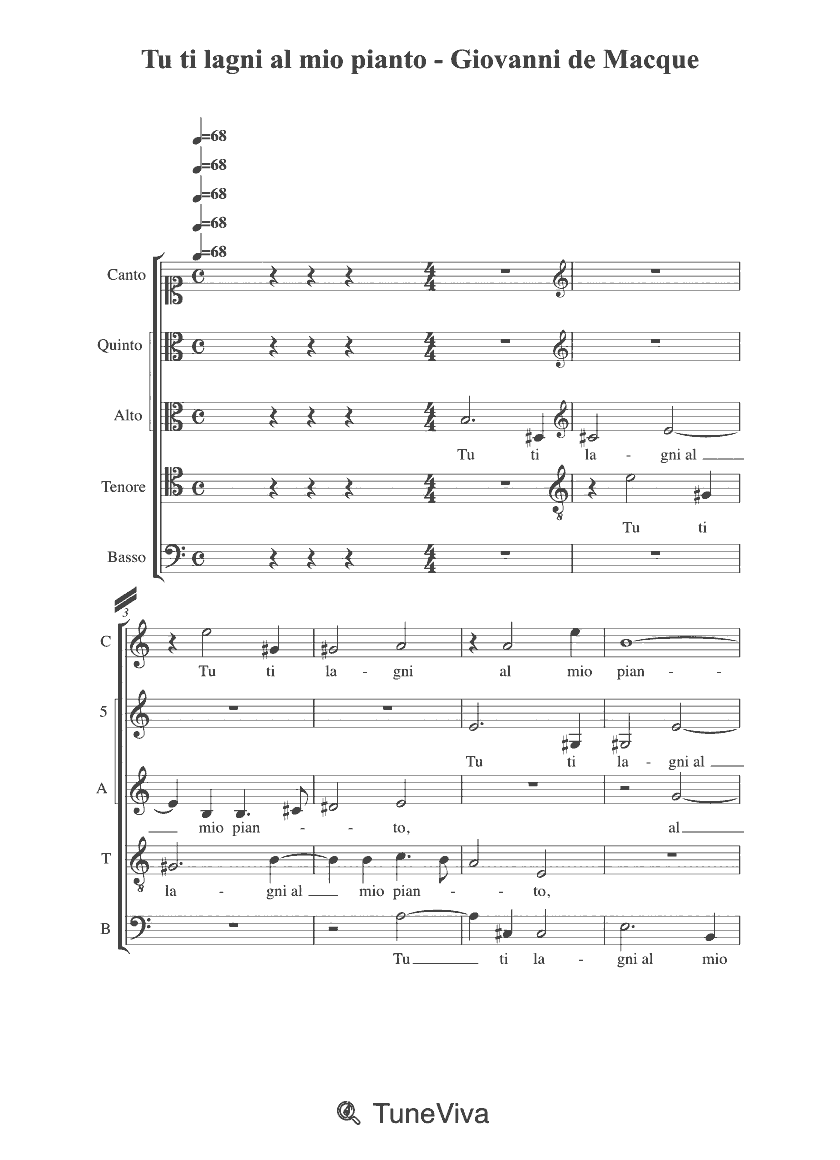
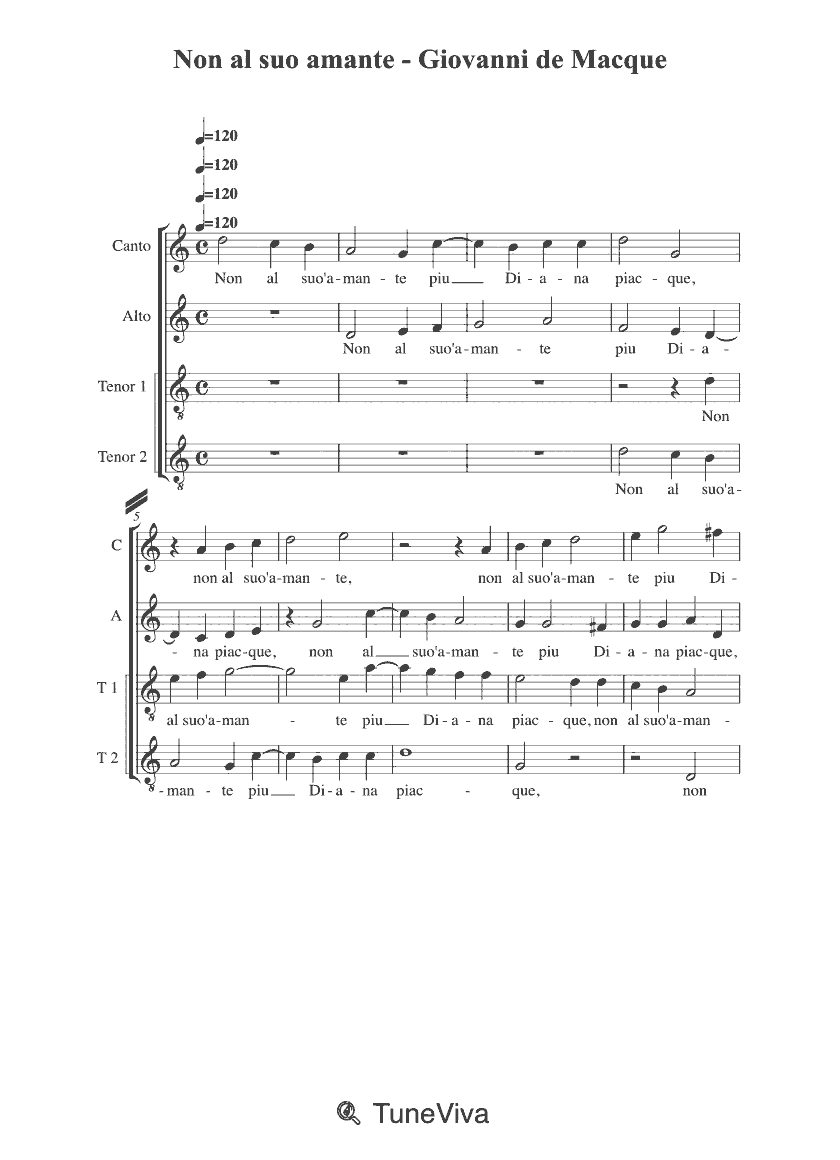
The catalogue reflects the madrigal side of that career. Se dunqu' il dolce canto survives in a 1607 print for three voices; Sedendo su l'arena and Se con la stessa luce belong to the Madrigali a quattro, a cinque et sei voci of 1579. Non al suo amante, a Petrarch setting on the Actaeon story, first appeared in the four-voice first book of 1586, while Tu ti lagni al mio pianto comes from the sixth book of madrigals for five voices (1613), no. 13. Si travagliati amanti is a canzonetta from Lodi della musica a 3 voci (Rome: Simone Verovio, 1595).
All 35 entries sit at complexity index 0, so the scale offers no help in judging the chromatic writing. The average piece runs to about four minutes, consistent with a repertory of single madrigals rather than Mass settings.
Macque's madrigals move by imitation but rarely stay there: a phrase may begin in close canon and end in homophony, and the chromatic turns often fall on a single word. Keep the inner voices light so those turns are audible, and do not slow the tempo to make them sound expressive. The three-voice canzonetta needs a dance-like pulse, not the weight of a five-voice madrigal. Where a text is Petrarch, decide on the stressed syllable before rehearsing, because the setting follows the verse rather than a regular bar.
The most-viewed score here: a three-voice setting that survives in a 1607 print; the catalogue does not record which collection it came from.
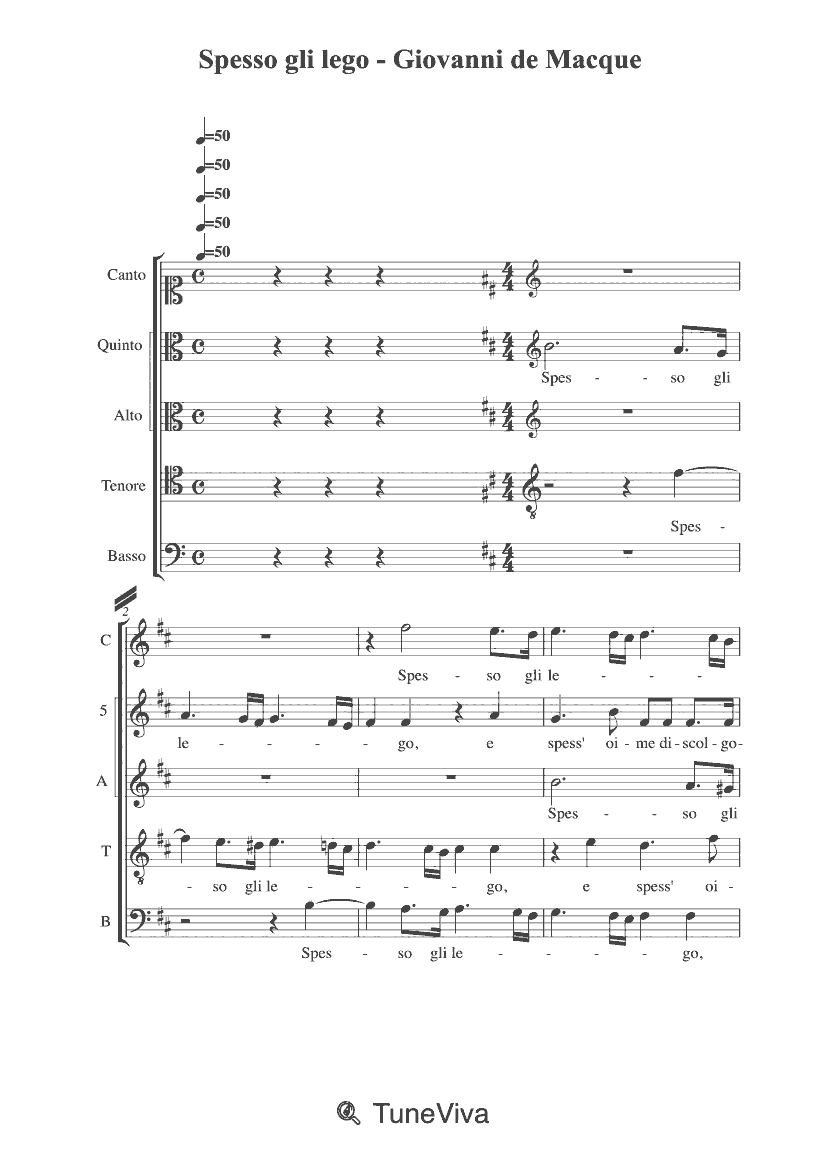
No. 19 in the Madrigali a quattro, a cinque et sei voci of 1579, a six-part setting of a pastoral text.
A madrigal on the image of living water, one of the few devotional-seeming texts in this secular group.
Printed in the 1579 collection Madrigali a quattro, a cinque et sei voci; the catalogue gives no poet.
A five-voice madrigal from the Secondo libro di madrigali a cinque voci (1594).
A Petrarch setting: the Actaeon stanza of 'Nel dolce tempo de la prima etade', first printed in the four-voice first book of 1586.
A madrigal on the bonds of love; the catalogue records no source book.
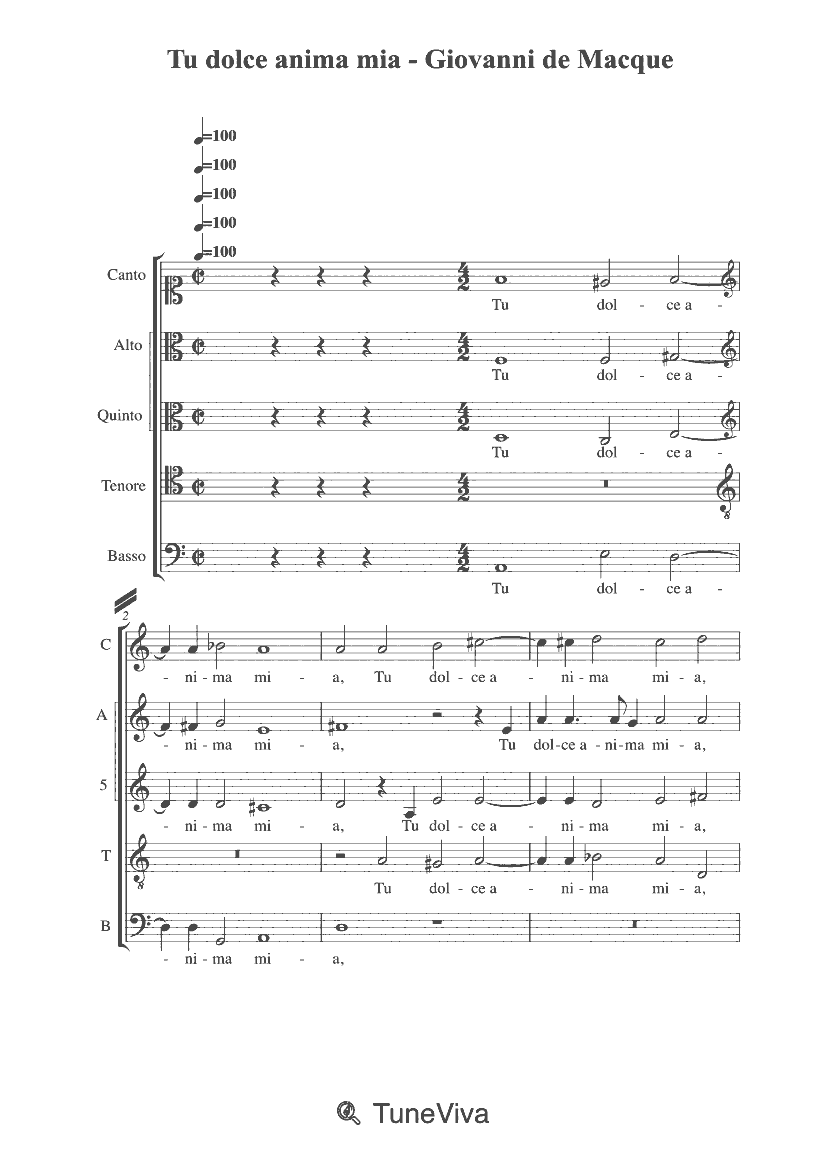
From the 1579 Madrigali a quattro, a cinque et sei voci, a setting of the familiar address to the beloved soul.
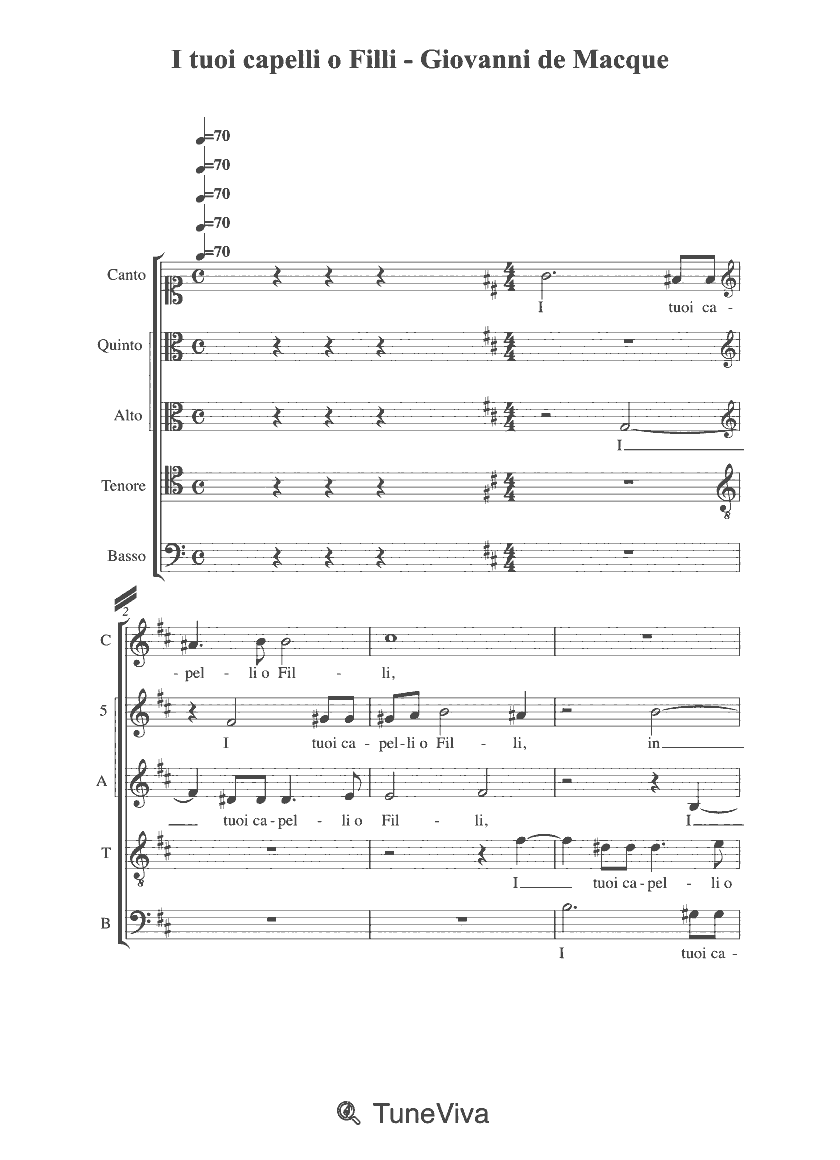
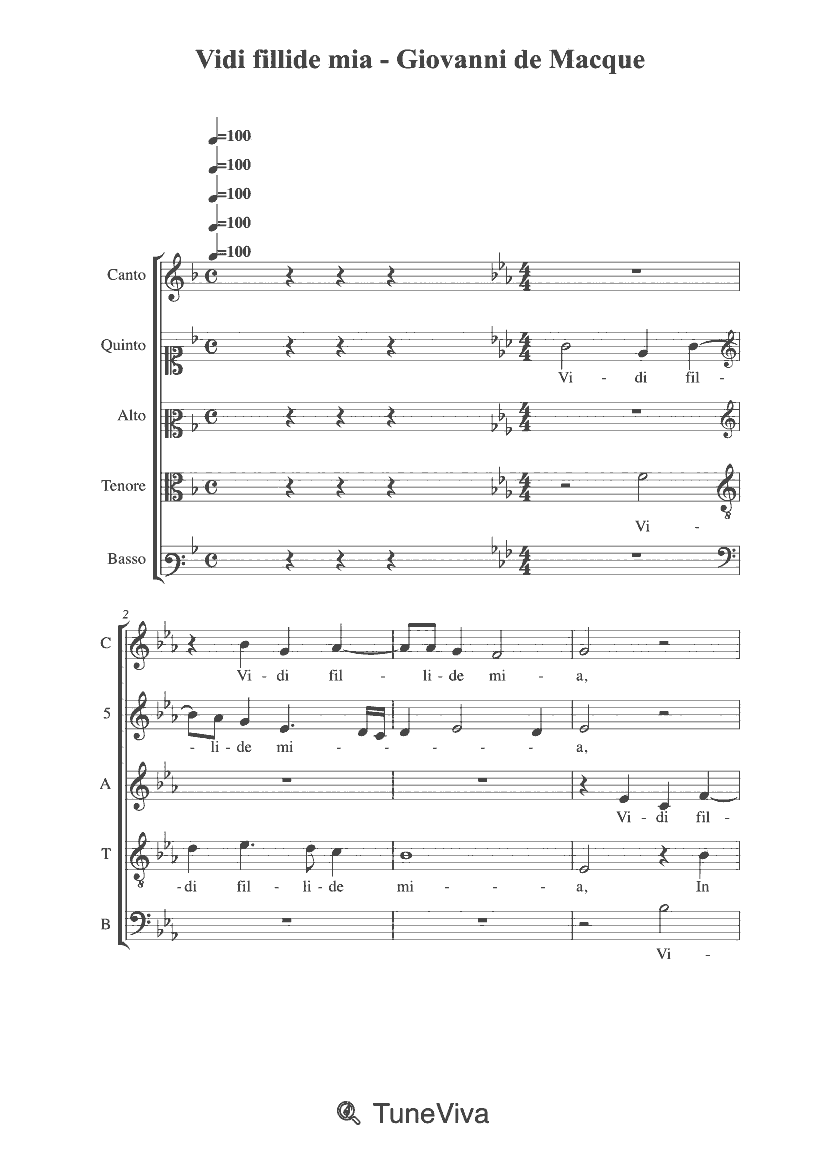
A pastoral madrigal addressed to Filli; no source print is recorded.
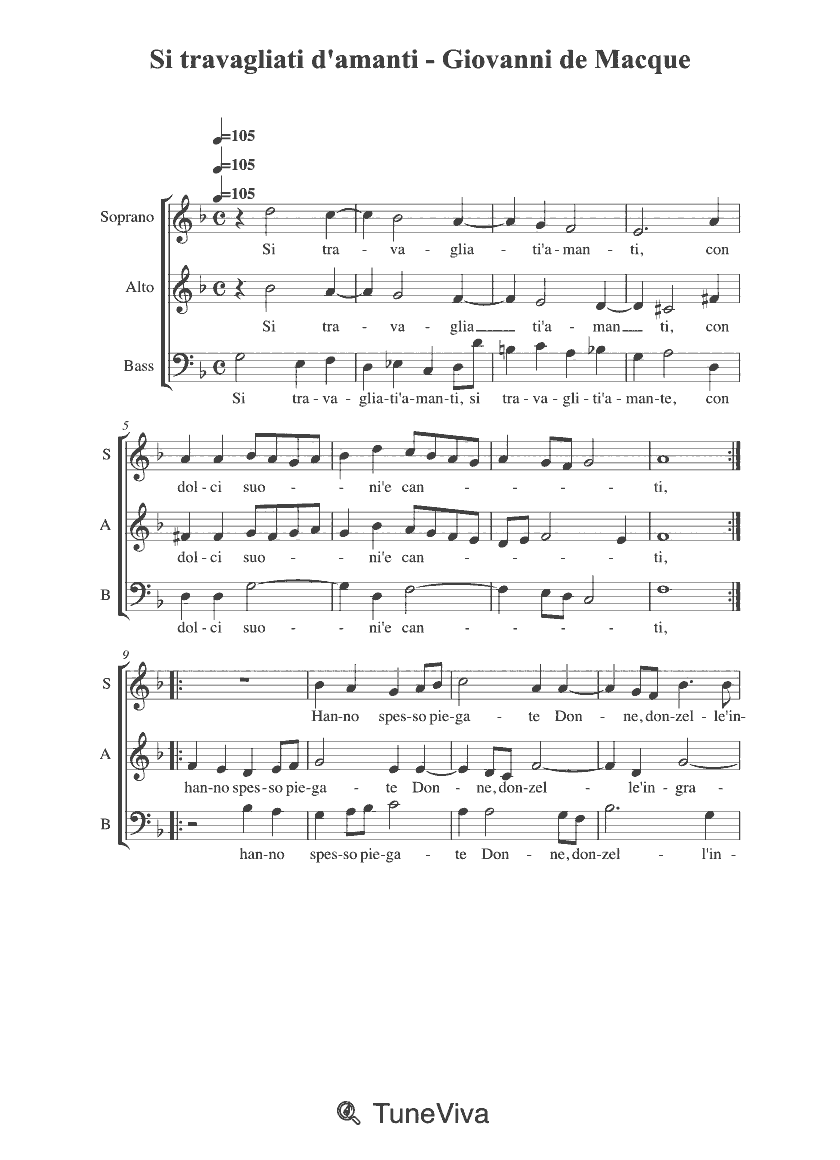
A three-voice canzonetta from Lodi della musica a 3 voci (Rome: Simone Verovio, 1595); the catalogue title misreads 'amanti' as 'd'amanti'.
There are 35, running to about 138 minutes of music and 24,653 notated notes. Thirty-three of them include lyrics.
Yes. He was in their household in Naples from about 1585 until 1590, and some of his later chromatic writing has been connected with Carlo Gesualdo's experiments.
The index measures notation density, and these madrigals use relatively few notes per second. It does not distinguish a simple homophonic phrase from a passage of chromatic imitation.
A canzonetta for three voices printed in Lodi della musica a 3 voci (Rome: Simone Verovio, 1595). The catalogue title, 'Si travagliati d'amanti', splits the word 'amanti' incorrectly.
Catalog editions and arrangements attributed to Giovanni de Macque.
Seconda parte
Prima parte
Terza parte
Quarta et ultima parte