classical
4 tracks
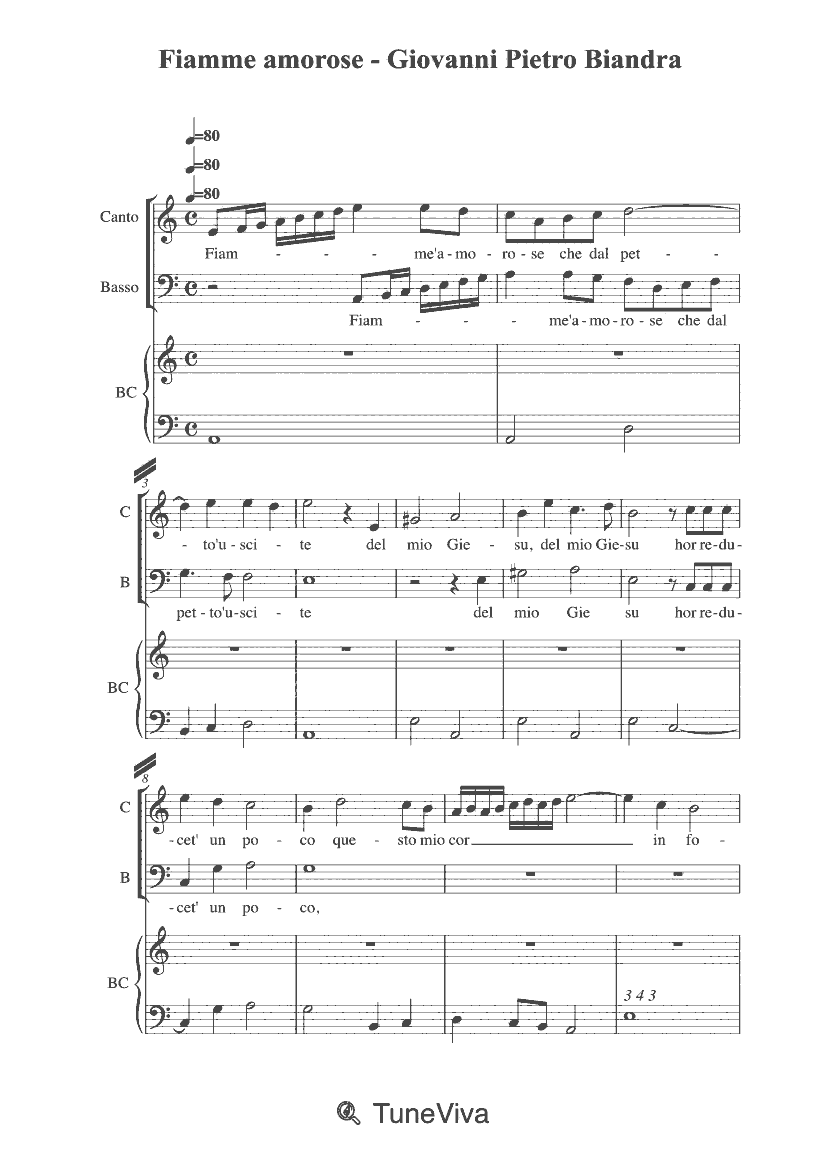
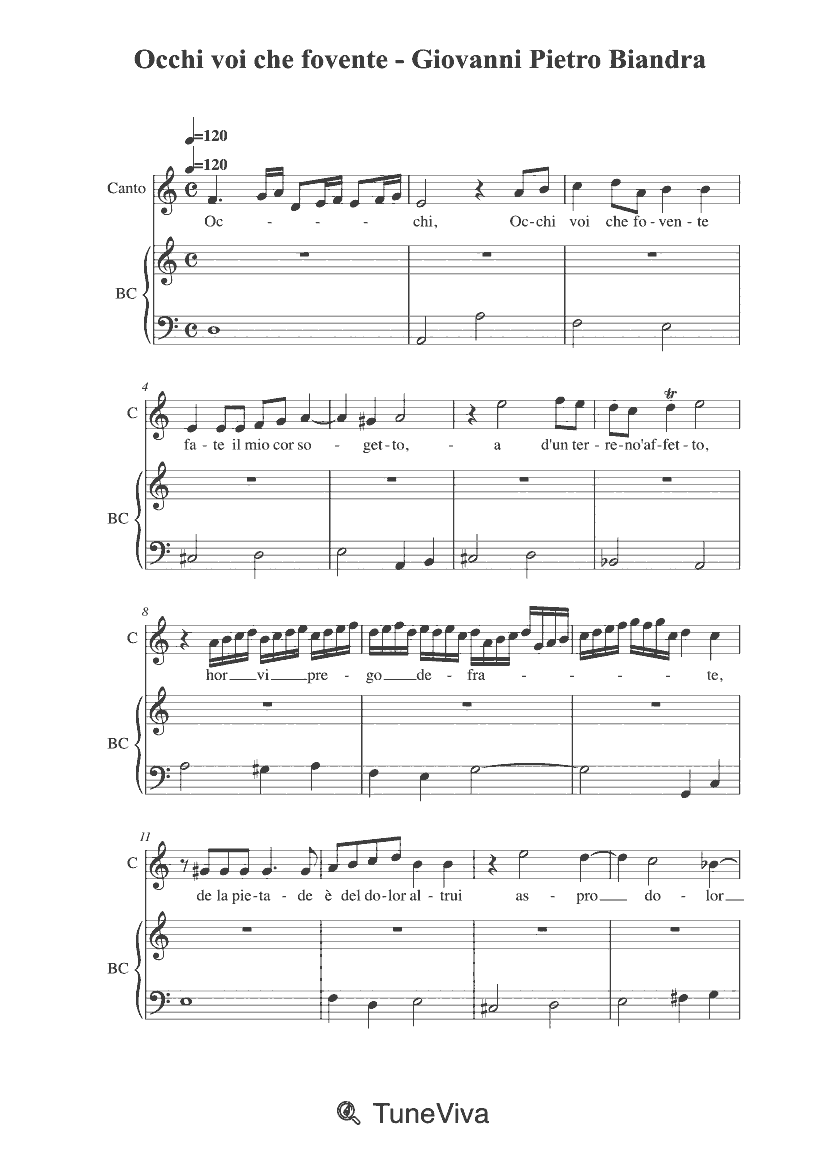
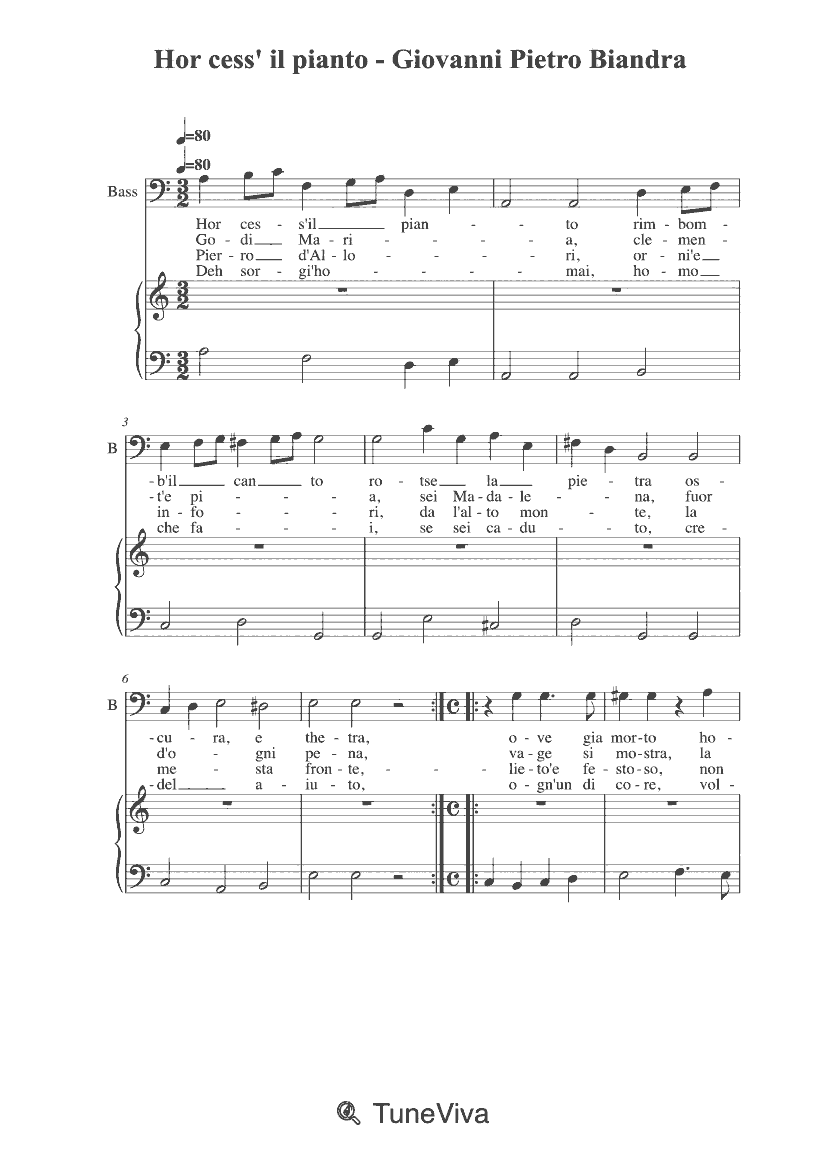
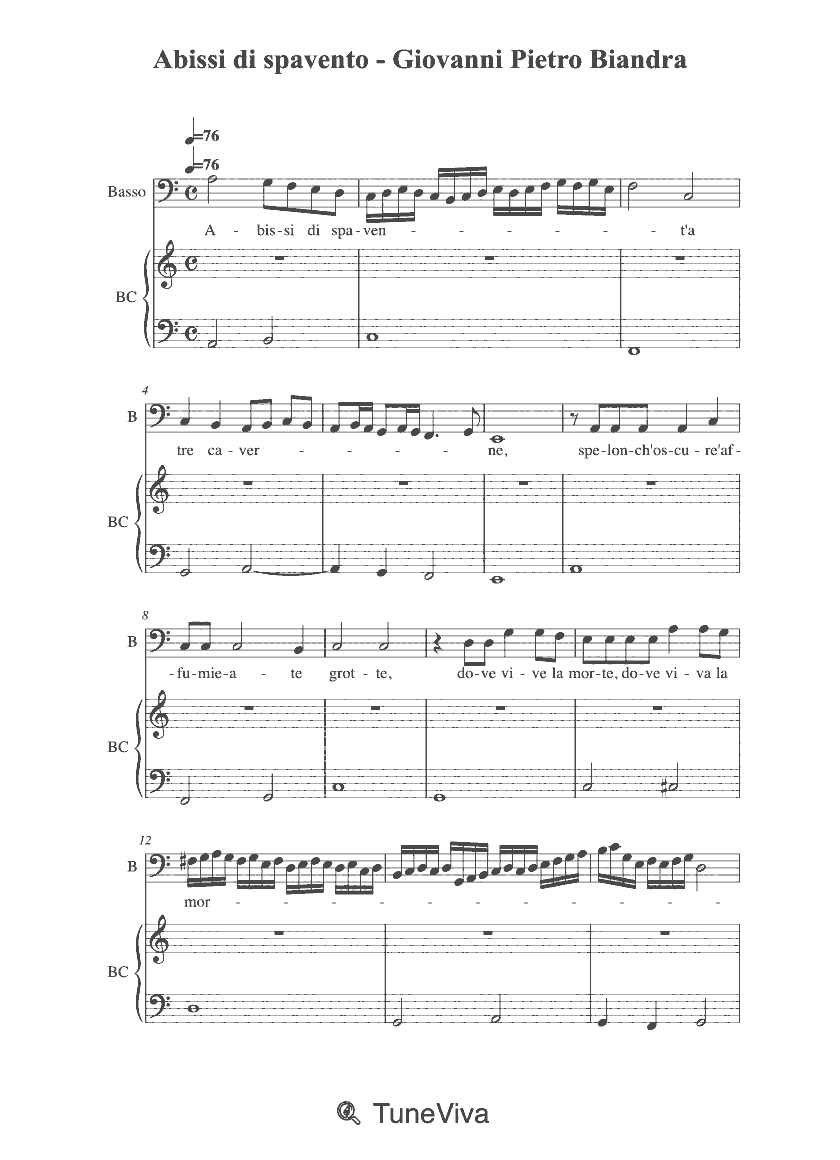
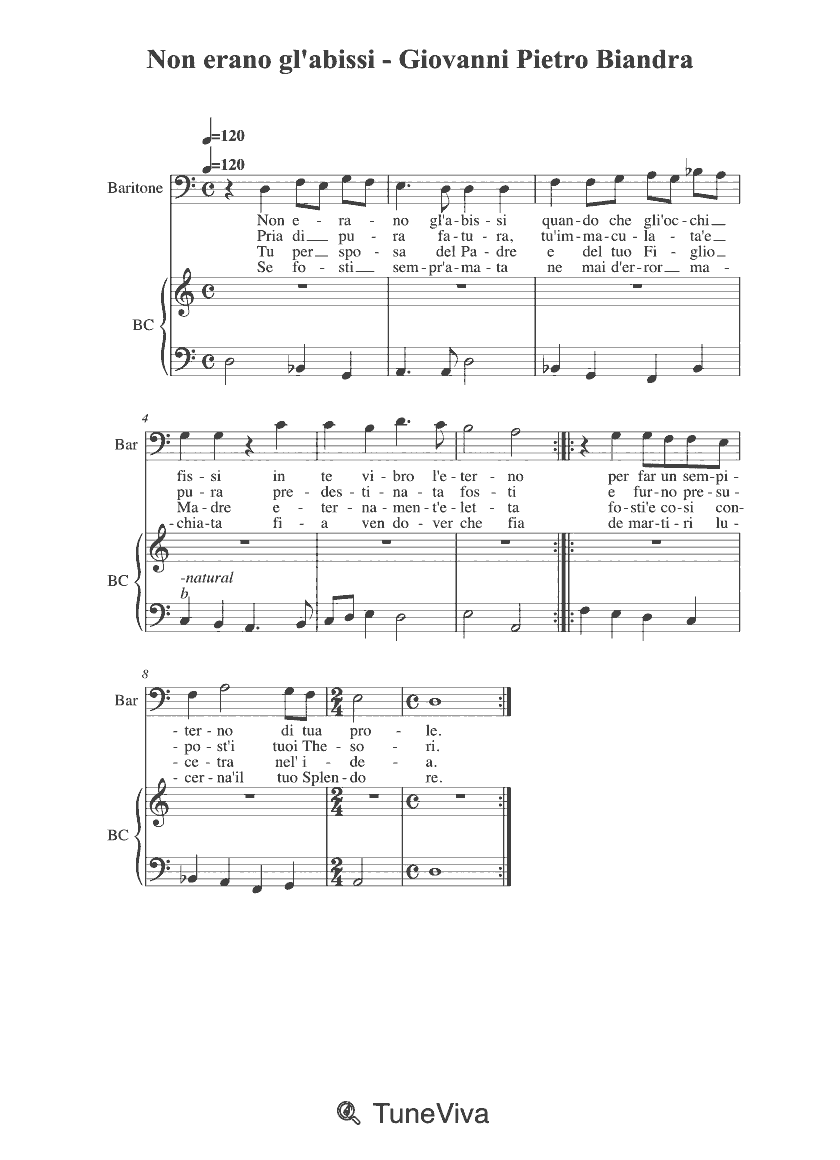
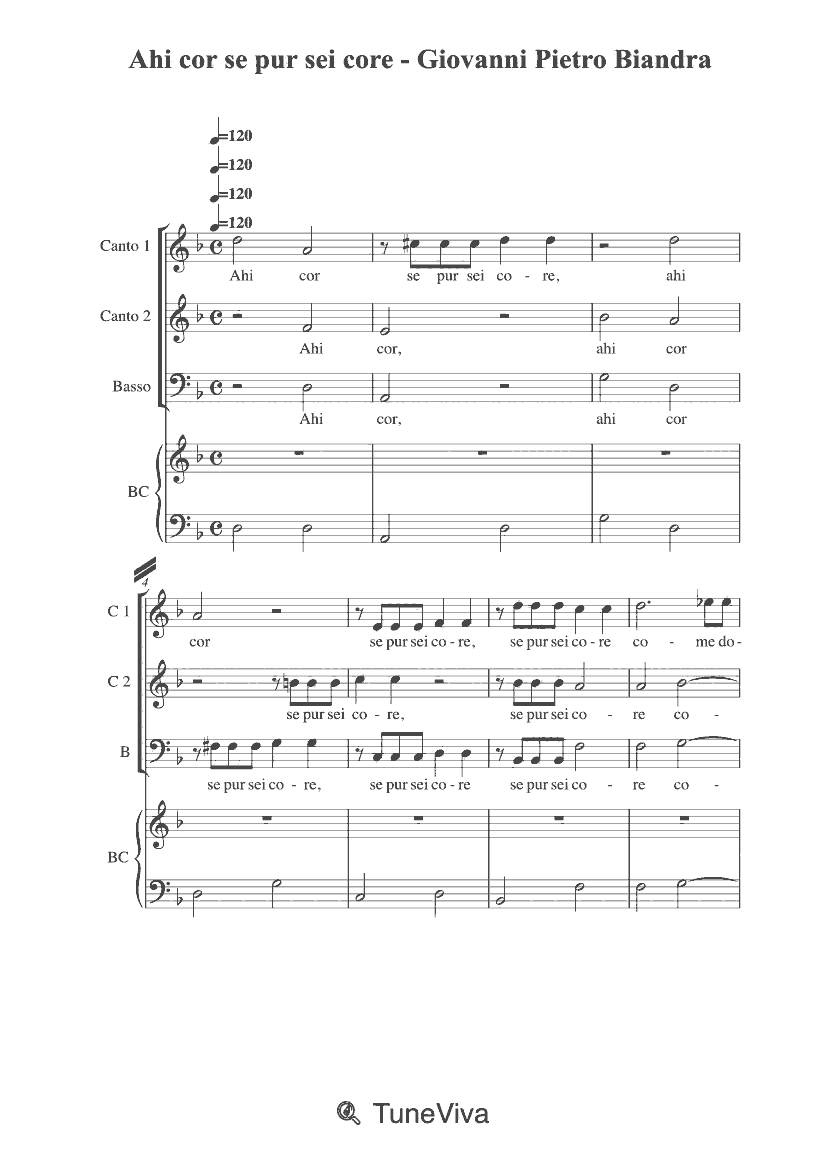
Giovanni Pietro Biandra belongs to the thin margin of the early seventeenth-century Italian madrigal, and the catalogue holds 23 of his pieces: about 49 minutes of music and 7,791 notated notes, every one of them with a text and every one at complexity index 0. The titles are Italian devotional and amorous verses, from A pie del duro legno to O velata gratiosa. Nothing here runs long; the average is a little over two minutes, which fits the one-to-three-voice pieces of his 1626 Madrigaletti. The catalogue preserves them as separate short files rather than as a cycle.
Almost nothing about Biandra's life is securely documented, and even the spelling varies: library sources prefer Biandrà, while the catalogue uses Biandra. His publications describe him as 'romano', and one line of inference places his birth at Biandrate, near Novara, though that is a guess from the surname rather than a record. He is thought to have been maestro di cappella of the Seminario Romano in Rome around 1618 and 1619, and then of Faenza Cathedral from 1619 until 1633.
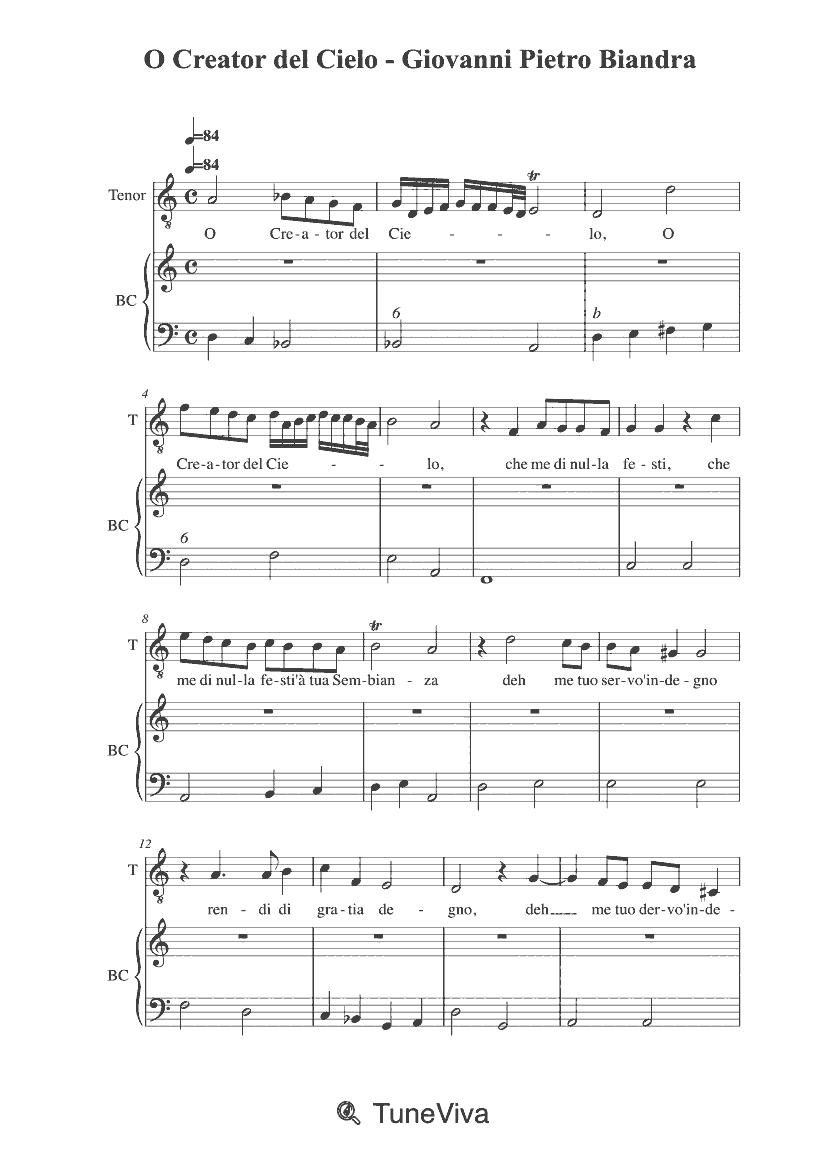
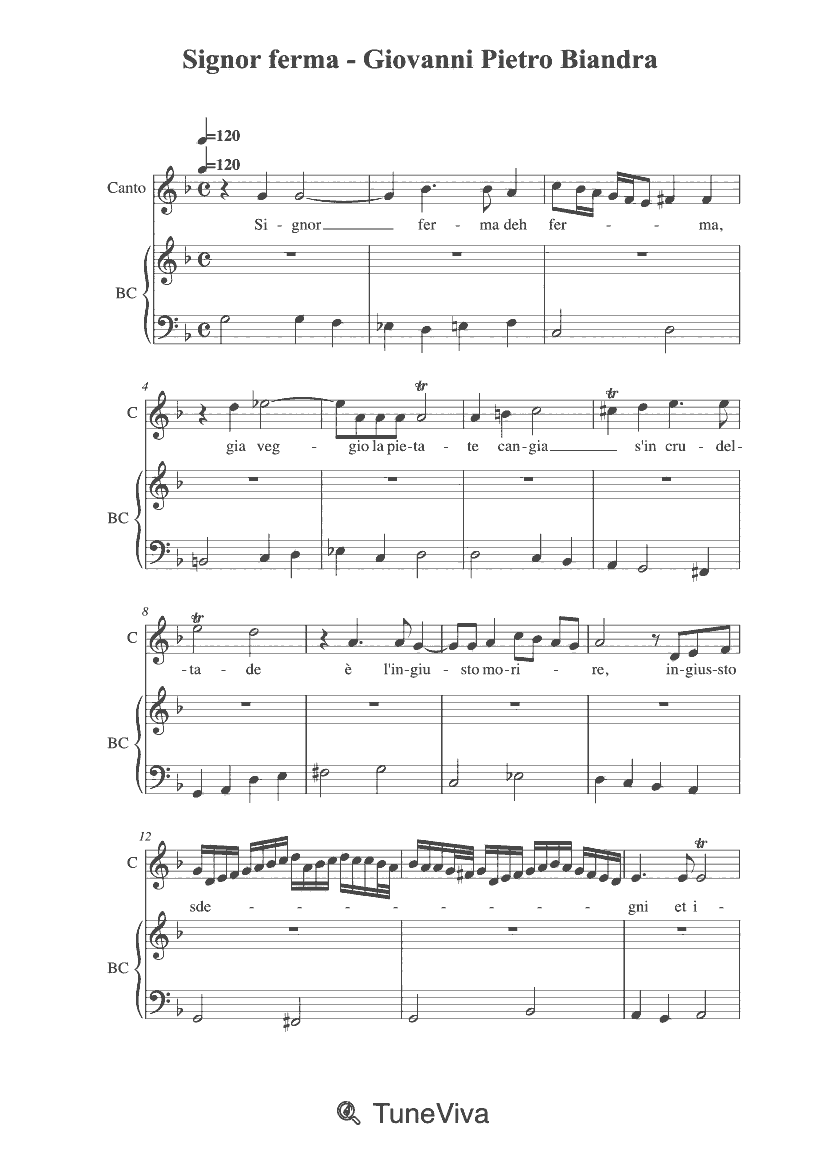
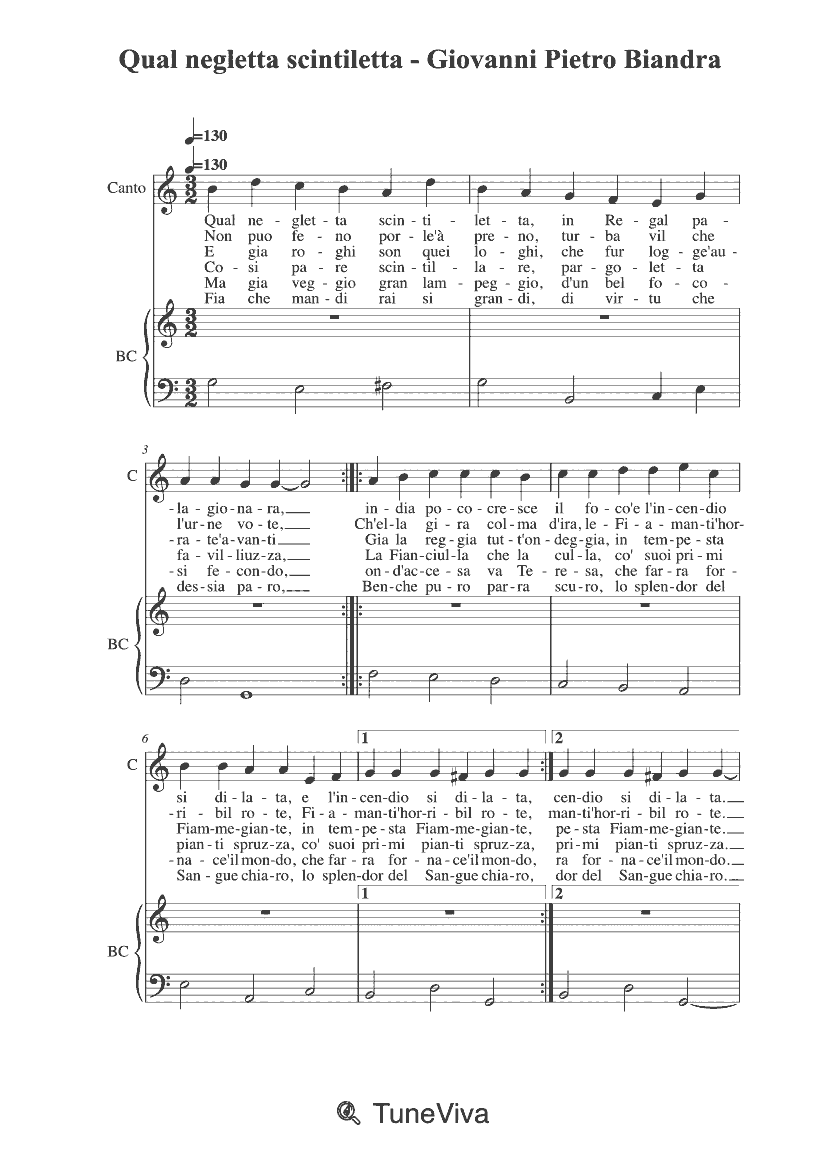
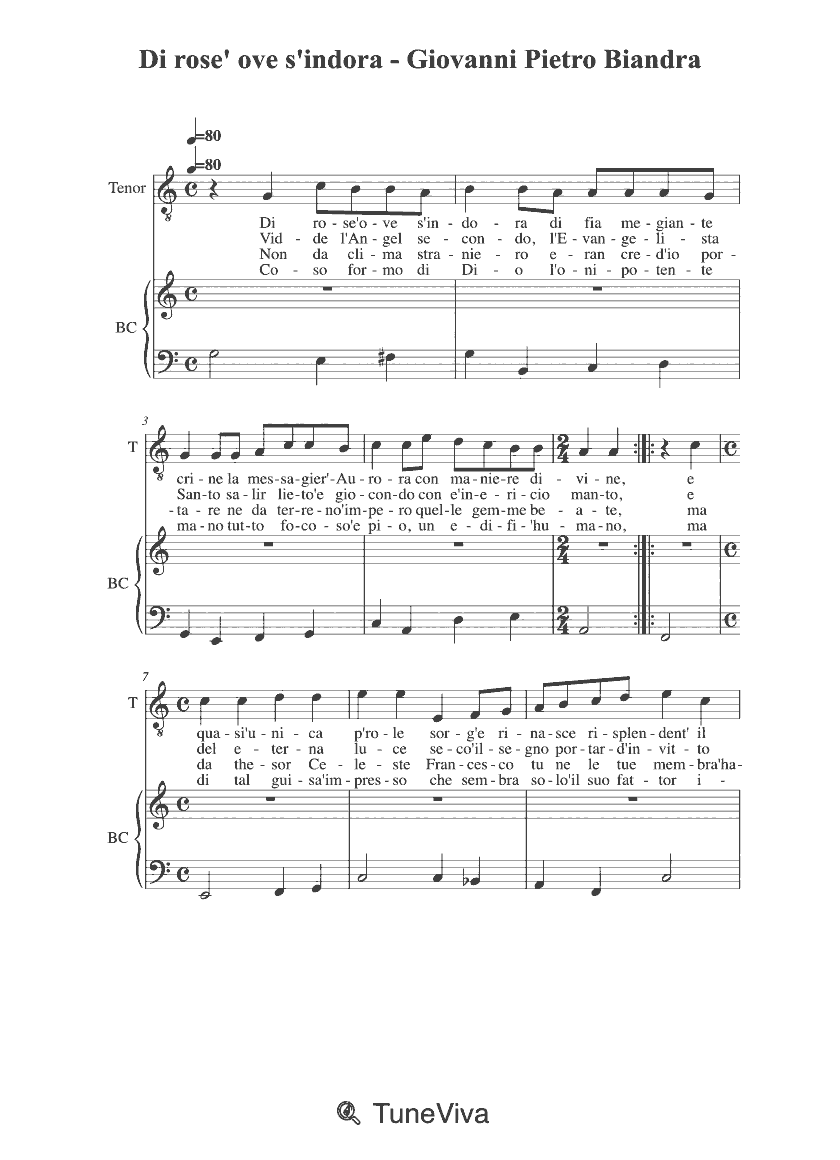
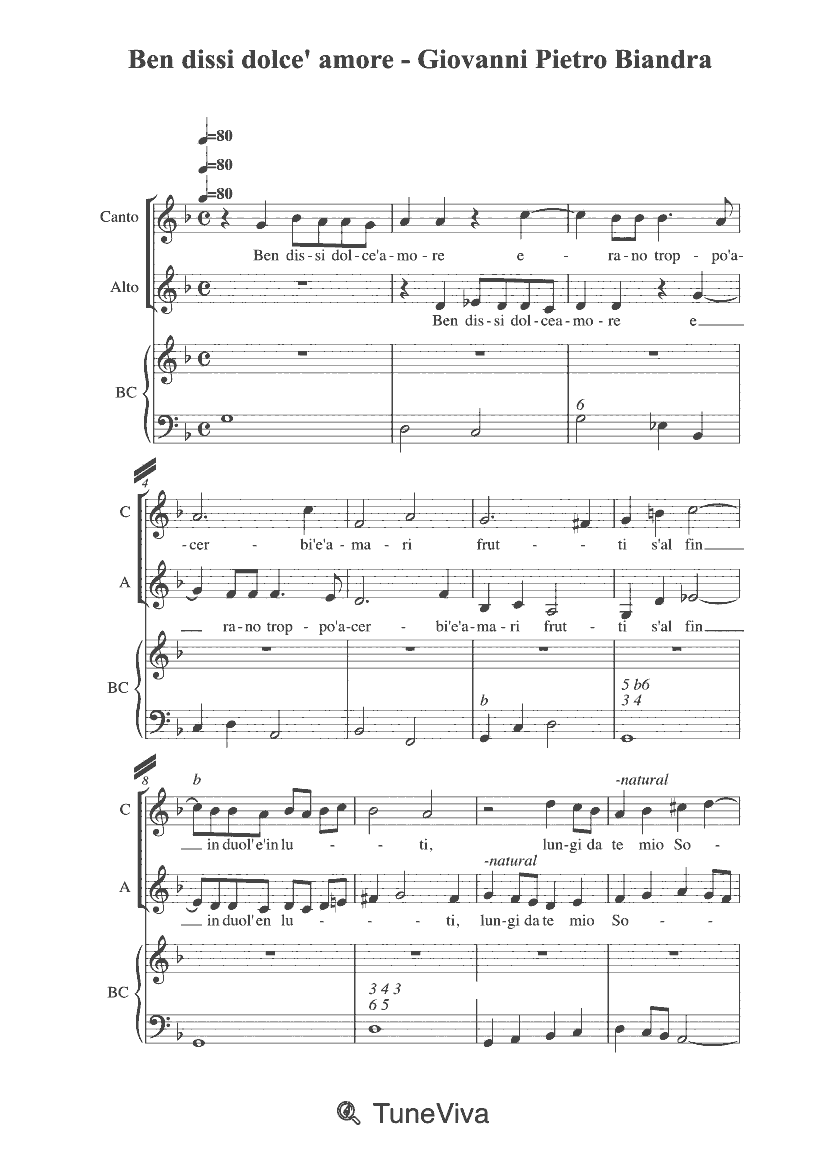
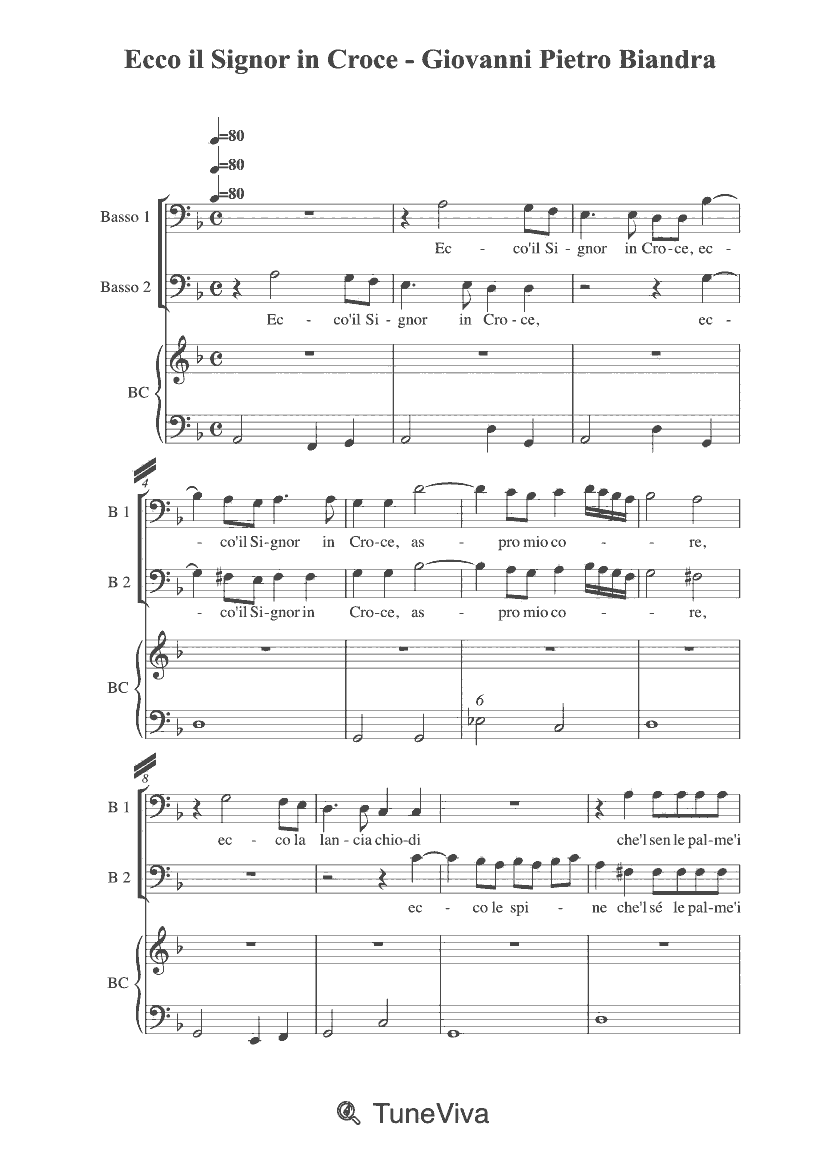
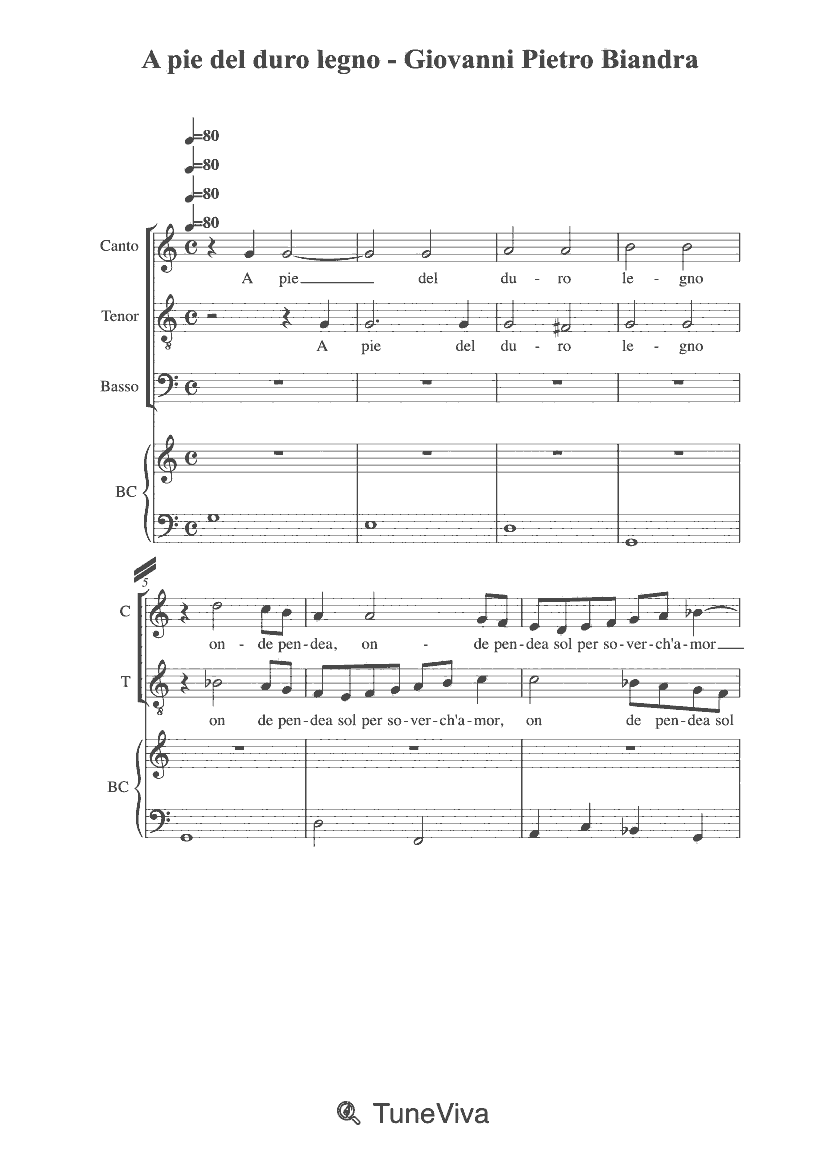
The music that survives is small-scale. The Madrigaletti a 1-3 voci of 1626 contains pieces for two and three voices, some with basso continuo, ranging from a setting of Fulvio Testi's A pie del duro legno for soprano and tenor to Ecco il Signor in Croce for two basses, and includes an aria for Corpus Christi. Most of the texts are sacred rather than pastoral, which places the collection among the spiritual madrigals that Roman composers produced for devotional gatherings.
The catalogue reflects that scale: 23 entries, all classed as classical, all with lyrics, none above index 0. Most are single pieces rather than cycles, and the notes-per-minute figure is low even for vocal music; the files read as working copies rather than as a collected edition.
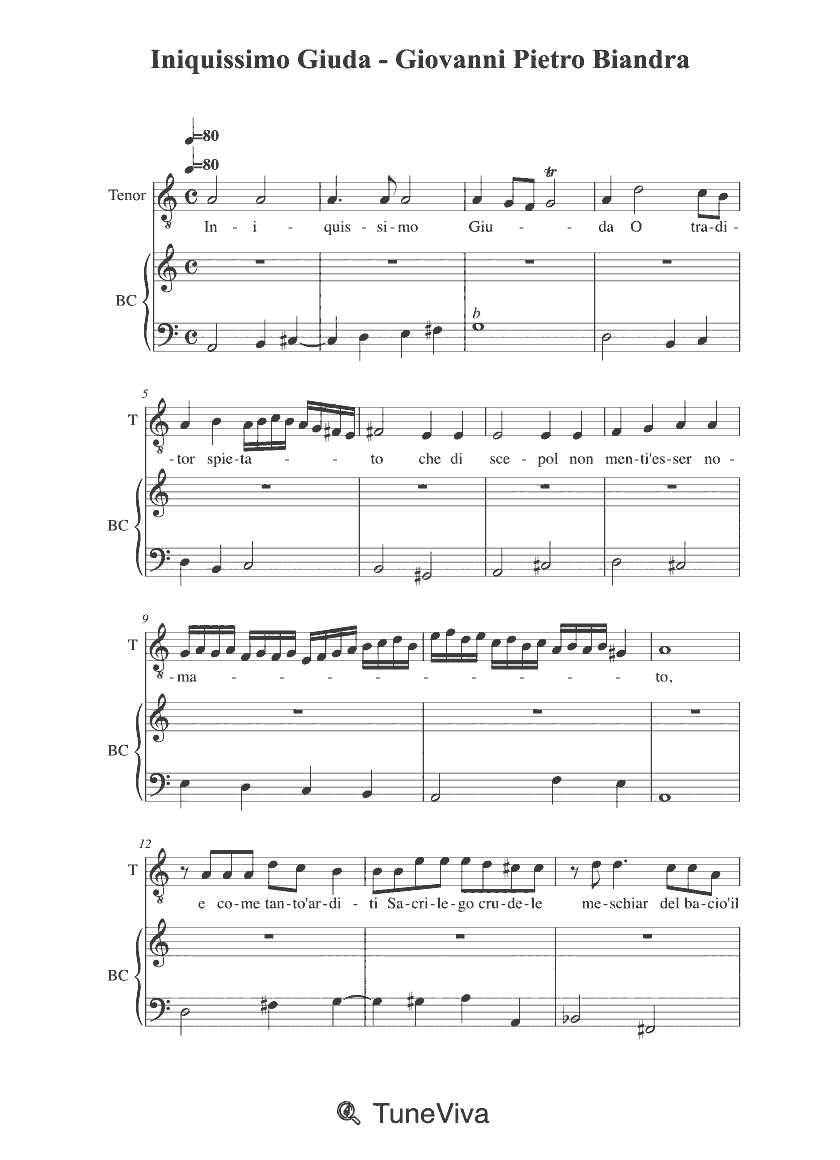
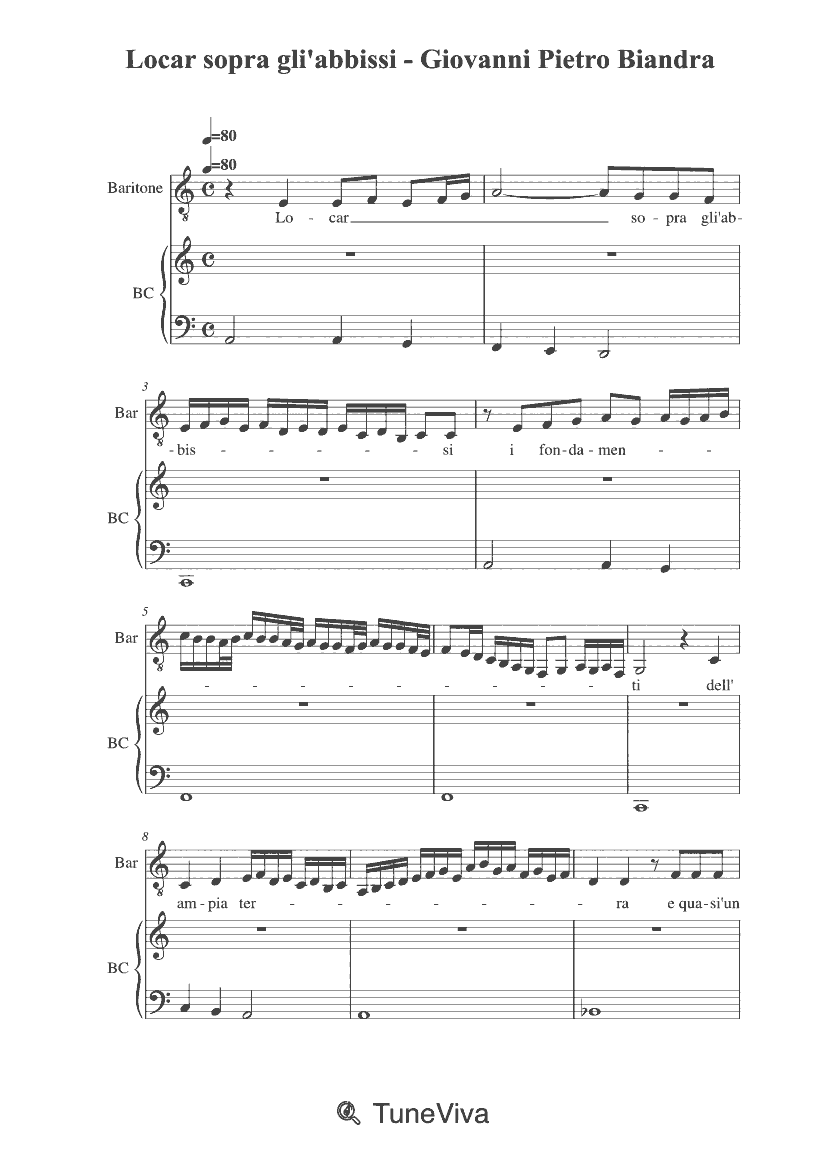
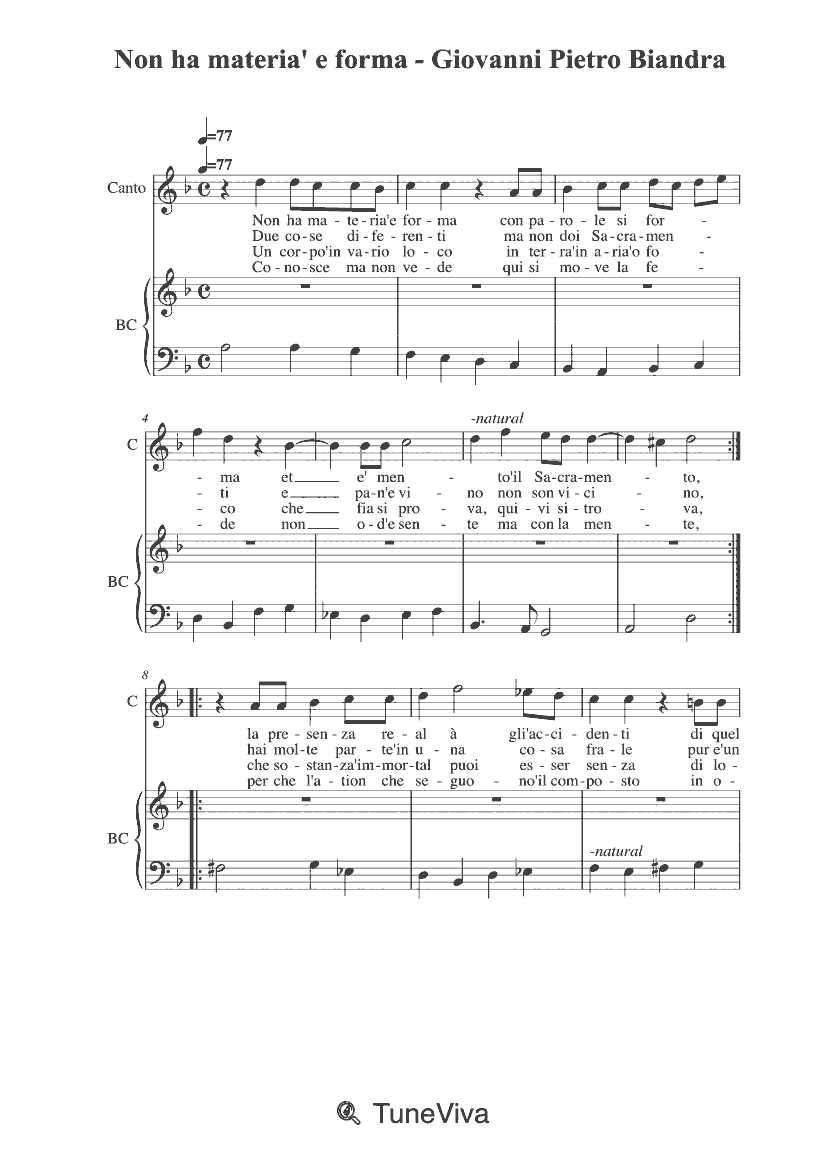
These pieces are for one to three voices, generally with a continuo, so balance is less about blending a choir than about matching a single line. Keep the declamation forward: the text drives the rhythm, and a literal reading of the note values will sound sluggish. Ornament sparingly at cadences, and let the continuo player fill in without doubling the voice. Because the ranges are narrow, the tuning of suspensions is exposed; tune the suspended note to the bass, not to the previous chord.
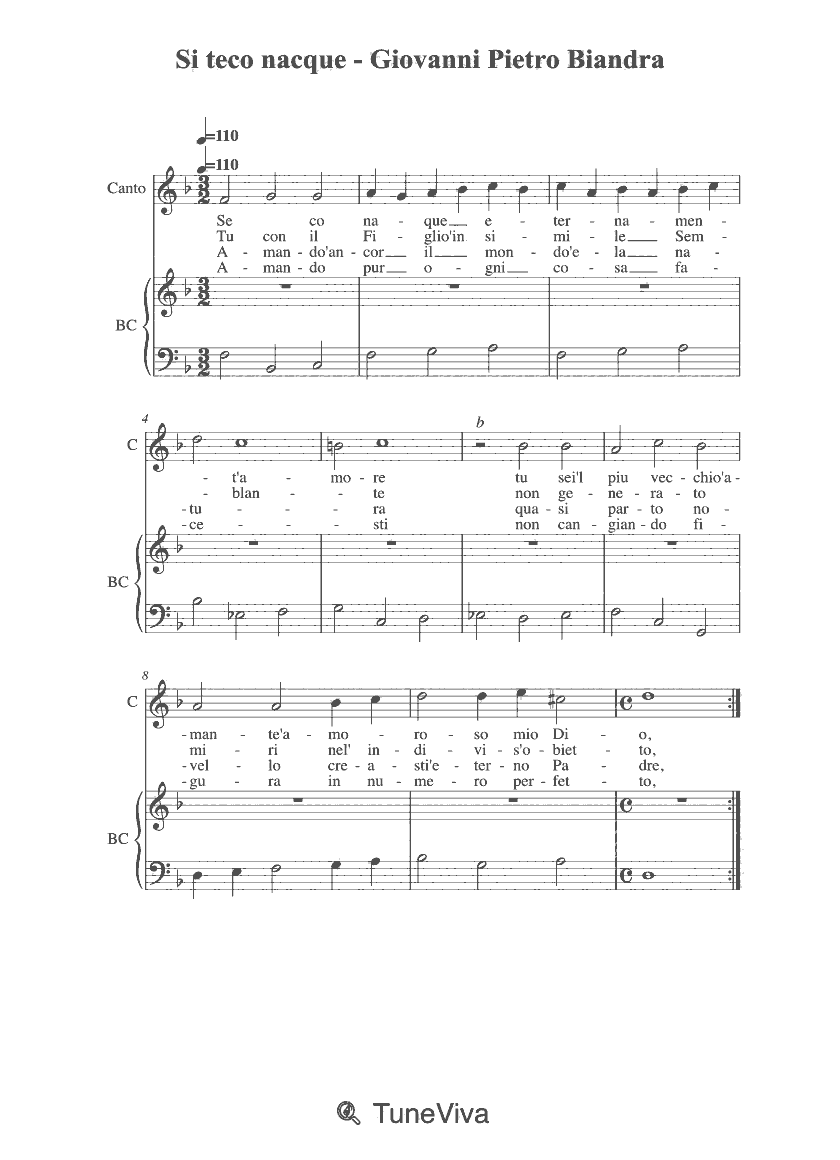
The most-viewed piece here: a two-voice setting for soprano and tenor of a text by Fulvio Testi, no. 15 in the 1626 Madrigaletti.
The second most-viewed entry; a short devotional piece with no source recorded in the catalogue.
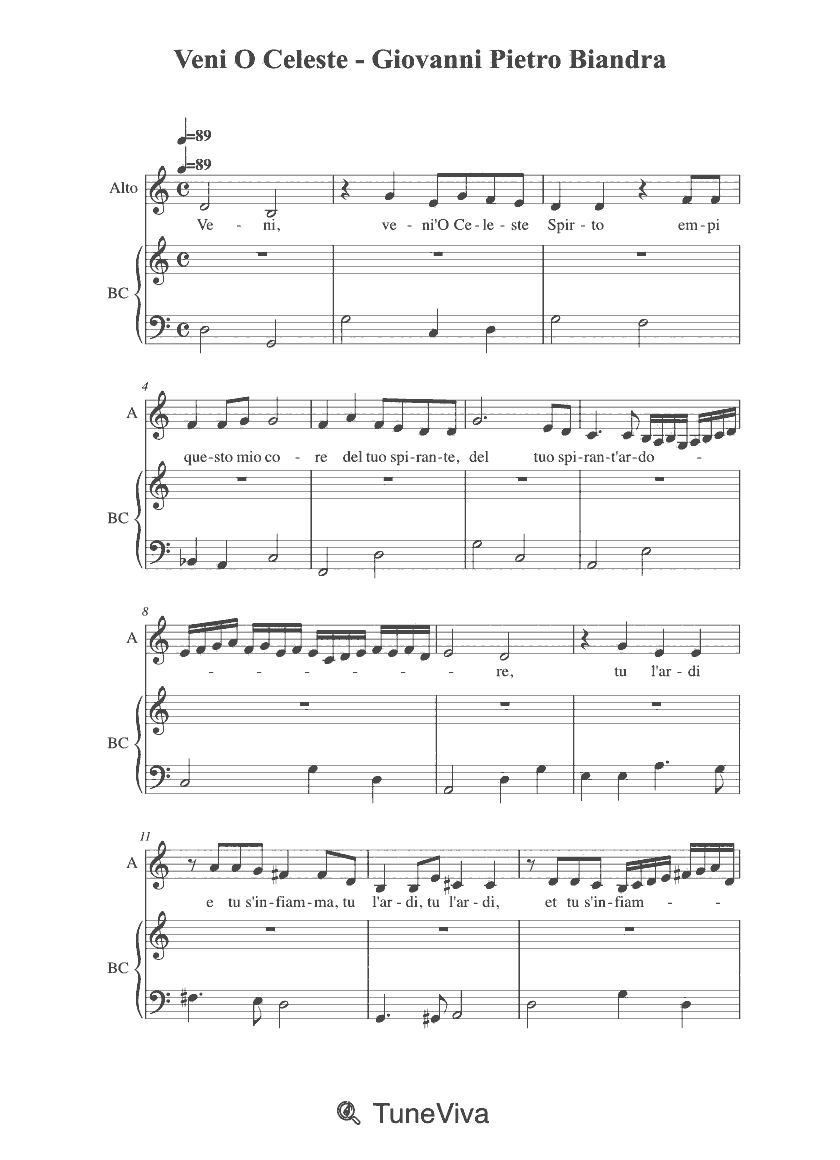
A short invocation, one of the pieces that give the collection its devotional cast.
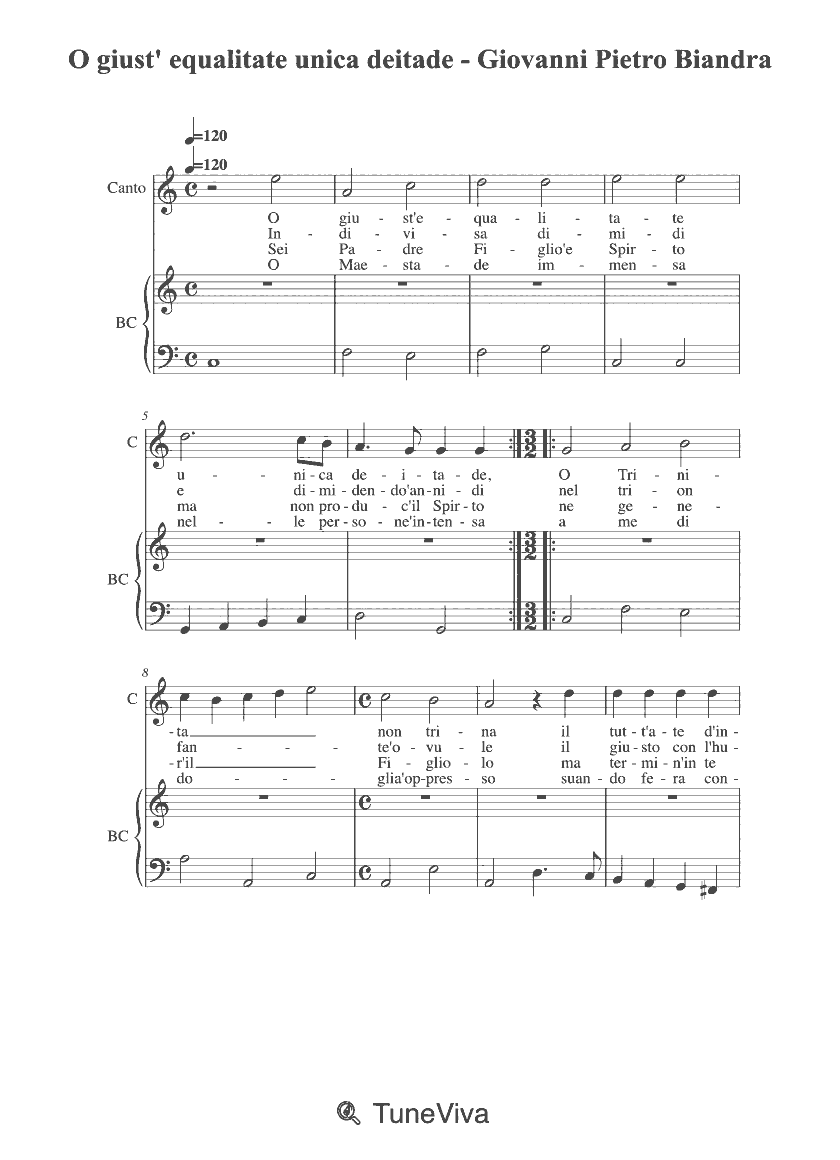
The title invokes divine justice and unity, in the catalogue's original spelling.
One of the most-viewed entries; the catalogue gives no further source or voicing.
An amorous text inside an otherwise largely sacred group of pieces.
A short piece in the same syllabic style as the rest of the set; the catalogue gives no voicing.
A text that calls for weeping to cease, printed with the catalogue's older spelling of 'or'.
One of the darker devotional texts in the collection; the catalogue gives no source.
There are 23, about 49 minutes of music and 7,791 notated notes. All 23 carry lyrics.
Both appear. The catalogue uses Biandra without the accent; CPDL and other library sources print Biandrà. They refer to the same composer.
Most of the titles match the Madrigaletti a 1-3 voci, printed in 1626. The catalogue does not record a source for every individual file, so the link is secure for some pieces and probable for others.
The index measures notation density, and these are short vocal pieces with few notes per second. It says nothing about the difficulty of tuning a suspension or projecting a text.
Catalog editions and arrangements attributed to Giovanni Pietro Biandra.