classical
1 tracks
Henry Purcell spent almost his whole life within a few hundred yards of Westminster Abbey. A chorister of the Chapel Royal, he studied with Pelham Humfrey and John Blow, became organist of the Abbey at twenty, and wrote for court, theatre and church until his death in 1695, aged thirty-six. TuneViva holds 166 Purcell scores: keyboard grounds, theatre tunes, anthems and opera excerpts. Most sit at the easiest level of the catalog's difficulty scale, which makes this a practical entry point for players meeting Baroque idiom for the first time.
Purcell was born in St Ann's Lane, Westminster, around 10 September 1659. His father, also Henry, was a musician; his uncle Thomas was a Gentleman of the Chapel Royal. After his father died in 1664, Thomas oversaw the boy's education, and Purcell entered the Chapel Royal as a chorister under Henry Cooke, then Pelham Humfrey. When his voice broke in 1673 he left the choir and worked for the royal instrument keeper John Hingston, learning the mechanics of organs and wind instruments. In 1679 he succeeded John Blow as organist of Westminster Abbey.
His only all-sung opera, Dido and Aeneas, was written to a libretto by Nahum Tate and performed at Josias Priest's girls' school in Chelsea, probably in 1689. Its final aria, "When I am laid in earth", rides a repeating ground bass that has never lost its grip on listeners. Purcell also supplied music for plays, odes for royal occasions, and sacred anthems; the funeral sentences sung at Queen Mary's burial in 1695 include "Thou knowest, Lord, the secrets of our hearts".
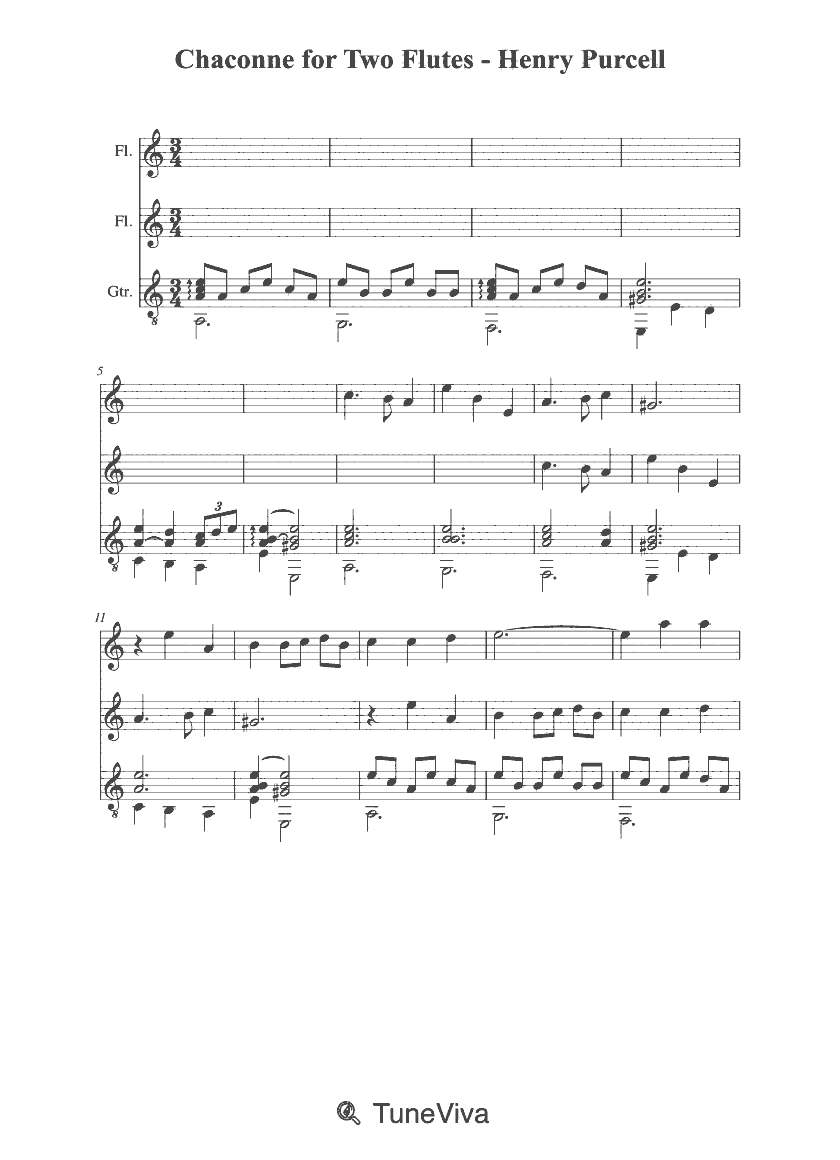
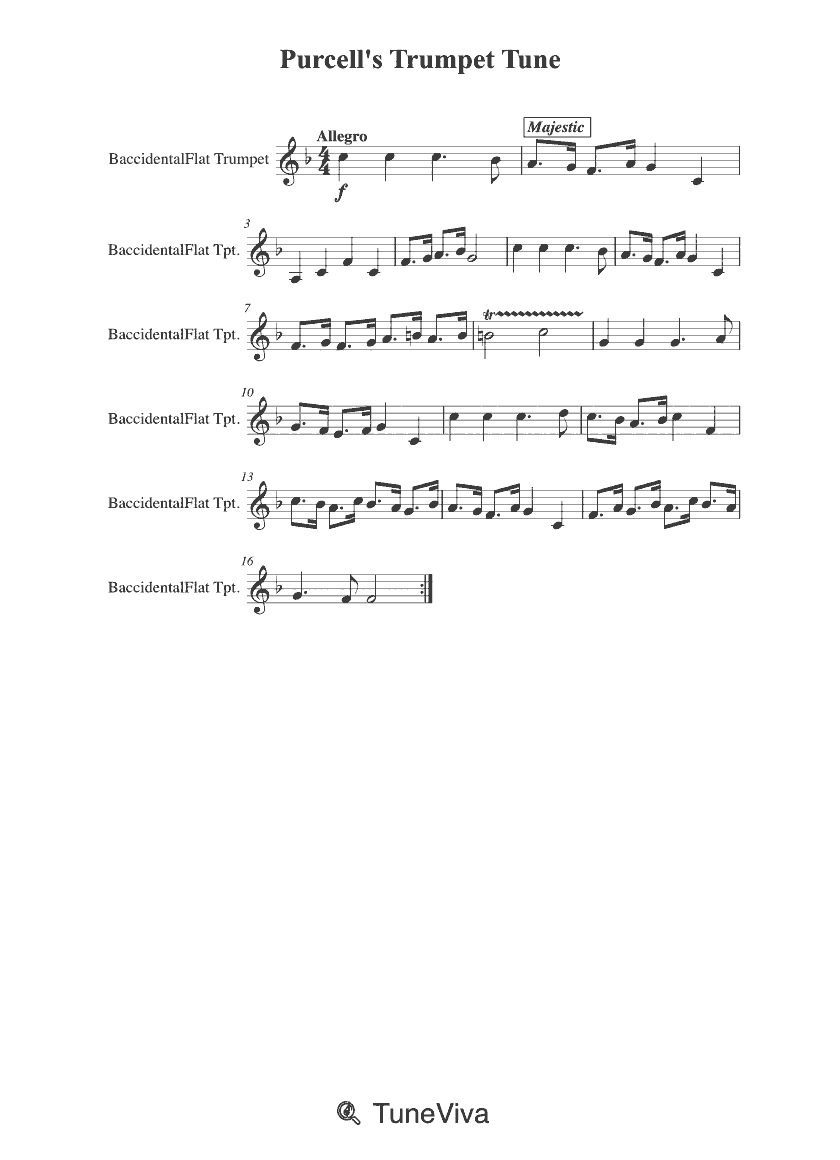
The catalog's 166 scores run to roughly 431 minutes and include 104 items with lyrics. The popular end is dominated by keyboard and instrumental pieces: A New Ground, a chaconne for two flutes, a Trumpet Tune and the G minor sonata Z 807. Vocal selections range from the Dido lament to full anthems. Many are modern arrangements rather than scholarly editions, so scores of the same piece can differ in key and scoring.
Expect a lot of ground basses: short repeated patterns under changing harmonies, with the interest carried by melody and ornament. The keyboard pieces reward crisp articulation and restrained pedalling; the string and flute items need clean, speech-like phrasing. Purcell's idiom mixes French dance rhythms, Italian harmonic writing and English declamation, so listen for the moment a phrase turns from dance to speech. The anthem textures are mostly contrapuntal but rarely dense, which is why so many of these scores suit small choirs.
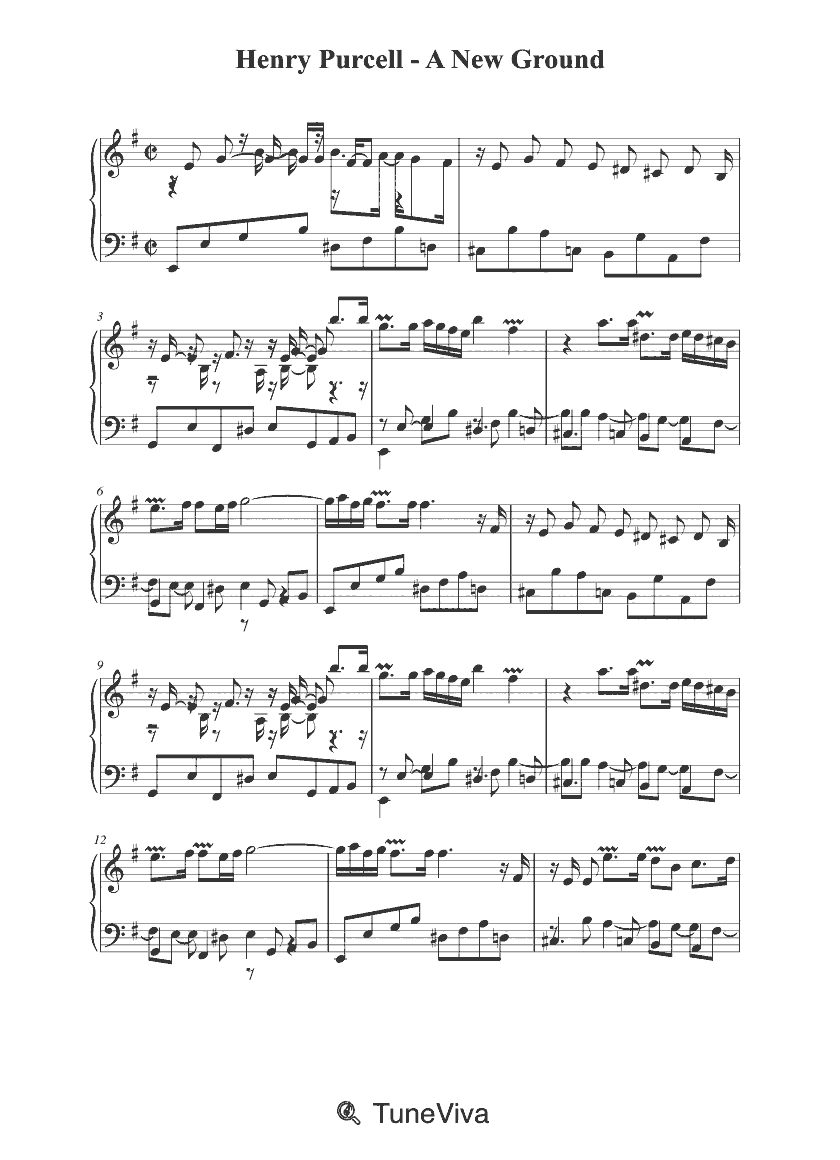
A keyboard ground in E minor, catalogued as ZT 682, and the collection's most-viewed Purcell score.
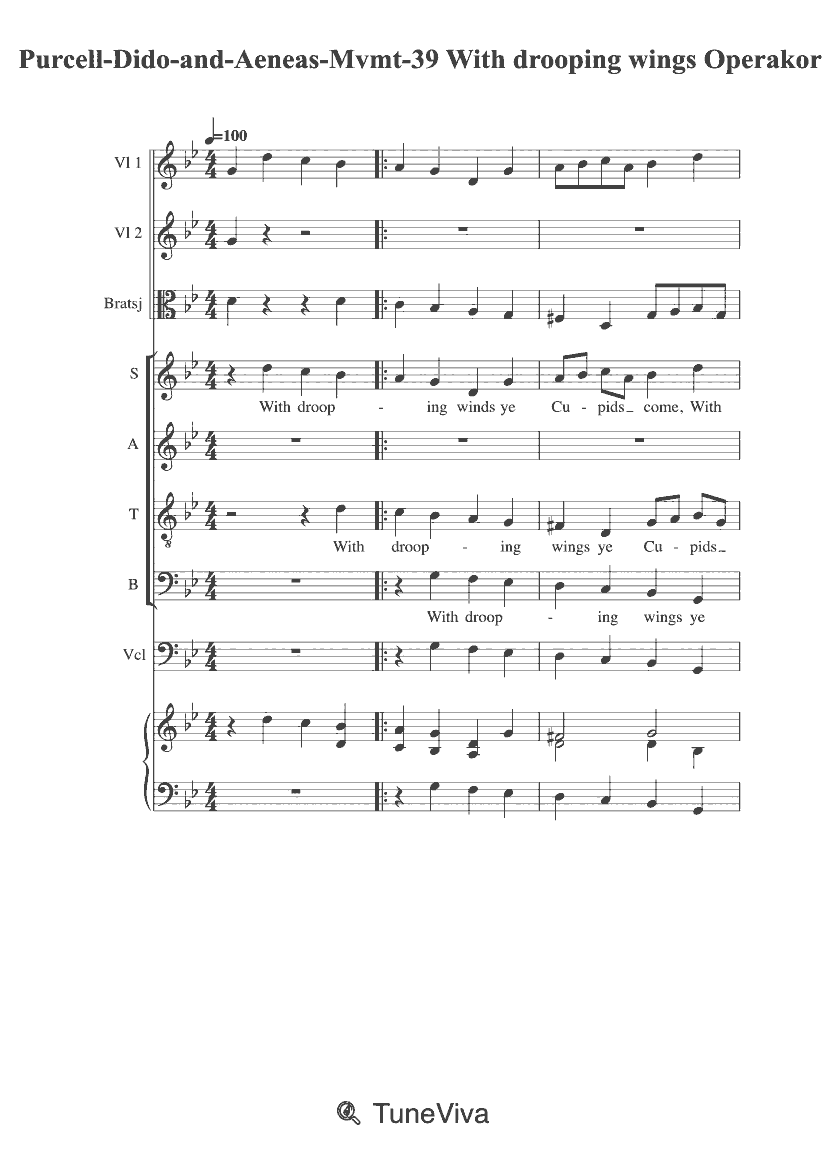
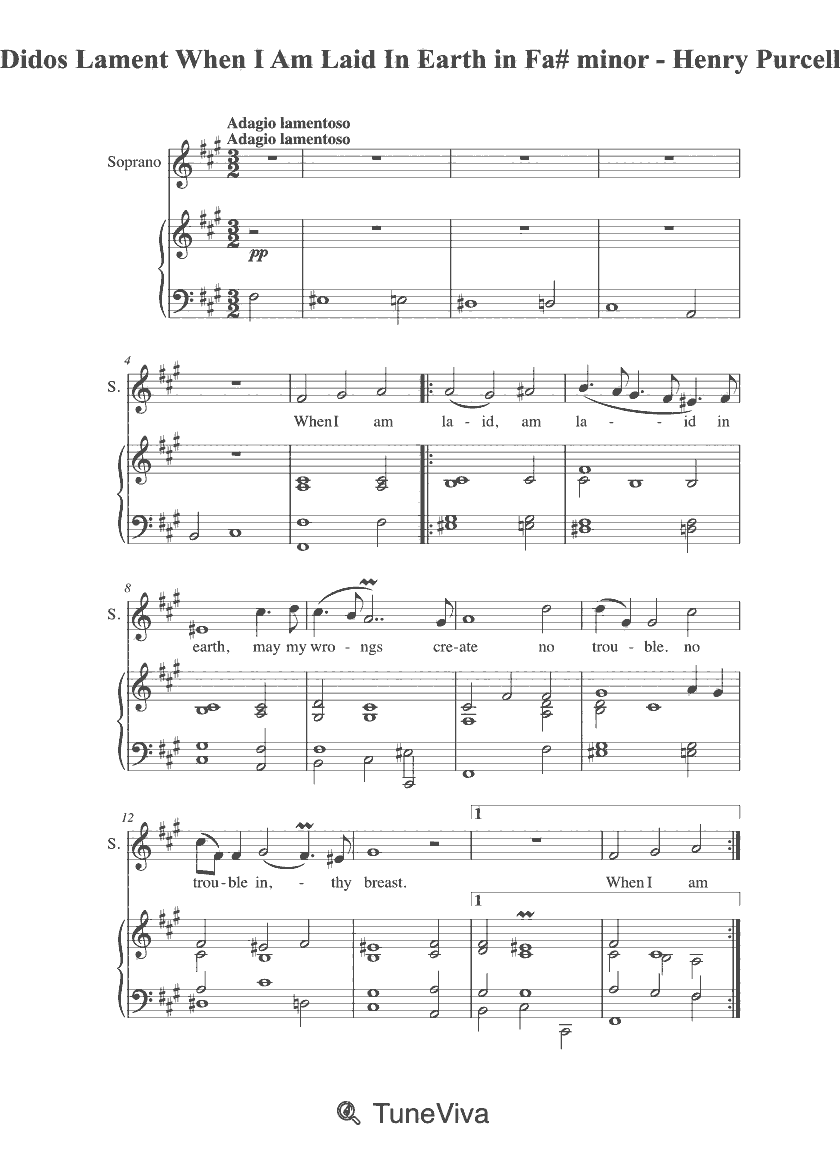
Dido's lament over a descending ground bass, the most famous passage in English Baroque opera.
A compact set of variations on a repeated harmonic pattern, scored here for two flutes.
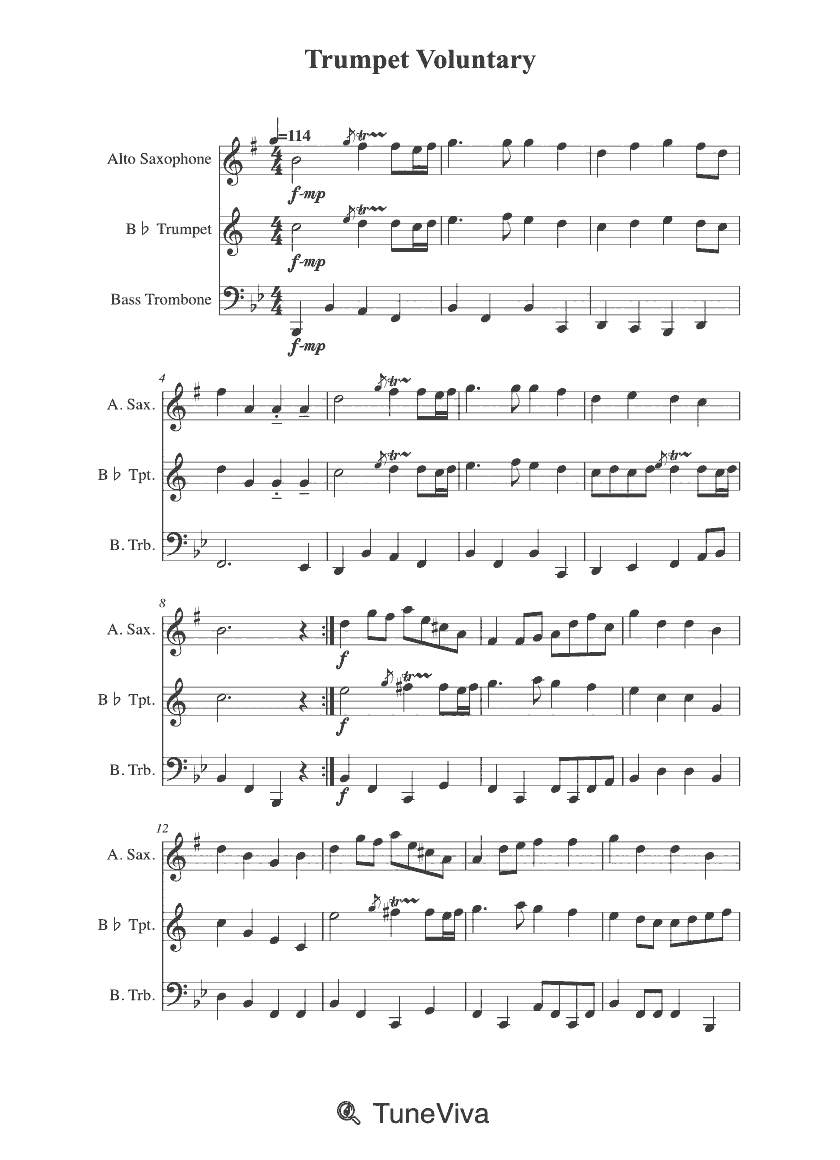
A short ceremonial tune widely played on organ and trumpet, preserved under its familiar title.
A funeral sentence from the 1695 music for Queen Mary, set here for four-part choir.
One of the ten sonatas in four parts, composed around 1680 in the Italian style Purcell admired.
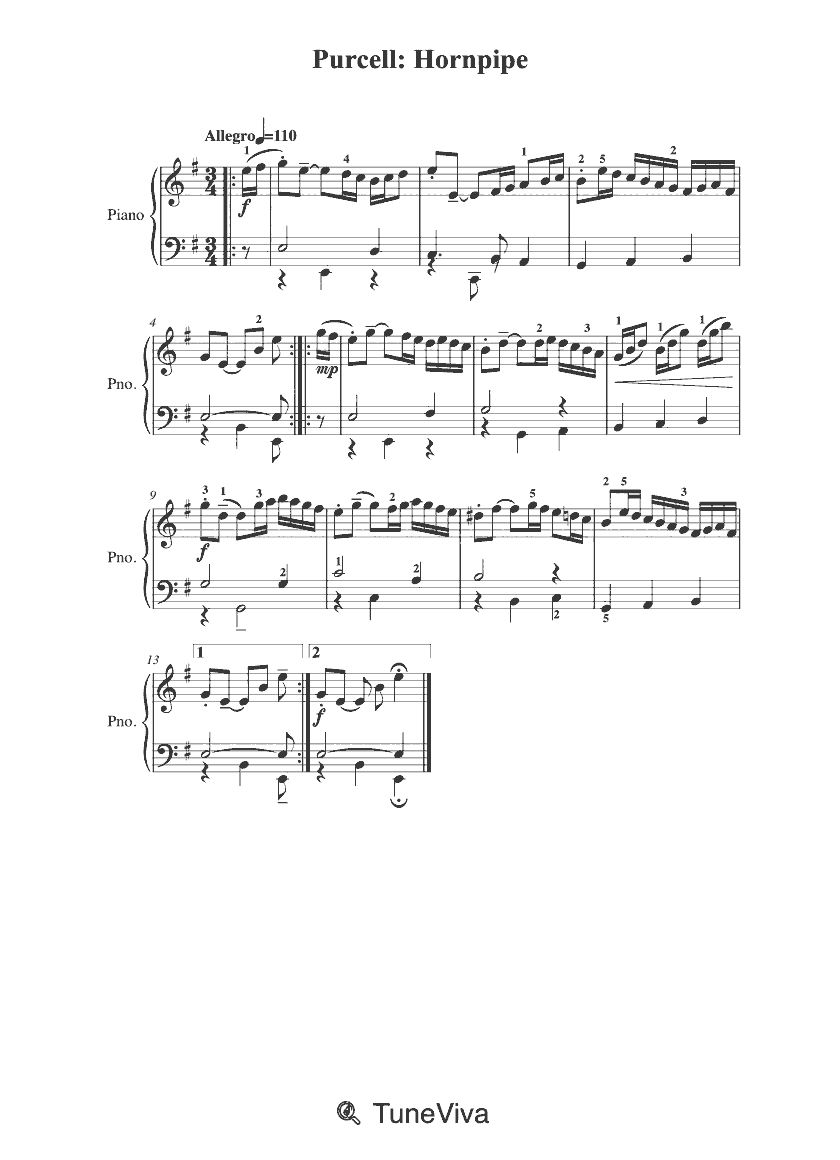
A stage hornpipe whose repeating bass and lilting rhythm show the dance influence in his theatre music.
Yes. He worked in the middle Baroque period, and his music combines English church and theatre traditions with French and Italian models.
Dido's Lament, "When I am laid in earth" from Dido and Aeneas, is the aria most often performed; the Trumpet Tune and A New Ground are also widely played.
No. The catalog gathers modern transcriptions and arrangements, so check the scoring and key against a scholarly edition before performance.
Most items here sit at the easy end of TuneViva's scale, but the grounds still need a steady pulse and clean ornament.
Catalog editions and arrangements attributed to Henry Purcell.
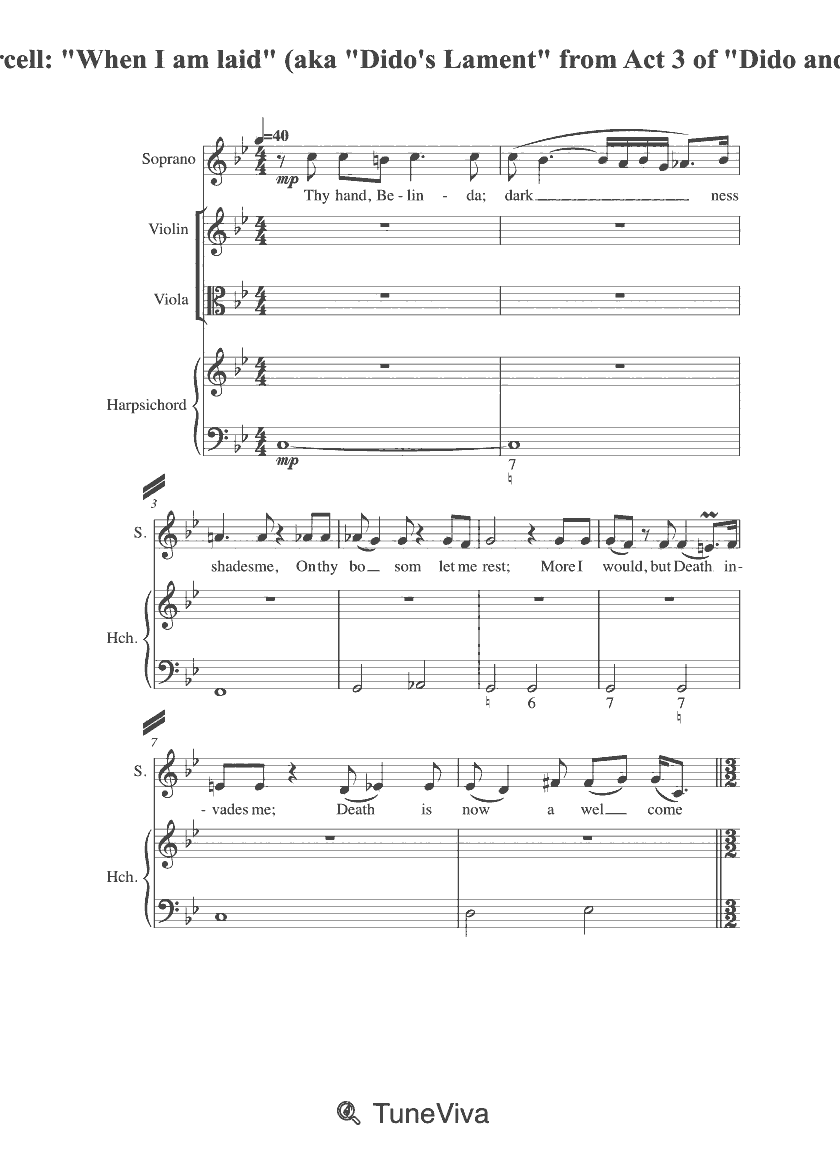
Dido's Lament - Dido and Anaeas Act 3
Orig. in C minor
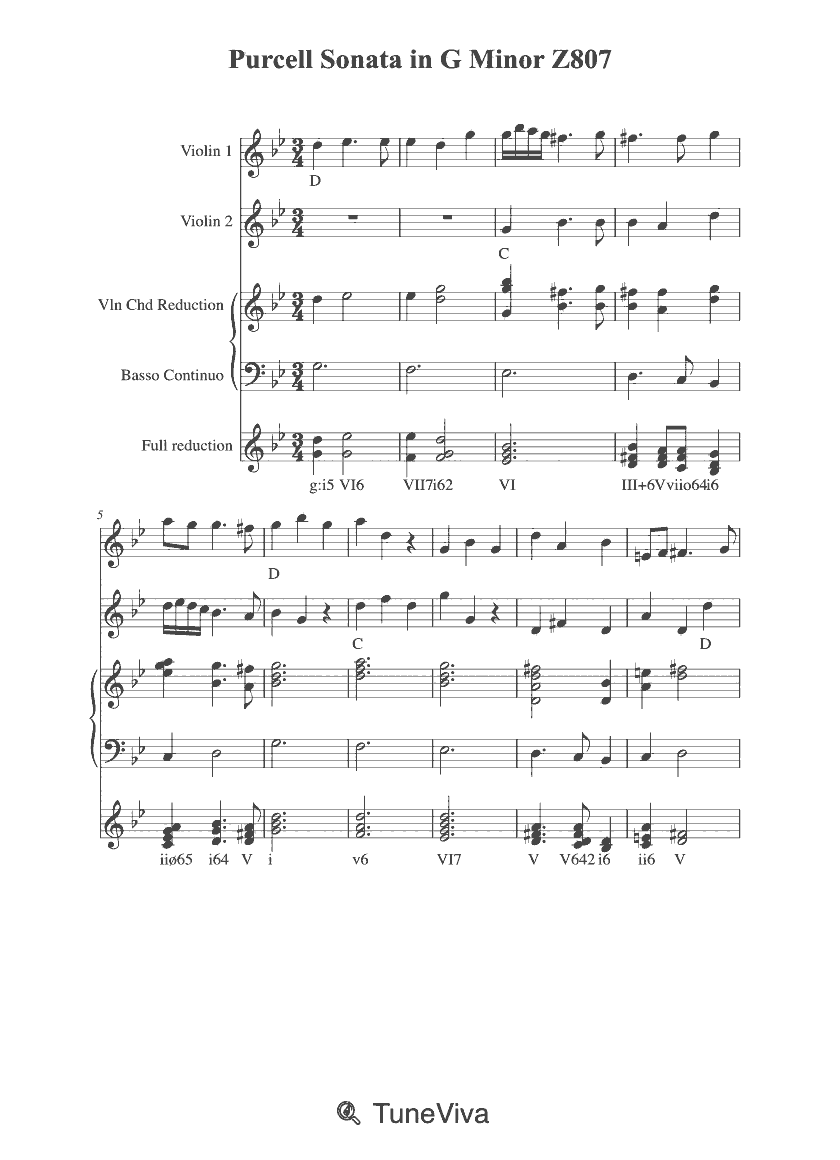
Ground Bass Repertoire Example:full score; harmonic reductions of the violin parts (above the continuo) and full score (below);Roman numerals; more annotations: toncisations textures and the 'Dux' and 'Comes' of imitative parts
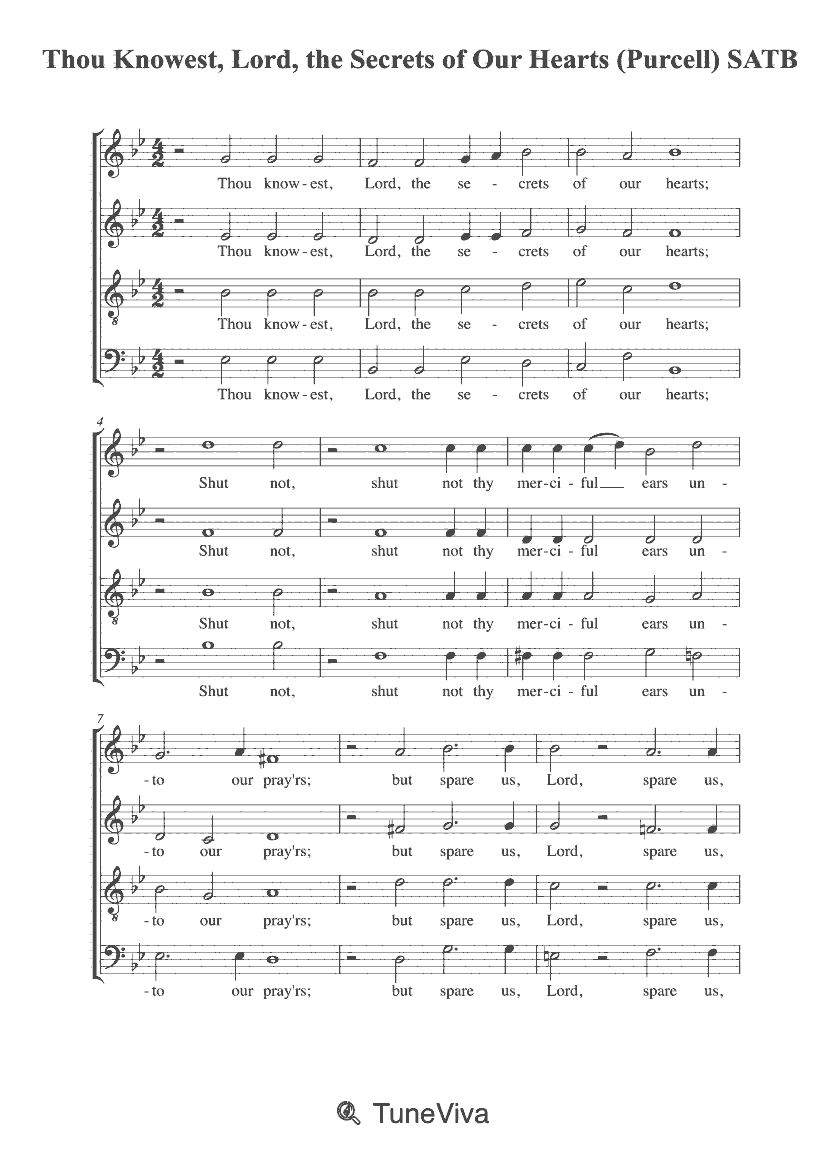
fra Funeral Music for Queen Mary Z 860
Pausanias the Betrayer
Canción a dos voces
King Arthur