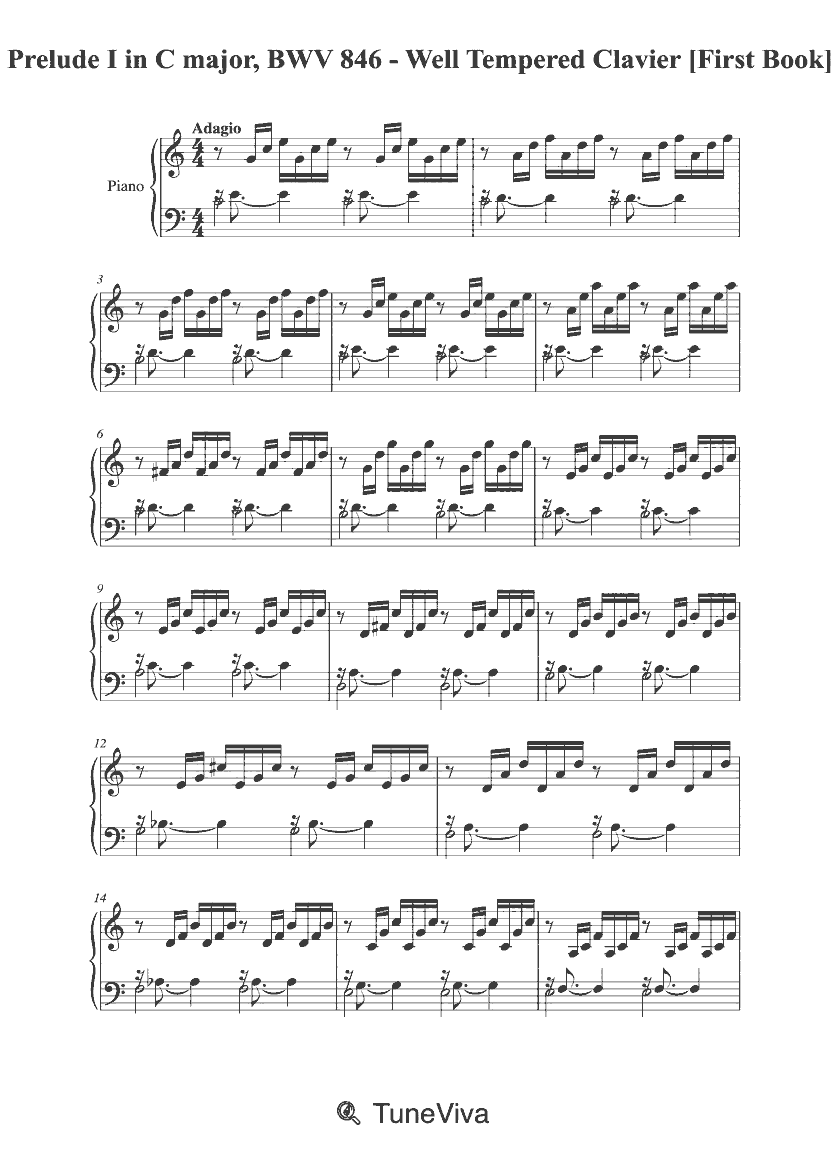
Prelude I in C major, BWV 846 - Well Tempered Clavier [First Book]
Johann Sebastian Bach
In C major
Piano · 6 min 27 sec
Open score
1,411 Bach scores to preview and download: the C major Prelude, the Goldberg Variations, cello and violin suites, organ fugues and the flute Badinerie.
The most-viewed score in the collection: the opening prelude of Book I, composed in 1722 and built almost entirely from broken chords.
BWV 988, an aria with thirty variations published in Nuremberg in 1741, with a canon every third variation.
A piano transcription of the famous organ work BWV 565; its attribution to Bach has been questioned by a minority of scholars since 1981.
Ends with the Chaconne, the longest and most famous movement in Bach's set of solo violin works.
Violoncello · 1 min 24 sec
The opening movement of BWV 1007, written at Köthen and made almost entirely of arpeggiated chords.
Other editions:
The final movement of the B minor orchestral suite BWV 1067, a quick 2/4 showpiece for solo flute.
Known as the Little Fugue, written during Bach's Arnstadt years and named to distinguish it from the longer BWV 542.
Use the BWV number and instrumentation together. BWV 846 identifies the opening Prelude and Fugue in C major from the first book of The Well-Tempered Clavier, but a score can contain only the Prelude. For a cello suite movement or a Badinerie arrangement, check the instrument and movement headings first. A transcribed tune and a score with its full accompaniment serve different practice needs.
Compare the instrument and arrangement details below, then open a score to check the notation. Different entries may be arrangements or editions of the same work; available playback tools are shown on each score page.
Johann Sebastian Bach
In C major
Piano · 6 min 27 sec
Open score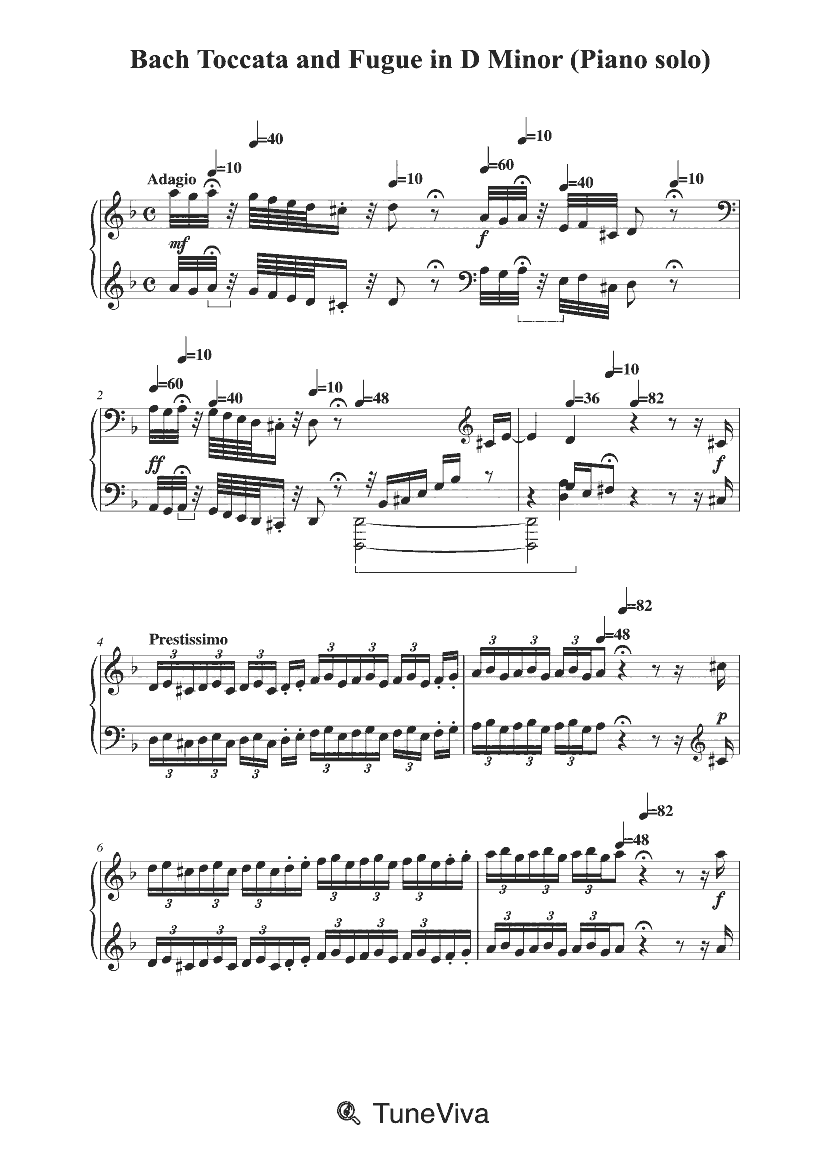
Johann Sebastian Bach
Piano · 8 min 21 sec
Open score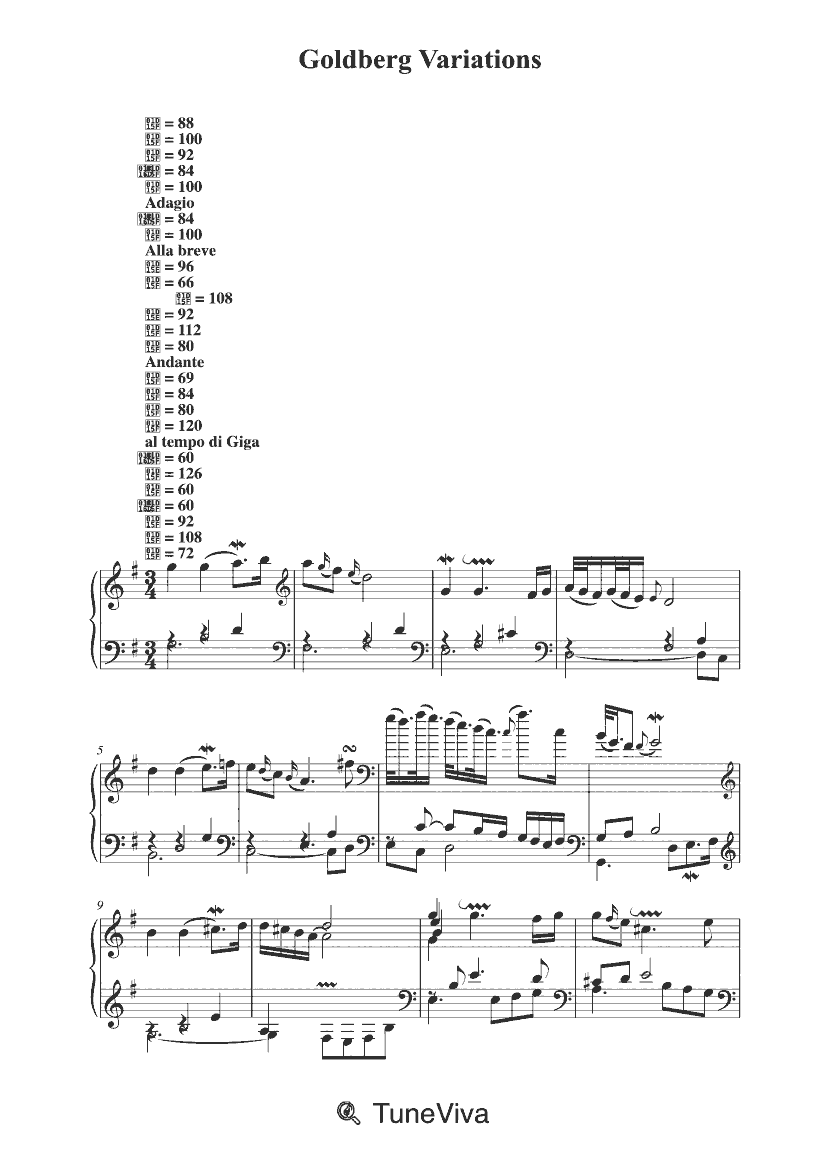
Johann Sebastian Bach
1 hr 37 min 18 sec
Open score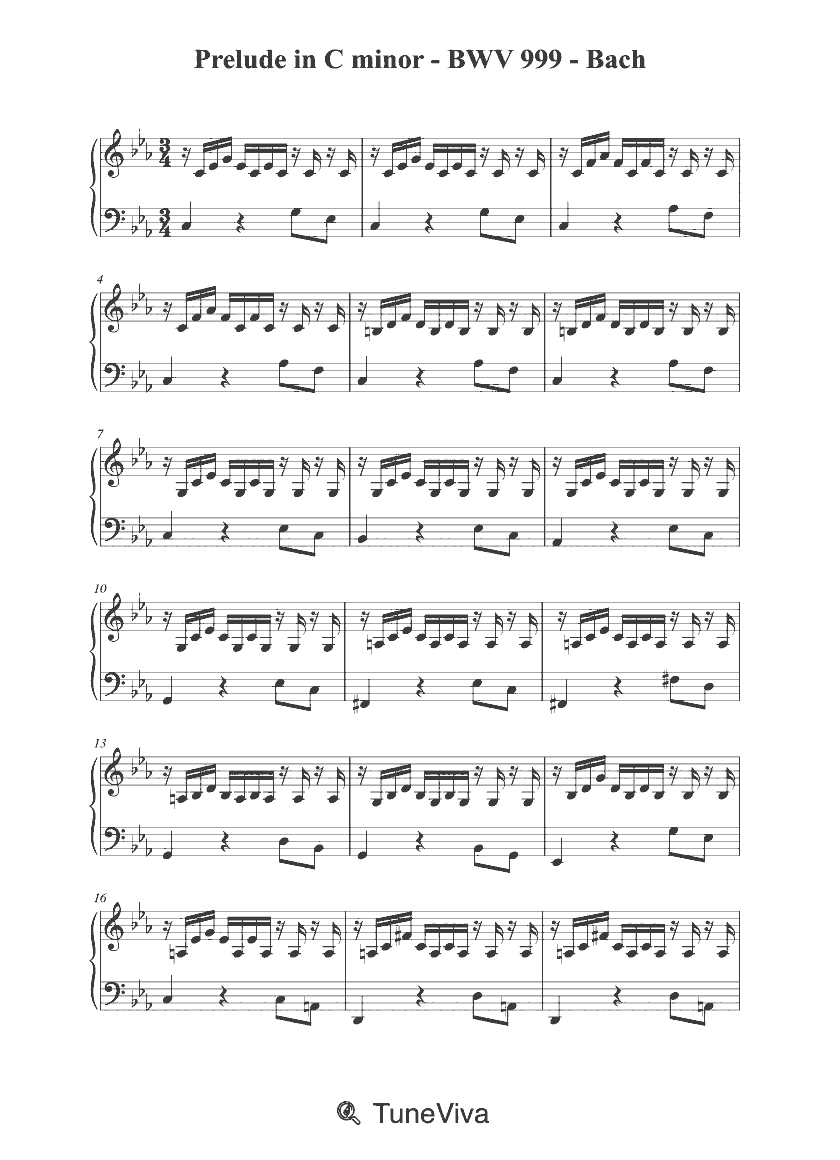
Johann Sebastian Bach
BWV 999
Piano · 1 min 4 sec
Open score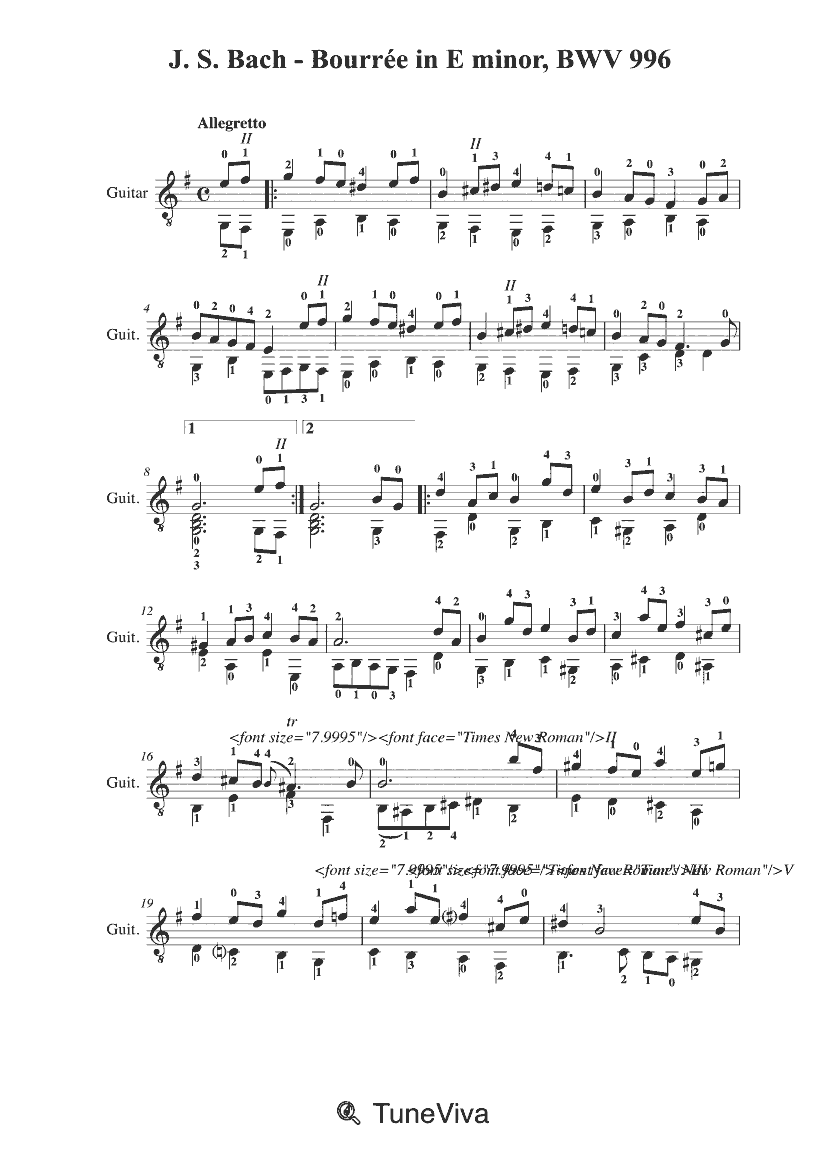
Johann Sebastian Bach
BWV 996
Guitar · 3 min 20 sec
Open score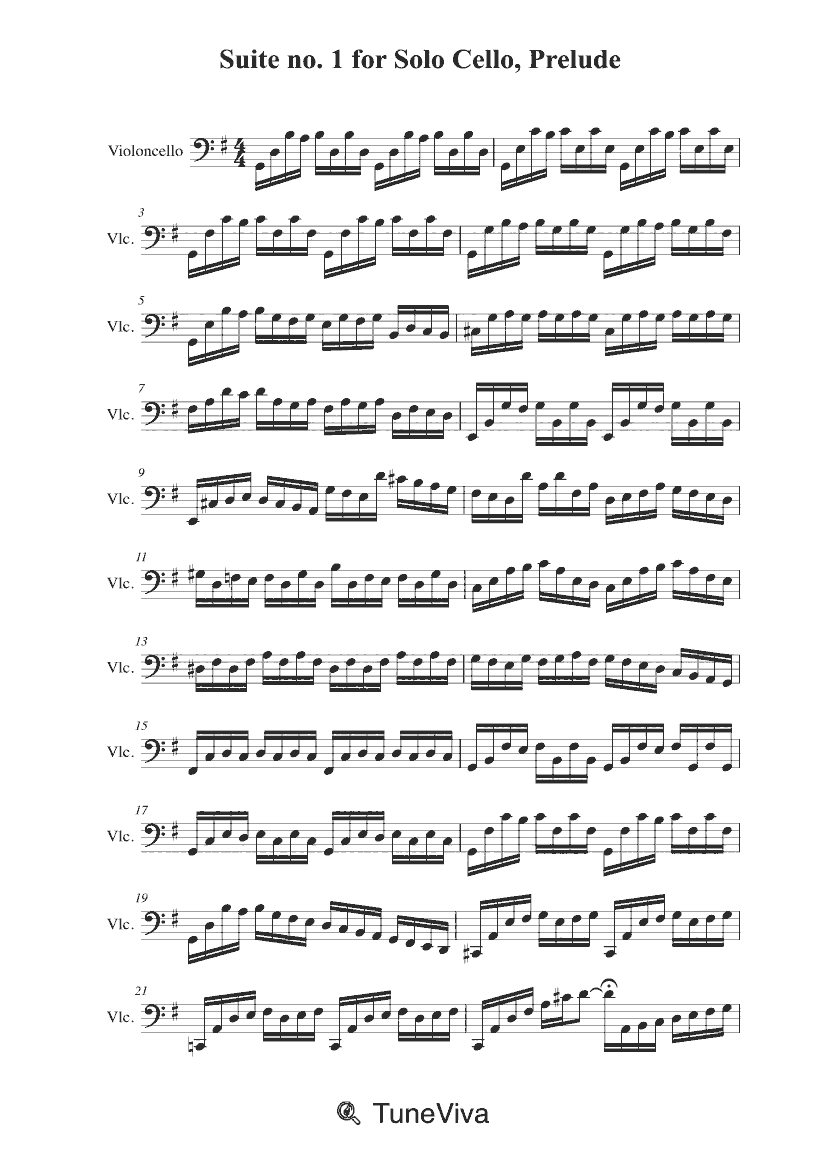
Johann Sebastian Bach
Violoncello · 1 min 24 sec
Open score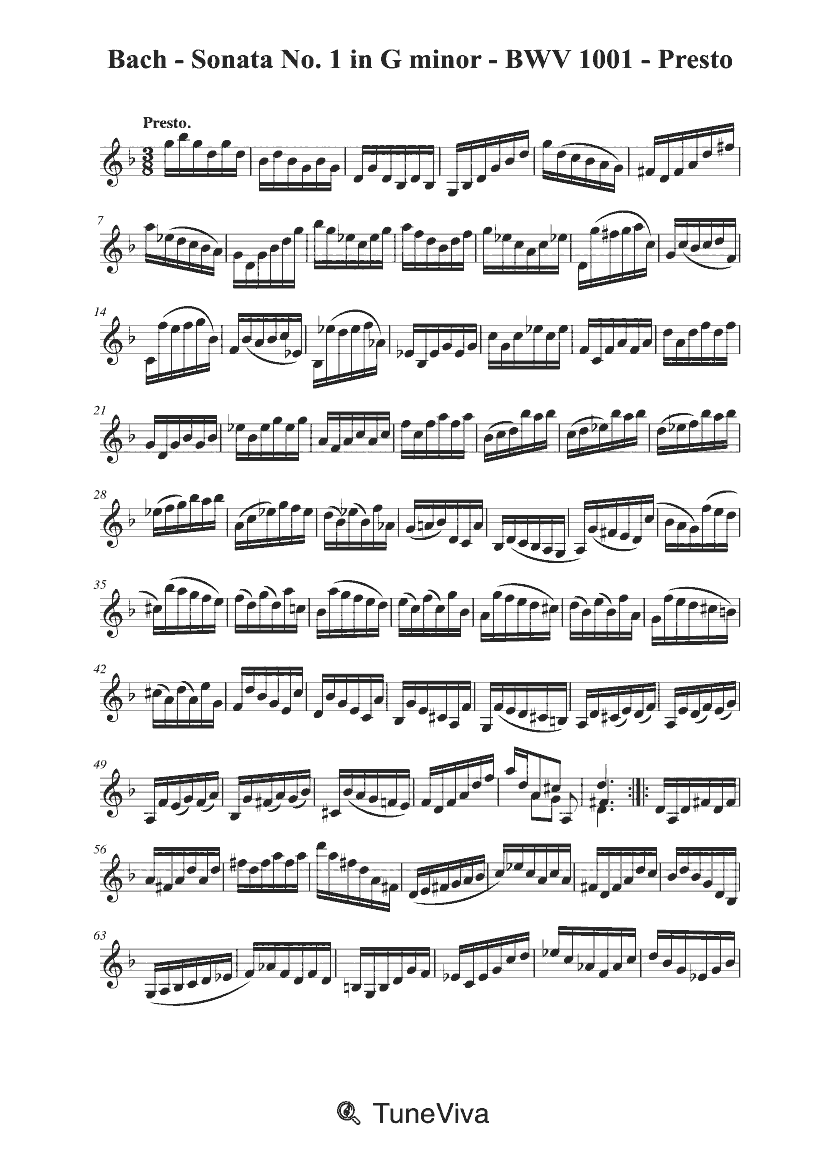
Johann Sebastian Bach
Violin · 1 min 40 sec
Open score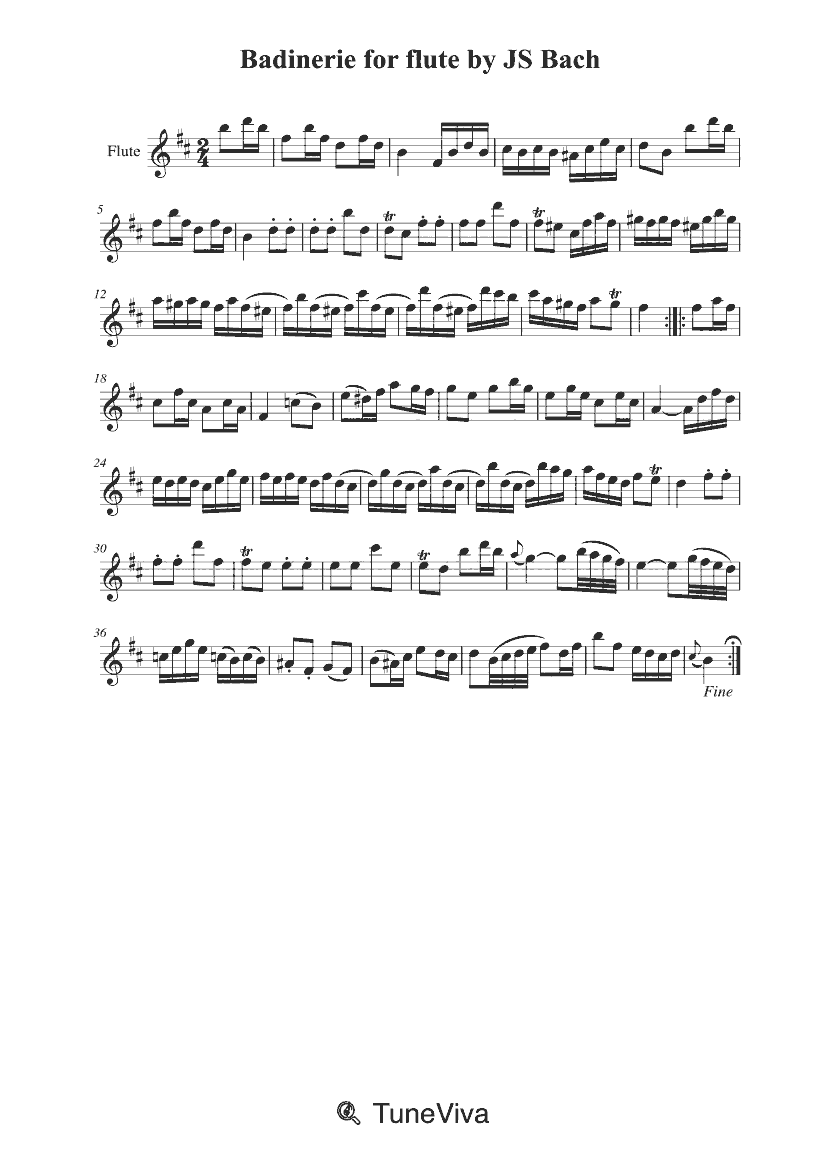
Johann Sebastian Bach
Orchestral Suite No.2 in B minorBWV 1067
Flute · 1 min 20 sec
Open score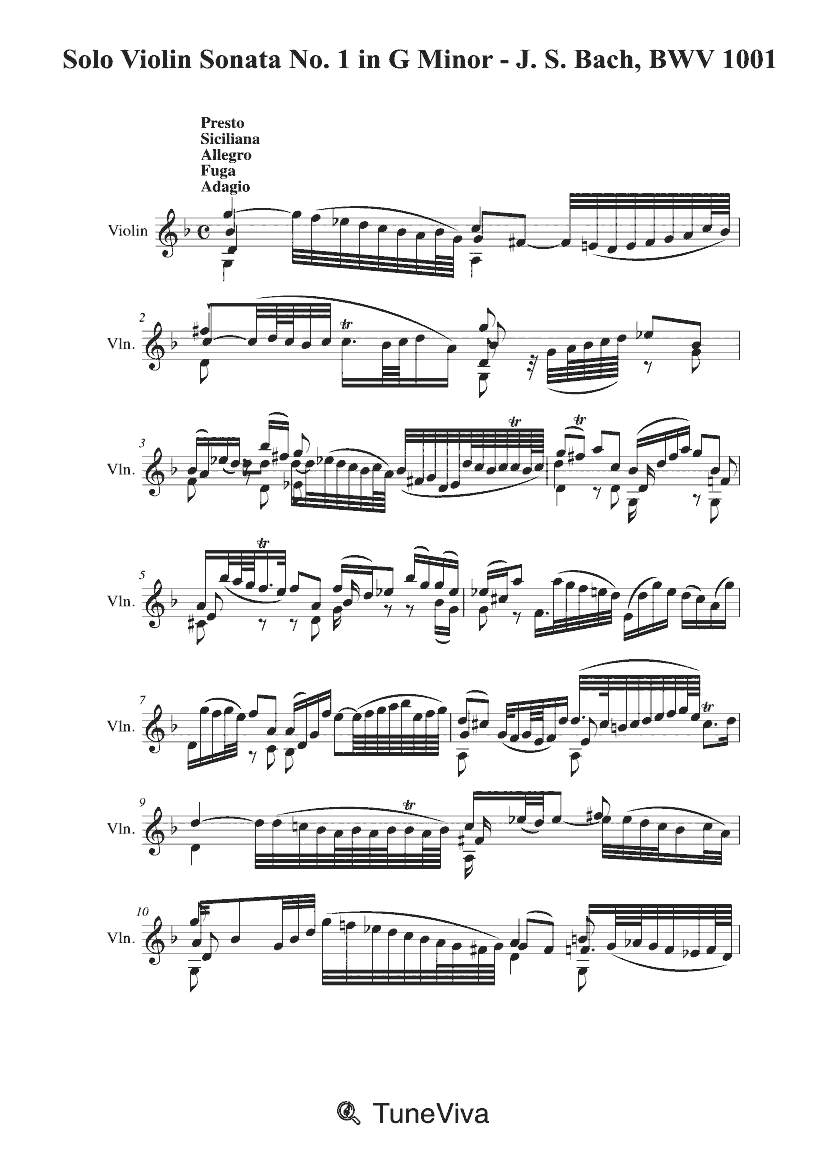
Johann Sebastian Bach
BWV 1001
Violin · 57 min 1 sec
Open score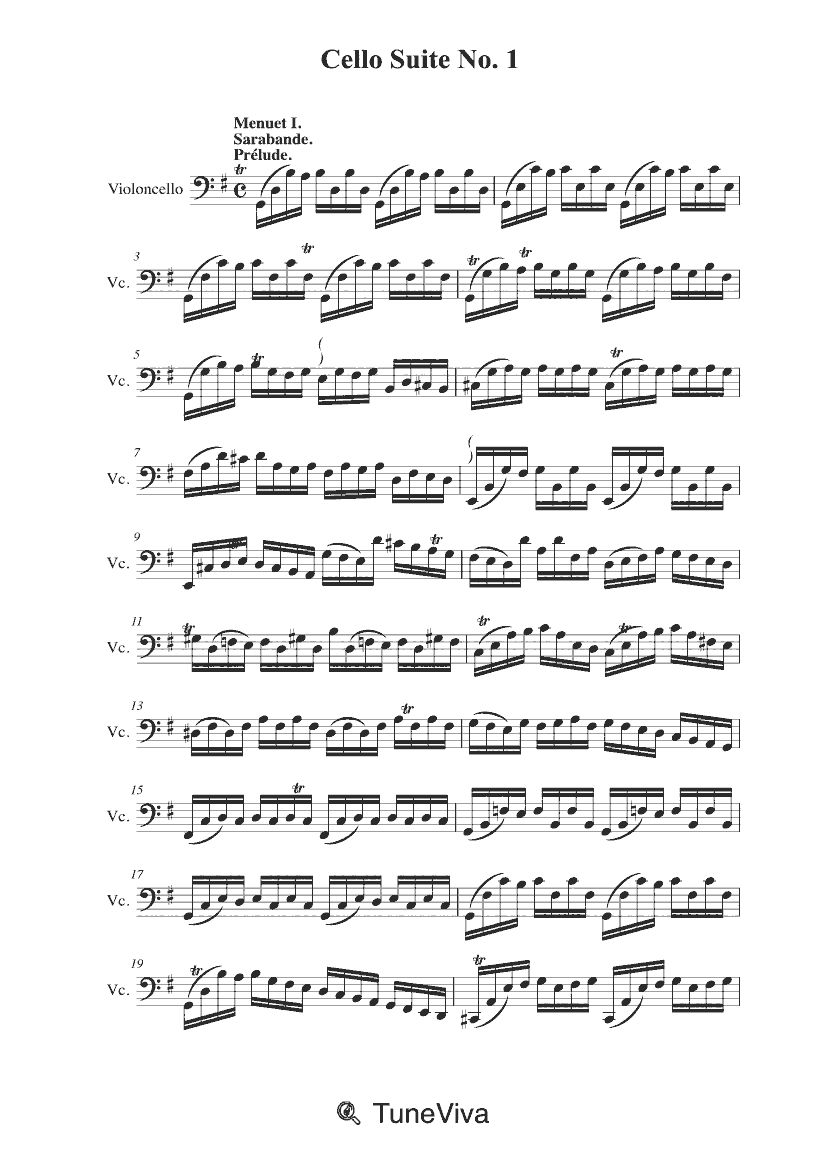
Johann Sebastian Bach
BWV. 1007
Violoncello · 22 min 34 sec
Open score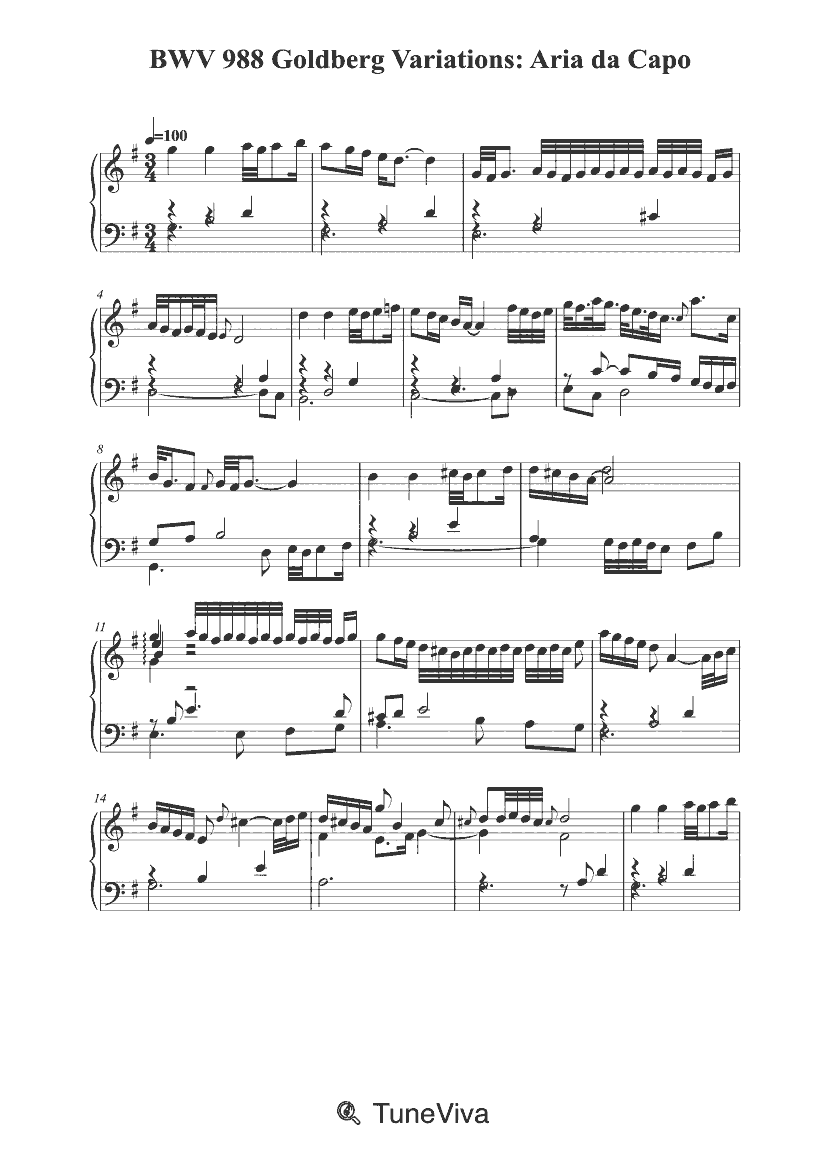
Johann Sebastian Bach
BWV 988
Harp · 3 min 58 sec
Open score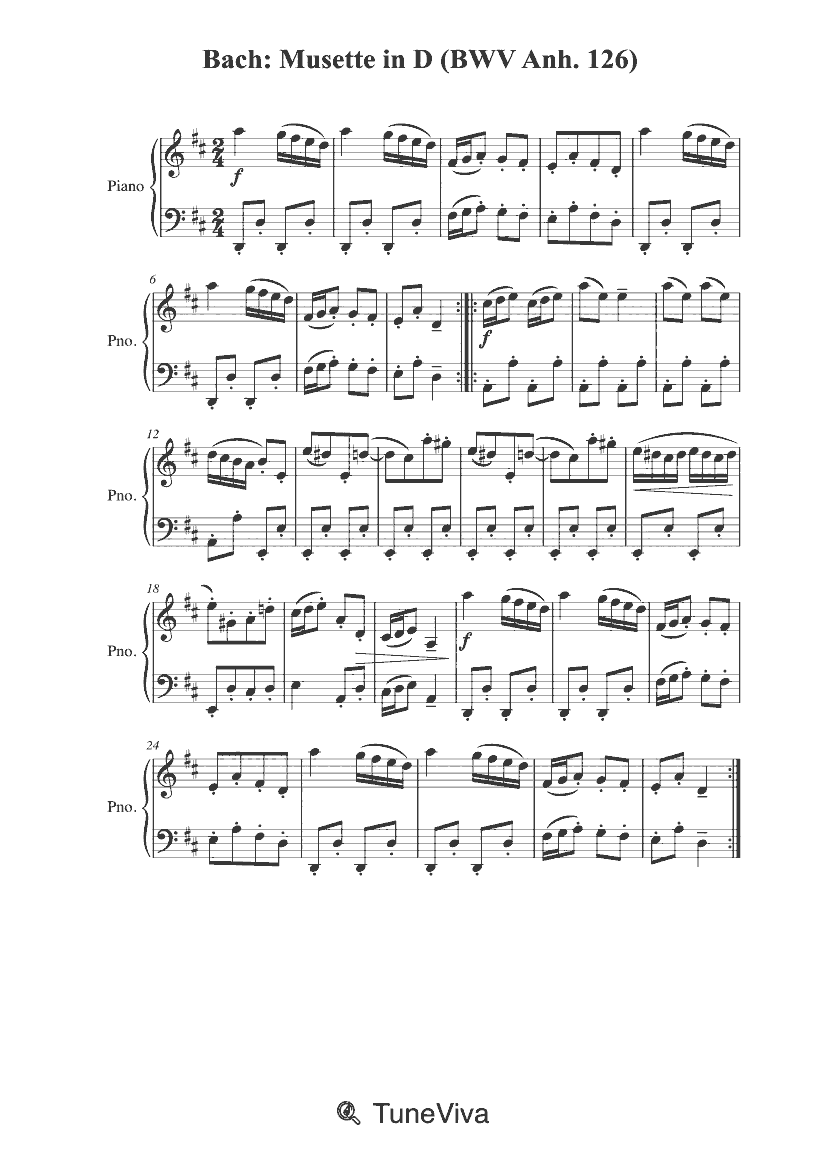
Johann Sebastian Bach
BWV Anh 126 (Anna Magdelena Bach Notebook)
Piano · 56 sec
Open score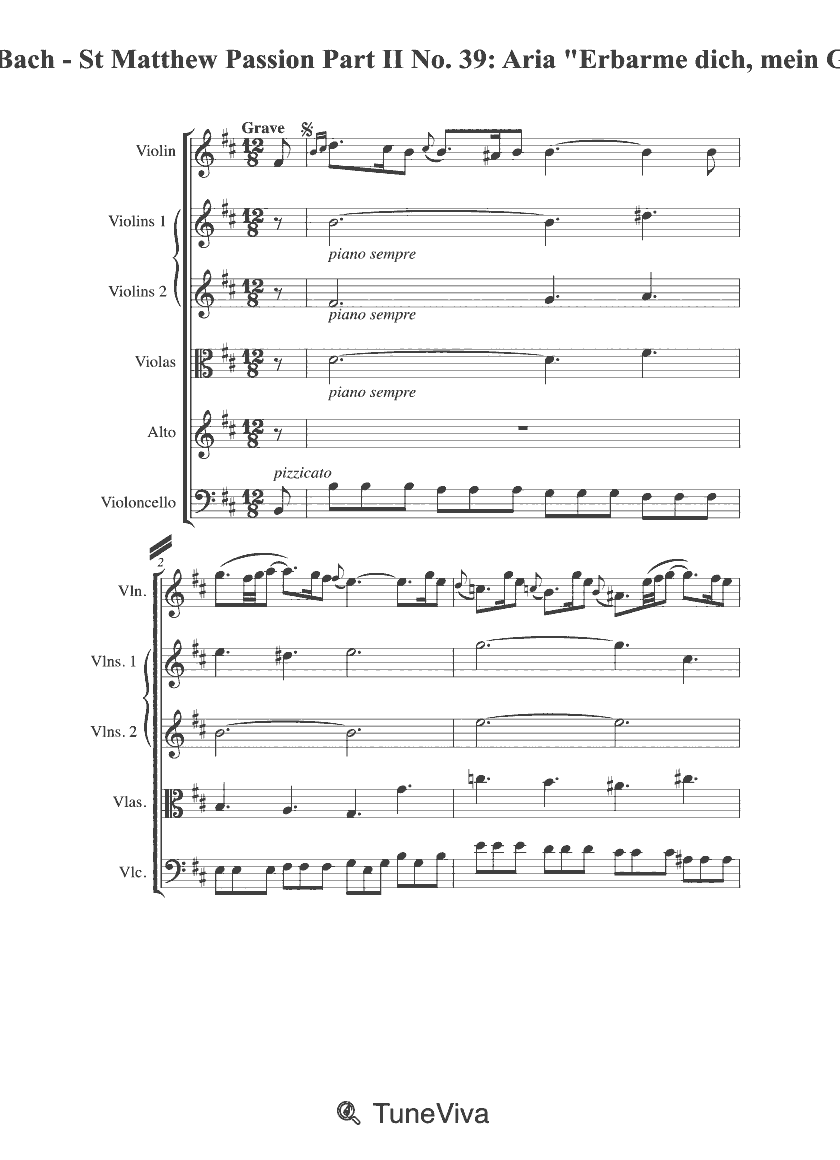
Johann Sebastian Bach
St Matthew Passion part II No. 39 (BWV 244)
Violin; Violins 1; Violins 2 +3 parts · 3 min 23 sec
Open score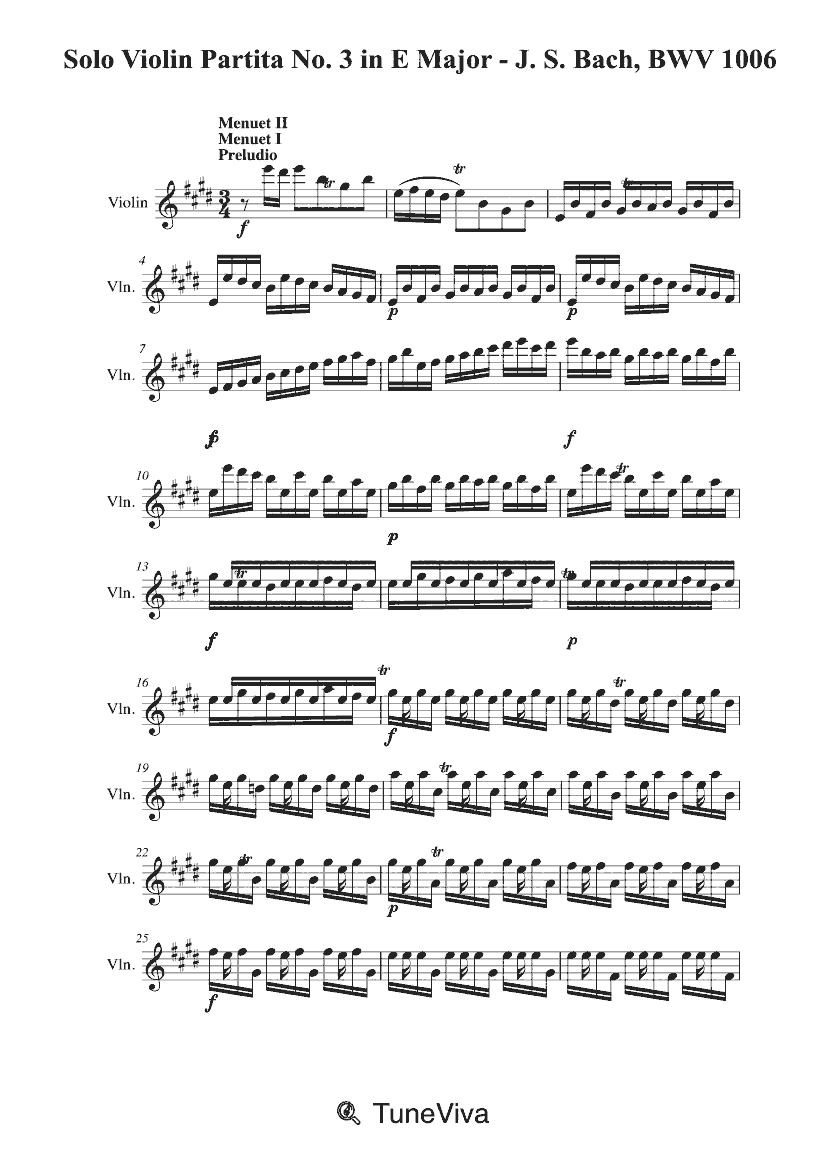
Johann Sebastian Bach
BWV 1006
Violin · 40 min 44 sec
Open score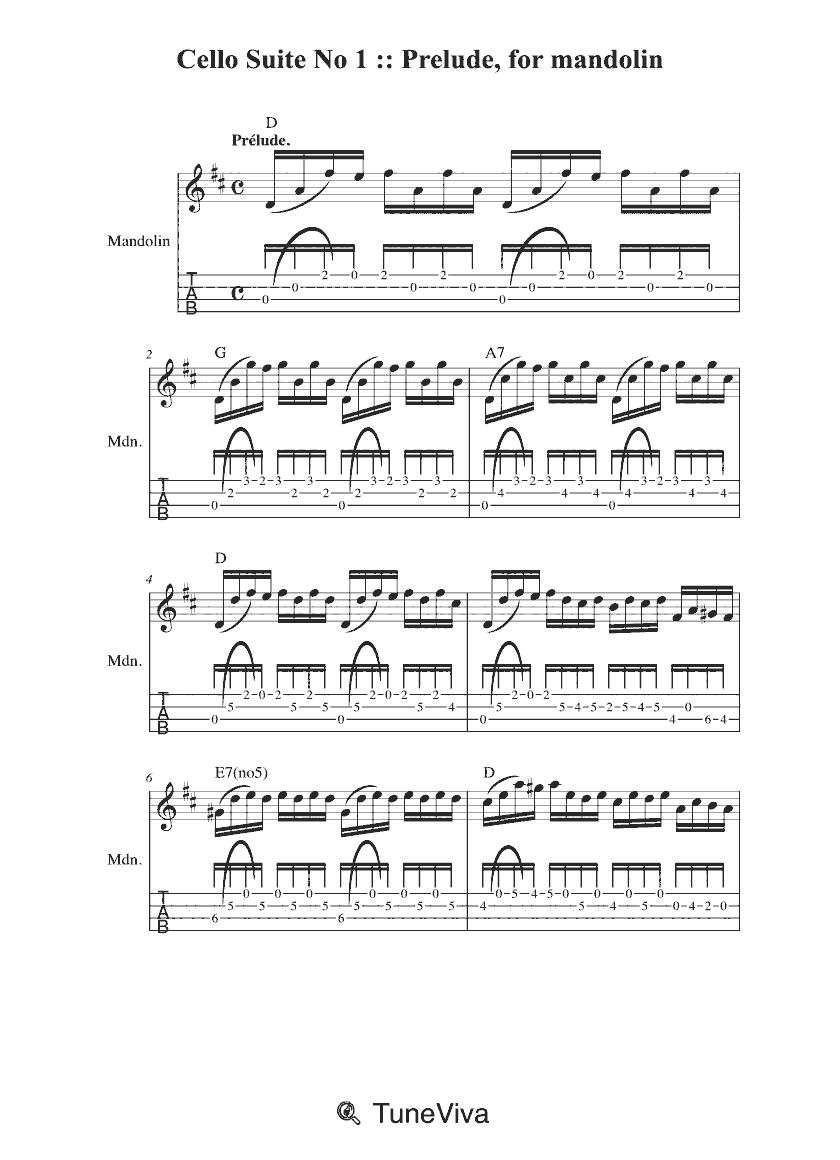
Johann Sebastian Bach
BWV. 1007
Mandolin · Arr. mooing · 2 min 20 sec
Open score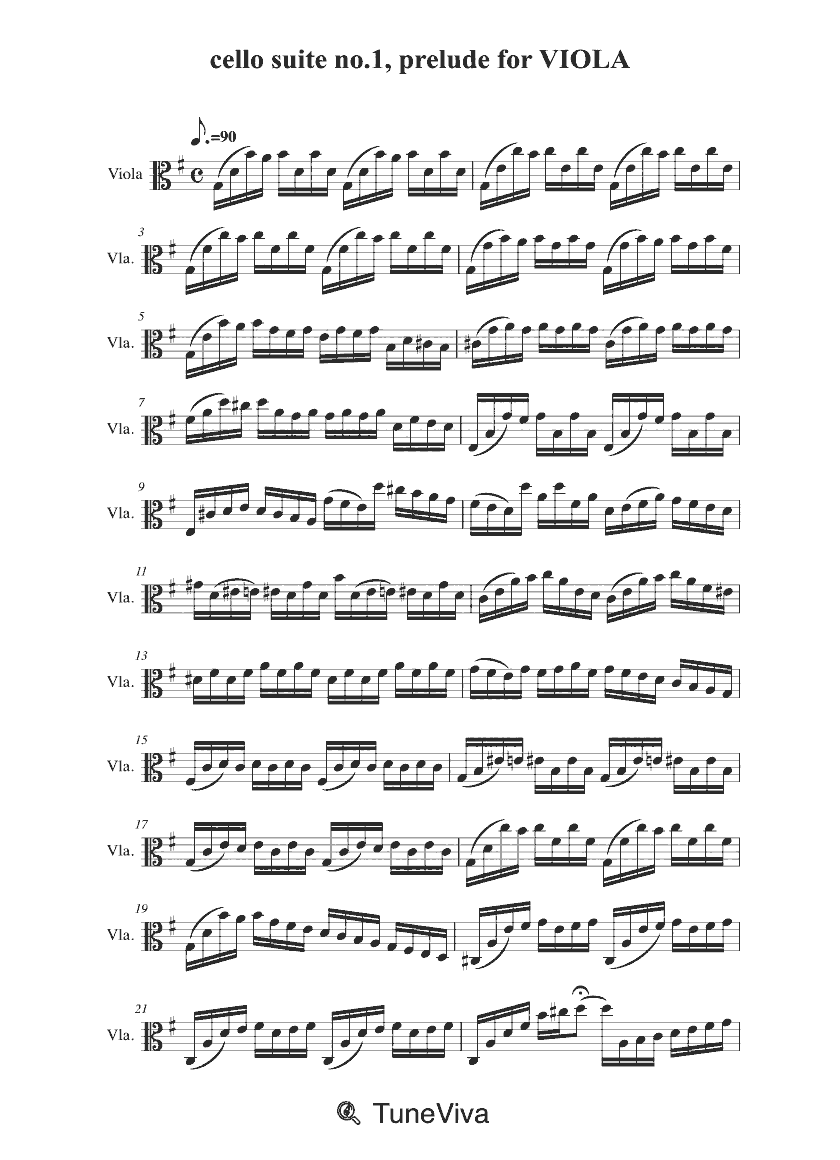
Johann Sebastian Bach
Viola · 2 min 29 sec
Open score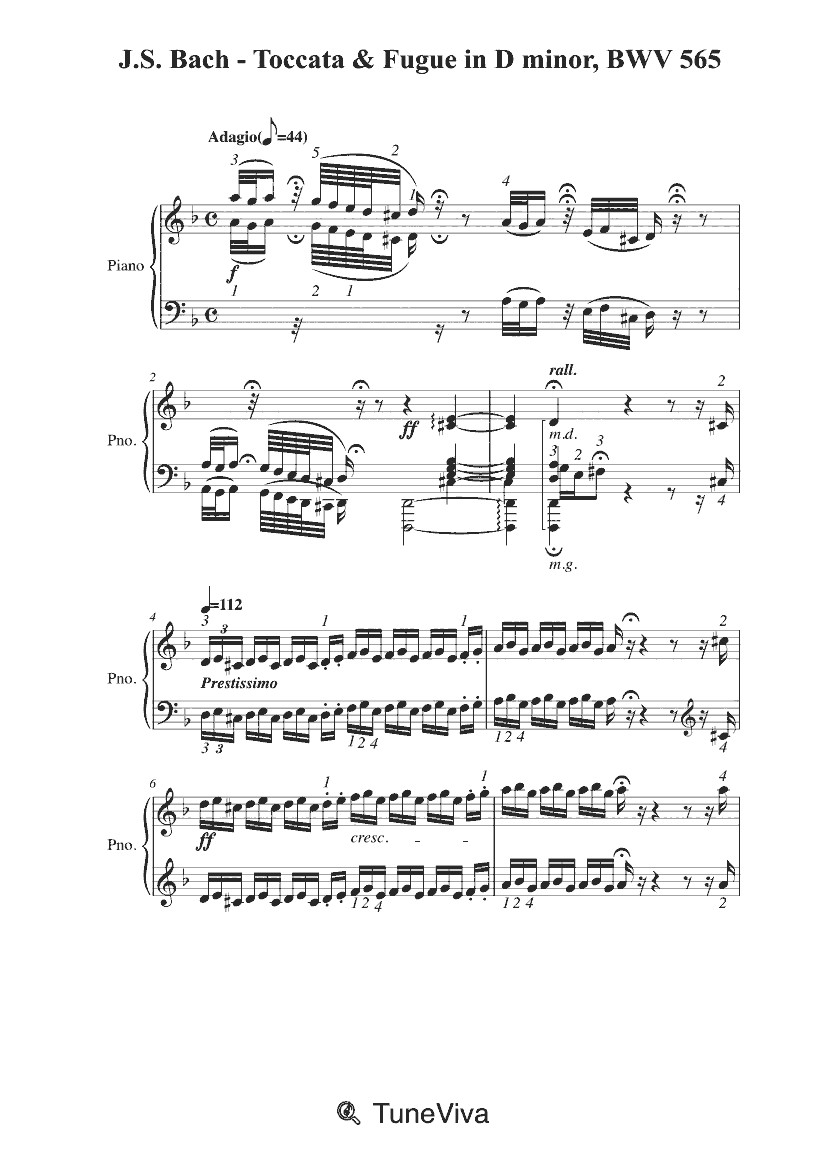
Johann Sebastian Bach
BWV 565
Piano · 7 min 18 sec
Open score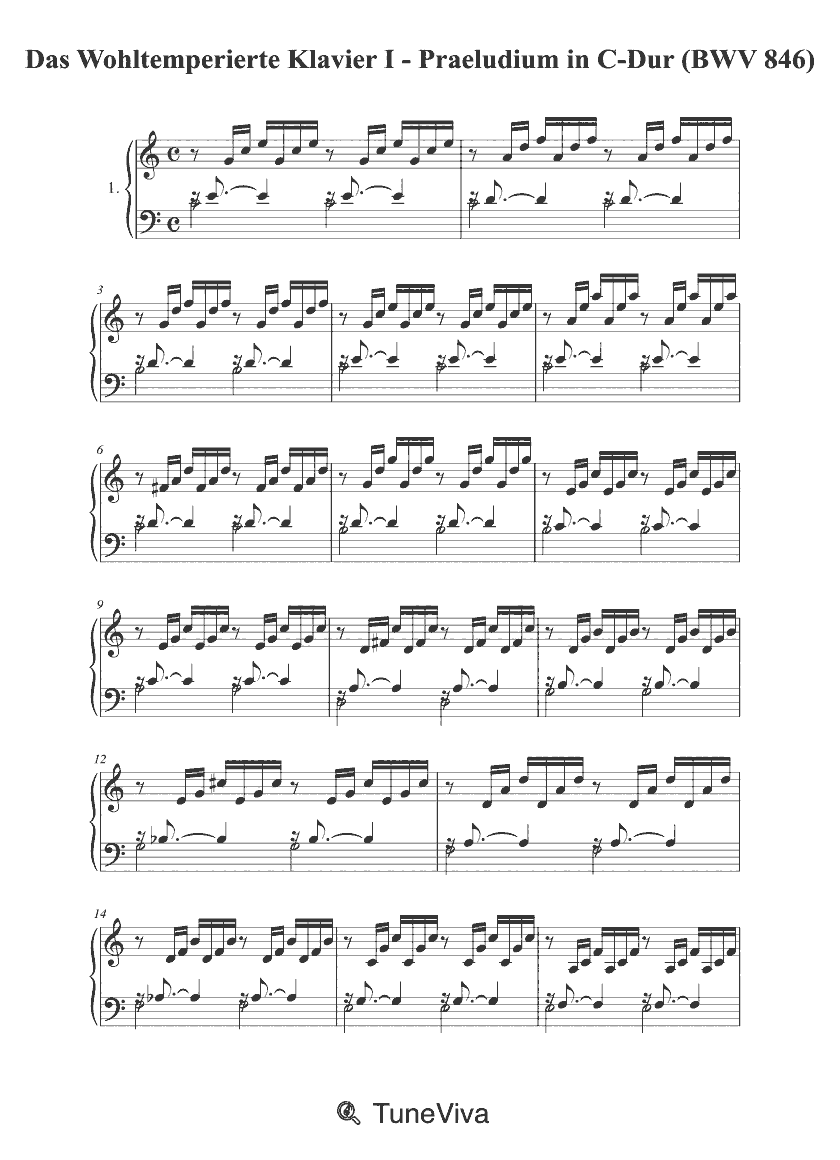
Johann Sebastian Bach
Praeludium und Fuge in C-DurBWV 846
1. · 2 min 18 sec
Open score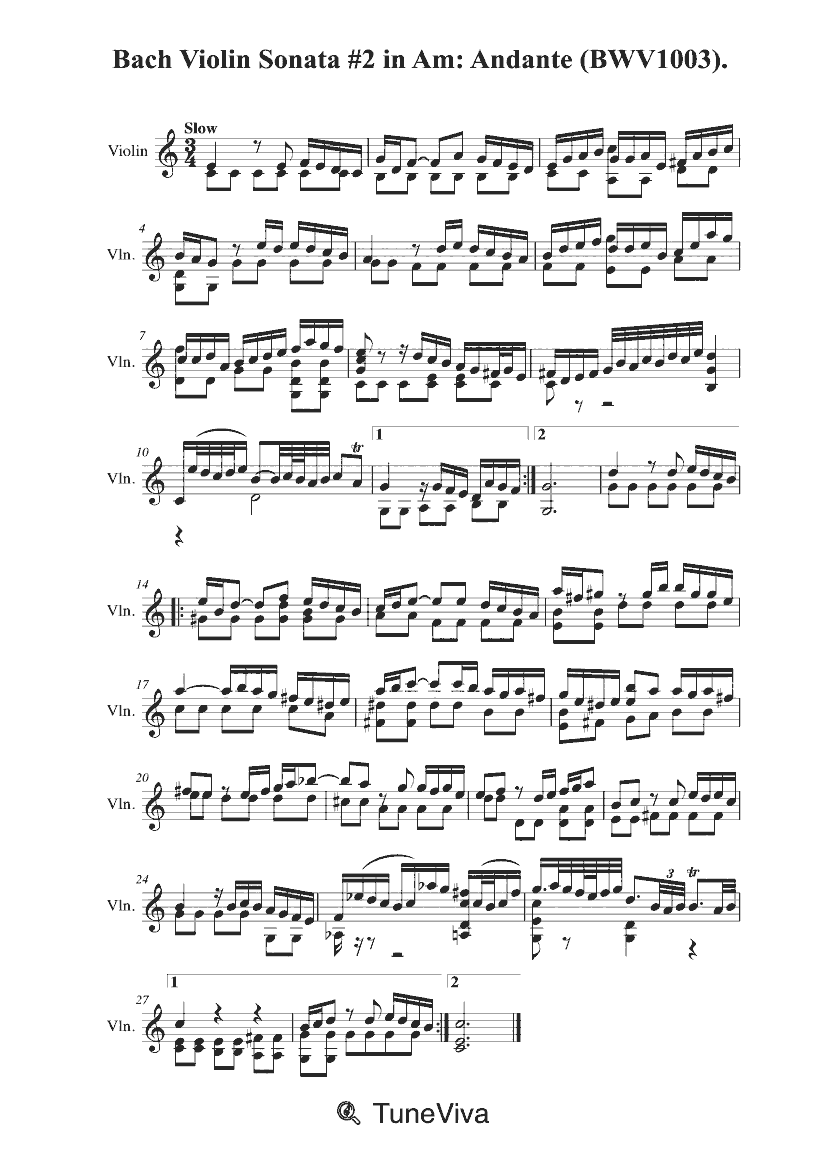
Johann Sebastian Bach
Violin · 4 min 52 sec
Open score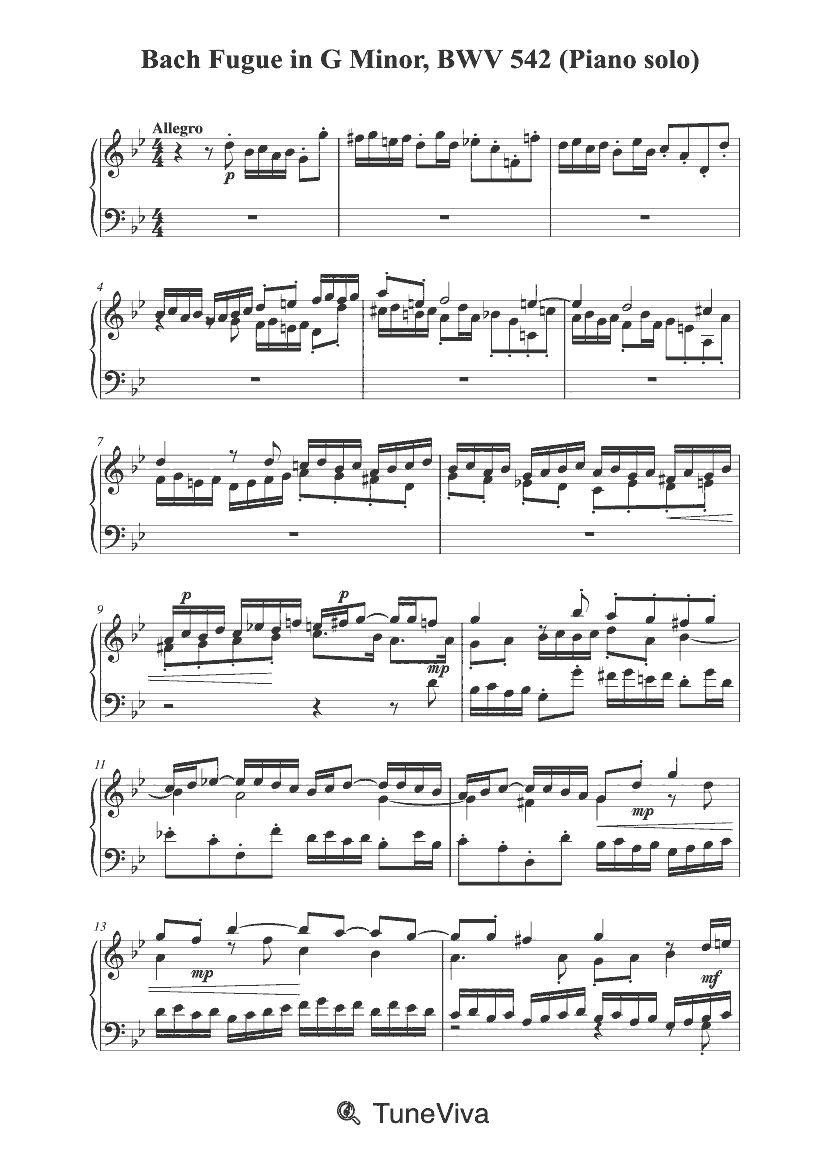
Johann Sebastian Bach
From Fastasia and Fugue in G Minor BWV 542
Piano · 8 min 37 sec
Open scorePage 1 of 71
In 1723 Bach moved to Leipzig to become Thomaskantor, responsible for music at four Lutheran churches; he stayed until his death in 1750. The catalogue reflects that working life rather than a tidy concert canon, with keyboard preludes and variations, organ fugues, solo violin and cello movements, and orchestral dances. TuneViva holds 1,411 Bach scores, roughly 16,511 minutes of music and 5.19 million notated notes. Some 116 scores carry lyrics. Johann Sebastian Bach (1685–1750) was a German composer and musician of the late Baroque period, known for a prolific output across instruments and forms. His music ranges from the Brandenburg Concertos and solo Cello Suites to keyboard works such as the Goldberg Variations and The Well-Tempered Clavier, organ works including the Toccata and Fugue in D minor, and choral works such as the St Matthew Passion and Mass in B minor. Bach is especially admired for his mastery of counterpoint, as heard in The Musical Offering and The Art of Fugue. Johann Sebastian Bach sheet music on this page reflects that range, but the version in front of you matters. Some titles are for solo instrument or keyboard, while others are piano arrangements or transcriptions. Compare the scoring and edition to find the version that suits you.
Bach was born in Eisenach in 1685 into a Thuringian family of musicians. After organist posts at Arnstadt and Mühlhausen, he worked at the Weimar court, where he wrote organ music and concertos, then at Köthen from 1717 to 1723 for Prince Leopold, producing instrumental suites and the solo cello and violin works. From 1723 he was Thomaskantor in Leipzig, supplying weekly church music and teaching at the Thomasschule.
The 1,411 scores span all of that. Keyboard players can start with the C major Prelude, BWV 846, the most-viewed title in the collection, or the Goldberg Variations, printed in 1741 and built on a sarabande aria and its bass line. Organists will recognise the Toccata and Fugue in D minor, BWV 565, whose authorship a minority of scholars has questioned, and the G minor "Little" Fugue, BWV 578, written during the Arnstadt years.
Chamber and orchestral repertoire is well represented: the Chaconne from Partita No. 2, BWV 1004; the arpeggiated Prelude of Cello Suite No. 1, BWV 1007; and the Badinerie that closes the B minor flute suite, BWV 1067. Many entries are piano or keyboard arrangements rather than urtext instrumental parts, so check the scoring before you print.
Keyboard works and variation sets: Bach's keyboard music includes the Goldberg Variations and The Well-Tempered Clavier. The Goldberg Variations, BWV 988, is a keyboard composition made of an aria and thirty variations; it was first published in 1741 and is named after Johann Gottlieb Goldberg, who may also have been its first performer. A score carrying that title should be checked to see whether it contains the complete aria and variation set rather than excerpts. The C major Prelude, BWV 846, appears here with piano scoring, so treat it as a keyboard score rather than an instrumental part.
Solo string music: Bach's six Cello Suites, BWV 1007–1012, are works for unaccompanied cello, most likely composed during 1717–1723 when Bach served as Kapellmeister in Köthen. Each suite follows a six-movement pattern: prelude, allemande, courante, sarabande, two minuets or two bourrées or two gavottes, and a final gigue. No autograph manuscript of the Cello Suites survives, and surviving copies differ, so editions can vary in detail. A score of the Prelude from Cello Suite No. 1 is listed with violoncello scoring, while Partita No. 2, BWV 1004, is listed for solo violin; check whether a title gives you one movement or the complete work.
Organ works and the BWV 565 question: The Toccata and Fugue in D minor, BWV 565, is an organ composition from the Baroque period that was long attributed to Bach. A minority of scholars has questioned the attribution since 1981, when Peter Williams raised doubts; Christoph Wolff has argued that the piece is by Bach. The only known near-contemporary source is an undated copy by Johannes Ringk. The work opens with a toccata, followed by a fugue that ends in a coda, and is typical of the north German organ school. A piano solo version such as the one listed here is not the organ score.
Reading the scoring before you choose: Selected scores here show different instrument assignments: the Prelude BWV 846 and the G minor Fugue BWV 578 appear as piano solos, the Badinerie as a flute piece, the Cello Suite Prelude for violoncello, and Partita No. 2 for violin. A title alone does not establish that a score is a complete work, an urtext edition, or the original instrumentation. Check the named part, the movement or excerpt included, and whether the edition is a keyboard arrangement before you print or perform.
BWV stands for Bach-Werke-Verzeichnis, the catalogue compiled by Wolfgang Schmieder. It identifies each work but is organised by genre rather than by date.
The C major Prelude BWV 846 and the Bourrée in E minor BWV 996 are both manageable entry points; both are among the most-viewed titles here.
Johann Sebastian Bach is known for a prolific output across instruments and forms, including the Brandenburg Concertos, solo Cello Suites, Sonatas and Partitas for Solo Violin, Goldberg Variations, The Well-Tempered Clavier, organ works such as the Schübler Chorales and the Toccata and Fugue in D minor, and choral works such as the St Matthew Passion and Mass in B minor. His mastery of counterpoint is audible in The Musical Offering and The Art of Fugue.
The Goldberg Variations, BWV 988, are a keyboard composition by Johann Sebastian Bach consisting of an aria and thirty variations. The set was first published in 1741 and is named after Johann Gottlieb Goldberg, who may also have been its first performer. A score with this title should be checked for whether it includes the complete aria and all thirty variations.
The Toccata and Fugue in D minor, BWV 565, is an organ work long attributed to Johann Sebastian Bach, but a minority of scholars has questioned the attribution since 1981, when Peter Williams raised doubts. Christoph Wolff has argued that it is by Bach. The only known near-contemporary source is an undated copy by Johannes Ringk, which helps explain why the question remains debated.
Bach most likely composed the six Cello Suites, BWV 1007–1012, during 1717–1723, when he served as Kapellmeister in Köthen. The suites are for unaccompanied cello. No autograph manuscript survives, and surviving copies differ, so modern editions may not agree in every detail.
Each of Bach's six Cello Suites follows a six-movement pattern: a prelude, allemande, courante, sarabande, a pair of dance movements such as two minuets, two bourrées or two gavottes, and a final gigue. The movements after the prelude are based on Baroque dance types. Suite No. 1, BWV 1007, begins with its Prelude.
From 1723 Johann Sebastian Bach was Thomaskantor in Leipzig, responsible for music in four Lutheran city churches and for the St Thomas School. He composed annual cycles of church cantatas and also wrote music for Leipzig University's student ensemble, the Collegium Musicum. Bach remained in Leipzig until his death in 1750.
Johann Sebastian Bach wrote extensively for organ and other keyboard instruments, but his output also includes concertos for violin and harpsichord, suites for chamber ensemble and orchestra, and solo works such as the Cello Suites and Sonatas and Partitas for Solo Violin. The Brandenburg Concertos are among his orchestral works.
Bach's Cello Suites are now among the most frequently performed solo compositions for cello, but they were little known and rarely performed publicly in the modern era until Pablo Casals recorded them in the early 20th century. Casals began with Suites Nos. 2 and 3 in 1936 and became the first cellist to record all six; his recordings remain available and respected.