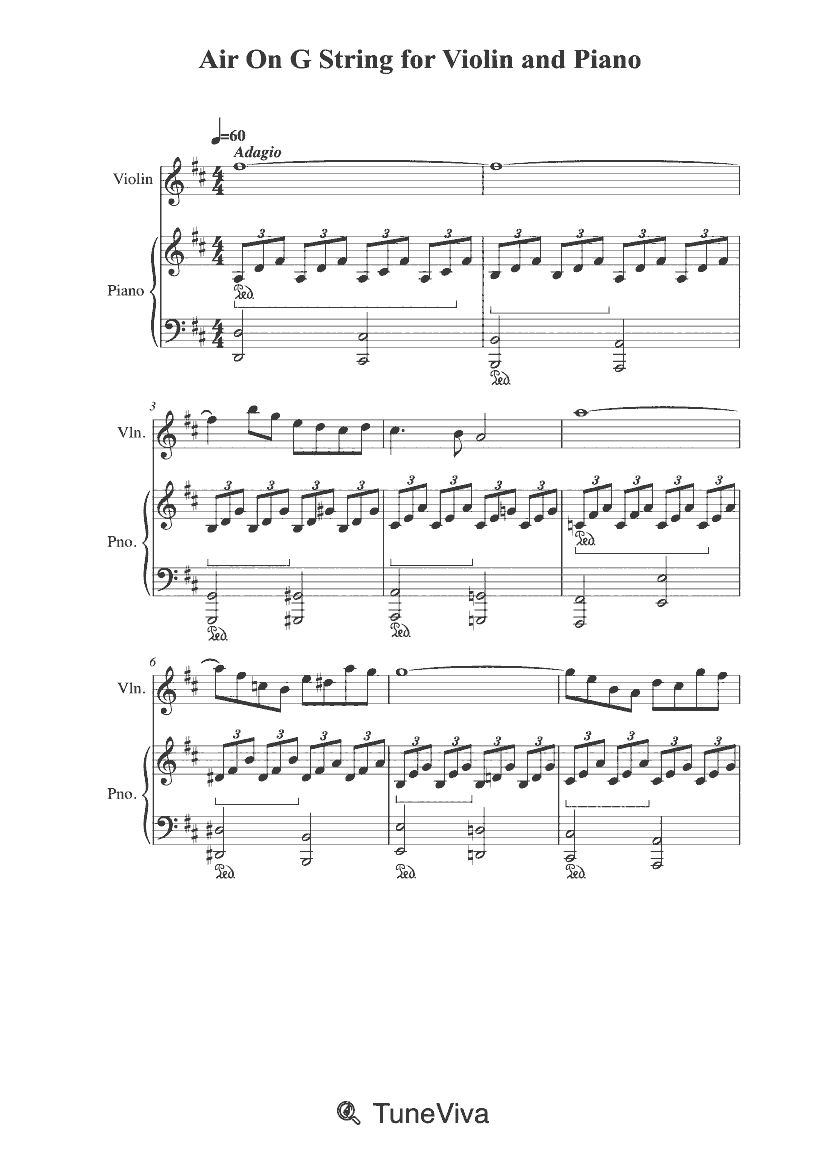
Air On G String for Violin and Piano
Johann Sebastian Bach
Follow the score, hear the music, then make it your own.
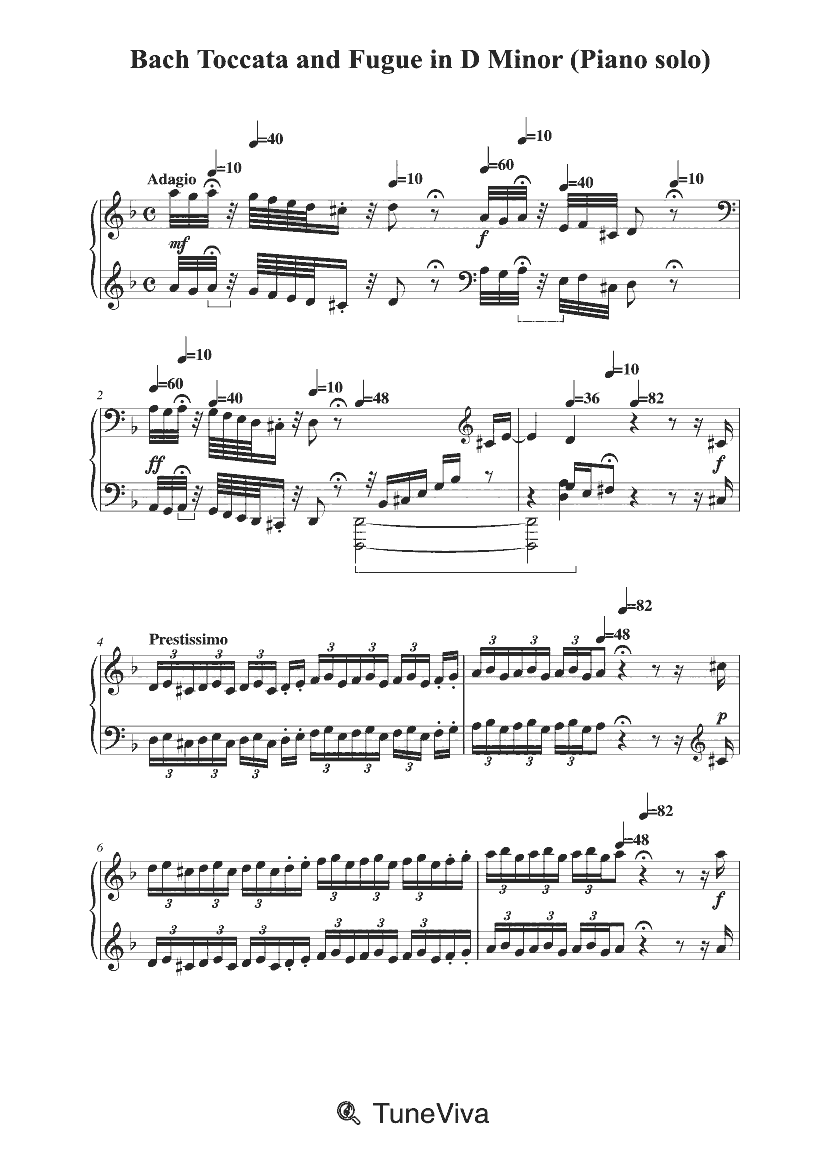
This edition presents the Toccata and Fugue in D minor as a solo piano arrangement. The opening drops the same flourish through different registers. The score labels the fugue entrance FUGA at bar 30, where the repeated-note subject begins a different kind of work for the hands.
Score parts: Piano. Opening key signature: 1 flat. Opening time signature: 4/4. Opening tempo: 60 BPM. Estimated playback time: 8 min 21 sec. Listen while following the notation, adjust playback speed, or open this score in practice mode.
The first flourish winds around A and descends towards D. Play just its opening pitch and its destination in each register. Then add the intervening notes in groups, leaving room for the rests and changes of pace printed in this edition. The change of register should sound purposeful even before you bring the small notes up to speed.
At bar 30, listen for the repeated A notes alternating with descending notes in the subject. Play the subject alone, then find where it appears in another register and practise that entrance separately. Once you combine the lines, keep the surrounding notes at a level that lets you recognise the subject moving through the texture.
This page presents a solo piano arrangement. Its two staves place the parts under the hands rather than providing a separate organ pedal part.
Look for FUGA at bar 30. The repeated notes of the new subject make a clear change from the toccata’s opening flourishes.
The score prints several tempo changes. Learn the runs and arrivals in short groups, then join them while following the changes written in this arrangement.
Johann Sebastian Bach
Johann Sebastian Bach