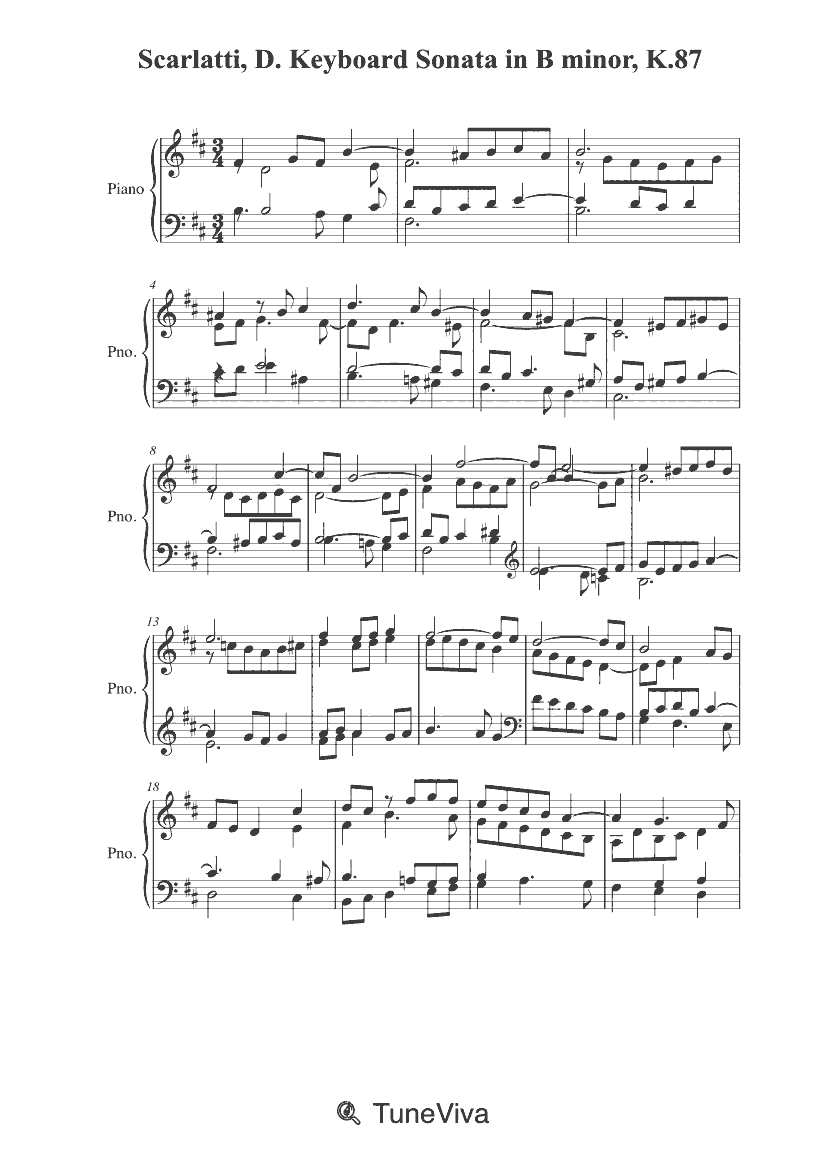
Scarlatti, D. Keyboard Sonata in B minor, K.87
Domenico Scarlatti
from: Domenico Scarlatti: Sonates Volume 2 (pp.110-111) Paris: Heugel 1979 H. 32522
Piano · 7 min 0 sec
Open score41 Domenico Scarlatti scores to preview and download: the D minor Aria K.32, the B minor sonatas K.87 and K.27, K.208 in A major and two editions of K.64.
D minor, marked Aria and written in 3/8; a brief single-movement sonata and the most-viewed score on the page.
The B minor sonata K.87, catalogued without a tempo marking and second only to K.32 in views.
K.27 in B minor, an Allegro of about four minutes and one of the longer sonatas in the catalogue.
K.208 in A major, marked Adagio e cantabile and running to under two minutes.
K.64 in D minor, Longo 58, an Allegro of under a minute; this is the PianoXML edition of the two K.64 files.
K.63 in G major, a compact Allegro of about a minute.
K.431 in G major, an Allegro lasting under a minute.
K.213 in D minor, an Andante of about two and a half minutes; 'The Lover' is a modern descriptive subtitle.
K.391 in G major, an Allegro of about a minute and a quarter.
K.531 in E major, Longo 430, an Allegro of about three and a half minutes.
Try the B-minor K. 87 to work on sustaining several voices, or the B-minor K. 27 for a more agile keyboard texture. The key is the same, so use the catalogue number to distinguish them. Check whether the score is laid out for keyboard or transcribed for another instrument, and read through both sections before deciding how the leaps and changes of position fit your hands.
Compare the instrument and arrangement details below, then open a score to check the notation. Different entries may be arrangements or editions of the same work; available playback tools are shown on each score page.
Domenico Scarlatti
from: Domenico Scarlatti: Sonates Volume 2 (pp.110-111) Paris: Heugel 1979 H. 32522
Piano · 7 min 0 sec
Open score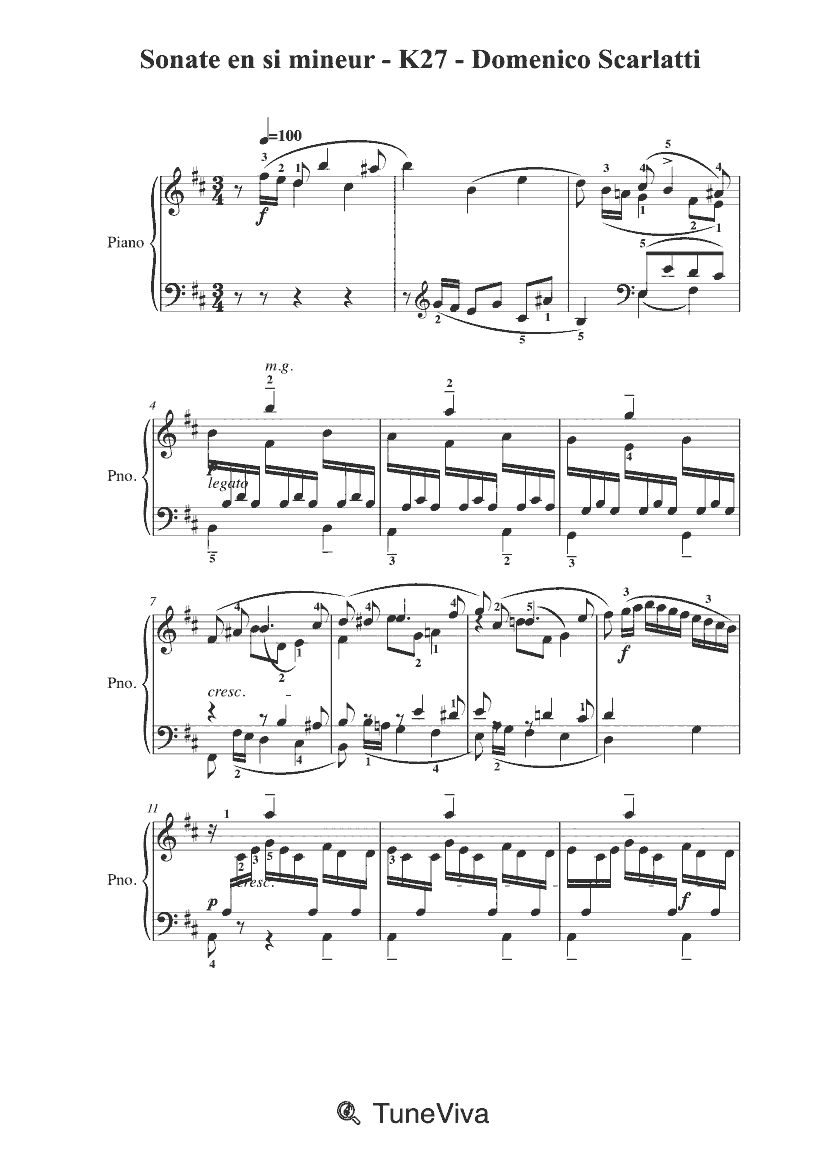
Domenico Scarlatti
Piano · 6 min 39 sec
Open score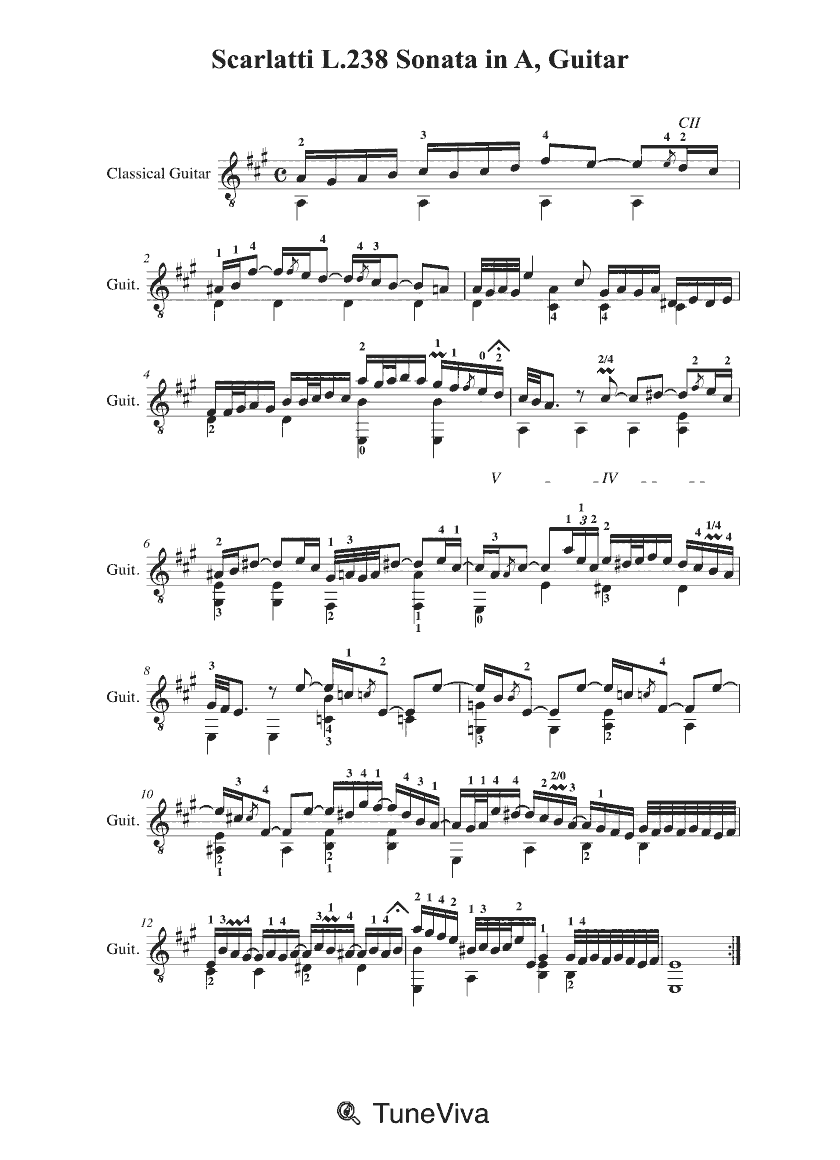
Domenico Scarlatti
Classical Guitar · 2 min 22 sec
Open score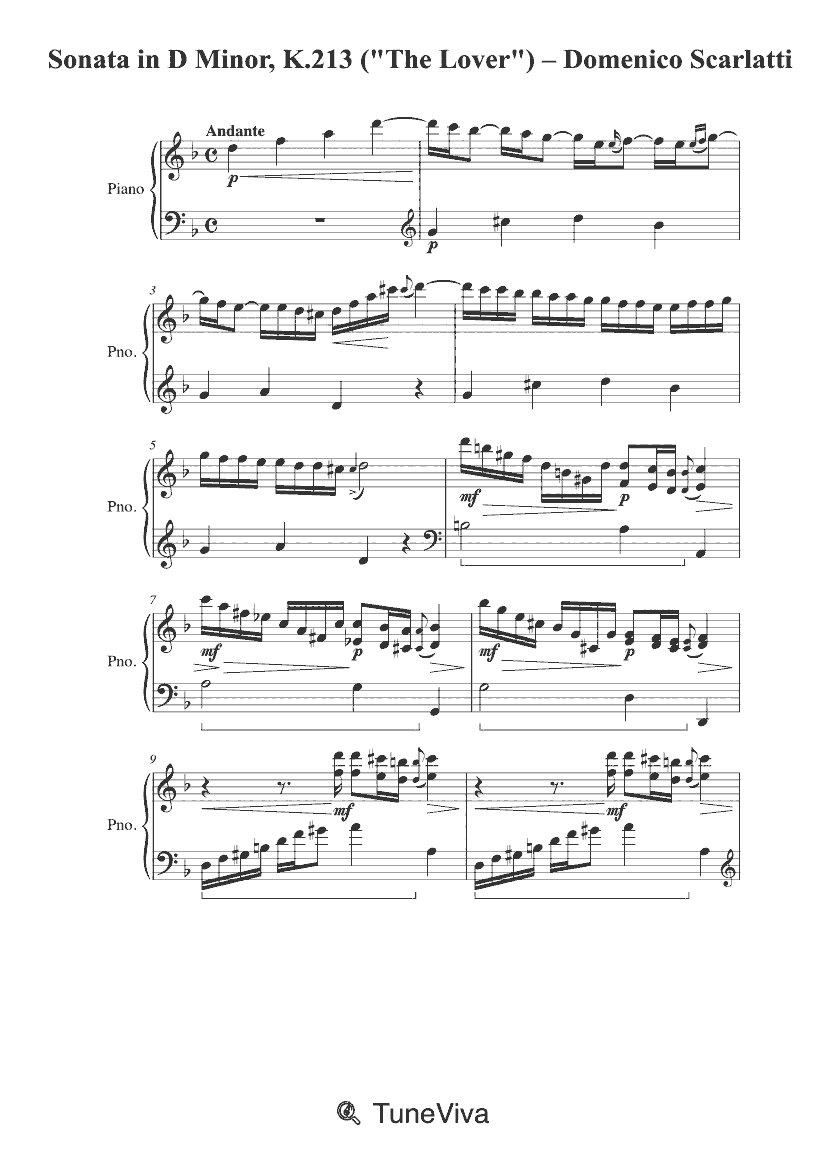
Domenico Scarlatti
K. 213
Piano · 6 min 29 sec
Open score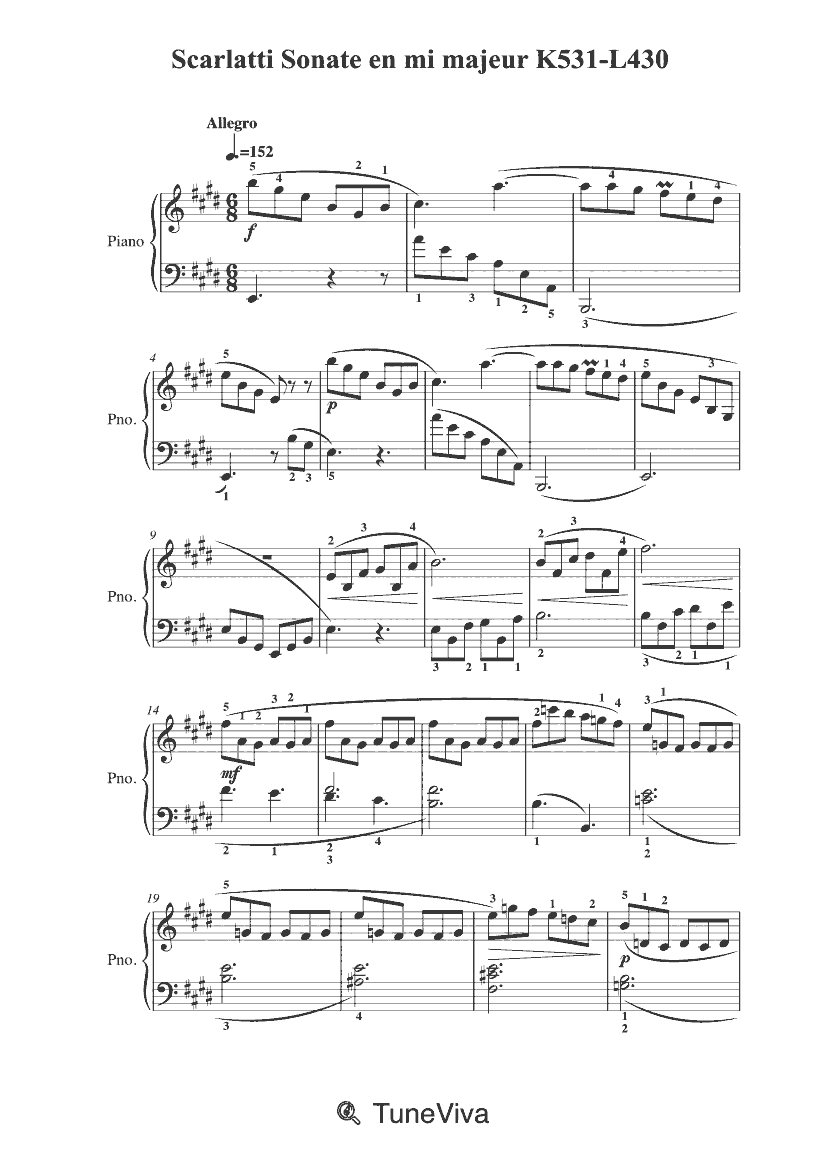
Domenico Scarlatti
Piano · 1 min 37 sec
Open score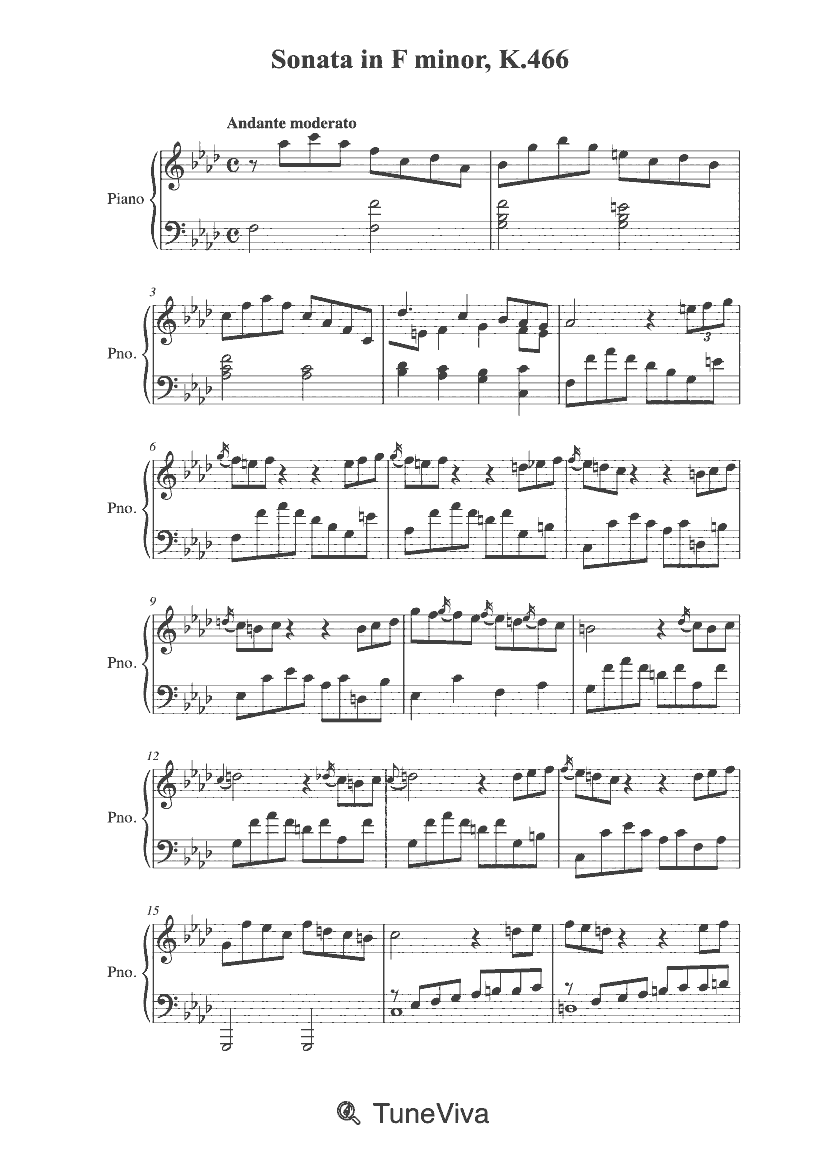
Domenico Scarlatti
K.466
Piano · 8 min 6 sec
Open score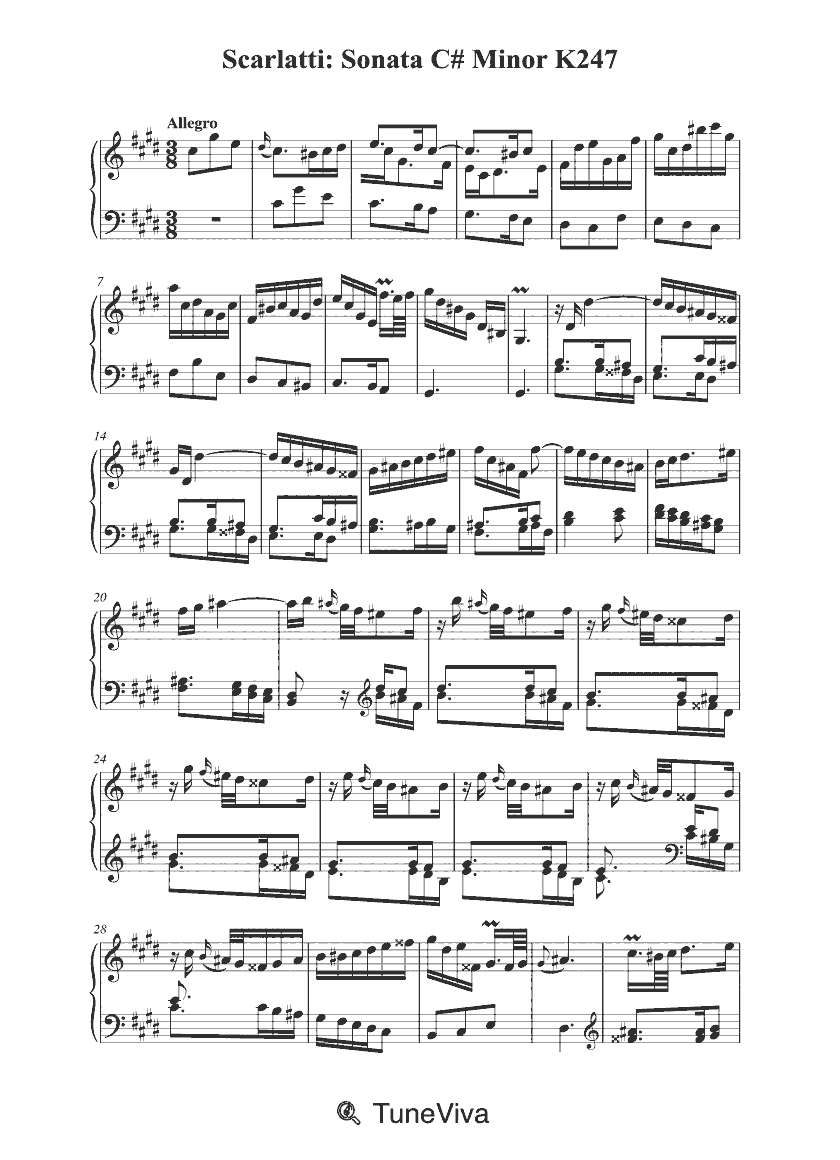
Domenico Scarlatti
K. 247
Zongora · Arr. Edited by Gábor SZÉKELY, 2019 · 3 min 33 sec
Open score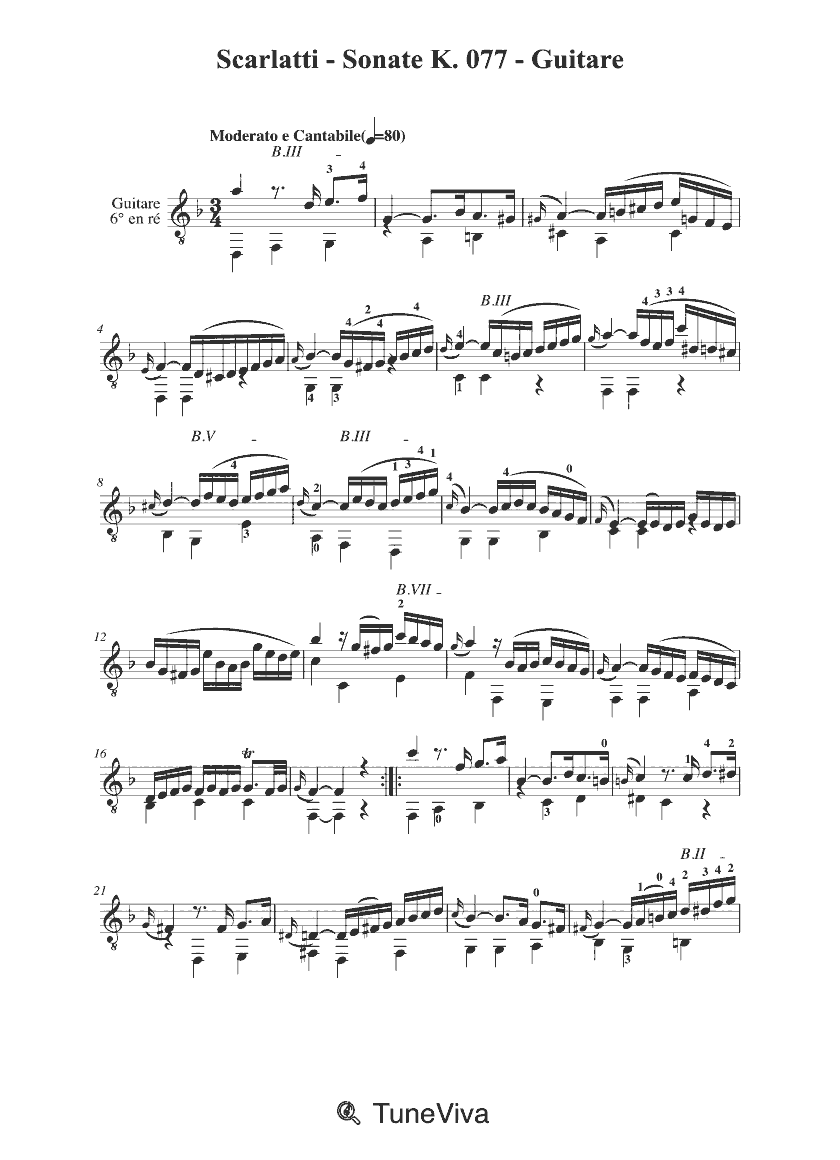
Domenico Scarlatti
Guitare 6° en ré · 3 min 30 sec
Open score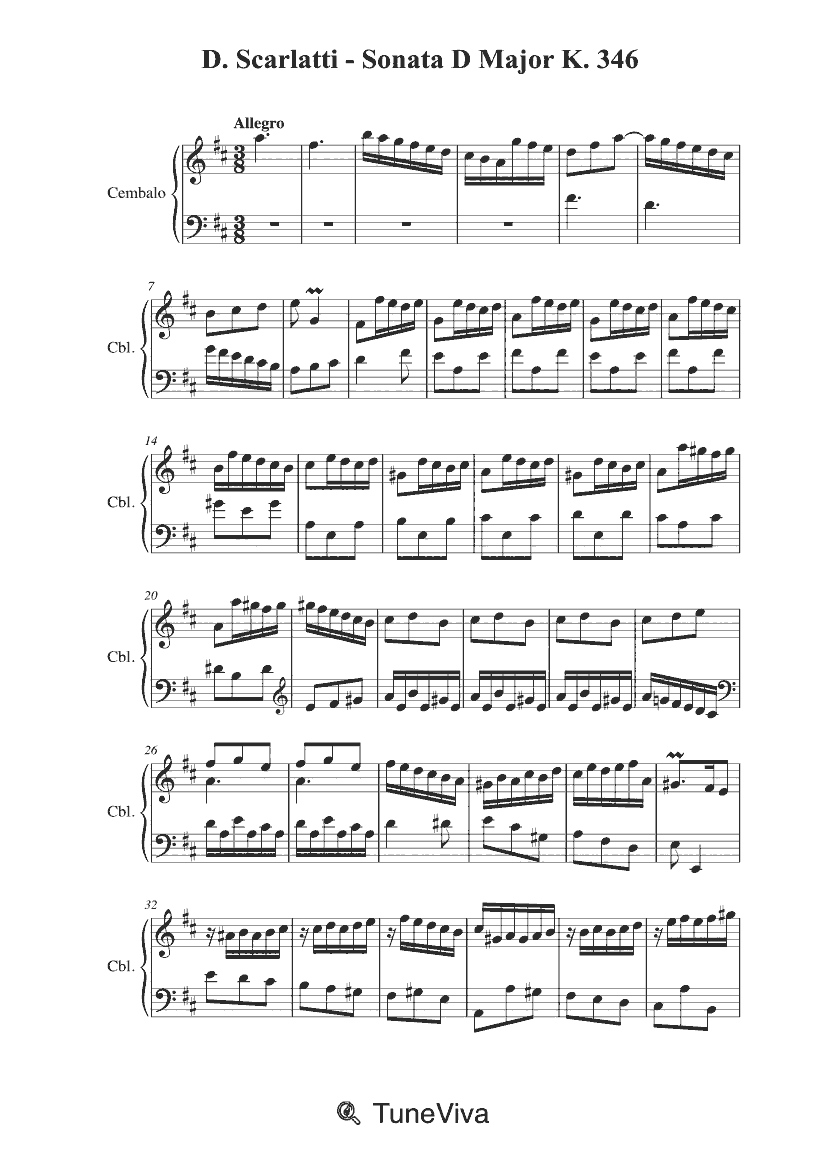
Domenico Scarlatti
K. 346
Cembalo · 1 min 32 sec
Open score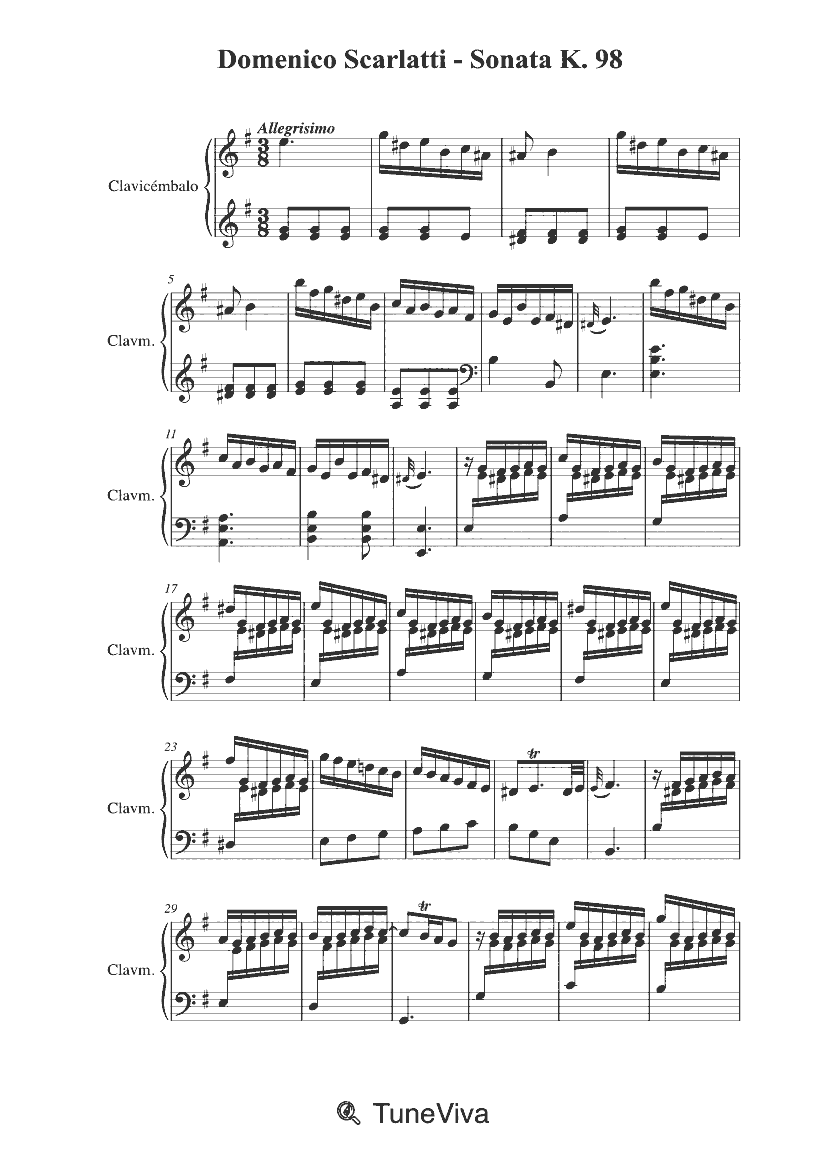
Domenico Scarlatti
K. 98
Clavicémbalo · 1 min 34 sec
Open score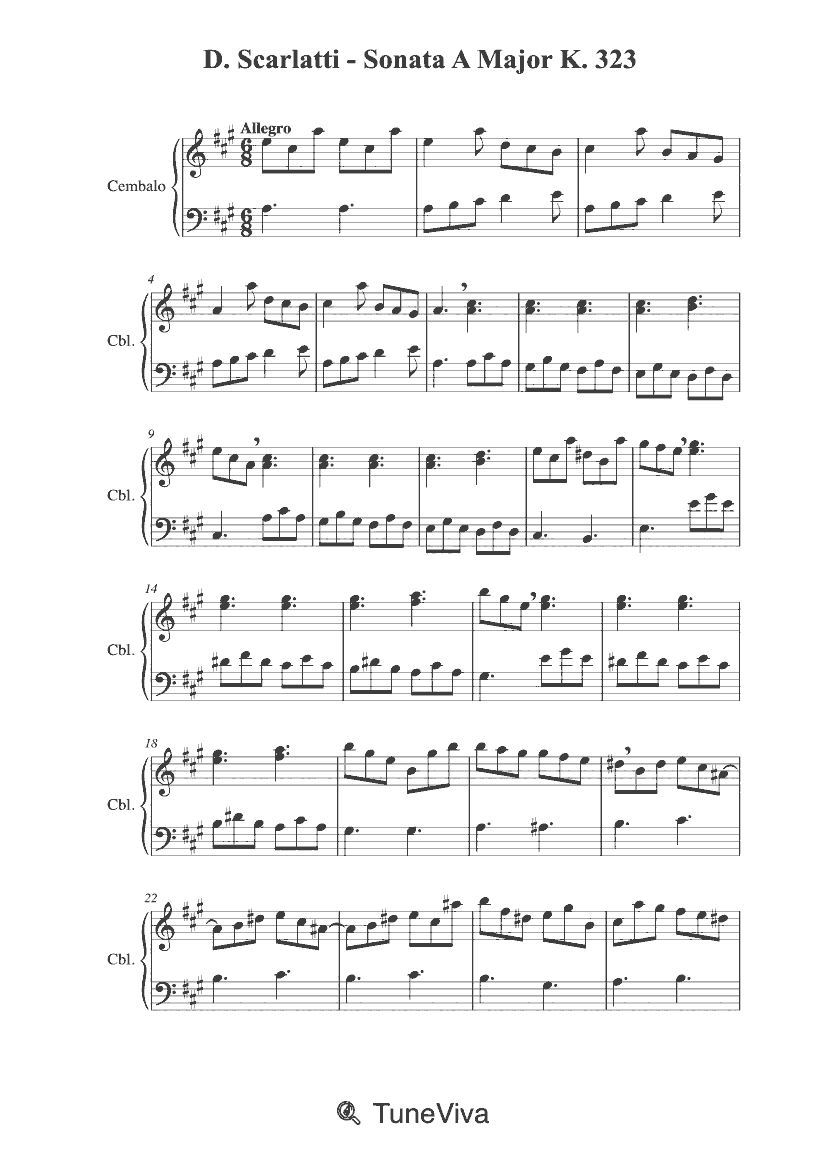
Domenico Scarlatti
K. 323
Cembalo · 1 min 13 sec
Open score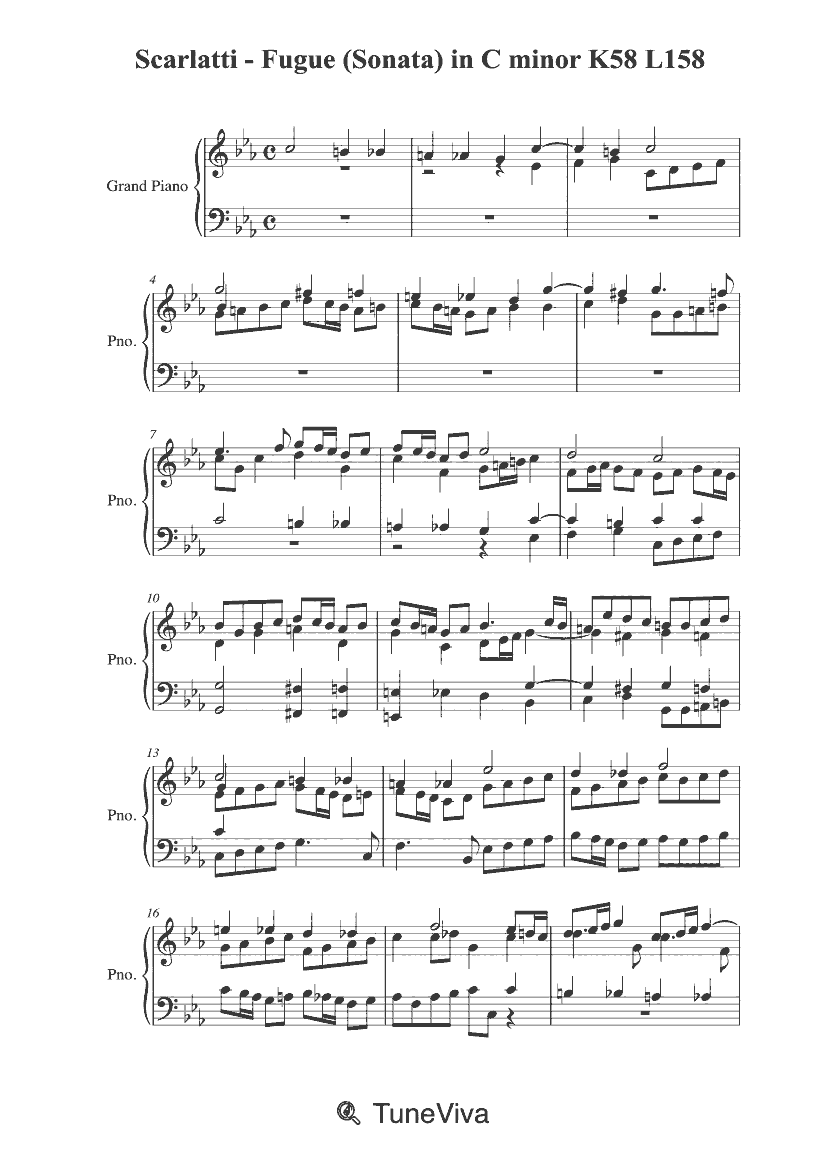
Domenico Scarlatti
Kp. 58 L. 158
Grand Piano · 1 min 51 sec
Open score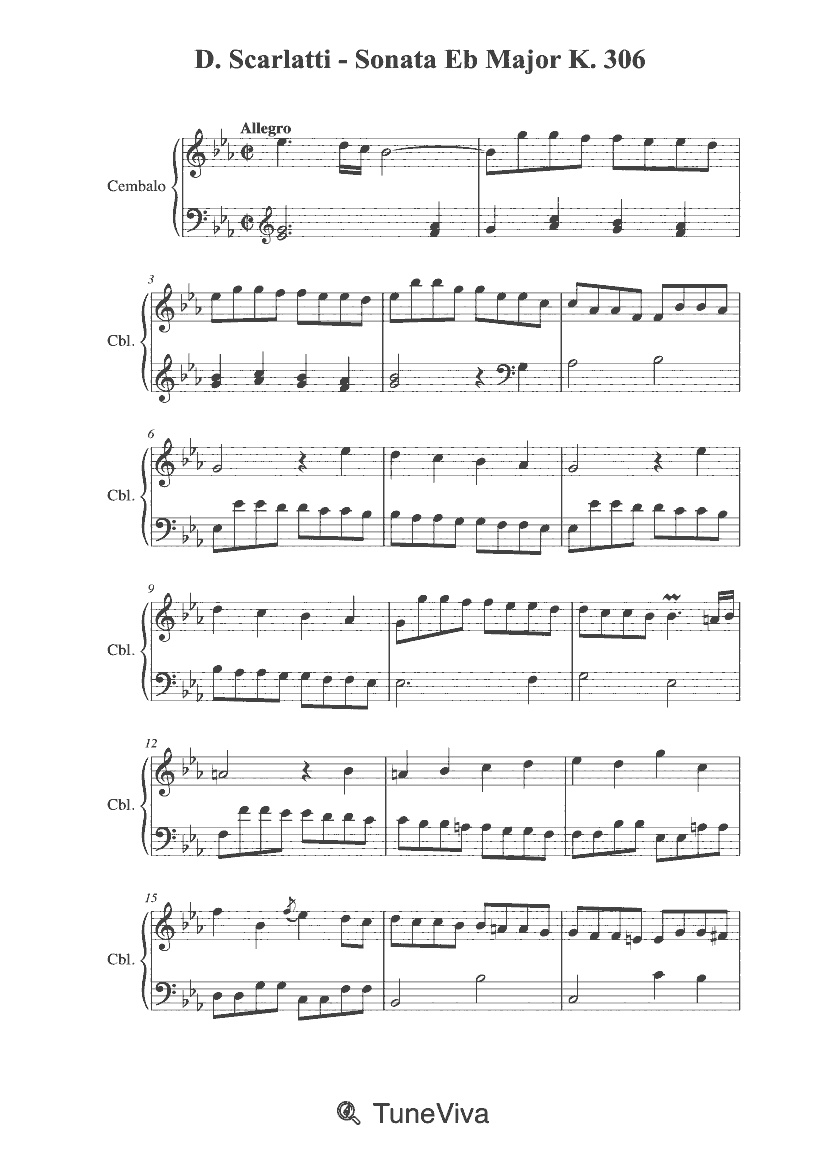
Domenico Scarlatti
K. 306
Cembalo · 11 min 50 sec
Open score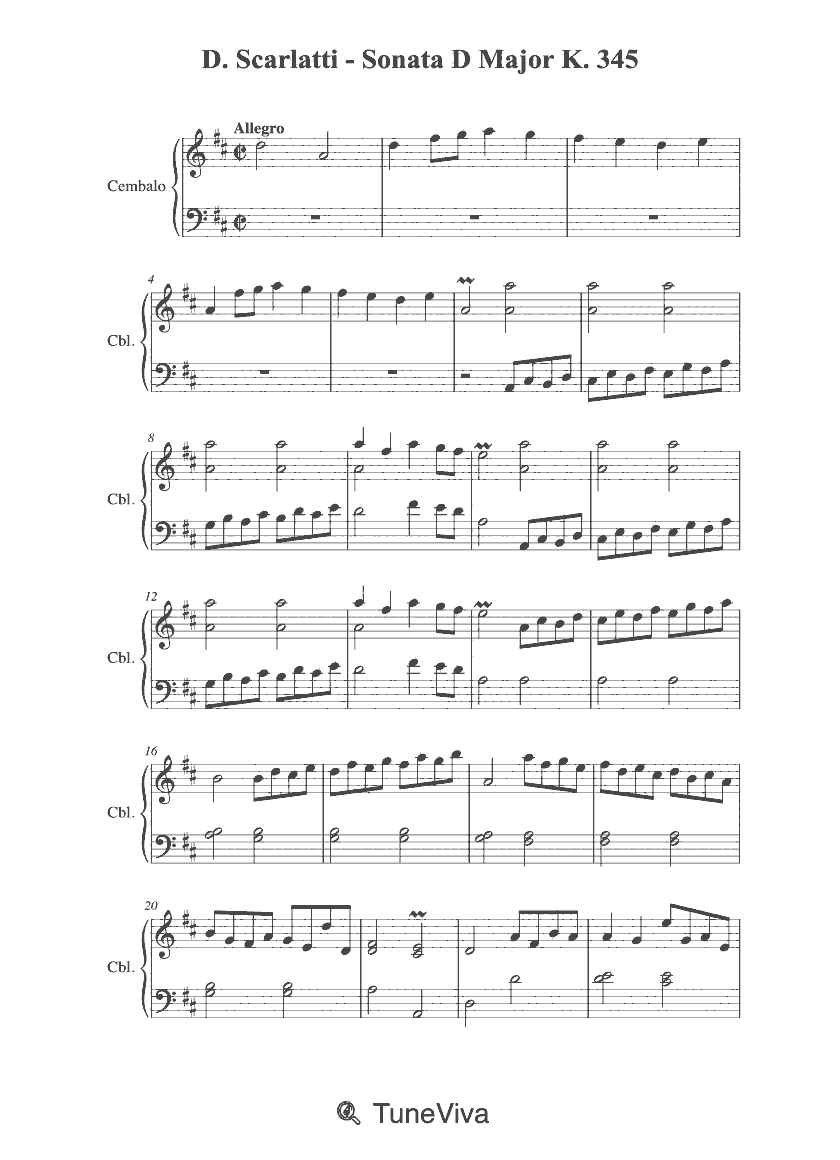
Domenico Scarlatti
K. 345
Cembalo · 11 min 48 sec
Open score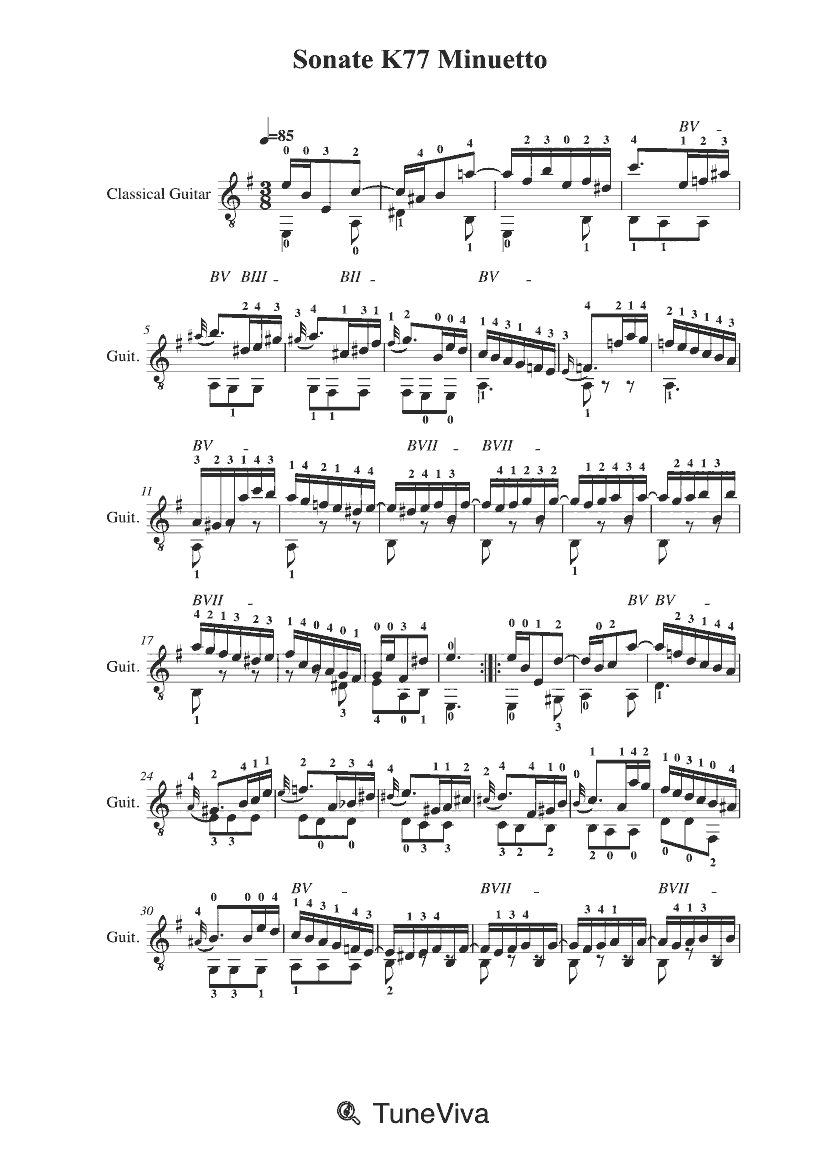
Domenico Scarlatti
Menuet
Classical Guitar · 42 sec
Open score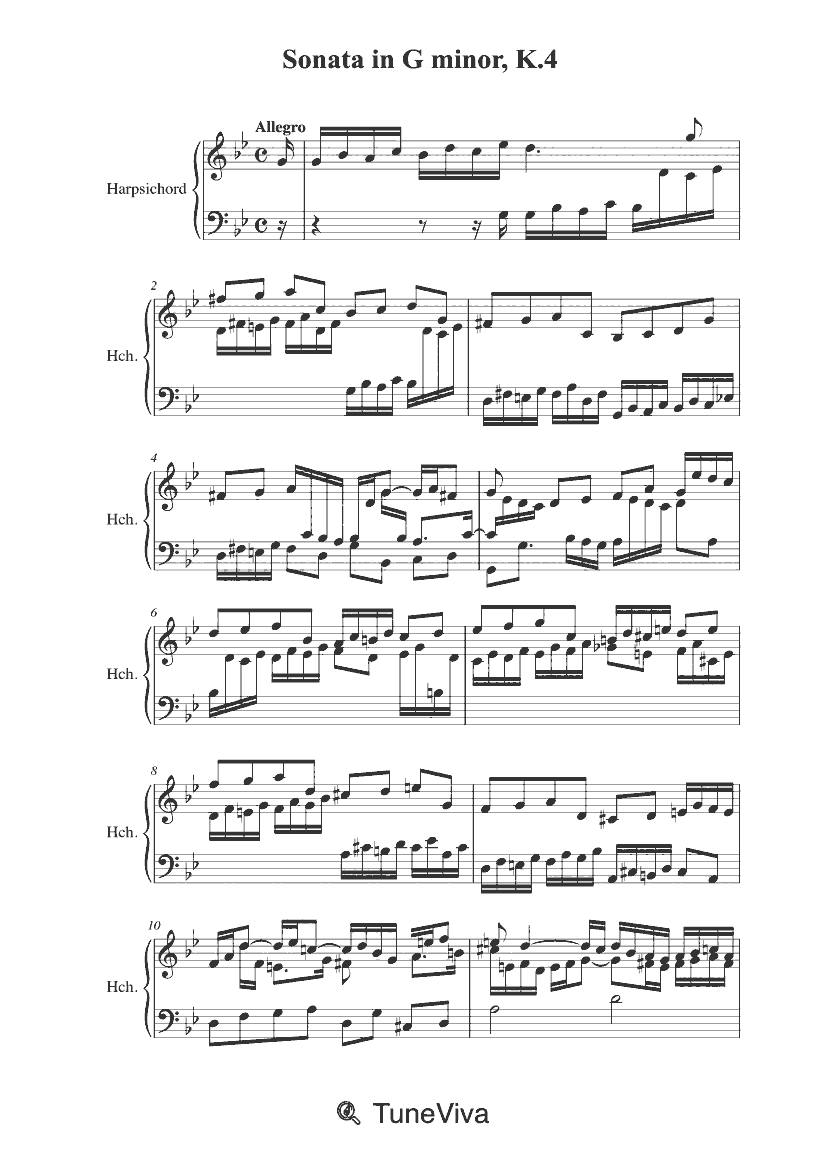
Domenico Scarlatti
K.4
Harpsichord · 3 min 0 sec
Open score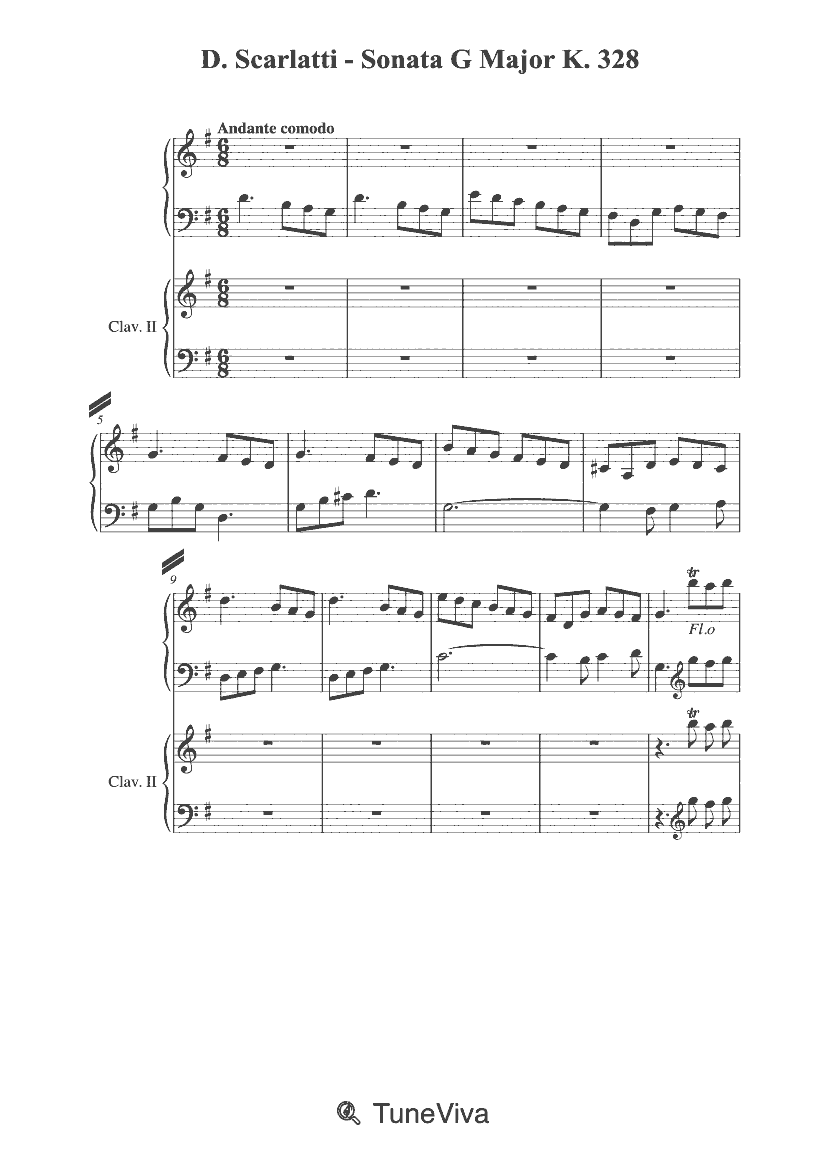
Domenico Scarlatti
K. 328
Cembalo; Clav. II · 3 min 19 sec
Open score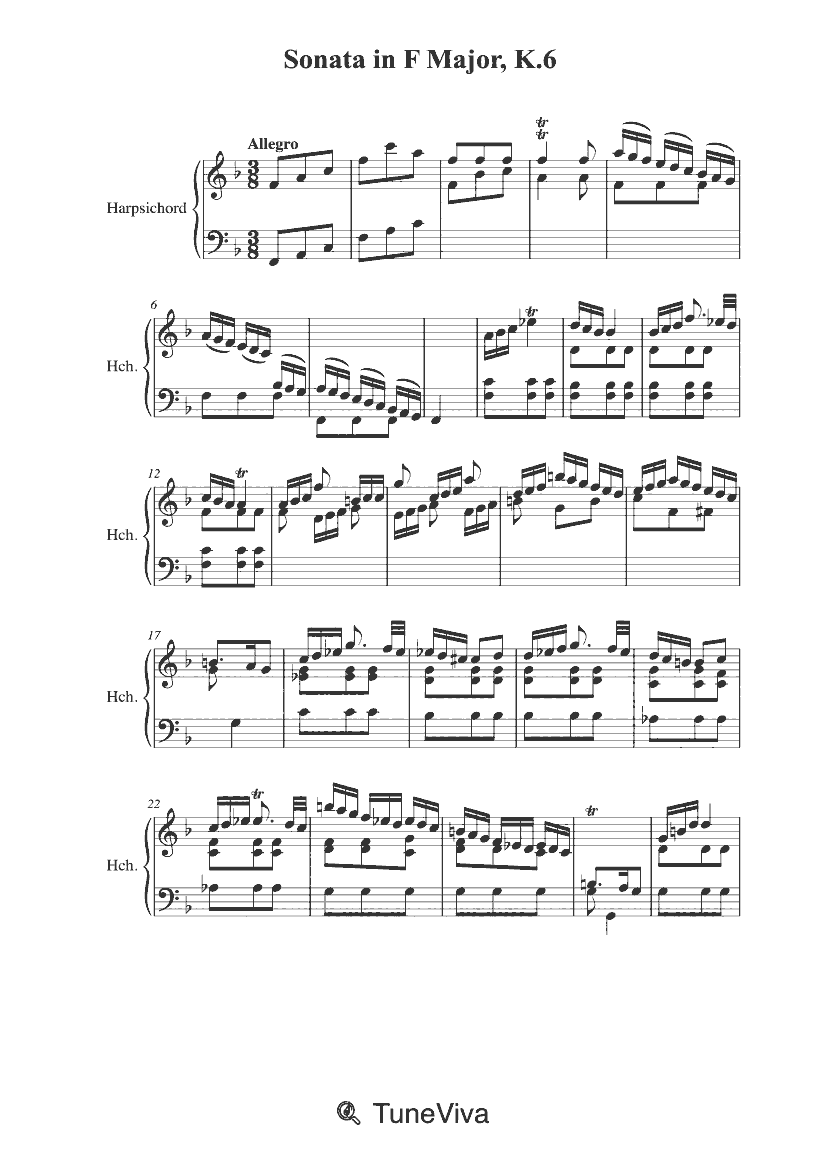
Domenico Scarlatti
K.6
Harpsichord · 1 min 7 sec
Open score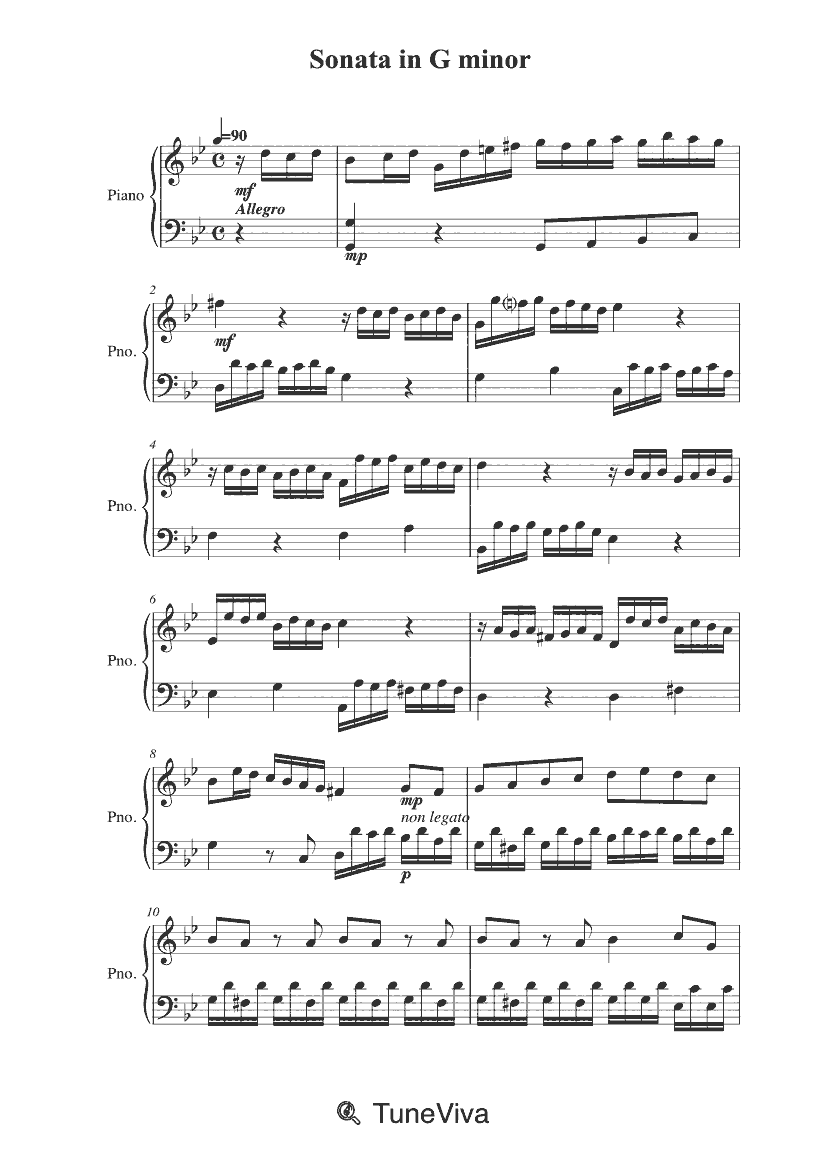
Domenico Scarlatti
K. 35
Piano · 1 min 48 sec
Open score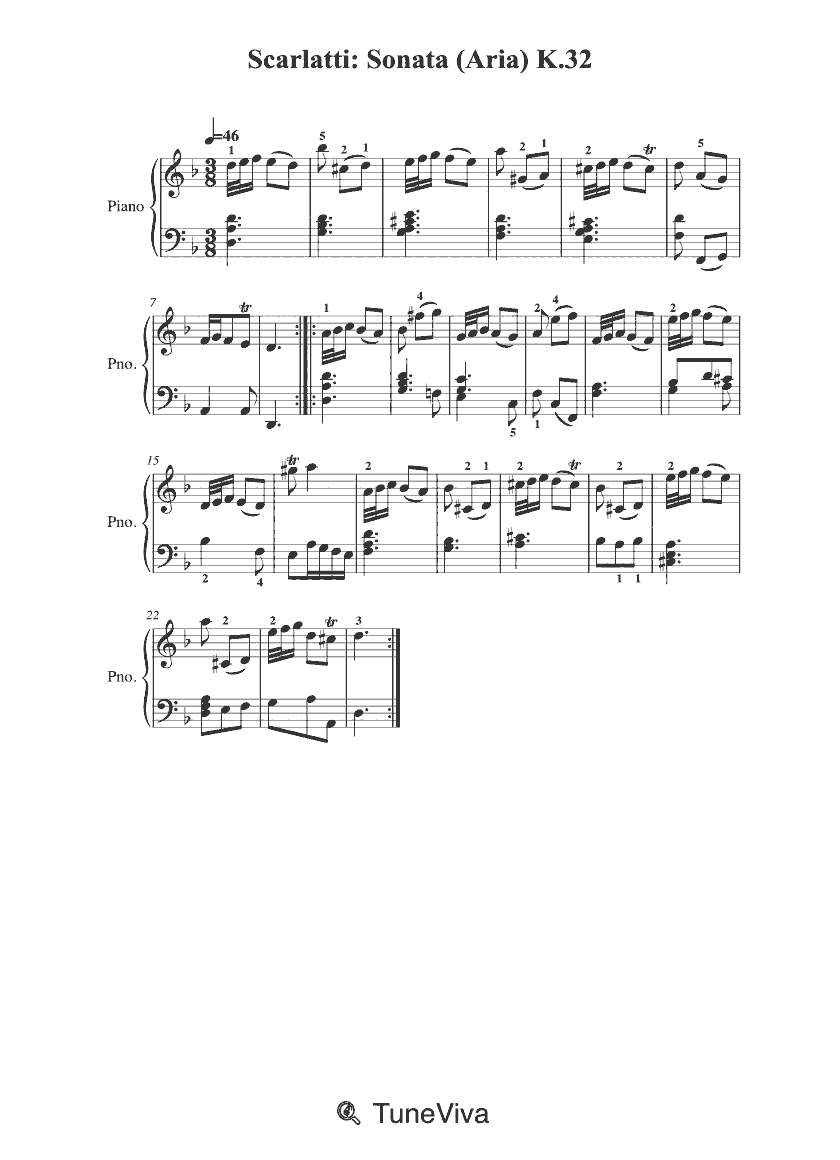
Domenico Scarlatti
K.32 L.423
Piano · 52 sec
Open scorePage 1 of 3
The catalogue holds 41 Scarlatti scores, about 134 minutes of music and 50,251 notated notes. None carries lyrics, which is what a page built on keyboard sonatas should look like. The most-viewed entries are the D minor Aria K.32, the B minor sonata K.87 and K.27, also in B minor. Around them sit slow sonatas in A major and D minor, two editions of K.64 and a handful of late pieces. Every title is a single movement. Domenico Scarlatti is best known for his 555 solo keyboard sonatas, a body of music that circulated irregularly during his lifetime and is now central to the keyboard repertoire. Born in Naples in 1685, the same year as Bach and Handel, Scarlatti spent much of his career in the service of the Portuguese and Spanish royal families. This selection of Scarlatti sheet music focuses on individual keyboard sonatas, including scores labelled K.32, K.87, K.208, K.213 and K.531. Catalogue numbers are the clearest way to identify a sonata, especially when titles appear in different languages or carry descriptive subtitles.
Scarlatti was born in Naples on 26 October 1685, the sixth of ten children of Alessandro Scarlatti. He was appointed composer and organist at the Chapel Royal of Naples in 1701, worked in Venice and then Rome, where he served the exiled Polish queen Marie Casimire and, from 1714 to 1719, the Cappella Giulia at St Peter's. In 1719 he went to Lisbon as music master to the Portuguese royal family; in 1729 he followed Princess Maria Bárbara to Seville after her marriage, and later to Madrid. He died in Madrid on 23 July 1757.
The 555 keyboard sonatas are the core of his reputation, and the catalogue is a selection from them rather than a complete edition. The Kirkpatrick number (K.) is the standard route through the set; the older Longo numbers still appear on some files, as in K.64/L.58 and K.531/L.430. The Essercizi of 1738 were the collection published under Scarlatti's supervision, and most of the other sonatas circulated in manuscript, which is why the same piece can appear in more than one edition. K.64 is here twice, in two different editions.
The catalogue reaches the well-known slow sonatas as well as the brilliant ones: K.208 in A major, K.87 in B minor, K.213 in D minor. It also includes K.466 in F minor and K.247 in C-sharp minor, and a file titled 'Scarlatti 24' whose contents the title does not explain. Thirty-two entries are filed as classical and four are unclassified; the 134-minute total suggests an average of under four minutes per sonata.
Start with the sonatas: Scarlatti's reputation rests mainly on his 555 solo keyboard sonatas, and the scores here are individual sonatas rather than a complete edition. Use the catalogue number, such as K.32 or K.87, to identify the piece you want. Some titles also include an L. number, as in K.531/L.430, so check both the number and the key when comparing scores.
Harpsichord, fortepiano or piano: Scarlatti's sonatas were probably most often performed on the harpsichord in his own time, but the Spanish court where he worked also possessed early pianos. Modern performers may choose harpsichord, fortepiano or modern piano. A score labelled for piano is a practical keyboard score, not proof that the sonata was originally written for the piano.
Titles and duplicate works: Scarlatti sonata titles vary: some are in Italian, some in French, and some add a descriptive subtitle. The catalogue number is more stable than the title. If two scores seem to be the same work, compare the catalogue number, key and opening pages before deciding which one to use.
What this selection covers: The selection includes well-known sonata numbers as well as less familiar ones, and it is not a complete edition of all 555 sonatas. Some entries may present the same sonata in different editions or under different titles. Check the catalogue number and the first page rather than relying only on the display title.
No. The page is a selection, and it includes duplicate editions rather than 36 different works: K.64 appears in two different editions.
The two files are different editions of the same D minor sonata, Longo 58. The catalogue does not describe the differences between them, so compare the first page before choosing.
No. It is a descriptive subtitle used by some modern publishers; the sonata is simply K.213 in D minor, marked Andante.
Domenico Scarlatti is best known for his 555 solo keyboard sonatas. He also composed operas and sacred music, but his modern reputation rests mainly on the sonatas, which are recognised as a significant contribution to keyboard music.
Scarlatti's keyboard sonatas were probably most often performed on the harpsichord in his lifetime, according to a survey of the solo keyboard sonatas. The Spanish royal court where he worked also had early pianos, and modern performers can choose between harpsichord, fortepiano and modern piano.
Scarlatti is classified primarily as a Baroque composer chronologically, but his music was influential in the development of the Classical style. His keyboard sonatas sit within that transitional context, even though they remain the core of his reputation.
Domenico Scarlatti was appointed composer and organist at the Chapel Royal of Naples in 1701, later worked in Rome for the exiled Polish queen Marie Casimire and at St Peter's, and arrived in Lisbon in 1719. He spent much of his life in the service of the Portuguese and Spanish royal families.
The K. and L. numbers are catalogue references used to identify individual Scarlatti sonatas. They may appear together, as in K.531/L.430, and the list of solo keyboard sonatas can be sorted by several catalogue systems. Matching the catalogue number and key is safer than relying on a translated or descriptive title.
Domenico Scarlatti composed operas and sacred music, including a Stabat Mater for ten voices, and worked as a composer and organist in Naples. His modern reputation, however, rests mainly on the 555 solo keyboard sonatas.