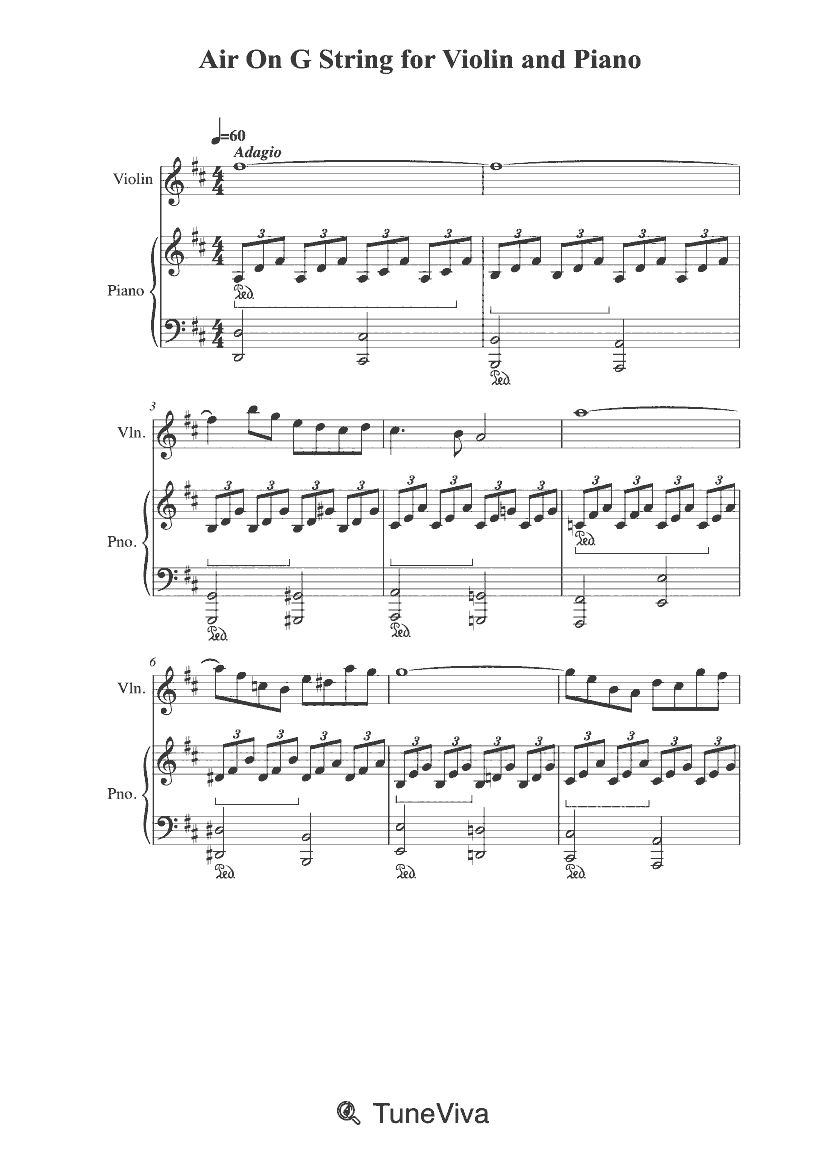
Air On G String for Violin and Piano
Johann Sebastian Bach
Follow the score, hear the music, then make it your own.
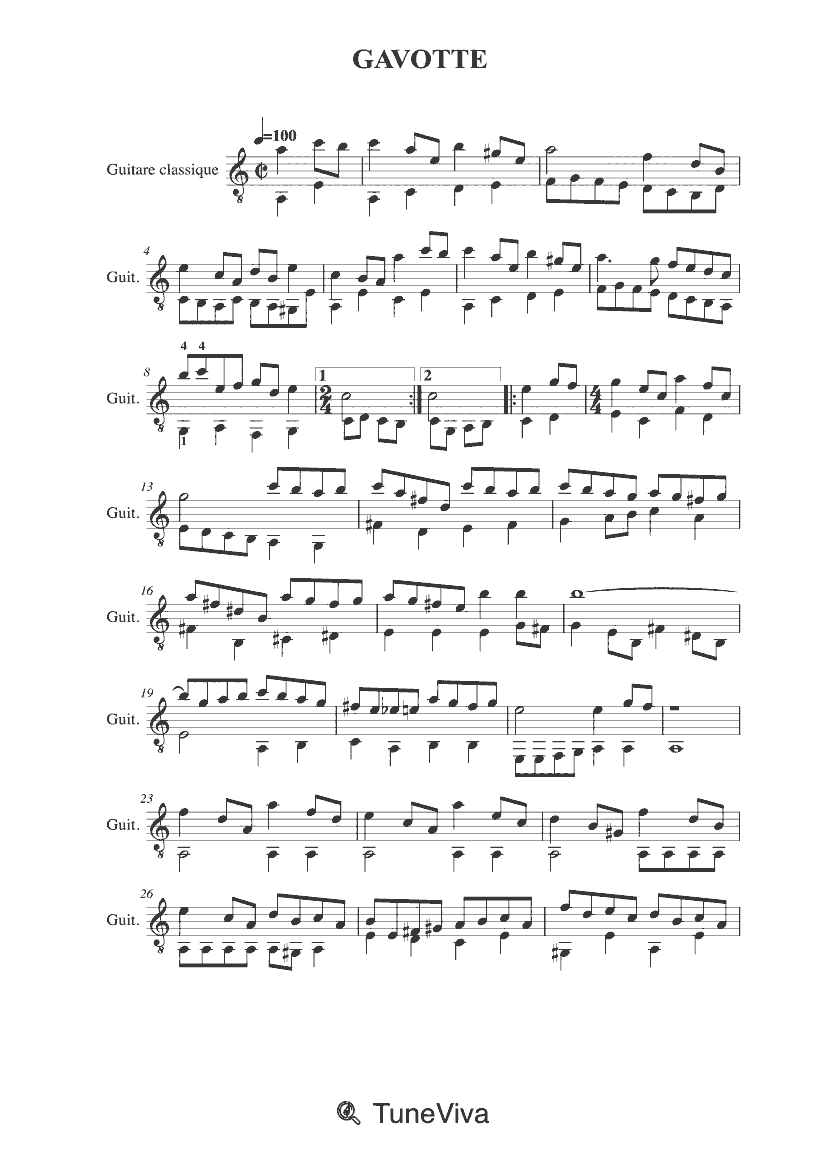
This Gavotte is presented in a classical guitar arrangement by Christophe Baste, with Bach credited as composer. The arrangement opens in cut time with a short upbeat. The upper voice and bass share a single staff, so the central task is to keep the tune clear while letting the lower notes articulate their own line.
Score parts: Guitare classique. Opening key signature: No sharps or flats. Opening time signature: 2/2. Opening tempo: 100 BPM. Estimated playback time: 3 min 25 sec. Listen while following the notation, adjust playback speed, or open this score in practice mode.
In the opening pickup, the upper part plays A–C–B while the lower line moves from A to E. The tune has a different rhythm from the bass, and the voices continue to move independently as the piece unfolds. Play the upper voice alone and sing its rhythm back, then play the bass with its written lengths. When you combine them, hold a lower note through the upper notes that overlap it wherever your fingering permits.
Start by feeling two broad beats in each full cut-time bar. Follow the written repeat signs and check the shorter measures at phrase boundaries before deciding how to count the return. Practise the last measure before each repeat together with the upbeat or next entry. That short loop reveals a missing beat or a pause more clearly than starting again from the beginning.
The bass has stretches of moving eighth notes while the upper voice sustains or moves in longer values. Mark any position change where you cut a held note short, then try the phrase again using a nearby string or a slower shift. The departure from, and return to, the opening pulse should remain clear even when you simplify the fingering during practice.
The score credits Christophe Baste as arranger and Bach as composer. The notation is laid out for classical guitar on a single staff.
The opening is in cut time. Feel two half-note beats in a full bar and count the upbeat into the first downbeat before learning the repeats.
The upper tune and bass have distinct rhythms. Playing each voice independently before joining them helps you hear which notes need to be held and which should move.
Johann Sebastian Bach
Johann Sebastian Bach
Johann Sebastian Bach