2 tracks
The catalogue holds 65 scores under Henry Thomas Smart, about 36 minutes of music and 13,460 notated notes. Twenty-six carry lyrics, and 64 of the 65 sit at complexity index 0, which says what kind of composer this is: short, syllabic hymn tunes rather than extended organ writing.
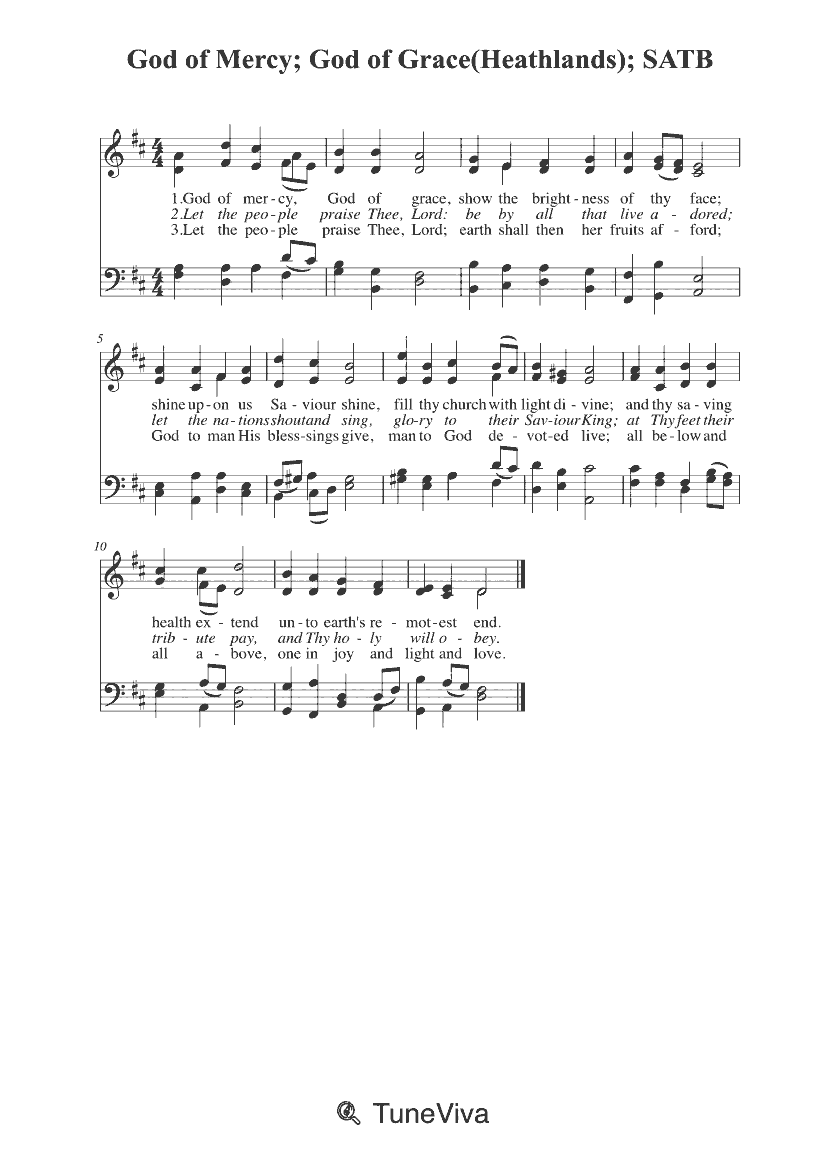
The most-viewed entry by a wide margin is an SATB setting of God of Mercy, God of Grace to the tune HEATHLANDS, with 595 views. Behind it come Angels from the Realms of Glory, Hark! Hark, My Soul and Son of God, Eternal Saviour, the tune HEATHLANDS entered under its own name, and a double chant in D.
Smart was born in London on 26 October 1813, the son of a music publisher and violinist and the nephew of the conductor Sir George Smart. He was educated at Highgate School and began reading for the law before turning to music. In 1831 he became organist of Blackburn parish church, where he wrote his first substantial anthem; posts at St Giles-without-Cripplegate, St Luke's Old Street and, from 1864, St Pancras New Church followed. He held the last of these until his death.
He was a capable mechanic and designed organs, and William Sterndale Bennett brought him onto the committee of the Bach Society, which gave the first English performance of the St Matthew Passion in 1854. His larger works included the cantata The Bride of Dunkerron for the Birmingham Festival of 1864, an oratorio, Jacob, for Glasgow in 1873, and a comic opera, Bertha, staged at the Haymarket in 1855. In his last fifteen years he was practically blind and composed by dictation to his daughter Ellen. He received a government pension of 100 pounds a year and died near Primrose Hill on 6 July 1879, less than a month later.
The catalogue is built almost entirely from the church music. REGENT SQUARE, written for 'Angels from the realms of glory' in 1867, is the tune that kept his name alive; HEATHLANDS (1866) and PILGRIMS (1868) are the other two that appear here under their own names as well as under hymn texts. The one entry above index 0 is a setting that carries more notes than a plain hymn. Otherwise the pieces are short enough to rehearse in a single session.
Smart's tunes are built for congregations, so the first job is a tempo everyone can breathe at and a registration that supports without covering the words. Keep the harmony steady in the inner parts and let the soprano line carry; the interest is in the cadences, not in decoration. In the chants, watch the pointing, since the reciting note has to stay speech-like. Where a hymn appears twice in the catalogue, read both before deciding: the difference is usually in the accompaniment, not the melody.
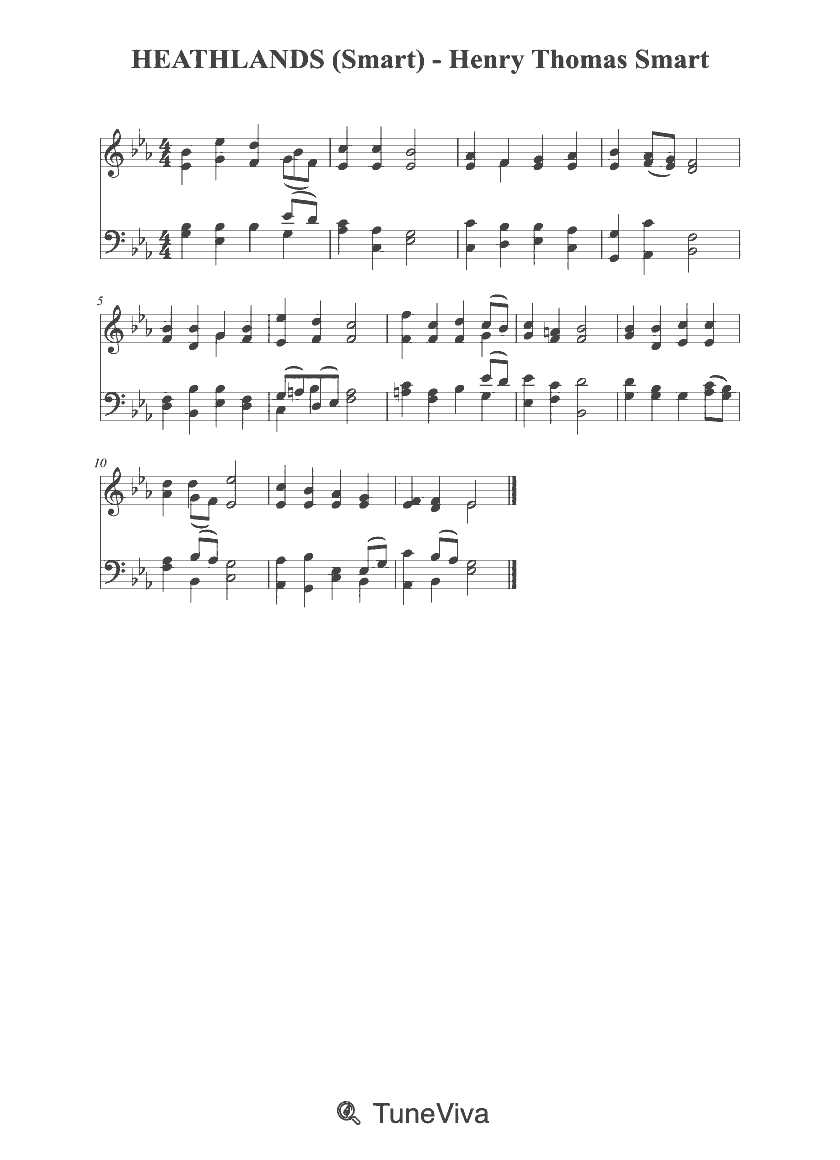
Henry Francis Lyte's hymn in a four-part setting to Smart's tune HEATHLANDS of 1866; by far the most-viewed Smart score in the catalogue.
The Advent hymn sung to REGENT SQUARE, the tune Smart wrote for it in 1867 and the one piece of his that never left the repertoire.
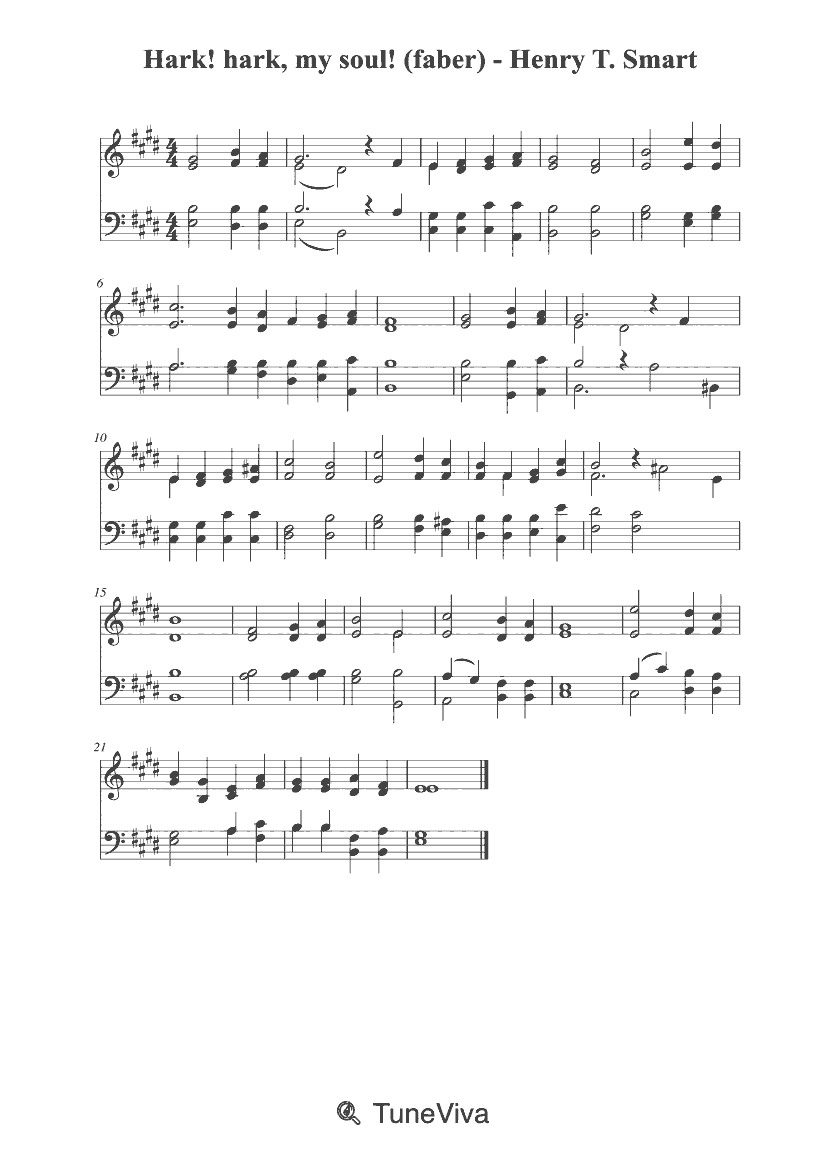
A second, separately entered setting of the same Lyte hymn; compare the first page with the SATB version before choosing between them.
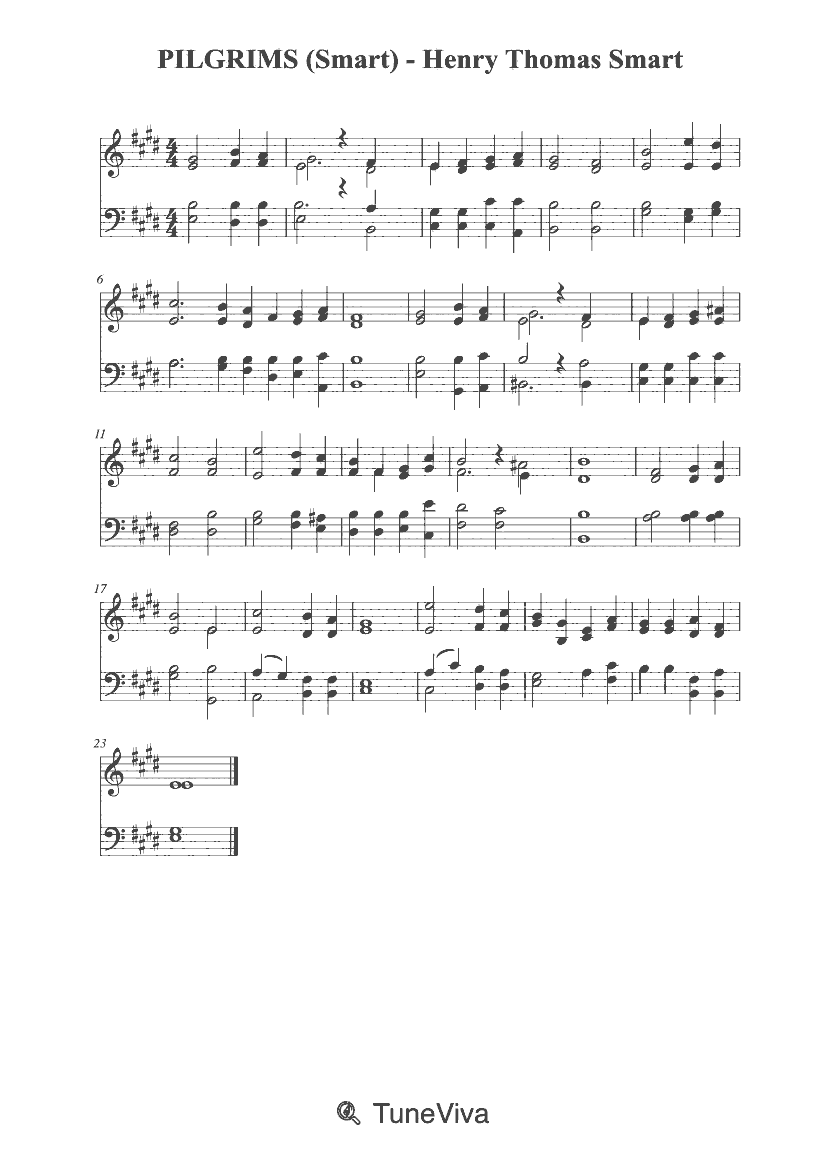
Frederick William Faber's hymn, set to Smart's tune PILGRIMS of 1868.
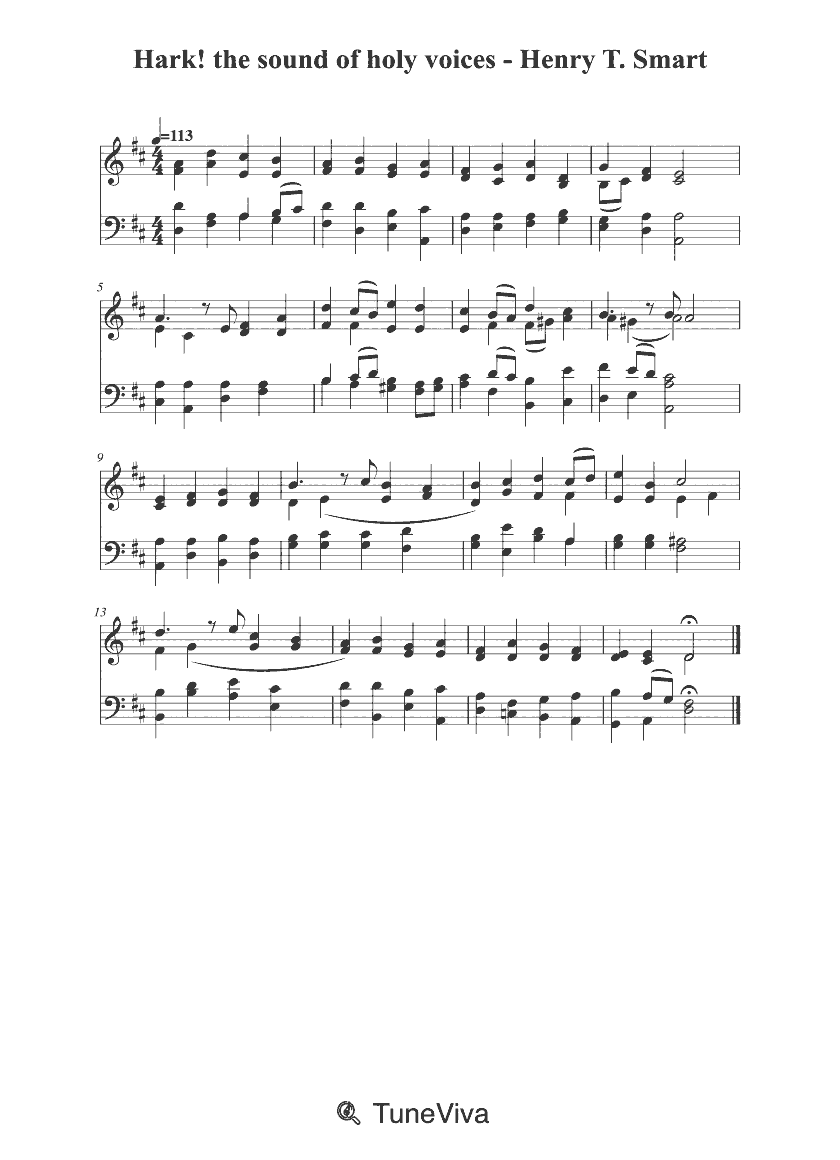
A hymn on the eternal Son, filed under Smart without the tune being named in the title.
One of two entries for the same hymn, both credited to Smart; the second carries no tune name either.
The Easter hymn, usually sung to Smart's tune LANCASHIRE.
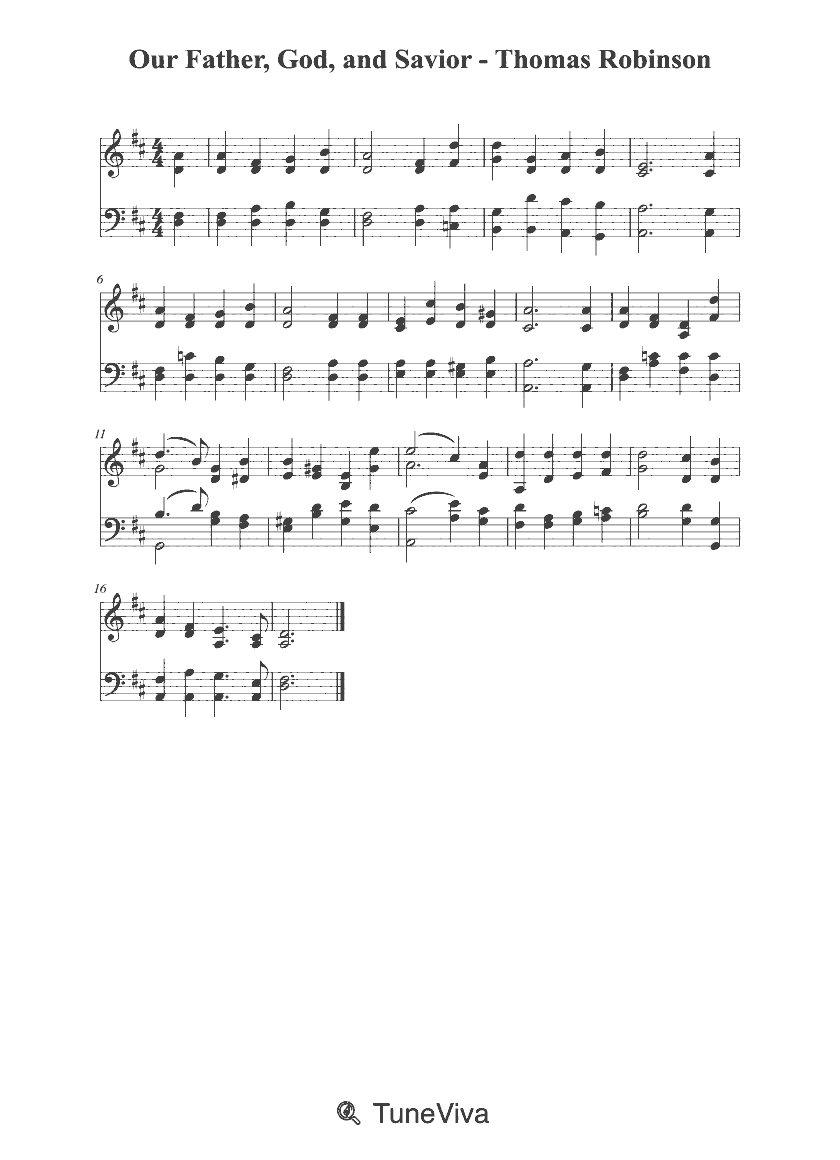
The tune entered under its own name rather than under a hymn text, which makes it the cleanest copy to hand to an organist.
A double Anglican chant, the form in which a psalm is sung to two repeating halves of music.
Sixty-five, about 36 minutes of music and 13,460 notated notes. Twenty-six of the entries include lyrics.
Sixty-four of the 65 sit at index 0 because the index measures notation density, and a hymn tune uses few notes per second. It does not measure the difficulty of accompanying a congregation or of keeping a choir in tune unaccompanied.
REGENT SQUARE, written for 'Angels from the realms of glory'. It is also sung to 'Christ is made the sure foundation' and 'Light's abode, celestial Salem', which is why the tune name travels further than the composer's name.
Not really. The collection is church music: hymn tunes, an anthem setting, and a double chant. Smart's organ sonatas and voluntaries, which were widely played in his lifetime, are not represented.
Catalog editions and arrangements attributed to Henry Thomas Smart.