classical
1 tracks
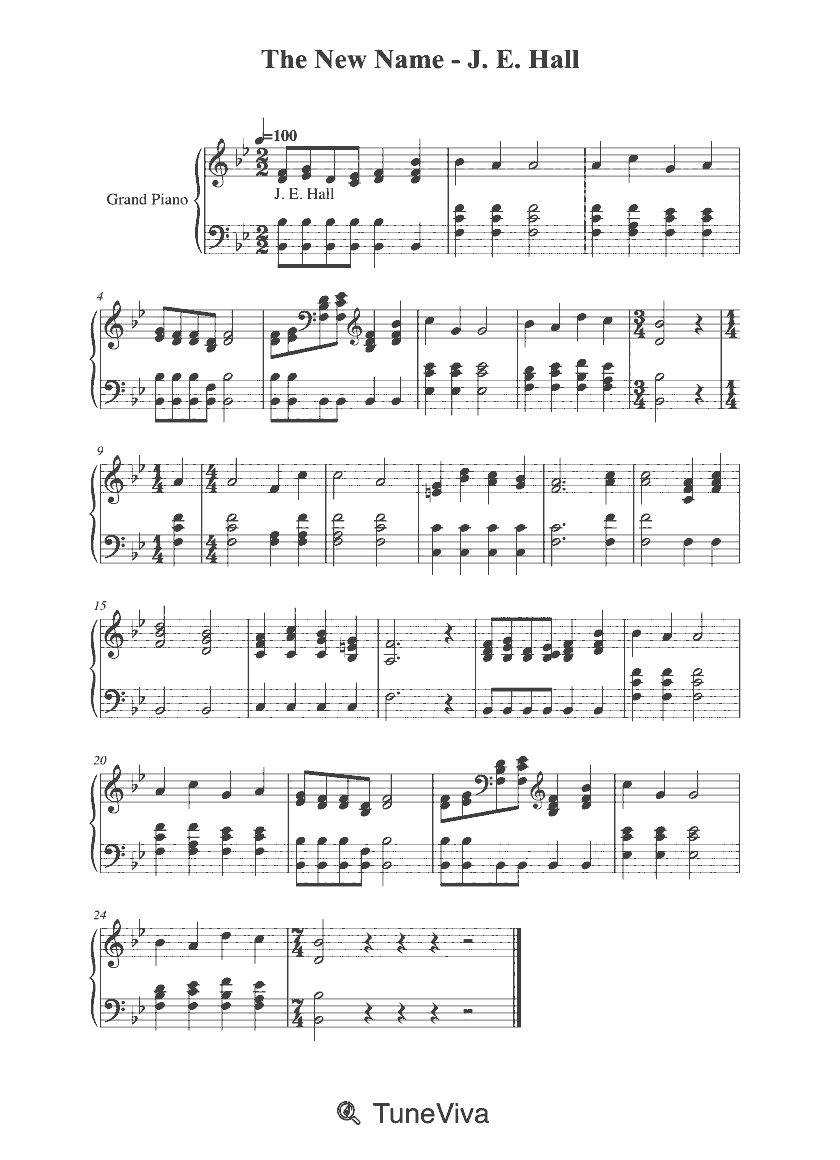
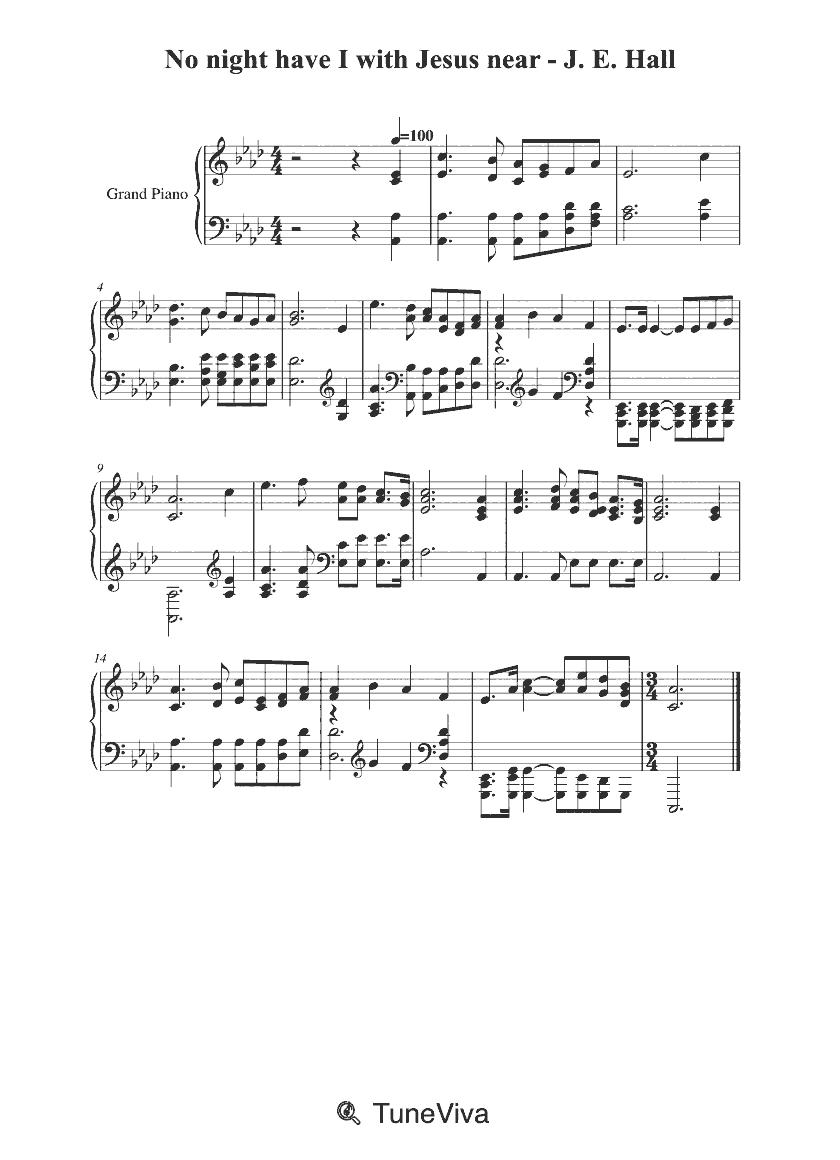
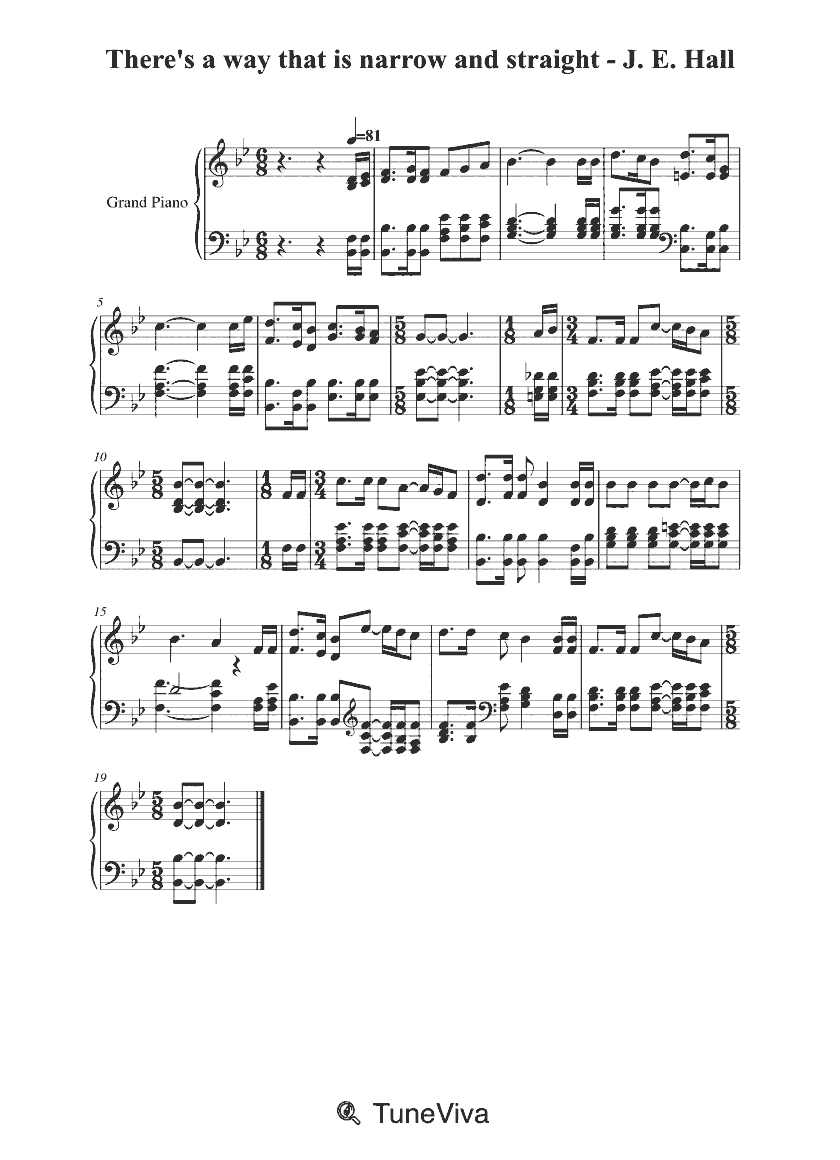
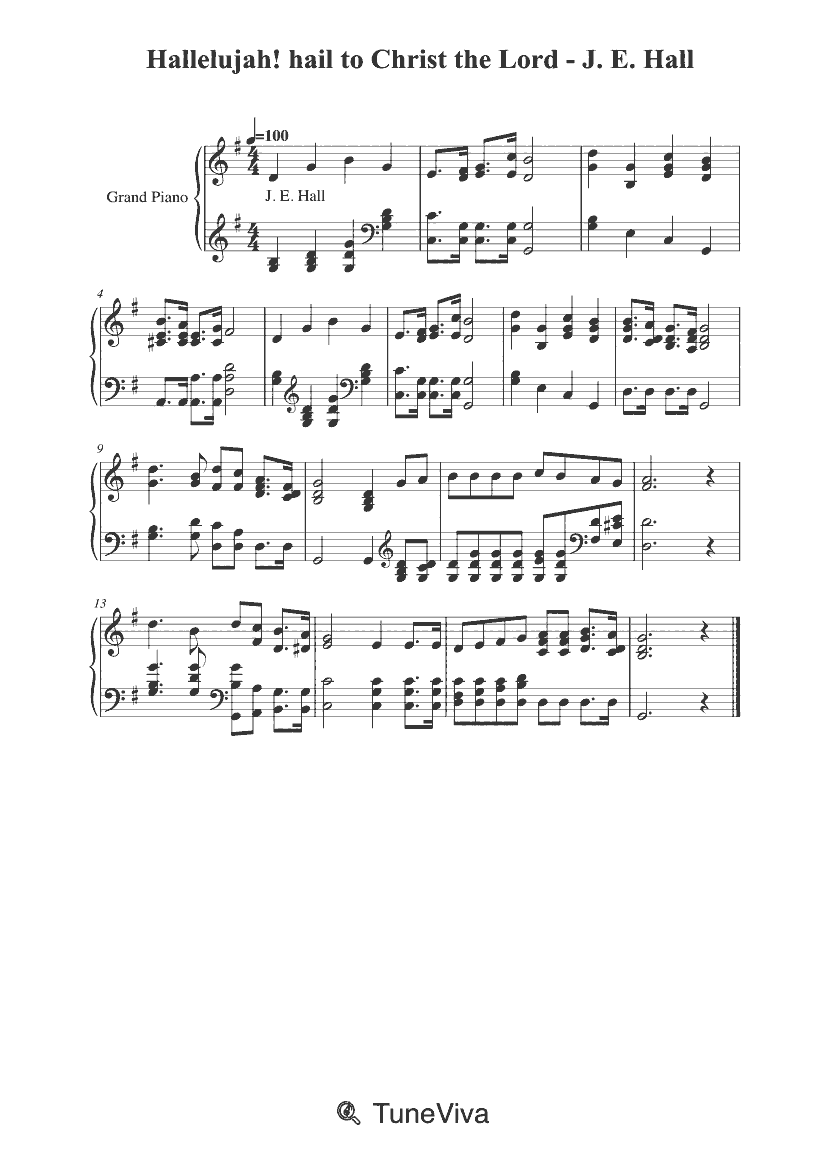
The initials are the whole signature. J. E. Hall hymnals from the 1880s and 1890s carry no first name, and the catalogue follows them: 20 scores, about 11 minutes of music and 5,717 notated notes, eight of them with lyrics. The page is unusually even. The top entry, “Hallelujah! hail to Christ the Lord”, has 11 views and the last of the fourteen listed works has three. One setting sits at complexity index 0, twelve at index 1 and seven at index 2, so the writing is mostly simple part-song with a refrain.
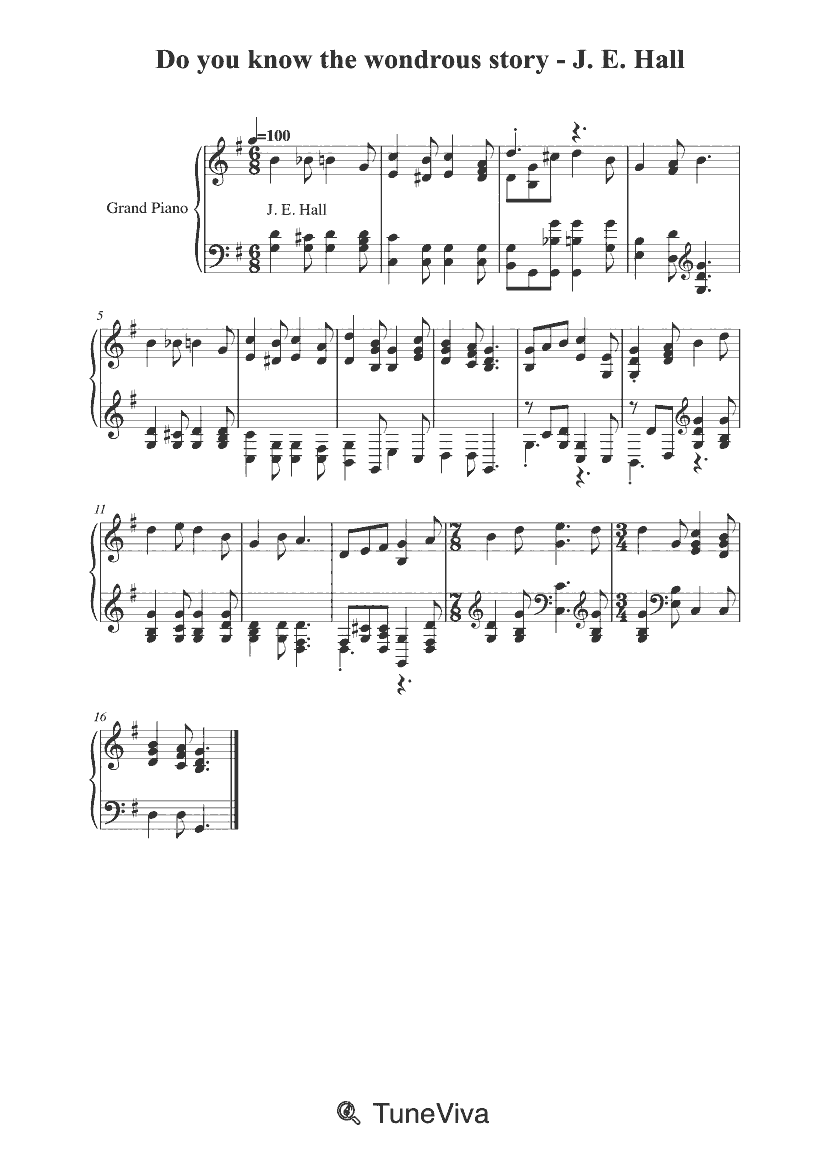
Hall’s byline belongs to the gospel-song collections of the 1880s and 1890s rather than to the denominational hymnals. R. E. Hudson’s Gospel Jewels (1890) prints “Hallelujah! hail to Christ the Lord” and “Do you know the wondrous story” under the name, and E. O. Excell’s Triumphant Songs carries “I am glad that Jesus loves me”. Those books were compiled for evangelistic services and Sunday schools, and the people credited in them were usually the writers of the words, not the makers of the tunes.
That distinction matters on this page. Hymnological indexes list J. E. Hall among the authors of gospel hymn texts and expand the initials to Jane E. Hall of Battleboro, Vermont, whose verses appeared in Ira D. Sankey’s Sacred Songs and Solos in 1881 over the signature “J. E. H.”. The catalogue, by contrast, files all twenty settings under Hall as composer, which is how hymnal author credits are often transcribed into music databases.
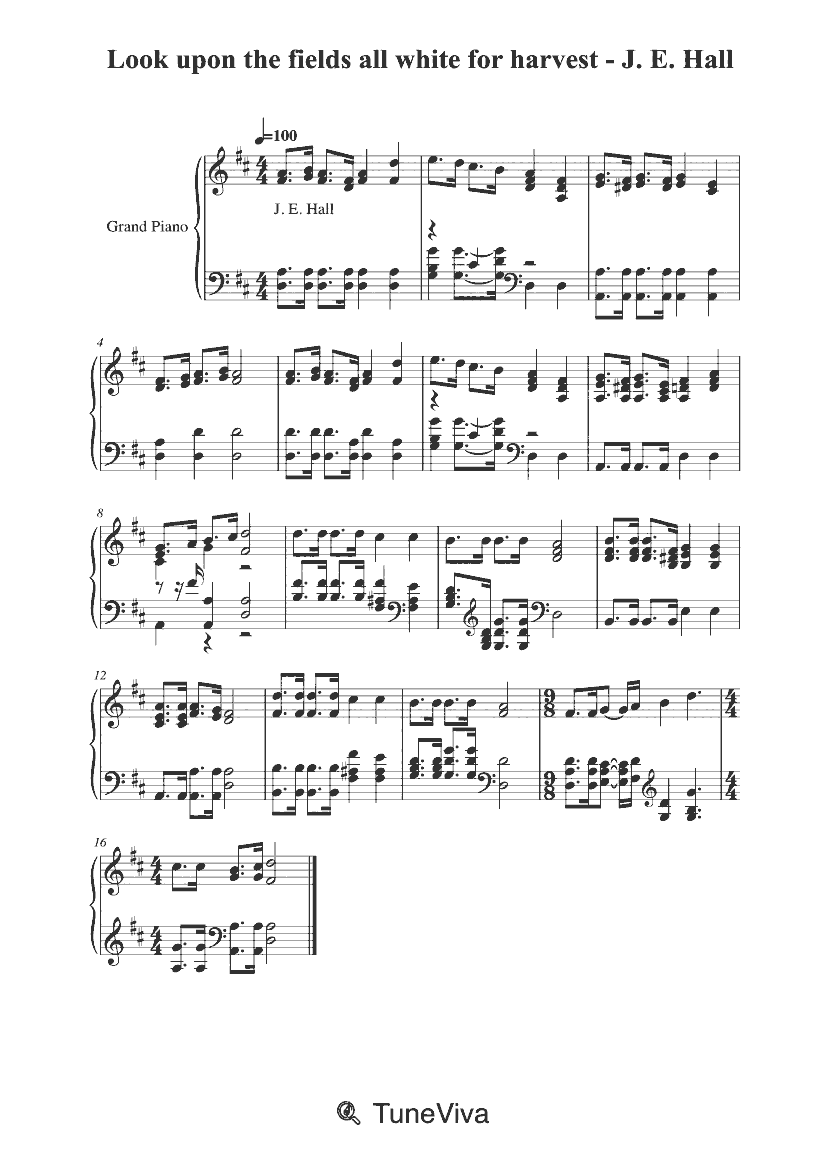
What survives is a body of short, refrain-driven songs: the woman at the well in “At the well-side worn and weary”, the pilgrim in “Pilgrim traveling on life’s highway”, the harvest field in “Look upon the fields all white for harvest”. The texts are practical and unsentimental, built for a chorus the congregation can pick up after one verse, and the catalogue’s eight lyric-bearing entries are the ones where that shape is easiest to see.
These settings live or die on the refrain. Take the stanza at a walking pace, then broaden slightly for the chorus rather than speeding up, which is the usual mistake with this repertoire. The harmony is largely block chordal, so the interest comes from accent and diction: consonants on the beat, vowels carried through the phrase. With a small choir, keep the altos light so the tune stays on top; with a congregation, let the organ double the melody and drop the inner parts altogether.
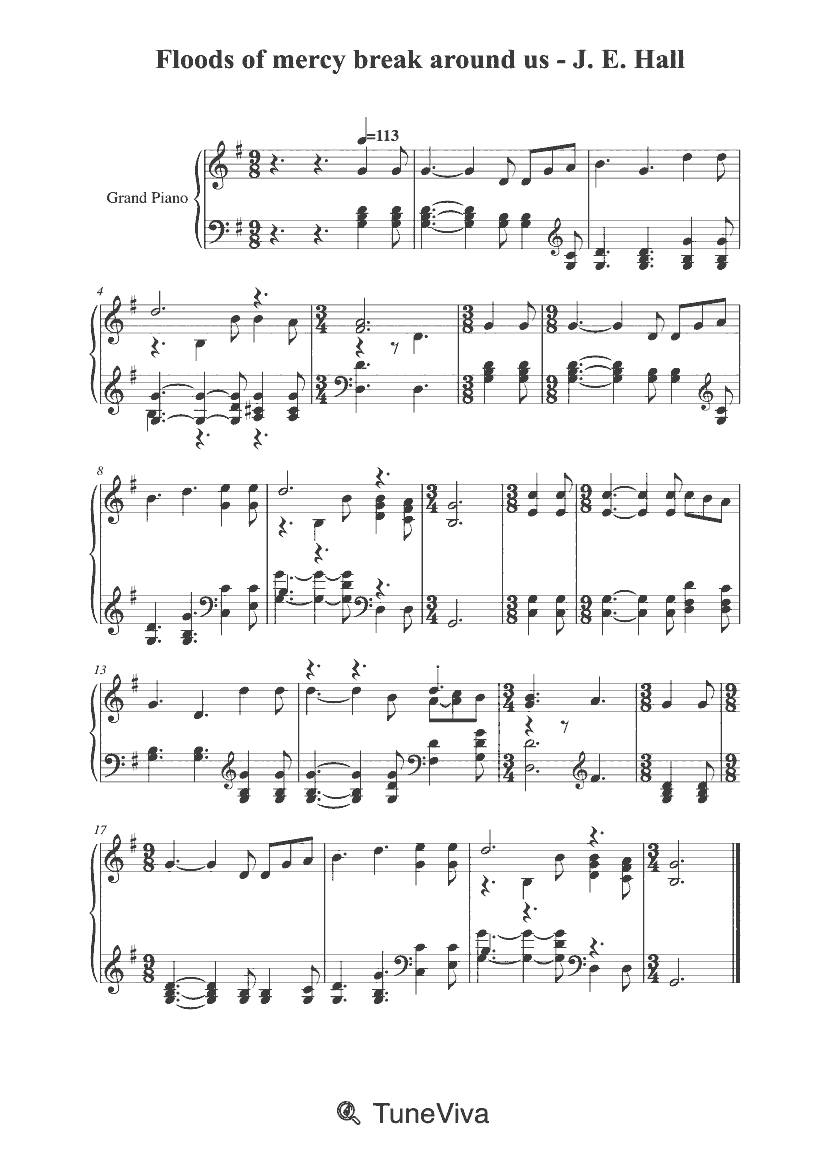
The most-viewed score here at 11 views; printed in Gospel Jewels (1890) as "Hail to Jesus", where the opening line runs "Hallelujah, hail to Christ the Lord" and the chorus turns to "Hallelujah, hail to Jesus".
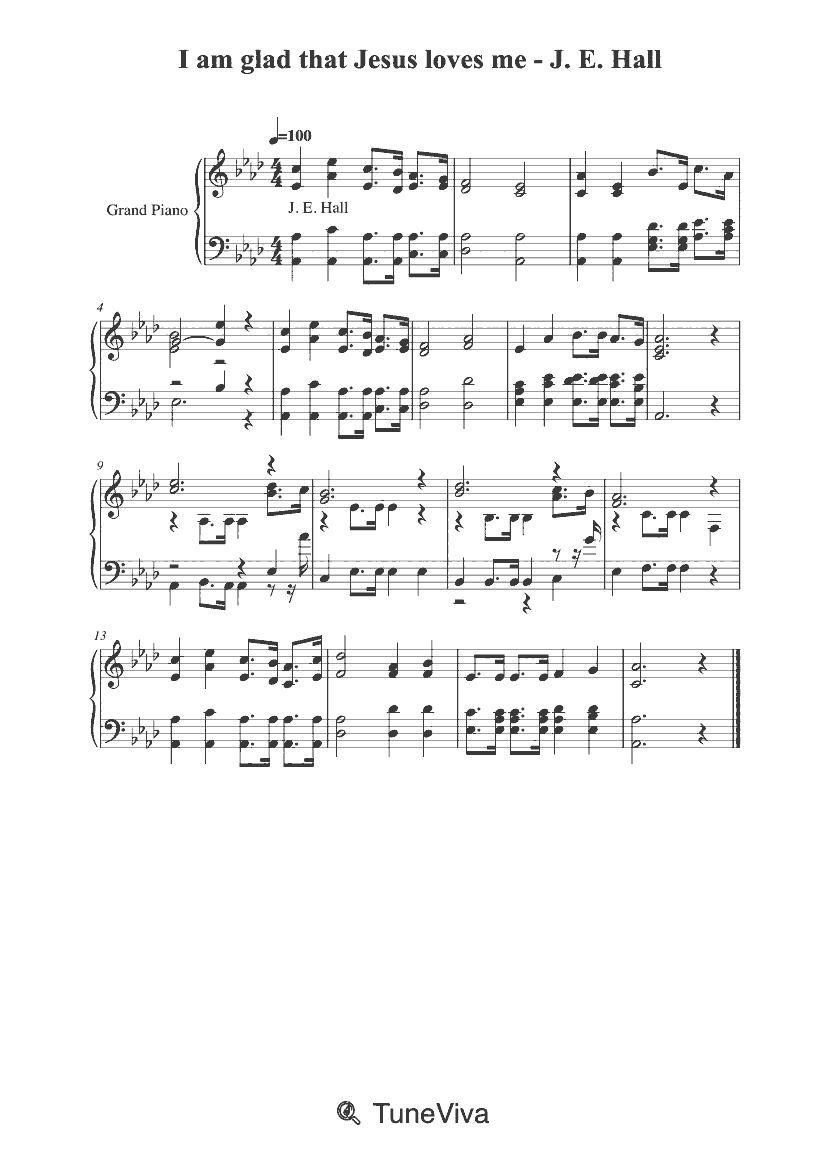
Found in E. O. Excell’s Triumphant Songs with Hall’s name against it and a copyright line for the compiler.
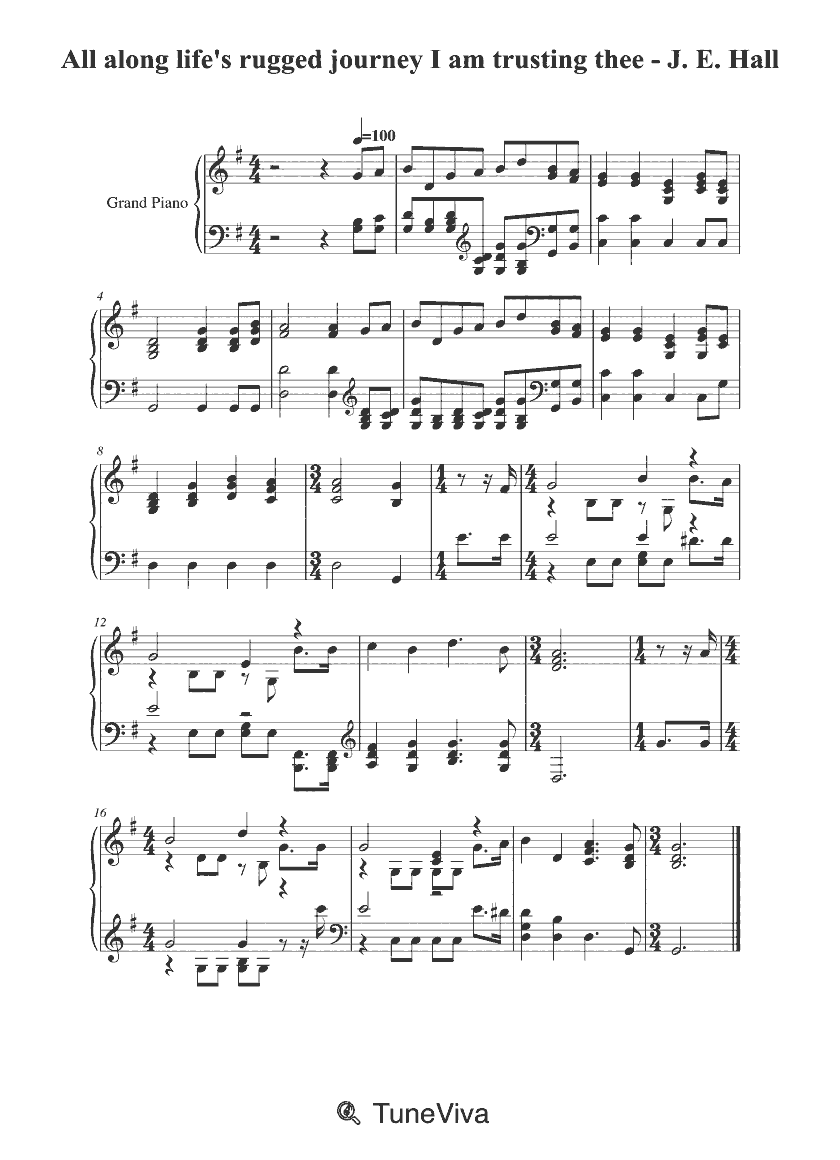
A trust-and-pilgrimage text; at nine views it shares second place with the next entry.
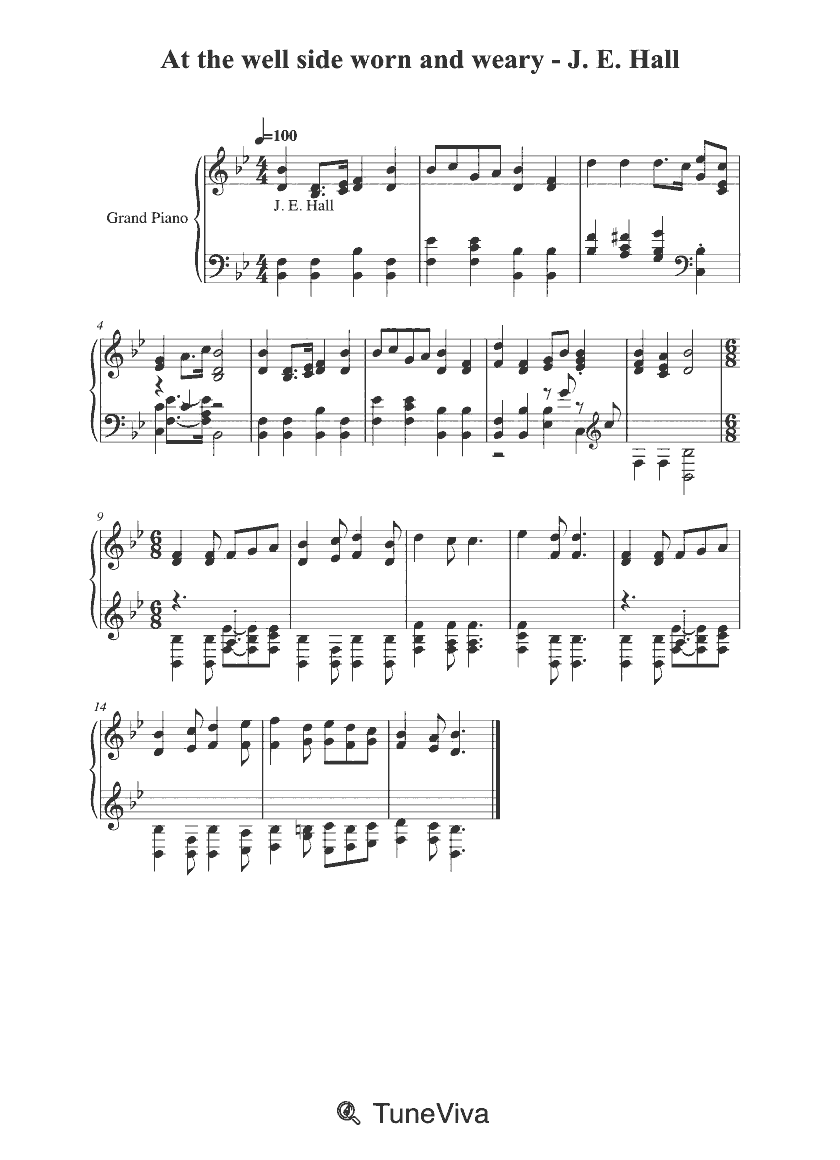
A retelling of the Samaritan woman’s encounter at the well, with the refrain beginning “Whosoe’er this water drinketh”.
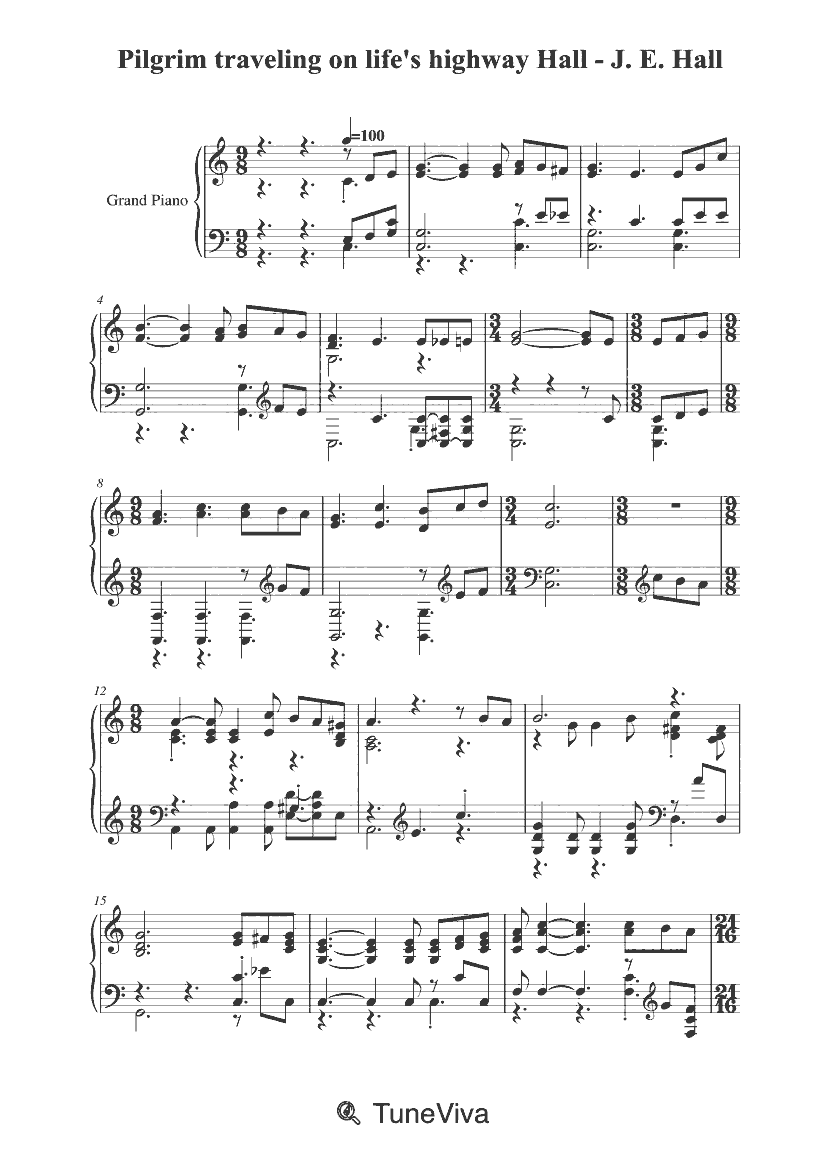
One of several pilgrimage texts in the group; the trailing “Hall” is a catalogue disambiguation, not part of the title.
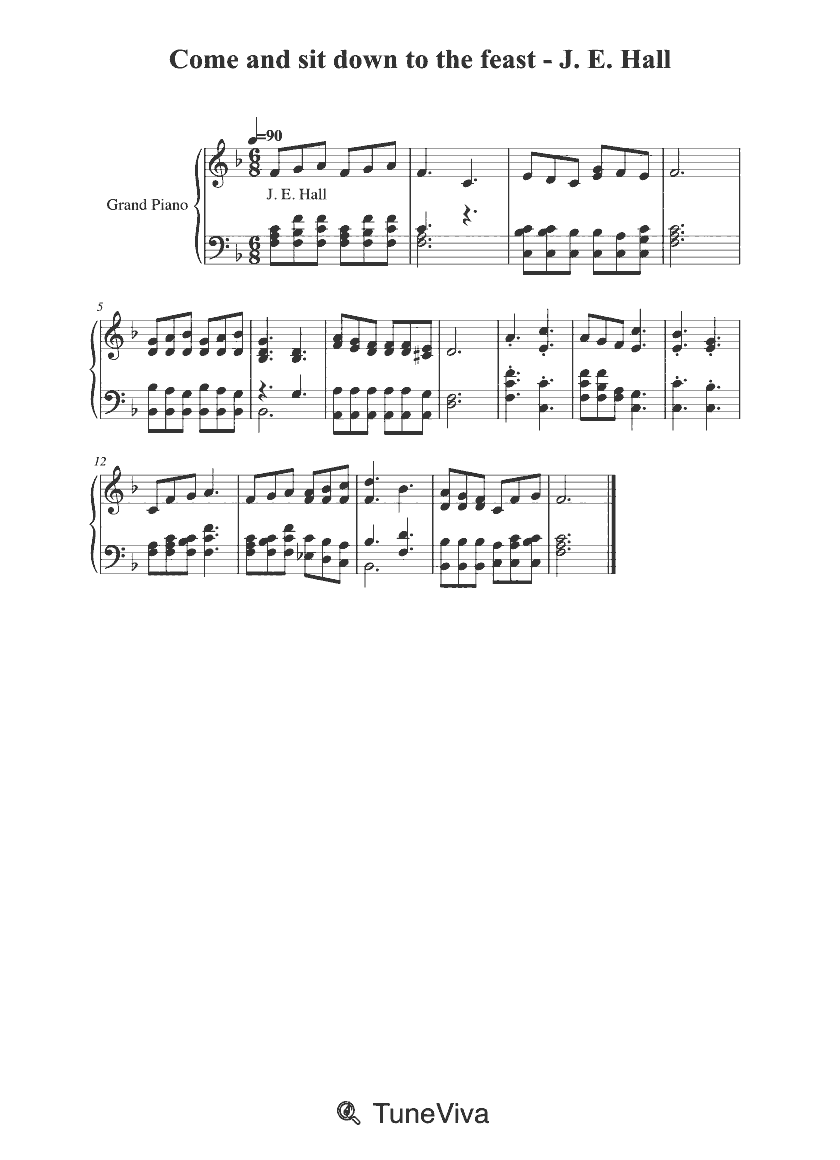
An invitation hymn built on the gospel banquet, short enough to serve as an opening chorus.
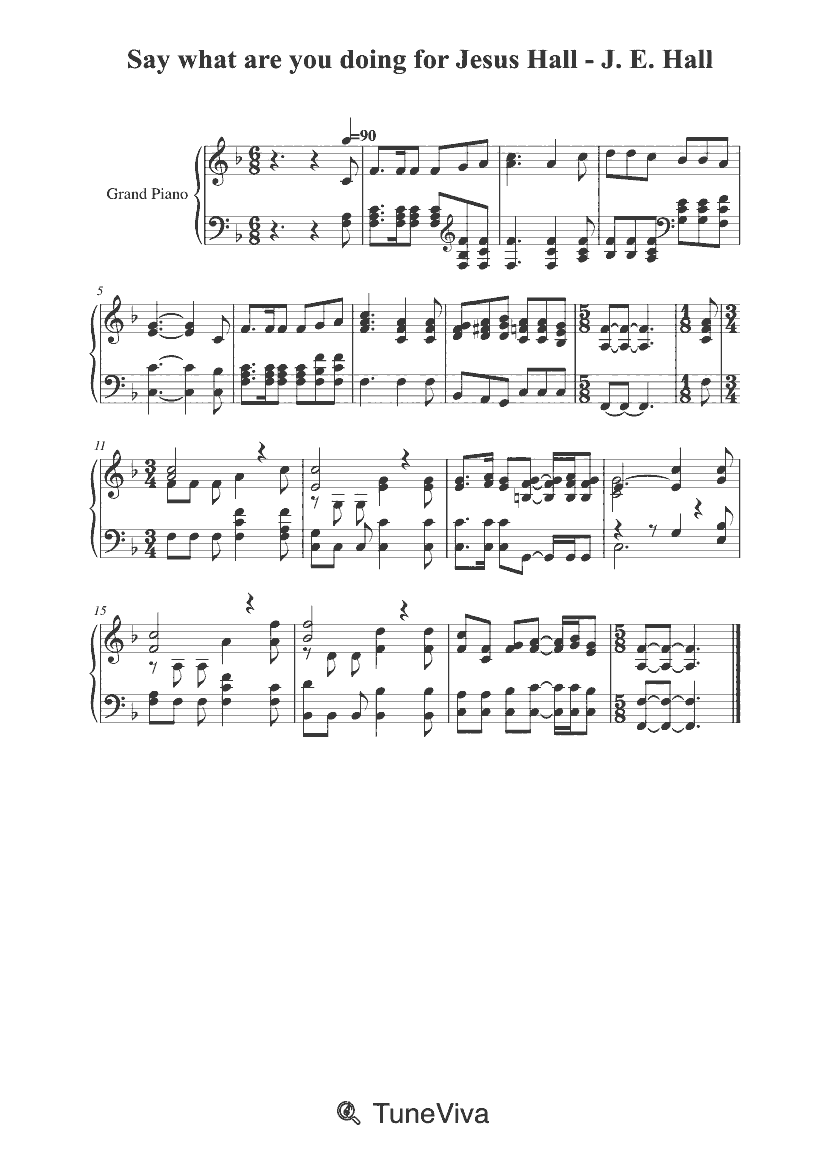
A revival question-song of the kind used to close a service; four views.
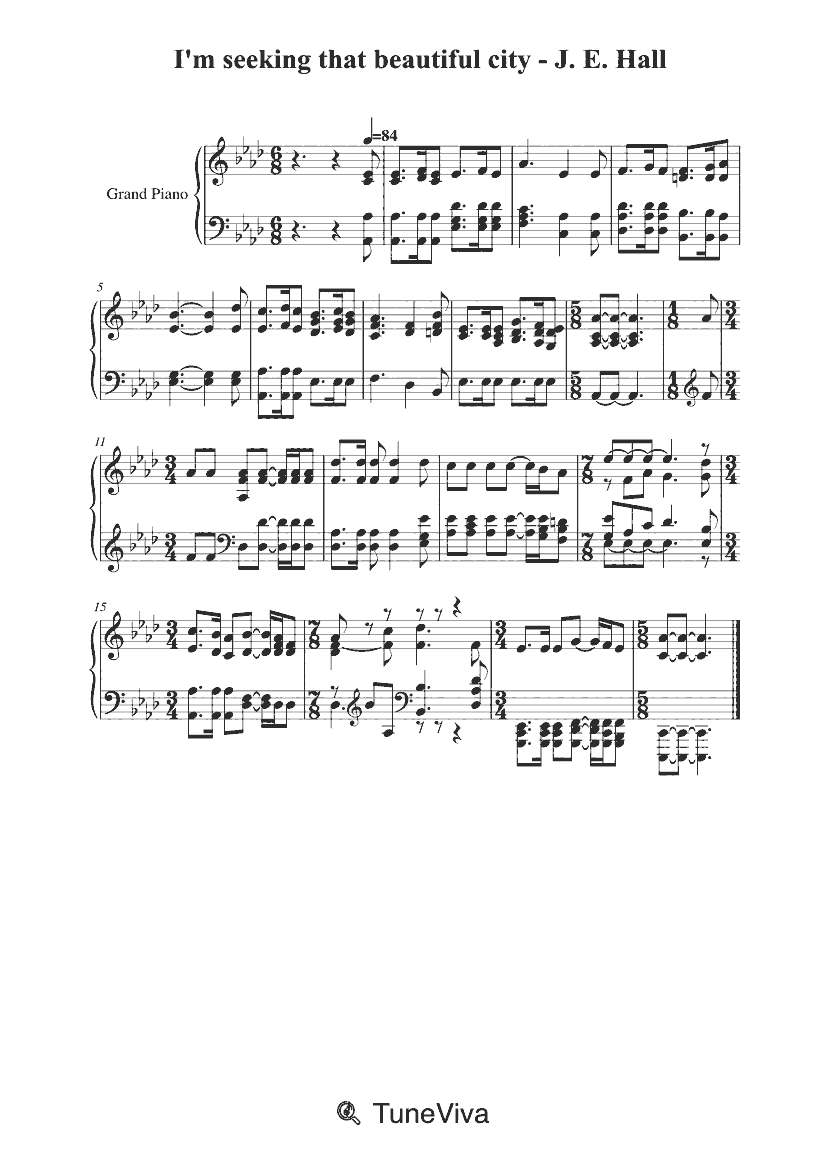
A heaven text, matching the “beautiful city” imagery common to the gospel songbooks of the period.
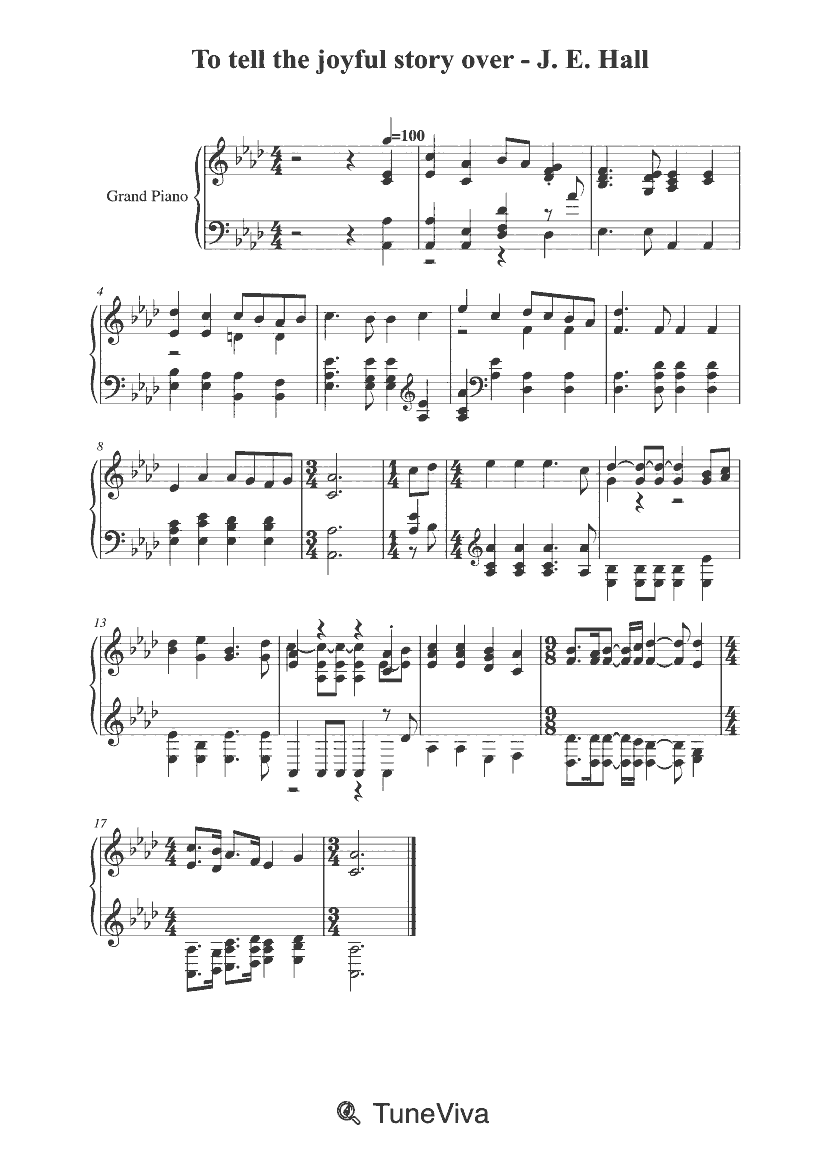
A narrative chorus about repeating the gospel story, the sort of number that closes a song service.
A short sanctification hymn, one of seven entries filed at complexity index 2.
Twenty, about 11 minutes of music and 5,717 notated notes. Eight of the entries include lyrics.
Hymnological sources credit Hall with the texts, and the gospel songbooks of the 1880s and 1890s print the name among their authors. The catalogue lists Hall as composer for all twenty scores, which reflects how those credits were transcribed rather than a separate composing career.
In compiled gospel collections rather than in a single author’s book: Gospel Jewels, edited by R. E. Hudson in 1890, and E. O. Excell’s Triumphant Songs, which ran to several numbers from 1887.
That was the convention in the gospel songbooks, where writers often signed with initials or a pen name. The catalogue keeps the form printed in its sources instead of guessing at a forename.
Catalog editions and arrangements attributed to J. E. Hall.