classical
1 tracks
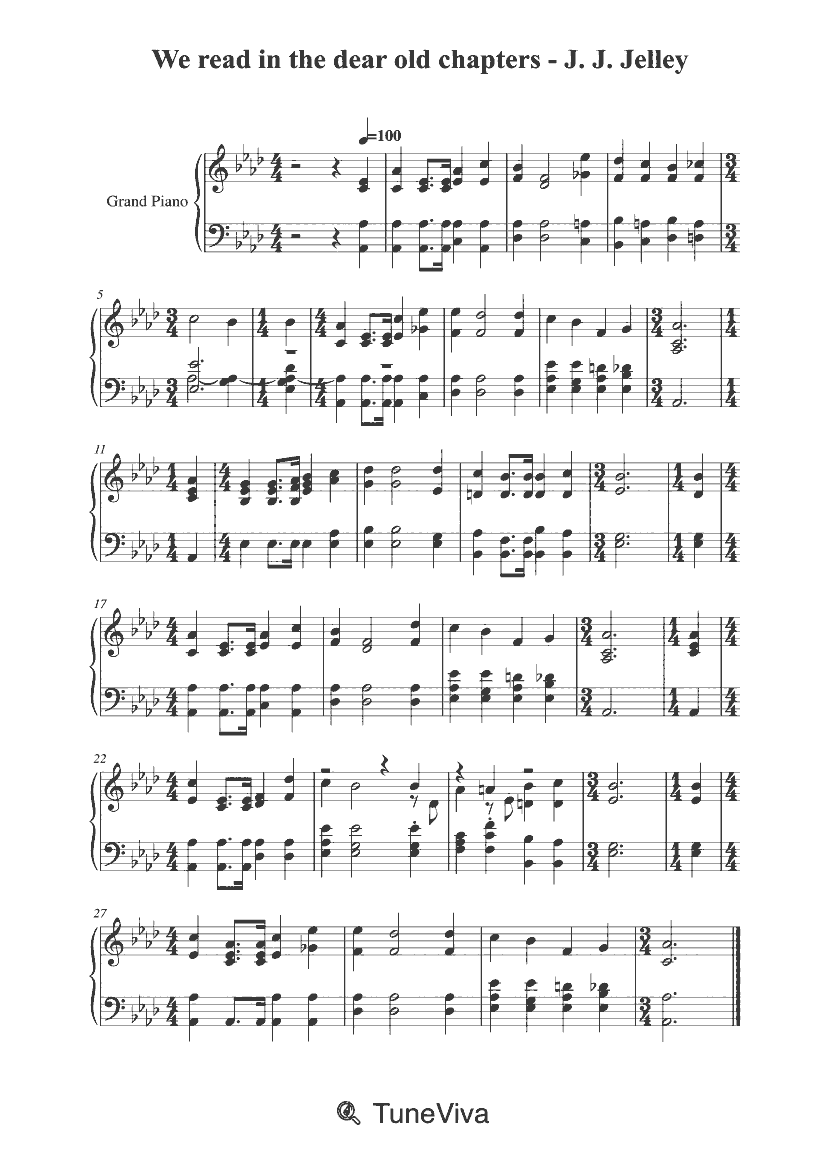
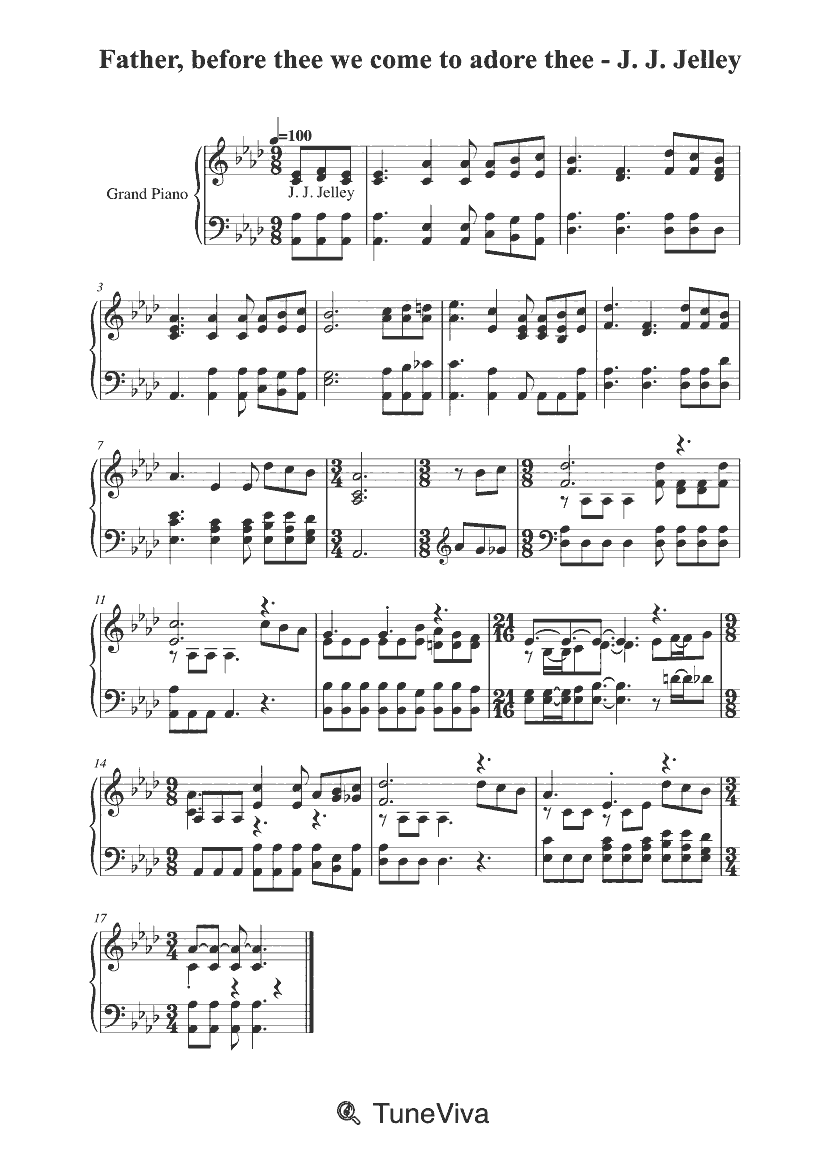
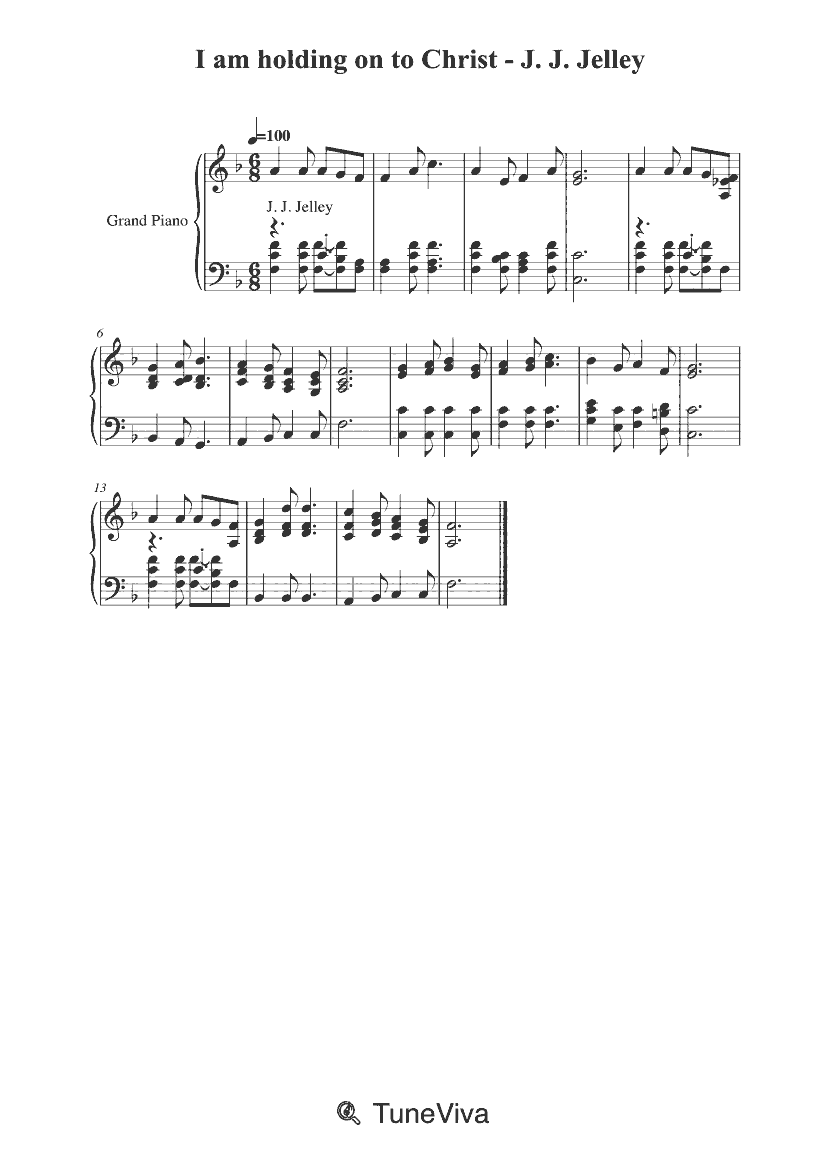
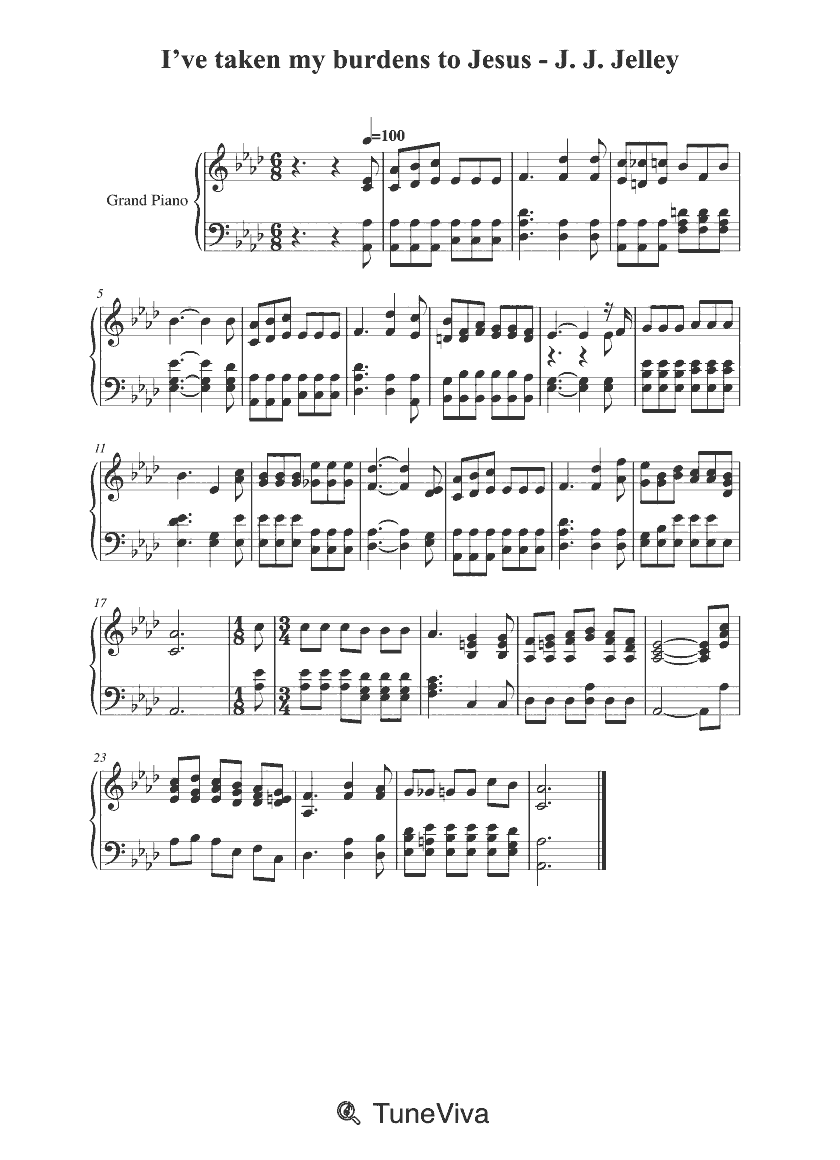
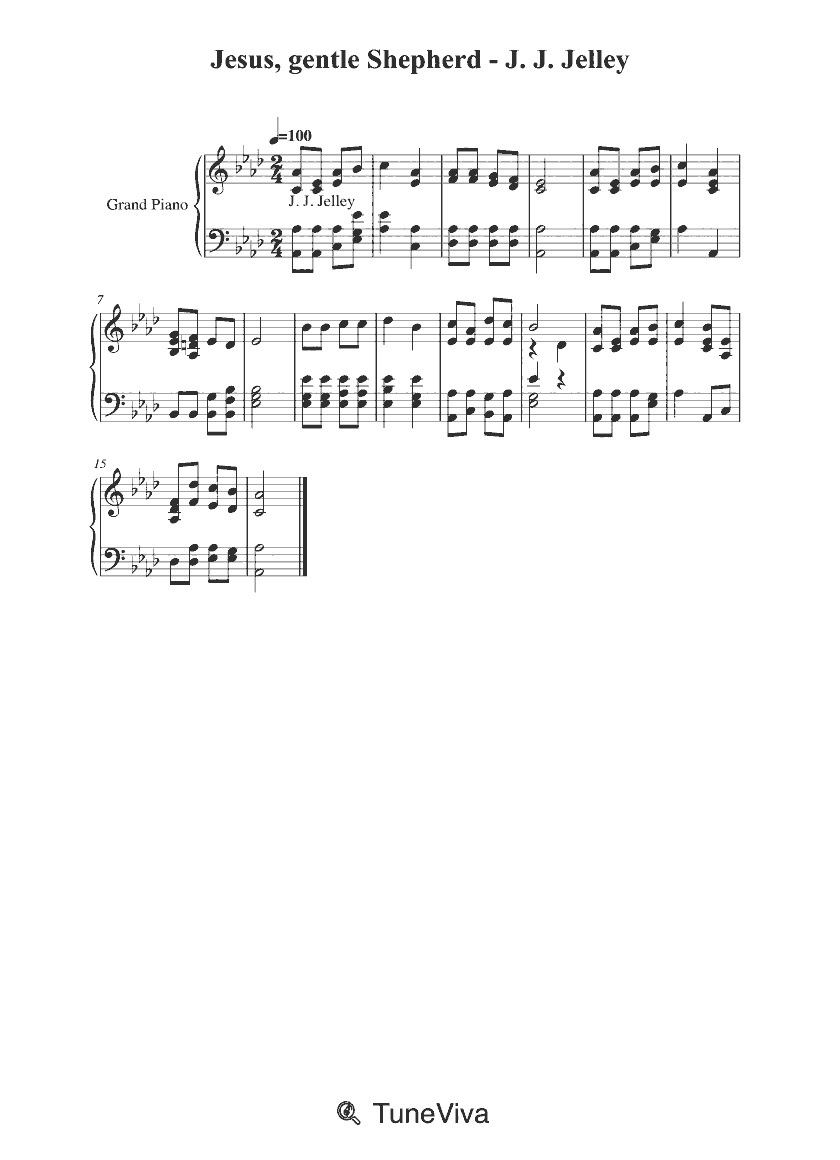
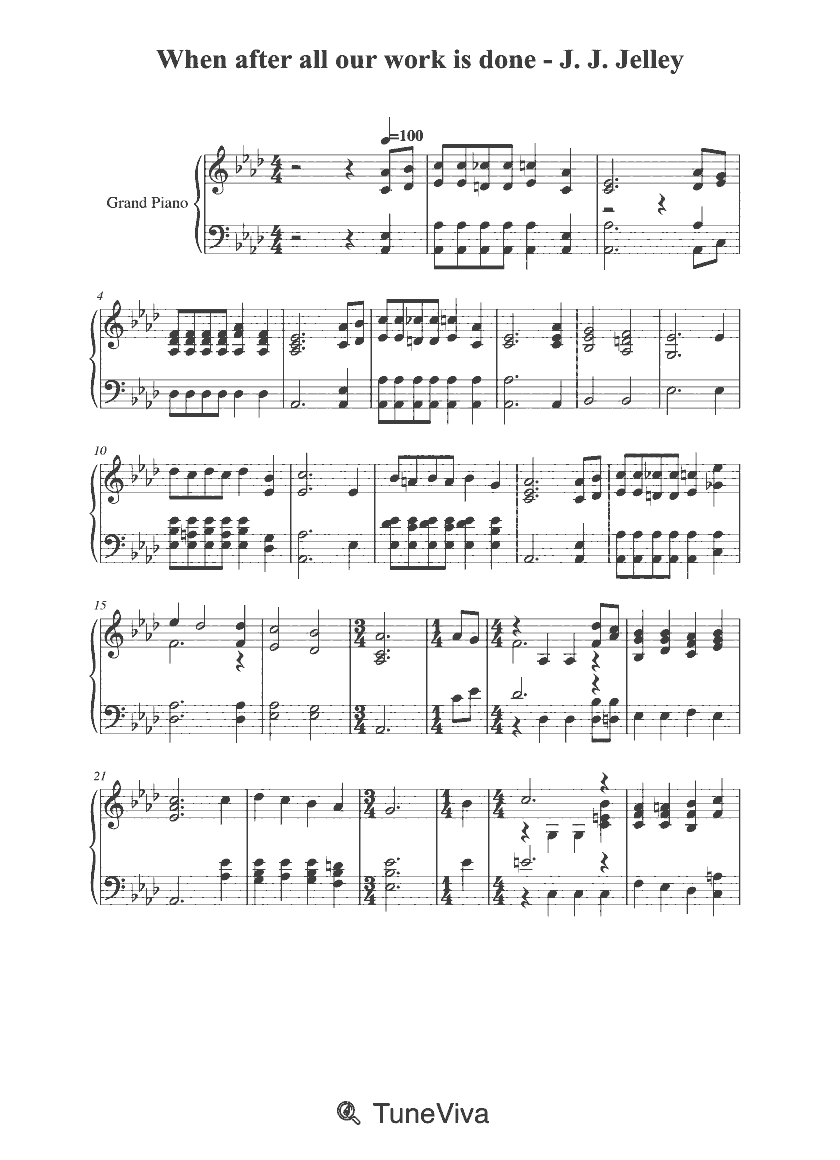
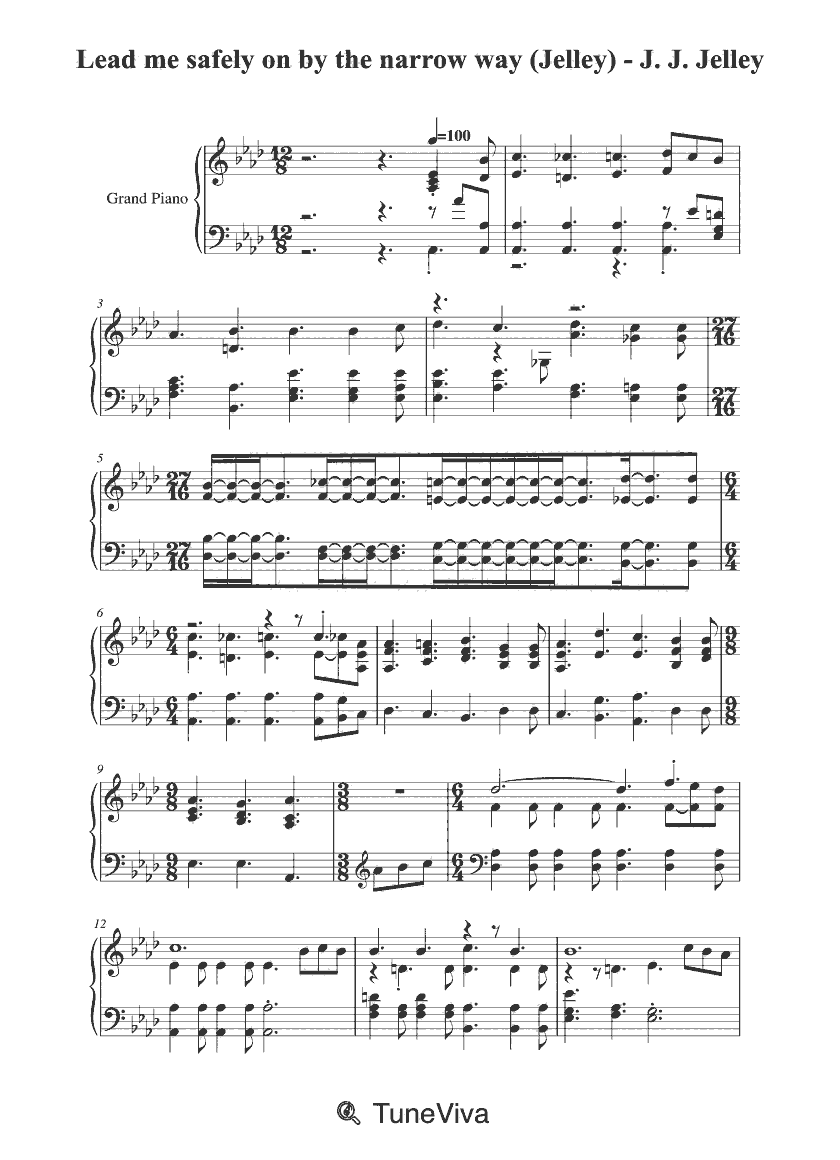
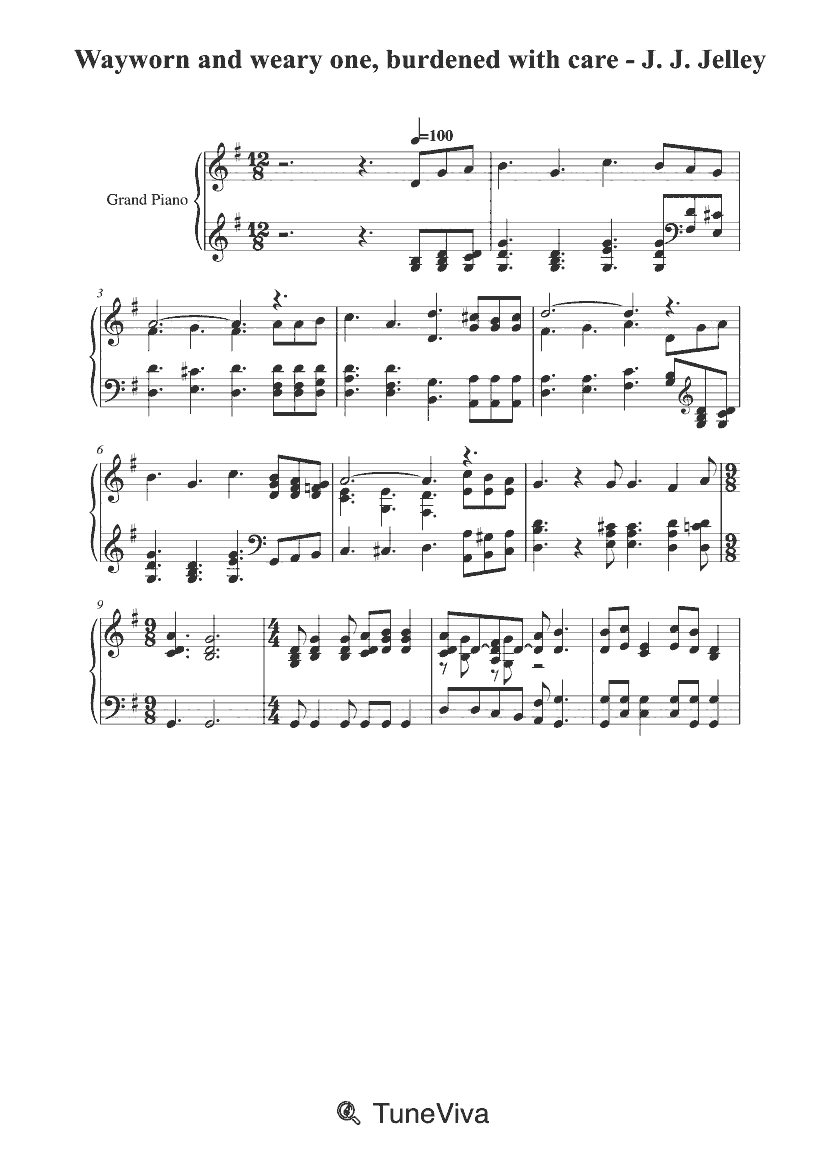
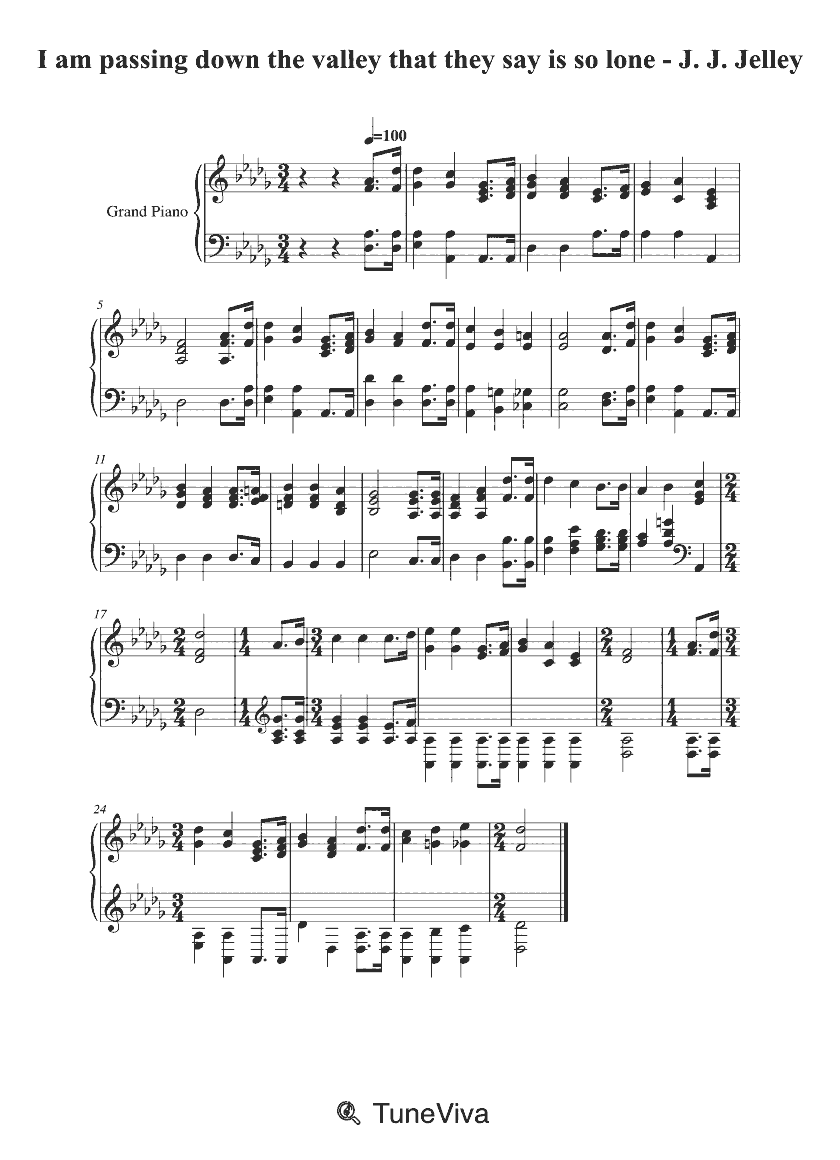
J. J. Jelley belongs to the Ohio gospel-song circuit of the 1890s, and the catalogue holds thirty-five of his pieces: about nineteen minutes of music and 9,628 notated notes. Only thirteen entries carry lyrics, although most titles are first lines of hymns, and the difficulty is concentrated at index 1, with twenty-eight scores there and seven at index 2. Three titles share the top of the page at eight views each: I Am Passing Down the Valley, Down at the Cross and He Knows the Bitter, Weary Way. Behind them sit Come unto Me, Ye That Are Weary and a setting of Just as I Am.
The composer is James J. Jelly, whose surname the catalogue spells Jelley throughout. He was born in Hancock County, Ohio, taught harmony and voice culture at a northern Ohio university, and directed music at Findlay College; contemporaries knew him as a regional composer rather than a national figure. His main publication was Pearls of Praise, a collection of songs for the Sabbath school, the prayer meeting and other religious meetings, issued at Bluffton, Ohio, by the Amstutz Music Co. in 1893 and edited jointly with C. D. Amstutz.
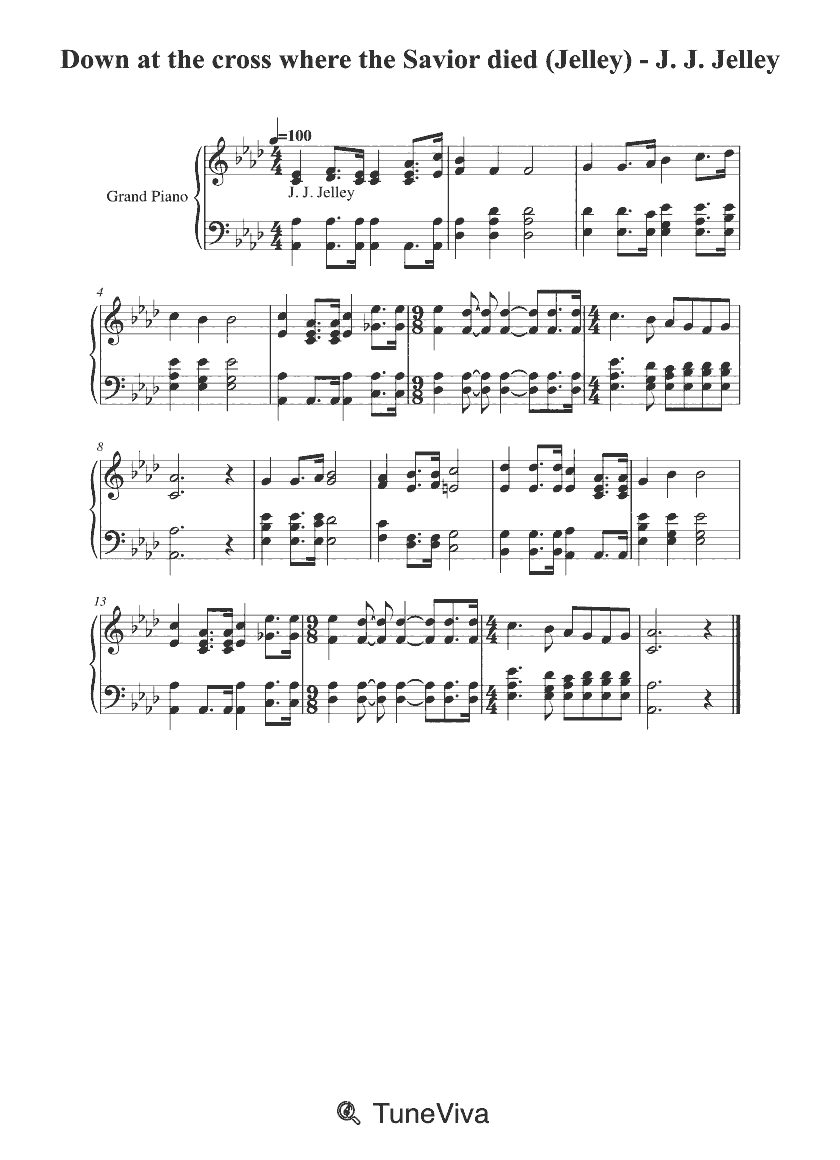
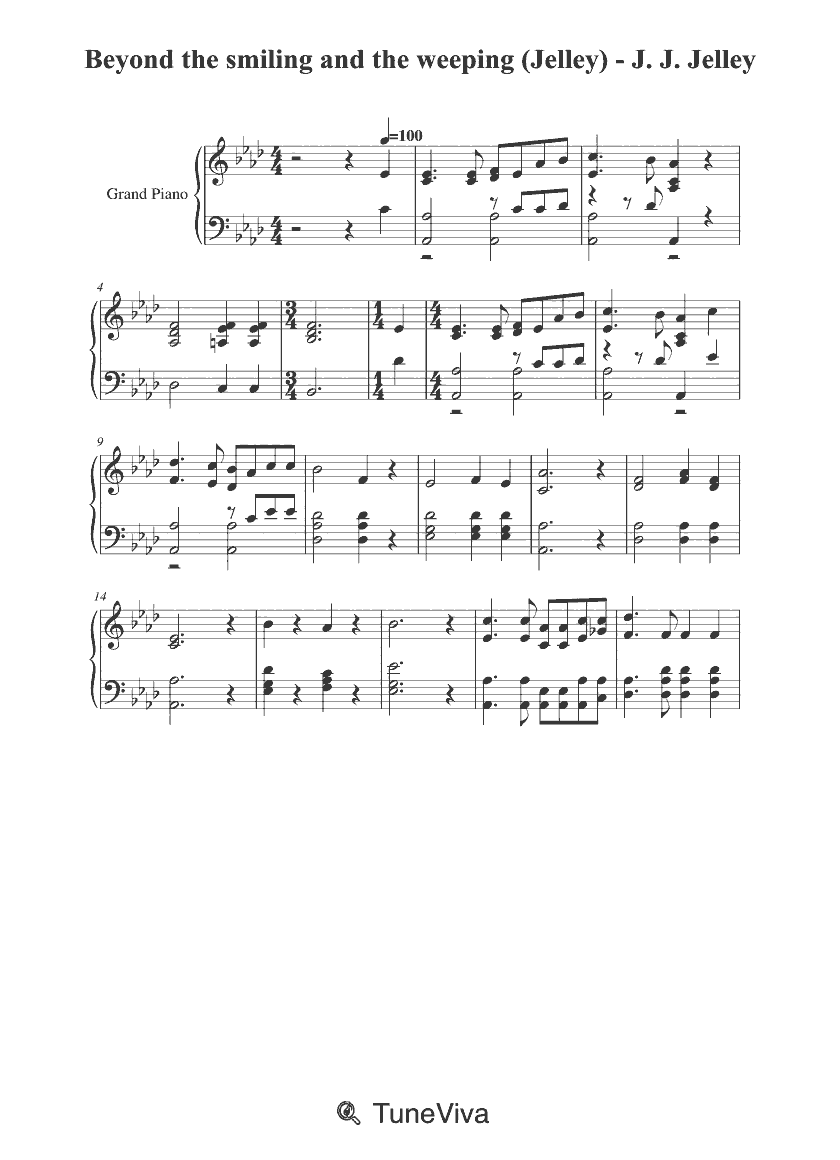
That book explains most of the catalogue. Its texts came from the pool that American Sunday-school and gospel songbooks drew on: Elisha A. Hoffman, Eben E. Rexford, Maria Straub and Violet King, alongside older hymns such as Horatius Bonar's. I Am Passing Down the Valley is listed under the heading Vale of Beulah, and its refrain repeats the name; the words are Hoffman's. Down at the Cross is also Hoffman's, and Beyond the Smiling and the Weeping is Bonar's hymn, printed in the book under the heading I Shall Be Soon. Hymnary indexes forty-four tunes under Jelley's name, nearly all from this circle.
The thirty-five entries run to about nineteen minutes, an average of roughly half a minute each. Thirteen include lyrics and all are filed as classical. Twenty-eight sit at index 1 and seven at index 2, with none at index 0, so even the plainest of these pieces assumes a part-singing choir rather than a solo voice.
These are gospel songs for a room, not concert pieces. Take the refrains at the same tempo as the verses and keep the harmony steady, because the words carry the meaning and any rubato will blur them. The alto and tenor parts move in block chords, so balance them under the tune rather than letting them swell. In the funeral and heaven hymns, resist a slower tempo: the texts are already solemn, and dragging turns them sentimental. Where a piece has no underlaid text in the file, decide the word underlay before rehearsal rather than at the keyboard.
Listed under the heading Vale of Beulah; Elisha A. Hoffman's text looks across the valley toward the promised land, and the refrain repeats the name.
Hoffman's cross-and-fountain text in Jelley's setting; the parenthetical surname separates it from other tunes for the same words.
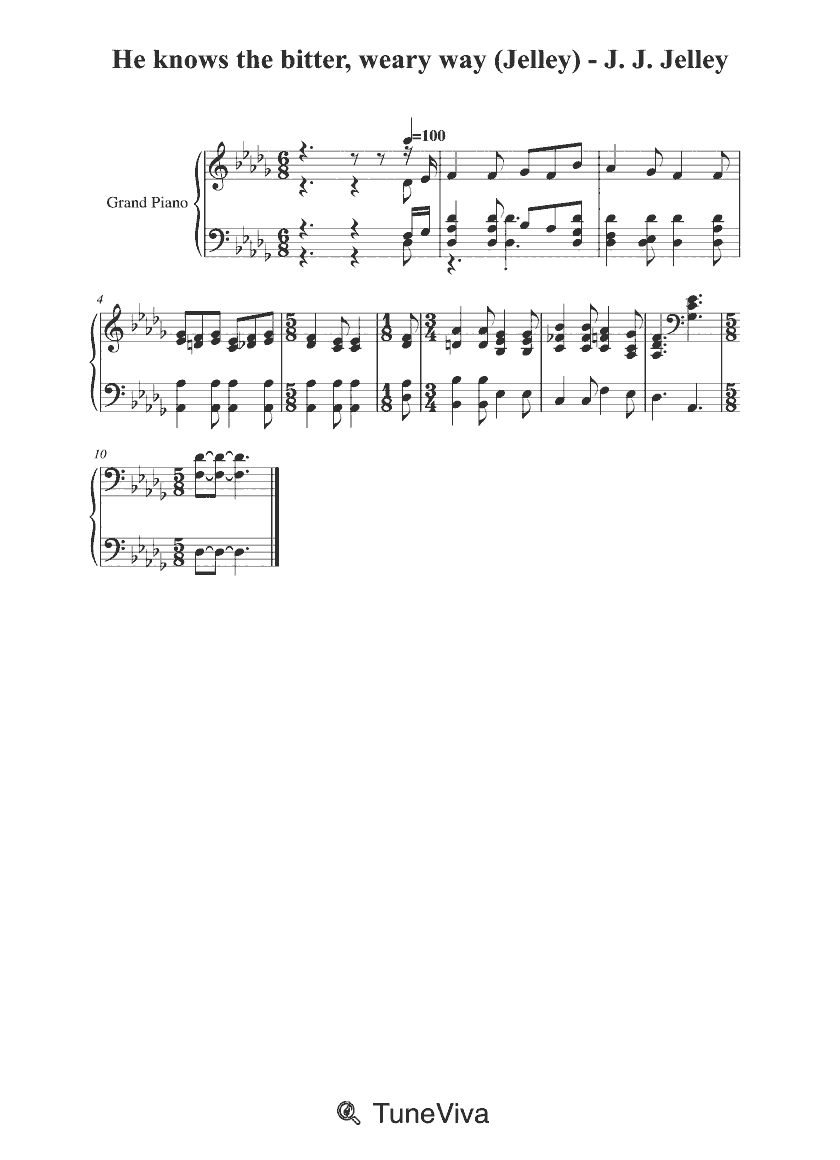
A hymn of divine sympathy: the title states the argument, and the stanzas apply it to different kinds of sorrow.
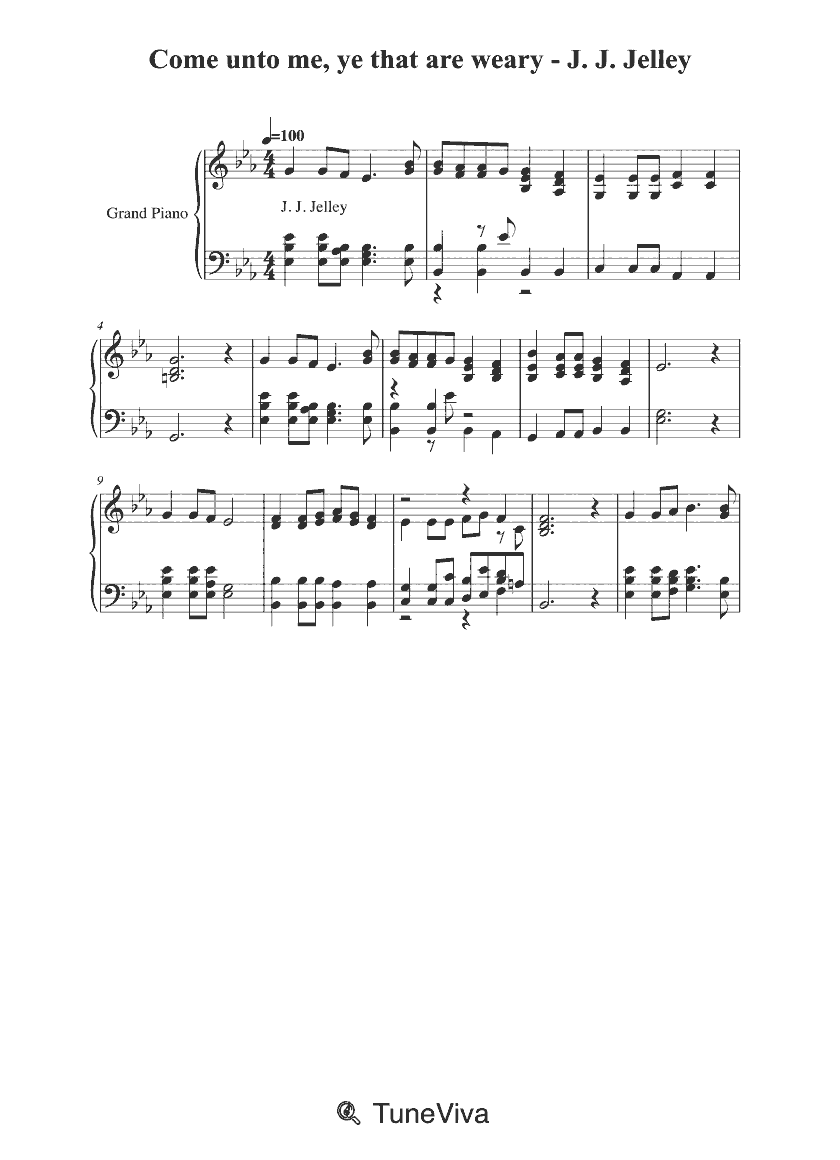
An invitation on Matthew 11:28, one of several gospel invitations in the collection.
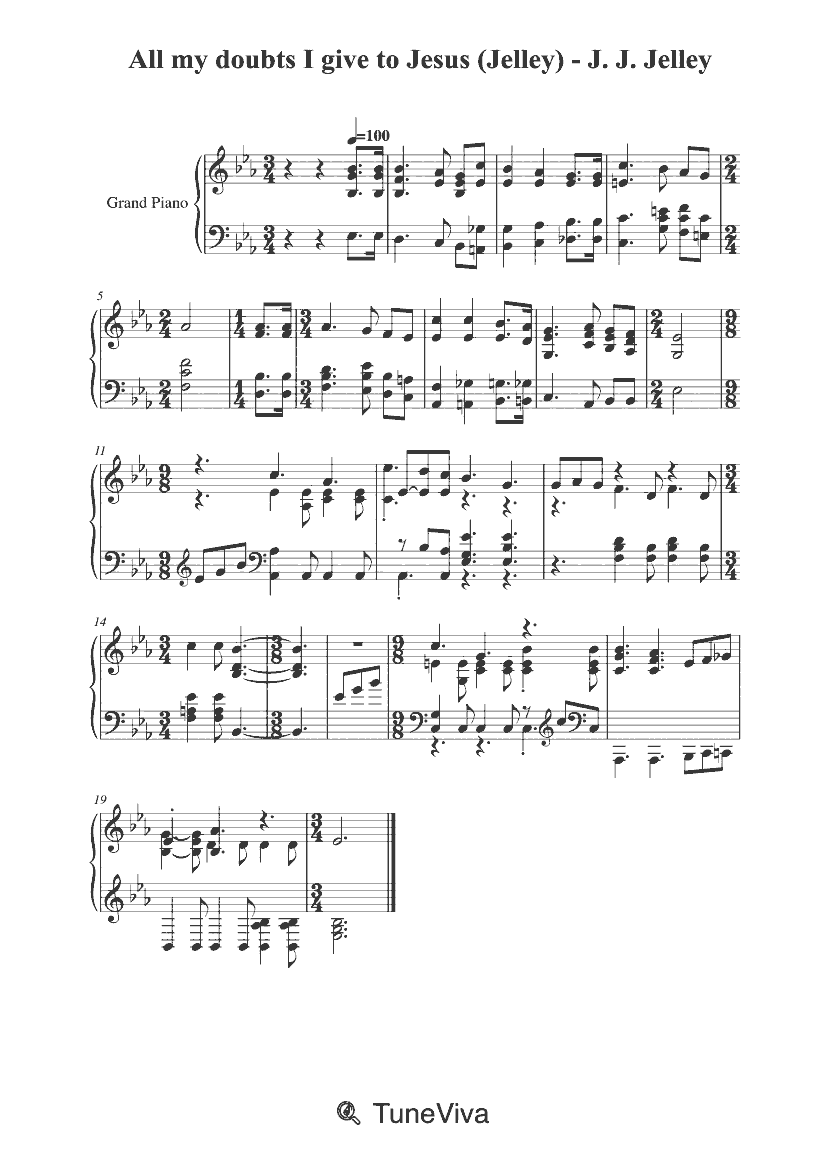
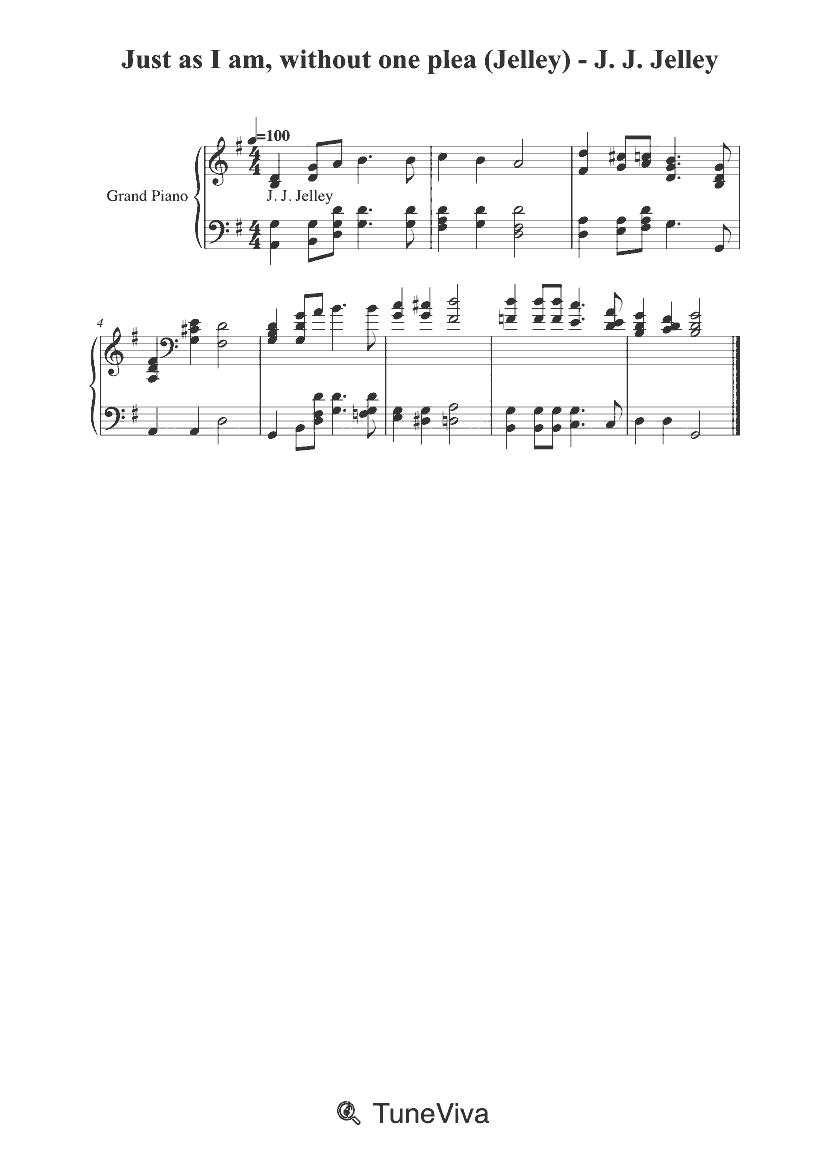
A surrender hymn in which each stanza hands over one more burden; the catalogue keeps Jelley's surname in parentheses.
Eben E. Rexford's text on 1 John 4:7, printed in Pearls of Praise as The Unfailing Love with a refrain on the comfort of the words.
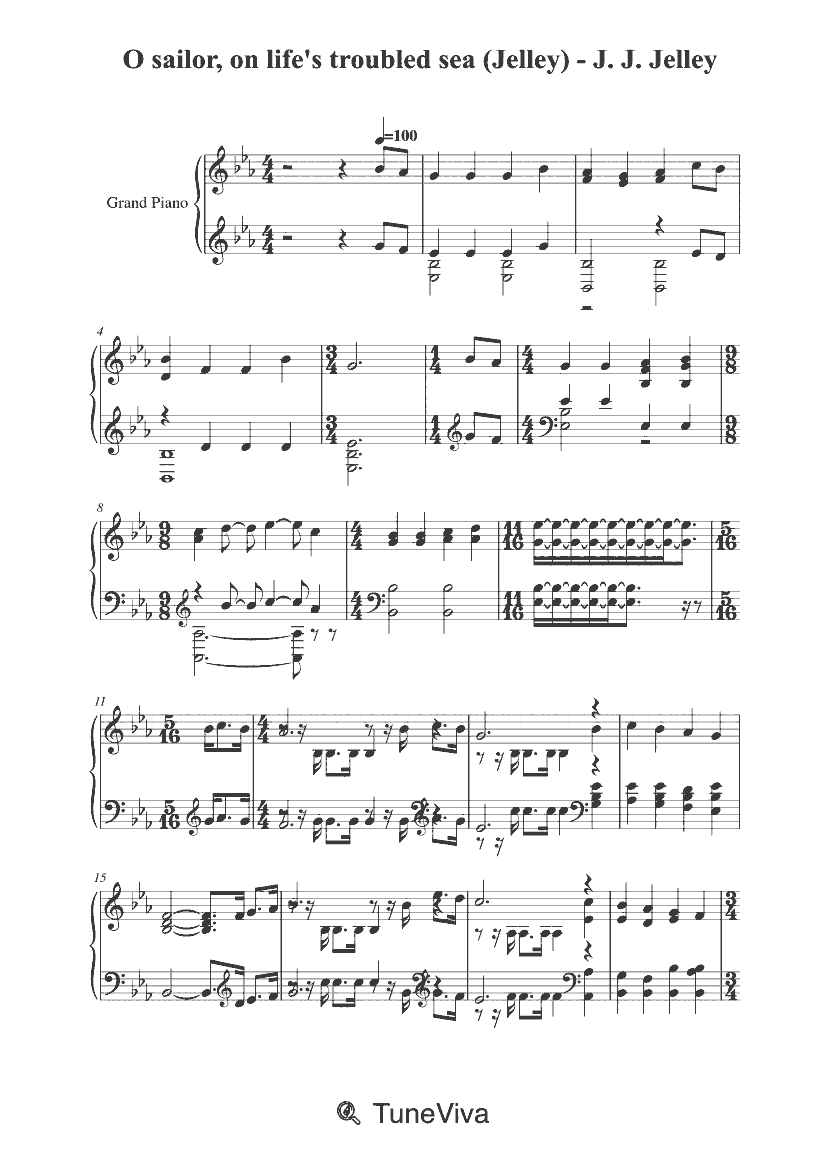
A nautical invitation, addressing the sailor directly and offering the harbour rather than describing it.
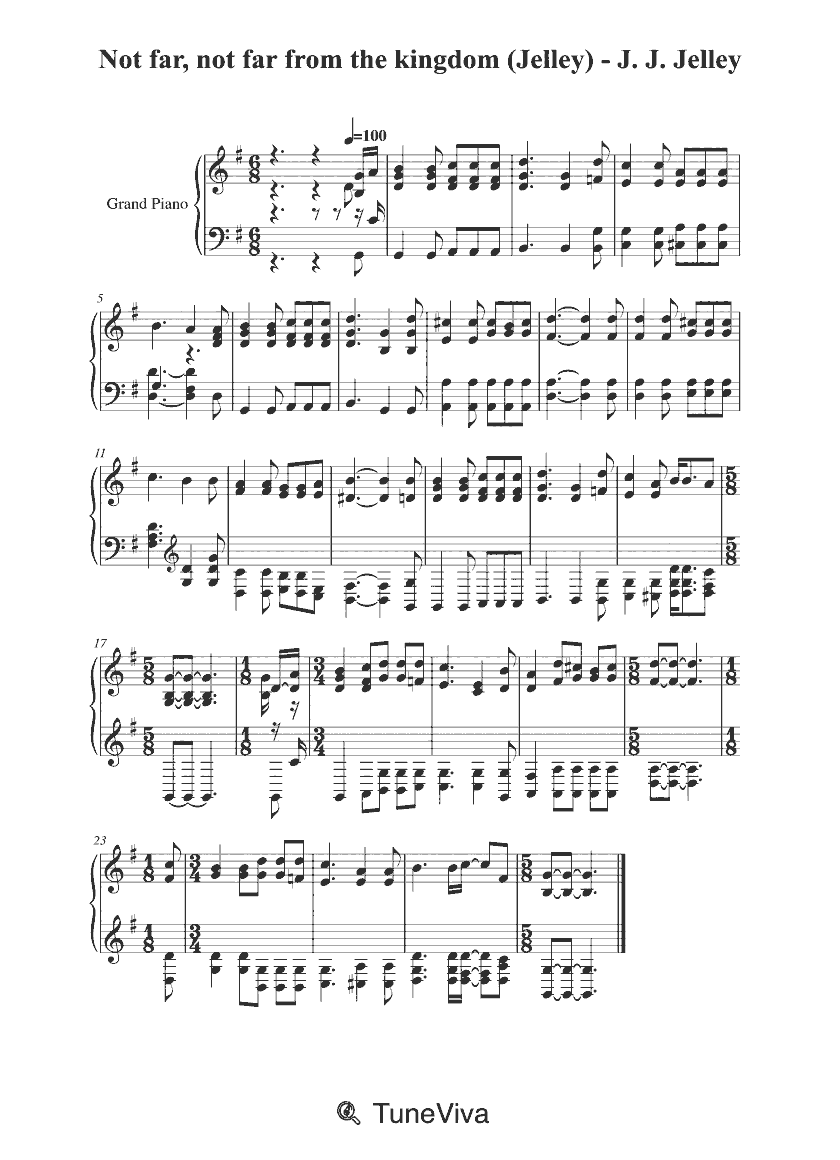
An evangelistic warning built on the phrase 'not far', which turns from encouragement to alarm across the stanzas.
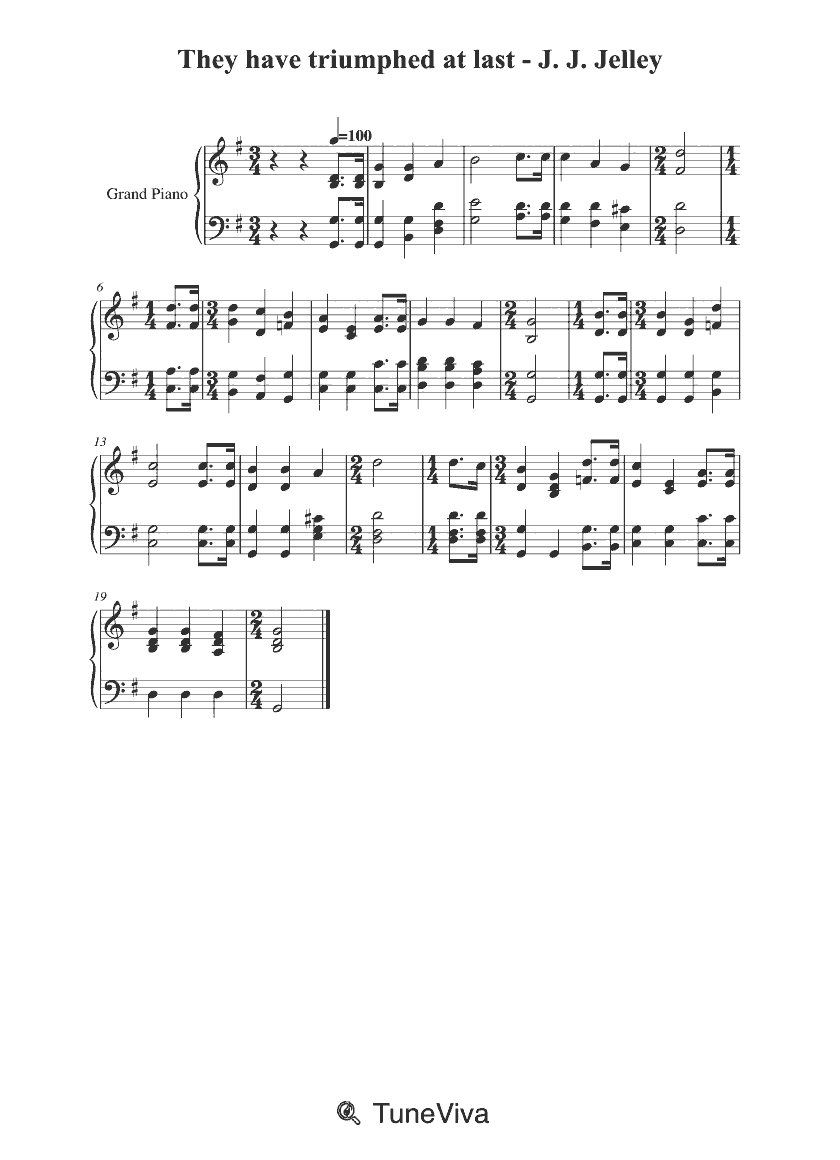
Reads as a funeral or memorial hymn, the only entry here that looks backward at a completed life rather than forward to conversion.
Horatius Bonar's heaven hymn, printed in Pearls of Praise under the heading I Shall Be Soon.
Thirty-five, about nineteen minutes of music and 9,628 notated notes. Thirteen of the entries carry lyrics.
Both appear. The catalogue uses Jelley; the composer is usually recorded as James J. Jelly, and reference works note the alternative spelling of the surname.
A collection of songs for the Sabbath school, prayer meeting and other religious meetings, published at Bluffton, Ohio, in 1893 by the Amstutz Music Co. and edited by Jelley with C. D. Amstutz.
Twenty-eight entries sit at index 1 and seven at index 2, so the collection is weighted toward part-writing with moving inner voices. The index measures notation density, not the difficulty of the words.
Catalog editions and arrangements attributed to J. J. Jelley.