classical
2 tracks
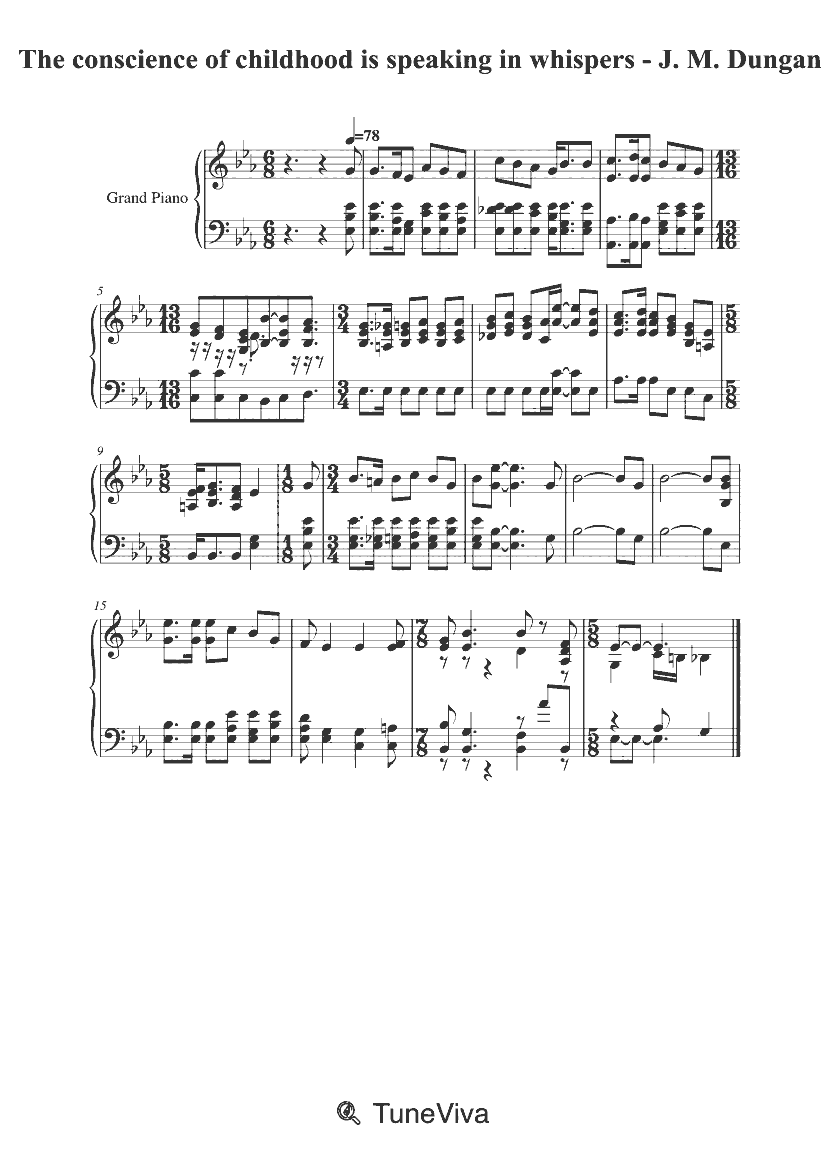
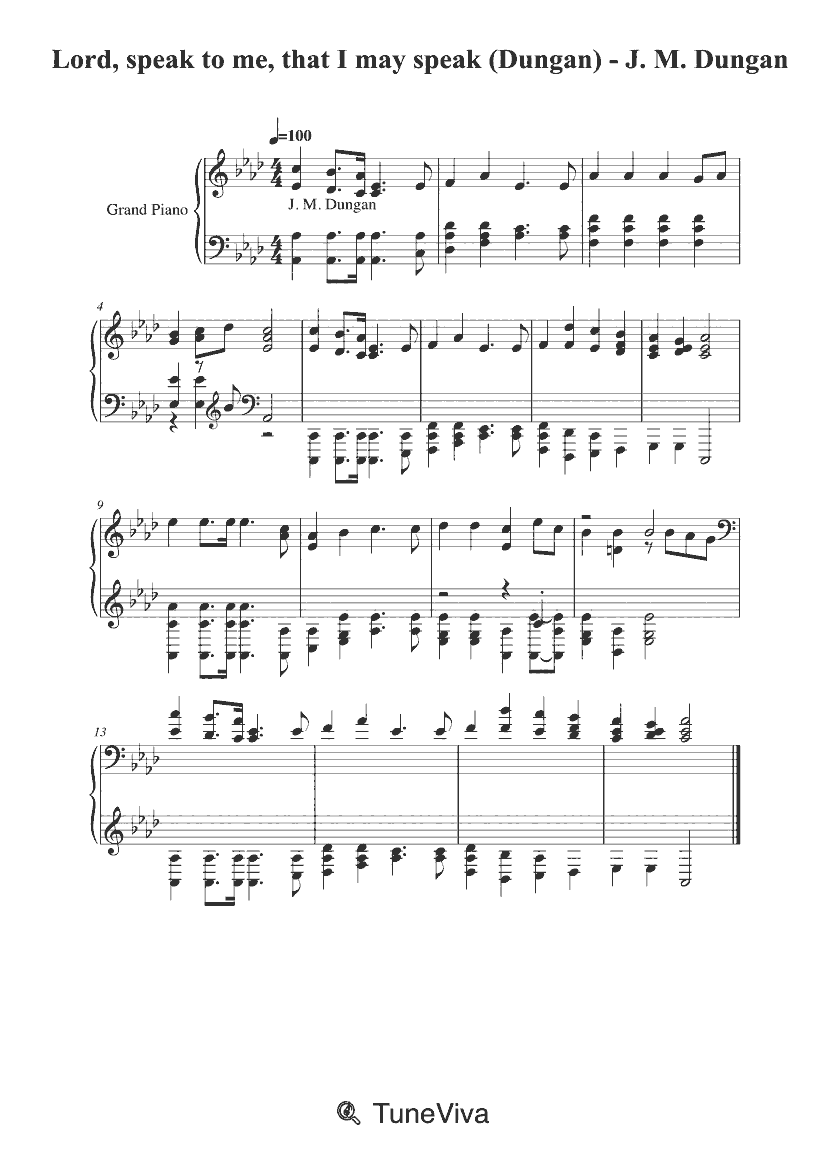
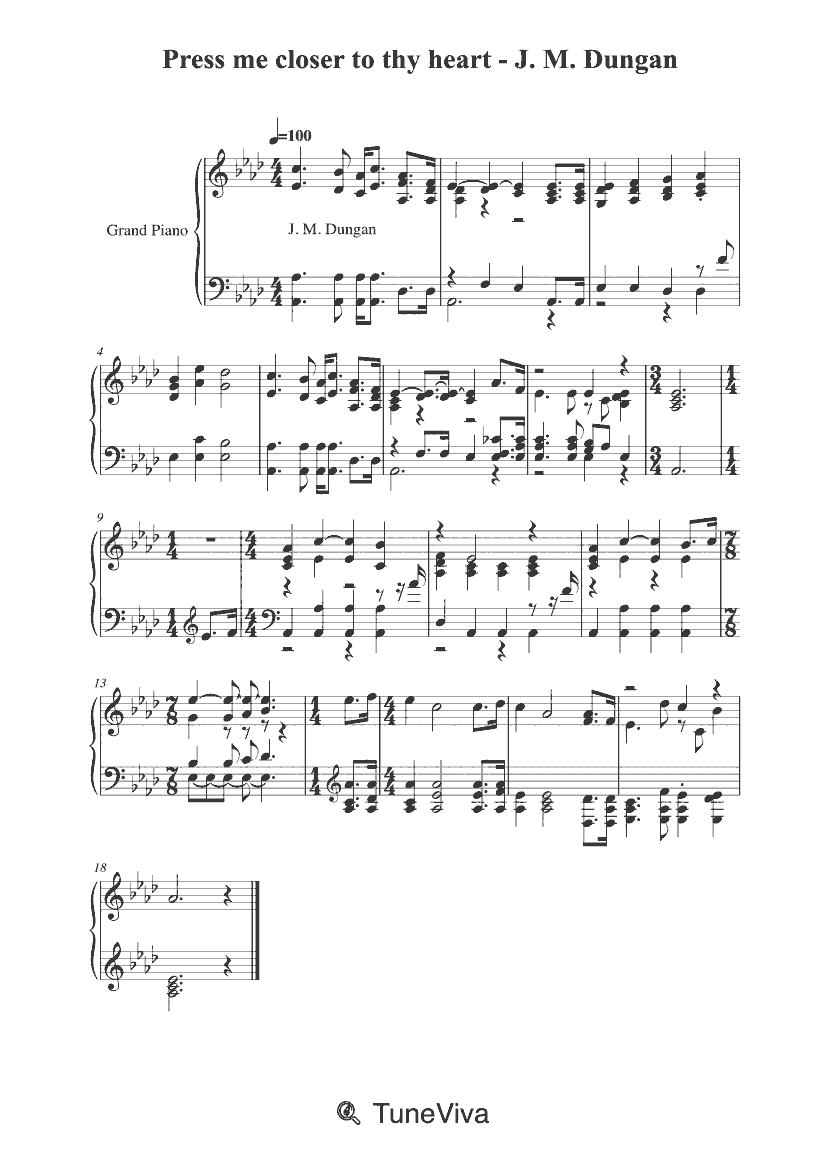
The catalogue holds 41 scores under J. M. Dungan, about 24 minutes of music and 12,661 notated notes, 24 of them with lyrics. All 41 are filed as classical, though the pieces come from the gospel songbooks and Sunday-school collections of the 1880s and 1890s.
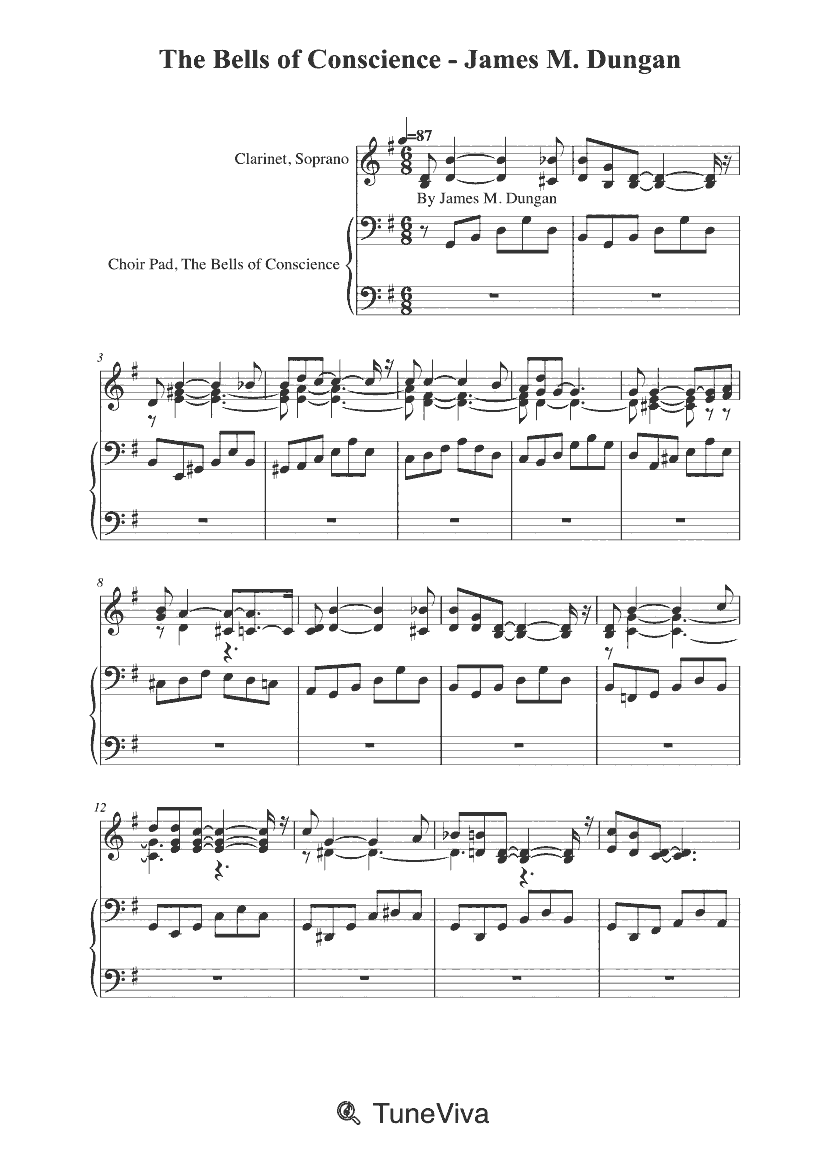
The most-viewed title is The Bells of Conscience, then Your Brother Has a Burden That Is Hard to Bear and Lord, Dismiss Us with Thy Blessing Now. The difficulty spread is wider than on most gospel-song pages here: 10 entries at index 0, 18 at index 1 and 13 at index 2, a wider spread than most gospel-song pages here, and one that runs from one-page choruses to settings with a written-out accompaniment.
James Milton Dungan was born on 31 December 1851 at Franklin, Johnson County, Indiana, the youngest child of Elisha and Lurania Dungan. He studied at the Dana Musical Institute at Warren, Ohio, and later at the Cincinnati Conservatory of Music, and then taught for twenty-two years at Franklin College. In 1894 he moved to Indianapolis, where he founded the Indianapolis College of Music, later merged into the Metropolitan School of Music, and in 1897 a private school, the Indianapolis Piano College.
He was in demand as a singing-school teacher and organist, and he wrote two textbooks, the Normal Piano-Forte Method and The Normal Text-Book, both printed at Lafayette, Indiana, in 1890. In 1901 he stood as the Prohibition Party candidate for mayor of Indianapolis. His first wife, Helen Silcott Dungan, was herself a hymn writer with some three hundred texts to her name; they married in 1875, and after her death in 1914 he married Alice Hughes the following year.
His association with E. O. Excell placed his songs in the Triumphant Songs series, where The Bells of Conscience appeared in the first volume of 1887. Dungan died on 6 February 1925, of a heart attack on a street car in Indianapolis, and is buried beside Helen at Greenlawn Cemetery in Franklin.
The 41 entries are the gospel songs and part-songs of that career rather than the piano methods: short, strophic pieces with refrains, a few of them written with his wife and several of them still in print in denominational hymnals.
Dungan writes four-square phrases with a harmony note under every melody note, so the music is easy to read and easy to make dull. Keep the tempo moving and shape the refrain as the high point rather than repeating the verse's dynamic. In the pieces with a solo verse, let the choir enter quietly at the refrain; the contrast is the whole effect. The piano writing in the later songs is more active than the hymn-style earlier ones, and that difference is worth hearing before you decide how to accompany them.
Words and music both by Dungan, printed in E. O. Excell's Triumphant Songs No. 1 in 1887 and still being reprinted in 1909.
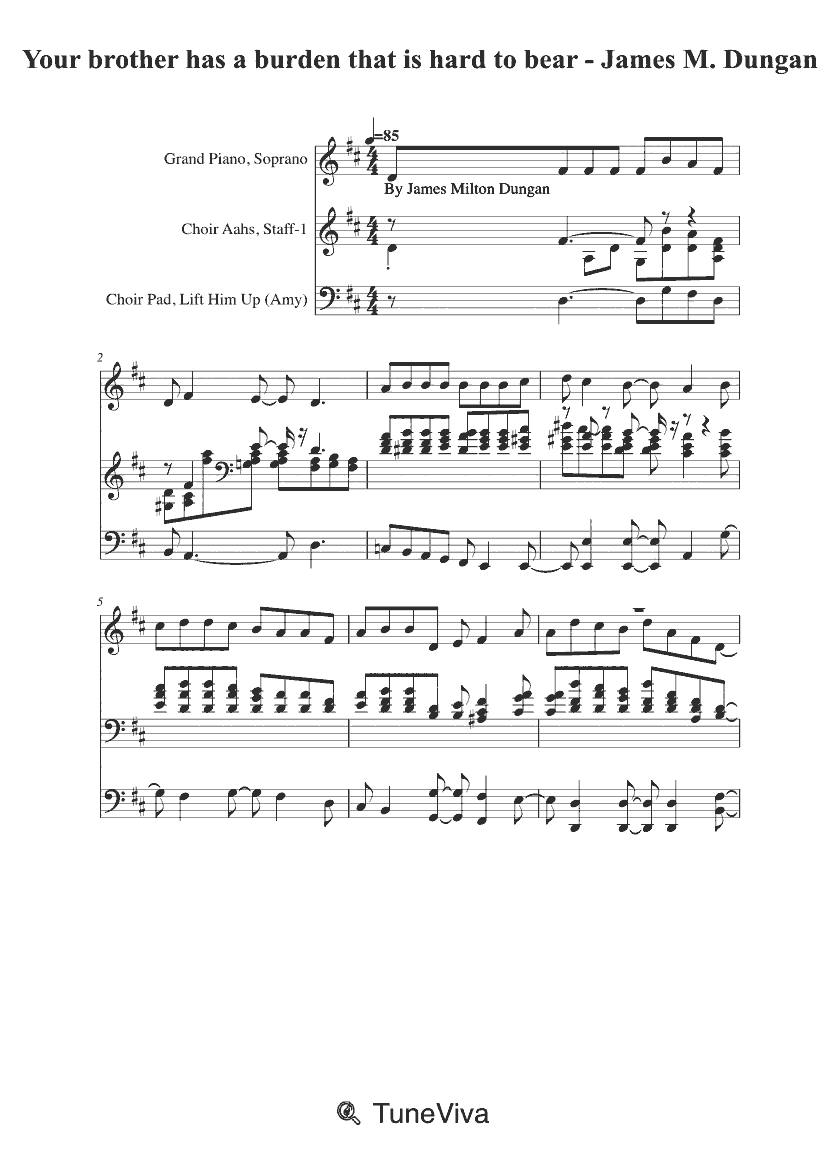
A hymn on bearing one another's burdens, in the plain four-part idiom of the Excell collections.
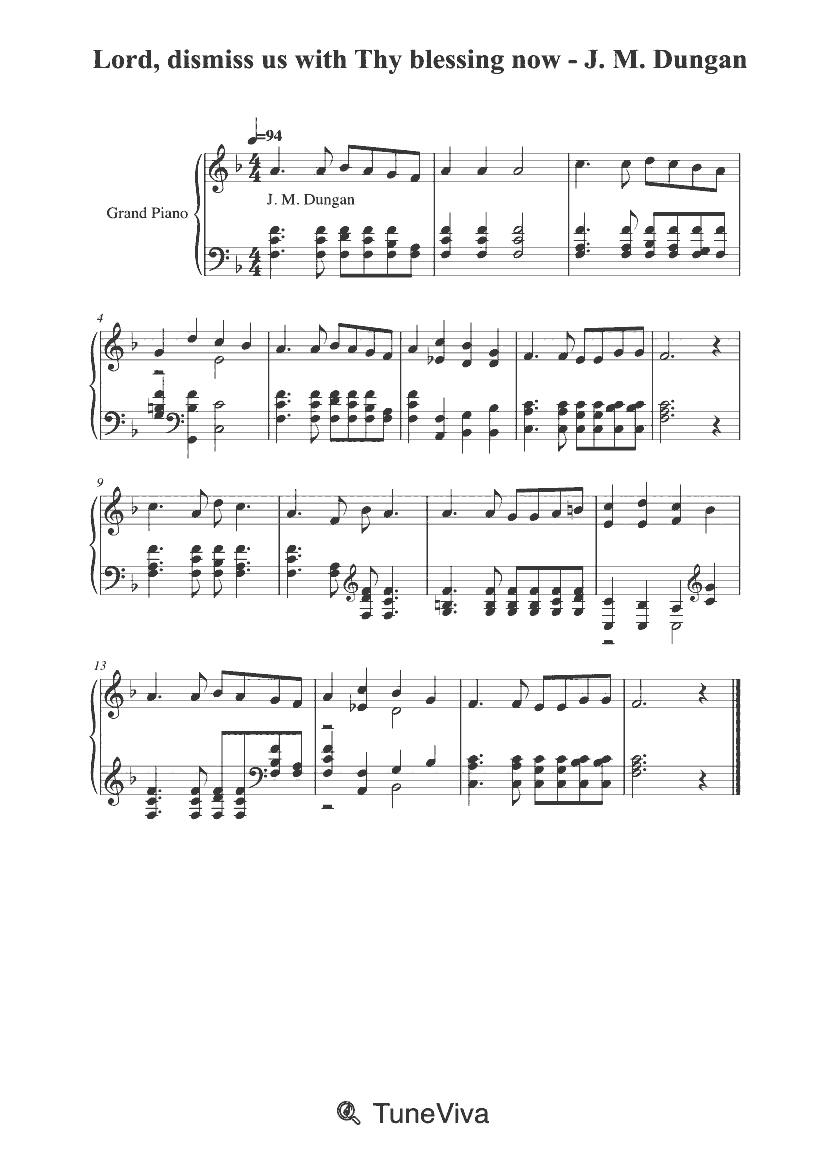
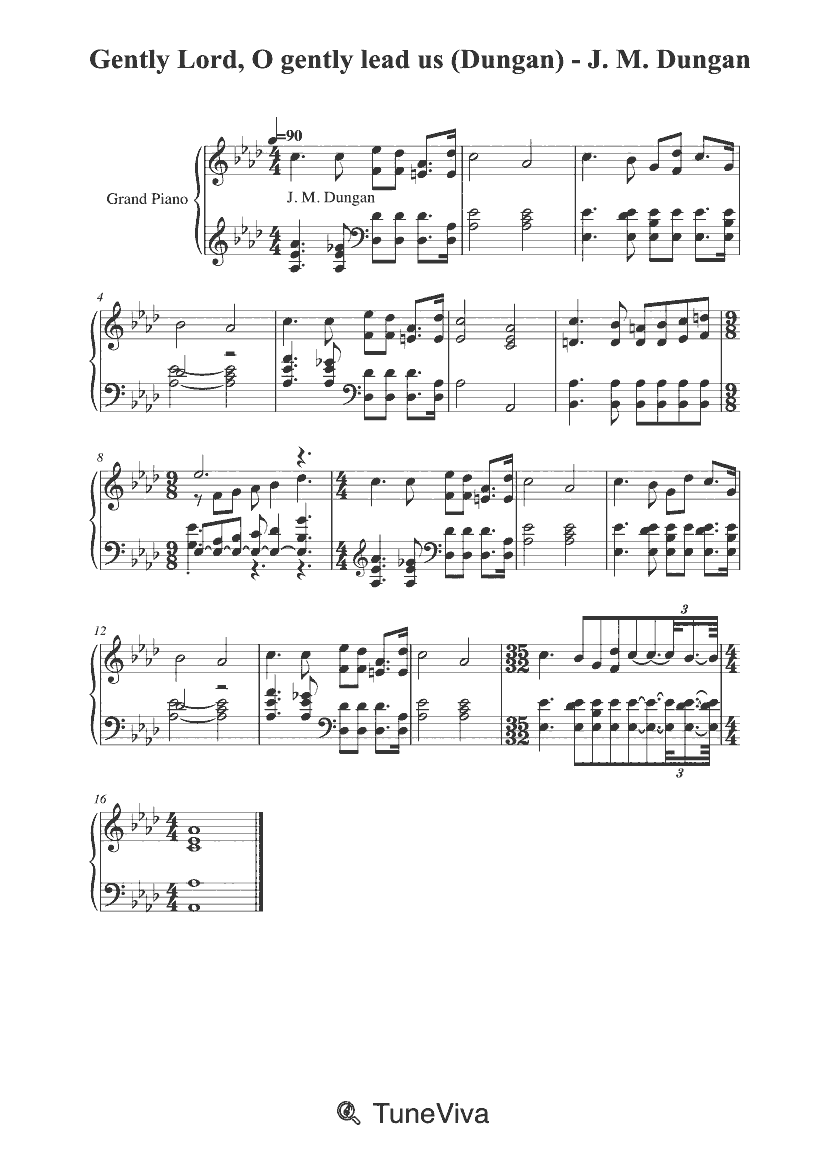
A closing hymn with words by Helen L. Dungan (1902) and music by her husband; it echoes the opening of John Fawcett's older closing hymn but is a distinct text.
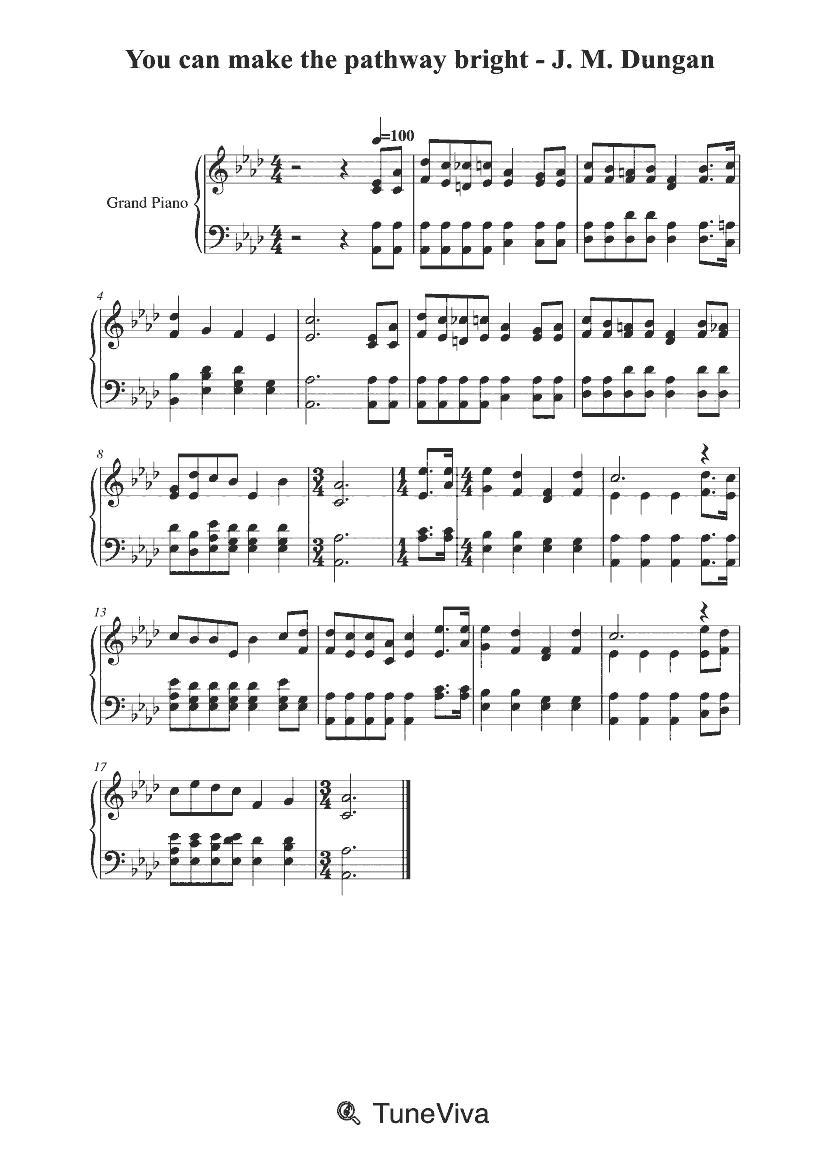
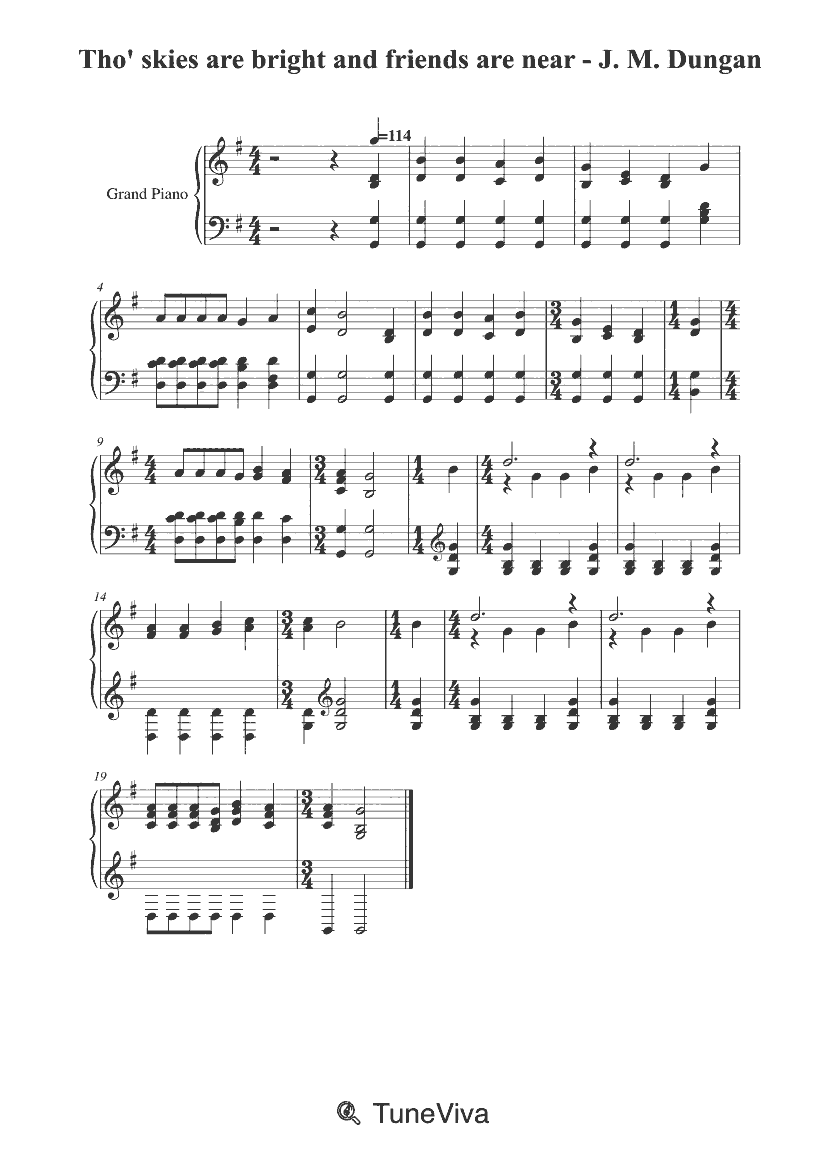
Words by Helen Silcott Dungan and music by her husband; first published as 'If there's Sunshine in Your Heart' in 1899, and the one piece of the pair still sung.
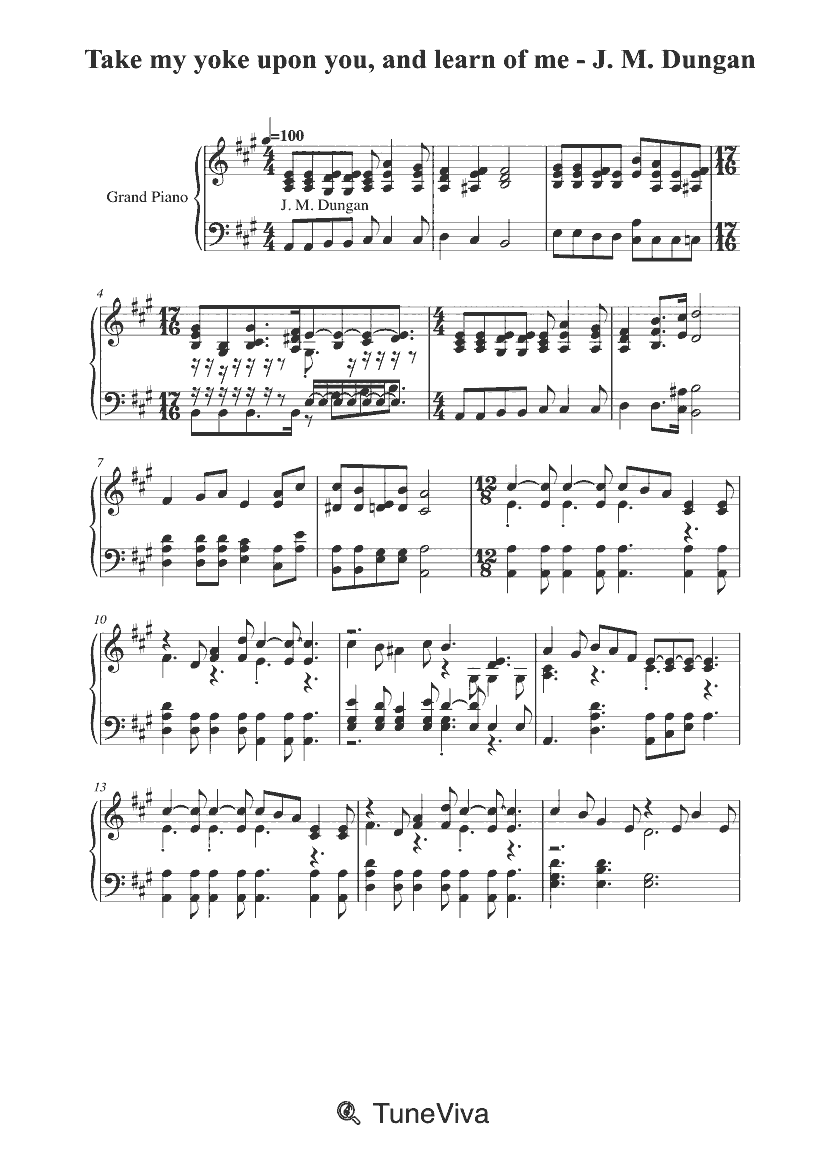
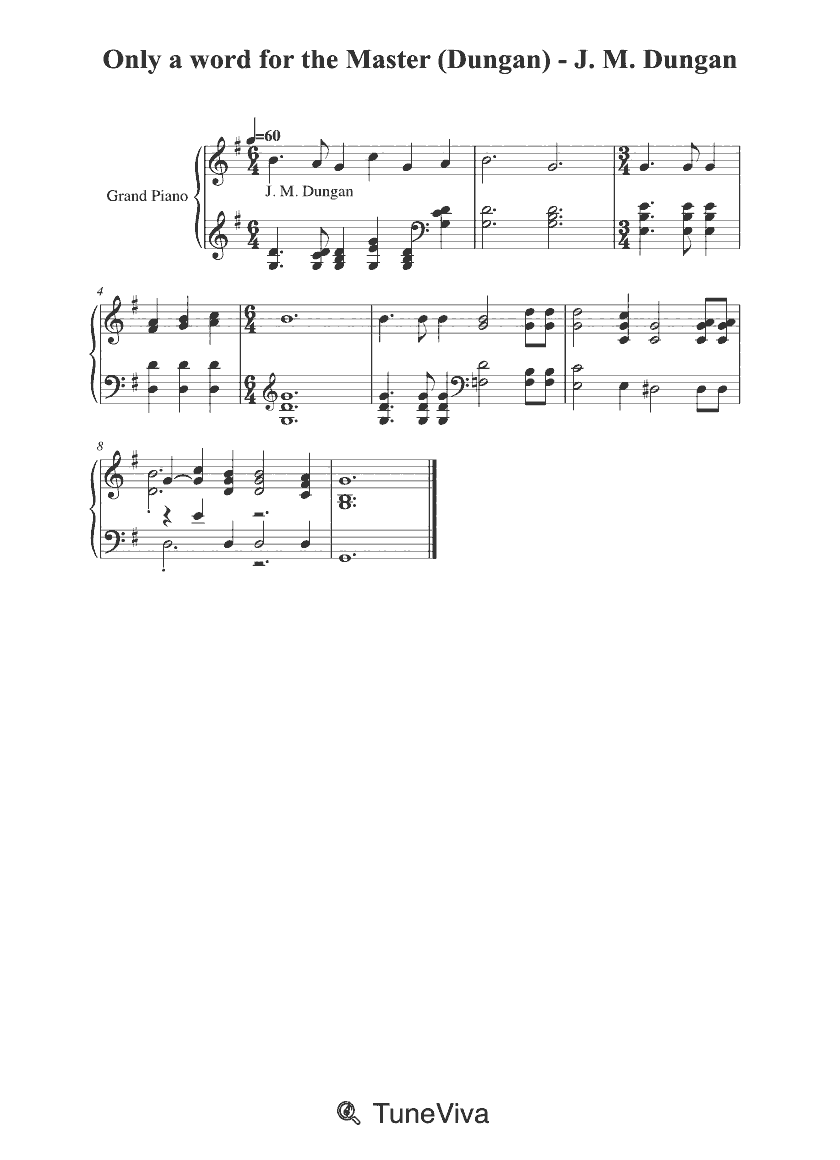
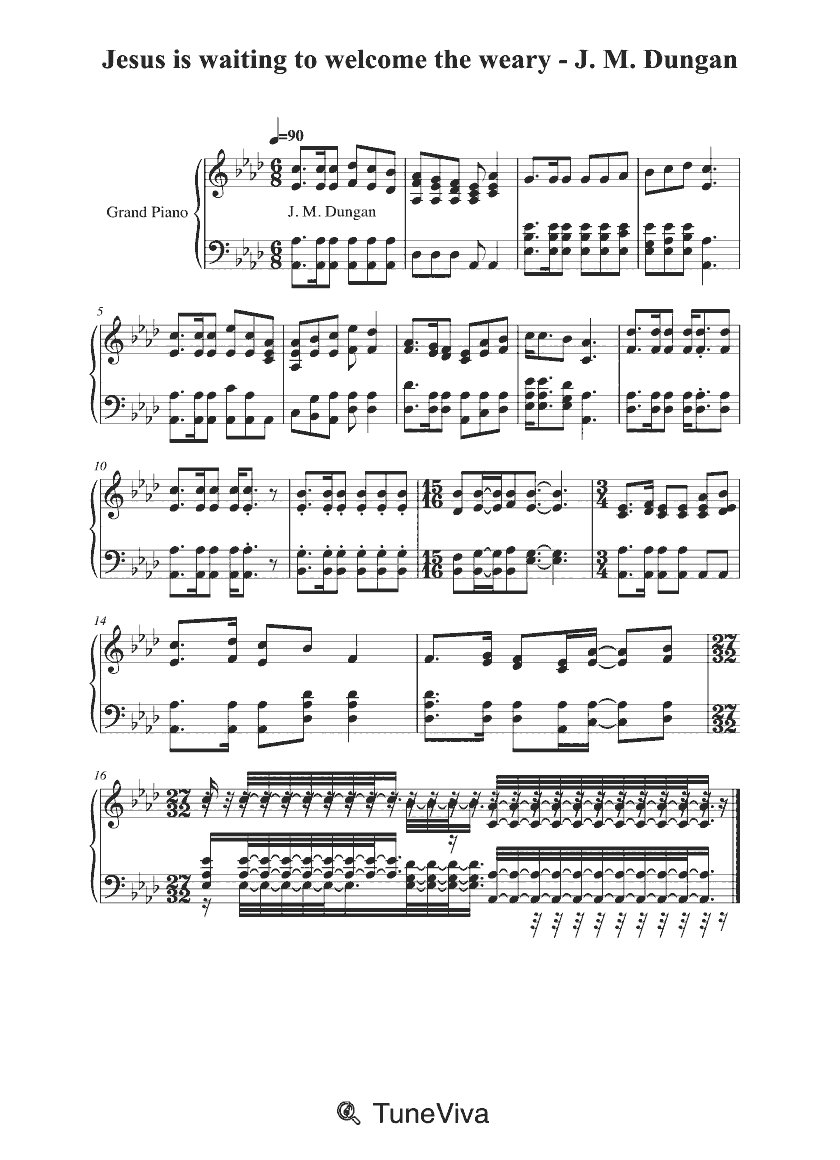
The invitation of Matthew 11:29, set in the refrain-and-verse shape the Excell books favoured.
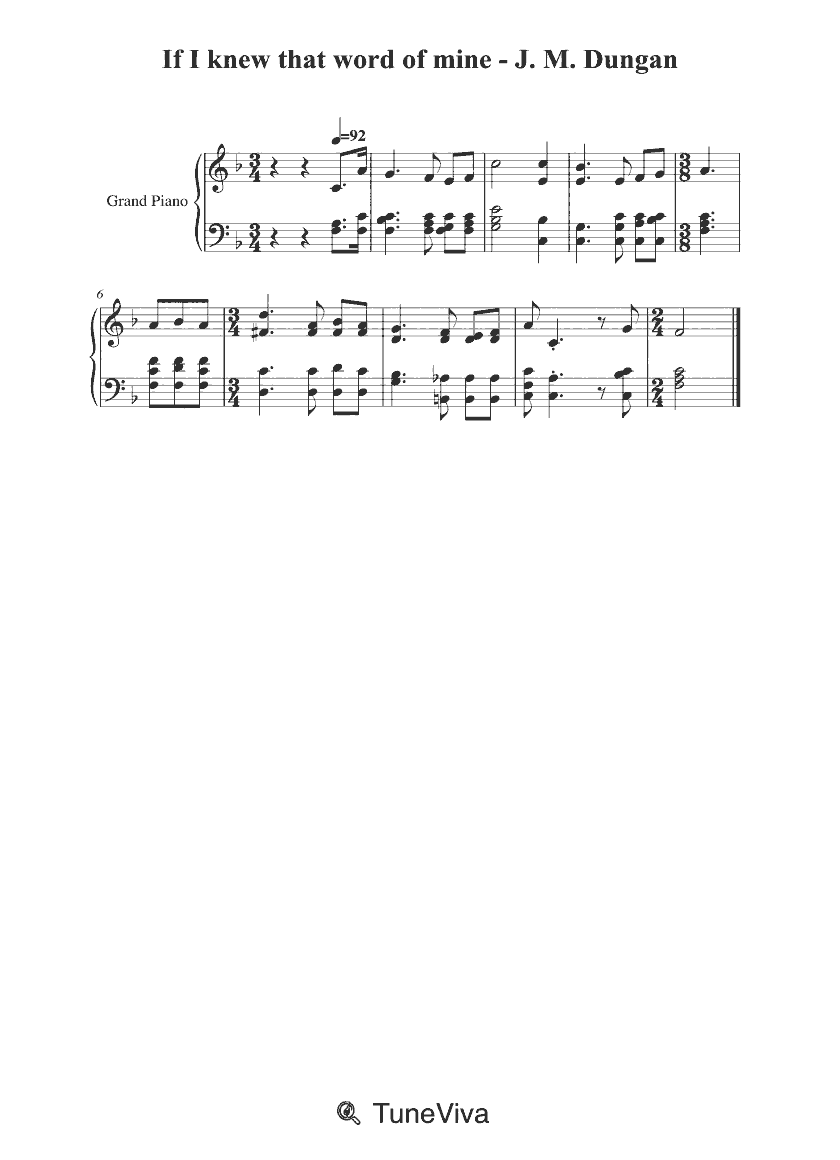
A warning about the harm a careless word can do, one of the more reflective texts in the collection.
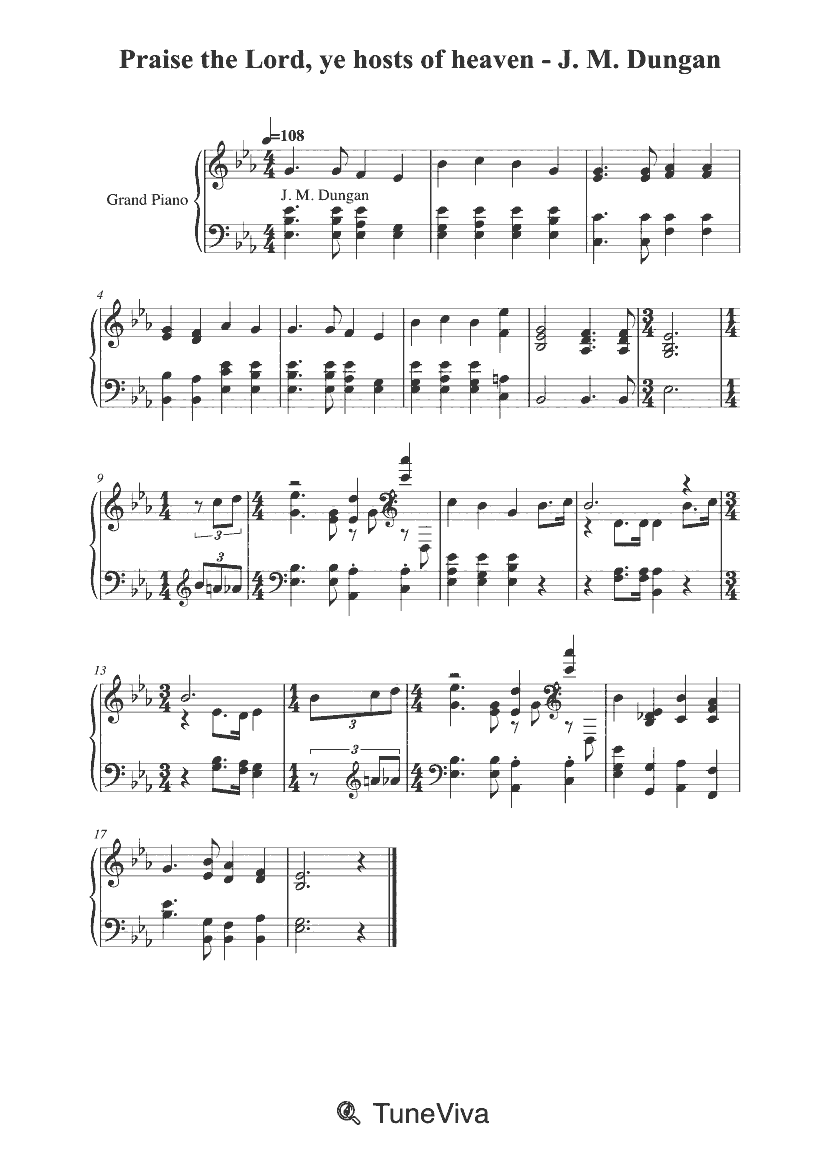
Words by Helen L. Dungan, music by J. M. Dungan; a refrain hymn on the praise of the heavenly host ('Praise His name from morn till even').
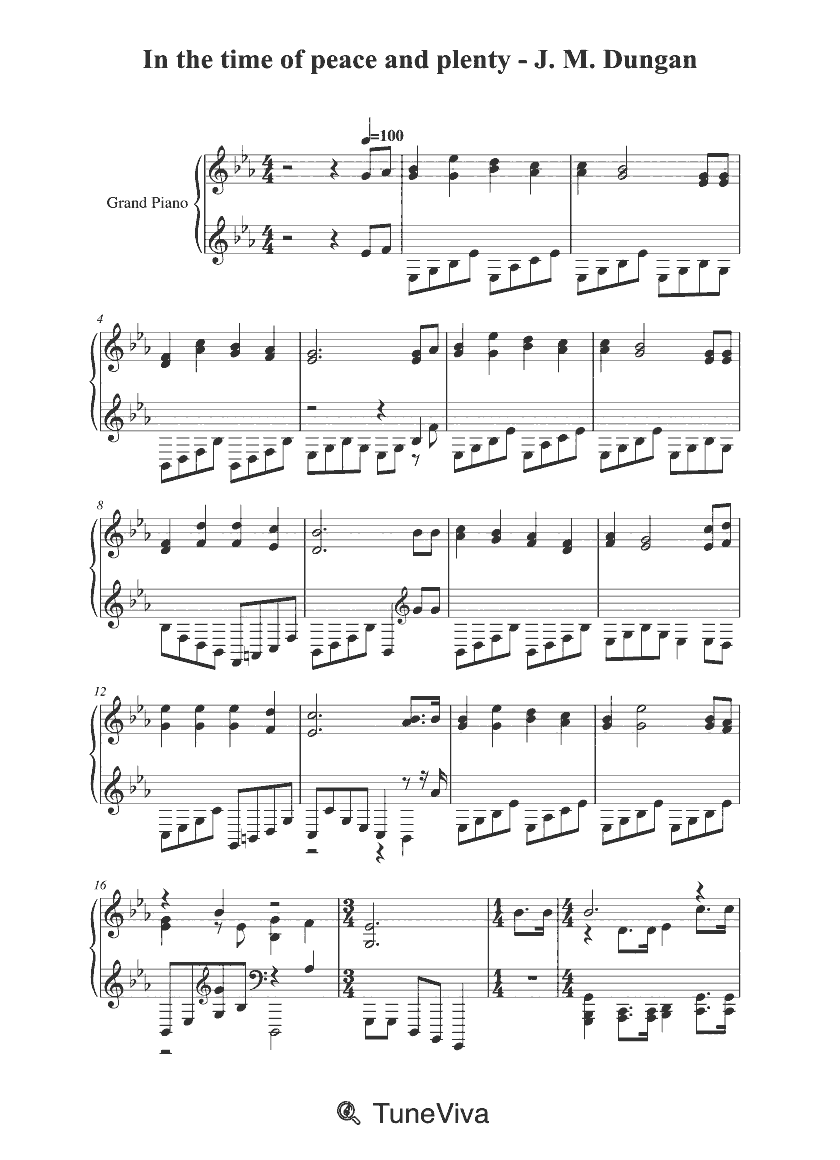
A hymn on prospering without forgetting God; it appears in Triumphant Songs No. 3.
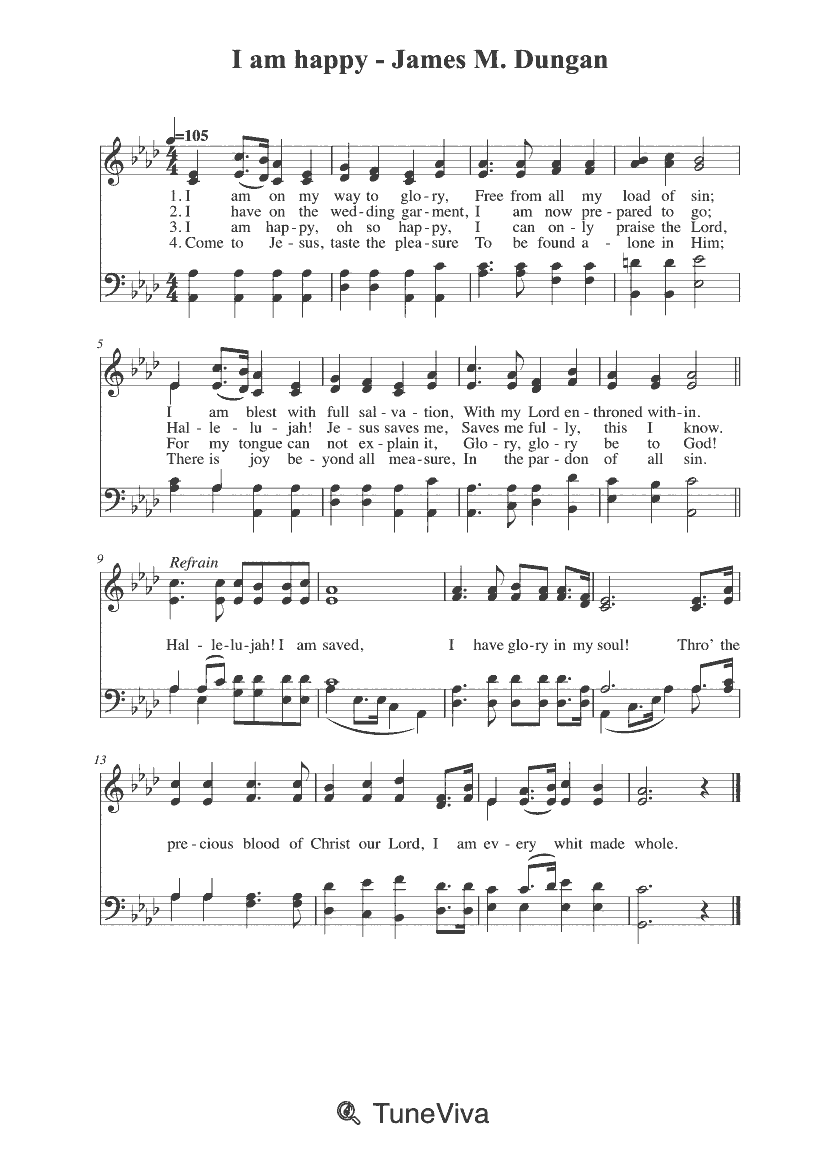
A short testimony song and one of the briefest entries in the collection.
Forty-one, about 24 minutes of music and 12,661 notated notes. Twenty-four of the entries carry lyrics.
Sometimes. The Bells of Conscience is his own text and tune, while You Can Make the Pathway Bright sets words by his wife, Helen Silcott Dungan. Several entries give no credit at all.
A private music school Dungan founded in 1897, after the Indianapolis College of Music he had started in 1894 was merged into the Metropolitan School of Music. It is the institutional side of a career that also produced two piano methods.
The Bells of Conscience or You Can Make the Pathway Bright. Both fit on a page or two, both are near the top of the list, and between them they show the two sides of his work: his own words in the first, his wife's in the second.
Catalog editions and arrangements attributed to J. M. Dungan.