classical
1 tracks
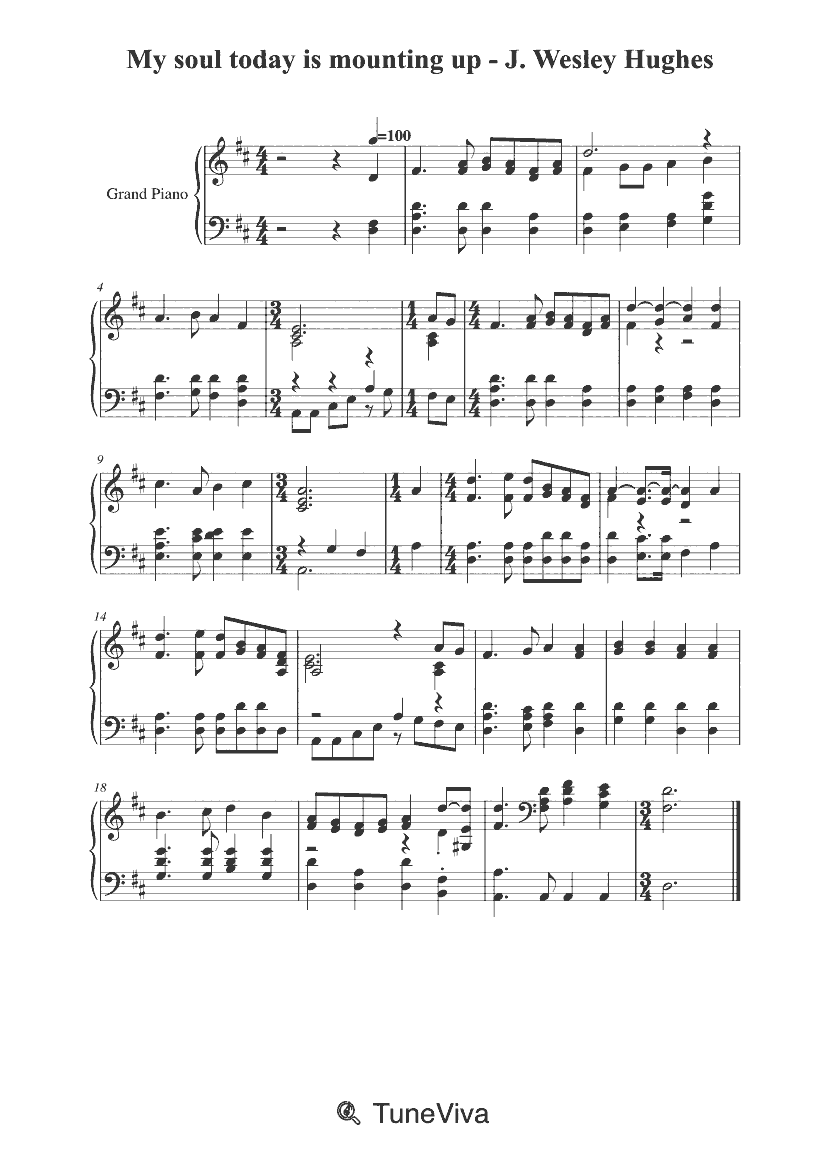
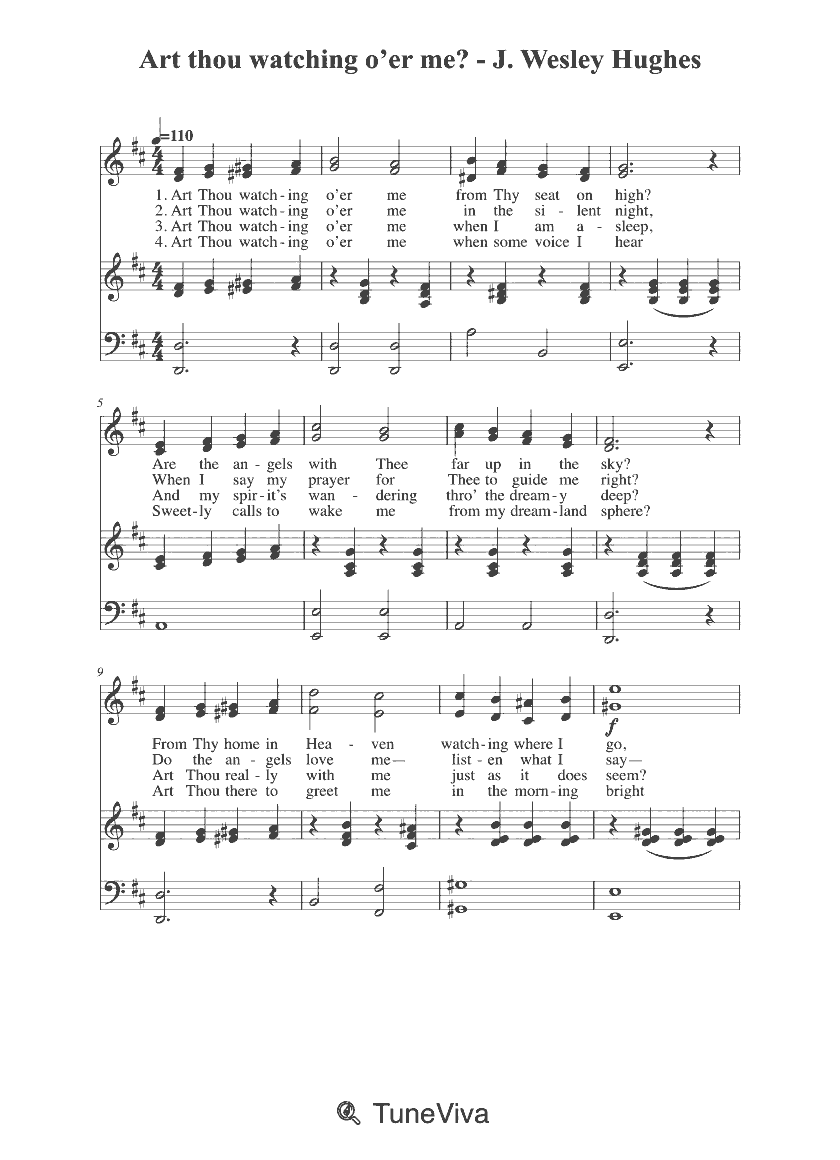
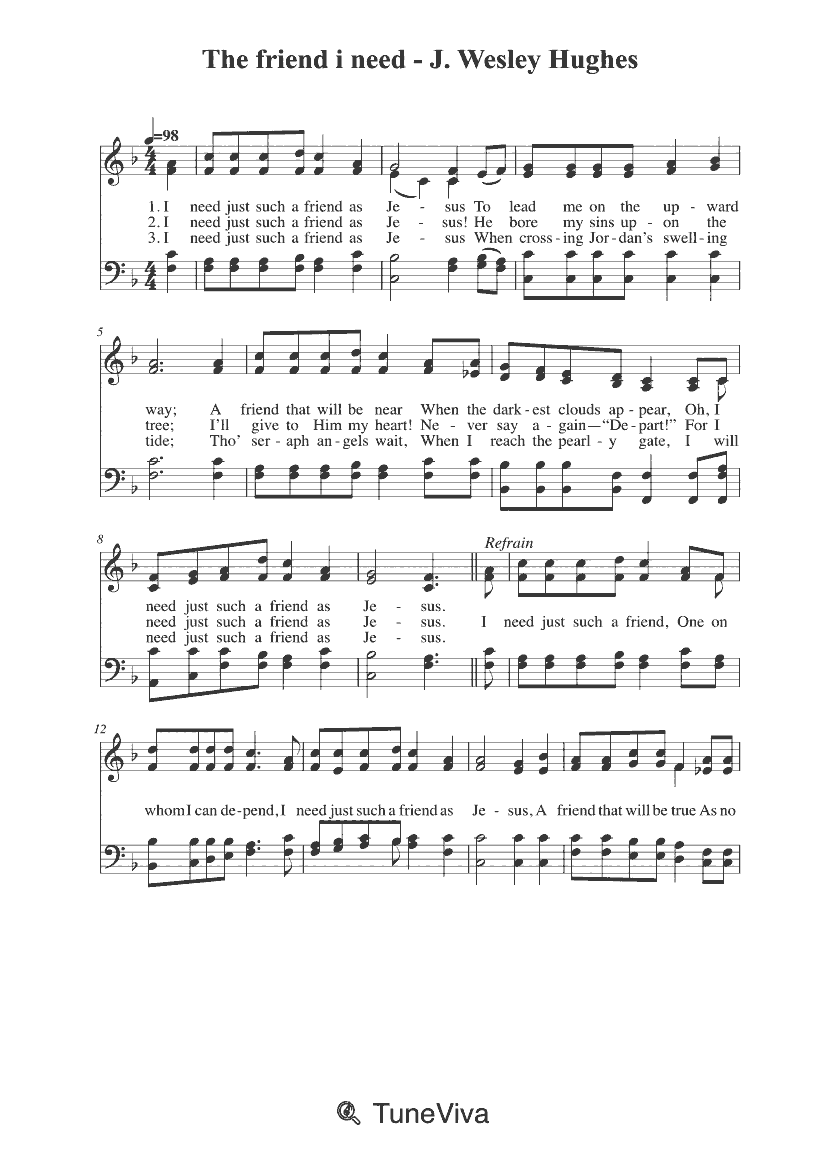
J. Wesley Hughes wrote gospel songs for the revival and Sunday-school trade, and the catalogue holds twenty-five of them: about sixteen minutes of music and 8,071 notated notes. Only ten entries carry lyrics, fewer than the number of titled pieces, because several files are duplicates or part-writing copies. The most-viewed score is In the Throne-Room, H. J. Zelley's text set to Hughes's tune, followed by his setting of When I survey the wondrous cross and There's a Time of Refreshing. Difficulty sits in the middle: three entries at index 0, nine at index 1 and thirteen at index 2, so few of these pieces are beginner material.
Hymn dictionaries date J. Wesley Hughes 1852-1932, credit him with 57 tunes and print no biography; his birthplace, teacher and death place are not recorded in the standard indexes. What can be documented is his work as an editor and supplier of gospel songs. He was one of four editors of Hymns of the Kingdom, a collection for religious meetings issued in Philadelphia in 1905 by Geibel & Lehman, alongside Adam Geibel, R. Frank Lehman and William Stone. The book's copyright notices show him writing tunes for H. J. Zelley's texts in the years around 1901-1905, and several of those songs carry his own copyright line.
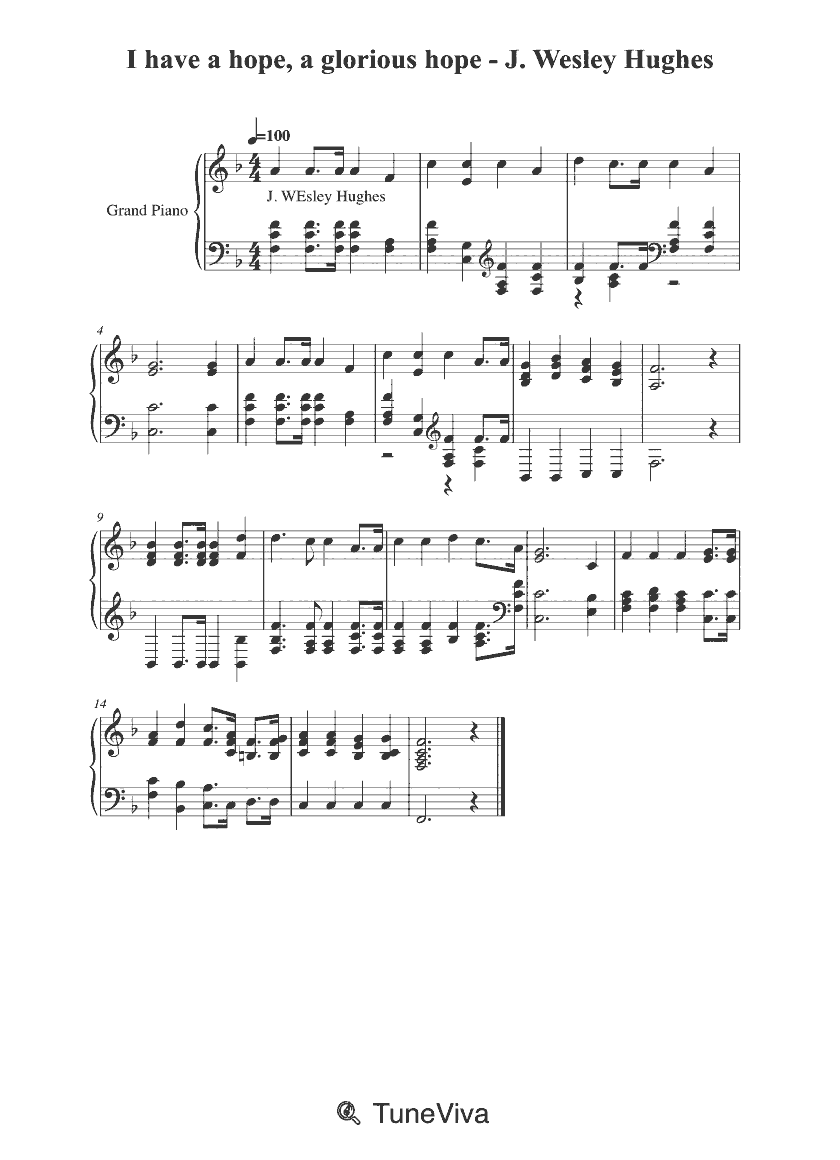
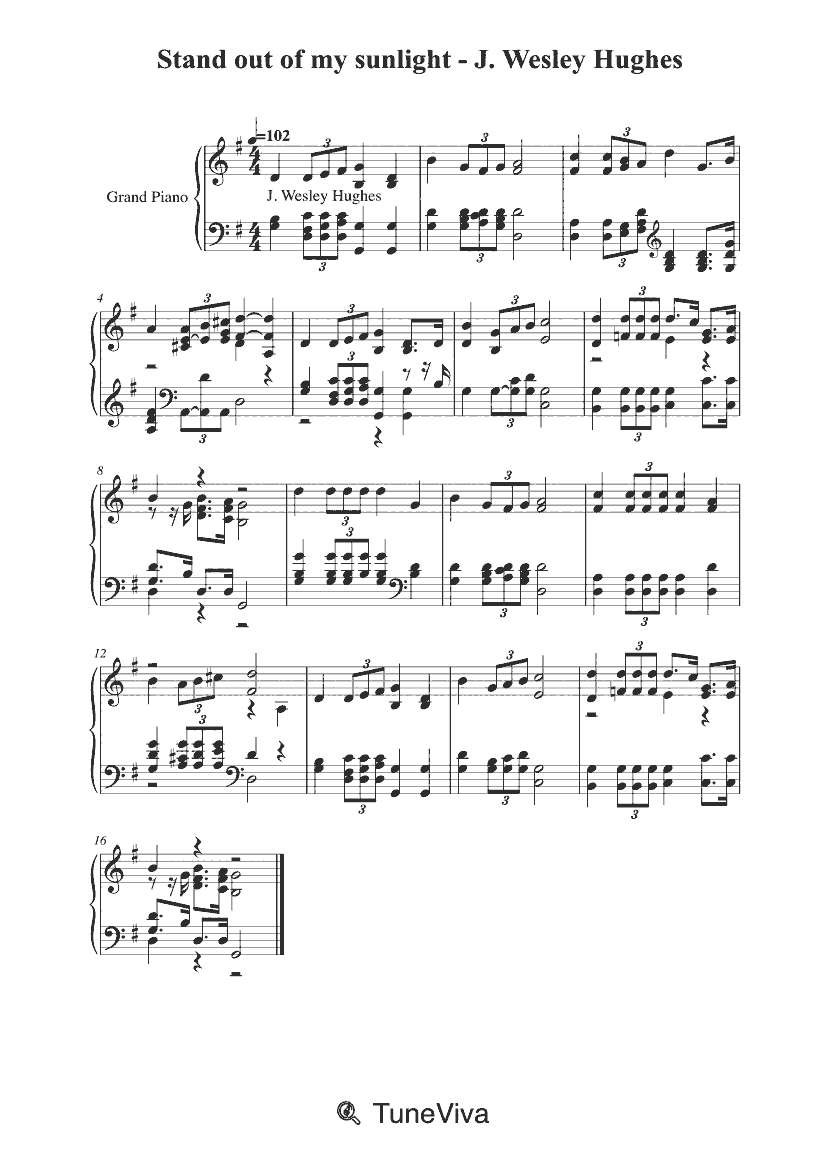
Those songs are the core of the catalogue. In the Throne-Room takes Esther 5:2 for its image of the king's sceptre; The Kingdom of God is Within You sets a text signed J. W. H.; I Have a Hope, a Glorious Hope uses words by A. H. Sembower; Stand Out of My Sunlight turns Diogenes' reply to Alexander into a chorus. When I survey the wondrous cross is Isaac Watts's hymn in a Hughes setting rather than an original text.
The twenty-five entries run to about sixteen minutes, an average under a minute each, and ten include lyrics. All are filed as classical, a catalogue convention rather than a description of the music. Three sit at complexity index 0, nine at index 1 and thirteen at index 2.
These are gospel songs, not anthems: a tune in the soprano or tenor, three supporting parts and a refrain that returns unchanged. Keep the accompaniment light and the words forward, because the effect depends on the chorus being easy to join. In the Zelley settings the refrain carries the argument, so do not let it become softer than the verse. The index-2 entries have more notes per bar than the rest and will need a slower rehearsal. Where two files hold the same song, compare the first page before deciding which to print.
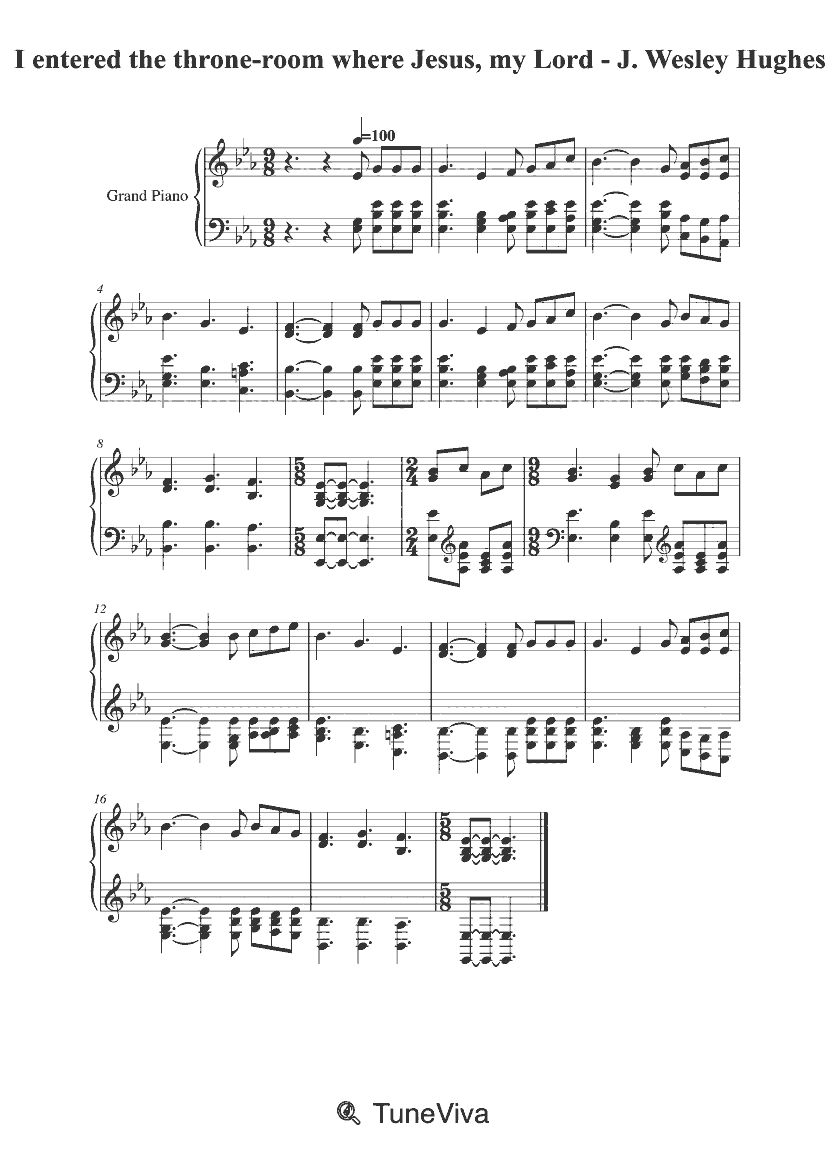
The most-viewed score here and the best documented: H. J. Zelley's text on Esther 5:2, printed as In the Throne-Room in Hymns of the Kingdom (1905) with Hughes's copyright line.
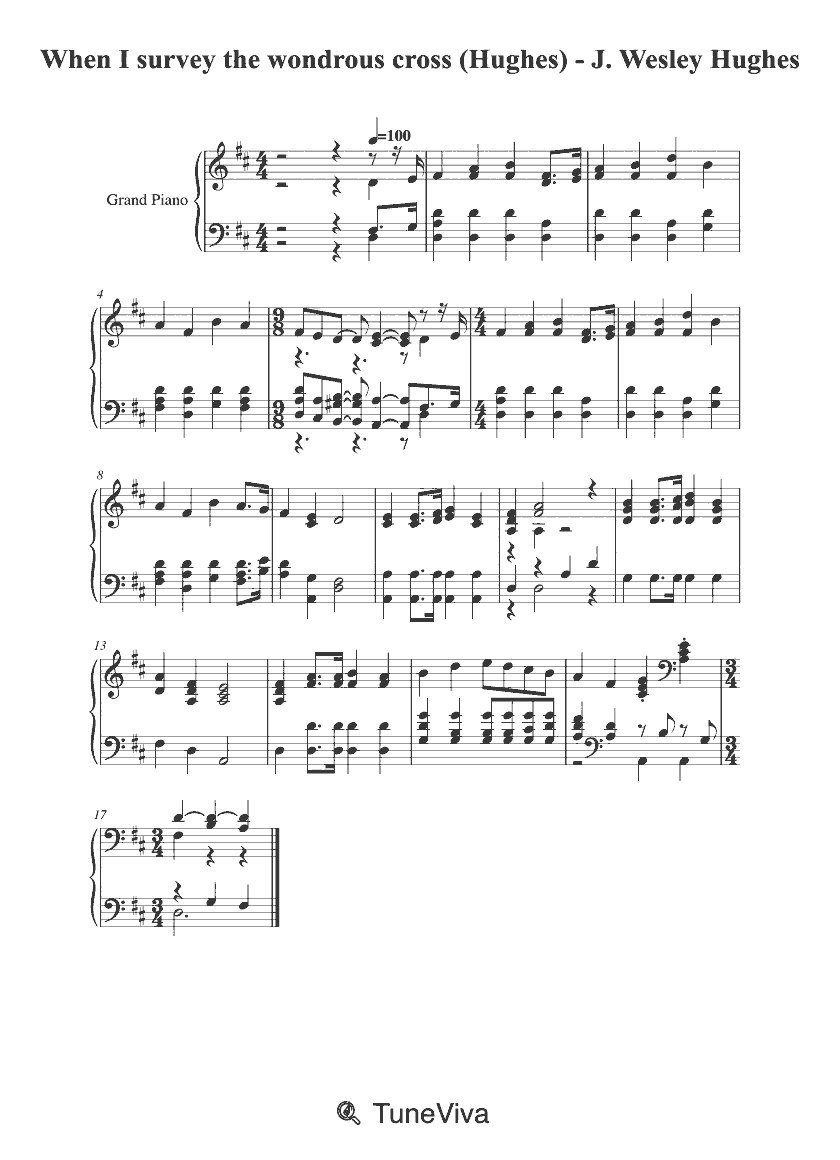
Isaac Watts's 1707 hymn in a Hughes tune; the parenthetical surname separates it from the many other settings in the catalogue.
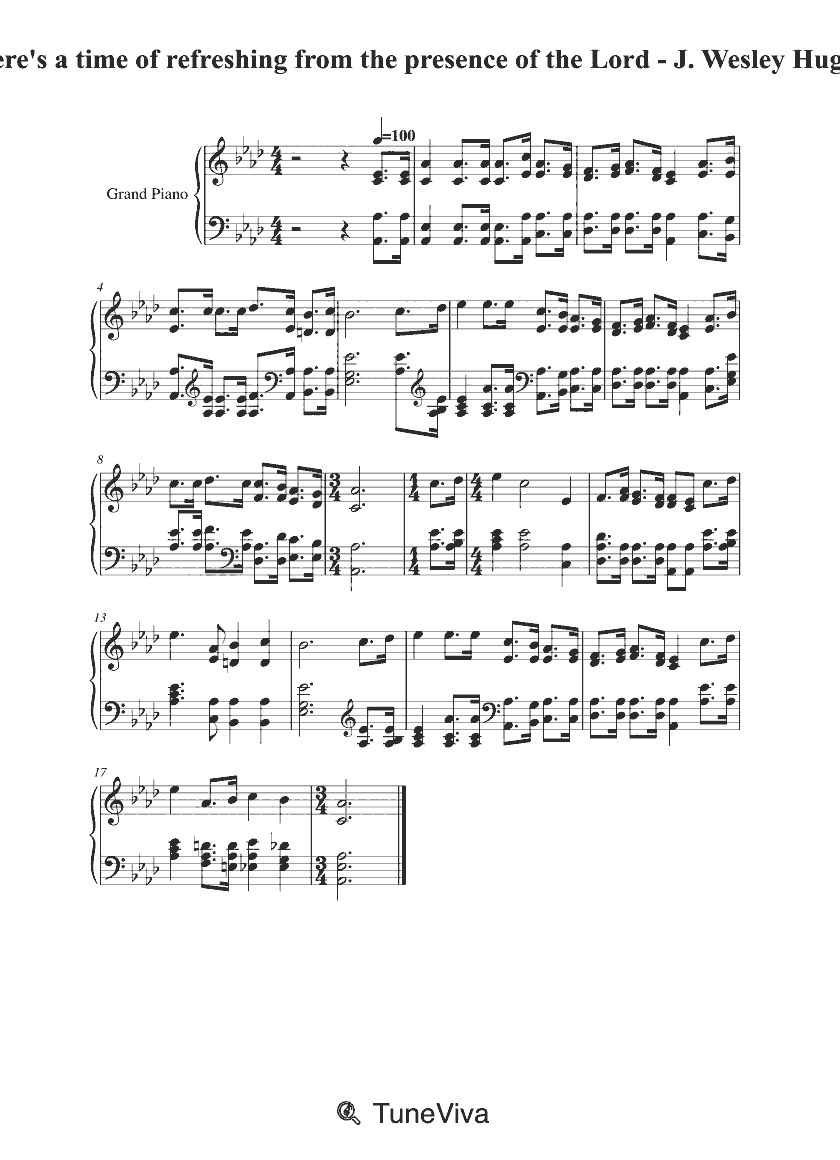
A revival chorus titled by its full first line, the kind of piece the Evangelistic Department of Hymns of the Kingdom was built around.
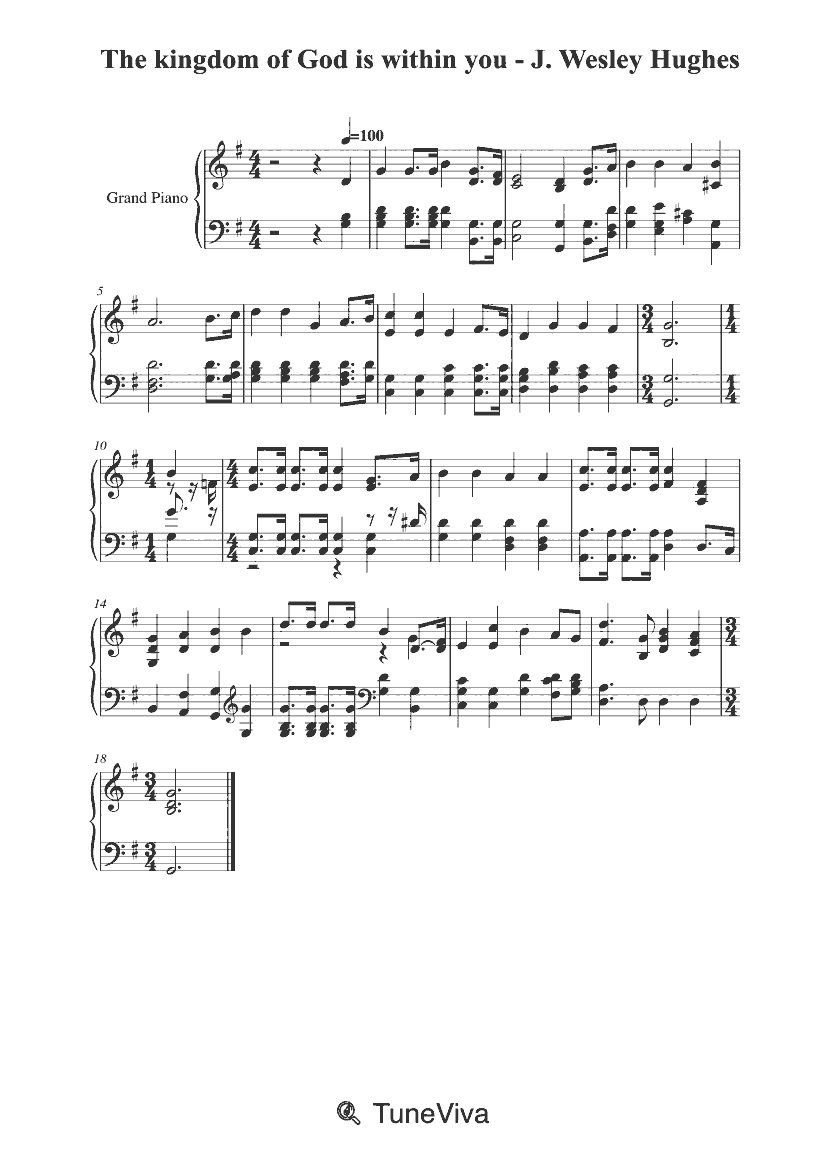
Opens the 1905 hymnal as item 8, with a text signed J. W. H. and a refrain that repeats the title.
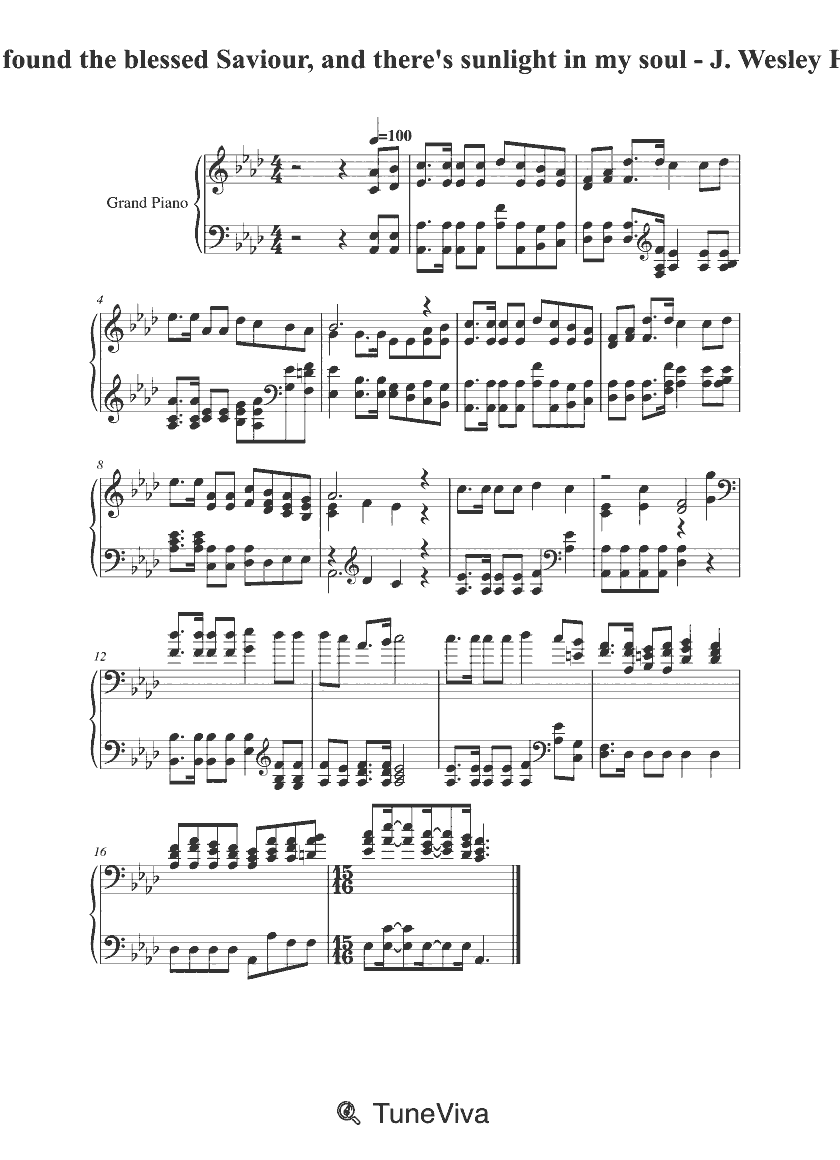
A conversion testimony in chorus form; the catalogue records the whole first line as the title.
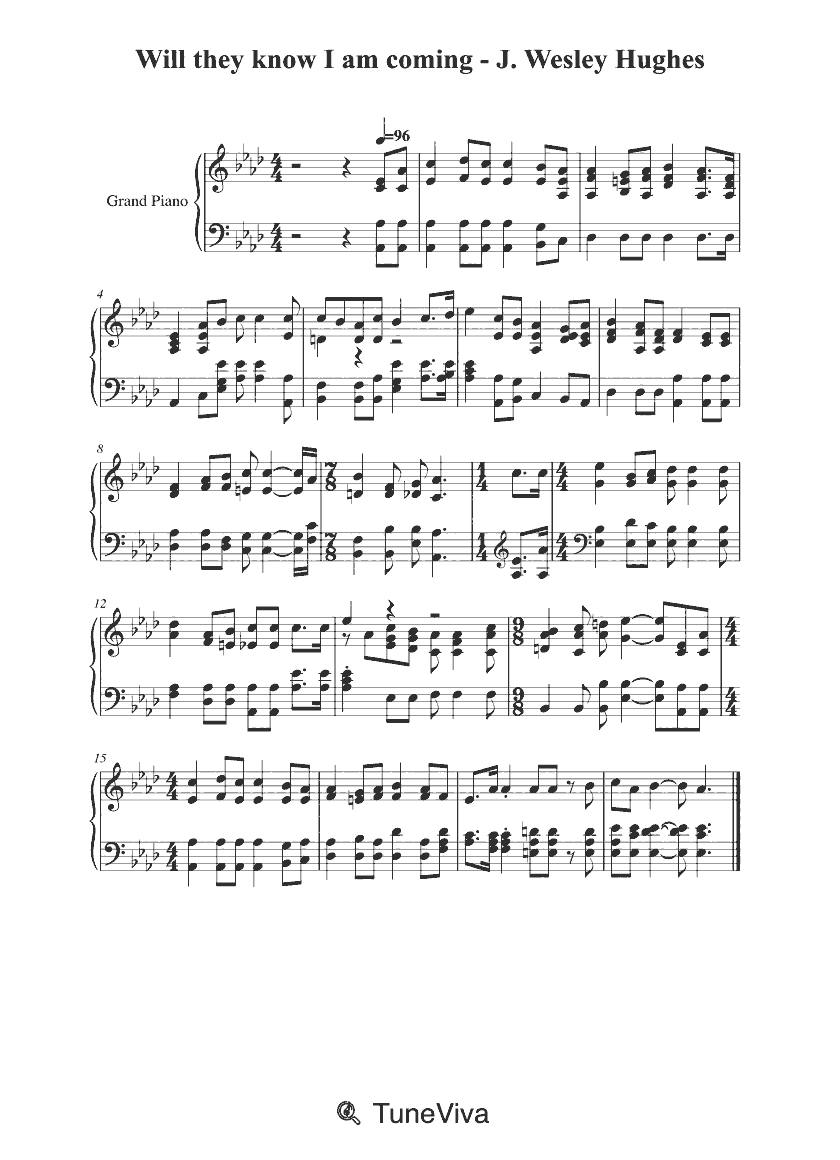
E. E. Hewitt's heaven hymn, asking whether the loved ones already in glory will recognise the singer who comes to join them.
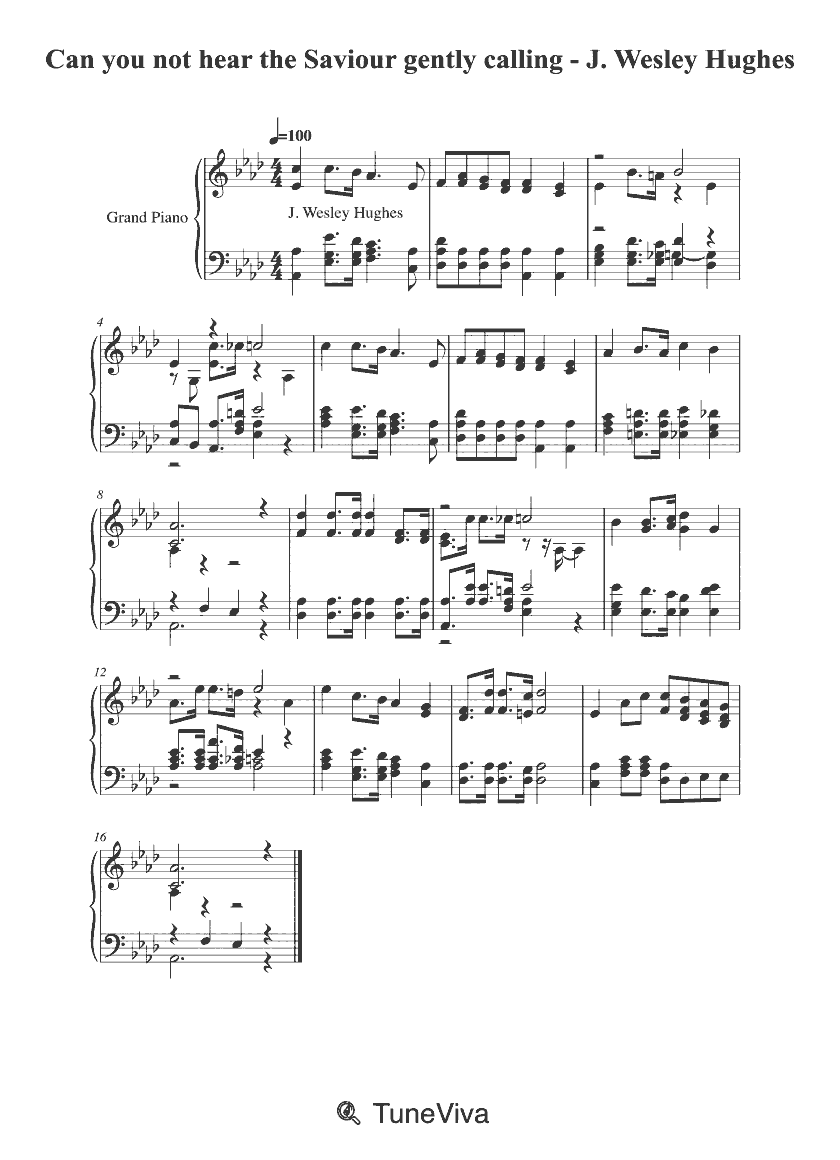
An invitation hymn: the title's question is the whole appeal, and the refrain supplies the answer.
A. H. Sembower's text, headed Hebrews 6:19 in Hymns of the Kingdom; the hope is an anchor in the chorus.
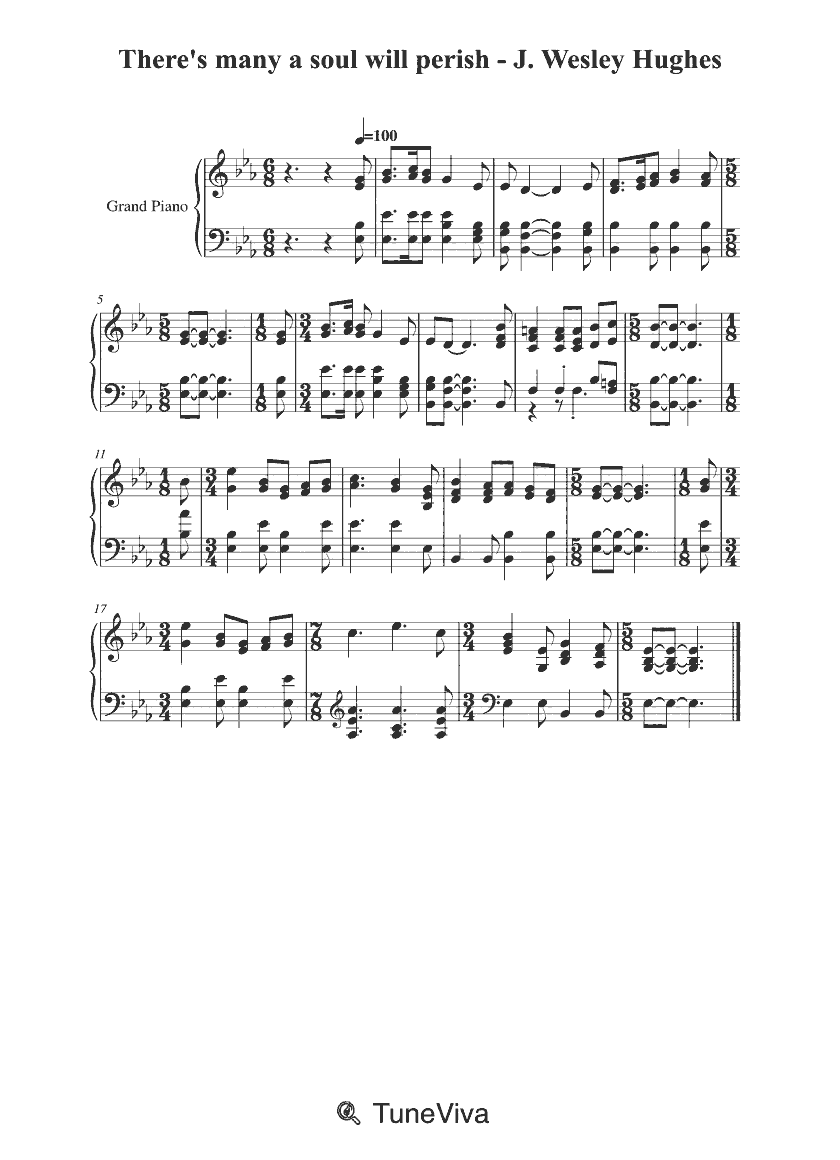
One of the more solemn entries on the page, built on the contrast between the perishing and the saved.
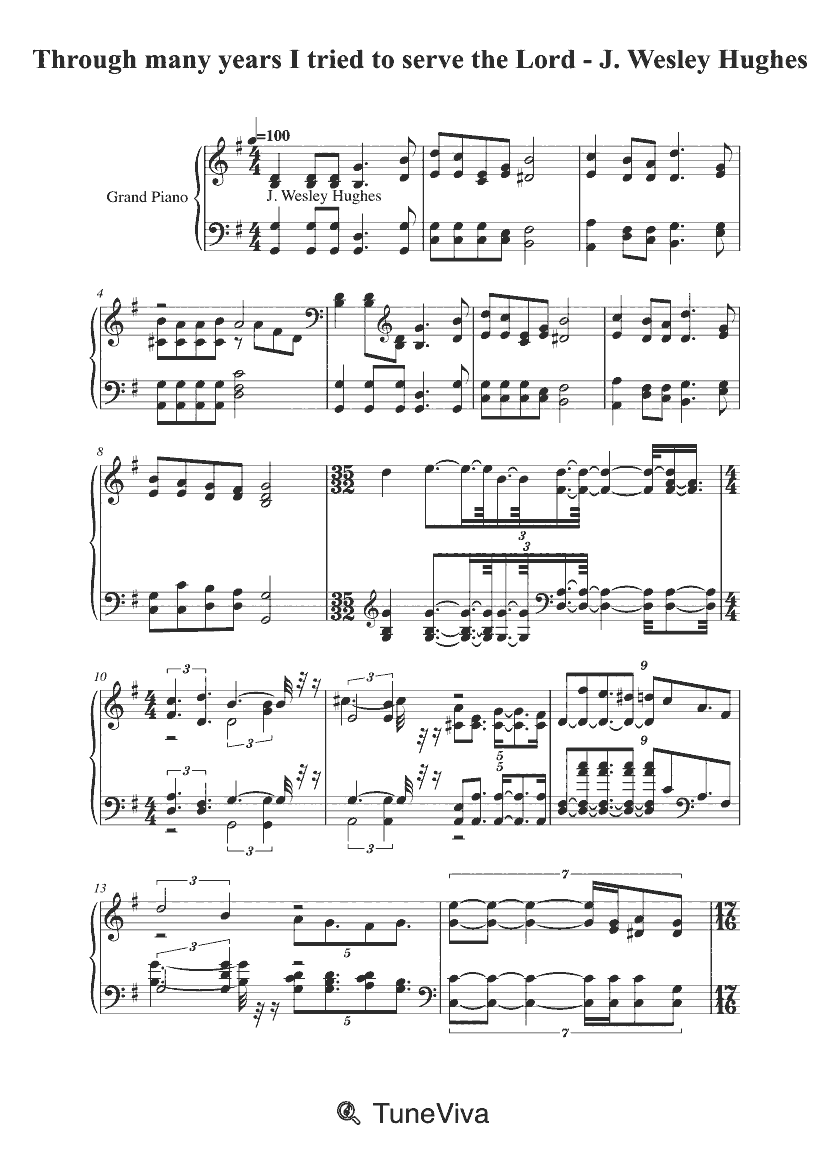
A retrospective testimony, unusual among these titles for looking back over a long life rather than addressing a listener.
Twenty-five, running to about sixteen minutes and 8,071 notated notes. Ten of them include lyrics.
Hymns of the Kingdom (1905), a collection for religious meetings. Hughes is named on the title page with Adam Geibel, R. Frank Lehman and William Stone, and the book carries several of his tunes with his own copyright line.
No. The words are Isaac Watts's; Hughes supplied the tune, and the catalogue adds '(Hughes)' to separate this setting from others of the same hymn.
Some are duplicates of the same song and some are part-writing files without underlaid text. The catalogue records lyrics only where the file itself carries them.
Catalog editions and arrangements attributed to J. Wesley Hughes.