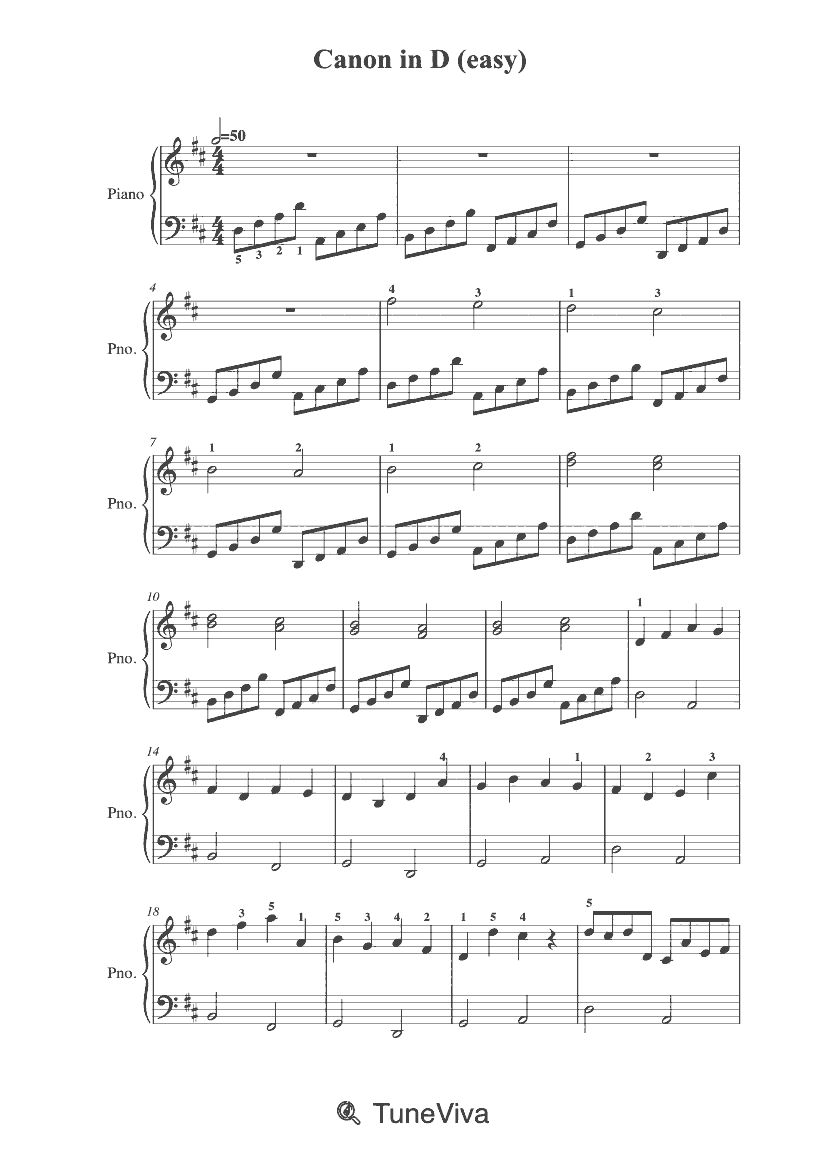
Canon in D (easy)
Johann Pachelbel
Piano · 2 min 7 sec
Open score77 Pachelbel scores to preview and download: Canon in D in easy, wedding and trombone-quartet versions, the F minor Chaconne and a Sarabande from a suite.
Piano · 2 min 7 sec
The most-viewed score on this page, at 199,200 views, in a simplified keyboard arrangement.
Other editions:
The Canon under its Perreault number, P.37, the form in which the piece is usually indexed.
Violín · 5 min 40 sec
A plain-titled score of the Canon, with no arrangement details in the title.
Other editions:
P.43, one of six organ chaconnes and the best-known Pachelbel keyboard work after the Canon.
A five-minute arrangement of the Canon, longer than most of the easy versions here.
A short arrangement for unspecified instruments; the title is the only description on file.
A single movement extracted from the F-sharp minor keyboard suite, P.439.
For Canon in D, decide whether you want the bass pattern and separate imitative entries or a solo arrangement that combines them. If musicians are playing a processional, check where they can repeat or finish without breaking a phrase. For an independent keyboard piece, choose the F-minor Chaconne and follow the bass and variation pattern instead of looking for the famous canon melody.
Compare the instrument and arrangement details below, then open a score to check the notation. Different entries may be arrangements or editions of the same work; available playback tools are shown on each score page.
Johann Pachelbel
Piano · 2 min 7 sec
Open score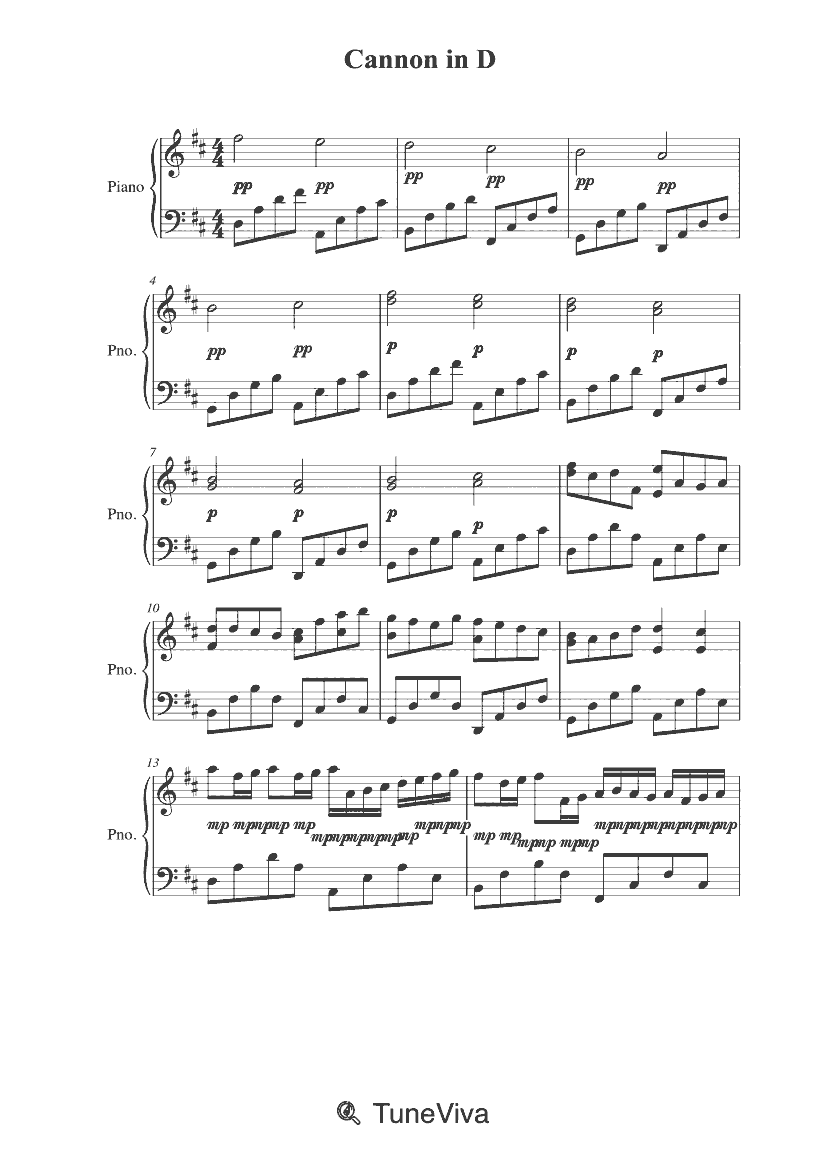
Johann Pachelbel
Cannon
Piano · 1 min 59 sec
Open score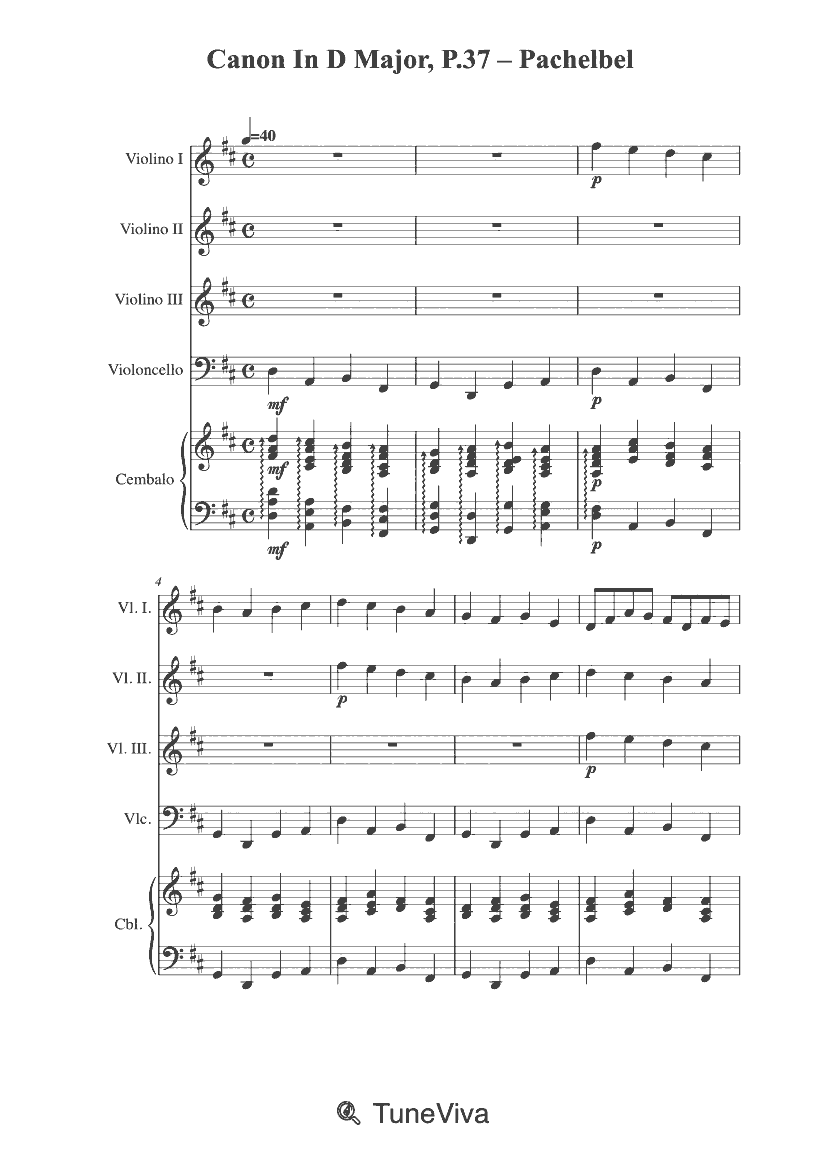
Johann Pachelbel
Violino I; Violino II; Violino III +2 parts · 5 min 51 sec
Open score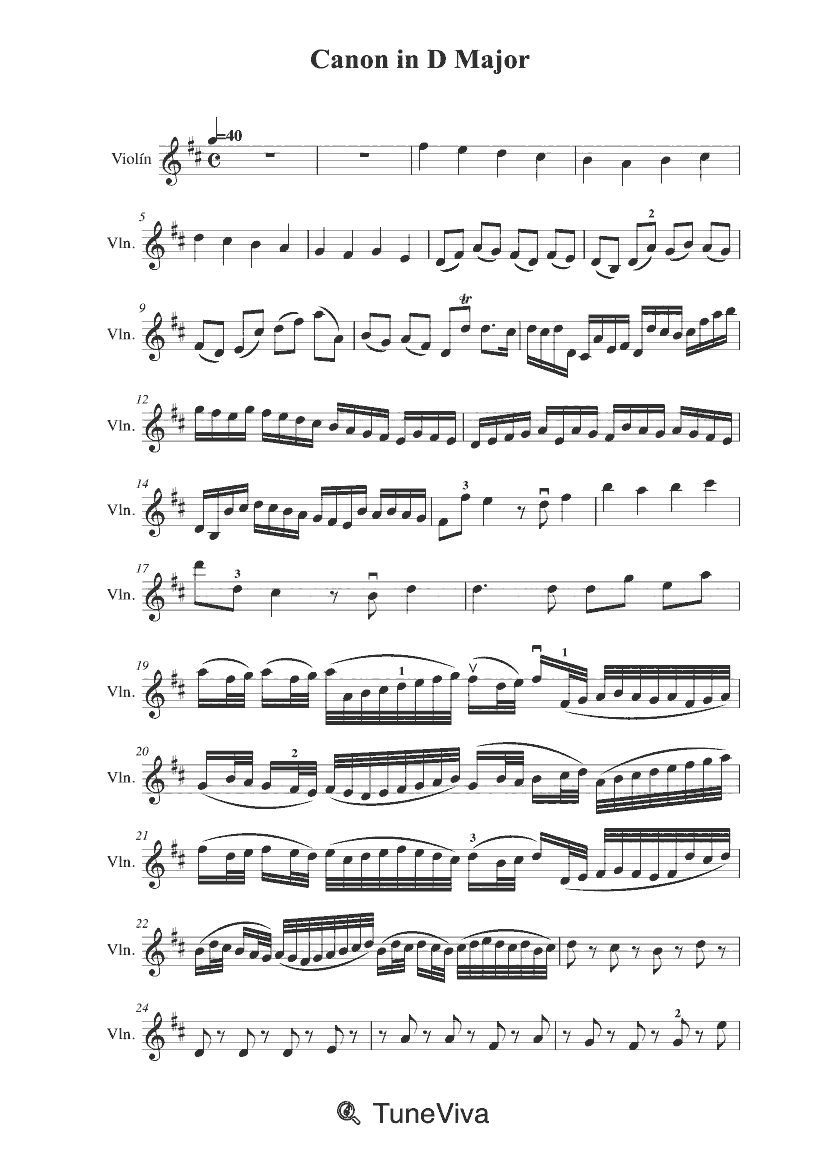
Johann Pachelbel
Violín · 5 min 40 sec
Open score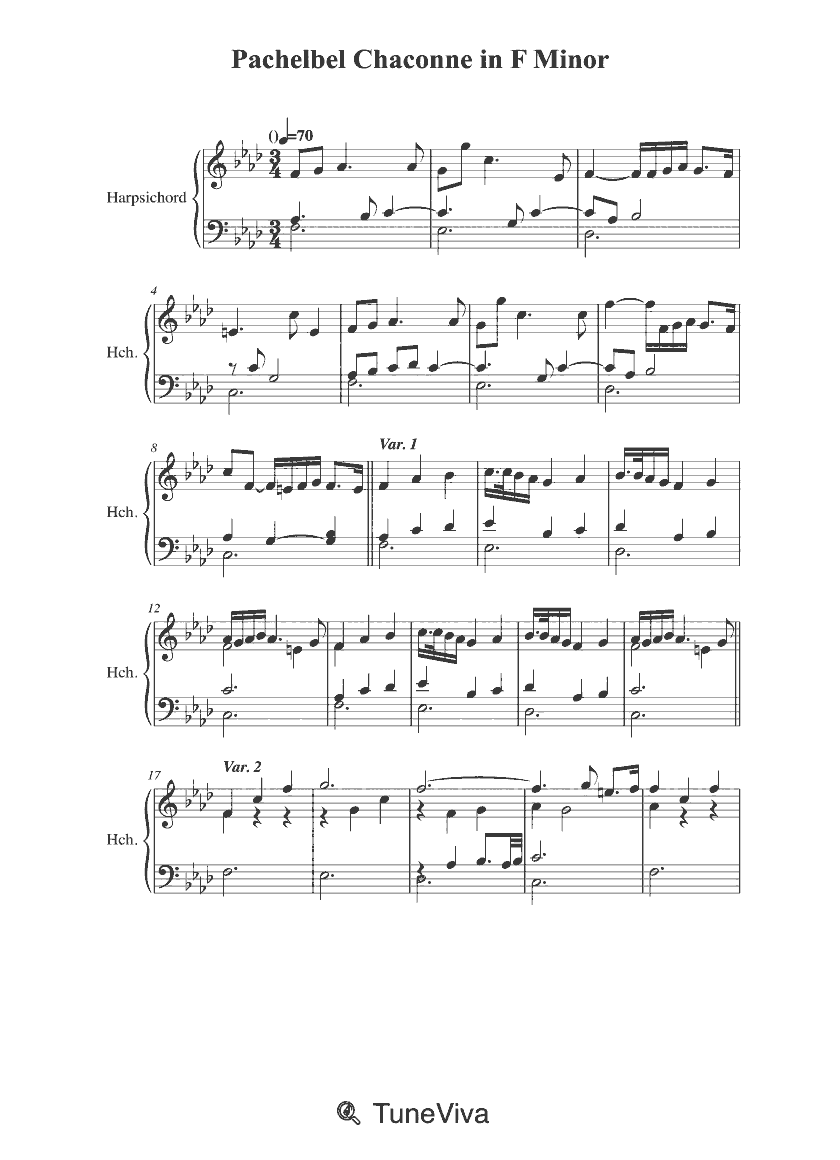
Johann Pachelbel
Harpsichord · 11 min 15 sec
Open score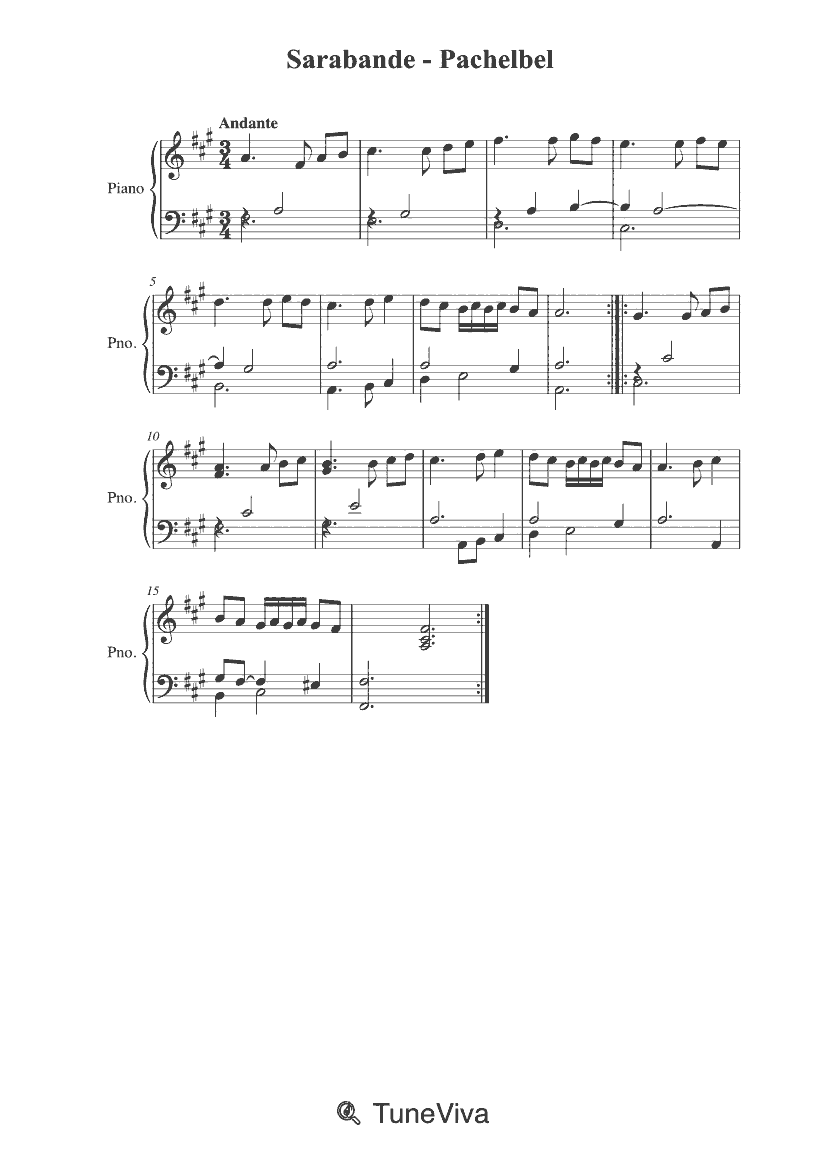
Johann Pachelbel
Piano · 1 min 52 sec
Open score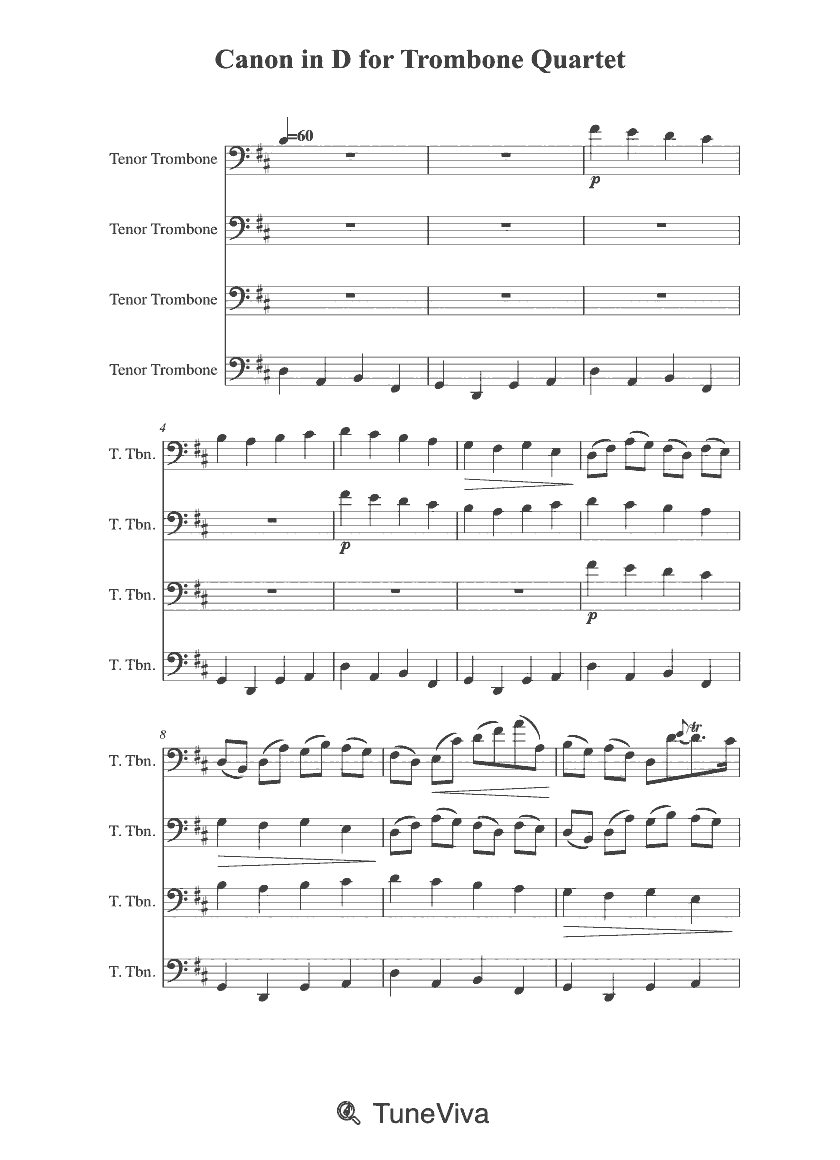
Johann Pachelbel
Tenor Trombone · 3 min 45 sec
Open score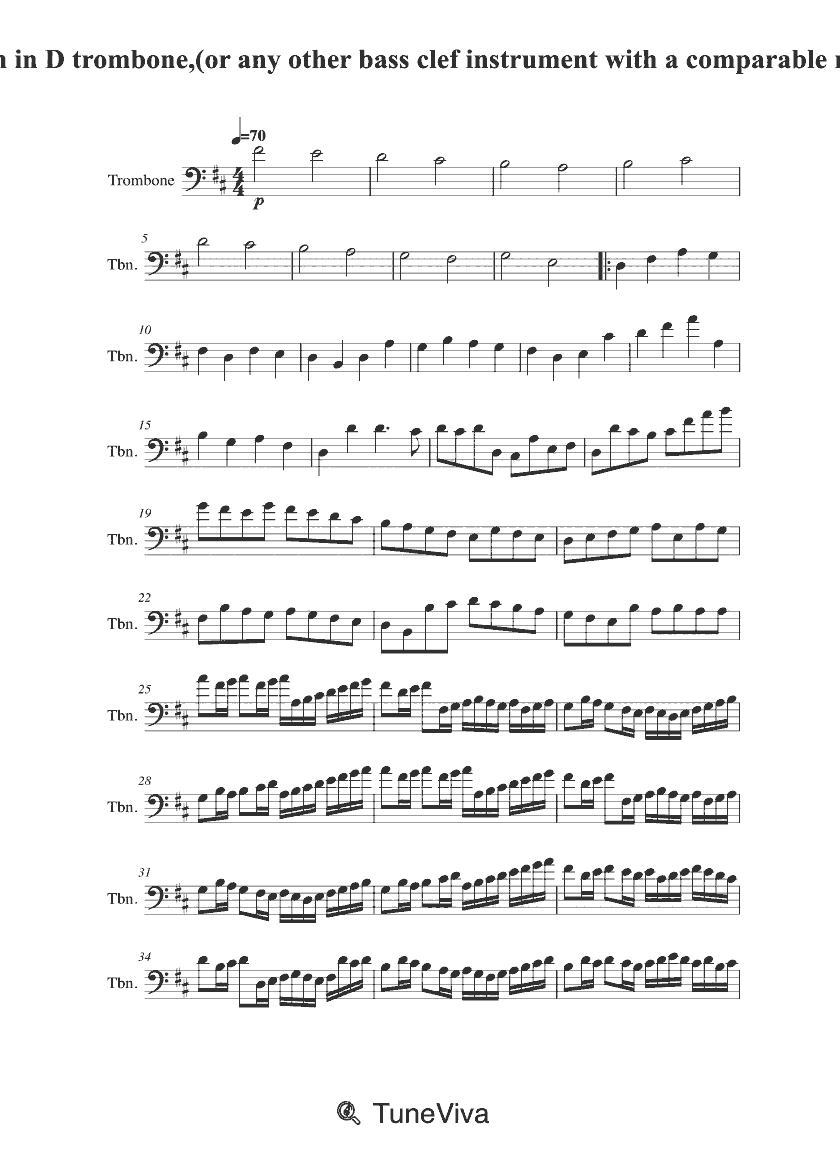
Johann Pachelbel
Trombone · Arr. Mahadevan Seetharaman · 5 min 32 sec
Open score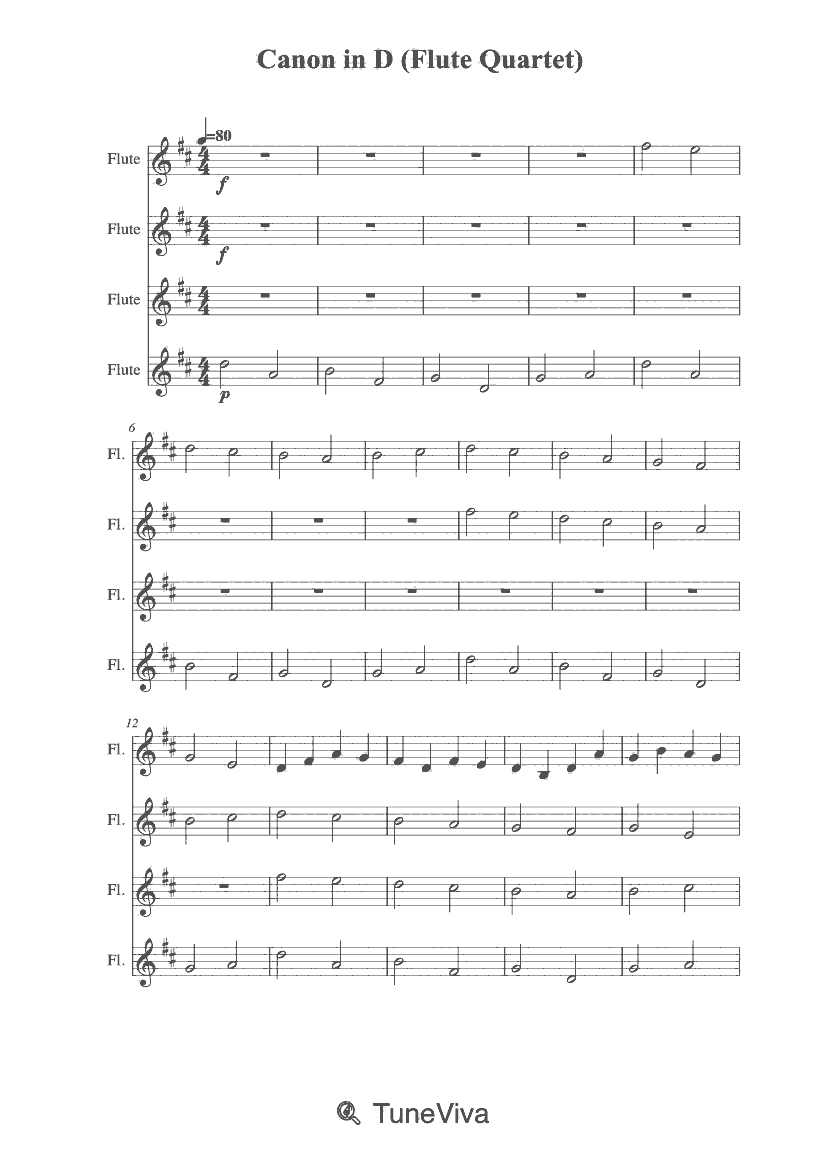
Johann Pachelbel
Flute · 1 min 39 sec
Open score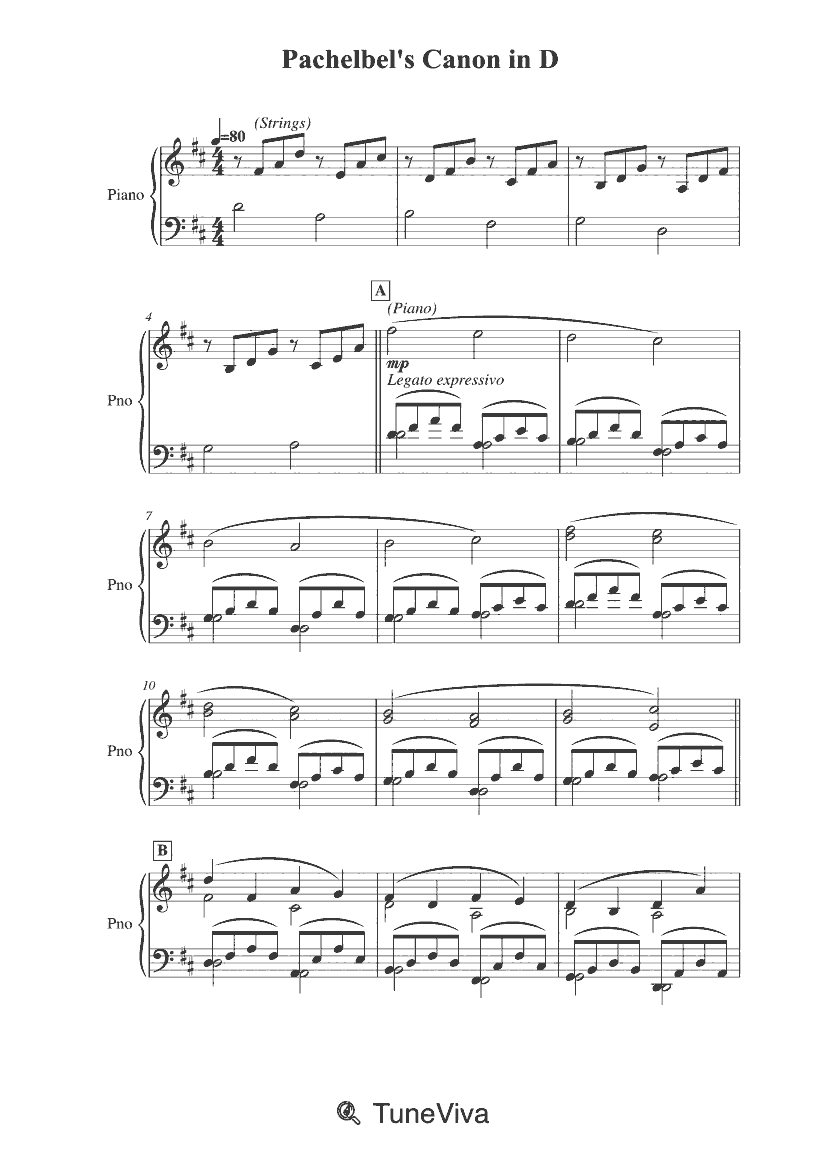
Johann Pachelbel
Piano · 3 min 15 sec
Open score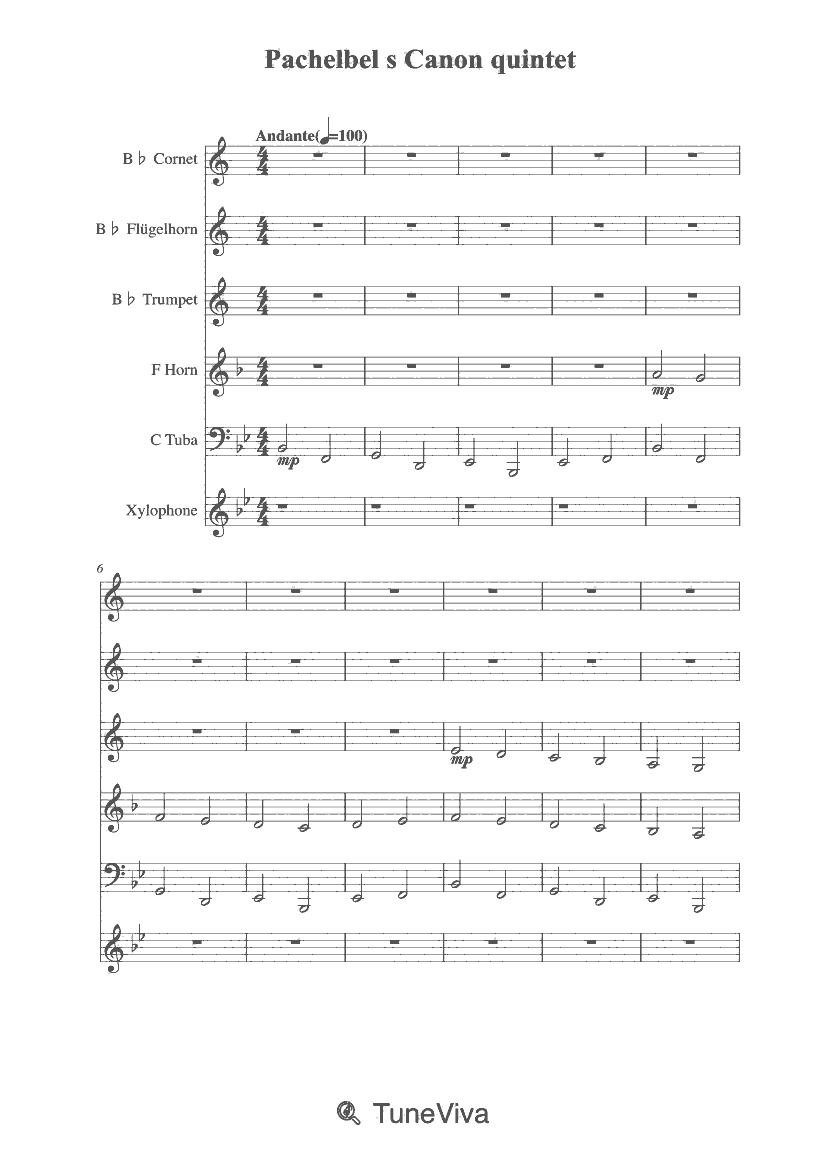
Johann Pachelbel
For brass quintet
B♭ Cornet; B♭ Flügelhorn; B♭ Trumpet +3 parts · 4 min 23 sec
Open score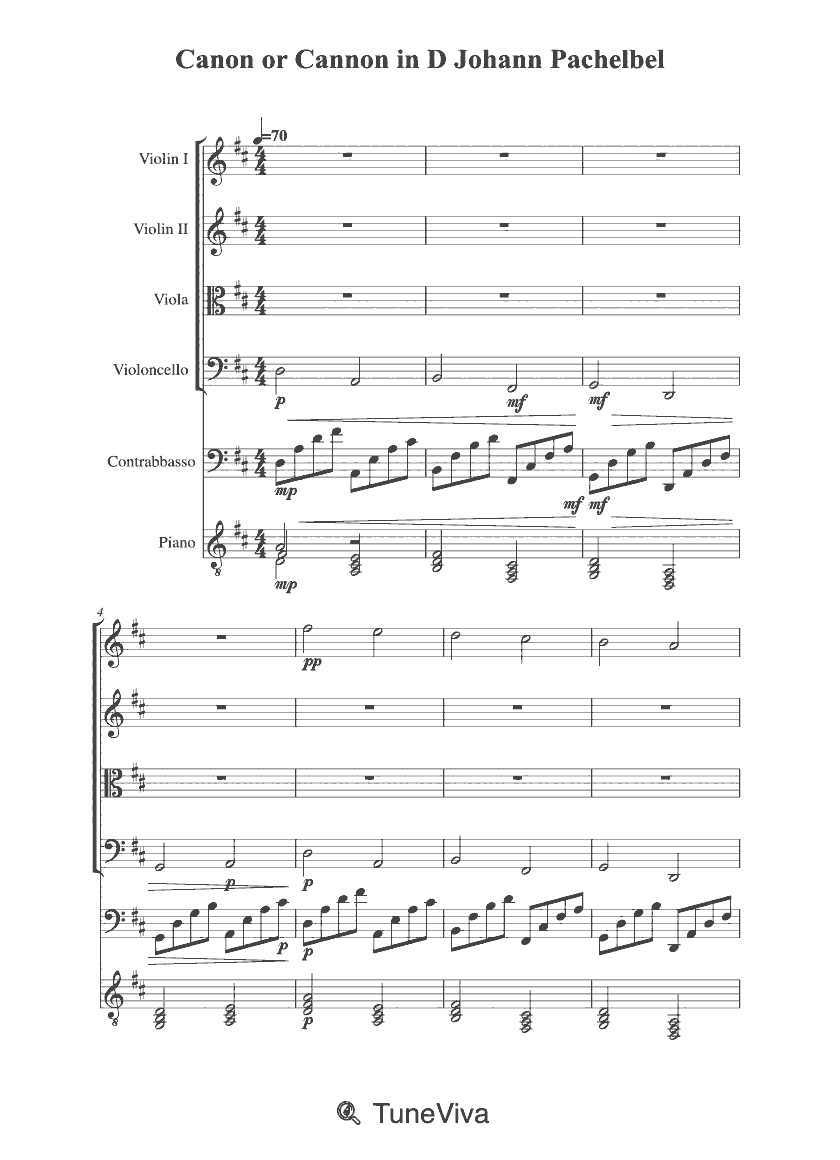
Johann Pachelbel
Violin I; Violin II; Viola +3 parts · 6 min 14 sec
Open score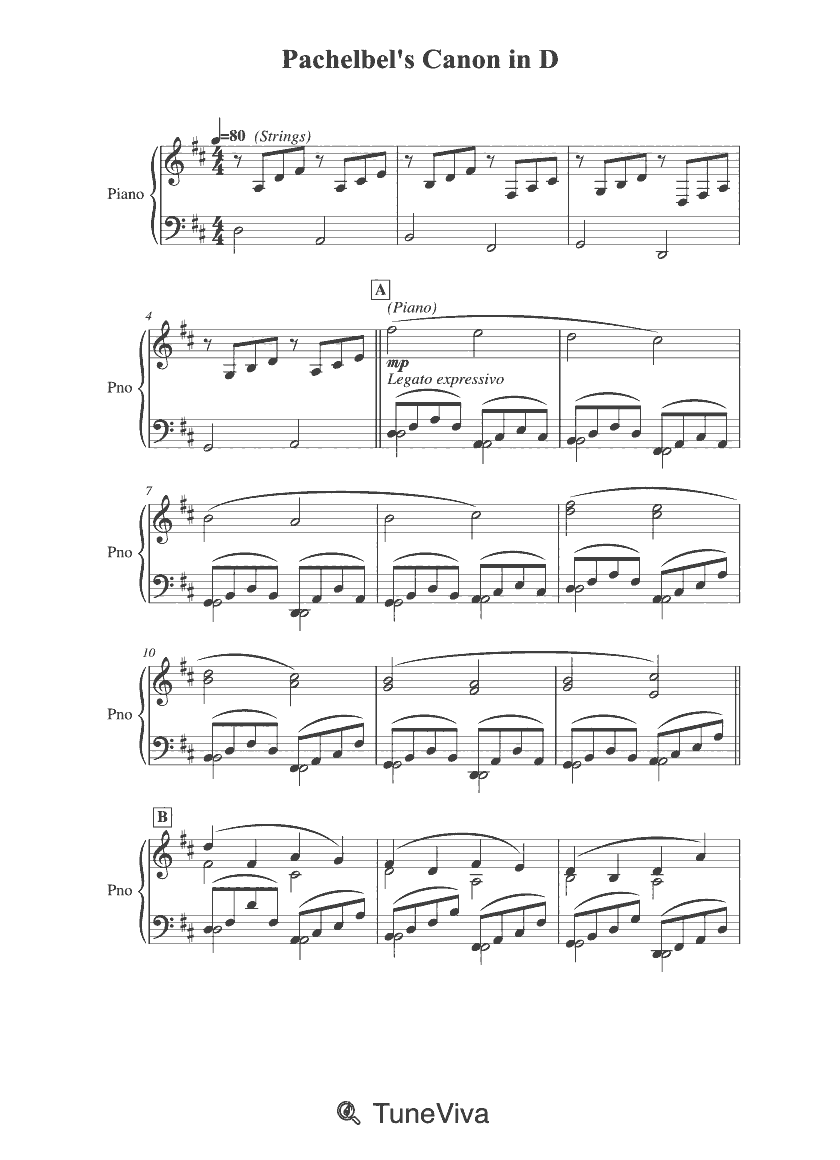
Johann Pachelbel
Piano · 2 min 15 sec
Open score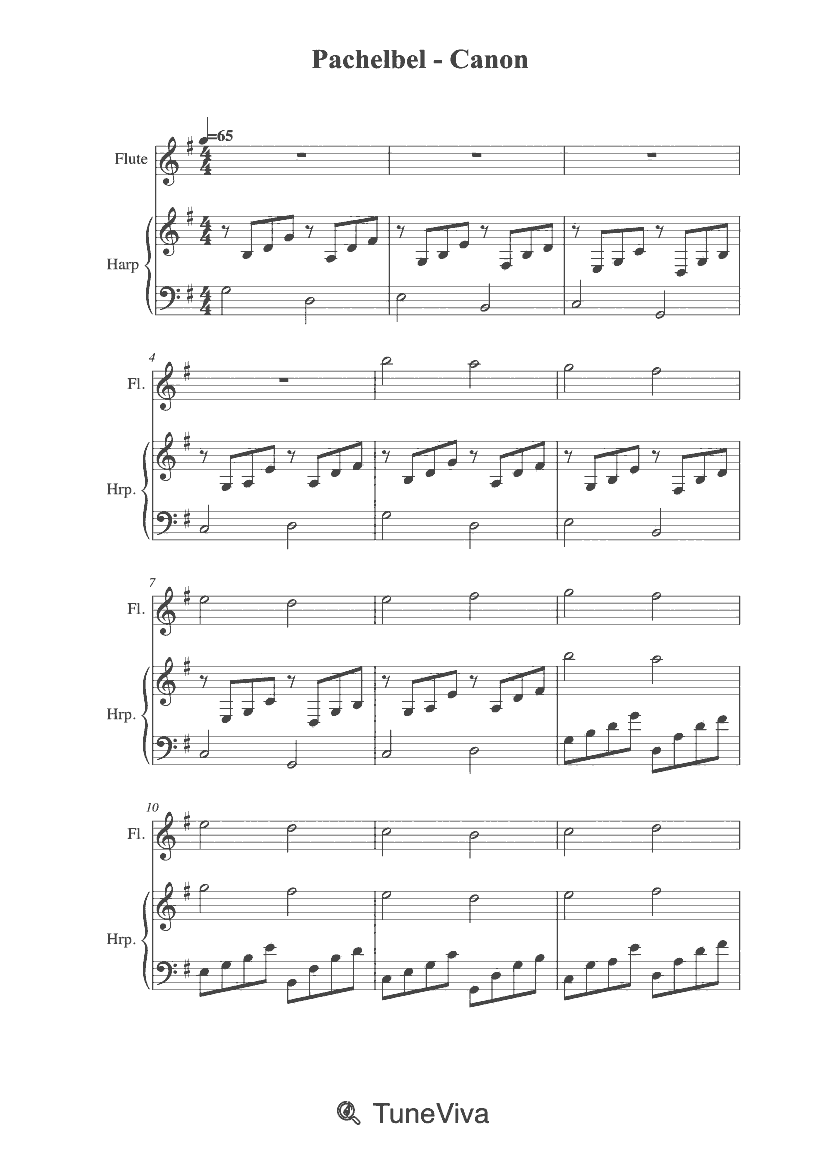
Johann Pachelbel
for Flute and Harp
Flute; Harp · 3 min 24 sec
Open score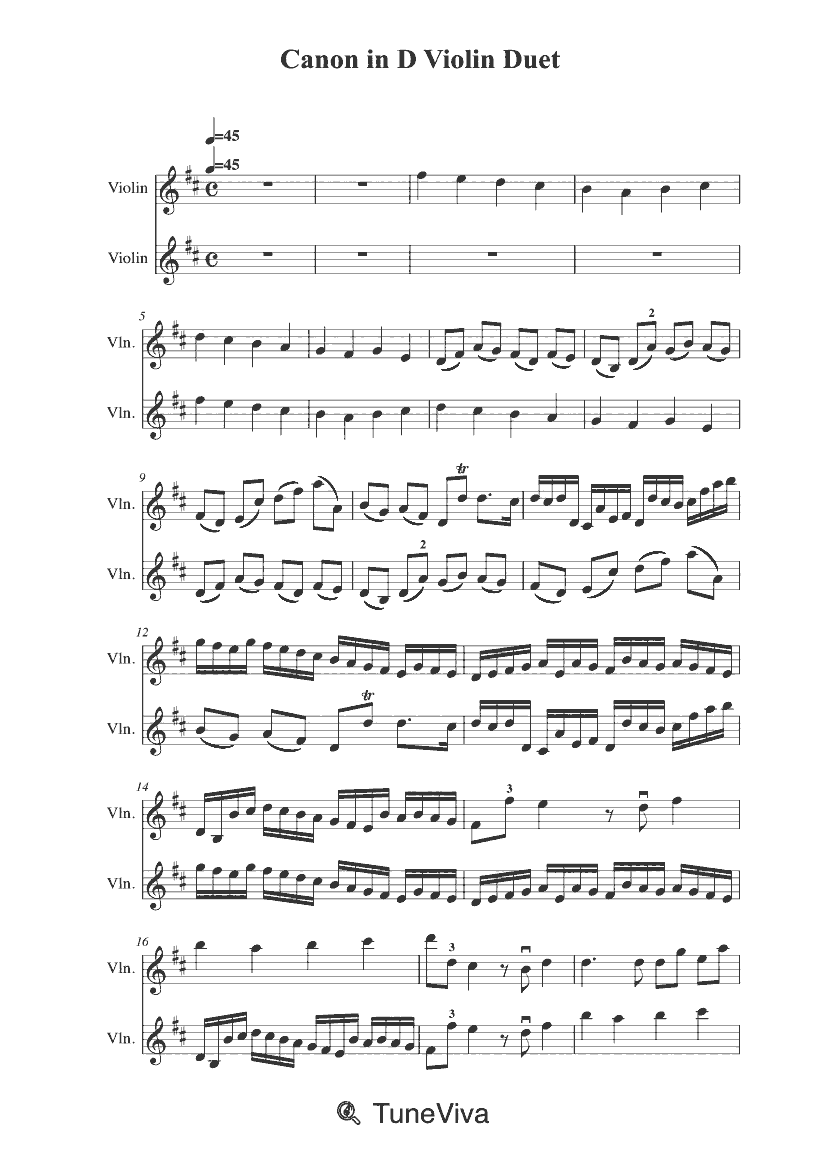
Johann Pachelbel
Violin · 5 min 24 sec
Open score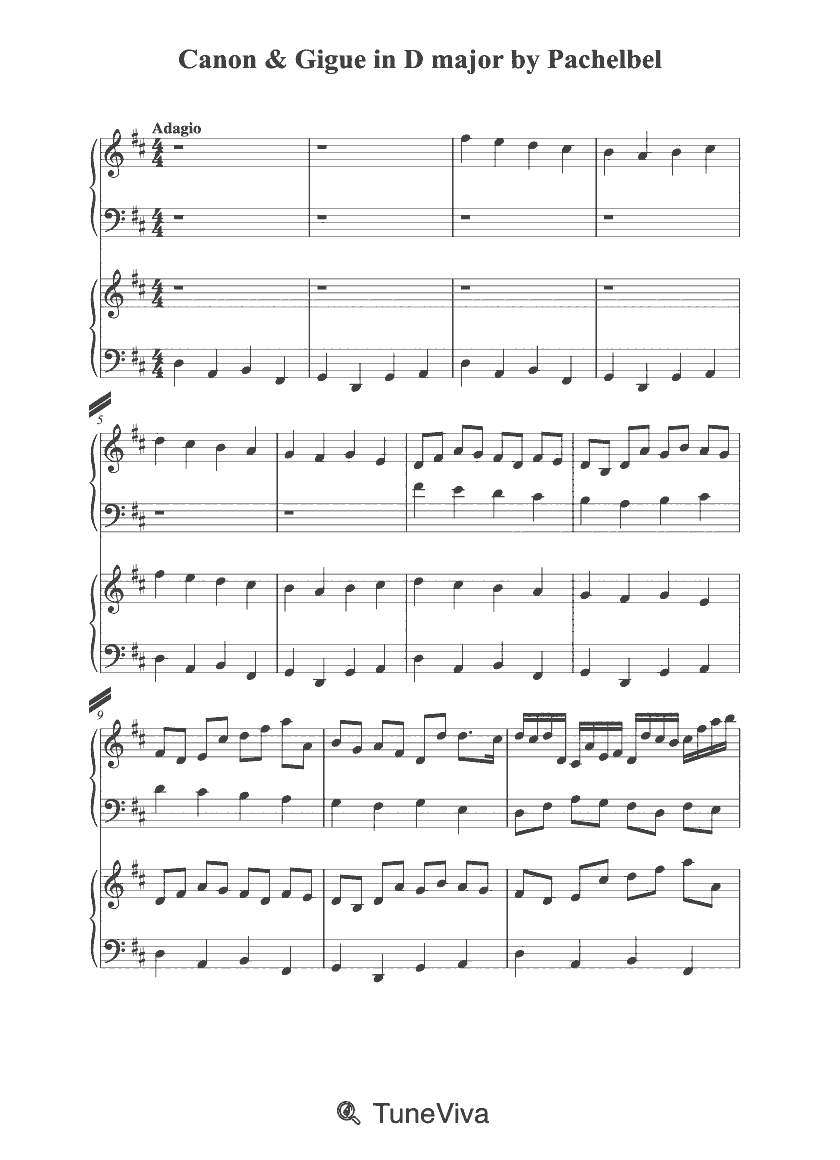
Johann Pachelbel
D major
Harp · 3 min 49 sec
Open score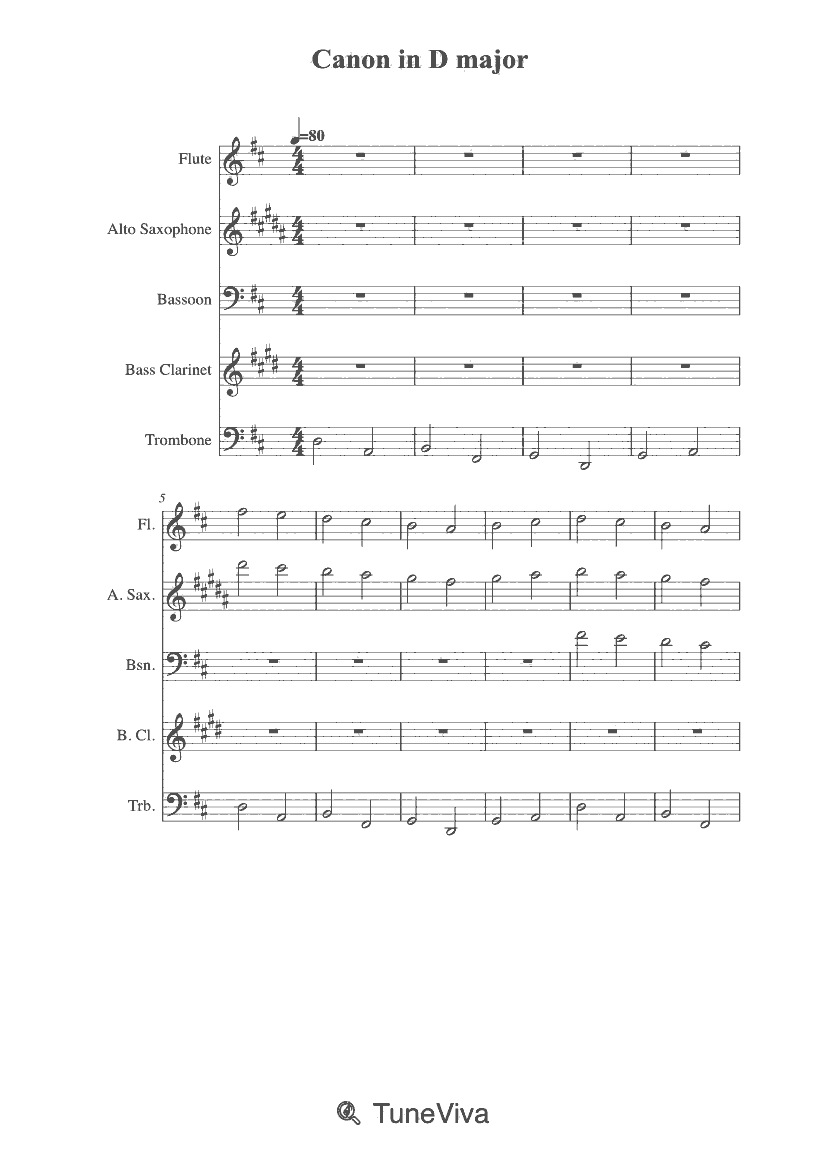
Johann Pachelbel
Flute; Alto Saxophone; Bassoon +2 parts · 6 min 2 sec
Open score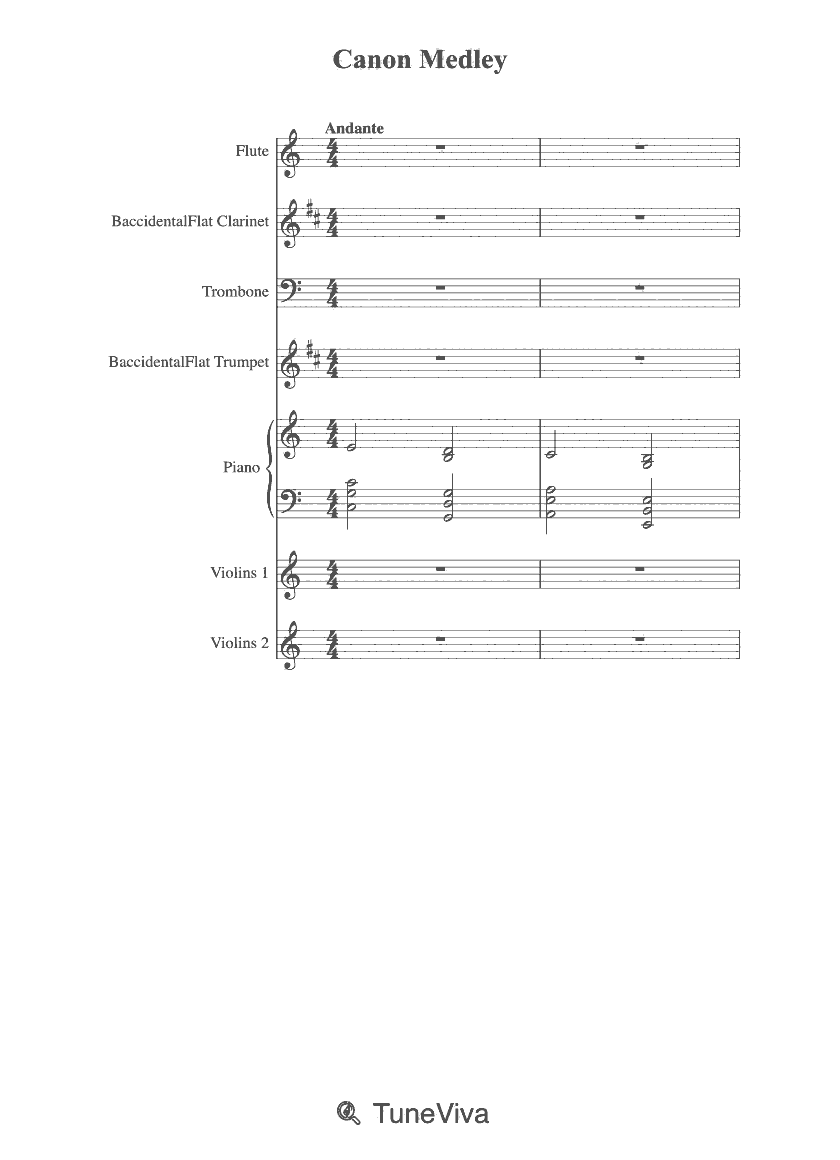
Johann Pachelbel
Flute; B♭ Clarinet; Trombone +4 parts · 3 min 20 sec
Open score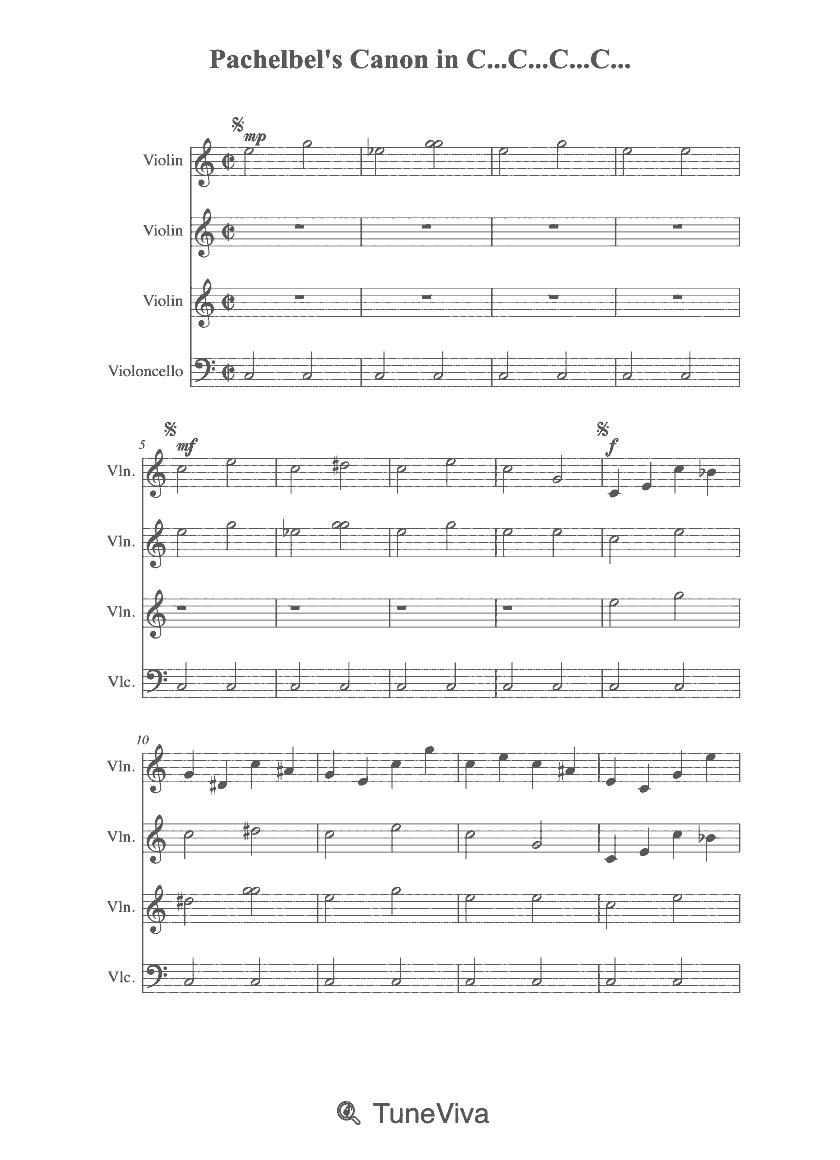
Johann Pachelbel
Violin; Violoncello · 3 min 54 sec
Open score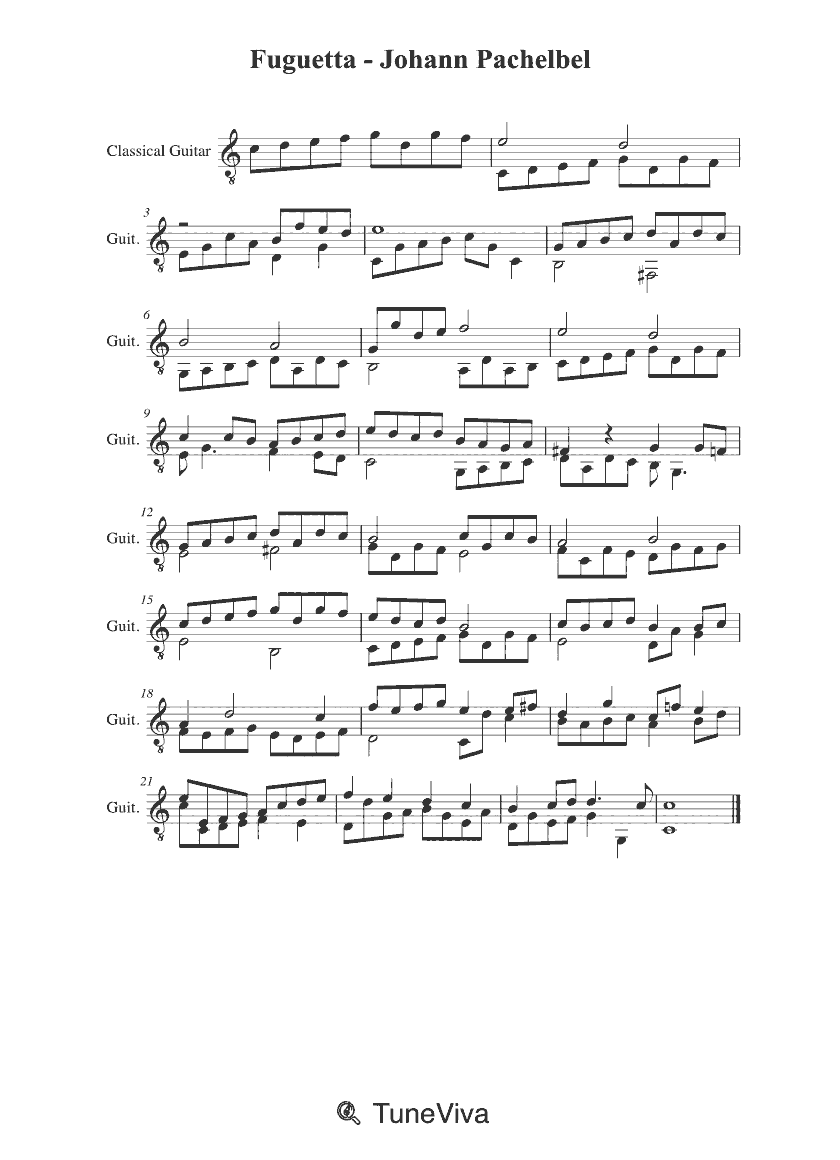
Johann Pachelbel
Classical Guitar · 1 min 34 sec
Open scorePage 1 of 4
One piece dominates this catalogue. The easy Canon in D has 199,200 views, and the next entries are also versions of the Canon, from a trombone quartet to a singing wedding arrangement. In total there are 77 Pachelbel scores, about 317 minutes of music and 103,729 notated notes. Away from the Canon the catalogue is small but varied: the F minor Chaconne, a Sarabande from a keyboard suite, and a set of variations on the Canon itself. Only four entries carry lyrics, and difficulty is spread across the index rather than concentrated at the easy end. Johann Pachelbel (baptised 1653, buried 1706) was a German composer, organist and teacher whose music helped bring the south German organ schools to their peak. His best-known work today is the Canon in D, originally a canon for three violins and basso continuo paired with a gigue; this page presents Pachelbel sheet music for that piece in several arrangements, from solo keyboard and trombone quartet to a singing wedding version and a score for three violins, cello and harpsichord. The collection also includes keyboard music that reflects Pachelbel's lifetime reputation, notably the Chaconne in F minor and a Sarabande from the Suite in F-sharp minor. The guidance below helps distinguish the Canon's original scoring from later arrangements and choose a version that fits your instrument.
Pachelbel was baptised in Nuremberg on 11 September 1653 (1 September in the Julian calendar used there) and studied at Altdorf before financial trouble sent him to the Gymnasium Poeticum in Regensburg. By 1673 he was in Vienna, where he served as deputy organist at St Stephen's Cathedral and absorbed the Catholic church music of southern Germany and Italy. He was court organist at Eisenach in 1677, then organist of the Predigerkirche in Erfurt from 1678 to 1690, before posts in Stuttgart and Gotha took him back to Nuremberg in 1695 as organist of St Sebaldus. He died there in March 1706 and was buried on the 9th.
His reputation rested on organ music: more than two hundred pieces, including chorale preludes, Magnificat fugues and six chaconnes. The catalogue's F minor Chaconne, P.43, belongs to that group, while the Sarabande is an extract from a keyboard suite in F-sharp minor, P.439. The Canon in D is a different kind of piece altogether, chamber music for three violins and continuo, originally paired with a gigue. Its date is unknown; suggested years run from 1680 to 1706, and the oldest surviving copy was made in the late 1830s.
The catalogue reflects the Canon's afterlife more than its origin. Alongside the original scoring there are easy piano versions, a woodwind arrangement, two trombone versions, a singing wedding text and a set of variations. Numbering is inconsistent because Pachelbel has no single standard catalogue: the P numbers come from Jean M. Perreault's thematic catalogue, while other editions use T, PC or POP numbers. Only four scores include lyrics, so almost everything here is instrumental.
Pachelbel's Canon and Gigue: the original piece: Pachelbel's Canon is an accompanied canon in D major, originally scored for three violins and basso continuo and paired with a gigue. The canon is a true canon at the unison in three parts, with a fourth part providing a ground bass throughout. Neither the date nor the circumstances of composition are known: suggested dates range from 1680 to 1706, and the oldest surviving manuscript copy dates from 1838 to 1842. Check the listed scoring: the original requires three violins and continuo, while other scores here are for piano, trombone quartet or voices.
Keyboard music beyond the Canon: Pachelbel was renowned in his lifetime for organ and other keyboard music. Well-known works include the Chaconne in F minor, the Toccata in E minor for organ and the Hexachordum Apollinis, a set of keyboard variations. The selected Chaconne score is labelled for harpsichord, and the Sarabande is presented as a piano piece from the Suite in F-sharp minor. These titles describe individual scores rather than a complete survey of Pachelbel's keyboard output.
Style and historical context: Pachelbel preferred a lucid, uncomplicated contrapuntal style that emphasised melodic and harmonic clarity. His music is generally less virtuosic and less harmonically adventurous than Dieterich Buxtehude's, though Pachelbel experimented widely with ensembles and instrumental combinations, especially in vocal music. He explored variation forms across sacred concertos, harpsichord suites and other pieces.
Choosing a Canon arrangement: The scores here include the Canon for piano, for trombone quartet, for three violins with cello and harpsichord, and a singing wedding version in G major. Check the instrumentation and key before you choose; a title marked 'easy' is a description attached to that score, not a formal difficulty grade. If you need the original chamber texture, look for the three-violin and continuo scoring rather than a solo keyboard version.
The catalogue holds arrangements as well as originals. The same piece appears for piano, woodwind, trombone quartet and voices, and each file is counted separately.
Yes. The original scoring is three violins and basso continuo, with a fourth part as ground bass. The full string-orchestra version is a later arrangement.
It is the number in Jean M. Perreault's thematic catalogue of Pachelbel's works. Some sources write it as P 37, and no single numbering system is used by all editions.
Pachelbel's Canon in D was originally scored for three violins and basso continuo, with a fourth part supplying a ground bass. It was paired with a gigue, and both movements are in D major. The canon is a true canon at the unison in three parts.
The date and circumstances of Pachelbel's Canon are unknown. Suggested dates range from 1680 to 1706, and the oldest surviving manuscript copy dates from 1838 to 1842. A proposal linking the piece to a 1694 wedding has been called speculation by Pachelbel scholar Kathryn Jane Welter.
Pachelbel's Canon is famously used in weddings and funeral ceremonies in the western world. Its modern popularity grew after a 1968 arrangement and recording by the Jean-François Paillard chamber orchestra; recordings spread in the 1970s, and elements of the piece, especially its chord progression, appeared in pop songs.
Beyond the Canon in D, Pachelbel is known for the Chaconne in F minor, the Toccata in E minor for organ and the Hexachordum Apollinis, a set of keyboard variations. In his lifetime he was especially renowned for organ and other keyboard music.
Pachelbel favoured a lucid, uncomplicated contrapuntal style with emphasis on melodic and harmonic clarity. His music is less virtuosic and less adventurous harmonically than Dieterich Buxtehude's, although Pachelbel also experimented with different ensembles and instrumental combinations, particularly in vocal music.
The Chaconne in F minor is one of Pachelbel's best-known works after the Canon in D. The score listed here is labelled for harpsichord and identifies the piece as P.43; it is a keyboard work rather than a string arrangement.