classical
8 tracks
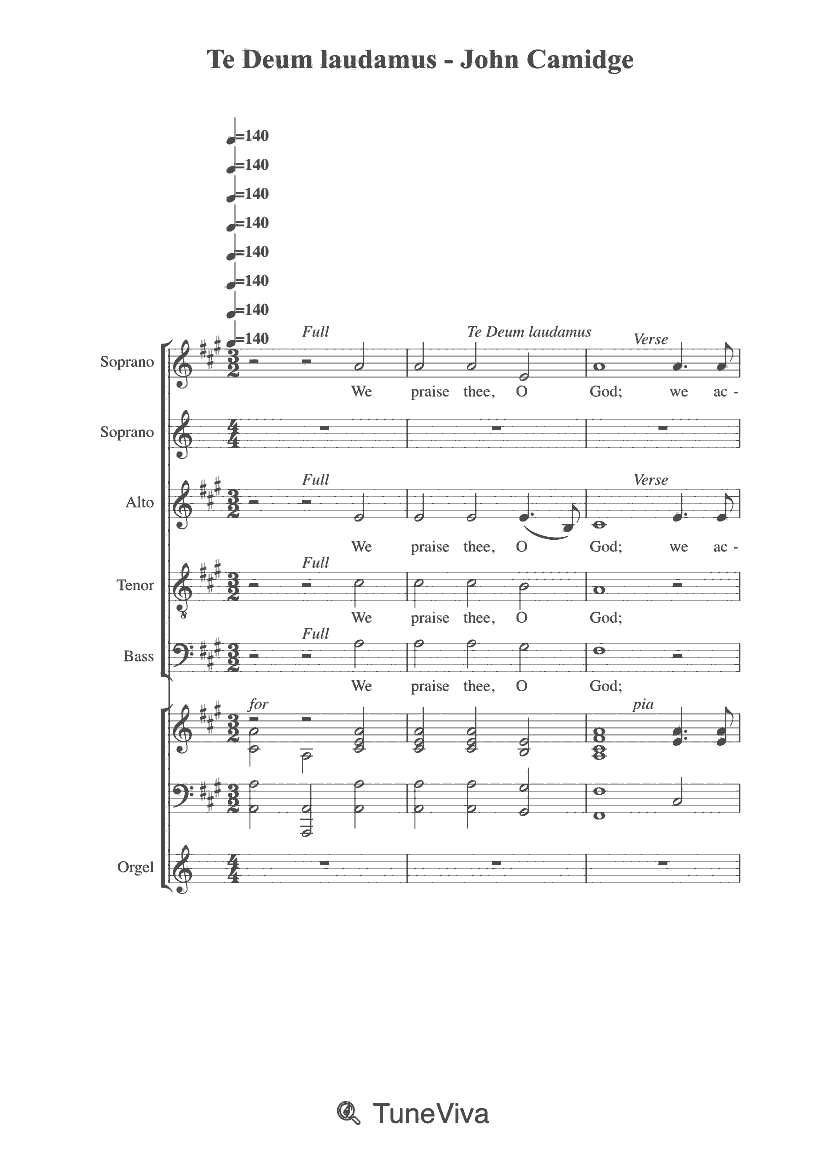
John Camidge spent his working life at York Minster, and the catalogue is almost entirely cathedral music: 49 scores, about 54 minutes and 20,025 notated notes. Most are short chants, and only three entries carry text: the Te Deum, the Jubilate and one anthem.
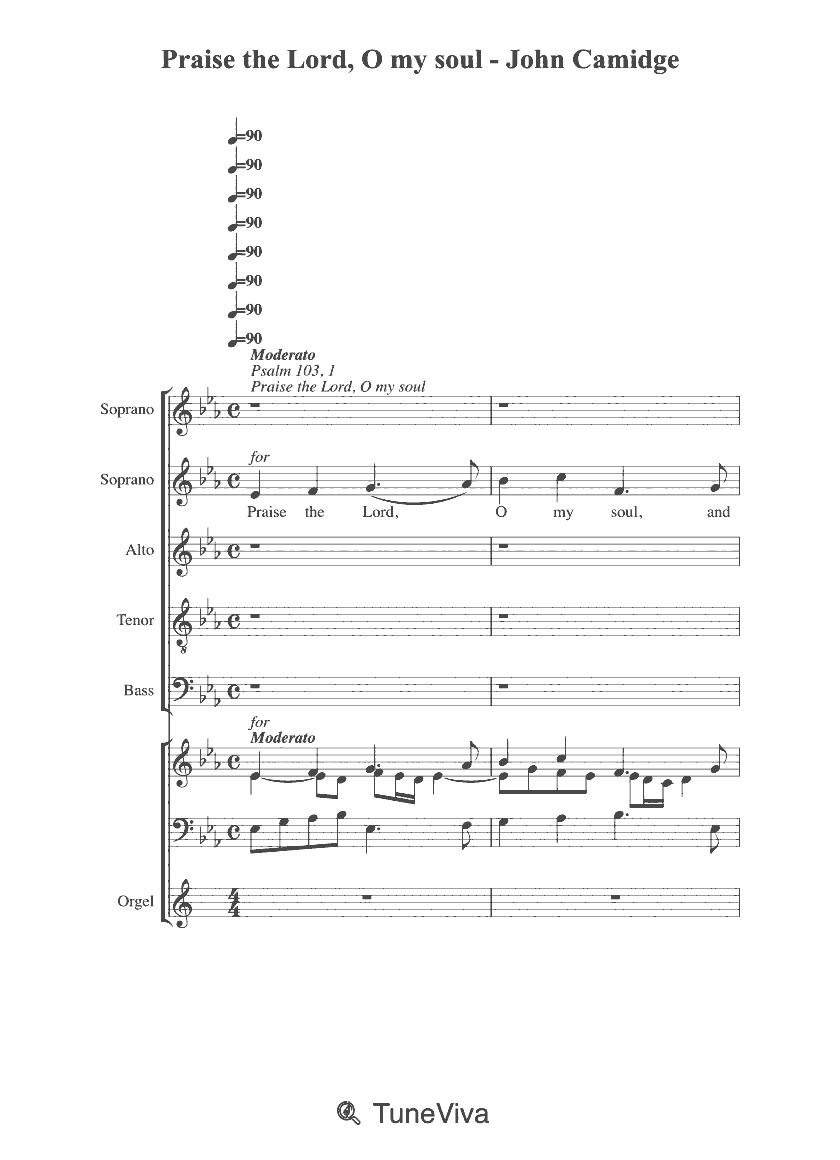
Every score is logged at complexity index 0, so the difficulty scale offers no help in choosing. The most-viewed anthem is Praise the Lord, O my soul; after it come the canticles and then a long run of double chants in D minor, F major, C minor and A major, several filed with Roman numerals because the collection holds more than one setting in the same key.
Camidge was born at York in 1790, into a family that supplied the Minster with organists for four generations. His grandfather, another John, held the post from 1756 until 1799; his father, Matthew, held it until he resigned in October 1842, and John had deputised for him for years before taking over. He graduated Mus.B. at Cambridge in 1812 and Mus.D. in 1819.
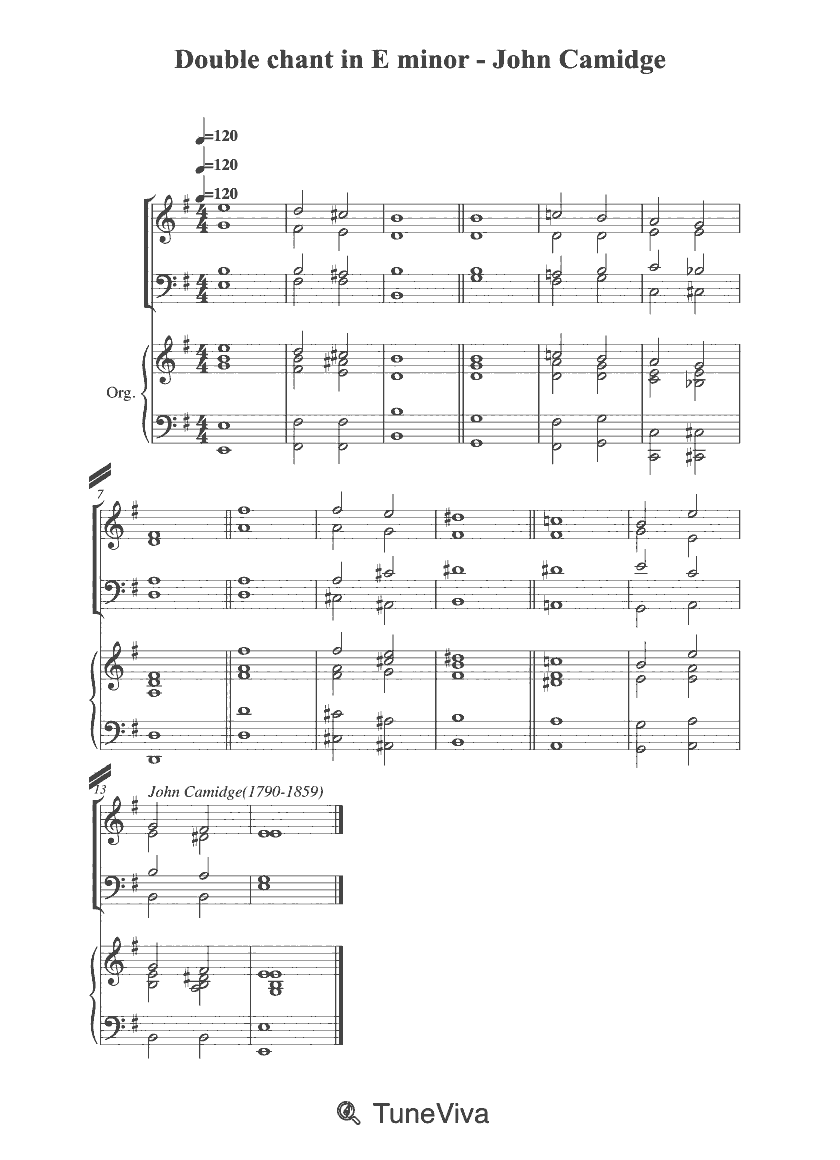
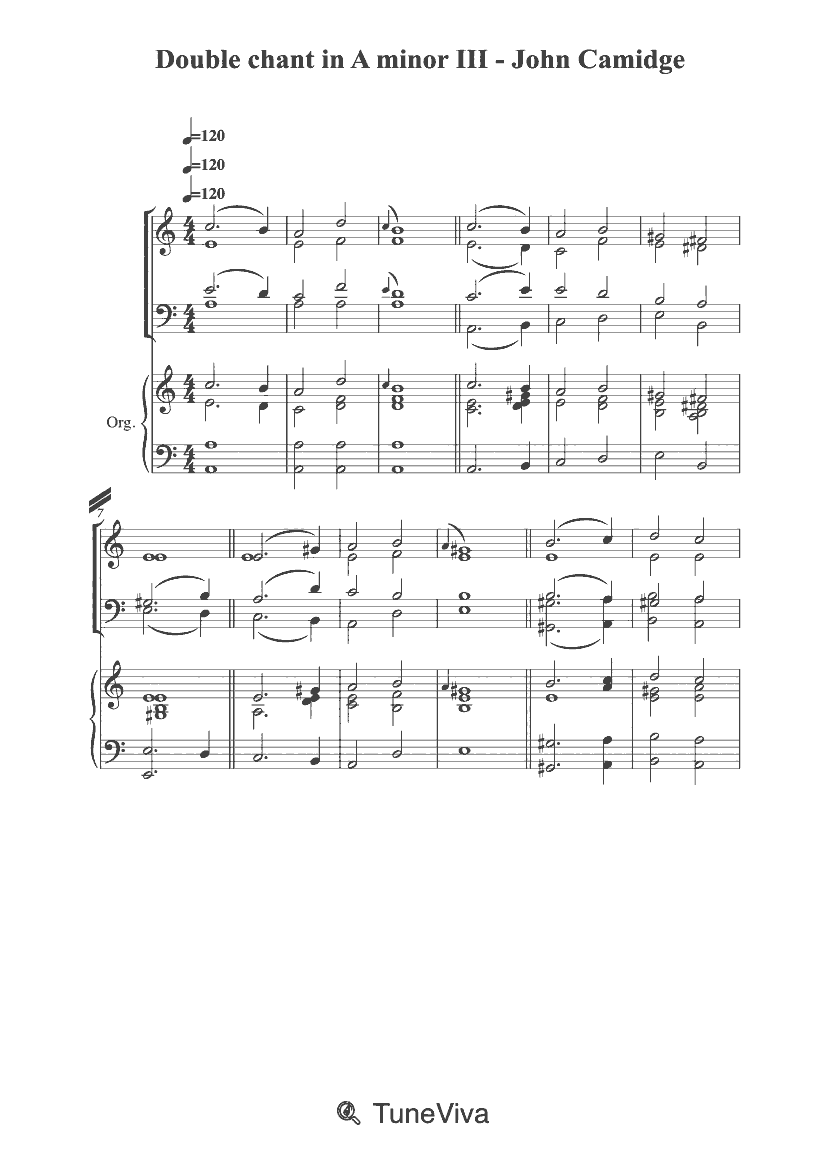
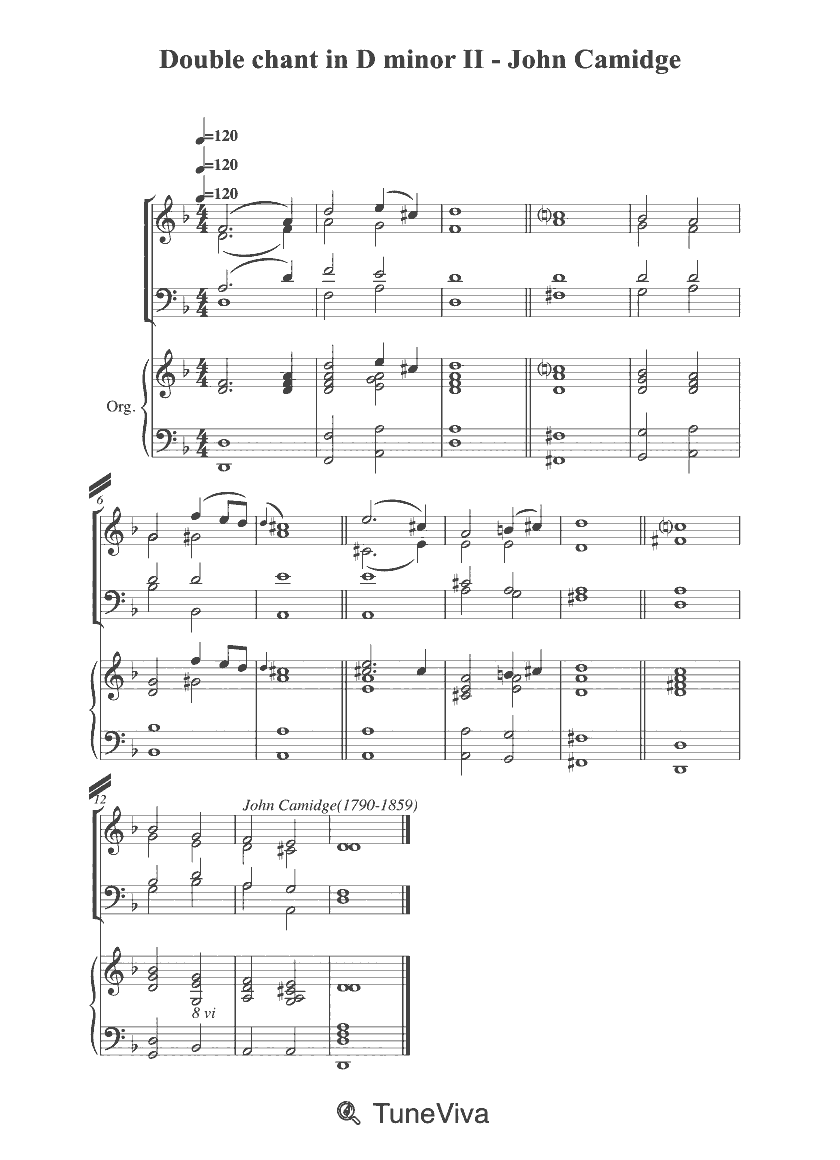
His Cathedral Music, published around 1830, is the source of much of this repertoire: a Te Deum, Jubilate, Cantate, Deus misereatur, Magnificat and Nunc Dimittis, six arrangements of the Sanctus and Miserere, four anthems and fifty double chants, all in score with an organ part. A chant sets one verse of a psalm to a short harmonic formula repeated for each verse; a double chant spans two verses before the reciting note returns, and a quadruple chant four, which is why the quadruple setting in A major stands out in a list of doubles.
The Minster organ was destroyed in the fire of 1829, and the instrument that replaced it was built largely under his supervision. He was paralysed while playing an evening service in November 1848 and never resumed regular duty; he resigned early in 1859 and died on 21 September that year. The 49 entries here, all chants and service music, are the working library of that career rather than concert pieces.
A chant is accompaniment as much as music: the choir holds the reciting note on one chord, then the formula carries the verse to its close, and the organist must breathe with the words rather than the bar-lines. Keep the harmony plain and the registration steady, and do not slow the final cadence, because the next verse begins at once. With a double chant, mark where the second half starts: that is where choirs and congregations lose each other.
The most-viewed score here, an anthem on the opening of Psalm 103.
The great thanksgiving of matins, sung after the first lesson in the Book of Common Prayer.
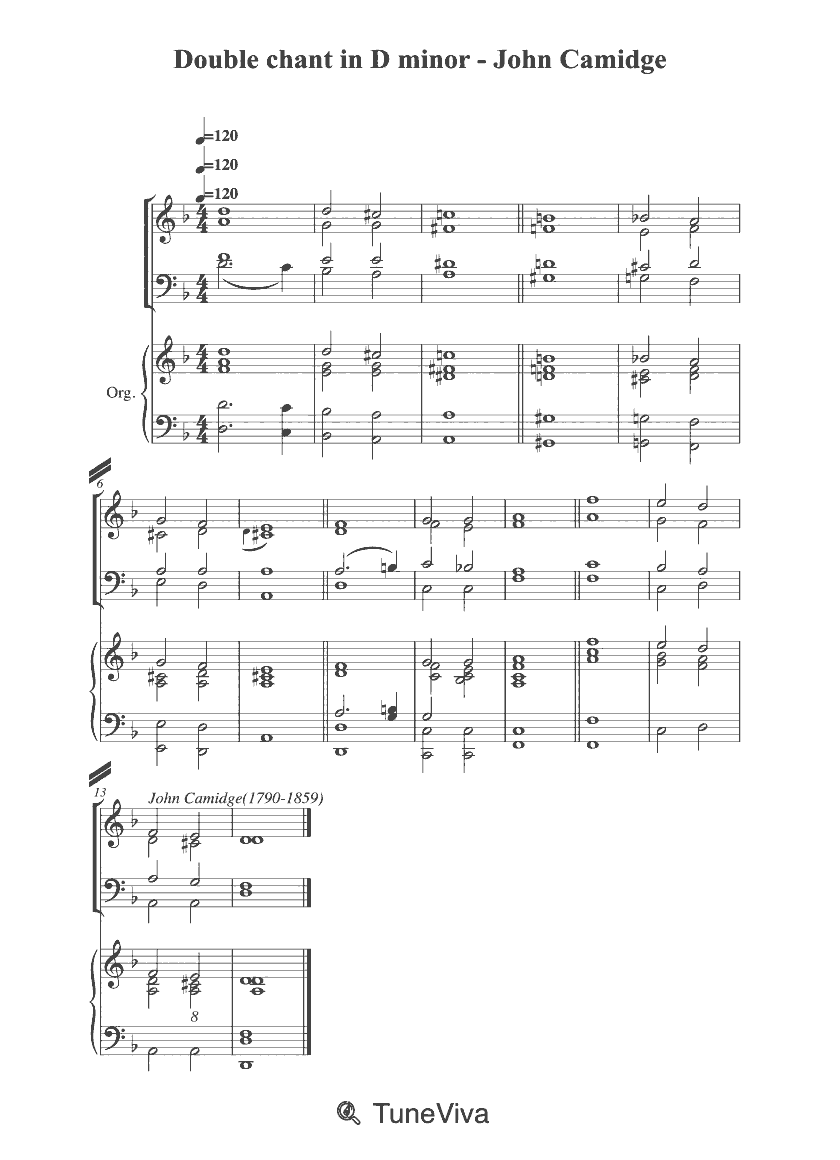
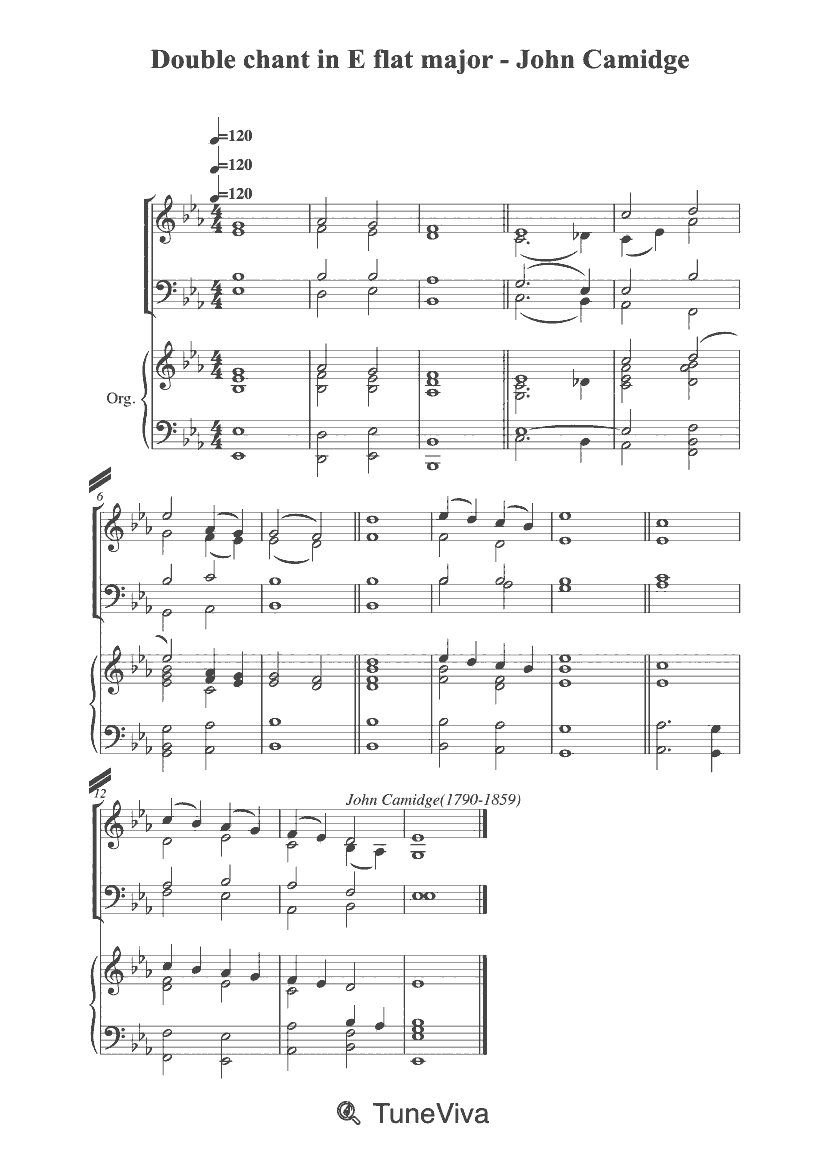
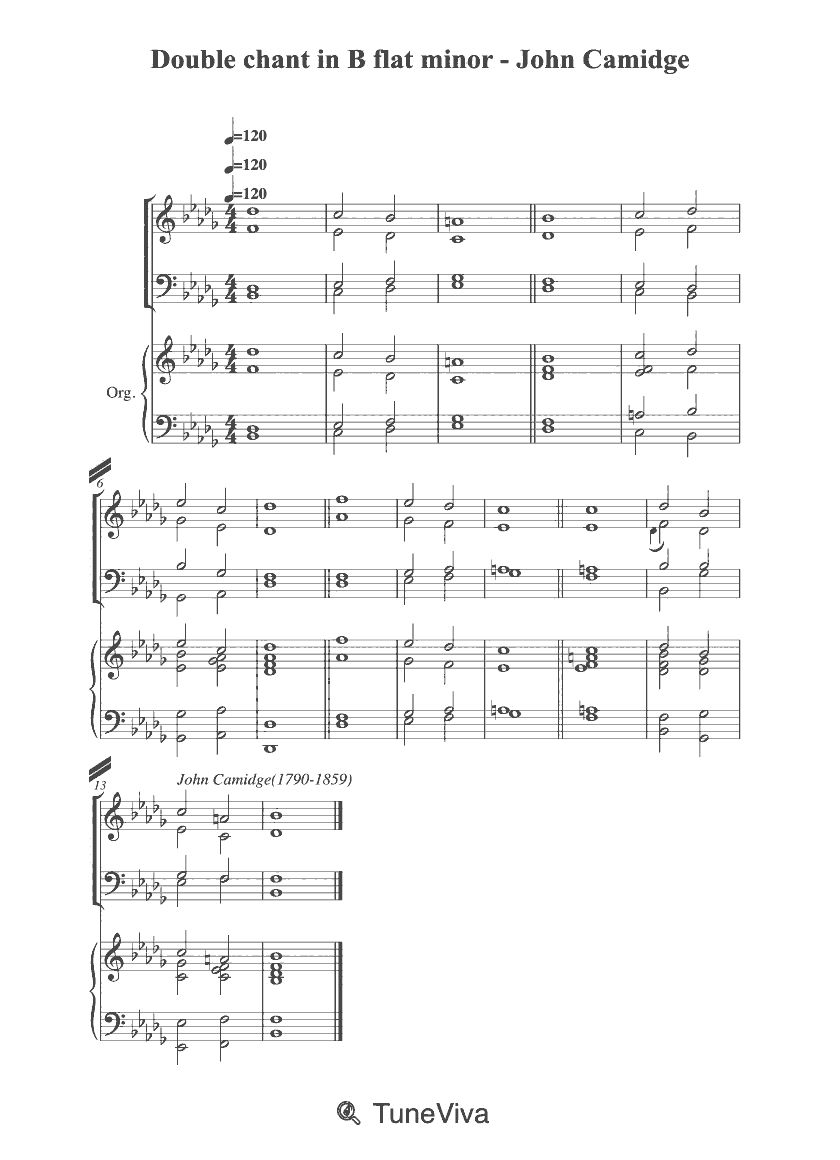
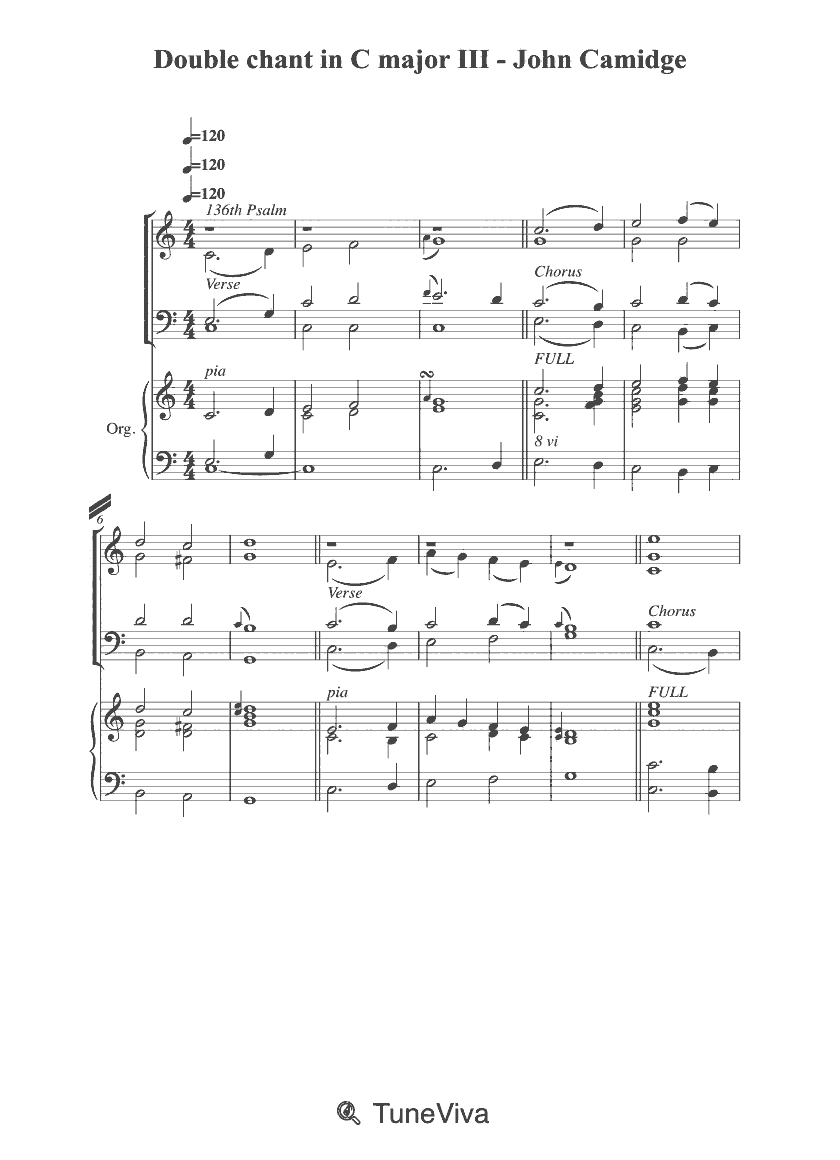
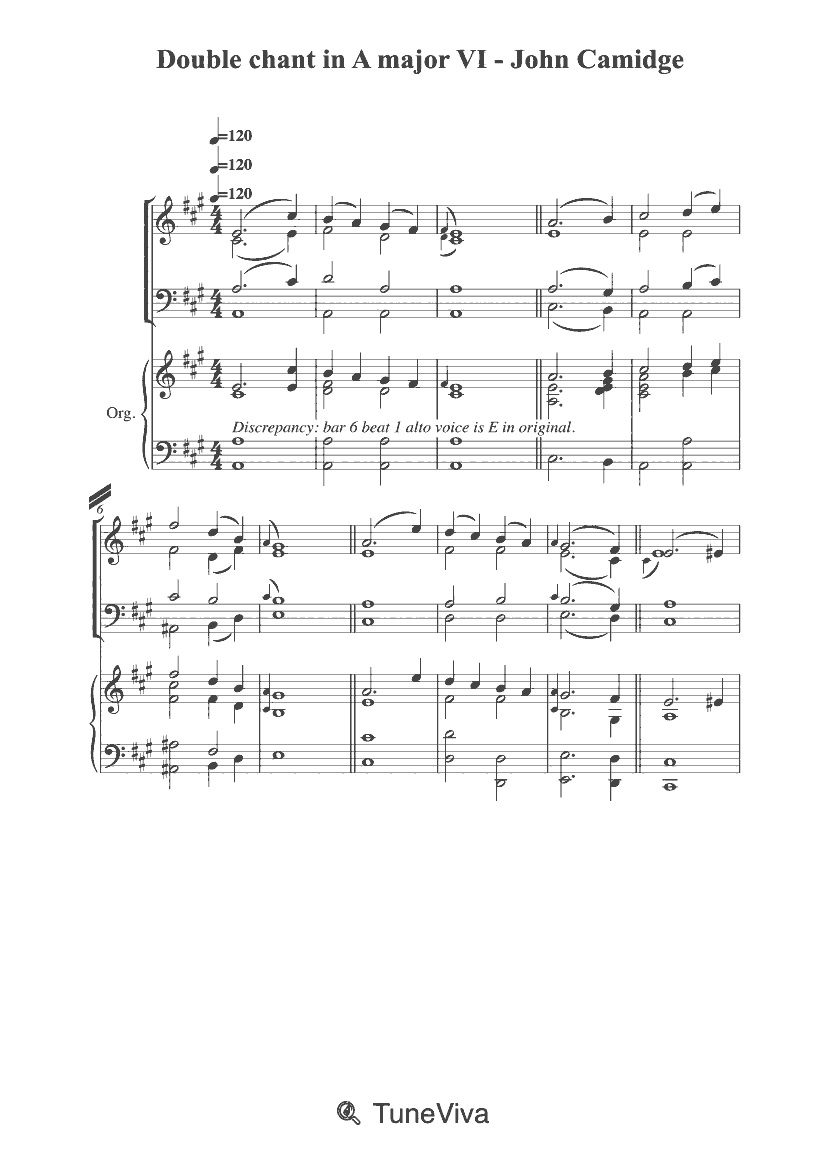
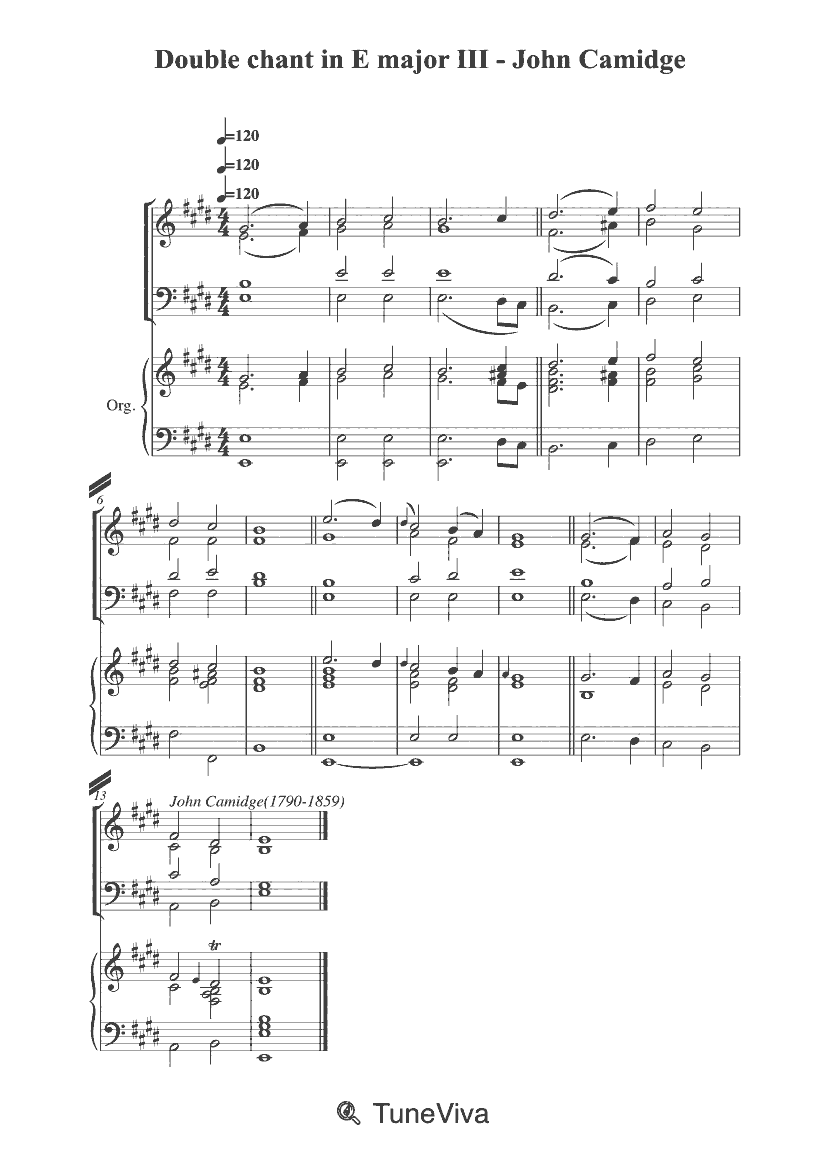
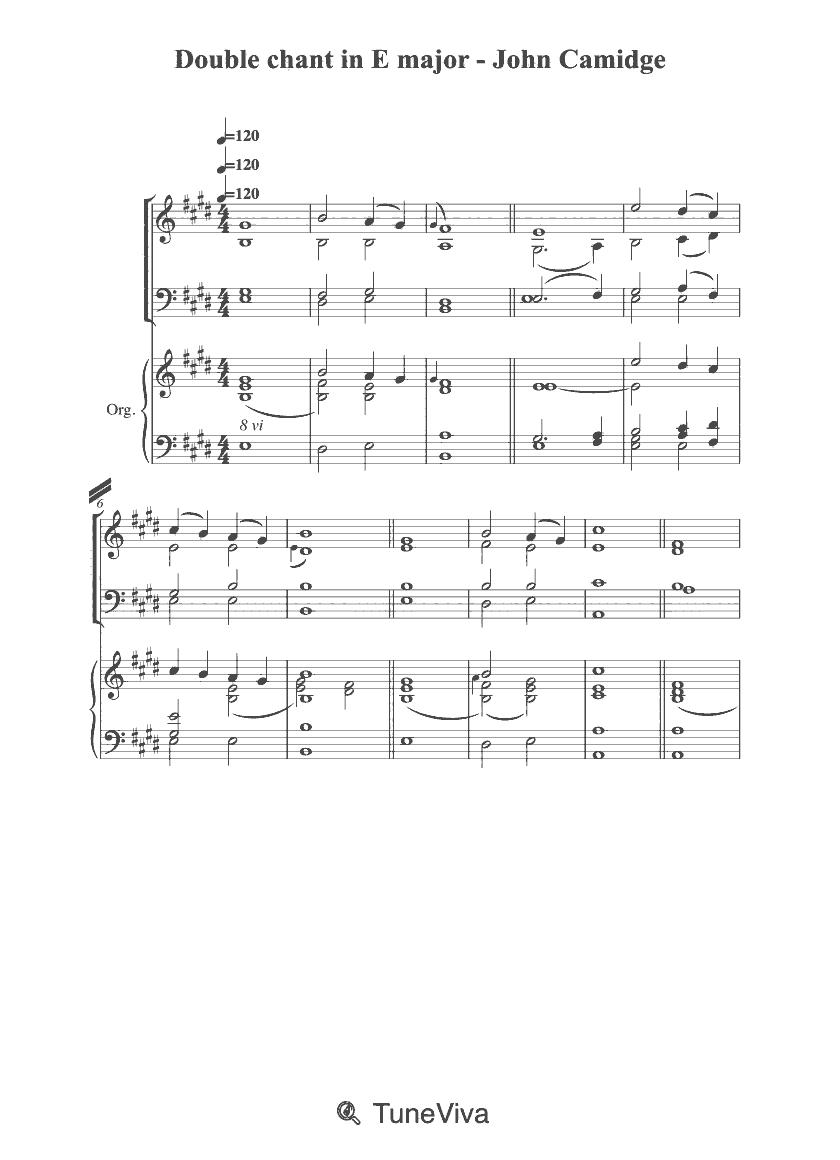
A double chant covers two verses of a psalm before the reciting note returns.
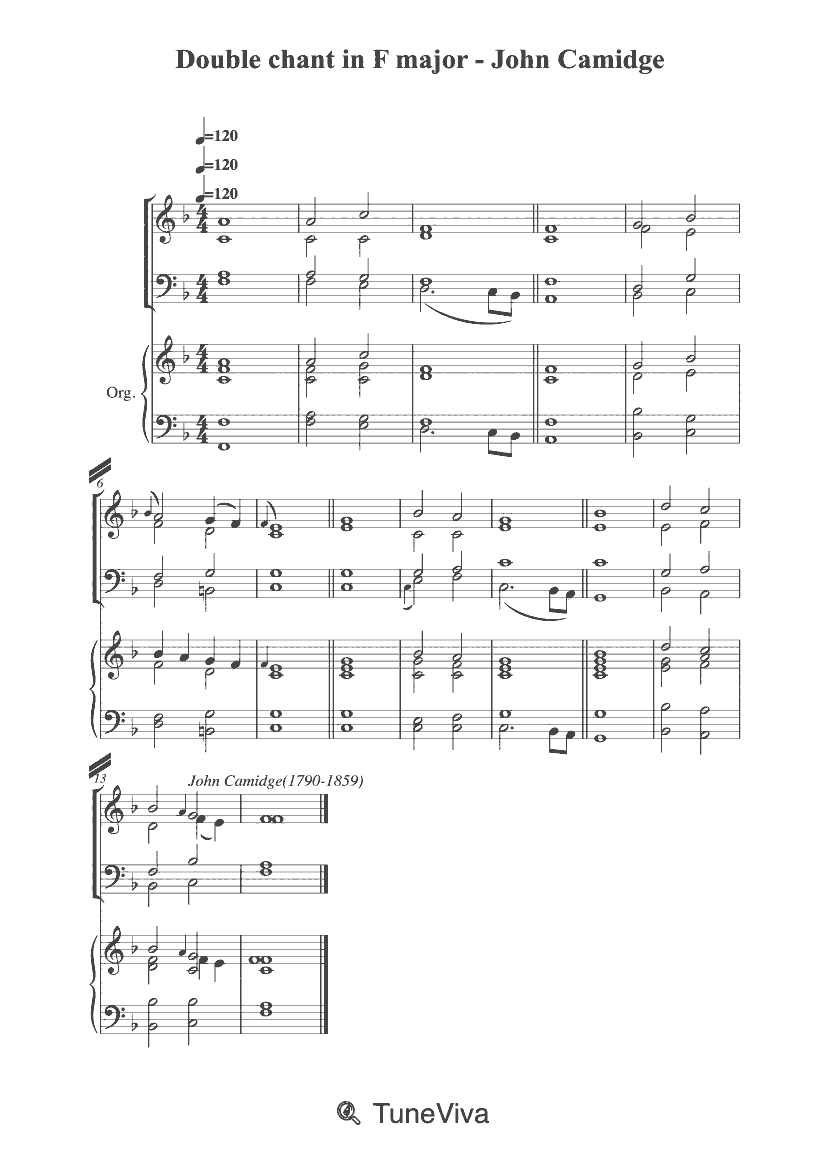
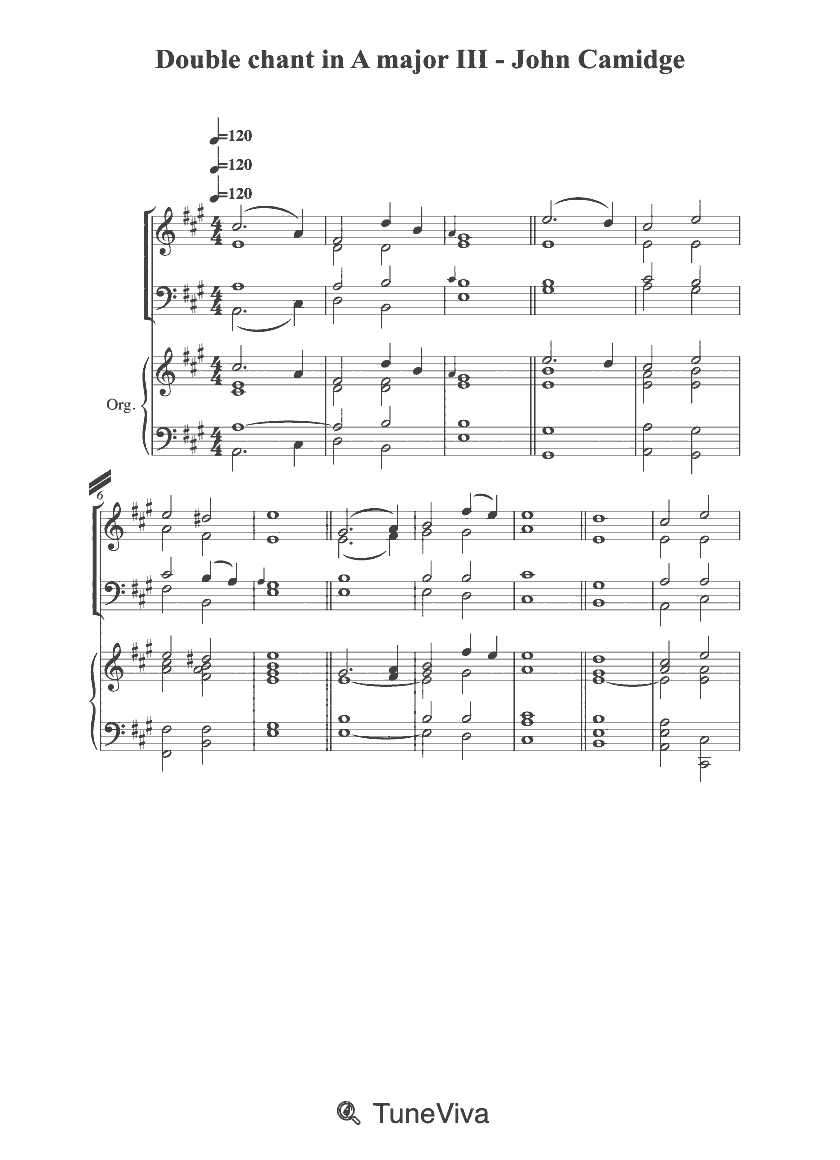
One of a group of chants in the brighter keys, useful where a psalm needs lift rather than weight.
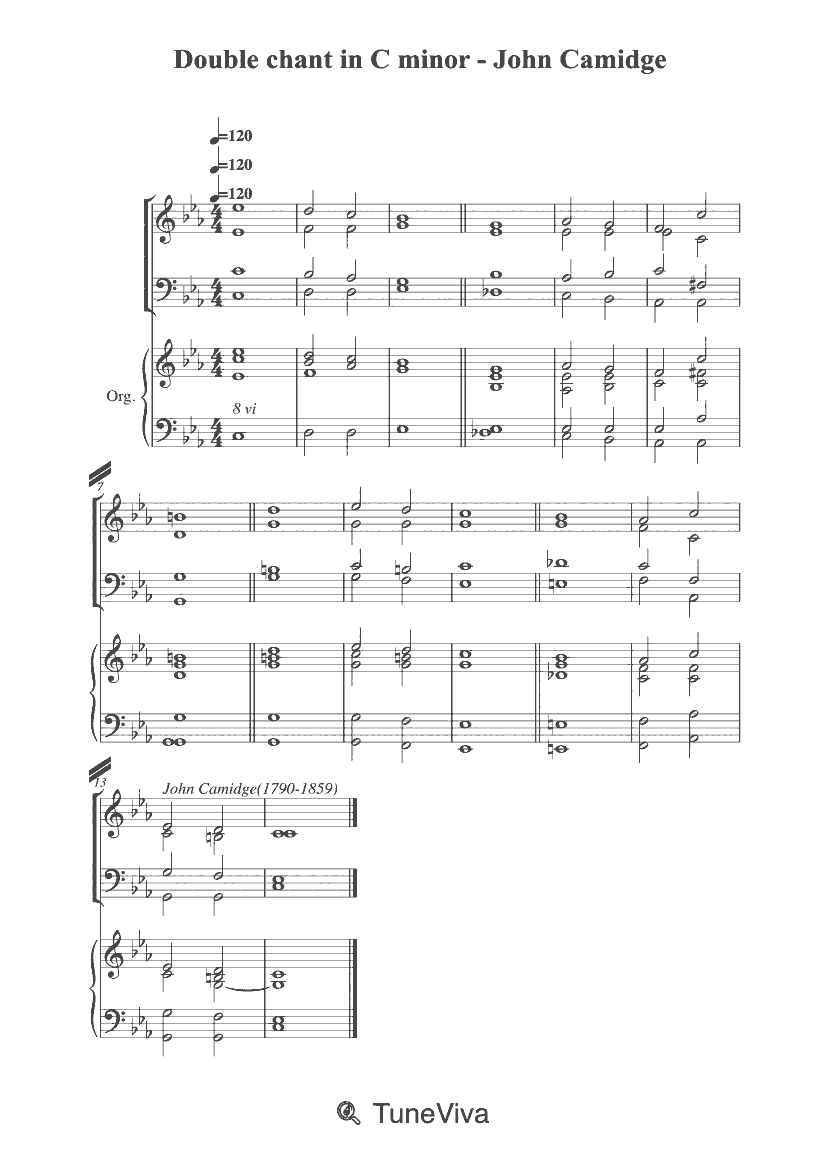
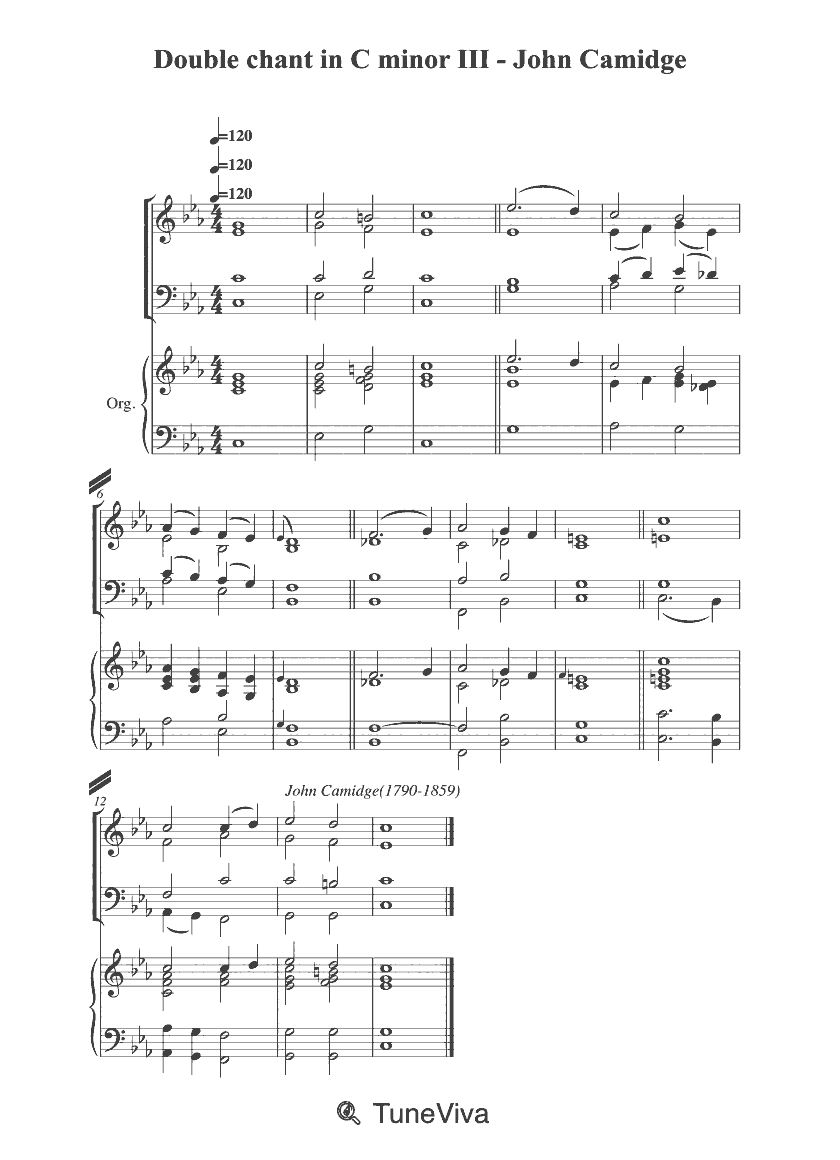
Minor-key chants suit penitential psalms; the catalogue holds more than one in C minor.
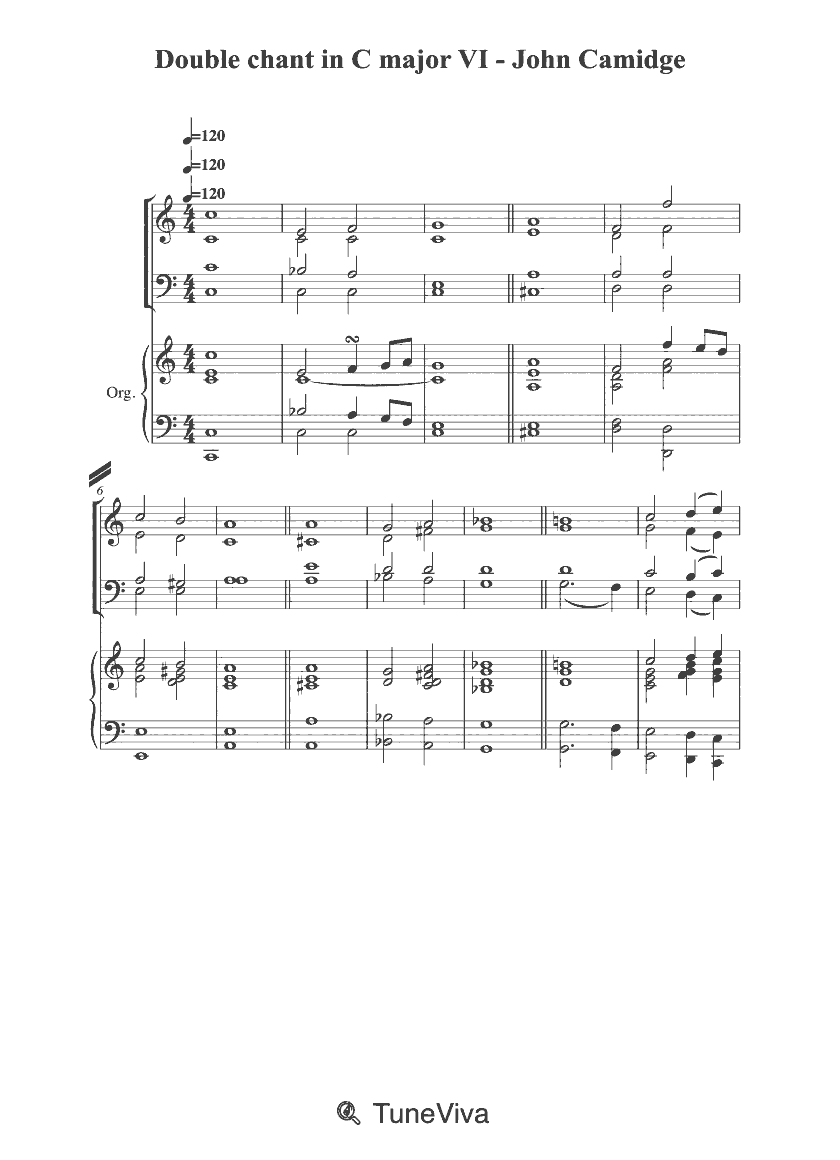
The Roman numeral is the catalogue's, distinguishing this setting from the other C minor chants.
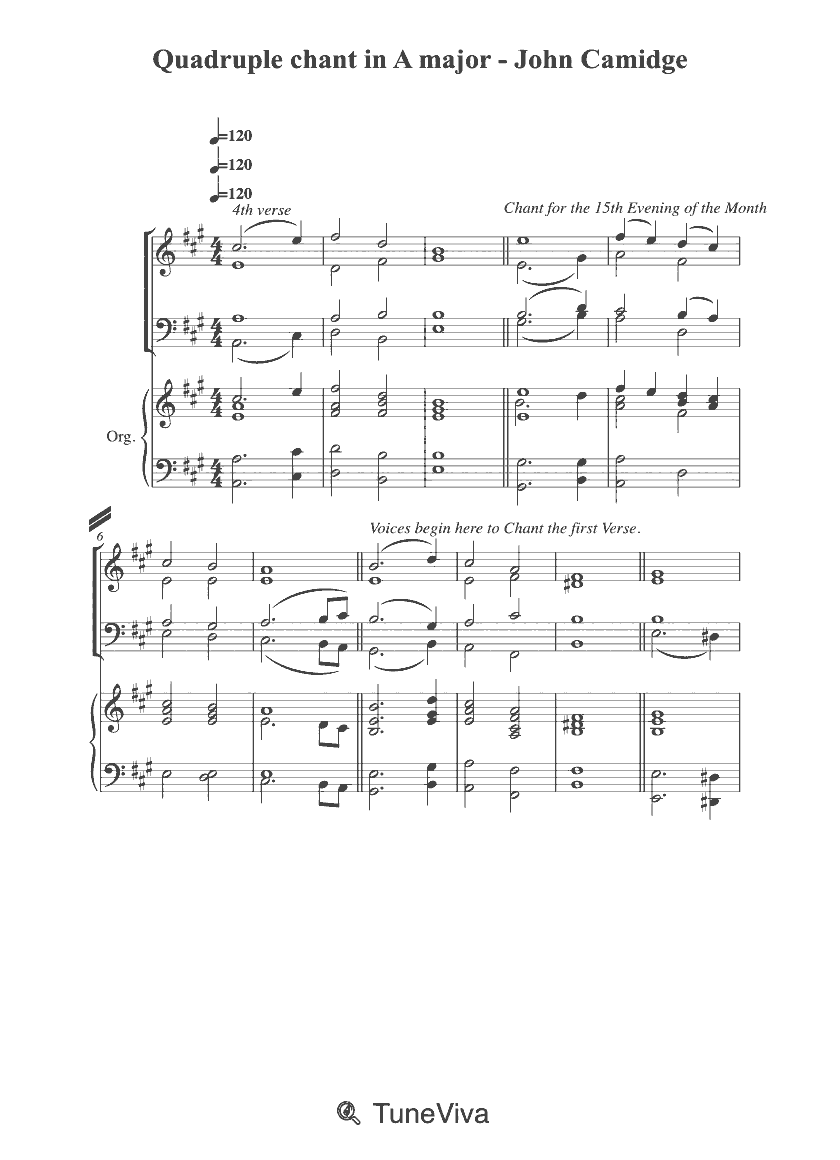
A quadruple chant extends the formula over four verses instead of two, the rarest form in the collection.
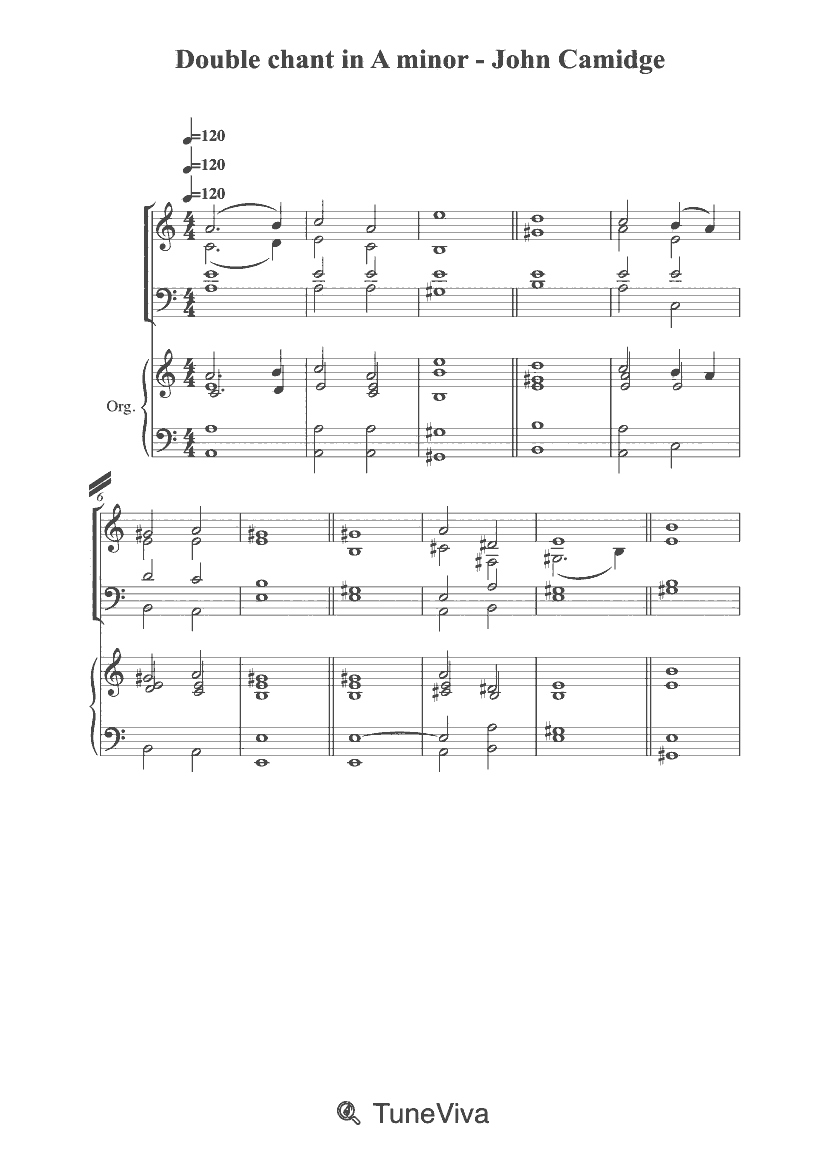
One of the few minor-key settings outside C minor.
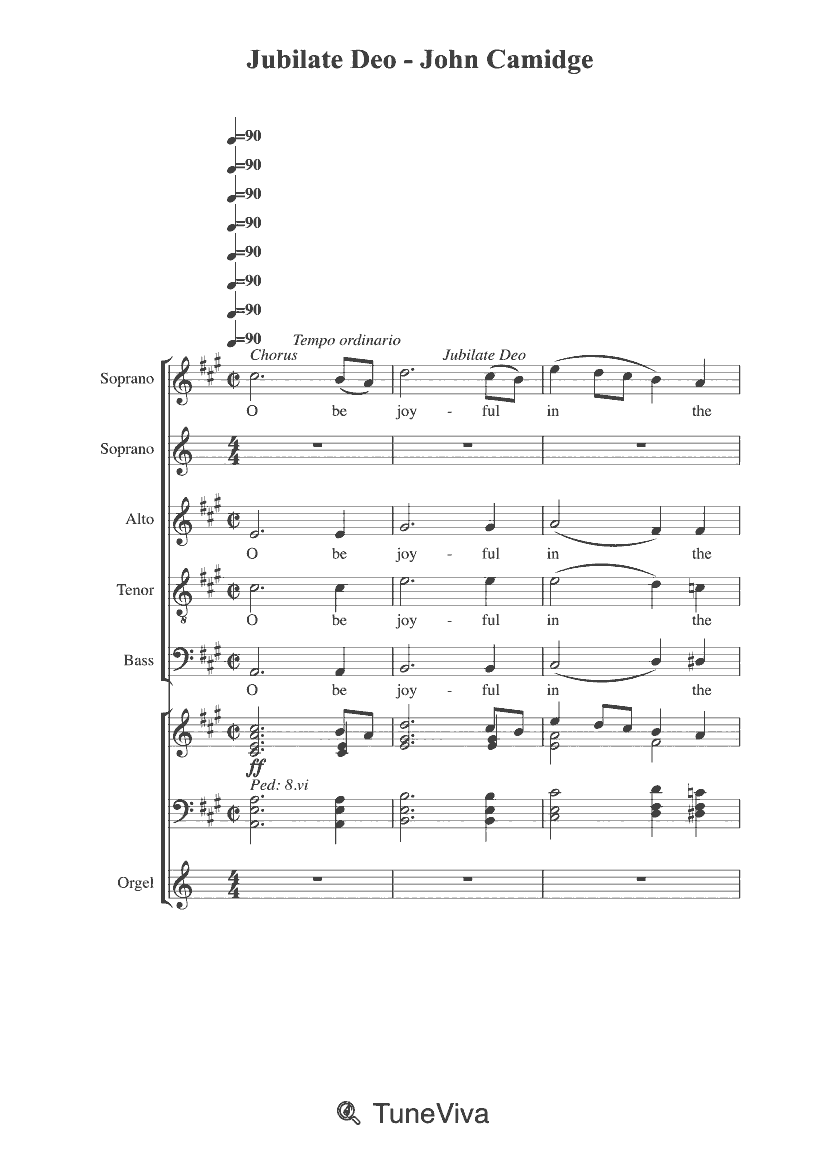
Psalm 100, the alternative canticle to the Benedictus at morning prayer.
The catalogue writes 'E flat' rather than a flat sign, as chant lists usually do.
49, running to about 54 minutes of music and 20,025 notated notes. Only three of them carry text.
A short Anglican formula covering two verses of a psalm before the reciting note returns; a single chant covers one verse and a quadruple chant four. Camidge published fifty double chants in his Cathedral Music.
The catalogue files them under John Camidge, the Minster organist from 1842 to 1859. Chant books often print only the surname, and his father Matthew and his grandfather John also composed chants, so check the file's ascription where a piece matters.
Yes. They are four-part settings with an organ part, printed in score, and the chants need only a competent SATB group. The files are short enough to prepare in a single rehearsal.
Catalog editions and arrangements attributed to John Camidge.