classical
1 tracks
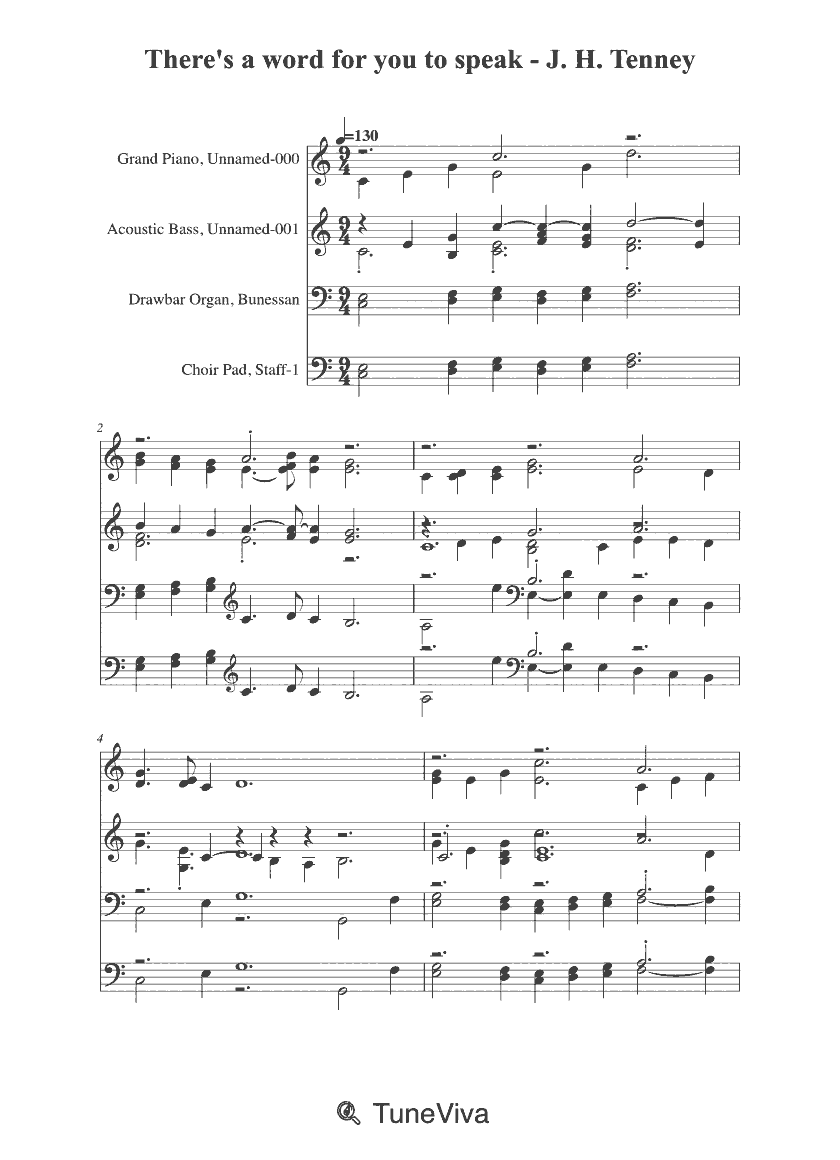
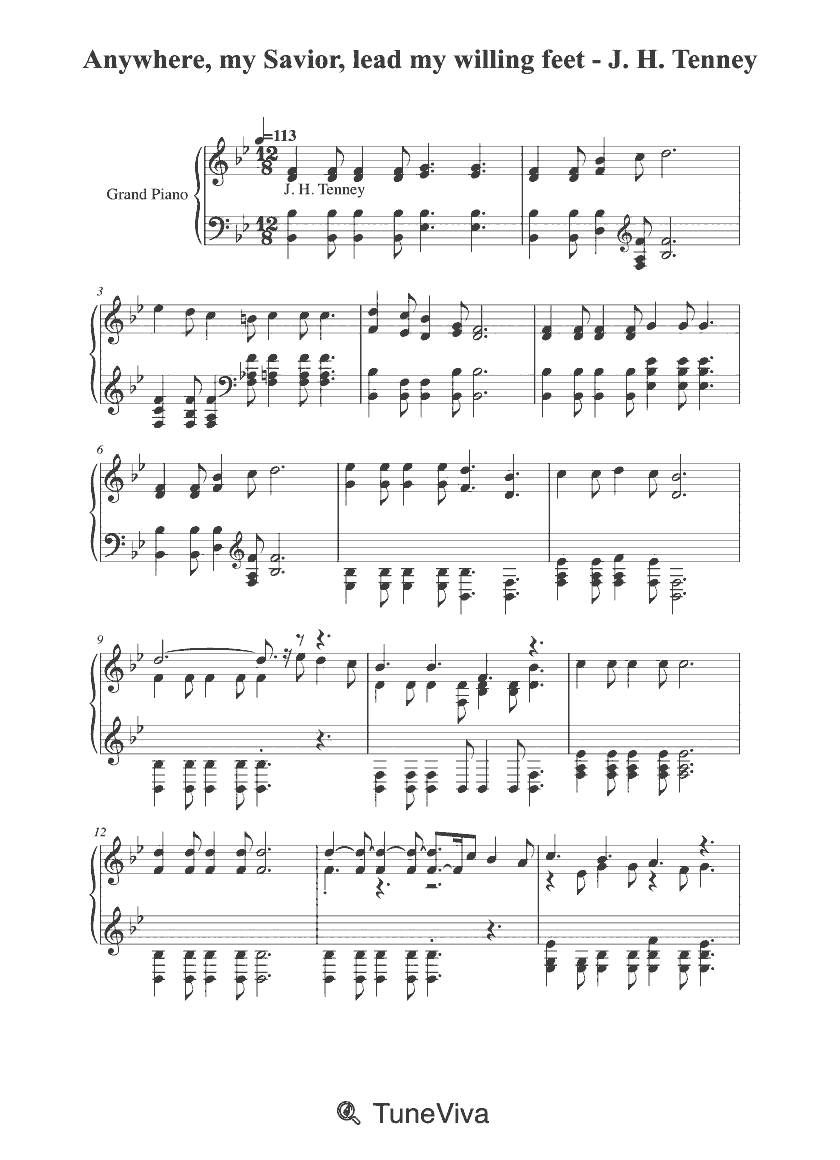
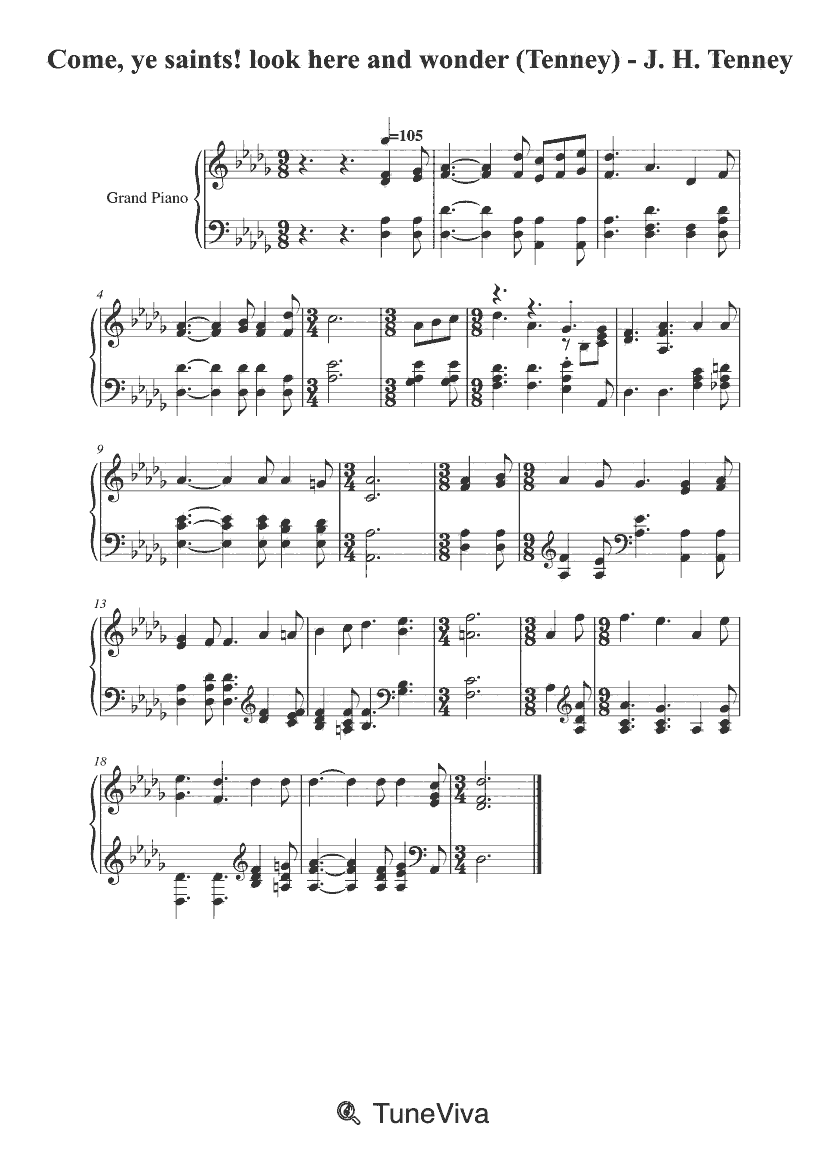
John Harrison Tenney was born in Rowley, Massachusetts, on 22 November 1840, the son of a shoemaker and farmer who led the local church choir. He could read music at sight by the age of eight, and as a young man was placing tunes in the Musical Pioneer. The catalogue holds 107 Tenney scores, about 58 minutes of music and 28,873 notated notes.
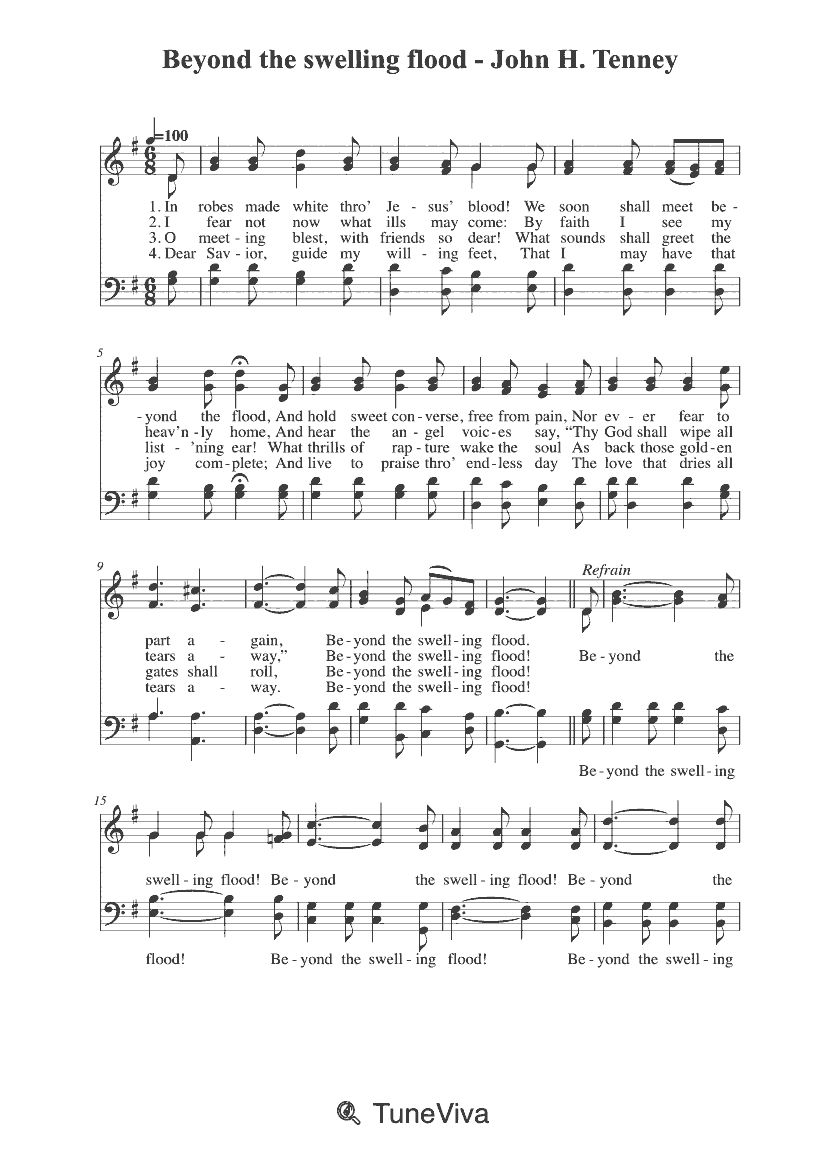
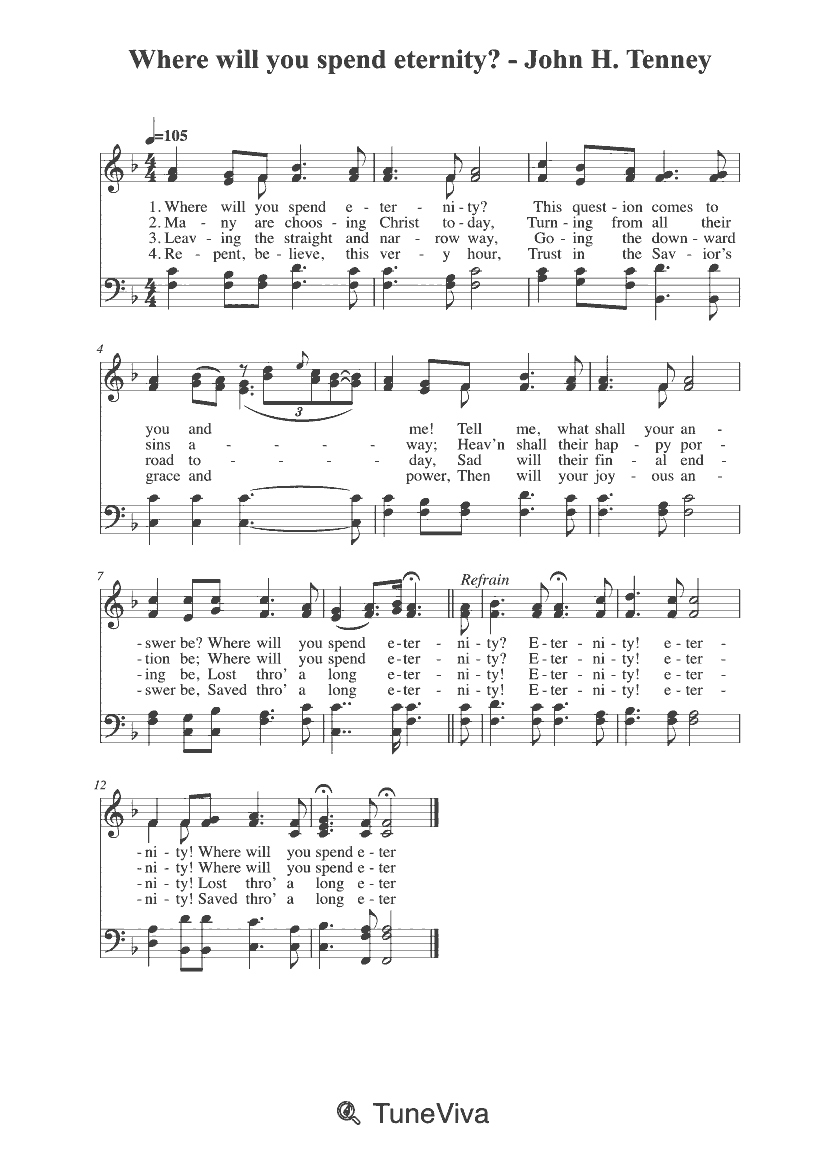
Fifty-nine of those scores carry lyrics. The most-viewed titles are Onward, Christian Soldier, Beyond the Swelling Flood and Where Will You Spend Eternity?, all written for Sunday schools, revival meetings and small choirs rather than the concert platform.
Tenney grew up in a musical household: his father led the choir and worked as a shoemaker and farmer, his mother sang soprano in it, and evenings at home were spent with singing books. He taught himself harmony from Burrowes' Primer, contributed to the Musical Pioneer and the New York Musical Gazette, and later became a deacon at the Congregational church in Linebrook, Massachusetts, where he was also organist and choir leader. In 1888 he married Alice Potter; they had two daughters and a son. He died in 1918.
His working life was spent supplying other people's books. He edited or served as associate editor of more than thirty collections, among them The Anthem Offering, The Singing School Banner, The American Anthem Book, The Crown of Praise, Temperance Jewels, Golden Sunbeams, Songs of Joy, Songs of Faith, Spiritual Songs, Gems of Gospel Song, The Beacon Light, Shining Light and the American Male Choir, his own favourite. Hall's 1914 survey of gospel song writers notes that his name appears in almost every Sunday-school, church or anthem book issued over thirty or forty years.
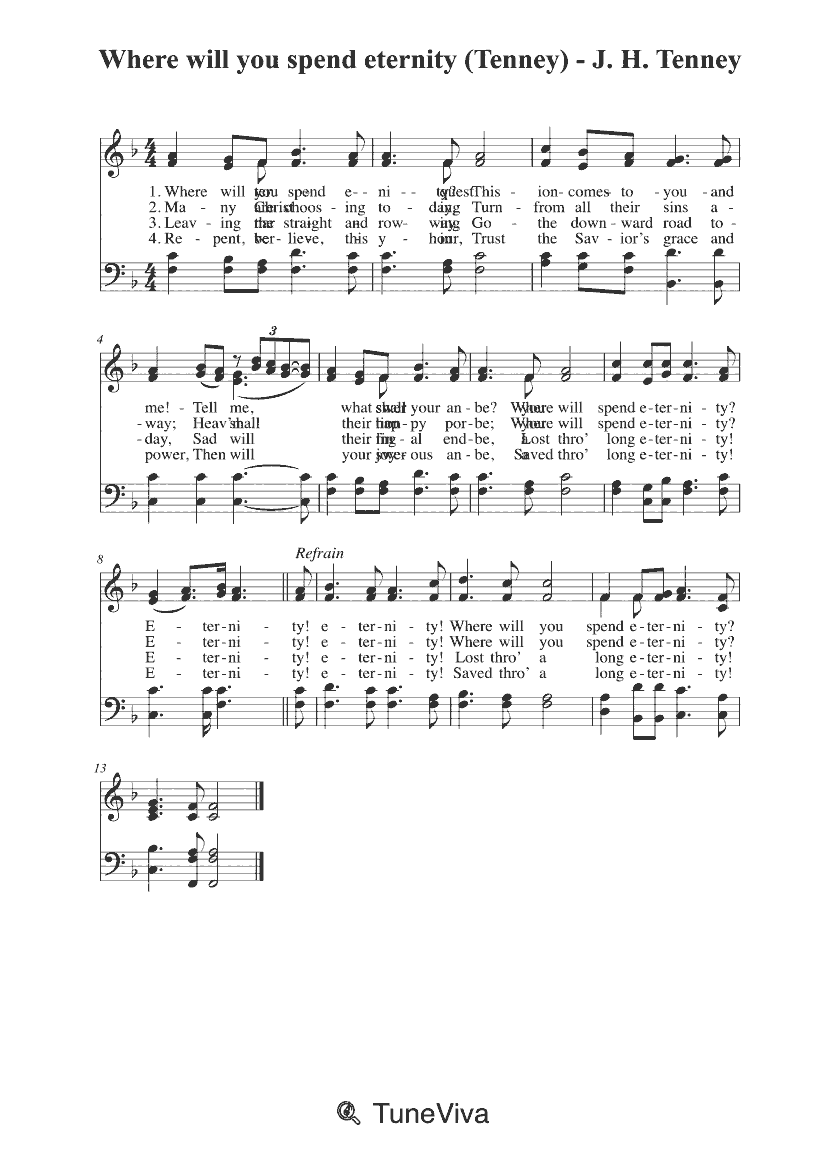
The 107 scores here run to roughly 58 minutes and 28,873 notated notes, with 59 entries carrying lyrics. Difficulty is modest: 33 scores sit at complexity index 0, 54 at index 1 and 20 at index 2, and nothing reaches index 3. Because the same hymn was reprinted in many collections, a few titles appear twice under different credits, including Where Will You Spend Eternity?.
Tenney writes for ordinary voices. The hymns are strophic, usually in four parts, with a refrain that returns unchanged and a melody that stays within an octave and a half. Expect plain diatonic harmony, a good deal of repeated material and few editorial markings. The anthems ask for a little more independence in the inner parts. Keep the pulse steady in the refrains and let the text carry the phrasing; the scores are short, so a clean final cadence matters more than ornament.
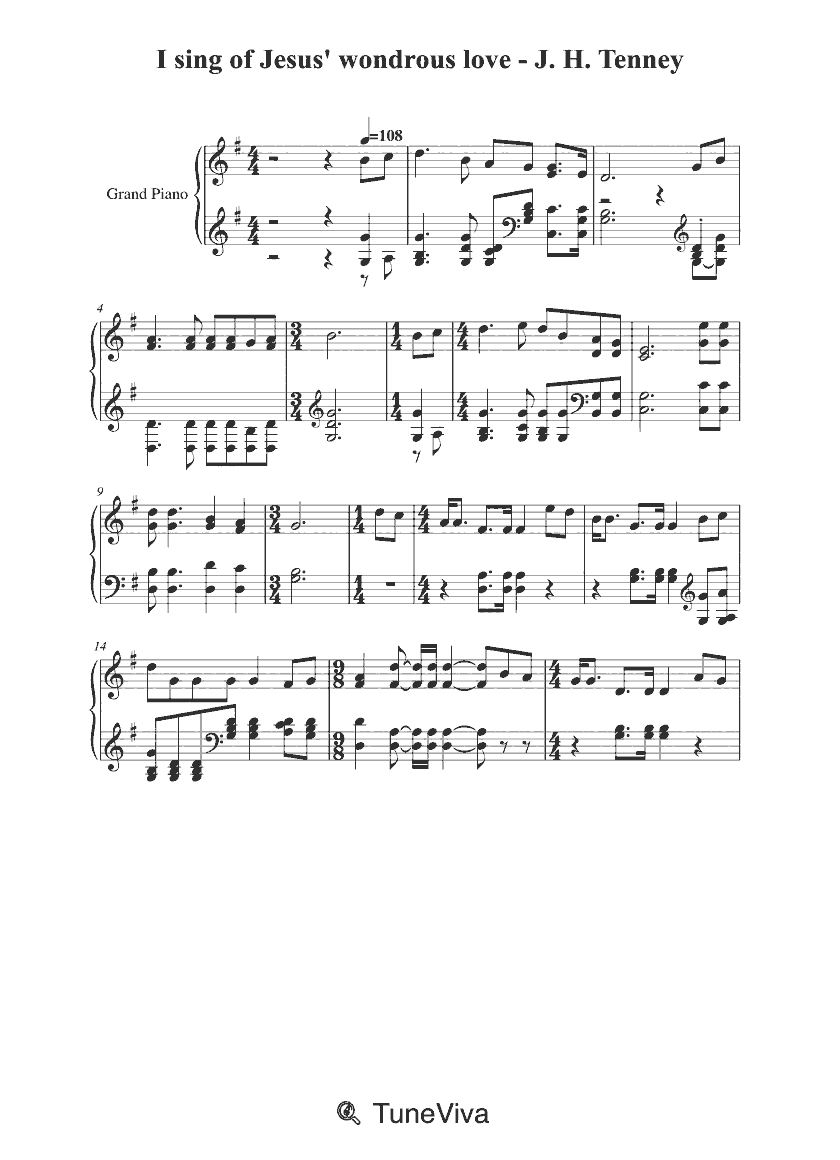
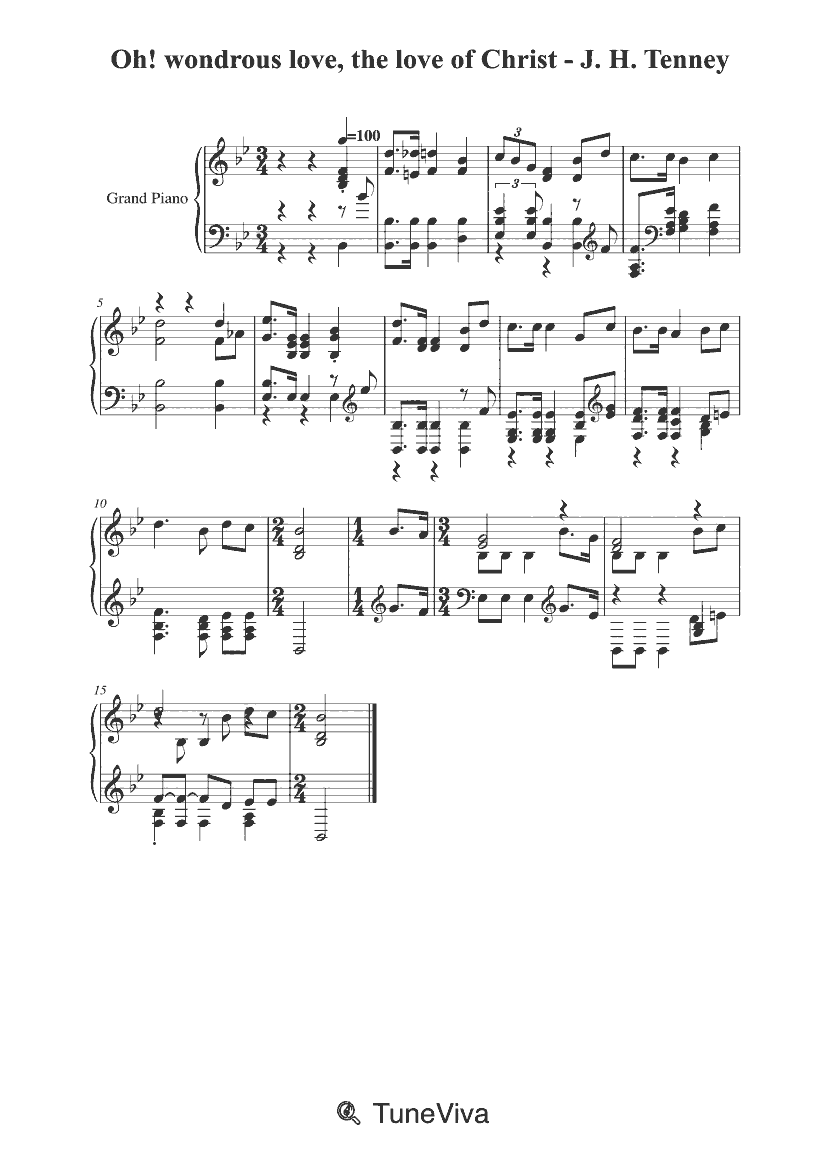
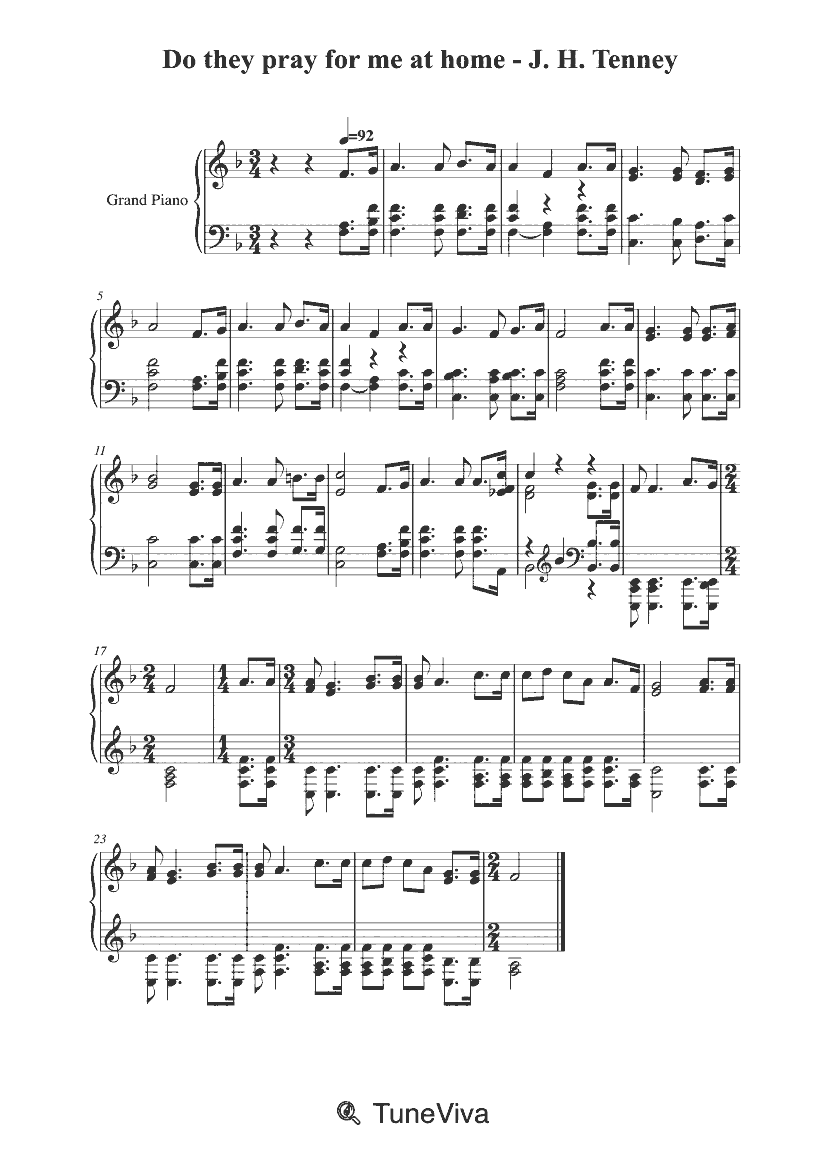
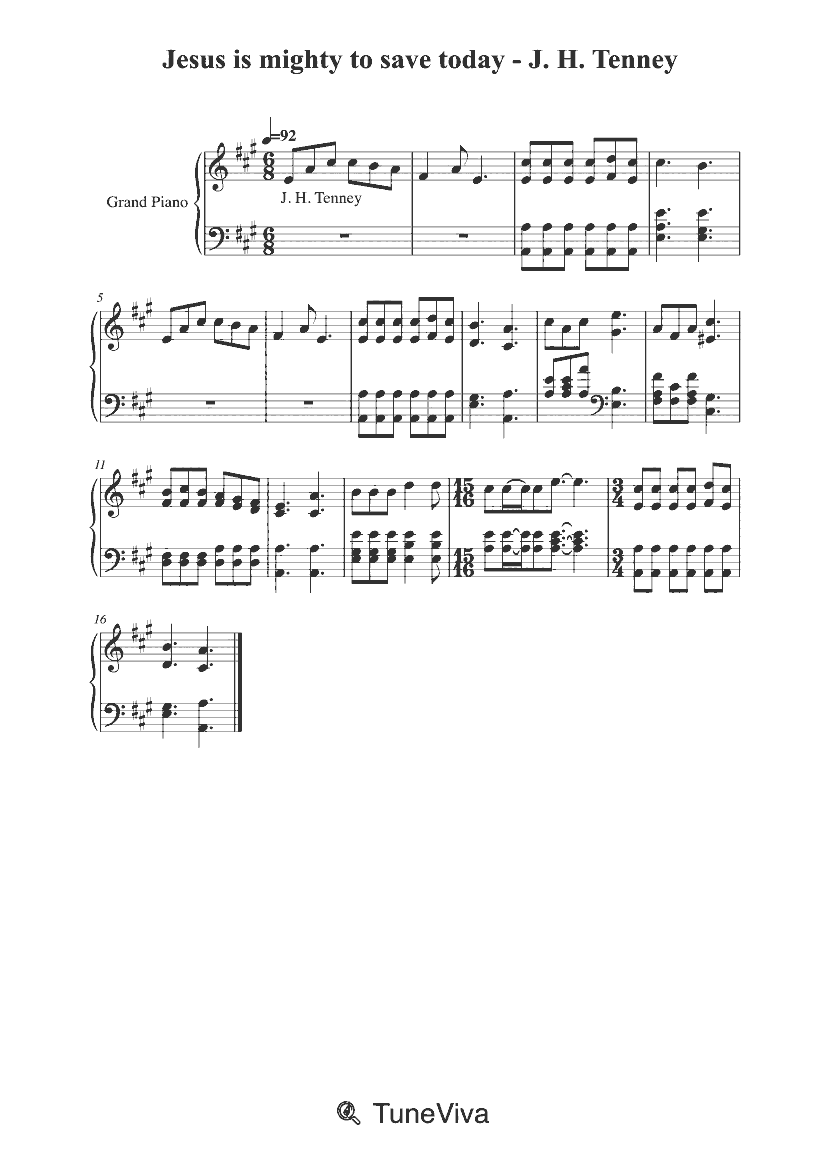
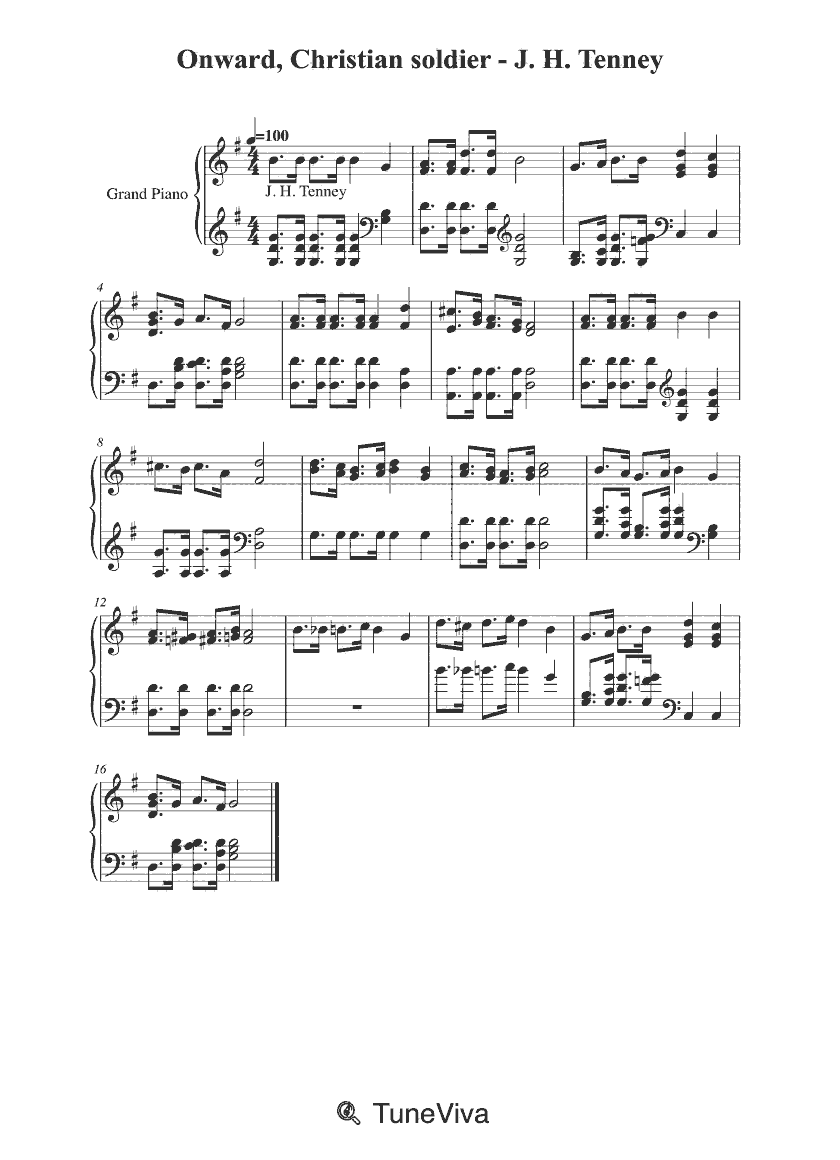
His march setting of Sabine Baring-Gould's processional text, and the most-viewed score under his name.
A hymn of crossing over, named by Hall among the popular songs that carried Tenney's name across the churches.
A revival hymn that turns on one repeated question, and the song Hall singles out when defending Tenney's reputation.
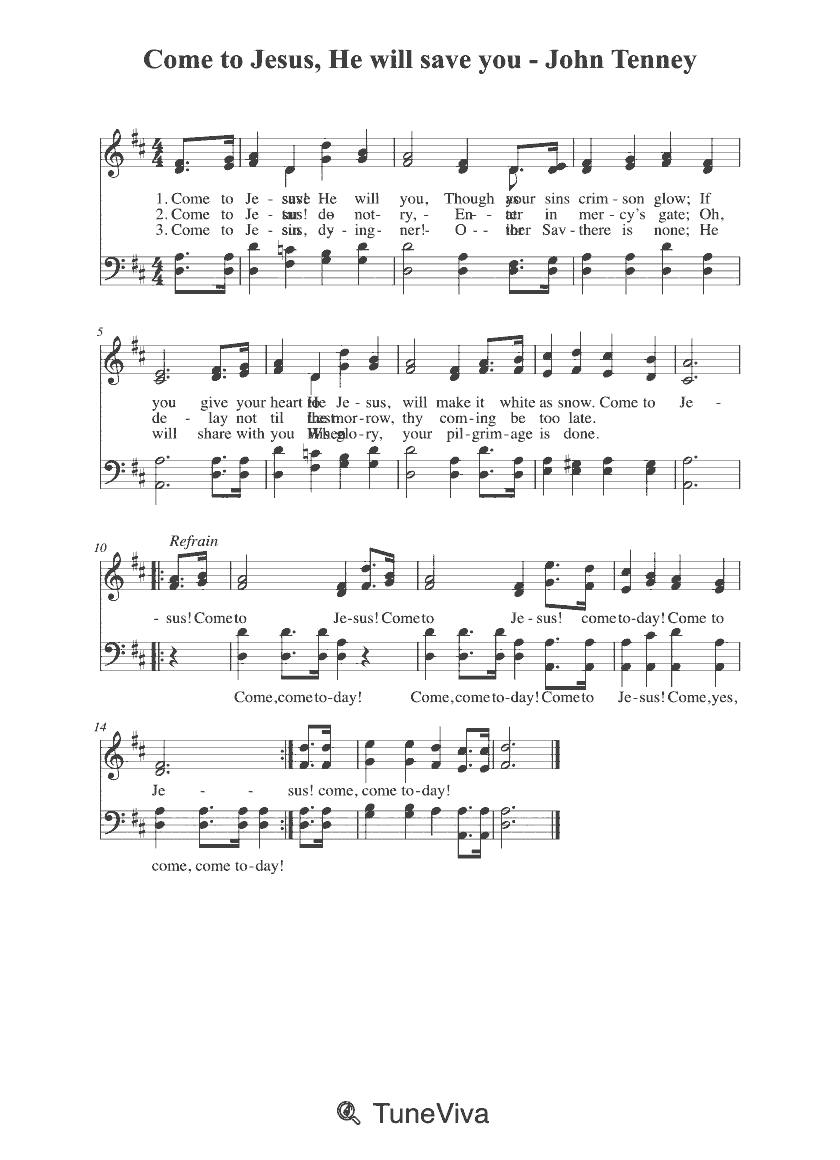
An invitation chorus in the Sunday-school idiom, with a refrain simple enough for a congregation to pick up at once.
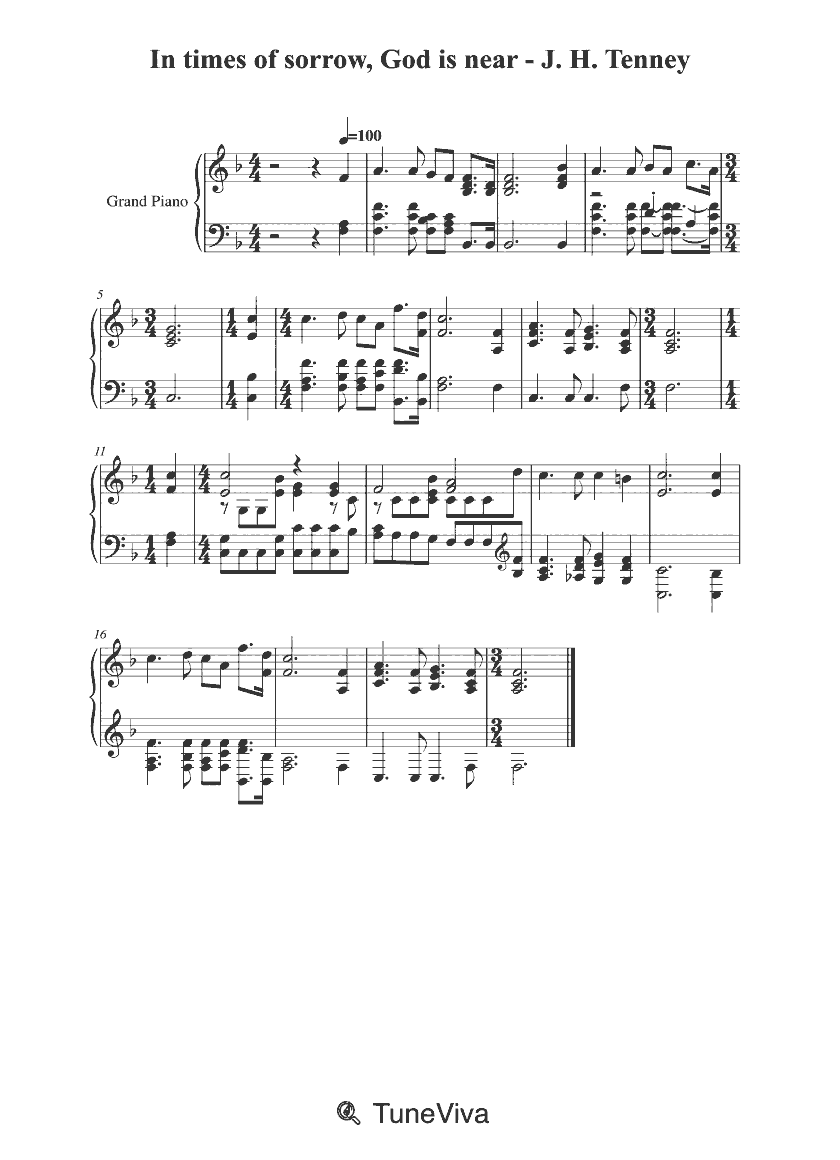
A brief hymn of encouragement, typical of the short pieces he supplied to hymnbooks by the hundred.
A hymn of surrender whose long opening line suits unison singing by a small choir.
An Easter hymn on the resurrection, set in the plain four-part style of his Sunday-school collections.
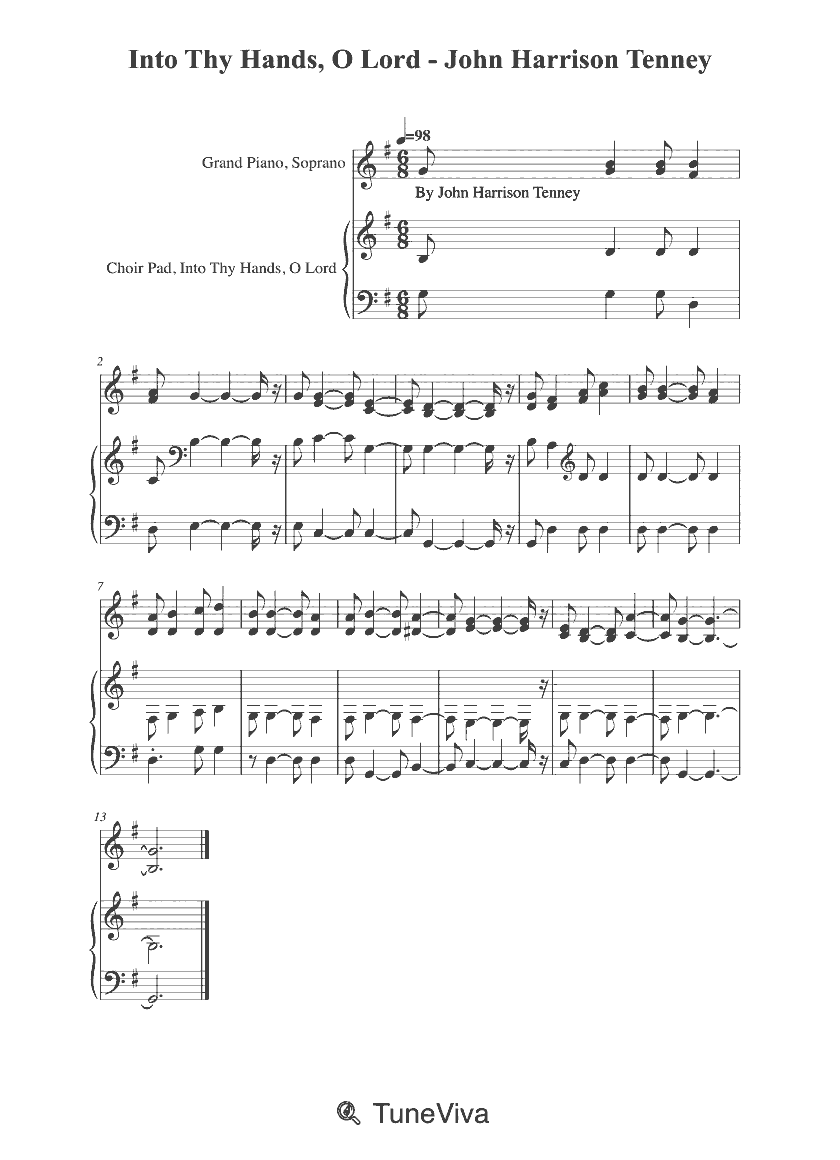
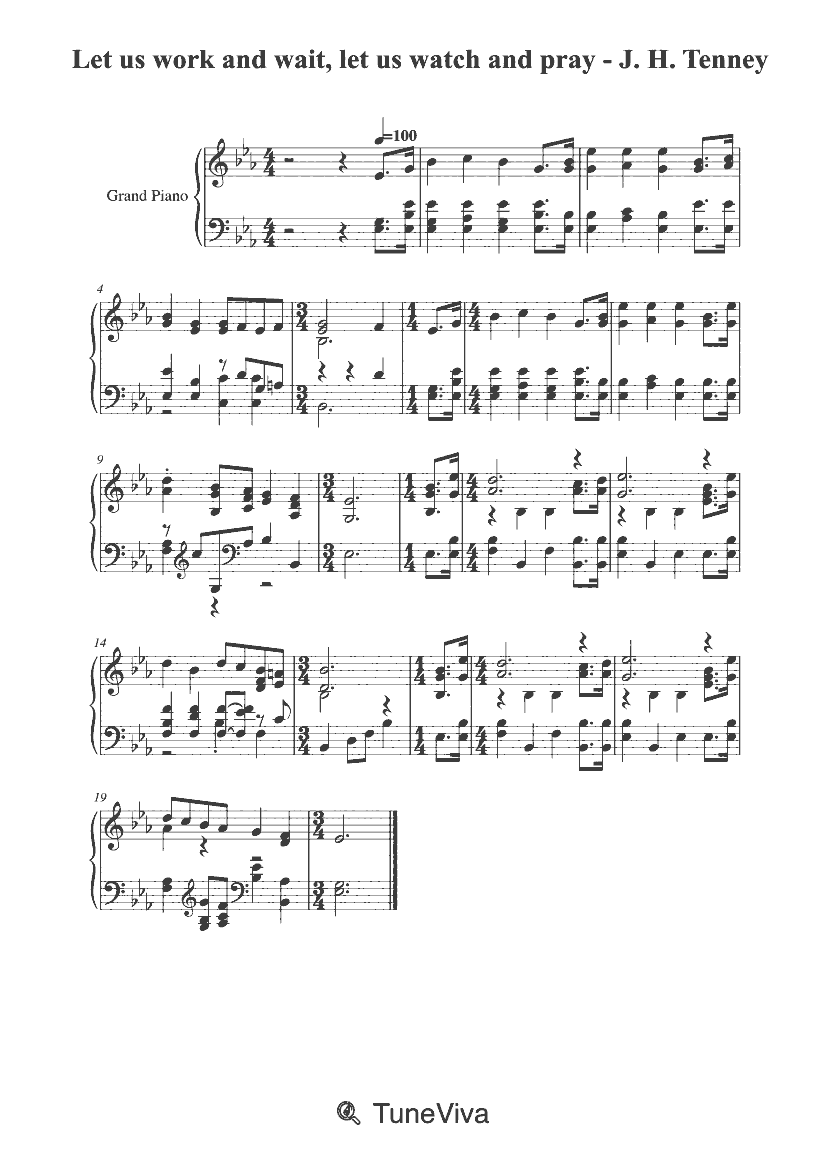
A short prayer anthem, useful for a choir with limited rehearsal time.
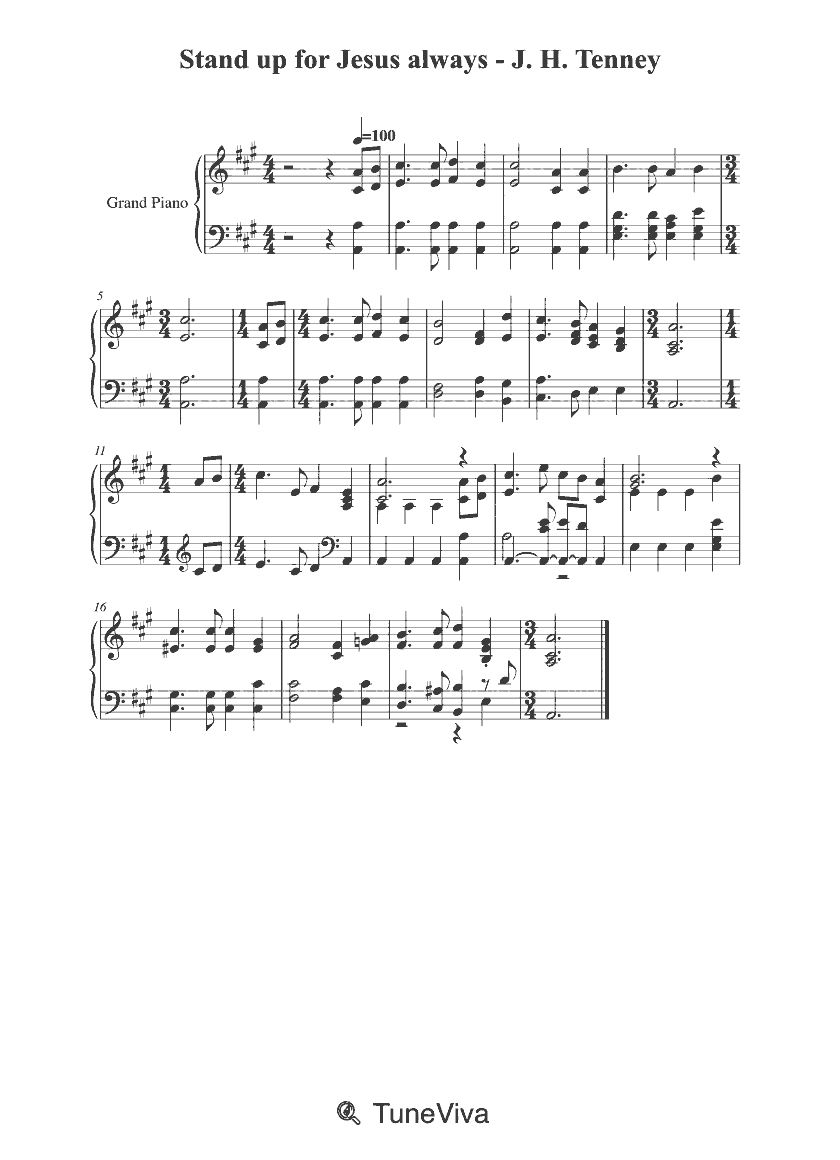
A testimony hymn whose refrain repeats the title phrase after each verse.
There are 107, running to about 58 minutes of music and 28,873 notated notes.
He wrote a setting of Sabine Baring-Gould's text. The tune most hymnals use is Arthur Sullivan's St Gertrude, so the catalogue entry is Tenney's own alternative.
He was a deacon at the Congregational church in Linebrook, Massachusetts, and led its music for many years.
Mostly no. The collection is dominated by short four-part hymns, with 87 of the 107 entries at complexity index 0 or 1.
Catalog editions and arrangements attributed to John Harrison Tenney.