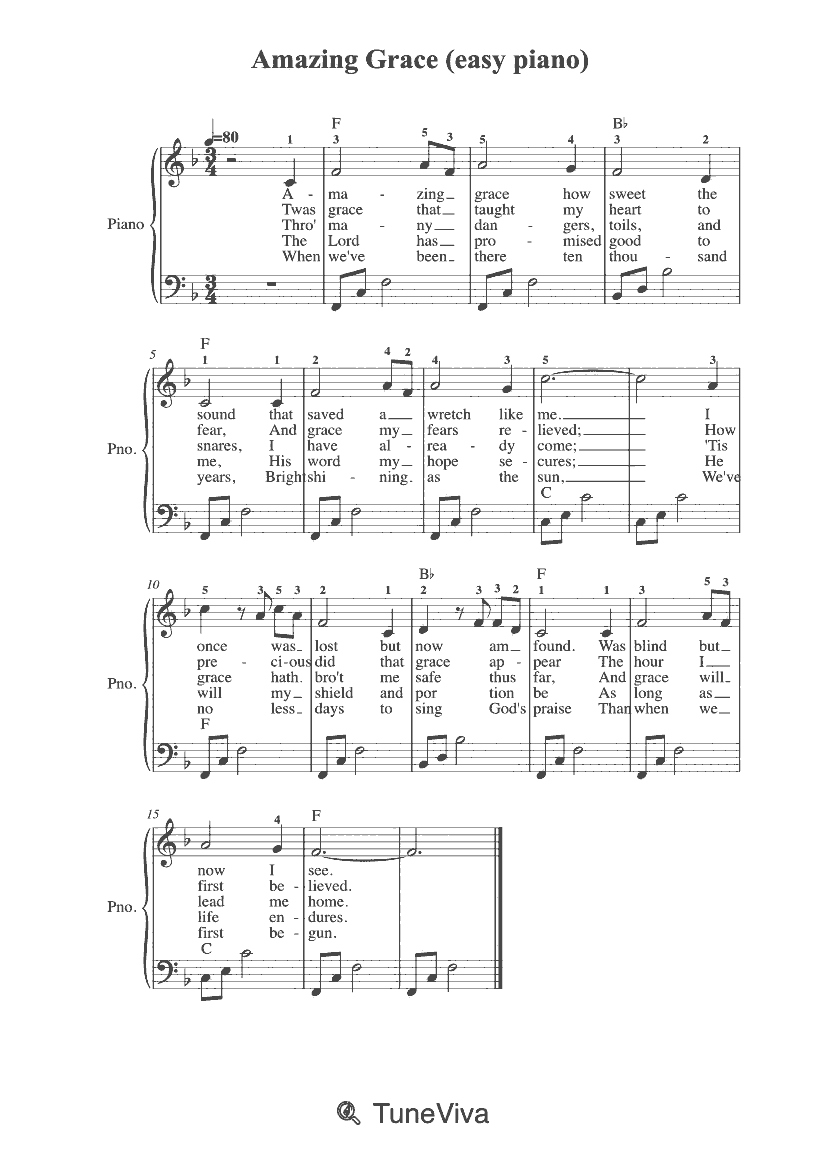
Amazing Grace (easy piano)
John Newton
Piano · 39 sec
Open score43 John Newton hymn scores to preview and download, from Amazing Grace in several languages and arrangements to Olney hymns such as Be still, my heart.
Piano · 39 sec
By far the most-viewed score here, a simplified keyboard setting of the hymn for players who do not need the full texture.
Other editions:
A Polish translation of Amazing Grace, set to the tune used across the other language versions.
Filed under Newton, though hymnals usually credit this text to Samuel Davies; it is a hymn of praise on the pardoning God.
A hymn of quiet trust from the Olney period, in the common 8.8.8.8 metre.
An Afrikaans translation of Amazing Grace, listed under the catalogue's own spelling of its title.
A short hymn of assurance, typical of the Olney pieces written for a rural congregation.
A narrative hymn on the Gadarene demoniac of Mark 5, one of Newton's dramatised gospel scenes.
Compare the instrument and arrangement details below, then open a score to check the notation. Different entries may be arrangements or editions of the same work; available playback tools are shown on each score page.
John Newton
Piano · 39 sec
Open score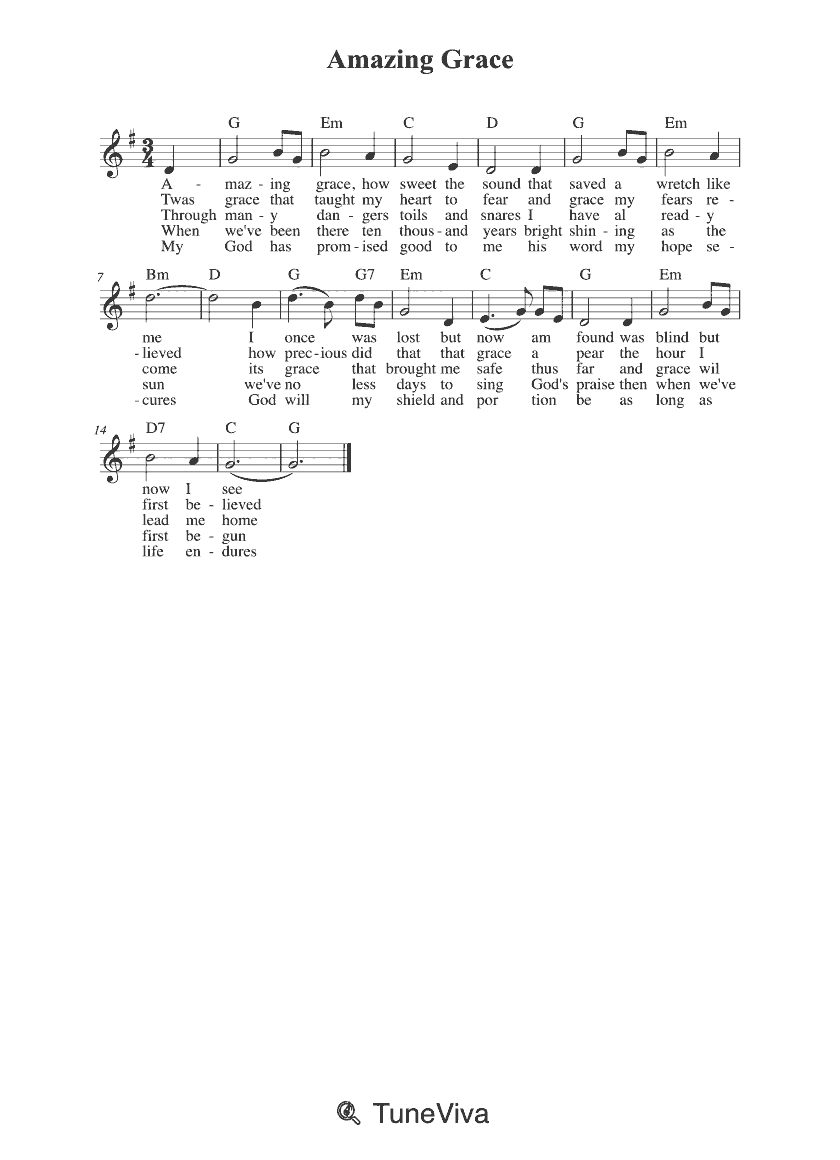
John Newton
Violin · 24 sec
Open score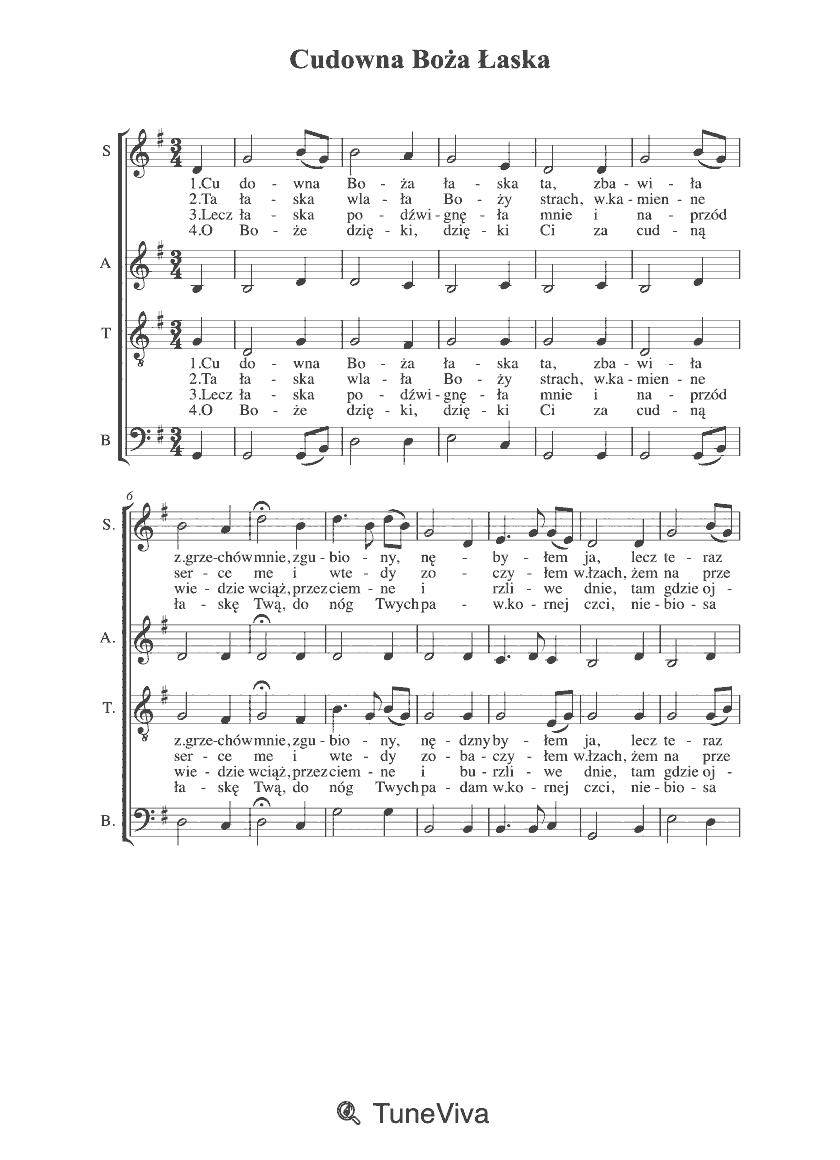
John Newton
S; A; T +1 parts · 23 sec
Open score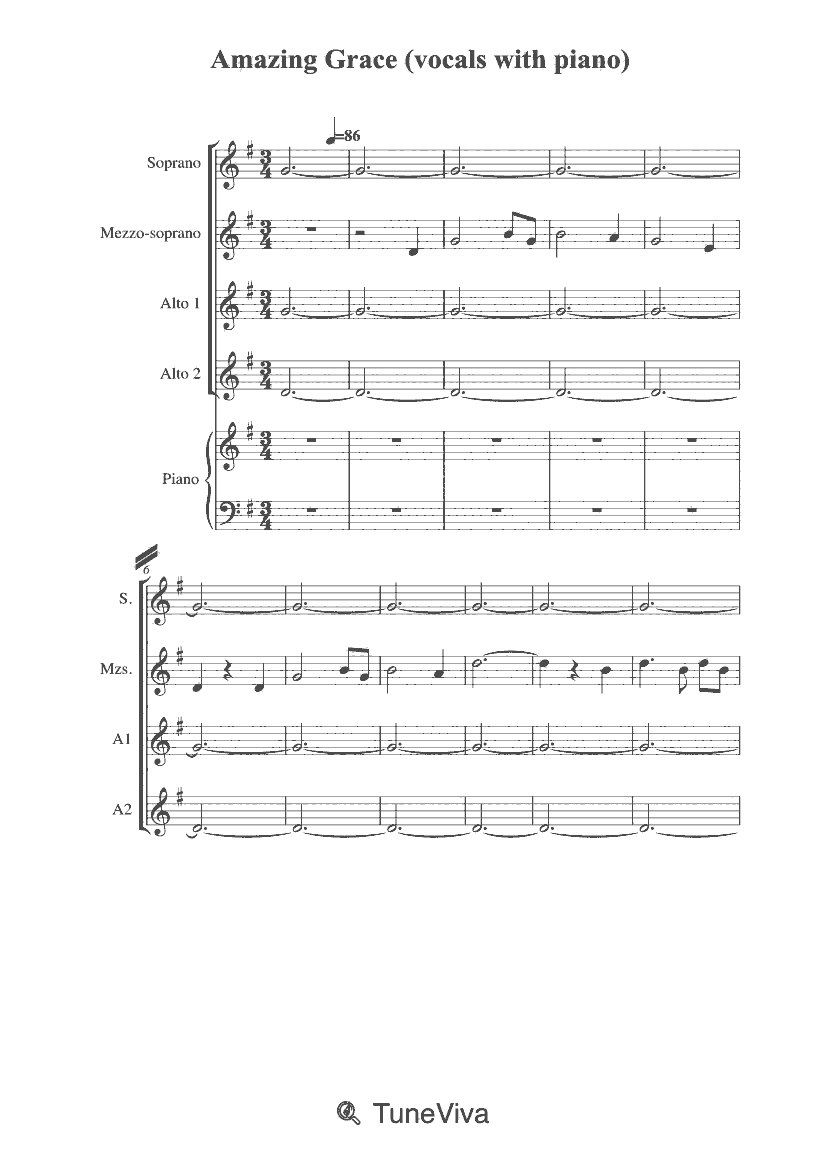
John Newton
Soprano; Mezzo-soprano; Alto 1 +2 parts · 3 min 4 sec
Open score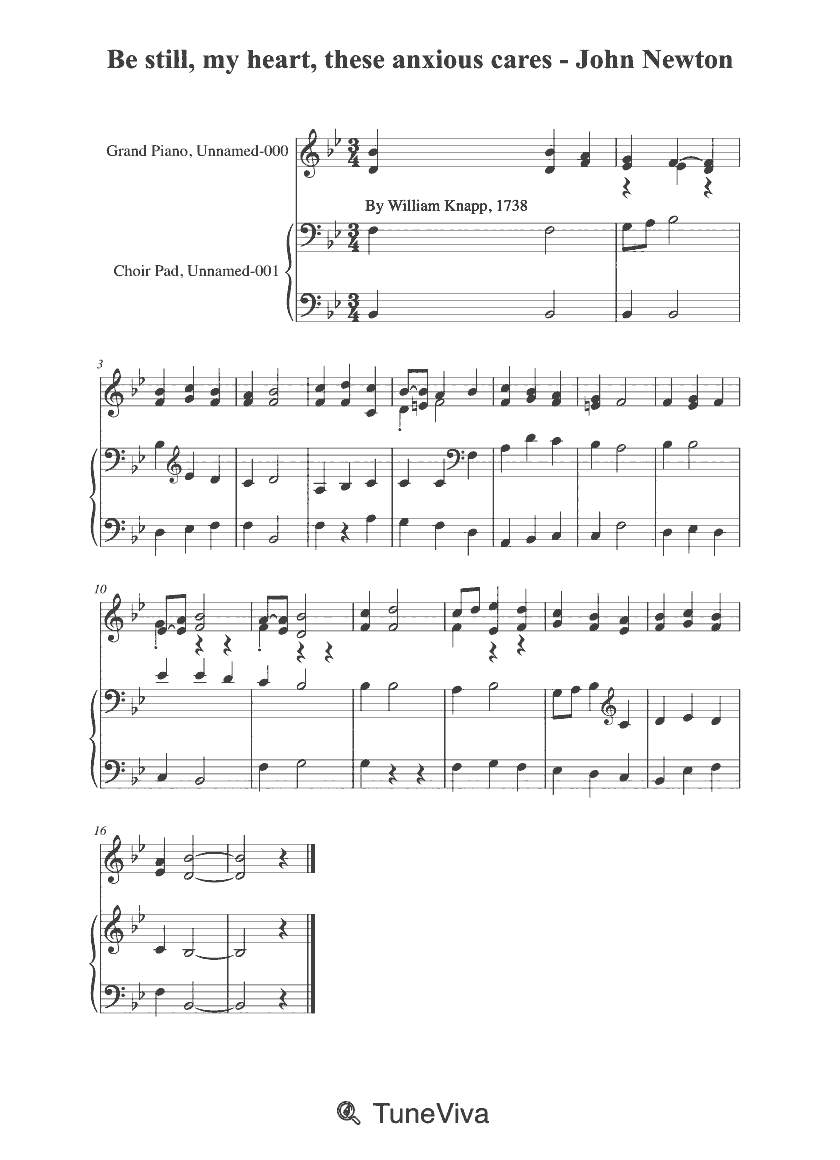
John Newton
Grand Piano, Unnamed-000; Choir Pad, Unnamed-001 · 25 sec
Open score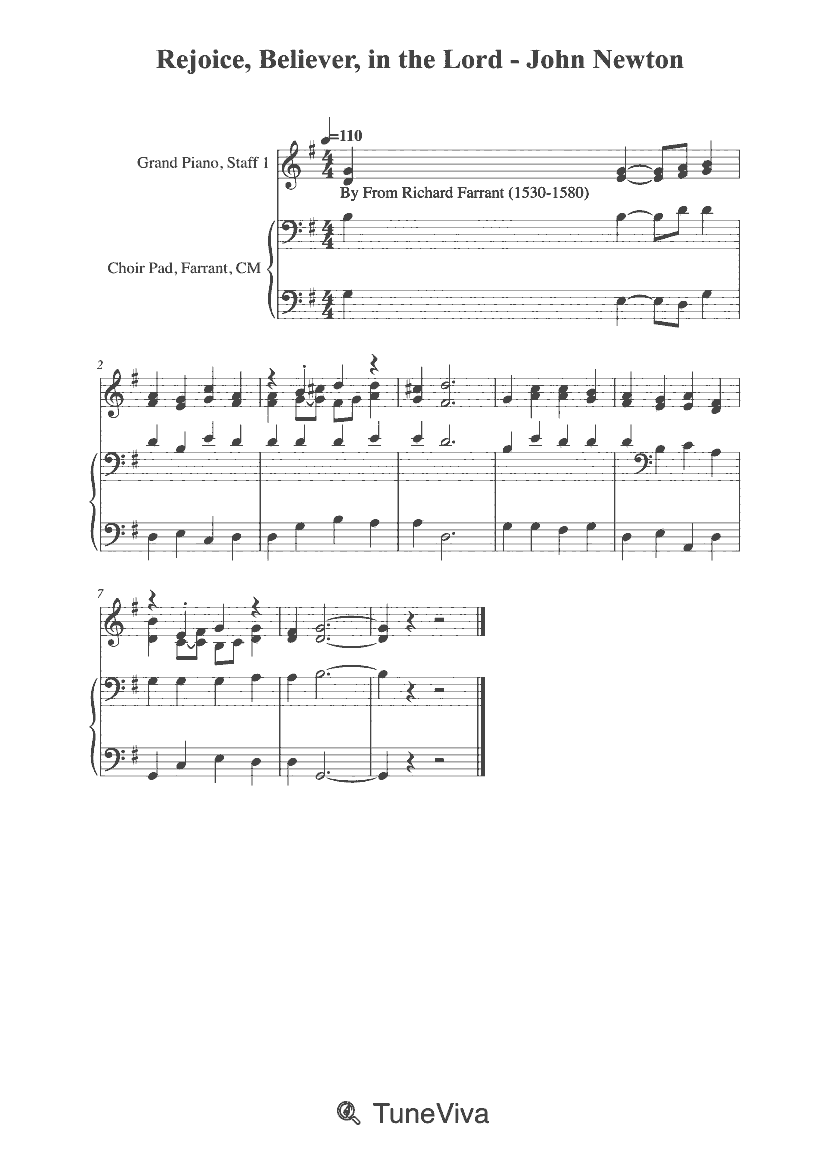
John Newton
Grand Piano, Staff 1; Choir Pad, Farrant, CM · 19 sec
Open score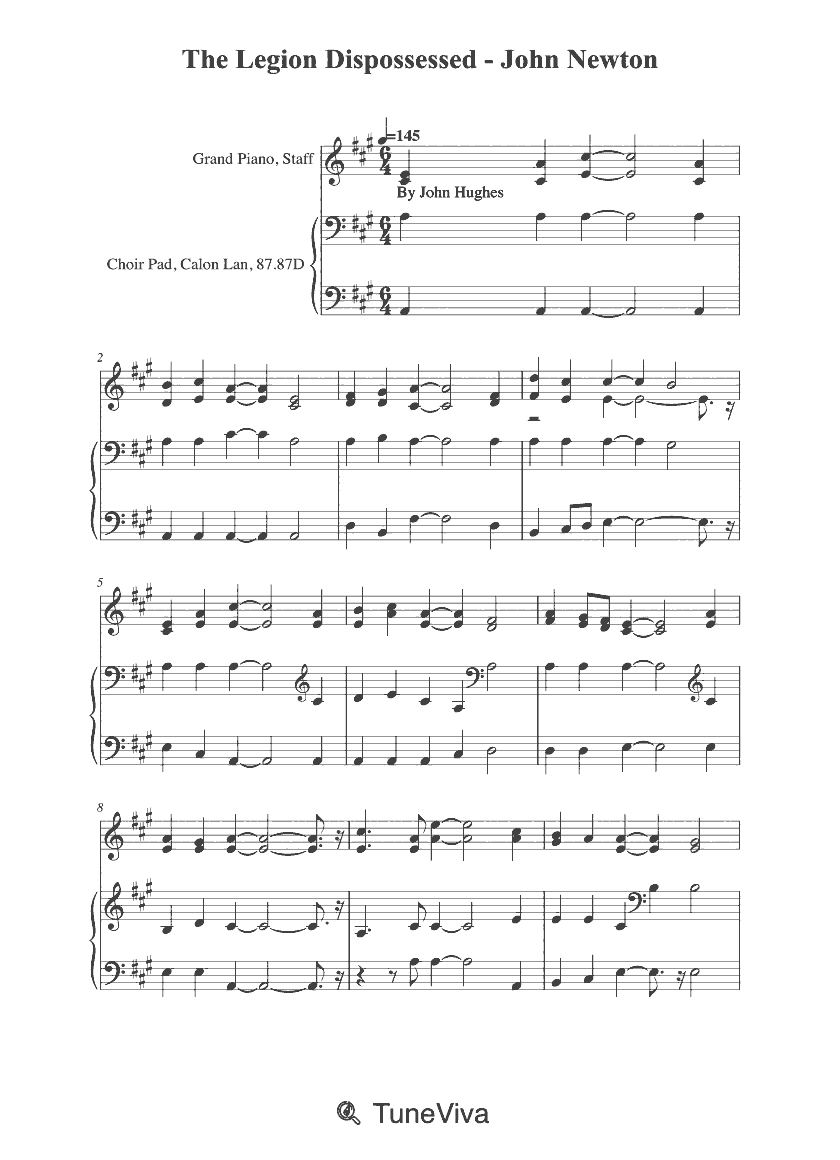
John Newton
Grand Piano, Staff; Choir Pad, Calon Lan, 87.87D · 40 sec
Open score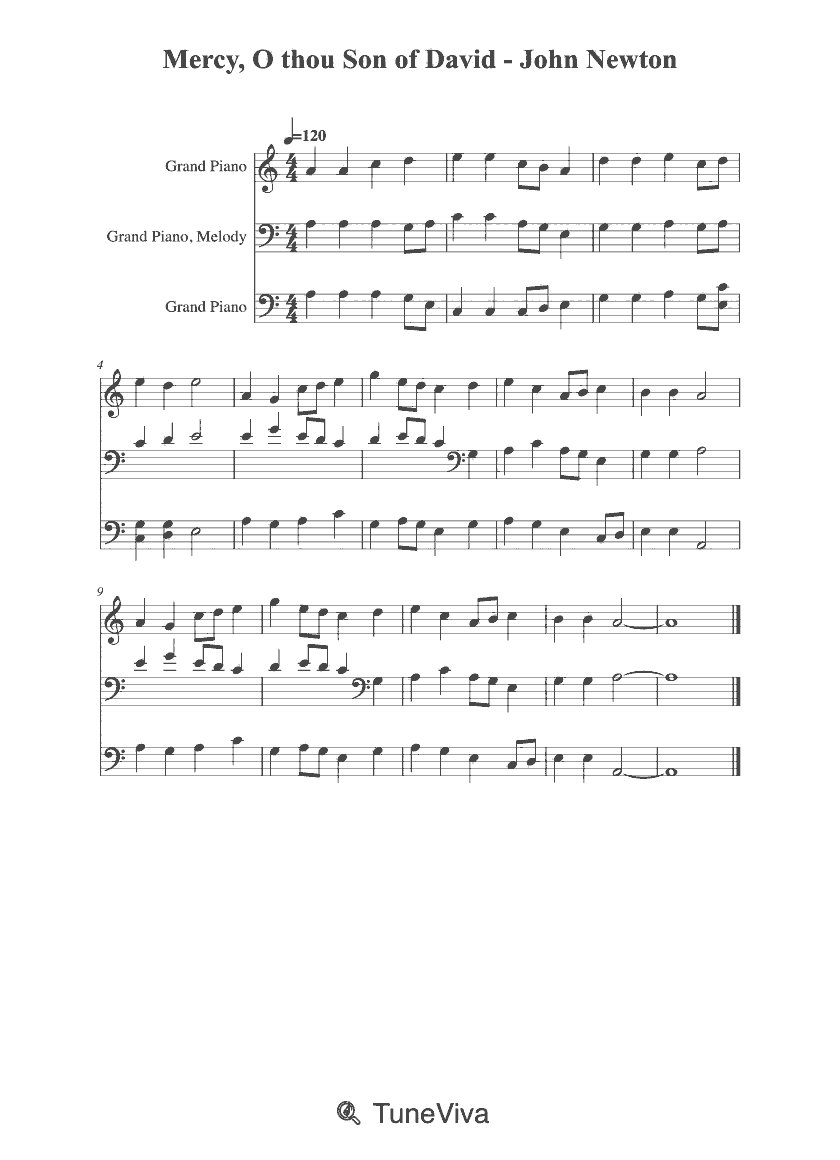
John Newton
Grand Piano; Grand Piano, Melody · 26 sec
Open score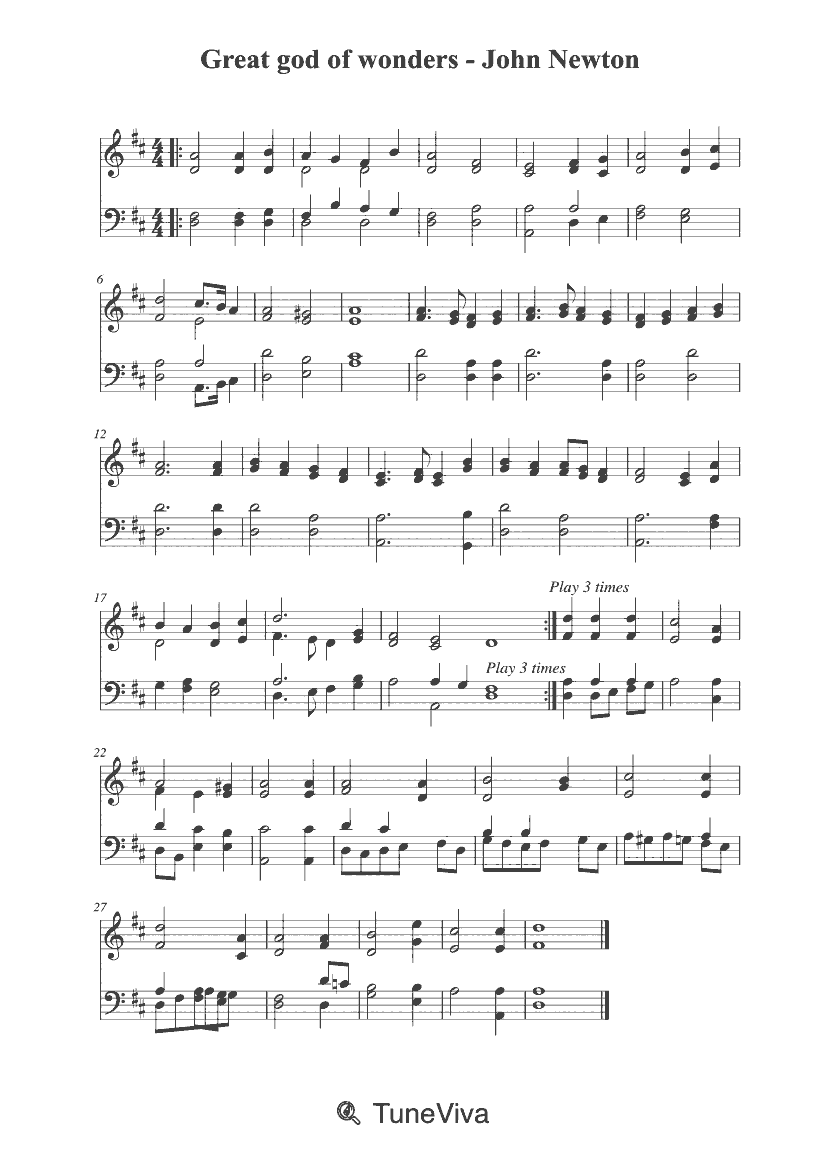
John Newton
1 min 33 sec
Open score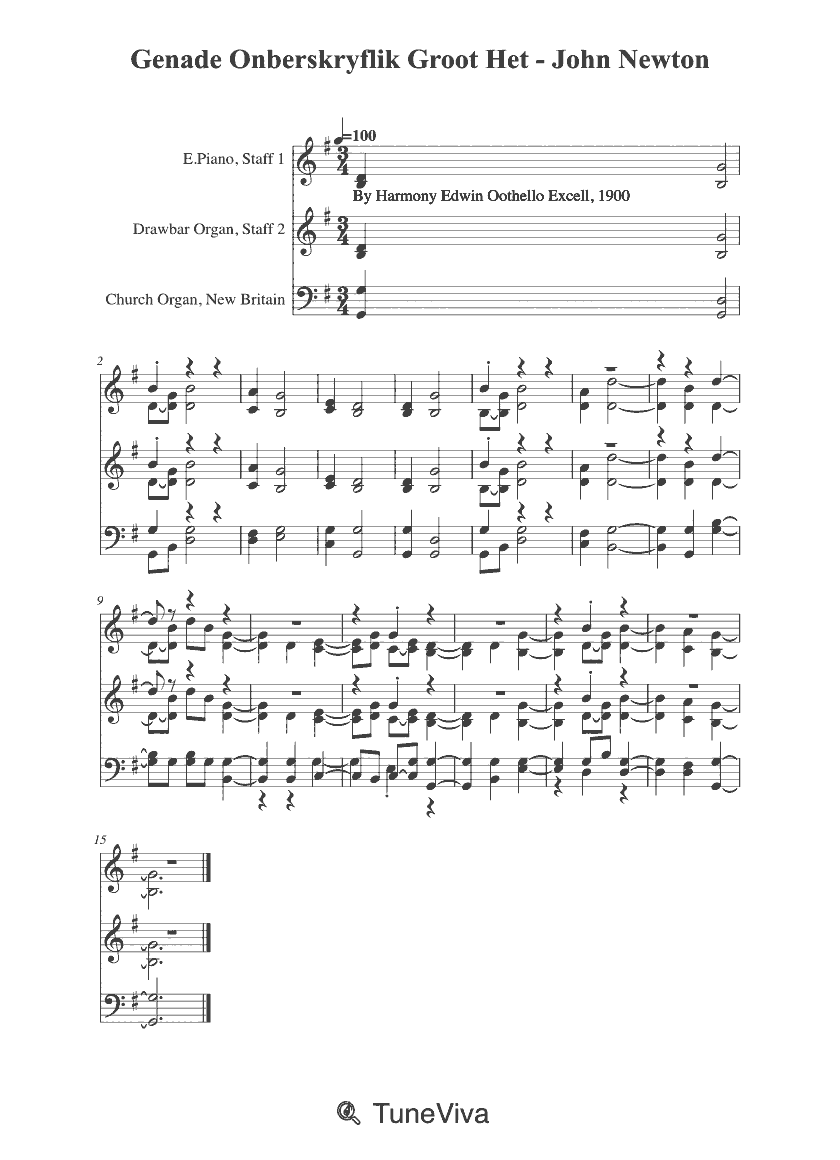
John Newton
E.Piano, Staff 1; Drawbar Organ, Staff 2; Church Organ, New Britain · 27 sec
Open score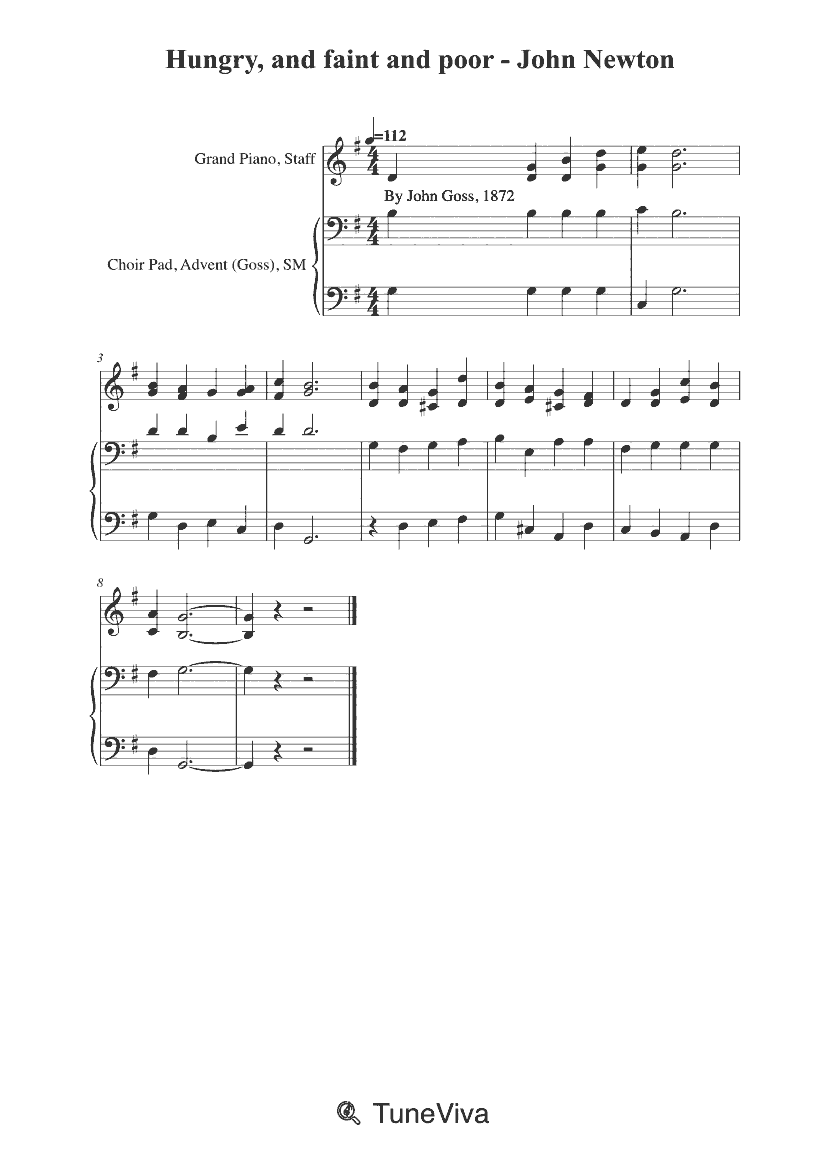
John Newton
Grand Piano, Staff; Choir Pad, Advent (Goss), SM · 19 sec
Open score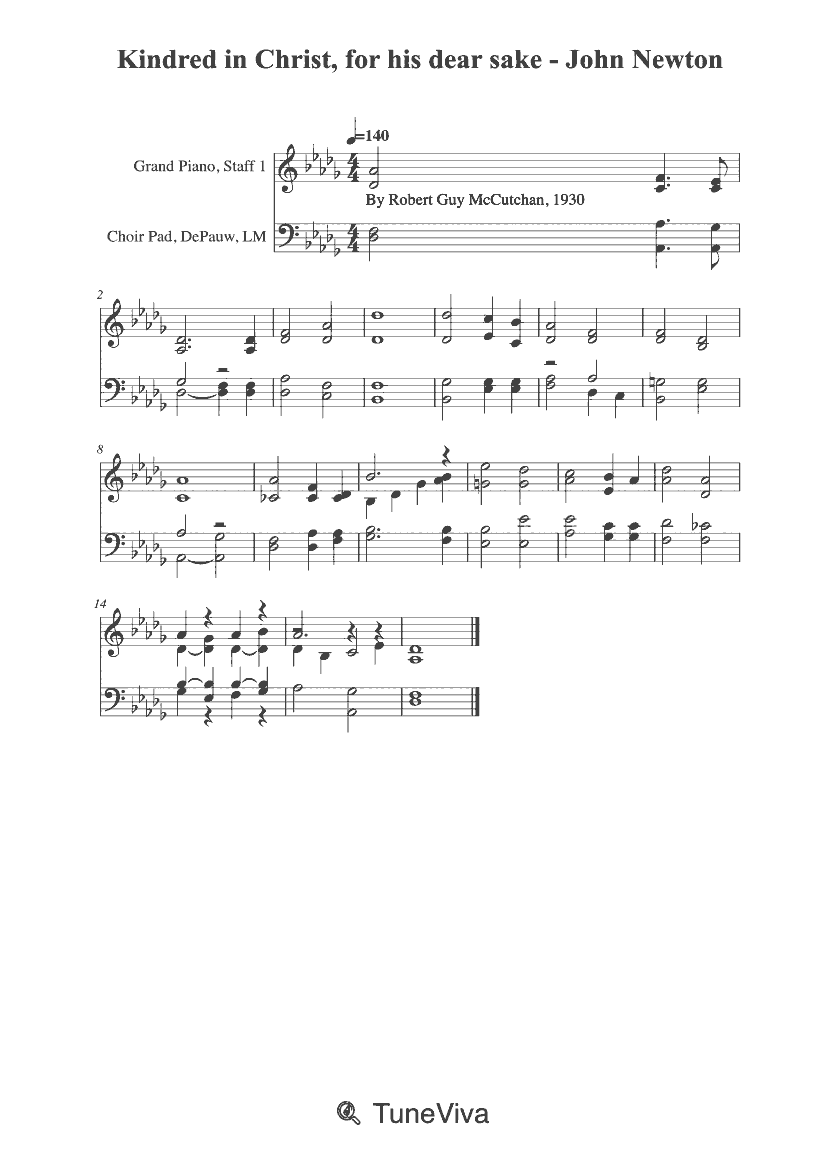
John Newton
Grand Piano, Staff 1; Choir Pad, DePauw, LM · 27 sec
Open score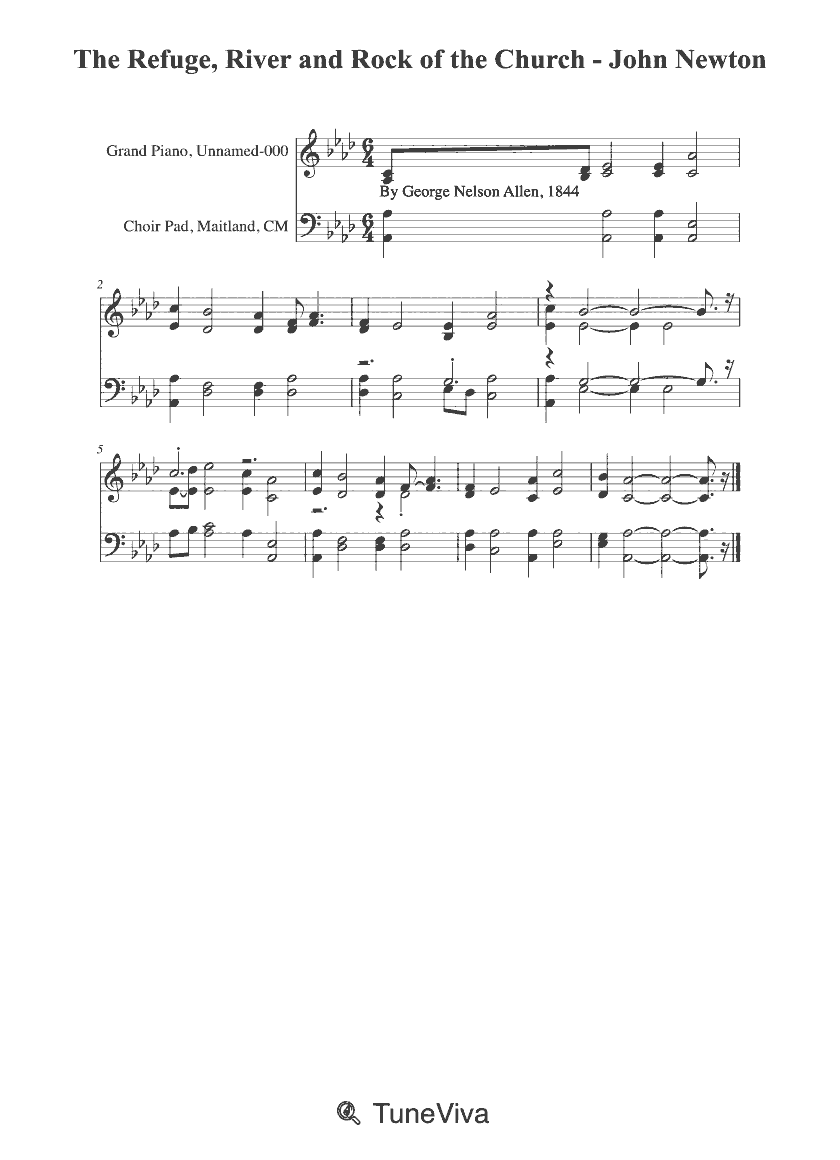
John Newton
Grand Piano, Unnamed-000; Choir Pad, Maitland, CM · 24 sec
Open score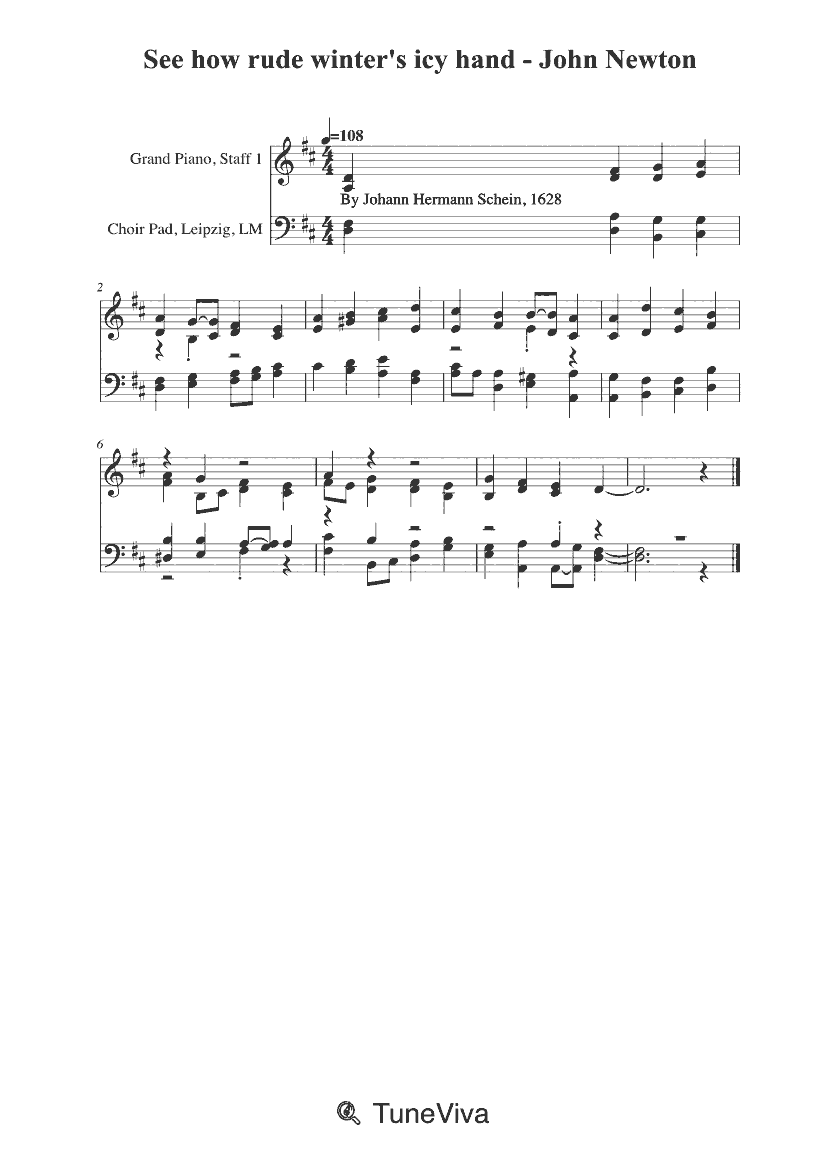
John Newton
Grand Piano, Staff 1; Choir Pad, Leipzig, LM · 19 sec
Open score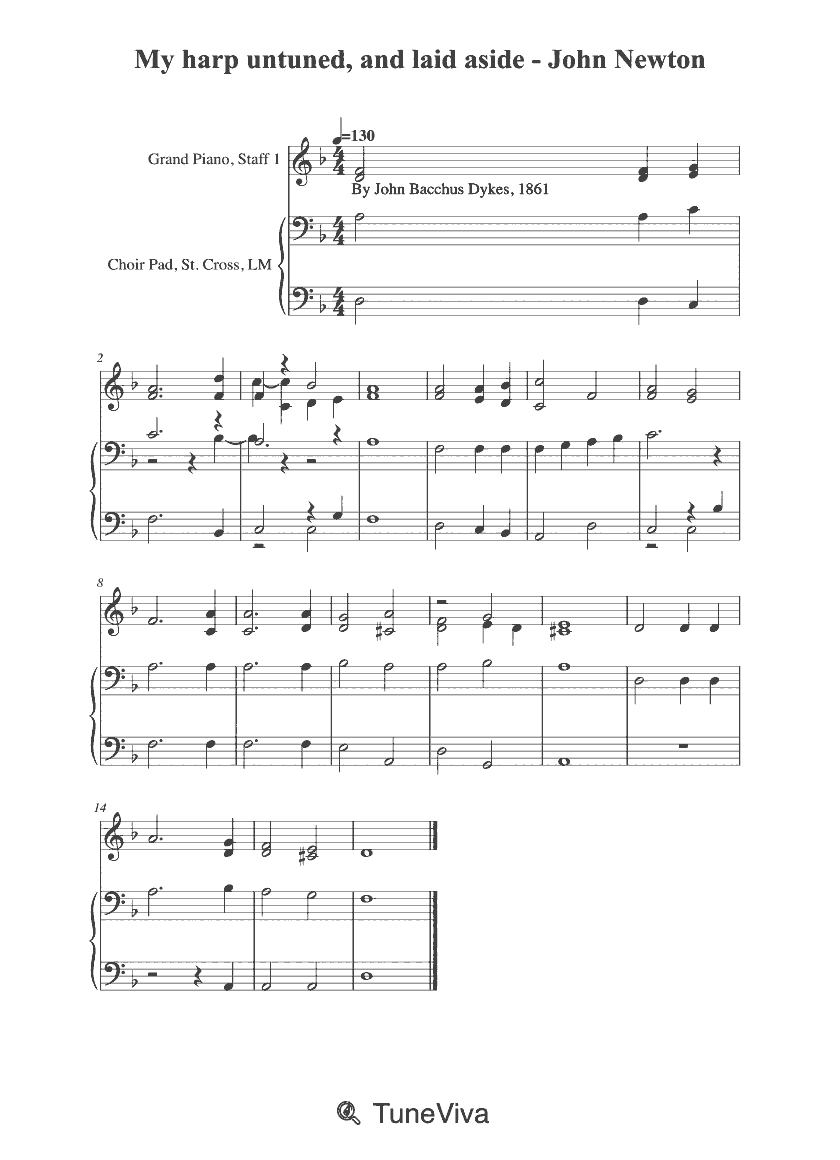
John Newton
Grand Piano, Staff 1; Choir Pad, St. Cross, LM · 30 sec
Open score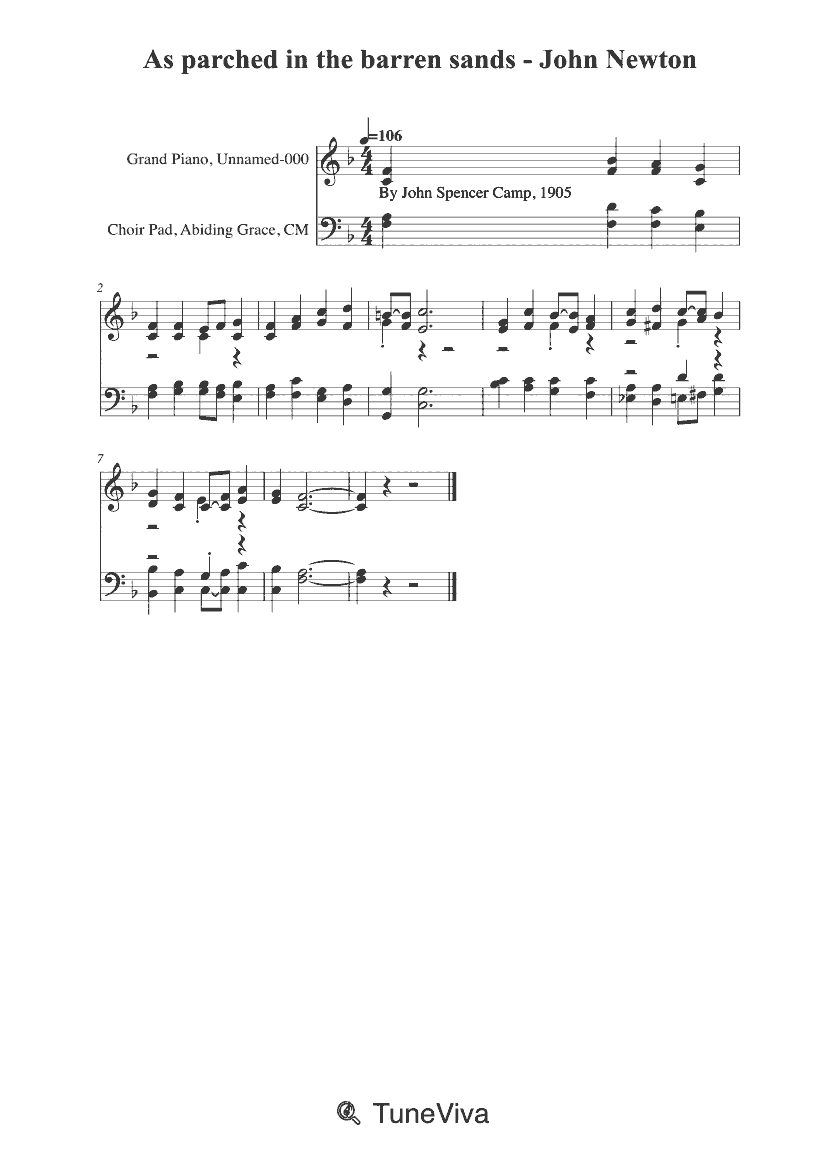
John Newton
Grand Piano, Unnamed-000; Choir Pad, Abiding Grace, CM · 20 sec
Open score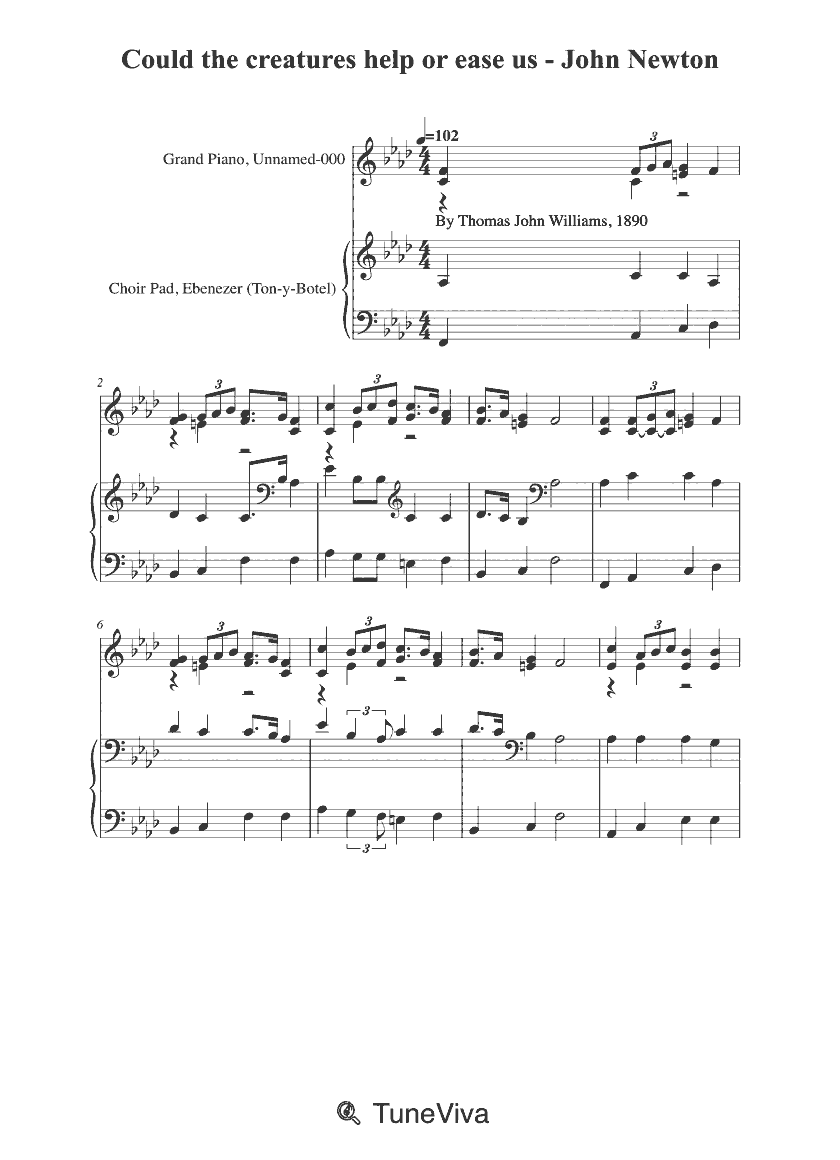
John Newton
Grand Piano, Unnamed-000; Choir Pad, Ebenezer (Ton-y-Botel) · 39 sec
Open score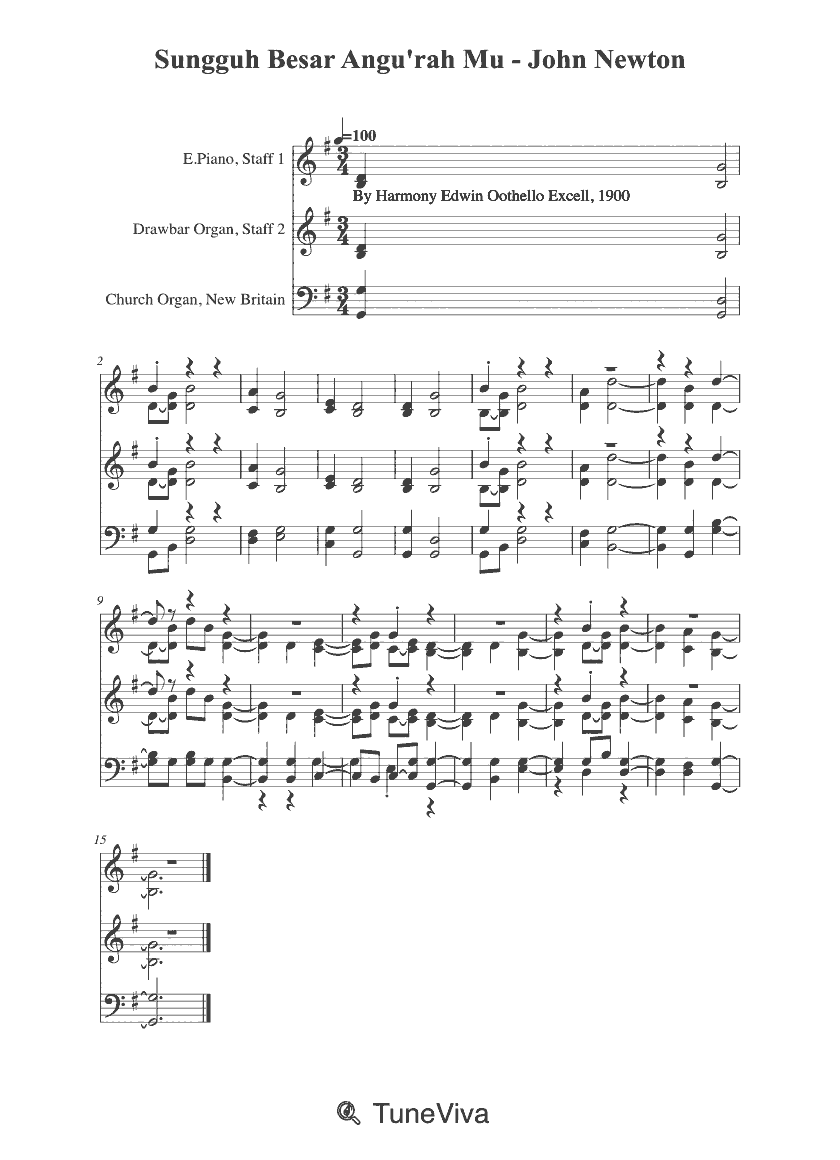
John Newton
E.Piano, Staff 1; Drawbar Organ, Staff 2; Church Organ, New Britain · 27 sec
Open score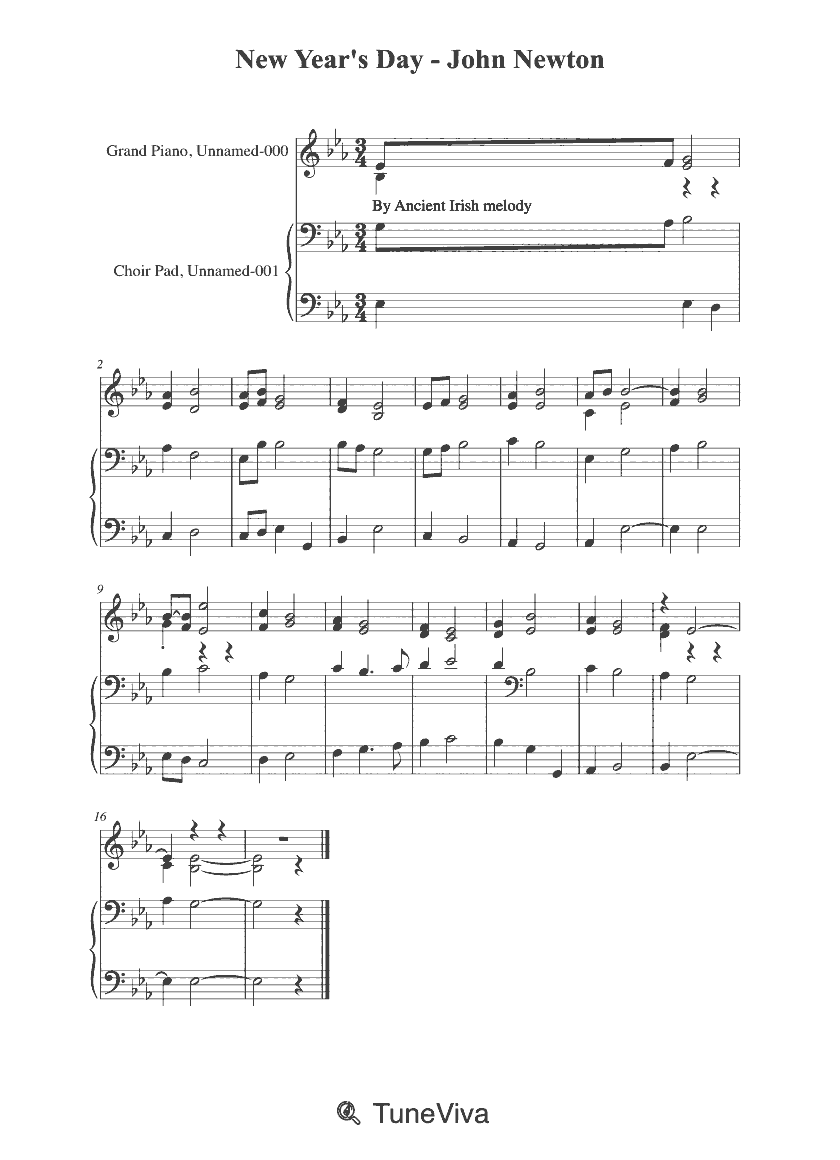
John Newton
Grand Piano, Unnamed-000; Choir Pad, Unnamed-001 · 25 sec
Open score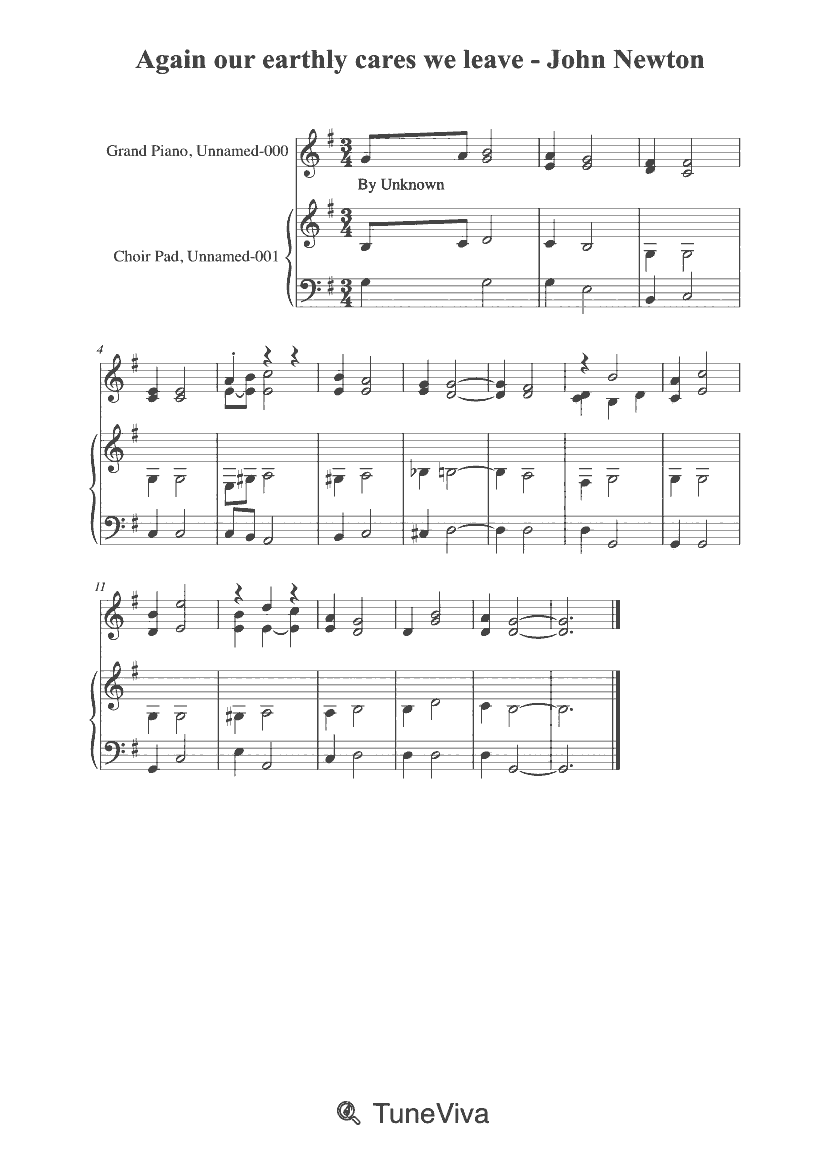
John Newton
Grand Piano, Unnamed-000; Choir Pad, Unnamed-001 · 24 sec
Open scorePage 1 of 3
John Newton wrote hymns, not music, so this page collects settings of his words: 43 scores, about 24 minutes of music and 7,804 notated notes, with 36 entries carrying lyrics. The short running time is the clue, since most entries are single-verse hymn tunes rather than extended choral works. Amazing Grace dominates. An easy piano version has been viewed more than 154,000 times, and beside it sit a plain setting, a vocal version with piano, a Polish translation and an Afrikaans one. The rest of the page is Olney material, from Be still, my heart to The Legion Dispossessed. John Newton sheet music centres on the words of his hymns rather than on music he composed. Newton (1725–1807) was an English evangelical Anglican cleric and slavery abolitionist, and the author of hymn texts including 'Amazing Grace' and 'Glorious Things of Thee Are Spoken'. The scores gathered here set those words, with several versions of 'Amazing Grace' alongside other hymns associated with Newton and the Olney Hymns.
Newton was born in Wapping, London, on 24 July 1725 by the Old Style calendar, and went to sea with his father at eleven. Pressed into the Royal Navy in 1743, he later worked on slave ships and spent time as a servant in Sierra Leone before his conversion in March 1748, during a storm off the coast of Donegal. He continued as a slave-ship captain until a stroke in 1754, then became a tide surveyor in Liverpool and taught himself Greek and Hebrew while seeking ordination.
Ordained in 1764, he was curate of Olney in Buckinghamshire from 1764 until 1779, where he and William Cowper produced the Olney Hymns of 1779. His contribution included 'Faith's Review and Expectation', a hymn on 1 Chronicles 17:16-17 that begins 'Amazing grace! how sweet the sound'. In 1780 he became rector of St Mary Woolnoth in the City of London, and in 1788 he published Thoughts upon the African Slave Trade, a pamphlet that supported Wilberforce's campaign. He died on 21 December 1807.
The catalogue holds 43 scores, but they are not his compositions. Forty are filed as classical, two unclassified and one as religious music. The familiar tune of Amazing Grace, NEW BRITAIN, postdates him by a generation and is not represented as his work anywhere on the page.
What this page collects: John Newton is credited as the author of hymn texts, not as a composer of tunes. The scores here set his words, so a piece may carry his name while the music belongs to another hand or to a traditional melody. Read the title and listed parts to see whether you are choosing a solo piano setting, a vocal arrangement or a translation.
Amazing Grace and its changing tunes: 'Amazing Grace' was written to illustrate a sermon on New Year's Day 1773 and first appeared in print in Newton and Cowper's Olney Hymns in 1779. The text has been associated with more than 20 melodies; the tune most often sung today, NEW BRITAIN, was joined to the words in 1835, long after Newton's death. Check which tune a score uses before comparing versions.
Olney and Newton's other hymns: Ordained in 1764, Newton became curate of Olney, Buckinghamshire, where he wrote hymns with the poet William Cowper; their Olney Hymns appeared in 1779. Newton is also noted for 'Glorious Things of Thee Are Spoken'. The Olney connection is central to his hymn writing, but it does not guarantee that every score here uses an Olney text.
Choosing between the versions: For keyboard alone, look for the solo piano entry; for voices with accompaniment, compare the vocal scoring and piano part listed in the version. The Polish and Afrikaans entries are translations of 'Amazing Grace', so check language and tune before use. Where a score lists unusual or conflicting composer dates, treat the attribution as provisional.
The catalogue files a hymn under its author, so settings of Newton's texts appear on this page even though the music is by other hands. Newton wrote no music of his own.
No. The tune sung today, NEW BRITAIN, was assembled from two American melodies and printed in 1829, and it reached Newton's words through William Walker's Southern Harmony in the 1830s.
They are translations of Amazing Grace: 'Cudowna Boża Łaska' in Polish and 'Genade Onberskryflik Groot Het' in Afrikaans, both set to the same tune.
John Newton wrote hymn texts rather than tunes, and the sources describe him as the author of hymns such as 'Amazing Grace' and 'Glorious Things of Thee Are Spoken'. Sheet music bearing his name therefore usually sets his words to music by someone else or to a traditional melody.
John Newton is best known as an English evangelical Anglican cleric, a former captain of slave ships and a slavery abolitionist, and as the author of the hymns 'Amazing Grace' and 'Glorious Things of Thee Are Spoken'.
'Amazing Grace' first appeared in print in 1779 in Newton and Cowper's Olney Hymns. Newton wrote the words to illustrate a sermon on New Year's Day 1773.
The familiar tune NEW BRITAIN is not by John Newton. The hymn text has been associated with more than 20 melodies, and NEW BRITAIN was joined to the words in 1835, after Newton's death.
Newton became curate of Olney, Buckinghamshire, after ordination in 1764, and there he wrote hymns with the poet William Cowper. Their Olney Hymns was published in 1779.
John Newton is also noted for 'Glorious Things of Thee Are Spoken', a hymn mentioned alongside 'Amazing Grace' in accounts of his authorship.
Newton had worked as a captain of slave ships and invested in the slave trade before he renounced the trade and became a prominent abolitionist. He lived to see the British Empire abolish the African slave trade in 1807, a few months before his death.
The page collects settings of Newton's hymn texts, so translations of 'Amazing Grace' such as the Polish 'Cudowna Boża Łaska' and the Afrikaans 'Genade Onberskryflik Groot Het' belong here as versions of his words. Check each score for its language and tune.